Escape (逃走, Masao Adachi, 2025)

Satoshi Kirishima’s incongruously smiling face was a familiar presence across on the nation for over 40 years until he finally made a deathbed confession revealing his true identity as a man wanted in connection with a series of bombings in the 1970s and that he’d successfully evaded the authorities until the very end of his life. What apparently appealed to director Masao Adachi, a former Japanese Red Army member, was the question of why he chose to come clean rather than enjoy his secret victory by taking the truth to his grave.

That might be a minor irony at the centre of the Escape (逃走, Toso) in that Satoshi (Kanji Furutachi) is essentially in flight from himself only to finally escape from his torment by accepting his original identity. As a young man, Satoshi had been a member of a left-wing cell that wanted to awaken the population at large to the ways Japanese society had not changed in continuing to discriminate against the Ainu, those from the Ryukyu Islands, Koreans and other minorities while modern corporations enact another kind of capitalistic imperialism built on exploitation. It was for this reason that they embarked on a bombing campaign targeting large companies, but due to a miscalculation with the explosives, the bombing of the Mitsubishi Heavy Industries Building in 1974 proved more destructive than intended resulting in loss of life. 

Satoshi was not directly involved in that bombing which was carried out by another cell but was wanted for allegedly setting up a bomb in the Economic Research Institute of Korea which did not result in any casualties. Details of the real Satoshi’s life during his 40 years on the run are thin on the ground, but Adachi paints him as a man torn apart by internalised conflict and unable to make peace with the sense of guilt he feels for those who killed even if he was not directly responsible. The film’s Japanese title is a kind pun in that it’s a homonym which can mean both “escape” and “struggle” which for Satoshi become one and the same. He’s in flight from his younger self while simultaneously preoccupied with how he can continue the revolution in the name of his friends who were not so lucky. Adachi structures the later part of the film as a kind of self-criticism session as Satoshi engages in various dialogues with himself notably as a Buddhist priest interrogating him about his worldly attachments. 

These worldly attachments also obviously separate him from his true calling to revolution including a non-relationship with a woman he meets at a concert venue and is later told has two previous convictions for marriage fraud. Most of the people around him are also leading double lives or harbouring secrets of their own including a man that Satoshi once worked with whom he finds out years later was also another former member of the far left movement living life on the run. The implication is that this sense of isolation and aloneness in wilfully having to suppress his identity became a kind of prison, but that it also liberates Satoshi to a more intensive examination of the self. 

To that extent, his escape is also from contemporary Japan and an act of resistance towards an increasingly capitalistic and indifferent society. Hoping to stay below the radar, Satoshi works a series of casual construction jobs chiefly because of their anonymity. There was plenty to be built in this era and jobs like these were plentiful, usually offering basic accommodation in a company dorm. He experiences the hardships of the working man first-hand and lives a life of asceticism in which live music and drinking are his only outlets. “We’re all dying to survive,” he reflects, “trying to go home,” though he no longer has a home to go to and has become estranged from his previous identity. He meditates on fallen comrades who either took their own lives or spent them in prison while convincing himself that he’s continuing the struggle on their behalf even in the act of running away in perfecting his “escape”. Though Adachi’s approach is less sentimental than Banmei Takahashi’s in I am Kirishima, he is not immune to sentiment as in his depiction of Satoshi’s final escape from life as the ultimate form of liberation even as his ghost proclaims he will continue to fight, but nevertheless introduces a meta commentary of self-examination in Satoshi’s constant questioning if his long years of struggle have really been worth it.


Escape screened as part of this year’s Nippon Connection.
Missing Child Videotape (ミッシング・チャイルド・ビデオテープ, Ryota Kondo, 2024)

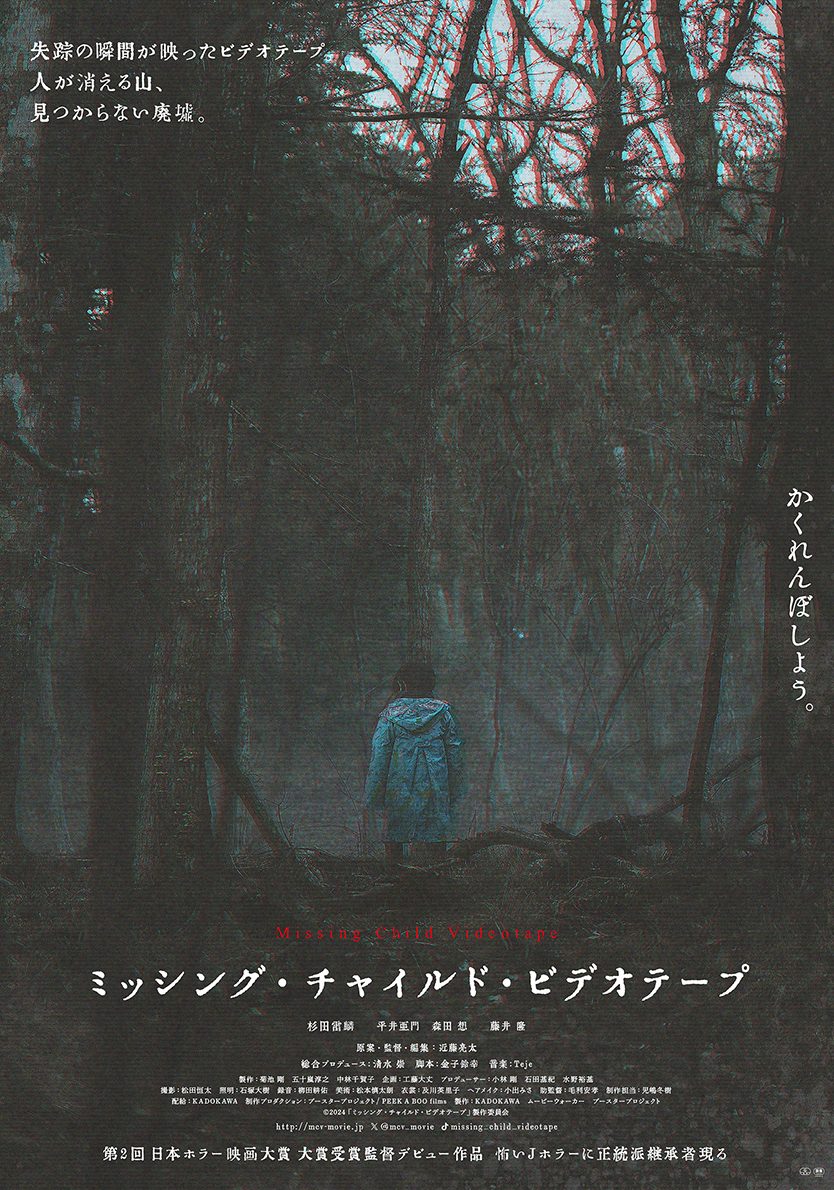
“Now you’re it,” a little boy says, but in a game of hide and seek it can be difficult to tell the seeker from the sought. Inspired by classic J-horror, Ryota Kondo’s eerie debut feature Missing Child Videotape (ミッシング・チャイルド・ビデオテープ) takes the innate fear we have of things that are so old they surpass our understanding and couples it with a more psychological dread in which the heroes are quite literally haunted by their personal traumas.

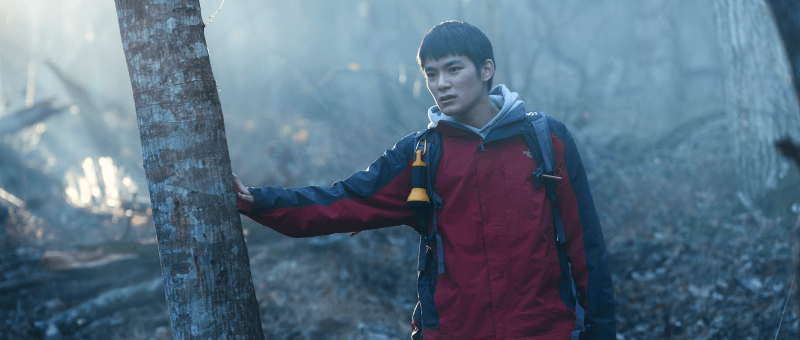
The irony is that we first meet Keita saving a little boy lost in the forest, though he’s haunted by his failure to do the same for his younger brother Hinata who disappeared 13 years previously when they were both children. Keita’s mother regularly sends him VHS tapes of the day Hintanta went missing he shot while playing with his father’s camera. Keita had been rude to his mother and seemingly resented his little brother tagging along behind him. He tells Hinata to go away, which he of course then does, never to be seen again. The boys somehow wander into a disused building where Keita suggests they play hide and seek, mostly so Hinata will go hide and stop bothering him. Catching sight of Hinata in a corridor, Keita tells him that he’s now “it” so it’s time to come look for him instead, but now he can’t find his brother anywhere. His rising panic is palpable from the terror in his voice to the increasing shakiness of the camera, even as it transitions into the mental state of the adult Keita as if the tape itself were on a constant loop in his mind. 

There is a suggestion that the boys are still playing hide and seek and that Hinata has also been trying to find his way back to his brother all this time. As for the now grown-up Keita, he’s fairly detached and on a surface level a little indifferent, still resenting his brother for seizing an eternal spotlight. He’s sick of everyone talking about it all the time and equally of the ambivalence of being the brother of the boy who disappeared, alternately pitied and suspected. He thinks his parents actually thought he probably killed Hinata but did nothing about it, while he always resented them anyway. Even as a child, it seemed apparent to him that they were only playing the roles of a family and none of it was “real”. In any case, he did not want to be forced into the role of big brother with all the responsibility that entails. 

To that extent, Keita is also a “missing child” and a man who is still a boy lost in a disused building that apparently never existed. His search for his brother is also a way of reclaiming himself and opening up to more complete human connections. The film is curiously ambiguous in its depiction of the relationship between Keita and Tsukasa, the man with whom he lives who has psychic abilities and is able to see ghosts and supernatural entities. Tsukasa tells the equally haunted reporter Mikoto that he’s “the person who lives with him,” but the pair otherwise behave more like a couple if one that seems content to let their secrets breathe.  

Nevertheless, Tsukasa comes to the conclusion that Keita is “under the influence of the mountain,” which as it turns out, has taken several more victims before and since Hinata’s disappearance. Another strange young man tries to warn Keita not to go back there, telling him a weird story about how his grandmother cannot really be his grandmother because of the ironic results of her sacrifice to the mountain gods. Indeed, this curse may reflect the lack of respect we’ve shown to the natural world as the mountain has become a dumping ground for unwanted things from bits of temples to a collection of funerary urns. Perhaps “unwanted” people are being thrown away there too, spirited away by the mountain and placed in some other realm. 

Kondo includes two kinds of tape each of which is imprinted with the psychic echoes of a traumatic event as Mikoto comes across a cassette recorded by students who also found the building that doesn’t exist, reflecting both the technological anxiety of classic J-horror along with the way that trauma replays and imprints itself on the present. Keita still appears to be haunted, and not least by himself as well as whatever did or didn’t happen the day his brother disappeared and the latent guilt he feels because of it. Playing hide and seek with himself, it seems that Hinata, and those he’s lost, may indeed have been with him all along, though both seeker and sought are apparently both trapped within this infinite loop of fear and loneliness. 


Missing Child Videotape screens 28th May as part of this year’s Nippon Connection.
Original trailer (English subtitles)

Images: ©2024 “Missing Child Videotape” Film Partners

Promised Land (プロミスト・ランド, Masashi Iijima, 2024)

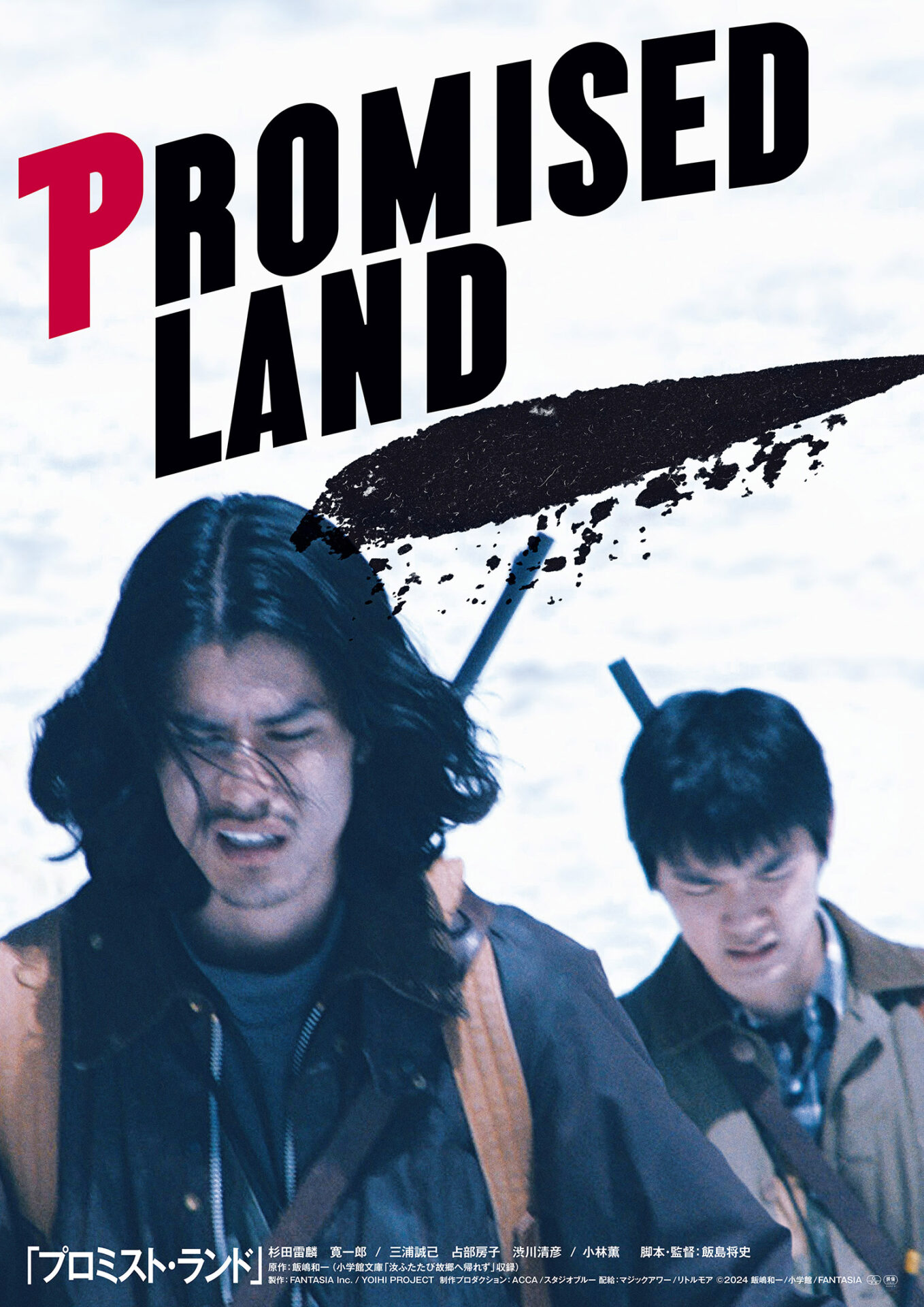
An avalanche approaches a small town in Japan, a harbinger of change in which the centuries old practice of bear hunting has finally been put to rest by government directive. The buried question at the centre of Masashi Iijima’s Promised Land (プロミスト・ランド) is who exactly that land has been promised to and what the rights and responsibilities surrounding it are in the midst of a changing society in which there may longer be a place for the hunter.

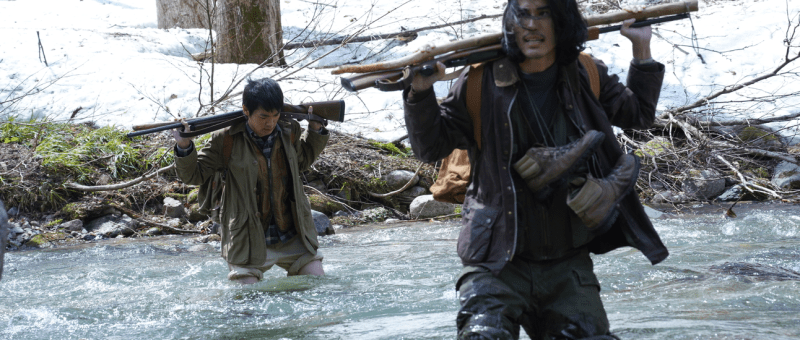
Some might argue that there shouldn’t be, and it has to be said this is one ancient tradition that’s increasingly hard to defend. Set in 1983, the film finds the “Matagi”, or traditional hunter, already all but extinct even before the head of the local association (which appears to only have five members) calls them all together and tells them the hunt is off for that year due to a preservation order by local government. One of the younger members, Rei (Kanichiro), immediately objects sensing that if the hunt is canceled this year it will never be held again. He says he thinks it’s unfair as it’s industry encroaching on the forests that has led to a decrease in the bear population rather than overhunting while another of the men takes constant pops at rich men from the city who come in and treat hunting like a hobby failing to abide by any of their rules such as not shooting mothers with their cubs.

The hunters seem to think of themselves as keeping nature in check, “culling” the bears to keep the mountain safe though there’s no sign that they are any real danger to humans and anyway their numbers are now depleted. There doesn’t seem to be any other way to defend this practice outside of tradition, but it’s evidently something very important to Rei, important enough to constitute a large part of his identity. Thus he alone is determined to defy the order and kill a bear anyway even though he knows there’s a good chance of going to prison for illegal hunting and being branded a poacher. 

Rei ropes in Nobu (Rairu Sugita), a childhood friend who apparently owes a debt to him having received a blood transfusion from him when he was four and now deeply resents having that fact wielded against him all these years later. Unlike Rei, Nobu is a much more modern young man whose father makes fun of him for wearing fashionable clothes and perfume. He hates working on his father’s farm and longs to escape the moribund small town and its brutal traditions such as the bear hunt he’s been roped into since birth just because like many things his ancestors always did it. While hunting for a bear, the pair have an opportunity to talk, Rei admitting that hunting and the gun represent for him the essence of the man he once was while reeling from the breakdown of his marriage to a woman he failed to support when she failed to fit in to village life. He recounts the story of a banker he did some work for who says that he envies the freedom of his life as a landscape gardener while he sits in a prison all day counting other people’s money but when he asks him why he does’t give it a try the man just backtracks and starts making excuses.

Rei seems to be wondering what true freedom means and perhaps feels he doesn’t really have it, asserting dominance over the mountain by killing the bear to regain control over his life. He calls the bears a gift from the mountain god as if they existed only for him to kill, though it’s difficult to see why his tradition or need for raw masculinity is worth more than a living creature’s life. When he eventually kills a bear, the film hovers on the ritualistic quality of the act as Nobu and Rei bend over the body, wafting it with leaves, and skinning its pelt before drinking its blood. This is an act of cruelty more of necessity. They have no need of the pelt or meat, do not make a major part of their income from selling them, and the bear did not threaten them. This is in short a tradition that can safely be left by the wayside, but by the film’s conclusion the two men seem to have switched positions Rei now pondering leaving the village while Nobu seemingly has a renewed desire to stay and preserve these old traditions. Perhaps it is his promised land after all, or else was intended to exist for the bears as creatures of nature free from the destructive forces of humanity.


Promised Land screened as part of this year’s Camera Japan.

Original trailer (no subtitles)

Hijacked Youth – Dare to Stop Us 2 (青春ジャック 止められるか、俺たちを2,  Junichi Inoue, 2024)

A loose sequel to 2018’s Dare to Stop Us, Hijacked Youth (青春ジャック 止められるか、俺たちを2, Seishun Hijack Tomerareruka, Oretachi wo 2) picks up a decade later with an autobiographically inspired tale from writer director Junichi Inouchi but in its way also becomes the latest in a series of indie films to offer a celebration of Japan’s mini theatres still struggling with the fallout from the COVID-19 pandemic while exploring the origins of the contemporary independent film scene. 

The allusion seems clear even from the film’s opening in which cinephile and former programmer Kimita (Masahiro Higashide) fears for the future of cinema amid the arrival of the VCR. Having quit his job to support a young family, he is puzzled but eventually won over when unexpectedly contacted by notorious film director Koji Wakamastu (Arata Iura) who has apparently decided to open a cinema in provinciail Nagoya after the screening of Ecstasy of the Angels was restricted because someone bombed a police box for real. Kimita wants to run it as a rep cinema, but Wakamatsu sees it partly as a vanity project and a side business so has his eye on the bottom line. Making the mistake of programming films he thinks are good rather than ones people want to see quickly puts them in the red with Wakamatsu pressuring Kimita to give in and agree to screen pink films even though he himself had admitted that pink cinema had had its day. 

Wakamatsu is forever taking Kimita to task for having a prejudice against these kinds of films which are after all the kind that Wakamatsu makes though he does concede that there are talented directors working in pink film who may someday become the leading lights of the Japanese cinema industry. Some of that is hindsight, but what the film is working towards is a link between pink film, which was independently produced in contrast to something like Roman Porno which was made by a studio with much higher budgets and production values, and the rise of independent cinema which is largely dependent on the mini cinema ecosystem to it keep going. 

But then the film is also a nostalgic memoir revolving around the director’s teenage dreams and his eventual meeting of Wakamatsu thanks to the cinema in Nagoya. The irony is that the first film had been titled “Dare to Stop Us,” focussing on Wakamatsu Pro during the turbulent days before Asama-sanso as an anarchic force in a sometimes staid film industry. But the through line here is that everyone gives up far too easily. Kimita abandoned his dreams to sell video recorders, while the young woman who works for him believes she has three strikes against her, the first being her gender, the second a lack of talent, and the third which she does not disclose that she’s a member of the Zainichi community of ethnic Koreans often discriminated against even the Japan of the 1980s and in fact today. 

Junichi gives up a bit easily too after making a twit of himself on Wakamatsu’s film set, though the picture he paints of him is larger than life. Fatherly and compassionate, he gives him solid advice to go to a proper uni and learn filmmaking with him while otherwise taking him under his wing, but also pretty much takes over after giving him his first opportunity to make a film and has a tendency to take no prisoners when it comes to his crew members. At least as far as the film would have it, he’s become a rather lonely figure now that his more politically minded friends have scattered following he decline of the student movement in Japan. As much as anything else, the film is a sort of hagiography as evidenced by the surreal coda which seems to reference the director’s early death in traffic accident in 2012, jumping forward 30 years to find the cinema still open and celebrating his legacy more literally yet also in its existence in supporting the indie scene Wakamatsu helped to birth. According to Wakamatsu, the most important thing is finding your own angle and sticking to it, something his rebellious spirit at least may have fostered in the many directors who started their careers at Wakamatsu Pro and not least Inoue himself.

Hijacked Youth – Dare to Stop Us 2  screened as part of this year’s Nippon Connection

Original trailer (English subtitles)

September 1923 (福田村事件, Tatsuya Mori, 2023)

After the devastating Great Kanto Earthquake struck in 1923, it led to a period of hysteria in which in the natural disaster somehow became equated with the Korean Independence Movement, foreigners, and socialists and who were after all thorns in the side of rising nationalism. Documentarian Tatsuya Mori makes his narrative film debut with September, 1923 (福田村事件, Fukudamura Jiken) released to mark the 100th anniversary of the incident and focussing on a little known episode in which villagers turned on a small group of itinerant medicine pedlars they were convinced were not Japanese. 

In this case, at least, they were Burakumin. An oppressed underclass of their own, they too are divided in their views about Koreans some finding solidarity with them as another minority who is bullied and discriminated against while others are quick assert themselves as at least being above them on the pecking order cheerfully using slur words as they go. Shinsuke (Eita Nagayama), the leader of the troupe, laments that they have to live this way, tricking those worse off than themselves into buying their snake oil cures while explaining that though people will often help each other out when times are good, if survival’s on the line they’ll turn against each other. 

Perhaps that’s difficult to imagine in a small village of genial farmers, but militarism has already corrupted its gentle rhythms. Men from the village are fond of telling war stories from their time as conscripts in China or Russia, though one has a particular bee in his bonnet about wives being left lonely with husbands away overseas and is convinced that his father has slept with his wife. Another local woman was indeed having an affair shortly before her husband was killed in action and is then ostracised by the village for her transgressive behaviour becoming yet another oppressed minority. The village chief is keen on democracy and progressive in his way yet soon finds himself powerless against the local militia mostly comprised of old men with a lust for blood and glory. It’s this militarist hysteria that eventually proves tragedy as they find themselves desperate to identify “spies” and protect the village only to murder children and a pregnant woman who were just passing through. 

The absurdity extends to asking those suspected of being Non-Japanese to repeat a particular phrase difficult for Koreans in particular to pronounce, only those from other areas of Japan also pronounce it in a way that might seem “foreign” in Tokyo. Cornered by the militia, Shinsuke asks if it would be alright to kill him even if he were Korean, taking issue with the militia’s absurdist and racist rationale that decides someone must die because of the way they pronounced a certain word or seemed uncomfortable shouting “banzai” at the point of a sword. But one of the villagers unwittingly uncovers a since of guilt felt even by a man in a village miles away from anything that the Koreans have been bullied for years, this the understandable result of their rage boiling over and a moment of retribution. 

The film seems to suggest that the buck doesn’t really stop, except perhaps with the bystander who merely watches this horrifying violence and does nothing. Tomokazu (Arata Iura) has recently returned to the village after many years living in Korea bringing back with him a Korean wife but his marriage is falling apart due to his own guilt and trauma having been complicit in a Japanese atrocity. Watching the massacre unfold, his wife, Shizuko (Rena Tanaka), asks him if he’s just going to watch this time again but his attempt to intervene makes no difference. An idealistic news reporter meanwhile takes her boss to task for publishing propaganda headlines associating Koreans with crime and terrorism rather than real truth of what’s happening on the ground, asking him what the point of the press is if it won’t speak truth to power. But militarists do not listen to reason, and as the headman points out they will have to keep living with those who’ve committed these heinous acts. Sometimes a little on the nose with its symbolism such as a literal murder of hope in the killing of an unborn child, Mori’s otherwise poignant drama lacks the impact it strives for but nevertheless addresses a shocking moment of mass hysteria that is not quite as historical as we’d like to think.


September 1923 screened as part of this year’s Nippon Connection

Original trailer (English subtitles)

Sanka: Nomads of the Mountain (山歌, Ryohei Sasatani, 2022)

A young man finds himself caught between the new Japan and the old while befriending the last remnants of a nomadic people in Ryohei Sasatani’s poetic drama, Sanka: Nomads of the Mountain (山歌, Sanka). Set in the mid-1960s the film harks back to something older and more mystical that seems at odds with the Japan of the bullet train and economic miracle but equally sees its hero reckon with the more recent past in his father’s authoritarianism born of his militarist upbringing and wartime service.

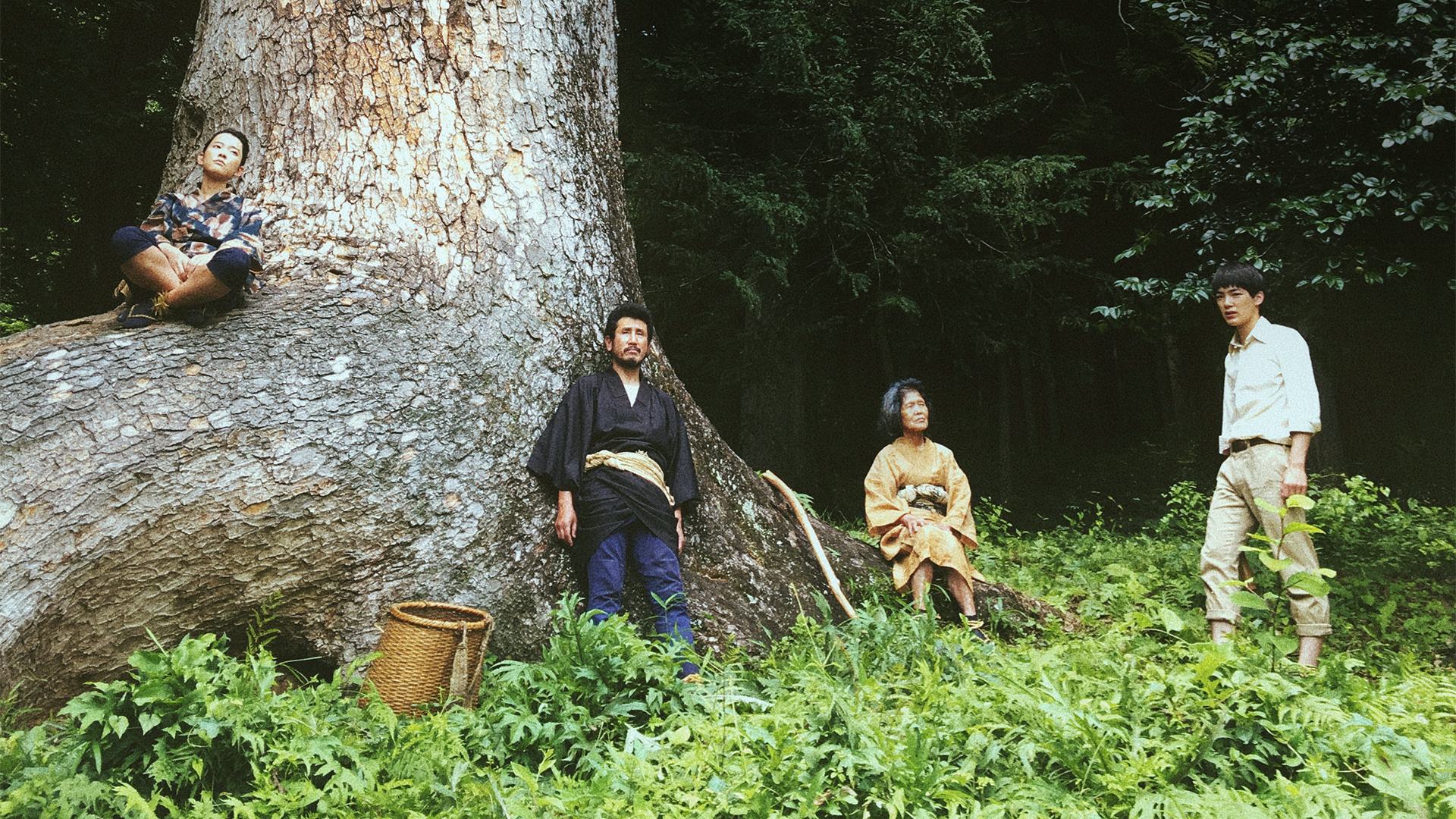
Norio (Rairu Sugita) does seem to be a more sensitive boy. Bullied at school he comes home with a bruised face and is berated by his father Sakaguchi (Kisuke Iida) for his lack of manliness while struggling to come to terms with the death of his mother on the mountain two years previously. That’s one reason he ends up bonding with Shozo (Kiyohiko Shibakawa), one of the last remaining members of the Kenshi people who live a nomadic lifestyle migrating across the mountain throughout the year to take advantage of the terrain. Becoming a kind of father figure, Shozo teaches him how to fish and live on the mountain while Norio also develops a fondness for his daughter Hana (Naru Komukai) who appears to be around the same age as he is. 

The contrast between the two men could not be more stark. People in the town still refer to Sakaguchi as “the sergeant” and fiercely respect him for his wartime service. Norio finds a picture of his father in uniform along with a gun wrapped up in the back of drawer as if reminding him of the oppressive authority that hangs over the house. The townspeople are also grateful to Sakaguchi because he’s planning to build a golf course, a symbol of a newly prosperous society with a growing middle class, that will bring a lot of jobs to the area which is struggling economically with the decline of the agricultural industry. To build the golf course, Sakaguchi plans to get to rid of the mountain which will force Shozo and his family off the land and sever their connections with the forest and earth. 

To the townspeople the presence of the Kenshi is something taboo that embarrasses them. People accuse them of thievery and try to shoo them away. A policeman even stops Shozo and forces him to throw the fish he was trying to sell back to the river claiming that he’s frightening people just in his presence. Norio experiences an additional layer of shunning solely because of his association with the Kenshi and is later berated by his father for causing him embarrassment by associating with them. He reminds him to be mindful of his “status” and describes the Kenshi as “trespassers” as if denying them the right to exist. 

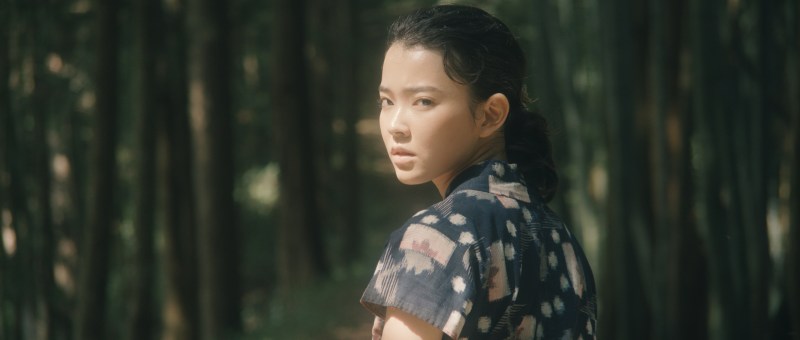
Norio obviously disagrees and is quickly seduced by the mountain’s serenity explaining that it helps him forget about the troubles of his life. But for Hana the situation is more complicated. Her friend Yoshi and her family went town from the mountain two years previously and she enviously looks on as she gossips with her school friends torn between her loyalty to her Kenshi roots and the desire for modernity in which she could live a comfortable life and get an education. If she stays on the mountain, she’ll be the last of her kind yet she struggles to reconcile herself with the idea of moving on just as Norio struggles with his own future in a rapidly changing Japan and seeks refuge in the mountains and a world beyond invisible to humans. 

Filled with a gentle poetry as Hana dances amid a rainstorm and voices echo through woods along with the sound of feet clad in woven sandals, the film is a kind of lament for an older, mystical Japan eventually eroded by a quickening modernity along with a critique of the lingering militarist authoritarianism which has simply transformed into corporate capitalism as symbolised by Norio’s cruelly conservative father. Yet as Hana had said, they’ll be Kenshi wherever they go, implying perhaps that her culture will not necessarily disappear so much as be carried forward even as the mountain itself becomes a casualty of a society in danger of forgetting its roots in a headlong dash towards a prosperous modernity.


Sanka: Nomads of the Mountain screened as part of this year’s JAPAN CUTS.

Original trailer (no subtitles)

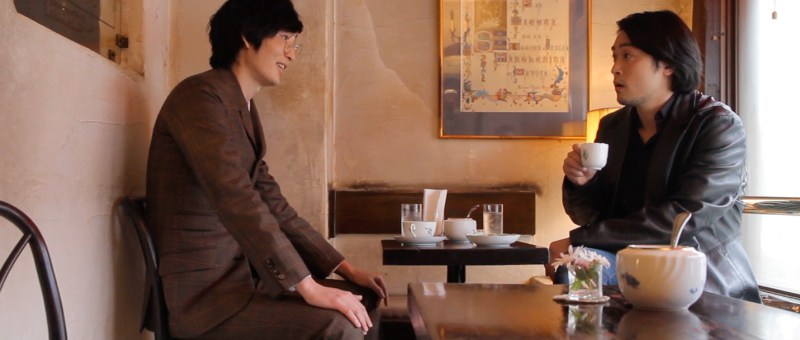
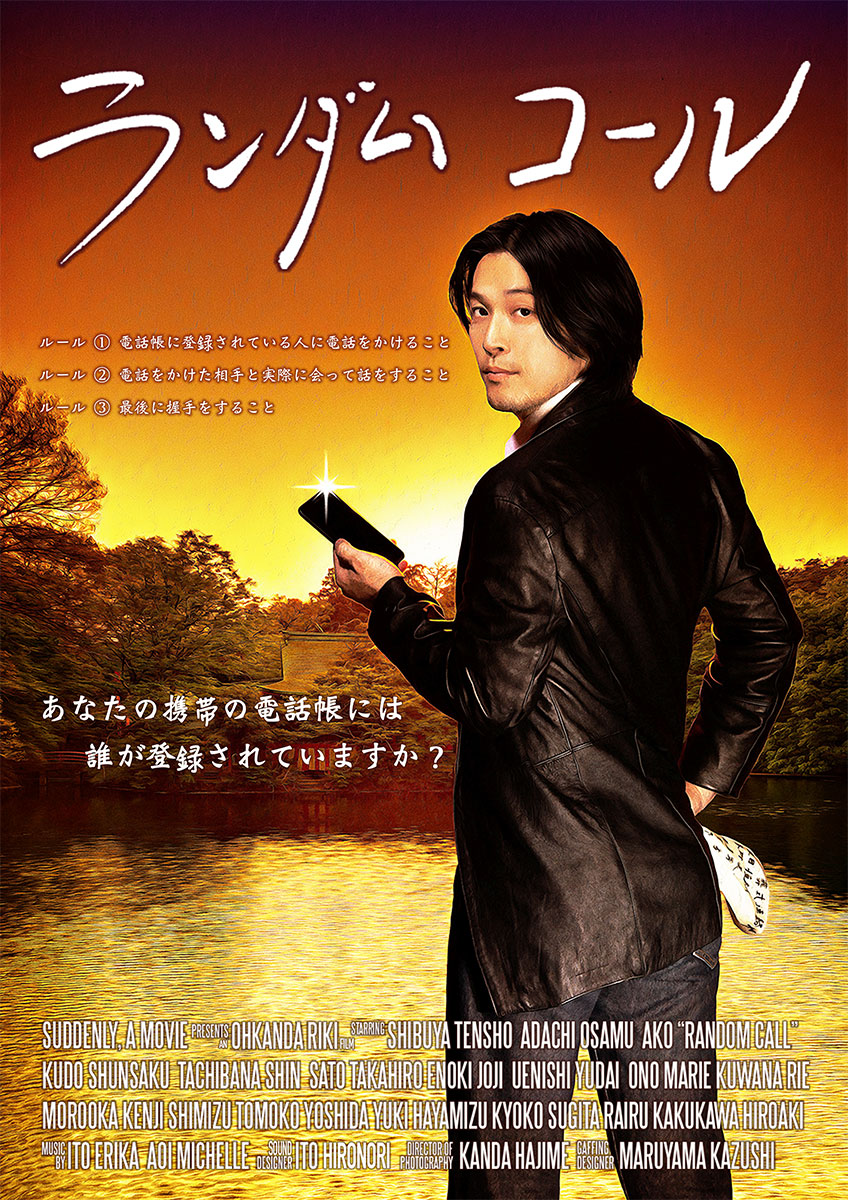
Random Call (ランダム・コール, Riki Ohkanda, 2022)

We may be more connected than ever before but now that it’s so easy to stay in touch we hardly every think of doing it. When was the last time you called someone just because with no specific reason in mind other than a desire to spend time with them? Struggling in his career and personal life, the hero of Riki Ohkanda’s heartwarming dramedy Random Call (ランダム・コール) begins to reconnect with his sense of humanity after a series of meetings with contacts from his phone selected at random each of whom teach him something about himself while reminding him that he is not alone and even if he’s not always been his best self love him anyway. 

A little over 30, Ryo’s acting career has not worked out as well as he’d hoped and he’s beginning to get depressed, isolated by his internalised sense of failure while believing he’s sunk too much into his dream of becoming a successful actor to simply give up as several people including his mother advise him to do. The random call he gets from old friend Shintaro is then a kind of lifesaver reminding him he’s not been forgotten though he’s slightly bemused to discover that Shintaro claims to have no reason for wanting to meet, except he does in fact have an ulterior motive. Inspired by a recent experience in which he became ill abroad and people just helped him out of nothing other than simple human compassion, he’s embarked on the “Random Call” social experiment the results of which he hopes to turn into a book. The idea is he calls a number at random from his phone’s contact book and asks them to go for coffee making sure to shake their hand before he leaves, just checking in with old friends with no other demands or expectations. Inspired, Ryo decides to try it out for himself and encounters various reactions to the unusual project. 

Perhaps that’s understandable, after all it’s natural enough that we mainly contact people when we want something from them so it’s only fair that some are annoyed or confused to discover there is no “point” to the meeting. It probably doesn’t help that the first “random” call is to a business contact, Saito, a TV producer, rather than to a friend with whom it might be more natural to meet up for a drink out of the blue. Saito is then irritated and suspicious, annoyed that Ryo is “wasting” his time assuming he’s making an awkward attempt to network but then something strange happens. He gives in to the magic of the random call and takes it at face value, accepting the warmth of an unexpected friendship and leaving a little happier than he arrived. 

But then, Ryo finds himself not being entirely honest with some of his encounters painting himself as more successful than he’s actually been talking up meetings about movies after hearing of another friend’s award-winning career success and recent marriage though as we later discover the friend wasn’t being entirely honest either. Meanwhile, he cheats a little in making a not all that random call to old friend Mie after learning that she may have fallen on hard times but she tells him that her contact list is mainly full of people she’d rather not speak to so random calling’s probably not for her though she does begin to tag along on some of his adding an additional perspective to his quest for connection through which he gradually begins to realise that his inner insecurities have him led to treat people badly with the consequence that they don’t always remember him fondly. 

Of course it doesn’t always work out, people don’t answer his calls, have moved away, or leave abrupt voicemails explaining they’re not lending him any money but even if it’s awkward or painful both sides gain something from the encounter emerging with a little more confidence in the knowledge that they haven’t been forgotten or else gaining a little closure to some unfinished business that allows both parties to begin moving forward. Through his various re-encounters, Ryo re-establishes a sense of connection with the world around him, encouraging and encouraged by others, and walking with a new sense of positivity into a less lonely future. 


Random Call screened as part of Osaka Asian Film Festival 2022

Trailer (no subtitles)

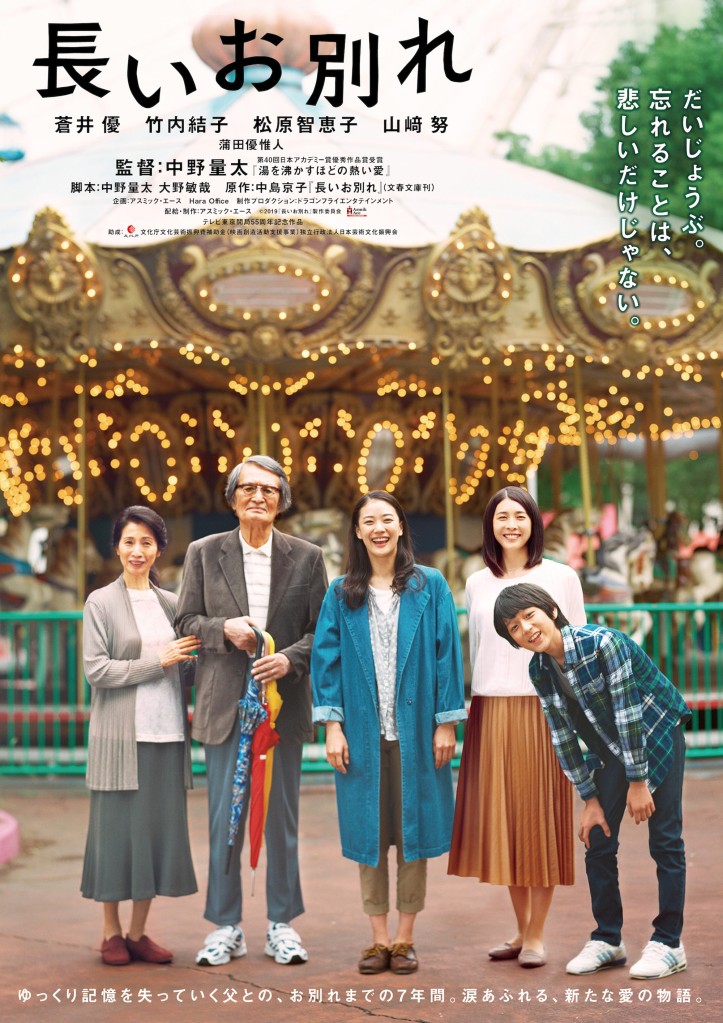
A Long Goodbye (長いお別れ, Ryota Nakano, 2019)

Contemporary Japanese cinema has gone lukewarm on the idea of family, presenting it more often as a toxic rather than supporting presence. Among the few remaining positive voices, Ryota Nakano’s previous films Capturing Dad and Her Love Boils Bathwater never made any attempt to pretend that families are always perfect or that the family as a concept is one which must always be defended, but ultimately found warmth and solace in the mutual act of pulling together as the sometimes wounded protagonists found strength rather than suffocation in unconditional love. 

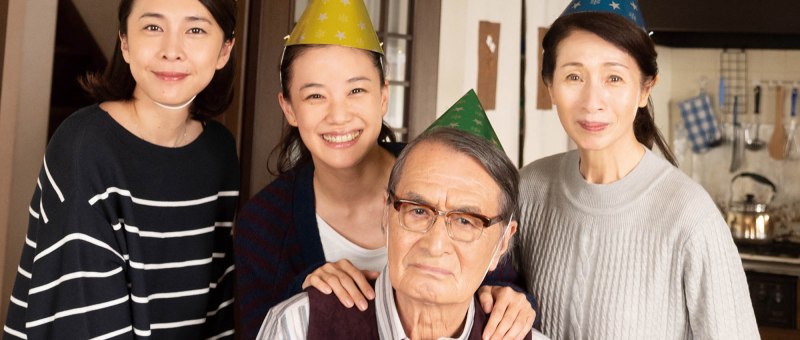
A Long Goodbye (長いお別れ, Nagai Owakare) finds something much the same as three women are forced to deal in different ways with their relationships with austere father Shohei (Tsutomu Yamazaki), once an authoritarian head master but now suffering from dementia and rapidly losing the ability to read. The first signs of decline are felt in 2007, prompting mum Yoko (Chieko Matsubara) to ring both of her increasingly distant, almost middle-aged daughters, and invite them to their father’s 70th birthday party, 

33-year-old Fumi (Yu Aoi) is in the middle of breaking up with a boyfriend who’s giving up on his dreams of being a novelist to take over the family potato farm. Fumi’s dream is owning her own restaurant, but somehow it seems a long way off. Older sister Mari (Yuko Takeuchi), meanwhile, is a housewife and mother living with her fish scientist husband Shin (Yukiya Kitamura) and son Takashi (Yuito Kamata) in California. Lonely in her marriage, Mari struggles with her English and finds it difficult to make friends with her husband’s colleagues who openly criticise her language skills from across the room while Shin makes no attempt to defend her. 

Meanwhile, Yoko carries the heaviest burden alone in trying to manage her husband’s decline even as he begins to wander off, forever asking to go “home” even when he is already there. The concept of “home” however may be difficult to define in a rapidly changing society. All the way across the sea, Mari frets about her parents and feels guilty that, as the older sister, she should be doing more and has unfairly left everything to Fumi just because she happens to be in closer proximity. She is then slightly perturbed to realise that Fumi hasn’t seen their parents since the previous New Year and is equally shocked at the noticeable change in her father who goes off on random tangents and suddenly loses his temper over trivial things. 

Mari flies back to Japan when crises occur but her husband is not as understanding as one might expect. His research concerns fish which adapt to their environment and it’s clear he’s begun to follow their example, falling wholesale for Western individualism. He criticises Mari’s anxiety for her parents’ health by reminding her that her “family” is her husband and son, bearing no responsibility for additional relatives. Shin now believes strongly in individual responsibility, that Shohei and Yoko need to look after themselves. As such he takes little interest in his family leaving all the childcare duties to Mari in somehow believing that children raise themselves. When the teenage Takashi (Rairu Sugita) goes off the rails and starts skipping school, Mari turns to the time old philosophy that he needs a good talking to from his father, but all Shin can come up with is that his son’s his own man and he’s sure he has his reasons. 

The young Takashi is acclimatising too, getting himself a red-haired Californian girlfriend who’s obsessed with J-pop and kanji, but later replaces him with another Asian guy when he goes back to Japan to spend time with Shohei while he’s still somewhat present. Meanwhile, Fumi works hard to realise her dream but encounters a series of disappointments both romantic and professional as she too reconsiders the idea of family and whether it’s truly possible to slide into one that has already fractured. Becoming responsible for her parents’ care shifts her into a maternal role she might not have expected, maturing in a slightly different direction while Mari remains trapped and lonely, neglected by her newly individualist husband who only cares about his research and shut out by her understandably angsty teenage son. 

Crises are, however, good for bringing people back together. Shohei it seems was a typical father of his times, distant and authoritarian, perhaps not always easy to be around. Fumi worries that she disappointed him, not becoming a teacher as he’d hoped while also failing to achieve her dreams of becoming a restaurateur, while Mari just wants what her parents had in a loving and supportive marriage surrounded by the warmth of  family. Shohei might not always have shown it, but there’s a lot unsaid in his constant desire to go “home” back to the time his kids were small. Home is where the heart is after all, even if you don’t quite remember the way. 


Original trailer (No subtitles)

Another World (半世界, Junji Sakamoto, 2018)

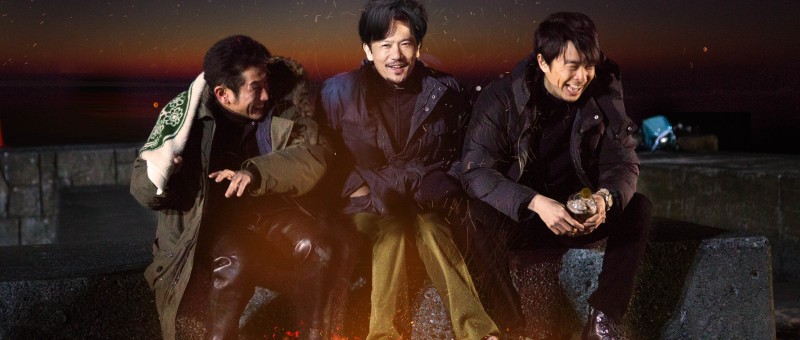
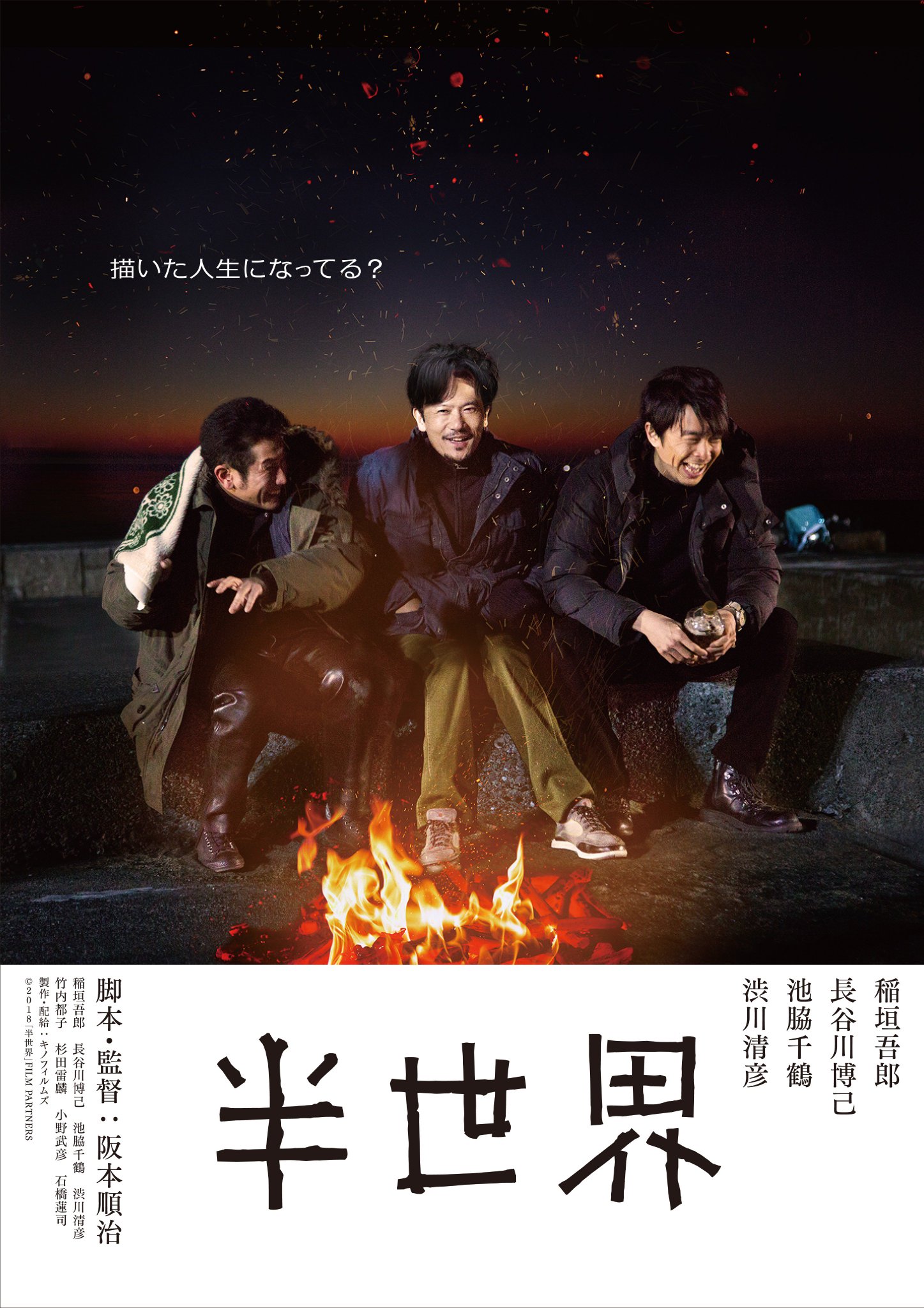
Another World poster 2Director Junji Sakamoto’s career has been more meandering than most. Shuttling between hyper masculine fighting dramas, issue movies, and broad comedies, Sakamoto has always displayed an intense interest in the depth of male friendship which where his latest feature, rural drama Another World (半世界, Hansekai), takes him. A deceptively gentle story of small-town homecoming eventually broadens into a meditation on fathers and sons, frustrated dreams, and middle-aged malaise as its three dejected heroes attempt to bridge the gulf of years between them in order to rekindle the simple, innocent friendship they forged as naive teenagers more than 20 years previously.

The drama begins when Koh (Goro Inagaki) spots childhood friend Eisuke (Hiroki Hasegawa) unexpectedly hanging around his old home, now sadly abandoned following the death of his mother. Eisuke, unlike his friends, left his hometown to join the self defence forces and see the world. He has not returned home in some years and his sudden appearance is a pleasant, if perhaps concerning, surprise. Koh calls the other leg of the triangle, Mitsuhiko (Kiyohiko Shibukawa), and the trio of teenage buddies reunite, but Eisuke still seems distant and remains holed up in his family home rarely venturing outside, reluctant to confide in his old friends about whatever it is that he’s going through.

Meanwhile, the small town guys have problems of their own. Koh made the stubborn decision to take over his father’s charcoal business mostly to spite him, but times have changed and not only is demand dwindling but his product is unfavourably compared to his dad’s. Despite a seemingly happy marriage to the supportive Hatsuno (Chizuru Ikewaki), his home environment is also tense with resentment high between father and son as Koh struggles to relate to sullen teen Akira (Rairu Sugita) who is, unbeknownst to him, being bullied by the local delinquents. Unique among the three, Mitsuhiko has never married and still lives at home where he helps out with the family’s struggling car dealership, but remains cheerful in himself and is the most invested in maintaining the relationship between his two best friends in place of forging new relationships of his own.

Eisuke brings a new dynamic back with him as he struggles to readapt to small town life. As Koh suggests, he likely came back because he didn’t know where else to go but to his old friends even if he doesn’t quite want to let them help him. Now divorced and struggling with PTSD from his time in service as well as guilt over the death of a colleague, Eisuke provides an unexpected source of support for the conflicted Akira as he teaches him how to fight in order to defend himself while imparting what he knows of Koh in order to smooth the path between father and son. Koh, he tells him, had a bad relationship with his own violent dad who forbad him from the charcoal business which is exactly why he rebelled and did it anyway. Still fighting the ghost of his father, Koh has not found a way to connect with his son other than to let him be.

In a sense, each of these now middle-aged men is living in their own individual worlds as they push back against the forces of desperation but as Koh tells Eisuke, this small town existence is the “real world” too. Eisuke longs for escape, eventually retreating to a life on the sea after exposing his barely suppressed rage through an ill-advised show of violence which was itself in service of friendship. He superficially rejects the attempts of his friends to bring him back into the intimacy of their younger days as if fearing he no longer belongs in this ordinary world of wholesome small-town pleasures, but continues to search for the time capsule they buried all those years ago as if longing to recover their buried innocence.

Yet there is hope for the younger generation at least. Akira, coming to understand his father, accepts that he has a choice and eventually decides to honour both his father’s legacy and his own desires as he ponders the lonely life of a charcoal maker while putting on the boxing gloves that will allow him to fight for a freer future. Tragedies strike, life doesn’t turn out liked you hoped, but it goes on all the same with or without you. A warm if melancholy tribute to the healing power of friendship and its capacity to endure despite the weight of ages, Another World puts middle-aged malaise in perspective as its three disappointed heroes begin to find accommodation with where their choices, informed by those who came before, have led them, finding both peace and resignation in their in their ordinary small-town existence.


Another World was screened as part of the 2019 Nippon Connection Film Festival.

Original trailer (no subtitles)