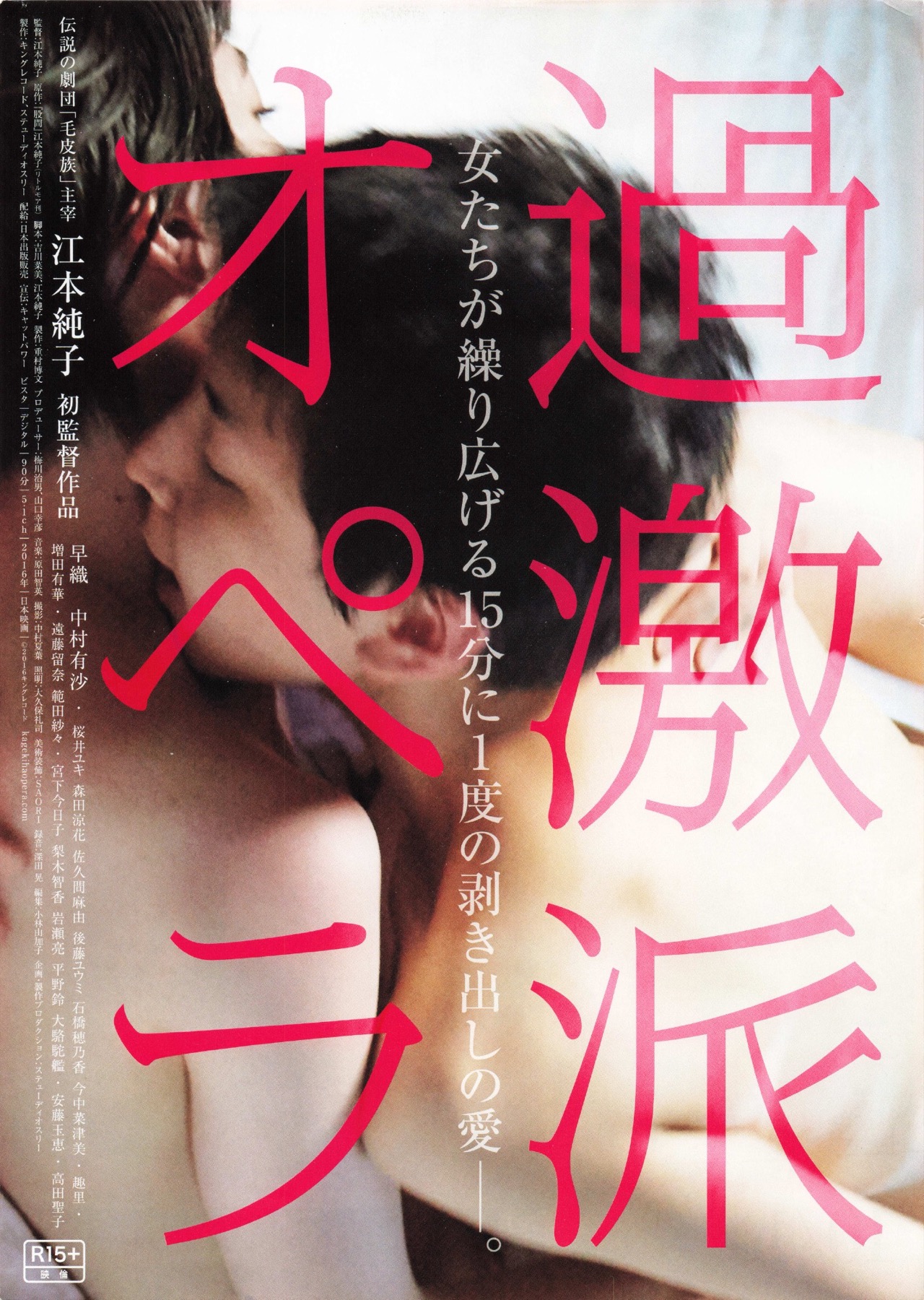
The Extremists’ Opera (過激派オペラ, Junko Emoto, 2016)

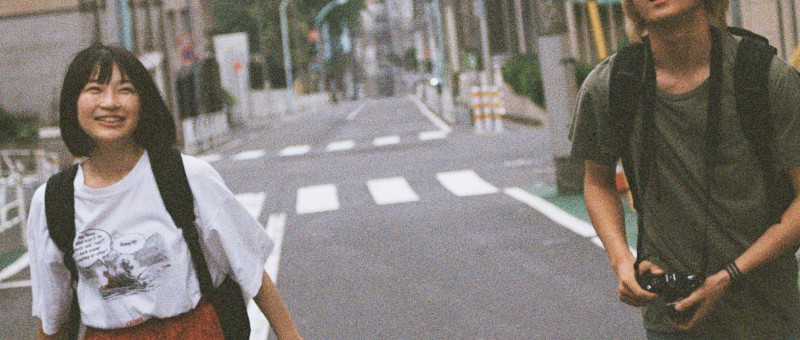
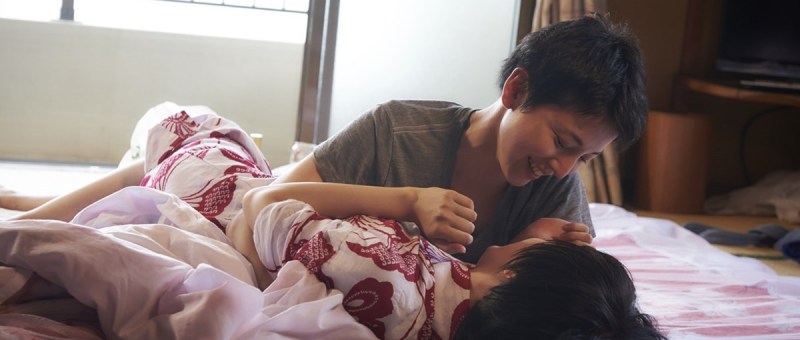
Junko Emoto ironically explores Tokyo’s fringe theatre scene in adapting her semi-biographical novel. Shot with a roving, handheld camera, The Extremists’ Opera (過激派オペラ, Kagekiha Opera) situates itself within an all female, avant-garde experimental theatre company but quickly makes plain that even those with high-minded artistic intentions are not free of the usual human flaws as the borderline abusive, womanising female director finds herself sabotaging everything she’s built through a mix of hubris and wandering desire. 

Blanket Cult are a popular company on the fringe theatre scene with a small following devoted to their art. Former banker Ayako bursts into their office determined on an audition and subsequent career change precisely because she can’t get enough of director/playwright Nao’s experimental plays which, she explains, she believes can stop wars. Nevertheless, it’s not Ayako the team are struck by, but the intense young woman who came in behind her, Haru, who more or less demands to be taken on. Nao is captivated, hiring both women on the spot and vowing to write a new piece with Haru in the lead. Of course, she does this partly for not altogether altruistic reasons. Immediately after the first script meeting she asks Haru to stay behind and then propositions her, directly declaring her love with the justification that she’d rather be upfront rather than waste time during the rehearsal process. Haru tells her that she’s not into women, but Nao doesn’t take no for an answer seemingly oblivious to the fact that what she’s doing is harassment and really she’s no better than any other sleazy male director handing out parts to women she wants to sleep with. 

Nevertheless, her persistence even with its undignified pleading eventually pays off. Haru relents, either because she’s fed up of fending off Nao’s advances or discovering that she is on some level receptive, finding that she does in fact enjoy sex with another woman. She agrees to start dating Nao who declares Haru her muse and the pair move in together but their relationship is threatened by their working environment with its petty jealousies and temptations. Emoto opens the film with a graphic sex scene of two naked women 69-ing, rolling around in the empty environment of the garage the troupe uses to rehearse. The two women are Nao and her previous squeeze, a former leading lady she throws over because of her attraction to Haru whose own desire is perhaps signposted after she walks in on them going for a second round and makes a passive aggressive scene that leads the other woman to warn her that Nao is a heartless womaniser with a habit of bedding her leading ladies, sometimes in the wings. 

Yet it’s not only Nao’s misplaced desire that endangers the troupe but her arrogance and abusive directing style. After their play proves a success, she unwisely gives in to ambition and sells out by allowing a mainstream professional actress, Yurie, to join the troupe, a move which disrupts their dynamic while also inflaming Haru’s jealousy as she begins to wonder if she’s already being replaced. Nao snaps at her team and stops giving them proper direction in favour thinly veiled insults. She repeatedly instructs an actress to lose weight while increasingly allowing Yurie to dominate the rehearsals, accepting all of her ideas even while the other members sceptical. She even goes so far as to abandon her usual thriftiness, purchasing elaborate props such as a large vertical tank which leads her into another possibly inappropriate relationship with an older woman who had been pursuing her. Needless to say, the whole thing blows up in her face, ruining not just her relationship with Haru but that with her theatre company who are now all thoroughly fed up with her mistreatment and have entirely lost respect for her as a person and an artist. 

“If you want to pick a fight with society live in it first,” her benefactor irritatedly tells Nao after she’s thoughtlessly caused offence, reminding her that she lives in a kind of bubble that is the fringe theatre scene. Her only real interaction with someone outside of it is with the estate agent who finds her and Haru a flat and is extremely confused as to why they only need one room if they’ll be living together, concerned that female roommates are a liability because sooner or later one gets a boyfriend and leaves the other in the lurch unable to make the rent alone. Unable to learn her lesson, Nao has furiously energetic sex with an apparently wealthy starstruck fan and then immediately asks for money, perhaps getting a taste of her own medicine when she assures her there’s plenty more where that came from as long as she sees her again and also gives her a part in a play. Playfully ironic with its whimsical score and slightly detached gaze, Emoto’s refreshingly explicit drama is both a mild satire of the avant-garde fringe theatre scene and a takedown of its self-involved director whose inability to separate the creative from the carnal proves her downfall both artistic and emotional. 


Trailer (English subtitles)

Strangers (Kenta Ikeda, 2024)

Naoko, the heroine of Kenta Ikeda’s Strangers, says she’s been pretending all her life. She’s been pretending to be what everyone wanted her to without really knowing or thinking about what it was she wanted to be or who she really is. On a baseline level, Ikeda suggests that we are and remain strangers to ourselves while equally confused about those around us, seeing what we want or expect to see rather than who they really are.

In part that may explain why Naoko has stayed with her unfaithful fiancé Takeo who got a colleague pregnant and then seemingly abandoned her. Shimizu then began harassing Naoko, stalking her and making silent calls. To make matters worse, Takeo is often away on “business trips”. He’s not currently responding to her phone calls or messages and has just embarrassed her by not turning up to a family event. Naoko’s sister thinks she should leave him and doesn’t understand why she hasn’t already. But Naoko just sighs that she’s decided not to expect too much from life and seems prepared to put up with this degradation because she doesn’t think she deserves anything better. 

That might be why she’s so drawn to her enigmatic colleague Yamaguchi who waltzes in past noon wearing a distinctive blue dress that floats in the air behind her. The other ladies at work gossip that their bullying boss Satome, who is married with two children, got her the job after picking her up on a dating app and the reason why she can get away with such unprofessional behaviour is because she’s sleeping with him. But Naoko later discovers that Yamaguchi’s dating app activities are a kind of side hustle in which she participates in idealised dating scenarios pretending to be the lover of lonely men who pay her handsomely for a few hours of fantasy romance.

Or as Yamaguchi describes it, the opportunity to experience only the good parts of love before you get sick of each other and run out of things to say. It sounds more than a little like the logic of someone who’s decided not to expect too much from life, and while it seems Yamaguchi may be trying to avoid her own grief and loneliness, it’s true that she otherwise remains a cypher. After losing contact with Yamaguchi and being left with her smartphone, Naoko receives a call from her handler who tells her that it doesn’t matter who she is or why she has “Yamaguchi’s” phone, all that matters is turning up at the appointment and never letting it slip that it’s all just role-play.

On her dating app profile, Yamaguchi’s face is blurred so that you only really see the image of her in her distinctive blue dress which Naoko too later starts wearing. The people around Naoko are often shot in soft focus so that we can’t really be sure of their identity beyond using their clothing to infer who they are. Men in particular are often shot from behind or with their faces out of frame as if they were all just a much of a muchness. We never even meet Takeo, who apparently does not return from his “business trip”. In any case, in agreeing to the fantasy date, Naoko is gradually taken over by the Yamaguchi persona. The spread of the graze she sustained at the beginning of the film seems to indicate the gradual erasure of her identity, yet in another sense becoming Yamaguchi also gives Naoko an excuse to stop pretending and accept herself or at least to start expecting more from life. She becomes more assertive, flirtatious, and confident in confronting Shimizu only to realise that she may not have been the mysterious force she felt watching her after all. 

In her Yamaguchi persona, Shimizu describes Naoko as a like a colourless and doorless detergent, but she replies she’s been hiding all her life. She ran ran away from her problems, refused confronting Takeo or Shimizu, avoided being honest with her family and simply played up to the image they had of her of a shy and obedient woman. There might be something in the fact that Yamaguchi kisses her suggesting that Naoko may have been running away from her sexuality, but equally it could just be that this is how the Yamaguchi curse is passed from woman to woman. Having once assumed it, Naoko now must try to shake it off but that too might not be as easy as she might assume. Meanwhile, those around her also have their own secret lives and faces they keep hidden from others. Ikeda creates a atmosphere of eeriness and hovering violence amid the faceless city where it doesn’t matter who you are so long as you show up and everyone is to some extent participating in a temporary fantasy in order to overcome the disappointment of life in which as Naoko had told herself it seems better not to expect too much.


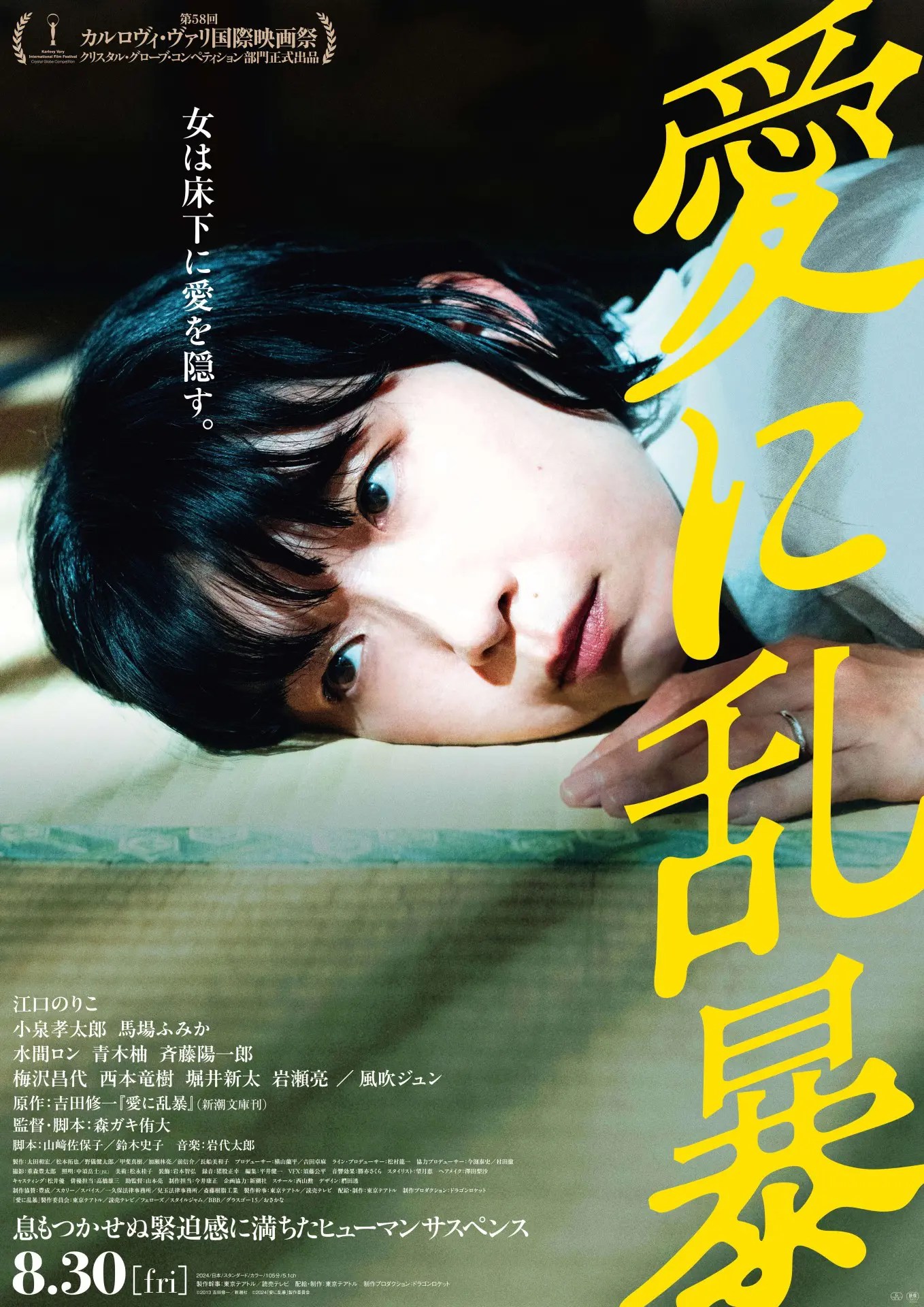
Rude to Love (愛に乱暴, Yukihiro Morigaki, 2024)

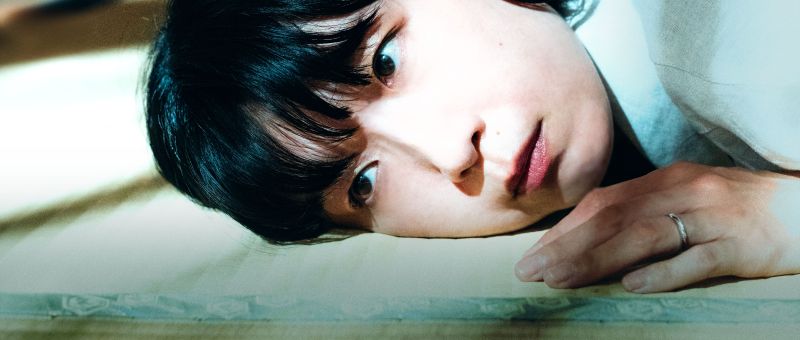
Momoko (Noriko Eguchi) can’t find her cat, Pi-chan. It hasn’t been home for days, and now there’s a stray prowling around near its water bowl. Her mother-in-law, Teruko (Jun Fubuki), can’t abide strays. They come into people’s homes and mess up their gardens. She shoos them away, making it clear they aren’t welcome here. It seems like Momoko’s not all that welcome either, and though her relationship with Teruko is civil enough, it’s clear Teruko has no great love for her and no desire to be any more friendly than she has to be to keep the familial peace.

In many ways, it’s Momoko herself that’s a stray cat and in trying to find Pi-chan she’s trying to reclaim her space within the domestic environment in which she fears she is imminently to be replaced, convinced that her husband, Mamoru (Kotaro Koizumi), is having an affair. At the core of Yukihiro Morigaki’s Rude to Love (愛に乱暴, Ai ni Ranbo) is a cry of despair from a middle-aged woman left with nowhere to turn. Someone in their quiet, residential district has been setting fire to the bins and it’s difficult to not think that the culprit is someone much like Momoko pushed to breaking point and desperate for some kind of release. For Momoko’s part, taking out Teruko’s rubbish has become a daily ritual and one of her key tasks as a dutiful daughter-in-law while she also goes out of her way to keep the place tidy, sweeping up the stray cigarette butts and tin cans that fall from other people’s loosely tied bags. But in other ways, we can see she wants things to change. She repeatedly approaches Mamoru with catalogues to talk about their plans for radically renovating their home, including the removal of a non-load-bearing pillar in the living room, but he generally ignores her.

In fact, Mamoru pays little attention to her at all and is frequently away on “business trips”. Momoko has a sideline in teaching other housewives how to make soap, but left her corporate job eight years previously when she married Mamoru. She tries approaching her old boss to expand the soap-making business and he suggests that she return to the office instead but almost certainly doesn’t really mean it and totally ignores her business proposal. Momoko knows that after so long out of the work force and as a middle-aged woman getting another corporate job is unlikely and the soap classes don’t pay enough to live on. If Mamoru leaves her, she’ll be left flat with nothing to fall back on. This is a key element of Mamoru’s betrayal and one of the reasons that Momoko holds fast to this domestic space to the point she would degrade herself by accepting Mamoru’s affair and begging him not to divorce her. 

Yet in other ways Momoko feels uneasy within it because she and Mamoru had no children. She looks on at other women with their babies and visits a doctor who tells her that her increasingly painful menstrual cramps are a symptom of ageing that she may have been able to ameliorate by giving birth to a child, but also that she is likely heading into the menopause so this maternal milestone is one that may already have passed her by. She can’t escape the feeling that she’s failed to make a success of her womanhood and channels all of her ambitions and desires into the remodelling project that her husband remains entirely uninterested in because he’s already decided to vacate this space. In the depths of her rage, Momoko finally takes a chainsaw to the foundations of her home in the hope of “freeing Pi-chan,” and ends up lying in a grave-like pit in the middle of her living room much like the deluded patriarch of The Crazy Family

The only person who seems to appreciate her efforts is the Chinese student, Li (Long Mizuma), who works at the local garden centre where he is treated poorly by some of the other customers. Mamoru never thanked her for anything, but Li expresses gratitude for her always keeping the rubbish drop tidy. Teruko resents her for something that is really a kind of misunderstanding, but has on some level some sympathy for her plight as a housewife. She idly remarks that she wishes she’d been widowed sooner, which sounds like a terrible thing to say, but also reflects the sense of doom a woman feels in her increasing age that a man does not. Men are never too old to start over but for a woman there are certain things for which is just “too late”, just as it was “too late” for Teruko to fulfil herself after her husband died. She tells Momoko that she still young enough to start over, but Momoko knows that in many ways she’s not. Still, at least the domestic space is hers to do with as she pleases no longer under the watchful eyes of her next-door neighbour and mother-in-law, stray cat no more but master of her own domain.


Rude to Love screens as part of this year’s Japan Foundation Touring Film Programme.

Trailer (no subtitles)

Based on the original novel Shuichi Yoshida “Rude to Love” published by Shinchosha

Images: ©2013 Shuichi Yoshida/Shinchosha ©2024 “Rude to Love” Film Production Committee

(Ab)normal Desire (正欲, Yoshiyuki Kishi, 2023)

There’s a pun embedded in the Japanese title of Yoshiyuki Kishi’s heartfelt drama (Ab)normal Desire in that first character in the word for “sexual desire” (seiyoku, 性欲) has been replaced by one that can be read the same but has the meaning of “correct”, or “proper”. But “normal” is also relative construct that implies conformance with the majority even if that may not actually be the case. As one of the protagonists later remarks “everyone is pervy” though they themselves feel such a degree of shame and otherness that it’s largely prevented them from living any kind of life at all.

In that sense it may be hard to understand why a fetish for water would invite such severe self-loathing in that it causes no harm to others if admittedly resulting in ridicule if exposed. Then again, society can be a fierce watchdog. Department store shop assistant Natsuki (Yui Aragaki) is taken to task by her pregnant colleague who refuses to take her seriously when she says she’s not really interested in getting a boyfriend before giving her a lecture about her biological clock. Though Natsuki appears uninterested in her vacant prattling, the woman later becomes upset and harshly tells her that she was only trying to be “nice” because she felt “sorry” for her and that making people be nice to you in this way is actually a form of harassment which, whichever way you look at it, is some particularly twisted logic.

Her alienation seems to stem from the fact that she feels “abnormal” and that her fetish for water is a part of herself she must be careful to hide. Her parents watch a news report on Tokyo Rainbow Pride and marvel at the idea that there are now choices other than marriage and children but even among the young there remains confusion and shame amid an inability to reconcile the seemingly opposing concepts of “normality” and “diversity” as they struggle to define themselves. A plan to have a male dancer who usually dances in a masculine style dance in a more feminine way backfires when he points out that asking someone to dance in a way they don’t want to doesn’t really do much to advance “diversity”.

But diversity isn’t considered an ideal by all and parents of young children find themselves confused and conflicted when their kids begin to reject conventionality at an early age by asking to withdraw themselves from school and instead focus on other kinds of education that align with their interests. Challenged by his wife about why he never listens to their son’s concerns, prosecutor Hiroki (Goro Inagaki) replies that he should “just be normal” and later describes people who are “unable to live normal lives” as bugs in the system which must eradicated. A symbol of lingering authoritarianism, Hiroki is an intensely conservative man obsessed with properness who thinks it’s his job to decide which crimes everyone is guilty of rather than make any attempt to understand the world around him outside of binary terms like right and wrong or normal and abnormal. When his assistant passes him information on fetishes as a potential explanation for the case of a man who repeatedly steals taps, he simply rolls his eyes and dismisses it.

Yet he perhaps has his own fears and internalised shame as evidenced by his outrage on discovering that another man has been coming to the house to help his wife with tech setup for their son’s new outlet in livestreaming and not only that, he was able to blow up the balloons that Hiroki himself failed to inflate. It’s his rigid authoritarianism that eventually alienates his wife and son who come to see him only as an oppressive bully unable to accept anything that differs from his own definition of “normal”. Finally, he’s the one who is isolated, imprisoned by his own repression and lack of understanding or unwillingness to accept those around him.

Even so, despite its positive messages that no one should feel themselves alone or that society has no place for them the film muddies the waters by introducing fetishes that are necessarily problematic in that they cause harm to others who do not or cannot consent and could not and should not be accepted by mainstream society though oddly those that have them seem to feel less shame only fearing being caught because acting on their desires is against both moral and judicial laws. In any case, in discovering togetherness, that they are not alone, those who feel their desires to be “abnormal” can begin to ease their loneliness and find a place for themselves in an often judgemental world.


(Ab)normal Desire screened as part of this year’s Toronto Japanese Film Festival.

Original trailer (English subtitles)

colorless (猿楽町で会いましょう, Takashi Koyama, 2019)

“I think I could capture the real you” a photographer pleads of a subject he has become obsessed with, little knowing the deeply problematic implications of his statement. Shot with a photographer’s eye, Takashi Koyama’s colorless (猿楽町で会いましょう, Sarugakucho de Aimasho), paints its heroes as just that, wandering zombies of modern day Tokyo as estranged from themselves as they are from others, but even as it attempts to draw similarities between their mutual lifelessness cannot help but reflect a misogynistic world view in which the conflicted heroine remains little more than an empty shell, a blank canvas onto which various men project their inner desires leaving her essentially robbed of an identity by an exploitative society. 

When we first meet aspiring freelance photographer Shu (Daichi Kaneko), he is in much the same position, kept waiting by an arrogant magazine editor who has stepped out of the office despite having arranged an appointment to look over his portfolio. When he eventually arrives, Kasamura (Kenta Maeno) rudely dismisses his work, claiming that the selection of photos he’s assembled doesn’t make sense in that it gives no clear indication of his style or intent and aside from that his shots are cold and lifeless. He attributes this lack of passion to the likelihood that Shu has never truly been in love, something which turns out to be true though as we later discover Kasamura is also a cold and cynical man who proudly proclaims the same of himself. Nevertheless, he hooks Shu up with a side job shooting publicity shots for an acquaintance, Yuka (Ruka Ishikawa), hoping to become a “reader’s model” as a path to fame. 

For whatever reason, Yuka seems to incite in him the passion which Kasamura claimed was missing in his work, becoming both muse and object of desire. She describes herself as colourless and wonders if there is a “her” that can be captured, while Shu assures her that he feels much the same but fails to appreciate the various ways in which he is attempting to colour her with his camera, filled with nothing but jealous anxiety when confronted by the possibility that she exists outside of the image he has created of her. The incongruities between what she tells him of herself, his own self created vision, and the evidence presented to him by others bring out an unpleasantly chauvinistic side of him which he perhaps does not even like in himself, abruptly attempting to stop her leaving his apartment without consenting to sex by threatening to withhold the data for the pictures he took, breaking into her phone to check her messages, and later feeling humiliated in realising that she may have hidden from him a prior (or current) life in sex work.

Yuka, meanwhile, remains a cipher. Unexpectedly interviewed as part of an audition she is asked to describe herself but can only reply in terms of the way others see her, answering only that she is often said to have a sunny disposition. We see her parrot back lines she’s heard from one man to another in an attempt to please him, as if wilfully erasing her essential identity to better conform to male desires in an attempt to keep herself safe but also perhaps betraying that she has few words of her own to offer. Yet in private we see a much less complimentary side of her in which she is petty and jealous, resentful of a friend’s success while she seems to get nowhere and, the film uncomfortably insists, willing to use men by exploiting their desire for her which is in essence a desire for a colourlessness they can dye with their own self projected ideals. 

Yuka claims that she does not want to know who she really is, perhaps afraid to know or realising that there really is no value in knowing because her existence is defined by male desire. Her tragedy may be that she isn’t cynical enough, unable to manipulate men to the same extent as her more successful friend, still longing to be known and loved for who she is even while insisting that she does not exist and wilfully misrepresenting herself to those around her out of embarrassment and dissatisfaction with her life. The story she tells in her interview implies a lasting trauma of male abuse which has caused a rupture in her sense of self, unable to grasp an identity other than that granted by others, but still we’re largely left with Shu’s resentment in his inability to “capture” that which cannot be captured in his desire to possess not only Yuka’s body but her image by replacing it with that of his own creation. A dark and cynical take on modern romance, colorless leaves its heroes much where it found them, floundering in an inherently patriarchal society itself devoid of the colour they each desire. 


colorless streamed as part of this year’s Udine Far East Film Festival.

International trailer (English subtitles)

Destruction Babies (ディストラクション・ベイビーズ, Tetsuya Mariko, 2016)

destruction-babiesPost-golden age, Japanese cinema has arguably had a preoccupation with the angry young man. From the ever present tension of the seishun eiga to the frustrations of ‘70s art films and the punk nihilism of the 1980s which only seemed to deepen after the bubble burst, the young men of Japanese cinema have most often gone to war with themselves in violent intensity, prepared to burn the world which they feel holds no place for them. Tetsuya Mariko’s Destruction Babies (ディストラクション・ベイビーズ) is a fine addition to this tradition but also an urgent one. Stepping somehow beyond nihilism, Mariko’s vision of his country’s future is a bleak one in which young, fatherless men inherit the traditions of their ancestors all the while desperately trying to destroy them. Devoid of hope, of purpose, and of human connection the youth of the day get their kicks vicariously, so busy sharing their experiences online that reality has become an obsolete concept and the physical sensation of violence the only remaining truth.
The rundown port towns of Shikoku are an apt place to stage this battle. Panning over the depressingly quiet harbour, urgent, thrumming electric guitars bring tension to the air as the younger of two brothers, Shota (Nijiro Murakami), catches sight of his only remaining family member, older brother Taira (Yuya Yagira). Currently in the middle of getting a beating from local thugs, Taira signals his intention to leave town, which he does after his boss breaks up the fight and tells him to get lost.

By the time Shota has crossed the river, his brother is already lost to him. A vengeful, crazed demon with strange, burning eyes, Taira has taken the same path as many an angry young man and headed into town spoiling for a fight. Driven by rage, Taira fights back but only to be fought with – he craves pain, is energised by it, and rises again with every fall stronger but a little less human.

As he says, he has his rules (as mysterious as they may be), but Taira’s violent exploits eventually find a disciple in previously cowardly high school boy Yuya (Masaki Suda) who discovers the potential violence has to create power from fear in witnessing Taira’s one man war of stubbornness with the local yakuza. Yuya, a coward at heart, is without code, fears pain, and seeks only domination to ease his lack of self confidence. Taira, random as his violence is, attacks only other males capable of giving him what he needs but Yuya makes a point of attacking those least likely to offer resistance. Proclaiming that he always wanted to hit a woman, Yuya drop kicks schoolgirls and sends middle aged housewives and their shopping flying.

The sole female voice, Nana (Nana Komatsu) – a kleptomaniac yakuza moll who finds her validation though shoplifting unneeded items selected for the pleasure of stealing them, originally finds the ongoing violence exciting as she watches the viral videos but feels very differently when confronted with its real, physical presence and each of the implied threats to her person it presents. Tough and wily, Nana is a survivor. Where Taira staked his life on violence and Yuya on the threat of it, Nana survives through cunning. The victory is hers, as hollow as it may turn out to be.

Mariko’s chilling vision paints the ongoing crime spree as a natural result of a series of long standing cultural norms in which contradictory notions of masculinity compete with a conformist, constraining society. The entire founding principle of the small town in which the film takes place is that men come of age through violence, though the older man who has (or claims to have) provided the bulk of parental input for these parentless brothers describes Taira as if he were the very demon such festivals are often created to expel. Men of 18 years carry the portable shrines, he repeatedly says, but 18 year old Taira is a “troublemaker” and “troublemakers” must leave the town altogether.

If Taira sought connection through violence, Shota continues to seek it through human emotions – searching for his brother, hanging out with his friends, and drawing closer to his brother’s boss who offers him differing degrees of fatherly input. In contrast to his peers, Shota seems to disapprove of the way his cocksure (false) friend Kenji (Takumi Kitamura) treats women though it is also true that Kenji is actively frustrating his attempts to find his brother whilst dangling a clue right before his eyes. Nevertheless, the harshness of this unforgiving world seems determined to turn Shota into the same rage filled creature of despair as his older brother as injustice piles on injustice with no hope of respite.

Destruction Babies is apt name for the current society – born of chaos, trapped in perpetual childhood, and thriving on violence. Taira and Shota were always outsiders in a world which organises itself entirely around the family unit but the force which drives their world is not love but pain, this world is one underpinned by the physical at the expense of the spiritual. Metaphorically or literally, the lives of the young men of today will entail repeated blows to the face while those of the young women will require ingenious sideward motions to avoid them. Oblique, ambiguous, and soaked in blood, Destruction Babies is a rebel yell for a forlorn hope, as raw as it is disturbing.


Screened as part of the Japan Foundation Touring Film Programme 2017 and set for UK release from Third Window Films later in the year.

Original trailer (English subtitles)

Worst Woman (최악의 하루, Kim Jong-kwan, 2016)

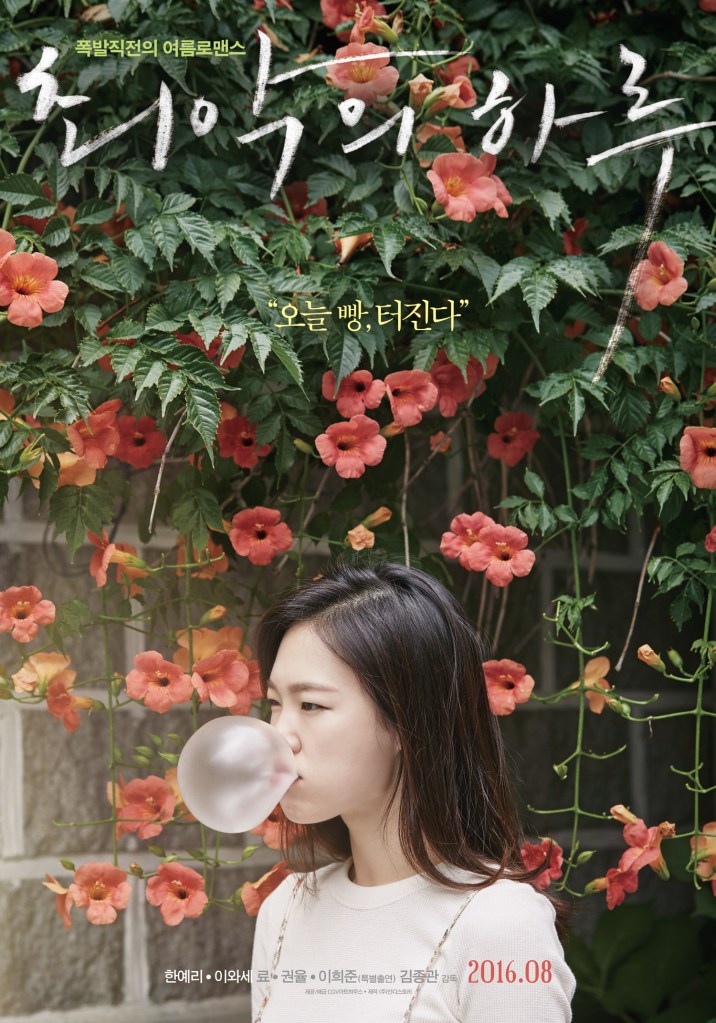
movie_imageKim Jong-kwan’s award winning unexpected indie box office hit has been given the rather odd English title of Worst Woman (최악의 하루, Choeakui Haru) in contrast with the original Korean which simply means “The Worst Day”. In fact, the film is about two people – an aspiring Korean actress with problems in her personal life, and a Japanese writer visiting for the launch of the Korean translation of his novel, each of whom is indeed having an exceptionally unlucky day. Part walking and talking, part split focus romantic comedy, Worst Woman is a polished piece of indie filmmaking anchored by quality performances and an interesting approach to its material.
Eun-hee (Han Ye-ri) is supposed to be rehearsing for a play but somehow she’s not really into it, much to the consternation of her coach. Heading off to meet up with her vacuous soap star boyfriend, Hyun-Oh (Kwon Yool ), Eun-hee runs into a hopelessly lost Japanese man who asks her for directions but mangles the pronunciation of the address leaving her with little idea of the destination. Nevertheless, Eun-hee eventually helps the mysterious traveller, Ryohei (Ryo Iwase), find the place he’s looking for only to realise he’s been given the completely the wrong time and there’s no one there to meet him. The pair then decide to have coffee together in a nearby cafe before Eun-hee leaves to track down Hyun-oh.

At this point their paths diverge but each is in for a disastrous day. Eun-hee argues with Hyun-oh about a previous (married) boyfriend before teasing him about his decision to wear a face mask and sunglasses “in case someone recognises him” (hilariously, he still gets snapped when a passing woman realises only a celebrity would be wearing such an attention seeking disguise). The playful argument suddenly turns ugly when Hyun-oh calls Eun-hee by another girl’s name leading her to dump him on the spot and leave as quickly as possible. Moping around, she posts a picture of the view from the park on Twitter which “concerns” the aforementioned married ex-boyfriend, Woon-Chul (Lee Hee-joon), who also wants to take Eun-hee for coffee in an attempt to rehash the past.

Meanwhile, Ryohei has finally met up with his publisher but quickly discovers his book launch is not all that it seemed to be. Not only has the venue changed, but only two people have turned up (and even that was an accident). Making the best of things, Ryohei takes the “guests” to a nearby coffee shop and attempts to talk to them about literature with mixed results. The apologetic publisher is Ryohei’s biggest supporter, translating the book himself and determined to share it with his fellow countrymen, but has problems of his own which mean that the Korean edition of Ryohei’s novel is set to remain on the shelf a little longer.

Chatting awkwardly in English in the cafe, Eun-hee asks Ryohei what he does for a living to which he jokingly replies that he “lies”. His job is, in essence, to make things up – he’s a novelist, albeit one with only a single book to his name. Eun-hee laughs and says she’s same, only she’s an actress, and like Ryohei she is not yet famous or even particularly successful. In fact, Eun-hee has been giving the performance of her life off stage where lying has become something of a bad habit. Though she had told Hyun-oh about her relationship with Woon-chul, even explaining that he was a married man, it appears that perhaps she hadn’t been sharing the whole truth with either man. Needless to say, her taste in men has not served her well and the choice between the petty and self obsessed Hyun-oh and the possessive, persistent and obsessive Woon-chul may not be worth making.

If Eun-hee’s romantic difficulties undermine her sense of self confidence, Ryohei gets a professional dressing down from a bilingual journalist (Choi Yu-hwa) who claims to be a fan of his work but has serious questions about his approach to character. Why, she asks him, does he create such violent and sadistic scenarios and then allow his characters to suffer within them. If the writer is god, does he not owe it to his creations to show a little benevolence? Ryohei is a put out to receive such an underhanded criticism during an interview, especially as he doesn’t consider himself to be a cruel person, but now realises that perhaps his world view is a little bleaker than he’d previously thought.

Both having experienced one of those days which throw everything else into stark relief, the pair run into each other again at twilight in the picturesque Namsan Park. Eun-hee revisits the opening monologue from her play, now managing to breathe life into the lines informed by her recent experiences, before reuniting with Ryohei and making another surprising suggestion – that they set off on a long walk along the park trail which she has never managed to complete. The opening narration from Ryohei told us that he’d been dreaming a lot of his home town and had, unusually, come up with a story idea whilst travelling. Smarting from the criticisms of the journalist and realising many of the characters he’s denied a happy ending to are slightly lost, essentially nice women just like Eun-hee, Ryohei decides that it’s time to make an exception. He imagines the same place he is right now, only it’s snowing and a woman is looking nervously back along the path. This time there is no need to worry, he doesn’t know all the details yet, but this woman is definitely going to be happy, at least someday.

Featuring a light jazz score and indie-style straightforward direction, Worst Woman recalls both the distant irony of Hong Sang-soo and other recent cross-cultural romances such as A Midsummer’s Fantasia (which also starred leading man Ryo Iwase) and Hong’s own Hill of Freedom. A tale of city serendipity, the film makes use of constant reoccurring motifs from coffee shops and national parks to professional insecurity and confused relationships but even if Eun-hee has been playing the role of herself with both of the men in her life, her connection with Ryohei seems to have a more authentic quality. Light yet poignant and filled with sophisticated comic touches, Worst Woman is a delightful late summer romance which ends on a refreshingly upbeat, open ended, note careful to leave the door open for these two frustrated artists to make the best of their worst day.


Reviewed at the 2016 London East Asia Film Festival.

Original trailer (English subtitles)

A Midsummer’s Fantasia (한여름의 판타지아, Jang Kun-jae, 2014)

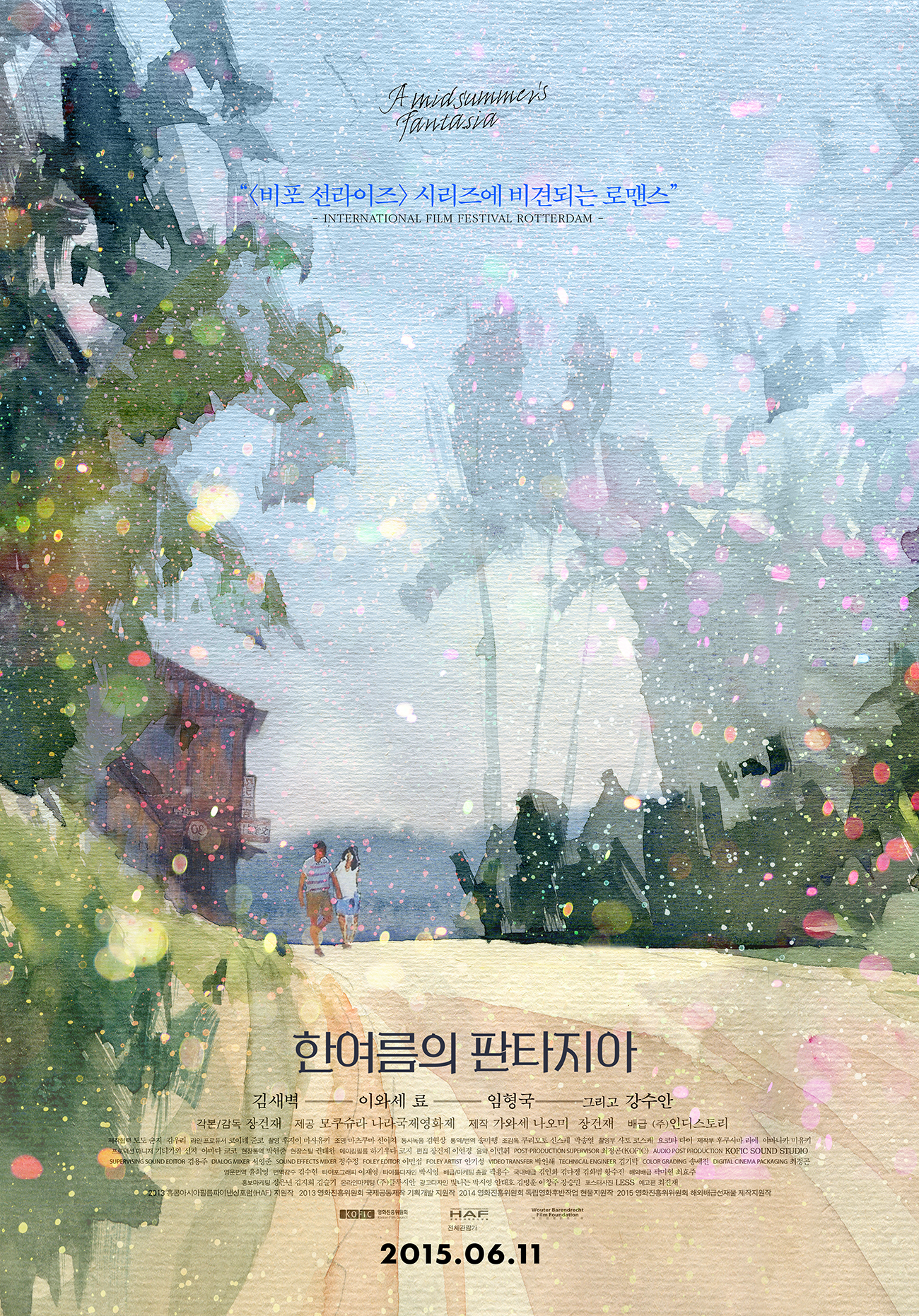
Midsummer FantasiaFollowing his “sleeper” hit, Sleepless Night, Korean indie director Jang Kun-jae gets a touch of the Hong Sang-soos in the bifurcated tale of artistic inspiration found in a foreign land with the Korean/Japanese co-production A Midsummer’s Fantasia (한여름의 판타지아, Hanyeoreumui Pantajia). Mixing naturalism with hyperreality, Jang’s exploration of cross cultural pollination is one which offers both fireworks and quiet contemplation.

Neatly split into two parts, the film begins with a black and white sequence titled First Love in which a Korean director travels to a tiny Japanese town on a location shoot accompanied only by his assistant playing the role of interpreter. A beautiful country idyll, the village is also dying as the population ages leaving the local school abandoned for over 25 years with only the elderly left behind by their children who’ve fled to the cities. After talking with some of the residents, the director is captivated by the romantic tales of a local civil servant who acted as a guide for a young Korean girl some years previously and that of a slightly older man who once worked in the big city of Osaka and took a liking to a Korean bargirl who reminded him of his first love but tragically lost touch with her after deciding to return home.

Inspired by these twin tales of frustrated cross cultural romance, part two switches to colour for a story titled The Well of Sakura in which a Korean woman pays a visit to the same small town before heading home. A local man from the tourist office helps her out by showing her around a little and is, in truth, disappointed that she will be leaving soon never to be seen again.

The first half is shot entirely in black and white with a documentary style approach filled with ugly jump cuts and direct to camera speeches from the local residents about their daily lives in the town. Wandering around the picturesque settlement and listening to the stories of its lonely older population, what the director is most taken with is the wistfulness of the place – the sense of unresolved longing, faded promise and missed opportunities the abandoned village seems to evoke.

Part two is his response, a constructed tale of unresolved romantic connection between a Japanese man and a Korean tourist who’s ventured somewhat off the beaten path both physically and spiritually in visiting this quiet backwater before returning to the various problems which seem to be proving disruptive in her everyday life in Korea. Picking up elements from part one such as the abandoned school and its mysterious photograph, it weaves an ordinary tale of love as two people begin a dialogue they may never have the opportunity to end.

However, part one is not quite as naturalistic as it first seems with its wandering ghosts and strange symbolism. Even if the bright colours of the film’s second half are intended to feel more “cinematic” and therefore less “real” than the black and white, talking heads doc meets indie movie feel of part one it’s clear that both segments are involved in a dialogue, or perhaps even a romance, with each other – a case of call and response which begins and ends with fireworks.

It’s difficult to unsee Hong Sang-soo in Jang’s dual structure and straightforward if occasionally whimsical approach, yet he’s a little less flippant than Hong’s often ironic tone and is content to let even his imagined tale of a failure to launch romance say something more meaningful if only through simple conversation. Filled with cross cultural detail, A Midsummer’s Fantasia is both about place and not as it, like the director of the first half, is keen to point us to the who and not the where – people rather than place are the name of the day. Filled with an oddly melancholy warmth, A Midsummer’s Fantasia is another excellently produced character piece from Jang which explores larger themes with a poetic economy and heart filled with “romance” in much a larger sense.


A Midsummer’s Fantasia is available on English subtitled Region 3 DVD from Korea.