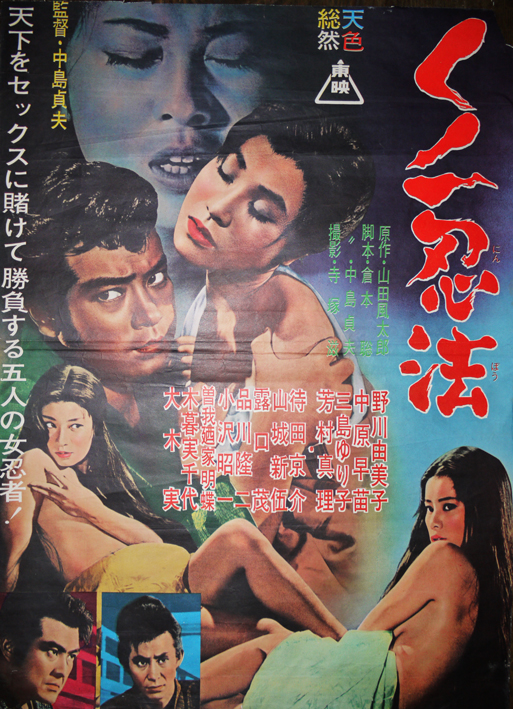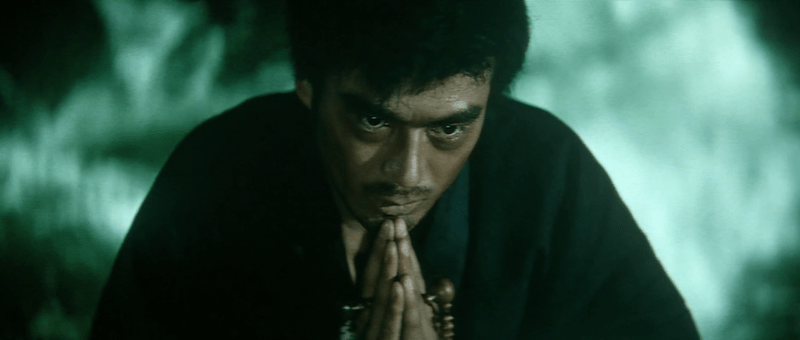
Memoir of Japanese Assassinations (日本暗殺秘録, Sadao Nakajima, 1969)

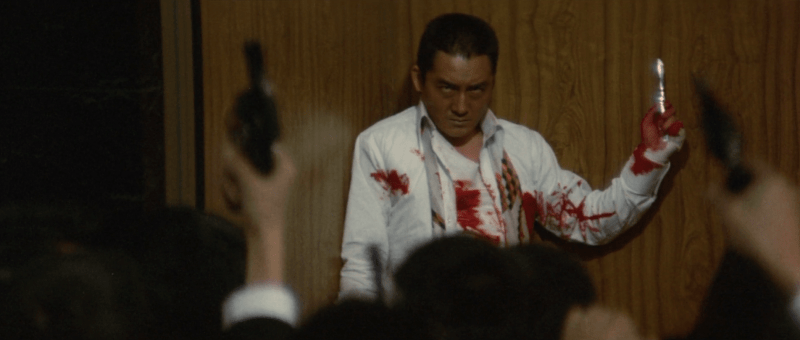
According to the narrator of Sadao Nakajima’s artistically daring Memoir of Japanese Assassins (日本暗殺秘録, Nihon ansatsu hiroku) the practice of assassination had got so out of hand in the early years of Meiji that the emperor was forced to institute a law banning it while accepting responsibility for the lawlessness his imperfect governance had produced. But by opening with the Sakurada Gate Indecent from 1860, the film seems to be asking what went wrong in Meiji and why the assassinations have still not stopped with the implication that more may be on their way in rather febrile political atmosphere of the late 1960s in the run up to the renewal of the Anpo security treaty with Asama Sanso still a few years away.

The answer to the question that it presents, is that oppression has still not ended in Japan and that most of these assassinations took place because people had enough of difficult social conditions those in power little did to address. However, the first few pre-20th century  assassinations which are presented in the form of short vignettes, are largely a product of the confusion of the bakumatsu era as reactionaries attempt to halt Japan’s increasing openness to the wider world and what they see as a loss of national identity and sovereignty. The implication is that this sense of ideological conflict is a direct cause of the nationalism that defined the first half of the 20th century. 

It’s not until we reach the early 1920s that the secondary cause of Japan’s dire economic situation rears its head as the right-wing nationalist leader of Righteousness Corps of the Divine Land (Bunta Sugawara), a society dedicated to workers’ rights, assassinates the head of a family-run conglomerate he accuses of feeding on the blood on the common man. From this incident we can see that it is not as easy to draw a line between left and right in terms of political ideology as it might be at other times or in other nations as otherwise nationalist forces share ideas that might lean more towards socialist ideals. Ikki Kita whose philosophy informed the February 26th Incident that ends the film described himself as socialist, but is also regarded by some as the architect of Japanese fascism. With the so-called “Showa Restoration”, he advocated for the elimination of private property and a doctrine of socialism from above in which the emperor would assist in the reorganisation of society. Which is to say, the clarification of the Meiji Restoration actually meant.

In any case, it’s easy to see the reasons that these ideas caught hold and that concepts such as “revolution” were a counter to the persistent hopelessness of the depression and the extreme poverty of Japanese society while the large conglomerates prospered through trading with the United States. The bulk of the film focuses on Onuma who assassinated Junnosuke Inoue in 1932 as part of an intended reign of terror known as the League of Blood instituted by the far right Nichizen Buddhism cult led by Nissho Inoue (Chiezo Kataoka),. Onuma was still alive at the time the film was made and apparently acted as a consultant. Played by a fresh-faced Shinichi Chiba, he’s depicted as an earnest young man who is driven into the ground by the increasingly capitalist mentality of the 1920s, a time of high unemployment and frequent labour disputes only exacerbated by the Great Depression. 

Though he had been a bright and attentive student, Onuma was forced to leave education because of his father’s early death and thereafter worked a series of causal jobs before leaving a position at a kimono dyers because of their callous treatment of another employee who was forced to embezzle money because his mother was ill and he was denied a loan by the boss who justifies his position by stating that he’s already given the man several advances on his salary. Onuma’s brother also resigned from his job to take responsibility for failing to spot someone else’s embezzlement, leading Onuma to conclude that being honest gets you nowhere in this morally corrupt society. This is rammed home for him at his next job at a cake baker’s where he becomes almost part of the family and draws closer to the maid, Takako (Junko Fuji). The boss intends to rapidly expand the business by building a bigger factory hoping to capitalise on the coronation of the new emperor. Staking everything on the factory, he takes out loans from loan sharks but fails to get a business permit from the police later remarking that he was naive thinking he could do business honestly not realising that the police expected a bribe.

Tuberculosis and the death of a girl who like him could not afford medical treatment further leave Onuma feeling resentful and hopeless leading to a suicide attempt after which he is born again in Nichiren Buddhism and becomes a servant to Nissho. It’s easy to see how Nichiren could offer an escape to young men like him who burn with rage and a desire to change society, though in essence it’s no different from the militarism that was growing in parallel being rooted in nationalist ideology and for the early part at least centred in the military. The May 15 Incident saw the military and members of the League of Blood assassinate the prime minister to enact the Showa Restoration and reorganise society. The revolution failed, but the 11 young officers who took part in received little punishment, furthering cause of the militarism, while directly contributing to the February 26th Incident which though it also achieved little further cemented the power of the military over the government. 

Though imperialism is subtly presented as another form of injustice as the nation spends money on warmongering while the people starve, the film straddles an awkward line in struggling to avoid glorifying the actions of the far right in painting Onuma and leader of the February 26th Incident Isobe (Koji Tsuruta) as dashing, idealistic heroes whose only wish was to save Japan and remake it in a way they believed to be better. This was pretty much the antithesis of what Nakajima intended, though it was picked up by some as a piece of right-wing propaganda. The film courted controversy both with Toei studio bosses and the government who ordered Nakajima to soften the excerpts from Isobe’s diary fearing they were too incendiary, though Nakajima had already shot the footage and was forced to find a compromise. Toei as a studio did rather lean towards the conservative and especially in its yakuza films which is perhaps unavoidable given that yakuza organisation did often have strongly nationalistic sensibilities. Accordingly, the film stars almost their entire roster of Toei’s yakuza and ninkyo eiga stars from Tomisaburo Wakayama to Ken Takakura and Koji Tsuruta along with Junko Fuji as as Onuma’s love interest who is eventually forced into sex work because of the economic conditions of the 1920s, and perhaps comes with some of that baggage. Its closing question, however, given the fact that all these assignations achieved almost nothing of what they were intended to, seems to be posited at the current society mired in the Anpo protests and the declining student movement to ask how else society might be changed and revolution enacted to create a fairer society for all through an ideology that could end this cycle of political violence.
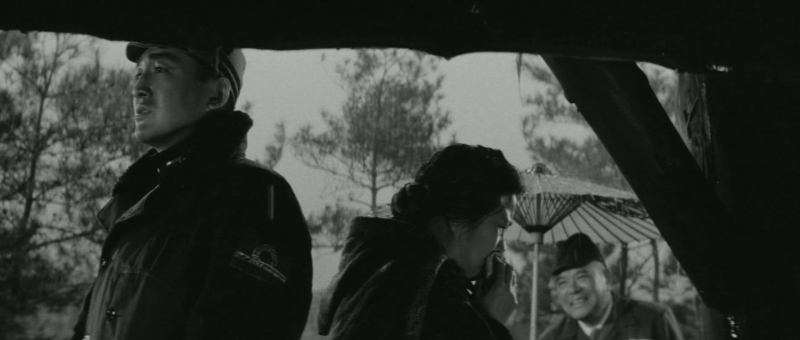
Classmates (あゝ同期の桜, Sadao Nakajima, 1967)

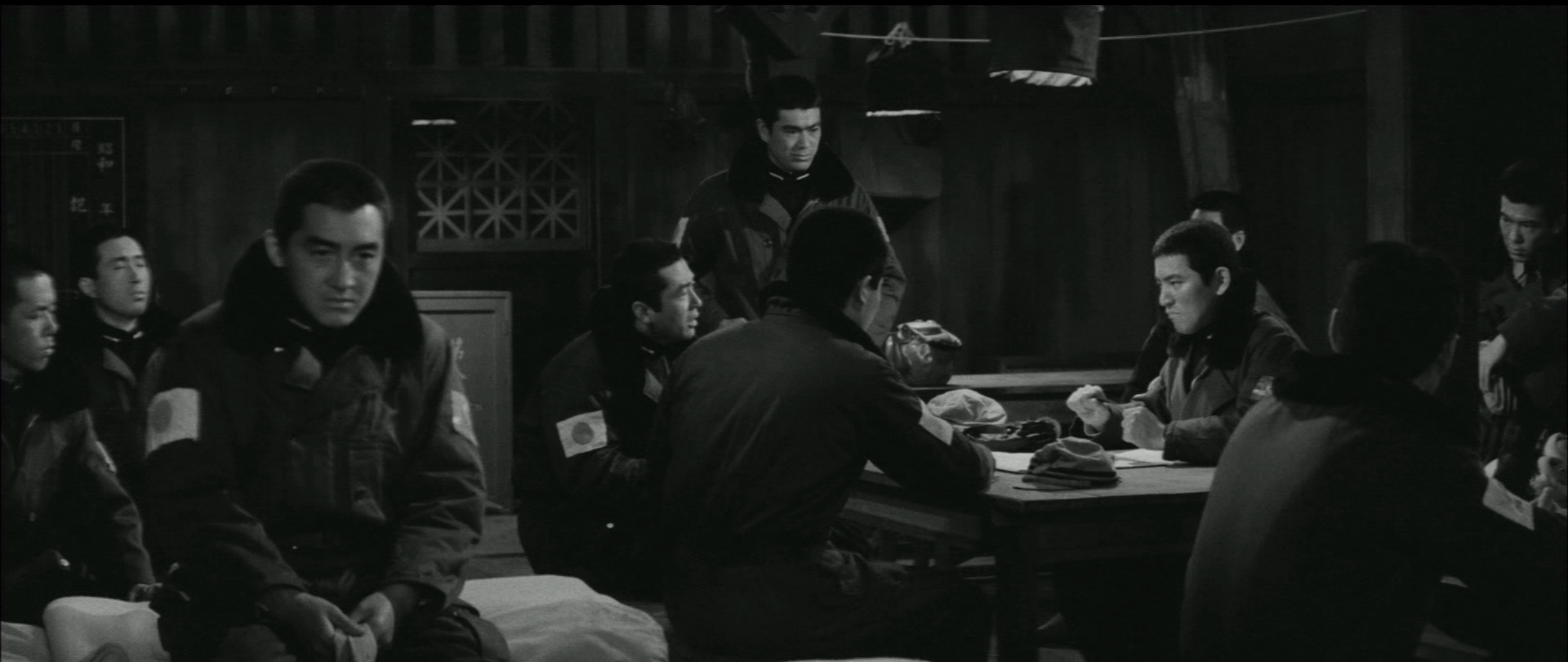
There had been films that dealt with the war before, but it was really with the generational shift that occurred among filmmakers in the mid-1960s that there was a greater willingness to reckon with the wartime past. Sadao Nakajima’s Classmates (あゝ同期の桜, Aa Doki no Sakura) was the first in a planned trilogy of war films at Toei, which was in other ways a studio that often leaned towards the right with its steady output of yakuza films, and most likely for that reason struggled to gain approval from studio heads. Taking its name from the military academy song, the film was inspired by a collection of essays put together from the letters and diaries kamikaze pilots had left behind. Nakajima had seen some of the letters sent back by the brother of a school friend, and reading them again on publication was determined to turn them into the film.

Nevertheless, only 25 years on from the end of the war it remained a sensitive topic. The film follows the men of the 14th class of reserve students who had previously had their draft notices deferred until they finished university but were now called up early because the war was going so badly. The majority of these men were allocated to kamikaze units and subsequently died in suicide attacks on US warships, though they received little in the way of training and mostly failed to hit their targets due to having limited fight experience. 

What might seem most surprising is that several of the men voice their opposition to the war along with the realisation that Japan is going to lose. Early on in training, one man deserts but the others are reminded that to do so amounts to treason and once caught, deserters will be executed by firing squad. This turns out not quite to be the case. Shiratori (Hiroki Matsukata), the resigned hero, encounters Taki (Mitsuki Kanemitsu) in Okinawa. where he’s working as ground staff. He’s insensible and appears to have lost his mind. The man working with him suggests that he was tortured so badly that it’s left him in a vacant state, though he’s still deployed for mindless tasks because they just don’t have the manpower.

Part of the reason for that is that they keep ordering people to die in a validation of the death cult that is militarism. On their arrival, the instructor tells the men he will have them all die, because dying for the emperor is their duty and destiny. The top brass insist this is the only way to win the war even though it’s counterproductive in that they’re running out of aircraft and skilled pilots even if one officer callously remarks that they have an endless supply of bodies. There’s also no real reason to send the planes up with two pilots as opposed to one, but they leave fully manned. The suicide missions are supposedly “voluntary”, but the men can’t really refuse due to a combination of peer pressure and military order.

When one pilot, Nanjo (Isao Natsuyagi), returns to base having been unable to reach his target, he’s immediately set upon by the others as a coward and a traitor. They accuse him of being afraid to die, leaving him feeling ashamed and frustrated by a sense of injustice while admitting that he didn’t want to die like a dog. He knows that he would not be able to go on living afterwards if he simply didn’t go through with it because the stigma of being a coward who let other men die so he could live would always be upon him. Eventually, he becomes so determined to prove himself that he insists on getting right back in his plane once it’s repaired and then blows himself up on the runway to prove a point.

Nanjo’s case is all the more poignant because he was a new father whose son was born after he was called up. He appears to have married quickly against his parents’ wishes and is now anxious that his family won’t accept his wife and child who will be left alone when he dies. His wife (Yoshiko Sakuma) desperately tries to see him to show him the baby, but manages only a few seconds before he’s forced to return to the barracks. Given a little more time, she brings a wedding dress for the impromptu ceremony they presumably skipped before, but ends up tearing it and giving Nanjo a strip as a kind of good-luck charm though like everything else it’s a gesture filled with futility.

It’s this sense of futility and resignation that seems to overtake Shiratori who knows he cannot escape his fate. To desert to is be killed anyway or to experience a spiritual death like Taki. He had introduced a friend, Hanzawa (Shinichi Chiba), to his sister and the two had become close, but he is forced to abruptly break up with her because he knows it’s unfair to string her along when he’s been sentenced to death. Reiko (Sumiko Fuji) will lose her brother and her boyfriend on the same day. Hanzawa and the other men visit a brothel on the night before their mission where they are treated as “gods”, though he sees only irony in the situation in which they are more like human sacrifices offered in prayer for an impossible victory. Their deaths will have no real meaning and are really only intended to instil fear in the enemy and weaken their morale rather than cause actual material damage to their fighting capability. Making use of stock footage, Nakajima freeze frames a plane in flight and points out at that point the men inside were still alive before cutting to a title card confirming the war ended just four months later. The title card at the beginning dedicated the film to the souls of those who died in the Pacific War, though it’s perhaps as quietly angry as it was permitted to be in 1967 in the senseless sacrifice of these men’s lives who were shamed, tricked, or forced at gunpoint into their cockpits and told they were disposable while those who stayed on the ground cheered and whooped at the grim spectacle of death.


Jeans Blues: No Future (ジーンズブルース 明日なき無頼派, Sadao Nakajima, 1974)

Nihilistic lovers on the run make a break for the sea only to find their pathway blocked in Sadao Nakajima’s anarchic love tragedy, Jeans Blues: No Future (ジーンズブルース 明日なき無頼派, Jeans Blues: Asu naki Buraiha). As the title suggests, the heroes find themselves devoid of hope, pressing the accelerator as far it’ll go with no clear destination in sight and nothing really left to lose while discovering a twisted kind of salvation in their unlikely connection.

Sensing danger in the air, grave-digging drifter Jiro (Tsunehiko Watase) decides to run off with all the money after his gangster friends off a moneylender on the orders of a businessman. Meanwhile, across town, bar lady Hijiriko (Meiko Kaji) decides to walk out on her unsatisfying life taking some money from the till and her boyfriend’s car for good measure. The pair quite literally collide, but realise that they are much the same in their growing sense of emptiness and impossibility. Nothing really really interests Hijiriko anymore, and watching the car burn after Jiro tossed a cigarette is the only thing that’s made her feel alive in eons. Running through his many and various jobs, Jiro reflects that work is “no fun” either and that the reason he wanted the money was for his sister who he says has run up huge debts paying for medical treatment for a close friend and is now facing the threat of being forced into sex work. 

His sense of impotence is palpable in his desperation and the knowledge that there is no good way to come by large amounts of money especially for a young man from the country with limited prospects. At one point he is beaten by a man with a golf club, a symbol of the class privilege and middle class success that will always elude him. The money, much more than he needs for his sister, gives him a new sense of confidence and possibility even if he remains somewhat frugal, picking up an old banger from a second hand car salesman that immediately blows a tire and apparently belonged to “Koji the murderer” which explains the huge dent in the bonnet. Yet he does at least pay his way, even leaving a collection of notes next to the body of a man he ran over intended to pay for medical treatment which casts him as something of a naive innocent cast adrift in a corrupt society and driven into criminality by desperation.

Trapped inside a shipping container and fearing he may be about to die, Jiro comes to see his fate as karmic retribution for having taken the money that was earned by killing others. Inside the container, the pair are in a sense already dead but also undergo a kind of rebirth if only one fuelled by desperation and the connection that has arisen between them. Hijiriko appears to be suffering from some kind of trauma, experiencing a flashback to the orgy going on at the bar which she had been invited to join but declined much to her customer’s disappointment. He remarks that she always did before, a comment which seems to annoy her though perhaps not as much as the arrival of an older woman a male voice tells her on the phone is a actually quite wealthy and doesn’t need the money but does sex work as a kind of hobby. 

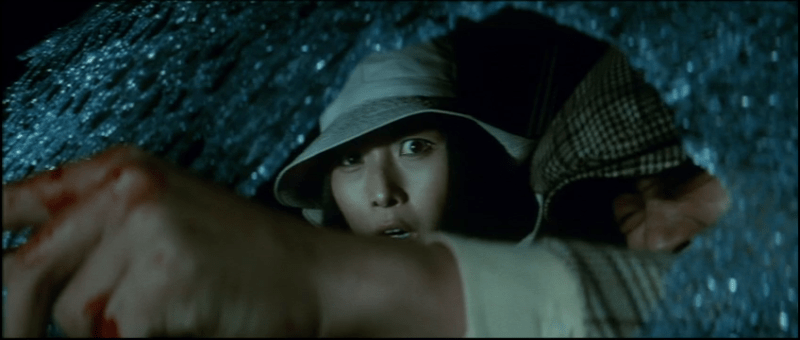
It’s Hijiriko who begins to fight back against the world, dressed in the stylish black leather suit Jiro buys her while he struts around in a cap and three-piece tartan suit. Jiro does not actually kill anyone, but Hijiriko does without a second thought perhaps because she herself is already dead. Using her sexuality as a weapon, she asks a hunter if she can hold his gun and trying his luck he lets her only to end up getting shot when he tries to fight back. The pair rob a petrol station for money but come up with only a few notes and coins while the attendant reveals they’ve already made their daily deposit at the bank signalling just how out of luck these lovers really are. They’re bound for the sea, but travel to the mountains and find there only danger and disappointment. Nakajima lends their flight from a dissatisfying existence a kind of desperation in its breakneck pace and frenetic camera work but equally injects a sense of cosmic irony in the many coincidences and reversals that frustrate the lovers’ escape and in the end leave them only one way out from the society which constrains them.


Original trailer (no subtitles)

Operation Plazma in Osaka (実録外伝 大阪電撃作戦, Sadao Nakajima, 1976)

The precarious balance of the post-war yakuza society begins to crumble in Sadao Nakajima’s jitsuroku eiga, Operation Plazma in Osaka (実録外伝 大阪電撃作戦, Jitsuroku gaiden: Osaka dengeki sakusen). The Japanese title might more accurately be translated as “shock tactics in Osaka” which is a neat encapsulation of the turf war which arises when a larger gang from Kobe decides to muscle in and take over the city while a small upstart continues to agitate contemplating taking the whole prize for themselves. 

Inspired by a real life turf war which took place in Osaka in 1960, the film opens with classic jitsuroku voiceover revealing that a precarious balance had been held in the local underworld since the Meiji era in part because the city is simply too big to be ruled by any one gang. But times are changing, yakuza conglomerates are in style, and so it is that the Kawada gang mounts a largely political campaign to claim the city without bloodshed, as boss Yamaji (Akira Kobayashi) puts it, by convincing the smaller gangs to join up with them. According to the voiceover, however, it wasn’t Kawada that upset the balance but a small upstart group that came out of nowhere, Soryu. 

The screen then cuts to a map of Osaka, while the stills behind the credits feature the Tsuruhashi Market in Korea town. The thing about the Soryu group is that many of its leading members are ethnically Korean which sets them apart from most of the other mobsters in town. Even so, it’s hotheaded Yasuda (Hiroki Matsukata) that first gets them in trouble by getting into a fight with Takayama (Tsunehiko Watase) at a boxing match after climbing into the ring himself when the guy he bet on looks like he’s about to lose. This sets up a conflict between the Soryu and the Nanbara gang who run the boxing hall, but it never takes off because the recently released Daito suddenly announces that he’s bought the “Dance Hall” the ring is being run from and wants to turn it into a cabaret bar. It seems clear that someone’s backing Daito, but no one quite knows who. 

As Yamaji had said it would be, it starts of as a very modern silent war in which he slowly seduces various yakuza gangs convincing them that they’re stronger together with a slight note of join us or die. Yasuda and Takayama are two men who don’t like being told what to do and each end up exiled from their gangs thanks to their opposition to Kawada. Having failed to assassinate Yamaji, boss Nanbara pathetically rolls over and decides to join him instead while the Soryu gang is sent on the run leaving Yasuda and and Takayama to form an unlikely brotherhood brokered by Yasuda’s odd decision to gift his nightclub singer girlfriend to his sometime rival leaving Takayama permanently in his debt and touched by his selfless gesture.

Even by the standards of the jitsuroku, Operation Plazma in Osaka is rabidly misogynistic and often sleazy with an early scene seeing the Soryu gang cause trouble by stripping a hostess naked as one pours alcohol over her body and another drinks it from between her legs. Naked women are repeatedly fondled by fully clothed men, while nightclub singer Yoshiko (Yuko Katagiri) is treated largely as a pawn, a tool used to mediate the latent homoerotic desire between Yasuda and Takayama. Then again, everything in this world is extreme. The conflicted Miyatake (Tatsuo Umemiya) who had once tried to protect Takayama eventually tries to boil a man alive to get him to reveal Takayama’s location while Nakajima’s anarchic handheld camera desperately tries to keep up with the increasingly nihilistic violence. 

The resolution arrives not with death but total defeat, the traditional yakuza forced into submission by the corporatising giant with the survivors realising they will live the rest of their lives in subjugation making an “unconditional surrender” to changing times. Yasuda had claimed that the Soryu gang was a “free democracy” standing in opposition to the latent fascism of traditional gangsterdom which then finds its way into the corporate and the extreme hostile takeover Yamaji has just performed on the city of Osaka. Suddenly all that’s left of traditional yakuza is a pinkie in a jar, a grim a reminder of what happens when those in a position to resist back down in the face of an authoritarian power.


YU-GEKI~side story of “Love’s Twisting Path”~ (遊撃 -「多十郎殉愛記」外伝-,Tatsuya Matsubara, 2021)

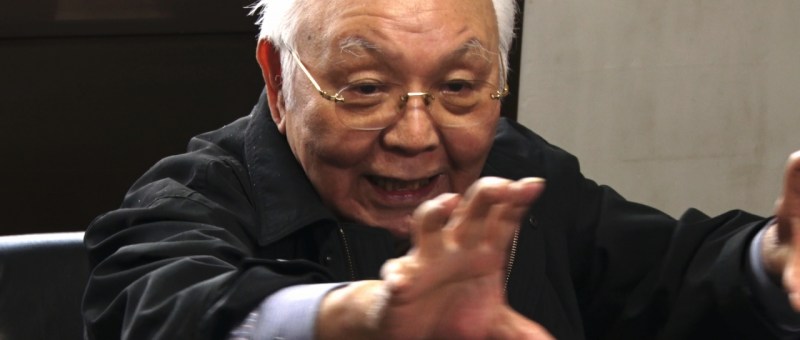
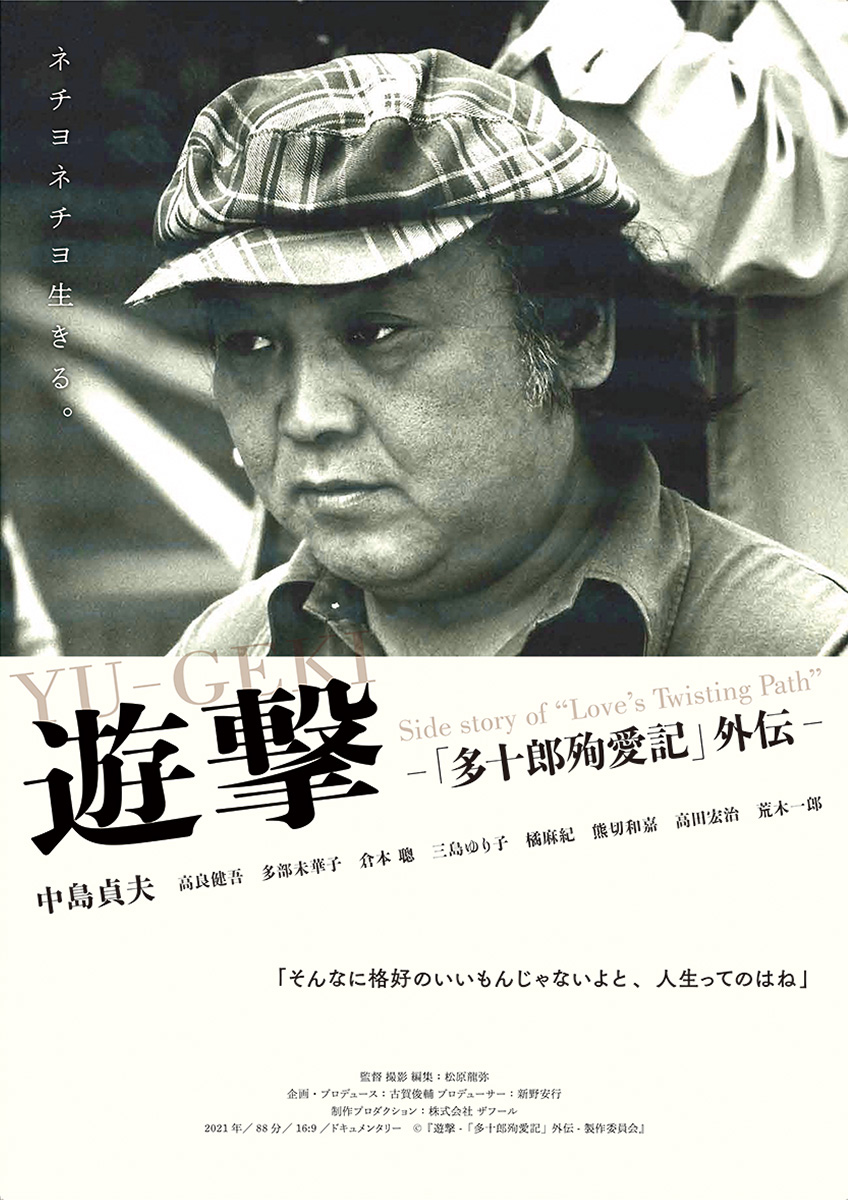
At the age of 83 and not having made a narrative film in over 20 years, Sadao Nakajima decided to step back into the director’s chair in 2019 with a classic chambara in Love’s Twisting Path, an old-fashioned samurai drama taking place in the turbulent years of the Bakumatsu at the end of the Edo era. More than just a behind the scenes documentary, Tatsuya Matsubara’s YU-GEKI~side story of “Love’s Twisting Path”~ (遊撃 -「多十郎殉愛記」外伝-, Yu-Geki -Tajuro Junai-ki Gaiden-) explores the film’s production but also reflects on the director’s long career and the changing trends of the Japanese film industry. 

Changing times do seem to be Nakajima’s primary motivation, wanting to pay tribute to Toei’s Kyoto studios once home to its mainline of period pieces produced for the big and small screens. These days, however, such productions are few and far between. Of course, Japan continues to produce historical dramas in large numbers but they tend to be just that with swordplay a secondary concern. Nakajima had wanted to resurrect this dying sector of the industry in part because he felt sorry for the specialist performers who can no longer support themselves with samurai movies alone.

Paradoxically this becomes a secondary problem for the production team as the pool of actors with training in stage combat becomes ever smaller, Nakajima forced to hire early career trainees while star Kengo Kora puts in overtime vigorously training to master the sword skills needed to seem convincing as a jidaigeki lead. Along with the decline of classic chambara, itself perhaps an expression of studio system as it existed before the 1970s, goes all the skills that accompany it from swordsmen to costumiers and makeup artists who know how to work on period features giving rise to the worry that the expert techniques honed over lifetimes will eventually be lost. 

Aside from the problems securing their creative team, Nakajima also runs into funding difficulties with backers unwilling to invest given the director’s age and poor health worrying that he may not be able to complete the project. Ironically this places further pressure on the production as Nakajima is forced to shorten the script and shooting time packing in as much as humanly possible per day. A young production assistant is beginning to feel bad about having to explain to him that so many things just aren’t possible while he too grows frustrated wandering around the mountains looking for a particular temple he remembers from his time at the studio but unable to remember exactly where it was or how to find it. Meanwhile he’s ably assisted by his former pupils including Kazuyoshi Kumakiri (Mukoku, Antenna, Sketches of Kaitan City) who acts as his AD along with Nobuhiro Yamashita (Linda Linda Linda, Over the Fence, Hard Core) who also visits the set

It’s the presence of these pupils that Nakajima eventually hints makes his life worth living others suggesting that so many people wanting to learn from him gives him a sense of purpose and validation. Love’s Twisting Path was intended to be his final film, but asked if he’d have an idea for any more he likens himself to an elderly Musashi Miyamoto, the legendary swordsman, who became withered with age but faced a constant stream of young challengers each excited to fight him while he too saw it as a way to prove to the world that he still existed. 

Despite the tremendous effort put into its production, Love’s Twisting Path did not do as well as Nakajima had hoped at the box office leading him to blame himself wondering if he was too focussed on his own interests and understandably deflated having invested so much into the project hoping to kickstart a revival of classic jidaigeki that would revitalise the old Toei lot. Then again this feeling of not quite having lived up to his aspirations might contribute to a sense of wanting to try again with another film if only it had not been for the advent of the global pandemic. Journeying through his career history, Matsubara finds Nakajima a contrary figure, rebellious and frustrated even then in the barriers erected between himself and his art ,the films he wanted to make shot down by studio execs while he tries his best to inject a characteristic sense of reality into a series of programme pictures, contemporary yakuza films, action dramas, and finally chambara which he claims never to have liked in the first place. In the end it’s all about love, Nakajima’s son insists seeing something of his father’s romanticism in his films but also his deep love of cinema and of the riches to be found in the artistic legacy of the Kyoto studios. 


YU-GEKI~side story of “Love’s Twisting Path”~ screened as part of Osaka Asian Film Festival 2022.

Original trailer (no subtitles)

Terror of Yakuza (沖縄やくざ戦争, AKA Okinawa Yakuza War, Sadao Nakajima, 1976)

An old-school yakuza finds himself cornered on every side while caught in the confusion of Okinawa’s reversion to Japan in Sadao Nakajima’s jitsuroku gangster movie Terror of the Yakuza (沖縄やくざ戦争, Okinawa Yakuza Senso, AKA Okinawa Yakuza War). Where similarly themed Okinawa-set gangster pictures such as Sympathy for the Underdog had largely presented the islands as an appealing place for mainland gangsters because the conditions of the occupation which had allowed them to prosper were still in place, Sadao reframes the debate in terms colonisation and conquest as the hero finds himself increasingly marginalised as an island boy contending with amoral city elitists. 

Nakazato (Hiroki Matsukata) has just been released from prison after serving seven years for the murders of two rival gang bosses that allowed his boss, Kunigami (Shinichi Chiba), to rule the roost in Koza. But now that Okinawa has reverted to Japan, everything has changed. Kunigami has formed a loose alliance with another regional gang to oppose the incursion of mainland yakuza but behind the scenes the higher-ups are intent on a mutually beneficial alliance with the Japanese perhaps seeing the writing on the wall and assuming that it’s better to work with the new regime that against it. For his part, Nakazato is more loyal to the clan than he is opposed to Japan but he’s also resentful towards to Kunigami for failing to live up to his side of the bargain now that he’s been released while fearing the influence of his new sidekick Ishikawa (Takeo Chii) whom he suspects of murdering one of his former associates while he was inside. 

As such, much of the drama unfolds as in any other yakuza picture with Nakazato, regarded by some of the other bosses as a loose cannon and potential liability, reluctant to move against Kunigami for reasons of loyalty even while Kunigami becomes increasing unhinged and dangerous, deliberately running over an Osakan foot soldier who was apparently just on holiday with no particular business in town. Kunigami’s recklessness in his hatred of the Japanese threatens to start a turf war the Okinawan gangs fear they couldn’t win, sending snivelling yakuza middleman Onaga (Mikio Narita) along with Nakazato to negotiate in Osaka only to be told the price of peace is Kunigami’s head. Inspired by the Fourth Okinawa War which was still going on at the time of the film’s completion (in fact, the release was blocked in Okinawa in fear that it would prove simply too incendiary), the conflict takes on political overtones as the mainland gangsters assume their conquest of Okinawa is a fait accompli while those like Onaga are only too quick to capitulate leaving Kunigami and Nakazato as two very different examples of resistance. 

Yet Nakazato finds himself doubly marginalised because he is from one of the smaller islands with most of his men also hailing from smaller rural communities (one uncomfortably wearing extensive makeup to ram the point home that he is from the southern reaches) with the result that they are often pushed around by the city gangsters who view them as idiot country bumpkins. On his trip to Osaka, Nakazato even describes himself as such in an attempt to curry favour apologising in advance should he make a mistake with proper gangster etiquette. Like a good platoon leader, Nakazato’s primary responsibilities are to his men which is one reason why he takes so strongly against Ishikawa, one of the new breed of entirely amoral yakuza who care nothing at all for the code and think nothing of knocking off his guys for no reason. Consequently he finds himself caught between the invading mainlanders, the unhinged chaos of Kunigami, the coldhearted greed of Ishikawa, and the spineless venality of turncoats like Onaga. 

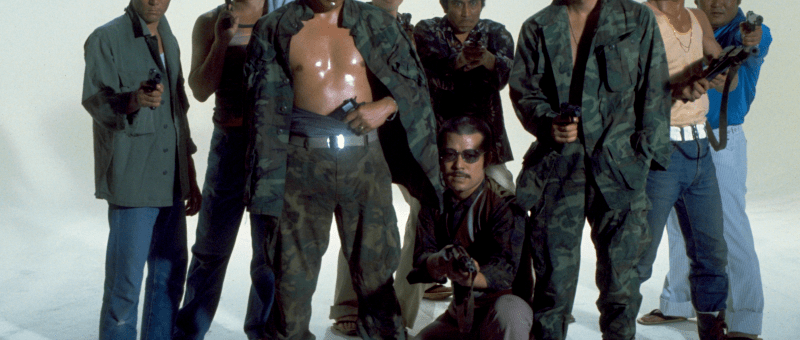
It’s no wonder that he eventually loses his cool, going all out war and like Kunigami dressing in vests and combats in an internecine quest for vengeance precipitated in part by Kunigami’s attempt to discipline one of his men for encroaching on his territory by removing his manhood with a pair of pliers. “Someone will get to you someday too” Nakazato is reminded though having lost everything including his loyal wife who insisted on selling herself to a brothel to get the money to fund his war of revenge he may no longer care so long as he cleans house in Okinawa to the extent that he is really able to do so. “Okinawa is such a scary place” one of the Japanese guys admits, though showing no signs of backing off in this maddeningly chaotic world which turns stoic veterans and hotheaded farm boys alike into enraged killers fighting on a point of principle in a world which no longer has any. 


Terror of Yakuza screens at Japan Society New York May 20 at 7pm as part of Visions of Okinawa: Cinematic Reflections

Original trailer (no subtitles)

Images: Terror of Yakuza © 1976 Toei

Love’s Twisting Path (多十郎殉愛記, Sadao Nakajima, 2019)

Sadao Nakajima joined Toei in 1959 and worked for the studio throughout its golden age, mostly associated with jidaigeki and gangster movies which were Toei’s stock in trade well into the 1970s and perhaps beyond. Now in his 80s, Nakajima’s last narrative feature was released over 20 years ago. A kind of last hurrah, Love’s Twisting Path (多十郎殉愛記, Tajuro Junai-ki) is a willing throwback to the glory days of chanbara, even bearing a dedication title card to genre giant Daisuke Ito, and doing its best to resurrect the classic Toei programmer magic. 

Appropriately enough, the action takes place at a moment of intense change. As the film opens, the men of Choshu who have left their clan to foster their own brand of revolution in opposing the shogunate in favour of the emperor and a desire to reject Western influence, are hiding out in a shack while bad mouthing soon-to-be-allies Satsuma and the man who seeks to unite them, Sakamoto Ryoma. They are soon discovered by Kyoto’s elite Shogunate police, the Mimawarigumi, and ambushed. Their leader, the famed Katsura Kogoro (Masatoshi Nagase), signals that times have indeed changed by pulling out a pistol and defending himself at distance. 

Meanwhile, Choshu fugitive in hiding Tajuro (Kengo Kora) is trying to make ends meet with his painting, designing patterns for ladies kimonos but seemingly with little success. He has the sunken cheeks, vacant eyes, and slight slowness of someone who drinks too much and hasn’t had a decent meal in a very long time. We learn that he left Choshu with the others on the pretext of revolution, but his real purpose was escape from a restrictive samurai existence and most pertinently from his miserable poverty. Having long since given up the idea of a being a samurai, he’s already sold his sword and is attempting to live under the radar, unaware that similarly troubled bar hostess Otoyo (Mikako Tabe) has fallen in love with him. Otoyo was adopted by the bar’s owner, Omitsu (Yuriko Mishima), a former geisha, who intended to sell her to a geisha house. She eloped with a man she loved instead, but it turned out that he was minded to sell her too so she came back and now runs the bar while taking care of the ageing Omitsu. 

The crisis occurs when men of Choshu arrive in search of Tajuro in the hope that he will rejoin their cause. He doesn’t want to, showing off his samurai skills (and neatly disguising the fact that he has no blade through advanced technique) but pointedly asking for a hefty payment from his former mentor Sanzaemon (Asahi Kurizuka) in belief that it would not be paid. Sanzaemon, however, comes through and leaves a message for Tajuro to meet him behind a nearby shrine. He however spends the entirety of his money getting blind drunk in Otoyo’s bar, during which time Sanzaemon is caught by the Mimawarigumi, breathing his last words to Tajuro’s younger half-brother Kazuma (Ryo Kimura) to the effect that he must reunite with Tajuro and fight for the good of the country. 

On the run and holed up with a patient priest and his beloved wife, Tajuro is asked why it is he’s decided to pick up his sword once again despite his reluctance. Asked if was for country or for money Tajuro shakes his head, leaving the priest to correctly guess that it was for love. Tajuro has fallen in love with Otoyo, the only person who either doesn’t believe he is a failed samurai and drunken fool, or doesn’t care. The world however is still too chaotic for romance, and so their pure love will have to wait. 

Tajuro’s fate is in many ways the direct result of his attempt reject his responsibility as a samurai, daring to live as a common man with all of the freedoms and burdens that entails. The force which constrains him in both worlds is poverty. Whatever else he is, he is too poor for love, unable to feed himself let alone a wife either as a low wage samurai or a ronin. The price he pays is in his desire to cross borders. The samurai world is not done with him yet and while the denizens of this small backwater worry about paying their rent paying little mind to what’s going on in the capital, political intrigue is not something that he can go on ignoring. After all, not picking a side is in a sense also picking a side. The Mimawarigumi pride themselves on not being as savage as the Shinsengumi (which largely consists of ronin, lower ranked samurai, and commoners whereas the Mimawarigumi are elite samurai and direct retainers to the Shogunate), but their job is still to bring in fugitive rebels like Tajuro and his bid for “freedom” may be doomed to failure in a world still constrained by the law of the samurai. 


Original trailer (no subtitles)

Female Ninja Magic (くノ一忍法, Sadao Nakajima, 1964)

female ninja magic posterSadao Nakajima, a veteran director and respected film scholar, is most often associated with his gritty gangster epics but he made his debut with a noticeably theatrical fantasy tale of female ninjas and their idiosyncratic witchcraft. Adapted from a novel by Futaro Yamada, Female Ninja Magic (くノ一忍法, Kunoichi Ninpo) is an atypically romantic take on the ninja genre, infused with ironic humour and making the most of its embedded eroticism as a collection of wronged women attempt to change the course of history and mostly pay with their lives.

The night before the fall of Osaka castle in 1615, Sanada Yukimura (Eizo Kitamura) comes up with a cunning plan to ensure the survival of the Toyotomi clan. Following the death of Hideyoshi, his son Hideyori had inherited the title but he was sickly and had no children of his own. His wife, Princess Sen (Yumiko Nogawa), was not able to bear an heir and so Sanada has hit on an idea. He wants to send five women of Iga to Hideyori’s bed chamber in the hope that one of them will become pregnant and ensure the survival of the Toyotomi line. Princess Sen is very much in on the plan and hopes to raise the child herself. However, she is by birth a member of the Tokugawa which is where she is eventually sent following fall of Osaka. Refusing to return to her birth clan, Sen rejects her father and insists on remaining true to the memory of her (now departed) husband and his unborn child. Tokugawa Ieyasu (Meicho Soganoya), however, has learned of the Toyotomi heir and is determined to see it killed…

Nakajima opens in grand fashion with a ghostly sequence in which Sanada outlines his plan. The ninjas sit silently before magically fading from the frame and being replaced by Sasuke, Sanada’s messenger. Soon enough, both Sanada and Sasuke are cut down by a rogue assassin but rather than going straight to heaven they decide to hang around and see how well the plan works out, becoming our narrators of sorts, hovering around in the background and occasionally offering the odd ironic comment from beyond the frame.

The ghostly effects don’t stop with the two undead commentators but comprise a key part of Nakajima’s deliberately theatrical aesthetic. Like many ninja films, Female Ninja Magic is filmed almost entirely on studio sets but never pretends otherwise. Its world is unrealistic and deliberately over the top, filled with with visual motifs both from traditional Japanese and classical European art. The female ninjas dance, topless, beckoning and seducing but they do it against a stark black background moving firmly into the film’s magical space in which all things are possible.

Meanwhile, Tokugawa Ieyasu has sent five male ninjas to take care of our five female witches, making use of their own, devious, ninja magic to combat that of our heroines. The first nefarious male ninja technique involves the murder and identity theft of a trusted maid, while another tries a similar trick by “projecting” himself into the consciousness of a handmaiden he has figured out is pregnant by listening for additional heartbeats, and convincing her to commit harakiri. His villainy is eventually turned back on him as the female ninjas make use of the most important of their spells – the “Changing Rooms” technique which effectively shifts the foetus from one womb to another.

Deliciously named – Rainbow Monsoon, Dancing Snow, Robe of Wings etc, the spells run from the sublime to the ridiculous with the self explanatory Eternal Gas which sends noxious purple smoke billowing from under the skirts of an elegant princess. Each has its own erotic component, even if it doesn’t necessitate a shift into the film’s elegantly designed dreamscape, but by and large the female ninja fight with supernatural rather than earthly powers. Facing such extreme threat, the women form a tight group of mutual support in order to ensure the survival of the child which Princess Sen will raise but not birth. Though her quest originated as a fierce declaration of her loyalty to the Toyotomi, she later recants on her tribal zealotry. Shocked by her father’s cruelty and sick of a persistent suitor, she admits that she has come to loathe the world of men and prefers to think of the baby as belonging to her band of women alone. Nevertheless, male violence eventually saves her as her aggressor, ironically enough, is moved by her devotion to the new life in her arms – he is “defeated by her strength as a woman”, and turns on his own kind. Female Ninja Magic eventually achieves the revenge it sought, allowing a princess to survive in triumph while the male order quakes in its boots.


Datsugoku Hiroshima Satsujinshu (脱獄広島殺人囚, Sadao Nakajima, 1974)

DVD coverSadao Nakajima had made his name with Toei’s particular brand of violent action movie, but by the early seventies, the classic yakuza flick was going out of fashion. Datsugoku Hiroshima Satsujinshu (脱獄広島殺人囚, AKA The Rapacious Jailbreaker) follows in the wake of seminal genre buster, Battles Without Honour and Humanity, but also honours the classic Toei ganger movie past in its exploitation leaning, cynically humorous tale of a serial escapee and his ever more convoluted schemes to avoid the bumbling police force’s noose.

Kobe, 1947. Ueda (Hiroki Matsukata) and his buddy kill a drug dealer and his girlfriend in a robbery gone wrong. Landing himself a twenty year sentence, Ueda resigns himself to spending his prime years behind bars in a Hiroshima prison but then he starts getting a few ideas and his first escape attempt is a moderate success, until he’s recaptured after stupidly going home to his wife.

Nakajima spends quite a long time exploring the unusual environment of the prison in Hiroshima. The life is strictly ordered and run with precision but the prisoners are also forced to do a strange dance for the guards, waving their hands and shouting their ID numbers to prove there’s nothing interesting inside their mouths – a gesture which is hilariously turned back on the warden when a prisoner begins a mini riot after a sports game is turned off at crucial moment. The warden submits himself to the degrading dance but once the man surrenders, he does not honour any of the promises he made to convince him to come down from the tower he was occupying. The guards are corrupt, violent, and untrustworthy whereas the majority of prisoners are docile, resigned, and going mad through inactivity.

Ueda, like many “heroes” of yakuza films is a man who’s had a hard life, left to fend for himself after his father died and his mother left. He appears to love and care for his wife who pledges to wait for him, starting her own seamstressing business in the meantime, but his subsequent escape attempts take him further and further away from his home. Nevertheless, home is the first place he decides to go despite the danger even if his reunion with his wife is anything but romantic.

After being recaptured, Ueda’s desire for escape intensifies, requiring ever more complicated schemes to make it happen. These range from the traditional file hidden inside a lovingly prepared meal delivered by his wife, to simply running away when arraigned for a court date after committing another murder while inside. Seeing as Ueda intends to escape, he cares little for the prison rules and his 20 year sentence is soon doubled thanks to his ongoing crimes both inside and outside of the prison walls.

Other than his wife the other source of support Ueda turns to is his estranged sister with whom he’s had no contact since his mother left sixteen years previously. What he discovers is that the now widowed Kazuko (Naoko Otani) is involved in some dodgy business of her own concerning the local black market meat trade. Ueda decides Kazuko is not getting her fair share and more or less takes over, bending the local petty gangsters to his will, but once again he messes everything up for himself after getting into a fight at a brothel which lands him back at the police station.

Nakajima follows Fukasaku’s jitsuroku aesthetic using frequent onscreen text detailing names and conviction records for each of the major players though his approach owes far less to realism than b-movie action in its willingness to linger on blood and gore even if scenes of violence are generally few and executed quickly. Scenes of a cow being butchered in the woods, blood, skin, and bones dominating, introduce a note of sickening horror but are then echoed in Ueda’s animalistic murders committed with makeshift tools and an unforgiving heart. Despite this frightening coldness, Ueda’s humorous voiceover turns him into a roguish figure whose bumbling acts of self destruction and stubborn attempts to regain his freedom take on an oddly cartoonish quality.  The situation may be hopeless, but Ueda does not give up. His story remains unfinished as he makes another (apparently) successful escape after being betrayed by a fellow criminal who is then himself betrayed by the police he mistakenly thought would help him, but as for how long he’ll manage to keep himself on this side of the bars, that remains to be seen…


Kurutta Yaju (狂った野獣, Sadao Nakajima, 1976)

Kurutta Yaju dvd coverRobbing a bank is harder than it looks but if it does all go very wrong, escaping by bus is not an ideal solution. Sadao Nakajima is best known for his gritty yakuza movies but Kurutta Yaju ( 狂った野獣, Crazed Beast/Savage Beast Goes Mad) takes him in a slightly different direction with its strangely comic tale of bus hijacking, counter hijacking, inept police, and fretting mothers. If it can go wrong it will go wrong, and for a busload of people in Kyoto one sunny morning, it’s going to be a very strange day indeed.

A young woman receives a phone call at a cafe – the person she’s waiting for is on his way, but the girl seems surprised and irritated to hear he will be arriving via public transport. Meanwhile, ordinary people are seen cheerfully going about their everyday business and boarding a bus headed for Kyoto station while a cool looking man in mac and sunshades clutches a violin case in the back. Suddenly, two shady guys jump on after their bank robbery goes belly up. Trying to escape the police, they threaten the driver with a gun and take the passengers hostage.

This sounds like a serious situation, and it is, but the two bumbling bank robbers haven’t thought any of this through and have no plans other than somehow driving the bus onwards to a land without policemen. Eventually the authorities are made aware of the hijacking but there is another hidden problem – the driver has a heart condition and is supposed to be avoiding “stressful situations”. Neither the bus company or the police has any more idea what to do now than the increasingly panicked criminals and the situation quickly makes its way into the press whereupon the mothers of two little boys presumed to be onboard are forced to dash straight down to the police station to find out exactly what the police are up to as regards rescuing their sons from dangerous criminals.

The atmosphere on the bus is tense but also ripe for comedy as each of these captive passengers gradually reveals an unexpected side of themselves. The “hero”, Shin (Tsunehiko Watase) – the cool looking dude on his way to meet the girl waiting in the cafe, keeps a low profile in the back, hoping this will all blow over. Meanwhile, a woman desperately tries to get off the bus because she’s more worried about missing an appointment than being killed by hijackers, and an adulterous couple on their way back from an illicit visit to a love hotel begin bickering about what will happen if any of this gets into the papers. The two little boys start crying and are comforted by an old lady who takes the time to remind the hijackers that they’re bringing shame on their families as well as exhorting the man next to her who is so engrossed in the racing news that he hasn’t really noticed the hijacking that he ought to be doing something about it. He does, but only gets himself into more trouble whilst further revealing the depths of the highjackers’ ineptitude.

Soon enough the woman from the cafe, Miyoko (Jun Hoshino), jumps on her bike to chase the bus and find out what Shin is playing at. As might be expected, there’s more to Shin than his ice cold exterior, and more to that violin case than a priceless musical instrument. The bus careers onward while the police come up with ever more bizarre attempts to stop it including, at one point, trying to drive right into the side to damage the engine. Bizarre hilarity ensues as a troupe of traditional musicians trolls the hijackers with an impromptu show, a kid pees out the window, and the bus plows straight through a chicken barn like some old time cartoon. Shin becomes the unlikely hero of the hour as he ends up counter hijacking the bus to try and cover up the circumstances which led him to get on in the first place.

Playing out in real time and only 78 minutes in length, Kurutta Yaju is a brilliant mix of absurd comedy and gritty action movie. Shin attempts to ride the situation out, hoping he’ll be able to turn it to his advantage, and, though he plays everything beautifully, eventually becomes disillusioned with what his strange bus odyssey might have cost him. Action packed, hilarious, and ultimately a little bit sad Kurutta Yaju is a lost gem in Toei’s B-movie backlog and another exciting addition to Japan’s long history of bus-centric cinema.


Original trailer (no subtitles)