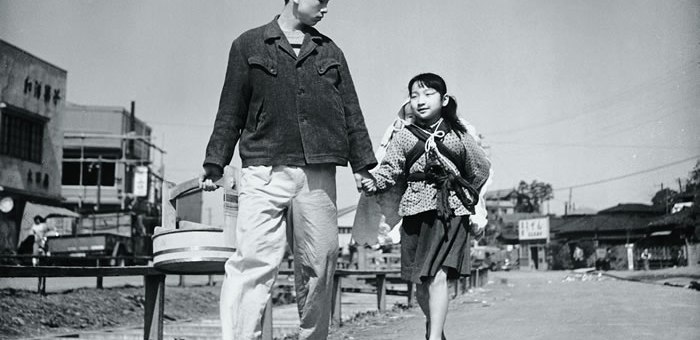
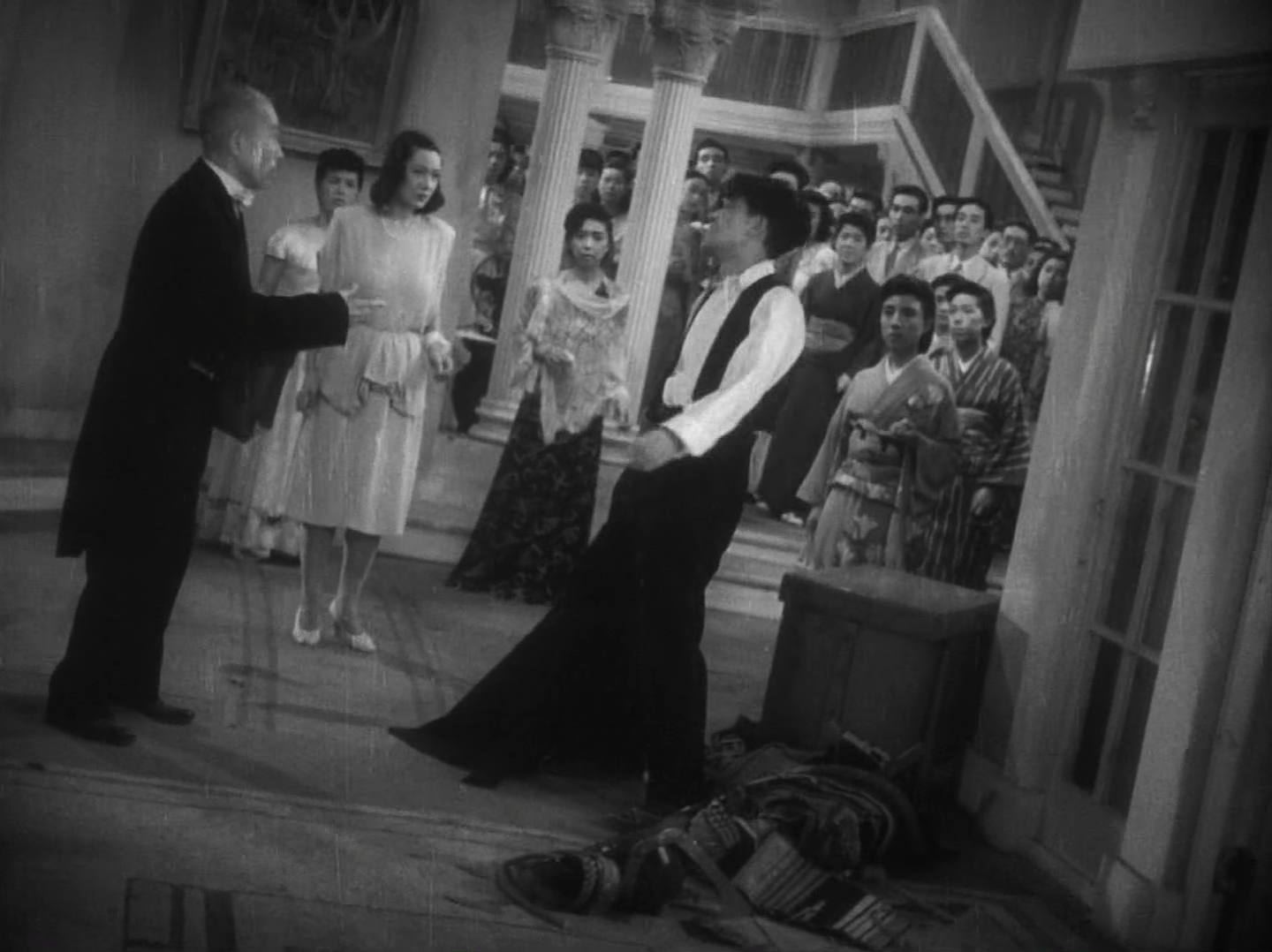
The Ball at the Anjo House (安城家の舞踏会, Kozaburo Yoshimura, 1947)

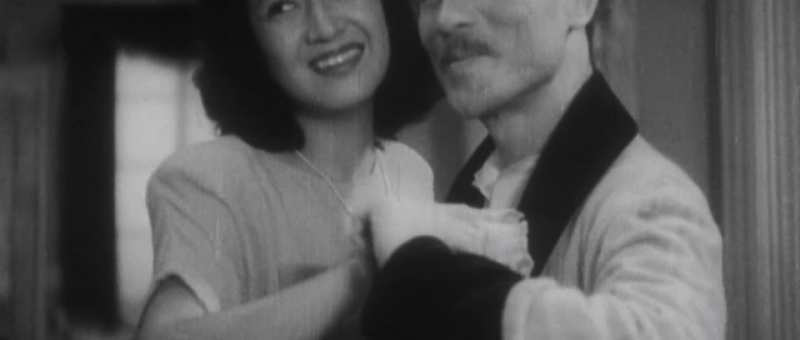
“Old things die out so new things can be born,” according to the ruined patriarch of a once noble house in Kozaburo Yoshimura’s Chekhovian drama Ball at the Anjo House (安城家の舞踏会, Anjo-ke no butokai), though he might as well be speaking to the post-war society. The Anjos are like the declining aristocracy of the earlier 20th century mourning the disappearance of their world of privilege and gaiety and reflecting that they too must now, as younger daughter Atsuko (Setsuko Hara) says, learn to serve others.

Atsuko is really the only one who accepts the age of the aristocracy has passed and that it is only right and proper that they should join this newly egalitarian, democratic society. Her sister Akiko (Yumeko Aizome) has recently returned home after 12 years having left her husband because of his adultery, but cannot now face it that she no longer has a place here. Approached by their former chauffeur Toyama (Takashi Kanda) who has long carried a torch for her, Akiko snaps that she will always be a noblewoman in heart, unable to let go of outdated customs of class and propriety. She seems to have feelings for the chauffeur too, but won’t let herself embrace them, calling him “dirty” and resenting herself for her attraction to a man who is not her social equal. 

But times are very different now and the aristocracy has been abolished which has in all other senses dissolved the class barrier between them. The tables have turned and Toyama is now a wealthy man having done well for himself in business through honest hard work. Akiko asks him for help as a kind of symbolic gesture as if she were making recompense by handing the house to its rightful owner in their former servant. He insensitively tells patriarch Tadahiko (Osamu Takizawa) that he can easily spare a few thousand to throw away on the house as a sentimental gesture, but does so largely without malice. Only after Akiko has turned him down at the ball and he begins to drink does he start to crow, if a little sadly, that now this base and ugly servant has bought the master’s house. On his way out, he knocks over the suit of armour that had stood in the hall as if literally bringing down the feudalistic military legacy of this once great family and sending it crashing to the floor. The camera suddenly tilts to emphasise that this world is now out of kilter and has been destabilised beyond repair. It’s only this action that frees Akiko from her self-imposed repression as she skips over the armour and chases Toyama out the door. Tumbling down a sand dune she literally descends to his level leaving her pearls and shoes behind. 

The class barrier has been fully dissolved, and Tadahiko too permits himself to marry his long-term mistress, the geisha Chiyo (Chieko Murata), who declares that she doesn’t care about his loss of status and invites him to live with her if he has to sell his house. But it seems as if Tadahiko can’t let go of his ancestral legacy nor his childhood home. In truth, this Western-style country house by the sea can only have been built after the Meiji Restoration which means it’s under a hundred years old and most likely built by Tadahiko’s father, the gentleman in European-style military dress in the portrait. As such, it was likely constructed to look forward to a new era as the samurai class rebranded itself into a European-style aristocracy. Tadahiko’s older sister, married to a lord who’s faring better in this new world, tells an enraptured collection of younger women of the time she danced with a prince a year after the Russo-Japanese war when she was only 19. But this will be the last ball at the Anjo House, in memory of a “beautiful way of life” that has been now been eclipsed.  

Tadahiko had faith that they would be saved essentially through the good chap system in his relationship with a nouveau riche upstart named Shinkawa (Masao Shimizu). Shinkawa holds the mortgage on the house, and there are all sorts of rumours about his shady business. He made most of his money on the black market. Shinkawa had arranged a marriage between his daughter Yoko (Keiko Tsushima) and Tadahiko’s son Masahiko, which gave him even more confidence. But as Atsuko says, Shinkawa was only friendly with him because of his aristocratic title and now it’s gone he has nothing to offer. In marrying Yoko to Masahiko (Masayuki Mori), Shinkawa would have gained the legitimacy of a connection with nobility while Tadahiko would have gained an injection of cash that would save his social status. But none of that matters any more now that the aristocracy has been abolished under the post-war reforms that have also seen Tadahiko’s lands confiscated and estate broken up. It seems that Tadahiko let Shinkawa use his name for a munitions factory during the war, which might not play so well now, just as Akiko’s decision to part with her adulterous husband may also have been influenced by the fact that he was a general who is presumably little in demand in the wake of defeat. Still, Tadahiko prefers Shinkawa to letting the house go to a former servant like Toyama who must himself be enamoured enough with that old world to want to become master of it rather than tear it down.

For Masahiko’s part, he has little interest in marrying Yoko but on learning the engagement has been unilaterally called off and Shinkawa is little more than crook decides to rape Yoko to get back at him. His cruelty is a symptom of post-war nihilism, and we soon discover he’s been sleeping with a maid, Kiku (Akemi Sora), to whom he made promises of marriage he had no intention of keeping. But Like Akiko it seems as if he does care for her after all, only he won’t let himself feel anything in the numbness of his loss of privilege preferring instead to laugh too loudly with his boorish friends. Only on seeing the class barrier dissolve when his father marries Chiyo and his sister Akiko takes off after Toyama does he allow himself to embrace Kiku and express genuine emotion.

Masahiko is played by a young Masayuki Mori who was the son of the novelist Takeo Arishima. Arishima was also a member of the aristocracy but one who became a socialist and dissolved his estate which was something of a fashion in the 1920s. The situation is however complicated by the fact that the Anjos’ servants remain loyal and don’t want to leave them. After all, this is as much their home too and they don’t have anywhere to go either because a world with no masters has no need for servants. We too are encouraged to mourn this world, but its end is also presented as a kind of liberation in which the family are finally permitted to embrace their own desires only after casting off the shackles of the aristocracy and preparing to forge new futures in a changing world leaving the feudal past behind and waltzing into a new and brighter future.
Dawn Chorus (暁の合唱, Hiroshi Shimizu, 1941)

“Before me flows a wide and serene river of life,” a young woman writes in an unexpectedly poetic essay, “I beg you to pray for my just and happy future.” Yet Tomoko (Michiyo Kogure) does appear to be pretty happy with her choice, even if the just future she’s forging for herself might not be what others see as just. Though she cites her family’s poverty and a minor disability as her reason for giving up on education, there seems to be another side of her that eagerly embraces independence and looks for it in unexpected places.

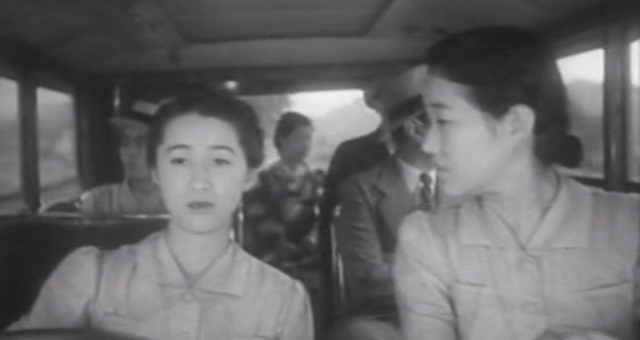
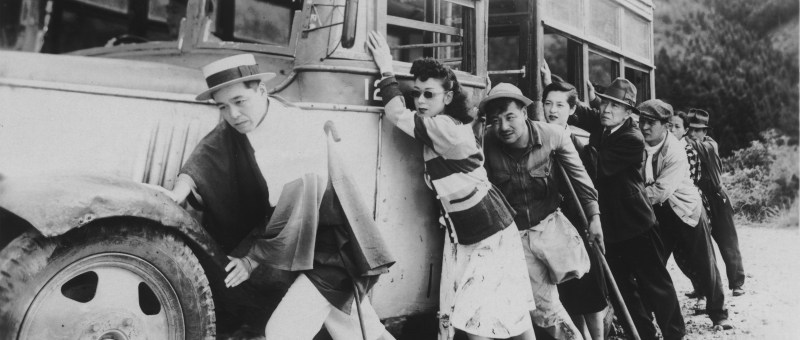
That would be her desire to become a bus driver, an occupation then thought to be inherently masculine. Perhaps in that way, it reflects her desire to be in control of her own destiny, while her apparent love of life on the bus hints at another for travel and ever-expanding horizons. Another of Shimizu’s travelling films, he often as in Mr Thank You includes scenes shot through the bus’ rear window including that of a flock of boys off to school on their bikes that makes Tomoko think of her stepbrother Ginjiro (Giichi Okita) who has a voracious appetite despite their family’s poverty. There are indeed all kinds of people who get on the bus, including, at one point, a melancholy woman in a bridal outfit who nevertheless pitches in when the bus gets stick in a ditch and needs a push. Tomoko fixes the bride’s makeup and gives her her compact, but there’s no avoiding the fact that she looks miserable despite the joy of the older women accompanying her.

Even Tomoko remarks that she isn’t sure whether her tears were in joy or sorrow even while wishing her a broad-shouldered husband. Later the bus catches her again trailing behind the man to whom she was married, older than her and not particularly handsome, pulling a cart. She still doesn’t look very happy, and is presumably bound for a life of drudgery over which she has little say. Her fate contrasts with that of Tomoko who is actively choosing her way forward even if the bride’s plight forces Tomoko to think about marriage and her womanhood as does the birth of a baby on the bus. Everyone is always telling Tomoko that she ought to get married quickly, and not least among them Eiko (Kiyoko Hirai) who declares herself tired by life. Working for a newspaper, she had apparently been the girlfriend of Saburo (Toshiaki Konoe) whose late brother once owned the company while now he runs a cinema. Saburo has apparently tired of her, though he appears to have developed a fondness for Tomoko which might seem slightly problematic to modern eyes because of Tomoko’s relative youth while she is in the process of coming of age and into herself uncertain if marriage is even something that she’s interested in.

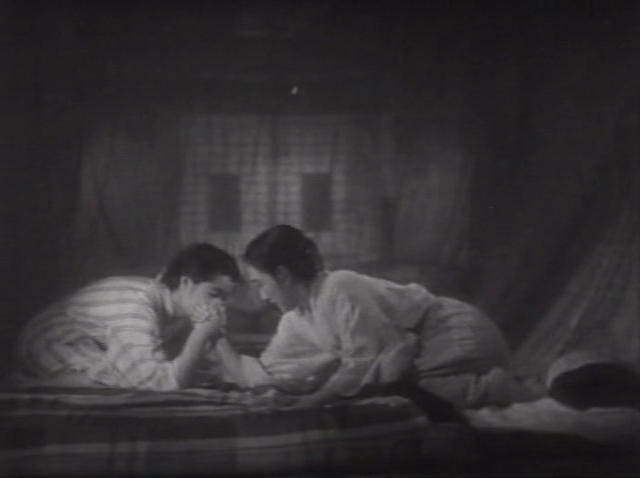
On the other hand, her tomboyish qualities leave her in a slightly liminal space as reflected in her desire to become a driver, rather than a conductress. In learning to drive, she mostly wears trousers while Eiko remarks on her “big hands” and she prides herself on her physical strength when engaging in an impromptu arm wrestling match with Yoneko (Hiroko Kawasaki), the widow of Saburo’s brother who now manages the bus company and has a crush on handsome driver Ukita (Shin Saburi) who also had to drop out of university for undisclosed reasons. Tomoko loses the match because she’s overcome by tears without really knowing why, which might in its way be a manifestation of her returning femininity along with her maturity, but there’s also something strangely transgressive about the scene featuring two women under mosquito net randomly arm-wrestling in the middle of the night.

Nevertheless, Tomoko’s life seems otherwise happy and pretty care free even if there are signs of corruption all around her. One of her first challenges while working as a conductress is an old woman (Choko Iida) who tries to get out of paying. It seems like the old woman probably can’t really afford to pay, but puts on a show of having tried to cheat them deliberately to save face. She suggests to Tomoko that she simply neglect to punch a ticket and pocket the money she’s already given her, until the bus driver, a man, gets out to exert his authority and tell her off despite Tomoko’s offer to make up the shortfall out of her own money. Later it’s discovered that two of the other conductresses have been made unhappy enough to consider quitting their jobs and are deliberately avoiding riding with one particular driver because he’s forcing them to embezzle ticket money in this way on his behalf, hinting at a kind of greed and immorality that might not necessarily be motivated by abject poverty.

It is though a presence Tomoko is able to dispel, bringing on Kimie (Chiyoko Fumiya) as her own conductress when she finally becomes a driver in her own right. Though the film hints at her feelings for Saburo, it does not end on marriage but with Tomoko’s personal fulfilment if tempered by the idea that a woman must now be useful and productive in the wider world while the men are away which might be how it gets around the censors despite otherwise avoiding overtly patriotic or imperialistic themes. Based on a novel by Yojiro Ishizaka, the film rather validates Tomoko’s desire to take charge of her life and drive off towards the future as an independent woman.


Tomorrow There Will Be Fine Weather (明日は日本晴れ, Hiroshi Shimizu, 1948)

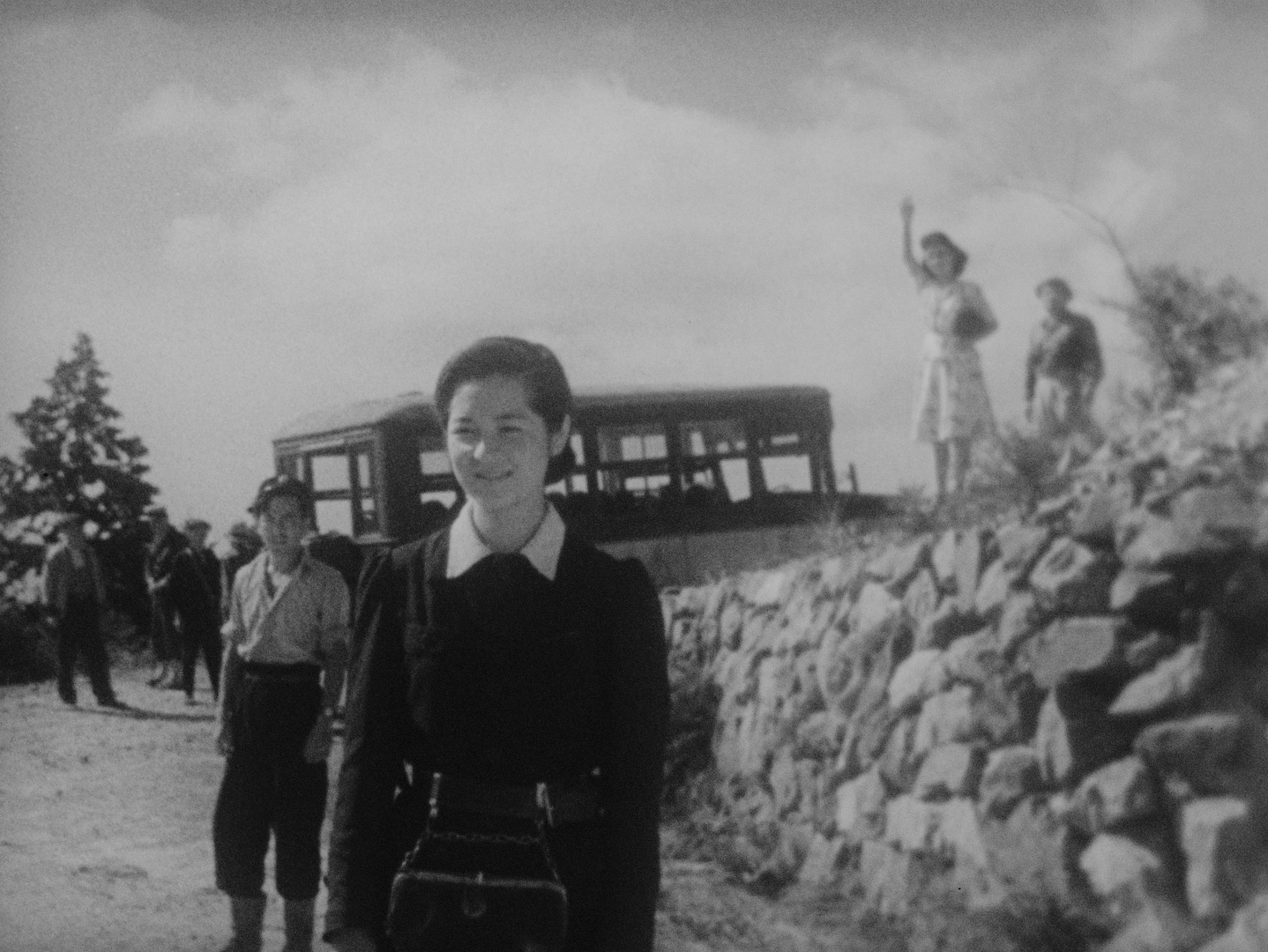
According to the driver aboard the bus at the centre of Hiroshi Shimizu’s Tomorrow There Will Be Fine Weather (明日は日本晴れ, Asu wa Nipponbare),  “that ridiculous war ruined everything”. Shimizu had directed a similar film in 1936, Mr Thank You, in which times had been hard for all but people tried to stay cheerful and help where they could. But here, by contrast, the atmosphere is much less jovial. Everyone is fed up, unhappy, dissatisfied, and irritated far beyond the inconvenience of being delayed on their journey.

Once again shot on location, the film follows a bus on the outskirts of Kyoto making the journey along a mountain pass from the city to an onsen town before breaking down half way. It’s several miles across difficult mountainous terrain to the nearest town in either direction and many people aboard the bus are elderly or have disabilities that make simply walking the rest of the way a difficult prospect while no one can really say when help will come because they’re dependent on the arrival of the following service or some other form of transport that could get a message out for a mechanic or replacement bus. 

In any case, just as in Mr Thank You there is a diverse contingent aboard each of whom have particular reasons for travelling and for being upset about the delay. A trio of men begin by complaining that this journey which once took two hours now takes three while the bus itself has become worn down and unreliable. Even so, the fares are now much more expensive. What’s most surprising is that the men loudly and openly discuss their occupation as black market traders while simultaneously complaining about an increased police presence interfering with their work. An irritated, besuited man sitting across the aisle is the only one to challenge them, asking if they pay taxes on their clearly illegal earnings to which the answer is obvious though the men mostly complain about how it wouldn’t be worth their while if they did rather than outright denying a responsibility to pay. The man tells them that they’re part of the problem and that the future of the country is assured only if people pay their taxes, with which the men otherwise seem to agree. When the bus breaks down, one of them is most worried that his late arrival will cause concern for his wife who may assume he’s been caught and arrested.

But there’s a small drama playing out in the front of the bus too as the conductress gossips with the driver certain that the beautiful woman sitting half-way back is a well-known Tokyo dancer, Waka, who she’s heard is on her way to bury the ashes of her child seemingly born out of wedlock. The driver, Sei, grimaces slightly as if he didn’t want to have this conversation and as we later discover once knew Waka long ago before the war which has changed each of them. A blind man, Fuku, now working as a masseur after losing his sight in the war, once knew them both hatches a plan to try and get them to patch things up. But as Sei later says, they’ve both been through far too much and are no longer the same people. Nothing can be as it was before, but in a way that’s alright. There is still hope for the future on the broken bus that is post-war Japan if only someone can figure out how to get the engine going again. 

Nevertheless, the scars from this war are still very noticeable. One of the black-marketers has a missing leg and later lays into an old man who confesses that he was a military commander, hounding him for his responsibility for the folly of the war which men like him forced them to continue long after it was obvious that it was lost. Fuku is much more sanguine and after a minor misunderstanding able to find a way to communicate with an elderly man who is deaf despite the incompatibility of their disabilities as they help each other board the replacement bus to the new Japan. Sei, and the slightly younger conductress who is not so secretly in love with him, meanwhile remain stuck on the broken bus symbolically unable to move forward no matter how much Sei insists it’s time to “get over the war” and that he just wants to forget the past and start living again. Perhaps it’s for men like him who seem fine on the surface that the scars run deepest, overburdened by all that this “ridiculous war” took from them in unlived futures and broken dreams. Meanwhile Shimizu follows the other bus onward along the precarious and winding mountain roads hoping for better weather in the hot springs town ahead.


Tomorrow There Will Be Fine Weather screens at Japan Society New York on May 17 as part of Hiroshi Shimizu Part 2: The Postwar and Independent Years.

Ikiru (生きる, Akira Kurosawa, 1952)

The Japanese economy may have embarked on a path towards recovery thanks to the stimulus of the Korean War, but in the early 1950s many might have thought it too soon to ask if survival in itself was enough yet this is exactly what disillusioned civil servant Kenji Watanabe finds himself asking after receiving the devastating news that he has advanced stomach cancer and year at most to live. “To live” is apt translation of Akira Kurosawa’s intensely moving existential melodrama, Ikiru (生きる), which tackles the compromises of the salaryman dream head on along with those of the contradictions of the sometimes dehumanising post-war society. 

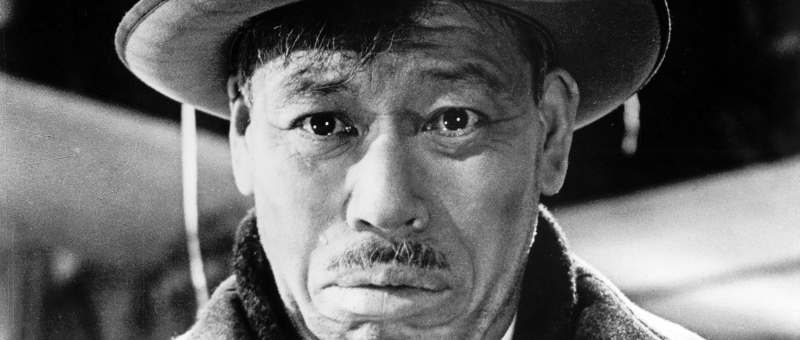
As the opening voice over reveals to to us, Watanabe (Takashi Shimura) is man who died long ago or perhaps has never truly been alive. In some senses, he is nothing more than an embodiment of the seal he uses to stamp documents day in day out, a mere piston in an ever turning machine of relentless bureaucracy. A young woman, Miss Odagiri (Miki Odagiri), working in the Public Affairs department loudly reads out a joke someone has written about their boss, Watanabe, who has taken not a single day’s holiday in 30 years suggesting that it’s less that he fears city hall will grind to a halt without him than they’ll suddenly figure out city hall has no need of him at all. The irony is city hall does indeed grind to a halt in Watanabe’s absence as he, unthinkably, fails to turn up for work for days on end as the papers pile ever higher on his desk. “Nothing moves here without his seal” one of the workers admits, bewildered by this sudden break with protocol while salivating over its implications in the possibility that Watanabe’s chair may soon be empty. 

Yet Watanabe’s crisis is that he’s realised he’s wasted his life on a pointless bureaucratic career that’s done little more than keep a roof over his head. Even the roof is a fairly modest one and it’s clear that his grown up son Mitsuo (Nobuo Kaneko) considers him to be a stingy old miser, unable to understand why he’s never spent so much as a penny on himself and lives in a kind of self-imposed austerity. Perhaps to Watanabe this is what constitutes properness. He’s done everything he was supposed to do, got a steady job at city hall and eventually became the head of department, but now he feels foolish and lonely. Mitsuo and his wife seem to resent him and talk openly about their plans to use their inheritance, along with Watanabe’s retirement bonus, for a downpayment on a “modern” home the polar opposite of the pre-war townhouse where the family continue to live. 

Mitsuo and Kazue (Kyoko Seki) are perhaps emblems of the increasingly empty consumerism of the post-war era, emotionally disconnected from Watanabe and seeking only the flashy and new. Miss Odagiri, the young woman from work, immediately says that she’d love to live in a home like Watanabe’s rather than the crowded multiple occupancy flat she currently inhabits with her family. Cheerful and outgoing, Odagiri is on the other hand a symbol of a new generation that wants something more out of life than simple material comfort and might even be willing to trade it for a small amount of happiness. Having worked at city hall for all of 18 months, she decides that she just can’t take it anymore and is quitting to get a job in a factory making toy rabbits that she says allow her to feel as if she’s making friends with all the babies in Japan. 

To that extent, Watanabe is himself also a baby craving Odagiri’s company admitting that he envies her youth and vitality in realising he squandered his own and will never get it back. How uncomfortable it must be for her, their final meeting in a restaurant sandwiched between a loving couple and teenage girl’s birthday party as Watanabe, gaunt and shrunken, claws at the air and begs her to help him live. Yet even within the grotesquery the tone is ironic, the strains of “Happy Birthday” accompanying Watanabe down the stairs as a the high school climbs up to meet her friends signalling his (re)birth as a man with purpose and determination. Just as Odagiri had found meaning in the rabbit, Watanabe finds it deciding to get a playground built over a post-war swamp in the slums filled with raw sewage and mosquitos that left the local children ill. 

Yet children’s parks aren’t particularly profitable which is presumably why the petition to build one had been kicked all round city hall in the infernal wheel of bureaucracy in which Watanabe too is trapped. “You call this democracy?” one of the women bringing the petition asks, taking the clerk to task complaining that all they do is fob them off insisting it’s someone else’s responsibility to help while determined only to guard their own turf. “You’re not supposed to do anything at city hall” someone ironically adds, “the best way to protect your place in this world is to do nothing at all”. Watanabe did nothing at all for 30 years and it got him nowhere, his dedication to his job disrupting his relationship with his son though Watanabe is ironically one of the most emotional men and engaged fathers seen on screen in the post-war era. 

After his death, in the park he helped build for which the deputy mayor has taken credit, his colleagues put him on trial at the wake trying to work out why he did it and whether or not he even knew he was dying seeing as he told no one close him not even the son whom he felt he could no longer trust. They deny his role while both praising and condemning his passion as somehow improper, disrupting the dispassionate rhythms of the bureaucratic machine with human emotion. It was only coincidence, they say. The deputy mayor wanted an election and the yakuza wanted to turn the swamp into a red light district. “Did he think he could just build a park?” someone adds, bemused by his effrontery as a man from Public Affairs straying into the Parks Department’s territory. You have to protect your turf after all. Finally moved by Watanabe’s last ditch bid to make his life mean something, to feel alive and know he has lived, the the drunken salarymen, all but one who retreats to look at Watanabe’s photo above the altar, swear to follow his example. 

But of course the bureaucratic wheel keeps turning, another dangerous sewage problem diverted to another department continuing the literal pollution of the capitalistic post-war society. A kind of ghost story, Kurosawa lights Shimura from below, shadows cast across his gaunt face even by his “rakish” new hat while his huge eyes have a somehow haunted, grotesque quality filled with hungry desperation. Yet it’s to childhood that Watanabe eventually returns, “perfectly happy” sitting on a swing singing a song from his youth about the price age while surrounded by snow and at last painfully, absurdly alive. 


Ikiru screens at the BFI Southbank, London on 4th & 15th February 2023 as part of the Kurosawa season.

Original trailer (English subtitles)

Scandal (醜聞, Akira Kurosawa, 1950)

“Freedom of the press or harassment?” The more things change, the more they stay the same. Akira Kurosawa’s attack on the declining moral standards of the post-war society as reflected in the duplicity of the gutter press has unexpected resonance in the present day in which the media is simultaneously unwilling to challenge authority and in thrall to the populist allure of celebrity gossip with sometimes tragic results. The aptly named Scandal (醜聞) is essentially a morality tale which draws additional power from its seasonal setting and embodies the soul of the contemporary society in a conflicted lawyer consumed by internal struggle against despair and hopelessness. 

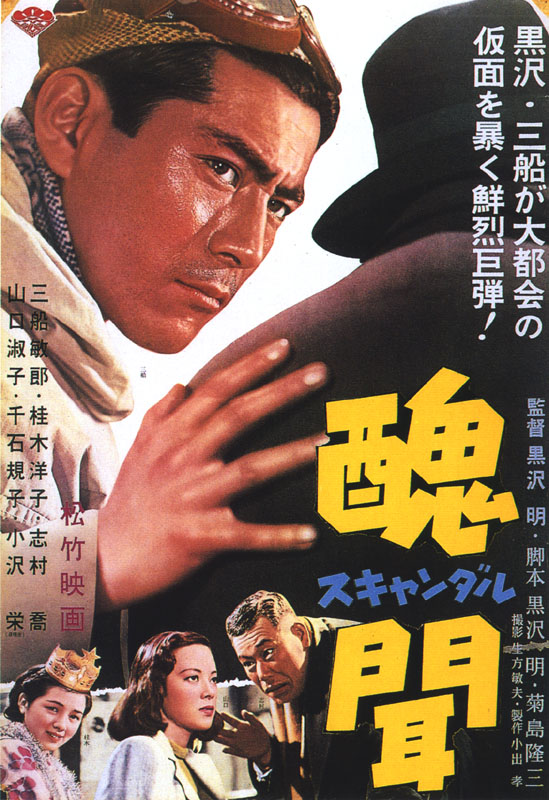
The more literal scandal however revolves around a well known singer, Miyako Saijo (Yoshiko (Shirley) Yamaguchi), and a motorcycle-riding artist, Ichiro Aoe (Toshiro Mifune), who meet by chance while staying at the same remote mountain inn. Having ironically headed to the mountains to escape the various “annoying things” that plague her in the city, Miyako has been pursued by two muckrakers from the tabloid press who take umbrage at her refusal to see them. They are then fairly delighted when they manage to snap a picture of Ichiro and Miyako standing on her balcony looking out at the mountains like a young couple in love. They deliver the photo to their seedy boss, Hori (Eitaro Ozawa), who is over the moon with excitement at his new business prospects. Suddenly Ichiro and Miyako are on posters all around the city with headlines such as “Love on a Motorcycle” and “Miyako Saijo’s secret love – revealed!”. 

Though Ichiro is a semi-public figure himself having been featured in magazine spreads as an artist on the rise, he is not a worldly man and is shocked by the idea that the press can make something up and print it with no consequences. He feels he must resist not just on a personal level angry to have been misrepresented but for the post-war future to ensure that the press is held to account and that it does not misuse its power to breach the privacy of ordinary citizens. To his mind, they only get away with it because most people just ignore them and wait for the scandal to pass, a sentiment born out by Hori who dismisses a concerned underling with the reminder that they’ve never yet been sued so they need have no fear saying whatever they like whether it’s true or not. “The kind of snobs we target think the law is beneath them” he adds, suggesting that most people prefer to think of the gutter press as something they can safely ignore and that it’s only themselves that they show up in their torrid obsession with the lives of others. 

But Hori also ironically defends his right to press freedom and quickly hits back that he’s being oppressed by those who wish to silence his right to free speech even when what he’s saying isn’t true. Lawyer Hiruta (Takashi Shimura) who offers to represent Ichiro in his lawsuit quickly identifies Hori as a duplicitous conman but also allows himself to be manipulated accidentally accepting a bribe after being led to believe that Hori has a top legal expert on retainer and the case is hopeless unless Miyako, who has so far maintained a dignified silence, can be persuaded to join as co-plaintiff. Ichiro had decided to accept Hiruta’s offer of representation largely on meeting his teenage daughter, Masako (Yoko Katsuragi), who has been bedridden with TB for the last five years. Masako is a pure soul whose isolation from the contemporary society has allowed her to maintain her innocence and humanity but it’s also true that it’s the society that made her ill in the first place.

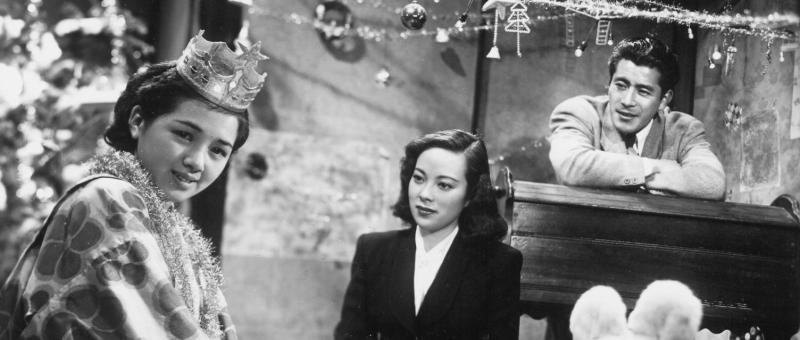
The morality play reaches a climax on Christmas Day as Ichiro delivers a tree on his motorbike while Miyako sings carols for a radiant Masako who is at least sitting up and looking much healthier than she’s ever been before. But the more Hiruta debases himself, caught between an accidental debt to Hori, his own lack of conviction, and the frustrated desire to do right, the sicker she gets as if poisoned by post-war duplicity. Even so, Ichiro continues to defend him insisting that Hiruta isn’t a bad person just a weak one and that in the end he won’t be able to go through with betraying him but will eventually come clean and tell the truth when it counts. Ichiro’s faith is as much in the institutions of the new democratic Japan as it is in Hiruta as he explains at the trial admitting that he may have been naive in placing too much trust in the legal system thinking that he couldn’t lose because he knows he’s in the right. As the opposition lawyer points out, that’s not a very good legal argument because his client thinks he’s in the right too only he doesn’t know that Hori is both a liar and an idiot who’s staked everything on the assumption that Hiruta won’t expose him for bribery, which would at least strongly imply he can’t back up his story, because it would mean destroying himself. 

In the end it’s Hiruta who puts himself on trial, baring his soul to the court which he acknowledges he has betrayed in his negligence and wilful obstruction of justice. It’s a victory for truth and decency and a turn away from the duplicitous, capitalistic mores of men like Hori who think they can do whatever they want and only laugh at those who value fairness and compassion. “In all my 50 years I’ve never seen a more confused age” Hiruta explains speaking of post-war chaos and the forced comprises of the intervening years of despair and desperation. As he coaxes the denizens of a small bar into an early rendition of Auld Lang Syne on Christmas Day, each vowing that this time next year things really will be better, many of them breakdown in frustrated longing drowning their sorrows as they continue to yearn for better times they do not really believe will come. But then like all the best Christmas films, this is also a redemption story of a man who decided that it wasn’t too late after all and that he might have to destroy himself in order make himself anew and be the man his daughter always knew he could be even if in the end he could not save her from the ravages of the post-war society.


Scandal screens at the BFI Southbank, London on 10th & 24th January 2023 as part of the Kurosawa season.

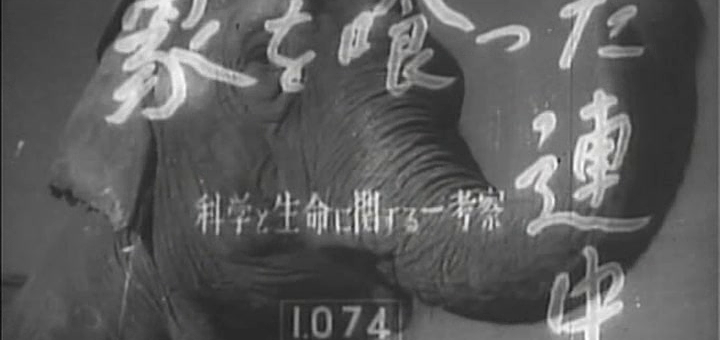
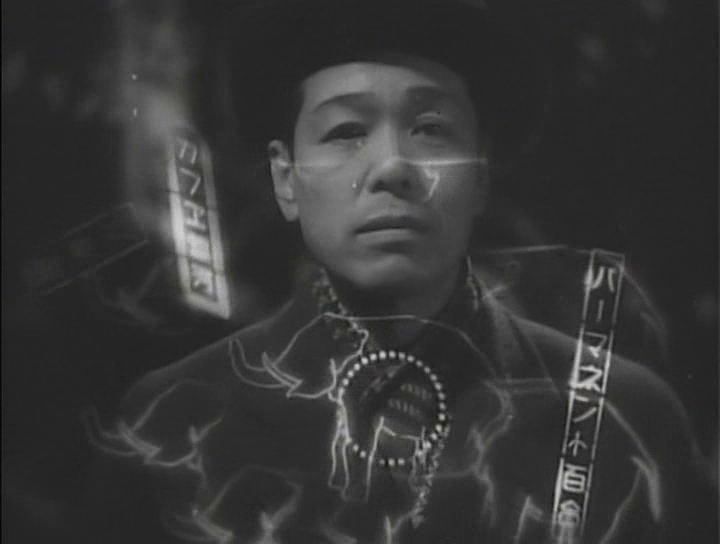
The Fellows Who Ate the Elephant (象を喰つた連中, Kozaburo Yoshimura, 1947)

The Japan of 1947 was one still very much caught up in post-war chaos. In the cities, most particularly, hunger was a major problem. The Fellows Who Ate the Elephant (象を喰つた連中, Zo wo Kutta Renchu) may have a title that strongly recalls the screwball comedies of the ’30s, but is less slapstick comedy than dark satire in its central premise that a bunch of idiot mad scientists might actually eat a deceased elephant in extreme dedication to “mottainai” waste not want not philosophy coupled with the justification that all is permissible in the name of science. 

The elephant is, apparently, the last in Japan and was the childhood friend of zookeeper Yamashita (Chishu Ryu) who brought him all the way over the mountains from Thailand after the war. “Shiro-chan” is very ill with some kind of elephant cold but for some reason the doctors the zoo uses aren’t vets specialising in large, exotic animals but virologists. While they stand around apparently mystified, Yamashita enquires after the professor he usually deals with but is told that, despite being over 60 years of age, he’s currently away on honeymoon after marrying a very young and extremely beautiful woman. Sadly, Shiro doesn’t make it. The professor is saddened to learn of the death from the paper and wonders if it might have been a virus similar to one which attacks hoofed animals like donkeys and horses but is not usually found in Japan (Shiro is Thai after all). 

This is relevant because the disease is fatal and contagious but does not usually pass to humans and is only a risk if you come into direct contact with it, like say if you eat meat from an infected animal. No one would eat an elephant though so there’s nothing to worry about. Enter extremely unpleasant mad scientist Wada (Shinichi Himori) who decides that science dictates they must find out if it’s sanitary to eat elephant meat. Though Wada ropes in fellow scientist Baba (Yasumi Hara) with his scientific justifications, he tricks the other two into eating some without telling them what it is. Unforgivably, he even gives some to Yamashita and seems to get a kick out of feeding him his own childhood friend when Yamashita had only come on instruction from his boss to apologise for being over emotional the day before. Yamashita leaves feeling sick after Wada tells him what he was eating for additional effect, but his wife (Chiyoko Fumiya) later remembers a story he told her about fellow elephant drivers in Thailand who ate some elephant meat from an infected animal and were dead within 30 hours. 

After hearing Yamashita’s concerns, the scientists begin investigating and indeed find cases of people dying after eating contaminated meat. The only cure is the serum they use to treat the horse infection the professor mentioned, but it seems nowhere has any in stock (the disease is rare in Japan after all). The idiot scientists come to the conclusion they will die in exactly 30 hours’ time and decide to put their affairs in order rather than consult an actual doctor who might be able to help them. This mostly involves trying to explain their foolishness to their wives. Watanabe (Takashi Kanda) is a father of three with another child on the way. He regrets that he hasn’t been present enough in his family life and has failed to adequately provide for his wife who he will shortly be leaving to raise four children alone. Nomura (Toru Abe) meanwhile is an uxorious newlywed constantly worried that his wife (Kyoko Asagiri), who already dislikes Wada for being a bad influence on her husband, will not be able to bear the anxiety of knowing he may soon die. Baba who has only his parents retreats back to his old country home to apologise for not being a better son. 

Wada, meanwhile, moans about everyone else’s understandable desires to comfort their wives and families. He criticises Yamashita for trying to excuse himself because he’d rather go home and have dinner with his wife, while mocking Nomura for being a henpecked husband. This might partly be because he has no wife or family of his own and is currently chasing after Tomie (Akemi Sora), a maid at his boarding house, who seems pretty indifferent or even hostile to his attentions, joking that she’d celebrate on hearing of his demise. She eventually agrees to go out with him, but only if he really dies. Other than the wives, no-one quite believes the guys’ bizarre story. Baba’s parents even try to stop him going back to Tokyo when a potential cure is located in case he goes “even more mad”. 

In these trying times, the idea that someone might try to eat a dead elephant is perhaps not quite as ridiculous as it might first seem. The act of trying it, however, also plays into the constant critiques of bad or irresponsible science which are a mainstay of films in the immediate post-war era. Wada knows that he can and so he doesn’t bother to think about if he should, spinning tales of Jenner and Koch as if they’re about to make some grand lifesaving discovery. His brush with death does at least begin to humble him as he finally accepts responsibility for the unexpected consequences of his cruel prank, realising that as a man with no wife or family it should perhaps be him if anyone is going to have to make a sacrifice. Finally someone manages to get through to the professor on the phone who tells them they’re all very stupid and haven’t thought of something perfectly obvious that makes all their panicking completely pointless, but at least the surreal 30-hour near death experience has brought out a warmer side of Wada and given a few irresponsible scientists a quick lesson in social responsibility. 


Farewell to Dream (夕やけ雲, Keisuke Kinoshita, 1956)

Does adulthood mean the death of dreams, or simply accommodation with disappointment? Yoichi (Shinji Tanaka), the cheerfully romantic hero of Keisuke Kinoshita’s Farewell to Dream (夕やけ雲, Yuyake-gumo), has made his peace with “losing” out in the great game of life, comforting himself in working hard to provide for others while becoming good at what he does, but keeping one eye always on the past and the boy he once was whose horizons were boundless and future untethered. 

In his chipper yet somehow poetic opening monologue, 20-year-old Yoichi introduces us to the family fishmonger’s he runs with his mother. If he says so himself, standards have improved since his father’s day and he’s done quite well for himself. His mother even jokes about finding him a wife, but that’s a long way off. To show us how he got here, he picks up his binoculars, a present from an uncle who sailed away and never came back, to show us “the last chapter of his youth, full of innocent dreams”. At 16, Yoichi dreamed of becoming a sailor, staring out over the horizon and catching sight of a beautiful woman in a distant window far on the other side of town. He lives with his parents and three younger siblings, while his older sister Toyoko (Yoshiko Kuga) has an office job that supplements the family income seeing as there’s not much money in fishmongering. 

Yoichi describes his sister as beautiful yet cold. No one can quite believe such a fantastic beauty was born to a lowly family of fishmongers with a back alley shop in a small town, but her beauty has made her cruel and avaricious. She wants out of poverty and she doesn’t much care what she has to do to escape it. She knows the easiest way, and in real terms perhaps the only way, is to attach herself to a man of means, which is why she’s just agreed to marry a man named Sudo (Takahiro Tamura) who comes from a wealthy family and is head over heels in love with her. When he tells her that his family business has collapsed and he’s no more money, she abruptly calls the engagement off and begins courting her widowed boss, eventually marrying him despite the fact that it’s a second marriage and he’s more than twice her age. 

Toyoko may just be playing the only cards she’s been dealt, but she’s also a personification of selfish post-war individualism. She only cares about herself, has no real sense of morality, and a total disregard for the feelings of others. Sudo, who for some reason truly seems to have loved her, cannot let her go, turning up on her wedding day to punch her in the face. Toyoko is fully aware of the effect she has on men and skilled in manipulating it, drifting back into an affair with Sudo even after her marriage, leaving her irate husband forever ringing her parents with orders to return her to her new home as if they had any real influence over her. 

Despite himself, Yoichi is by contrast the “good son” who gives up the right to his individual future to take care of his family. At 16, he hates being a fishmonger’s boy because the other kids tease him that he always smells of fish, as if he can’t wash away the scent of poverty. He dreams of freedom as a sailor out on the wide ocean, forever staring at the horizon with his binoculars, and of the beautiful woman who, he decides rather romantically, must be suffering with some kind of illness which is why she’s always in her room. When his father becomes ill, suffering a heart attack brought on by Toyoko’s harsh words, Yoichi begins to realise that his dreams are dying. Like the fish in his shop, he’s trapped, no longer able to swim free but tethered to the ground. There can’t be anything more of life for him than becoming a fishmonger himself, whether he liked it or not. His fate was sealed before he was even born. 

Yet unlike the flighty Toyoko who seems unhappy in her marriage but doing her best to put up with it by continuing to do as she pleases, Yoichi has made peace with warmhearted practicality. At 16 he lost everything – his father, the image of Toyoko, his younger sister fostered out to a badgering uncle, his best friend, the beautiful woman in her lonely room, and finally the horizon and his dreams. “His dream was as fleeting and as beautiful as the clouds at sunset” the opening text tells us, echoing the film’s title with a poetic melancholy that makes plain that Yoichi has not so much abandoned his dream as made the memory of it a part of him, a relic of another time when all was possible. Still, in essence perhaps it’s only what it is to grow up, an acceptance of shrinking horizons and that dreams are by definition things destined not to be, but that’s it’s OK in the grand scheme of things because that’s just the way life is. Forced to become a fishmonger, Yoichi becomes the best fishmonger he could be, and even if he does so with a heavy heart, he has a lightness in his step in knowing he does it not for himself but for those he loves. 


Titles and opening (no subtitles)

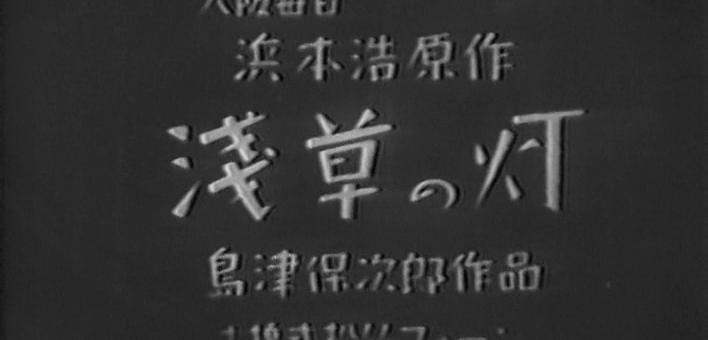
The Lights of Asakusa (浅草の灯, Yasujiro Shimazu, 1937)

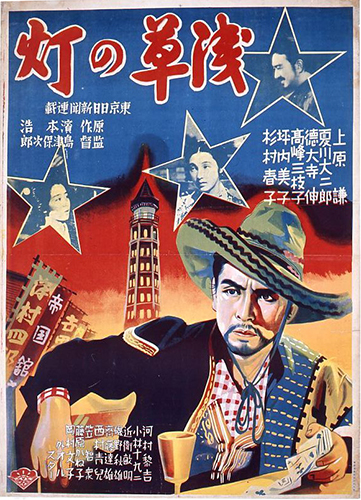
Lights of Asakusa posterThe lights of Asakusa (浅草の灯, Asakusa no Hi) still shone bright before the war. In this tiny corner of Tokyo well known for “low” entertainment, actors mingle with gangsters, lonely owners of amusement stalls, starving artists, bar girls, and wealthy industrialists each just trying to survive in an increasingly jittery city. Yasujiro Shimazu had been a pioneer of the “shomingeki” – stories of ordinary lower middle class people, and brings his characteristic wit and humanity to a tale of backstreet life where danger and ruin lurk on every corner and the only way to ensure one’s safety is to ensure you have the right defenders.

The main stage, if you will, is that of the Nippon-za “opera” company. This is, however, no great opera house but a run down little theatre presenting classical European opera for vaudeville audiences. The currently running show is Carmen, which will turn out to be appropriate for the events at hand. The trouble starts (or perhaps merely intensifies) when a young chorus member, Reiko (Mieko Takamine), begins attracting a range of wanted and unwanted male attention. Reiko, an orphan, had been taken in by a local bar mistress who later pushed her into the opera company but still expects her to make good on her investment by becoming a casual prostitute and taking on “customers” who present themselves at the bar (Reiko is around 16 or so, and therefore has just reached the age her foster mother thinks appropriate to join the business). The complication is that the man who’s taken a fancy to Reiko, Handa (Shunro Takeda), is a steel magnate who also finances the opera troupe meaning it’s not just the bar owner who’s coming under pressure but the financial security of the troupe too.

Being so young, Reiko finds her foster mother’s demands hard to refuse but is rescued by Sasaki (Seiji Nishimura) – the leading actor, married to leading lady Marie (Haruko Sugimura). The situation with Reiko exposes cracks already present in the group when Handa sends his goons in to disrupt the show, irking Sasaki to the point he takes off in a fit of artistic temperament. Meanwhile, another actor Yamagami (Ken Uehara), gets together with the rest of the troupe to ensure Reiko’s safety by hiding her with a feeble minded fan, Pokacho (Daijiro Natsukawa), so that she won’t be forced into a potentially life ruining situation.

Reiko’s plight is perhaps all too common on the streets of Asakusa. Having been orphaned she feels herself indebted to the bar mistress who took her in even if the relationship between them is not especially warm. She also feels grateful to have found a third family in the opera troupe and is afraid to lose her place there. Nevertheless, she is under extreme pressure to submit herself to this system of reciprocal arrangements and sleep with Handa solely to save making trouble for everyone else. Meanwhile her (sometimes) sympathetic roommate Beniko (Kayako Fujiwara) knows exactly what’s at stake through having been in a similar situation herself. She’s long been in love with the pure hearted Yamagami and is harbouring a degree of jealously in believing that Yamagami has a soft spot for Reiko, but she also half wants things to work out between them seeing as she has lost the “right” to love a man like Yamagami because she is no longer a virgin.

Shimazu had often been of a progressive mind, but sadly Beniko falls by the wayside, merely a sacrificial lamb prepared to give up on her dreams on Reiko’s behalf, so we never find out the limits of Yamagami’s justice loving heart or if he would be as bothered about Beniko’s past as she seems to fear he might be. Yamagami, brooding but righteous, would become one of matinee idol Ken Uehara’s best known roles though he too is teetering on the brink in Asakusa. Committed to defending the innocent, he tries to save Reiko’s honour but fails to declare a personal interest, entrusting her to the rather odd painter Pokacho who claims that his love for Reiko is of a spiritual, rather than carnal kind. Yamagami may succeed in his primary goal but still ends up in defeat, running away from the most important fight by retreating from Tokyo completely with a rebound girlfriend in tow, hoping to find kinder light in Osaka than he had on the dog eat dog streets of Asakusa.

Based on a novel by Hiroshi Hamamoto, Shimazu’s portrait of backstreet life sparkles with authenticity but also with a kind of hopelessness as each of these down on their luck “opera” stars laments their sorry fates and longs for a better gig somewhere less down and dirty. Meanwhile, the spectre of war lingers – when Carmen comes off the next show is to be “Two Honourable Soldiers”, filled with maudlin anthems of war which push the messages of patriotism and the glorification of offering one’s life for one’s country. The slimy Handa may have been defeated for now, but his kind are in the ascendent and the streets of Asakusa are unlikely to improve with only war and depression on the horizon.


Family Meeting (家族会議, Yasujiro Shimazu, 1936)

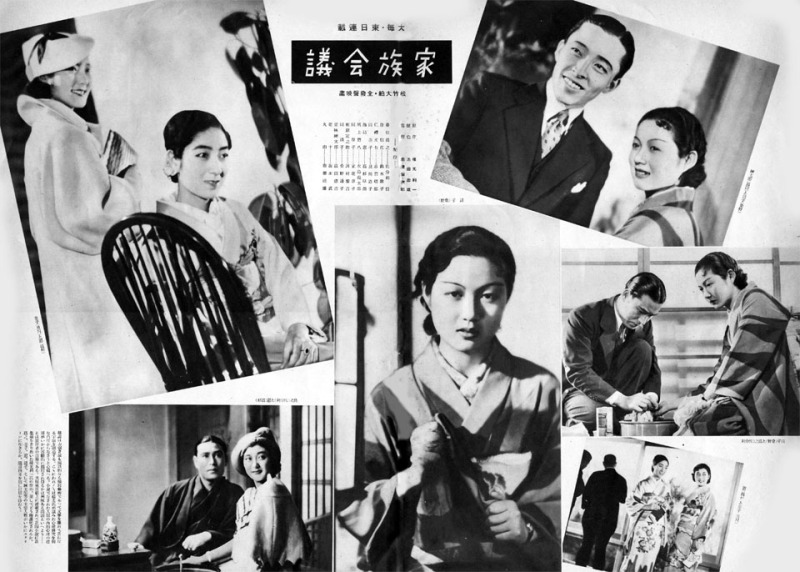
Family Meeting horizontal posterGiven the strident tone of the times, it was perhaps becoming more difficult to avoid politics altogether by the mid-1930s, but Yasujiro Shimazu manages it well enough in Family Meeting (家族会議, Kazoku Kaigi) – a romantic melodrama set in the world of the high stakes family business. Shimazu is best remembered as the pioneer of the shomingeki – stories of ordinary lower-middle class life in the contemporary era, but Family Meeting shifts up a little way in its focus on a young CEO who discovers it’s lonely at the top, not least because of the burden of family legacy and its unexpected impact on his difficult love life.

Shimazu opens on a noisy trading room floor at the Shigezumi Company before shifting to the equally chaotic boss’ office. Young CEO Takayuki (Shin Saburi) is called out by a family friend, Haruko (Yasuko Tachibana), who insists he come to the theatre to meet a young lady, Kiyoko (Michiko Kuwano), with whom she hopes to set him up. Takayuki’s love life is somewhat complicated in that he’s in love with “that woman from Osaka” – Yasuko (Michiko Oikawa) who also happens to be the daughter of a former business associate whose dodgy dealings some say pushed Takayuki’s late father to suicide. Yasuko is coming to Tokyo for the memorial service for Takayuki’s dad in company with her friend, Shinobu (Sanae Takasugi), but is also being pursued by another suitor – Rentaro (Kokichi Takada), a businessman who is secretly attempting to undermine Takayuki’s business through merging with another company.

Difficulties abound for Takayuki as his business suffers and he’s pestered from all sides as regards his romantic inclinations. Despite his personal feelings, he is unable to fulfil his romantic desires with Yasuko because of their difficult family history while Haruko attempts to push him towards Kiyoko. Kiyoko, the daughter of the businessman undercutting Takayuki’s business wouldn’t be such a good match either if anyone but she knew about the machinations, but currently they’re a well kept secret. Having fallen in love with Takayuki she eventually decides to spill the beans which gives him an all important advantage though he has to mortgage his house and approach Shinobu’s father, a wealthy Buddhist monk, for a loan in order to stay afloat. Takayuki isn’t interested in Kiyoko and finally has to resort to bluntness to make her understand but the eventual outcome is as positive as it could be and, in any case, works out well enough once she realises she’s developed an attraction for Rentaro who is finally beginning to go off Yasuko.

The romantic and the corporate increasingly overlap but the general message is that the modern business of commerce is chaotic and messy. The shouting of the trading floor and the backroom dealing of Rentaro’s nefarious plan are not exactly the rarefied world of gentleman’s agreements which often passes for the salaryman life in Japanese cinema, but the central irony is that the wealthiest man of all is the monk who “earns” his money passively through the largely silent practice of donation. The monk’s modern girl daughter, Shinobu, by contrast is a spendthrift with a taste for the spirt of the age – fast cars, feather boas, fancy hats and a confident forthrightness that stands in stark contrast to the shy diffidence of the permanently kimono’d Yasuko. The final irony is that it’s Shinobu who ultimately ends up “in charge” not only of Takayuki’s business arrangements – receiving the debt from her father and deciding to run the company herself with Takayuki as the boss, but also of his romantic life when she engineers a reunion with Yasuko before valiantly driving off alone into the mountains, her work here well and truly done.

Only once Takayuki is freed from his workplace burden is he able to address his romantic difficulties, and only by leaving the city behind is he able to free himself of his father’s legacy. Thanks to the gentle machinations of Shinobu, everyone is able to move forward with a little more certainty and little less preoccupation as she alone decides to shoulder all their burdens without thought for herself. Unlike many ‘30s films, Family Meeting’s central message seems to be slow down, let others help when things get hard, and try to avoid being so noble you make yourself unhappy. All good lessons though perhaps inexpertly delivered and without Shimazu’s usual wit.


The Neighbor’s Wife and Mine (マダムと女房, Heinosuke Gosho, 1931)

Neighbor's wife and mine flyerThere’s an especial irony in the fact that Japan’s first talkie is essentially all about how annoying sound can be. Directed by Heinosuke Gosho, pioneer of the shomingeki and a longstanding devotee of melancholy comedy, The Neighbor’s Wife and Mine (マダムと女房, Madame to Nyobo) is another in a long line of contemporary farces set in an idealised middle-class world but as much as Gosho goes out of his way to include as much soundplay as humanly possible he never lets the gimmick get the better of him.

Gosho opens with a brief prologue sequence otherwise detached from the main narrative in which down on his luck playwright Shibano (Atsushi Watanabe) gets into an argument with a precious artist busily painting a canvas of the house opposite him and gleefully admiring his own work. The painter likes this spot because of its silent serenity – an atmosphere quickly broken when Shibano struts up, whistling loudly, humming, making conversation. Unfortunately Shibano doesn’t rate the painter’s work and is also non-plussed that he doesn’t know who Shibano, apparently a “famous” playwright, is and doesn’t seem to respect writers as fellow artists anyway. A fight breaks out and all because of some unwanted noise pollution. Eventually the two men end up friends again after bonding in their mutual appreciation of the charms of “madame” (Satoko Date) the woman who lives in the house next to the one Shibano has just decided to rent on a whim with the intention of getting some “peace and quiet” in the countryside to finish his overdue manuscript.

The country is, as it turns out, not as quiet as you’d think. No sooner has Shibano moved in than he’s assailed by noise – mostly from within his own household as he’s a father of two, a little girl of perhaps four or five, and a bawling infant son. He doesn’t help matters by winding up his exhausted wife Kinuyo (Kinuyo Tanaka) by loudly impersonating a distressed cat during the middle of the night but a bigger problem is about to present itself in the form of the Mammy Jazz Band who, led by the woman Shibano was so smitten with after bumping into her during his altercation with the painter, use the house next-door as their rehearsal studio.

The house of Shibano is, apparently, a fairly happy one though long suffering wife and mother Kinuyo has reason enough for exasperation as her husband wastes his time drinking and playing mahjong while the deadline for the manuscript he’s supposed to be writing draws ever closer. In charge of the household finances, Kinuyo is keenly aware the family are low on funds – something presumably not helped by Shibano’s impulsive decision to rent a cottage in the country. He’s left himself a dozen inspirational notes reminding himself that manuscripts don’t write themselves, but still Shibano can’t buckle down. Having come to the country to escape the noise of city life, he finds himself assaulted by a silence differential in dealing first with his noisy children and responsibilities as a father, and then the constant intrusion of unexpected sounds which, in the city, might hardly be noticed against the constant background hum.

Trying everything from plugging his ears to tying a scarf around his head and finally jumping inside a cardboard box, Shibano decides to enlist Kinuyo to tell next-door to keep it down but she, an elegant Japanese wife, would hardly dare to disturb the “peace”. She tells her lazy husband to sort it out himself only to regret her decision when she spots him laughing away with the sophisticated modern woman next-door, drinking in the party atmosphere of her Bohemian home and enjoying a private concert as the “noisy” jazz band rehearse their latest numbers.

Despite his occupation which might imply a little Bohemianism in itself, Shibano is a traditionally minded sort. He may have turned up in swanky hat and pinstripe suit carrying a cane, but in his new home he dresses exclusively in kimono, as does his dutiful wife, who can only trail behind her husband in exasperation offering the occasional barbed comment as her only form of mild resistance. His household demands quietude, but cannot attain it. He is, therefore, naturally led away to the woman next door like a time traveller suddenly given a glimpse of the new and exciting future. The musical repertoire of the Mammy Jazz Band is all about “speed”, they move fast and with no thought to the disturbance they trail through the air around them. They are going somewhere, in contrast to Shibano who has been in a state of inertia for quite sometime.

It is, however, a little sad that it’s “madame” that finally speeds on Shibano rather than his wife and children even if there is nothing improper in their relationship – Madame is not particularly interested in Shibano in anything other than a neighbourly fashion, her people pleasing friendliness and genuine kindness perhaps running in contrast to the conventional depiction of a “modern” woman as Kinuyo later points out in jealousy when she remarks that women like that are all “100% sex delinquents”.

The film’s Japanese title is certainly drawing a contrast between the modern “madame” and the traditionally minded “nyobo” though it comes down on neither side, allowing room for both sorts of women in this rapidly changing society. Shibano maybe a lazy, easily distracted sort of man but he’s knows what’s good for him and when all’s said and done his relationship with his wife is as solid as they come despite their frequent financial woes, childcare spats, and momentary pangs of jealousy or anguish. The family, repaired and in motion once again, finally get their day in the sun enjoying a rare moment of blissful happiness as they break into a chorus of “My Blue Heaven”, positively rupturing the silence with their own joyful voices as they join the “noisy” cavalcade heading towards the exciting “speed era” waiting for them in the future.