
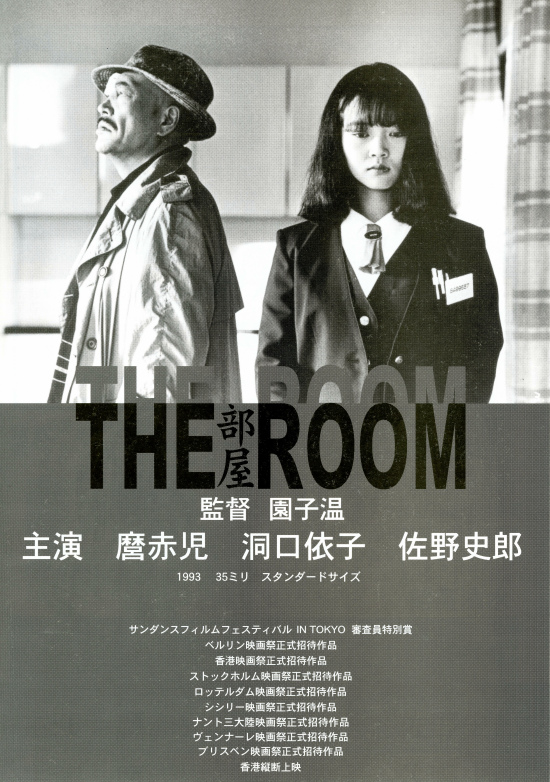
 Though the later work of Sion Sono is often noted for its cinematic excess, his earlier career saw him embracing the art of minimalism. The Room (部屋, Heya) finds him in the realms of existentialist noir as a grumpy hitman whiles away his remaining time in the search for the perfect apartment guided only by a detached estate agent.
Sono begins the film with an uncomfortably long static camera shot of a warehouse area where nothing moves until a man suddenly turns a corner and sits down on a bench. We then cut to a rear shot of the same man who’s now sitting facing a harbour filled with boats coming and going as the sun bounces of the rippling sea. We don’t know very much about him but he’s dressed in the crumpled mac and fedora familiar to every fan of hardboiled fiction and walks with the steady invisibility of the typical genre anti-hero.
Before we head into the main “narrative” such as it is, Sono presents us with another uncomfortably long shot of the title card which takes the form of a street sign simply reading The Room, over which someone is whistling a traditional Japanese tune. Eventually we catch up with the hitman as he meets a young female estate agent identified only by the extremely long number she wears on the jacket of her official looking business suit. The hitman gruffly lists his poetical demands for his new home – must be quiet, have the gentle smell of spring flowers wafting through it, and above all it must have an open, unoverlooked view from a well lit window. The estate agent reacts with dispassionate efficiency, her gaze vacantly directed at the floor or around the rundown apartments which she recommends to her client. Together, the pair travel the city looking for the elusive “Room” though perhaps that isn’t quite what they’re seeking after all.
Sono shoots the entire film in grainy black and white and in academy ratio. He largely avoids dialogue in favour of visual storytelling though what dialogue there is is direct, if poetic, almost symbolic in terms of tone and delivery. The occasional intrusion of the jazzy score coupled with the deserted streets and stark black and white photography underlines the noir atmosphere though like the best hardboiled tales this is one filled emptiness led by a man seeking the end of the world, even if he doesn’t quite know it.
In fact, the relationship between our hitman and the passive figure of the estate agent can’t help but recall Lemmy Caution and the unemotional Natasha from Godard’s Alphaville – also set in an eerily cold city. If Sono is channelling Godard for much of the film, he also brings in a little of Tarkovsky as the hitman and estate agent make an oddly arduous train journey around the city looking for this magical space much like the explorers of the Zone in Stalker. Yet for all that there’s a touch of early Fassbinder too in Sono’s deliberately theatrical staging which attempts both to alienate and to engage at the same time.
The Room’s central conceit is its use of extremely long shots filled with minimal action or movement. In a 90 minute film, Sono has given us only 44 takes, lingering on empty streets and abandoned buildings long enough to test the patience of even the most forgiving viewer. Deliberately tedious, The Room won’t counter arguments of indulgence but its increasing minimalism eventually takes on a hypnotic quality, lending to its dreamlike, etherial atmosphere.
Here the city seems strange, a half formed place made up of half remembered images and crumbling buildings. Empty trains, scattered papers, and lonely bars are its mainstays yet it’s still somehow recognisable. Leaning more towards Sono’s poetic ambitions than the anarchism of his more aggressive work, The Room is a beautifully oblique exploration of the landscape of a tired mind as it prepares to meet the end of its journey.
Original trailer (no subtitles):
 Every once in a while an artist emerges whose work is so far ahead of its time that the audience of the day is unwilling to accept but generations to come will finally recognise for the achievement it represents. So it is for Sharaku – a young man whose abilities and ambitions are ruthlessly manipulated by those around him for their own gain. Brought to the screen by veteran new wave director Masahiro Shinoda, Sharaku (写楽) is an attempt to throw some light on the life of this mysterious historical figure who comes to symbolise, in many ways, the turbulence of his era.
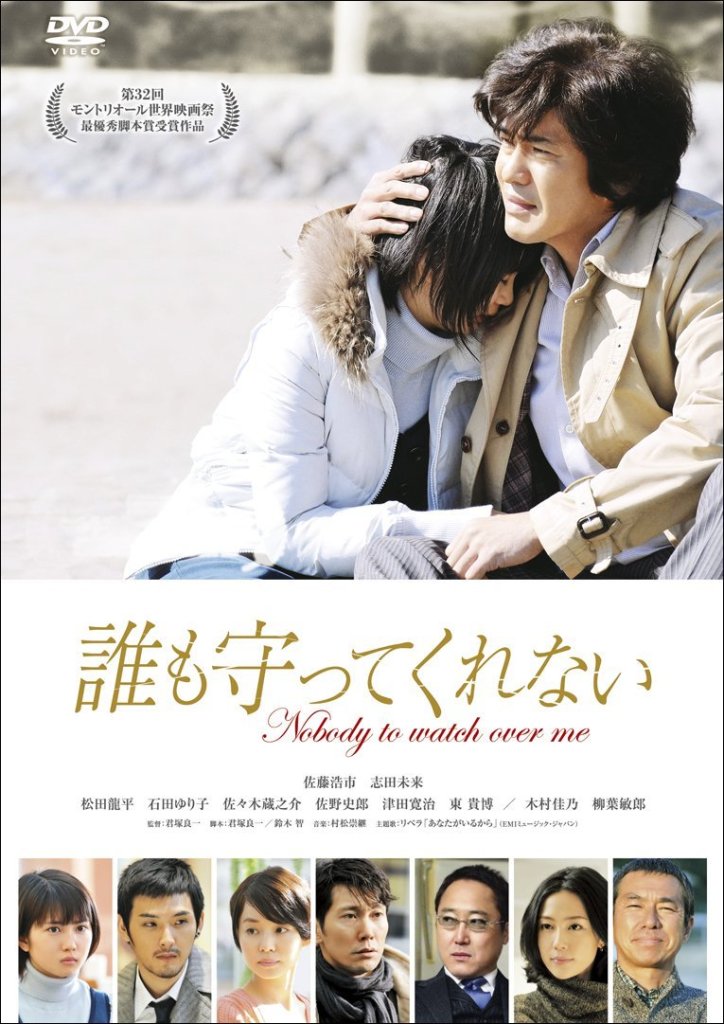 When a crime has been committed, it’s important to remember that there may be secondary victims whose lives will be destroyed even if they themselves had no direct involvement in the case itself. This is even more true in the tragic case that person who is responsible is themselves a child with parents and siblings still intent on looking forward to a life that their son or daughter will now never lead. This isn’t to place them on the same level as bereaved relatives, but simply to point out the killer’s family have also lost a child who they have every right to grieve for, though their grief will also be tinged with guilt and shame.
