
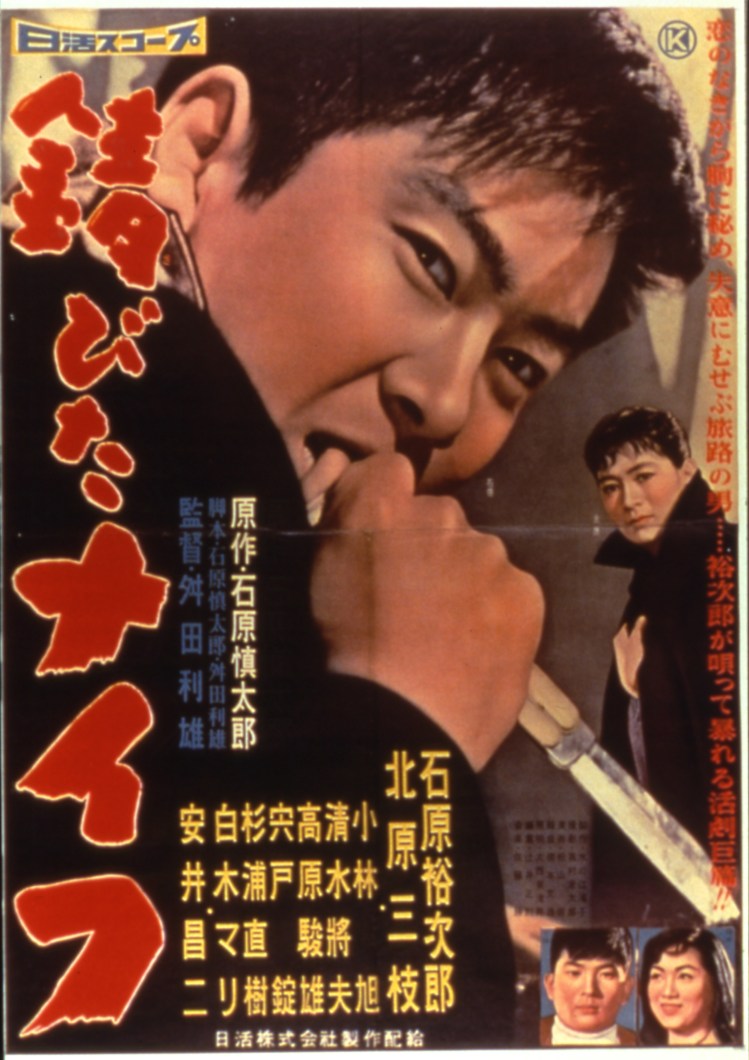
 Post-war Japan was in a precarious place but by the mid-1950s, things were beginning to pick up. Unfortunately, this involved picking up a few bad habits too – namely, crime. The yakuza, as far as the movies went, were largely a pre-war affair – noble gangsters who had inherited the codes of samurai honour and were (nominally) committed to protecting the little guy. The first of many collaborations between up and coming director Toshio Masuda and the poster boy for alienated youth, Yujiro Ishihara, Rusty Knife (錆びたナイフ, Sabita Knife) shows us the other kind of movie mobster – the one that would stick for years to come. These petty thugs have no honour and are symptomatic parasites of Japan’s rapidly recovering economy, subverting the desperation of the immediate post-war era and turning it into a nihilistic struggle for total freedom from both laws and morals.
Public support is, largely, behind this new force of order as seen in the local uproar when top gangster Katsumata (Naoki Sugiura) is arrested in connection with an assault. Things being what they are, Katsumata is soon released to laugh at law enforcement from a safe distance but the past is coming for him. Some years ago Katsumata killed a local councillor, Nishida (Ikunosuke Koizumi), and made it look like suicide but three guys from a local gang saw him do it. He paid them to keep quiet, but now one of them feels like talking and thinks Katsumata might like to pay a little more to reseal the deal.
Chatty Tokyo thug Shima (Jo Shishido) gets pushed off a train for his pains but Katsumata is worried enough about the other two to send his guys out to make some enquires. He’s particularly worried about Tachibana (Yujiro Ishihara) – a “sleeping lion”, Tachibana is a hot head who’s now gone straight after coming out of jail for murdering a guy he thought was a direct cause of his girlfriend’s death. Luckily enough, Tachibana now runs a bar where he employs the other witness, Terada (Akira Kobayashi), to whom he acts as a stern big brother hoping to keep them both on the straight and narrow. Tachibana is unlikely to talk, he wants out of the gangster world for good, but Terada is young and ambitious with a girlfriend to impress. He takes more hush money from Katsumata, not realising what he’s getting himself into, and then lets it go to his head.
Tachibana is the rusty knife of the title. After letting his rage consume him in murdering a petty mobster in revenge for the rape of his girlfriend who later committed suicide, Tachibana has vowed to quell his anger and live a decent, peaceful life. Angry outbursts are, however, never far from the surface and following recent revelations, a rusty knife may find its cutting edge once again.
Keiko (Mie Kitahara), a customer at Tachibana’s bar, is making a documentary about violence in the city which coincidentally turns up a few clues as to Tachibana’s past, not to mention her own. The daughter of the murdered councilman, Nishida, and the niece of another powerful politician, Keiko is a figure of righteousness, charting her own course through the difficult post-war world and attempting to do so with dignity and elegance while refusing to abandon her sense of decency and compassion. Later a real life married couple, Kitahara and Ishihara were a frequent on screen romantic pairing though this time around the connection is more subtle as Keiko begins to sympathise with Tachibana’s plight and commits herself to saving him from destroying himself in becoming consumed by his barely suppressed rage.
Tachibana is indeed raging, though his rage is understandable. As someone later puts it “nothing in this city makes sense”. The systems are corrupt, the wartime generation continue to run the show and run it badly, or at least for their own ends, robbing youth of its rightful place at the forefront of economic recovery. Yet even if Ishihara is a symbol of youthful alienation, his rage is one which must be quelled. Even in this city where nothing makes sense, self control is one’s greatest weapon. If youth is to walk forward into the exciting post-war future, it will have to drop its rusty knives.
Original trailer (English subtitles)
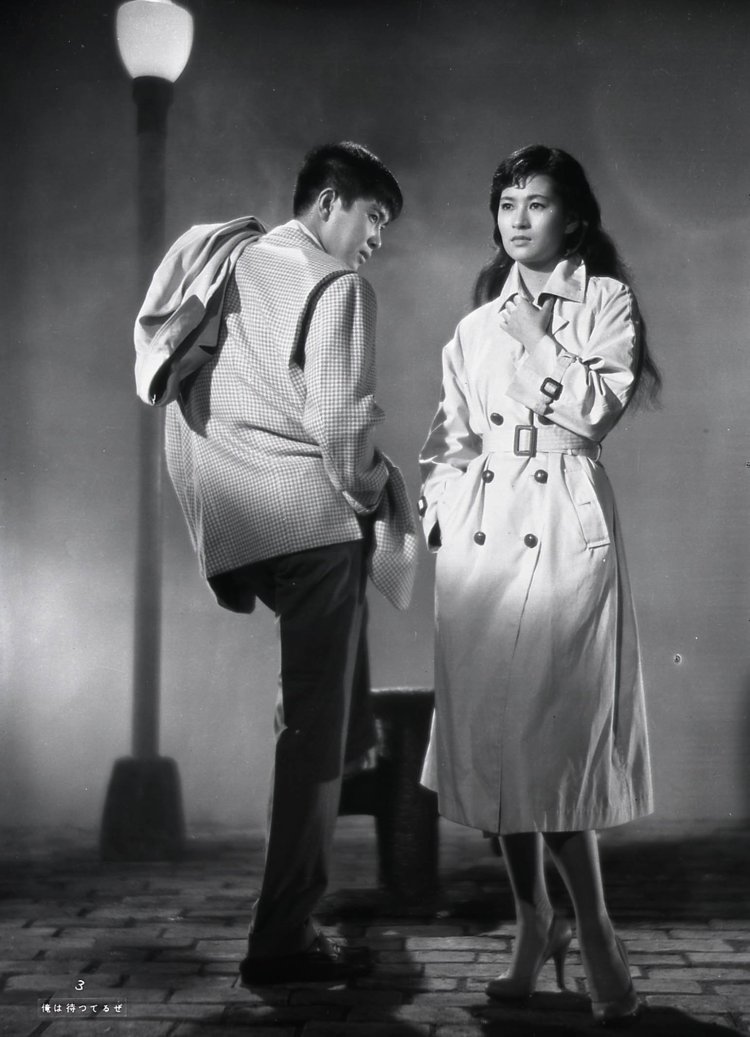
 Goro (Tetsuya Watari) just can’t catch a break. He sends his one true love off on a train to safety only to see her dramatically return because she can’t bear to leave his side. Her devotion costs her her life as she places herself between Goro’s manly chest and an assassin’s knife. Heartbroken, Goro gets out of town only to run into another old flame who is now a mama-san and has apparently married another yakuza (despite the fact that Goro parted with her because of his chaotic yakuza lifestyle). As usual, the past won’t let him go – this time in a more literal sense as Goro encounters another woman who looks exactly like the girlfriend who died in his arms….
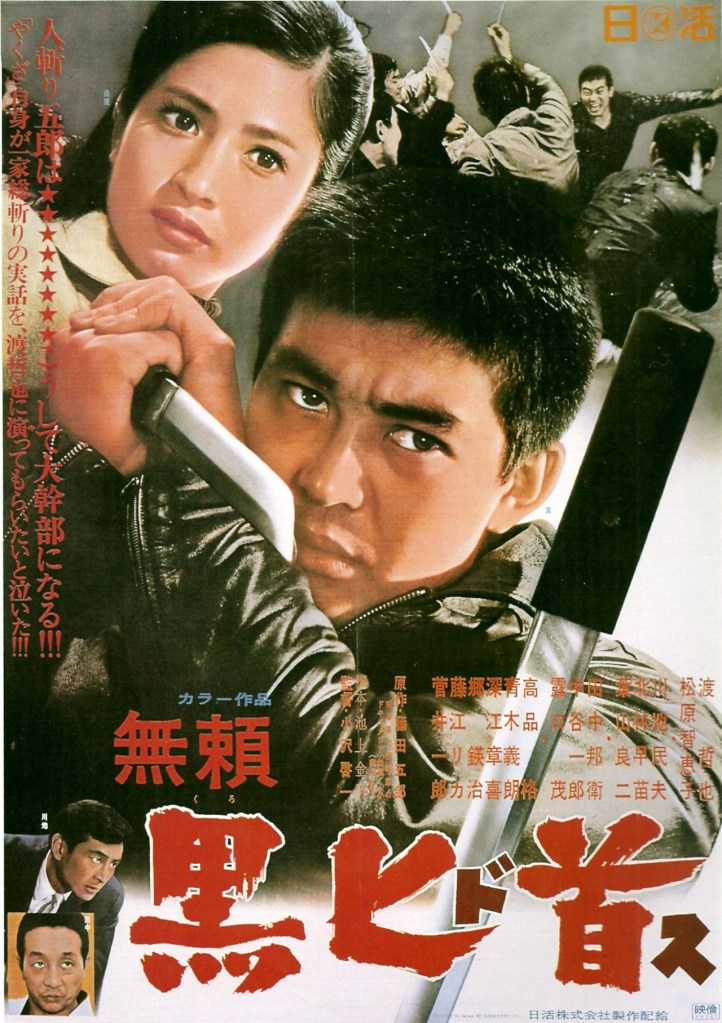
 So, once again Goro Goes Straight is sadly not the title of this fourth film in the tale of the noble hearted gangster “Goro the Assassin” (無頼 人斬り五郎, Burai Hitokiri Goro). After getting his friend out of a jam, the pair end up in prison. Goro is released three years later but his friend, Masa, is poor health and eventually dies a prisoner’s death with no one to collect his body meaning he’ll be buried in a lonely prison grave alongside the rest of society’s unwanted rubbish. On their final meeting, Masa asks Goro to find his sister for him and tell her that he’s doing alright. This message now well out of date, Goro decides to try finding Masa’s sister anyway if only to find out why she never came to see him even as he lay dying.
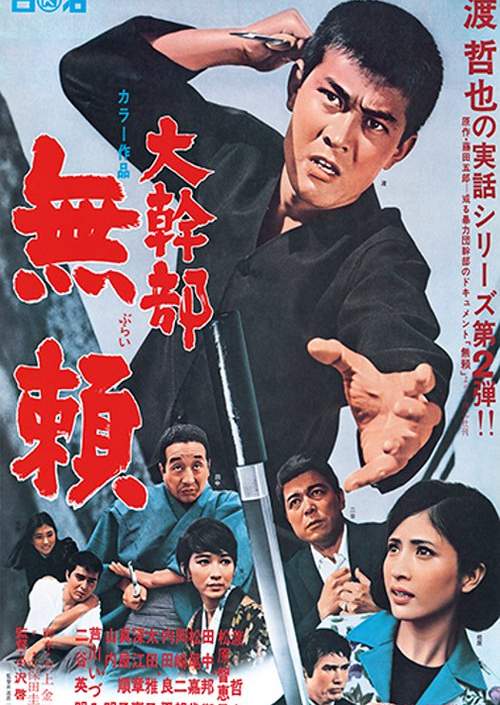 So, as it turns out the end of
 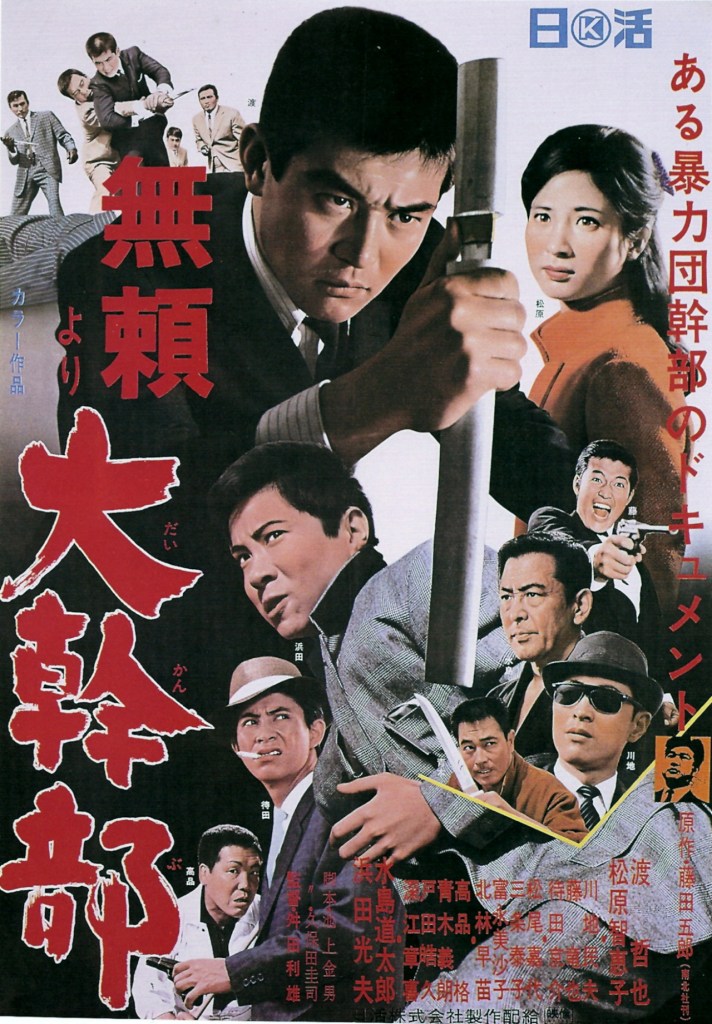 By 1968 the fate of the gangster movie was somewhat in flux as the old ninkyo style was on its way out yet the jitsuroku approach, later to find its zenith in the
  Windows on Worlds