The Extremists’ Opera (過激派オペラ, Junko Emoto, 2016)

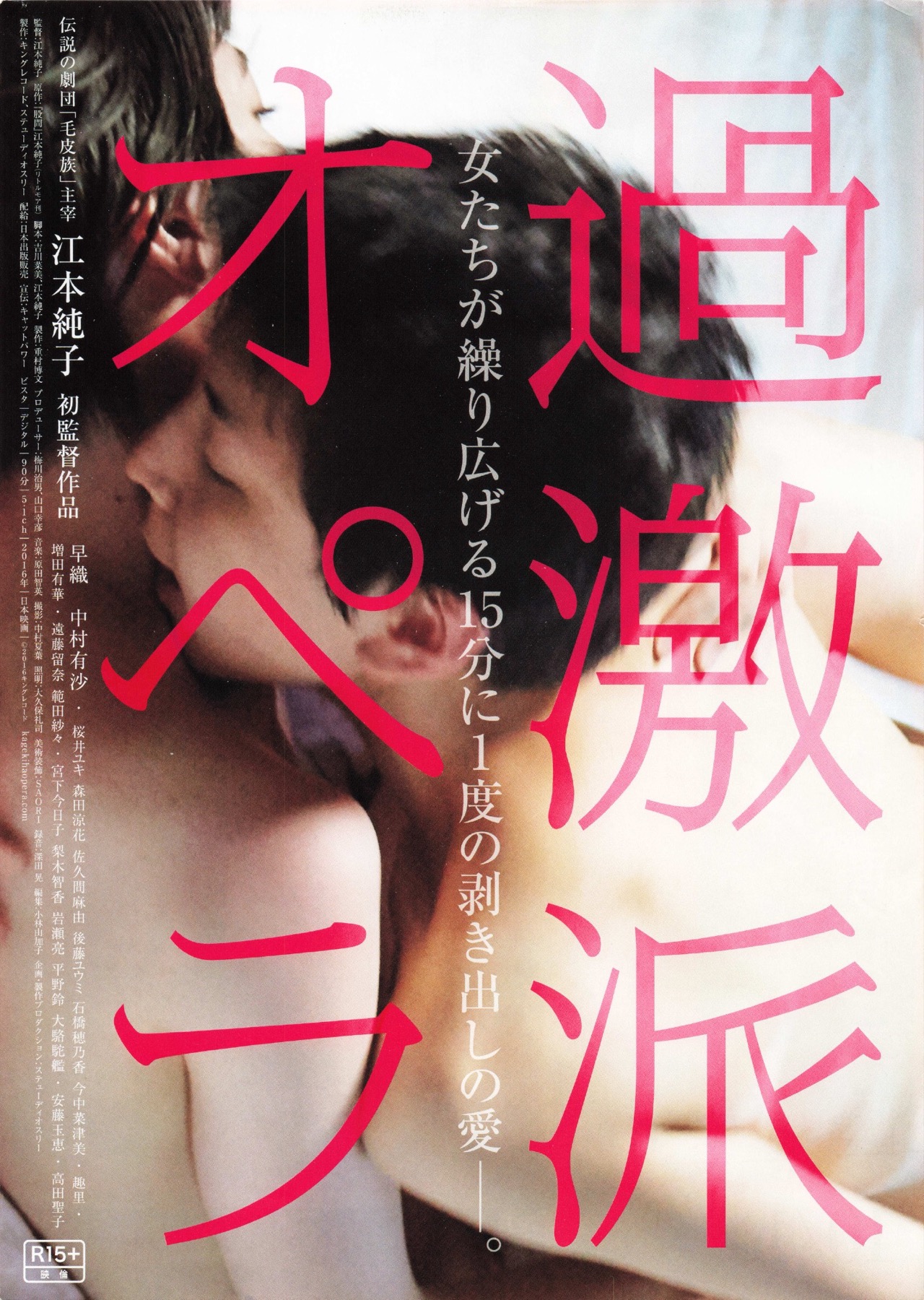
Junko Emoto ironically explores Tokyo’s fringe theatre scene in adapting her semi-biographical novel. Shot with a roving, handheld camera, The Extremists’ Opera (過激派オペラ, Kagekiha Opera) situates itself within an all female, avant-garde experimental theatre company but quickly makes plain that even those with high-minded artistic intentions are not free of the usual human flaws as the borderline abusive, womanising female director finds herself sabotaging everything she’s built through a mix of hubris and wandering desire. 

Blanket Cult are a popular company on the fringe theatre scene with a small following devoted to their art. Former banker Ayako bursts into their office determined on an audition and subsequent career change precisely because she can’t get enough of director/playwright Nao’s experimental plays which, she explains, she believes can stop wars. Nevertheless, it’s not Ayako the team are struck by, but the intense young woman who came in behind her, Haru, who more or less demands to be taken on. Nao is captivated, hiring both women on the spot and vowing to write a new piece with Haru in the lead. Of course, she does this partly for not altogether altruistic reasons. Immediately after the first script meeting she asks Haru to stay behind and then propositions her, directly declaring her love with the justification that she’d rather be upfront rather than waste time during the rehearsal process. Haru tells her that she’s not into women, but Nao doesn’t take no for an answer seemingly oblivious to the fact that what she’s doing is harassment and really she’s no better than any other sleazy male director handing out parts to women she wants to sleep with. 

Nevertheless, her persistence even with its undignified pleading eventually pays off. Haru relents, either because she’s fed up of fending off Nao’s advances or discovering that she is on some level receptive, finding that she does in fact enjoy sex with another woman. She agrees to start dating Nao who declares Haru her muse and the pair move in together but their relationship is threatened by their working environment with its petty jealousies and temptations. Emoto opens the film with a graphic sex scene of two naked women 69-ing, rolling around in the empty environment of the garage the troupe uses to rehearse. The two women are Nao and her previous squeeze, a former leading lady she throws over because of her attraction to Haru whose own desire is perhaps signposted after she walks in on them going for a second round and makes a passive aggressive scene that leads the other woman to warn her that Nao is a heartless womaniser with a habit of bedding her leading ladies, sometimes in the wings. 

Yet it’s not only Nao’s misplaced desire that endangers the troupe but her arrogance and abusive directing style. After their play proves a success, she unwisely gives in to ambition and sells out by allowing a mainstream professional actress, Yurie, to join the troupe, a move which disrupts their dynamic while also inflaming Haru’s jealousy as she begins to wonder if she’s already being replaced. Nao snaps at her team and stops giving them proper direction in favour thinly veiled insults. She repeatedly instructs an actress to lose weight while increasingly allowing Yurie to dominate the rehearsals, accepting all of her ideas even while the other members sceptical. She even goes so far as to abandon her usual thriftiness, purchasing elaborate props such as a large vertical tank which leads her into another possibly inappropriate relationship with an older woman who had been pursuing her. Needless to say, the whole thing blows up in her face, ruining not just her relationship with Haru but that with her theatre company who are now all thoroughly fed up with her mistreatment and have entirely lost respect for her as a person and an artist. 

“If you want to pick a fight with society live in it first,” her benefactor irritatedly tells Nao after she’s thoughtlessly caused offence, reminding her that she lives in a kind of bubble that is the fringe theatre scene. Her only real interaction with someone outside of it is with the estate agent who finds her and Haru a flat and is extremely confused as to why they only need one room if they’ll be living together, concerned that female roommates are a liability because sooner or later one gets a boyfriend and leaves the other in the lurch unable to make the rent alone. Unable to learn her lesson, Nao has furiously energetic sex with an apparently wealthy starstruck fan and then immediately asks for money, perhaps getting a taste of her own medicine when she assures her there’s plenty more where that came from as long as she sees her again and also gives her a part in a play. Playfully ironic with its whimsical score and slightly detached gaze, Emoto’s refreshingly explicit drama is both a mild satire of the avant-garde fringe theatre scene and a takedown of its self-involved director whose inability to separate the creative from the carnal proves her downfall both artistic and emotional. 


Trailer (English subtitles)

Shadow of Fire (ほかげ, Shinya Tsukamoto, 2023)

The ruins of a firebombed city become a purgatorial space haunted by tortured souls who cannot escape the traumatic wartime past in Shinya Tsukamoto’s eerie voyage through post-war Japan, Shadow of Fire (ほかげ, Hokage). Even the small boy (Ouga Tsukao) who desperately looks for a place to belong is plagued by nightmares of the flames that took his home and family while it otherwise seems that those around him live their lives in the shadow of a war which for many is still far from over. 

This state of ruination is immediately brought home to us by the heightened presence of sound. Not only do the cicadas buzz amid the scorching heat of an oppressive summer, but we constantly hear the sound of people walking over rubble or the clinking of broken glass. The unnamed woman we first meet (Shuri) lives in a room behind a small bar which appears to have scorch marks across the fusuma, a dank and dingy place filled with hopelessness and despair. The woman herself has a vacant look, a little dead behind the eyes either numbed with the sake a neighbourhood man brings her as pretext for extracting sexual favours or simply too tired of life to think much about it. Though she technically runs a bar, it’s more of a front for her only means of supporting herself, casual sex work, though as later becomes apparent she too may have been slow poisoned not only by the war but it’s immediate aftermath and the lingering traumas of those left behind and those who returned. 

The boy who eventually comes to stay with her remarks that those who did not come back did not turn into scary people, as if they were somehow lucky to have escaped this purgatorial hellscape. Later he wanders through the black market and discovers an abandoned tunnel filled with returned soldiers who stare out at him with vacant eyes sitting with eerie stillness like dormant zombies. He spots a man among them that he knew well, a young soldier (Hiroki Kono) who had been a teacher before he was drafted and took a maths textbook with him to war as a kind of talisman that reminded him he’d survive and teach again. The soldier had formed an odd kind of family unit with the woman and the boy, almost as if the husband she lost in the war and son who died in the firebombing, had been returned to her but his trauma refuses to set him free surfacing in moments of unexpected violence that hint at war’s realities. 

Later the boy meets another man with a traumatic past though one who sees himself as both victim and villain, resentful towards himself and the militarist regime that convinced him to betray his humanity and do dreadful, terrible things in its service. Tellingly this man, Shuji (Mirai Moriyama), is the only one granted a name. Perhaps names are only for the living, there’s a part of Shuji that is painfully alive a way that others aren’t even as he fixes his sights on his revenge as if it would somehow restore the humanity that was taken from him. Completing his quest, he lets down his hair and proclaims that for him at least the war is finally over. His commander, meanwhile, appears to have been living a fairly nice and successful life reminding him that he should stop dwelling on the past because it was after all a war and such things are only to be expected.

Shuji uses the boy in a way that seems counterproductive, taking advantage of the gun he’d found to help him take revenge on war. The woman tries to change the boy’s path, instructing him not to steal but to work honestly for his pay and to try to be better than this infinitely corrupted world. He wanted to be her protector, in his way acting as guide trying to free those around him from the purgatorial space of ruin and destitution but when he asks a medicine seller if he can exchange his money for something that will cure sickness he is told it’s not enough. He then tries to buy a dress for the woman, as if anticipating the salvation through consumerism that will eventually arrive though the constant sound of gunshots from the black market might indicate that for some at least there’s only one way out. The old man who visits the woman explains that he only approaches the ones who look okay, but that in the end you never really know. Shot in the half light or caught from behind the previously friendly take on an almost demonic intensity, wandering ghosts or broken souls already half consumed by the flames that in their minds at least are still burning and casting their shadows over the scorched earth of a traumatised society.


Shadow of Fire screened as part of this year’s Japan Foundation Touring Film Programme.

International trailer (English subtitles)
To The Supreme! (もっと超越した所へ。, Santa Yamagishi, 2022)

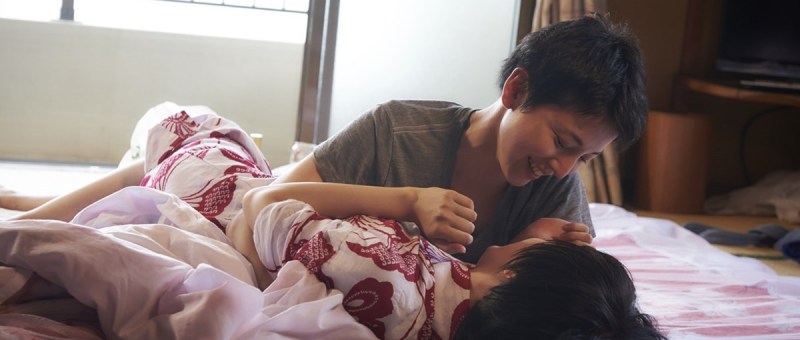
Is it worth staying in a dissatisfying relationship just so that you’ll have someone to carry your rice? The idealist in all of us might want to say no, but it’s undeniably a strong argument. The four heroines of Santa Yamagishi’s To the Supreme! (もっと超越した所へ。, Motto Chouetsushita Tokoro e), adapted from the stage play by Shuko Nemoto, find themselves asking just this question as their relationships with a series of narcissistic, selfish men reach a crisis point on the eve of the coronavirus pandemic. 

Opening in early 2020, the film finds costume designer Machiko (Atsuko Maeda) reconnecting with middle school friend Reito (Fuma Kikuchi) who abruptly announces he’s moving in because he’s worried about her given the tone of her late night tweets. Former actress turned variety star Suzu (Shuri) lives with her gay best friend, Tommy (Yudai Chiba), after ending a 10-year relationship with petulant former child star Shintaro (Takahiro Miura) who is now seeing sex worker Nanase (Mei Kurokawa). Miwa (Marika Ito), meanwhile, is in a relationship with vacuous hipster Taizo (Reiji Okamoto) who spent an exorbitant amount of money on gold grills as a present and seems to be very concerned about this new virus going around. 

None of these men have a full-time job and all are (or were at one time or another) supported by their partner who is shouldering the responsibility for rent and domestic bills singlehandedly, not that there’s anything wrong with that in itself if were not such a blatant attempt to take advantage of the women they claim to love. In a flashback to 2018, we discover that Miwa was previously in a relationship with Reito and she’s carried on giving him pocket money every month for the last two years despite having moved on romantically. In his sudden announcement to Machiko that he’ll be stying by her side for the foreseeable future, it’s difficult not to wonder if he’s simply looking for a free place to stay especially as he largely continues to mooch off her while doing so claiming his live streaming channel is sure to take off soon. 

Shintaro had similarly been supported by Suzu during the time they lived together and put on a big show of letting her kept the apartment when he left even though the apartment was hers anyway because it was her name on the lease and she paid the rent while he wasn’t working. More practically minded, Suzu had been taking jobs that paid in light entertainment and variety only to be branded a sellout by Shintaro who was nevertheless jealous of her success. A former child star, he feels humiliated taking bit parts and even working as an extra but talks a big game to Nanase whom he often brands “stupid” and looks down on for being a sex worker. He makes her shout out that he’s the best actor as she climaxes and quizzes her about foreign directors when she says she struggles to watch the films of Shunji Iwai because they make her wonder if there’s something wrong with her eyesight. When she genuinely tells him that she enjoyed his “performance” after spotting him as an extra in a movie, he tells her that a sex worker’s opinion doesn’t count despite having been paying for just that kind of validation the entire time. 

Suzu runs into a similar problem in developing feelings for Tommy who rejects her in an incredibly insensitive way when she tries to make a move on him. During a heated argument, Tommy yells at Suzu for ruining all his plans because he wants to start a family and was intending to marry a woman Suzu being a prime candidate. The film flirts with but does not really get into Tommy’s internalised homophobia in which he seems to regard his sexuality as a barrier to achieving the life he wants given the still conservative culture has not yet legalised same sex marriage and makes life difficult for same sex partners who want to raise children together. He lets himself off the hook suggesting that his sexuality permits him to be “selfish” while admitting that he too has taken advantage of women’s feelings for him without really giving much thought to their own. 

Taizo is much the same. On the surface, it looks like he is genuinely solicitous of Miwa though it’s really more that he doesn’t want to get sick himself or be responsible for looking after someone who is ill. When Miwa goes to the hospital thinking she may be pregnant, she gets some other distressing news but all Taizo can do is focus on himself not wanting to accept the responsibility of becoming a father. When she looks to him for comfort, he fixates on his own relief. These men are selfish, self-involved, proud and fragile in their masculinity requiring the women in their lives to take care of all their basic needs without lifting a finger to help. But the film doesn’t quite let the women off the hook either, a sudden coup de théâtre bringing them together to reconsider making clear that they themselves enable the men’s behaviour by forgiving them if in part because they expect little better and having someone around who could theoretically help out, for example by carrying heavy bags of rice home from the store, might make life easier even if they never actually do it. Witty and slickly edited, Yamagishi ends with a sudden intrusion of eijanaika dancers as if literally to say “what’s wrong with that?”, which might present a rather cynical view of contemporary romantic relationships but one that is also admittedly difficult to argue with. 


To The Supreme! screened as part of this year’s Nippon Connection.

Original trailer (English subtitles)
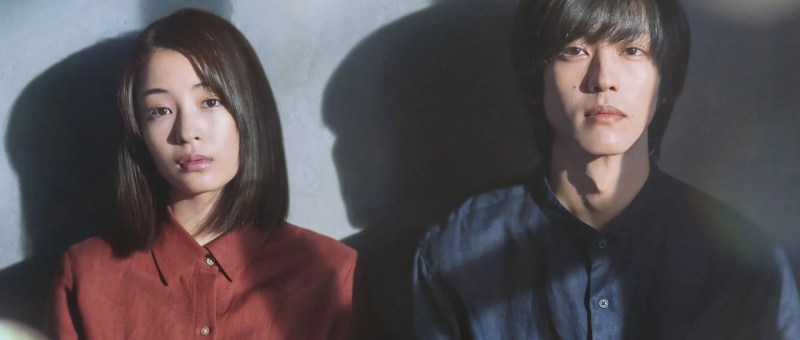
Intolerance (空白, Keisuke Yoshida, 2021)

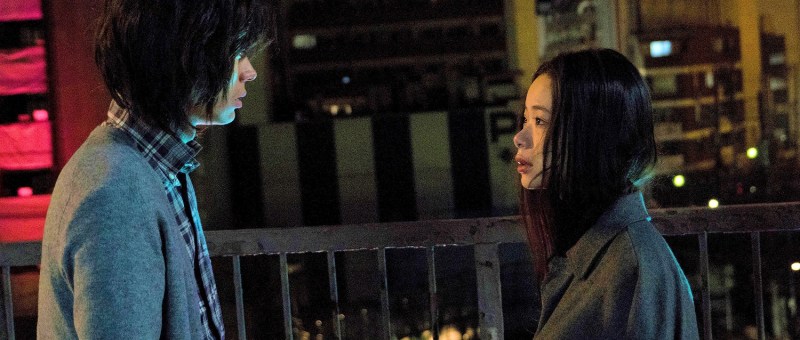
At times of tragedy it may be natural to look for someone to blame, as if being able to pin all of this pain and anger on a single source would somehow help you to accept it. But in other ways tragedy is just a confluence of circumstances that are either everyone’s fault or no one’s. How far back can you really trace the blame? There would be no end it. That’s perhaps the conclusion that the protagonists of Keisuke Yoshida’s Intolerance (空白, Kuhaku) eventually come to, realising that their attempts to blame others are often born of a desire to deny their own responsibility or else to protect something else they fear losing. 

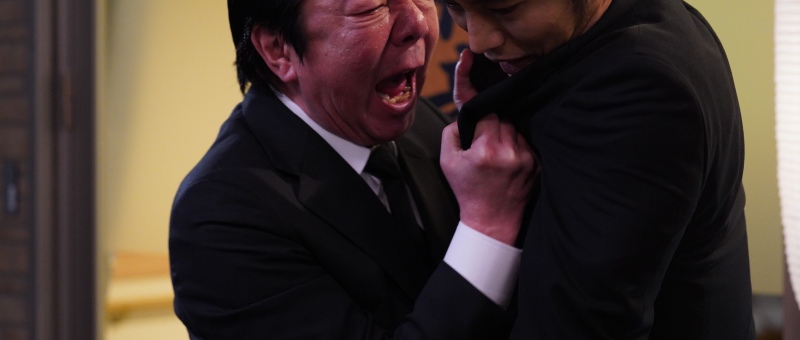
At least that’s how it is for grizzled fisherman Mitsuru (Arata Furuta), a man well liked by no one. A rude and violent bully, he terrorises all around him not least his teenage daughter Kanon (Aoi Ito) who is meek and passive with a slightly ethereal quality as if she’s learned that blending into the background is the best way to protect herself. Stopping in to a local convenience store on her way home from school, she’s accosted by resentful store manager Naoto (Tori Matsuzaka) who grabs her by the arm and accuses her of shoplifting nail polish. At some point, Kanon panics and bolts out of the store. Naoto chases her along a busy highway until she suddenly darts out into the road trying to get away from him and is hit first by a car driven by a young woman and then by a truck travelling in the opposite direction. Despite his gruff exterior, Mitsuru is quite clearly destroyed by his daughter’s death but becomes fixated on clearing her name of the shoplifting, insisting that he never saw her wear any makeup and that Naoto is to blame for her death in acting with such a heavy hand. 

Of course, it doesn’t occur to Mitsuru that Kanon may have worn makeup in secret and made sure to keep it from him knowing how he’d likely react. Likewise, perhaps she ran from the store because Naoto would have called her father and she was frightened of what he’d do if he found out she was caught pilfering, and pilfering nail polish at that. He remembers that she wanted to talk to him about something to do with school the night before she died but he didn’t listen, assuming she must have been being bullied and was forced to steal the nail polish only to hear that no one at school really even remembers her. She was a just a vague presence they can’t even quite identify. Her teacher meanwhile begins to reproach herself, realising that she failed in her duty of care repeatedly shouting at Kanon that she had “no motivation” rather than trying to help her find some or to get along in her own way, let alone figuring out what caused her to behave the way she did or if there were problems at home. Sick of Mitsuru’s belligerence the school finally set him on the new target of Naoto who was once accused of molesting a teenage girl he accused of shoplifting. 

Like Kanon, Naoto is a slightly hollow presence who also had a strained relationship with his father. As he lay dying, Naoto failed to answer his calls because he was playing pachinko and felt ashamed, afraid of another lecture from his dad about wasting his life on gambling. He struggles with his role in Kanon’s death, on the one hand guilty feeling he overreacted and inadvertently caused her to stray into harm’s way while otherwise resentful, justifying himself that it’s only natural for a storeowner to chase a shoplifter down the street. Both he and Mitsuru soon fall foul of a media culture that likes sympathetic victims and heartless villains, the media shocked by Mitsuru’s boorish behaviour but more so by Naoto’s callous indifference trimming an otherwise nuanced statement to imply that he feels his supermarket is the real victim as customers stay away or else issue complaints about their obviously heavy-handed shoplifter policy. 

“Imposing your own views on others is nothing more than torture” Naoto tells a well-meaning middle aged woman whose narcissistic cheerfulness is a neat mirror of Mitsuru’s intimidating aggression. Aggressively mothered by Kusakabe (Shinobu Terajima), Naoto carries an additional burden of guilt in realising he’s lost the store his father left to him, but she embarks on a tasteless “real victim” campaign insisting they did nothing wrong and it’s all Kanon’s fault for stealing in the first place. Kusakabe can’t bear to lose the store because it seems there’s not much else in her life. The film’s Japanese title translates as “blank” or “void” and it is indeed a void that Kusakabe is trying to fill in needing to feel needed by centring herself in her various volunteer activities such as working at a soup kitchen in addition to her crusade to save the store. 

It’s this giant abyss of grief and guilt which pulls each of them towards the edge, but in the end there’s really no way to apportion blame. The poor woman who first knocked Kanon down is completely undone by the experience though it really wasn’t her fault, repeatedly approaching Mitsuru asking for his forgiveness only to be cruelly rebuffed. It’s her mother’s (Reiko Kataoka) quiet show of dignity which stands in such stark contrast to his own white hot rage that finally forces him to realise the destructive quality of his intimidating behaviour, accepting his responsibility in his daughter’s death while understanding that in his fierce desire to control he robbed himself of the ability to know her. Really you can’t say whose fault it was, Mitsuru’s for the fear he instilled into his daughter, Naoto’s for his insecurity and misplaced zeal in hunting down a thief, the drivers’ for failing to brake, Kanon’s mother’s (Tomoko Tabata) for remarrying and having another child, the teacher’s for making Kanon feel useless, the other kids’ for rejecting her, or Kanon’s own for darting out into the road. For each of those there are a hundred other branches. There would be no end to it. But then, the strange thing is that Kanon shares her name with Buddhist deity of mercy, Mitsuru beginning to soften now willing to offer an apology where it’s due and to bear his own degree of guilt if not yet entirely able to forgive. In any case, ending in bright sunshine, Yoshida concludes with a return of the gaze between father and daughter that suggests forgiveness may indeed have arrived. 


Intolerance screened as part of this year’s Camera Japan

Original trailer (English subtitles)

Love At Least (生きてるだけで、愛, Kosai Sekine, 2018)

love at least posterFor some, it might be impossible grasp just how exhausting it can be merely being alive. For the heroine of Kosai Sekine’s debut feature Love At Least (生きてるだけで、愛, Ikiteru Dake de, Ai) , adapted from the novel by Yukiko Motoya (Funuke, Show Some Love You Losers!, Vengeance Can Wait), life is a draining cycle of waking and sleeping from which she fears she will never be able to free herself. An encounter with an equally atypical though perhaps more destructive young woman who orders her to leave her ordered existence so that she might step into the newly vacant space unwittingly helps her towards a moment of clarity though not the one it might at first seem.

Yasuko (Shuri) has vague memories of her mother dancing when the power went out but she herself is afraid of the dark. Looking back there’s a lot that makes sense to her about her mother’s behaviour and subsequently her own, but she hasn’t yet found a way to come to terms with her psychology. Yasuko has bipolar and is currently unemployed as she suffers with hypersomnia and hasn’t been able to hold down a job. She’s supported by her live-in boyfriend of three years, Tsunaki (Masaki Suda), who once dreamed of being a writer but now has a soul crushing job at a tabloid magazine writing salacious exposés about celebrities.

Yasuko is currently in the middle of a depressive spell and rarely leaves the house, spending most of the day asleep and exchanging texts with her somewhat unsupportive sister but her life is turned upside-down when she receives a surprise visit from a woman calling herself Ando (Riisa Naka) who drags her off to a nearby cafe and explains that she previously dated Tsunaki three years ago and now she wants him back. Viewing Yasuko as some kind of lesser human, Ando thinks she should see sense and leave Tsunaki to which Yasuko quite reasonably points out she has no income and so the request is quite unreasonable. Ando, however, is nothing if not thorough and it’s not long before she’s bamboozled both the cafe and Yasuko into taking her on as a part-time waitress.

Ando, an extremely unpleasant and manipulative woman, may be as Yasuko points out even “sicker” than she is but somehow she seems to make all around her do her bidding. Oddly enough, working at the cafe might actually be good for Yasuko – the cafe owner and his wife are kind and sympathetic people who seem to want to help and the other waitress was once a hikikomori so they might truly have some idea of what is involved in trying to help those in need. Ando, however, doesn’t quite seem to want her to succeed – she turns up at the cafe on a regular basis to feed Yasuko’s insecurities, pointedly asking her if she’s considered whether the problem might not just be that she’s “useless”, telling her that it’s pointless to try because she’ll inevitably fail, all of which seems quite counterproductive to her nefarious plan.

Then again, kindness and sympathy are not always quite as helpful as they seem. The cafe owner’s wife is nice, to be sure, but is fond of repeating the mantra that depression is caused by loneliness and that therefore making friends with the people at the cafe will make everything better. There might be something in her way of thinking, but it’s also a superficial approach to a more complicated problem and mild refusal to face some of the more serious aspects of Yasuko’s condition. When she’s started to feel as if the cafe is a safe space, told to think of herself as “family”, Yasuko lets down her guard and reveals one subject of her obsessive anxieties which just happens to be the washlet and the possibility of its sudden explosion should the water pressure go haywire. All of a sudden it’s as if the air changes, they look at her like she’s “mad” and the facade of their patronising desire to help is suddenly ripped away. Yasuko’s worst fear has been realised, they “see through” her and she feels as if there’s no hope any more.

Being seen through is perhaps something which Yasuko both fears and craves. Tsunaki, meanwhile, is suffering something similar only in a less extreme way. He also feared being seen through, but unlike Yasuko chose to isolate himself, rarely speaking and maintaining a healthy distance to the world. For this reason he’s been able to put up with his awful tabloid job, even excusing himself when an actress whose affair they’d exposed committed suicide because after all it was “nothing to do with” him despite the fact he was so obviously complicit. Increasingly conflicted, he begins to pull away from Yasuko, unwilling to overburden her with his own worries or perhaps more accurately equally afraid to expose them. Yasuko’s cruel barb that she wished Tsunaki’s “lack of character” would infect her hints at her mild frustration with his passivity, that his refusal to engage and habit of pussyfooting around her illness to avoid creating a scene are also contributing to her ongoing lethargy. The passive aggressive texts from her sister which seemed so unsupportive are perhaps less so as she is the only person willing to go toe to go with her and suddenly Yasuko’s meanness towards her outwardly patient and caring boyfriend reads more like provocation, as if she’s trying to make him respond rather than allow him to continue enabling her inertia.

Being driven apart by their parallel crises eventually brings the pair back together again, closer to an emotional centre and reaching a brief moment of understanding. As Yasuko says, the connection may have been only momentary, but within that infinitesimal space she can perhaps find a life. The dark is not so scary after all. Anchored by an extraordinary performance from Shuri, Love at Least is a beautifully composed examination of the costs of modern living in which fragmentary moments of absolute connection become the only source of salvation in a world of broken dreams and hopeless futures.


Love At Least made its World Premiere at the 2018 Raindance Film Festival.

Original trailer (no subtitles)

Tremble All You Want (勝手にふるえてろ, Akiko Ohku, 2017)

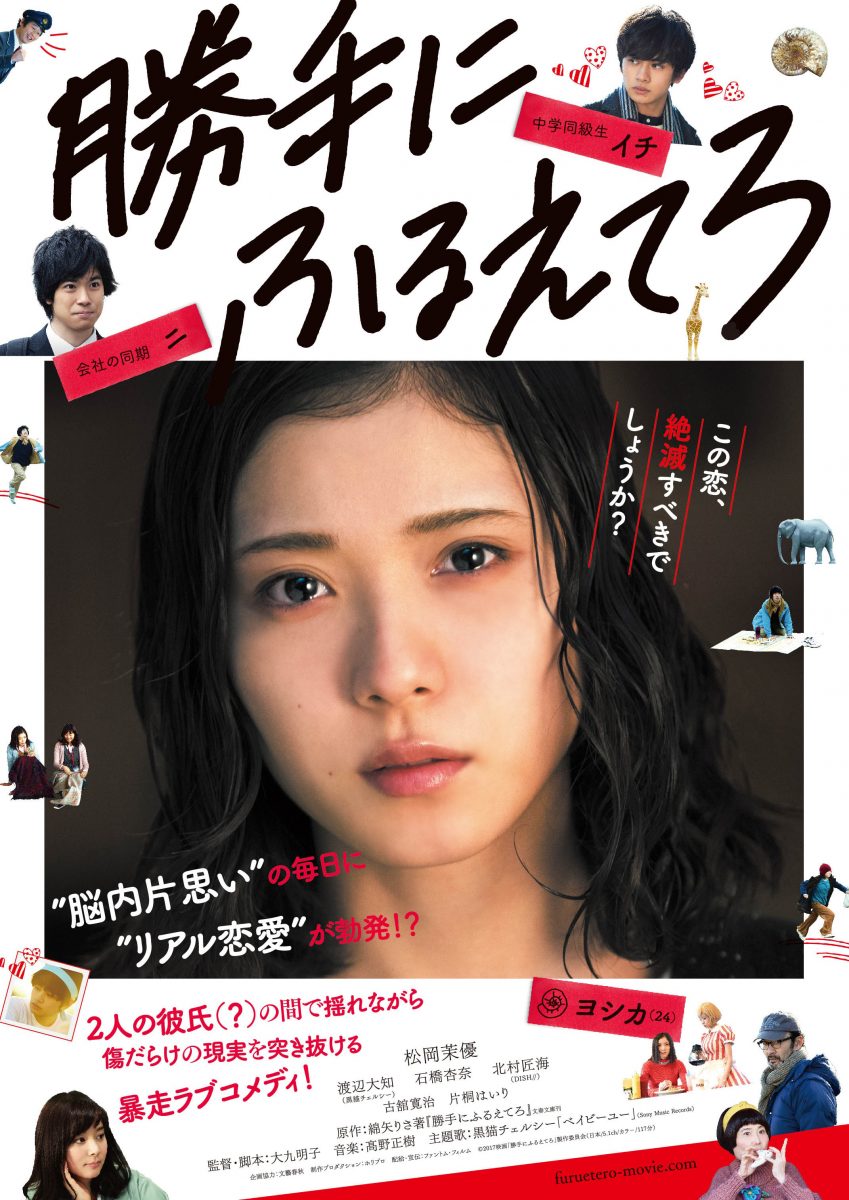
tremble all you want posterShojo manga has a lot to answer for when it comes to defining ideas of romance in the minds of its young and female readers. The heroines of Japanese romantic comedies are almost always shojo manga enthusiasts – the lovelorn lady at the centre of Christmas on July 24th Avenue even magics herself into a fantasy Lisbon to better inhabit the cute and innocent world of a manga she loved in childhood. The heroine of Tremble All You Want (勝手にふるえてろ, Katte ni Furuetero), Yoshika (Mayu Matsuoka), does something similar in creating an alternate fantasy world filled with intimate acquaintances each encouraging and invested in her ongoing quest to win the heart of a boy she loved in high school who became the hero of her personal interest only manga, The Natural Born Prince.

At 24 Yoshika is still obsessed with “Ichi” (Takumi Kitamura) who is forever number “One” in her affections. Working as an office lady in the accounts department, Yoshika’s fingers tip tap over the calculator all day long until she can finally go home and read about her favourite topic, extinct animals, on the internet before it’s time to head back to work. Because of her undying love for Ichi (whom she has not seen or heard from in many years), Yoshika has never had a boyfriend or engaged in “dating” – something which causes her a small amount of anxiety and embarrassment when considering the additional awkwardness of starting out at such a comparatively late age.

Yoshika’s dilemma reaches a crisis point when, much to her surprise, a colleague becomes interested in her. Kirishima (Daichi Watanabe), whom she rechristens number “Two”, is, like her, slightly shy and bumbling but also outgoing and with a need to say things out loud. Seeing as this is apparently the first time this has ever happened to Yoshika, she finds it very confusing – not least because she can’t decide if “dating” Kirishima is a betrayal of Ichi or if she is really ready to leave her Natural Born Prince behind.

The dilemma isn’t so much between man one and man two but between fantasy and reality, idealism and practicality. Yoshika, painfully shy, lives in a fantasy world of her own creation as we discover during a tentative, emotionally raw musical number in which she is forced to confront the fact that the reason she doesn’t know the names of any of the people we’ve seen her repeatedly engage with is that, despite her longing and her loneliness, she has never been able to pluck up the courage to actually speak to them. Thus they exist in her head as a series of nicknames, theoretical constructs of “friends” with whom to engage in (one-sided) conversations – a frighteningly relatable (if extreme) concept to the painfully shy. Deprived of her fluffy fantasy, Yoshika arrives home to collapse in tears and finds her world growing colder, riding the bus all alone and eventually cocooning herself in her apartment.

Thus when Kirishima starts to show an interest, Yoshika can’t quite figure out which “reality” she is really in. The idea that he might simply like her doesn’t compute so she assumes the worst and pushes him away in grand style, retreating to the entirely safe world of Ichi worship in which she, in a sense, has already been rejected so there is nothing left to fear. Coming up with a nefarious plan to meet Ichi by stealing the identity of a former classmate and organising a reunion, Yoshika’s fantasy is challenged by the man himself or more specifically his perception of events which differs slightly from her own owing to not placing herself at the centre. Though Yoshika had correctly surmised that Ichi was uncomfortable with the attention he received as the school’s “number one” and decided to ignore him as a token of her love, she remained unaware of the degree to which he suffered in her obsession with her own unrequited desires.

Wondering if she should just “go extinct” like the animals she loves so much who evolved in ways incompatible with life on Earth – literally too weird to live, Yoshika begins to lose her grip on the divisions between fantasy and reality, unable to accept the “real” attention and affection of those who would be her real world friends if she’d only let them while continuing to engage in the wilfully self destructive mourning of her illusions. Tremble All You Want (but do it anyway) seems to become Yoshika’s new mantra as she makes her first active decision to gravitate towards the land of the real despite her fear and the conviction that it will not accept her. Filled with whimsical charm but laced with a particular kind of melancholy darkness, Ohku’s tale of modern love in a disconnected world is a strangely cheerful affair even as our heroine prepares to swap her colourful fantasy for the potential comforts of the everyday.


Screened at the 20th Udine Far East Film Festival.

Original trailer (hit the subtitle button to turn on English subs)

Side Job (彼女の人生は間違いじゃない, Ryuichi Hiroki, 2017)

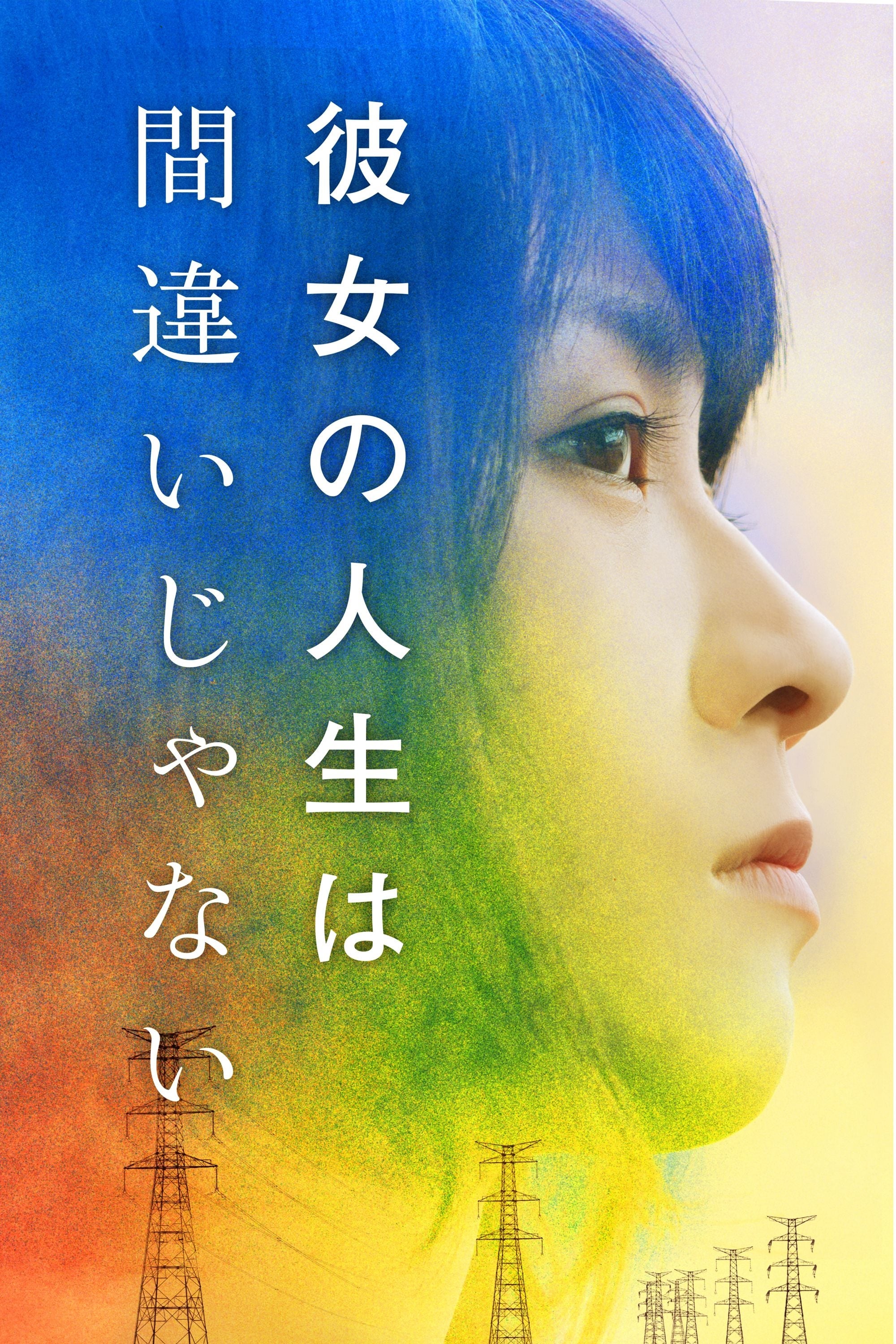
Side JOb posterFukushima has become a focal point for recent Japanese cinema, not just as a literal depiction of an area in crisis but as a symbol for various social concerns chief among them being a loss of faith in governmental responsibility. Side Job (彼女の人生は間違いじゃない, Kanojo no Jinsei wa Machigai ja Nai) has the distinction of being helmed by a Fukushima native in Ryuichi Hiroki who also wrote the original novel from which the film is adapted. Typical of Hiroki’s work, Side Job is less an ode to the power of perseverance than a powerful meditation on grief, inertia, and helplessness. Though he offers no easy answers and refuses to judge his protagonists for the ways they attempt to deal with their situations, Hiroki does allow them to find a kind of peace, at least of the kind that allows them to begin moving forward if not quite away from the past.

Five years after The Great East Japan Earthquake of 2011, Miyuki Kanazawa (Kumi Takiuchi) is still living in a cramped prefab house with her widowed father, Osamu (Ken Mitsuishi). Miyuki’s mother was lost in the storm and her body never found, leaving the pair bereft and with an unanswered question. Having lost his farm to the exclusion zone, Osamu is left with nothing much to do and mostly spends his time idly playing pachinko and drinking much to the consternation of Miyuki who has a regular job with the city council.

Miyuki may well be angry about the way her father fritters away their money, but that doesn’t quite explain why she boards an overnight coach every Friday and spends her weekends in Tokyo engaging in casual sex work. She appears not to like the work very much and it is occasionally dangerous, but she does seem to have built up a kind of friendship with her “manager” as he drives her around the city to her various clients. Miura (Kengo Kora) claims to enjoy his work because it gives him an opportunity to observe human nature in all of its complexity though if he harbours any conflict about his role as a dispatcher of sometimes vulnerable young women, he is slow to voice it.

The “side job” of the title provides a kind of escape from a boring, conventional life in rural Iwaki, equal parts self-harm and quest for sensation. Miyuki, like many of those around her walks around with an air of irritated blankness, angry at so many things she doesn’t quite know where to begin. Yet for all that she’s also emotionally numbed, held in a state of suspended animation, longing to feel something, anything, even if that something is only shame. Through her double life Miyuki is able to find a sense of control and equilibrium that eluded her in grief-stricken Iwaki. Her manager, Miura, promises to “protect” her, though he makes clear that there are many women he feels a duty to protect rather than just Miyuki. Just as it seems Miyuki has come to depend on him, Miura drops a bombshell of his own though it maybe one which spurs Miyuki on towards a new beginning.

Everything in Iwaki is, in a sense, temporary. Miyuki and her father still live in the tiny prefab house in the hope of one day being able to go “home” while Osamu attends occasional meetings with the farming collective to try and find out what’s going on with his fields. Held in a kind of limbo, repeating the same daily tasks with relentless monotony, Miyuki and Osamu are trapped by a sense of helpless dread, forever waiting for something to happen but having lost the faith that it ever will.

While the pair struggle on, others find themselves unable to bear the weight of their tragedies. The spectre of suicide haunts Miyuki and her father from the woman next-door (Tamae Ando) who has become depressed thanks to the stigma surrounding her husband’s job with the decontamination programme, to the window at the agency which no longer opens following the suicide of one of the employees. Pushed to the edge by financial strain, there are also those who find themselves befriending the vulnerable with an intent to defraud, but it is in the end genuine human relationships which light the way for each of our struggling protagonists. Osamu bonds with an orphaned little boy through playing catch, Miyuki finds strength in Miura’s decision to break with his old life and build a new one, and her assistant at the city council, Nitta (Tokio Emoto), grows into the responsibility of being a big brother while attempting to do the best he can for the people of Fukushima.

What each of them finds isn’t an answer or a “cure” for their trauma but a path towards accepting it in such a way as it allows them to begin moving forward. New seeds are planted in the expectation of a coming future, new lives are celebrated, and the past begins to recede. Memory becomes a still frame, bottled and in a sense commodified but held close as a kind of talisman proving nothing is really ever “lost”. Filmed with an eerie sense of listless beauty, Side Job is an unflinching yet not unforgiving exploration of life after tragedy in which the only possible chance for survival lies in empathy and simple human connection.


Screened at the 20th Udine Far East Film Festival.

Original trailer (English subtitles)