Evil Does Not Exist (悪は存在しない, Ryusuke Hamaguchi, 2023)

Whatever happens upstream affects those further down according to the headman of a small village faced with incursion from city dwellers hoping to turn their peaceful idyll into a tourist hotspot in Ryusuke Hamaguchi’s eco drama Evil Does Not Exist (悪は存在しない, Aku wa Sonzai Shinai). He reminds them that those at the top have a responsibility to those below, and it’s only because of this sense of mutual consideration that life is possible here. It’s an obvious metaphor for the contemporary society in which those with money and power have largely forgotten about those without, but then the film’s title also asks us a question. What is “evil”, does it exist or not, or is it merely in inextricable part of nature human and otherwise that balances out the good?

After a long tracking shot along the trees shot from below, Hamaguchi focuses on the figure of Takumi, a man at home in nature patiently sawing and cutting logs. He teams up with another man, Kazuo, to harvest water from a local stream we later realise is being used by an udon restaurant for a superior taste. Takumi shows him wild wasabi and explains how the locals use it, suggesting that Kazuo consider adding some to his dishes. Like him, Takumi’s daughter also seems to be at home in the forest, wandering off to walk home alone when Takumi inevitably forgets to pick her up from school.

Takumi describes himself as a “jack of all trades” or more to the point a local odd job man, but seems in many ways he’s one who keeps the balance. The problem they have now, is that a company from Tokyo has bought some land and is intent on stetting up a “glamping” resort in the village. A pair of agents turn up from the city to give a kind of question and answer session, but as one of the attendees later suggests it’s mainly to make themselves look good. Unable to answer most of the villagers’ quite reasonable questions all they can do is state they’ll take their opinions into account while offering flawed promises of financial gain and insistence that people from Tokyo will visit as if that were some kind of honour. It doesn’t seem to occur to them that the villagers maybe happy as they are and aren’t interested in further material gain while understandably wary of the effects of the resort on the local area from increased traffic and pollution. The agents encounter unexpected resistance centring on the septic tank which has been penciled in for an area which would lead to the contamination of wells and groundwater while it’s also clear that the company are determined to cost cut with the agents blithely telling them that a little bit of sewage in your drinking water never harmed anyone and in any case it’s within the permitted amount. 

Others ask questions about fire risk and understaffing with the agents later asking Takumi to become the resort’s caretaker, insulting him with the implication that he’s some kind of layabout easily bought with a fat paycheque. He corrects them that he has a job and doesn’t need the money, though they persist with asking him to be a kind of advisor. Takahashi, a jaded manager, is soon captivated by the area and in particular Takumi’s manliness in his log splitting and mysterious demeanour but there’s something inevitably harsh and unforgiving about nature even if it’s man that has corrupted it. Gunshots are heard over the horizon, men hunting deer. Takumi and Hana walk past the carcass of one who bled out from a bullet wound and was presumably just left there dying for no real reason. Takumi tells the agents that their site is on a deer path, so they’d need high fences which might put the customers off but reflecting that wild deer aren’t usually “dangerous” unless they’re sick or have been shot. Takumi asks where the deer are supposed to go but gets only a shrug of the shoulders and “somewhere else” from Takahashi, but there are only so many other places, what if this is the last one? If you continue to displace things, there won’t be anywhere left for anyone.

Still, as Takumi says it’s not that villagers have already decided to resist the glamping project, only that they want their fair complaints to be addressed and are willing to engage with the process if only the agents would treat them with a little more respect. But that’s something thin on the ground from the execs in Tokyo who think they’re all a load of bumpkins easily bought off with promises of a better economic future. To Takumi it is really a matter of balance, something that should be maintained for one’s protection as much as anything else. The ominous score which frequently cuts out abruptly adds to an edge of unease and supernatural dread in the ancientness of the natural world even if as Takumi points out this isn’t their ancestral land. It’s a new village that originated in the immediate post-war era when returning soldiers were given land to farm. They are all to some degree outsiders, as perhaps are humans in this inhuman place, but also ones who’ve found a way to live in it that’s as much about respect for the land and others as it is about survival.


Evil Does Not Exist opens in UK cinemas of 5th April courtesy of Modern Films.

UK trailer (English subtitles)
Winny (Yusaku Matsumoto, 2023)

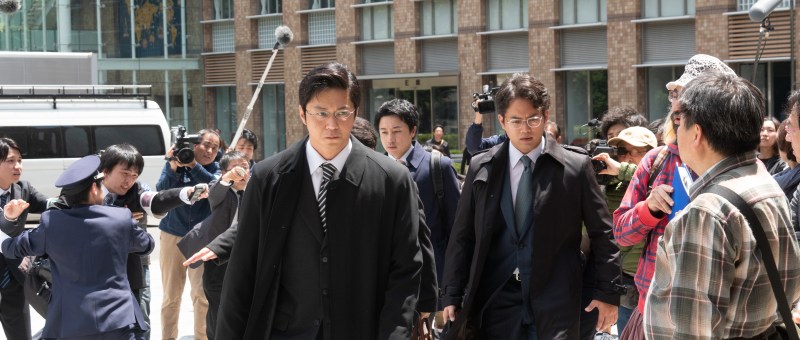
Can a creator be held legally responsible for what other people might decide to do with their creation? For some, that is the essential question of the trial at the centre of Yusaku Matsumoto’s legal drama Winny, but in speaking more to the present day than the early 2000s in which the real life events took place the film is more concerned with freedom of speech in a society in which established authorities may seek to resist the democratisation of information. 

A talking head seen on television at one point suggests that peer-to-peer file sharing programme Winny disrupts the democratic copyright regime, but according to its creator Isamu Kaneko (Masahiro Higashide) the appeal of peer-to-peer is that it is by nature democratic in forging a network of machines on an equal footing. Nevertheless, in November 2003 two people were arrested for using Winny to share copyrighted material and Isamu’s home was searched by the Kyoto police who arrested him for aiding and abetting copyright infringement. He and his lawyers argue that to charge the developer is wrongheaded and irresponsible in that it will necessarily stifle technological advance if developers are worried about prosecution if their work is misused by others while his intention in any case had not been to undermine copyright laws but essentially for technological innovation in and of itself. 

Meanwhile, the film devotes much of its running time to a concurrent police corruption scandal in which a lone honest cop is trying to blow a whistle on a secret slush fund founded on fraudulently produced expense receipts. The implication is that the reason the police decided to go after Isamu is that they feared Winny’s potential to expose their own wrongdoing. A member of the police force had apparently used Winny and introduced a vulnerability to the police computer system that allowed confidential data to be leaked, and Winny is indeed later used to publicly disseminate evidence which proves the claims of the whistleblower, Semba (Hidetaka Yoshioka), are true. Semba had previously tried to take his concerns to the press privately but was ignored, the editor simply printed a police press release without investigation unwilling to rock the boat. But a programme like Winny exists outside of the establishment’s control which is why, the film suggests, the police in particular resent it. 

A younger officer Semba reproaches at his station gives the excuse that everybody does it and refusing to fill in the false receipts would make it difficult for him to operate in an atmosphere in which corruption has become normalised. Even the police use Winny, a prison guard confiding in Isamu that he’s used the programme to download uncensored pornography while prosecution lawyers conversely attempt to embarrass Isamu by leaking pictures of his porn collection to the press and bringing it up on the stand. “Everybody does it” is not a good defence at the best times aside from being a tacit admission of guilt but reinforces a sense that the police operates from a position of being above the law. A particularly smug officer thinks nothing of perjuring himself on the stand, spluttering and becoming defensive when Isamu’s lawyers expose him in a lie. 

Isamu is depicted as a rather naive man whose social awkwardness and childlike innocence leave him vulnerable to manipulation. He’s told to sign documents by the police so he signs them thinking it’s better to be cooperative, taking the advice he’s given when he questions a particular sentence that he can correct it later at face value while assuming that he’ll be able to straighten it all out in court by telling them the truth and that he signed the documents because the police told him to. Meanwhile, he’s almost totally isolated, prevented from talking to friends and family out of a concern that he may use them to conceal evidence. 

The film seems to suggest that the stress of his ordeal which lasted several years may have led to his early death at the age of 42 soon after his eventual acquittal. In any case he finds a kindred spirit in his intellectually curious lawyer (Takahiro Miura) who defends him mostly on the basis that the right to innovate must be protected and a developer can not be responsible for the actions of an end user any more than a man who makes knives can be held accountable for a stabbing. Matsumoto captures the sense of wonder Isamu seems to feel for the digital world and has a great deal of sympathy for him as an innocent caught up in a game he doesn’t quite understand while fiercely defending his right to express himself, along with all of our own, without fear no matter what the implications may be.


Winny screens in New York Aug. 2 as part of this year’s JAPAN CUTS.

Original trailer (no subtitles)

The Sea of Genkai (任侠外伝 玄海灘, Juro Kara, 1976)

Juro Kara was an avant-garde playwright and theatre practitioner whose work was a part of the Little Theatre Movement which rejected conventional naturalism and prioritised the physicality of the actor over text and dialogue. Though he performed as an actor in films by other avant-garde filmmakers such as Shuji Terayama and Nagisa Oshima, he directed only one film. By these standards, the The Sea of Genkai (任侠外伝 玄海灘, Ninkyo Gaiden: Genkai Nada), a co-production with the Art Theatre Guild, may seem surprisingly conventional, but is also highly unusual not only in ATG’s filmography but also in its subversions of the yakuza film. 

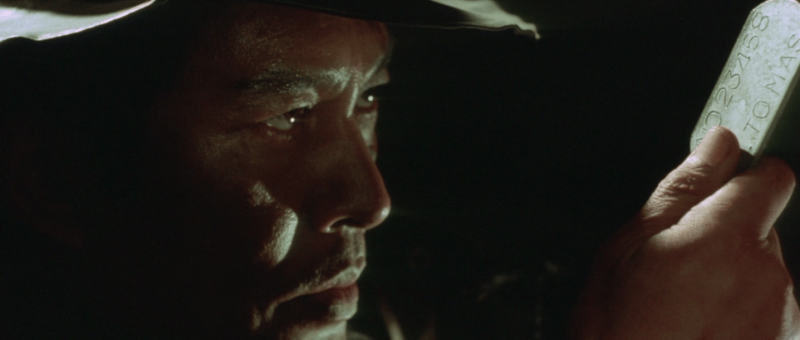
The Japanese title is prefaced by “ninkyo gaiden” which makes it sound like a spin-off to a ninkyo eiga or chivalrous gangster movie, which turns out to be incredibly ironic because there is no chivalry or honour here only cruelty and exploitation. Set in the port of Shimonoseki where boats leave for Korea, the film follows dejected petty yakuza Kondo (Noboru Ando) as fate finally catches up with him. He and his boss Sawaki (Jo Shishido) were once students together and took a job in Busan dealing with the corpses of American soldiers killed in the Korean War. Sent to deliver dog tags to widows, Sawaki spits in a distraught woman’s face and then attempts to rape her, only there is another couple in her home and the man soon wakes to challenge him. Kondo and Sawaki are then drawn into a brutal and ugly fight during which Kondo knocks out the man while Sawaki rapes the widow. The other woman then threatens them with a knife, taking back the dog tag only for Sawaki to pounce and strangle her. Sawaki then flees the scene confused by what he’s done, but Kondo stays behind and rapes the second woman’s corpse before leaving her for dead. 

Kondo later relates that he’s been unable to sleep with women ever since his experience of necrophilia in Korea in 1951. Kura often cuts back to the bundle of dog tags Kondo has been keeping all this time which hang by his window like a wind chime. He watches them sway and hears them jingle with the violent motion of Sawaki’s raping the woman, hanging that of, presumably, a random man around the second woman’s neck as he in turn rapes her body. He later finds a woman who reminds him of the one he raped while dead among a cohort of those he’s in the process of sex trafficking who has unwittingly put on one of the dog tags like an ironic necklace while taking a bath in his apartment on the invitation of his more sensitive associate Taguchi (Jinpachi Nezu). On catching sight of Kojun (Reisen Ri), he’s struck by a literal flashback that is a clear homage to Henri-Georges Clouzot’s Les Diaboliques as he watches a “dead” woman rise from a bath. Later he rapes her too, presumably the first (though not the last) “living” woman he’s had sexual contact with in 25 years. 

The dog tags take on a still more ironic relevance in the Korean song which plays over the opening titles and is sung frequently by the trafficked women. The song is sweet and innocent, narrated by a woman who is preparing a “flower garland” for someone that she loves, but its imagery is subverted in Kondo’s grim necklace of dog tags taken from fallen men. Even Sawaki describes him as someone who has been dead for 20 years while preparing to sacrifice him to curry favour with their creepy Tokyo boss Tahara (Taka Ohkubo) who permanently wears black gloves on both hands even while shirtless, while Kondo later sings a song characterising himself as a “black dog” who never stood a chance in this broken world of ruined dreams. Penned by Kura himself and performed by Ando, this song more clearly reflects his absurdist dialogue style in its deeply melancholy imagery as Kondo fully succumbs to his image of death. 

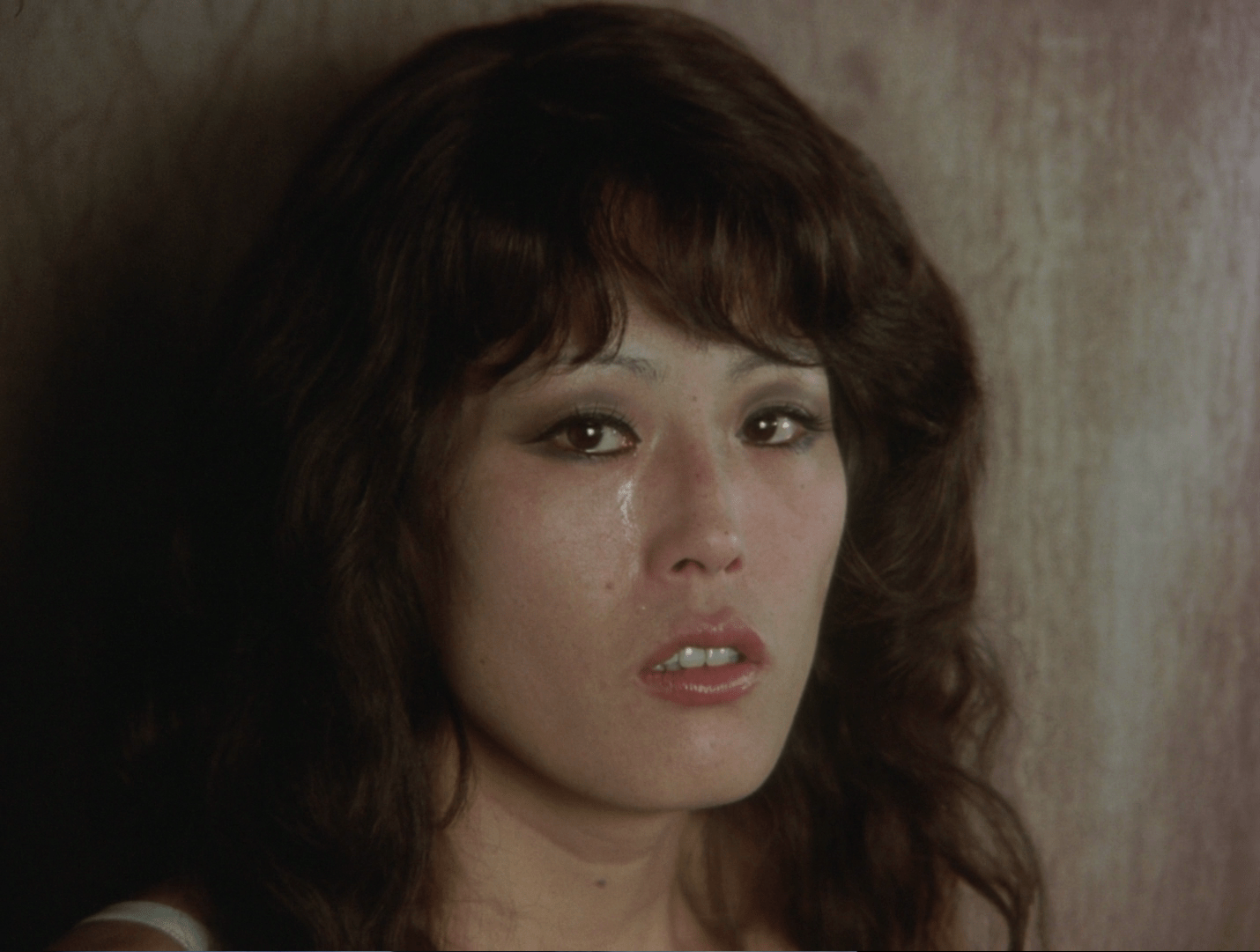
Kondo’s actions come to emblematise the continued violence inflicted on the bodies of Korean women by Japanese men from the colonial era onwards. The woman from the bath, Kojun, suffers continually throughout the film and is later forced to perform in strip shows by the Sawaki gang. She is clever, and fierce, but the world is all against her and the only answers that she ever gets as to why her “uncle” forced her to stowaway on a smuggling boat to Japan only further deepen the wounds inflicted by a deeply corrupted, imperialistic patriarchy. Kojun develops a fondess for Taguchi because he is the only man who doesn’t try to rape her and in fact saves her from being raped though later said to be impotent and rejected by the other gang members for his refusal to participate in their despoiling of the Korean women. Bloodstained underwear becomes a symbol of sexualised violence countered only by the plain white pairs Kojun later buys for Taguchi after replacing her own ruined clothing.  

She and Taguchi attempt to protect themselves by bringing the receipts, threatening to release the smuggling account books and expose a host of dodgy dealings if the Sawaki gang come for them, but in the end there is no escape. Taguchi finds himself wading through oil-soaked waters with his dreams in ruins before finally breaking the chain though it’s unclear if it will really free him. Bleak beyond measure in its deeply tragic denouement, Kara’s intense drama offers no respite from its nihilistic world of violence and exploitation and leaves us quite literally floundering in a dark sea of inevitable corruption. 


Trailer (no subtitles)

꽃목걸이 – 이영숙 (1972)

(꽃목걸이 = “flower necklace”. There doesn’t seem to be an official romanisation of singer 이영숙 (李英淑)’s name, but it does appear in a few places as “‘Iyeongsuk”, or “Lee Young Sook”. A contemporary romanisation would render it as “Lee Yeong-suk”)

My Brother, the Android and Me (弟とアンドロイドと僕, Junji Sakamoto, 2022)

“You’re a real weirdo, aren’t you?” the lonely hero of Junji Sakamoto’s existential psychodrama My Brother, the Android and Me (弟とアンドロイドと僕, Ototo to Android to Boku) is constantly told not least by his exasperated and unsympathetic boss but on another level may be the most human of them all longing for a sense of connection in a world which seems to have rejected him to the point that he is no longer sure whether or not he actually exists. Quite clearly drawing inspiration from Mary Shelly’s Frankenstein, the Modern Prometheus as well as its many film adaptations though most obviously the 1931 Universal Horror classic, Sakamoto’s oblique chronicle of crippling loneliness presents a man estranged from himself but looking for comfort in his reflected image. 

Sakamoto opens the film in true gothic fashion, his hero Kaoru (Etsushi Toyokawa) a dark and mysterious figure obscured by an oilskin coat amid the ever falling rain illuminated only by the light of an ominous moon. As we discover he works as a university professor but says nothing to his students other than making an apology for his poor handwriting, sometimes writing with both hands at once as he recreates complex algorithms on an old-fashioned chalkboard. The students all mock him, not least because of a curious neurological condition which prevents him from fully controlling his right leg with the consequence that he is often compelled into strange, jerking movements or else to hop on one foot from place to place. In truth, his errant right leg is a symptom of Kaoru’s sense of displacement in that he does not quite feel it to be his own and experiences only pain when his right heel is in contact with the floor. 

It’s this problem with his leg that seems to most irk his boss who later invasively barges in to the gothic western-style mansion/disused hospital where he lives in the company of his nephew, a psychiatrist, who probably means well but offers little more than platitudes in insisting that Kaoru’s leg has simply been left off his internal schematics so all they need to do is mentally reconnect it. His boss meanwhile bizarrely states that Kaoru needs to get well “so that cracked roads can be fixed”, ironically treating his body like a machine that needs to be repaired so that it is optimised for work rather than out of care for another human being who may be in pain. Having barged into Kaoru’s office, he’d discovered his secret project in a highly complex, lifelike robotic arm which was a problem for him because he was supposed to be working on a robot that fixes potholes which seems almost ironic in its banality. In any case, Kaoru also has the rather unfortunate habit of entirely ignoring the person talking to him as if they weren’t even there which is in itself an ironic inversion of the way others see, or more to the point don’t see, him. Kaoru’s boss describes him as creepy because he has no presence, you’re never sure if he’s there or not, but can immediately sense the “giant” presence of his other self, the lifelike android he’s building in his spare time. 

The android is in its way his Frankenstein’s monster, an ironic attempt to rebirth himself constructed in the ruins of his family’s abandoned obstetrics hospital. By chance, he meets a young woman (Yuki Katayama) who closely resembles himself and carries her into his laboratory like the Bride of Frankenstein but treats her only with tenderness and sympathy while attempting to fend off his estranged half-brother (Masanobu Ando) constantly hassling him for money to pay for medical care for the father who abandoned him. His mother had instructed him to find his other self which is perhaps what he’s been doing if caught between the Id and Superego of his brother and father. Constant fire imagery including the repeated motif of a burning body in a conventional fireplace keys us in to Kaoru’s positioning as a “modern Prometheus” whose duty it is to keep the fire in while giving birth to himself as manifested in a perfect manmade creation that others may find frightening or uncanny though the android itself has done nothing wrong because it is in essence the embodiment of Kaoru’s frustrated humanity. Featuring sumptuous gothic production design with sci-fi sheen, Sakamoto’s steely, fragmentary drama finds a man in search of himself while also a perpetual exile but discovering a sense of warmth in the uncanniness of a reflected image. 


My Brother, the Android and Me streams in the US until March 27 as part of the 14th season of Asian Pop-up Cinema

International trailer (English subtitles)

The Name (名前, Akihiro Toda, 2018)

b5_ol

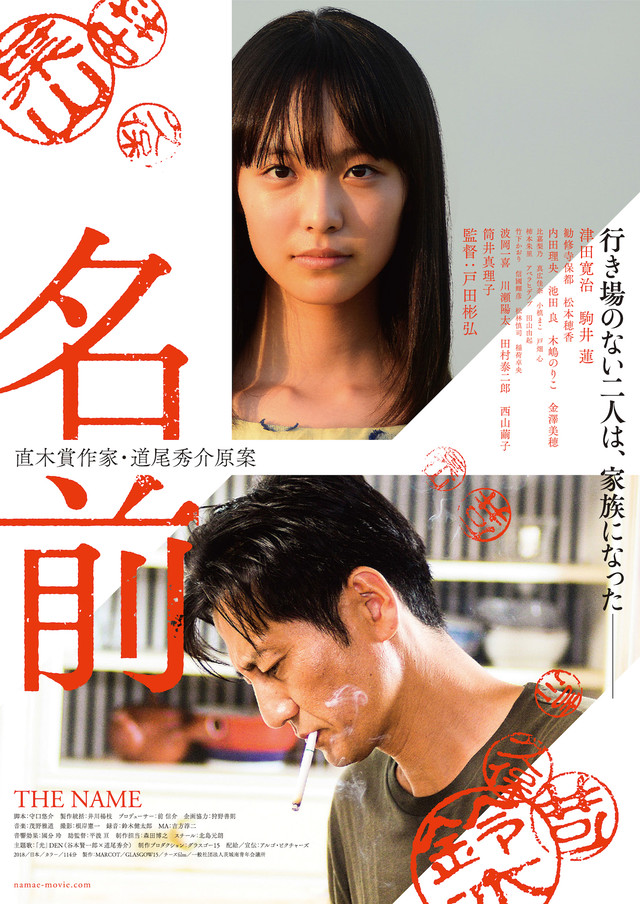
Names are a complicated business. Most people do not choose them for themselves, yet they come to define an identity or at least provide a substantial peg on which to hang one. If you give someone a fake name you are by definition shielding your essential self from view, refusing connection either in fear of discovery or intention to harm. The protagonist of Akihiro Toda’s The Name (名前, Namae) adopts several different titles as a part of his increasingly disordered everyday life in which he takes a hammer to his original identity in an ongoing act of guilt-ridden self harm. Meanwhile, his teenage would-be saviour, engages in a little role play of her own hoping to discover an essential truth about herself only to be disappointed, in one sense, and then perhaps find something better.

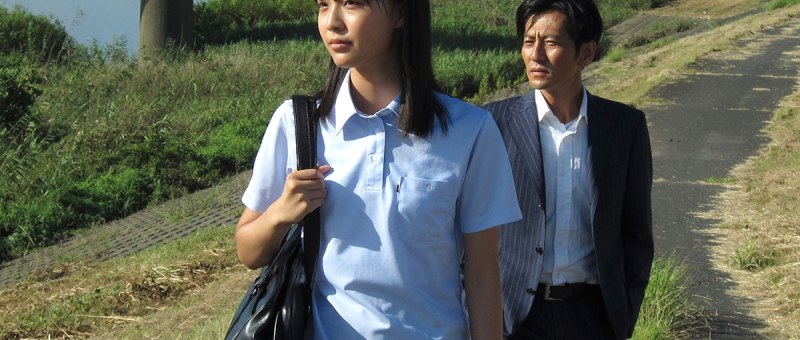
Masao Nakamura (Kanji Tsuda), if that is his real name, is not just leading a double life but is currently engaged in a number of iffy scams each compartmentalised under a different title and in which he plays an entirely different version of himself. Once a successful businessman, personal tragedy, marital breakdown, and bankruptcy have left him a floundering, cynical mess living in a rundown rural hovel with a pernickety neighbour and a decidedly lax approach to housekeeping. Masao’s main “job” appears to be working in a recycling plant where he’s managed to wangle a preferential contract by telling the higher-ups that his (non-existent) wife is seriously ill in hospital. Just as Masao’s scheme is about to be discovered, a mysterious teenage girl suddenly appears out of nowhere and plays along with Masao’s sob story, claiming to be his daughter come to remind him that he needs to leave earlier today because mum has been moved to a different hospital (which is why his boss’ contact had never heard of her).

Emiko Hayama (Ren Komai), as we later find out, is a more authentic soul but has decided on a brief flirtation with duplicity in observing the strange and cynical life of the morally bankrupt Masao. Facing similar issues but coming from the opposite direction, the pair meet in the middle – regretful middle-age and anxious youth each doing battle with themselves to define their own identities. Like Masao, Emiko is also living in less than ideal circumstances with her bar hostess single-mother, forced into adulthood ahead of schedule through the need to take care of herself, purchasing groceries, cooking, and keeping the place tidy. Thus her approach to Masao has, ironically enough, a slightly maternal component as she tries to get him back on his feet again – cleaning the place up and giving him something more productive to do than wasting his idle moments in bars and other unsavoury environments.

Masao’s current problems are perhaps more down to a feeling of failure rather than the failure itself. Once successful, happily married and excited about the future, he felt it all crash down around his ears through no real fault of his own. Nevertheless he blamed himself – his intensive work ethic placed a strain on his relationship with his wife and his all encompassing need for success blinded him to what it was that really mattered. By the time he realised it was already too late, and so it’s no surprise that he longs to escape himself through a series of cardboard cutout personalities, enacting a bizarre kind of wish fulfilment coupled with masochistic desire for atonement.

Now cynical and morally apathetic, Masao lets Emiko in on a secret about the grown-up world – it’s all lies. You have to put on disguise or two to get by; the world will not accept you for who you really are. Teenage girls might know this better than most, though Emiko is a slow learner. She might tell Masao that pretending to be other people is fun, but the one role she hasn’t yet conquered is that of Emiko Hayama – something which particularly irritates the demanding director of the theatre club she’s been cajoled into joining. Like Masao, Emiko’s life begins to fall apart through no fault of her own as she finds herself swallowed up by a typically teenage piece of friendship drama when her best friend’s boyfriend dumps her in order to pursue Emiko. Branded a scheming harlot and ejected from her group of friends, berated by the director of the theatre troupe, and having no-one to turn to at home, Emiko finds herself increasingly dependent on the surrogate father figure of Masao who is happy enough to play along with the ruse so long as it is just that.

Through their strange paternal bond, Emiko and Masao each reach a point of self identification, figuring out who it is they really are whilst facing the various things they had been afraid to face alone. Lamenting missed opportunities while celebrating second chances, The Name makes the case for authenticity as a path to happiness in a world which often demands its opposite. Melancholy but gently optimistic, Akihiro Toda’s peaceful drama is a heartwarming tale of the power of unexpected connection and the importance of accepting oneself in order to move into a more positive future.


Screened at the 20th Udine Far East Film Festival.

After School (アフタースクール, Kenji Uchida, 2008)

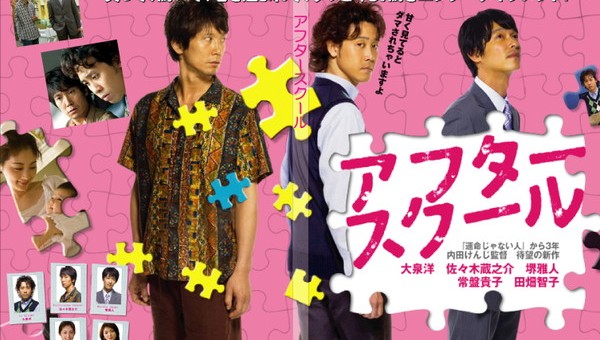
after school posterKenji Uchida is well known for intricately constructed farces but he takes intrigue to new heights in After School (アフタースクール), allowing a mid-way twist to completely reverse everything you thought you knew. Yet at heart Uchida’s film is as uncynical as it’s possible to be even when our heroes find themselves embroiled in a large-scale conspiracy of corporate corruption, organised crime, and police machinations. What begins with a confession spirals outwards into a complicated web of deception and counter-deception proving it really is all connected, even if not quite in the way you first thought.

A salaryman, Kimura (Masato Sakai), enters a reverie staring at the pregnant woman (Takako Tokiwa) sitting opposite him over breakfast, flashing back to a breezy middle school day when she (presumably) nervously handed him a letter.  Kimura leaves for work and borrows the fancy Porche belonging to his high school teacher middle school friend, Jinno (Yo Oizumi), to go to a work meeting in Yokohama. While he’s away the woman goes into labour leaving Jinno to take care of everything but alarm bells start ringing when no one can reach Kimura the following morning. Meanwhile, Kimura has been seen with a mysterious woman at a hotel which seems to have right royally spooked his bosses who have hired a shady private detective, Kitazawa (Kuranosuke Sasaki), to track Kimura down. Kitazawa thinks his best bet is to start at Kimura’s old middle school – which is where he runs into Jinno who agrees to help look for his friend.

As might be assumed, all is not quite as it seems. Shady PI Kitazawa is in deep with the yakuza to whom he apparently has massive gambling debts. At a low ebb, he decides to ask his male assistant to run away with him to Sapporo (which he agrees to do) but this case just might be his salvation, especially once he works out that both ends are connected and he could technically double his pay out with a little strategic blackmail. Kitazawa is as cynical as they come. He thinks nothing of invading Kimura’s life and is fully prepared to make use of Jinno’s seeming innocence, claiming that naivety and pureheartedness make him sick. Later he attempts a pathetic act of petty revenge against Jinno for no real reason that could have ruined his entire life but instead ends up another cog in the grand wheel of Uchida’s finely crafted farce.

Kitazawa’s cynicism is eventually what leads to his downfall. His detective brain so wired for motives and gains is unable to process the idea that some actions are merely altruistic and offer no further reward than the pleasure of helping a friend. Jinno, at first a goofy school teacher with an improbably expensive car, soon becomes the film’s MVP and the only still point in a constantly turning world. Taken to task by Kitazawa for his continuing goodness, Jinno offers a perfectly schoolmasterly reply to the effect that there’s a snotty kid like him in every class, sneering away too cool for school and decrying everything as boring when really the problem isn’t school, it’s Kitazawa.

What eventually looked like a sordid affair turns into a beautiful romance as the truth is gradually revealed. The title refers not just to the setting of the initial flashback, but also to the entirety of adult life. Jinno’s innocence and goodness are belittled by Kitazawa who accuses him of being stuck in middle school with a childishly naive way of seeing the world. This is in a sense true, Jinno has never lost his childlike sense of justice and fair play, willing to go great lengths to help his friends even if it puts him in danger and forces him into some sticky situations which are not his natural milieu, but Jinno’s faith and loyalty are the qualities which eventually see him through and make possible the poignant, hopeful ending despite all that has gone before. Corrupt politicians preaching “family values” whilst associating themselves with dodgy corporations who are taking back handers from the yakuza, hidden policemen, shady PIs – there’s certainly a lot of darkness here but if anything is going to beat it, it’s sincerity and goodness rather than guile and cunning.


Screened as part of the Japan Foundation Touring Film Programme 2018.

Screening again:

  • Queen’s Film Theatre – 18 February 2018
  • Filmhouse – 6 March 2018
  • Showroom Cinema – 18 March 2018

Original trailer (no subtitles)

Villon’s Wife (ヴィヨンの妻 〜桜桃とタンポポ, Kichitaro Negishi, 2009)

Villon's Wife2009 marked the centenary year of Osamu Dazai, a hugely important figure in the history of Japanese literature who is known for his melancholic stories of depressed, suicidal and drunken young men in contemporary post-war Japan. Villon’s Wife (ヴィヨンの妻 〜桜桃とタンポポ, Villon no Tsuma: Oto to Tampopo) is a semi-autobiographical look at a wife’s devotion to her husband who causes her nothing but suffering thanks to his intense insecurity and seeming desire for death coupled with an inability to successfully commit suicide.
Beginning in the immediate post-war period of 1946, Sachiko (Takako Matsu) is a fairly ordinary housewife with a young son who generally waits around the house for her husband’s return. Only, she’s married to one of the most brilliant writers of the age, Joji Otani (Tadanobu Asano), whose book on the French poet François Villon is currently a best seller. Despite his obvious literary talents, Otani is a drunkard who spends most of his time (and money) in bars and with other women. When he crashes home one night only to be pursued by two bar owners who reveal that he ran off with their takings (around 5000 yen), Sachiko is not exactly surprised but still embarrassed and eventually takes matters into her own hands by volunteering to offer herself as a “hostage” by working at the bar until the debt is repaid.

“Men and women are equal now, even dogs and horses” says one customer, impressed with this sudden arrival of a beautiful woman in a low life drinking spot. To her own surprise, Sachiko actually enjoys working at the bar, it gives her purpose and proves more interesting than being stuck at home waiting to see what her drunken fool of a husband has got up to next. She’s good at it too – Sachiko is a beautiful and a fundamentally decent and kind person, in short the sort of woman that everyone falls a little bit in love with. That said, she isn’t a saint. She’s perfectly aware of the power she is able to wield over men and is unafraid to make use of it, though only when absolutely necessary.

Otani himself is a fairly pathetic figure. He may be a great artist but he’s a hollow human being. He admits the reason for all of his vices is fear – he’s a afraid to live but he’s also afraid to die. He seems to love his wife, though he’s insecure about losing her and dreads the embarrassment involved in becoming a cuckold. So afraid to face the possibility of failure, Otani satisfies himself in an underground world of drunks and easy women rather than facing his own self loathing as reflected in the faces of his unconditionally loving family.

Perhaps because Villon’s Wife is a commemorative project, the film has been given the prestige picture treatment meaning the darker sides of Dazai’s original novella have been largely excised. The chaos of the post-war city with its starving population, soldiers on the streets and generalised anxiety is all but hidden and some of the more serious travails Sachiko undergoes in devotion to her husband as well as Otani’s tuberculosis (from which Dazai also suffered in real life) have also largely been removed. What remains is the central picture of a self destructive husband and the goodly wife who’s trying to save him from himself but risks her own soul in the process.

The one spot of unseemliness of post-war life that the film lets through is in a brief scene which features a group of pan pan girls hanging around ready to try and snag some passing GIs. Sachiko buys some lipstick from them to use in attempt to convince an ex who is also a top lawyer to try and help her husband after his latest escapade lands him in jail on a possible murder charge. After visiting him, Sachiko wanders out slightly dazed to see the pan pans atop a military jeep cheerfully waving and shouting “goodbye” in English. Sachiko is confused at first but eventually shouts “goodbye” back in a way which is both excited and a little bit sad, perhaps realising she is not so different from them after all. Finally she wipes the lipstick from her face and leaves the small silver tube behind where the pan pans were sitting, hoping to bury this particular incident far in the past.

In actuality the pan pan girls are depicted in a fairly matter of fact way rather than in the negative light in which they are usually shown, just another phenomenon of occupation. At the end of the film Otani calls himself a monster whilst acknowledging that he’s a terrible father who would steal the cherries from his own son’s mouth. Sachiko replies that it’s OK to be a monster – as long as we’re alive, it’ll be alright. Oddly for someone so suicidal, this fits in quite well with Dazai’s tenet of embracing the simple gift of a dandelion. The film ends on an ambiguous note in which there seems to have been some kind of restoration but it’s far from a happy one as the couple remain locked in a perpetual battle between light and darkness albeit with the balance a little more equalised than it perhaps was before.


The R3 Hong Kong DVD release of Villon’s Wife includes English subtitles.

Gate of Flesh (肉体の門, Seijun Suzuki, 1964)

nikutai_no_mon_2_film-1600x900-c-defaultWhat are you supposed to do when you’ve lost a war? Your former enemies all around you, refusing to help no matter what they say and there are only black-marketers and gangsters where there used to be merchants and craftsmen. Everyone is looking out for themselves, everyone is in the gutter. How are you supposed to build anything out of this chaos? Perhaps you aren’t, but you have to go one living, somehow. The picture of the immediate post-war world which Suzuki paints in Gate of Flesh (肉体の門, Nikutai no Mon) is fairly hellish – crowded, smelly marketplaces thronging with desperate people. Based on a novel by Taijiro Tamura (who also provided the source material for Suzuki’s Story of a Prostitute), Gate of Flesh has its lens firmly pointed at the bottom of the heap and resolutely refuses to avert its gaze.

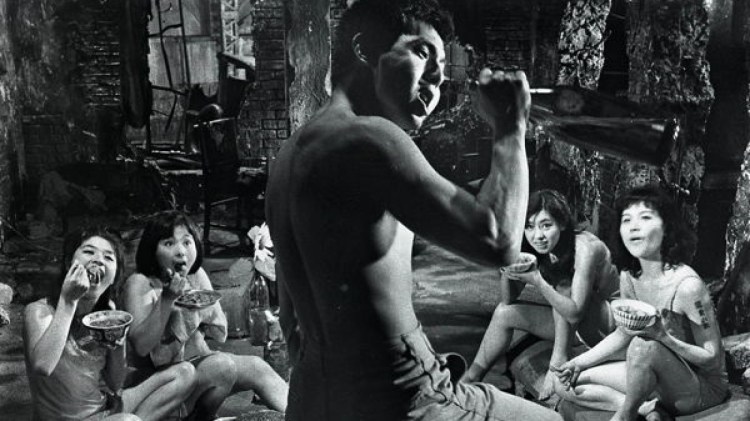
A nervous young woman, clearly tired, starving and alone wanders through a marketplace in desperation before a yakuza offers to buy her something to eat. She is wary but has little choice. Soon after she meets toughened prostitute Sen who is the de-facto head of a small group of streetwalkers committed to supporting and protecting each other. They have few rules but the biggest one is no giving it away for free. Maya joins their “merry” band and things are going OK for them until they make the fateful decision to take in a wounded ex-soldier on the run from the American military police. Shin puts a great big wedge between the members of the group, deepening the cracks which were present all along. Sure enough, Maya starts to fall for this damaged man threatening to fall foul of the gang’s single taboo. When you’ve lived like this, without hope, without a future, can you ever go back to being a “real human being” ever again?

Make no mistake, this is a ruined world. Almost post-apocalyptic, it’s populated by the starving and the desperate. The sweet potato seller is king here – the working girls are depicted like packs of rabid animals, descending on any passing male ready to extract any amount of loose change which they immediately run out to thrust into the hands of anyone who has food. The great horror is hunger.

The other great horror is, of course, violence and particularly male violence against women. Maya is assaulted early on and a truck carrying two army officers and a priest tries to make a quick escape after noticing her lying wounded by the roadside. The Americans aren’t going to help her, she’s just another raped Japanese woman after all, but the priest stops and offers another kind of salvation shining from his dangling crucifix. He repeatedly turns up later and tries to convince Maya to come back to church but you can’t live on a communion wafer alone and eventually Maya puts a definite end to the idea of any kind of religious solution to her predicament.

Sex is business for the woman under Sen’s command. They sell their bodies, hence the prohibition on giving them away. Breaking the rules will get you cruelly beaten and humiliated before being thrown out of the group and it’s near impossible to survive alone. The other women have all been injured by the war, they’re all among those left behind. One of them, Machiko, stands a little to the side as a middle class war widow rigidly sticking to her kimono and dreaming of becoming someone’s wife again. Needless to say, she and Sen do not always see eye to eye as Machiko’s desire to return to a more innocent age conflicts with Sen’s hard nosed pragmatism.

This is Japan in defeat. The girls live in a warren of ruined buildings haunted by visions of the past. Shin has returned from the war to a land devoid of hope. He’s a broken man and, as the woman have been “reduced” to prostitution, he has been “forced” into crime. There aren’t any real people here anymore, just animals willing to do whatever it takes just to stay alive.

When Suzuki was given this assignment, they wanted him to make a soft-core exploitation pic full of the sleazy lives of the red light district. Suzuki doesn’t give them that, he gives them another round of beautifully composed, surrealist social commentary in which the downtrodden citizens of Japan are defeated for a second time by the corrupting influences of the American occupation. The final shot of the ascendant Stars and Stripes flapping in the wind while the Japanese flag lies drowned in the muddy river speaks for itself and though Suzuki shows us those defiantly trying to live his prognosis for them is not particularly hopeful. He uses multiple exposure here more than in any other film as the past continues to haunt the traumatised populace in quite a literal way where one scene of degradation leads on to another. Extended metaphor, surrealist examination of the post-war world and also the low level exploitation feature Suzuki was hired to direct (albeit in more ways than one) Gate of Flesh proves one of his most complicated and accomplished features even given his long and varied career.


Gate of Flesh is available with English subtitles on R1 DVD from The Criterion Collection.

http://www.youtube.com/watch?v=_NHgbKL57hc