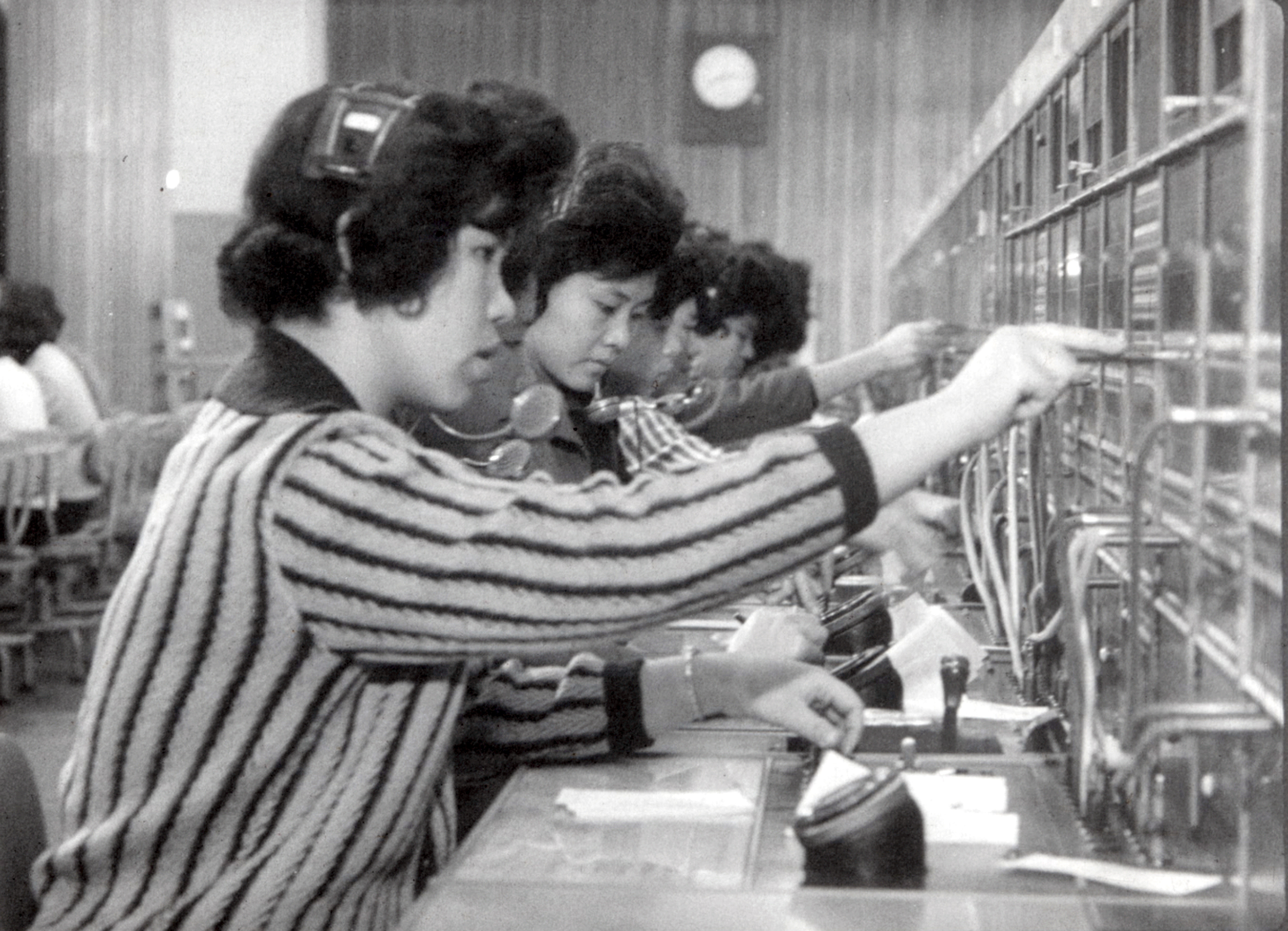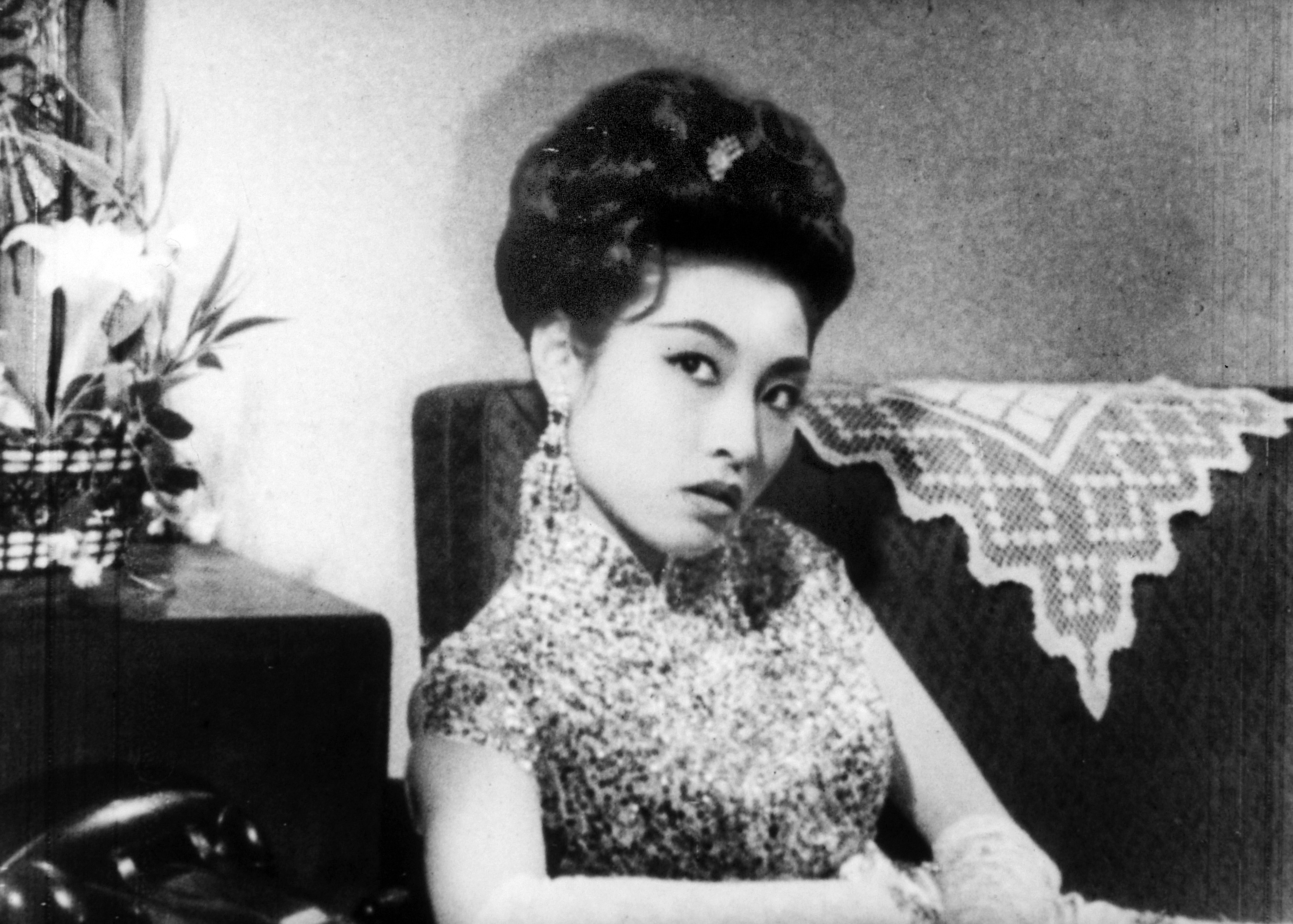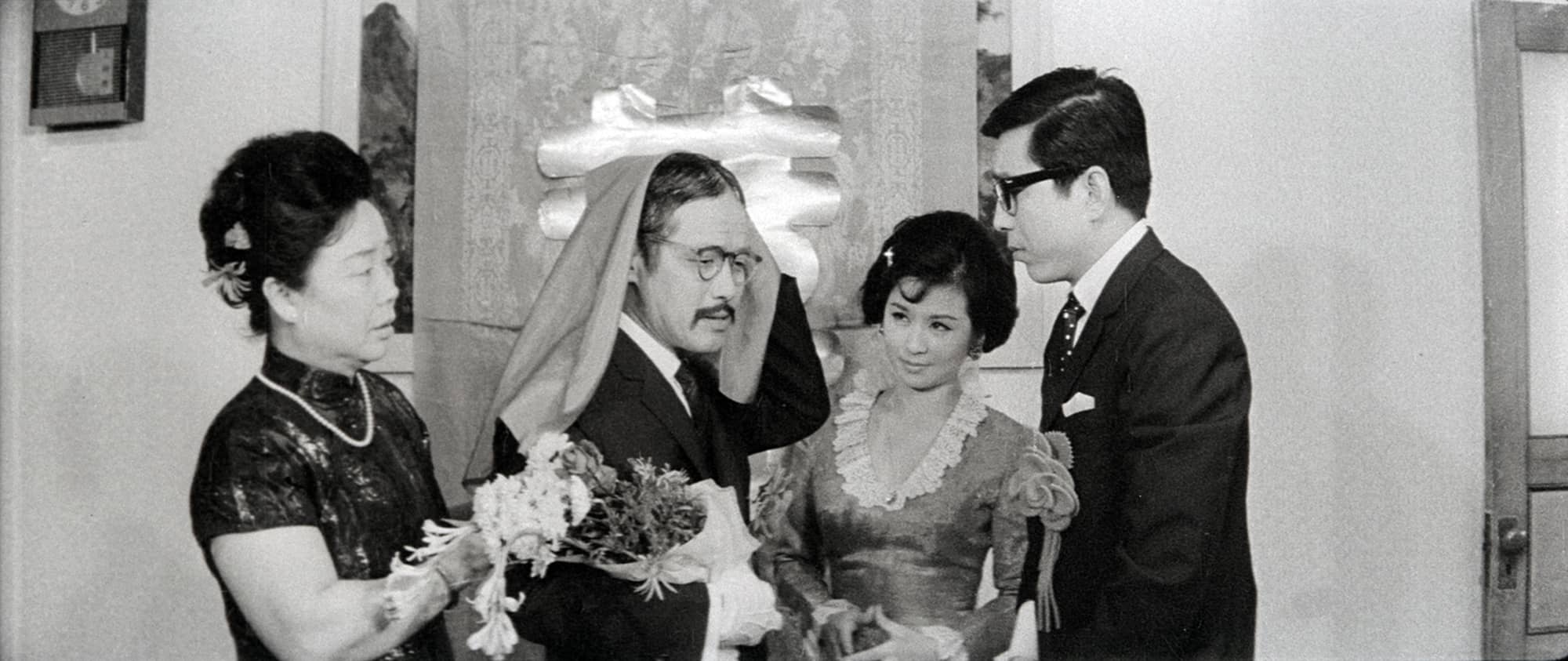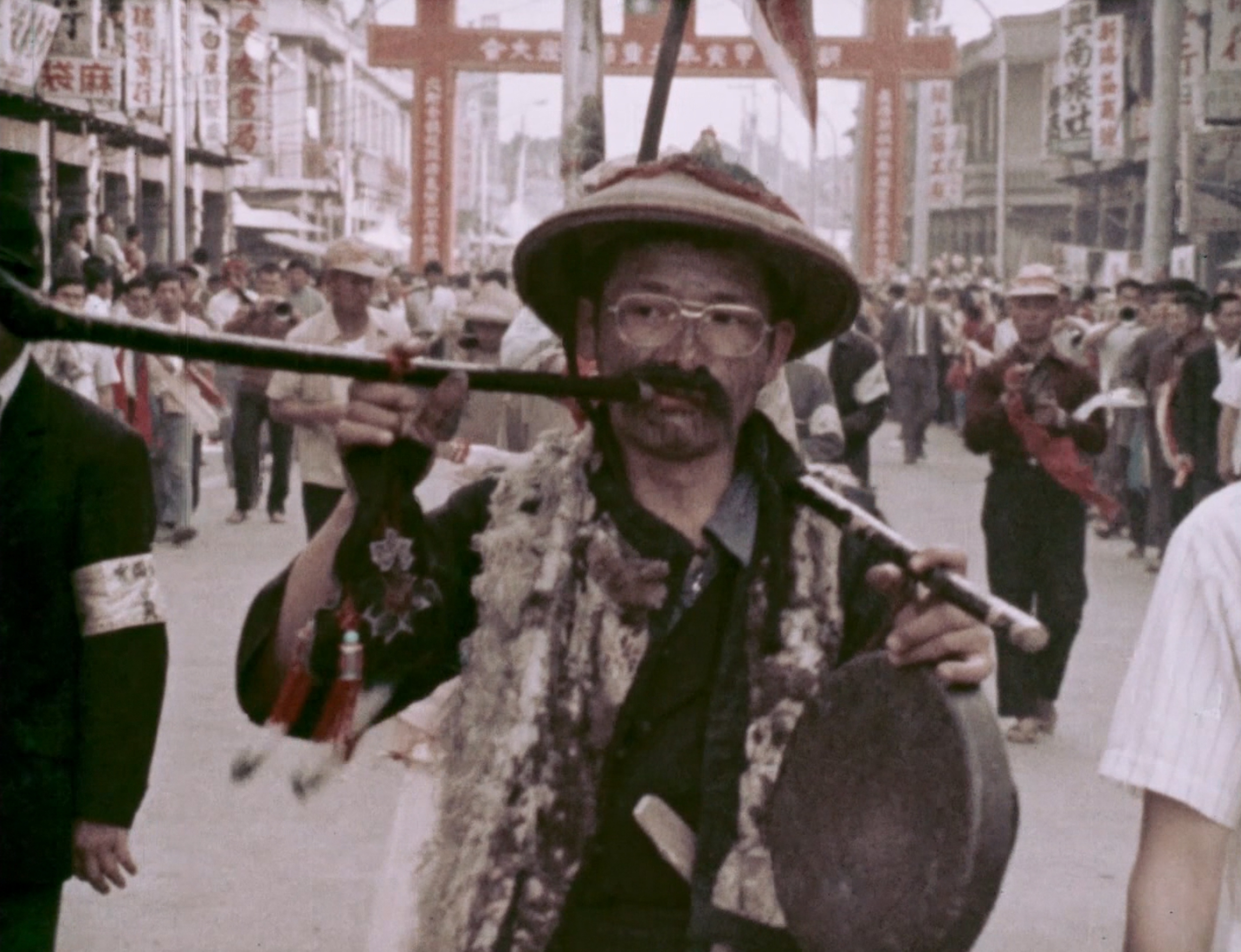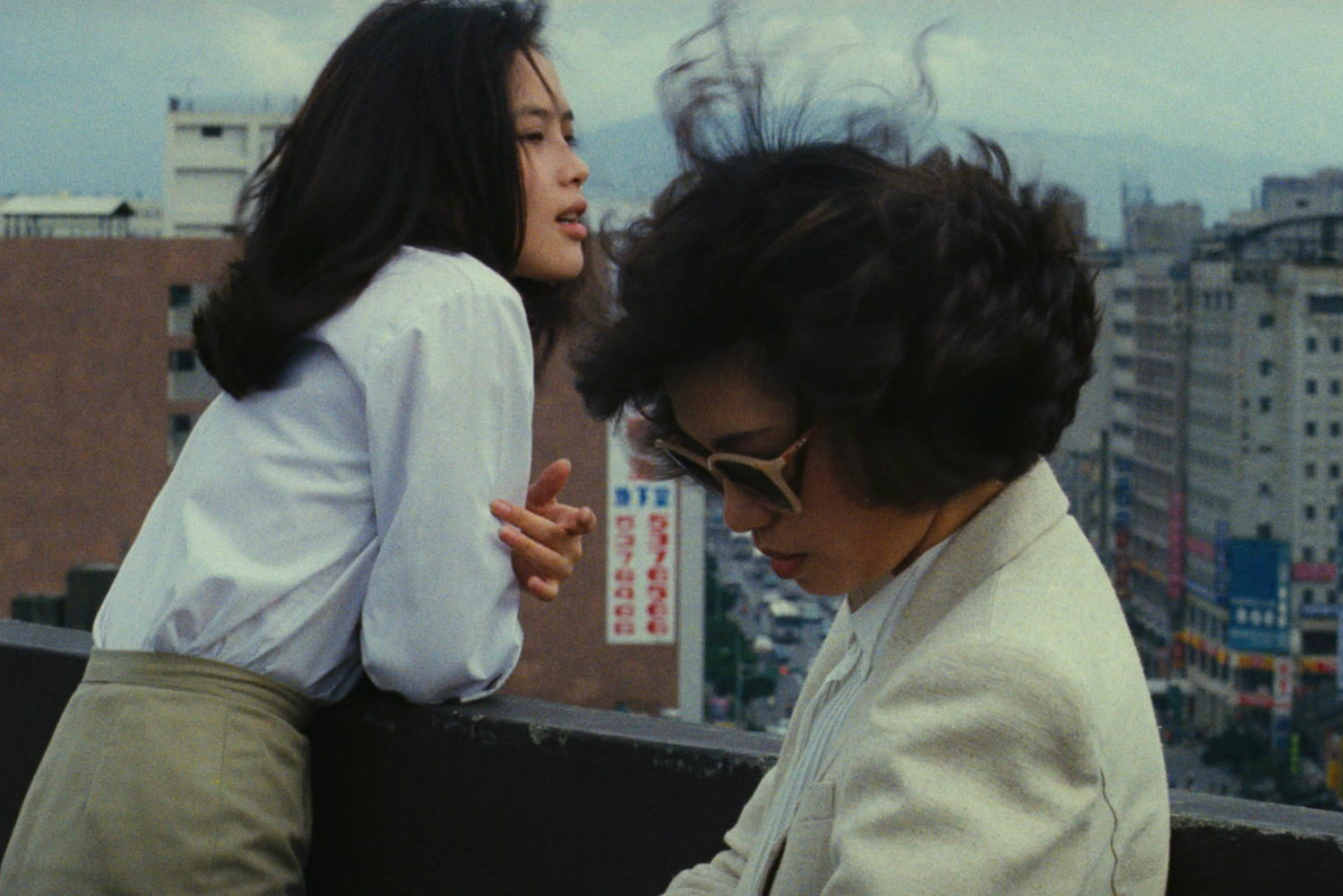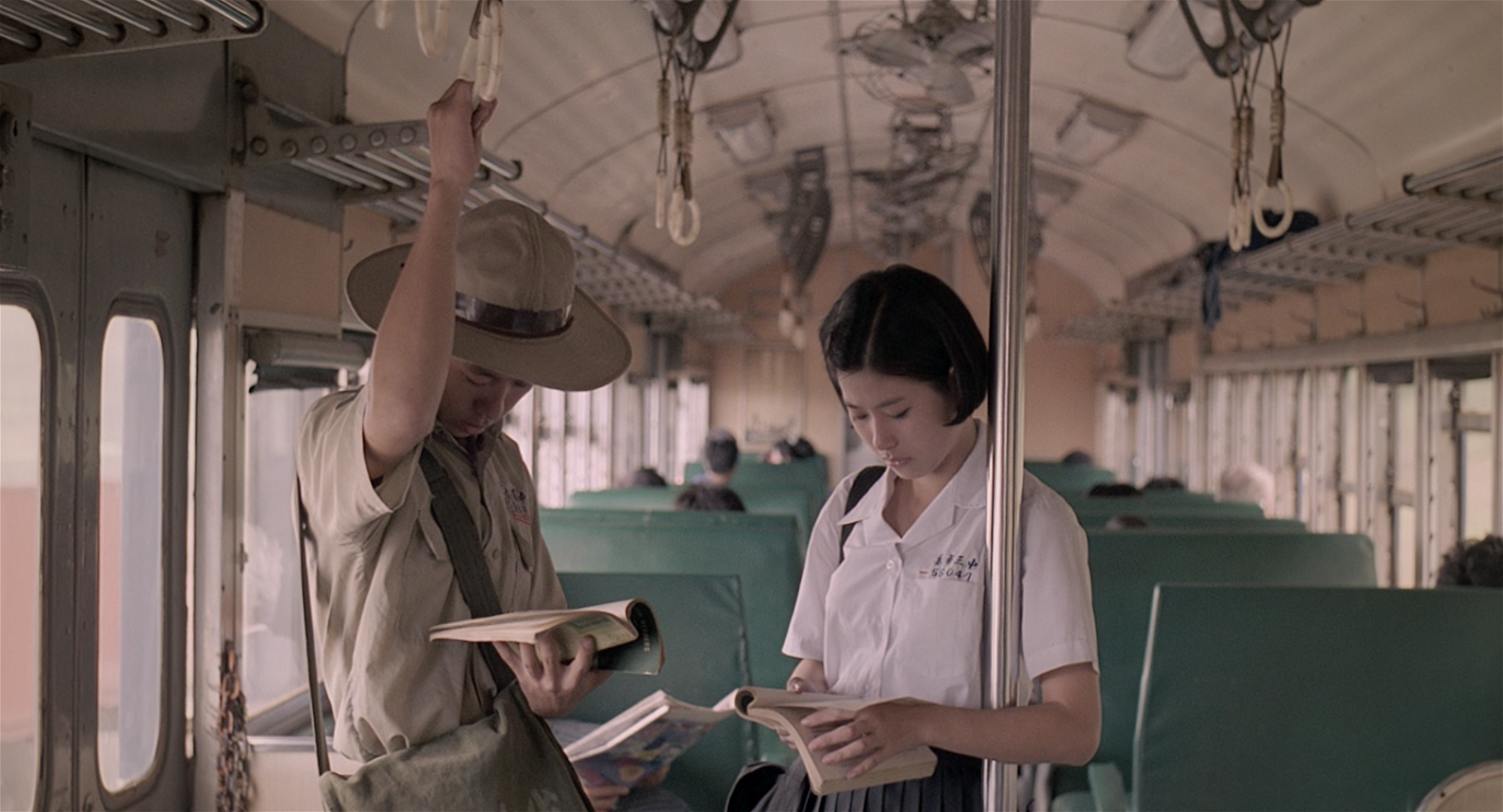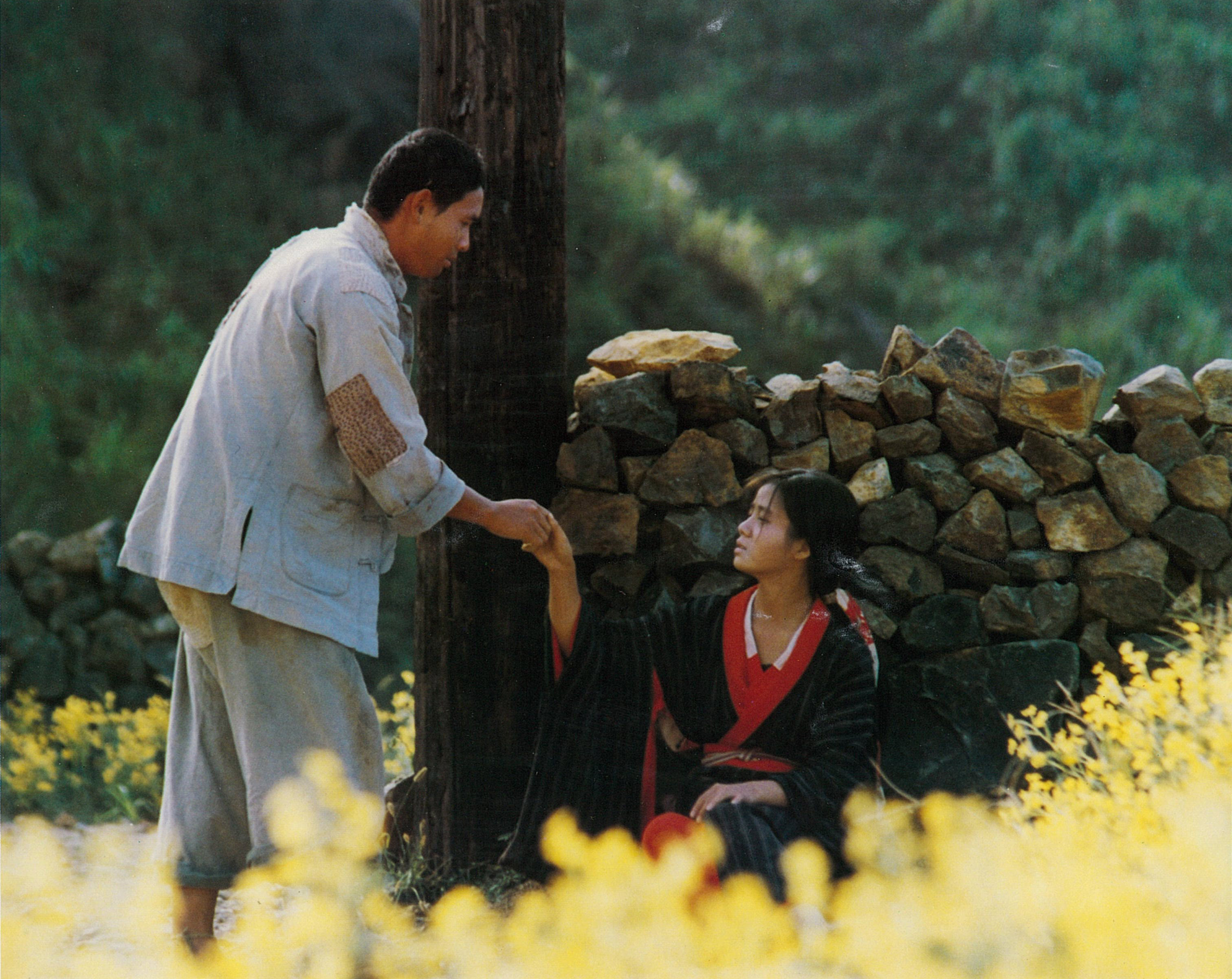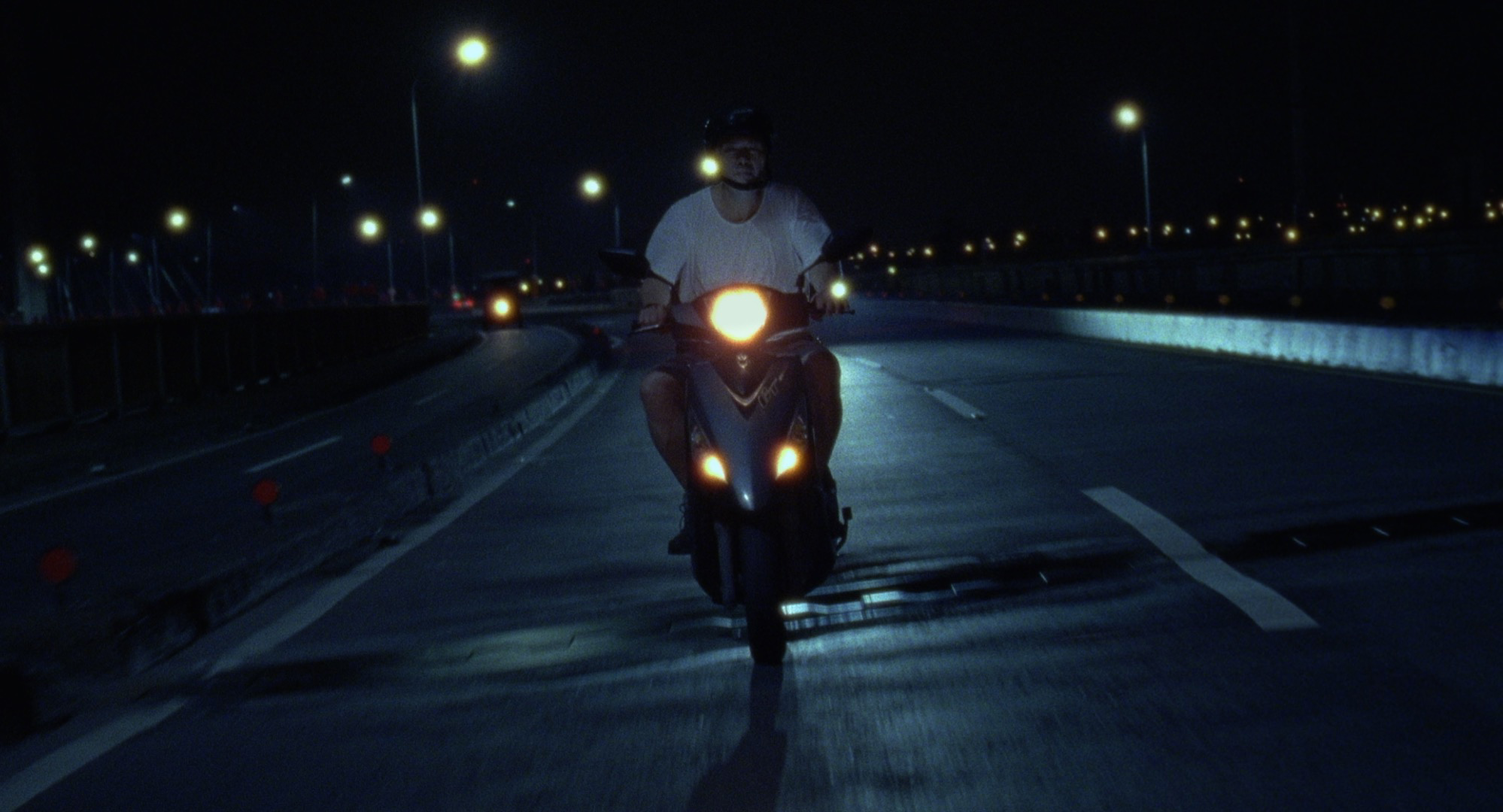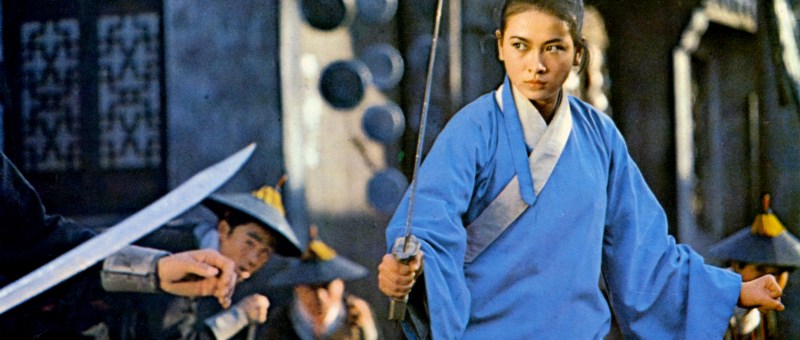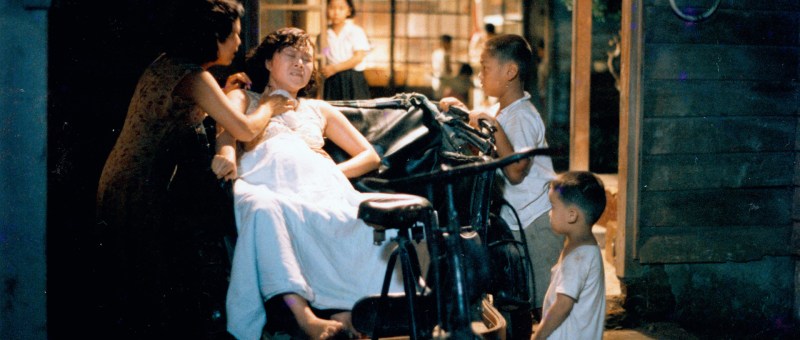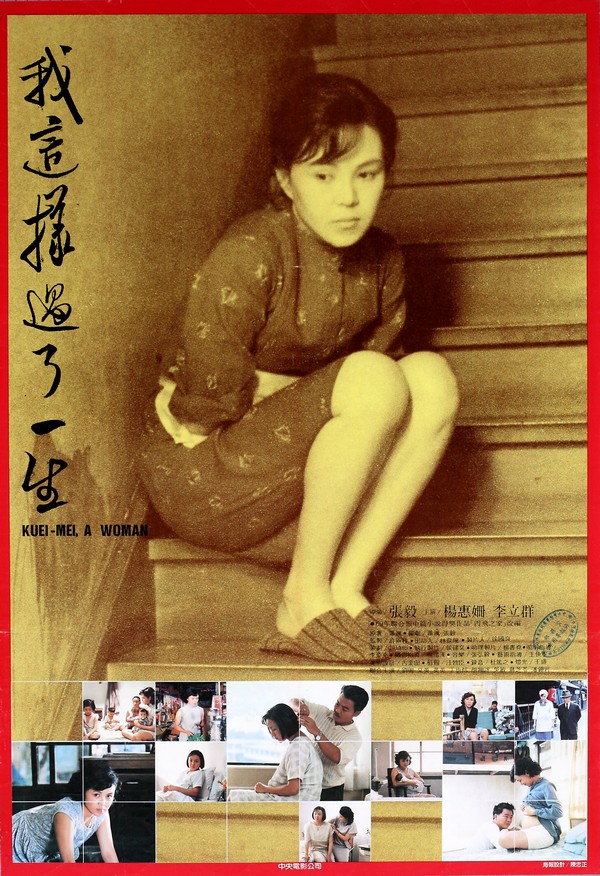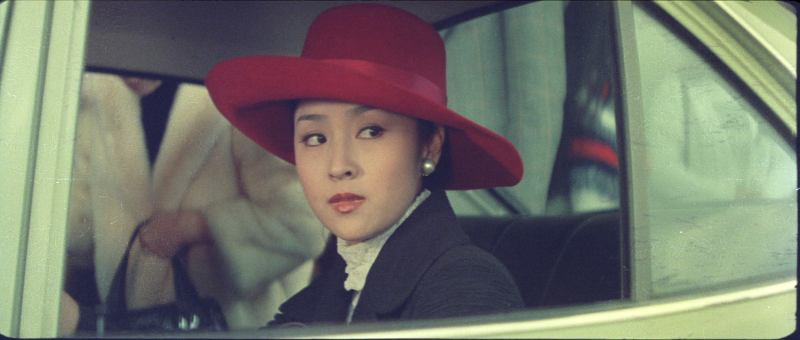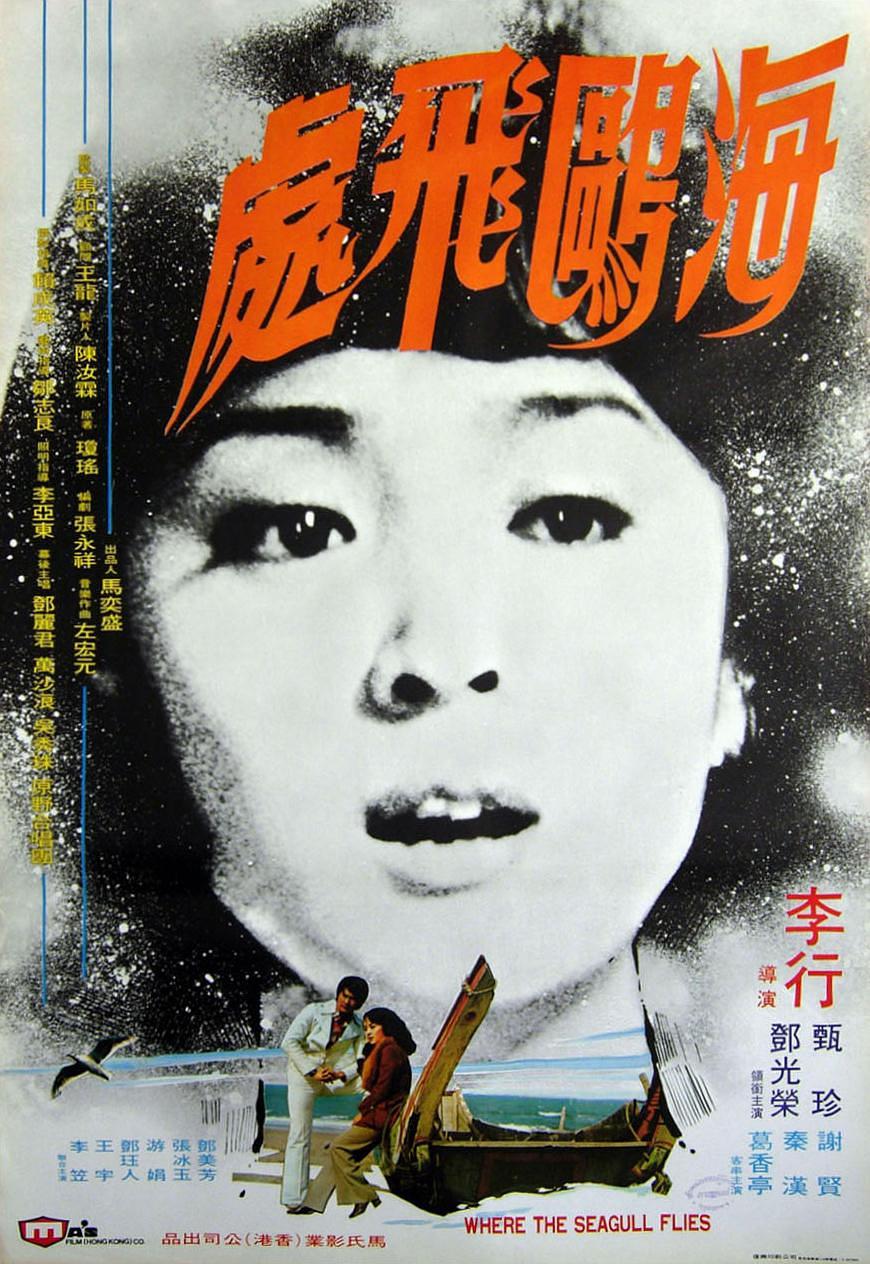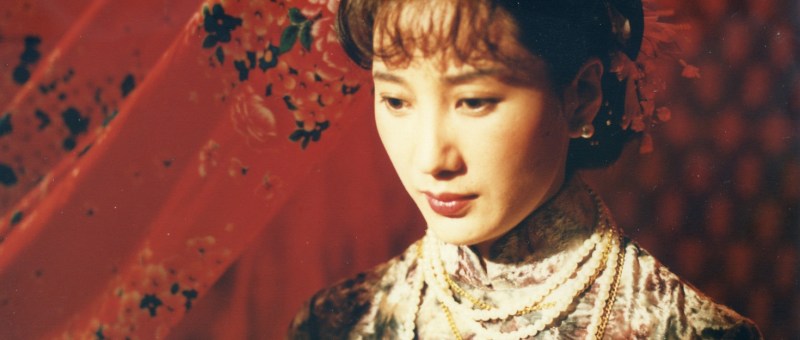
Peony Birds (牡丹鳥, Huang Yu-Shan, 1990)

Two women struggle with inter-generational conflict and the changing Taiwanese society in Huang Yu-Shan’s melancholy familial drama, Peony Birds (牡丹鳥, Mǔdan Niǎo). Perhaps the love birds of the title, mother and daughter find themselves at odds partly through a series of misunderstandings but also in the strange reversals of their social outlook, the older woman eventually becoming a successful industrialist rejecting the patriarchal social codes of her upbringing while the younger remains prudish and resentful, unfairly blaming her mother for her father’s early death. 

The film opens with two children accidentally releasing a pair of caged birds before the camera lights on the melancholy figure of Ah-chuan (Su Ming-ming), absentmindedly embroidering beneath a large picture which appears to be of herself. The portrait, a source of contention with her husband Cheng, will follow her throughout her life a symbol of herself as a young woman with choices falling in hopeless love with a Japanese-speaking doctor, Kuo, who never gave her a second glance and later married someone else. Seemingly on the rebound, Ah-chuan consented to an arranged marriage to the wealthy son of a rice merchant who thinks himself a member of the local aristocracy, forever throwing around his money and reminding people of his good name, but the marriage is unhappy Cheng frustrated that his wife loves someone else and Ah-chuan unable to let go of her idealised image of Kuo. Soon enough, Cheng drowns, falling into the river stumbling around in a drunken stupor. As they pull his body out of the water, doting daughter Shu-chin remembers her father bitterly exclaiming that her mother loved someone else and, noticing the comforting arm of childhood friend Chin-shui on her shoulder, assumes it must be him.  

It’s this fundamental misunderstanding that continues to colour the frustrated relationship between the two women, the grown-up Shu-chin (Vivian Chen Te-Yung) childishly complaining that Ah-chuan failed in her wifely responsibilities and has never been a mother to her, blaming her for Cheng’s death while criticising her commitment to her career almost as a betrayal of womanhood. By this point, Shu-chin is in her 20s and has a job as a record producer, later attempting to push her mother towards retirement claiming her salary is enough to support both her and her artistic brother but eventually leaving home entirely after beginning an affair with an unsuitable man defiantly ignoring Ah-chuan’s attempts to convince her she is making a huge mistake. 

Meanwhile, Chin-shui resurfaces in their lives having become a wealthy real estate magnate, a career we saw him start back in the village by taking advantage of the post-war land reforms to buy up the redistributed estates of formerly noble families, some of it Cheng’s. In some ways, former sharecropper Chin-shui is a villainous Lopakhin intent on paving over the beautiful Taiwanese countryside with towering high rise buildings, a symbol of the nation’s transformation from agrarian economy to financial powerhouse and of the hollowness it implies. Yet Ah-chuan’s business is floundering partly she claims because of protectionist US trade laws leaving her at the mercy of men like Chin-shui who, though not the man in her heart, has long carried a torch for her despite knowing of her impossible, unrequited love for Dr. Kuo. Shu-chin finds herself in a similar position in her affair with free-spirited colleague Li Kang whose previous girlfriend attempted to take her own life, discovering the mutability of his affections after he becomes famous with one of his solo compositions, while also drawn to a more suitable match in the more traditional Yi-cheng who eventually pledges his love to her, offering to make her a home explaining that having a home is what gives the young confidence to wander. 

Yet “home” is what Shu-chin continually rejects, yearning for her childhood in a more rural, quasi-feudal Taiwan while misunderstanding the tragedy of her parents’ toxic romance, only latterly reawakening to her mother’s love for her and discovering a new sense of security in a changing Taiwan as Ah-chuan frees them both in literally setting fire to the frustrated hopes of the past, reminding her “It’s always been our home”. A touching story of two women finally coming to understand each other while learning how to live in a changing society, Huang Yu-Shan’s maternal drama eventually bridges a generational divide as mother and daughter finally flee the coop but choose to fly together. 


Peony Birds streams in the UK 25th to 31st October as part of this year’s Taiwan Film Festival Edinburgh.

Clip (English subtitles)
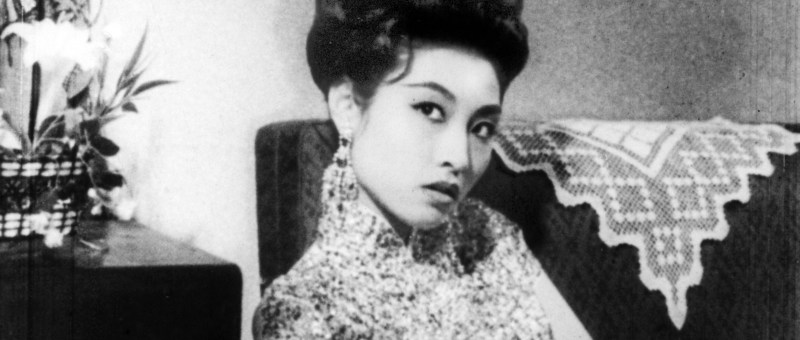
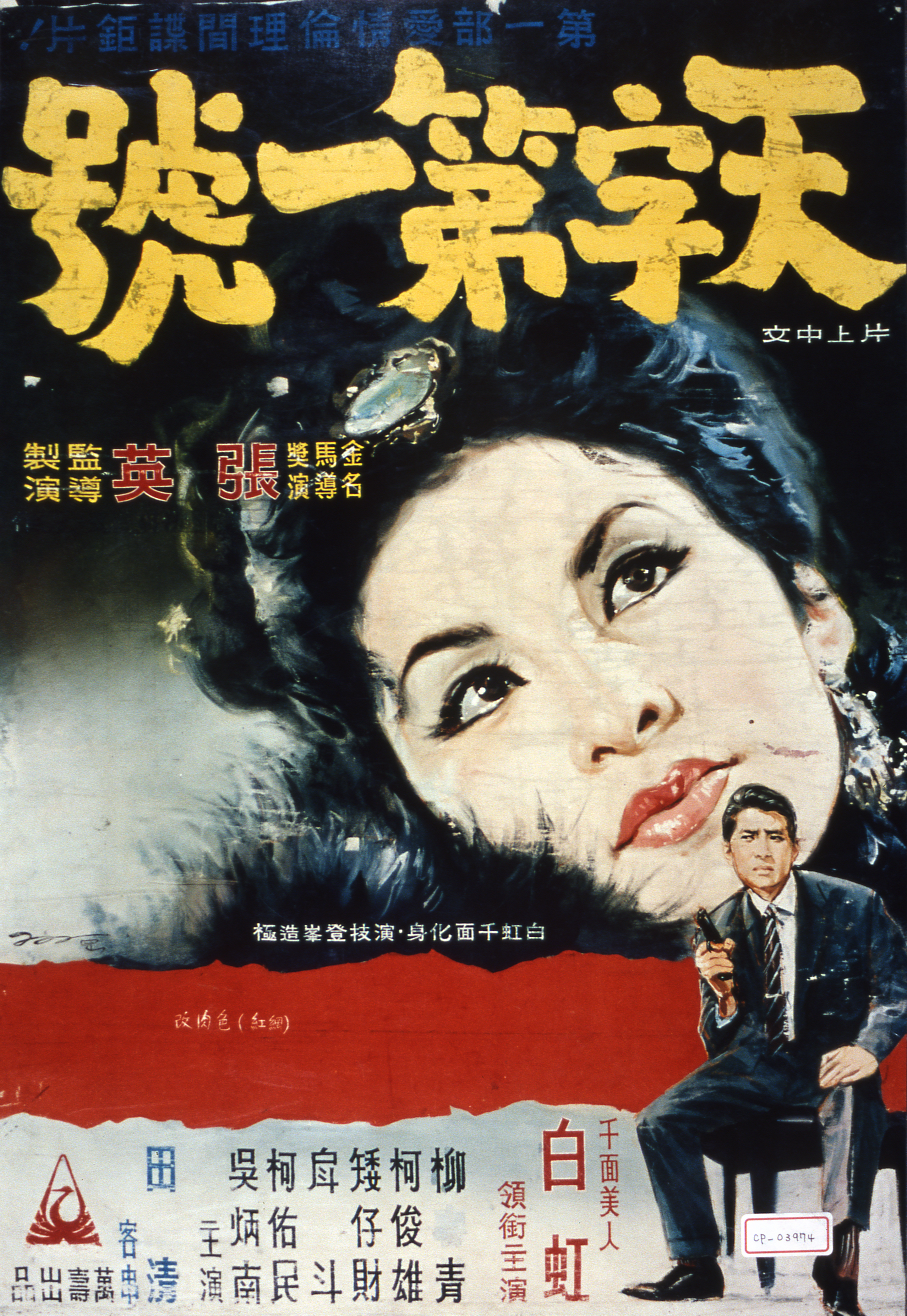
The Best Secret Agent (天字第一號, Chang Ying, 1964)

“The Japanese have destroyed our family. You must avenge me” a dying father instructs his daughter, his words somewhat ironically echoing the ideology of the ruling regime in hinting at the national trauma of exile and separation. Arriving in the wake of Bond mania, Chang Ying’s The Best Secret Agent (天字第一號) is, incongruously enough, a Taiwanese-language remake of an earlier film from 1945 set in Shanghai amid the Anti-Japanese Resistance movement, but at heart is less a tale of espionage and intrigue than a romantic melodrama in which a capable woman sacrifices romantic love for the patriotic and filial while perhaps subversively finding true freedom and independence. 

As Tsui-ying’s (Pai Hung) father (Ko Yu-Min) later explains, not wishing to be enslaved they fled from the Japanese but are forced to degrade themselves with public performances in the market square, the old man stooping to beating his daughter when the show fails to please the audience. A kindhearted man from the crowd, Ling-yun (Ko Chun-Hsiung), comes to her defence but Tsui-ying forgives her father blaming the Japanese for the misfortune which has befallen them. Soon after, Tsui-ying’s father is killed during an airstrike using his dying breath to ask for vengeance. After becoming a nightclub singer in Shanghai, Tsui-ying ends up running into Ling-yun again and the pair fall in love but she is also working as a spy and is ordered to break up with him in order to capitalise on the attraction a prominent collaborator, Chao-chun (Tien Ching), feels for her. Reluctantly she obeys, Ling-yun going abroad to study while she eventually becomes Chao-chun’s wife only to discover some years later that Chao-chun is actually Ling-yun’s uncle. 

The central melodrama revolves around the impossible love of Tsui-ying for Ling-yun, a love that she must willingly sacrifice in order to fulfil her role as a daughter both to her literal father and to her country. There is also however a degree of awkward comedy in Ling-yun’s continual discomfort that he must now refer to Tsui-ying as his aunt, their love now a further taboo in taking on a quasi-incestuous quality. Continually pained, she must keep her cover identity intact unable to explain to Ling-yun why she left him, encouraging him to think of her as a cold and heartless woman while watching him romancing his cousin, Ai-li (Liu Ching), whom she has come to genuinely care for as a maternal figure despite there being very little difference between them in age. 

What she apparently doesn’t know despite being a cunning mastermind is that almost everyone in her house is also a spy. As the famed Heaven No. 1, Tsui-Ying plays the cooly elegant wife of a diplomat cosying up to the Japanese but her activities perhaps owe more to the Basil Rathbone Sherlock Holmes movies than they do to the ever popular Bond, a late montage sequence showing her in a series of disguises from a wise old man to anonymous soldier and cheerful shoeshine boy while an early slapstick set piece sees the Resistance hide a pistol inside a roast duck in order to assassinate the Japanese advisor at dinner, the plan almost foiled by Chao-chun’s fiddling with the lazy Suzan. 

Everything is indeed the fault of the Japanese, but it’s Chao-chun, the collaborator who is the true villain even in his bumbling cluelessness, a quality also reflected in his idiot police chief Captain Wan who consistently fails to capture any Resistance members despite Chao-chun repeatedly ordering him to. In another bumbling piece of verbal humour, Captain Wan (Hu Tou) simply repeats the speech he’s just had criticising him for incompetence verbatim to his own subordinates while not doing much of anything himself. They are both, fairly obviously, outclassed by Tsui-ying playing the part of the clueless society bride lounging around in her furs and mediating in-house disputes while simultaneously plotting to bring them both down once they’ve outlived their usefulness. Though she is forced to give up what is most important to her, her love for Ling-yun, what she discovers is perhaps a transgressive sense of freedom and independence in her life as a master spy not otherwise available to an ordinary woman as she pursues her revenge for the death of her father.

Nevertheless, she is also orphaned both literally and metaphorically forced into a life of wandering. The separation of the lovers, blamed on the Japanese, is symbolic of that between the two Chinas as echoed in Tsui-ying’s melancholy love song and no doubt appealing to the prevailing ideology of the ruling regime save for the implication of fatalism as Tsui-ying and Ling-yun pursue exile in opposing directions. Even so with its fantastically compelling heroine, ironic humour, and atmosphere of intrigue tempered with melancholy romance, The Best Secret Agent more than lives up to its name as the master spy effortlessly completes her primary mission even if sacrificing her heart in the process. 


The Best Secret Agent streams in the UK 25th to 31st October as part of this year’s Taiwan Film Festival Edinburgh.

Trailer (Traditional Chinese subtitles only)

Taiwan Film Festival Edinburgh Announces Lineup for 2021 Hybrid Edition

Following last year’s inaugural online edition, the Taiwan Film Festival Edinburgh returns for 2021 in a hybrid format featuring a few in-person screenings as well as an extensive online programme running entirely for free in the UK from 25th to 31st October.

IN-PERSON SCREENINGS in Glasgow and Edinburgh

Sacred Forest 神殿| Ke Chin-Yuan| 2019 | 60 mins

In-person screening on 25 October at Glasgow Film Theatre; tickets on sale soon.

Ecological documentary exploring Taiwan’s unique ecosystem from the point of view of six different groups each with different interests and specialities as they explore the majesty of the forest.

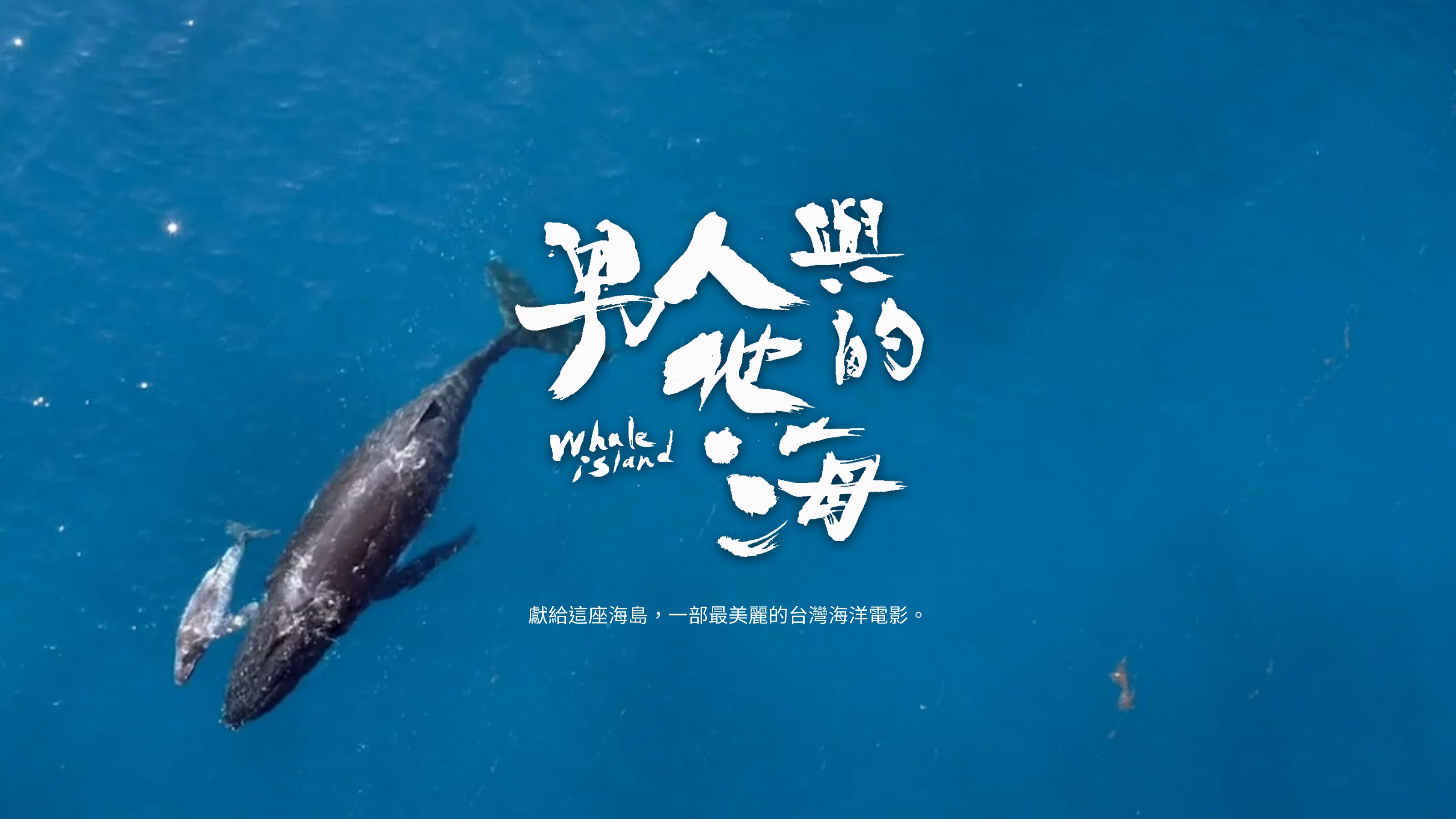
Whale Island 男人與他的海 | Huang Chia-Chun| 2020 | 108 mins | UK Premiere

In-person screening on 30 October at Glasgow Film Theatre; tickets on sale soon.

Capturing the power and mystery of the sea, Huang’s beautifully shot nature doc contemplates Taiwan’s relationship with the oceans which surround it. Review.

Sounds in Silence double bill at 6.30pm on 27 October in Summerhall, Edinburgh; also online 28-31 Oct on Festival website.

A Morning in Taipei 臺北之晨 | Pai Jing-jui | 1964 | 20 mins | UK Premiere

1964 documentary short capturing a newly industrious Taipei in which a variety of individuals go about their regular morning routines.

Deng Nan-guang’s 8mm Movies 鄧南光8mm家庭電影| Deng Nan-guang| 1935-1941| 57 mins| UK Premiere

A collection of home video-style recordings captured between 1935 and 1941 and bearing witness to an overlooked era of Japanese occupation in the shadow of the second world war.

DIGITAL SCREENINGS on the Festival website between 25 and 31 October 

The Best Secret Agent 天字第一號 | Chang Ying | 1964 | 102 mins

Taiwanese-language remake of a popular film from 1945 in which a young woman flees the Japanese occupation with her father and falls in love with a kind and idealistic young man. When her father is killed in an airstrike, she realises she must give up on romance in order to avenge his death by becoming a master spy!

Foolish Bride, Naive Bridegroom 三八新娘憨子婿| Hsin Chi | 1967 | 101 mins

A naive young couple’s desire to marry is frustrated by the revelation their parents were once lovers in Hsin’s delightful screwball rom-com. Review.

Dangerous Youth 危險的青春 | Hsin Chi | 1969 | 95 mins

A recently dumped delivery driver becomes fond of a waitress and tries to get her another job after meeting a guy who runs a cabaret bar but the job turns out to be as an escort to an elderly millionaire.

The Homecoming Pilgrimage of Dajia Mazu  大甲媽祖回娘家| Huang Chun-ming | 1975 | 27 mins | UK Premiere

Documentary capture of the annual Taoist celebration of the Dajia Mazu Pilgrimage from 1974. This recently restored edition features the original language track in Taiwanese Hokkien once banned under the KMT’s Mandarin-only policy.

Taipei Story 青梅竹馬 | Edward Yang | 1985 | 115 mins

Edward Yang’s landmark 1985 drama in which an independent, financially secure woman is determined to move forward while her boyfriend (played by film director Hou Hsiao-Hsien) remains trapped in the past.

Dust in the Wind 戀戀風塵 | Hou Hsiao-Hsien | 1986 | 109 mins

A young couple from a rural village travel to Taipei hoping to make enough money to marry, but their dreams of romance are crushed when the boy is drafted into the Republic of China Army.

Peony Birds 牡丹鳥 | Huang Yu-shan| 1990 | 107 mins | UK Premiere

Melodrama exploring the troubled relationship of a mother and daughter bound by mutual resentment. A Q&A session with director Huang Yu-shan will also be available via the streaming platform.

Hill of no Return 無言的山丘 | Wang Tung | 1992 | 175 mins

Two brothers leave home after the deaths of their parents to work at a Japanese-run goldmine in 1927 but rather than the riches they dreamed of find only exploitation and disappointment. A Q&A session with director Wang Tung will also be available via the streaming platform.

The Personals 徵婚啓事 | Chen Kuo-Fu | 1998 | 105 mins

A heartbroken eye doctor quits her job at a hospital and plans to get married, placing a personal ad to find the perfect partner in this humorous exploration of the ’90s Taipei dating scene.

Splendid Float 豔光四射歌舞團 | Zero Chou | 2004 | 73 mins

A Taoist priest with a sideline as a drag artist falls for someone who later disappears without saying goodbye leaving him wondering if something terrible may have occurred.

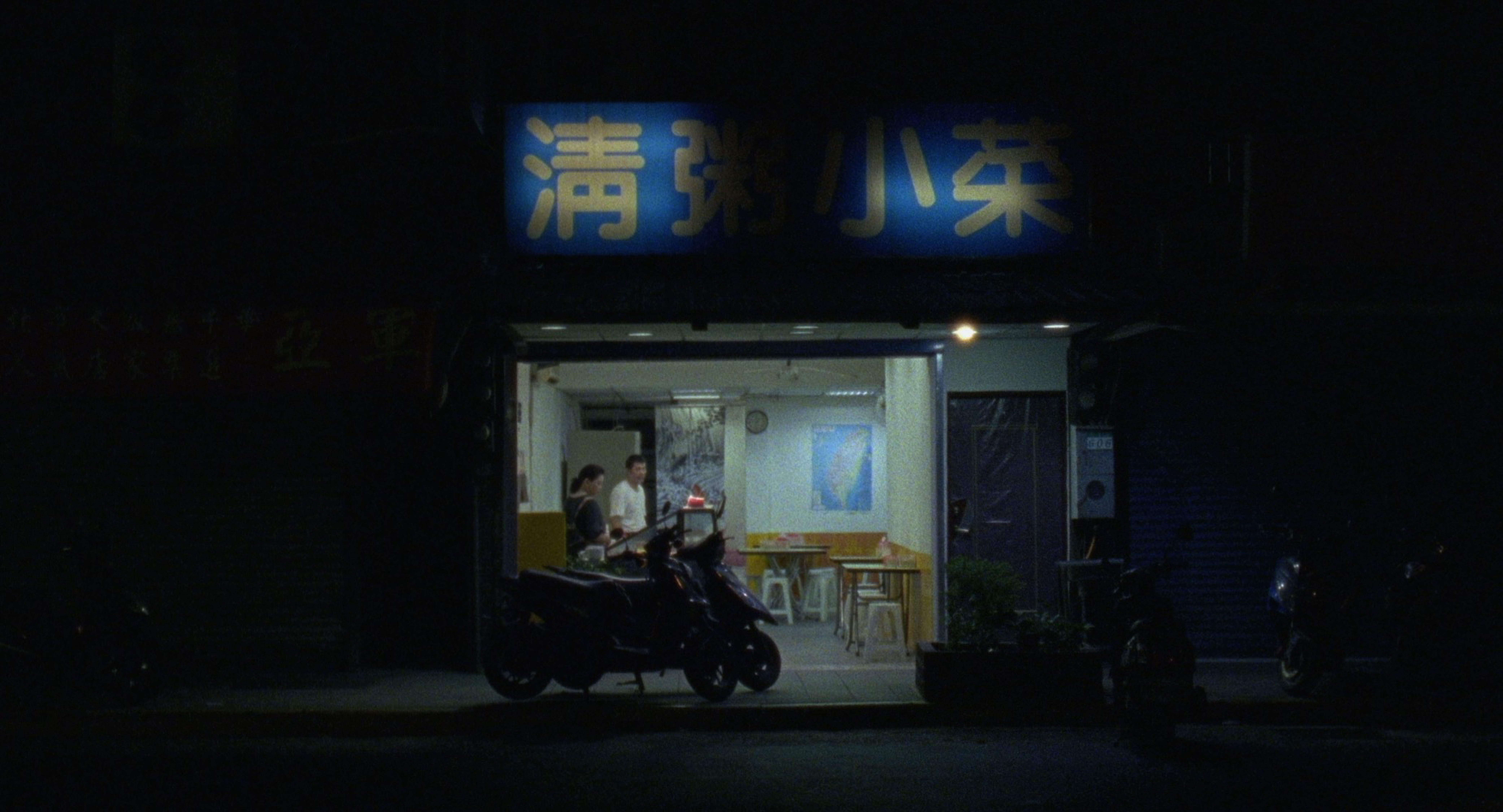
Closing Time 打烊時刻 | Nicole Vogele | 2018 | 116 mins

Documentary from Swiss filmmaker Nicole Vogele following the city’s nighttime economy from the vantage point of an ageing couple’s late night eatery.

Taiwan Film Festival Edinburgh takes place online and in-person 25th to 31st October, 2021. All films stream for free in the UK via the official platform though ticket numbers are limited and early booking is advised. Full details are available via the official website and you can also keep up with all the latest details by following the festival on FacebookTwitter, Instagram, and YouTube.

The Shepherds (牧者, Elvis Lu, 2018)

Among the most liberal of Asian nations, Taiwan became the first to legalise same-sex marriage in 2019 but that doesn’t mean that it’s always easy to be LGBTQ+ particularly if you come from a religious background and wish to maintain your faith. Elvis Lu’s documentary The Shepherds (牧者, Mùzhě) follows a small group of religious leaders who are or have been involved with a progressive church, Tong-Kwang, which was the first in Taiwan to expressly embrace the LGBTQ+ community on its foundation back in 1996. Unfortunately, however, the pastors have faced significant barriers in their personal and professional lives because of their views on homosexuality which face staunch opposition from mainstream religious organisations. The founder of Tong-Kwang Yang Ya-hui, a heterosexual female pastor, eventually took her own life because of the discrimination she later faced within the religious community which made it impossible for her to continue working and support herself without compromising her beliefs. 

Discrimination is also something which has affected pastor Huang Guo-yao and his wife who now work for Tong-Kwang but began their careers in Hong Kong. Huang was forced to give up his ministry after advocating for LGBTQ+ rights brought him into conflict with the more conservative local Churches, eventually making the decision to migrate to Taiwan while his children remained in Hong Kong. He laments that the situation in which he found himself may have had a negative effect on his now grown-up sons, the younger one he worries having become increasingly withdrawn and unwilling to talk about his feelings. 

Zeng Shu-min, meanwhile, is in a similar position unable to find employment with more conventional churches as an openly gay pastor. While officiating at same sex weddings, he’s had to look for other employment to support himself and generally lives an ascetic existence, dependent on the kindness of friends such as Hsiao-en, a lesbian advocate for LGBTQ+ Christians who was herself ejected from the seminary for her liberal views. Running the Light Up project, she provides a more positive religious presence at rallies where conservative voices loudly protest against the advancement of rights for LGBTQ+ people and the movement for marriage equality. Presenting a united front in their priestly outfits, conservative preachers openly commit to undermining the seats of local politicians sympathetic to LGBTQ+ issues, some advancing that they want to “protect” the LGBTQ+ community who must be living “very painfully”, while they refuse to compromise the “basic values” of their society. 

As part of her outreach, Hsaio-en also liaises with the parents of LGBTQ+ children who often find themselves ostracised from their church community solely because of their children’s sexual orientation. Like Shu-min, she also has to work a regular job to support herself while feeling guilty for not being able to devote herself to activism full time and lamenting that hard as she works it often feels as if she isn’t getting anywhere and her efforts don’t make much difference. Yet Tong-Kwang in itself provides a valuable safe place for LGBTQ+ Christians, running a hotline those in distress can call for relief when experiencing difficulty in their personal or religious lives and affirming that their sexuality need not conflict with their faith nor is it a barrier to God’s love. 

With a mixture of observational footage and talking heads interviews, Lu bookends the film with poetic black and white re-enactment featuring the words of pastor Yang Ya-hui taken directly from her autobiography, positioning her as a kind of martyr for the rights of LGBTQ+ people in Taiwan and particularly for LGBTQ+ Christians. The film ends with the passing of the marriage equality act, but is quick to point out that that does not mean that prejudice and discrimination evaporated overnight, Hsiao-en in particular worried that organisations such as hers will come under greater pressure from conservative religious voices intensifying their opposition. Nevertheless, despite the sometimes great toll on their personal lives and those of their families, each of the shepherds remains committed to defending the rights of LGBTQ+ people not only to occupy an equal place within their society but also within their faith as members of a compassionate and progressive religious community. 


The Shepherds streams in the UK 30th October to 5th November courtesy of Queer East and Taiwan Film Festival Edinburgh.

Original trailer (English subtitles)

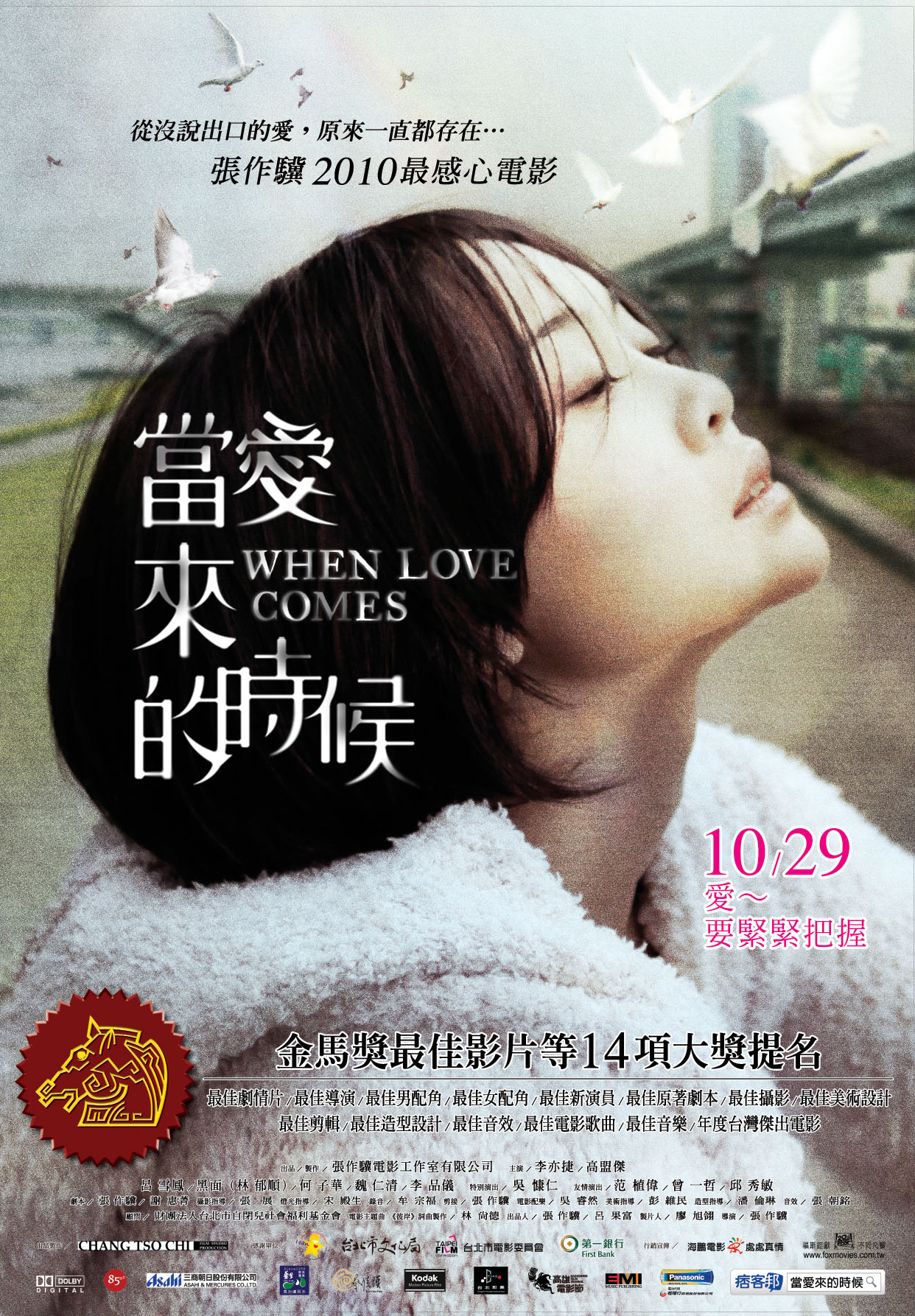
When Love Comes (當愛來的時候, Chang Tso-Chi, 2010)

“I like the feeling of home” the conflicted heroine of Chang Tso-Chi’s When Love Comes (當愛來的時候, Dāng Ài lái de Shíhou) eventually admits, finally coming to an understanding of her admittedly unusual family even if not, it seems, fully aware of her place within it. A chronicle of displacements, cultural, familial, adolescent, and romantic, When Loves Comes is also in its own way an ode to female solidarity as well as a coming-of-age tale as its feisty young heroine gains the courage to step into herself while preparing for the role of matriarch in accepting her responsibility towards those around her. 

About to turn 16, Laichun (Lee Yi-chieh) is a rebellious teenager who enjoys scandalising her heavily pregnant mother by walking out in skimpy outfits and elaborate makeup. So displaced is she within her own family, that she is not invited to meet her new baby brother at the hospital but is asked to stay home looking after recently arrived uncle Jie (Kao Meng-chieh), her father’s younger brother who has learning difficulties and has come to live with them following the death of his grandmother. Laichun, however, goes out anyway, meeting her as we soon discover no good boyfriend Zongfu (Chris Wu Kang-ren) in a love hotel. Like any teenager, Laichun thinks she’s invincible but she’s also incredibly naive or perhaps merely in denial. By the time she realises she might be pregnant, it’s already too late for an abortion and Zongfu has vanished into thin air. 

“It’s because you’re a girl” a postman with whom Laichun had been engaged in an elaborate flirtation unironically tells her after her impassioned monologue railing against the unfairness of her situation, that Zongfu has vanished while she is blamed for everything, branded a “slut” simply for embracing her sexuality. Her pregnancy places a further strain on her familial relations, though she finds an unexpected ally in her emotionally austere second mother, her father’s first wife Xuefeng (Lu Hsueh-Feng). As we gradually come to understand, Laichun’s father “Dark Face” (Lin Yu-Shun) hailed from rural Kinmen and married into Xuefeng’s family. But Xuefeng was not able to have children of her own so she allowed Dark Face to take a second wife, accepting Laichun’s mother, former gangster Zihua (Ho Tzu-Hua), into their family. 

“I was scared to be responsible for him” Dark Face later admits of his brother, revealing that he left his island home in secret, abandoning Jie to their grandmother who cared for him until the day she died. Dark Face indeed struggles to understand Jie, often frustrated by quirks and frequent meltdowns, cruelly tearing up his drawings somehow incensed as if refusing his brother’s attempt to communicate with the world around him. Jie has been patiently filling a jar with pennies because his grandmother told him to save up for a wife, but like Laichun remains an outsider in the family with only Xuefeng willing to include him. Yet faced with her impending maternity it’s Laichun who eventually becomes his primary carer, patiently taking him to the bank to pay in all his pennies, embracing her responsibility as a member of a family. 

“I like the feeling of being protected”, Laichun had said, “so why is it that I end up looking after everyone else?” only figuring out later that perhaps that’s because they’re sometimes the same thing. Gaining a sense of confidence from her father who reassured her that “you can face whatever comes along” she begins to step into a maternal role, emerging with a new respect for each of her mothers and for the complicated yet functional unit which is her unconventional family. Chang both begins and ends with a birth, taking place on the same spot behind a screen in the family restaurant as the family is first destabilised and then repaired by its new additions. In the opening scene Laichun had been told off for flirting with a man in the family’s restaurant who told her he was unafraid of the “unlucky” table because he worked as a mortician only to get run over on his way out. At the conclusion she meets him again along with his wife who just happened to be the woman who was driving the car that hit him. Not so “unlucky” after all. Life is chaotic and unpredictable, sometimes it presents you with a problem that’s really a solution. “I really very much like the feeling of sunlight” Laichun affirms, no longer so worried about the dark skies, now more assured in herself and her family as she prepares to welcome a new life that anchors her to the old. 


When Love Comes streams in the UK until 27th September as part of the Taiwan Film Festival Edinburgh.

Original trailer (English subtitles)
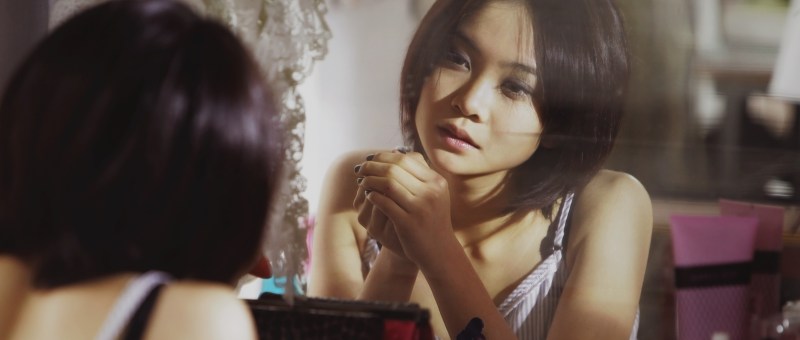
Ice Poison (冰毒, Midi Z, 2014)

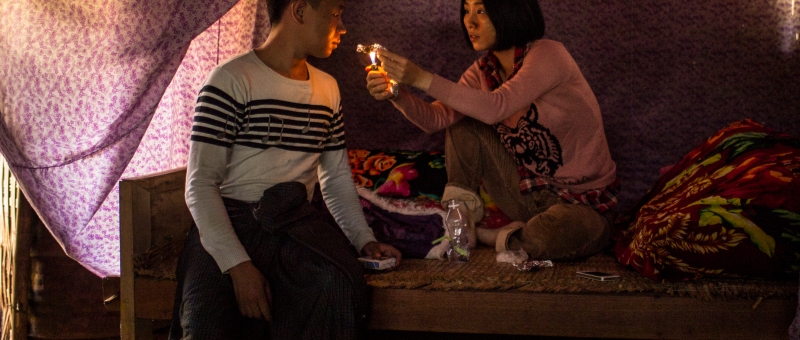
“You know only too well that in Burma if we want to make money you either go to work in jade mines, but you can’t afford the trip, or you sell drugs” according to the cynical heroine of Midi Z’s Ice Poison (冰毒, Bīngdú) seducing an equally desperate farmer in an effort free herself from patriarchal oppression and reclaim her son from the family who bought her and refuse to let her go. 

In an ironic touch, the film begins and ends in fire as an unnamed young farmer (Wang Shin-hong) and his father (Zhou Cai Chang) burn their fields and harvest their crop only to lament their slender pickings. This year’s harvest has been poor and, according to the young man “everything is getting more expensive except the vegetables we grow”. Left with few options the old man and his son walk towards the town, calling in at various houses along the way gingerly asking for a loan to help make ends meet but everyone is in a similar position. The men of working age have all gone away to find employment, an older woman explaining that her husband is on a construction site while her son who returned from abroad has only been able to find work on a poppy farm and he won’t be paid until after the harvest is finished. Another woman explains that her son, unlike others, wanted to do things properly by applying for a work visa for Malaysia but was cheated by the broker, who then bribed the police when they reported him. Her son now intends to stay and get married which, perhaps surprisingly, she thinks is irresponsible when there’s no money and his older brother is still a bachelor. The last man relates the sorry tale of his son who was apparently poisoned in Thailand after spurning the advances of two local ladies and has since lost his mind. 

Shifting to his plan B, the old man plans to pawn his cow to borrow a scooter so his son can earn some money with a bike taxi, first asking the scooter’s owner for a loan but once again informed he’s strapped himself because one of his employees ran off and his China deal fell through. Rather than the scooter, he offers the young farmer a job, but they ultimately opt for a bloody bargain, placing the cow as a deposit under the agreement that if they can’t pay back the money for the scooter in a few months’ time the oil merchant may have it slaughtered though it breaks the old man’s heart. 

The young farmer had wanted to go and work in the jade mines, but his father discourages him not just because there’s war in the north but because everyone in the mines takes drugs and if he goes and gets himself hooked on meth where will they be then? The bike taxi business, however, does not exactly take off. The young man finds himself at the back of a crowd of pushier drivers literally blocking the exits of the buses that roll into town mobbing those attempting to disembark, but with such crushing poverty all around him it’s perhaps incongruous to assume many want to spend money on speedy transport. He finally manages to get a passenger, Sanmei (Wu Ke-xi), after realising she is also from the Chinese minority, driving her to a village where, it transpires, her grandfather lies dying, apparently waiting for her arrival and the burying clothes she brings with her from their ancestral home in China. The rites completed, she should go home but Sanmei doesn’t want to. As she tells her mother, she was tricked into a marriage to a much older man whose family are oppressively possessive, unwilling to let her bring her son to meet his grandmother for fear she wouldn’t come back. 

Hinting both at the crushing despair and the patriarchal strictures of their society, Sanmei’s mother tells her that she’s better off in China especially as her husband apparently treats her well enough when there are women who marry for love only to suffer domestic violence. But Sanmei keeps repeating that he’s not the man she loves and so she does not want to stay with him. What she wants is to reclaim her child and live an independent life in Burma where, she feels, there are better opportunities for making money. She’s determined to talk to her shady cousin, ignoring her mother’s advice not to get involved with him because he’s a notorious drug dealer. Her cousin indeed tells her that there’s money to be made for those who are bold in peddling “ice”, apparently the only the remaining marketable commodity. Before long she’s smoking it herself, roping in the young farmer who’s taken to making courier deliveries in the absence of passengers, telling him he’s simply ferrying her around and can claim plausible deniability of what it is she herself is transporting. 

Is Sanmei merely manipulating him, seducing the farmer to claim her new life in exploiting his boredom and despair, or was there perhaps a genuine connection born of mutual hopelessness that their poverty and impotence eventually destroys? Shooting in his own hometown, Midi Z paints a bleak picture of contemporary Burma as a scorched paradise in which the only sense of possibility lies in escape, employment abroad or drug-fuelled oblivion at home. Captured with documentary realism, Ice Poison eventually consumes our two heroes but its ultimate victim is a forgotten and unexpected one, nature dismembered at the hands of cruel and indifferent humanity. 


Ice Poison streams in the UK until 27th September as part of the Taiwan Film Festival Edinburgh.

International trailer (English subtitles)
Four Moods (喜怒哀樂, Pai Ching-Jui, King Hu, Li Hsing, Li Han-Hsiang, 1970)

A key figure in the history of Sinophone cinema, Li Han-Hsiang migrated to Hong Kong from the Mainland in 1948, studying originally as an actor at the Yong Hwa Film Company under the director Zhu Shilun before performing various roles in the industry working as a set painter and graphic artist as well as in voice acting. After his directorial debut Red Bloom in the Snow proved a critical hit, he joined Shaw Brothers in the mid-1950s where he became instrumental in the success of the studio’s hugely popular period musicals inspired by Huangmei opera including the classics The Kingdom And the Beauty (1959) and The Love Eterne (1963). In 1963 he left Shaw Brothers to found Grand Motion Picture Company in Taiwan, helping to further the burgeoning Taiwanese film industry where the Huangmei musicals had proved so popular. Unfortunately, however, the Grand Motion Picture Company ran into financial trouble in the late 1960s and Four Moods (喜怒哀樂, Xǐnù’āilè), a four-part historical portmanteau piece featuring instalments from the most prominent directors of the day including Li himself, was in part intended to improve its flagging fortunes. Unfortunately it was not in that regard successful and Li eventually returned to Hong Kong, founding another production house before rejoining Shaw Brothers in 1972. 

The first of the Four Moods, Joy, is directed by Pai Ching-Jui who studied filmmaking in Italy in the early ‘60s and was heavily influenced by Italian neo-realism but perhaps counterintuitively his contribution is an entirely wordless piece of expressionist psychedelica in which a man trying to stay awake (Yueh Yang) receives a visitation from a beautiful female spirit (Chen Chen) who seems to be the incarnation of a woman whose resting place he repaired after frightening off a disfigured grave robber, planting a pretty flower he found into the earth. The man eventually beds the demure young woman but is disappointed to find her disappeared the next morning, running out into the forest and trying the same thing again, scouring headstones looking for a woman’s name and then planting his flower only to be much less enthused with his next visitor. A visually arresting fever dream of sex and death playing out in a gothic dilapidated cottage in the middle of a foggy forest and set to a primal beat of traditional instrumentation, Pai’s eerie ghost story is feast for the senses. 

King Hu’s Anger, meanwhile, sees the legendary director return to Dragon Inn territory as the destabilising forces of the age meet in a nihilistic battle for survival at remote outpost. The main thrust of the drama follows retainer Tang-hui (Chang Fu-Geng) who is despatched by General Yang to follow one of their men, Tsun, who has been sent into exile after killing the son-in-law of rival general Wang in a fight, but it’s believed that Wang has bribed his guards to kill him before they reach the border. They do indeed try to assassinate Tsun but he seems to fend them off and no longer thinks of them as dangerous when they arrive the inn which turns out to be staffed by duplicitous innkeepers who make a habit of robbing and murdering their guests. Tang-hui, when he turns up, is next on their list because they believe he’s a wealthy businessman weighed down with silver. Soon enough all hell breaks loose as Tang-hui takes on the innkeepers while the mercenary guards debate which side it’s best to be on, culminating in an extraordinarily well choreographed battle set to the rhythms of Peking opera. 

Anger then gives way to Sadness, directed by “godfather of Taiwanese cinema” Li Hsing who migrated from the Mainland in 1949 and began his career in Taiyupian Taiwanese language cinema in 1958 with Brother Liu and Brother Wang on the Road in Taiwan. One again a ghost story, Sadness meditates on the fallacy of vengeance as a man (Ou Wei) returns home after 10 years in prison on a trumped up charge looking for revenge against the men who murdered his family but inconviently discovers that they were all murdered themselves some years previously so there’s no one left to take revenge against. Retaking his family home, he finds a beautiful young woman (Chang Mei-yao) living there who claims to be a refugee making use of the empty house. She tries to talk him out of his revenge fantasies which involve pointlessly desecrating the graves of the Lan family so they’ll never rest in peace, but he doesn’t listen. Thrashing around angrily with his sword, the man eventually softens as he falls for the woman, but ruins his chance of happiness in his inability to let go of his grief and rage. 

The final segment, Happiness, is directed by Li Han-Hsiang himself and is a comparatively subdued tale revolving around a cheerful miller (Ko Hsiang-Ting) who enjoys a drink while fishing in the river by the millhouse. It’s there that he encounters a strange young man (Peter Yang Kwan) who charms the fish into his basket through the beautiful music of his flute. The miller learns that the mysterious man, Liu Lon, is the ghost of one who fell into the river drunk sometime previously and is looking for his replacement so he can move on. Problematically for the miller that involves the death of a young local woman (Chiang Ching) he knows well who considers drowning herself because her father doesn’t approve of her marriage to a man she loves. He saves her, offering to intercede with her father to make him see sense, which means he gets to spend more time with his ghost friend but also that Liu Lon will be in purgatory for another few years. Liu Lon later gets another chance but takes pity on a lost soul and is rewarded for his selfless act of kindness, as he tells the miller will he be for all his earthly goodness. If we haven’t learned already from all the terrible tales of fruitless human greed and violence presented in the other three segments, the path to happiness lies in temperate kindness which is sure to receive at least celestial reward in its proper time. 


Four Moods streams in the UK until 27th September as part of the Taiwan Film Festival Edinburgh.

Original trailer (English subtitles)
A City Called Dragon (龍城十日, Tu Chun-Hsun, 1970)

“A young girl like you has to be careful” a well-meaning palanquin driver warns our heroine, little knowing that into the heart of danger is exactly where she means to go. Tu Chun-Hsun’s Taiwanese wuxia A City Called Dragon (龍城十日, Lóngchéng Shí Rì) stars relative newcomer Hsu Feng immediately before her breakout role in King Hu’s A Touch of Zen as a noble Han Chinese revolutionary resisting Manchu oppression in the Song Dynasty bravely venturing into Dragon City currently in lockdown under the increasingly paranoid rule of its new magistrate, Lord Pu (Shih Chun). 

In 1131, “Jade Dragonfly” Shang Yen-Chih (Hsu Feng) leaves the mountain stronghold for Dragon City in order to rendezvous with Chen, a fellow revolutionary in possession of a plan book essential for the coming battle against the oppressive Manchu regime. As the palanquin drivers inform her, however, Chen, along with 80 members of his family, was executed for treason two days previously on orders of the new governor. The city is in a state of paranoid chaos that leaves the drivers unwilling to approach. Nevertheless, Yen-Chih is undaunted knowing she must get her hands on the book before it falls into the hands of the authorities. 

Tu conjures a world of tension and intrigue perfectly capturing the anxieties of Yen-chih’s undercover existence, painfully aware of each and every sound and always on the look out for trouble or betrayal as she wanders the paranoid city. Shortly before she arrives, a group of local men is brought in for questioning on the mere suspicion of visiting Chen’s grave, tainted by association and sent off to be tortured, bearing out the bearers’ assertion that Pu is a dangerously paranoid authoritarian intent on stamping out any and all dissent. If there’s a parallel to the White Terror here is it in implication only, but it’s presence is perhaps felt in the innate dangers of the world in which Yen-Chih now finds herself. In any case, she is perhaps in some instances protected by her appearance, written off as a genteel young woman in need of protection rather than a fearsome revolutionary able to leap tall walls in a single bound and endure days of torture never wavering in her mission. 

Meanwhile, Pu’s Manchu guards are universally corrupt. Yen-Chih makes a nervous entry into the city alarmed by a sudden cry of “freeze” only to realise the soldiers haven’t even noticed her, they are too busy gambling. Later they make a point of carting off her collaborator, tipped off by an obsequious informant hoping for advancement, and then ransacking his pharmacy, burning all his goods in the central square (which considering what they are might not be the best move), careful to pocket any valuables first. In such an atmosphere, perhaps it’s not surprising that Yen-Chih succeeds in finding unexpected allies, radicalising a young thief brought in, ironically, on suspicion of killing a spy she herself killed while they are both in prison. 

The Manchu regime and most particularly Pu’s deputy are indeed corrupt and oppressive, but as expected not quite everything is as we first assumed it to be. The ground constantly shifting beneath her feet, Yen-Chih chases the book but eventually discovers that she has been under a misapprehension as to its keepers and not only that, she’s also in the middle of someone else’s complicated revenge plot. The resolution though not exactly unexpected paves the way towards a surprisingly empathetic finale in which Yen-Chih is moved to discover the the extent to which a comrade has undertaken their duty, protecting her in facilitating her mission and allowing her to return to their shared cause with new hope while they remain behind alone in the increasingly destabilised environment of Dragon City the forces of Manchu for the moment seemingly turned against themselves. 

Breathtakingly tense, Tu’s anxious, low angle camera captures the sense of a city locked down by fear and paranoia while lending a ghostly air to the abandoned Chen estate where Yen-chih encounters its creepy butler before an intense showdown with Pu’s guards once again tipped off by their duplicitous informant. Boasting an extremely accomplished and charismatic performance from Hsu Feng as the intense swordswoman revolutionary and genuinely exciting choreography, A City Called Dragon is a forgotten gem of the ’70s Taiwanese wuxia boom.


A City Called Dragon streams in the UK 21st to 27th September as part of the Taiwan Film Festival Edinburgh.

Trailer (English subtitles)

Kuei-Mei, a Woman (我這樣過了一生, Chang Yi, 1985)

“Why are women always being tolerant?” a middle-aged, unmarried daughter asks her mother uncertain why she stoically put up with everything she did as if she had any other choice. As the title implies, Chang Yi’s Kuei-Mei, a Woman (我這樣過了一生, Wǒ Zhèyàng Guò le Yīshēng) , based on a book by his then wife Hsiao Sa, is the story of one ordinary woman though one who perhaps stands in for that of her nation undergoing a period of rapid change from post-war penury to comfortable prosperity in a little more than 30 years which is in essence a generation. 

Kuei-Mei (Loretta Yang Hui-shan) leaves Mainland China during the chaos of the civil war and escapes to Taiwan with her cousin. Living in limbo, neither of them intended to stay very long and assumed they’d one day be going home. Nevertheless, there are things which must be done, which is why Kuei-Mei finds herself gravitating towards an arranged marriage with a widowed father of three, Hou (Lee Li-chun), another Mainland refugee with a steady job as a waiter in a restaurant run by a foreigner. For lack of other options, Kuei-Mei decides to become Hou’s wife, but unbeknownst to her, he has a serious gambling problem that continually endangers their family and eventually loses him his job. Shackled to an irresponsible man, it’s Kuei-Mei who has to shoulder the responsibility of trying to keep the family together but in the end she can save it only by breaking it apart, accepting a job as a housekeeper to a wealthy couple who are moving to Japan taking with her only two of her five children, one of the twins she bore herself and Hou’s oldest boy who struggles in the Taiwanese educational system. 

As a middle-aged, modern woman, Cheng-fang, Hou’s oldest daughter, asks her step-mother why she chose to forgive her father, returning after having left him on discovering that he had fathered a child with another woman. Kuei-Mei doesn’t have much of an answer for her, we can infer she returned because the children needed her and she couldn’t support them alone, but wonders if her unhappy marriage is the reason Cheng-fang has remained single. Contemporary women have other options, they need not stoically resign themselves to passive suffering as the women of Kuei-Mei’s generation were expected to do. None of the marriages we see are particularly happy, from that of Kuei-Mei’s cousin and her husband whose constant arguing pushes her towards a marriage of her own to escape the awkwardness of being a guest in their home, to the wealthy Weis in Japan who again argue constantly because, the servants gossip, of a patriarchal power imbalance. Mr. Wei is dependent on his wife’s family for influence and advancement, but humiliates her through his infidelity while she feels trapped, fearing the humiliation of middle-aged divorce may be even worse. Again it’s a desire to escape the awkwardness of the Weis, along with the “humiliation” of living as mistreated servant, that motivates Kuei-Mei to leave their employ to work illegally in a restaurant in the hope of earning higher wages in order to return home and open a restaurant of her own. 

Kuei-Mei’s determination is in a sense to be her own boss, though the level of autonomous independence she can achieve is perhaps limited by the patriarchal society in which she lives. Nevertheless, she works hard to achieve it despite being tied to the dead weight that is Hou who can only drift along behind her, waiting tables in the restaurant she eventually sets up which is named after a street in the Shanghai she left as little more than a teenager. As an old woman she receives a letter from the man she was engaged to in her village, a sudden reminder of the life she could have had, all her youthful dreams of romance sacrificed on the altar of pragmatism in her marriage to Hou. But despite all the difficulty she remains surrounded by the family she secured through her maternity, even if the grown-up children all dream of lives abroad, scattered by the glittering prizes of a newly prosperous era. 

Late in life walking with Cheng-fang, Kuei-Mei passes the place where her twins were born, an elegant tower block replacing the tenement where she first lived with her cousin after arriving in Taipei. Her rise mirrors that of her country, patiently working hard to make something of herself in turbulent times, unrecognised by the world around her, but emerging with quiet dignity in her ability to bear her sorrow with grace as she determined to build a better future for her children. Her life has, however, been hard and its costs are visited directly upon her at its end, the ills of the modern society ironically symbolised in a cancer of the womb in a woman whose triumph lies in her maternity. A social realist epic filmed with a studied detachment, Chang’s hugely empathetic biopic of the everywoman has only a profound respect for stoic suffering while quietly resentful of the society which demanded it.


Kuei-Mei, a Woman streams in the UK 18th to 27th September as part of the Taiwan Film Festival Edinburgh.

Trailer (English subtitles)

Where the Seagull Flies (海鷗飛處, Li Hsing, 1974)

Regarded as the “father of Taiwanese cinema”, Li Hsing was one of many who migrated from the Mainland during the Chinese civil war in 1949. Originally working as an actor, Li shifted into directing with the boom in Taiyupian Taiwanese language cinema in late ‘50s though he himself did not speak it, moving then into documentaries and finally self-financing the Mandarin language indie film Our Neighbors in 1963 becoming known for a particular brand of “healthy realism”. Despite this, however, the later part of the decade saw him enter into a long association with publishing phenomenon and romance writer Chiung Yao for a series of mainstream melodramas starring popular idols of the day. 

Chiung Yao’s novels are known for their depiction of relationships which are often in some way taboo as in Outside the Window the film adaptation of which launched the career of Brigitte Lin as a schoolgirl in love with her teacher. Li’s adaptation of Where the Seagull Flies (海鷗飛處, Hǎi’ōu Fēi Chǔ) by contrast erects barriers between the two lovers which are largely psychological as they struggle to overcome their pride, stubbornness, and fear of intimacy to embrace their love but also ambivalently engages with the changing nature of patriarchal society at once insisting its feisty heroine be softened in order to become a “good wife” while allowing her the agency her society denies her only by going abroad. 

The hero, technically, is melancholy journalist Muhuai (Alan Tang Kwong-Wing) who encounters the heroine Yushang (Chen Chen) for the first time on a boat in Hong Kong where he saves her from committing suicide she later tells him, giving her name as “Seagull”, because she has just murdered her cheating husband by hitting him over the head with a wine bottle. Seagull disappears on him just as he’s trying to get through to the mistress to get her to check if the husband is really dead but he meets her again in Singapore where she gives her name as Ye Xin. Working as a nightclub singer she agrees to show him around the island, telling him that she’s originally from Manila and is supporting a troubled family. This time she doesn’t disappear but arrives too late to see off his plane at the airport. Disappointed that all his letters come back no such address, Muhuai is despondent and then extremely confused to meet the mysterious woman yet again as Yushang, a uni friend of his younger sister Mufeng (Tang Mei-Fang). 

Figuring out that all three women really are one and that Yushang is her “true” identity, Muhuai is extremely annoyed and decides to have his revenge by dating her until she falls in love with him and then ringing her to come out at 3am to tell her he was just having a bit of fun and never really loved her at all. The cause of all the drama is, at root, Muhuai’s male pride in that he resents being “deceived” by Yushang on their first two meetings during which she was essentially engaging in reckless role play as a break from her “boring” existence as a member of the new super rich elite (she can travel so freely because her father is a wealthy businessman who operates all over the world). Yushang, meanwhile, is being pushed towards an arranged marriage with her father’s business associate Shiche (Patrick Tse Yin) while attending college and falling in love with Muhuai. Each feeling spurned, their romance eventually turns dark with Yushang rebound marrying Shiche who turns out to be an abusive gold-digger. 

The barrier between herself and Muhuai then seems insurmountable. Believing she’s made her bed, Yushang quells her fiery, independent nature to conform to the image of the “good wife”, later literally beaten into submission by the cruel and manipulative Shiche. While it could be said that she’s being punished for her betrayal of love, it’s patriarchal social codes which eventually leave her trapped. Though her outwardly conventional mother had always been on her side, cautioning her to follow her heart rather than marry Shiche out of prideful self-destruction, she too thinks that her daughter should “be more like a woman, not a child. Feminine and tender”. When Yushang goes to her parents to suggest a divorce they reject the idea out of hand, refusing to believe that Shiche is really abusive, assuming that she is simply failing to adapt to married life in a refusal to accept her husband’s authority and is possibly realising she made a mistake while continuing to think of Muhuai. Yushang’s father eventually signals he may support her desire for a divorce if the marriage is unsalvageable but not if she’s merely leaving her husband for another man. 

Muhuai meanwhile has sunk into a depression, drowning his sorrows in drink and consumed by his sense of romantic impotence in having failed to fight for love while intensely resenting Yushang for making him feel this way. The barrier he has to overcome is male pride, getting over the literal inauthenticity of his relationships with the first two incarnations to realise that Yushang really is the one he loves no matter who else she might have been at various times in her life including Shiche’s wife. While the multi-country setting perhaps reflects a new globalising Taiwan as well as a rise in economic prosperity, Yushang’s globetrotting exploits are also an attempt to escape the patriarchal constrains of contemporary Taiwanese society, her “boring” life of continual ease and emotional emptiness where everyone is forever telling her that she has to be less, quieter, and above all obedient most particularly to men. 

Even so, the film too uncomfortably insists that Yushang’s feisty independence is “childish” and unfeminine while implying that her abusive relationship with Shiche turns her into a real woman capable of fulfilling her natural role as a housewife. Only by going abroad can she finally free herself of his control, and largely because he simply gets a better offer chasing an American oil heiress. It’s a minor irony that while Yushang’s problem is apparently her manly impulsivity both of her suitors are examples of male failure, Shiche in his laziness as a man who only wants to live off a rich woman rather than support himself, and Muhuai in his romantic diffidence too insecure to admit his love for Yushang. Nevertheless, Chiung Yao and Li Hsing are careful to leave the door open for love, refusing the possibility that it’s ever too late to fulfil one’s romantic destiny as the lovers each concede a movement towards the centre in finally finding the courage to open themselves to emotional authenticity. 


Where the Seagull Flies streams in the UK 21st to 27th September as part of the Taiwan Film Festival Edinburgh.

Trailer (English/Traditional Chinese subtitles)