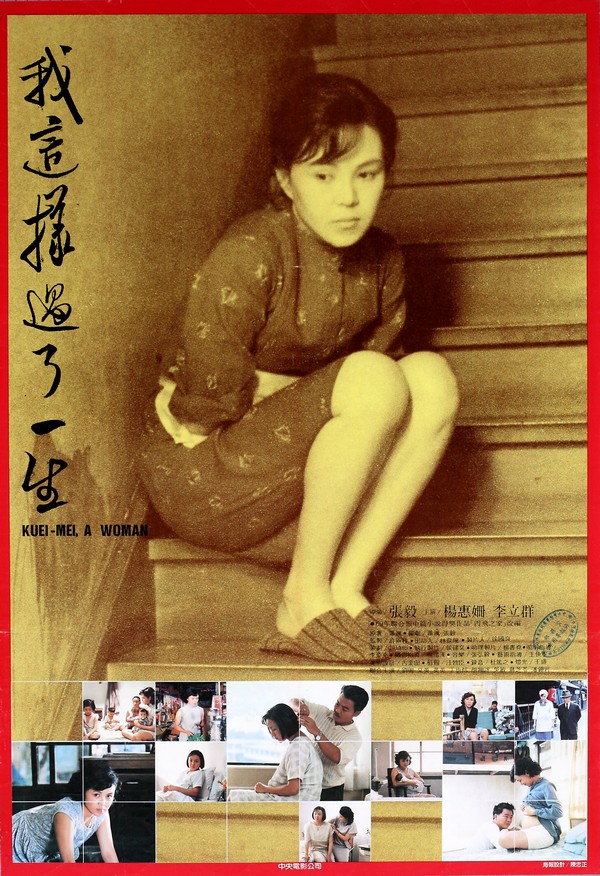
Kuei-Mei, a Woman (我這樣過了一生, Chang Yi, 1985)

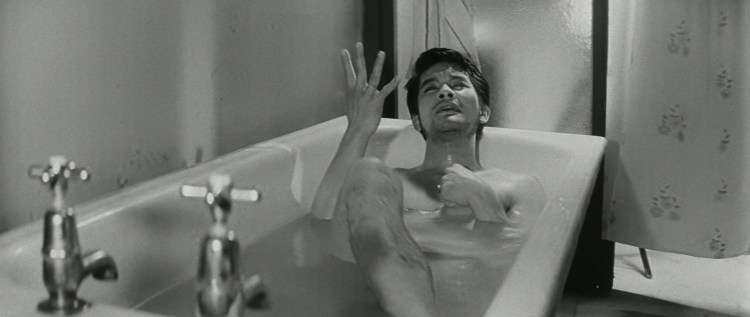
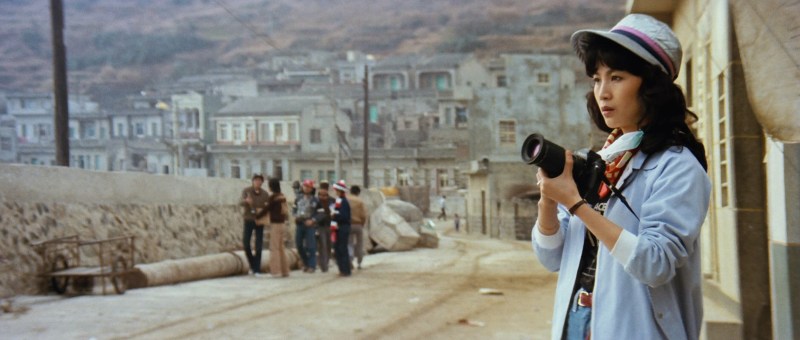
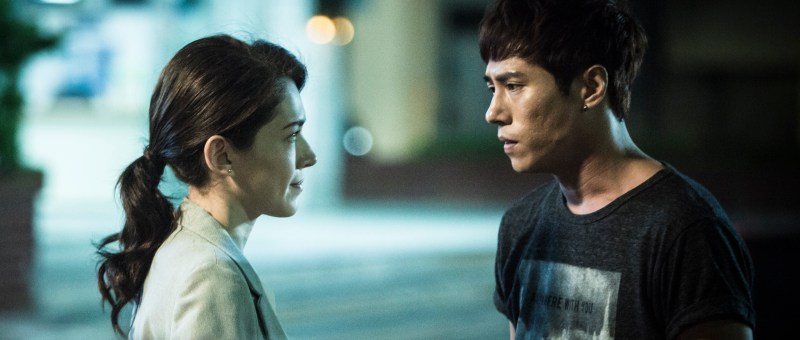
“Why are women always being tolerant?” a middle-aged, unmarried daughter asks her mother uncertain why she stoically put up with everything she did as if she had any other choice. As the title implies, Chang Yi’s Kuei-Mei, a Woman (我這樣過了一生, Wǒ Zhèyàng Guò le Yīshēng) , based on a book by his then wife Hsiao Sa, is the story of one ordinary woman though one who perhaps stands in for that of her nation undergoing a period of rapid change from post-war penury to comfortable prosperity in a little more than 30 years which is in essence a generation. 

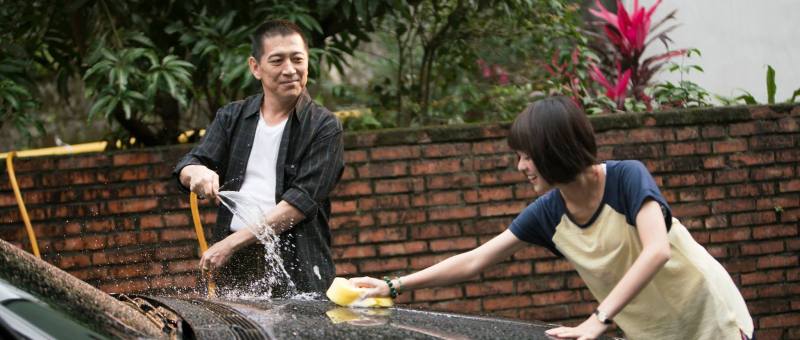
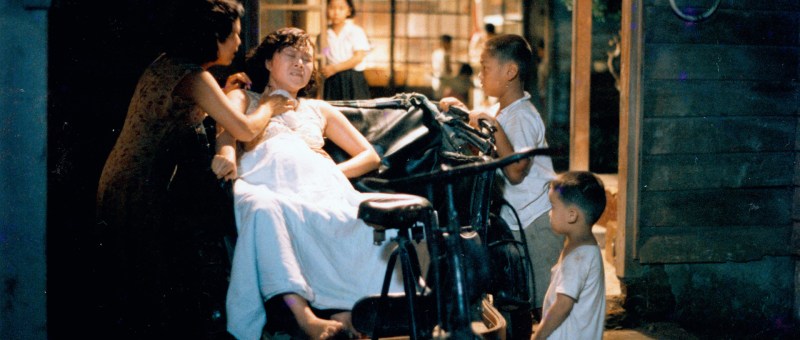
Kuei-Mei (Loretta Yang Hui-shan) leaves Mainland China during the chaos of the civil war and escapes to Taiwan with her cousin. Living in limbo, neither of them intended to stay very long and assumed they’d one day be going home. Nevertheless, there are things which must be done, which is why Kuei-Mei finds herself gravitating towards an arranged marriage with a widowed father of three, Hou (Lee Li-chun), another Mainland refugee with a steady job as a waiter in a restaurant run by a foreigner. For lack of other options, Kuei-Mei decides to become Hou’s wife, but unbeknownst to her, he has a serious gambling problem that continually endangers their family and eventually loses him his job. Shackled to an irresponsible man, it’s Kuei-Mei who has to shoulder the responsibility of trying to keep the family together but in the end she can save it only by breaking it apart, accepting a job as a housekeeper to a wealthy couple who are moving to Japan taking with her only two of her five children, one of the twins she bore herself and Hou’s oldest boy who struggles in the Taiwanese educational system. 

As a middle-aged, modern woman, Cheng-fang, Hou’s oldest daughter, asks her step-mother why she chose to forgive her father, returning after having left him on discovering that he had fathered a child with another woman. Kuei-Mei doesn’t have much of an answer for her, we can infer she returned because the children needed her and she couldn’t support them alone, but wonders if her unhappy marriage is the reason Cheng-fang has remained single. Contemporary women have other options, they need not stoically resign themselves to passive suffering as the women of Kuei-Mei’s generation were expected to do. None of the marriages we see are particularly happy, from that of Kuei-Mei’s cousin and her husband whose constant arguing pushes her towards a marriage of her own to escape the awkwardness of being a guest in their home, to the wealthy Weis in Japan who again argue constantly because, the servants gossip, of a patriarchal power imbalance. Mr. Wei is dependent on his wife’s family for influence and advancement, but humiliates her through his infidelity while she feels trapped, fearing the humiliation of middle-aged divorce may be even worse. Again it’s a desire to escape the awkwardness of the Weis, along with the “humiliation” of living as mistreated servant, that motivates Kuei-Mei to leave their employ to work illegally in a restaurant in the hope of earning higher wages in order to return home and open a restaurant of her own. 

Kuei-Mei’s determination is in a sense to be her own boss, though the level of autonomous independence she can achieve is perhaps limited by the patriarchal society in which she lives. Nevertheless, she works hard to achieve it despite being tied to the dead weight that is Hou who can only drift along behind her, waiting tables in the restaurant she eventually sets up which is named after a street in the Shanghai she left as little more than a teenager. As an old woman she receives a letter from the man she was engaged to in her village, a sudden reminder of the life she could have had, all her youthful dreams of romance sacrificed on the altar of pragmatism in her marriage to Hou. But despite all the difficulty she remains surrounded by the family she secured through her maternity, even if the grown-up children all dream of lives abroad, scattered by the glittering prizes of a newly prosperous era. 

Late in life walking with Cheng-fang, Kuei-Mei passes the place where her twins were born, an elegant tower block replacing the tenement where she first lived with her cousin after arriving in Taipei. Her rise mirrors that of her country, patiently working hard to make something of herself in turbulent times, unrecognised by the world around her, but emerging with quiet dignity in her ability to bear her sorrow with grace as she determined to build a better future for her children. Her life has, however, been hard and its costs are visited directly upon her at its end, the ills of the modern society ironically symbolised in a cancer of the womb in a woman whose triumph lies in her maternity. A social realist epic filmed with a studied detachment, Chang’s hugely empathetic biopic of the everywoman has only a profound respect for stoic suffering while quietly resentful of the society which demanded it.


Kuei-Mei, a Woman streams in the UK 18th to 27th September as part of the Taiwan Film Festival Edinburgh.

Trailer (English subtitles)
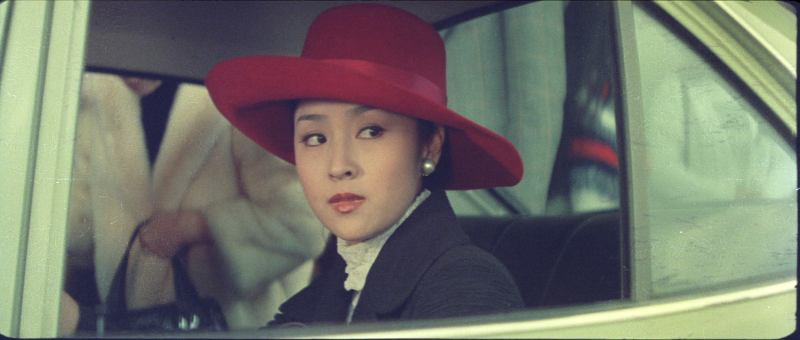
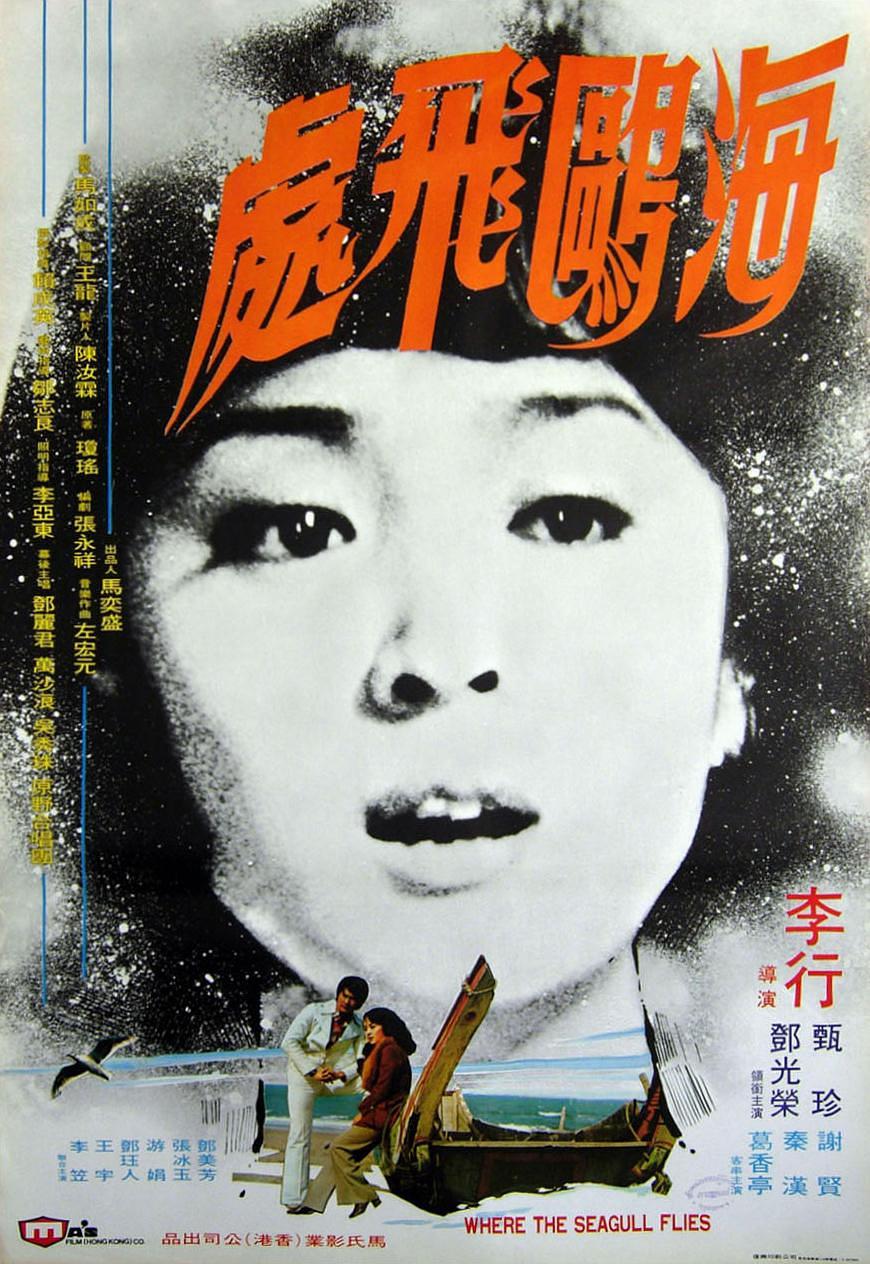
Where the Seagull Flies (海鷗飛處, Li Hsing, 1974)

Regarded as the “father of Taiwanese cinema”, Li Hsing was one of many who migrated from the Mainland during the Chinese civil war in 1949. Originally working as an actor, Li shifted into directing with the boom in Taiyupian Taiwanese language cinema in late ‘50s though he himself did not speak it, moving then into documentaries and finally self-financing the Mandarin language indie film Our Neighbors in 1963 becoming known for a particular brand of “healthy realism”. Despite this, however, the later part of the decade saw him enter into a long association with publishing phenomenon and romance writer Chiung Yao for a series of mainstream melodramas starring popular idols of the day. 

Chiung Yao’s novels are known for their depiction of relationships which are often in some way taboo as in Outside the Window the film adaptation of which launched the career of Brigitte Lin as a schoolgirl in love with her teacher. Li’s adaptation of Where the Seagull Flies (海鷗飛處, Hǎi’ōu Fēi Chǔ) by contrast erects barriers between the two lovers which are largely psychological as they struggle to overcome their pride, stubbornness, and fear of intimacy to embrace their love but also ambivalently engages with the changing nature of patriarchal society at once insisting its feisty heroine be softened in order to become a “good wife” while allowing her the agency her society denies her only by going abroad. 

The hero, technically, is melancholy journalist Muhuai (Alan Tang Kwong-Wing) who encounters the heroine Yushang (Chen Chen) for the first time on a boat in Hong Kong where he saves her from committing suicide she later tells him, giving her name as “Seagull”, because she has just murdered her cheating husband by hitting him over the head with a wine bottle. Seagull disappears on him just as he’s trying to get through to the mistress to get her to check if the husband is really dead but he meets her again in Singapore where she gives her name as Ye Xin. Working as a nightclub singer she agrees to show him around the island, telling him that she’s originally from Manila and is supporting a troubled family. This time she doesn’t disappear but arrives too late to see off his plane at the airport. Disappointed that all his letters come back no such address, Muhuai is despondent and then extremely confused to meet the mysterious woman yet again as Yushang, a uni friend of his younger sister Mufeng (Tang Mei-Fang). 

Figuring out that all three women really are one and that Yushang is her “true” identity, Muhuai is extremely annoyed and decides to have his revenge by dating her until she falls in love with him and then ringing her to come out at 3am to tell her he was just having a bit of fun and never really loved her at all. The cause of all the drama is, at root, Muhuai’s male pride in that he resents being “deceived” by Yushang on their first two meetings during which she was essentially engaging in reckless role play as a break from her “boring” existence as a member of the new super rich elite (she can travel so freely because her father is a wealthy businessman who operates all over the world). Yushang, meanwhile, is being pushed towards an arranged marriage with her father’s business associate Shiche (Patrick Tse Yin) while attending college and falling in love with Muhuai. Each feeling spurned, their romance eventually turns dark with Yushang rebound marrying Shiche who turns out to be an abusive gold-digger. 

The barrier between herself and Muhuai then seems insurmountable. Believing she’s made her bed, Yushang quells her fiery, independent nature to conform to the image of the “good wife”, later literally beaten into submission by the cruel and manipulative Shiche. While it could be said that she’s being punished for her betrayal of love, it’s patriarchal social codes which eventually leave her trapped. Though her outwardly conventional mother had always been on her side, cautioning her to follow her heart rather than marry Shiche out of prideful self-destruction, she too thinks that her daughter should “be more like a woman, not a child. Feminine and tender”. When Yushang goes to her parents to suggest a divorce they reject the idea out of hand, refusing to believe that Shiche is really abusive, assuming that she is simply failing to adapt to married life in a refusal to accept her husband’s authority and is possibly realising she made a mistake while continuing to think of Muhuai. Yushang’s father eventually signals he may support her desire for a divorce if the marriage is unsalvageable but not if she’s merely leaving her husband for another man. 

Muhuai meanwhile has sunk into a depression, drowning his sorrows in drink and consumed by his sense of romantic impotence in having failed to fight for love while intensely resenting Yushang for making him feel this way. The barrier he has to overcome is male pride, getting over the literal inauthenticity of his relationships with the first two incarnations to realise that Yushang really is the one he loves no matter who else she might have been at various times in her life including Shiche’s wife. While the multi-country setting perhaps reflects a new globalising Taiwan as well as a rise in economic prosperity, Yushang’s globetrotting exploits are also an attempt to escape the patriarchal constrains of contemporary Taiwanese society, her “boring” life of continual ease and emotional emptiness where everyone is forever telling her that she has to be less, quieter, and above all obedient most particularly to men. 

Even so, the film too uncomfortably insists that Yushang’s feisty independence is “childish” and unfeminine while implying that her abusive relationship with Shiche turns her into a real woman capable of fulfilling her natural role as a housewife. Only by going abroad can she finally free herself of his control, and largely because he simply gets a better offer chasing an American oil heiress. It’s a minor irony that while Yushang’s problem is apparently her manly impulsivity both of her suitors are examples of male failure, Shiche in his laziness as a man who only wants to live off a rich woman rather than support himself, and Muhuai in his romantic diffidence too insecure to admit his love for Yushang. Nevertheless, Chiung Yao and Li Hsing are careful to leave the door open for love, refusing the possibility that it’s ever too late to fulfil one’s romantic destiny as the lovers each concede a movement towards the centre in finally finding the courage to open themselves to emotional authenticity. 


Where the Seagull Flies streams in the UK 21st to 27th September as part of the Taiwan Film Festival Edinburgh.

Trailer (English/Traditional Chinese subtitles)

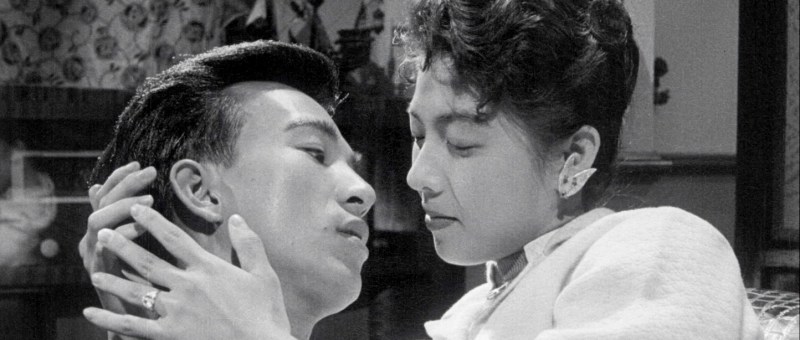
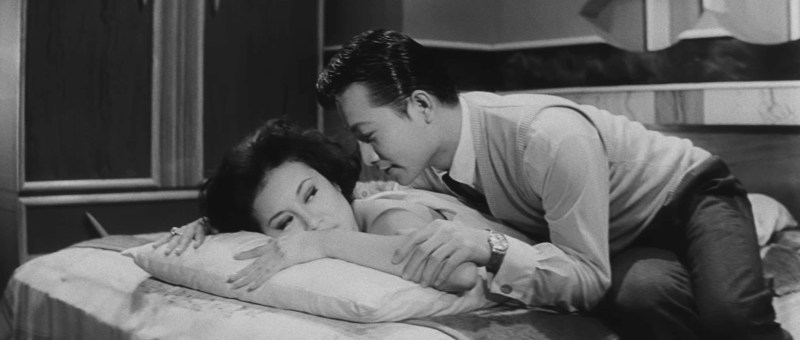
The Husband’s Secret (丈夫的秘密, Lin Tuan-Chiu, 1960)

Emotional pain flows out of wronged love, according to the gently judgemental voiceover cutting in at random moments throughout Lin Tuan-Chiu’s familial melodrama The Husband’s Secret (丈夫的秘密). A tale of changing gender roles and a conservative society, Lin’s film finds a frustrated female solidarity but also insists on the repair of the traditional family even when that family may not take the form one expects or in fact be entirely healthy while romantic love which destabilises the social order must be suppressed in order to preserve the maternal which only reinforces it. 

The film opens with Tshiu-Bi (Wu Li-Fen) meeting some of her old friends from college at a reunion only to be accidentally shamed by another woman boasting about her already large family. Despite being apparently happily married to rising executive Siu-Gi (Chang Pan-Yang) and living a financially comfortable life in a large Western-style home with a live-in maid, there is discord in the marriage because the couple have no children. A moment of crisis presents itself when Tshiu-Bi runs into her old friend Le-Hun (Chang Mei-Yao) who had been missing from the reunion and learns that the reason for her absence was shame. Seduced and betrayed, Le-Hun is now a single mother living in desperate poverty, forced to pawn her coat in the middle of winter and pound the streets amid the falling snow looking for work. She is always turned away, prospective employers complaining that she looks like a drug addict because of her shivering in the cold, sunken cheeks, and hollow expression. When her young song Ah-Siong is ill and she needs money for hospital treatment, she is forced to swallow her pride and ask Tshiu-Bi for help. Tshiu-Bi gives her a diamond ring to pawn, bringing her into conflict with her husband who is stunned to hear the name and realise that Le-Hun maybe the girlfriend he broke up with to agree to an arranged marriage with Tshiu-Bi to further his business prospects. 

Tshiu-Bi of course knows nothing of this, bringing Le-Hun to stay with them after she is found passed out in the street and hurt when she abruptly leaves after realising that Siu-Gi and her old friend are now a married couple. As Siu-Gi later acknowledges, much of this is all his fault in the moral cowardice that saw him abandon a woman he loved to make an advantageous match. He may have tried to be a good husband and is not a bad man, but he has perhaps behaved badly and the consequences of his bad behaviour are visited on the women in his life alone. Siu-Gi wants to make amends, but is also overwhelmed by old emotions. Perhaps he envisages a solution in which he could have it all, protect Le-Hun and the son he suspects may be his while maintaining his married life and his wife none the wiser. 

Unlike Tshiu-Bi, Le-Hun has certainly been unlucky, ruined by an early failed affair with a bad man who turned out to be a petty criminal and forced her to become a bar hostess to support him. She left Sing-Liat after discovering him with another woman, but he continues to pursue her, damaging her earlier relationship with Siu-Gi and disrupting every opportunity she takes to make a life for herself, seemingly never allowed to forget that she is a “fallen woman” as if haunted by her transgression. Le-Hun is even evicted from her flat when the landlady’s drunken husband tries it on while she is half-conscious with fever, the landlady choosing to blame her rather than the husband in a theme which will be repeated when the prior relationship between Le-Hun and Siu-Gi eventually comes to light. Tshiu-Bi’s uncle, who had arranged the marriage, reminds her that boys will be boys and having a mistress is perfectly normal, keen that she not cause further scandal with a divorce over something as trivial as a husband’s infidelity. Running into Le-Hun by chance after she had fled to another town, Siu-Gi gives in to his passion and spends the night with her, justifying himself that what they have done is perfectly natural while the judgemental voiceover cuts in to ask how educated people could behave in such an uncivilised manner. 

As a result of their night of passion, Le-Hun becomes pregnant and finds refuge with a close friend and fellow bar girl who helps her to raise Ah-Siong, but once the pregnancy is discovered the uncle reassumes control and lays claim to the baby. He orders Le-Hun never to see Siu-Gi again, to which she agrees already overcome with guilt in having betrayed her friend by sleeping with her husband, but also makes the completely unreasonable demand that he will take the baby away after it’s born, apparently intending to put it out for adoption. Tshiu-Bi, meanwhile, sees he obvious solution and wants to keep the child as her own which angers the fiercely patriarchal uncle because it would mean that the mistress’ son inherits the estate (Siu-Gi had married into their family which is why he has a different surname to the one he used when he was with Le-Hun, perhaps explaining his feelings of resentment and emasculation in the reversed power balance of his marriage). 

Yet the illicit affair provides a point both of fracture and of healing which turns the single point of crisis into two definitively separate yet viable branches. While the relationship between Le-Hun and her friend seems perhaps transgressively close and hints at an alternative family born of female solidarity of the kind that Tshiu-Bi tried to offer to Le-Hun but was frustrated by romantic crisis, Le-Hun is eventually forced to reunite with her no-good gangster boyfriend who has apparently reformed after a spot in jail and now bitterly regrets his treatment of her. Wayward men are brought back into superficial conformity in being forced to assume a degree of responsibility as husbands and fathers, while women are expected to suppress their emotions and stoically endure the consequences of male failure. Nevertheless, even while Le-Hun’s friend is seemingly left out in the cold, the social order is preserved in the repair of two “happy” families cauterising the wound of transgression through the reinforcement of the conservative.


The Husband’s Secret streams in the UK 18th to 27th September as part of the Taiwan Film Festival Edinburgh.

Clip (English / Traditional Chinese subtitles)

Restoration trailer (English / Traditional Chinese subtitles)

I WeirDO (怪胎, Liao Ming-Yi, 2020) [Fantasia 2020]

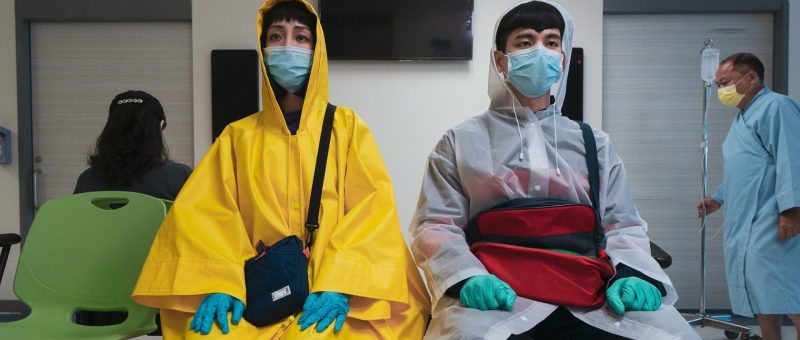
Being in love can be a little like a sickness, but what happens when the spell wears off? A meditation on fatal attraction syndrome and the duplicitous delusions of “normality’, Liao Ming-Yi’s charming romance I WeirDo (怪胎, Guàitāi) arrives at the most opportune moment in which we’re all “weirdos” now, stuck at home obsessively washing our hands and dutifully remaining “alert” as we disinfect everything we see. Liao’s PPE-clad heroes find love in shared anxiety, but happiness is the enemy of fear and the things that brought you together may in the end drive you apart.

Chen Po-ching (Austin Lin Bo-hong) is somehow able to afford a spacious two-level home working as a full-time literary translator despite the fact it takes him ages because he’s unable to type. A sufferer of severe OCD, he lives by strict routine and is deathly afraid of germs. For most of his life he simply remains at home, but on the 15th of every month he dons full body PPE and braves the outside to pay his bills, do his shopping, and visit a doctor he hopes can help him beat the condition but only gives him mysterious medication which doesn’t seem to make much difference. His life changes one particular 15th when he spots a woman dressed much like himself who is also headed to the supermarket where she shoplifts a bar of chocolate and buys up the remaining stocks of his favourite disinfectant. Chen Ching (Nikki Hsieh Hsin-Ying), as she later gives her name, approaches him to make sure he’s not going to dob her in about the chocolate which she doesn’t even like, it’s just a compulsion. She suffers from OCD too along with a skin allergy that means she’s not supposed to spend a lot of time outdoors. 

Love eventually blossoms. Ching opens up Po-ching’s world, conspiratorially involving him in her shoplifting and inviting him to visit her at work as a life model for a drawing class where she’s asked to pose like a fallen angel with broken wings. They go on weird “dates” taking germ challenges like eating at tiny eateries with questionable hygiene standards and picking up rubbish before Po-ching realises that going “out” so much is placing a strain on Ching’s health so he proposes she move in with him. Luckily she’s an ace typist so she can help with his work as well as the intensive cleaning regime he already has in place. What they’ve made is a blissful world of two, isolated from the confusing pollution of regular society. But paradise can also be a cage, and it’s natural enough to long for freedom. Before long a problematic pigeon and a loitering lizard have them each pondering life in the outside.  

Opening in a boxy, claustrophobic square, Liao eventually swaps narrators and switches to a comparatively open widescreen as horizons quite literally expand, a development which introduces, ironically, a new but distinctly unhelpful anxiety into a relationship both apparently hoped would be unchanging. The couple’s OCD struggles become a stand-in for the giddy obsession of new love as they cocoon themselves happily within their romantic bubble only for the magic to inevitably begin wearing off. Despite all they have in common, the pair have an ideological mismatch. She actively craves their difference, believing OCD is a gift that allows them to lead unique lives, but he secretly yearns for “normality”, to be cured and become a “normal” person living a “normal” life. She’s for staying in, he’s for going out. “Why do we have to be the weirdos?” Ching asks Po-ching seconds after revealing suicidal tendencies. He tells her he’s never given it too much thought. His OCD simply is, it can’t be changed, so he just accepted it. But change, which is of course what they most fear, eventually comes, paradoxically because when you’re “happy” and you feel accepted perhaps you don’t need so much obsessive control over your life. 

Liao undercuts the darker side of a life ruled by intense anxiety through whimsical production design adding a touch of fairytale glamour to the sad romance of the two similarly named protagonists falling in love in an uncertain world. Shot entirely on iPhone, the cinematography is unexpectedly rich and innovative, handsome even in its immediacy and like the protagonists embracing its limitations with wit and charm. Perfectly tailored for the post-corona world, I WeirDo wants to ask us if love can survive our fear of change or if our intense need for control over our lives robs us of the ability to live, if being “normal” is worth the price of love, and if there’s really anything wrong with being a “weirdo” especially if you find someone to be a weirdo with. Po-ching and Ching are still figuring it out, but aren’t we all even in these admittedly strange times? 


I WeirDO streamed as part of this year’s online edition of Fantasia International Film Festival.

Original trailer (English subtitles)

Six Suspects (六個嫌疑犯, Lin Tuan-Chiu, 1965)

“Crime doesn’t pay” is the moral of many a film, but few of them care to state as much upfront. Not perhaps since The Public Enemy has a moral message been declared so baldly on screen as it is in the title card overlying the opening of Lin Tuan-Chiu’s Six Suspects (六個嫌疑犯) which tells us in no uncertain terms not only that you reap what you sow, but also that we law abiding citizens have nothing to fear because we are “well protected” by the police. In the end, Six Suspects was never released (apparently because Lin was unhappy with it rather than any censorship issues), but is perhaps a curious example of a pro-police drama masquerading as a noirish crime thriller with a surprisingly leftist message that dares to suggest the new middle class is inherently corrupt. 

Our anti-hero is a roguish blackmailer, Tenn Kong-Hui (Wu Dongru), who has a habit of following people around and taking photos he can use as leverage against them later. His ex-girlfriend Tai-Giok (Zhang Qingqing) has moved on and attempted to go straight with a job as the secretary to the CEO of a steel firm, but is also having a “serious” affair with the man who hopes to become his son-in-law, Lap. Meanwhile, the chairman’s brother, Khe-bing, has troubles of his own. He’s already being blackmailed by a bar hostess who may have lied about conceiving a child with him before he was married to his elegant wife, who is also a target for Kong-hui after he spots her meeting with a beatnik artist. The real problem, however is that through all his various investigations, Kong-hui has stumbled on a deeply entrenched system of corruption running between the steel company and local contractors. 

It will come as no surprise that Kong-hui is eventually bumped off. Someone knocked him on the back of the head and then turned the gas on to make it look like he killed himself. His roommate, actually in love with the chairman’s daughter even though she’s still planning on marrying Lap to please her dad, freely admits Kong-hui was “scum” but thinks it’s unlikely he did himself in. The police eventually agree, but have the luxury of too many suspects. Who did it? Two yakuza-esque petty gangsters going by the names “Snake” and “Turtle” because of their tattoos, Lap, his old flame Tai-Giok, the roommate who apparently argued with him on the night in question and then passed out drunk in a park, Khe-bing and/or his wife, or someone else entirely? 

In some senses, it doesn’t really matter. The society here is so inherently corrupt that no one is really “innocent” except perhaps the pure-hearted roommate who remains shocked and disgusted by the results of his police detective friend’s investigations and innocently in love with the chairman’s unobtainable daughter. The ambition that comes from the widening wealth gap is instantly on display as the film opens with Lap in bed with Tai-Giok but brushing off her suggestions that they marry by reminding her she’ll be the most comfortable of mistresses when he marries the chairman’s daughter. In another kind of film, they would be our central couple – their pure love corrupted by post-war greed, but we later realise neither of them is very much in love at all and their “relationship” must be based on some other factor. Lap isn’t betraying Tai-Giok to marry the boss’ daughter, though there may be other casualties of his all too willing complicity in an increasingly amoral economy which sees him gleefully accepting kickbacks and wining and dining clients in restaurants where you can hire scantily clad dancers to entertain you while you eat. 

Despite his rather obvious villainy, Kong-hui wasn’t really all that bad, just a product of the world in which he lived. In fact, the film almost sides with him in his one man crusade against “immorality”. In any case, the real villain as we later see is equal parts prudery and an elitist entitlement that enables this level of corruption to prosper. Our “heroes” are of course the police, turning their collars to the cold as they work tirelessly to fight “crime” but also, it has to be said, acting on behalf of an oppressive regime which may be the biggest villain of them all. 


Six Suspects screened as part of touring retrospective Taiwan’s Lost Commercial Cinema. It will also be available to stream in the UK as part of the Taiwan Film Festival Edinburgh from 18th to 27th September.

Restoration trailer (English / Traditional Chinese subtitles)

Cheerful Wind (風兒踢踏踩, Hou Hsiao-Hsien, 1982)

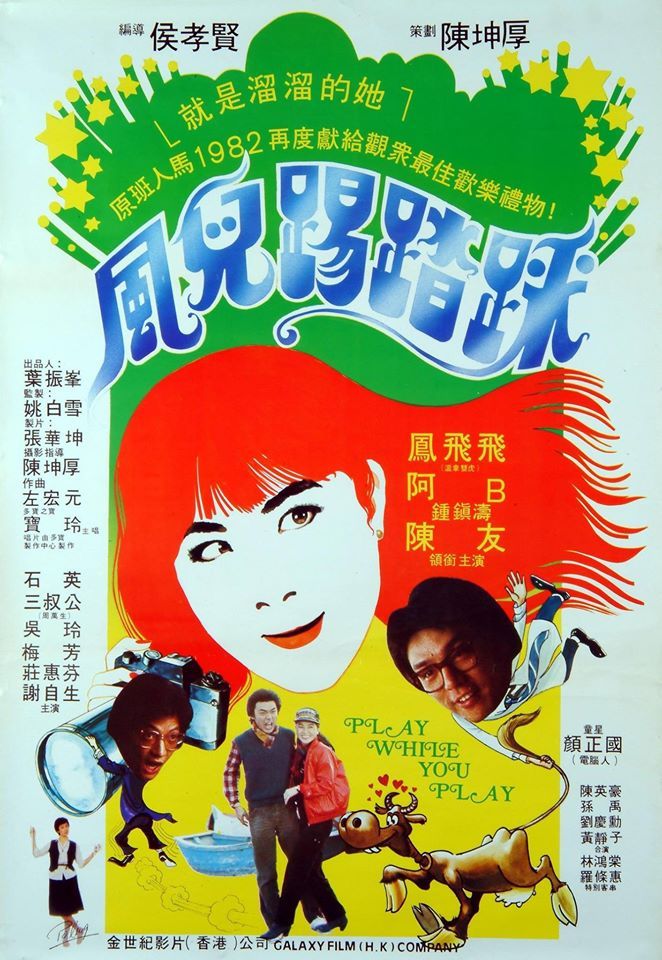
A leading figure of the New Taiwan Cinema movement, Hou Hsiao-Hsien has sometimes been regarded as difficult or inaccessible but there has always been a kind of playfulness in his wistful romanticism and it is not perhaps as surprising as it might first seem to realise that like many directors of his generation he began his career with a series of idol movies starring top Hong Kong star Kenny Bee. Cheerful Wind (風兒踢踏踩, Fēng Ér Tī Tà Cǎi, AKA Play While You Play) reunites him with Cute Girl co-star and Taiwanese chart topper Fong Fei-fei* who, in true idol movie fashion, sings the title tune the refrain of which is heard frequently throughout. For all that, however, it’s a surprisingly subversive effort in what is often regarded as a conservative genre, painting its heroine as a free spirited modern woman and refusing to punish her either for her breezy approach to romance or for rejecting marriage in favour of individual fulfilment. 

The heroine, Hsiao Hsing-Hui (Fong Fei-Fei), is a keen photographer working for an ad company currently shooting a commercial for detergent in a traditional seaside village. Whilst there she catches sight of Chin-tai (Kenny Bee), a musician she later discovers to be blind and, therefore, not catching sight of her as she had first assumed. Somewhat problematically, Hsing-hui decides to use Chin-tai in the commercial, an essentially exploitative action that plays into various unhelpful stereotypes about the blind as they hope to show that “even” those who cannot see are aware of their brand despite being unaware of the branding. She does something similar after unexpectedly running into him back in Taipei and “helping” him to cross a road he had no intention of crossing, but this does at least provide the opportunity of a second meet cute which kick starts their relationship. 

Hsing-hui, however, is technically already attached to nerdy colleague Lo Zai (Anthony Chan Yau) with whom she is living though apparently in separate rooms. He is keen to move things forward and has already quit his job with the intention of taking Hsing-hui to meet his mother in Hong Kong who has apparently been nagging, but she is in no particular hurry and has in fact already agreed to fill in for her brother teaching at the primary school in her home town while he goes to Australia for a tennis competition. 

This new focus on international travel perhaps symbolises the growing ambitions of a newly prosperous, globalising society. Hsing-hui’s dream is not marriage but to see the world, which is one reason she’s staying with Lo Zai in that they plan to tour Europe together and she fears she may never have another opportunity. Back in Taipei, meanwhile, when Hsing-hui’s country bumpkin father (Chou Wan-sheng) arrives to take a look at Lo Zai, they take him to eat pizza and drink Coca-Cola in a trendy restaurant but he finds himself doubly displaced. He speaks mainly Taiwanese dialect and struggles to understand the capital’s preferred Mandarin, quickly lost after failing to understand directions while trying to find the bathrooms at the station and enduring a series of comic misunderstandings while trying to converse with Lo Zai who hails from Hong Kong. In fact, the family aren’t really that keen on the idea of her marrying a Hong Konger, but in a pleasantly modern touch Hsing-hui’s father is quick to tell her that it’s her own decision and as long she’s sure he’ll support it. 

Chin-tai meanwhile jokes about a wife needing good teeth as if she were a goat or a horse being sold at auction and as sympathetic as her father is, he also brings up dowries while attempting to negotiate with Lo Zai who goes along with it but isn’t actually that invested in the “hassle” of marriage anyway. “I prefer the old ways, they were more romantic then” Chin-tai confesses, and to an extent Hsing-hui does too, a hippieish free spirit even in the country where she’s taken to task by her new boss for getting the kids to paint an undersea mural on the playground wall rather than the government approved slogans they were supposed to be reinforcing. For all of this drive and positivity, this is still a nation trapped under martial law and would be for the next five years which makes the tacit approval of Hsing-hui’s desire to seize her own destiny romantic and otherwise all the more subversive. What she gets is a universal happy ending with a man who has no desire to trap her and vows to wait while she achieves her dreams in the hope that she will then return to him. Hou’s second feature sees him flirt with youthful post-modernist aesthetics and is so absolutely of its time that it almost hurts, but for all of its essential fluffiness is also an infinitely breezy affirmation of a woman being absolutely herself and the men just dealing with it as she steps bravely into a freer future entirely of her own choosing. 


Cheerful Wind streamed in its new restoration as part of this year’s Udine Far East Film Festival.

Festival teaser trailer (dialogue free)

Title song performed by Fong Fei-fei

*The standard pinyin romanisation of 鳳飛飛’s name is Feng Fei-Fei, but she is usually credited as Fong Fei-fei.

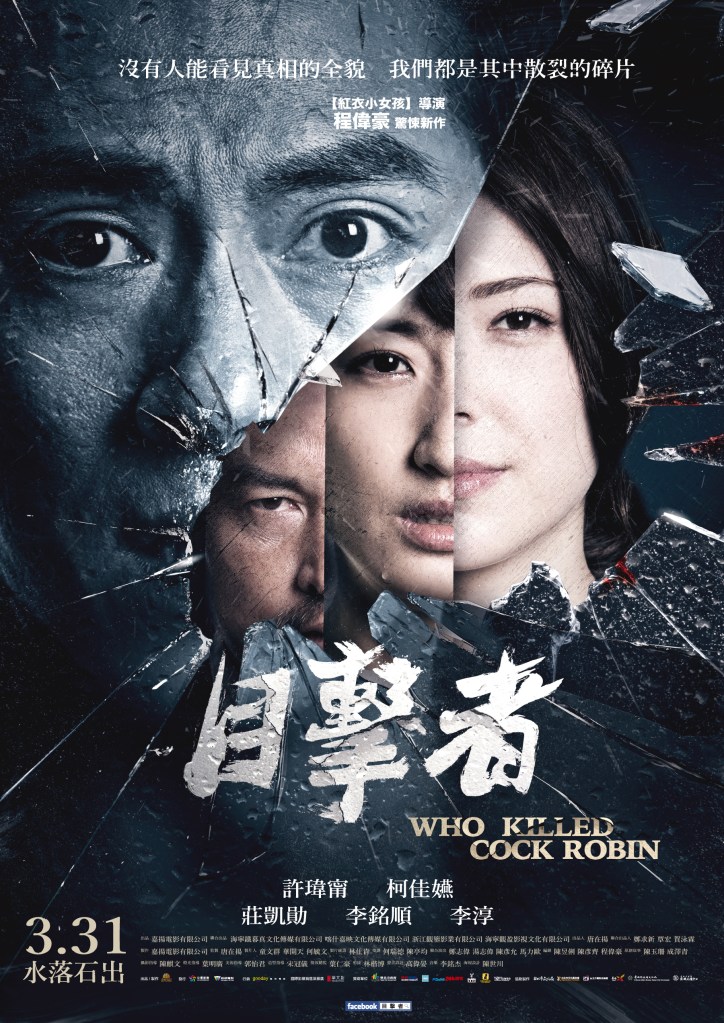
Who Killed Cock Robin (目擊者, Cheng Wei-Hao, 2017)

“Everything in this world has already been decided, no one is free” according to a jaded, psychopathic killer in Tag Along director’s Cheng Wei-Hao fatalistic neo-noir, Who Killed Cock Robin (目擊者, Mùjīzhě) . As the English title implies, each has their part to play when it comes to the orchestration of death, but the peculiar confluence of circumstances sees the central “witness” corrupted by his decision to alter his position, becoming part of the story in a way a journalist never should.

At 30-ish, Chi (Kaiser Chuang Kai-hsun) is a jaded paparazzo tuning in to the police scanners for the latest scoop on potentially scandalous crime. He thinks he’s hit the jackpot in pulling off the road and discovering a local politician in a car wreck with a beautiful young woman he later realises is a top glamour model, but his insistence on pushing the story without proper background checks comes back to haunt him when the politician comes out with documents proving he married the model in secret some months earlier and signals his intention to sue. All of a sudden, Chi’s bright future is slipping away from him. His mentor retires, and he’s abruptly made redundant, effectively fired for the problematic politician scoop. It’s at that point he starts looking back at photos he took of another car crash nine years earlier when he was still a rookie and realises his boss may have deleted some behind his back. 

As his mentor, Chiu (Christopher Lee Meng Soon), eventually tells him, Chi isn’t the sort of man who’d fight for justice for someone he didn’t even know. He’s in this for petty revenge in hoping to expose some kind of scandal involving the boss who got him fired. He’s also, however, meditating on the earnest young man he once was and the jaded hack he’s since become. As an intern he wanted to do hard journalism and make a difference, but after falling in with Chiu he became corrupted by urbanity, seduced by the fancy suits, celebrity contacts, and stylish parties. He does his business by forming “relationships” with useful people such as law enforcement officers though homosocial bonding, i.e. drinking and women. 

Chiu also, perhaps ironically, thanks his wife for helping him make the “relationships” which have enabled his successful life. These complex networks of interwoven corruption are what keeps the city running, but they’re also a web that can be unravelled to reveal the dirty secrets at its centre. Chi seems to know that fate is coming for him. “Things that happened to you come round in circles” he drunkenly laments on learning not only that the used car he was duped into buyng is an illegally remodelled vehicle but also that the chassis belongs to the one from the accident he witnessed all those years ago. Car accidents plague him, as if implying his life is one long car crash bracing for the impact. 

Yet, as Chiu cautions him, he only has a part of the truth. He is lied to and misled, left to reply on the reporter’s instinct he has long since allowed to become rusty. His investigation places others in danger, not least a young woman who was beginning to think she’d escaped the accident’s wake and built a nice life for herself free of past transgression. But Chi still has to make a choice, try to expose this world of infinite corruption for what it is while accepting his own complicity within it, or decide to unsee what he worked so hard to uncover and go back to being the hack reporter dependent on that same web of corruption whose entanglement he was so keen to escape. 

“I just want to know the truth” Chi claims, as a good reporter should, but his subjects ask him “what’s the point?”, “everyone wants to know the truth, but once you know then what?”.  It’s a good question, and one perhaps that Chi doesn’t know the answer to, reducing his dilemma to a sheepish grin and a cynical joke. “I prefer to remember happier things”, he admits. An infinitely compromised figure, Chi finds himself on dark and fatalistic path towards discovering, at least, his own truth. “I believe in myself” he later tells an equally corrupted colleague but something tells us we perhaps should not. 


Who Killed Cock Robin streams online for free in the US as part of Asian Pop-Up Cinema’s Mini-Focus: Taiwan Cinema Online on June 11.

International trailer (English subtitles)
The Gangster’s Daughter (林北小舞, Chen Mei-Juin, 2017)

Do little fish always get eaten by bigger ones, or can they manage to swim free into kinder waters? As the title perhaps suggests, The Gangster’s Daughter (林北小舞, lín běi xiǎowǔ) finds its young heroine battling parental mystery, stepping into her father’s world of crime and dubious morality while he grows ever more disillusioned with his duplicitous lifestyle and the price he has clearly been paying to survive it. Yet they are both in many ways victims of the corruptions of the society in which they live in which others play the system in less overt ways but to the same ends in order to manipulate individual privilege. 

Now a teenager, Shaowu’s (Ally Chiu) parents split up when she was little and she and her mother returned to live with her grandmother in Kinmen, an idyllic island village. Shaowu has no real memories of her father, Keigo (Jack Kao), a Taipei gangster and her grandmother is reluctant to enlighten her. The first time she sees him in many years is at her mother’s funeral at which he makes a notable appearance, an obvious “gangster” in dark sunglasses and sharp suit, backed by a dozen henchmen that, it later transpires, have been hired for the day by his overenthusiastic minions who thought he needed to look “good” while paying his respects to the mother of his child. 

For herself, Shaowu is a rebellious teen who hangs out in a makeshift den where she keeps the various souvenirs she finds of a more violent time in scouring the corn fields for landmines. A pair of horrible boys appear to be bullying her as an orphan with an atypical family background, but Shaowu is unfazed until a nasty prank backfires and harms her only friend. In revenge, she dumps a pail of cow dung over the ringleader while he’s eating his lunch right in the middle of the classroom which would be funny if it weren’t that his dad’s a bigwig with political clout. Reluctant as she is, grandma calls Keigo to help her negotiate with the school, but it ends with a “recommendation” that it might be better Shaowu continue her education in the capital. 

Which is all to say, that father and daughter have quite a lot in common. Shaowu becomes fascinated with the gangster life, acting out scenes from movies with an umbrella only to be stunned when she tries the same thing after finding one of Keigo’s guns and it turns out to be loaded. She finds herself sucked into his homosocial gangster world, dining with big boss Ting who remembers her from when she was a baby and has just returned from an extended stay in Thailand, and making friends with the daughter of another gangster, while Keigo ponders new routes forward as a responsible father trying to protect his daughter from the dangers of the circles in which he moves. 

Twin crises arrive when his underling Dreamer gets into a fight a powerful corrupt cop, Chang, while Boss Ting edges towards moving the gang into drugs which is something Keigo, a noble gangster, cannot condone especially after he finds some stuffed into a cigarette packet one of Shaowu’s new friends asked her to look after. He tries do his best as a modern dad, patiently reminding himself that his daughter’s not a little girl and refraining from laying down the law, but is frustrated by her fascination for everything he regards as a fall from grace in his life as a petty gangster. He wants to get out and dreams of opening a restaurant with his girlfriend but discovers that the gangster world may not be done with him yet. 

Father and daughter are, it seems, divided by an increasingly corrupted society where bent cops like Chang are no better than gangsters themselves while snotty kids know they can do as like they because they have powerful fathers and will never be expected to take responsibility for their actions. Little fish like Keigo don’t stand any kind of chance especially when they insist on swimming against the tide in adhering to the same kind of romanticised ideas of gangsterdom that Shaowu idolises from movies hopped up on jianghu idealism. Taipei or Kinmen, it doesn’t really matter. You’ll still find yourself squatting in the tall grass while others plot against you in the open. In her first narrative feature documentarian Chen Mei-Juin delights in capturing local character from the faded grandeur of traditional island life to the sleazy, neon-lit underbelly of the modern capital but never shies away from the ugliness which underpins it all and disrupts even the most essential of bonds.


The Gangster’s Daughter streams online for free in the US as part of Asian Pop-Up Cinema’s Mini-Focus: Taiwan Cinema Online on June 10.

Original trailer (English subtitles)

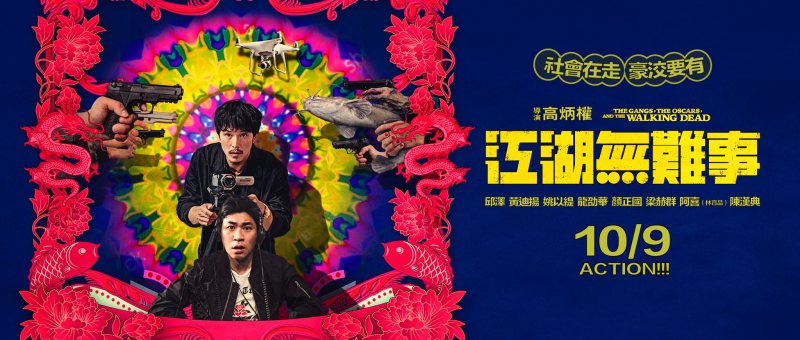
The Gangs, the Oscars, and the Walking Dead (江湖無難事, Kao Pin-chuan, 2019)

You remember that film back in the ‘80s where those guys go to their boss’ house for a party only he’s dead but they want to have a good time without being murder suspects so they pretend that he’s alive, only it turns out he was going to have them killed because they found out about his massive fraud and embezzlement? The Gangs, The Oscars, and The Walking Dead (江湖無難事, Jiānghú Wú Nán Shì) is kind of like that, if lacking the mild critique of rampant consumerism. 

Our heroes are BS (Roy Chiu), a film producer, and his director/childhood best friend Wenxi (Huang Di-yang). Wenxi is a lifelong film buff who decided he had to grow up and make a zombie movie after falling in love with hopping vampires from Hong Kong. BS has been trying to make his friend’s dream come true, but the production gets derailed when the lead actor is engulfed by a sex scandal and the guys end up taking on odd jobs to make ends meet one of which involves filming the funeral of a recently deceased mob boss who later joined the boy scouts to give back to the community. The job goes just about as wrong as it’s possible to go seeing as they manage to set fire to the corpse, but somehow they manage to impress Boss Long (Lung Shao-hua) who agrees to fund their movie on the condition that part of it is shot in Japan, and his girlfriend Shanny (Yao Yi-ti) gets to play the lead. 

The second part is more of a deal breaker than the first because Wenxi’s long gestating zombie script revolves around a pure and innocent high school girl who quickly gets zombiefied during the initial outbreak but somehow retains her humanity while a heroic PE teacher/gangster falls in love with her as they fail to survive the apocalypse. Shanny is many things, but passing for a high schooler will be a stretch and in Wenxi’s eyes at least she is neither beautiful nor “pure”. To be fair, Shanny does look as if she may have suffered a lot in her life, but Wenxi’s peculiar obsession is with a mole on her face which he seems to find unsightly. In any case, it’s not a problem for very long because Shanny ends up dying during a freak accident at the launch party leaving the guys with several problems of a different order. Afraid of Boss Long, they decide to hire a top SFX artist and manipulate Shanny’s body as if she were a puppet so no one knows she’s dead. 

Sadly the film has little sympathy for Shanny who is treated more or less as a human plot device, a ridiculous figure of fun who seems to have sealed her own fate by being an “immoral” woman involved with a man like Boss Long who is, we find out, using her in more ways than one as are his not so loyal henchmen. Latent misogyny later gives over to mild homophobia as the boys figure out that Shanny got her unusual looks after getting plastic surgery to look like her favourite drag queen, so they decide to try asking him to help out, playing into an extended joke about Boss Long being fooled into canoodling with a man.

The theme, however, is brotherhood and loyalty not only between BS and Wenxi, but also Boss Long, Shanny/drag queen Hsiao Ching, and the gang. You have to die to figure out who your real brothers are, according to Boss Long, and it’s a lesson which gets put to pretty good use by just about everyone. At the end of Wenxi’s screenplay, everyone is supposed to become a zombie – the ultimate end of the world pay off for anxiety suffers, at least you won’t have to worry about getting zombified anymore, but is intended to render everyone “equal” so the world is “fair”. There is something quite ironic therefore in their unwitting zombification of Shanny, exploiting her body even after death while playing at being tough guy gangsters so they can make a film with zombies in it they are certain will win an Oscar. Aside from all that, however, the Wenxi gets his “happy” ending which eventually honours Shanny’s memory while cementing a feeling of brotherhood and acceptance placing Hsiao Ching firmly at the boss’ side as they look forward to a bright new movie making future founded on the ashes of the violent past.


The Gangs, the Oscars, and the Walking Dead was screened as part of this year’s Osaka Asian Film Festival.

Original trailer (English / Traditional Chinese subtitles)

Your Name Engraved Herein (刻在你心底的名字, Liu Kuang-hui, 2020)

Taiwan is often thought to be the most socially liberal of Asian nations and was the first to legalise same sex marriage in 2019, but a little over 30 years ago things were very different. Many thought that the lifting of martial law which had been in place for 38 years would usher in a new era of freedom only to discover that society is slow to change and despite a gradual opening up the old prejudices still remain. So it is for A-han, the hero of Liu Kuang-hui’s Your Name Engraved Herein (刻在你心底的名字, Kè Zài nǐ Xīndǐ de Míngzi) who finds himself struggling to accept his sexuality as young man coming of age in changing times. 

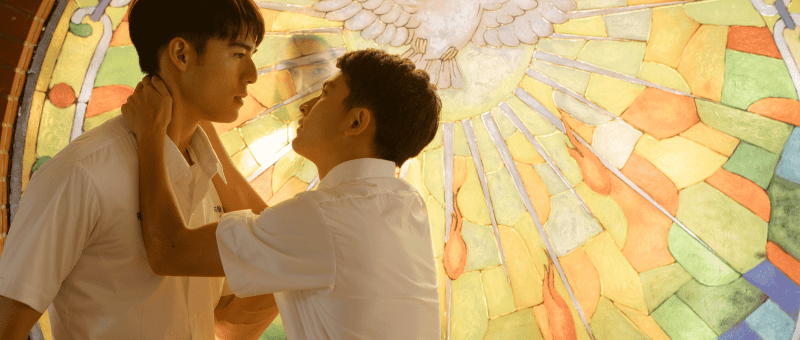
In 1987, as martial law is repealed, A-han (Edward Chen) is a student at a Catholic boys boarding school run along military lines. Many things are changing, but the school is much the same, as the principal Dirty Head (Ta Su) makes plain in conducting an impromptu inspection of the boys’ bunks looking for anything untoward. Nevertheless, A-Han and his friends sneak out at night to play in a band and hang out with girls. A-Han’s reticence is put down to shyness, but the reason he’s not much interested is that he’s taken a liking to a rebellious student, Birdy (Wang Shih-shien), only he’s not quite sure how to interpret his feelings or how to come to terms with them. 

This is in part because the school itself is extremely homophobic with the boys actively policing suspected homosexuality as a means of homosocial bonding. When the gang are caught sneaking out, band leader Horn (Barry Qu) targets an effeminate boy he accuses of dobbing them in, beating him up in the bathroom little knowing that A-han is hiding in a nearby stall after bringing ointment to Birdy who has also been caned. A-han emerges from the stalls after Horn hears a noise and is encouraged to join in the fun, handed a baseball bat and asked to participate in a literal act of queer bashing to prove his manhood. To his shame, A-Han prepares to comply, only to be saved by Birdy who breaks cover to rescue the other boy while casting scornful looks at Horn and the gang but most especially at the hypocritical A-Han. 

Taking his nickname from the Alan Parker film, Birdy may indeed be as “wild” as his namesake, but his rebelliousness has its limits and perhaps masks an internalised sense of shame. Nevertheless, he connects with the conflicted A-Han and the boys generate an intense friendship that of course has tension at its centre. A trip to Taipei to mourn the death of the president brings them closer, but also makes them feel ashamed as they witness a protester holding up a sign to the effect that homosexuality is not a disease and marriage is a human right being carted off by plain clothes police while the uniformed kind lurk in the shadows behind. Martial law may be over, but not everyone is free. As A-Han grows bolder, Birdy finds himself travelling in the opposite direction, dating a rebellious female student, Banban (Mimi Shao), as a kind of beard in the frustrated hope that he may “save” A-Han from his homosexuality by denying their feelings before they can fully develop. 

The central irony is that because of the changes to the educational system the high school is now required to take female pupils and the hardline Catholic, militarist teachers are paranoid about “misbehaviour”, even putting up a chainlink fence to divide the girls from the boys. Romance is forbidden even for heterosexual couples, and homosexuality unthinkable. A-Han finds himself trying to talk to his priest, Father Oliver (Fabio Grangeon), who would like to be more sympathetic but cannot offer him much by the way of advice. Later we discover that Father Oliver left his native Montreal to escape religious oppression and joined the priesthood to mask his own homosexuality, finally leaving the Church to live a more authentic life only many years later when such things were more acceptable. 30 years on A-han travels to a much changed Montreal where he sees lesbians dancing happily in bars and men kissing in the street with no one batting much of an eyelid. He reflects on all that’s changed and all the wasted time he and others like him were forced to endure hiding who they were, living in a world without love. A melancholy lament for the lost opportunities of a repressive society, Your Name Engraved Herein ends on a note of hope in which first love can blossom once again in a less restrictive world where all are free to love without shame.


Your Name Engraved Herein made its World Premiere as part of this year’s Osaka Asian Film Festival.

Original Trailers (English subtitles)