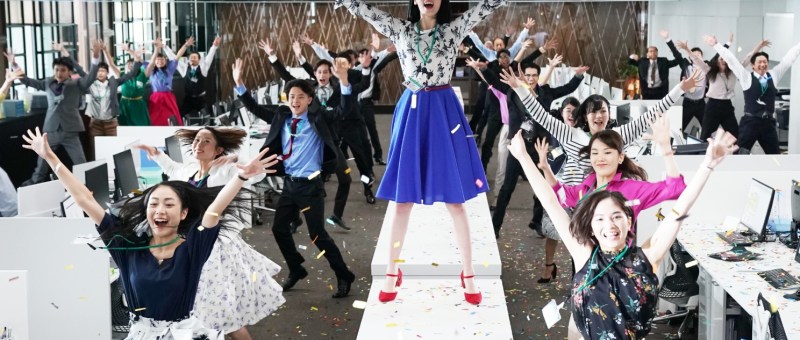
 You might be rich and successful, but are you really being true to yourself? The heroine of Shinobu Yaguchi’s latest comedy Dance With Me (ダンスウィズミー) thinks that she is, cynically rolling her eyes at her colleagues mooning over the cute new boss but jumping at the opportunity to join his elite team. Meanwhile, she’s ignoring her family, has few friends, and seems distinctly uptight. Is there more to Shizuka (Ayaka Miyoshi) than meets the eye, or is she really destined for the life of a dull office drone?
Everything starts to change for her one day when she’s bamboozled into looking after her teenage niece and decides to take her to a weird theme park she noticed on a flyer that got stuck to her shoe. It’s there, in Fortune Land, that Shizuka ends up visiting a shady hypnotist named “Martyn” (Akira Takarada) who offers to give her niece some treatment so she can perform to her full potential in an upcoming high school musical. This comes as news to Shizuka, because they were just mocking the art of the musical on the bus, but when she steps out to answer her phone she notices the cheapo ring Martyn gave her on the way in won’t come off. Sure enough, his “treatment” seems to have worked, only on the wrong person. Now whenever Shizuka hears any kind of music at all she can’t resist breaking into song and dance like the heroine of an old Hollywood musical.
It seems in her youth Shizuka loved singing and dancing, but a traumatic bout of stage fright put her off for life. While her family are all cheerfully energetic and easy going, she is uptight and reserved. Now a middle-rank executive at a top rated company, she’s dedicated herself to achieving the idealised image expected of female businesswomen – elegant, professional, and above all quiet. Her new affliction is therefore a major problem, as she proves to herself by breaking into song during an important meeting with the magic Mr. Murakami (Takahiro Miura) who might be able to take her career to the next level.
Luckily, the incident isn’t really quite so bad as she thought seeing as Murakami’s business idea was a little left of centre so her strange behaviour looked like an unusual pitching technique that makes her seem an attractive asset to Murakami’s new team which is currently a member down after the last girl took too much vacation time and then quit. Offered the post, Shizuka asks for a week’s grace and determines to track down Martyn so he can undo the hypnotism, but Martyn is currently on the run from loan sharks so it’s going to be more difficult than she thought.
Forced to sell all her worldly possessions to make up for a restaurant she accidentally trashed, Shizuka takes to the road armed only with her niece’s piggy bank and accompanied by Martyn’s former shill, Chie (Yu Yashiro). Despite herself, she begins to shake off her carefully crafted corporate persona and open herself up to the pleasures of music and movement, freeing both her body and her mind. Her total opposite, Chie is a laidback woman who loves to have a good a time and doesn’t generally think too much beyond the present moment. Though obviously very different and united only by their quests to track down Martyn, the two women develop an awkward friendship in which they begin to see their own flaws as reflected in each other and shift into the centre as they learn to work together while chasing Martyn all the way to Hokkaido.
A chance encounter with a crazy hippie singer-songwriter (Chay) who claims she broke up with her last band because she couldn’t bear to hide from herself anymore pushes Shizuka (whose name literally means “quiet”) into a reconsideration of her life choices, feeling that perhaps she was wrong to reject the frightened little girl she was so completely out of embarrassment and insecurity, wilfully suppressing her sense of fun and freedom for the safety and security of corporate button-down respectability. As the mental health specialist she visited in hope of a cure suggested, maybe the reason she was so suggestible is that, deep down, she always wanted to sing and dance anyway. A musical celebration of the pleasure of living life to its fullest, Dance With Me is a cheerful exploration of one woman’s gradual emergence from emotional repression into a richer, fuller existence as she rediscovers her essential self through the medium of song and dance.
Dance with Me screens in New York on July 19 as the opening night gala of Japan Cuts 2019.
Original trailer (English subtitles)
Playlist:
Tonight -Hoshi no Furu Yoru ni- (Kumiko Yamashita, 1991)
ACT-SHOW (Spectrum, 1979)
Happy Valley (Orange Pekoe, 2002)
Neraiuchi (Linda Yamamoto, 1973)
Yume no Naka e (Yosui Inoue, 1973)
Toshishita no Otoko no Ko (Candies, 1975)
Wedding Bell (Sugar, 1981)
Time Machine ni Onegai (Sadistic Mica Band, 1974)



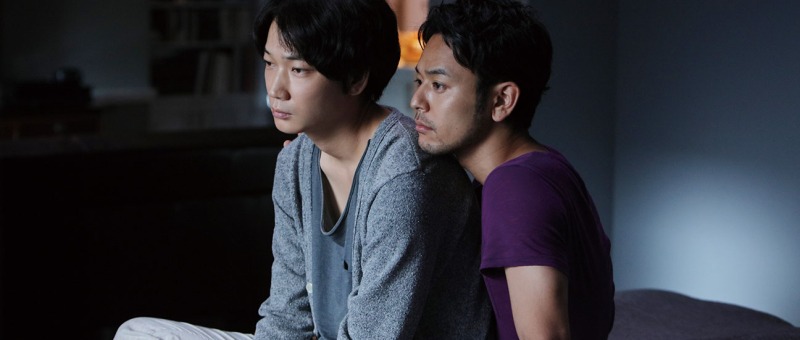

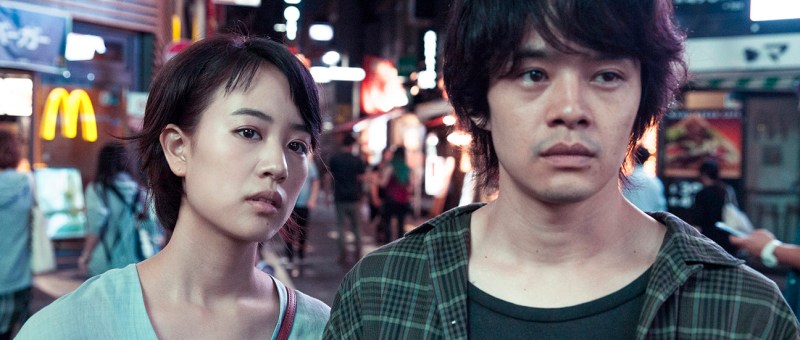
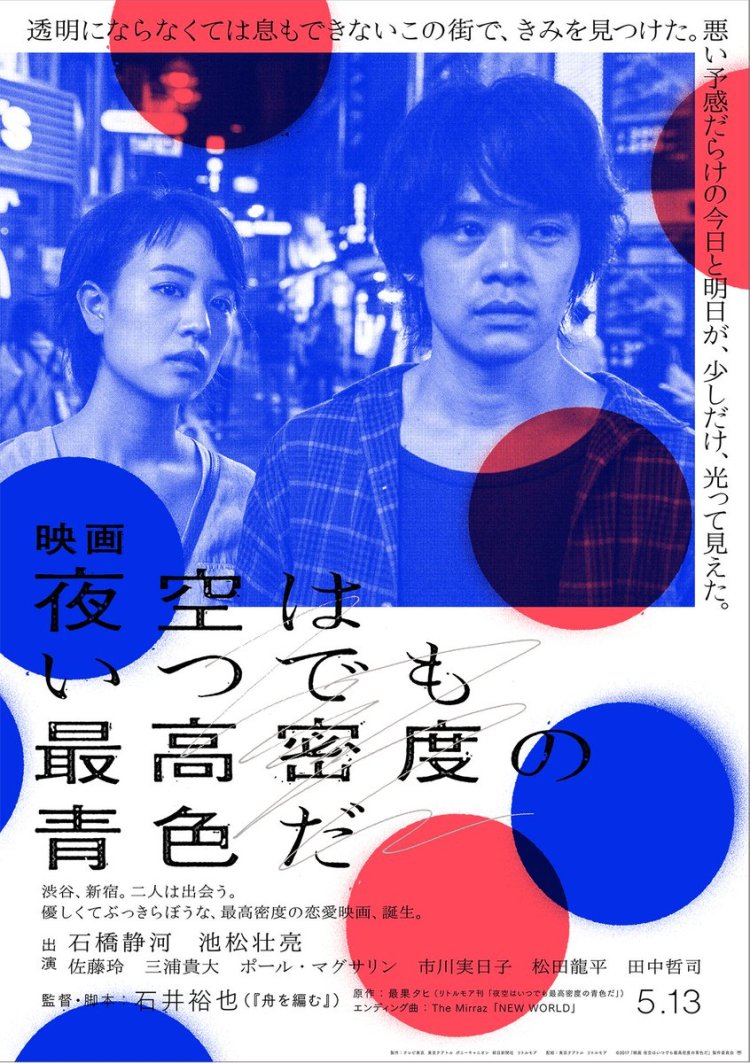 Learning to love Tokyo is a kind of suicide, according to the heroine of Yuya Ishii’s love/hate letter to the Japanese capital, The Tokyo Night Sky is Always the Densest Shade of Blue (夜空はいつでも最高密度の青色だ, Yozora wa Itsudemo Saiko Mitsudo no Aoiro da). This city is a mess of contradictions, a huge sprawling metropolis filled with the anonymous masses and at the same time so tiny you can find yourself running into the same people over and over again. Inspired by the poems of Tahi Saihate, The Tokyo Night Sky is at once a meditative contemplation of city life and an awkward love story between two lost souls who somehow find each other in its crowded backstreets.
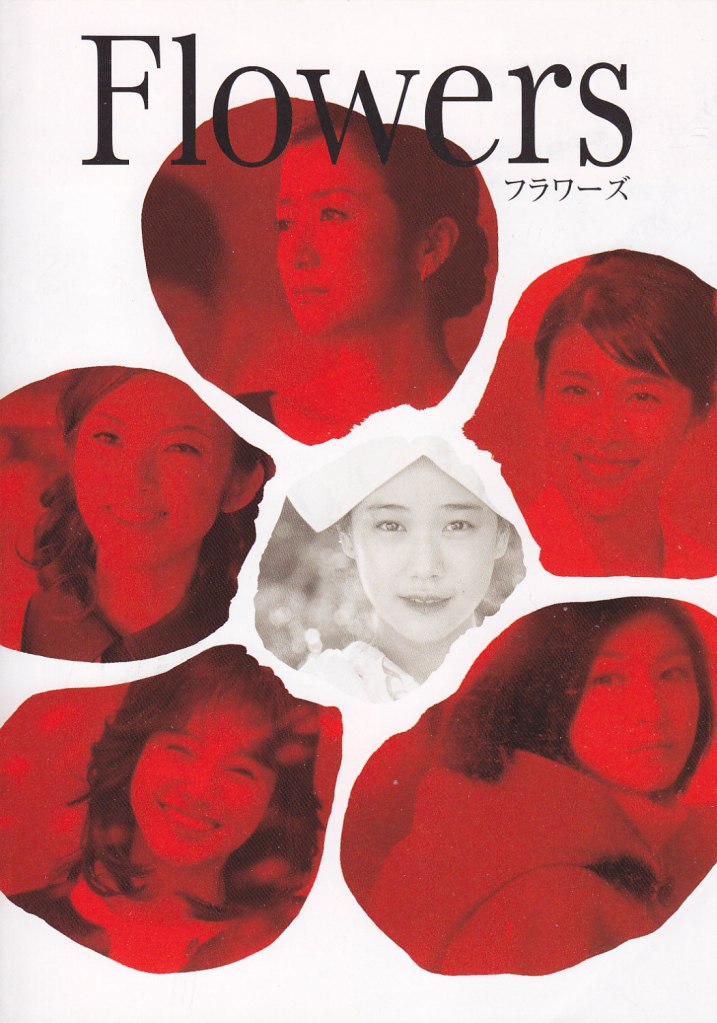 The rate of social change in the second half of the twentieth century was extreme throughout much of the world, but given that Japan had only emerged from centuries of isolation a hundred years before it’s almost as if they were riding their own bullet train into the future. Norihiro Koizumi’s Flowers (フラワーズ) attempts to chart these momentous times through examining the lives of three generations of women, from 1936 to 2009, or through Showa to Heisei, as the choices and responsibilities open to each of them grow and change with new freedoms offered in the post-war world. Or, at least, up to a point.
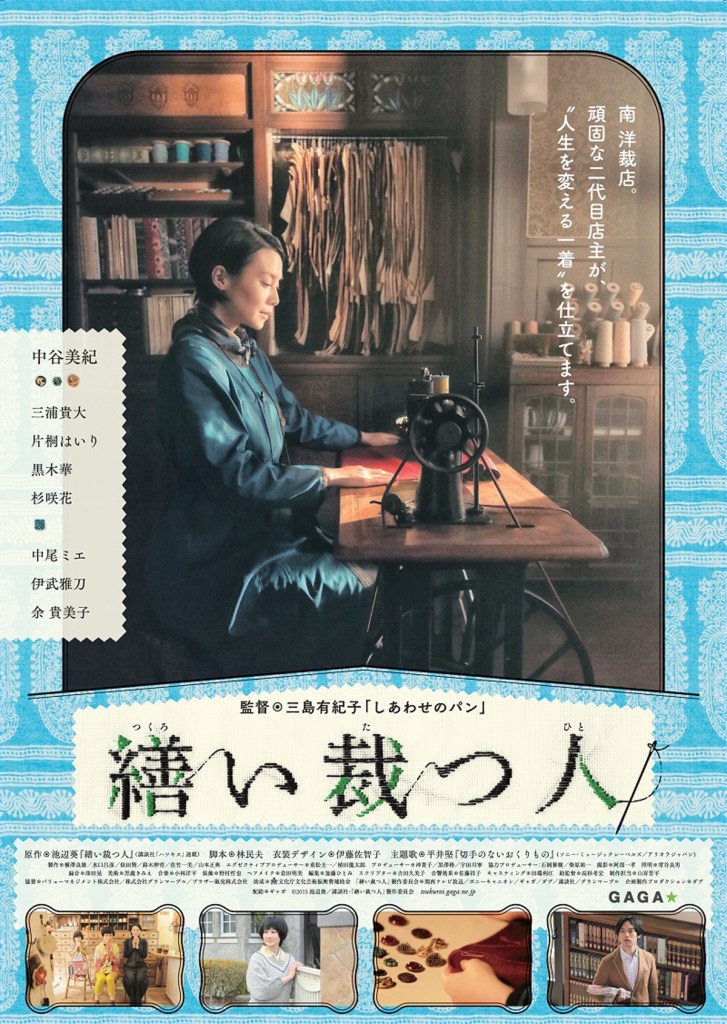 Tradition vs modernity is not so much of theme in Japanese cinema as an ever present trope. The characters at the centre of Yukiko Mishima’s adaptation of Aoi Ikebe’s manga, A Stitch of Life (繕い裁つ人, Tsukuroi Tatsu Hito), might as well be frozen in amber, so determined are they to continuing living in the same old way despite whatever personal need for change they may be feeling. The arrival of an unexpected visitor from what might as well be the future begins to loosen some of the perfectly executed stitches which have kept the heroine’s heart constrained all this time but this is less a romance than a gentle blossoming as love of craftsmanship comes to the fore and an artist begins to realise that moving forward does not necessarily entail a betrayal of the past.
 Koji Fukada first ventured into the family drama arena with the darkly comic satire

 Windows on Worlds