Tony Takitani (トニー滝谷, Jun Ichikawa, 2004)

Do we wear the clothes, or is it more like the clothes wear us? There is something haunting about the sense of absence contained within an outfit that no longer has a body to wrap itself around, as if it were the flesh remaining long after the spirit has departed. This is, in a way, how the titular Tony Takitani (Issey Ogata) comes of see them, as shadows of his now departed wife never to be inhabited again.

Adapting a short story by Haruki Murakami, Jun Ichikawa maintains a gentle lateral motion of the camera as he proceeds through Tony’s early life as if we were gradually unrolling scroll painting. The motion seems to come to a stop on Tony’s unexpected marriage to a woman 15 years younger than himself who was already seeing another man when he proposed to her after only five dates. For a time, his life of loneliness comes to an end, if giving way to an anxiety that he will not be able to bear being alone again. The only cloud in his otherwise blissfully happy life is that Eiko (Rie Miyazawa) has an obsession with clothes that is not only a financial drain but potentially unhealthy. 

Tony himself says it’s as if she was born to wear them, as if Eiko existed solely to be the soul within the fabric. She says that the clothes, in turn, fill a hole inside her. It’s like an addiction. Tony asks her if she really “needs” so many, and she accepts that perhaps she doesn’t, but in other ways the clothes to her are something without which she cannot survive in the same way she could not survive without food or water. Tony’s mere asking her if she would consider reining her spending in is akin to breaking the spell, asking her to reject the very thing she is which may not be so different from dying anyway.

After her death, Tony hires another woman, Hisako (also played by Rie Miyazawa), to wear his late wife’s clothes clumsily explaining that seeing this simulacrum of Eiko will finally convince him that she is gone. Another being is now inhabiting the clothes, filling the void where Eiko once was. On seeing the room full of orphaned outfits, Hisako breaks down in tears. She tells Tony that she has never seen so many beautiful clothes and is overwhelmed by the sight. But perhaps she too is affected by this space that has become a manifestation of loneliness and the unfillable void that exists within us all. 

Tony’s void was perhaps forged by his lonely childhood. His mother died not long after his birth, and his father (also played by Issey Ogata) was a jazz trombonist ill suited to fatherhood who was always on the road. He gave him his unusual name anticipating an era of American dominance, but mostly it brought him nothing other than loneliness and isolation. Though he has made a successful career for himself as an illustrator, some say that his drawings lack warmth hinting at his inability, or perhaps lack of desire, to connect with other people before meeting Eiko.

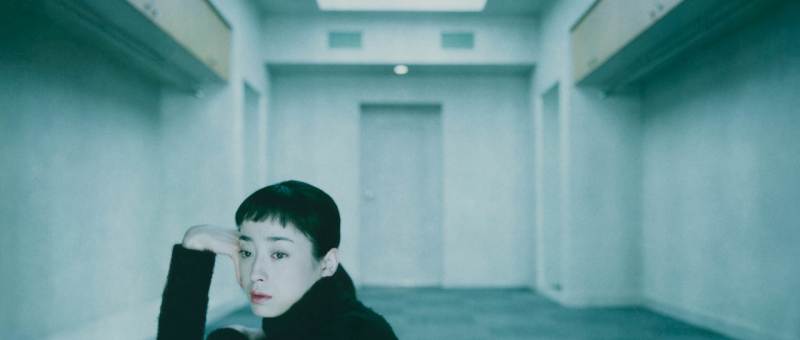
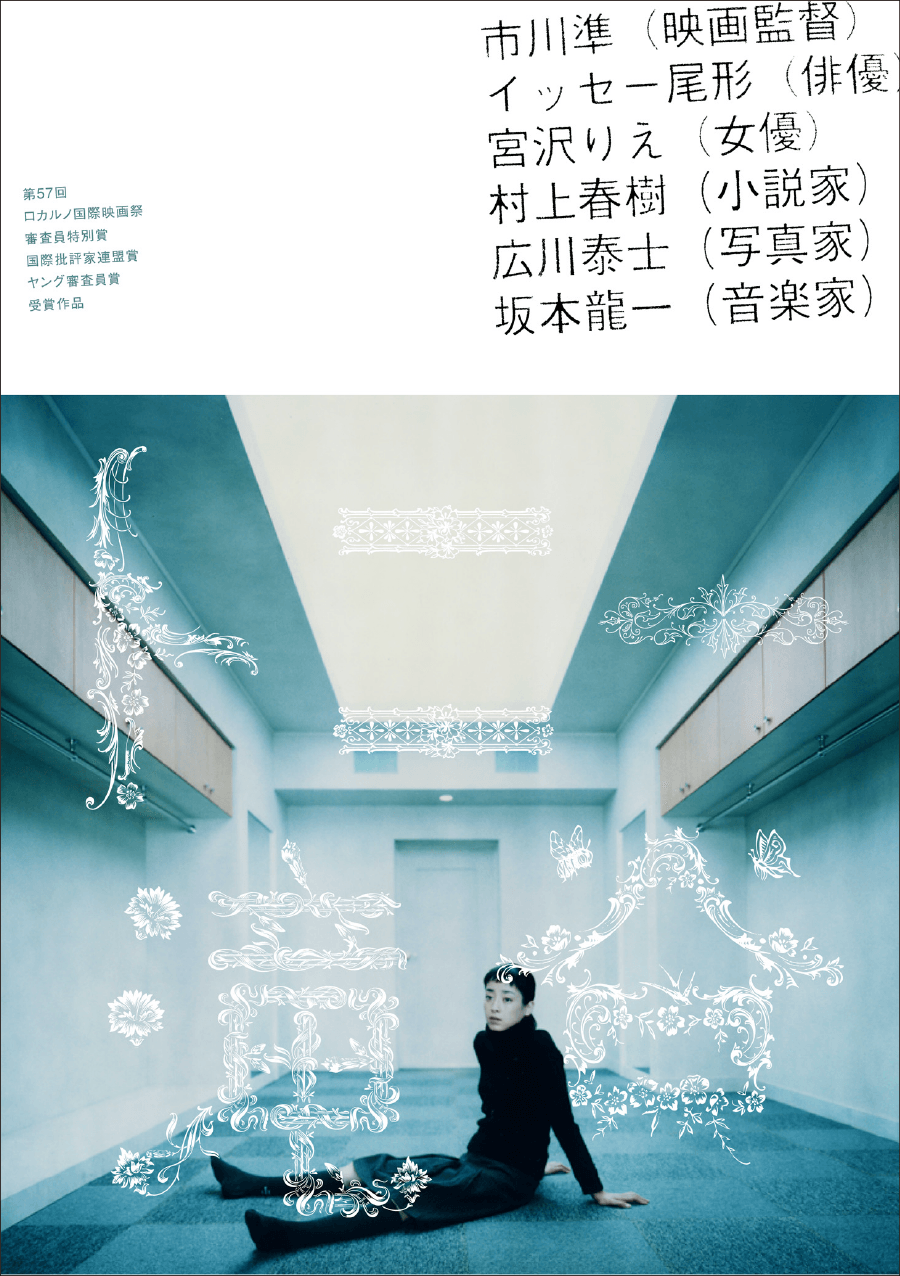
Ichikawa too employs this distancing effect in having the tale narrated by an anonymous third party with the actors breaking in to speak a few lines of their own while trapped within a kind of dreamscape in which they are isolated and alone. The muted colour palette similarly hints at the colourlessness of Tony’s existence without the possibility of human connection. The ambiguous conclusion is either a tragedy or sign or new possibilities as Tony appears to want to reach out once again, but finds his call unanswered. Perhaps he will try another time, or otherwise remain mired in loneliness longing for connection but continually denied. In any case, Ichikawa’s film has a kind of elliptical quality, a poetic cycle of grief and longing that is at once filled with melancholy and enduring sadness but also a kind of transcendence in the rare moments in which two people fully connect no matter how brief or fleeting they may turn out to be.

Flowers (フラワーズ, Norihiro Koizumi, 2010)

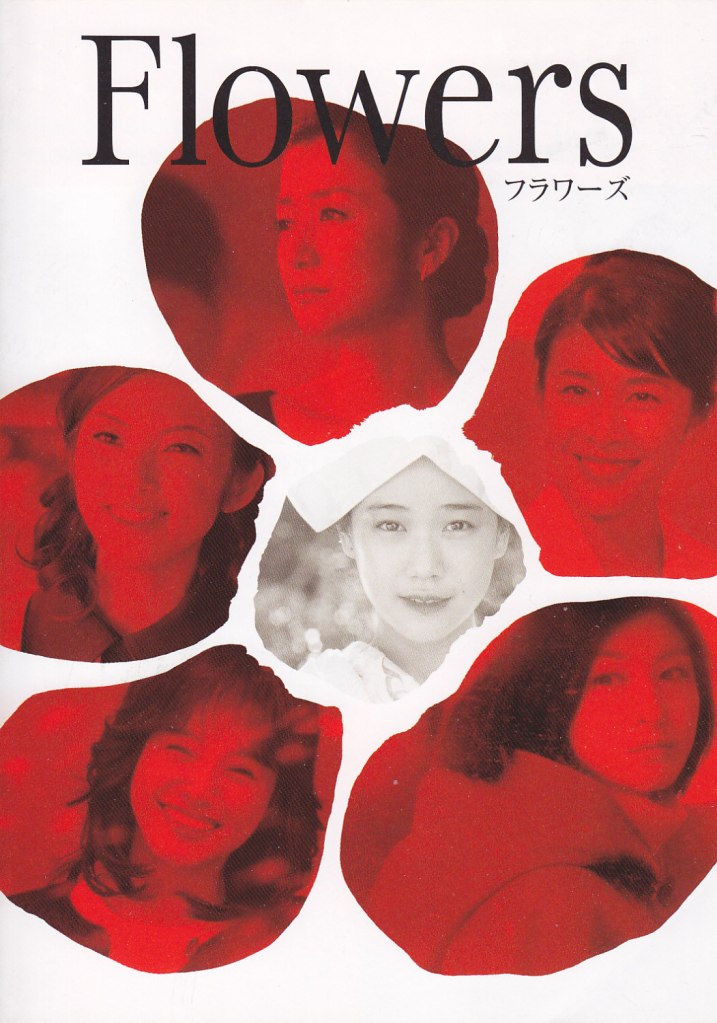
flowersThe rate of social change in the second half of the twentieth century was extreme throughout much of the world, but given that Japan had only emerged from centuries of isolation a hundred years before it’s almost as if they were riding their own bullet train into the future. Norihiro Koizumi’s Flowers (フラワーズ) attempts to chart these momentous times through examining the lives of three generations of women, from 1936 to 2009, or through Showa to Heisei, as the choices and responsibilities open to each of them grow and change with new freedoms offered in the post-war world. Or, at least, up to a point.

In 1936, oldest sister Rin (Yu Aoi) is to be married off against her will to a man picked by her father and whom she has never actually met. Bold and wilful, Rin finds herself more than usually torn between her intense resentment at being forced into a one time only life changing event simply on her father’s say so, and the guilt of rejecting centuries of tradition in rejecting her father’s authority. Minutes before the ceremony Rin makes a break for it fully done up in her wedding dress and makeup.

Flashing forward to her funeral in 2009, we learn that Rin did marry (someone, at least) and had three daughters. It’s her granddaughters we’re interested in now – happy mother Kei (Ryoko Hirosue), cheerful even at a wake, and the depressed Kanna (Kyoka Suzuki) – an unmarried former concert pianist who’s recently discovered she’s pregnant and is unsure what to do. In order to understand them we have to flashback a little again – to 1969, 1964, and 1977 to find out what happened to Rin’s three daughters – Kaoru (Yuko Takeuchi), Midori (Rena Tanaka), and Sato (Yukie Nakama).

Koizumi makes the most of his shifts in time periods to experiment with technical effects recreating the look of classic films of the era. Hence, 1936 is a desaturated monotone filled with classic silent movie compositions, seemingly owing a large debt to Ozu, Shimizu, and Mizoguchi. The difference between 1964 and 1969 might be thought slight but partly down to the different genre elements in the two vignettes, the contrast is marked with 1964 taking on the classic romantic melodramas of the period, and 1969 embracing bright and colourful salaryman comedy – only this time it’s a salary woman embarking on the era of having it all (though perhaps, tragically, ten too years to early to make the most of it). 1977 brings us back down with bump of realism as Sato lives an ordinary suburban life as a housewife and mother. Imbuing each of his eras with the warmth of nostalgia backed up with rich period detail, Koizumi has indeed framed his passage of womanhood narrative with an impressive degree of grounding.

This has been a period of intense social change, entirely for the better even if there is still a long way to go. Though marriages of 1936 were referred to as semi-arranged, families could and did place intense pressure on their children to consent or refuse to accept their refusal to do so (perhaps as true for sons as daughters, though sons were unlikely to find themselves in such a difficult position when things went wrong). Thus the course of Rin’s life is decided by her rigid, austere father leaving her with no possibility of choice in a world entirely controlled by men. Her daughters have more freedom and opportunities, marrying for love and choosing careers and/or motherhood as they see fit.

Midori, the most headstrong of the three sisters takes a job at a publishing house where she is the only female employee. Receiving a marriage proposal leads her to question her choices once again, wondering if accepting means jumping off the career ladder altogether. Wanting to get ahead, Midori has been behaving like her male colleagues – dressing in less feminine clothes and in subdued colours, heading off the inevitable sexist comments with aggression and violence but, eventually emboldened, she she finds herself blossoming when embracing her femininity within the workplace.

The world has moved on – women cannot be pushed in the same way Rin was pushed even if social mores can still be used to cajole them into conformity. The one big recent social change is in Kanna’s decision to proceed as a single mother. Though the question is still raised, there is broad approval for the idea which is met with no obvious stigma and only love and support from her immediate family. However, some things apparently don’t change as even if not all roads lead to marriage they all point towards motherhood which is still presented as the only marker of success as a woman. In this respect the closing montage accompanied by the odd choice of Olivia Newton John’s Have You Even Felt Mellow feels ill judged as the sister who’s experienced the ultimate heartbreak bounces around recreating the opening of Georgy Girl (only more successfully) with a new haircut and indulging in an ice-cream as a sort of antidote to eternal widowhood.

Nevertheless, Flowers does present a warm and broadly inspirational ode to the healing power of family and unbreakable female resilience even in the midst of such extreme social change. Painted with a keen eye for period detail and a deeply nostalgic longing for comforts long since passed, Koizumi’s exploration of womanhood through the ages is quick to acknowledge the pain and sacrifice experienced by women of all generations but is, in the end, too ready to accept it.


Original trailer (no subtitles)