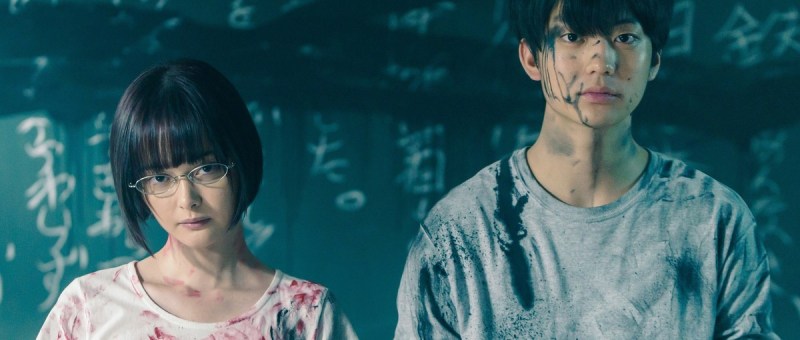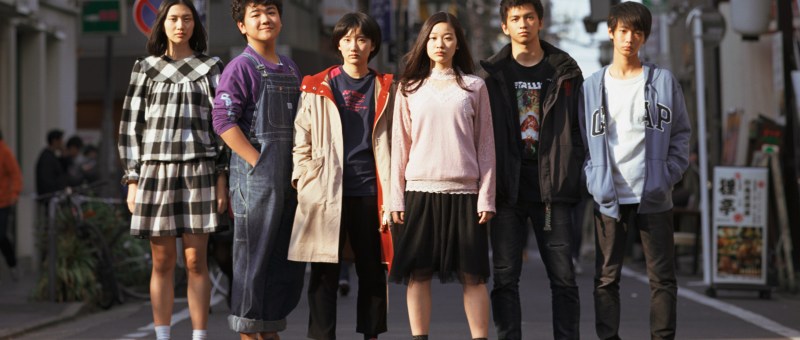
Jinsei (無名の人生, Ryuya Suzuki, 2025)

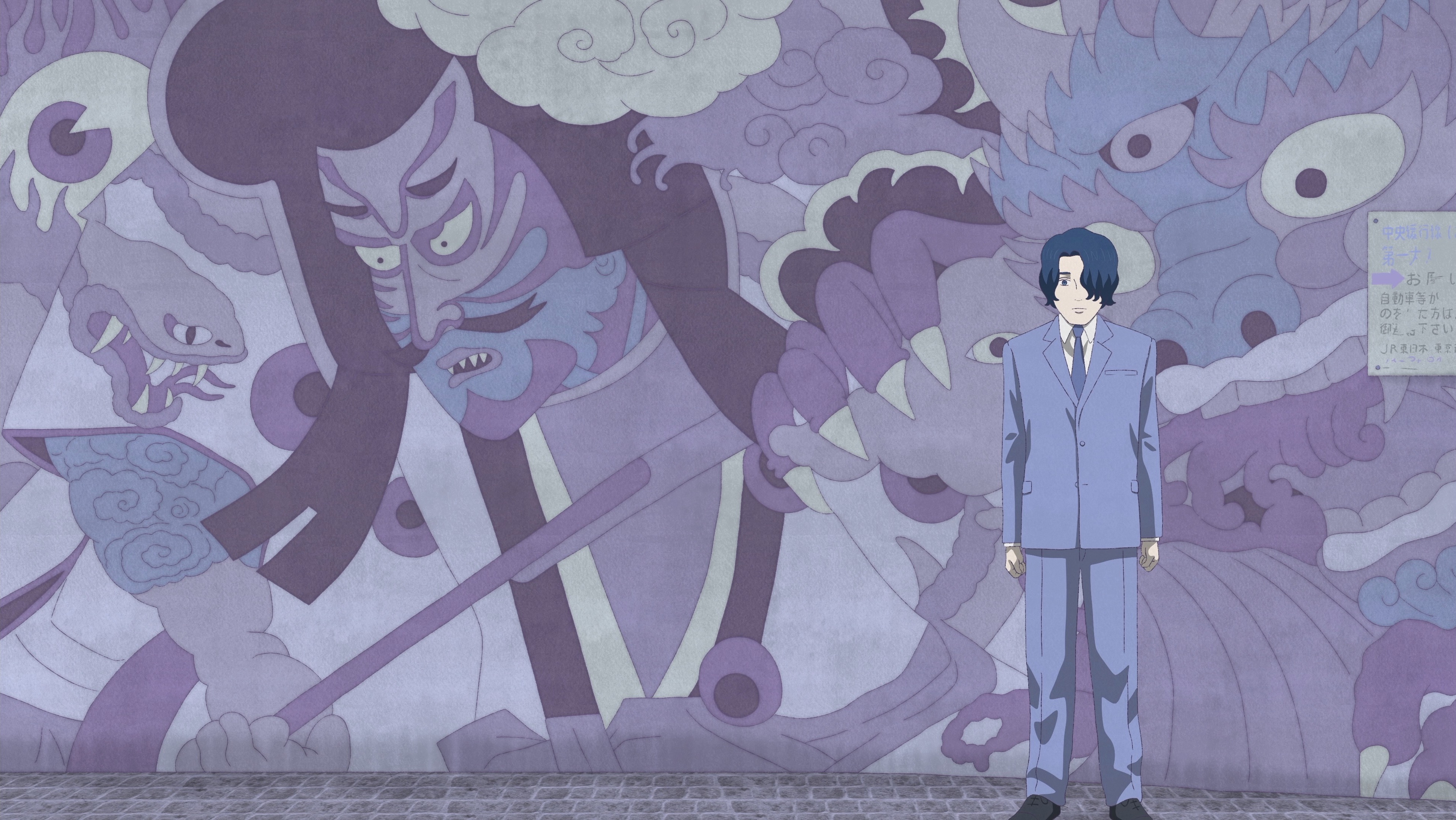
A man goes by many names before he dies. The hero of Ryuya Suzuki’s almost entirely self-produced anime Jinsei (無名の人生, Mumei no Jinsei) never tells us his name. He doesn’t say anything much at all, but passively allows himself to be called whatever others call him while struggling to come to terms with the death of his mother and continually looking for new forms of family along with a place he can really call their own.

Indeed, in the wordless opening sequence, Se-chan’s father and mother meet, get married, have a child, and split up, but are killed together in a freak accident in which the young Se-chan watches helplessly as a pickup truck being driven by an elderly man mows them down. After that, he ceases to speak and looks on at the world vacantly. He becomes a kind of mirror for the world around him, an empty vessel onto which others may project their own fears and anxieties. Thus at school they call him “grim reaper” because he doesn’t speak or move. When another boy in the neighbourhood tries to reach out to him, he punches him in the face. Nevertheless the two eventually become friends, bonding in their shared status as bullied outsiders rejected by mainstream society. 

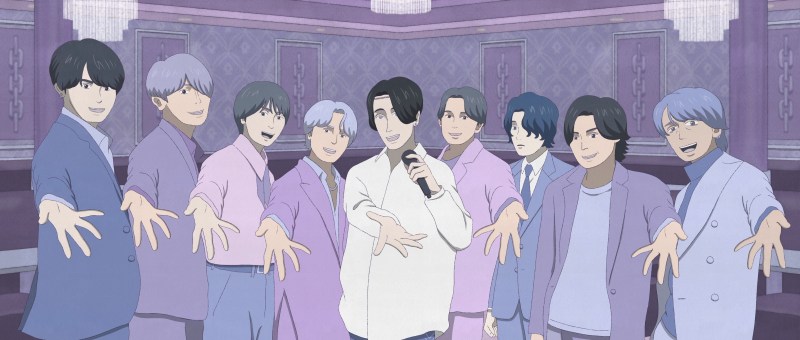
Kin, who in some kind of nominative determinism has dyed blond hair, is marginalised because of his interest in male pop idols and dreams of becoming one. A man named Shiratori comes from the city with a prophecy for Se-chan in the form of a VHS tape featuring his father dancing as part of a chart-topping boy band. Se-chan too has the desire to sing and dance, but the entertainment industry feeds on broken dreams. His father, Eito, had been the son of an aristocratic family who rejected him for following his dreams of becoming a singer. His father pulls a gun on him when he returns in disgrace having been caught using drugs and getting cancelled by the world at large. Eito too apparently could not cope with the pressures of showbiz and tired of the cage of stardom. Shiratori is clearly modelled on Johnny Kitagawa whose decades of sexual abuse were an open secret acknowledged only after his eventual death. He tells the boys that they’re in a cage to which he holds the key, but that it’s protection not imprisonment even as they become tools exploited by moneymaking execs intent on selling them body and soul.

Se-chan’s stepfather had told him that life was a swan and he should spread his wings, but cages are hard to avoid as he discovers on working as a Kabukicho club host once again exploited as a hook dangled to get money from women only to fall victim to another heartless man and the woman who couldn’t tame him. Se-chan found a kind of family in the boy band that he doesn’t really find anywhere else, certainly not in Kabukicho, until he decides to renounce the world entirely as a caveman recluse living in a disused building which is to say in a kind of past. Suzuki’s increasingly bleak descent into the near future echoes this desire for more genuine connections and familial warmth uncorrupted by the darkness of contemporary capitalism and the young Se-chan’s unresolved trauma. War and apocalypse give rise to shady cults, which are also like families, but exclusionary in calming themselves to be some kind of elite as a dangerous feudalism resurrects itself.

Travelling 100 years from 1995, the film moves from the biting cold of winter in Yamagata to the blazing heat of a post-apocalyptic society but seems to imply that in the end we find ourselves again and make the world anew as a great family of humanity. Suzuki apparently made the film up as he went  along, working without a script and stitching one scene on to the next, but his images move with a quiet power and purpose even they move towards an inevitable ending and the final goodbye. The man who was the lonely boy Se-chan, grim reaper, God, a pop star named “Zen”, someone’s Love, comes to embody the concept of life itself in being all things to all men while life in effect lived him in the depths of all his longing and loneliness only to find a sense of hope in confronting the eternal void.


Jinsei screened as part of this year’s New York Asian Film Festival.

Trailer (English subtitles)

Hijacked Youth – Dare to Stop Us 2 (青春ジャック 止められるか、俺たちを2,  Junichi Inoue, 2024)

A loose sequel to 2018’s Dare to Stop Us, Hijacked Youth (青春ジャック 止められるか、俺たちを2, Seishun Hijack Tomerareruka, Oretachi wo 2) picks up a decade later with an autobiographically inspired tale from writer director Junichi Inouchi but in its way also becomes the latest in a series of indie films to offer a celebration of Japan’s mini theatres still struggling with the fallout from the COVID-19 pandemic while exploring the origins of the contemporary independent film scene. 

The allusion seems clear even from the film’s opening in which cinephile and former programmer Kimita (Masahiro Higashide) fears for the future of cinema amid the arrival of the VCR. Having quit his job to support a young family, he is puzzled but eventually won over when unexpectedly contacted by notorious film director Koji Wakamastu (Arata Iura) who has apparently decided to open a cinema in provinciail Nagoya after the screening of Ecstasy of the Angels was restricted because someone bombed a police box for real. Kimita wants to run it as a rep cinema, but Wakamatsu sees it partly as a vanity project and a side business so has his eye on the bottom line. Making the mistake of programming films he thinks are good rather than ones people want to see quickly puts them in the red with Wakamatsu pressuring Kimita to give in and agree to screen pink films even though he himself had admitted that pink cinema had had its day. 

Wakamatsu is forever taking Kimita to task for having a prejudice against these kinds of films which are after all the kind that Wakamatsu makes though he does concede that there are talented directors working in pink film who may someday become the leading lights of the Japanese cinema industry. Some of that is hindsight, but what the film is working towards is a link between pink film, which was independently produced in contrast to something like Roman Porno which was made by a studio with much higher budgets and production values, and the rise of independent cinema which is largely dependent on the mini cinema ecosystem to it keep going. 

But then the film is also a nostalgic memoir revolving around the director’s teenage dreams and his eventual meeting of Wakamatsu thanks to the cinema in Nagoya. The irony is that the first film had been titled “Dare to Stop Us,” focussing on Wakamatsu Pro during the turbulent days before Asama-sanso as an anarchic force in a sometimes staid film industry. But the through line here is that everyone gives up far too easily. Kimita abandoned his dreams to sell video recorders, while the young woman who works for him believes she has three strikes against her, the first being her gender, the second a lack of talent, and the third which she does not disclose that she’s a member of the Zainichi community of ethnic Koreans often discriminated against even the Japan of the 1980s and in fact today. 

Junichi gives up a bit easily too after making a twit of himself on Wakamatsu’s film set, though the picture he paints of him is larger than life. Fatherly and compassionate, he gives him solid advice to go to a proper uni and learn filmmaking with him while otherwise taking him under his wing, but also pretty much takes over after giving him his first opportunity to make a film and has a tendency to take no prisoners when it comes to his crew members. At least as far as the film would have it, he’s become a rather lonely figure now that his more politically minded friends have scattered following he decline of the student movement in Japan. As much as anything else, the film is a sort of hagiography as evidenced by the surreal coda which seems to reference the director’s early death in traffic accident in 2012, jumping forward 30 years to find the cinema still open and celebrating his legacy more literally yet also in its existence in supporting the indie scene Wakamatsu helped to birth. According to Wakamatsu, the most important thing is finding your own angle and sticking to it, something his rebellious spirit at least may have fostered in the many directors who started their careers at Wakamatsu Pro and not least Inoue himself.

Hijacked Youth – Dare to Stop Us 2  screened as part of this year’s Nippon Connection

Original trailer (English subtitles)
A Mother’s Touch (桜色の風が咲く, Junpei Matsumoto, 2022)

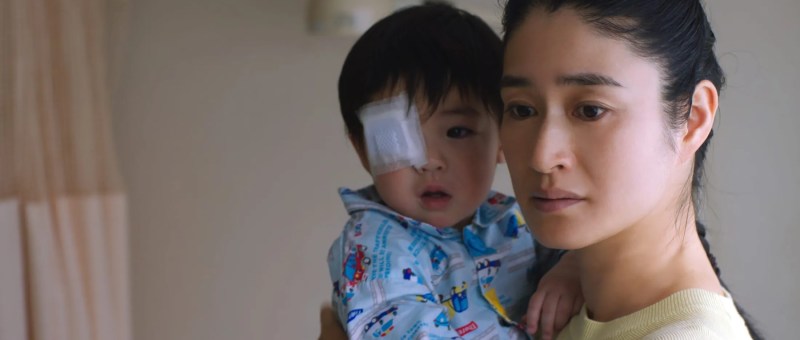
A young man begins to ponder the meaning of his life while losing both his sight and hearing in Junpei Matsumoto’s heartwarming biopic, A Mother’s Touch (桜色の風が咲く,Sakurairo no Kaze ga Saku). The English title aptly hints at the maternal devotion that kept Satoshi (Taketo Tanaka) part of the world even as he feared becoming isolated from it, though the Japanese “when the pink wind blooms” leans towards the poetic in echoing the ways in which he is able to open himself to a different kind of sensory experience. 

Satoshi Fujisawa would later go on to become the first deaf blind university professor in Japan though the films opens with a toddler Satoshi discovering that he has a rare condition that causes the pressure in his eyeball to increase endangering his vision. Though he undergoes various treatments, he eventually loses the sight in one eye and then the other several years later. While in high school he then discovers that he is also beginning to lose his hearing which, along with braille, had been his primary way of experiencing the world around him. 

Matsumoto’s film does not really go into the various ways in which Satoshi is inconvenienced by a largely ableist society aside from his having to leave home and go to Tokyo to attend a school for the blind. Satoshi does, however, experience bullying as a child particularly from an obnoxious gang of boys who egg him on to remove his glass eye in front of them while otherwise isolated by the constant need to rest his eyes with only rakugo to listen to on the radio. Introduced to braille, he is immediately fascinated remarking that the person who came up with it must have been a genius and explaining that he has not given up on his sight but it doesn’t hurt to learn. 

It’s braille that eventually becomes his lifeline as his mother figures out a way to communicate with him by pressing his fingers as she were typing on a braille keyboard while he replies vocally. Her adhoc solution has apparently gone on to provide an important means communication for other deaf blind people across the world and reminds Satoshi that though he may feel as if he as been marooned in deep space he is not alone and is able to interact with the world around him. While still trying to save his hearing, he had decided to try an alternative treatment method which emphasised heavy exercise and bland food designed to boost the immune system though he discovered that it only robbed him of an additional sensory input and a resultant longing to eat something sweet. Though he is unable to see or hear, he can still taste and smell the world around him welcoming the spring in unexpected ways while embracing his potential and independence.

That said, his major philosophy is that life is full of voids designed for other people to fill in the ways that we can all help each other. The film doesn’t shy away from exploring the strain placed on Satoshi’s family as they try to cope with his medical needs which leave his mother feeling guilty that she is often away from her other two children caring for him at the hospital, and his father lonely and overburdened while trying to balance the demands of his working life with that of taking over the domestic space. In any case, they resolve to get through it as a family doing what they can to support Satoshi without robbing him of the opportunity to lead as independent a life as possible. Satoshi comes to believe that his disabilities may be the price for his purpose, that there must be something he is uniquely supposed to do with his life along with places only he could discover. The film eventually finds him in a space of possibility, recalling happy times with his family as a child but also looking forward towards a new potential for pushing the boundaries and moving beyond the limitations others might have placed on him. 


A Mother’s Touch screened as part of this year’s Camera Japan.

International trailer (English subtitles)

Unlock Your Heart (ひらいて, Rin Shuto, 2021)

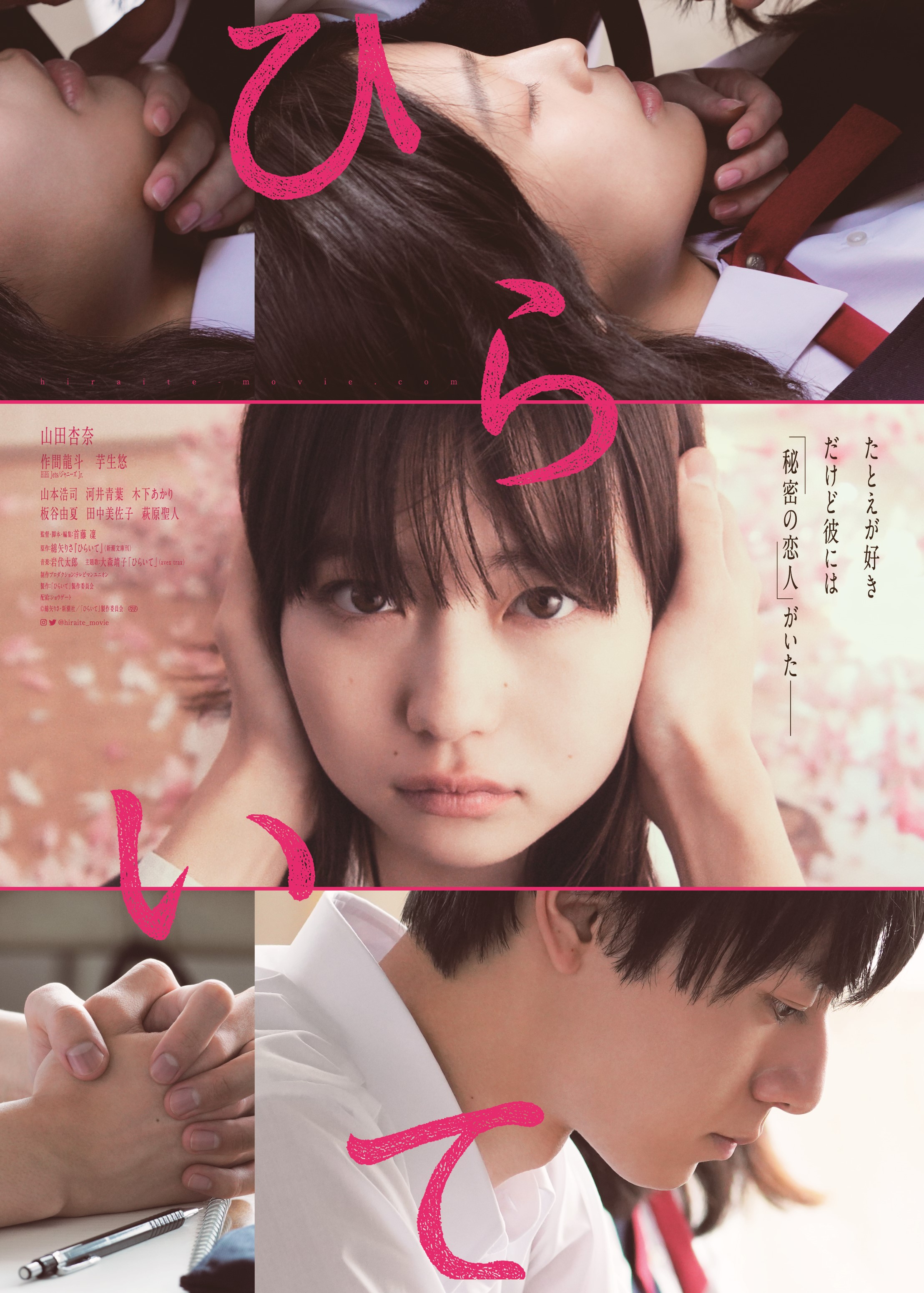
A straight-A student and popular girl enters a self-destructive tailspin on discovering her longterm crush has a secret girlfriend in Rin Shuto’s adaptation of the novel by Risa Wataya, Unlock Your Heart (ひらいて, Hirate). Wataya also penned the source material for Akiko Ohku’s Tremble All You Want and Hold Me Back, and while Shuto may shift away from Ohku’s quirky style she maintains and intensifies an underlying sense of unease in what has the potential to develop into an incredibly messy situation. 

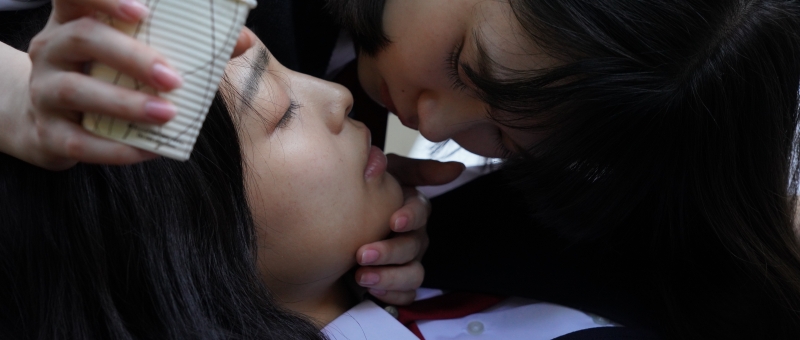
As the film opens, popular girl Ai (Anna Yamada) walks away from a dance rehearsal and discovers fellow student Miyuki (Haruka Imo) collapsed by a tree next to a pouch containing her insulin. Barely conscious, Miyuki asks her for something sweet and Ai soon returns with some sugary juice. Unable to find to an efficient way of getting her to drink it, Ai passes the liquid from her own mouth in a literal kiss of life that seems have an unexpected effect on her. Meanwhile, after sneaking into the school late at night with some friends halfheartedly joking about stealing the exam papers, Ai raids the locker of her crush, Tatoe (Ryuto Sakuma), and discovers a series of love letters which turn out to be from Miyuki. 

For some reason this revelation turns Ai’s life upside-down even though she later reveals that she had been enduring the silent crush on Tatoe for some years without ever acting on it. It may partly be that Ai is popular and attractive and so the idea that someone may not find her desirable is destabilising, cutting to the quick of her teenage insecurity while pulling the rug out from under her if she had indeed thought of Tatoe as a kind of comfortable backstop or easy plan B. Enraged, she befriends Miyuki yet for unclear reasons, perhaps hoping to get some insider info on Tatoe, find out what it is Miyuki has and she doesn’t, or somehow break them up, but finally settles on seduction unexpectedly kissing her again in an echo of their awkward meet cute.  

At heart, Ai does not understand herself and is operating with no real plan. Each escalation seems to come as a surprise even to herself leaving her with moments of internal conflict gazing into a mirror wondering what it is she’s doing. On separate occasions, both Miyuki and Tatoe accuse her of lying and indeed she is, most particularly to herself in a wholesale denial of her own desires which fuels her impulsive and self-destructive behaviour. Others accuse her of being selfish and self-absorbed, unable to look beyond herself and indifferent to the feelings of others which is also in its way a reflection of the degree to which she is consumed by internal confusion, driven slowly out of her mind while taking out her frustration on those around her not least in her increasingly dark manipulation of Miyuki and Tatoe. In the end, as Tatoe points out, she’s little different from his abusive father in her need to possess and control but it’s the extreme control that she’s trying to exercise over herself and the desires she can not accept that is causing her self-destructive behaviour. 

Only Miyuki seems to be able to see through her, at least to an extent, yet it’s not entirely clear at first if she responds to Ai’s advances willingly or simply goes along with them because she has no other friends and is afraid Ai will reject her if she refuses. Ostracised by the students because of her diabetes which is of course a very visible condition in that it requires her to inject herself while at school, Miyuki is shy and lonely while required to keep her relationship with Tatoe a secret because of his abusive father. But as Miyuki later puts it in her letter, Ai isn’t quite as aloof as she’d like to pretend and acts with an unexpected tenderness and consideration, even a kind of vulnerability, in moments of intimacy that betray the true self otherwise stifled by anxiety and internalised shame. With a persistent air of danger and unease spurred by Ai’s impulsive and chaotic nature, Shuto’s intense drama reaches its climax in its deliberately abrupt conclusion perfectly capturing the heroine’s moment of realisation imbued with all of her idiosyncratic messiness. 


Unlock Your Heart screened as part of this year’s Camera Japan.

International trailer (English subtitles)

True Mothers (朝が来る, Naomi Kawase, 2020)

Perhaps surprisingly and in contrast with many other developed nations child adoption remains relatively rare in Japan with most children who for whatever reason cannot be raised by their birth families cared for by institutions while the adoption of adults is unusually common usually for the purposes of securing an heir for the family name or business. This might be one reason that the “secret” of adoption is touted as a subject for blackmail in Naomi Kawase’s adaptation of the mystery novel by Mizuki Tsujimura True Mothers (Asa ga Kuru), though in this case it will prove to be a fruitless one as the adoptive parents have already made an effort towards transparency having explained to their son that he has another mother while their friends, family, and the boy’s school are all fully aware that he is not their blood relation. 

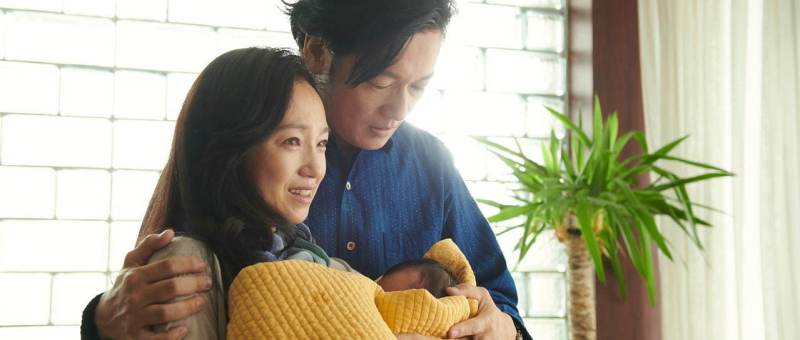
The Kuriharas, Satoko (Hiromi Nagasaku) and Kiyokazu (Arata Iura), are a settled, wealthy married couple who are shocked to discover that they are unable to conceive a child naturally because Kiyokazu is suffering from infertility. After a few unsuccessful rounds of painful treatment, they decide to give up and resign themselves to growing old together just the two of them, but after accidentally stumbling over a TV spot about an adoption service which focuses on finding loving homes for children rather than finding children for couples who want to adopt they begin to consider taking in a child who is not theirs by blood. As Kiyokazu puts it, it’s not that he’s obsessed with the idea of having a child, but they have the means and the inclination to raise one and could be of help when there are so many children in need of good homes. After enrolling in the programme, they adopt a little boy, Asato (Reo Sato), and somewhat unusually are encouraged to meet the birth mother, Hikari (Aju Makita), who they discover is a 14-year-old girl tearfully entrusting her baby to them along with a letter to give him when he’s old enough to understand. 

The central drama begins six years later as Asato prepares to leave kindergarten for primary school. A crisis occurs when Satoko is called in because a boy, Sora, has accused Asato of pushing him off the jungle gym. Thankfully, Sora is not seriously hurt though according to the school Asato admits he was there at the time but says he doesn’t remember pushing anyone. The teachers don’t seem to regard him as a violent or naughty boy and wonder if he might have accidentally knocked Sora off without realising, while Satoko for her part tries to deal with the matter rationally neither leaping to his defence without the full facts or prepared to apologise for something that might not have been his fault. The other mother, however, somewhat crassly asks for compensation, bringing up the fact that the family live in a nice apartment and can’t be short of a bob or two. Stunned, Satoko does not respond while the other mother instructs her son not to play with Asato anymore. It’s around this time that she starts receiving anonymous calls that eventually turn out to be from a young woman claiming to be Hikari who first petitions to get her son back and then like Sora’s mother asks for monetary compensation. Only on meeting her the young woman seems completely different from the heartbroken teen they met six years’ previously and Satoko can’t bring herself to belief it’s really her, but if it isn’t who is she and what does she want?

Less a tug of love drama between an adoptive and a birth mother as in the recent After the Sunset, True Mothers places its most important clue in the title in that there need not be a monopoly on motherhood. A woman brought out at the adoption agency open day reveals that she’s explained to her son that he has three mothers, herself, his birth mother, and Asami (Miyoko Asada), the woman who runs “Baby Baton”. Asami encourages her prospective parents to explain to the children the circumstances of their birth before they enter primary school, keen both that they avoid the trauma of suddenly discovering the truth and that the birth mother not be “erased” from the child’s life and history. 

Though founded in love and with the best of intentions, Baby Baton also has its regressive sides in reinforcing conservative social norms, open only to heterosexual couples who’ve been married over three years (Japan does not yet have marriage equality or permit same sex couples to adopt) and requiring one parent, though it does not specify which, to give up their career and become a full-time parent. Its residential requirement is also not a million miles away from a home for unwed mothers hidden away on a remote island near Hiroshima which seems to be the way it is used and viewed by Hikari’s parents who force her to give up the baby more out of shame than practicality, telling people that she’s in hospital recovering from pneumonia. Nevertheless it’s at Baby Baton that Hikari finally finds acceptance and a sense of family, feeling rejected by the birth parents who have sent her away rather than embracing or supporting her in the depths of her emotional difficulty. Asami was there for her when no one else was, later explaining that unable to have children herself she founded Baby Baton as means of helping other women who found themselves in difficulty in the hope of “making sure all children are happy”. 

Like Hikari many of the other women at Baby Baton are there because of a corrupted connection with their own maternal figures, often rejected or abandoned many of them having participated in sex work as a means of survival. Reminiscent of her documentary capture of residents of the old persons’ home in The Mourning Forest or the former leper colony in Sweet Bean, Kawase films the scenes at Baby Baton with naturalistic realism as one young woman celebrates her 20th birthday sadly wondering if any one will ever celebrate her birthday again. A testament to female solidarity, the home presents itself as a kind of womb bathed in golden light and protected by a ring of water providing a refuge for often very young women at a time of intense vulnerability until they are eventually rebirthed by the surrogate maternal figure of Asami. 

The film’s Japanese title “Morning Will Come” as echoed in the song which plays frequently throughout hints at an eventual fated reunion while also pointing towards Asato the first character of whose name literally means “morning”, lending an ironic quality to its English counterpart which invites the conclusion that there are somehow false mothers while simultaneously evoking a sense of a great confluence of maternity in the unselfishness of maternal love. Immersed in a deep well of empathy, Kawase’s bittersweet drama is infinitely kind if not without its moments of darkness and pain resolute in its sense of fairness and the insistence there’s love enough to go around if only you’re brave enough to share it.


True Mothers streams in the UK from 16th April exclusively via Curzon Home Cinema.

UK trailer (English subtitles)

Flowers of Evil (惡の華, Noboru Iguchi, 2019)

Small-town ennui is something familiar to many who’ve found themselves feeling somewhat out of place in the place they’ve always been, but rebellions usually take less obvious forms than the nihilistic rejection of bourgeois respectability enacted by the conflicted hero at the centre of Noboru Iguchi’s Flowers of Evil (惡の華, Aku no Hana). Iguchi is best known as a director of made for export splatter exploitation, so it might come as a surprise to his fans to see him take on the admittedly dark but largely gore-fee adaptation of Shuzo Oshimi’s coming-of-age manga.

Takao (Kentaro Ito), a “regular” high school boy, likes to read “difficult” books such as the poetry collection by Charles Baudelaire from which the film takes its title. He feels himself somewhat above his surroundings, but superficially conforms to the ordinary world around him. Like many of his classmates, he’s developed an adolescent crush on the school’s prettiest girl, Nanako (Shiori Akita), but unlike his friends views her as his “muse”, a pure and untouchable figure of unspeakable desire. Nipping back to the classroom alone to retrieve a forgotten book, he spots Nanako’s gym bag lying on the floor and cannot resist opening it, burying his face in her clothes. Panicked after hearing someone nearby, he takes the bag home with him.

Everyone immediately knows that a “pervert” is responsible for the theft, they just don’t know who it is. Except for the class’ resident strange girl, Sawa (Tina Tamashiro), who apparently witnessed Takao’s descent into perversion in real time. She makes him a deal – write an essay all about what a big pervert he is and she’ll kept his secret in friendly complicity seeing as she is a kind of “pervert” too. Sawa, who is much more obviously “different” than Takao and completely unafraid of embracing it, is convinced that their town is entirely inhabited by “Shit Bugs”, and they are the only elevated beings. Uncomfortable with her own desire, Sawa’s behaviour becomes increasingly intense when Nanako unexpectedly expresses an interest in Takao, apparently impressed that he was so “upfront with his feelings” and willing to stand up for Sawa when she was accused of being a (but not the) thief.

Takao tells Sawa that he just wants to be “normal”, to be the kind of man Nanako could desire. Just another confused teenage boy, he doesn’t yet know who he is or what he feels and is, in a sense, consumed by the sense of emptiness that comes of lacking self-knowledge. He masks his sense of intellectual inferiority by feigning sophistication, spending his free time in second hand bookshops reading the accepted canon with a typically teenage obsession with death and despair. But as he is later forced to admit, he did so largely in order to feel superior. He doesn’t truly understand much of what he read and lacks the maturity to accept his confusion. Nanako challenges him in more ways than one – by calling him on his wilful repression of his desires, and by confronting him about his obsession with Flowers of Evil, a “difficult” book which try as she might she can’t understand. She doesn’t “get” Baudelaire, and she doesn’t “get” Takao because of it, but Takao doesn’t “get” Takao either because he thinks he’s a book filled with blank pages, that if you open the cover there’s really nothing interesting there, just a giant void of emptiness.

Three years after stealing the gym bag, Takao describes his new environment as infinitely grey as if devoid of any sense of life, whereas the climactic summer is coloured by a vibrant greenery he claims to be equally oppressive. Fed up with small-town life, both Takao and Sawa long for a mythical “beyond” on the other side of the mountains which trap them within the claustrophobic environment of their provincial existence. They kick back against small-town conservatism with childish shows of resistance which culminate in a very public act of self-harm dressed as societal attack, but remain unable and unwilling to address the real cause of their frustration in their adolescent inability to accept that desire itself is not “perverse” or somehow sullying some grand romantic notion of pure and innocent love.

Unable to process his desires, Takao remains unable to progress into adulthood and become, as Sawa later chides him, a “regular human”. Normality is, however, what he eventually chooses, reverting to the anxious bookworm he always was only having moved forward in learning to let something go, whereas Sawa perhaps feels that she has no other option that to accept her own “perversion” and be exiled by it. Takao discovers an internal “beyond” and tries to share it with Sawa, but she is looking for something else and cannot join him in the “regular” world to which he is always going to return. Iguchi dedicates the film to all those who are or were tormented by youth, allowing his tortured hero to find his path towards an integrated selfhood, but resists the temptation to belittle his suffering as he strips himself bare to exorcise the emptiness inside.


Flowers of Evil was screened as part of the 2019 Five Flavours Film Festival.

Original trailer (no subtitles)

https://youtu.be/2sXTkrHo2Ls

Ice Cream and the Sound of Raindrops (アイスと雨音, Daigo Matsui, 2017)

プリントThe youth movie has long held a special place in Japanese cinema but it would be fair to say that the fire has gone out of late, modern youth dramas are generally sad rather than angry. Daigo Matsui was in an enraged mood when he brought us Japanese Girls Never Die – a chronicle of female elision in an intensely misogynistic society. Now he brings his camera down a little to take a look at the incendiary play by boundary pushing British playwright Simon Stephens, Morning, through the eyes of real teenagers as their own hopes and dreams are suddenly pulled away from them by an act of “unfairness” which is perfectly typical of the treacherous adult world obsessed with rationality and not at all interested in their feelings.

Shot entirely in one take, Ice Cream and the Sound of Raindrops (アイスと雨音, Ice to Amaoto) masterfully condenses the one month rehearsal period of the play into a mere 70 minutes through dreamlike time segues, neatly swapping aspect ratios as the “play” takes over from “real life”. Stephens’ play, set at the end of summer – the same time as the play is being rehearsed and was scheduled to be performed, is a coming of age tale in which its small town heroine attempts to deal with the impending departure of her best friend for university by embracing the “freedoms” of youth only to discover that not all transgressions are cost free.

In a bid for “realism” the play’s director, played by Matsui himself, has cast real local teens by means of an open audition, but times are tough for the arts. With no “names” in the cast, ticket sales are slow. The producers have decided to pull the production and cut their losses ahead of time. The youngsters are obviously upset. This was, after all, their big chance and they’ve worked hard only to be told that all their efforts are worthless because they just don’t have “it”. No one cares about their feelings, no one cares about their wasted time, no one cares about them.

The actors and actresses play characters with their real names, slipping into and out of the theatrical world with little warning until the two begin to blend almost seamlessly and it becomes impossible to tell which level of theatricality best represents the teens’ inner lives. The “play” is also scored by a kind of Greek chorus in the form of a slightly older rapper/performance poet who offers a more direct commentary on the general feelings of hopelessness which have begun to plague the young cast who know they will be emerging into a world with few possibilities in which they will be expected to abandon their youthful dreams for an idea of conventional success which is destined to remain far out of their reach.

The cutesy title, Ice Cream and the Sound of Raindrops, hints at another kind of youth story – the melancholy journey into nostalgia as an older protagonist looks back on a beautiful summer many years ago spent with friends who perhaps are no longer around. Matsui’s film has some of that too, though his protagonists are younger. The teens almost eulogise themselves, telling their story as if it’s already over, walking like ghosts through halls of memory. They’re sad, but they’re angry too and they don’t understand why their platform has been so arbitrarily removed just as they were preparing their voices to be heard.

If youth wants the stage it will have to take it by force. Sick of being blamed, of being told that their failures are all lack of talent rather than luck, the kids make themselves heard even if they do so through a veil. Daigo Matsui gives them back their stage, enriching it with his own artifice in the thrillingly complex choreography of his oscillating one take conceit. Anchored by a standout performance from leading lady Kokoro Morita on whom many of the transitions depend, Ice Cream and the Sound of Raindrops returns the youth film to its previous intensity with a rebel yell from the disenfranchised next generation who once again find themselves at odds with the society their parents’ have created and see no place for themselves within it which accords with their own sense of personal integrity. 


Screened at Nippon Connection 2018.

Original trailer (no subtitles)

The Blood of Wolves (孤狼の血, Kazuya Shiraishi, 2018)

korou_honpos_0220_fin.aiJapanese cinema, like American cinema, is one of the few in which the hero cop is a recognisable trope. Though they may be bumbling, inefficient, obsessed with bureaucracy, or perhaps just lazy, police in Japanese cinema are rarely corrupt or actively engaged in criminality. Even within the realms of the “jitsuroku” gangster movie, the police maintain a fringe presence, permitting the existence of the underground crime world in order to contain it. “Jitsuroku” is, in a fashion, where we find ourselves with Kazuya Shiraishi’s throwback underworld police story, The Blood of Wolves (孤狼の血, Koro no Chi). Set in 1988, the end of the Showa Era which had seen the rebirth of post-war Japan and the ascendency of yakuza thuggery, The Blood of Wolves is based on a novel by Yuko Yuzuki rather than a “true account” of life on the frontlines of gangsterdom, but otherwise draws inspiration from the Battles Without Honour series in updating the story of nihilistic yakuza violence to the bubble era.

In 1988, a young accountant “goes missing” sending his sister to ask the police for help in locating him. The case gets passed to sleazy detective Ogami (Koji Yakusho) and his new rookie partner, Hioka (Tori Matsuzaka). Ogami leers disturbingly at the dame who just walked into his office before dismissing the newbie and extracting a sexual favour from the distressed relative of the missing man. Unfortunately, the accountant turns up dead and the bank he worked for turns out to be a yakuza front caught up in a burgeoning gang war between the Odani with whom Ogami has long standing connections and the gang from the next town over who are looking to increase their territory.

Ogami, a chain smoking, hard drinking, womanising detective of the old school, has one foot in the yakuza world and the other on the side of law enforcement. Hioka, a recent graduate from the local but also elite Hiroshima University (something of a rarity in his current occupation), is not quite sure what to make of his new boss and his decidedly “unorthodox” methods, becoming increasingly concerned about the way the police force operates in a town defined by organised crime. Deciding that Ogami has gone too far, he eventually makes the decision to go to IA with a list of complaints but there’s still so much he doesn’t know about Hiroshima and it is possible he may have picked the wrong side.

What he discovers is that the police force is so intrinsically rotten as to have become little more than a yakuza gang itself, only one with the legal right to carry guns and a more impressive uniform. Ogami, for all his faults, apparently has his heart in the right place. His “friendships” with gangsters are more means to an end than they are spiritual corruption, gaining leverage that will help him keep a lid on gang war – after all, no one wants a return to the turbulent days of the 1970s when the streets ran red with the blood of unlucky foot soldiers and that of the civilians who got in their way. Meanwhile Hioka, starting out as the straight-laced rookie, is himself “corrupted” by the corruption he uncovers, developing a complex mix of disgust and admiration for Ogami’s practiced methods of manipulation which, apparently, place public safety above all else.

Ogami, as he tells the conflicted Hioka, knows he walks a tightrope every day, neatly straddling the line between cop and yakuza, and the only way to stay alive is to keep on walking knowing one slip may lead to his doom. He may say cops can do whatever they like in pursuit of “justice” (and he does), but Ogami has his lines that cannot be crossed, unlike others in his organisation who care only for themselves and have long since given up any pretence of working for the public good.

Shiraishi channels classic Fukasaku from the noticeably retro Toei logo at the film’s opening to the voice over narration, garish red on screen text, and frequent use of freeze frames familiar from the Battles Without Honour series and associated “jitsuroku” gangster fare that followed in its wake. Moving the action up to 1988, the gangster world is once again in flux as it tries to corporatise itself to get in on the profits of bubble era prosperity which largely has no need for the thuggish gangster antics of the chaotic post-war years in which the yakuza could paint itself as a defender of the poor and oppressed no matter how ridiculous it might have been in reality. Ogami is a dying breed, a relic of the Showa era meeting its natural end, but perhaps you need to be a wolf to catch a wolf and guardian spirits can come in unexpected forms.


Screened at the 20th Udine Far East Film Festival.

Original trailer (English subtitles)