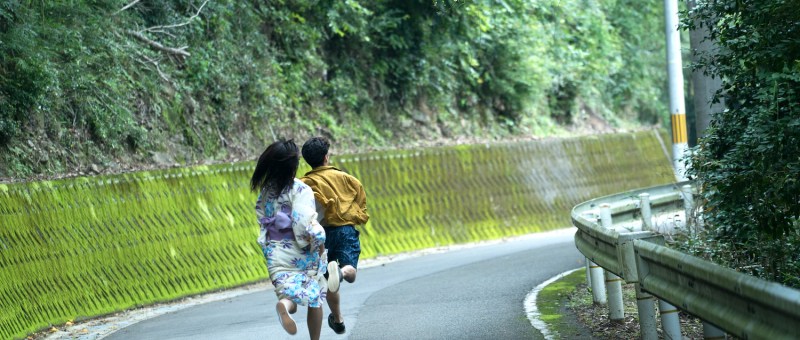

“You can run but not from yourself” a gruff but sympathetic farmer explains to a fugitive young couple, astutely perhaps understanding the quality of their flight. Less a lovers on the run romantic fantasy than a gentle character study in trauma and insecurity, Bunji Sotoyama’s Soirée (ソワレ) finds its two wounded youngsters struggling to find safety and security in an increasingly indifferent society in which they are perhaps expected to care for an older generation they may feel has long since abandoned them.
Aspiring actor Shota (Nijiro Murakami) for instance has been participating in a spate of “It’s Me!” scams targeting the older generation in which they are convinced that their grandson has been involved in some sort of trouble and is in desperate need of money. We can see by the ambivalent look on his face that he hates himself for his “role” in this sordid piece of modern day drama but also that it plays into his self-destructive conviction that he is no good and cannot achieve conventional success. His need for slapdash, quick fix solutions is further driven home by the coach at his acting class who gives him a very public dressing down for coming in unprepared, insisting that he’ll never move anyone until he gets some real life experience and engages with the text.
While Shota takes an envelope from an anxious grey-haired old lady, Takara (Haruka Imou), a withdrawn young woman working at a nursing home, gently brushes another’s hair only for her to suddenly disappear while Takara hums a comforting lullaby. We witness her nervousness at the unexpected ring of the doorbell and the panic attacks when some of the older gentlemen mistakenly grab at her, later realising they are each responses to a deep-seated trauma as revealed by a letter telling her that her estranged father who had been in prison for long term abuse is about to be released.
The pair eventually meet when Shota returns to his hometown with an acting troupe hired to put on a play at the home though things get off to an ominous start when one of the old ladies suddenly collapses while working with the actors, the head of the troupe rather cynically musing on DNR orders and the desires of some absentee children to keep their parents alive in order to continue receiving their pension. These contradictory impulses, Takara’s warmth and compassion towards the elderly people in her care and Shota’s wilful exploitation of their weakness, is brought home when Takara’s father suddenly returns, barges his way into her home asking for a fresh start claiming to have paid his debt, and then proceeds to rape her all over again. Discovered mid-act by Shota who had come to collect her for the local festival, Takara eventually stabs her father with a pair of dressmaking scissors in order to protect him, the pair thereafter finding themselves on the run.
Coming to her senses, Takara intends to hand herself in but is convinced by Shota to make a run for it. “Why do the ones who struggle most get hit worst, why do the weakest always lose?” he ironically asks her, “We weren’t born to be hurt”. Yet their contradictory qualities are only further highlighted as they try to chart a new course for themselves. The pair find temporary refuge with a pair of plum farmers who take pity on them thinking they are a young couple eloping as apparently they once were, only Shota later makes a half-hearted attempt to rob them which he quickly gives up on being challenged by the sympathetic husband. In the next town, Takara determines to look for work while Shota tries to make money through bicycle races and pachinko, chastened by her admonishment on finding employment that it’s possible to support oneself without cheating others.
Somewhat tritely, Shota tries to tell her that God never burdens you with more than you can bear, while the older woman at the plum farm also offers that plums are all the sweeter for their suffering during a harsh winter dangerously playing into a notion of internalised shame that told Takara she would blossom into the kindest soul who ever lived once her suffering was over only to leave her feeling empty and despoiled as if she somehow deserved everything that happened to her. Shota’s troubles are by comparison small, his conservative brother irritatedly telling him he should accept he has no talent and get a real job, while he too perhaps thinks he is empty inside and therefore incapable of moving anyone just as his director told him. Finding salvation in mutual acceptance they begin to see the “way out” only for their essential connection to be threatened by its very existence.
A melancholy character study through the legacy of trauma and toxicity of internalised shame, Sotoyama’s occasionally ethereal drama takes on the qualities of a fable through the repeated allusions to princess Kiyohime and her doomed love for the wandering monk Anchin yet he is careful enough to hold out a ray of hope for each of the wounded lovers in their apparently fated connection even as they struggle to find refuge in an often hostile society.
Soirée streamed as part of the 2021 Japan Foundation Touring Film Programme.
Original trailer (English subtitles)


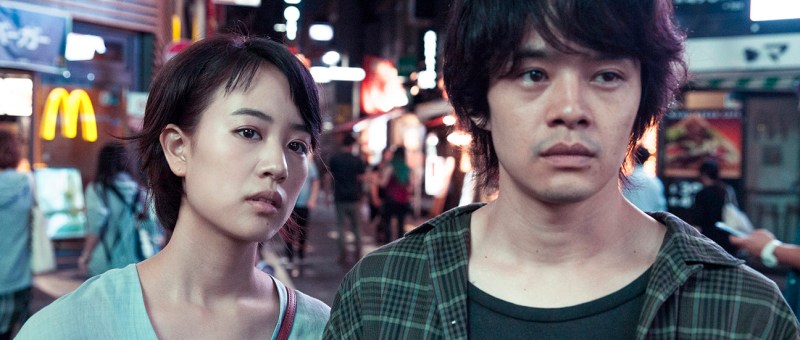
 Learning to love Tokyo is a kind of suicide, according to the heroine of Yuya Ishii’s love/hate letter to the Japanese capital, The Tokyo Night Sky is Always the Densest Shade of Blue (夜空はいつでも最高密度の青色だ, Yozora wa Itsudemo Saiko Mitsudo no Aoiro da). This city is a mess of contradictions, a huge sprawling metropolis filled with the anonymous masses and at the same time so tiny you can find yourself running into the same people over and over again. Inspired by the poems of Tahi Saihate, The Tokyo Night Sky is at once a meditative contemplation of city life and an awkward love story between two lost souls who somehow find each other in its crowded backstreets.
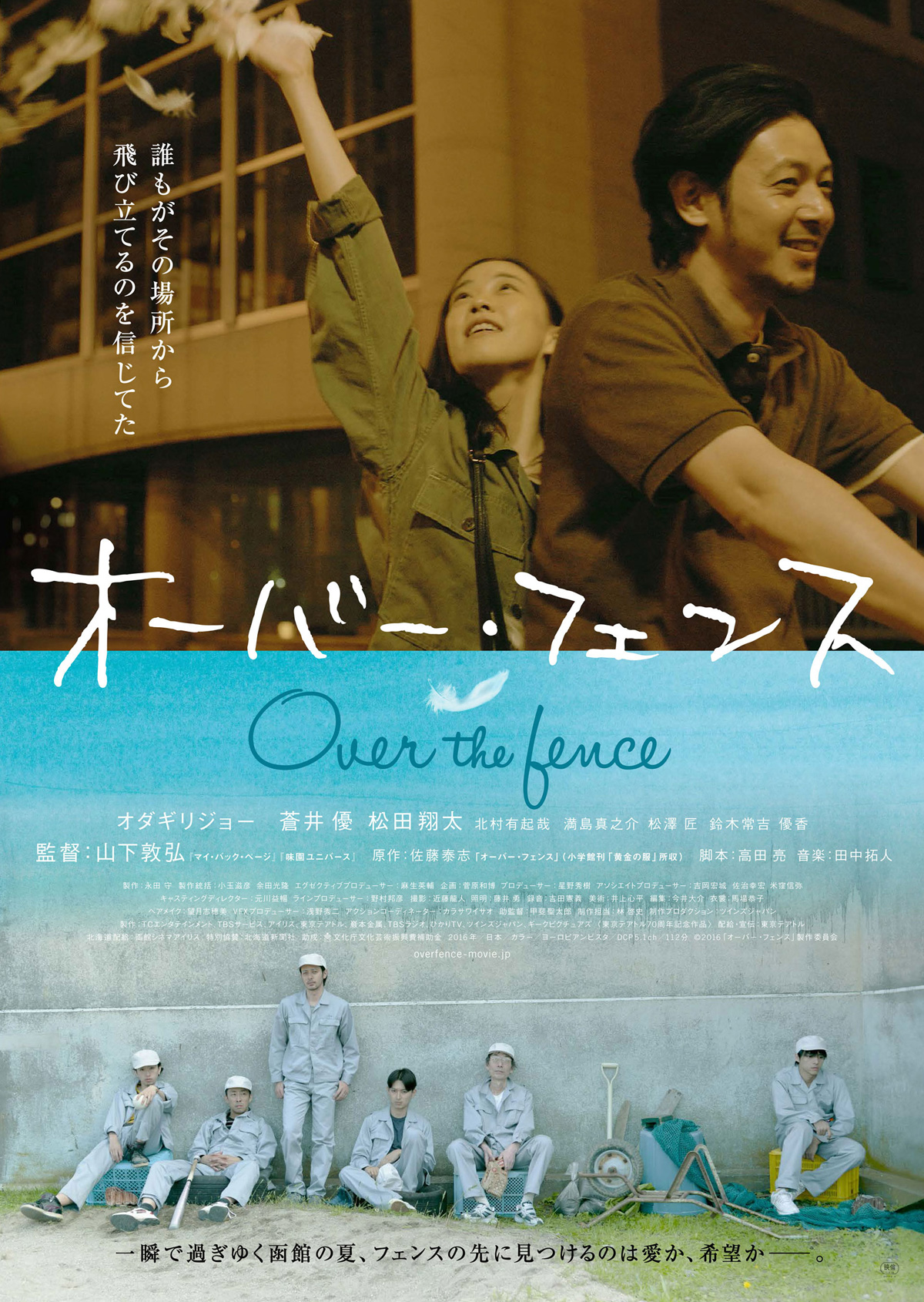 Nobuhiro Yamashita may be best known for his laid-back slacker comedies, but he’s no stranger to the darker sides of humanity as evidenced in the oddly hopeful Drudgery Train or the heartbreaking exploration of misplaced trust and disillusionment of My Back Page. One of three films inspired by Hakodate native novelist Yasushi Sato (the other two being Kazuyoshi Kumakiri’s Sketches of Kaitan City and Mipo O’s The Light Shines Only There), Over the Fence (オーバー・フェンス) may be among the less pessimistic adaptations of the author’s work though its cast of lonely lost souls is certainly worthy both of Yamashita’s more melancholy aspects and Sato’s deeply felt despair.
 As Japan’s society ages, the lives of older people have begun to take on an added dimension. Rather than being relegated to the roles of kindly grandmas or grumpy grandpas, cinema has finally woken up to the fact that older people are still people with their own stories to tell even if they haven’t traditionally fitted established cinematic genres. Of course, some of this is down to the power of the grey pound rather than an altruistic desire for inclusive storytelling but if the runaway box office success of A Sparkle of Life (燦燦 さんさん, Sansan) is anything to go by, there may be more of these kinds of stories in the pipeline.
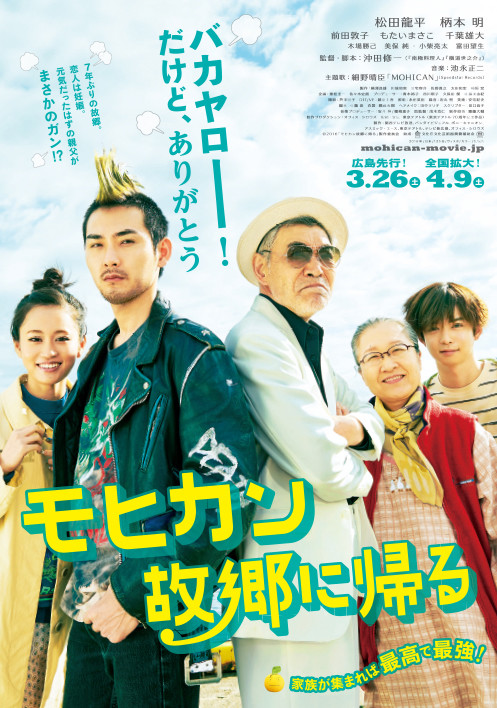 Japan may be famous for its family dramas, but there is a significant substrain of these warm and gentle comedies which sees a prodigal child return to their childhood home either to rediscover some lost aspect of themselves or realise that they no longer belong in the place which raised them. Shuichi Okita’s The Mohican Comes Home (モヒカン故郷に帰る, Mohican Kokyo ni Kaeru) includes an obvious reference in its title to Keisuke Kinoshita’s colourful 1954 escapade
  Post-golden age, Japanese cinema has arguably had a preoccupation with the angry young man. From the ever present tension of the seishun eiga to the frustrations of ‘70s art films and the punk nihilism of the 1980s which only seemed to deepen after the bubble burst, the young men of Japanese cinema have most often gone to war with themselves in violent intensity, prepared to burn the world which they feel holds no place for them. Tetsuya Mariko’s Destruction Babies (ディストラクション・ベイビーズ) is a fine addition to this tradition but also an urgent one. Stepping somehow beyond nihilism, Mariko’s vision of his country’s future is a bleak one in which young, fatherless men inherit the traditions of their ancestors all the while desperately trying to destroy them. Devoid of hope, of purpose, and of human connection the youth of the day get their kicks vicariously, so busy sharing their experiences online that reality has become an obsolete concept and the physical sensation of violence the only remaining truth.
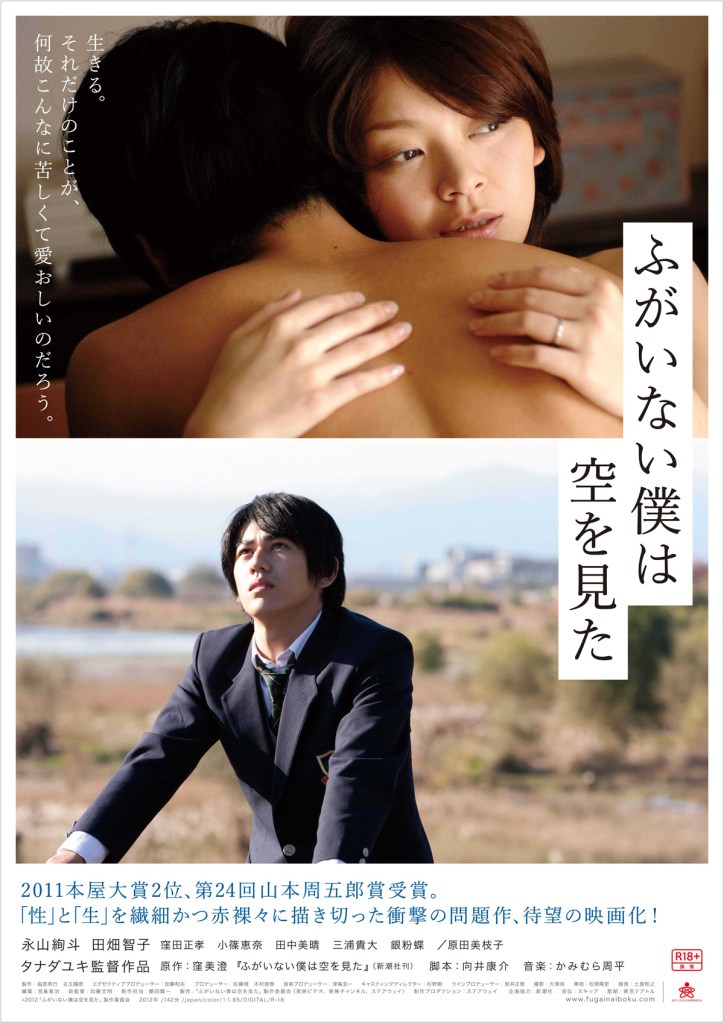 The work of director Yuki Tanada has had a predominant focus on the stories of independent young women but The Cowards Who Looked to the Sky sees her shift focus slightly as the troubled relationship between a middle aged housewife who escapes her humdrum life through cosplay and an ordinary high school boy takes centre stage. Based on the novel of the same name by Misumi Kubo, The Cowards Who Looked to the Sky (ふがいない僕は空を見た, Fugainai Boku wa Sora wo Mita) also tackles the difficult themes of social stigma, the power of rumour, teenage poverty, elder care, childbirth and even pedophilia which is, to be frank, a little too much to be going on with.
 Windows on Worlds