Hiroshima (ひろしま, Hideo Sekigawa, 1953)

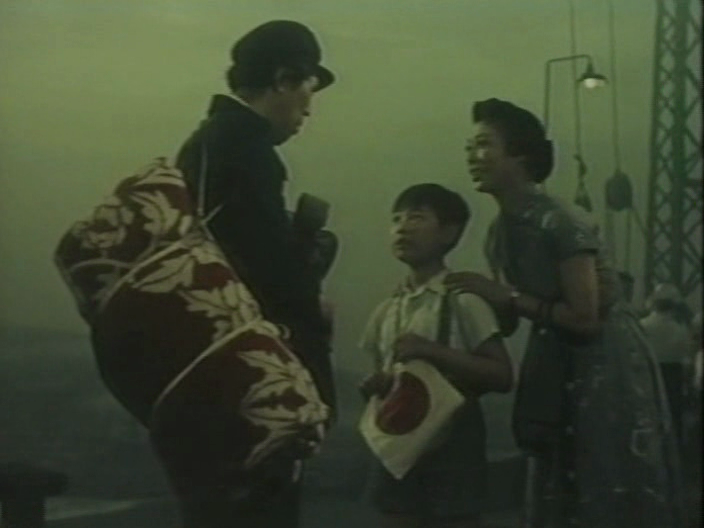
During the post-war occupation of Japan which lasted until 1952, the censorship regulations which replaced those of the militarist era perhaps ironically made it more or less impossible to criticise the US presence or depict the extent of wartime devastation lest it raise hostility towards American forces or reinforce a feeling of victimisation. For this reason, images of the atomic bombings were tightly controlled and the events rarely referenced in mainstream media, Hiroshi Shimizu’s Children of the Beehive being a notable if brief exception. Once the occupation was over, however, many assumed it would become easier to broach such taboo subjects. 

Hiroshima native Kaneto Shindo’s comparatively better known Children of Hiroshima, inspired by the book Children of the A Bomb: Testament of the Boys and Girls of Hiroshima, was released in 1952 shortly after the censorship regulations were lifted and stars his later wife Nobuko Otowa as a teacher who returns to Hiroshima to visit the graves of her parents killed in the atomic bombing and thereafter several of the children from a nursery school she once taught at who have survived but continue to suffer in various ways due to their experiences. Despite Shindo’s well known leftist credentials, many including the Japan Teachers’ Union who apparently owned the rights to the book though there is some dispute as to their involvement in the production, were disappointed with the film which they felt to be an overly sentimental studio melodrama that was ultimately unhelpful in supporting the anti-war political movement or accurately representing the hibakusha community. 

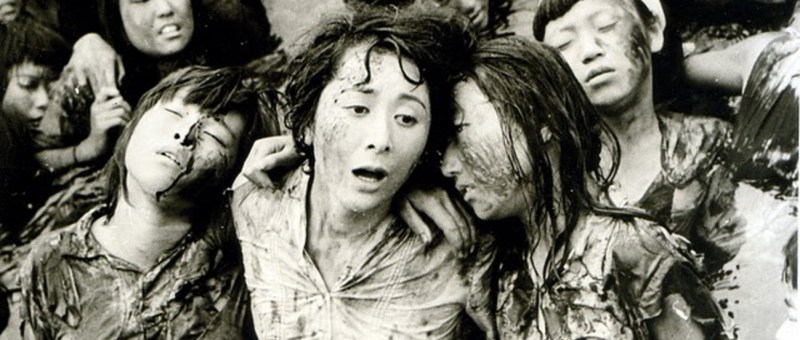
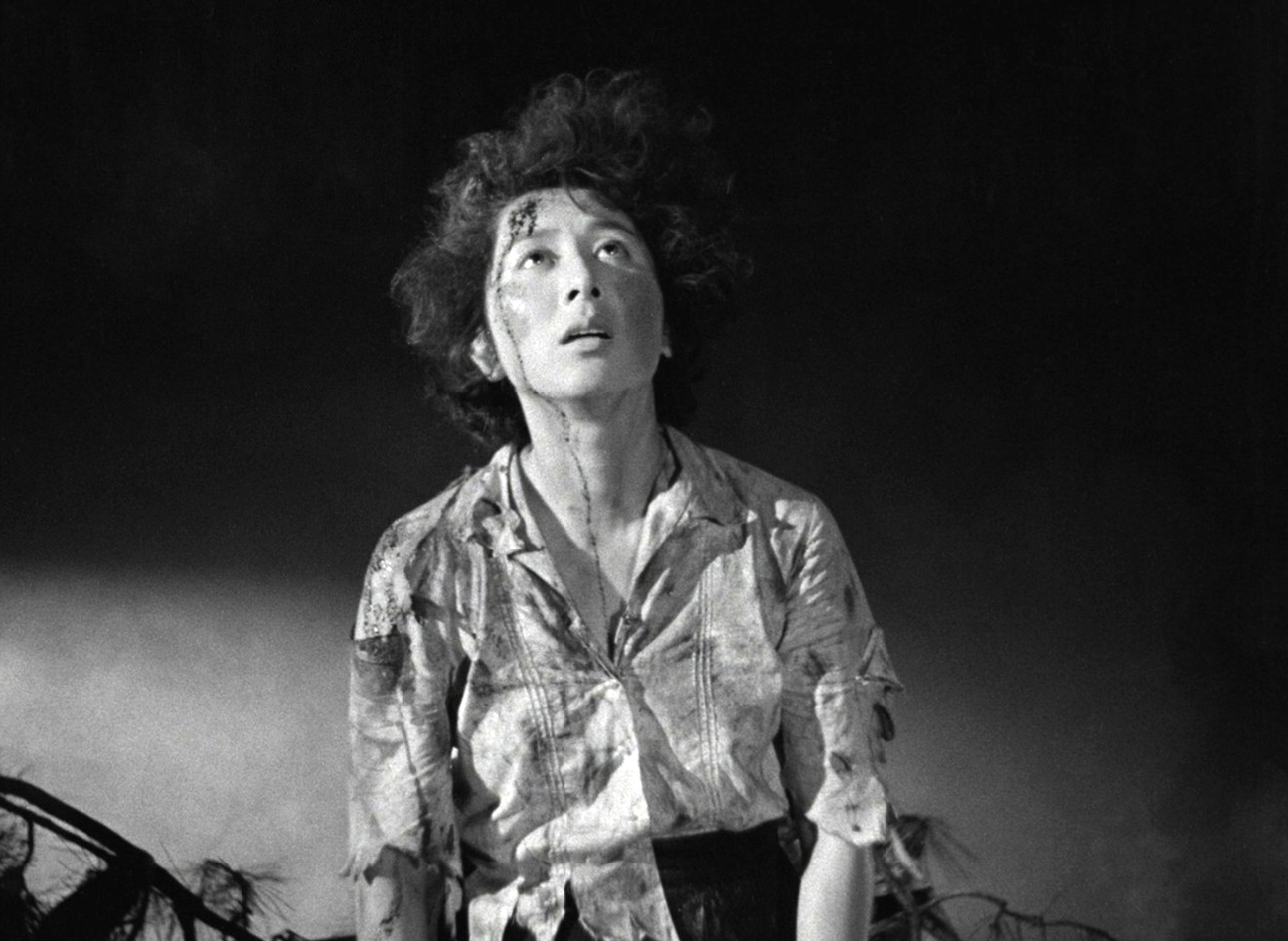
In response, the JTU commissioned a second version in order to better reflect their aims and ideals. Long unseen in either Japan or internationally prior to its recent restoration, Hideo Sekigawa’s Hiroshima (ひろしま) adopts a much more strident docudrama approach while, like Children of Hiroshima, maintaining a focus on the plight of children during the bombing and beyond though it seems somehow unlikely that teachers and parents would be wholeheartedly enthusiastic about showing such a deliberately harrowing piece to a sensitive younger audience. One criticism of Shindo’s film had been that he’d dodged dealing with the bombing itself by concerning himself only with the present-day aftermath. Sekigawa meanwhile focuses directly on the traumatic instant of the attack, utilising expressionistic techniques to recreate the living hell to which the city was reduced literally in flash. 

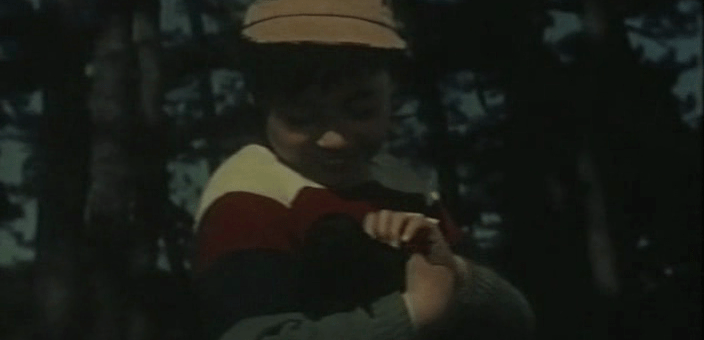
It’s clear however that the normal of that day was already far from normal. Rather than go about their studies, school children are working hard for the war effort helping to clear extensive bomb damage. A teacher and a class of school girls salvaging roof tiles from a ruined building pause to look at the sky. They can hear bombers but no sirens and it’s in that moment of stillness that everything changes. The world as it was implodes and is left in total collapse. Survivors search desperately for loved ones while stumbling through an unfamiliar landscape filled with crying children, charred bodies, rubble and fire. “This is hell” an injured man groans after managing to make his way to the field hospital, “hell”. 

Sekigawa bookends his tale with a contemporary framing sequence in which an idealistic teacher tries to instil compassionate values in his students some of whom are survivors of the bomb and still living with its effects including one suffering with radiation-related leukaemia who becomes very upset on listening to a radio lesson recounting the morning of the bombing from the point of view of the pilot flying the plane. Another of the students later comes to her defence, taking some of the others to task and lamenting that the suffering of those affected by the A Bomb is not taken seriously while victims still undergo a degree of social stigma even if they have no visible wounds. He is also very worried about his friend, Endo (Yoshi Kato), who later appears in the flashback to the aftermath of the bombing and has apparently gone off the rails, working in a cabaret bar and addicted to pachinko after losing his entire family. 

It’s through Endo that Sekigawa dramatises many of the secondary effects of the bombing in that he was not physically injured but is consumed by a sense of hopeless anxiety, intensely concerned about the prospect of another war and unable to envisage a successful future for himself in a world in which such horror can occur seemingly at random. It’s he who first introduces us to the parasitical disaster tourism that generates a grim trade in A-Bomb “souvenirs” as he passes a stall selling fake skulls as a child and then later attempts to sell actual human remains with inspirational stickers plastered on the top. The “better” future they have imagined for him is however in itself problematic, harking back to the traditional post-war solution of a factory job which directs aligns him with the nation’s push towards a capitalistic society, but is then undercut when he quits not because he is bored or lazy but because he discovered the factory was being used to produce artillery shells and he felt he could have nothing to do with it. 

Endo is also among a group of post-war street kids who learn to say the word “hungry” without knowing what it means to get bread and chocolate from passing Americans. A later more direct speech has them make a formal accusation that the Americans are responsible for the deaths of their parents and therefore bear a responsibility towards them which they should immediately repay with food. Some, including Shochiku who were originally set to distribute but later declined, described the film as overly anti-American, but Hiroshima largely refrains from mentioning the Americans other than a suggestion that the dropping of the bomb was itself a racist act in which they used the Japanese people as guinea pigs to test their new weapon, and focuses on the failure of the militarist authorities to respond in an appropriate fashion. We see a soldier read out a proclamation telling a ragged queue of survivors queuing up for food that the situation is “not unusual” in time of war and they should all return to their jobs despite the fact that there are no longer any buildings in which to work. Meanwhile, militarists talk of using the disaster to foment the war effort by marshalling hate and resentment towards the enemy while commanders refuse to take scientific advice that tells them Hiroshima may be uninhabitable for the next 70 years, obsessed only with continuing the war at all costs ironically insisting that their “fervent will” which “burns as brightly as a million stars” will bring them an assured victory.  

In the face of a second bombing, however, they are forced to accept that the war cannot continue, many of the victims left perplexed and defeated that despite their suffering the government has unconditionally surrendered and seemingly abandoned them. An abnegation of responsibility is also suggested by the presence of the street kids abandoned by their society and left to fend for themselves though Endo is eventually taken into a progressive care home from which he and other boys make numerous attempts to escape, in his case in the hope that he can find the sister from whom he became separated. Sekigawa does not make suggestions for the future, merely depict the difficult post-war reality while arguing for greater compassion in the contemporary era, one bomb survivor describing her despair in the knowledge that her disability is a barrier to marriage while finding work that can be done with her physical limitations is also difficult as is accessing government support. Sekigawa too may give in to a particular kind of sentimentality in the closing moments but it is indeed undoubtedly effective as a reminder of the human cost of war and our collective responsibility to ensure that it never happens again.
Yellow Crow (黄色いからす, Heinosuke Gosho, 1957)

A small family struggles to repair itself after eight years of wartime separation in Heinosuke Gosho’s post-war melodrama, The Yellow Crow (黄色いからす, Kiiroi Karasu). Rather than focus directly on the legacy of the traumatic past, Gosho takes aim at war itself in making plain that the family’s problem is the time that was stolen from them each in a way forced to address the gulf between the idealised family life they may otherwise have had and the post-war reality. 

As the film opens, nine-year-old Kiyoshi (Koji Shitara) is sketching with his class at a temple. His teacher Miss Ashiwara (Yoshiko Kuga) is a little worried about the strange picture he’s drawing, noting that where once he had been a happy child painting cheerful pictures in vibrant colours now he only uses black and yellow and there’s unsettling quality in his composition. Still, trying to comfort him she tells Kiyoshi not to worry and that he’s free to draw whatever he likes, only later showing the paintings to a child psychologist who advises that these colours are often used by children who are anxious and lonely usually because they’ve lost a parent in the war. Only, Kiyoshi is lucky because he has both a mother and a father, his dad having been recently repatriated from China after being interned as a prisoner of war. 

In a sense it’s Miss Ashiwara’s misconception that the family must be happy because they’ve been so fortunate that lies at the centre of the conflict. Mother Machiko (Chikage Awashima) and father Ichiro (Yunosuke Ito) are so keen to get back to “normal” that no one really tries to address the obvious problems of their situation merely to reassume the lives they led before the war. For little Kiyoshi who wasn’t even born when his father left that sense of normality is very different and necessarily disrupted by his father’s return in what can only seem like an intrusion into closeness he had previously shared with his mother. 

Where another director or screenwriter may have told the entirety of the story from Kiyoshi’s point of view, Gosho pulls back to show us the way the adults struggle and suffer in their confusion and disappointment. On the surface, it does not seem that Ichiro has been particularly affected by his wartime service, rather the problem is in his frustrated attempts to reintegrate into a society which is entirely different from the one he left. He himself is older, and is perhaps acutely aware that he is a stranger to his son at first hurt by his shyness and reluctance to acknowledge him but then consumed by a sense of failure in a working life that leaves him little time to bond with his son leaving Kiyoshi with yet another sense of rejection. Meanwhile though his job was kept open for him, the nature of the business has changed. His boss is much younger than he is and has no interest in training an old timer he thinks is only really there as a goodwill gesture. As his friend points out, had it not been for the war he’d be a manager by now but as the boss puts it he’s returned to Japan “too late”. 

All of this adds to his sense of displacement and contributes to his increasingly harsh treatment of Kiyoshi, constantly discouraging all of his interests such as his fascination with animals and talent for drawing telling him only that he should be studying useful things like maths and science. His parenting style is evidently much more authoritarian than Machiko’s had been, often taking the view that Kiyoshi has been spoiled and needs some discipline instilling in him. But Kiyoshi reads his father’s treatment of him only as rejection, that must think he’s a bad boy and not want him. The resentment he feels only grows when the parents have another child, Mitsuko. It’s obviously much easier for Ichiro to bond with her than the already grown Kiyoshi while Machiko is both weak from the birth and mindful of a new responsibility all of which leaves Kiyoshi feeling pushed out and unwanted. He often takes refuge at the home of the kindly woman next-door, Yukiko (Kinuyo Tanaka), and her adopted daughter Haruko with whom he rescues animals, including a wounded crow, much to his father’s consternation. 

Always the wise observer, it’s Yukiko who finally tries to coax Machiko towards a resolution to challenge her husband’s authoritarianism. After his father accuses him of being a threat to Mitsuko and tries to shut him in the shed overnight, finally releasing his pet crow, Kiyoshi tries to run away and later returns to Yukiko’s house where he asks her to adopt him. Listening in secret, Machiko is heartbroken realising that they’ve been going about this all wrong, too busy trying blindly reassume the lives they had before when they should have met each other with more compassion and understanding trying to listen to Kiyoshi, who can admittedly at times be difficult and unreasonable unwilling to recognise when he is in the wrong, rather than instantly scolding him. Machiko’s story perhaps fades into the background, but she too is struggling having realised that her hopes that everything would finally be alright now that Ichiro has returned were misplaced while caught between her husband and her son with a baby daughter to care for trying to keep the peace if nothing else.   

Gosho apparently chose yellow after consulting with child psychologists* and filmed in full colour to make the most of Kiyoshi’s attempts at artistic expression while capturing his youthful sense of loneliness and displacement, but equally treats his parents with a degree of sympathy for their own confusion and disappointment. Ichiro is not a bad man and often trying his best but frustrated, admitting that he would have liked to simply forgive Kiyoshi and get closer to him as his father but for whatever reason found himself lashing out in misplaced anger. The message for the post-war society is then one of generalised compassion, that there’s no point blindly trying to reassume one’s life as if nothing had happened and patience and mutual understanding will be necessary to repair the bonds that war has corrupted. Thus it is Ichiro who has to change, dropping his authoritarian distance in deciding to be kinder to his son finally going out to look for him when he tries to run away in the middle of a storm returning the colours to Kiyoshi’s world as he begins to feel more secure in his familial connections in the knowledge that he is loved and wanted as a child of the new post-war generation. 


*Arthur Nolletti Jr., The Cinema of Heinosuke Gosho: Laughter Through Tears, pg. 185

The Catch (飼育, Nagisa Oshima, 1961)

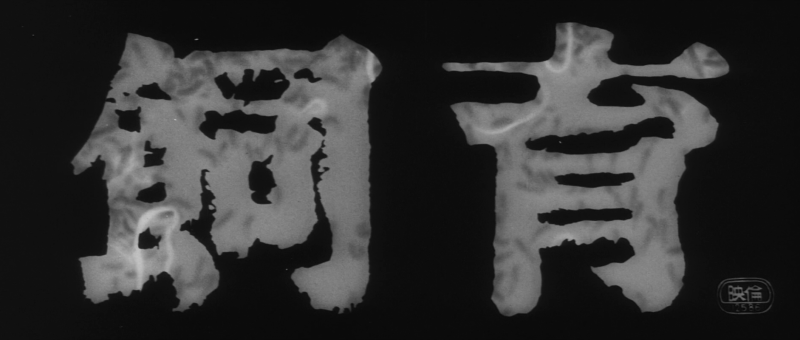
The Catch poster1960 was a turbulent year for many, not least among them Nagisa Oshima who dramatically broke his contract with Shochiku after the studio withdrew Night and Fog in Japan on grounds of sensitivity after the leader of Japan’s Socialist Party was murdered by a right-wing assassin live on TV. 1961’s The Catch (飼育, Shiiku), an adaptation of a novel by Kenzaburo Oe, was Oshima’s first post-studio picture and as uncompromising as anything else he’d worked on up to that point. Unlike many other filmmakers of the post-war generation who had been keen to use the corruption of the war as an excuse for a failure of humanity they now thought could be repaired, Oshima suggests that the rot was there long before and all the war did was give it justification.

In the summer of 1945, a small village captures a black American airman (Hugh Hurd) shot down over a nearby forest. They are originally quite jubilant about their act of heroism, believing that they will eventually be rewarded by the authorities, but are then irritated by their new responsibility. They are already low on food, and now they’ll have to feed this full grown man or risk being branded as amoral war criminals. Predictably, nobody wants to be saddled with looking after him until the authorities arrive with further instructions or knows what to do now, so in time-honoured fashion they tie him up in a shed and hope for the best. Only latterly when one of the children points it out do they realise that they should probably remove the bear trap attached to the airman’s foot which may already be infected seeing as he seems to be in a considerable amount of pain and is running a high fever.

It goes without saying that villagers are extremely racist, using quite pointed racial slurs and dehumanising language to describe their captive, even when others stop to remind them that he is after all human too even if he’s an enemy. Just as their sons and husbands are overseas fighting, and dying, bravely for the emperor so was this man valiantly risking his life for his country. Shouldn’t he be accorded some respect just for that? Wouldn’t they want that for their sons too?

Sadly thoughts are thin on the ground, as is food. Jiro (Toshiro Ishido), a young man shortly to enlist, wants a bag of rice off his dad to take into town to buy a woman, but his dad doesn’t have any because he’s already in debt to the immensely corrupt village chief (Rentaro Mikuni). Jiro eventually satisfies himself with a sexually liberated high school girl evacuated from the city and thereafter disappears – the first of many negative events to be randomly blamed on the captive airman. Meanwhile the village chief is responsible for a series of problems because of his out of control need for sexual dominance which sees him apparently abusing his daughter-in-law (Masako Nakamura) and attempting to assault a young widow (Akiko Koyama) with two children evacuated from the city and otherwise undefended in the village.

The rot here is feudalism, the idea that gives free rein to the village chief to misuse his position for his own satisfaction – extracting sexual favours from the women and controlling the men economically. Because he’s the village chief no one really questions his authority or his orders, so when he says all the problems are new and caused by the “black monster” they’ve brought into the village then everyone believes it to be true. The airman, who cannot be responsible for any of these crimes because he is still recovering and locked up in the shed, becomes a scapegoat for every bad thing that has ever happened in the village. More than an embodiment of the war, he is a symbol of all the external pressures that the village would like to pretend are the reasons it has turned in on itself.

Yet the airman is only one kind, the deepest kind, of other. The village hasn’t quite even integrated its evacuees who also constitute a secondary community. The young woman’s two starving children are repeatedly caught with their fingers in other people’s rice jars and receive little sympathy from the villagers, but their crimes only expose the fact that the man who has sheltered them, and also owns the shed where the airman is kept, has been keeping quiet about people thieving his potatoes. He knows it’s not the widow because there are simply too many taken to feed a small family of three, which means that there are probably several “thieves” among the villagers, content to betray their neighbours in thinking that the wealthy farmer won’t miss a measly few root vegetables.

Predictably, rather than deal with the problem, everyone obsesses over the idea that the corruption is born only of the airman and if they could just eliminate him everything would go back to “normal” – i.e. the feudal past in which everyone does what the village chief says and lives in superficial harmony without complaining about their reduced status as lowly peasants forced to live in penury by an unfair and essentially corrupt system. To cure the discord between them, they decide that the airman must be killed, no longer caring about the censure they may face from the authorities. Only two young boys stick up for him, remaining sane amid the madness all around them in insisting that the airman is a person too, is unrelated to the village drama, and deserves his dignity and respect. Sadly, however, the madness has already taken hold.

On learning that the war is over, the villagers refuse to reflect on their behaviour and seek only to bury the past, superficially smoothing over their barbarity with convenient justification. They receive the news that the American authorities do not trust the Japanese with surprise and hurt, despite the fact they are living proof of the reasons why they would be foolish to do so. We gave him white rice while we ate potatoes, he had goats milk, they say, what more could he have wanted? The answer is self evident, but it’s already been forgotten. The villagers start blaming each other, and eventually settle on another scapegoat – a deserter, as if another death could tie all of this into a neat bundle to be burned away on a funeral pyre as if it never existed at all. The evacuees are invited to leave, and the villagers start thinking about the harvest festival, as if the evil has been excised and everything is returning to the way it’s supposed to be, but this “peace” is brokered on the back of secrecy and an abnegation of responsibility. A grim exposé of man’s essential cruelty and selfishness, The Catch rejects the tenets of post-war humanism to suggest that the corruption of feudalism has not and may never be eliminated at least as long as a nation remains content to bury its past along with its shame.


Short clip (English subtitles)

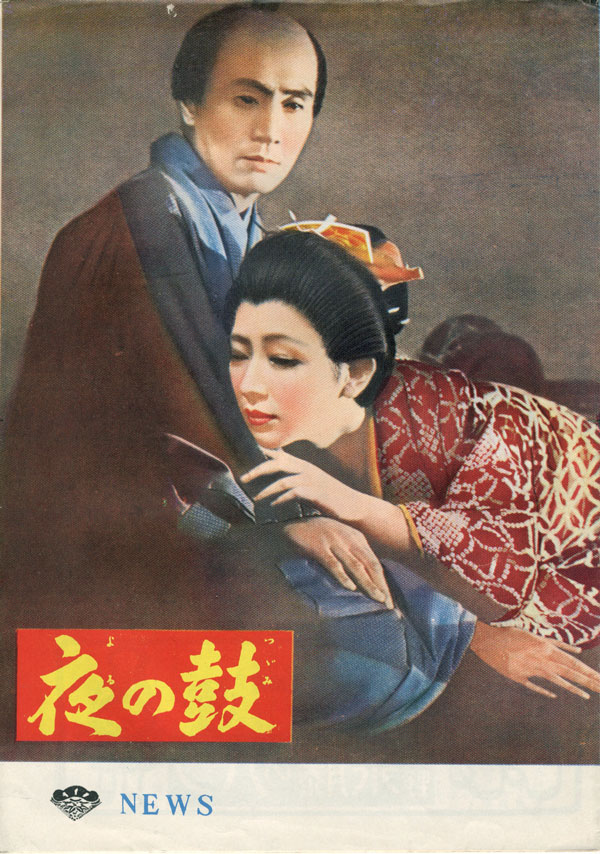
Night Drum (夜の鼓, Tadashi Imai, 1958)

night-drum

The works of Chikamatsu Monzaemon continue to have a large influence over Japanese drama even if not as frequently and directly adapted as they were in the immediate post-war period. Famous for tales of tragic love suicides and romantic heroes who risk all in the service of deep emotion, Chikamatsu’s works perhaps found even greater resonance in the turbulent years in which individual freedom and adherence to tradition found themselves in even greater conflict than ever before. Tadashi Imai makes the most of Chikamatsu’s melancholy fatalism to take a sword to the samurai order itself with all of its arcane rules and the essential hypocrisy which underlines its cruelty.

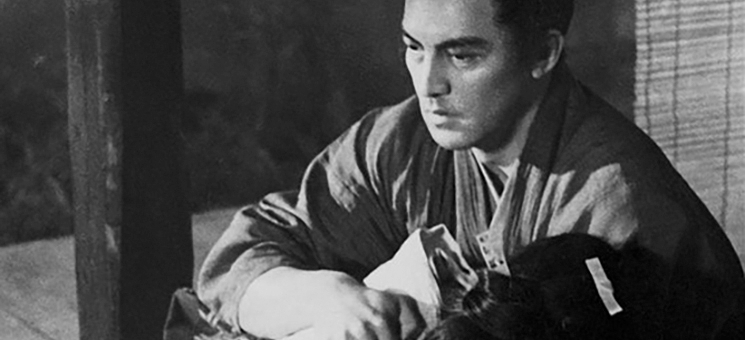
Hikokuro Ogura (Rentaro Mikuni) has been in Edo for a year with the shogun and is now on his way home. Stopping at an inn, he has a low level argument with his brother-in-law who warns him the men are getting restless and need to blow off some steam preferably with some sake. Hikokuro is in charge of the purse strings and knows all of this pageantry costs money the clan do not quite have hence he’s reluctant to fritter it away on alcohol no matter how much the men might resent him for it.

That’s not to say Hikokuro is a particularly officious person, he’s kind and cheerful by nature but also tired and eager to get home after such a long time away. His wife, Otane (Ineko Arima), is very happy to see him but something seems different about her and there’s a tension in the air among some of the other women. It seems, there are rumours about Otane and a travelling musician (Masayuki Mori) who frequented the house during the summer while Hikokuro was away. Rumours are often just that, especially in these petty circles of nobility, but female adultery is punishable by death and so is not something to be gossiped about idly.

Night Drum (夜の鼓, Yoru no Tsuzumi) begins with the ominous sound of the drum itself, beating out the inevitably tragic fate of all concerned with a melancholy fatality. The tale proceeds in a procedural fashion as the authorities become involved, hearing witness testimonies and trying to discover if there could be any truth at all in these unpleasant rumours. Matters are further complicated by the pecuniary difficulties the clan currently finds itself in – the elders are half hoping it is true because it would be a good excuse to expel the Ogura household and thereby save the money which goes on its upkeep. They are aware, however, that they’re talking about the life of a previously unblemished woman as well as the ruin of her extended family.

The life of a retainer is not as easy as it sounds and we’re constantly reminded of just how much money is necessary to keep up appearances. The clan authorities are dismayed when they hear of Otane earning money on the side through needlework though other retainers are quick to confess their wives also help out, they just can’t survive on such meagre stipends. Each lord is required to hire servants as befits their status but they aren’t given the money to do so. Hikokuro is also required to serve the shogun in Edo every other year for at least twelve months meaning Otane is left alone at home with almost nothing other than her needlework to do except wait patiently for her husband’s return.

Given these circumstances, it’s easy to understand how such pernicious rumours might begin. The sole basis of the evidence seems to rest on a tip off that Otane is thought to have been alone in a room with a man who is not her husband. That she may be put to death solely for the crime of sharing the same space as someone of the opposite sex seems extreme, but this is the feudal world where rules and propriety are all. The men can cavort with geishas to their heart’s content, but Caesar’s wife must be above suspicion.

The action unfolds piecemeal as each of the various witnesses offers their testimony of events. Given the gravity of the situation, few are eager to recount their suspicions – especially the other women who fear the rumour may be true but are also unwilling to believe it. Hikokuro does not want to believe it either but faced with such convincing, if circumstantial, evidence doubt creeps into his mind and finds an anchor in Otane’s guilt ridden behaviour. Ironically, this entire situation developed only because of Otane’s attempts to avoid it – remaining at an inn rather than travelling with a man on the road only for one of her husband’s friends to attempt to rape and blackmail her. Having had far too much to drink in an attempt to steel her nerves and cover up the embarrassing assault, Otane finds herself at the mercy of man who should have known better than to take advantage of another man’s wife in such a moment of weakness.

One stupid mistake born of alcohol, loneliness, and a series of male betrayals is enough to bring down the social order all on its own. Rentaro Mikuni plays the part of the previously affable wounded spouse with an exceptional level of nuance as he accepts his part in his wife’s downfall thanks to the the circumstances of their lives which have kept them apart and left her at the mercy of untrustworthy lords. There is anger here, and shame, but there is still love too which only makes the inevitable outcome all the more painful for everyone concerned. Hikokuro plays the part he’s expected to play, but it pains him and you can’t wipe a slate clean with blood. Imai has his eyes firmly on the civilised society with all of its rigid yet often cruel and unfair rules for living. Shot with a kind of hypnotic dreaminess in which each of our unfortunate players is swept along by events they are powerless to influence, Night Drum beats out the death knell of those who allow their individual desires to overwhelm their “civilised” conformity but it does so with a rhythm that is filled with anger rather than sorrow, for those who are forced to leave half their lives unlived in maintenance of the very system which oppresses them.