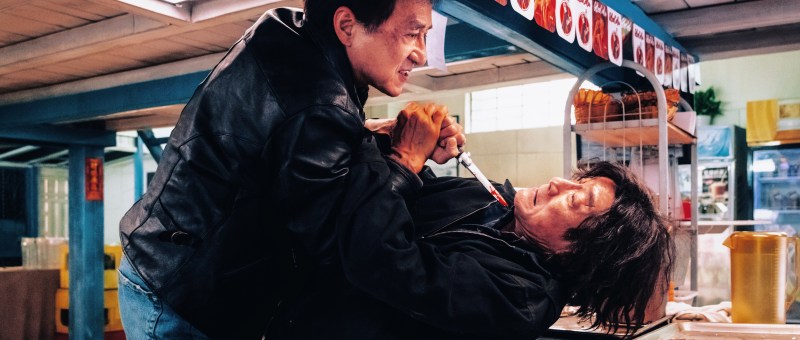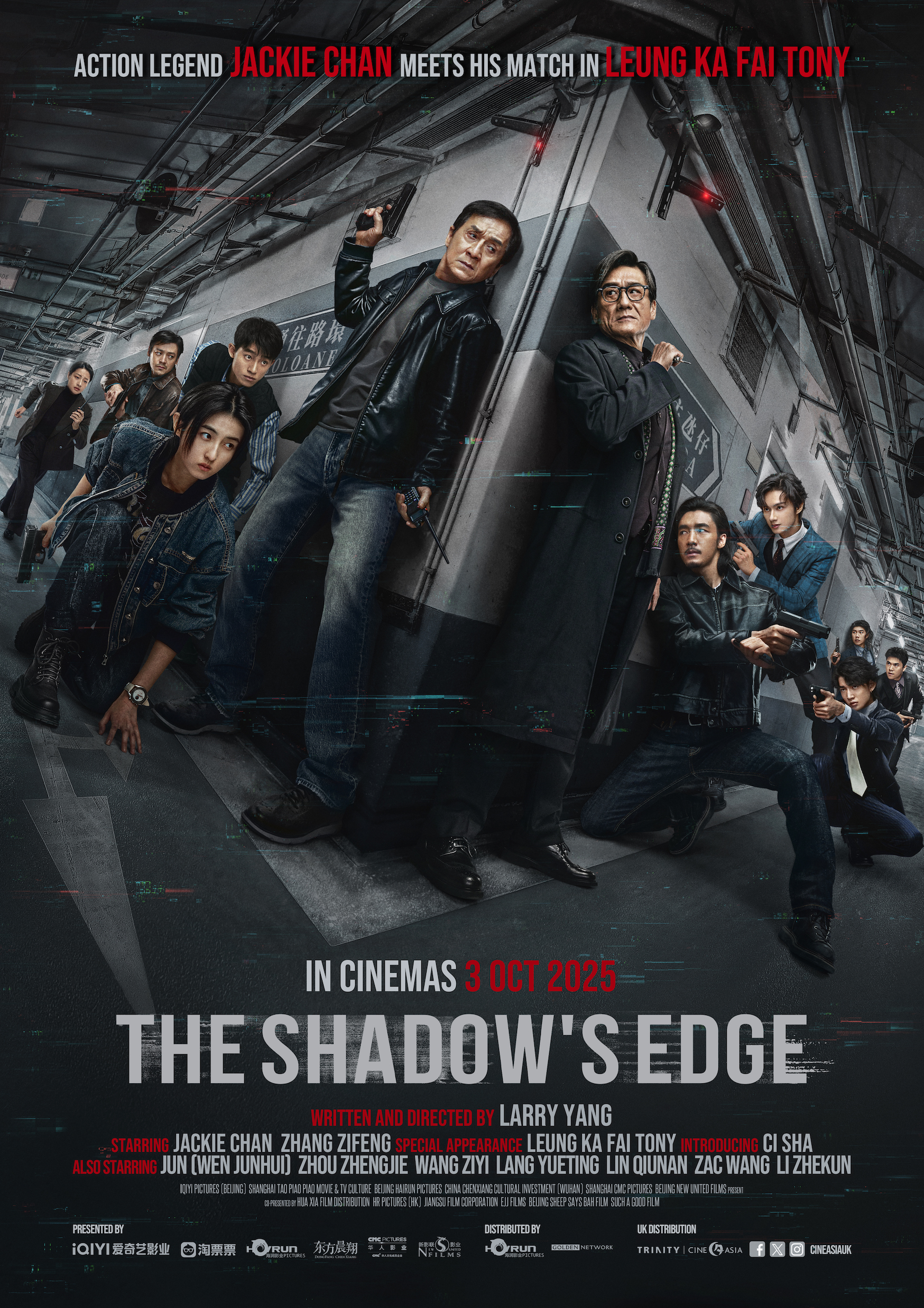
The Shadow’s Edge (捕风追影, Larry Yang, 2025)

China’s mass surveillance system has come to the rescue in many a recent action film, as if it were saying that China will always find you if you’re in trouble but perhaps also if you’re the one making it. A loose Mandarin-language remake of 2007’s Eye in the Sky, The Shadow’s Edge (捕风追影, Bǔfēng zhuīyǐng) takes a slightly different tack in being somewhat wary of AI-based technology and the way it’s already embedded itself so deeply in our lives as to have engendered a rapid deskilling of the younger generation. 

The Macau police force rarely conducts on the ground surveillance anymore and is heavily reliant on its network of video cameras along with facial recognition software. Madame Wang (Lang Yueting), however, the officer in charge ends up disabling the AI system because it’s proving unhelpful and undermining her authority. In any case, it leaves them vulnerable to interference and unbeknownst to them they’ve been hacked. A talented group of thieves have managed to throw them off the scent by manipulating the footage so it looks like their vehicle is in a completely different place while they’re busy committing the crime. The hackers have managed to combine new technologies and old in a much more successful way than the police as they use a mixture of traditional disguise techniques and well-honed spycraft along with video manipulation to evade detection. 

It’s at this point that the police decide they need to bring back someone who still remembers how to do analogue police work to teach them how to combat this new digital threat. The irony is that the hackers are also being led by a veteran espionage expert now in his 70s and known only as “The Shadow” (Tony Leung Ka-fai). Though it’s true enough that he knows the evil that lurks in the hearts of men, The Shadow has surrounded himself with a group of former orphans whom he has trained in the arts of surveillance and infiltration while they take care of all the new technological stuff. But it’s also a slight degree of hubris and a mishandling of the digital side that leads to a slip-up in which the Shadow’s face may have been captured on camera for the first time in decades. As he ages out, there is conflict between father and sons as the boys begin to resent the Shadow’s paranoia and over cautiousness, wondering why they don’t simply take the bigger prize without considering that it may be more difficult to claim and leave them vulnerable to retribution.

Wong (Jackie Chan), the former special forces veteran officer they bring in to train the youngsters experiences something similar in the awkwardness of his relationship with Guoguo (Zhang Zifeng), the daughter of his former partner who was killed on the job because of an error in judgement made by Wong. Guoguo has been consistently sidelined by the police team where she’s surrounded by incredibly sexist men who doubt her ability to do the job because of her gender and short stature, and now has conflicting feelings about Wong that are bound up with her father’s death and a fear of being patronised convinced that Wong too is reluctant to let her do her job out of a problematic sense of overprotection.

Nevertheless, she proves a natural at the old-fashioned art of surveillance and develops a more positive kind of paternal relationship with Wong than that the Shadow has with his band of orphans. In essence, Guoguo learns both how to be part of a team and how to lead it, while Shadow’s boys don’t really learn much of anything beyond ruthlessness and generational conflict. In any case, the answer seems to be that’s what’s needed is both old and new, and that an over-reliance on technology isn’t helpful while AI isn’t necessarily faster than a finely tuned mind like the Shadow’s or merely someone who knows the backstreets well enough to anticipate an exit route. Drawing impressive performances from both his veteran leads, Yang succeeds in blending expertly crafted action sequences with interpersonal drama and giving the film a slick retro feel through the use of split screens and impressive editing. A post-credits sequence also hints at a wider conspiracy in play and the potential of a sequel, which would certainly be a welcome development given the strength and ambition of this opening instalment.


The Shadow’s Edge is in UK cinemas from 3rd October courtesy of CineAsia.

UK trailer (English subtitles)

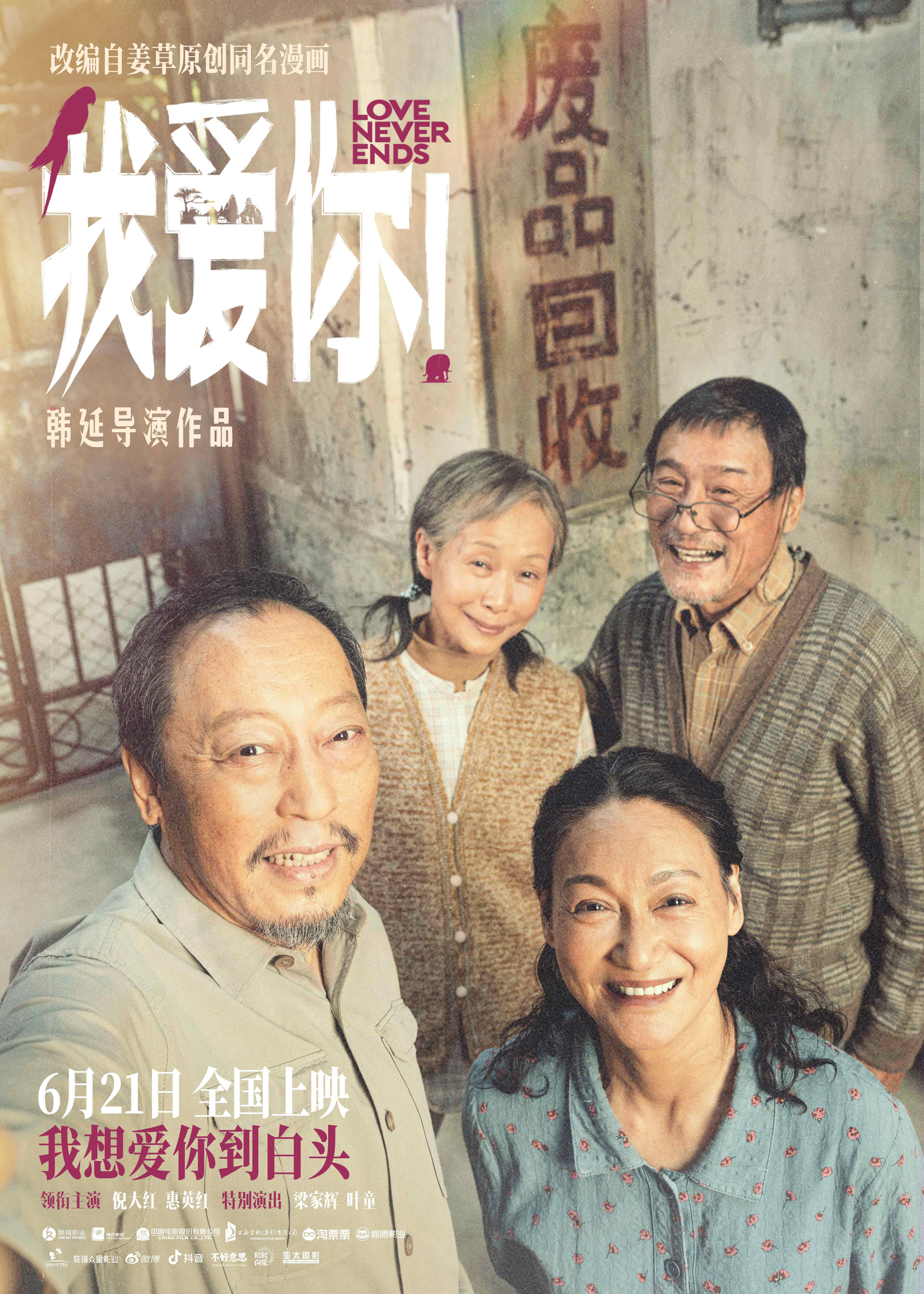
Love Never Ends (我爱你!, Han Yan, 2023)

The generational tensions in the contemporary society are gradually exposed when a retired mechanic begins to fall for a feisty widow in Han Yan’s quietly affecting romantic dramedy, Love Never Ends (我爱你!, wǒ ài nǐ). Based on a Korean webtoon by Kang Full the Chinese title “I Love You!” hints at its true intentions along with the potential for incongruity when exploring romantic courtship among the older population even as the film hints at the destructive cycles of repression and lost love in a still conservative culture. 

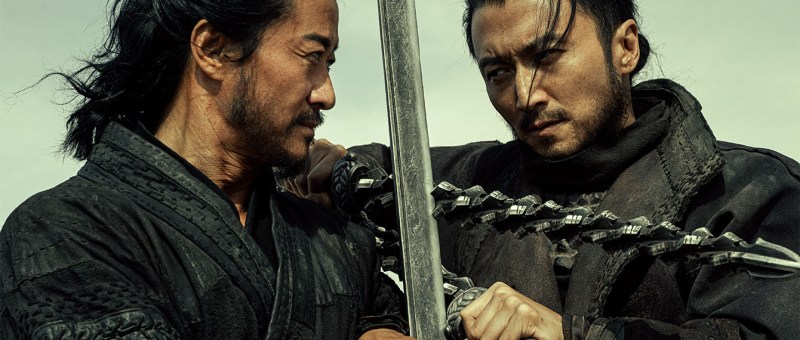
Something of a rebel, widower Wenjie (Ni Dahong) walks around with a chain whip clipped to his belt that should probably be illegal. He likes to get it out every now and then to whirl around while talking like the hero of a martial arts serial, claiming that his whip exists for truth and justice so he’s going to use it to punish unfilial children and heartless bullies. Quite frankly, it’s ridiculous and on this particular occasion he chooses the wrong side coming to the defence of a park manager who’s trying to move a pair of elderly scrap collectors on because inspectors will soon be arriving and he’s worried their presence will make him look bad. Wenjie mock slaps the woman, Ru (Kara Hui Ying-Hung), stopping his hand just before connecting with her face and then shatters her jade bracelet with the whip. It’s fair to say they don’t get off on the best foot, which is unfortunate as Wenjie soon discovers she is the carer for a former Cantonese opera star, Mrs Qiu (Lu Qiuping), his daughter desperately wants to take on her son, Sai, as a pupil. 

In one sense, the scene makes plain the battle for the use of space in urban environment, Wenjie insisting the park is for “everyone” to exercise, but simultaneously suggesting that Ru and her friend Dingshan (Tony Leung Ka-Fai) have no right to use it. Meanwhile, it becomes clear that Wenjie is also rebelling against a kind of infantilisation at the hands of his well-meaning children who have put up a surveillance camera in his home to make sure he isn’t drinking alcohol while his doctor also breaks medical ethics by immediately calling to tell them that the security system hasn’t worked because whatever he says Wenjie has obviously been continuing to drink. It may be for his own good, but a role reversal has taken place as his children exercise all the power not just over his life but their own chidren’s too. Wenjie’s teenage granddaughter wants to study abroad to reunite with her boyfriend, but her parents don’t approve echoing the sad story of Ru who once came from a moderately wealthy village family and eloped with a painter when her parents pressured her to accept an arranged marriage to the headman’s son only for the painter to die not long afterwards leaving her all alone in an unfamiliar city. 

Mrs Qiu too has her own sad romance in having been prevented from marrying her childhood sweetheart because of parental opposition. Despite her illustrious career, she eventually became a heartbroken recluse while her lover, Chen (Bao Yinglin), was driven out of his mind and has spent his whole life in a psychiatric hospital pushing a wooden mannequin around believing it to be Qiu save for the heartbreaking moments of lucidity in which he realises the truth. Dingshan, meanwhile, is lovingly caring for his wife who has advanced dementia and cannot bear the thought of being parted from her while she continues to dwell on a sense of guilt that her older children felt neglected that they had to spend what little they had trying to cure their youngest daughter’s illness though it eventually resulted in the loss of her hearing because they could not treat it fast enough. 

The children are, however, largely ungrateful. The sons barely visit them and are each a little repulsed by their parents’ humbleness, more or less ignoring them at their 45th anniversary celebration while one of the daughters-in-law sprays disinfectant everywhere as if she thinks this place is dirty and a danger to her children. Wenjie can barely contain himself on witnessing such unfiliality and perhaps comes to reflect that his children’s micromanaging is at least better than the total indifference of Dingshan’s sons and daughters though they suffered so much more to raise them. He blames himself for his wife’s death worried that she didn’t tell him she was in pain until it was too late or worse that she did and he didn’t listen, while uncertain how to pursue a new romance with Ru just as she wonders if Chen and Qiu are really the lucky ones living in an endless fantasy of romantic love. Conversely, she’s afraid of romance because it will inevitably lead to the pain of separation and she isn’t sure it’s worth it in the time she has left. 

Then again, Wenjie has a youthful quality, shifting from the wuxia speak of his mission for justice to embrace the new internet lingo of his grandchildren along with its meme culture before following his granddaughter’s lead in deciding to please himself rather than those around him by saying how he really feels even if it’s a bit awkward or embarrassing. A minor subplot about the inheritance of traditional culture echoes the intergenerational themes as little Sai resolves to learn from the previous generation in order to pass it on to the next, while Ru and Wenjie finally come to an acceptance of living in the moment that even if it eventually leads to heartbreak there’s no point being unhappy now too. 


Original trailer (Simplified Chinese & English subtitles)

All U Need Is Love (總是有愛在隔離, Vincent Kok Tak-chiu, 2021)

All things considered, there are worse places to quarantine than a five star hotel especially if it’s free but then again forced proximity with those you love, or those you don’t, can prove emotionally difficult. An old school ensemble comedy, Vincent Kok’s All U Need Is Love (總是有愛在隔離) features a host of A-list stars each providing their talent for free in order to support the struggling Hong Kong film industry in the wake of the COVID-19 pandemic but as its name suggests eventually offers a small ray of hope that the enforced period of reflection may have fostered a spirit of mutual solidarity and personal growth. 

Kok opens, however, with a tense chase sequence as a shifty looking man runs from the authorities at the airport only to be picked up by the PPE-clad Epidemic Task Force who whisk him away to a secret location where he’s placed inside a weird bubble and interrogated by Louis Koo. Several more top HK stars including Gordon Lam fetch up in the bubble each implicating the Grande Hotel as the centre of of a coronavirus cluster at which point an order is given to place it under total lockdown requiring everyone inside to remain for a 14-day quarantine. 

Essentially a series of intersecting skits, Kok’s ramshackle drama nevertheless has its moments of satire as the hotel chief takes to the stairs for an inspirational speech in which he frequently slips into English and bizarrely likens himself to the captain of the Titanic because we all know how well that went. He spends the rest of the picture trying to escape without anyone noticing while his dejected security guard/brother tries to bump him off. Meanwhile, two gangsters develop a homoerotic bromance while plotting how best to profiteer off the pandemic through smuggling anti-COVID paraphernalia just as panic buying takes hold on the outside. 

Nevertheless, it can’t be denied that All U Need Is Love is also guilty of some rather old fashioned, sexist humour particularly in the antics of a pair of old men (Tony Leung Ka-Fai and Eric Tsang reprising their roles from Men Suddenly in Black) and their minions who misled their wives in order to embark on a sexual odyssey only to have their plans both improved and then ruined by the quarantine order. Meanwhile, a young couple who were in the hotel preparing for their wedding banquet ironically scheduled for the last day of the quarantine find themselves at loggerheads as the man gets cold feet over his fiancée’s bridezilla micromanaging, and her father undergoes a total makeover while continuously watching Japanese pornography in his room. 

Watching it all, a little girl, Cici, becomes the moral voice of the pandemic innocently hoping that nature will continue to heal itself even after the sickness ends. It’s she who shows the gangsters the error of their ways in pointing out that if they steal all the anti-COVID equipment then they will end up being more at risk because no one else is protected, while she also softens the heart of the hotel’s cynical manager to the point that he too makes a lengthy speech about becoming a better person thanks to his experiences during in the pandemic. 

During their enforced proximity friends and strangers have indeed needed to rediscover their love for their fellow man as they band together in mutual solidarity waiting for their freedom. Culminating in an oddly uplifting wedding decked out with balloons and messages from friends and family played via iPad, Kok’s anarchic ensemble farce does its best to discover a silver lining among the fear and anxiety of the pandemic as it ironically brings people together through driving them apart. Along with his A-list cast, Kok throws in a series of movie parodies and pop culture references from an impromptu rendition of Baby Shark to a surprise appearance from the Landlady from Kung Fu Hustle as well as a suitably random cameo from Jackie Chan. Repurposing the traditional Lunar New Year movie, All U Need is Love is a classic nonsense comedy designed to lighten the mood in these trying times while celebrating the essence of Hong Kong cinema through, arguably, its most idiosyncratic of genres. 


All U Need Is Love streamed as part of this year’s New York Asian Film Festival.

Original trailer (Traditional Chinese/English subtitles)

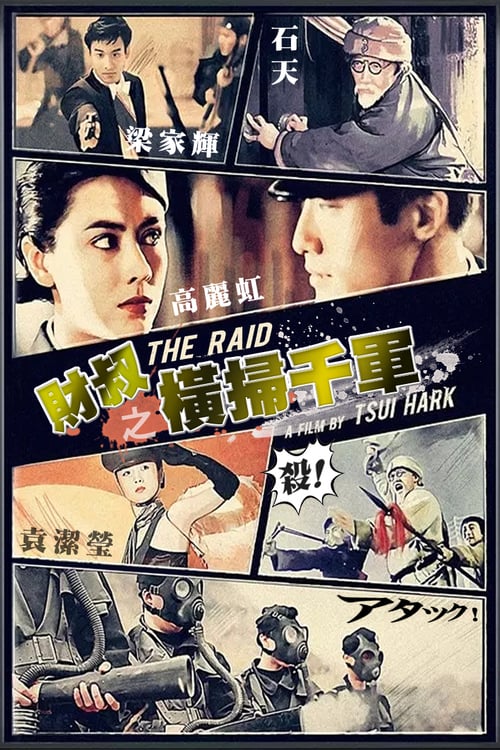
The Raid (財叔之橫掃千軍, Tsui Hark & Tony Ching Siu-Tung, 1991)

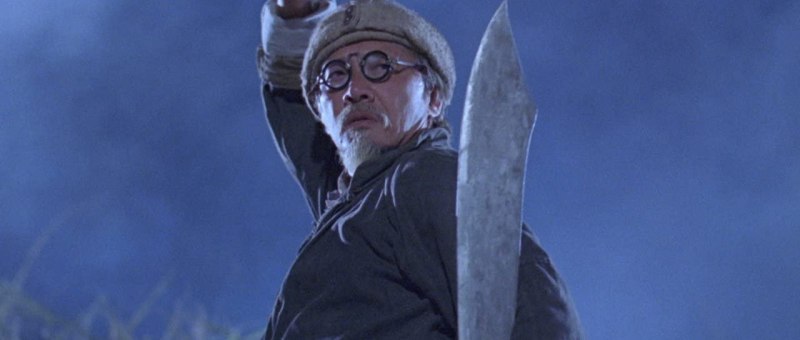
Comic book heroes often rise in resistance to a label others have placed on them, but Uncle Choy (Dean Shek Tin) may be the first to offer fierce opposition to societal ageism. Inspired by a series of comic books which ran from 1958 to the mid-1970s, Tsui Hark and Tony Ching Siu-Tung’s The Raid (財叔之橫掃千軍) is at great pains to make plain that you shouldn’t write people off because of a few numbers on an ID card as its admittedly geriatric hero proves that he’s the force for good the Resistance has been waiting for. 

That would be the Resistance towards the Japanese and the new puppet state of Manchuria in the confusing world of 1932. Tsui and Ching open with Pu Yi himself getting out of a limo in a sparkling white uniform adorned with meaningless medals glinting in the sun before he takes to the stage and bizarrely likens himself to Hitler while insisting that he’s here to unify China because his ancestors told him to in a dream. Meanwhile, the Resistance has already infiltrated his forces and installed dynamite in his microphone only for his right-hand man, Matsu (Tony Leung Ka-fai), to catch on right before it explodes. Pu Yi is saved, for now, while Matsu declares himself unfazed by the Resistance fighter’s dying words that he will be coming back to haunt him. 

In another part of the jungle, a team of mute locals is trying to bring a doctor to some soldiers hiding out in a remote shack. After narrowly escaping a plane attack by blowing a hole in a dam and drowning it with water, Uncle Choy arrives to discover that the men are victims of a new kind of poison gas. It’s too late to save the commander, but Choy manages to restore the others to health and even offers to join them in their new mission of destroying the poison gas factory, but Lieutenant Mong (Paul Chu) tells him to go home. He’s too old to be of help and would only get in the way. As expected, Choy finds that very upsetting. Unwrapping the giant sword he fought with in his youth, he leaves a note for his adopted daughter Nancy and heads off on his own towards the revolution, but she follows him with her giant spear and is then followed by a cheeky young guy armed with slingshot. 

There is something a little bit suggestive about this rag tag bag of patriots trying to stop the poisonous fumes of a new China wafting over towards the land they love. Pu Yi, the “last emperor” is something of a tragic figure, a bumbling fool with some weird ideas but also a noticeably progressive streak which sees him tell Matsu, in the middle of an otherwise silly and slightly homophobic joke, that he firmly believes love is love and he plans to make a law that says so. He is, however, just a puppet himself, caught between the villainous Matsu and beautiful actress/super spy Kim Pak-fai/Kawashima Yoshiko (Joyce Godenzi).

Matsu is fond of telling the heroes that they cannot win against a force with superior technology, that old Uncle Choy’s sword and fists are useless in a modern world of guns and chemical warfare. To perfect their poison gas, they’ve been working with a local gangster who cares only for money and has been willingly sending them test subjects. Big Nose (Corey Yuen Kwai) is currently engaged in a turf war with the equally greedy Bobo Bear (Jacky Cheung Hok-yau), testifying to the tendency of oppressed people to fight amongst themselves rather than unite against the true evil. Bobo Bear is also in love with the famous actress Kim Pak-fai and deeply regrets getting mixed up with the Resistance, but later falls for nerdy undercover spy Tina (Fennie Yuen), who is the real brains of the operation, and comes over to the side of right. As does Big Nose after getting a dressing down from Uncle Choy and being confronted with the consequences of his actions by an overconfident Matsu. 

According to Matsu whoever has the best weapon controls the world, but as in any good kung fu movie the best weapon is righteous solidarity. Uncle Choy’s sword turns out not to be so useless after all, while he also makes himself useful as a doctor to the revolutionaries, proving that old people still have a lot to offer and don’t deserve to be put out to pasture by patronising youngsters. Making plenty of space for cartoonish slapstick fun and a series of farcical episodes including the classic misdirected love letter and spy hiding under the bed, The Raid is pure pulp but never pretends to be anything more than it is even while leaving its earnest revolutionaries in media res as if to remind us that a battle still rages even in 1991.


Short clip (no subtitles)

Chasing the Dragon II: Wild Wild Bunch (追龍II:賊王, Wong Jing & Jason Kwan, 2019)

In the grandest tradition of Hong Kong “sequels”, Chasing the Dragon II: Wild Wild Bunch (追龍II:賊王) has almost no connection to 2017’s Chasing the Dragon which starred Donnie Yen and Andy Lau as famed ‘70s gangster Crippled Ho and bent copper Lee Rock respectively. It is however part of a planned trilogy of films directed by Wong Jing and Jason Kwan “celebrating” legendary Hong Kong “heroes”. Abandoning the grand historical sweep of the first film, Wild Wild Bunch situates itself firmly in 1996 on the eve of the handover when, it claims, Hong Kong was close to a lawless state seeing as the colonial British authorities were already in retreat and therefore largely disinterested in governing. 

It’s this laxity, coupled with an age of excess, which has enabled the rise of real life kidnapping kingpin Cheung Tze-keung (Tony Leung Ka-fai) also known as Big Spender and here known as Logan Long. Logan makes his money by ransoming the richest figures not only in Hong Kong but the wealthier stretches of the Sinosphere and the Mainland cops are after him because they see him as an inconvenience from old Hong Kong they’d rather not inherit. Accordingly, they enlist veteran Hong Kong policemen, Inspector Li (Simon Yam Tat-wah) and bomb disposals expert He Sky (Louis Koo Tin-lok), to help them because they’ve heard that Logan is in need of a new explosives guy after the last one blew himself up. Sky is supposed to go deep undercover in Logan’s gang to save his next victim and take him down in the process. 

Though inspired by the real life legend, Sky’s infiltration is obviously fiction and in actuality Cheung Tze-keung was caught before his kidnapping of Macau gambling magnate Stanley Ho, here Standford He (Michael Wong Man-tak), could take place though setting the tale in the former Portuguese colony famous for its casinos (illegal in Mainland China) adds another meta level of colonial critique in situating itself firmly in the world of wealthy elites corrupted by their fabulous wealth. Real life gangster Cheung was apparently a well-liked figure, branding himself as a loveable rogue and less altruistic Robin Hood who liked to spread his wealth around by giving out lavish gifts seemingly at random though also enjoying living the high life himself. Logan is much the same, holing up at his mansion safe house in the rolling hills with his criminal “family”, declaring himself a fair man. If you cross him he’ll be sure to investigate fully but if he finds you betrayed him his revenge will be merciless. He cares deeply about his guys but also, perhaps unwittingly, terrorises them to the extent that they all pretend to enjoy eating durian fruit to please him, while reacting to tragedy with old-fashioned gangster ethics in trading his own girlfriend and a significant amount of cash to a gang member whose pregnant wife ended up dead because of his cowardly brother Farrell (Sherman Ye Xiangming) who is frankly a walking liability. 

Sky too is a family man, constantly worrying about his elderly mother and giving instructions to Li as to how to look after her if anything goes wrong and he doesn’t make it back from Macau. Sky’s mum is also quite concerned that her son has never married, and there is something quite homely in the strangely deep friendship between Li and Sky which has its unavoidably homoerotic context in Li’s cheerfully intimate banter in which it often seems he’s about to kiss his brother-in-arms which might not go down so well with the Mainland censors board who are otherwise so obviously being courted with the heroic presentation of the PRC police force only too eager to clear up the mess the British left behind. 

Then again, Cheung Tze-keung’s case was notable in that is presented an early constitutional conflict to the One Country Two Systems principle seeing as he was a Hong Konger tried (and sentenced to death) on the Mainland for crimes committed outside its jurisdiction, something which had additional resonance in the climate of summer 2019 in which vast proportions of the city came out to protest the hated Extradition Bill. In any case, Wild Wild Bunch owes more to classic ‘90s Hollywood actioners than it perhaps does to local cinema with its frequent bomb disposal set pieces and final climactic car chase which nevertheless literally pushes Logan over the line and into the arms of the PRC, the flamboyant gangster taking a bow as he tears up his ill gotten gains with a rueful grin in acknowledging his loss to a superior power. 


US release trailer (English / Traditional Chinese subtitles)

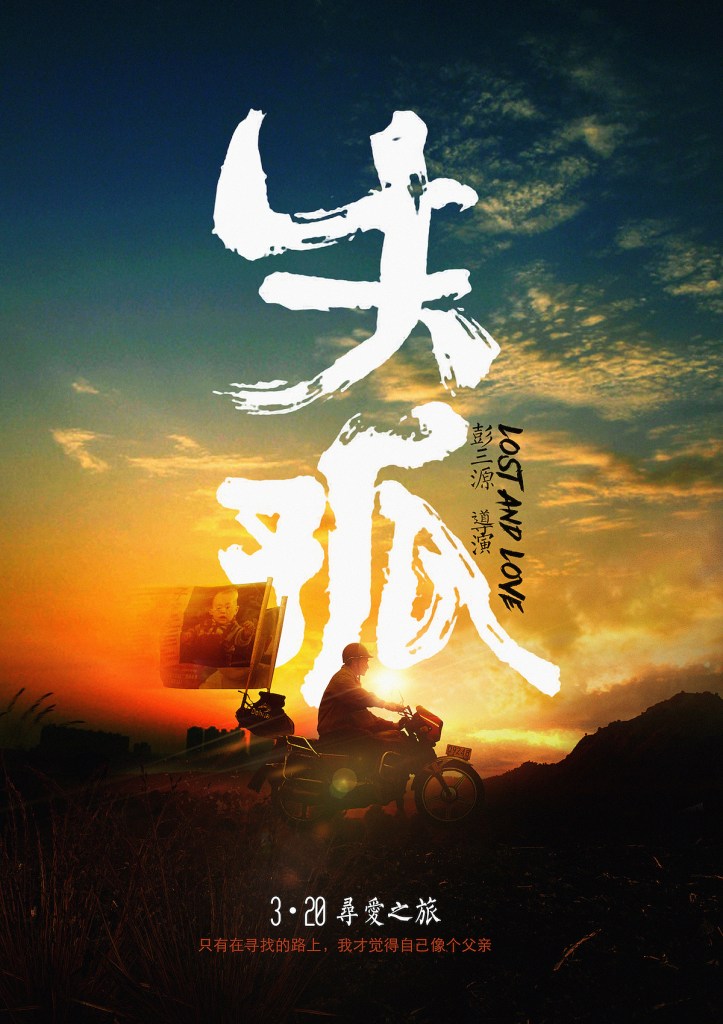
Lost and Love (失孤, Peng Sanyuan, 2015)

Because of a series of interconnected social factors, the trafficking of children has become a widespread problem in contemporary China. Many of these children are simply abducted from wherever they happen to be and handed over to brokers who are often working with organised crime. Some of the children are sold on to orphanages working with various organisations who facilitate international adoptions which fetch a high price, but the major demand comes from depopulated areas of rural China who, suffering under the One Child Policy, need more children to help them on the farm or perhaps because their birth children were female and they need a male heir. In any case, though child trafficking is an open secret, very few abducted children are ever traced and reunited with their parents. 

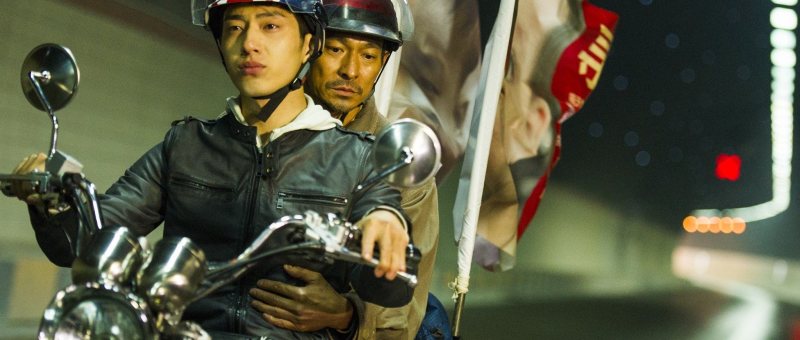
Peng Sanyuan’s debut film Lost and Love (失孤, Shī Gū) does not dwell on the causes of China’s child abduction problem but on the pain and suffering it inflicts on parent and child alike. Lei Zekuan’s (Andy Lau Tak-wah) son Da was taken from his home at two years old. Zekuan has spent the last 15 years travelling all over China chasing every lead desperately trying to find him but drawing a blank at every turn. Turning to modern technology, he’s hooked up with a group of concerned citizens who are always on the look out for missing kids and the gangs that maybe handling them. Though many people are sympathetic towards him and touched by his unrelenting search for his son, there are others that Zekuan meets who, meaning well, ask him if perhaps it’s not better just to let it go and move on. After all, it’s been 15 years. Da was only two, he probably won’t remember his home or family and may not even know he is adopted. Zekuan, however, cannot bring himself to give up, convincing himself that he will one day be reunited with his son while touched by the plight of other parents in the same position, adding the face of a child he sees on a missing poster abducted just recently to the flags on the back of his bike on the off chance that someone might have seen her too. 

Zekuan’s zeal is in part repaid when he’s run off the road and rescued by a young mechanic who sets about fixing his bike. Zeng Shuai (Jing Boran) is touched by Zekuan’s quest but also a little irritated by it. As he later confesses to him, he was an abducted child himself, though too old to have been Zekuan’s son. Taken at four, all he remembers is a suspension bridge, a bamboo grove, and his mother’s hair worn in a long plait. He wonders if his parents ever looked for him in the same way Zekuan looks for his son, but also harbours a degree of resentment towards them for being so careless as to “lose” him. Zekuan assures him that his parents surely miss him dearly and are praying for his return, prompting the young man to consider setting off on a journey to look for the place where he was born, accompanying Zekuan along his way. 

Shuai says that his adoptive parents cared for him well and clearly loved him, but he has also adversely suffered through being an “abandoned” child in ways other than the emotional. Because he was bought illegally, Shuai has no legal status and cannot apply for an ID card which means he had only limited access to education, is unable to apply for exams, cannot get married, cannot open a bank account, and is barred from advanced transportation like planes and trains. Part of the reason he desperately wants to find his parents is to reclaim his identity so he can lead a full life, no longer confined to an underclass of people who legally speaking do not exist and have no rights. 

Yet what’s also obvious is the pain he feels in being disconnected from his roots. Taking the same journey but at cross purposes, the two men generate an easy paternal bond, becoming anxious when they lose each other in crowded markets and having fun messing around washing cars for the money to keep moving forward. But having talked to so many other grief-stricken parents, Zekuan is wary of making a mistake. In one village he’s guided to a boy who fits all the criteria and is said to be living a miserable existence with parents he doesn’t get on with. A kind of connection is made with the young man who perhaps has been hoping that someday someone will come to find him, but the scar which had given Zekuan so much hope turns out to be on the wrong foot, prompting him to doubt himself, wondering if perhaps he’s forgotten which foot it was after all these years and it really might still be him.

That dream is spoiled by the unexpected intervention of the adoptive mother who, unlike the distant father, fights furiously for the rights to her son. The boy seems just as crestfallen as Zekuan, and the sense of heartbreak is all consuming. Asked for advice, a Buddhist priest uses fancy language to tell Zekuan that if he doesn’t look for his son then he’ll never find him, but has no more idea than anyone else if he’ll ever be found. All Zekuan can do is console himself with the search so that when he finds his son he can tell him that he never gave up looking.


Hong Kong release trailer (English subtitles)