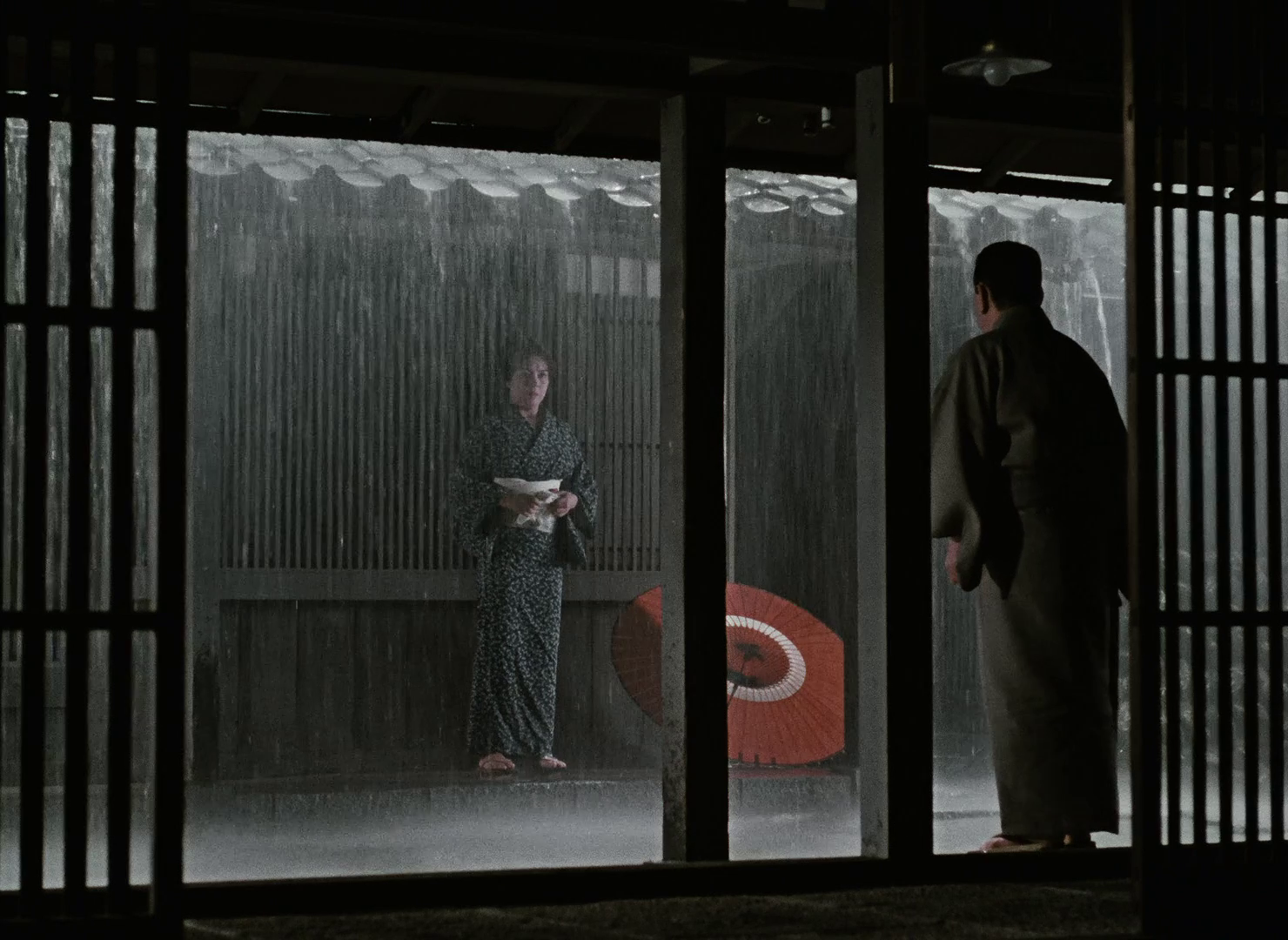
Floating Weeds (浮草, Yasujiro Ozu, 1959)

An oft-repeated criticism of the work of Yasujiro Ozu is that it is all the same. The similarity of the English-language titles with their ubiquitous seasonality doesn’t help, but you have to admit there is some truth in it. On closer inspection, however, it becomes clear that Ozu was not so interested in uniformity or repetition as he was in dialogue with himself. Thus Late Spring becomes Late Autumn and the abandoned father a conflicted mother, the two boys of I Was Born But… who rejected their father’s descent into corporate lackydom become arch consumerists seceding from society until their parents give them a TV set in Good Morning. Ozu refrained from remarking on the repurposing of old plots for new dramas, but did expressly regard his 1959 Floating Weeds as a “remake” of the 1934 A Story of Floating Weeds updated to the present day and filmed in the, by then, classic Ozu style. 

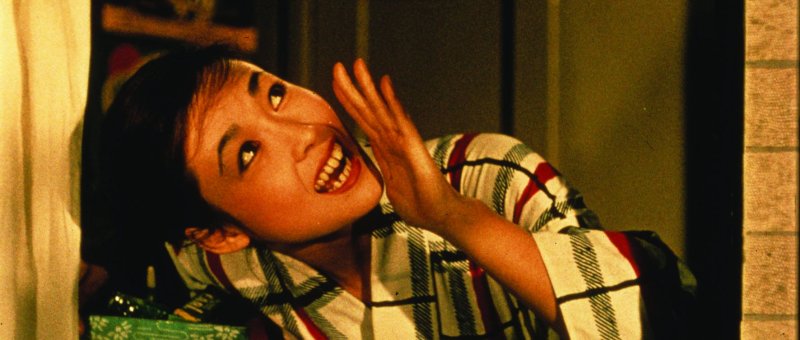
As in the 1934 version, the action centres on the arrival of a theatrical troupe to a small town which they have not visited in some years, in this case 12. This time around, the troupe is a little more exulted, performing kabuki-style narrative theatre rather than rustic entertainment, but is subject to many of the same problems. Kihachi is now Komajuro (Ganjiro Nakamura), a much older man though cheerful and energetic. He has chosen this town because it is home to an old flame, Oyoshi (Haruko Sugimura), who is the mother of his adolescent son, Kiyoshi (Hiroshi Kawaguchi). Kiyoshi thinks that Komajuro is his mother’s brother and that his father is long dead. He recognises Komajuro right away and is pleased to see him, though they evidently have not met in many years. 

The 1934 version had revolved around Kihachi’s corrupted paternity in his shame regarding the stigma of being a travelling player. By 1959 that is simply no longer so much of an issue, but whereas the financial difficulties Kihachi’s troupe faced were partly a symptom of the depression and partly of their misfortunes, those of Komajuro take on a more melancholy quality because it is obvious that this is a way of life which is coming to an end. When Kihachi says he’s going to start over, it seems futile but he is still young enough to have a credible chance. Komajuro is already “old” and it’s clear that he will struggle to support himself as a travelling actor simply because it is no longer a viable occupation. 

Thus Komajuro’s story is less one of frustrated fatherhood than of melancholy resignation to the vagaries of a lifetime. “Life is an unknown course”, he tells Oyoshi, “the only constant is change”. Like Kihachi he doesn’t want his son to see the show, though perhaps more out of embarrassment. Kiyoshi complains that the character in his play is “unrealistic” because he doesn’t relate to the modern world. Komajuro objects but explains that he is “a character from another era”, making it plain that he is talking as much about himself. Komajuro is a man left behind by time and incapable of understanding the world in which he now lives which may be one reason he seems to hang on to an intense desire to save Kiyoshi from being affected by the stigma of being the son of a travelling actor even though that is no longer something he would need saving from. 

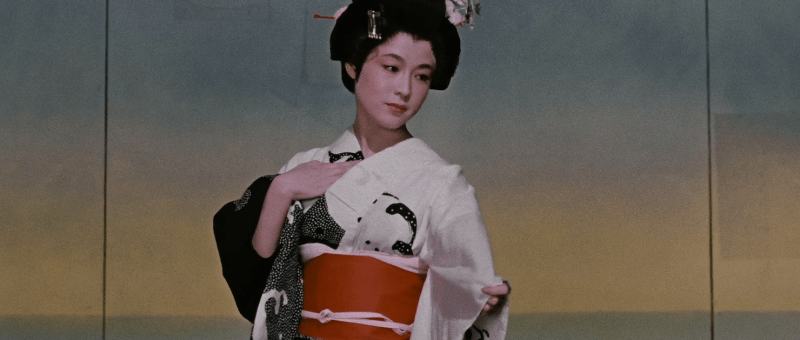
This slight disconnect, along with Gajiro Nakamura’s cheekily comical performance, adds to the genial comedy which characterised the majority of Ozu’s colour films though this one is admittedly slightly less colourful owing to being produced by Daiei as one of a handful of films made outside Ozu’s home studio of Shochiku. Komajuro becomes a tragicomic rather than purely tragic figure, a man suddenly realising he has become old and facing the decline of his patriarchal authority. Like Kihachi he turns violence on both his mistress, Sumiko (Machiko Kyo), and the young actress Kayo (Ayako Wakao) who has fallen for his son, but it’s futile and born of desperation. A more sympathetic figure than 1934’s Otaka, Sumiko seems to genuinely like Komajuro and is hurt as well as jealous and threatened by the existence of his “secret” family. Her petty revenge is taken in response to Komajuro’s bitter claim that his son “belongs to a higher race” moments after bringing up her past as a sex worker. Rather than a simple desire for chaos and upset, she intends to pull Kiyoshi down to her level through getting him to sleep with Kayo, but Kayo falls for him for real only to worry she is perhaps ruining his bright future. 

“One can’t suddenly show up out of nowhere and assert one’s parental authority,” Komajuro eventually realises. His hopes are dashed by Kiyoshi’s relationship with Kayo not because of her proximity to the world of the travelling actor, but because he fears it means that Kiyoshi is just like him, an irresponsible womaniser. He wanted to save Kiyoshi as a means of saving himself, pushing his son into a more respectable world he had been unable to enter. Kiyoshi, however, rejects his sacrifice, describing his parents as “selfish” for keeping the secret all this time only to drop a bombshell now. He complains he’s been fine these 20 years and does not want or need a father beyond the one he already thought to be dead. Rather than the nobility Komajuro’s of paternal sacrifice, the focus is pulled back towards the son and his filial responsibility to live up to it by becoming a fine and upstanding young man while Komajuro is once again exiled back to the moribund world of the travelling actor. 

Of course, the world of 1959 was very different to that of 1934. The economy was at last improving and consumerist pleasures were very much on the horizon, meaning that for many life was comfortable at last. Japan was at peace if not completely free of political strife which removes the constant anxiety felt by those trying to survive the mid-1930s. But Ozu himself was also 25 years older and had perhaps reached that sense of resignation with the world that allowed him to sigh and laugh where before he may have trembled with fear or rage. Komajuro is as he always was, a floating weed, a man without a home, but now perhaps one of many rootless wanderers off the post-war landscape.
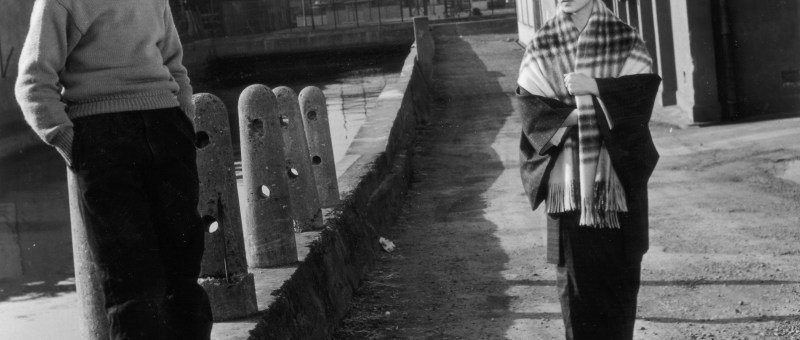

Image of a Mother (母のおもかげ, Hiroshi Shimizu, 1959)

“Does happiness even exist nowadays?” replies a still youngish widow pushed towards the prospect of remarriage but for her own reasons reluctant. The final film from Hiroshi Shimizu, Image of a Mother (母のおもかげ, Haha no Omokage) examines the changing nature of family dynamics through the experiences of a blended family and a little boy whose grief and loneliness in the wake of his mother’s death are little acknowledged by those around him who are unable to understand why he cannot simply just move on.

This may partly be down a practical mindset having not so long ago experienced a time in which there was so much death it would not have been possible to grieve it all, but there is something nevertheless quite insensitive in the way little Michio (Michihiro Mori) is more or less told he must forget his late mother. Though it appears she only passed away less than year previously, Michio’s father Sadao (Jun Negami) is under immense pressure from his uncle to remarry so that Michio will have a mother. The latest prospect in what seems to be a long running series of possible matches is a widow Sadao’s own age with a young daughter. Sonoko (Chikage Awashima) works in the canteen at the local hospital where Sadao’s uncle delivers the tofu from his shop but is originally quite resistant to his attempts at matchmaking before finally giving in. Neither of them really wanted to marry again and the meeting itself is quite awkward but against the odds they do actually get on and eventually decide to get married. 

Sonoko is a very nice woman and kind to Michio, determined care for him as if he were her own son but hurt by his continuing distance towards her. Aside from the emotional distress, it’s also true that Sonoko is under a lot of pressure to present herself as the perfect image of motherhood especially having joined a larger extended family from whom she may fear judgement though are actually very fond of her and glad they found someone so nice. The extended family in particular are quite put out that Michio has yet to call Sonoko “mum,” and are cross with him for not doing so while Sonoko too is forced to feel as if it’s a slight on her character, that she’s not living up to her new role and the otherwise happy family they’ve begun to build may fall apart if she can’t completely win Michio over. 

The family don’t seem to understand at all that Michio is still attached to his late mother’s memory, and the insensitive attitude of Sadao’s younger cousin Keiko (Satoko Minami) does much to fuel the fire in her insistence that Michio hide the photograph of his mother to which he is still saying goodbye when he leaves each morning for school. They tell him that because he has a new mother now he must forget the old, but to him it seems like a betrayal. He likes Sonoko, and he likes being mothered, but he can’t bring himself accept her in the place of the mother he’s lost. It’s not Sonoko who tells him he must do any of this, and in fact she is the one who tries to suggest that there’s room for more than one mother even if the idea is immediately rejected by her daughter Emiko (Sachiyo Yasumoto). But it’s many ways this attempt to hide the past, to avoid dealing with it that prevents the new family from cementing itself. Only once the adults have listened to and fully accepted Michio’s feelings does he finally feel comfortable enough to call Sonoko his mother. 

Even so, Michio’s bullying at the hands of his classmates who keep feeding him stories about evil stepmothers points to a lingering stigma towards remarriage and families that might differ from the norm. In this he finds himself doubly conflicted, defending Sonoko to his obnoxious classmates while unable to accept her at home. Maintaining the lateral tracking shots that become increasingly prevalent in his later career, Shimizu makes the most of the scope frame to capture Michio’s loneliness and isolation if also that of Sonoko who finds herself in an awkward situation trying to adjust to this new family life in what was another woman’s home knowing she can’t ever take her place but must try to find her own within it. Yet what he gives them in the end is a kind of mutual salvation that promises new futures for both and that even nowadays happiness may still exist.


Image of a Mother screens at Japan Society New York on May 23/30 as part of Hiroshi Shimizu Part 2: The Postwar and Independent Years.

A Wife Confesses (妻は告白する, Yasuzo Masumura, 1961)

Mountains are dangerous places in Japanese cinema. Yasuzo Masumura’s tense, claustrophobic courtroom noir A Wife Confesses (妻は告白する, Tsuma wa Kokuhaku Suru) was released in the same year as Toshio Sugie’s Death on the Mountain, adapted from a popular story by legendary mystery writer Seicho Matsumoto in which a veteran climber is ushered towards his death through a series of machinations by his friend which might or might not be regarded as “murderous” depending on your point of view. Masumura wants to ask us a similar question but from another angle as he puts a woman on trial not quite for the “murder” of her husband but the fact of her survival.

Opening outside the courthouse with a gum-chewing paparazzo, Masumura unwittingly makes us part of the baying mob watching intently as a young woman hides her face with her handbag while the press more than live up to their name, pinning her with questions about the salacious case at hand. Inside, however, he shifts the focus. We are now in the dock with Ayako (Ayako Wakao), looking up at the three men who will judge her for her “crime” from a literal moral high ground. A youngish widow, Ayako is charged with the murder of her husband who died during a freak mountain climbing accident. Caught between a handsome young man, Koda (Hiroshi Kawaguchi), and her abusive husband, Takigawa (Eitaro Ozawa), with no way up or down Ayako chose to cut the rope and let her husband fall. If she had not done so, both she and Koda would also be dead. Ayako is on trial because she refused to sacrifice herself for a wifely ideal. The question is, in many ways, if a woman’s or more to the point a wife’s life has worth, not just worth equal to that of her husband’s but any kind of worth at all. 

The first charge against Ayako is a lack of womanliness. A man at the scene testifies that they don’t usually allow wives or mothers to view bodies and Takigawa’s was in a particularly bad way but Ayako insisted on seeing it only to react with a calm he found suspicious. A policeman then echoes his sentiment, admitting that he arrested Ayako for her unwifeliness. “A wife should stick with her husband ’til the end no matter how tough it is” he says, adding that his own wife agrees with him. As her lawyer points out, had Ayako been a man, or the person below her on the rope a stranger, the policeman would not have arrested her but her refusal to die with her husband, which would have resulted in the “murder” of another man, is an arrestable offence. You can argue about the moralities of choosing to end someone else’s life to save your own, a kind of self defence permitted under Japanese law through the “necessity” legislation, but Ayako’s transgression is in believing that her life and her husband’s weigh the same and that she had a right to save herself. Many feel she should perhaps have cut the rope above her own head, saving Koda only in a lovers’ suicide with Takigawa. 

The policeman offers more grounds for suspicion having discovered that Ayako had taken out an insurance policy on her husband and hoped to profit from his “accidental” death, though as an act of premeditated murder this would certainly be quite an elaborate plot. Furthermore, the prosecution posit that she and Koda were having an affair but, for reasons which are not clear, Koda is not under suspicion or cited as a co-conspirator and is in fact testifying in her defence. He is also engaged to someone else, Rie (Haruko Mabuchi), though the marriage was arranged by his boss for strategic reasons because she is the daughter of a major client at their insurance firm and yes Koda drafted the policy which is currently being used as evidence against Ayako. All very Double Indemnity, but Ayako is certainly no cold and scheming Phyllis whether or not she made a conscious decision to free herself from a man who made her life a misery by literally cutting him loose. 

Yet Ayako’s victimisation is also used against her as further evidence of her unwomanly coldness. She testifies that she married Takigawa after he attempted to rape her and then proposed, confessing that she did so in order to escape a life of poverty that had already driven her into suicidal despair (she still has a vial of potassium cyanide she had taken from his office with just this in mind). She did not love him, but did her best to become a “good wife”, even beginning to wear kimono because he preferred it. Her predicament is no different than that of many other women who agreed to an arranged marriage and found themselves shackled to an unpleasant man with whom they could not get along but the marriage’s failure is laid squarely at Ayako’s feet for not trying hard enough and having insufficient love for the husband who treats her like a glorified maid, is cruel and emotionally abusive, and finally forces her to have an abortion against her will because he doesn’t want to spend money on a child. She asks for a divorce but he points out that as things stand a woman cannot escape a bad marriage without a husband’s consent and he has done nothing to break their marital contract and so to that extent he owns her. 

But for all she’s a cold woman who resented her husband and longed to be free of him, Ayako is also condemned for illicit passion in her secret love for Koda. Indeed we can see she is clearly fond of him, and in flashback we realise much of this is simply because he was kind to her though the extent of his kindness was only to the level of general civility. At heart, they are both “decent” people and so there is nothing more between them than unexpressed longing but still the kernel of their attraction remains and the prosecution has indeed found a grain of truth on which to found a motive for murder.

For his part, in another kind of film Koda would be the hero but here his “goodness” is intensely problematic in that he falls for Ayako precisely because of her suffering. His problem is that he later doubts her, swayed by arguments that paint her as a plotting femme fatale. Though amused by the whole affair, Koda’s boss warns him that women like Ayako are “trouble” and that he’s only been taken in because he is young and naive. Rie, meanwhile, is resentful and wounded, contemplating her own revenge but ultimately testifying in Ayako’s favour, she claims more for herself than for Koda or “justice” too embarrassed to take the stand and offer her own feminine “inferiority” as evidence against her romantic rival. Yet she later comes to admire her, seeing her as one who was bold enough to chase love at the expense of all else no longer caring what anyone might say or think. Ayako is the most liberated woman alive, and she would die for love but did not love her husband and so would not die for him. 

Koda is punished because he fell in love with an image of suffering womanhood but is afraid of Ayako’s transgressive femininity. He is conflicted in the knowledge that if she killed her husband her love for him may have been the reason, and is disturbed by her venality in that she would have taken the insurance money and lived well without finding it distasteful while he would have preferred to reject the settlement entirely lest it besmirch the innocence of their love. In real terms it doesn’t really matter why she did it, Ayako cut the rope and whether she did so out of an instinct for self preservation, in hate, or in love, the result is all the same. What she’s on trial for is defiance, that she acted, seized her own agency and made a choice to value her life over her husband’s which is still, as it turns out, a moral crime in the supposedly modern and democratic society of 1961. Masumura’s accusatory camera finds her pinned, confined, trapped at the edges of frames hiding her face with her single permitted feminine accessory while the subject of our judgemental gaze until the curtain finally closes leaving her in shadow but perhaps finally free of her cruel and oppressive society. 


Original trailer (no subtitles)

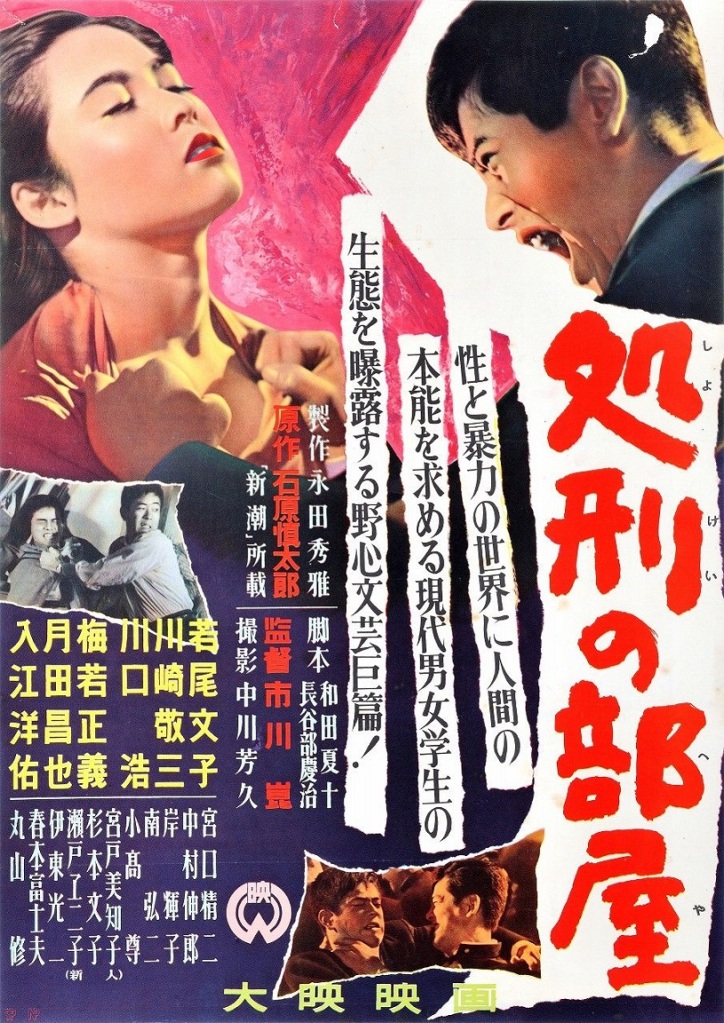
Punishment Room (処刑の部屋, Kon Ichikawa, 1956)

In the mid-1950s, Nikkatsu released a series of incendiary youth films which gave rise to a small moral panic in the older generation. The “Sun Tribe” movies proved so controversial that Nikkatsu could only release three of them before bowing to public pressure while Toho and Daiei both managed to release one each, bringing the total up to five. Produced by Daiei, Kon Ichikawa’s contribution to the Sun Tribe phenomenon, Punishment Room (処刑の部屋, Shokei no Heya), adapted another novel by Crazed Fruit’s Shintaro Ishihara who had, it seems, managed to capture something of the nihilistic spirit of the age.

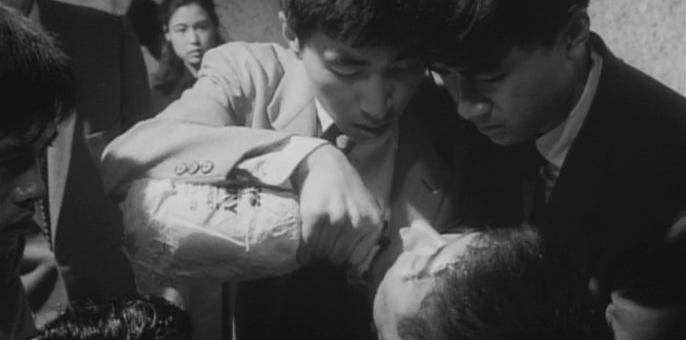
Among the darkest of the Sun Tribe tales, Punishment Room follows near sociopathic university student Katsumi (Hiroshi Kawaguchi) as he works out his frustration with his hangdog father Hanya (Seiji Miyaguchi) by kicking back against societal rigidity. Hanya is a bank clerk with some kind of stress-related stomach complaint for which he is forever taking medicine. One particular day, Katsumi and his friend Hideo (Shoji Umewaka) turn up to run some kind of scam on him, insisting that Hideo’s family are in dire straits because his dad’s working abroad and they don’t have money to make a payment on a loan. The boys want Hanya to buy the note of debt as security and lend them 30,000 yen, something which isn’t really allowed but he ends up taking out half of his own life savings to avoid embarrassing or being embarrassed by his own son in the workplace. The boys, however, were just trying to extort him and planning to use the money to host a college dance while making a little extra on the side. 

At this point, most still seem to feel that Katsumi is a “nice kid”, while Hideo is a bad influence. His middle school best friend Ryoji more or less says as much, but no one really knows the extent to which Katsumi is already becoming a black hole of nihilistic fury. His ire is provoked during a college debate session at which he’s outtalked by smart female student Akiko (Ayako Wakao) and abruptly cut off by the bored professor (Nobuo Nakamura). Despite knowing that one of his buddies has a crush on her, Katsumi makes a point of picking Akiko up during the chaos of celebration after a sports game. Along with Hideo and another, more innocent student they nickname “Sonny”, Katsumi takes Akiko and her friend to a nearby drinking house, popping out to buy sleeping pills and eventually spiking their drinks while they use the bathroom, knocking Sonny out for good measure to stop him getting in the way. After dragging the barely conscious girls back to Hideo’s family home, they take one each and rape them. On waking Akiko is defiant, threatening to call the police but an unrepentant Katsumi insists that she won’t be believed. Not content with their humiliations, the guys even insist on taking the girls home by cab only to run out and leave them with the bill. 

Katsumi is is equally unrepentant when someone sends his family a letter informing them of his conduct, admitting that the allegations are true but insisting that the women are complicit because they did not report him to the police. He even refers to Akiko, who has after a fashion fallen in love with him, as “sort of my girlfriend”. Hanya ironically blames his wife whom he has treated with nothing but contempt, giving his son a crash course in a inherited misogyny, but she turns the same logic of toxic masculinity back on him in pointing out that his own passivity is the major cause of his son’s resentful rebelliousness. If Katsumi is rebelling against something rather than just a sociopathic little punk, it is indeed the spinelessness he sees in his father, obliged to scrape and bow for a mere pittance as a “wage slave” of a cruelly conformist society. 

An angry young man, Katsumi preemptively rejects the salaryman straightjacket by rebelling against conventional morality. “I do what I want” he insists, as if proving that he’s a free agent acting under force of will alone and beholden to no one. His efforts are however, futile. His amoral violence buys him nothing but the same in return. Denied a mechanism for dealing with emotion, contemptuous of hollow authority figures, and infinitely bored by a society they believe has nothing to offer them bar empty consumerism, post-war youth seeks escape but finds only nihilistic self-destruction, trapped in a perpetual Punishment Room with no exit in sight. 


Opening Scene (no subtitles)

The Blue Sky Maiden (青空娘, Yasuzo Masumura, 1957)

blue sky maiden dvd coverYasuzo Masumura is generally remembered for dark, erotic and disturbing explorations of human behaviour but the early part of his career was marked by a more hopeful innocence and a less cynical yet still cutting humour. His debut, Kisses, was very much in the mould of the youth movie of the day but its themes were both more innocent and more controversial as a boy and girl bond after running into each other at the prison where both of their parents are serving time. Marked by darkness as it is, the worldview of Kisses is much kinder than Masumura would later allow as the pair of lovers seem to shake off their respective concerns to embrace the youthful joy and boundless freedom young love can offer.

The Blue Sky Maiden (青空娘, Aozora Musume), Masumura’s second film, does something similar but with added bite. Working for the first time with actress Ayako Wakao who would later become something of a muse, Masumura takes a typical melodrama storyline – the returned illegitimate child treated as a poor relation by her own “family”, and turns it into a genial comedy in which Wakao’s charming heroine shines brightly despite the often cruel and heartless treatment she receives. As far as the family drama goes, the genre was still in its heyday and the family unit itself fairly unquestioned yet as Masumura shows times were changing and perhaps the family is not the bedrock it initially seems to be.

18 year old Yuko (Ayako Wakao) stands at the gates of adulthood. Taking a last photo in school uniform with her high school friends as they prepare for graduation, Yuko expresses her nervousness about being sent to Tokyo to live with the family of a father she barely knows while her friends worry about getting married or getting stuck in their tiny village all alone respectively. Tragedy strikes when the girls’ teacher arrives on a bicycle and informs them that Yuko’s grandmother has been taken ill. On her death bed, the grandmother reveals the reason Yuko is the only one of her father’s four children to be raised in the country is not a concern for her health, but that she is illegitimate. Yuko’s father, unhappy in his marriage, fell in love with his secretary (Kuniko Miyake) who later gave birth to Yuko, but he was already married with two children and so Yuko’s mother went to Manchuria leaving her to be raised in secret in the country.

Having nowhere else to go, Yuko arrives at her father’s large Western style house to be greeted coldly by her half-siblings, and treated as a maid by her still angry step-mother while her father (Kinzo Shin) is away on business. It has to be said that this model middle class family are an extremely unpleasant bunch. Step-mother Tatsuko (Sadako Sawamura) is shrewish and embittered while oldest daughter Teruko (Noriko Hodaka) spends all her time chasing wealthy boyfriends (but failing to win them because she’s just as mean as her mother). The oldest brother (Yuji Shinagawa) idles away in a hipster jazz band while the youngest boy, Hiroshi (Yukihiko Iwatare), is rude and boisterous but later bonds with his new big sister when she is the only one to really bother interacting with him.

The Ono household has always been an unhappy one. Yuko’s father married his wife after being bamboozled into it by an overbearing boss trying to offload his difficult daughter. Feeling trapped and avoiding going home he fell in love with a kind woman at work, had an affair, and wanted to marry her but wasn’t strong enough to break off not only from his unwanted family but also from his career in pursuing personal happiness. By Masumura’s logic, it’s this failure to follow one’s heart which has poisoned the Ono family ruining not only the lives of Tatsuko and the children who have no respect for their father or capacity for real human feeling (as Yuko later tells them), but also that of Yuko’s poor mother  whose life has been one of constant suffering after being unfairly jettisoned by a man who was bold enough to have an affair, but not to defy social conventions and leave an unhappy home.

Yuko herself, however, refuses to allow her life to be ruined by the failings of others. Looking up at the bright blue sky with her teacher (Kenji Sugawara), she learns to create her own stretch of heaven if only in her own mind. Though others might have fought and complained at being forced into the role of maid in what is her own family home, Yuko bears her new circumstances with stoicism and good humour. Thanks to her kindness and enthusiasm, the family maid, Yae (Chocho Miyako), is quickly on her side and if Teruko’s latest target, Hirooka (Keizo Kawasaki) starts to prefer the “new servant girl” his defection is completely understandable. Unlike later Masumura heroines, Yuko’s “revenge” is total yet constructive. She refuses to be cowed by unkindness, remains pure hearted in the face of cruelty, and resolves to find her own happiness and encourage others to do the same. With a few cutting words offered kindly, Yuko gets to the heart of the Onos, essentially reminding her father that all of this unhappiness is his own fault – he made his bed 20 years ago, now he needs to lie it and be a full-time husband and father to the family of lonely misfits he created in the absence of love.

Light and bright and colourful, The Blue Sky Maiden is among Masumura’s more cheerful films, not least because it does seem to believe that true happiness is possible. Yuko does not so much defy social convention as ignore it. She lives openly and without rancour or regret. She takes things as she finds them and people (aside from the Onos) are good to her because she is good to them. Though Masumura’s later work would become increasingly dark and melancholy, Yuko bears out many of his most central themes in her steadfast claim to her own individuality and equally steadfast commitment to enabling the happiness of others in defiance of prevailing social codes.