The Lightning Sword (抜打ち鴉, Bin Kato, 1962)

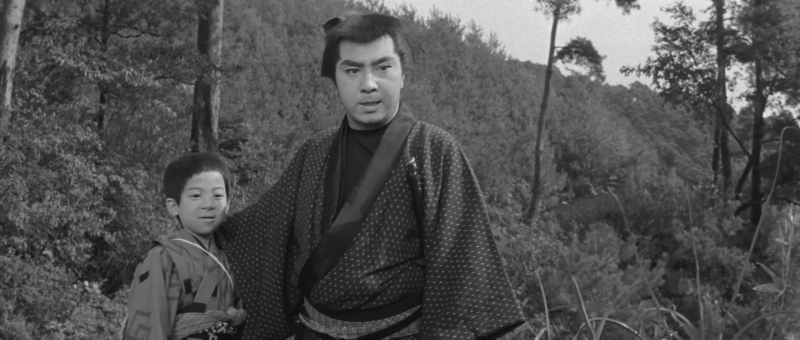
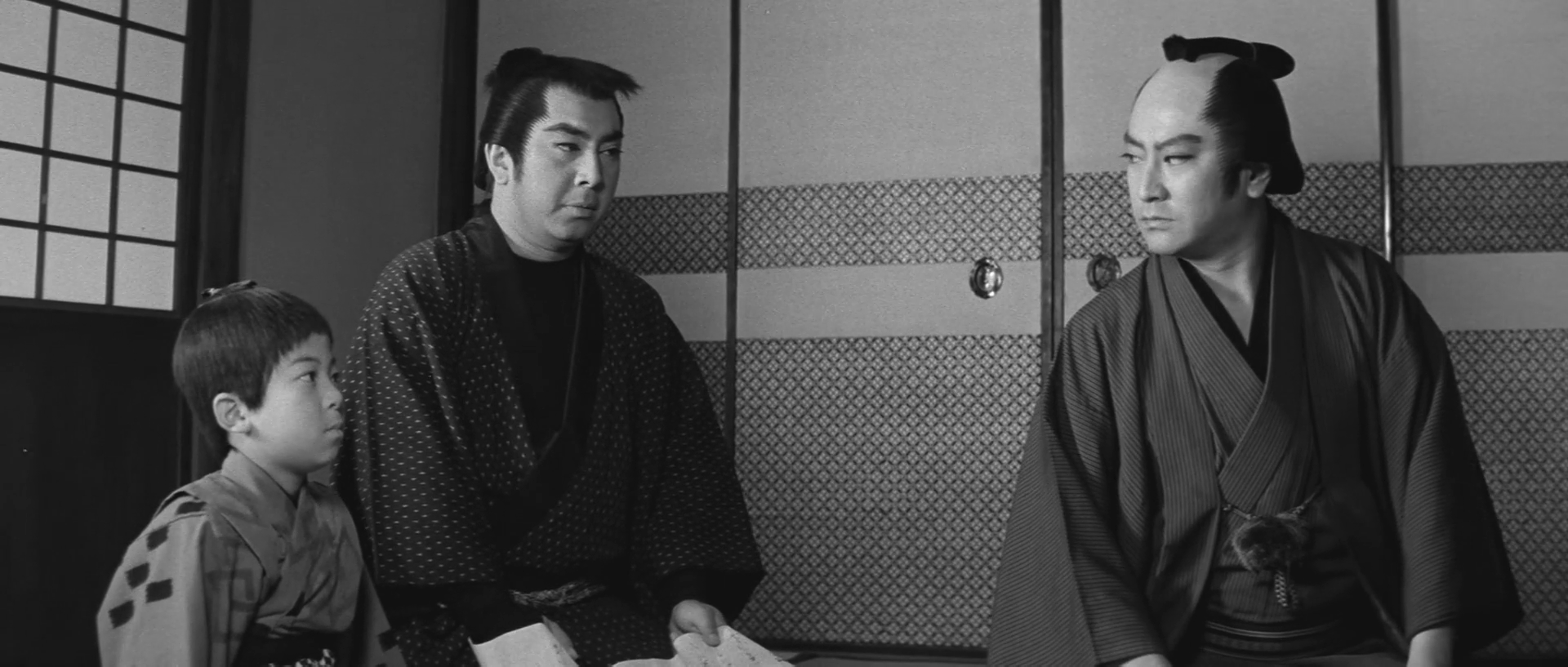
A wandering samurai comes to the rescue of a young boy in search of his father in a jidaigeki adventure from Bin Kato, The Lightning Sword (抜打ち鴉, Nukiuchi Garasu). Starring Tomisaburo Wakayama in an early leading role still billed as Kenzaburo Jo, the film takes place in a slightly liminal space following those who have already fallen from the samurai world, some of whom may be able to return and others not. They are all, however, in search of something from absent fathers to runaway sisters and lost loves.

Shinjiro is on the road looking for the man for ran off with his younger sister Fumie with whom he has now lost touch, Tokunosuke (Shigeru Amachi). Unbeknownst to him, they cross paths at a roadside food stall, but Shinjiro is distracted by the presence of a little boy no more than seven or eight apparently travelling alone in search of his father now that his mother has died. On hearing this story, another man, Takuro, gets up so abruptly he leaves his sweets behind. Fearing that this man plans to rob the boy, Shinjiro goes after him and the three of them ending up going in search of Takichi’s father together.

Takuro’s intention to rob a small boy of all the money he has in the world, which admittedly seems to be quite a lot as his mother sewed koban into his kimono before she died, bears out the venality and cruelty of this rather cut-throat world. Nevertheless, Takuro is not all bad despite swiping Shinjiro’s (empty) wallet instead and is motivated to try helping a young woman escape from a brothel though he had no relationship with her and ends up losing a finger for his pains. The antagonist Tokunosuke, meanwhile, has apparently sold Shinjiro’s sister into sexual slavery and used the money for his own amusement such as drink and other women. Nevertheless, he appears to regret his decision and is filled with self-loathing as if his poor conduct were a kind of self-harm. He is minded to redeem Fumie and sells his own life to yakuza boss Tokusaburo to get the considerably large sum of 25 ryo to do so.

Even Tokusaburo is not completely heartless though ruled by greed and ambition. When Shinjiro arrives and shows him the letter from Takichi’s mother, Tokusaburo admits that he is the man named in it but denies that he ever knew her and insists he is not the boy’s father. He does this in part because he has married the daughter of his current boss and is planning not only to take over the gang but knock out their rivals and assume control over the area. To do this, he goes so far as to kill another woman he had been in a relationship with but betrayed to marry the boss’ daughter because she threatens his path to success.

But, on the other hand, denying his son seems to be something painful for him. As he says after killing Oharu, if he has denied his son to take over the gang, killing her is no big deal. He does finally acknowledge Takichi, but only when dying as a final means of making amends when it’s clear that he has failed in his ambitions. Shinjiro, meanwhile, is kindhearted and compassionate. Even on meeting Tokunosuke, he realises that he does not want to kill him because it would bring his sister pain. He protects the boy though it does not benefit him in any way, and also rescues the brother of a woman he seems to have fallen in love with but had to leave due his important revenge business. Having rescued his sister, he leaves her with Oryo and resists the cruelty of this world by forming a new family outside it. Though the events it depicts may be bleak, the film is lighthearted rather than nihilistic and allows simple human kindness and decency to triumph over venal usurpers like Tokusaburo. Elegantly lensed as one would expect of a Daiei production, the fight scenes are also impressive in terms of scale and choreography, though its real power lies in its essential good-heartedness and compassion even for its villains.


Trailer (no subtitles)
The Blue Sky Maiden (青空娘, Yasuzo Masumura, 1957)

blue sky maiden dvd coverYasuzo Masumura is generally remembered for dark, erotic and disturbing explorations of human behaviour but the early part of his career was marked by a more hopeful innocence and a less cynical yet still cutting humour. His debut, Kisses, was very much in the mould of the youth movie of the day but its themes were both more innocent and more controversial as a boy and girl bond after running into each other at the prison where both of their parents are serving time. Marked by darkness as it is, the worldview of Kisses is much kinder than Masumura would later allow as the pair of lovers seem to shake off their respective concerns to embrace the youthful joy and boundless freedom young love can offer.

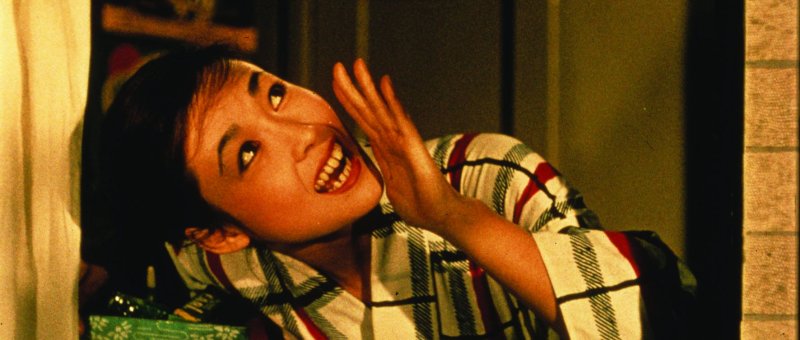
The Blue Sky Maiden (青空娘, Aozora Musume), Masumura’s second film, does something similar but with added bite. Working for the first time with actress Ayako Wakao who would later become something of a muse, Masumura takes a typical melodrama storyline – the returned illegitimate child treated as a poor relation by her own “family”, and turns it into a genial comedy in which Wakao’s charming heroine shines brightly despite the often cruel and heartless treatment she receives. As far as the family drama goes, the genre was still in its heyday and the family unit itself fairly unquestioned yet as Masumura shows times were changing and perhaps the family is not the bedrock it initially seems to be.

18 year old Yuko (Ayako Wakao) stands at the gates of adulthood. Taking a last photo in school uniform with her high school friends as they prepare for graduation, Yuko expresses her nervousness about being sent to Tokyo to live with the family of a father she barely knows while her friends worry about getting married or getting stuck in their tiny village all alone respectively. Tragedy strikes when the girls’ teacher arrives on a bicycle and informs them that Yuko’s grandmother has been taken ill. On her death bed, the grandmother reveals the reason Yuko is the only one of her father’s four children to be raised in the country is not a concern for her health, but that she is illegitimate. Yuko’s father, unhappy in his marriage, fell in love with his secretary (Kuniko Miyake) who later gave birth to Yuko, but he was already married with two children and so Yuko’s mother went to Manchuria leaving her to be raised in secret in the country.

Having nowhere else to go, Yuko arrives at her father’s large Western style house to be greeted coldly by her half-siblings, and treated as a maid by her still angry step-mother while her father (Kinzo Shin) is away on business. It has to be said that this model middle class family are an extremely unpleasant bunch. Step-mother Tatsuko (Sadako Sawamura) is shrewish and embittered while oldest daughter Teruko (Noriko Hodaka) spends all her time chasing wealthy boyfriends (but failing to win them because she’s just as mean as her mother). The oldest brother (Yuji Shinagawa) idles away in a hipster jazz band while the youngest boy, Hiroshi (Yukihiko Iwatare), is rude and boisterous but later bonds with his new big sister when she is the only one to really bother interacting with him.

The Ono household has always been an unhappy one. Yuko’s father married his wife after being bamboozled into it by an overbearing boss trying to offload his difficult daughter. Feeling trapped and avoiding going home he fell in love with a kind woman at work, had an affair, and wanted to marry her but wasn’t strong enough to break off not only from his unwanted family but also from his career in pursuing personal happiness. By Masumura’s logic, it’s this failure to follow one’s heart which has poisoned the Ono family ruining not only the lives of Tatsuko and the children who have no respect for their father or capacity for real human feeling (as Yuko later tells them), but also that of Yuko’s poor mother  whose life has been one of constant suffering after being unfairly jettisoned by a man who was bold enough to have an affair, but not to defy social conventions and leave an unhappy home.

Yuko herself, however, refuses to allow her life to be ruined by the failings of others. Looking up at the bright blue sky with her teacher (Kenji Sugawara), she learns to create her own stretch of heaven if only in her own mind. Though others might have fought and complained at being forced into the role of maid in what is her own family home, Yuko bears her new circumstances with stoicism and good humour. Thanks to her kindness and enthusiasm, the family maid, Yae (Chocho Miyako), is quickly on her side and if Teruko’s latest target, Hirooka (Keizo Kawasaki) starts to prefer the “new servant girl” his defection is completely understandable. Unlike later Masumura heroines, Yuko’s “revenge” is total yet constructive. She refuses to be cowed by unkindness, remains pure hearted in the face of cruelty, and resolves to find her own happiness and encourage others to do the same. With a few cutting words offered kindly, Yuko gets to the heart of the Onos, essentially reminding her father that all of this unhappiness is his own fault – he made his bed 20 years ago, now he needs to lie it and be a full-time husband and father to the family of lonely misfits he created in the absence of love.

Light and bright and colourful, The Blue Sky Maiden is among Masumura’s more cheerful films, not least because it does seem to believe that true happiness is possible. Yuko does not so much defy social convention as ignore it. She lives openly and without rancour or regret. She takes things as she finds them and people (aside from the Onos) are good to her because she is good to them. Though Masumura’s later work would become increasingly dark and melancholy, Yuko bears out many of his most central themes in her steadfast claim to her own individuality and equally steadfast commitment to enabling the happiness of others in defiance of prevailing social codes.