 The criticism levelled most often against Japanese cinema is its readiness to send established franchises to the big screen. Manga adaptations make up a significant proportion of mainstream films, but most adaptations are constructed from scratch for maximum accessibility to a general audience – sometimes to the irritation of the franchise’s fans. When it comes to the cinematic instalments of popular TV shows the question is more difficult but most attempt to make some concession to those who are not familiar with the already established universe. Mozu (劇場版MOZU) does not do this. It makes no attempt to recap or explain itself, it simply continues from the end of the second series of the TV drama in which the “Mozu” or shrike of the title was resolved leaving the shady spectre of “Daruma” hanging for the inevitable conclusion.
Six months on from the climatic events at the end of season two, Kuraki (Hidetoshi Nishijima) has become a drunk, Ohsugi (Teruyuki Kagawa) has left the force for the private sector, while Akeboshi (Yoko Maki) is still preoccupied with the strange phone calls she sometimes receives and the fate of her long lost father last seen on the deck of a sinking submarine. The dreams of the citizens of Tokyo are being haunted by the mysterious face of “Daruma”, but this is quickly superseded by an explosion in an office building which turns out to be a diversionary exercise as the autistic daughter of a refugee with diplomatic immunity is kidnapped by terrorists.
At this point, Kuraki appears at the scene, beats the bad guys into submission and rescues the girl, Elena, and her mother who are then taken into protective custody. However, things go south when Ohsugi’s daughter and Akeboshi are taken by the bad guys in the hope of an exchange forcing the gang to take Elena to a neighbouring Asian nation.
Mozu the movie suffers from many of the same problems which plagued the generally impressive TV series in its wildly inconsistent tone and increasingly convoluted, often bizarre plot twists. Assuming the audience will be familiar with the TV series, the film provides no recap, leaving the casual viewer completely lost amongst the numerous numbers of subplots held together by Kuraki’s need to find the answers behind the death of his wife at the site of a suicide bombing and the drowning of his daughter a year or so before. Likewise, Akeboshi’s familial concerns – her absentee father whose dark past was hinted at in the previous series and her close relationship with her two neices, is glossed over, as is Ohsugi’s ongoing battle to win back the respect of his teenage daughter. When a key character suddenly and quite unexpectedly appears to save the day (and then disappears again), the casual viewer has a right to be utterly baffled.
Where the central tone is one of cool noir supported by occasionally poetic camera work, Nishijima’s laid back minimalism gives way to broad, over the top villainy from Hasegawa’s Higashi as well as the punkish Mozu copycat who kickstarts the action. Kuraki remains an unbeatable super agent, taking out bad guys with well placed kicks to the chest and enduring numerous acts of torture whilst remaining doggedly fixed on his quest to find out the truth about his wife and a possible conspiracy plaguing Japanese society. Ohsugi is still the bumbling cop but equally committed to protecting his daughter while Akeboshi is underused, her slow burn romance with Kuraki simmering away in the background.
What remains is a collection of impressive action scenes and mysterious conversations offered with portentous seriousness. The purpose of Elena’s kidnapping is predictably grim yet reduced to a single sentence shortly before Kuraki apparently saves the day once again through undisclosed means. The central conspiracy in this conspiracy thriller, that Japan has been manipulated by a shadowy figure literally cannibalising his own children, fades into the background as Kuraki is left to affirm that all that remains now is chaos. Mozu the movie is season three with all the important bit stripped out – strange, confusing, and ultimately hollow. Yet for those well versed in the Mozu universe, it may provide a degree of closure to its ongoing mysteries, even if ultimately unsatisfying.
Original trailer (no subtitles)
 Hiroshi Nishitani has spent the bulk of his career working in television. Best known for the phenomenally popular Galileo starring Masaharu Fukuyama which spawned a number of big screen spin-offs including an adaptation of the series’ inspiration The Devotion of Suspect X and
 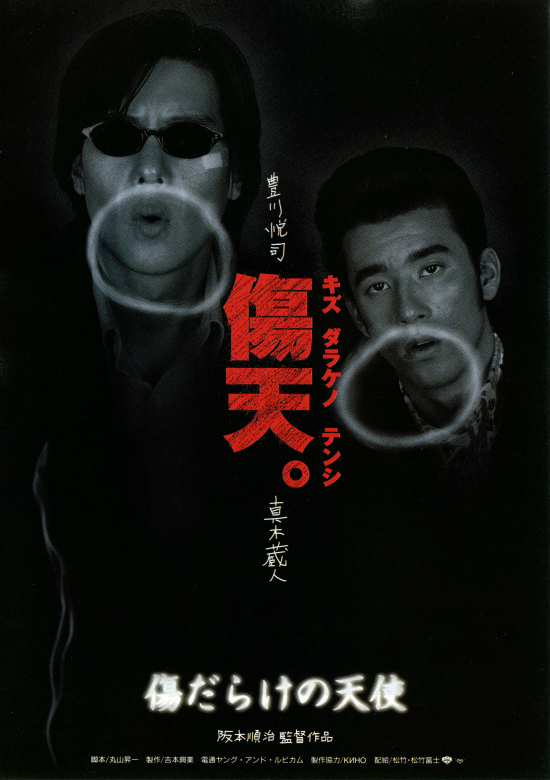 Despite having started his career in the action field with the boxing film Dotsuitarunen and an entry in the New Battles Without Honour and Humanity series, Junji Sakamoto has increasingly moved into gentler, socially conscious films including the Thai set Children of the Dark and the Toei 60th Anniversary prestige picture
 After Japan was defeated and later occupied by the Americans, there came the painstaking exercise of examining what exactly had happened during the conflict and assessing is who, if anyone, could be held accountable for any wrongdoing. The so called “war criminals” were divided into classes according to the severity of their crimes with Tojo himself at the top who eventually paid with his life. However, many of the men who were given the same Class A rating were just rank and file soldiers who had been “following orders”, often because they feared for their own lives if they refused. The debut directorial effort from writer Shinobu Hashimoto who provided scripts for some of Akira Kurosawa’s most famous works, I Want to be a Shellfish (私は貝になりたい, Watashi wa Kai ni Naritai), examines just one of these tragically absurd cases.
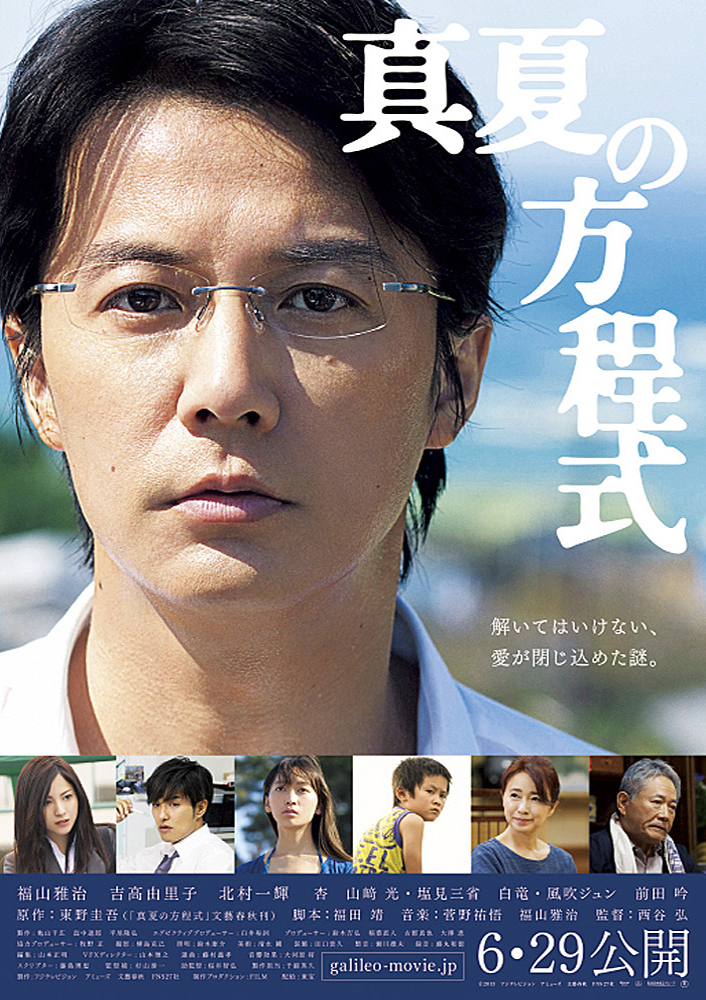 Sometimes it’s handy to know an omniscient genius detective, but then again sometimes it’s not. You have to wonder why people keep inviting famous detectives to their parties given what’s obviously going to unfold – they do rather seem to be a magnet for murders. Anyhow, the famous physicist and sometime consultant to Japan’s police force, “Galileo”, is about to have another busman’s holiday as he travels to a small coastal town which is currently holding a mediation between an offshore mining company and the local residents who are worried about the development’s effects on the area’s sea life.
 Yaro Abe’s manga Midnight Diner (深夜食堂, Shinya Shokudo) was first adapted as 10 episode TV drama back in 2009 with a second series in 2011 and a third in 2014. With a Korean adaptation in between, the series now finds itself back for second helpings in the form of a big screen adaptation.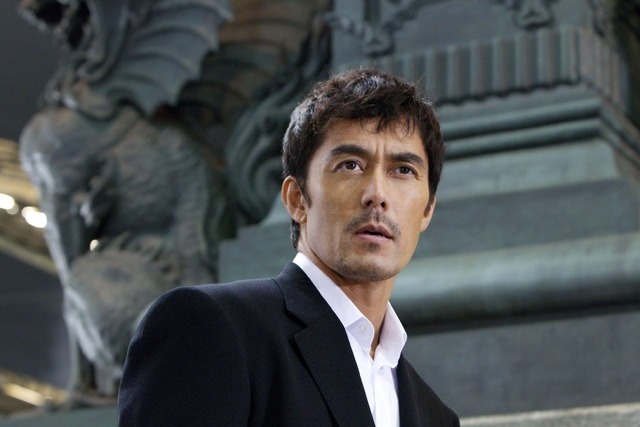
 Windows on Worlds