Soul on a String (皮绳上的魂, Zhang Yang, 2016)

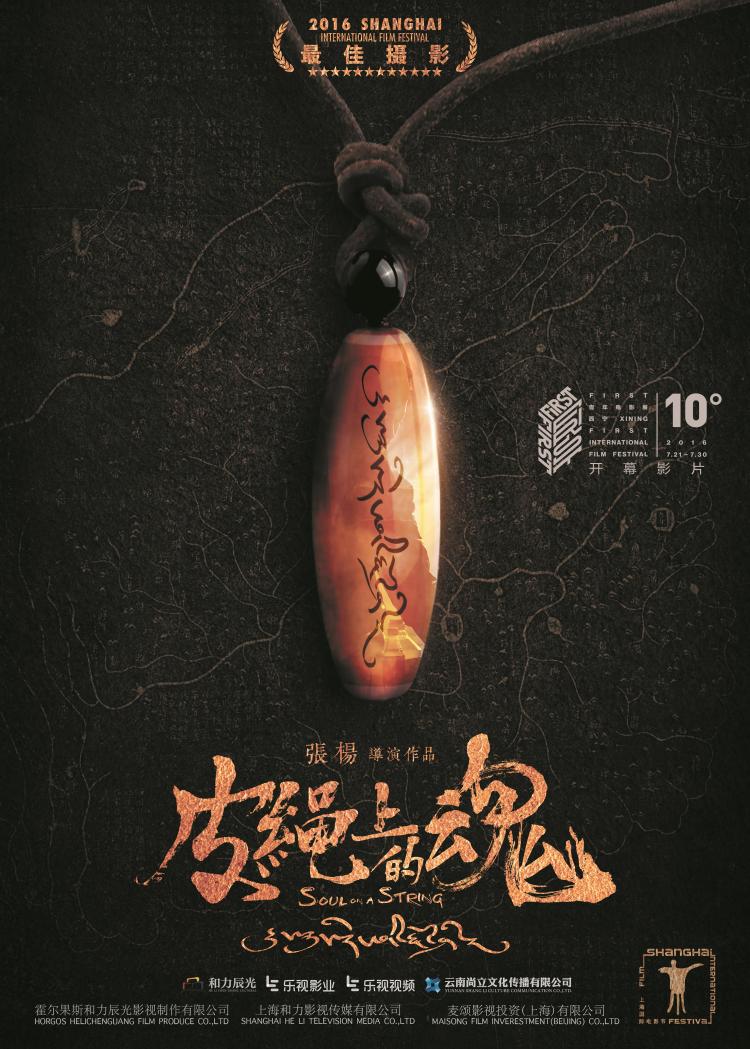
soul on a string posterAt the end of Zhang Yang’s Shower, there’s a lengthy fantasy sequence taking place in a desert in which a young girl is about to enjoy the first and last bath of her life as a right of passage before she is married off. Intended to emphasise the importance of water, the need of which acts as the great leveller for all living things, the brief movement away from the struggles of two brothers and their soon to be torn down bathhouse acted as a kind of lament for a perceived decline in values and priorities in a period of intense economic development. Jumping on a few films and many years later, Zhang Yang’s desert odyssey Soul on a String (皮绳上的魂 , Pisheng Shang de Hun) again takes place in an arid land where values and humanity are in peril. Adapted from two novels by Tibetan-Chinese novelist Tashi Dawa (Tibet, The Soul Tied on a String, and On the way to Lhasa), Zhang’s Tibetan western marries the classic wandering stranger narrative with a Buddhism infused magical realism.

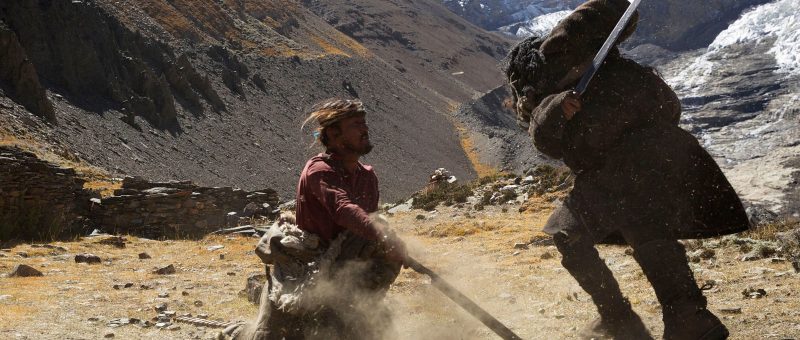
Ruthless loner Tabei (Kimba) kills a deer only to find a mysterious amulet in its mouth recently acquired from a little girl who fell off a cliff. Experiencing his first bout of divine retribution, Tabei is struck by lighting only to be mysteriously revived by a cryptic Buddhist priest who tells him it’s his job to take the amulet to the holy land where he will also be cleansed of his considerable sins. Taking his rebirth seriously Tabei takes off even though the priest’s only hints about the location of the holy land are that the distance is under his feet and that the road is on his back.

Meanwhile, hot headed youngster Guori (Zerong Dages) is on Tabei’s trail hoping to kill him in answer to a blood feud. Tabei has committed many sins of his own but the murder of Guori’s father in a pointless gambling dispute is not one of them. Tashi died at the hands of the father Tabei never knew but as custom dictates, sons may take vengeance from sons to satisfy their honour. Trudging on through his quest, Tabei will have to face the legacy of his past even if he doesn’t really want to. Acquiring a persistent follower in Chun (Quni Ciren), a young woman with whom he spent a night on the road, and later a mysterious child with strange powers, Pu (Yizi Danzeng), Tabei pursues his spiritual quest finding his soul becoming lighter all along the way.

The futility of a blood feud, perhaps more a feature of the spaghetti western than the classic Hollywood model, lies at the heart of the spiritual drama as the spectre of vengeance for a father’s crime has overshadowed Tabei’s entire life. Guori, young, tough, and angry is determined to avenge the father who left him in such a stupid and pointless way but only increases the depth of the debt. When we first meet him he thinks he’s met his target only for the man to explain to him that many men have the name Tabei and he’s looking for someone else. Guori doesn’t believe him and kills the man anyway. If this man had a son, there is now a blood debt on Guori’s head to equal that of his quarry.

Guori’s persistent failures cause nothing but consternation to his ambivalent mother who worries for her son but also wants to see him prove himself a man and avenge her husband’s death as honour dictates. Older brother Kodi (Lei Chen) is less committed to the idea of vengeance but eventually takes on its burden. Kodi, like Tabei, sacrifices much out of the necessity of achieving this pointless goal, abandoning a woman he loved and a happy future as the father of a family. Tabei offers this same excuse to Chun in explaining his reluctance to father a child – the blood curse will simply pass to him should he be forced to kill Kodi or Guori in defending himself. The cycle never ends, only perpetuating itself through successive acts of violence.

Yet as Tabei gets closer to the promised land, his soul begins to clear. No longer so gruff and unapproachable he allows Chun to travel with him, becoming a kind of father figure to a makeshift family completed by the strange little boy, Pu. Shot against the beautiful yet unforgiving Tibetan landscapes, Soul on a String is a tale of redemption, violence, love, and legacy shot through with ancient mysticism and obscure spiritual questioning yet for all of its inherent inscrutability Zhang’s return to the desert proves infinitely fascinating despite its necessarily epic dimensions.


Soul on a String was screened at the 19th Udine Far East Film Festival.

Original trailer (English subtitles)
Master (마스터, Cho Ui-seok, 2016)

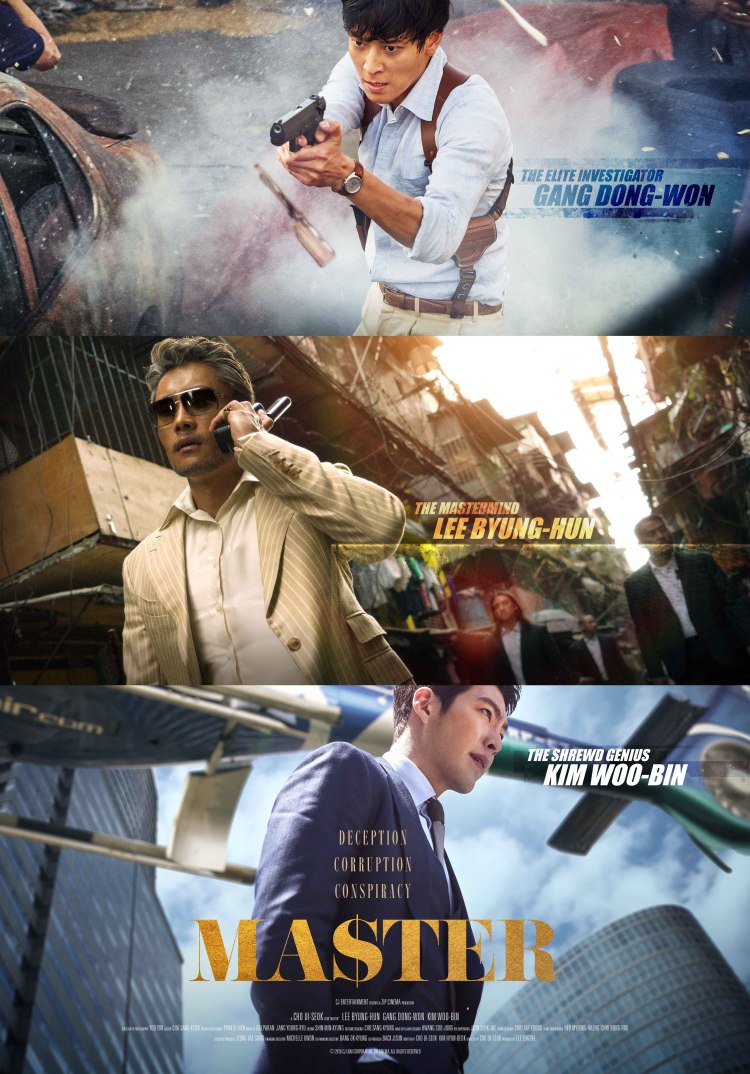
master posterCorruption has become a major theme in Korean cinema. Perhaps understandably given current events, but you’ll have to look hard to find anyone occupying a high level corporate, political, or judicial position who can be counted worthy of public trust in any Korean film from the democratic era. Cho Ui-seok’s Master (마스터) goes further than most in building its case higher and harder as its sleazy, heartless, conman of an antagonist casts himself onto the world stage as some kind of international megastar promising riches to the poor all the while planning to deprive them of what little they have. The forces which oppose him, cerebral cops from the financial fraud devision, may be committed to exposing his criminality but they aren’t above playing his game to do it.

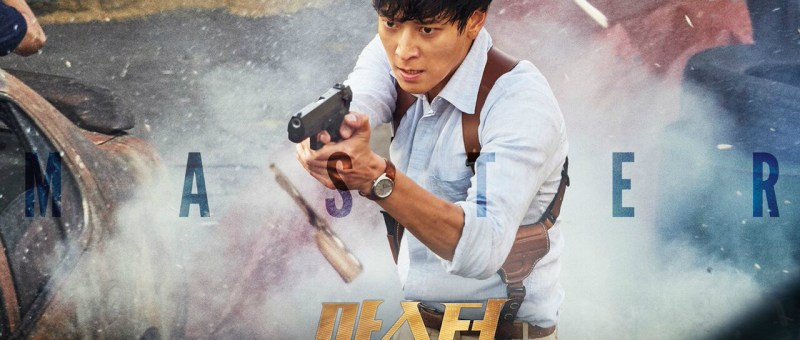
“Entrepreneur” Jin Hyun-pil (Lee Byung-hun), CEO of the One Network financial organisation which is about to make an unprecedented move into investment banking, is in the middle of an energising speech to his investors. He’s booked a massive stadium with lighting and stage effects worthy of a veteran rock star and is doing his best snake oil speech to convince the ordinary people who’ve invested their life savings in his obviously dodgy pyramid scheme that he’s going to make banking great again by handing ownership back to the masses. Many are convinced by his inspirational attitude, but Captain Kim Jae-myung (Gang Dong-won) of the financial crimes division smells a rat. He knows there’s something very wrong here and is determined to bring Jin down before his exploits ruin the lives of even more innocent families just trying to make a better life for themselves.

Their way in is through Jin’s systems guy, Park (Kim Woo-bin), who’s been in on the scam from the beginning but is pretty much amoral and has been working his own angle on the whole thing. Spineless and opportunistic, Park is primed for police manipulation even if it takes him a few flip-flops before he picks any kind of side aside from his own. Kim is after Jin’s mysterious ledger which contains a host of information on his backers which would cause considerable damage to those involved and give the police the kind of leverage they need to expose Jin’s enterprise for what it really is. However, before they can spring the trap, Jin escapes with his ill gotten gains and goes into hiding leaving hundreds of innocent families who’ve fallen victim to his scams destitute, frightened, and humiliated.

Playing against type, Lee Byun-hun inhabits his sleazy, TV evangelist meets cult leader of a villainous conman with relish as he lies, cheats, steals and weasels his way out of trouble. After a potential liability is killed, Jin enjoys his crimson morning smoothie with unusual delight leaving a bright red bloodstain across his upper lip as he ironically mutters “what a shame” watching the news footage of his flunky’s death. Not content with the vast amount of money he stole by exploiting the innocent dreams of people with little else, Jin tries the same thing again abroad, taking his “wife” Mama (Jin Kyung) with him though even she seems to know Jin is not to be trusted and could turn on her at any moment. Cornered, the only words of wisdom Jin has to offer is that perhaps he made a mistake in trying to run to the Philippines, he should have tried Thailand instead.

Starring three of South Korea’s biggest actors, Lee Byun-hun, Gang Dong-won, and Kim Woo-bin, Master takes on an almost tripartite structure as the upper hand passes between the three protagonists. Systems analyst Park is mostly out for himself and switches between each side more times than can be counted before gaining something like a conscience and committing to a particular cause while Kim and Jin mastermind a cat and mouse game advancing and retreating yet stepping further into each other’s territory. The game is an ugly one. Master is a fitting and timely indictment of those who make impossible promises to vulnerable people desperate enough to take the bait in the hope of making a better life for themselves and their families, yet it also fails to capitalise on its themes, preferring to leave them as subtle background elements to the cerebral games of one-upmanship and fractured loyalties between Jin, Kim, and Park. Over long at 143 minutes, Master is unevenly paced yet picks up for its Manila set, action packed finale which is out of keeping with much of what has gone before but ends things on an entertaining, upbeat note as justice is served, wrongs righted, and the truth revealed.


Master was screened at the 19th Udine Far East Film Festival.

International trailer (English subtitles)

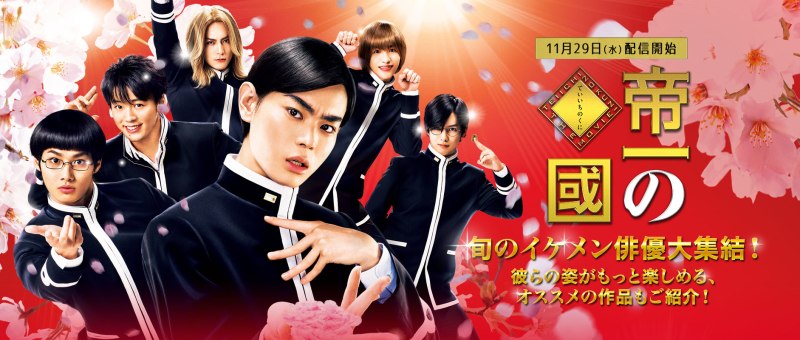
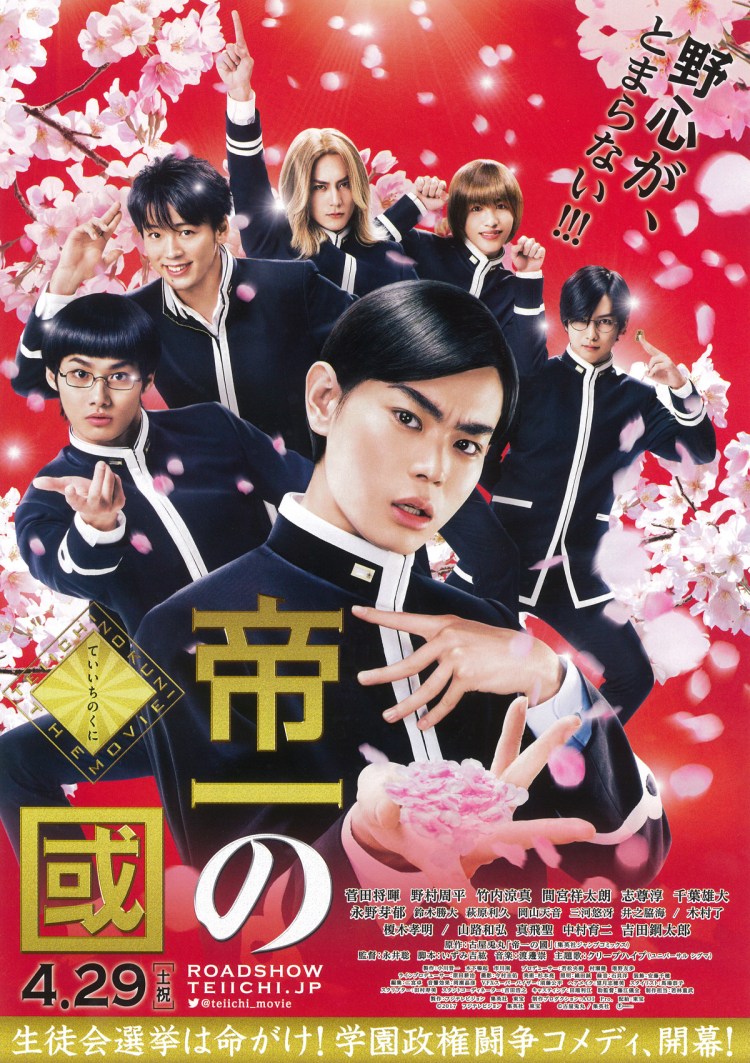
Teiichi: Battle of Supreme High (帝一の國, Akira Nagai, 2017)

teiichiBack in the real world, politics has never felt so unfunny. This latest slice of unlikely political satire from Japan may feel a little close to home, at least to those of us who hail from nations where it seems perfectly normal that the older men who make up the political elite all attended the same school and fully expected to grow up and walk directly into high office, never needing to worry about anything so ordinary as a career. Taking this idea to its extreme, elite teenager Teiichi is not only determined to take over Japan by becoming its Prime Minister, but to start his very own nation. In Teiichi: Battle of Supreme High (帝一の國, Teiichi no Kuni) teenage flirtations with fascism, homoeroticism, factionalism, extremism – in fact just about every “ism” you can think of (aside from altruism) vie for the top spot among the boys at Supreme High but who, or what, will finally win out in Teiichi’s fledging, mental little nation?

Taking after his mother rather than his austere father, little Teiichi (Masaki Suda) wanted nothing more than to become a top concert pianist. Sadly, his father finds music frivolous and forces his son towards the path he failed to follow in becoming a member of the country’s political elite. Thus Teiichi has found himself at Supreme High where attendance is more or less a guaranteed path to Japan’s political centre. If one wants to be the PM, one needs to become student council president at Supreme High and Teiichi is forging his path early by building alliances with the most likely candidates for this year’s top spot. The contest is evenly split between left and right. Okuto Morizono (Yudai Chiba) – a nerdy, bespectacled shogi champ proposes democratic reforms to the school’s political system which will benefit all but those currently enjoying an unfair advantage. Rorando Himuro (Shotaro Mamiya), by contrast, is the classically alluring hero of the right with his good looks, long blond hair and descent from a long line of previous winners.

Teiichi follows his “natual” inclinations and sides with Rorando but a new challenger threatens to change everything. Dan Otaka (Ryoma Takeuchi) is not your usual Supreme High student. A scholarship boy, Dan comes from a single parent family where he helps out at home taking care of his numerous younger siblings. From another world entirely, Dan is a good natured sort who isn’t particularly interested in politics or in the increasingly tribal atmosphere of Supreme High. What he cares about is his friends and family. Principled, he will do what seems right and just at the expense of the most politically useful.

For all of its posturing and petty fascist satire, there’s something quite refreshing about the way Battle of Supreme High posits genuine niceness as an unlikely victor. Teiichi, a politician through and through, has few real principles and is willing to do or say whatever it takes to play each and every situation for its maximum gain. Finding Morizono’s old fashioned socialism naive and wishy washy, he gravitates towards Rorando’s obviously charismatic cult of personality but Dan’s straightforward goodness eventually starts to scratch away at Teiichi’s attempt to put up a front of amorality.

The fascist overtones, however, run deep from the naval school uniforms to the enthusiastic singing of the school song and highly militarised atmosphere. Played for laughs as it is, the school’s defining characteristic is one of intense homoerotism as pretty boys in shiny uniforms flirt with each other in increasingly over the top ways. Teiichi does have a girlfriend (of sorts) who protects, defends, and comforts him even while able to see through his megalomaniacal posturing to the little boy who just wanted to play piano but he’s not above exploiting the obvious attraction his underling, Komei (Jun Shison), feels for him as part of his grand plan.

Teiichi has its silliness, but its satire is all too convincing as these posh boys vie for the top spots, reliving the petty conflicts of their fathers and grandfathers as they do so. No one one has much of a plan or desire to change the world, this is all a grand game where the winner gets to sit on the throne feeling smug, but then Teiichi’s nimble machinations hopping from one front runner to the next rarely pay off even if he generally manages to keep himself out of the line of fire. Rather than cold and calculating politics, the force most likely to succeed becomes simple sincerity and the unexpected warmth of a “natural” leader.


Teiichi: Battle of Supreme High was screened at the 19th Udine Far East Film Festival.

Original trailer (no subtitles)

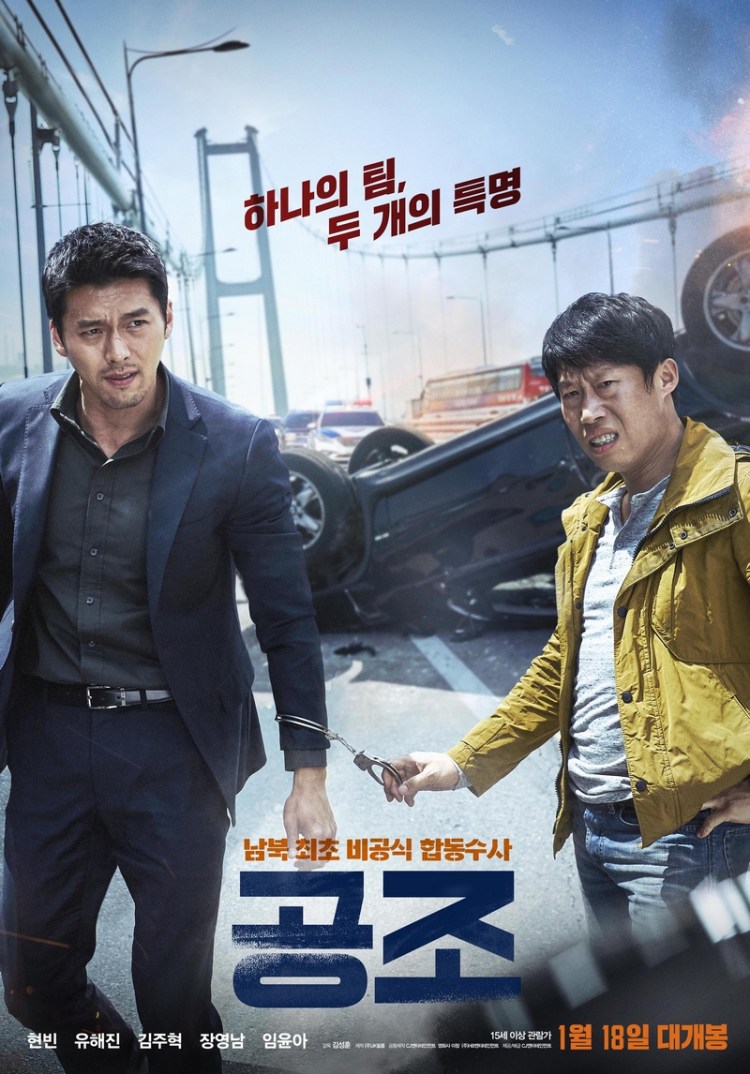
Confidential Assignment (공조, Kim Sung-hoon, 2017)

confidential assignmentSouth Korean cinema has a fairly ambivalent attitude to its policemen. Most often, detectives are a bumbling bunch who couldn’t find the killer even if he danced around in front of them shouting “it was me!” whereas street cops are incompetent, lazy, and cowardly. That’s aside from their tendency towards violence and corruption but rarely has there been a policeman who gets himself into trouble solely for being too nice and too focussed on his family. Confidential Assignment (공조, Gongjo), though very much a mainstream action/buddy cop movie, is somewhat unusual in this respect as it pairs a goofy if skilled and well-meaning South Korean police officer, with an outwardly impassive yet inwardly raging North Korean special forces operative.

In the South, Gang (Yu Hae-jin) is hot on the trail of a suspect he’s been chasing for quite some time but just as he’s finally about to catch him, his phone starts ringing. The cute ringtone featuring a little girl’s voice saying “daddy, pick up – don’t pretend to be working” is impossible to ignore and so Gang answers, chats to his daughter, and lets the suspect get away. In the dog house at work, Gang winds up with all the rubbish jobs before finally being saddled with a “special assignment” – babysitting a North Korean policeman as part of a collaborative detail chasing a possible defector/dangerous criminal the North are keen to drag back home for possibly inhumane treatment.

The Northerner, Lim (Hyun Bin), has his own reasons for chasing the criminal in that he is the only surviving member of a squad wiped out when a superior officer decided to go rogue and run off with a set of plates for printing counterfeit money. The North need the plates back, but Lim’s motives are personal more than merely patriotic and what he wants is vengeance for the death of someone close to him rather than protecting the embarrassing secret of North Korea’s counterfeit currency conspiracy.

For obvious reasons neither of the two men is able to trust the other but the confusion and suspicion is only increased by Gang’s total lack of knowledge about the case. All he knows is that they’re looking for a defector – no more, no less. Lim isn’t happy about having a South Korean cop getting in his way and quickly ditches him as soon as possible only for Gang to turn on his ace detective abilities and eventually end up at the same place through policeman’s instinct. Gradually a sort of grudging camaraderie builds up between the two as they’re forced to spend more time together and their odd couple buddy cop antics become the film’s main draw.

Lim, knowing nothing of life in the South yet suspicious of Gang, goes along with some of Gang’s goofier attempts to rein him in such as extended gag in which he gets him to put on an ankle bracelet by telling him that it’s a secret detective’s badge, reassuring him that his is in the cleaners, only for him to meet another suspicious type out on the road. So that he can keep track of him better, Gang’s superiors order him to take Lim home so he can watch him day and night much to the consternation of his wife but delight of his slightly younger sister-in-law who is instantly smitten by Lim’s chiseled features. Lim reacts to all of this with obvious vigilance but comes to like and respect Gang’s family who eventually welcome him into their home without reservation, even taking pains to try cooking North Korean food when he appears reluctant to join them at mealtimes.

Never quite engaging with the political subtext, Confidential Assignment is less about North/South co-operation than it is about complementary skills and the creation of an unexpectedly complete buddy cop unit. Gang is instantly impressed (and a little scared) by Lim’s obvious physical capabilities as he leaps from high balconies and fights off a whole room of bad guys armed only with soggy toilet roll, but Lim also comes to respect Gang’s bravery, kindness, and dedication to his family. Confidential Assignment might not be the most nuanced cinematic portrayal of North/South relations but its good-natured warmth, silly comedy, and impressively staged action scenes make it one of the most entertaining.


Confidential Assignment was screened as part of the 19th Udine Far East Film Festival.

Original trailer (English subtitles)
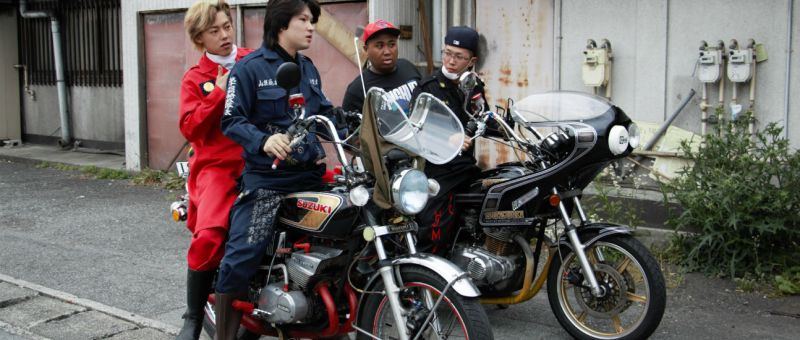
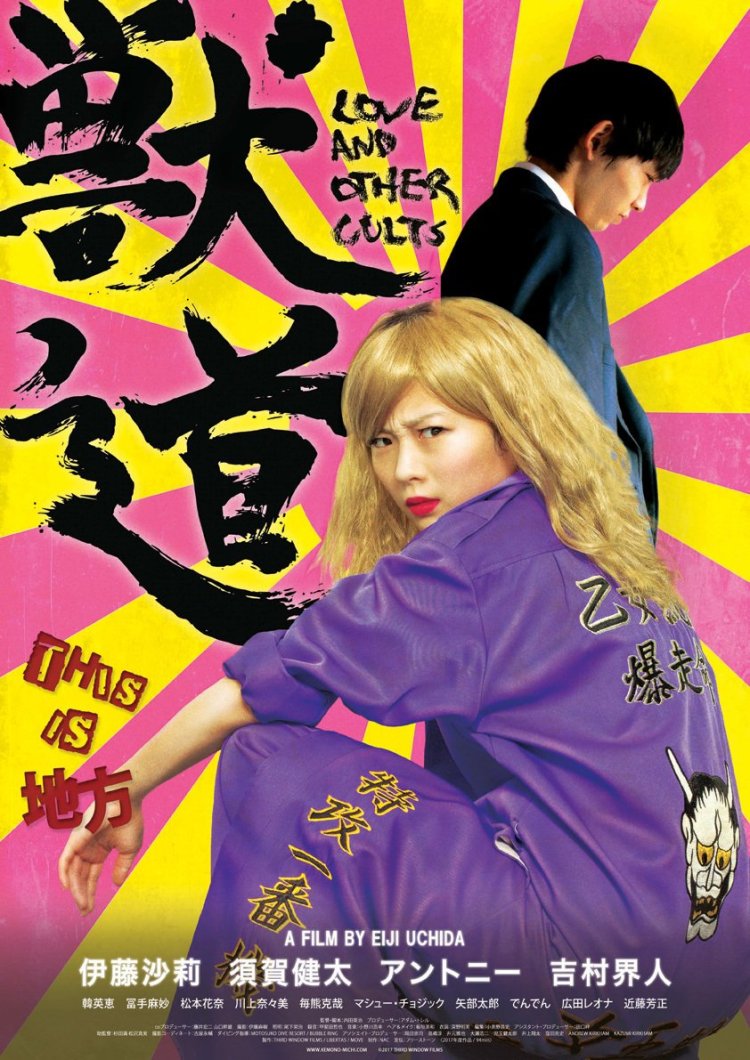
Love and Other Cults (獣道, Eiji Uchida, 2017)

love and other cultsEiji Uchida’s career has been marked by the stories of self defined outsiders trying to decide if they want to move towards or further away from the centre, but in his latest film Love and Other Cults ( 獣道, Kemonomichi), he seems content to let them linger on the margins. The title, neatly suggesting that perhaps love itself is little more than a ritualised set of devotional acts, sets us up for a strange odyssey through teenage identity shifting but where it sends us is a little more obscure as a still young man revisits his youthful romance only to find it as wandering and ill-defined as many a first love story and like many such tales, one ultimately belonging to someone else.
Our lovelorn hero and narrator, Ryota (Kenta Suga), observes the heroine from afar as he tells us her story, which is also his story in a sense. Ai (Sairi Itoh), a neglected child, drifts aimlessly in an uncaring world forever seeking a place to belong but finding no safe space to drop anchor. Ai’s mother, as drifting and aimless as her daughter, attempts to find salvation through religion but her quest for self-fulfilment drags her from one spiritual fad to the next all the while pulling little Ai along with her. The pair finally end up in a cult commune where Ai is a favourite of the leader – a Westerner called Lavi (Matthew Chozick) who preaches free love but only for himself.

Eventually, the cult is raided by the police, Lavi flees, and Ai is “rescued” but the next stage in her odyssey is no less disruptive than the last as she finds herself adrift in the mainstream world. Dropped into a regular high school, Ai tries to play the regular high school girl but can’t shake the cult member inside her. Semi-adopted by an ordinary family, her life gains some normalcy but it is short-lived and before long Ai finds herself in another sort of commune altogether before ending up in teenage prostitution followed by the porn industry.

If girls like Ai end up in AV, boys like Ryota end up in gangs. So it is that Ryota gets mixed up with two equally lost wannabe gangsters in Kenta (Antony) – an outsider by virtue of non-Japanese heritage, and the blond-headed Yuji (Kaito Yoshimura) who’s watched too many movies. Kenta is the de facto head of a little band of petty delinquent kids but he’s getting bored with gangster stuff and yearns for something more real while Yuji trails around after the lollipop sucking local chieftain (Denden). Ryota looks on casually without striking out in either direction, pining for Ai but either unwilling or unable to install himself as a permanent part of her reality.

As Ryota puts it, they’re all just looking for a place to belong. They don’t care where or what that place is, but what they long for is a sense of belonging born of owning their own identities. What may be a typical teenage problem of figuring oneself out takes on a larger dimension given the general instability of the world these youngsters find themselves in. Another in the long line of recent films losing faith with the family, Love and Other Cults finds no room for a familial solution to social woes. Ai has been so definitively let down that her very idea of family is so hopelessly warped as to permanently remove the possibility from her future.

Neglected in favour of her mother’s ongoing and inconclusive search for meaning, Ai’s major attachment is to unclear spirituality but even this becomes horribly misused thanks to her involvement with a shady cult. Having become the favourite of cult leader Lavi, Ai is used to trading herself for affection and security and so when she finds herself semi-adopted by the kindly family of a friend she attempts to use these same familial mechanisms to secure her position only to end up ruining the whole thing. Re-encountering Lavi (now an AV producer) again as an adult, Ai is still unable to see the way that she has been used and misused, quickly resuming her childhood role but without the spiritual pretence.

Ryota and Ai meander aimlessly outside of each other’s orbit, neither finding the place they feel they ought to be. Tellingly, the only real story which obeys narrative rules is that of depressed thug, Kenta, who finds an unlikely soul mate in a chance encounter with a photography loving deep-sea diver, Reika (Hanae Kan). Kenta and Reika are kindred spirits whose place to belong presents itself randomly and without warning yet is found all the same. There is no cult in this love, only mutual salvation. Ai and Ryota, however, are each trapped in their respective quests for fulfilment, disconnected, visible to each other only in brief, fragmented episodes and set to drift eternally yet always in search of a place to call home.


Love and Other Cults was screened as part of the 19th Udine Far East Film Festival.

Original trailer (English subtitles)

Hirugao – Love Affairs In The Afternoon – (昼顔, Hiroshi Nishitani, 2017)

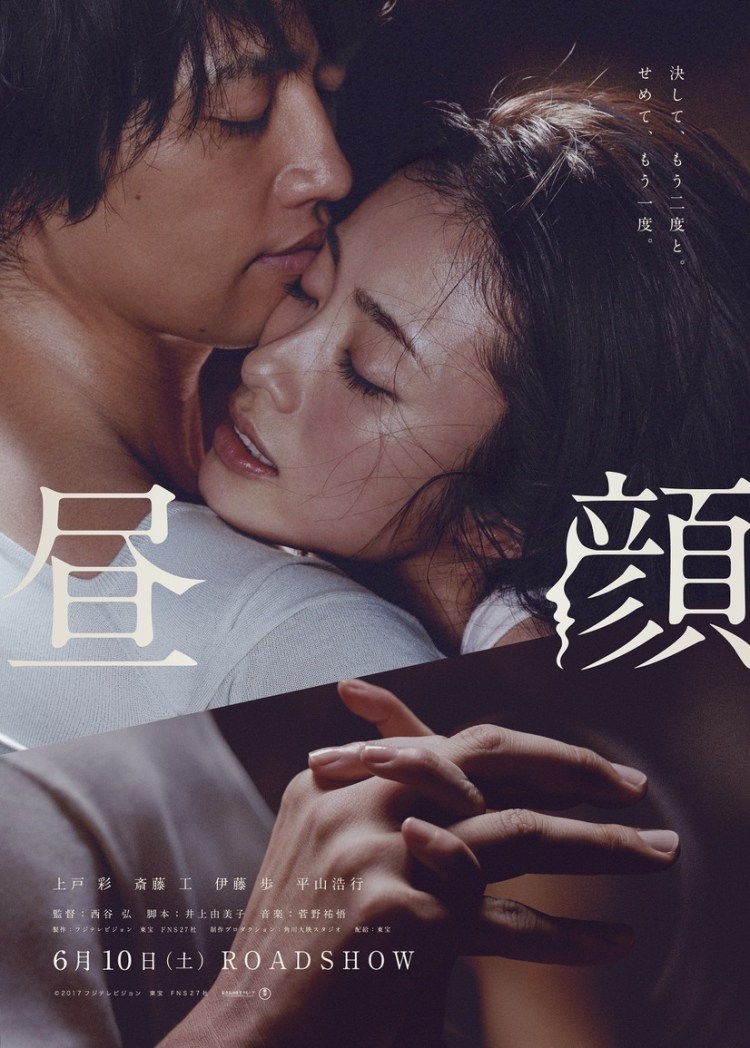
hirugao posterHiroshi Nishitani has spent the bulk of his career working in television. Best known for the phenomenally popular Galileo starring Masaharu Fukuyama which spawned a number of big screen spin-offs including an adaptation of the series’ inspiration The Devotion of Suspect X and Midsummer’s Equation, Nishitani has also brought his admittedly cinematic eye to other big screen transfers of small screen hits from Beautiful World to the European set Amalfi: Rewards of the Goddess and Andalucia: Revenge of the Goddess. Hirugao – Love Affairs in the Afternoon – (昼顔, Hirugao), is no exception to this trend and acts as a kind of sequel to a TV drama in which an unhappy housewife indulged in an intense yet doomed affair with a married schoolteacher. An old-fashioned romantic melodrama, Hirugao knows where it stands when it comes to conventional morality but is content to put its unhappy lovers through the ringer before meting out its judgement.
Three years after a passionate affair with her beloved professor Kitano (Takumi Saito), Sawa (Aya Ueto) has lost everything. She got a divorce, but Kitano went back to his wife and the terms of the settlement state that she is never to see, talk to, or in any way communicate with him ever again. Hoping to move on with her life, Sawa has done what many in her situation do and moved to a remote seaside town where no one knows her name, her history, or just why it is she looks so sad.

Eventually getting a job in a small cafe despite the obvious hostility of the long-standing staff, Sawa is making a go of things but no matter how hard she tries, she can’t get Kitano out of her mind. Only half alive Sawa lives out her days until one fateful afternoon she spots an advert for a lecture on fireflies – Kitano is coming to town. Sitting in the back, hunched down trying not to be seen Sawa listens to her lost love speak but accidentally catches his eye, once again sparking their long paused romance. Chasing, missing each other, retreating and advancing the pair eventually meet and go about the business of observing the local fireflies independently yet in the same space – obeying the terms of the settlement, at least in spirit. Gradually their old feelings resurface but Kitano stills goes home to his wife every day and a second chance for love after such a final judgement may require more than a simple act of faith.

Told more or less from the point of view of the unhappy Sawa, Hirugao’s main purpose is an exploration of her ongoing pain and inability to put the past behind her despite having moved to an unfamiliar place filled with unfamiliar faces. Not universally well liked by all on arrival, the cafe staff including a grumpy older woman and a cheerful if gossipy younger one eventually get used to Sawa though they both seem to resent the cafe owner’s affection for her. Later on, Sawa makes a critical mistake. She tells someone she thinks she can trust about her past – the affair, the divorce, her broken heart, and the frustrating possibility of starting a new life with a man who only ever half leaves his wife. Soon, the rumour gets out and Sawa might as well have painted a large red A on her forehead. Now she’s a hussy and a home wrecker, the women in the cafe want her out, the people in the market won’t serve her, and the cafe owner who was chasing her before suddenly turns cold.

This may not be the era of crucified lovers in which adultery is punishable by death, but it might as well be for all the unpleasantness Sawa must endure after being unmasked as someone who’s broken all the rules of social convention. Against the odds, the fuss dies down, her friends start to get over it and perhaps even like her a bit more now they know what it was that made her so closed off and mysterious – one even admits her anger was largely driven by personal regret over not pursuing the man she loved in her youth because he was already married and so she resented Sawa for having the courage to do what she never could. Sawa only wants one thing – to be with Kitano, and she’s willing to endure anything to stay by his side.

Kitano, however, is the nice kind of coward. Not wanting to hurt anyone he hurts everyone by keeping one foot with his wife and the other with Sawa. Though Sawa’s husband is well out of the picture, Kitano’s wife Noriko (Ayumi Ito) is descending into madness through jealousy and paranoia, unwilling to let her husband go. Having been one half of an adulterous couple, Sawa knows she can’t trust Kitano even if she loves him and soon enough jealousy, fear, and doubt begin to pollute their otherwise happy romance.

Illicit love cannot be allowed to succeed, there is always a price. Like the cruel flip side of jun-ai where fate cuts true love short before it’s allowed to turn sour, the furies are en route to deliver retribution to those who try to steal happiness by pursuing personal desires rather than adhering to social convention. Nishitani films with picturesque grandeur, capturing the sun-baked seaside town of Mihama in all its summery warmth and frosty hostility. An old-fashioned melodrama filled with grand emotions and overwrought symbolism, Hirugao is guilty of nothing so much as taking itself too seriously but nevertheless there is poetry in its pain even if the bitterly ironic closing coda seems to imply that love is a never-ending cycle of inescapable suffering.


Hirugao – Love Affairs in the Afternoon – was screened at the 19th Udine Far East Film Festival.

Original trailer (no subtitles)

Love Off the Cuff (春嬌救志明, Pang Ho-cheung, 2017)

love off the cuff posterJimmy and Cherie, against all the odds, are still together and in a happy longterm relationship in the third addition to Pang Ho-cheung’s series of charming romantic comedies, Love off the Cuff (春嬌救志明). Following the dramatic declaration at the end of Love in the Buff, the pair have continued to grow into each other embracing each of their respective faults but after all this time Jimmy and Cherie have to make another decision – stay together forever or call it quits for good.

The major drama this time around occurs with the looming spectre of parenthood as Cherie’s long absent father and Jimmy’s “godmother” suddenly arrive to place undue strain on the couple’s relationship. These unexpected twin arrivals do their best to push Cherie’s buttons as she’s forced to re-examine her father’s part in her life (or lack of it) and how he may or may not be reflected in her choice of Jimmy, whilst Jimmy’s Canadian “godmother” makes a request of him in that he be the father of her child. Jimmy, a self confessed child himself, does not want anything to with this request but is too cowardly to hurt the feelings of a childhood friend and is hoping Cherie will do it for him. Cherie is wise to his game and doesn’t want to be trotted out as his old battle axe of a spouse but at 40 years of age children is one of the things she needs to make a decision on, another being whether she wants them with Jimmy.

Cherie’s father was an unhappy womaniser who eventually abandoned the family and has had little to do with any of them ever since. In his sudden return he brings great news! He’s getting married, to a woman much younger than Cherie. Building on the extreme insecurities and trust issues Cherie has displayed throughout the series, her faith in Jimmy crumbles especially after she intercepts some interestingly worded (yet totally innocent) text messages on his phone which turn out to relate to an unfortunate incident with their dog. Jimmy’s reliability continues to be one of his weaker elements as the behaviour he sees as pragmatic often strikes Cherie as self-centered or insensitive. Things come to a head during a disastrous getaway to Taipei in which the couple are caught in an earthquake. Cherie freezes and cowers by the door while Jimmy ties to guide her to safety but his efforts leave her feeling as if he will never value anything more than he does himself.

Moving away from the gentle whimsy of Love in a Puff, Cuff veers towards the surreal as the pair end up in ever stranger, yet familiar, adventures including a UFO spotting session which goes horribly wrong landing them with community service and accidental internet fame. A real life alien encounter becomes the catalyst for the couple’s eventual romantic destiny as does another of Jimmy’s grand gestures enlisting the efforts of Cherie’s father to help him win back his true love. Cherie’s troupe of loyal girlfriends even indulge in some top quality song and dance moves in an effort to cheer her up when it’s looking like she’s hit rock bottom though, improbably enough, it’s Yatterman who eventually saves the day.

Supporting cast is less disparate this time around relying heavily on Cherie’s dad and Jimmy’s godmother but Cherie’s friends get their fare share of screentime even if Jimmy’s seem to fade into the background. Cherie never seems to notice but one of her friends is in love with her and is not invested in her relationship with Jimmy, constantly trying to get her to come away on vacation to a nostalgic childhood destination, but most of the girls seem to be in the dump camp anyhow loyally making sure Cherie thinks as little about Jimmy as is possible lest she eventually go back to him.

Trolling the audience once again with the lengthiest of his horror movie openings (so long you might wonder if you’ve wandered into the wrong screen), Pang begins as he means to go on, mixing whimsical everyday moments of hilarity with surreal set pieces. It’s clear both Jimmy and Cherie have grown throughout the series – no longer does Jimmy skip out on family dinners with Cherie’s mother and brother but patiently helps his (future?) mother-in-law figure out her smartphone as well as becoming something like her errant father’s wingman. Things wrap up in the predictable fashion but it does leave us primed for the inevitable sequel – Love up the Duff? Could be, it’s the next logical step after all.


Love off the Cuff was screened at the 19th Udine Far East Film Festival.

Original trailer (Cantonese with Traditional Chinese/English subtitles)

Love in a Puff (志明與春嬌, Pang Ho-cheung, 2010)

love in a puffSmokers. Is there a more maligned, ostracised group in the modern world? Considering the rapid pace at which their “harmless” pastime has become unacceptable, you can understand why they might feel particularly put out – literally, as they find themselves taking refuge in designated smoking areas or perhaps back allies where it seems no one’s looking. For all the nostalgia about how easy it was to strike up a friendship with a stranger just by asking for a light, it is also important to remember that smoking is not so “harmless” after all and there are reasons why smokers are asked to keep their activities amongst those who’ve also decided to ignore the warnings. The Smoking Ordinance, oddly enough, may have accidentally boosted the social potential of a smoke as those eager for a puff are given additional reasons to spend time together in an enclosed space, building a sense of community through nicotine addiction.
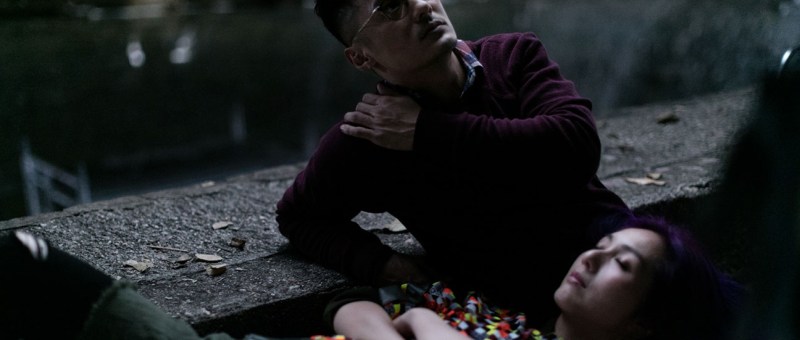
Pang Ho-cheung’s landmark romantic comedy Love in a Puff (志明與春嬌) takes this idea to its natural conclusion as recently dumped ad exec Jimmy (Shawn Yue) and trapped in a going nowhere relationship cosmetics girl Cherie (Miriam Yeung) begin to bond over a cigarette or two taken in a back ally near Jimmy’s office. Actually, Cherie doesn’t event work here, she’s wandered over and found a collection of kindred spirits whilst trying to avoid being spotted by her boss who thinks smoking is bad for your skin (not great when you’re supposed to be a walking advert for the makeup you’re pushing). Whilst the other guys and girls gossip about Jimmy’s great failed romance – his girlfriend cheated on him with and then left him for a Frenchman who has a better job in the company, Cherie listens patiently even though she’s clearly outside of this tight social circle. For Jimmy, this might be just what he needs – a breath of fresh (well, differently perfumed) air that has almost nothing to do with his current circle of work based friends.

Nothing in particular happens but the pair grow closer as they both attempt to escape the less satisfying elements of their lives. Relying on text messages delivered in a mix of text speak English and Chinese, Jimmy and Cherie message each other when they get bored – he eating hot pot with colleagues, she trapped at a fancy dress karaoke party, getting together to waste time but each unwilling to consider what any of this means. Eventually Cherie decides to make a real decision, but predictably enough, Jimmy freaks out and jumps on the brakes only to realise his hasty reaction might have been mistaken.

The tone is light and playful as Pang trolls the audience by beginning as a horror movie complete with dripping blood credits and scary music. The sequence turns out to be just one of the silly stories they gang entertain each other with during their cigarette breaks – in fact this one is a staple of Indian pizza delivery boy Bitta who tells it every time a new girl shows up. The grisly opening sequence even makes a fun return as Jimmy uses it to prank Cherie bringing them closer together whilst also highlighting his boyish, irreverent character. These same qualities which help Jimmy get through to Cherie may also be among the reasons his previous girlfriend ended the relationship, becoming bored with his familiar antics such as his strange love of buying ice-cream in a convenience store solely for the dry ice which likes to put in the toilet to enjoy the incongruous smoke effects.

Laid-back in style, Pang allows the back and forth between the leads to take centre stage whilst peppering the edges with a collection of background details about their friends and social lives. Cutting to a series of direct to camera documentary-style interviews, Pang adds a layer of commentary about modern love and relationships which extends right into the end credits with a hopeful man’s strange story about a girlfriend’s dog, all of which has the ring of authenticity even if occasionally mean-spirited as in its mocking of a plain girl stood up by an online date deceived by her overly flattering profile picture.

Love comes creeping and Jimmy and Cherie dance around each other, unable to speak plainly but occasionally moving forward through grand gestures. Each assuring the other they’re “in no hurry”, the great gateway to future happiness appears not with the traditional declaration of love but the “simple and straightforward” “I miss you”. Surprisingly cute and innocent for a Cat III comedy, Love in a Puff is an inconsequential tale of love blossoming in smokey city backstreets between a girl who’s tired of waiting and a guy who doesn’t know where he’s going but together they might just be able to figure it all out.


Love in a Puff was screened at the 19th Udine Far East Film Festival.

Original trailer (Cantonese with English/Traditional Chinese subtitles)

Shock Wave (拆彈專家, Herman Yau, 2017)

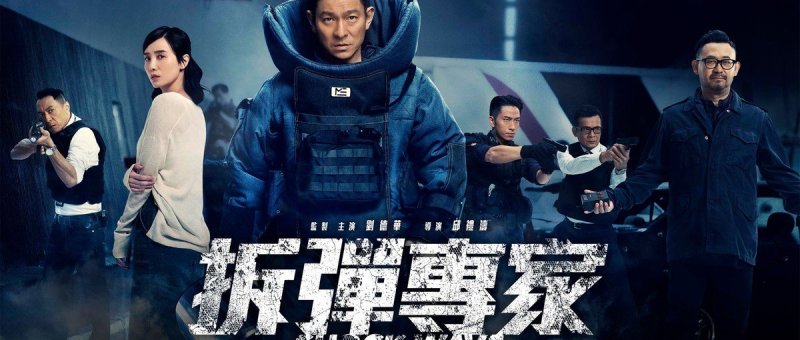
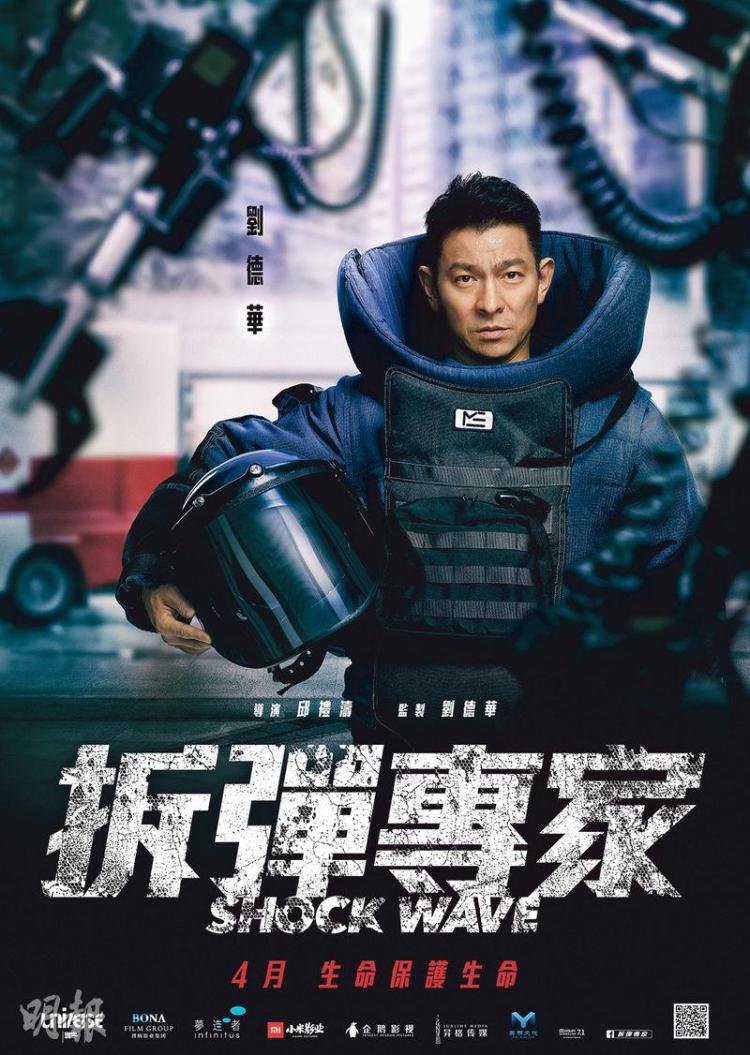
shock wave posterRecent Hong Kong action cinema has not exactly been known for its hero cops. Most often, one brave and valiant officer stands up for justice when all around him are corrupt or acting in self interest rather than for the good of the people. Shock Wave (拆彈專家) sees Herman Yau reteam with veteran actor Andy Lau turning in another fine action performance at 55 years of age as a dedicated, highly skilled and righteous bomb disposal officer who becomes the target of a mad bomber after blowing his cover in an undercover operation. These are universally good cops fighting an insane terrorist whose intense desire for revenge and familial reunion is primed to reduce Hong Kong’s central infrastructure to a smoking mess.
Some years prior to the main action, J S Cheung (Andy Lau) is undercover with a gang of bomb loving bank robbers. When they decide to load up a few taxis with explosives, Cheung just can’t let innocent people and fellow officers get caught in the crossfire and so he blows his cover and tips the cops off to the weaponised motor vehicles. Head honcho of the gang, Blast (Jiang Wu), is not best pleased especially as his younger brother Biao (Wang Ziyi) gets himself arrested. Flash forward to the present day and Blast has come up with his plot for revenge – placing large amounts of explosives in the Cross Harbour Tunnel and taking everyone in the general area hostage until the authorities agree to release his brother and he’s satisfied himself in outwitting Cheung.

In this at least Shock Wave fits neatly into the mad bomber genre as Blast goes to great lengths to terrorise the public for irrational and entirely selfish reasons. Blast’s original twin motives centre on a need to get his brother out of prison and the need to destroy Cheung but Biao has decided one of the reasons he quite liked being in prison was that Blast wasn’t there and Cheung isn’t really interested in playing Blast’s game. Blast, as his brother points out, is someone who rarely considers the thoughts or emotions of other people, acting selfishly and assuming his own desires are the only ones which matter. This essential selfishness is echoed in a fairly subtle point about the financial impact of the tunnel crisis and how others stand to profit from it while hundreds people remain terrified and captive inside a giant tube surrounded by water which may soon collapse if Blast loses his temper.

Th mad bomber may be a cinematic staple but Shock Wave relies too heavily on familiar genre elements to make much on an impact of its own. Characterisation is often shallow in the hero cop vs insane criminal set up with supporting characters reduced to a single prominent emotion. The inevitable romantic subplot gives Cheung an emotionally fragile, recently divorced school teacher as an angelic girlfriend only to have her experience sudden qualms about getting involved with someone who does such a dangerous job.

Even if the narrative fails to impress, Yau produces an exciting visual spectacle reportedly spending vast sums of money building an exact replica of the Cross Harbour Tunnel. Filled with explosions, gunfights, and high octane action Yau keeps the tension high by turning the dial right down as Cheung and his gang do their thing with cool, calm military precision disarming everything from C4 to unexploded World War II bombs.  At two hours, Shock Wave is pushing the ideal for an action thriller but largely makes its lengthy running time count despite a number of underdeveloped subplots.

A vehicle for Lau who also takes a producer credit, Shock Wave is defined by his performance as the dashing and heroic member of the bomb disposal squad. Jiang Wu’s mad bomber provides hearty support but is never given much to do other than emphasise his villainy with sneering taunts and occasional acts of cruelty. Cheung’s schoolteacher girlfriend Carmen, played by Song Li, is about as generic as they come seeming only to exist for the classic girlfriend in peril plot device but Song and Lau have good chemistry and the relationship does at least help to up the otherwise absent emotional content. Simply put, Shock Wave is an excuse for the ageing Lau to play the action hero once again and he plays it to the hilt. At times frustratingly formulaic, Shock Wave does manage to maintain the tension until the grippingly explosive finale whilst also paying tribute to those who run towards the crisis rather than away from it in full knowledge of the price they may pay in coming to the defence of ordinary people.


Shock Wave was the closing film of the 19th Udine Far East Film Festival and will also be released in UK cinemas from 5th May.

Original trailer (English subtitles)

Satoshi: A Move for Tomorrow (聖の青春, Yoshitaka Mori, 2016)

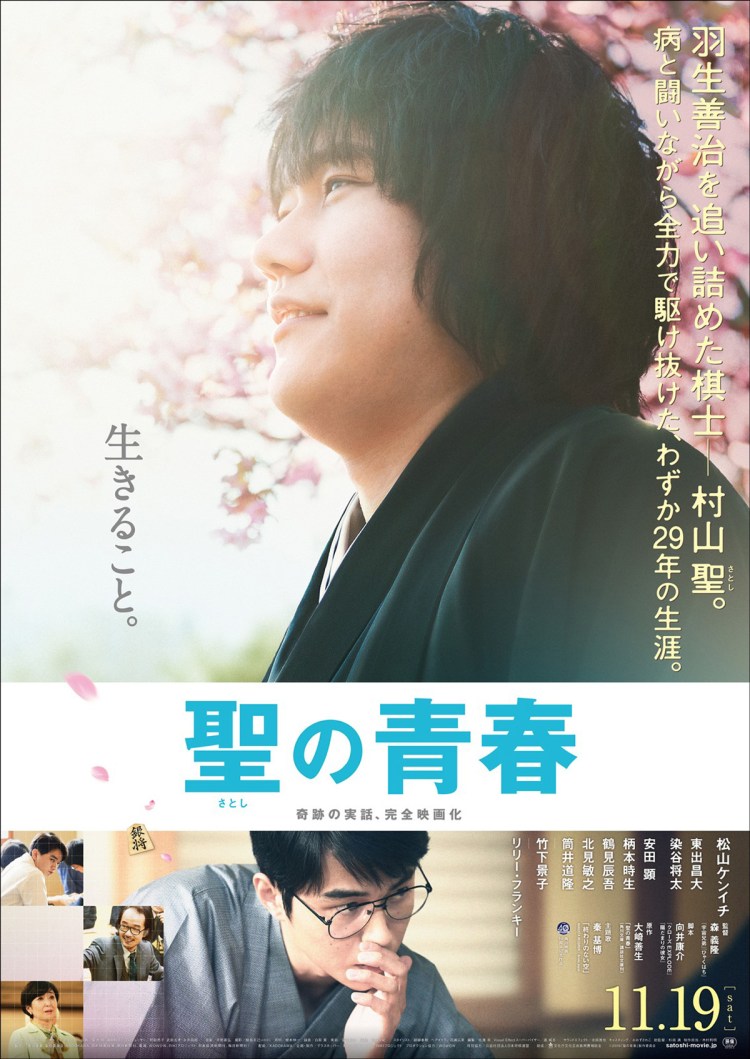
satoshiThere’s a slight irony in the English title of Yoshitaka Mori’s tragic shogi star biopic, Satoshi: A Move For Tomorrow (聖の青春, Satoshi no Seishun). The Japanese title does something similar with the simple “Satoshi’s Youth” but both undercut the fact that Satoshi (Kenichi Matsuyama) was a man who only ever had his youth and knew there was no future for him to consider. The fact that he devoted his short life to a game that’s all about thinking ahead is another wry irony but one it seems the man himself may have enjoyed. Satoshi Murayama, a household name in Japan, died at only 29 years old after denying chemotherapy treatment for bladder cancer in fear that it would interfere with his thought process and set him back on his quest to conquer the world of shogi. Less a story of triumph over adversity than of noble perseverance, Satoshi lacks the classic underdog beats the odds narrative so central to the sports drama but never quite manages to replace it with something deeper.

Diagnosed with nephrotic syndrome as a child, the young Satoshi spent a lot of time alone in hospitals. To ease his boredom his father gave him a shogi set and the boy was hooked. Immersing himself in the world of the game, Satoshi read everything he could about tactics, practiced till his fingers bled and came up with his own unorthodox technique for playing that would eventually take him from his Osaka home to the bright lights of Tokyo. Determined to become the “Meijin”, beat top shogi player Habu (Masahiro Higashide), and get into the coveted 9th Dan ranking Satoshi cares for nothing other than the game, his only other hobbies being drink, junk food, and shojo manga.

Undoubtedly brilliant yet difficult, Satoshi is not an easy man to get along with. Years of medical treatment for nephrosis have left him pudgy and bloated, and an aversion to cutting his hair and nails (poignantly insisting that they have a right to live and grow) already makes him an unusual presence at the edge of a shogi board. He’s not exactly charming either with his overwhelming intensity, aloofness, and fits of angry frustration. Yet the shogi world fell in love with him for his encyclopaedic yet totally original approach to the game. His friends, of which there many, were willing to overlook his eccentricities because of his immense skill and because they knew that his anger and impatience came from forever knowing that his time was limited and much of life was already denied to him.

This insistent devotion to the game and desire to scale its heights before it’s too late is what gives Satoshi its essential drive even if the road does not take us along the usual route. Reckless with his health despite, or perhaps because of, his knowledge of his weakness, Satoshi operates on a self destructive level of excessive drink and poor diet though when he starts experiencing more serious problems which require urgent medical intervention, it’s easy to see why he would be reluctant to get involved with even more doctors. Eventually diagnosed with bladder cancer, Satoshi at first refuses and then delays treatment in fear that it will muddy his mind but the doctors tell him something worse – he should stay away from shogi and the inevitable stress and strain it places both on body and mind. For Satoshi, life without shogi is not so different from death.

Satoshi has his sights set on taking down popular rival Habu whose fame has catapulted him into the Japanese celebrity pantheon, even marrying a one of the most beloved idols of the day. Habu is the exact opposite of Satoshi – well groomed, nervous, and introverted but the two eventually develop a touching friendship based on mutual admiration and love of the game. On realising he may be about to beat Satoshi and crush his lifelong dreams, Habu is visibly pained but it would be a disservice both to the game and to Satoshi not to follow through. Outside of shogi the pair have nothing in common as an attempt to bond over dinner makes clear but Habu becomes the one person Satoshi can really talk to about his sadness in the knowledge that he’ll never marry or have children. As different as they are, Satoshi and Habu are two men who see the world in a similar way and each have an instinctual recognition of the other which gives their rivalry a poignant, affectionate quality.

Despite the game’s stateliness, Mori manages to keep the tension high as elegantly dressed men face each other across tiny tables slapping down little pieces of wood featuring unfamiliar symbols. Japanese viewers will of course be familiar with the game though overseas audiences may struggle with some its nuances even if not strictly necessary to enjoy the ongoing action. Matsuyama gives a standout performance as the tortured, tragic lead even gaining a huge amount of weight to reflect Satoshi’s famously pudgy appearance. Rather than the story of a man beating the odds, Satoshi’s is one of a man who fought a hard battle with improbable chances of success but never gave up, sacrificing all of himself in service of his goal. Genuinely affecting yet perhaps gently melancholy, Satoshi: A Move for Tomorrow is a tribute to those who are prepared to give all of themselves yet also a reminder that there is always a price for such reckless disregard of self.


Satoshi: A Move for Tomorrow was screened as part of the Udine Far East Film Festival 2017.

Original trailer (English subtitles)