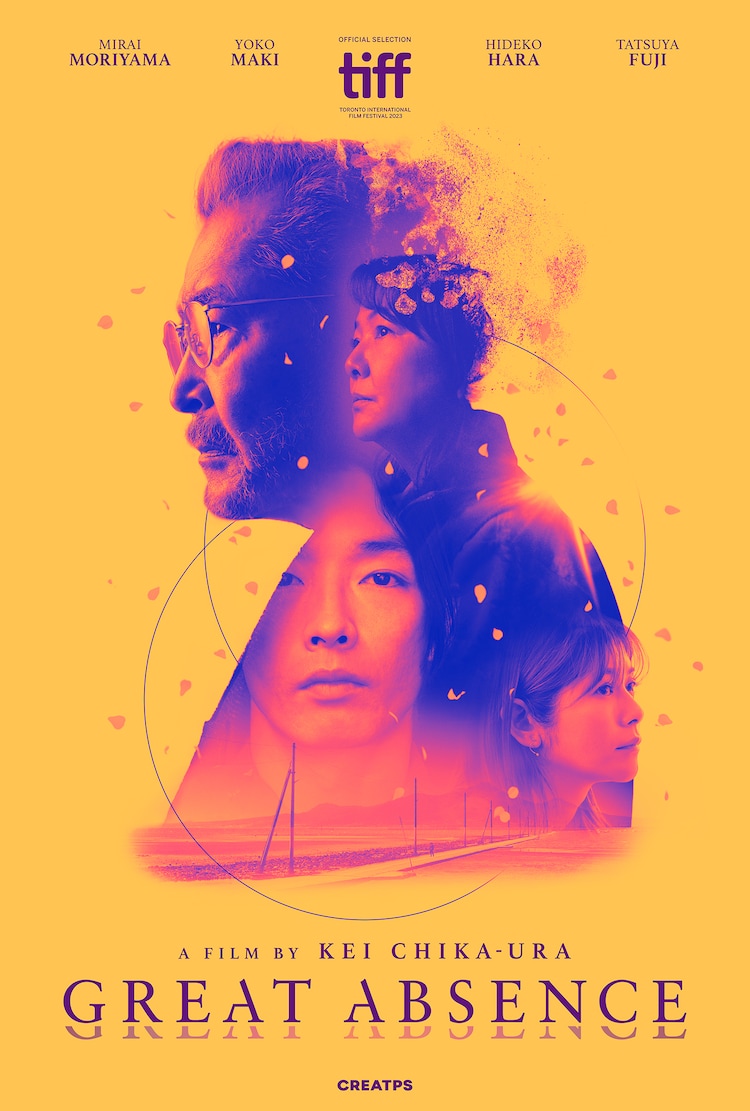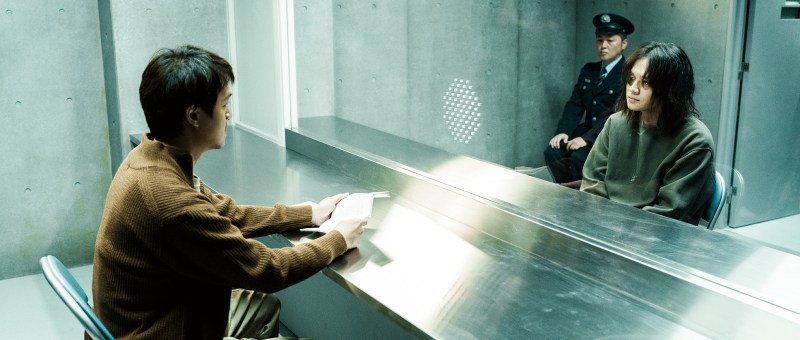
Great Absence (大いなる不在, Kei Chikaura, 2023)

“She’s not here. That’s everything,” is what the hero of Kei Chikaura’s poetic drama A Great Absence (大いなる不在, Oinaru Fuzai) is told when enquiring about the whereabouts of his missing stepmother and in the end is forced to accept it. That’s all there is, she isn’t here. The ways that Naomi (Hideko Hara) is there and at the same time not become central to the narrative in which absence is also of course a deeply felt presence.

That might also describe Takashi’s (Mirai Moriyama) relationship with his estranged father whom he’s barely seen since his parents divorced when he was 12. Yohji (Tatsuya Fuji) was evidently a difficult man, fussy and superior. Every line that comes out of his mouth is delivered as a mini lecture and generally filled with barbed criticism even if that might not really be what he meant to say. That might be why Takashi has stayed out of contact with him, though he has little choice but to respond after being contacted by the police who tell him that Yohji called them claiming he and his wife were being held hostage. Apparently suffering with advanced dementia, Yohji has now been placed in an eldercare facility though no one seems to know what’s happened to Naomi with a vague idea that she had been hospitalised sometime after falling ill and that living alone exacerbated Yohji’s cognitive decline.

Someone later asks Takashi why he came given that with the long years of estrangement no one would have blamed him for saying it was no longer any of his business, but there does seem to be latent desire for some kind of connection albeit one frustrated by awkwardness and the unhealed wounds of the past. Yohji had been a ham radio enthusiast which suggests that he was trying to reach out to people though struggled with communication and only ever found the words in writing as evidenced by the unexpectedly poetic love letters Takashi finds stapled into the diary which once belonged to Naomi but now somehow rests with him. 

Takashi spends much of the rest of the film wanting to return the diary as if he would be abdicating responsibility for it, refusing this particular inheritance along with any curiosity about the man his father is both then and now. In the care home, Yohji believes he is being held prisoner by a foreign power and offers only bizarre and disturbing explanations for what might have happened to Naomi, while attempts to communicate with the sons from her previous marriage are frustrated by longstanding resentment. Takashi’s stepbrother informs them that Yohji refused to contribute to her medical fees claiming he didn’t see why he should though it seems that he is trying to enact some kind of revenge or is seeking compensation for what he feels Yohji took from him. He also blames Yohji for the decline of his mother’s health convinced that the strain of living someone so casually cruel even before the intensification of his dementia eventually caused her to become ill.

He might in a way have a point, though it seems it was absence that also ate away at Naomi as the man who wrote her all those long and profound letters began to slip away, becoming aggressive and irritable. He may not have forgotten her, but also did not quite recognise the woman she was. It may be that it became impossible for her go on living with someone who was no longer there just as Yohji feels the ache of her absence and is mired in the regret and longing of the young man he once was who first let her slip through his fingers. 

This sense of absence may also have crept into Takashi’s own marriage with his wife (Yoko Maki) complaining that he may not have told her what had happened with his father if he had not needed to cancel another family event, nor did he want her to accompany him though eventually she insisted and perhaps succeeds in closing a gap through their shared attempts to unravel the secrets of Yohji and mysteries of the past. The sequences from the play which Takashi is performing that bookend the film, he speaks of a broken king who may not even be a king at all and echoes the sense in which Yohji has finally become absent from himself. At times profound and elegiac, the crisp 35mm photography adds to the sense of ongoing melancholy and irresolvable loss if tempered by an elusive serenity.


Great Absence screened as part of this year’s Toronto Japanese Film Festival. It will also be making its New York Premiere as part of this year’s Japan Cuts on July 18 ahead of its theatrical opening in the US on July 19.

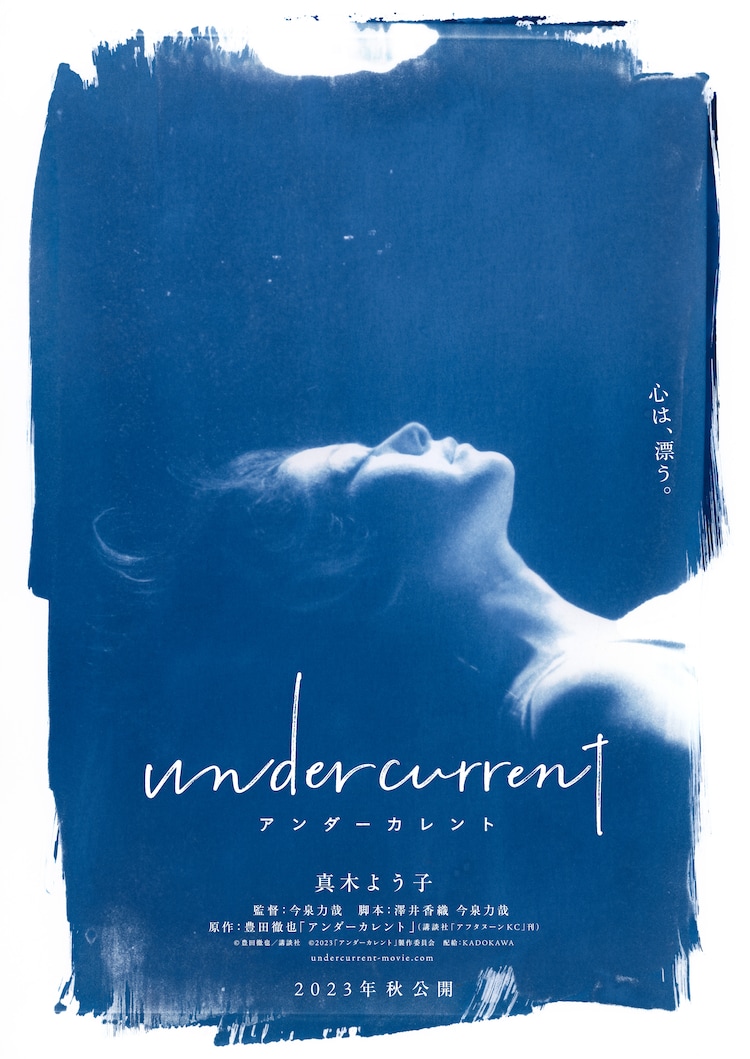
Undercurrent (アンダーカレント, Rikiya Imaizumi, 2023)

Part way through Rikiya Imaizumi’s adaptation of the Testuyua Toyoda manga Undercurrent (アンダーカレント) a detective asks his client what she thinks it means to “understand” someone. Of course, she doesn’t really have an answer, and the film seems to suggest there isn’t one because we are forever strangers to ourselves let alone anyone else. We do things without knowing why or that somehow surprise us, while the actions of others can an also be be worryingly opaque. But then perhaps you don’t really need to “know” someone in order to “understand” them and as someone else later says perhaps it’s true enough that most people don’t really want the truth but a comforting illusion. 

But then Kanae’s (Yoko Maki) illusions aren’t exactly comforting. Her husband of four years Satoru (Eita Nagayama) suddenly disappeared during a work trip a year previously and has not been heard from since. She turns the television off when the news announces details of a decomposing body discovered near a set of electrical pylons, but on another level she’s sure that Satoru is alive and chose to leave her for reasons she can’t understand. Kanae tells a friend that what pains her most is thinking that in the end she wasn’t a person Satoru felt he could share his worries with so she was powerless to help him. Then again, there’s something in Kanae that is equally closed off, a little distant and otherworldly as if she were also putting up a front to keep her true self submerged.

The detective (Lily Franky), whose name is “Yamasaki” yet allows people call him “Yamazaki” because it’s easier for them, says of Satoru that his “cheerful,” ever smiling nature may also have been a kind of masking designed to dissuade people from looking any deeper. Someone else admits that they lied mostly to fit in, be what others wanted them to be, only to be caught out by the gulf between their genuine feelings and and the ever expanding web of their lies. Caught in a kind of suspended animation uncertain if Satoru will ever return and if and how she should continue with her life, Kanae ends up taking in a new assistant at her family bathhouse. Hori (Arata Iura) is the polar opposite of the way her husband is described, silent, soulful and somehow sad. We might be suspicious of him, his arrival seems too coincidental and the way he looks at some children running past in the town perhaps worrying. Yet how can we judge based only on his silence knowing nothing else of his history? Nevertheless, he may understand Kanae much better than anyone would suspect and may be the comforting presence from her recurring nightmares.

In her dreams, she’s plunged into water with a pair of hands around her neck. Unknowingly, Hori asks her if she’s ever really wanted to die and she can’t answer him even if it seems to us that the dreams reflect her desire for death, to be submerged in a sea of forgetfulness. Yet we later learn they come to have another meaning reflecting her long buried trauma and the reason for her own listlessness. These are the undercurrents that run silently through her, waves of guilt and grief that obscure all else. Disappearances have happened around her all life and seem only to increase, another bath house owner seemingly disappearing after a fire having promised to sell her his boiler. Yet through her experiences, she comes to fear them less reflecting that anyone could leave at any moment and that’s alright, as Hori had said nothing’s really forever. 

Even so, she regrets that there couldn’t have been more emotional honesty from the beginning then perhaps no one would need to disappear without a word. Confessions are made and the air is cleared. Someone had said that no one wanted the truth, but it seems Kanae has chosen it as perhaps symbolised in her decision to call Yamasaki by his actual name rather than the one he allows people to use because it’s too much trouble to correct them. Aside from his multiple names, Yamasaki is a strange man who holds meetings in karaoke boxes and theme parks though perhaps because he simply thinks Kanae could use a little cheering up. In more ways than one, it’s the ones left behind who are left in the dark, but they may be able to find their way out of it with a little more light and reflection.


Screened as part of this year’s Japan Foundation Touring Film Programme.

Original trailer (English subtitles)

A Man (ある男, Kei Ishikawa, 2022)

©2022 "A MAN" FILM PARTNERS

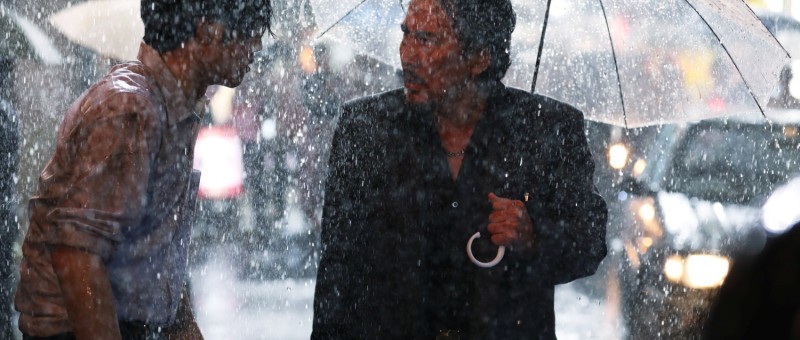
“Why was living so hard for him?” a brother remarks of man he assumed to have died in an accident after severing ties with his family, though with little sympathy in his voice and in truth should the brother be dead it would be all the better for him. Adapted from  a novel by Keiichiro Hirano, Kei Ishikawa’s A Man (ある男, Aru Otoko) asks questions not so much about the limits of identity and the existence of an authentic self, but the kinds of labels we place on others and the prejudice that often accompanies them that makes some want to run from themselves. 

Accidental detective Kido (Satoshi Tsumabuki), a lawyer who previously represented the recently widowed Rie (Sakura Ando) in her divorce from her first husband, is a case in point. He tries not to react while his wealthy and extremely conservative father-in-law runs down a case he’s just won representing the parents of a man who took his own life after being expected to work extreme overtime by an exploitative company solely to fulfil the image of the salaryman. The father-in-law sneers and complaints about the family receiving compensation before moving on to a rant about the welfare state scoffing that “real” Japanese don’t rely on such things which are only for “Koreans and people of that ilk”. 

Aside from its unpleasant xenophobia, the remark is insensitive as Kido is himself third generation Zainichi Korean, though a naturalised citizen of Japan. Throughout the film, he’s bombarded with social prejudice and racist abuse to which he chooses to say nothing, because there’s nothing he can really say, though leaving us to wonder if his decision to marry his wife (Yoko Maki), the daughter of a wealthy and conservative family, is an attempt to secure his own identity as a member of Japanese society even while bristling at her further demands, that they should invest in a more impressive, larger detached house as recommended by her father and also have another child. 

Kido’s quest to uncover the “true” identity of Rie’s husband Daisuke (Masataka Kubota) who is discovered to have been living an assumed identity when the brother of the man whose name he borrowed arrives at his memorial service, is also a quest to affirm his own identity which is in many ways as self-constructed as Daisuke’s is assumed to be. The interesting thing is that Daisuke, who said little of his past, used the other man’s backstory leaving no doubt that is not quite a case of mistaken identity that brings Kyoichi (Hidekazu Mashima) to Daisuke’s memorial service, though he is quick enough to disparage the life the deceased man shared with Rie in a rural “backwater” while making vague references to insurance policies and inheritances and simultaneously offering to pay for the funeral expenses as if reclaiming ownership over Daisuke’s legacy. 

Like Kido’s father-in-law, Kyoichi appears to be a cynical and self-interested man and it’s not difficult to see why the other Daisuke may have wished to escape his life with him. As an older man points out, everyone has things in their past and though they might not seem like much to others it’s natural enough to want run from yourself, to leave everything behind and start again somewhere else. In Japan, this is much easier to do than in some other countries and it’s true enough that changing one’s name is not that uncommon either. Rie’s young son Yuto, now old enough to question his own identity, took his mother’s maiden name after the divorce, then Daisuke’s surname Taniguchi when he married his mother. Now he wonders what his name should be if it is not Taniguchi and who he really is underneath it. 

In essence, we give people names as a kind of label to describe our relationship to them as a means of mapping out the world. These labels also come with prejudices such as that directed towards Kido as a Zainichi Korean and to another of the “disappeared” men who struggled to emerge from the shadow of his father’s crime as a death row felon. The projection of an identity can be harder to live with than the identity itself. When Kido’s wife tells him that he doesn’t seem himself and she wants him to go back to the way he was before, it’s a rejection of the new identity that has begun to surface through his quest to identify Daisuke and an instruction that he conform to the image of him she has constructed for herself as a typical Japanese salaryman not so different from her father in their affluent, middle-class existence.

Having satisfied himself that he understands the man Daisuke came to be, Kido’s self-image and sense of identity seem to be reaffirmed. He is happier with his wife and son, and has fewer doubts about his place in the world, but then he’s suddenly confronted with an unexpected revelation that undermines his new sense of security in causing him to doubt the veracity of the image he has of others, and consequently of their relationship with him which again leaves him unanchored unable to affirm his image of himself without its reflection. Rie’s final acceptance that in the end she never needed the “truth” (now that she has it) points to the same answer, that in the end Daisuke’s name was irrelevant because he was the man he was to her at the time that she knew him and this is all we can ever really know of each other in a continual act of faith in interpersonal connection. A man can be many people at once, or in quick succession, and none of them any less “real” than another. “It’s nobody’s life but your own,” Kido is reminded even as he struggles to reorient himself in a merging of identities self-constructed or otherwise but perhaps destined to remain forever a stranger to himself.


A Man screens in Chicago March 18 as part of the 16th season of Asian Pop-Up Cinema.

International trailer (English subtitles)

The Blood of Wolves (孤狼の血, Kazuya Shiraishi, 2018)

korou_honpos_0220_fin.aiJapanese cinema, like American cinema, is one of the few in which the hero cop is a recognisable trope. Though they may be bumbling, inefficient, obsessed with bureaucracy, or perhaps just lazy, police in Japanese cinema are rarely corrupt or actively engaged in criminality. Even within the realms of the “jitsuroku” gangster movie, the police maintain a fringe presence, permitting the existence of the underground crime world in order to contain it. “Jitsuroku” is, in a fashion, where we find ourselves with Kazuya Shiraishi’s throwback underworld police story, The Blood of Wolves (孤狼の血, Koro no Chi). Set in 1988, the end of the Showa Era which had seen the rebirth of post-war Japan and the ascendency of yakuza thuggery, The Blood of Wolves is based on a novel by Yuko Yuzuki rather than a “true account” of life on the frontlines of gangsterdom, but otherwise draws inspiration from the Battles Without Honour series in updating the story of nihilistic yakuza violence to the bubble era.

In 1988, a young accountant “goes missing” sending his sister to ask the police for help in locating him. The case gets passed to sleazy detective Ogami (Koji Yakusho) and his new rookie partner, Hioka (Tori Matsuzaka). Ogami leers disturbingly at the dame who just walked into his office before dismissing the newbie and extracting a sexual favour from the distressed relative of the missing man. Unfortunately, the accountant turns up dead and the bank he worked for turns out to be a yakuza front caught up in a burgeoning gang war between the Odani with whom Ogami has long standing connections and the gang from the next town over who are looking to increase their territory.

Ogami, a chain smoking, hard drinking, womanising detective of the old school, has one foot in the yakuza world and the other on the side of law enforcement. Hioka, a recent graduate from the local but also elite Hiroshima University (something of a rarity in his current occupation), is not quite sure what to make of his new boss and his decidedly “unorthodox” methods, becoming increasingly concerned about the way the police force operates in a town defined by organised crime. Deciding that Ogami has gone too far, he eventually makes the decision to go to IA with a list of complaints but there’s still so much he doesn’t know about Hiroshima and it is possible he may have picked the wrong side.

What he discovers is that the police force is so intrinsically rotten as to have become little more than a yakuza gang itself, only one with the legal right to carry guns and a more impressive uniform. Ogami, for all his faults, apparently has his heart in the right place. His “friendships” with gangsters are more means to an end than they are spiritual corruption, gaining leverage that will help him keep a lid on gang war – after all, no one wants a return to the turbulent days of the 1970s when the streets ran red with the blood of unlucky foot soldiers and that of the civilians who got in their way. Meanwhile Hioka, starting out as the straight-laced rookie, is himself “corrupted” by the corruption he uncovers, developing a complex mix of disgust and admiration for Ogami’s practiced methods of manipulation which, apparently, place public safety above all else.

Ogami, as he tells the conflicted Hioka, knows he walks a tightrope every day, neatly straddling the line between cop and yakuza, and the only way to stay alive is to keep on walking knowing one slip may lead to his doom. He may say cops can do whatever they like in pursuit of “justice” (and he does), but Ogami has his lines that cannot be crossed, unlike others in his organisation who care only for themselves and have long since given up any pretence of working for the public good.

Shiraishi channels classic Fukasaku from the noticeably retro Toei logo at the film’s opening to the voice over narration, garish red on screen text, and frequent use of freeze frames familiar from the Battles Without Honour series and associated “jitsuroku” gangster fare that followed in its wake. Moving the action up to 1988, the gangster world is once again in flux as it tries to corporatise itself to get in on the profits of bubble era prosperity which largely has no need for the thuggish gangster antics of the chaotic post-war years in which the yakuza could paint itself as a defender of the poor and oppressed no matter how ridiculous it might have been in reality. Ogami is a dying breed, a relic of the Showa era meeting its natural end, but perhaps you need to be a wolf to catch a wolf and guardian spirits can come in unexpected forms.


Screened at the 20th Udine Far East Film Festival.

Original trailer (English subtitles)

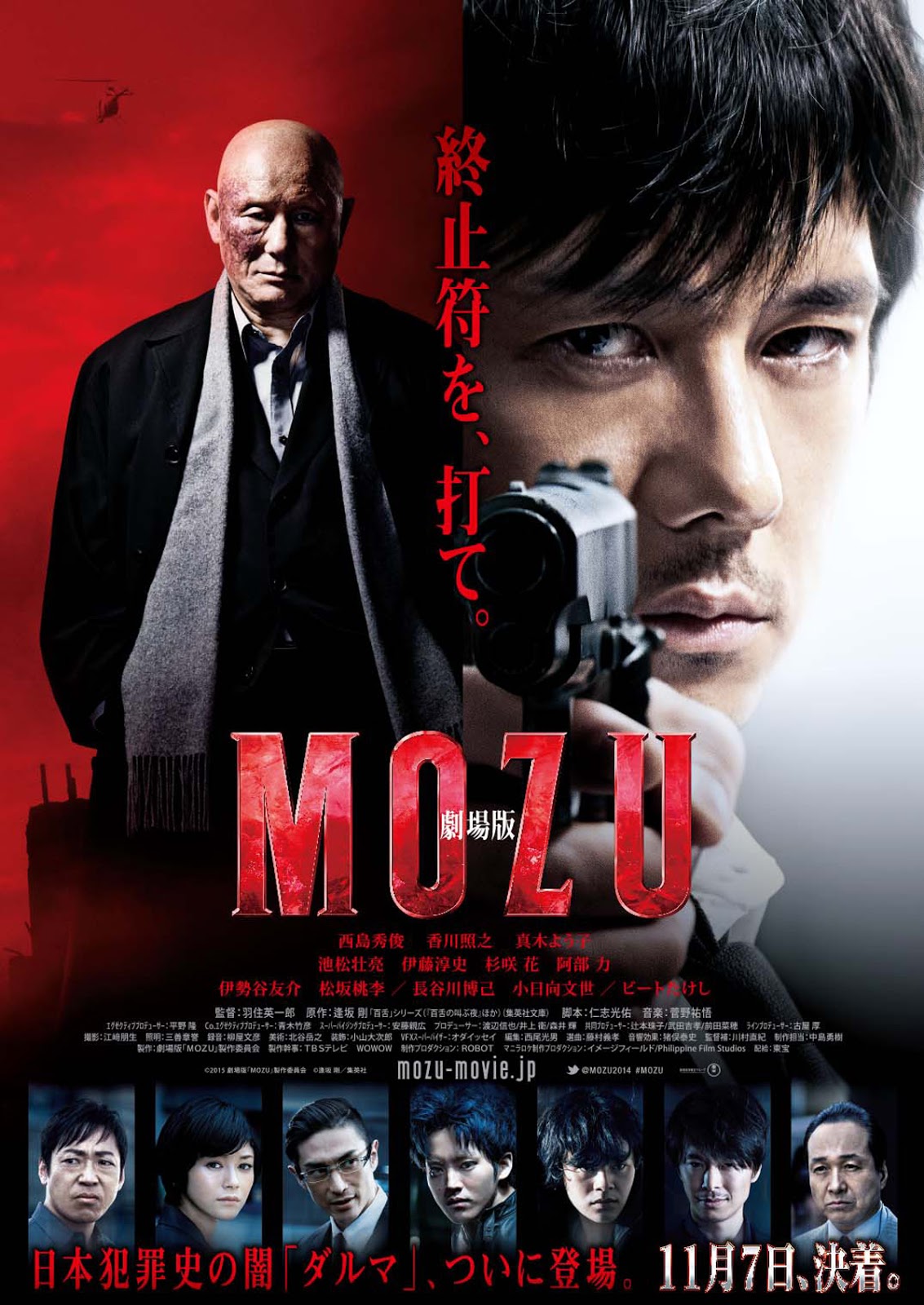
Mozu the Movie (劇場版MOZU, Eiichiro Hasumi, 2015)

mozu-posterThe criticism levelled most often against Japanese cinema is its readiness to send established franchises to the big screen. Manga adaptations make up a significant proportion of mainstream films, but most adaptations are constructed from scratch for maximum accessibility to a general audience – sometimes to the irritation of the franchise’s fans. When it comes to the cinematic instalments of popular TV shows the question is more difficult but most attempt to make some concession to those who are not familiar with the already established universe. Mozu (劇場版MOZU) does not do this. It makes no attempt to recap or explain itself, it simply continues from the end of the second series of the TV drama in which the “Mozu” or shrike of the title was resolved leaving the shady spectre of “Daruma” hanging for the inevitable conclusion.
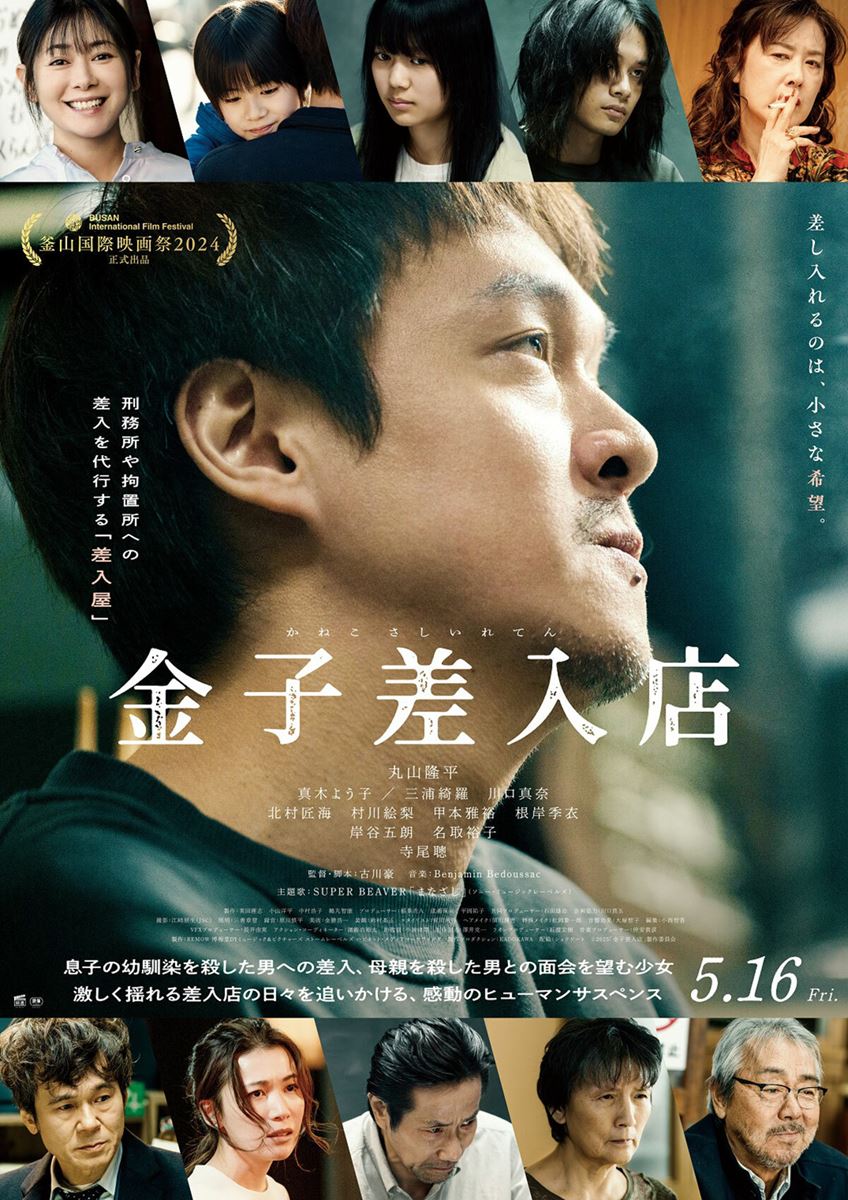
Six months on from the climatic events at the end of season two, Kuraki (Hidetoshi Nishijima) has become a drunk, Ohsugi (Teruyuki Kagawa) has left the force for the private sector, while Akeboshi (Yoko Maki) is still preoccupied with the strange phone calls she sometimes receives and the fate of her long lost father last seen on the deck of a sinking submarine. The dreams of the citizens of Tokyo are being haunted by the mysterious face of “Daruma”, but this is quickly superseded by an explosion in an office building which turns out to be a diversionary exercise as the autistic daughter of a refugee with diplomatic immunity is kidnapped by terrorists.

At this point, Kuraki appears at the scene, beats the bad guys into submission and rescues the girl, Elena, and her mother who are then taken into protective custody. However, things go south when Ohsugi’s daughter and Akeboshi are taken by the bad guys in the hope of an exchange forcing the gang to take Elena to a neighbouring Asian nation.

Mozu the movie suffers from many of the same problems which plagued the generally impressive TV series in its wildly inconsistent tone and increasingly convoluted, often bizarre plot twists. Assuming the audience will be familiar with the TV series, the film provides no recap, leaving the casual viewer completely lost amongst the numerous numbers of subplots held together by Kuraki’s need to find the answers behind the death of his wife at the site of a suicide bombing and the drowning of his daughter a year or so before. Likewise, Akeboshi’s familial concerns – her absentee father whose dark past was hinted at in the previous series and her close relationship with her two neices, is glossed over, as is Ohsugi’s ongoing battle to win back the respect of his teenage daughter. When a key character suddenly and quite unexpectedly appears to save the day (and then disappears again), the casual viewer has a right to be utterly baffled.

Where the central tone is one of cool noir supported by occasionally poetic camera work, Nishijima’s laid back minimalism gives way to broad, over the top villainy from Hasegawa’s Higashi as well as the punkish Mozu copycat who kickstarts the action. Kuraki remains an unbeatable super agent, taking out bad guys with well placed kicks to the chest and enduring numerous acts of torture whilst remaining doggedly fixed on his quest to find out the truth about his wife and a possible conspiracy plaguing Japanese society. Ohsugi is still the bumbling cop but equally committed to protecting his daughter while Akeboshi is underused, her slow burn romance with Kuraki simmering away in the background.

What remains is a collection of impressive action scenes and mysterious conversations offered with portentous seriousness. The purpose of Elena’s kidnapping is predictably grim yet reduced to a single sentence shortly before Kuraki apparently saves the day once again through undisclosed means. The central conspiracy in this conspiracy thriller, that Japan has been manipulated by a shadowy figure literally cannibalising his own children, fades into the background as Kuraki is left to affirm that all that remains now is chaos. Mozu the movie is season three with all the important bit stripped out – strange, confusing, and ultimately hollow. Yet for those well versed in the Mozu universe, it may provide a degree of closure to its ongoing mysteries, even if ultimately unsatisfying.


Original trailer (no subtitles)

https://www.youtube.com/watch?v=3SiONhHX6o0

My Uncle (ぼくのおじさん, Nobuhiro Yamashita, 2016)

My-Uncle-p1Crazy uncles – the gift that keeps on giving. Following the darker edged Over the Fence as the second of two films released in 2016, Nobuhiro Yamashita’s My Uncle (ぼくのおじさん, Boku no Ojisan) pushes his subtle humour in a much more overt direction with a comic tale of a self obsessed (not quite) professor as seen seen through the eyes of his exasperated nephew. “Travels with my uncle” of a kind, Yamashita’s latest is a pleasantly old fashioned comedy spiced with oddly poignant moments as a wiser than his years nephew attempts to help his continually befuddled uncle navigate the difficulties of unexpected romance.
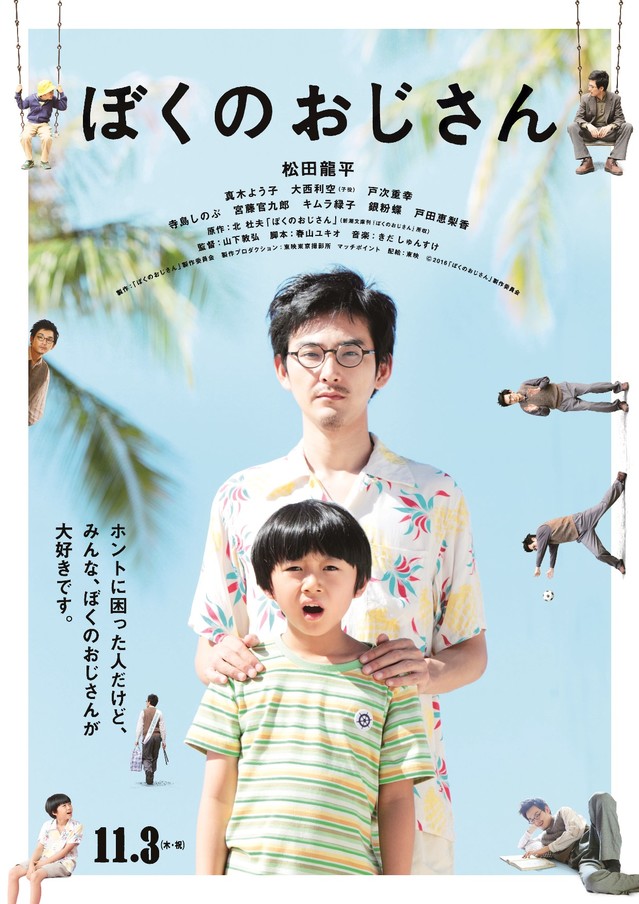
Yukio (Riku Ohnishi) has been given one of the most dreaded homework assignments ever – he’s supposed to write an essay about an “interesting” family member. This is a problem because Yukio thinks his family is very boring – dad is a civil servant, mum is a housewife, and his little sister is very frank but fails to generate sufficient interest for a whole essay. At this point, Yukio’s eccentric Uncle (Ryuhei Matsuda) enters the scene to enquire if the next edition of a children’s manga magazine has been released yet. Yukio says it has but he doesn’t buy it anymore because he’s grown out of it. Uncle hasn’t and wants him to buy one as soon as possible, convincing Yukio to pay 30% of the sticker price in the process. Annoyed, Yukio starts chronicling his Uncle’s strange adventures in school essay which proves a hit with his teacher (Erika Toda) who has accidentally become Uncle’s biggest fan.

Uncle lives with the family because he’s “a philosopher” which involves a lot of rejecting capitalist ideals and lying on his futon “thinking” or reading manga to give his brain a rest. Though Uncle’s brother and the father of the family (Kankuro Kudo) is content not to rock the boat, his wife (Shinobu Terajima) is often fed up with Uncle’s behaviour and is trying to set him up with proposals for an arranged marriage to get rid of him. Uncle is having none of it but is instantly smitten after being introduced to Japanese-Hawaiian photographer Eri (Yoko Maki). Eventually chasing her all the way to Hawaii with Yukio in tow, Uncle tries his luck with romance but only seems to get himself mixed up in even more unpredictable mischief.

There’s something so pleasantly innocent about My Uncle with its almost nostalgic tone and embrace of the surreality of everyday life. As seen through the eyes of Yukio, Uncle is not an entirely sympathetic figure at the beginning of the film. A part-time professor, Uncle talks big but spends his life rooting through ashtrays looking for smokable cigarette butts and collecting coupons to use for cheap dinners. Attempts to entertain the children backfire when he gifts them a very realistic plastic toy of a giant millipede though he does sometimes take Yukio out on “thinking expeditions” – usually on weekends and holidays to not be in the house to be shouted at by Yukio’s parents who are rapidly loosing patience with Uncle’s inability to progress in life.

If this were a series (and one could only hope) you could easily call the first instalment “Uncle Falls in Love” as Uncle finds himself finally thinking about settling down with the beautiful and outgoing Eri. Eri does seem to be among the few people who finds Uncle’s unusual qualities charming though he might need to rethink his plan of action if he’s finally to win her heart. Unfortunately, Eri is about to move back to Hawaii but invites Yukio and Uncle to visit. Uncle is desperate to go but as he can’t even afford to buy cigarettes, international travel is out. Undeterred, Uncle comes up with a number of labour intensive schemes to get there rather than actually working for the money but eventually makes it with Yukio’s help. There is, however, a rival on hand in Eri’s former boyfriend Shinsuke (Shigeyuki Totsugi) who is equally determined to win her back.

Life with Uncle may be one of constant exasperation but as Eri points out it’s never boring. Whether he’s getting himself arrested for accidentally buying weed or making up wild stories about himself in a misguided attempt to impress people, Uncle lives on a different plane of existence. Yukio reflects on all of this with a world weariness worthy of a 70 year old man but eventually comes to a kind of grudging affection for his silly old Uncle who is quite clearly setting himself up for a fall even if he has his heart in the right place. Yamashita mixes in poignant moments such as a reflective look over Pearl Harbour which gives rise to a discussion of life as a Hawaiian citizen of Japanese descent during the war, but broadly the tone is a bright one of zany humour and ironic one liners. Hilariously funny in a gentle, old fashioned way, My Uncle is Yamashita in full on comedy mode but all the better for it even as he leaves us desperate to find out what other strange adventures befall Uncle in the continuing saga of his existence.


My Uncle was screened as part of the Udine Far East Film Festival 2017.

Original trailer (no subtitles)

After the Storm (海よりもまだ深く, Hirokazu Koreeda, 2016)

after-the-stormIt’s never too late to be what you might have been – a statement attributed to George Eliot which may be as fake as one of the promises offered by the protagonist of Hirokazu Koreeda’s latest attempt to chart the course of his nation through its basic social unit, After the Storm (海よりもまだ深く, Umi yori mo Mada Fukaku). Reuniting Kirin Kiki and Hiroshi Abe as mother and son following their star turns in Still Walking, After the Storm is, in many ways, a story of decline and lost potential though it leaves room for a new beginning if only the past can finally be left behind.

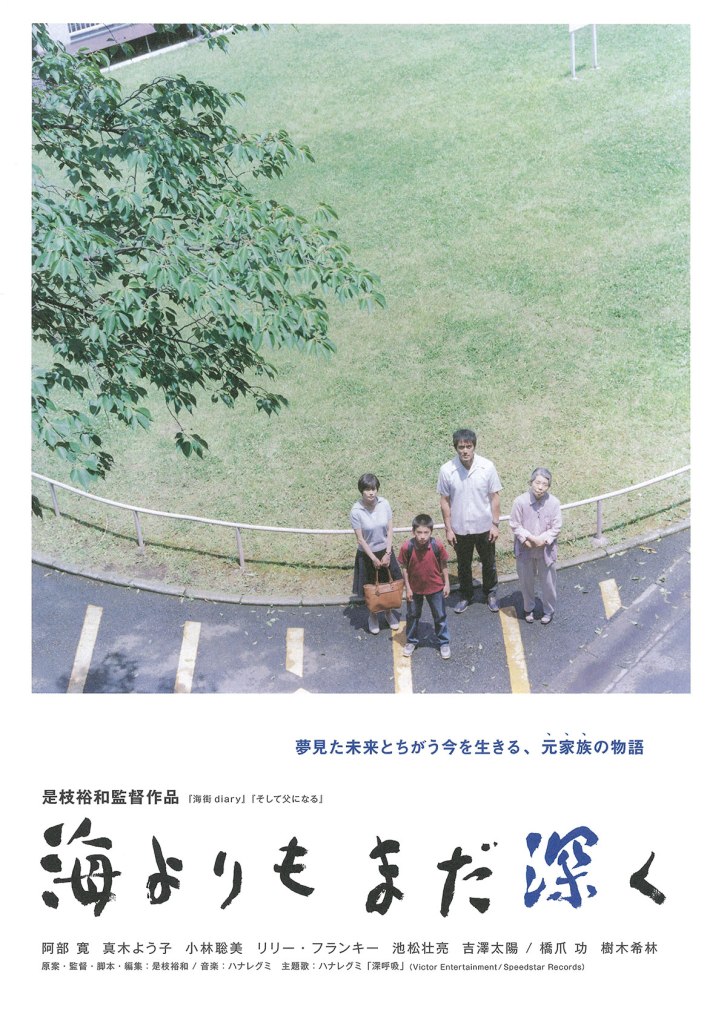
Ryota (Hiroshi Abe) is a one time prize winning novelist now working at a sleazy detective agency. He’s also a divorced father and well meaning deadbeat dad who never pays his child support but turns up every Sunday to hang out with his 11 year old son, Shingo (Taiyo Yoshizawa), much to the consternation of his ex-wife, Kyoko (Yoko Maki). Ryota hasn’t quite accepted that the marriage is over and has been using his detective skills to spy on Kyoko, discovering that she has a new man in her life who’s the exact opposite of him – successful, wealthy, and part of the elegant set.

Like father, like son (to echo another of Koreeda’s films), Ryota has inherited some of his worst qualities from his recently deceased dad. When we first meet him, Ryota has surreptitiously returned to his childhood home and let himself in with the spare key only to start rifling through draws, pocketing old lottery tickets and appraising the value of every object in sight. His mother, Yoshiko (Kirin Kiki), is actually a little bit relieved at her husband’s passing as she’s finally free of his unpleasant behaviour. Remembered as a liar and a cheat, an untrustworthy man whom everyone avoided, Ryota’s father is not the best role model leaving both of his children determined not to follow in his footsteps. This is Ryota’s first failure, and the one he’s most reluctant to acknowledge.

Desperately wanting to reclaim his place within his own family, Ryota goes to great lengths to get the money for his child support payments, somehow still hoping to be forgiven. Ryota’s eyes are always on the prize, but always on the unattainable rather than the real possibilities right in front of him. After double dealing on his clients by effectively blackmailing them, not to mention pressuring his colleague to lend him money, Ryota fritters it away on gambling trying to win it all, rather than settling for making the best of what he has. His quick fix approach to life has already cost him his wife’s faith as she is far less obliged to put up with the kind of nonsense Yoshiko was expected to grin and bear.

Yet Ryota seems to have the desire to be better, only lacking the faith to accept the possibility. When Ryota tries to blackmail a high school boy over an affair with a teacher, the boy declares that he’ll never grow up to be the kind of man Ryota is. Ryota, wounded, replies that it isn’t easy to grow up and be the man you wanted to be. As a child, Ryota wanted to be a civil servant because it was the exact opposite of his father, but he’s ended up becoming his father anyway. Shingo also claims to want to be a civil servant rather than something flashier like a professional baseball player but perhaps his desires are born more out of a sense of self realisation than an active opposition. When someone later asks Ryota if he’s the man he always wanted to be, he truthfully replies that he isn’t, but he’s working on it.

Events come to a head when Kyoko, Shingo, and Ryota end up staying over at Yoshiko’s apartment because of the oncoming typhoon. Played out with a quiet kind of restraint, old grievances are aired, understandings are reached, and each arrives at the next morning with a new sense of clarity.  After the storm has broken, there’s nothing left to do but assess the damage and then begin trying to rebuild as best you can.

Ryota’s epiphany comes to him as he’s wearing his father’s shirt and about to sign his own name with his father’s prized brush and ink stone. There’s something to be said for owning yourself, even if you can’t exactly be proud of it. Yoshiko asks why men can’t learn to love the present – if all you ever do is obsess over what you’ve lost or what you could gain, life will pass you by. Ryota may not have changed very much after coming through the storm, but he’s working on it. Who knows, he might even mean it, this time.


Reviewed at the 2016 BFI London Film Festival.

Original trailer (English subtitles)

The original Japanese title for the film, Umi yori mo Mada Fukaku, is taken from the lyrics to the Teresa Teng song Wakare no Yokan.

Summer Time Machine Blues (サマータイムマシン・ブルース, Katsuyuki Motohiro, 2005)

summertimemachineblues-2There ain’t no cure for the summer time blues! Unless, of course, you have a time machine. For the boys of the sci-fi club the long, boring summer vacation is just getting started. They mess around playing baseball while the two girls from the photography club who’ve been unceremoniously ousted from their club room in favour of the boys take photos of them. Then some weird stuff starts happening and their air con remote gets broken and it’s just so hot! When the boys somehow end up with a mysterious time machine, the solution is obvious…

Full of nostalgic charm, Summer Time Machine Blues is a fitting tribute to all those endless, golden summers of adolescence. Hanging out in the university club room even though they’re on their summer break, the kids waste time in distinctly old fashioned ways – playing baseball, going to the baths, working on a photo project etc. Though the guys are nominally the “science-fiction club” they actually aren’t very interested in science fiction and kind of make fun of the sort of people who would belong to the very club that they do, actually, belong to. Perhaps they just wanted the bigger room with the air conditioner and were lucky enough to get it as their two female friends are the only two members of the photography club and mostly hang out in the dark room at the back anyway.

The film began as a stage play put together by Europa Kikaku and though it makes the cinematic jump extremely confidently also maintains its youthful absurdist tones and theatrical comedy beats. The humour itself is cheerfully bizarre, full of fast comebacks and naturalistic sounding banter between a group of young guys. Added to this there are numerous references to other popular science fiction and time travel themed franchises such as the obvious homage to the Back to the Future series which is even prominently showcased in poster form at the local rep cinema. The cinema itself (a mini plot point in the movie) is run by a total sci-fi buff and time travel story expert who dresses (from the waist up) in a Star Trek: The Next Generation Command uniform complete with Communicator Badge. He seems to have something of a beef with the only actual scientist in the film who never has much success with his discoveries and only succeeds in boring everyone around him with his needlessly complicated theories.

Directed by Katsuyuki Motohiro who may be best known for the Bayside Shakedown series, Summer Time Machine Blues, also mixes in plenty of fun stylistic devices like the anachronistic tape rewinds or the elaborate disappearing of the time machine itself. He also makes good use of split screens to compare and contrast what’s happening where and pays especial attention to make sure everything works out in the most completely satisfying way.

Indeed, one of the most satisfying things about Summer Time Machine Blues is that despite essentially becoming a parody of time travel movies, all of its complicated paradoxes are internally consistent and even though it doesn’t really have an obligation to, it all makes sense no matter how hard you poke at it trying to find the holes. Of course, there’s also the more melancholic side of time on show as the scientist points out he’s riding a time machine as well – just one that will never go backwards, only very slowly into the future. This aimless summer will end at some point, as will college and eventually the universe too, one supposes.

However, that’s no reason not to enjoy the time you have, as one character realises towards the end as he fears his romantic desires may come to nothing going on some hints from the future. An enjoyably absurd and youthful farce, Summer Time Machine Blues is lives up to its name as a transporting delight which carts the viewer back to their own days of long and boring summers filled with improbable adventures. Smart, funny and beautifully crafted, Summer Time Machine Blues is the perfect way to while away an aimless afternoon at any time of the year.


http://www.youtube.com/watch?v=pX51ppP5wg0