Escape (逃走, Masao Adachi, 2025)

Satoshi Kirishima’s incongruously smiling face was a familiar presence across on the nation for over 40 years until he finally made a deathbed confession revealing his true identity as a man wanted in connection with a series of bombings in the 1970s and that he’d successfully evaded the authorities until the very end of his life. What apparently appealed to director Masao Adachi, a former Japanese Red Army member, was the question of why he chose to come clean rather than enjoy his secret victory by taking the truth to his grave.

That might be a minor irony at the centre of the Escape (逃走, Toso) in that Satoshi (Kanji Furutachi) is essentially in flight from himself only to finally escape from his torment by accepting his original identity. As a young man, Satoshi had been a member of a left-wing cell that wanted to awaken the population at large to the ways Japanese society had not changed in continuing to discriminate against the Ainu, those from the Ryukyu Islands, Koreans and other minorities while modern corporations enact another kind of capitalistic imperialism built on exploitation. It was for this reason that they embarked on a bombing campaign targeting large companies, but due to a miscalculation with the explosives, the bombing of the Mitsubishi Heavy Industries Building in 1974 proved more destructive than intended resulting in loss of life. 

Satoshi was not directly involved in that bombing which was carried out by another cell but was wanted for allegedly setting up a bomb in the Economic Research Institute of Korea which did not result in any casualties. Details of the real Satoshi’s life during his 40 years on the run are thin on the ground, but Adachi paints him as a man torn apart by internalised conflict and unable to make peace with the sense of guilt he feels for those who killed even if he was not directly responsible. The film’s Japanese title is a kind pun in that it’s a homonym which can mean both “escape” and “struggle” which for Satoshi become one and the same. He’s in flight from his younger self while simultaneously preoccupied with how he can continue the revolution in the name of his friends who were not so lucky. Adachi structures the later part of the film as a kind of self-criticism session as Satoshi engages in various dialogues with himself notably as a Buddhist priest interrogating him about his worldly attachments. 

These worldly attachments also obviously separate him from his true calling to revolution including a non-relationship with a woman he meets at a concert venue and is later told has two previous convictions for marriage fraud. Most of the people around him are also leading double lives or harbouring secrets of their own including a man that Satoshi once worked with whom he finds out years later was also another former member of the far left movement living life on the run. The implication is that this sense of isolation and aloneness in wilfully having to suppress his identity became a kind of prison, but that it also liberates Satoshi to a more intensive examination of the self. 

To that extent, his escape is also from contemporary Japan and an act of resistance towards an increasingly capitalistic and indifferent society. Hoping to stay below the radar, Satoshi works a series of casual construction jobs chiefly because of their anonymity. There was plenty to be built in this era and jobs like these were plentiful, usually offering basic accommodation in a company dorm. He experiences the hardships of the working man first-hand and lives a life of asceticism in which live music and drinking are his only outlets. “We’re all dying to survive,” he reflects, “trying to go home,” though he no longer has a home to go to and has become estranged from his previous identity. He meditates on fallen comrades who either took their own lives or spent them in prison while convincing himself that he’s continuing the struggle on their behalf even in the act of running away in perfecting his “escape”. Though Adachi’s approach is less sentimental than Banmei Takahashi’s in I am Kirishima, he is not immune to sentiment as in his depiction of Satoshi’s final escape from life as the ultimate form of liberation even as his ghost proclaims he will continue to fight, but nevertheless introduces a meta commentary of self-examination in Satoshi’s constant questioning if his long years of struggle have really been worth it.


Escape screened as part of this year’s Nippon Connection.
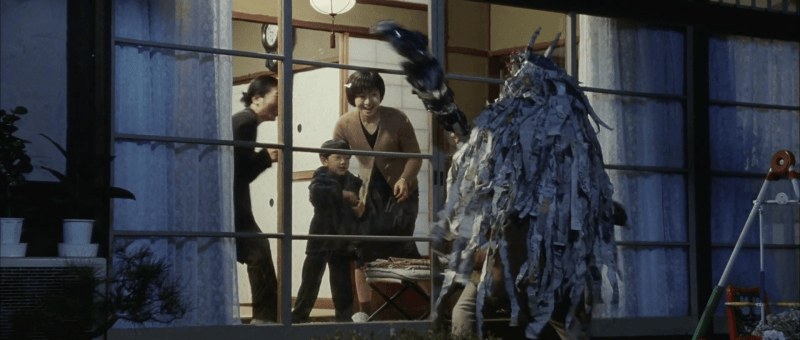
Wait and See (あ、春, Shinji Somai, 1998)

In the opening sequence of Shinji Somai’s Wait and See (あ、春,  Ah haru), a large grey cat growls as it creeps through a suburban home and out into the garden where it sits outside a henhouse and loudly miaows at the birds trapped inside. In many ways, this is exactly what’s about to happen to the Nirasakis when a prodigal father suddenly returns to disrupt the life of his incredibly dull and emotionally distant son. 

Hiroshi (Koichi Sato) is the epitome of the ideal salaryman and seems to be living a charmed life having married into his wife’s wealthy family but under the surface nothing is quite as it seems to be. His wife Mizuho (Yuki Saito) seems to be suffering with some kind of mental distress and Hiroshi often appears indifferent or even cold towards to her. At the memorial service for his late father-in-law, Mizuho’s mother (Shiho Fujimura) and aunt (Chisako Hara) reflect on the late patriarch in less than favourable terms remarking that “everything was half measures” with him. He didn’t commit himself fully to either his family or his career and consequently achieved success with neither. 

The implication is that Hiroshi is much the same, simply going through the motions whether at work or at home and largely closed off to his wife at one point even drawing a curtain and leaving her in the dark to escape a conversation. “He never tells you anything” Mizuho’s mother points out after reading in the paper that the company where Hiroshi works may be in financial trouble, while Mizuho too complains that he never discusses anything with her only announcing the results when it’s already finished. 

Hiroshi had always believed his own father to have died when he was five years old, so it’s quite a surprise when the gnomish Sasaichi (Tsutomu Yamazaki) accosts him in the street and claims to be his long lost dad. Like the cat outside the henhouse, he’s set to create a disturbance but not quite the one everyone assumes it will be. Hiroshi’s mother Kimiyo (Sumiko Fuji) warns him that his crass working class dad will only cause embarrassment in the refined elegance of the upper-middle-class family he has married into. Yet Mizuho and her mother actually find Sasaichi quite amusing for the first couple of days, the mother very impressed by Sasaichi’s unreconstructed manliness which she finds so in contrast to the comparatively meek Hiroshi. Sasaichi fixes the leaky bath and sticking door that Hiroshi never got round to symbolising his lack of regard and inability to care for his home, which is in a sense ironic because Sasaichi was never really able to take care of anything. 

Sasaichi later explains that he left because his business failed and he ended up with debts to loansharks so he divorced Kimiyo and moved away to prevent them coming after her money. A fatherless son, Hiroshi struggles to construct the image of himself as a father and cannot create intimate relationships with people, but has settled for fulfilling the role of a successful member of society who can support a family financially even though the sense of himself as a provider is an illusion as his wife’s generational wealth already guarantees them a comfortable existence. Even so, this being the difficult post-bubble economy Hiroshi lives with a sense of economic anxiety but buries his head in the sand refusing to listen to a more savvy friend who can see the writing on the wall and tries to convince him to take a job at another company where he’s just secured a position for himself. But Hiroshi is afraid of change and ironically clings fast to his corporate family even while fearing it will leave him. 

He desperately doesn’t want to think that he is like Sasaichi, that he may fail his family by failing in his career or that he too is an uncouth, unrefined country bumpkin incapable of taking care of himself let alone anyone else. The again perhaps they’re more alike that he’d like to think. Hiroshi and Mizuho object when they realise Sasaichi’s been teaching their son Mitsuru (Keita Okada) how to play craps, but as his friend points out stockbroking is also really just legitimised high stakes gambling. He too wanders around until late at night because he doesn’t want to go home and makes his wife worry so she has to take sleeping pills .

Yet there’s also a side of him that is still the gentle boy from the country as he painstakingly raises chicks in the back garden. In the end, it’s Sasaichi who shows them the maternal warmth they need to grow, gestating the eggs in a pouch inside his haramaki only for them to hatch at the most ironic moment. Hiroshi gives his son a brief life lesson in explaining that the chicks that hatch from these eggs will go on to lay their own in a circular process of renewal just as he is passing on knowledge from his childhood to the next generation. The film begins and ends with a ritual of mourning, though Somai takes us through the passing season moving from Setsubun to Hinamatsuri as Sasaichi continues to outstay his welcome while attempting to repair his corrupted paternity. “Don’t worry, life will go on,” Mizuho reassures a more open Hiroshi finally coming to terms with his anxieties and willing to share them with his family in full knowledge of who he is as a man and a father in a world that’s anything but certain.


Original trailer (no subtitles)

Backlight (逆光, Ren Sudo, 2021)

©2021 『逆光』 FILM
©2021 『逆光』 FILM

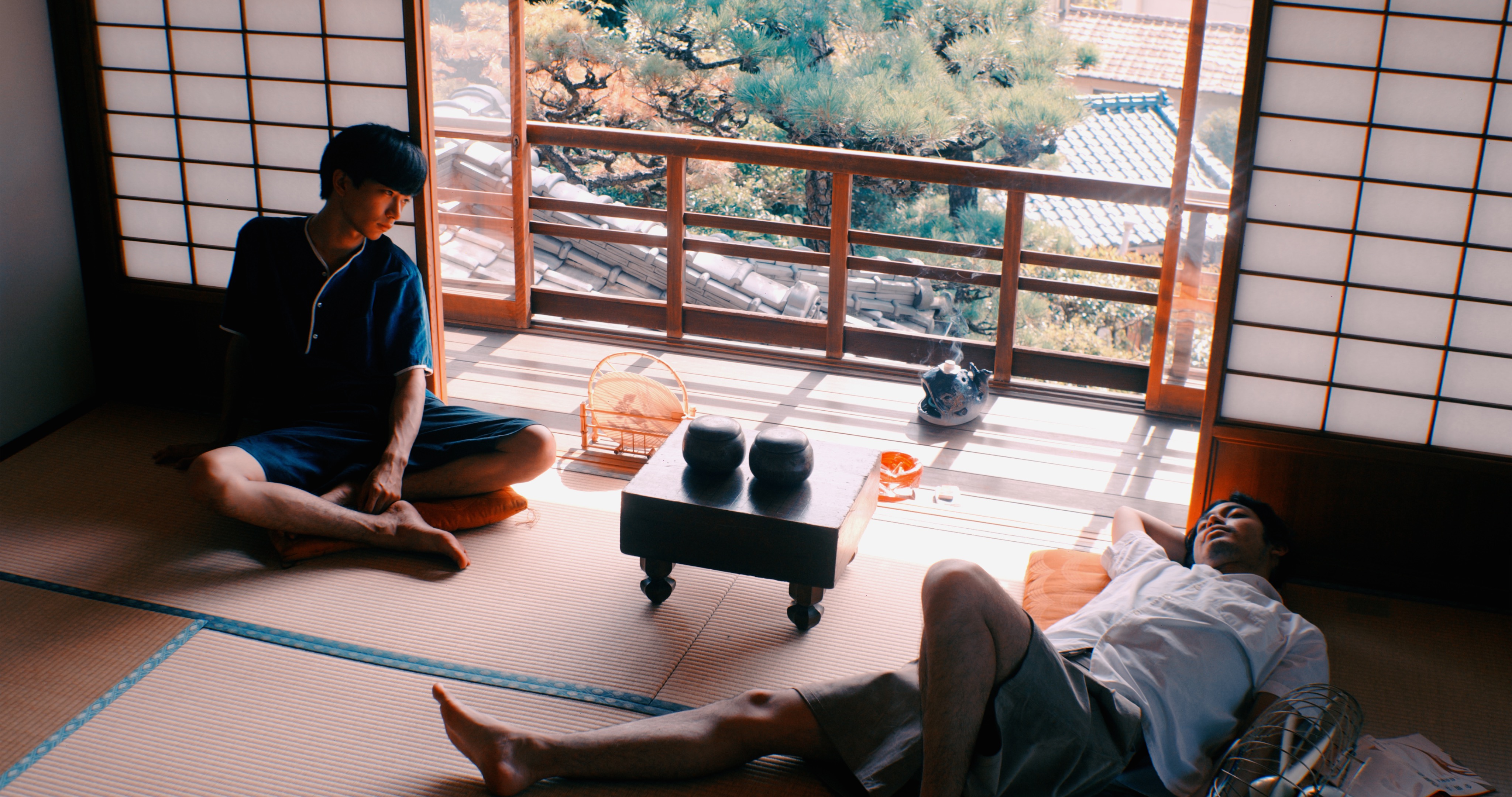
An aloof young man brings a friend back from college but struggles to convey to him his true feelings in the Onomichi of the 1970s in actor Ren Sudo’s directorial debut, Backlight (逆光, Gyakko). This may partly be because he himself is uncomfortable in his childhood home while the object of his affection seemingly takes to it though as someone else later hints perhaps in the end he is only toying with him as a pleasant summer diversion that will eventually draw to a close. 

Sudo opens the film with a series of black and white slides of Onomichi in the 70s accompanied by a cheerful voiceover in opposition to the film’s subsequent gloominess describing the area for tourists and in particular its cable car. Finally the slides give way to clumsy shots of Yoshioka (Haya Nakazaki), university friend of Akira (Ren Sudo), and a copy of Yukio Mishima’s College of Unchasteness. Akira has invited Yoshioka to stay with him at his family home in Onomichi for a week over the summer, but it’s fairly odd behaviour to invite someone somewhere and then spend the whole time telling them how awful it is and that you can’t wait to leave. 

Evidently the son of wealthy parents who for whatever reason are not around, Akira is a fairly unsympathetic figure who seems to have been harbouring resentment towards Onomichi ever since his family moved to the area from Tokyo when he as a child. He views it as dull and backward and seems to have only contempt for those who live there such as childhood friend Fumie (Eriko Tomiyama) whom he blanks in the street as like the cable cars of the opening he passes her in the company of Yoshioka. Realising he is back, she arrives at his home to return some books he’d lent her but even on encountering her there Akira treats Fumie disdainfully and is quite embarrassingly rude in front of his new friend explaining that he lent the books so that a simple country girl like her wouldn’t fall behind the times while contemptuously assuming that she won’t actually have read them. 

These misogynistic attitudes seem prevalent in the local community which is in any case unusually obsessed with Mishima. Another local intellectual describes College of Unchasteness, which Akira has not actually read, as “silly prose for women” a phrase Akira later echoes, while making a cynical comment as to its content suggesting that a woman’s ultimate pleasure lies in being murdered by a man she may have been manipulating. Unable to voice their desires directly there may be a degree of manipulation going on, Akira silently courting Yoshioka who may indeed be toying with him in the way that he may have been toying with Fumie who has since come to know of his sexuality. In any case he seems to be uncertain of Yoshioka’s receptiveness, crassly suggesting Fumie invite another girl, Miko (Akira Kikoshi), who seems strange and otherworldly, with the rationale that it would be a problem if she were too pretty and by implication insulting Fumie too in the process. Miko meanwhile is evidently upset by the lewd conversation while later prompted to leave the party after a political debate breaks out about nuclear arms. Perhaps it’s not surprising for a party that seems to be populated by Mishima devotees but even if their support for re-armament is a facet of their anti-Americanism it is curiously at odds with the times again upsetting Miko whose mother is a survivor of the atomic bomb having lost all her family. 

Even so the closing scenes turn back to Mishima and doomed romance in a description of love as a political act in which love that does not transgress, is not considered shameful or taboo, is not really love at all. Akira may have found the courage to overcome his fear of rejection, but it seems has not been altogether successful in love. Playing with the light, the brightness of the beaches, murkiness of the room occupied by Yoshioka, and that of the fire ominously reflected on Akira’s face, Sudo adds a note of wistful nostalgia expressed in the song sung by Miko that perhaps presents this “heartbreaking” summer with a sentimentality it does not quite appear to have even as Akira seems to come to an accommodation with himself, Fumie, and Onomichi amid the confusing summer heat. 


Backlight streamed as part of this year’s Nippon Connection.

Original trailer (no subtitles)

Images: ©2021 『逆光』 FILM

Inu-Oh (犬王, Masaaki Yuasa, 2021)

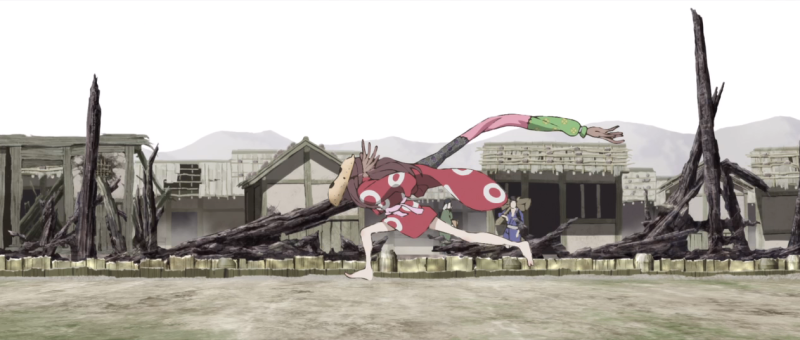
“Unity demands order” according to an ambitious politician near the end of Masaaki Yuasa’s stunning anime prog rock opera, Inu-Oh (犬王). Inspired by Hideo Furukawa’s novel Heike Monogatari Inu-Oh no Maki, Yuasa’s spirited drama is as much about the liberating power of artistic expression as it is about the danger it presents to those in power, while reclaiming the stories wilfully hidden in history or as the narrator puts it “stolen and forgotten” in order to exorcise a degree of historical trauma lingering in the cultural aura.

Set in the Muromachi period in which two imperial courts contested hegemony, the tale opens with the retrieval of a set of cursed remnants buried at the bottom of the sea after the battle of Dan-no-ura in which the Heike clan were famously defeated. Ashikaga Yoshimitsu (Tasuku Emoto) is convinced that possessing imperial treasures would lend credence to his claim, but their resurfacing creates nothing but misery leaving the boy who discovered them, Tomona (Mirai Moriyama), blind and his father dead. Setting off for Kyoto in search of revenge, Tomona is taken in by an elderly Biwa player and eventually runs into a strange creature wearing a gourd mask and behaving like a dog, striking up a friendship that later leads to the realisation that the boy is also cursed, haunted by the spirits of fallen Heike warriors desperate for their stories to be told. 

In true fairytale fashion, curse later begins to dissipate as the pair exorcise the ghosts by telling their stories never singing the same song twice but always in search of new songs to be sung. Tomona changes his name several times, adopting that of “Tomoichi” in keeping with the requirements of his Biwa school and later choosing for himself that of “Tomoari” in his partnership with Inu-Oh in emphasis of the fact that “we are here”. Yet as the ghost of his father reminds him, changing his name makes him difficult to find literally losing touch with his roots in becoming invisible to friendly spirits. He and the cursed boy Inu-Oh are interested in a new kind of Biwa that is opposed by the Biwa priests for its transgressive modernity some feeling that Tomona’s transformation with his long hair and makeup brings the profession into disrepute though the act proves undeniably popular with Inu-Oh the biggest star of the age. 

Having begun in the classical register with images resembling ink painting and a score inspired by traditional noh, Yuasa introduces electric guitar as the film shifts into rock opera, the pair’s stagecraft incredibly modern as they adopt all kinds of elaborate staging to add atmosphere to their tales including at one point a large lantern silhouette mimicking the big screen graphics of the present day. Yet Inu-Oh’s fame comes with a price. His popularity threatens both the pride of a jealous rival and the ambitions of the Ashikaga clan who fear his tales of the Heike are simply too bold and radical, later condemning them as an affront to the glory of the shogun and insisting that their official version must be the only record of the Heika warriors. 

The sense of freedom the pair had felt in their ability to express themselves through music and dance is quickly crushed by cultural authoritarianism, Inu-Oh reduced to a kind of court jester performing only for the lord while as the closing credits tell us becoming the biggest popular star of his age though now too forgotten along with his songs while his more elegant counterpart, Fujiwaka, is remembered for shaping the art of contemporary noh though there is perhaps something in Tomona’s defiant reclaimation of his name along with the essential right to choose it for himself that grants him a greater liberty in simply refusing to allow himself to be subjugated by feudal power. A psychedelic rock opera set in 14th century Japan that remembers even noh was once new and malleable, Inu-Oh insists on art’s danger in its capacity to challenge the status quo not only directly but through a series of internal revolutions born of the masks we choose to wear and those we choose to remove in the radical act of self-expression which is in its own way the truest form of liberty. 


Inu-Oh screened as part of this year’s Glasgow Film Festival 

International trailer (English subtitles)

The Actor (俳優  亀岡拓次, Satoko Yokohama, 2016)

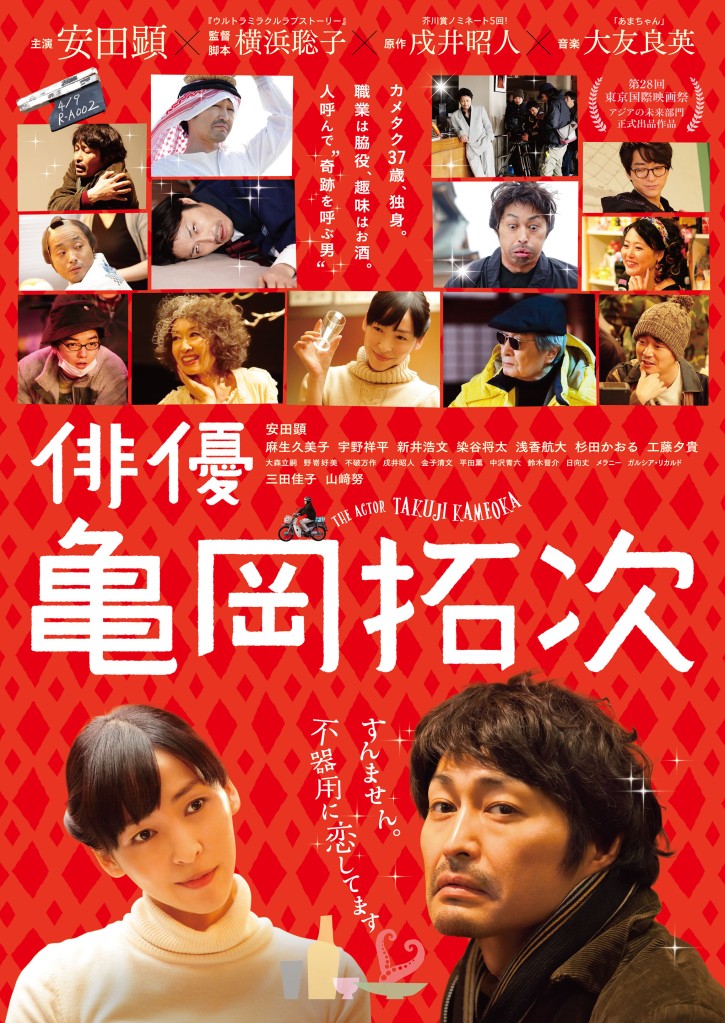
“There are no small parts, only small actors” according to the mantra of the bit part player, but perhaps deep down everyone wants to play the lead. Most jobbing actors will tell you that they’re happy to be working and if you work as much the dejected hero of Satoko Yokohama’s The Actor (俳優  亀岡拓次, Haiyu Kameoka Takuji), you can make a pretty decent living with a little more job security than a big name star whose career will inevitably hit the odd dry spell. Yet, who doesn’t want to at least feel that they’re the lead in their own life story? Spending all your time being other people can make you lose sight of who you really are and live your life with a sense of cinematic romanticism forever at odds with accepted reality. 

Takuji Kameoka (Ken Yasuda) is a classic background actor, turning up in small roles in TV dramas, often playing the villain of the week or appearing as a prominent extra. Meanwhile, his offscreen life seems to be lived in a booze-soaked haze, hanging out in his favourite bar surrounded by similarly dejected middle-aged men or occasionally meeting up with colleagues. Even his agent expects him to be sozzled when she rings to confirm new jobs though to be fair she doesn’t seem too bothered about it. 

Kameoka has perhaps made his peace with the kind of actor he is, but there’s also an inbuilt anxiety in waiting for people to ask what it is he does, knowing that it sounds glamorous and exciting when, to him at least, it’s anything but. Chatting with a pretty young woman, Azumi (Kumiko Aso), working behind a bar in a small town where he’s filming, Kameoka spins her a yarn about being a bowling ball salesman rather than be forced into a conversation about the life of a jobbing actor which might perhaps depress him more. Alone in the bar, the pair of them strike up a rapport over shared sake, but Kameoka forgets that in essence she’s just the same as him – acting, performing her role as the cheerful hostess, keeping him happy to sell more drinks. Later, she tells him that she’s switching roles, “recasting” herself as a good wife and mother, pointing again towards the unavoidable performative quality of conforming to socially defined labels such as “wife”, “mother”, “landlady”, “actor” or “man”. 

Everyone is, to some degree, acting, forced to perform a role in which they may privately feel miscast but are unable to reject. Kameoka is losing sight of who he is and so his life begins to feel increasingly like a movie, obeying narrative logic rather than that of “reality” while he often drifts off into flights of fancy in which he gets to play not the lead but a slightly bigger supporting part, recasts himself as the star of a favourite film, or finds himself momentarily in a film noir. Real or imagined, his directors have nothing but praise for him to the degree that it somehow feels ironic. He’s brought in to show the rookie leads how it’s done, an accidental master at dropping dead on camera, but as the landlady at his local says of another actor on TV, he just doesn’t have that leading man sparkle. Of course, not having that kind of presence is perfect for being a background player but a great shame when he has the talent to succeed, just without the burden of “star quality”. 

Then again, his talent is uncertain. Despite telling his agent that he doesn’t do stage, he agrees to work with a famous actress/director on an avant-garde theatre piece. Though she’s much harder on the young female star, Matsumura (Yoshiko Mita) rarely compliments his acting and eventually advises him that he’s unsuited to stage work because he has “film timing”. Privately, he might agree, but a job’s a job. Ironically enough, the performance that Matsumura failed to bring out in him is vividly brought to life during a very weird audition for a Spanish director who happens to be one of Kameoka’s favourites. He inhabits the role so strongly as to completely become it to the extent that its world rises all around him, but all too soon the audition is over with a simple “that’s great, thank you – we’ll be in touch”. Kameoka even suffers the indignity of crawling under the frozen shutters to exit the building while the next hopeful, a top TV actor he worked with on a previous job, makes his way inside. 

The woman in Kameoka’s audition fantasy is clearly Azumi, something that becomes clearer to him still during another flight of fancy that recasts him as a romantic hero making the grand gesture of a rain soaked dash, motorcycle filmed against rear projection, as he prepares for the inevitable “happy ending”. Reality, however, triumphs once again. Lovelorn, Kameoka declares himself lonely and indeed is always alone, not one of the “main cast” just a “bit player” hanging round until his scene and then moving on to the next project. He waves at women who weren’t waving at him, sympathises with a failed singer turned bar hostess, and celebrates the unexpected marriage of a friend but in a strange sense perhaps misses “himself”, gradually eclipsed by all the roles he plays onscreen and off. “Who are you?”, the Spanish director’s interpreter asks. “Takuji Kameoka, Japanese Actor”, is as good an answer as any. 


Screened as part of the Japan Foundation Touring Film Programme 2020.

Original trailer (English subtitles)

Bare Essence of Life (ウルトラミラクルラブストーリー , Satoko Yokohama, 2009)

©Little More Co.

bare essence of life posterThere might be a pun involved in the title of Bare Essence of Life – another example of a Japanese film with a katakana English title, Ultra Miracle Love Story (ウルトラミラクルラブストーリー), given a completely different English language title for overseas distribution, but that would be telling. Following her feature debut German + Rain, Satoko Yokohama once again tells a tale of small town misfits only this time of an Aomori farm boy whose brain is wired a little differently to everyone else’s – “not broken, just different”. Though everyone in the village knows Yojin (Kenichi Matsuyama) and is familiar with his sometimes unusual behaviour, a young visitor taking a temporary job in a quaint rural backwater may need a little more time to acclimatise.

Yojin is, as he says, a little different from the others. Neatly signalling a problem with executive functioning, he lives his life to the tune of several different alarm clocks with deliberately different sound cues to help him remember what he’s supposed to be doing. Grandma also helps with that too through use of a giant whiteboard which has Yojin’s daily itinerary on it so he can keep track of where he is and record his thoughts about the day. Yojin’s grandfather has passed away but has left him some valuable horticulture tips on a cassette tape which Yojin listens to diligently every day whilst tending to his cabbages, trying to work out a good way of keeping them safe from creepy crawlies seeing as grandma doesn’t really trust him with insecticide (later events will prove this to be wise).

Everything changes when brokenhearted school teacher Machiko (Kumiko Aso) arrives all the way from Tokyo as temporary cover for maternity leave at the local nursery. Oddly, seeing as there are so few young people around, the school seems pretty busy with youngsters but then again perhaps they’ve come from neighbouring villages which would explain why the parents are sometimes so late coming to pick their kids up. In any case, Machiko instantly captures Yojin’s heart and he becomes fixated on the idea of making her his one and only. Machiko, however, is battling her own romantic woes and is originally quite taken aback by Yojin’s odd combination of directness and innocence.

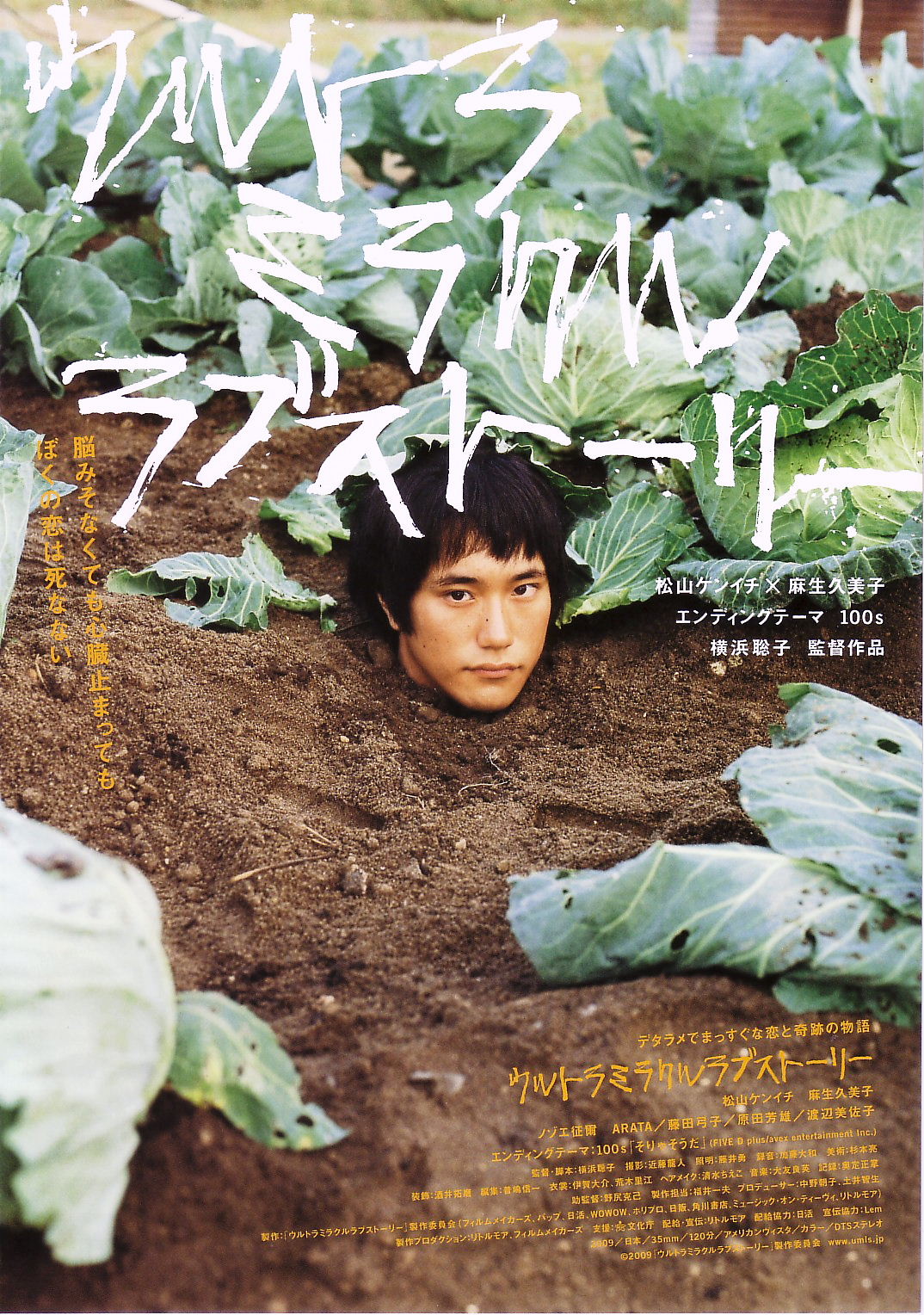
Yojin is, undoubtedly, a lot to take in, but the villagers are all very used to his ways and mostly just shrug his various antics off even when they entail inconveniences like office paperwork suddenly scattered to the wind, or getting pelted with vegetables after taking issue with Yojin’s sales patter. Grandma bears the brunt of his rudeness not to mention self-centred attitude and otherwise difficult behaviour but she also worries how he’s going to look after himself when she’s gone. Hence the vegetable patch – a literal testing ground. Machiko makes Yojin wish he were different, and a half-baked experiment in which he buries himself up to the neck in his cabbage patch (perhaps to better understand cabbages so that he can figure out how to grow them) and a neighbourhood boy sprinkles him with pesticide shows him a way he can make it happen.

So begins Yojin’s long, strange path towards “evolution” as he discovers that exposure to various chemicals helps him slow everything down so he can be a little more like everyone else. Moving into the centre ground makes his presence more palatable to Machiko, giving them time to bond during nighttime walks as Machiko outlines her curious theories on the forward motion of the human race. Machiko wonders if humanity’s need to control the unpredictable, smooth out rough edges and tame nature is limiting its ability to change and grow, yet even as she says so Yojin is attempting to temper his own wildness expressly for Machiko. Nevertheless, getting to know him Machiko comes to the conclusion that maybe what Yojin needs is to become more Yojin, rather than dousing himself in dangerous chemicals which seem to have provoked some kind of strange metamorphosis as yet unknown to medical science.

Chemicals aside, Yojin’s world takes a turn a definite turn for the surreal as he chats with headless ghosts and then temporarily joins the ranks of the undead himself. Yokohama has a point or two to make about the use of pesticides – a neighbourhood woman warns Machiko to head indoors when she first arrives because it’s crop spraying day, but then refuses to buy Yojin’s “organic” vegetables because she’s not convinced anything grown without chemical assistance could really be “safe” or “clean” enough for consumption. This need to control nature may eventually ruin it, and us too – much as Machiko’s hypothesis posited. Maybe Yojin is the most evolved us all, defiantly in touch with his essential nature and, perhaps, finally allowing his soul to find its true home if in the strangest of ways.


Screened as part of Archipelago: Exploring the Landscape of Contemporary Japanese Women Filmmakers.

Original trailer (English subtitles)