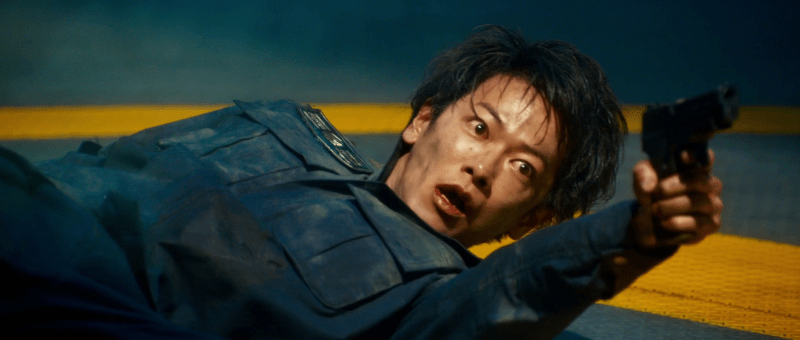

Katsuyuki Motohiro’s 2001social drama Transparent: Tribute to a Sad Genius had attempted to show the government acting with compassion having discovered humans with a potentially dangerous power, in that case the unfortunate ability to broadcast their every thought. Rather than locking them up in labs, the government had allowed the Transparents to live in the community under the caveat that they must never be told of their ability while continuing to monitor them secretly and in fact micromanaging their lives with less than ethical attention. 2017’s Ajin (亜人), adapted from the manga by Gamon Sakurai, is in many ways Transparent’s flip side in which the government has discovered the existence of a series of people known as Demi-Humans with super fast healing ability meaning that they cannot die from injury and has been conducting what is essentially vivisection on them justifying themselves that “the Ajin are the precious key to the evolution of mankind”.
Nevertheless, they are mindful that the public would not accept it if they knew the government’s claims of “protecting” Ajins was a smokescreen to disguise the fact they’ve been experimenting on them, let alone selling the results to commercial companies for the production of chemical weapons among other things. Previously a regular medical student, Kei Nagano (Takeru Satoh) is the third Ajin to be unmasked in Japan after being hit by a bus only to heal rapidly and stumble away. After a brief period of torture, Kei is “rescued” by crazed terrorist revolutionary leader Sato (Go Ayano) and his underling Tanaka (Yu Shirota), escaped Ajins 1 and 2, but becomes their enemy after he refuses to turn against the scientists who had been torturing him pointing out that killing them would only make him feel worse and is therefore counterproductive.
The implication is that 20 years of brutal torture at the hands of mad scientists has turned Sato into a crazed fascist hellbent on the extinction of the human race, seeking an “autonomous” space for Ajin along with full civil rights for Demi-Humans. Though we are told that only three Ajin have been unmasked so far in Japan, the implication is that there are many more living quietly some of whom Sato recruits after putting out a call for all disenfranchised Demi-Humans to join his revolution not for equality but domination. It’s this movement Kei can’t support, the classically “good” Ajin who disapproves of Sato’s actions and wants to leave peacefully alongside humanity. As such, there’s something a little uncomfortable in his inevitable decision to team up with the people who were just vivisecting him in order to stop Sato achieving his goal of guaranteed civil rights for people like him asking for nothing more than that his family be protected and he be left alone and given a new ID to live quietly in somewhere in Japan when all of this over.
The unpalatable implication seems to be that minorities are only worthy of respect if they serve those in power, both Kei and another closeted Ajin benefiting directly and individually by siding with humanity though humanity may not honour the various promises it makes while they are partially complicit in the torture and exploitation of other Ajins. Sato’s basic request is only to given his full rights in the freedom from torture, but even this cannot be granted because of the threat he presents to humanity in that the inability to die means that he cannot be controlled through violence. Ironically enough Sato does seem to believe himself to be the next step in human evolution, after 20 years of brutal torture believing that humanity is a lesser being which those like him are intended to replace.
Kei meanwhile encounters kind humans such as Mrs. Yamanaka (Kazuko Yoshiyuki) who kindly offers him a place to hideout because when you see someone is in trouble you just help them even if a baying mob later turn up at your door to ask why. There may be a minor allegory in the way the Ajins are treated, feared by and excluded from regular society, forced to keep their true natures secret in order to live a “quiet” life but than again Sato and his cohort of equally crazed young Demi-Humans who presumably have never been tortured are depicted as quasi-fascist radicals selling their own organs on the medical black market and eventually prepared to unleash a chemical weapon on Tokyo to make it unliveable for regular humans in order to claim their own space. Nevertheless, Motohiro’s drama is at its best during its high impact, well choreographed action sequences displaying some top quality visual effects as the Ajins produce their ghostly avatars or reassemble themselves after catastrophic injury even if the discomfort of the underlying messages cannot be entirely escaped.
Original trailer (no subtitles)


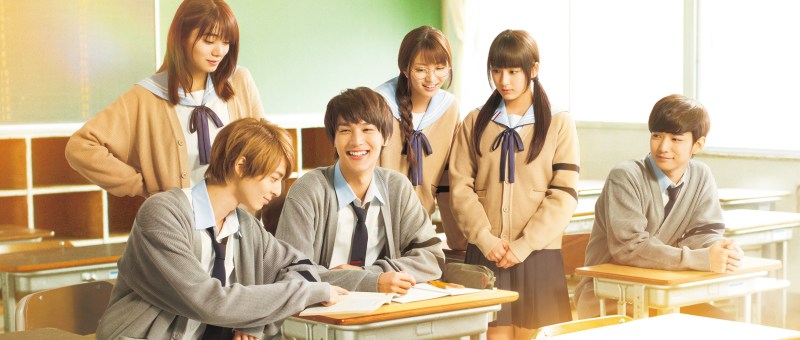



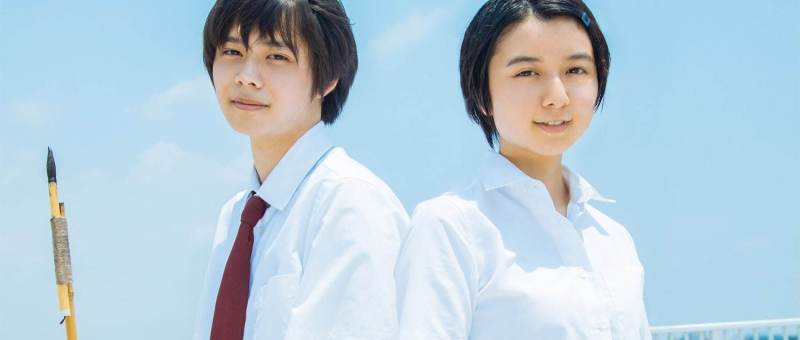


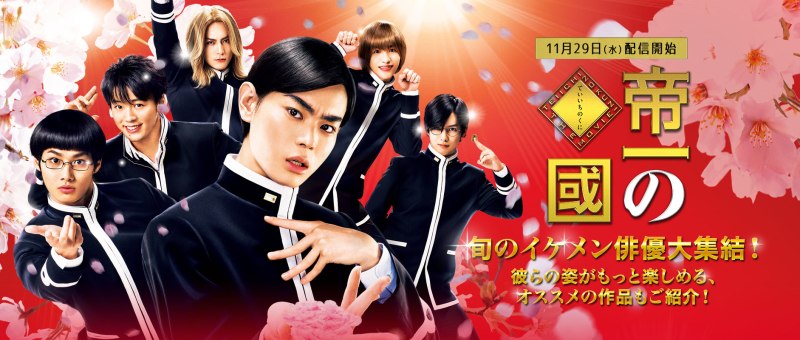
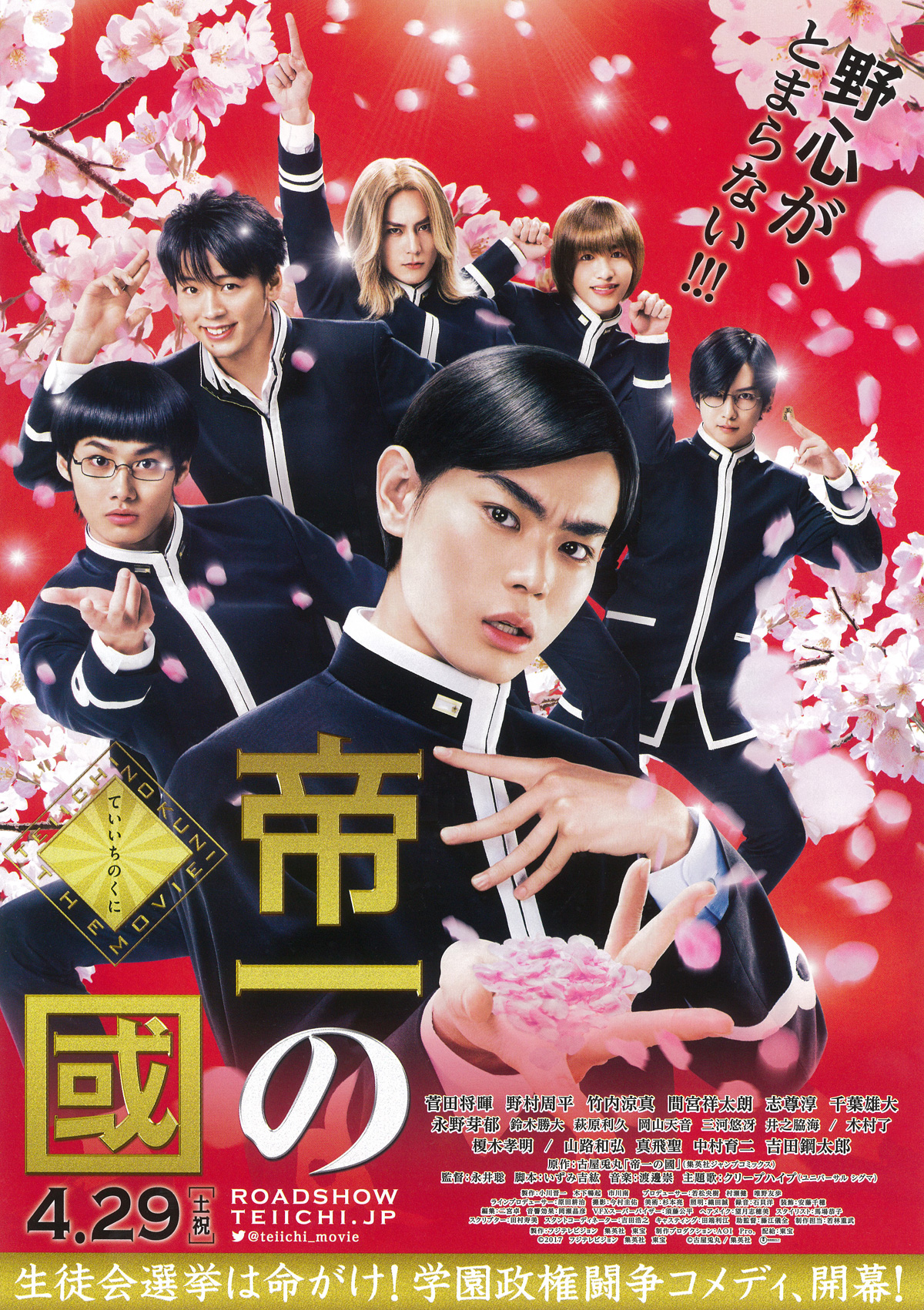 Back in the real world, politics has never felt so unfunny. This latest slice of unlikely political satire from Japan may feel a little close to home, at least to those of us who hail from nations where it seems perfectly normal that the older men who make up the political elite all attended the same school and fully expected to grow up and walk directly into high office, never needing to worry about anything so ordinary as a career. Taking this idea to its extreme, elite teenager Teiichi is not only determined to take over Japan by becoming its Prime Minister, but to start his very own nation. In Teiichi: Battle of Supreme High (帝一の國, Teiichi no Kuni) teenage flirtations with fascism, homoeroticism, factionalism, extremism – in fact just about every “ism” you can think of (aside from altruism) vie for the top spot among the boys at Supreme High but who, or what, will finally win out in Teiichi’s fledging, mental little nation?
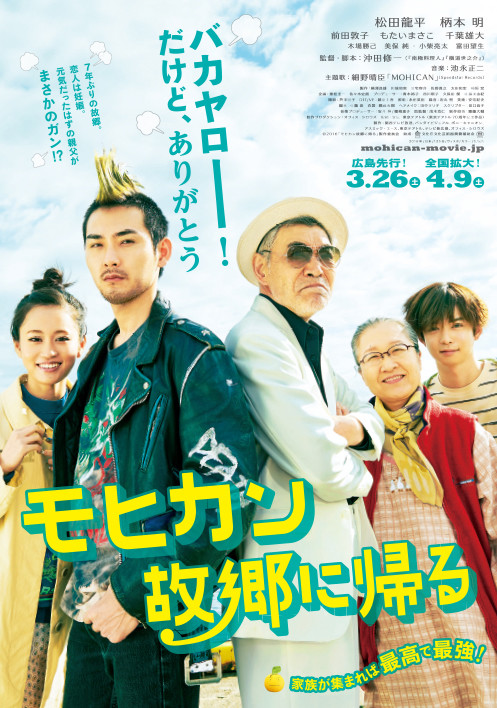 Japan may be famous for its family dramas, but there is a significant substrain of these warm and gentle comedies which sees a prodigal child return to their childhood home either to rediscover some lost aspect of themselves or realise that they no longer belong in the place which raised them. Shuichi Okita’s The Mohican Comes Home (モヒカン故郷に帰る, Mohican Kokyo ni Kaeru) includes an obvious reference in its title to Keisuke Kinoshita’s colourful 1954 escapade
  Windows on Worlds