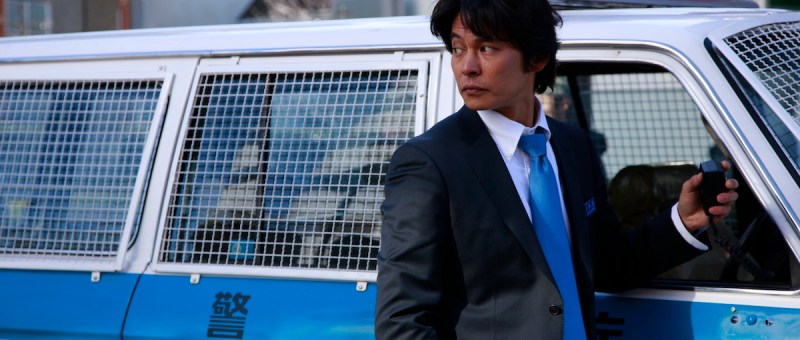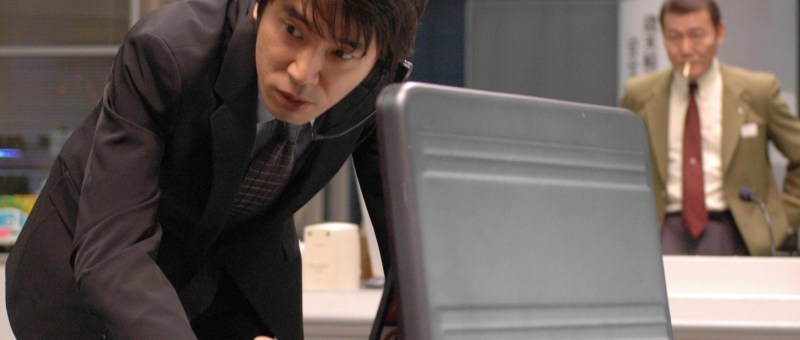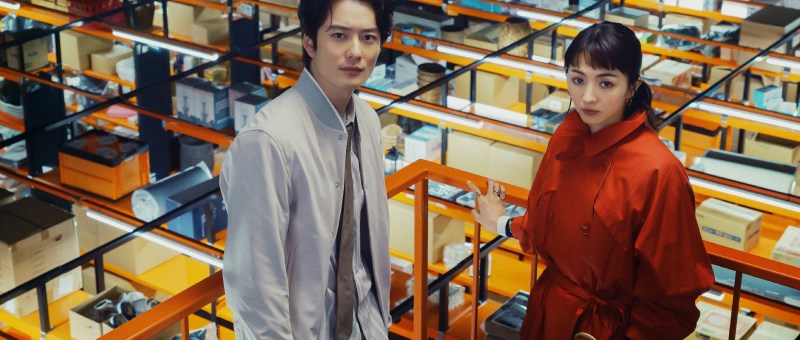

Bayside Shakedown 3: Set the Guys Loose (踊る大捜査線 THE MOVIE 3 ヤツらを解放せよ!, Katsuyuki Motohiro, 2010)

It’s all change at Wangan police station in the third instalment in the Bayside Shakedown series, Let the Guys Loose (踊る大捜査線 THE MOVIE 3 ヤツらを解放せよ!Doru Daisousasen the Movie 3: Yatsura wo Kaihou seyo!). Seven years on from the previous film, many things have changed. Aoshima (Yuji Oda) is now in charge of his team and the precinct is set to move to new purpose-built premises boasting the latest high-tech security systems which will aid them in combating potential terrorism and safeguarding local dignitaries. Even so, the gang will have to deal with some unfinished business from the past before they can fully move on as the circular tale takes us right back to the original film’s villain. 

Following the familiar formula, Motohiro opens with a gag sequence in which Aoshima prepares to give a briefing only it’s not about a case it’s about the logistics of moving offices of which he is in charge and characteristically vowing to do the best job possible. Hindering his progress, however, are two bizarre crimes, the first a bank robbery investigated by his colleague/long-term love interest Sumire (Eri Fukatsu) in which no money is stolen, and a bus hijacking he investigates himself in which the hijackers simply left the scene again without stealing anything. Ironically enough a theft does take place during the move involving three pistols which happen to belong to Aoshima, Sumire, and a new recruit from China, Wang (Kenichi Takito). Soon enough a body turns up on a boat along with Aoshima’s gun sending the gang on the chase for the mysterious thieves. 

The thing we’re constantly told about the new building is how secure it’s going to be, which makes the theft even more ironic, but the truth is that in true franchise style pretty much anyone and everyone is walking in and out carrying moving boxes so nothing is ever really “secure” even in the police station, harking back to the minor villain in the first film who was able to sneak in because he was wearing a fake cosplay police uniform and no one noticed him. Inevitably, this invisible vulnerability eventually comes back to haunt them when the criminals are simply able to steal the manual for the security system and replace it with one of their own to render it unusable to the police later trapped inside the building. Meanwhile approaches to public safety become a matter for debate when it arises that the criminals’ demand is that all of the villains we’ve seen Aoshima arrest so far including psychopathic serial killer Manami (Kyoko Koizumi) who still has a sizeable following online should be released. Counter-intuitively, the police bigwigs are in favour of acquiescing with only Muroi (Toshiro Yanagiba), who has now been promoted to sit at the table himself, objecting on the grounds that it simply isn’t safe to release such dangerous criminals back into society. 

Rather than simply bureaucracy and funding concerns, Bayside Shakedown’s third instalment is more directly critical of the interplay between politics and justice as it becomes clear that the majority of police chiefs care more about public opinion than the law while also mindful of the upcoming general election. Meanwhile the same problem arises with the local police being sidelined by the elites from HQ, a smooth liaison officer Torikai (Shun Oguri) arriving to solve any disputes insisting that the locals be fully respected and allowed to turn their jobs only to turn dark and authoritarian after suffering a catastrophic injury on the job. Once again, Aoshima is forced to consider if his work has real value not only because of the way he’s treated by the cops from HQ but subjected to a healthcare crisis which leads him and many others to assume he’s not long to live. It’s later discovered that he’s been misdiagnosed during his annual checkup, but his boss unethically decides to keep that from him noticing he’s become depressed and lost his mojo, hoping that he’ll be easier to manager but quite the reverse turns out to be true. Again mimicking their previous heart-to-hearts throughout the series, Aoshima perks up after some encouraging words from Sumire in addition to some words of wisdom from the late Waku presented by his rookie nephew and decides to live as if there’s no tomorrow going flat out for justice while caring nothing for his safety. 

Even more than ten years on from the TV series and first big-screen outing, the romance between Aoshima and Sumire still hasn’t quite blossomed despite their respective brushes with death. Many things seem set to change for the Wangan police, the new building acting as a kind of reset while Muroi prepares to move into a more political role and a new, somewhat surprising, local police chief is selected to lead them into a new future just as dedicated to compassionate local policing defined by fairness and justice as they have ever been. 

Trailer (no subtitles)

Negotiator (交渉人 真下正義, Katsuyuki Motohiro, 2005)

Beginning as a popular television drama, Bayside Shakedown developed into hugely successful franchise. Released two years after the second theatrical feature, 2005’s Negotiator (交渉人 真下正義, Koshonin: Mashita Masayoshi) is a self-contained spin-off revolving around Japan’s first specialist negotiator Mashita, whose name actually appears in the title. In Bayside Shakedown 2, he’d returned to the Wangan police department having left to pursue specialist training in the city. Though some of his former colleagues make cameo appearances and Motohiro maintains the lighthearted tone the series is known for, Negotiator essentially reverses the position of previous instalments, adopting the outsider’s perspective as Mashita finds himself implanted in the control room of the metropolitan mass transit system. 

For some reason in Japanese cinema, terrorist threats seem to arrive on Christmas Eve with alarming frequency, significantly upping the stakes for Mashita personally as he was planning to propose to fellow police officer Yukino (Miki Mizuno) after a romantic date the details of which he seems to be rather sketchy on. In any case, the crisis at hand is a rogue and unexpected train on the Tokyo subway. It quickly becomes apparent that someone has hijacked a remote-driven experimental “Spider” train designed to automatically switch gauges so that it can travel between differing lines on the complicated transit map. The hijacker will apparently only speak to Mashita, impressed or irritated by his accidental celebrity status following the Rainbow Bridge incident in Bayside Shakedown 2. One of the problems of that crisis had been the police discovering they do not actually have the power to unilaterally close a bridge because it requires the consent and co-operation of numerous other transportation officials (though actually in the end they just do it anyway). 

Something similar happens to Mashita when he fetches up in the control room to help. The official in charge, Kataoka (Jun Kunimura), directly tells him that they don’t require his assistance. He will just be in the way and should sit quietly in the corner while they get on with solving the crisis. In this scenario, Mashita is the outsider akin to the HQ guys descending on the Wangan police station and taking over, though as a trained negotiator he is more aware of the implications of his actions and temporarily agrees to take a back seat while his team set up shop in a meeting room only to be further embarrassed when it becomes apparent that the hijacker is intent on playing a game with him personally while thousands of ordinary passengers, not to mention railway and law enforcement officials, are placed in danger. 

Unlike previous instalments in the franchise, Negotiator is prepared to leave several questions unanswered such as the hijacker’s identity, purpose, and intentions focussing instead on the approach of the police and railways in response to the crisis. As in Bayside Shakedown 2, a solution is only possible once both sides have learned to trust each other letting go of any sense of division so that they can work together in total harmony. Meanwhile, there is also a minor criticism of institutional insularity as it becomes clear that part of Kataoka’s reluctance to cooperate is out of a sense of duty to the rail service in that he feels himself duty bound to withhold “secret” information that would help Mashita solve the case, that being the existence of tunnels and sidetracks not listed on the map because they are intended for use by the government and the military only in the event of an emergency fearing that revealing them would, ironically, present a security risk. Meanwhile, on the other side, Mashita and his team find their investigations hampered by the fact most of the data they need from HQ is stored on outdated media such as floppy disks, Jazz and Zip drives they do not immediately have the capability to open. 

Meanwhile, Mashita is engaged in a game of cat and mouse with a train obsessive who baits him with movie trivia and inevitably threatens his romance by targeting the oblivious Yukino who thinks she’s been stood up again and has no idea she’s actually in the middle of a terrorist incident. Like the previous films in the franchise, however, the central thesis is that in the end you just have to ignore all of the annoying bureaucracy and learn to work together for a common goal which is in essence what a negotiator is for, Mashita smoothing over conflict and differences of opinion with sympathetic politeness while unafraid to put on a show for the hijacker in order to get what he wants. A seasonal thriller, Negotiator is in an odd way about peace and harmony to all men and saving Christmas from the forces of disorder. 


Trailer (no subtitles)

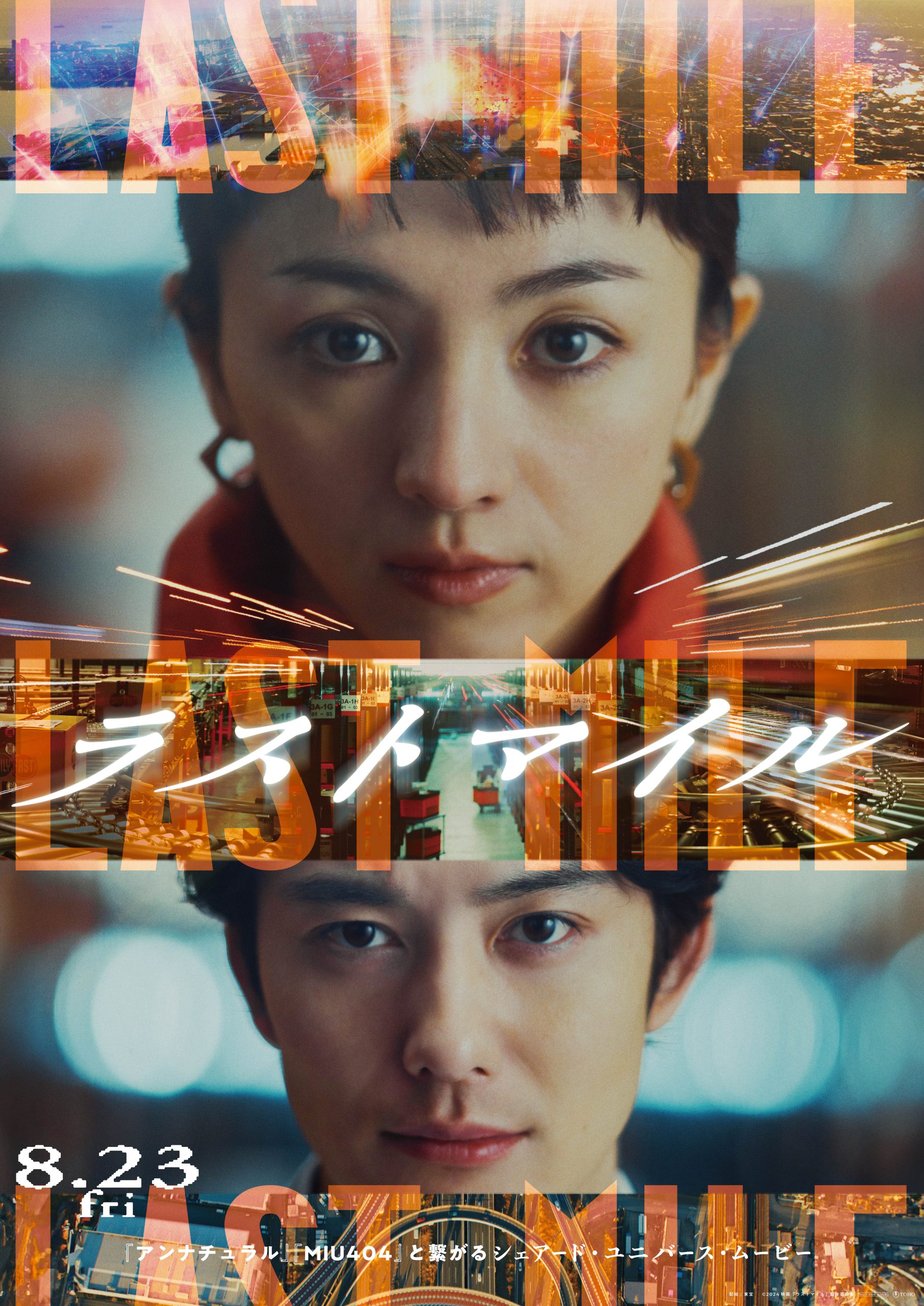
Last Mile (ラストマイル, Ayuko Tsukahara, 2024)

“Customer-centric”, what does that actually mean? The Amazon-like US-based conglomerate at the centre of Ayako Tsukahara’s Last Mile (ラストマイル) prides itself on its customer-centric philosophy, but at the end of the day, what that really means is that they give us what we tell them we want through our purchasing patterns and browsing history. That would be that we want everything as cheap and fast as it’s possible to be and don’t really think about the wider implications or what a world of infinite convenience might be doing to the society around us.

At least from the perspective of corporate lackey Elena (Hikari Mitsushima), recently returned from the US, the reason Daily Fast pressures its delivery staff to lower costs isn’t to maximise their profits, it’s so they can go on providing lower prices to customers which to her is all part of their customer-centric approach. This doesn’t really gel with her off-the-cuff remark about the warehouse not having a safety net to protect the workers from accidental falls or, she ominously adds, prevent people from jumping. That she brought it up at all might signal that she knows something’s not quite with the way this company treats its employees, though as it turns out she may have something else on her mind. In any case, when she arrives on her very first day the entrance to the complex is little better than a cattle market with a man on loud speaker barking instructions about were to go to the 800 members of staff some of whom have only been brought in to bulk up for the upcoming Black Friday sale. 

Which is all to say, it wouldn’t be all that surprising if the fact that some of their parcels have been exploding on delivery were a concerted attack against their ultra-capitalist philosophy, though actively delivering bombs to people who didn’t order them is not very “customer-centric” in any case. Obviously, Elena isn’t keen on this either but is also convinced that it can’t really be their fault because they have strict and dehumanising security measures in place preventing the workers from bringing in anything inessential. Even after she works out that the bomber has actually warned them that there are 12 bombs out there, she wilfully withholds the evidence from law enforcement to avoid damaging their share prices while trying to minimise business interruption rather than do anything sensible like stop delivering people parcels until they’ve figured out what’s going on with the bombs, though the real mystery is why the police don’t really seem to have the power to do that and, in fact, end up working with the warehouse to check each parcel individually to keep the conveyor belts going.

From the aerial view, the city itself resembles the warehouse with the roads taking the place of the belts as delivery vans shuttle along them. Seventy-something delivery driver subcontractor Sano (Shohei Hino) once had a friend who used to say that they were the ones who kept the country running. Yacchan became the number one driver largely because he took 10 minutes to eat his lunch and worked every hour god sent for dwindling pay with the implication that his gruelling schedule contributed to his early death. Sano’s son Wataru (Shôhei Uno) has just started working with him on the van after being laid off from an electronics job. They made quality washing machines that were designed to be efficient and to last, but of course they couldn’t compete with cheaper brands so they went bust.

Elena berates herself for being “too Japanese” for the American company which is to say that she takes pride in her work. That’s not to say that everything about the American business culture is bad as she encourages her assistant, Ko (Hikari Mitsushima), to call her Elena and to feel free to speak his mind rather than equivocate to avoid causing offence. But despite their “customer-centric” approach, it’s clear that the company puts profits above all else and treats its workers, who are not actually employees, poorly, without concern for their wellbeing. Yagi (Sadao Abe), the boss of logistics first Sheep Express which is the prime courier for Daily Fast, laments that he’d love to hire more drivers to help them through this crisis but he can’t because they’re always squeezing his budget and no one will work for their terrible rates except for those who, like Sheep Express itself, have no other options and will have put up with it because they’re dependent on Daily Fast. And because they’re dependent on Daily Fast, it means we all have to keep buying stuff we don’t really want or need just keep the belts going because we’re terrified about what will happen if they stop.

There is a direct comparison between Wataru’s well-made washing machines and the cheap and fast consumerist model that’s gradually taken over that suggests things like craftsmanship and integrity have gone out the window in a world where no one really bothers to go the last mile anymore, though it’s his steadfast engineering that eventually saves the day while even Elena comes to rethink her career trajectory and advises the drivers to strike and end this culture of exploitation because it turns out Daily Fast needs them more than they need Daily Fast. But maybe we don’t really need Daily Fast either, and we’re as much to blame for letting them give us what we think we want without really considering what that actually means. Perhaps a “customer-centric” society’s not all it’s cracked up to be, especially when workers and consumers are often the same people stuck on conveyor belts knowing there’s only one way to stop them.


Last Mile screens 19th June as part of this year’s Toronto Japanese Film Festival.

Trailer (no subtitles)

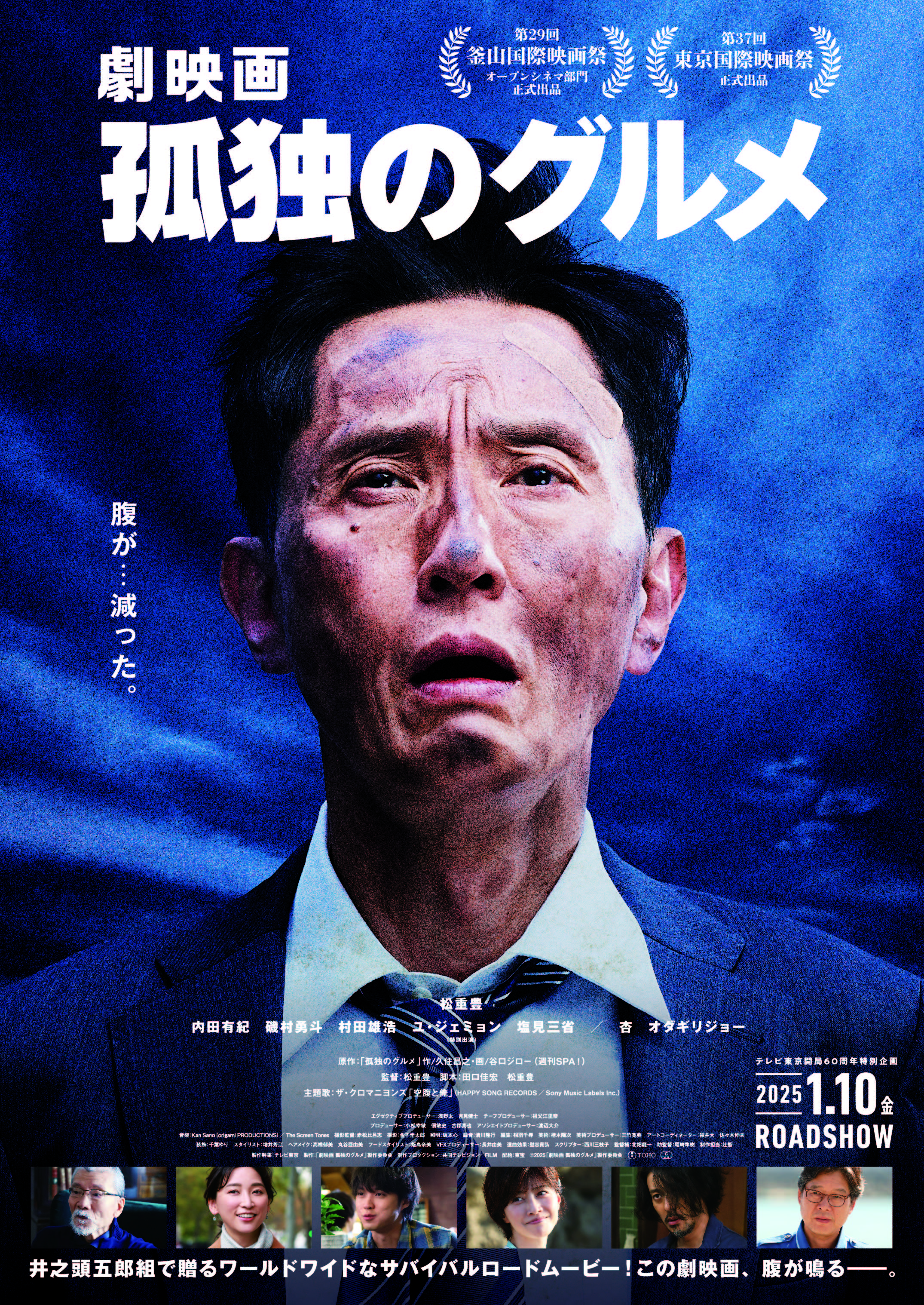
The Solitary Gourmet (劇映画 孤独のグルメ, Yutaka Matsushige, 2024)

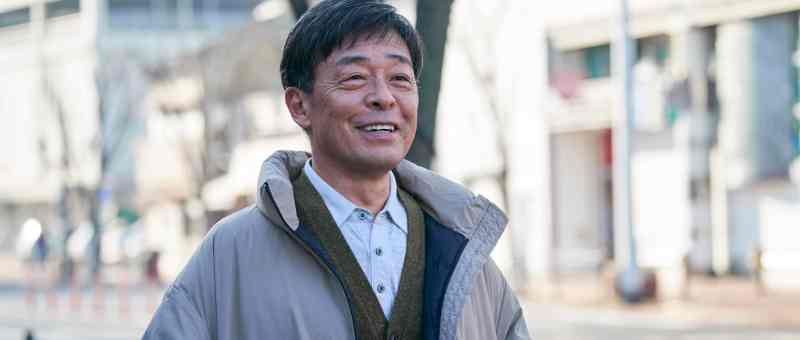
Isn’t it funny how a good bowl of soup can make everything better? Based on the manga written by Masayuki Qusumi and illustrated by Jiro Taniguchi, the feature-length edition of the long-running series has a distinctly soupy feel as salaryman Goro (Yutaka Matsushige) finds himself travelling Japan and abroad in search for the ingredients of a soup an old man ate as a child. Airing since 2012, The Solitary Gourmet TV series was a trendsetter for Japanese comfort foodie cinema and has given rise to several other similarly themed shows in which the protagonist visits a real life establishment and enjoys whatever they have to offer from food to sake, sweets, and even traditional bathhouses.

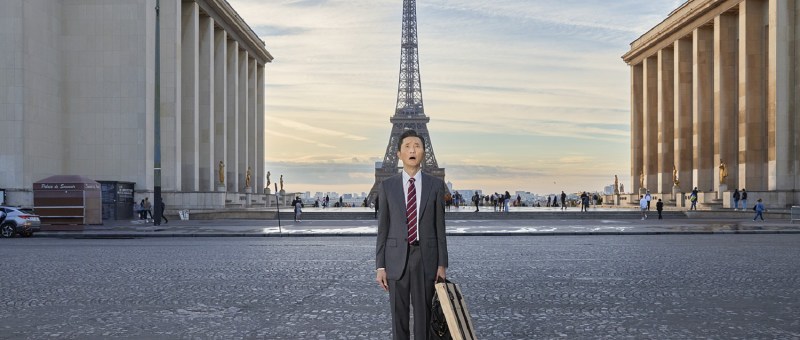
In fact, there’s even a meta joke towards the end of Solitary Gourmet (劇映画 孤独のグルメ, Geki Eiga: Kodoku no Gourmet) in which one of the restaurants Goro goes to is featured in a show about a foodie salaryman while he plays a fellow customer. The newly international setting reflects the increased budget of a theatrical feature and also helps to expand the series’ episodic format in leading Goro on a crazy chase that begins with the daughter of an old friend in Paris (Anne Watanabe) who enlists him to hunt down the ingredients for her grandfather’s cherished soup. Of course, this provides an excuse for Goro to go to the remote Goto Islands and learn about the local cuisine while running around collecting random samples like he’s on a side quest in an RPG. 

Then again, it also offers him the chance for some surreal adventures, including getting cast away on an uninhabited island before being rescued by the Korean-speaking residents of a food research institute. It’s there that he meets Shiho (Yuki Uchida), a Japanese woman living on “an island for women who are fed up with men,” and a former restaurant worker retreating from a marriage fracturing under the pressures of trying to run a restaurant in the post-COVID society. When Goro later catches up with her husband (Joe Odagiri), he too is a depressed, broken figure who now only serves fried rice in his incredibly unwelcoming restaurant. But being talked into helping Goro recreate the old man’s beloved soup seems to reactivate his creative juices and give him the desire to get back on his feet. 

Star Yutaka Matsushige directing for the first time throws in a brief homage to Tampopo but what the film is most interested in is the universality and healing power of a tasty broth from the onion soup Goro eats in Paris to the Haejangguk, or hangover soup, that he orders in Korea while being watched over by an exasperated immigration officer (Yoo Jae-myung). That Goro’s quest takes him so far hints at the shared history of the two nations and the various culinary influences and universalities running between them with soup a means of healing and friendship. Exchanging a few words of Korean, Goro tries to ask what the name of the fish in his soup is, only to come to an understanding when the immigration officer writes it down for him in Chinese characters. 

All this food really does bring people together, as Goro gets pretty much everyone he meets roped into his quest to recreate the old man’s childhood dish as his deathbed request. Matsushige recreates the zany humour of the TV series including his familiar “I’m hungry” catchphrase, followed by the camera taking three steps back and picturing Goro in front of some notable landmark. He also doesn’t seem to be getting much work done while running around trying to figure out this soup even he’s never actually tasted it and is reliant on the old man’s fragile recollections. Goro had been in Paris to deliver a painting of somewhere he once lived and the old man remarked that photographs are records of time but painting turns them into memories. Food, or more specifically soup, might do something similar, at least according to the old man who is desperately trying to reclaim something of the home comforts of his youth. Of course, the old man is the only one who knows what the soup tastes like, so perhaps Goro is on a fool’s errand, but as he later says, soup does seem to be the water of life and thanks to its healing qualities a universal symbol of peace and harmony not to mention friendship and kindness.


The Solitary Gourmet screens 29th May as part of this year’s Nippon Connection.

Trailer (English subtitles)

Images: ©2025 “Solitary Gourmet” Film Partners

Cloud (Cloud クラウド, Kiyoshi Kurosawa, 2024)

“We wanted to make easy money,” a down-on-his luck reseller admits, “is life easy now?” Factory worker Ryosuke (Masaki Suda) rebels against capitalism by subverting it through buying low and selling high while repeatedly refusing promotions at his job in a textiles factory. Though it might seem that reselling is just a way to earn an income that seems almost passive but is actually fairly labour-intensive, it’s clear that Ryosuke is a young man dissatisfied with capitalistic realities and lacking direction in his life. 

Reselling has become a kind of game to him and like a gambler who plays to lose he’s hooked on the thrill of making a killing exploiting other people’s misery. He’s at once filled with pride and smugness over his apparent triumph over his society and consumed by self-loathing. His friend and fellow reseller Muraoka (Masataka Kubota) tells him that another acquaintance has been arrested for scalping concert tickets with both of them lamenting his foolishness in getting involved with something so risky. The implication is that their friend, Goto, must have been in real desperation to lower himself to such levels and they each fear they may someday end up in the same position. Muraoka laments that that kind of selling is a young man’s game and neither of them have the time or energy to spend all day queuing to buy stuff just to sell it on cheap. They are each, it seems, beginning to feel the increasing desperation of their age that they are running out of time and have little to show for their efforts nor any prospects for the future. 

But on the other hand, neither of them want to be locked into the grind or join the oppressive but secure world of the salaryman. In many ways, Ryosuke’s factory boss Takimoto (Yoshiyoshi Arakawa) represents the “correct” path of hard and honest work, though his own paternalistic conviction in meritocracy seems outdated in a man of his age whose formative years occurred during an era of economic stagnation. He talks to Ryosuke as if he’s a young man who wants to get on but lacks confidence, telling him that he has leadership potential and is wasted on the shop floor, but his language also has an edge of the uncanny as if he were trying to recruit Ryosuke into his own worker drone revolution. In any case, even if it might be true that Ryosuke lacks confidence and ambition, that isn’t the reason he refuses promotions, which seems to be another way of rebelling against capitalism. When he eventually quits, he suggests it’s because he’s sick of being told what to do and wants more autonomy over his life and finances.

He tells his girlfriend Akiko (Kotone Furukawa) that she should quit her job too, which she’s only too happy to do because, unlike him, she actively doesn’t want to work and only wants to spend money. When she said she was thinking of giving up her apartment, Ryosuke naturally asked her to officially move in but she refused because his place is too small and she has too much stuff. Akiko has already been corrupted by the same consumerist bug that’s driving Ryosuke’s reselling business, but neither of them can really afford this lifestyle in the city. Ryosuke’s bright idea is to move to the remote countryside where he’s able to rent a huge, though ominous-looking, property for a fraction of the price with the idea of also economically supporting Akiko who will revert to traditional gender roles as a housewife in charge of the domestic space and most especially the kitchen.

But freedom cannot be found simply by retreating from urbanity and the couple soon find themselves plagued by a pervasive sense of resentment. The locals are not particularly accepting of people from Tokyo and are also needled by their success which is something they feel they’ve been unfairly denied. When Ryosuke tries to report a smashed window, even the policeman hassles him and says he’s received a tip-off that Ryosuke is breaking trading standards regulations by selling counterfeit goods as the real thing. Reselling in itself is not illegal, if definitely dubious morally and incredibly cynical. Ryosuke doesn’t seem to like to think about that and tells his new assistant, Sano (Daiken Okudaira), that he tries to sell all the items as quickly as possible so he doesn’t have to worry too much about their authenticity. If they’re wanted they’ll sell, Ryosuke justifies but he might as well be talking about himself.

“Being real or fake doesn’t matter?” Sano asks him, just as Ryosuke’s online and offline personas start to blur. He’s unaware that there are people actively hunting him for selling them substandard goods and is later pursued by real life vigilantes acting like online trolls and planning to torture him to death during a livestream. Like many of Kurosawa’s heroes, Ryosuke is completely convinced that he’s the benchmark for normal and it’s everything around him that’s strange or unfair. As the internet once again invades the “real” world, or perhaps it’s more that Ryosuke’s living his online life offline, the increasing unreality of the situation makes us wonder if any of this is “really” happening or product of Ryosuke’s fractured identity as it finally collapses under the twin corruptions of capitalism and social media. “Please keep focusing only on making money,” his new guardian angel Sano tells him, “everything will be obtainable. Whatever you want. Even things that can end the world.” Flying through ironically heavenly clouds, Ryosuke reflects that the path to hell really is paved with gold and his Mephistophelian pact with hyper-capitalism may have damned him beyond all repair.  


Cloud is in cinemas from 25th April courtesy of Blue Finch Film Releasing 

UK trailer (English subtitles)

What Happened to Our Nest Egg!? (老後の資金がありません!, Tetsu Maeda, 2021)

A minor controversy erupted in Japan in 2019 when then finance minister Taso Aso issued a statement recommending that couples should have 20 million yen (£104,620 total at the time of writing) saved for their retirement on top of the state pension in order to live a comfortable life in old age. All things considered, 20 million yen actually sounds like quite a low sum for two people who might live another 30 years post-employment. Nevertheless, Atsuko (Yuki Amami) and her husband Akira (Yutaka Matsushige) are now in their mid-50s and don’t have anywhere near that amount in savings. They’re still paying off their mortgage and though their children are grown-up, neither of them seem to be completely independent financially and both still live at home. 

Tetsu Maeda’s familial comedy What Happened to Our Nest Egg!? (老後の資金がありません!, Rogo no shikin ga arimasen!) explores the plight of the sandwich generation which finds itself having to support elderly relatives while themselves approaching retirement and still needing to support their children who otherwise can’t move forward with their lives. Seeing an accusatory ad which seems to remind her personally that even 20 million yen isn’t really enough when you take into consideration the potential costs of medical treatment or a place in a retirement home, Atsuko has a sudden moment of panic over their precarious financial situation. The apparently sudden death of Akira’s 90-year-old father acts as a sharp wake up call especially as Akira’s apparently very wealthy but also selfish and materialistic sister Shizuko (Mayumi Wakamura) bamboozles him into paying for the entirety of the funeral while pointing out that they’ve been footing most of the bill for the parents’ upkeep over the last few years.

There was probably a better time to discuss the financial arrangements than with their father on his deathbed in the next room, but in any case Shizuko doesn’t pay attention to Atsuko’s attempt to point out they’ve been chipping in too. Akira’s mother Yoshino (Mitsuko Kusabue) also reminds them that their family was once of some standing and a lot of people will be attending the funeral so they need to make sure everything is done properly. The funeral arranger is very good at her job and quickly guilts Atsuko into spending large sums of money on pointless funeral pomp to avoid causing offence only to go to waste when hardly anyone comes because, as she later realises, all of the couple’s friends have already passed away, are bedridden, or too ill to travel. 

Yoshino is however in good health. When Shizuko suddenly demands even more money for her upkeep, Atsuko suggests Yoshino come live with them but it appears that she has very expensive tastes that don’t quite gel with their ordinary, lower-middle class lifestyle. Having lived a fairly privileged life and never needing to manage her finances, Yoshino has no idea of the relative value of money and is given to pointless extravagance that threatens to reduce Atsuko’s dwindling savings even more while in a moment of cosmic irony both she and Akira are let go from their jobs. Now they’re in middle age, finding new ones is almost impossible while their daughter suddenly drops the bombshell that she’s pregnant and is marrying her incredibly polite punk rocker boyfriend whose parents run a successful potsticker restaurant and are set on an elaborate wedding.

The film seems to suggest that Atsuko and Akira can’t really win. They aren’t extravagant people and it just wasn’t possible for them to have saved more than they did nor is it possible for them to save more in the future. Instead it seems to imply that what they should do is change their focus and the image they had of themselves in their old age. One of the new colleagues that Akira meets in a construction job has moved into a commune that’s part of the radical new housing solution invented by his old friend Tenma (Sho Aiwaka). Rather than building up a savings pot, the couple decide to reduce their expenses by moving into a share house and living as part of a community in which people can support each other by providing child care and growing their own veg. Yoshino too comes to an appreciation of the value of community and the new exciting life that she’s experienced since moving in with Atsuko. It may all seem a little too utopian, but there is something refreshing in the suggestion that what’s needed isn’t more money but simply a greater willingness to share, not only one’s physical resources but the emotional ones too in a society in which everyone is ready to help each other rather than competing to fill their own pots as quickly as possible. 


What Happened to Our Nest Egg!? screens as part of this year’s Japan Foundation Touring Film Programme.

Trailer (English subtitles)
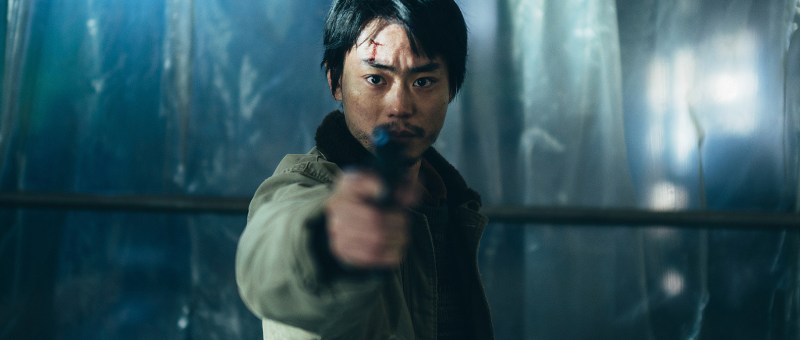
Dreaming in Between (逃げきれた夢, Ryutaro Ninomiya, 2023)

Everyone keeps asking Suenaga (Ken Mitsuishi) is if he’s okay. He has these tiny moments in which it looks like he’s on pause, sudden instances of stillness in which he stares vacantly into space. We start to wonder if he’s experiencing some kind of mental distress, having a stroke or developing dementia as those around him seem perplexed about his his behaviour which to us seems cheerful and pleasant. In fact, it seems confusing and unfair that he’s held in such contempt by his wife and daughter not to mention the pupils at his school and sullen young woman at the cafe he often frequents. 

A man of a certain age with a once overbearing father now mute and living with dementia in a retirement home, Suenaga is indeed undergoing a crisis of life. A year away from retirement, he begins to wonder what it was all for and how his relationship with his family became what it is today. He asks his wife Akiko (Maki Sakai) if they somehow gradually became estranged from each other in an impassioned speech in which he begs for love that neither she or his daughter are very minded to give him. Perhaps we can infer from the surprised reactions to his cheerfulness and attempt to take an interest in his daughter’s life that he hasn’t always been this way, though he too seems confused and perhaps not so much trying to make a mends but only to be his real self at what he fears may be the close of his life. 

When he surprises the waitress at a local cafe he goes to frequently by sitting in a different seat and then neglecting to pay the bill, it’s not really clear whether he actually forgot or did so deliberately as an attempt to assert himself. Likewise when he makes a clumsy attempt to embrace his now emotionally estranged wife or calls in sick to work it seems like more examples of his strange behaviour, yet Suenaga claims he’s becoming more of himself and on looking back over his life so far feels dejected and unfilled.

This  sense of mid life crisis is exposed in his conversation with Minami (Miyu Yoshimoto), the waitress at the cafe and an former pupil. He reveals that he wanted to become a head master but didn’t make it, and thinks he was only appointed deputy head because of picking up so many cigarette butts dropped by his rebellious charges, Minami is in many ways his opposite number, young and grumpy yet also grateful to him in another way restoring meaning to his life when she tells him that his words once saved her when he told her that she was fine the way she was. Even so she goads him a little, joking and maybe not really that he should give her his retirement money so she can have a better life. Echoing the opening conversation with his father, Minami hints she may soon quit the cafe to become a bar hostess or sex worker to save up before eventually emigrating Greece.

For all his teacherlyness, Suenaga seems to be a man who wants to be more understanding. He takes an interest in his pupils though they assume he doesn’t and again tells Minami that people should live the way they choose. In the rawness of their final parting, he tells her not to do anything she’ll regret but then adds that maybe she should, as if a life with no regrets is not really lived or perhaps reflecting that despite his own unhappy circumstances he does not really regret the life he’s lived. 

Filming in 4:3, Ninomiya makes great use of closeups, not least of Mitsuishl’s cheerful expression which somehow carries with it a great sorrow amid his own disappointments and yearnings. False or otherwise, there is something touching the connection of these dejected souls, the ageing teacher and the former pupil looking for permission to move on with her life but also teaching something to Suenaga in her sullen defiance and the eventual drive to keep going. Quiet and gentle if suffused with melancholy, Ninomiya’s poignant drama does indeed seem to argue that people in general are alright as they are but false acts jollity are as likely to confuse as console.


Dreaming in Between screens 1st June as part of this year’s Nippon Connection

Original trailer (English subtitles)
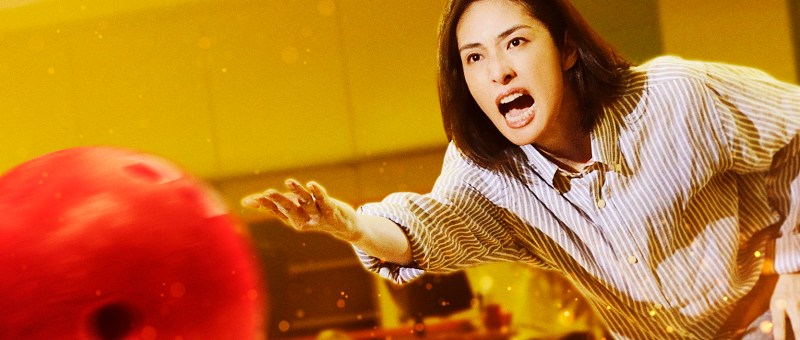
Drive Into Night (夜を走る, Dai Sako, 2022)

Small-town futility leads to tragedy when two frustrated scrapyard workers attempt to cover up a crime in Dai Sako’s dark psychological drama Drive into Night (夜を走る, Yoru wo Hashiru). Oppressive in its atmosphere, the film situates itself in a world of constant humiliations where life is cheap and reputation everything. Its heroes seek escape from their disappointing existences through consumerism and extra-marital affairs, but no longer see much of a future for themselves while even the dissatisfying present seems to be ebbing away from them. 

Asked what makes his life fun, Akimoto (Tomomitsu Adachi) replies “not much”. A classic mild-mannered guy, he’s regarded as the office dogsbody and at the beck and call of his abusive manager, Hongo (Tsutomu Takahashi). When a new female sales representative, Risa (Ran Tamai), visits the yard, Hongo runs Akimoto down in front of her apologising for having such a useless employee who does nothing other than drive around all day. His sense of masculinity is also wounded by an older colleague who tries to sell he and his friend Taniguchi (Reo Tamaoki) some kind of aphrodisiac but reflects that Akimoto is too “tame” to ever make use of it, while even Taniguchi needles him about being a 40-year-old man who’s never had a girlfriend and still lives at home with his parents. In many ways he’s the classic “nice guy”, but there’s also something a little dark about him that makes it seem as if he may snap any moment. That may have been what happened when he and Taniguchi went to a bar with Risa shortly after she’d been coaxed into a works drink with Hongo. Something obviously went dreadfully wrong in the night, because Risa is soon reported missing and both Akimoto and Taniguchi begin behaving oddly. 

It is true enough that both men, and many of their colleagues, also consider themselves to be on the scrap heap. Akimoto is tempted to quit his job to put distance between himself and the scrapyard but reflects that he’s unlikely to find another job even if quitting so suddenly might arouse suspicion as Taniguchi warns him. Meanwhile, he knows the yard is in trouble. They have him running round doing cold calls but returning empty handed, while office workers are constantly fielding calls about unpaid invoices. His irritation is palpable when he spots the boss, Miyake, leaving one morning soon after he arrives, loading expensive golf clubs into his fancy car. Hongo bullies him, but later says he does it out of respect because Akimoto is the only one who bothers to do his job properly. But then again even Hongo concedes that hard work gets you nowhere. Most of his paycheques go on child support and he often sleeps in his car in the car park. The only reason he’s not been fired is that he has a personal connection to Miyake.

Even so, this fairly tenuous relationship does not really explain why Miyake goes to such great lengths to protect Hongo when he becomes the prime suspect in Risa’s disappearance and is framed by Taniguchi and a guilty Akimoto. It may be in a way that he really does think of the company as a kind of family, as perhaps do the loan sharks who keep calling them after Akimoto ends up in debt having joined a weird cult encourages him to think there is nothing wrong with him and the fault is all with an unaccepting world. The cult leader tells him that he is “full of anger”, which perhaps he is. This being in the immediate aftermath of the coronavirus pandemic, Akimoto is often questioned about still wearing a mask long after most people have abandoned them and part of the reason is as an attempt to hide his true self. After joining the cult he takes it off, but soon adopts another disguise in dressing in Risa’s clothes as his mental state continues to decline. 

Taniguchi meanwhile makes an effort to continue with his “normal” life which includes visiting his mistress. Unbeknownst to him, his wife Misaki (Nahana) is also having an affair with the consequence that neither of them is able to fully devote themselves to their young daughter Ayano who eventually ends up in a potentially dangerous situation because of her parents’ various transgressions. Nevertheless, despite discovering that her husband may have been involved in a murder it’s Misaki who decides that he has to “protect our family” above all else. Amid all of this, Risa becomes almost literally lost before later being unceremoniously dumped like so much scrap. After framing Hongo, Taniguchi tries to convince Akimoto that Risa isn’t their problem anymore as they each struggle to hang on to the previously disappointing realities they had been so desperate to escape. 

It has to be said that aside from the misogyny of its worldview, there is also an uncomfortable quality in the film’s characterisation of a shady Chinese businessman who of course knows how to get rid of bodies along with the fact his chief associate is Korean-Japanese gangster. Though the film’s strongest character may in fact be the Filipina bar hostess, Gina (Rosa Yamamoto), on whom Akimoto fixes most of his hopes who defiantly tells the cult leader that she’s happy with her life and has no reason to join his organisation, Akimoto exposes himself by telling her she’s wrong because he doesn’t see why a “foreigner”, “a woman”, who works in a “dirty” bar, could be happy or averse to being “saved” by him. Still he insists that he hasn’t “changed”, it’s the world that’s changed around him. Taniguchi later says something similar, and they each may have a point. In any case, this world is largely one of resentment and futility in which there is no release. Sako captures the drudgery of his protagonists lives with crushing naturalism but also perhaps little sympathy.


Original trailer (no subtitles)

Transparent: Tribute to a Sad Genius (サトラレ, Katsuyuki Motohiro, 2001)

What would life be like if your every thought were audible for miles? Adapted from the manga by Makoto Sato, Katsuyuki Motohiro’s Transparent: Tribute to a Sad Genius (サトラレ, Satorare) considers how ironically isolating such a talent may turn out to be as the sufferer finds themselves withdrawing from others in embarrassment while wider society begins to resent being unable to tune out of their every inane thought or avoid being hurt by hearing something no one would ever say out loud even if they thought it privately. 

The “Committee for the Preservation of the Specially Gifted” is dedicated to protecting the so-called “Transparents” whose thoughts are audible for a 10m radius though they have no control or even idea that it is happening. They’ve started an extensive public information campaign to reduce the stigma held against them because as they claim Transparents are a valuable natural resource mainly as they all have super high IQ and are at the forefront of technological advancement. Then again this extensive campaign seems like overkill as there are only currently seven confirmed Transparents on record, but in a minor twist the campaign is necessary because it’s essential that the Transparents never find out that their thoughts are public, the first apparently having taken their own life because of the intense embarrassment of trying to live without any kind of privacy. 

This is the first ethical problem with the Transparent program which is curiously contradictory in its approach. The government could easily have said that Kenichi (Masanobu Ando), the sole survivor of a plane crash at three years old plucked from the wreckage when rescuers heard his internal monologue begging for help, had died and raised him in a lab, but instead they choose to return him to his grandmother in a designated Transparent town where they provide him with the illusion of a “normal” life while simultaneously micromanaging his existence. Their problem now is that he’s qualified as a doctor and wants to practice, but clinical medicine is obviously an occupation which requires discretion. Patients overhearing his “real” thoughts might not be helpful to their recovery, while he can hardly claim patient doctor confidentially when he’s likely to leak private medical details simply in the course of his work. Meanwhile, it tuns out that he’s already invented a revolutionary cure for athlete’s foot which is another reason why the council want to manipulate him into shifting towards research rather than clinical practice. 

That’s why they’ve dispatched military psychologist Yoko (Kyoka Suzuki) who specialises in Transparents hoping that she can find a way to bend him to their will, but gradually she begins to come to a new understanding of what his life is like even while he has no idea everyone knows what he’s thinking. For example, no one wants to date a Transparent because they don’t want the intimate details of their love lives broadcast all over town, while the perfectly ordinary thoughts which should definitely stay in his head on catching sight of crush Megumi (Rina Uchiyama) can’t help but make her feel uncomfortable. The entire town is forced to pretend that they can’t hear him think, which seems somewhat unfair, leaving him at a disadvantage and more often at not at a loss as to why someone might seem hurt or upset by him when didn’t even say anything. Meanwhile, much of Yoko’s role lies in gently manipulating him, the entire committee decamping to a summer festival in a nearby town so they can let him down gently by leading him to believe Megumi already has a steady boyfriend who is kind to children and the elderly so he’s forced to be happy for her that’s she’s found such a great guy and can give up on his romantic aspirations. 

The tone is in general admirably progressive in that it ultimately argues for a greater sense of acceptance for all minorities, but it’s difficult to square the positive message with the ways the Transparents are also being uncritically manipulated, forced to live a simulacrum of a life in an engineered small-town Japan which grateful to have them only for the massive subsidies they receive for local development in return for making sure the Transparents are kept in the dark about their condition so that the committee can exploit their genius as they plan to do with Kenichi after getting him to the research institution. Even so what they discover is that Kenichi knew what his genius was and only through letting him follow his dreams can they truly unlock it, while the committee is forced to reckon with the various ways they’ve dehumanised him, the chairman eventually referring to him as a person as opposed #7 as he’d always called him before. Somewhat contradictory and more than a little uncomfortable in its implications, Transparent: Tribute to a Sad Genius is presented as heartwarming drama and it does indeed warm the heart with this its messages of equality and acceptance not to mention the right to follow one’s dreams whatever they may be but never really reckons with its central thesis in which the authorities pat themselves on the back for being kind and doing the right thing while simultaneously exploiting those they claim to care for without their knowledge or consent. 


The Guard From Underground (地獄の警備員, Kiyoshi Kurosawa, 1992)

Ever feel like your job is trying to kill you? Released at the tail end of the Bubble era, Kiyoshi Kurosawa’s The Guard from Underground (地獄の警備員, Jigoku no Keibin) positions an office building as an industrial hell complete with a demon living in the basement but grimly suggests it’s just one of many hazards to be aware of for a woman in the corporate environment. Then again, the hellish guard himself has a sorrowful look in his eyes that speaks of true loneliness and might evoke pity if only in the fatalistic inevitability of his office-bound killing spree. 

It has to be said, Akebono Trading should have another look at its hiring procedures through in any case there’s something odd about this building which feels more like an abandoned hospital than a place of business while we might also wonder why we’re seeing signs for cargo depots and engine rooms and staff getting locked in the filing room is apparently not an uncommon occurrence. The new security guard has the same name as a former sumo wrester acquitted of the murders of his stablemate and lover on the grounds of temporary insanity, Fujimaru (Yutaka Matsushige), and is himself a hulking presence, tall but of medium build so who knows if it’s really the same guy or just the office rumour mill going into overdrive.  

Meanwhile, the other new recruit is a refined young woman, Akiko (Makiko Kuno), who’s been brought on as an art expert to help a new division recently diverted into prospecting with art sales to assess what is and isn’t a fair market price for a priceless piece of art. As Akiko admits, she’s not well placed to give that information because her background is in curation so she’s not particularly well versed in the collector market but presumably the job pays a bit better than the museums sector so she’s trying to do her best. Her new boss, Kurume (Ren Osugi), is a bit of a weirdo (like all the other men in the building) and crassly remarks that paintings like women have no value if there’s no buyer while she struggles to understand what the point of her job is. Meanwhile we’re left to wonder if Section 12 is actually a real department at all or a shady enterprise set up to help the enigmatic boss, Hyodo (Hatsunori Hasegawa), improve his investment portfolio which will probably serve him well when the bubble finally bursts. 

It’s tempting to read Fujimaru as a personification of corporate culture slowly picking off the employees and largely doing so by means of the building itself, electrocuting them by forcing their hand on the circuit breaker, bashing one inside a locker, or otherwise using his security guard’s truncheon to bludgeon them to death. To begin with, it seems as if he’s developed a fondness for Akiko and while that may be true in the same way King Kong develops a fondness for Fay Wray, it soon becomes clear that he isn’t in fact trying to protect her by taking out all the skeevy guys but seemingly killing for no reason. He looks a painting of Goya’s Saturn Devouring His Son with fascination, again hinting at his nature as the personification of capitalistic corporatism devouring the employees who might one day overthrow him, yet also lends the guard an eerie, mystical quality suggesting he merely enjoys the act of carnage though he does not actually eat anyone (that we see). More than that he seems almost like Frankenstein’s Monster, somehow lonely in identifying his otherness as he eventually confesses to Akiko remarking that “desolate time” flows through him unlike her “kind”. As he leaves, he pleads not to be forgotten. 

Akiko defeats him by refusing to believe his story and declaring herself disinterested in his truth possibly stood in good stead by the constant necessity of evading the attentions of the men around her such as those of Kurume who starts off giving paternalistic advice about looking after her parents and the preferential savings rates on post office accounts before randomly taking off his trousers. Anticipating his later career, Kurosawa makes the office a place of lurking dread and anxious eeriness only deepened by its industrial aesthetics along with the tiny windows leaking apocalyptic lighting from the oblivious outside world now cut off except for the new/old teletype text and ironic benefits of international time zones. “Traffic’s hell this time of day” a taxi driver chirpily advises, ironically delivering his passenger straight into its fiery depths. 


The Guard From Underground is released in the UK on blu-ray on 25th September courtesy of Third Window Films.

Trailer (English subtitles)