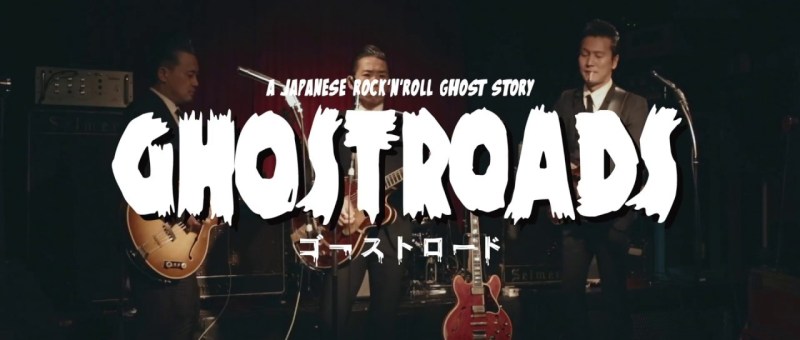

Ghostroads – a Japanese Rock’n’Roll Ghost Story (ゴーストロード, Enrico Ciccu, 2017)

ghost roads posterWhat price would you pay for fame? A down on his luck rockabilly guitarist asks himself just this question when faced with the offer of fantastic success beyond all his wildest dreams at the small cost of sacrificing some friends to the musical gods. Rest assured, Ghostroads: A Japanese Rock’n’Roll Ghost Story (ゴーストロード) isn’t waxing metaphorical on the price of success or the pitfalls of the music business so much as it is riffing on B-movie rock and roll horror. Everything about Ghostroads is retro from the rockabilly scene setting to the shooting style and musical cues but it’s all done with such charm and good humour that it’s near impossible to resist the film’s old fashioned appeal.

The Screaming Telstars are, as the narrator tells us, a bit “crap” and their lead singer, Tony (Mr. Pan), is perhaps not as committed to the band as he once was. Fellow band members remain exasperated by Tony’s often hilariously late arrival at rehearsal sessions while the producer and tech guy cringe at his terrible, lazy playing. Nevertheless, Tony vows to pull it together in time for the gig and, to be fair, he usually does. This time, however, things take a turn for the worse when Tony’s absent minded guitar frenzy proves too much for his ancient amp. The venue they’re supposed to play the next day doesn’t have house amps so Tony will need to sort himself out with a new one or risk cancelling.

Tony also has no money so makes the decision to stop into a tiny old fashioned second hand musical equipment store in a back alley to look for a vintage amp to add to his collection. Despite the warnings of the shop assistant (Taka Shin-Okubo) who acts more like the wise monk in a kung fu film than a serious businessman, Tony is strangely drawn to one amp in particular. Seeing Tony won’t be dissuaded, the man behind the counter lets him have it for free on the condition that it’s his responsibility now and whatever happens with it, he can’t bring it back.

This is largely because the amp comes with a lodger or as he calls himself, an “amperition”. Peanut Butter (Darrell Harris) is a smooth American blues singer who has been imprisoned in his amp so long he’s quite desperate to impart some musical wisdom to a struggling rock star like Tony, but his advice comes at a price.

Tony’s playing improves under the tutelage of Peanut Butter, but Tony has another problem in the return of a longterm nemesis from his student days, Shinzo (Tatsuji Nobuhara) – lead singer of The Mad Reader, and the man who possibly stole Tony’s girl, Shinobu (Tomomi Hiraiwa). Thus Tony’s journey begins from useless loserdom to big time star, besting his rival and finally having a shot with the beautiful Shinobu, but all the while everyone is worrying about him. Peanut Butter is not a positive influence in Tony’s life, and the fact that he keeps talking to someone no one else can see is a definite cause for concern, but then again Peanut Butter says he can make Tony a star, if only he’ll ditch all his friends…

In short, Ghostroads is a vehicle for The Neatbeats – the kind of band movie they just don’t make anymore. Set firmly within the world of rockabilly subculture, the film also features a number of other underground bands including 50 Kaitenz and The Privates whose lead singer, Tatsuji Nobuhara, plays the part of Tony’s arch rival Shinzo. Peanut Butter assures Tony that all he needs is to find the one perfect song (something he can help him with, for a price), but every song featured is a hit with the soundtrack proving the film’s most essential asset.

Ghostroads commits absolutely to its retro aims, aping the classically kooky effects of the down and dirty silly rock horror movies of ages past. The effects are spot on with Peanut Butter permanently surrounded by a blueish haze which seems to intensify whenever he’s doing something not quite right. Peanut Butter also has a strange little hologram device featuring a tiny burlesque dancer (played by The Tassels’ Miwa Rock) which is never explained but adds to the increasingly surreal atmosphere. Surreal and quirky it most definitely is but Ghostroads has real love both for its subculture setting and for the long forgotten classics it’s trying to resurrect. Good, clean, unpretentious fun, Ghostroads is proof enough that the rock and roll spirit is alive and well and living in Japan.


Screened at Raindance 2017.

Original trailer (English subtitles)


Noise (Yusaku Matsumoto, 2017)

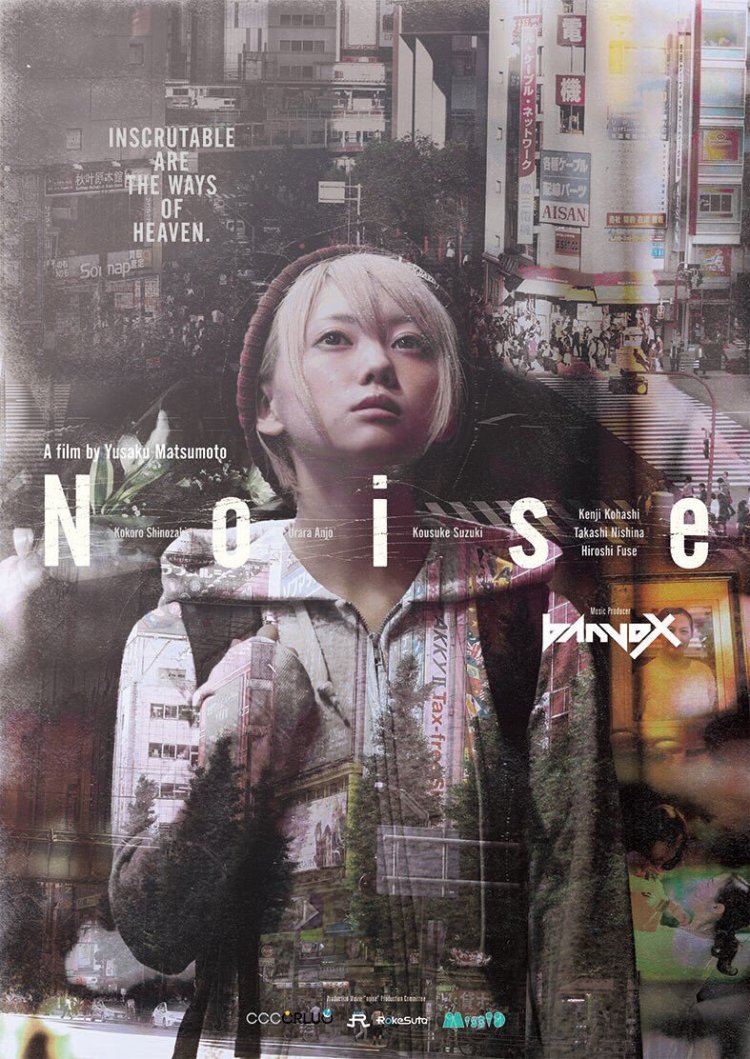
noise posterWhat makes someone take off on a homicidal rampage? First time director Yusaku Matsumoto attempts to find out by examining the down and dirty backstreets of Akihabara eight years after a mass killing shook the nation. Dealing with trauma, the death of the family, the precarious position of vulnerable young women pulled into an industry they don’t quite understand, economic insecurity, underground idols, and general nihilistic hopelessness Matsumoto has certainly conjured enough noise to drive even the most level of heads to distraction but once again, it is the city itself which eats its young in the indifferent frenzy of modern life.

Eight years ago, Misa’s mother was one of several people murdered by a lone assailant who drove a truck into a busy pedestrian intersection in Akihabara before getting out and stabbing random passersby. Misa is now making a go of it as an “underground idol” – young girls who sing and dance in clubs in Akihabara but don’t have recording contracts or big studios behind them. When not performing on stage she makes ends meet by working in the “massage parlour’ attached to the studio where she provides sexualised services but not actual sex to met who pay a flat rate on the door and then pick their particular activities off the menu inside.

Meanwhile, delivery driver Ken lives a lonely and miserable existence with his hedonistic mother who rolls in drunk early in the morning and constantly badgers her son for money. Ken would like to better himself and escape his dreadful living conditions, but his mother disagrees and disapproves of him spending his money on online courses rather than giving it all to her. Ken’s mother is also in trouble with the same loanshark gangsters which (secretly) run Misa’s club.

The third plot strand follows high school girl Rie and her lonely father who looks after grandpa at home and tries to reconnect with his daughter but can’t seem to get through to her. Rie chases a delinquent boyfriend she fantasises about trapping through pregnancy before getting herself mixed up with gangsters and embroiled in the same world as Misa but with no one looking out for her.

The strongest theme which runs through the film is that of familial breakdown. All of the protagonists come from one parent families in which the remaining parent has largely failed in their responsibilities. Though this seemingly deliberate approach is unfortunate in playing into the stigma surrounding atypical families, it is certainly true that none of the young people has any access to support from the older generation. Misa’s father had long been abusive even before her mother died, gambling the family money away betting on the horses and spending his life at home drinking. Now seemingly reformed (though not perhaps free of gambling), he wants to try again but it may already be too late.

Similarly, Rie’s father does his best – coming home from work on time, cooking proper meals, and trying to take an interest but he can’t get through to his angry teenage daughter and is also preoccupied by the need to care for his aged, bedridden father. In a strange coincidence he ends up visiting Misa’s underground idol bar where he takes a liking to Misa precisely because she looks a little bit like Rie. Nicknamed Yama-chan by the girls, Rie’s father’s attempts to forge a connection with a look-a-like of his own daughter take on a painfully tender quality of muddled, misdirected affection but a quick look around the rest of the club makes plain it’s not so far removed from the massage parlour as one might think. One of the other regular patrons is a colleague of Ken’s who seems to have little else in his life apart from underground idols, spending his life in the club buying false connection through Polaroid photos and handshakes. What the girls are selling isn’t sex but (false) kindness, providing a facsimile of the love each of these disconnected men is seeking but either thinks themselves unworthy of or is unable to find out in the “real” world.

Ken looks down on these men, he doesn’t understand why they waste their lives in vacuous pursuits of empty pleasure, but his own life, which has been more or less ruined by his irresponsible mother, holds little pleasure of its own. Reading books about mass killings and inspired by the 2008 mass murder, Ken repeatedly makes nuisance phone calls to the police station which arrested the killer threatening to commit a similar crime himself. Flat broke, abandoned, evicted, and with no future possibilities it’s little wonder he feels as backed into a corner as he does but Ken’s final, raw phone call in which the policeman on the other end tries to reassure him that hope does exist proves the last straw in his ever fracturing mental state.

In trying to answer the question why someone might want to kill others, Matsumoto does indeed blame noise. Misa, in giving a painful to camera interview looking back on the massacre reveals that she took all of her anger and internalised it, hurting herself rather than others. Ken, by contrast, seems to burn with rage permanently on the brink of explosion. Rie tries to find the peace she couldn’t find in her own family by starting a new one but is extremely deluded by her choice of mate and then deluded once again by a man faking kindness but thinking only of commerce. All of this desperation – the exploitation, the gangsters, the dire economic prospects of neglected children, conspire to push the already strained closer to the edge, believing that harming others will make them feel better through a strange kind of social revenge. Matsumoto’s Akihabara pulses to beat of synth strings and idol pop, though its soundscape is not one of freedom and joy but anxiety and depression as the city’s disenfranchised youth marches towards its dead end future with no hope in sight.


Screened at Raindance 2017

Original trailer (no subtitles)

Perfect Revolution (パーフェクト・レボリューション, Junpei Matsumoto, 2017)

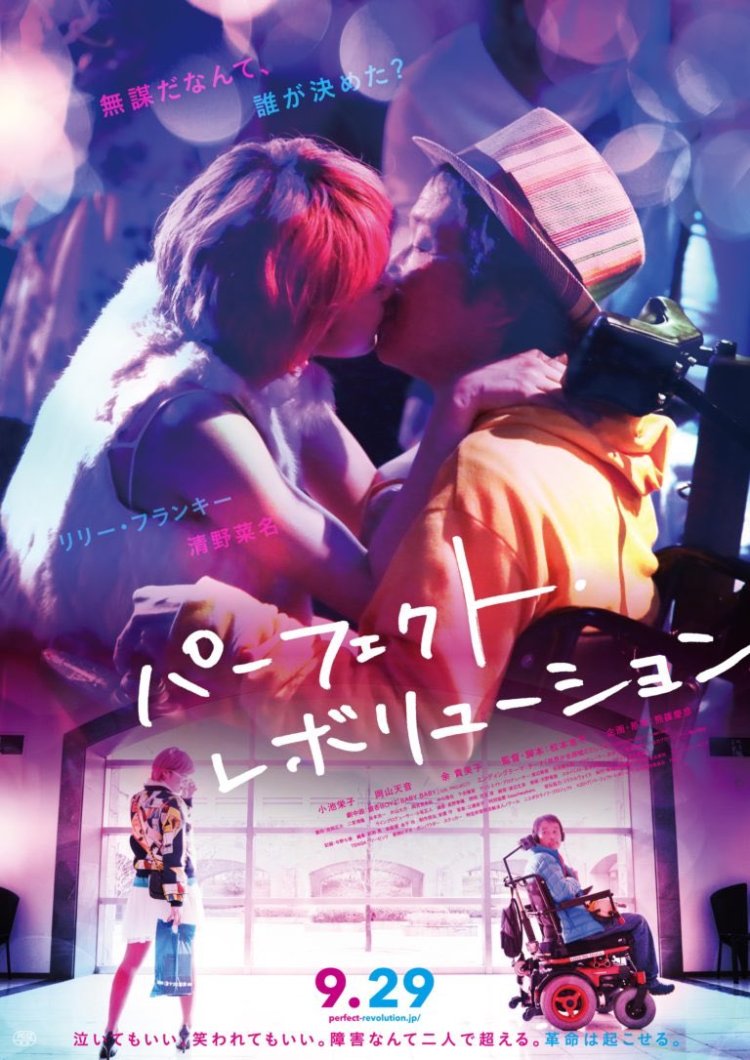
Perfect Revolution posterIf there is one group consistently underrepresented in cinema, it surely those living with disability. Even the few films which feature disabled protagonists often focus solely on the nature of their conditions, emphasising their suffering or medical treatment at the expense of telling the story of their lives. Junpei Matsumoto’s Perfect Revolution (パーフェクト・レボリューション) which draws inspiration from the real life experiences of Yoshihiko Kumashino – a Japanese man born with cerebral palsy who operates a not for profit organisation promoting awareness of sexual needs among the disabled community, makes a criticism of the aforementioned approach a central pillar of its narrative. Unlike many on-screen depictions of disabled people, Perfect Revolution attempts to reflect the normality of life with a disability whilst never shying away from some of the difficulties and the often hostile attitude from an undereducated society.

Kumashiro (Lily Franky), a man in his mid-40s, was born with cerebral palsy and has been using a wheelchair for most of his life. An activist for disabled rights, he’s written a book about his experiences and is keen to address the often taboo subject of sexuality among disabled people. Kumashiro has long since given up on the idea of romance or of forming a “normal” relationship leading to marriage and children but his life changes when a strange pink-haired woman barges into his book signing and demands to know why he’s always talking about sex but never about love. Kumashiro thinks about her question and answers fairly (if not quite honestly as he later reveals) that he doesn’t yet know what love is but is just one of many hoping to find out. This impresses the woman who approaches him afterwards and then refuses to leave him alone. Ryoko (Nana Seino), asking to be known as “Mitsu” (which means “honey” in Japanese – a nice paring with “Kuma” which means “bear”), suddenly declares she’s fallen in love with Kumashiro, whom she nicknames Kumapi.

The elephant in the room is that there is clearly something a little different about Mitsu whose brash, loud manner runs from childishly endearing to worryingly reckless. Mitsu is a sex worker at a “soapland” (a brothel disguised as a bathhouse in which the customer is “washed” by an employee) and sees nothing particularly wrong in her choice of occupation though recognises that other people look down on her because of it – something which she doesn’t quite understand and is constantly exasperated by. Perhaps offensively, she sees her own position as a woman (and a sex worker) as akin to being “disabled” in the kind of social stigma she faces but does not identify as being disabled in terms of her undefined mental health problems beyond accepting that she is “different” and has not been able to integrate into “regular” society. Nevertheless, she believes herself to be at one with Kumashiro in his struggle and is determined to foster the “perfect revolution” with him to bring about true happiness for everyone everywhere.

Thankfully Kumashiro is surrounded by supportive friends and family who are keen to help him manage on his own rather than trying to run his life for him but he does regularly encounter less sympathetic people from a drunken couple who decide to lay into him in a restaurant to a well meaning religious woman who runs after Kumashiro to tell him how “inspired” she feels just looking at him before trying to thrust money into his purse. Mitsu’s problems are less immediately obvious but her loud, volatile behaviour is also a problem for many in conformist Japan as is her straightforwardness and inability to understand the rules of her society. Mitsu has no one to look after her save a fortune teller (Kimiko Yo) who has become a surrogate mother figure, but it is a problem that no one has thought to talk to her about seeing a doctor even when her behaviour turns violent or veers towards self-harm.

Despite their struggles to be seen as distinct individuals, both Kumashiro and Mitsu are often reduced simply to their respective “differences”. Kumashiro does a lot of publicity for his book but is exasperated by well-meaning photographers who ask, tentatively, if they can photograph just his hands – literally reducing him to his disability. An “inspirational” TV documentary strand is also interested in interviewing Kumashiro and Mitsu, but only because of the “unusual” quality of their relationship. It quickly becomes apparent to Kumashiro that the documentarians aren’t interested in documenting his life so much as constructing a narrative around “damaged” outsiders that viewers can feel sorry for. Fearing that Kumashiro looks too cheerful, the producers ask him to remove his makeup and colourful clothing whilst explaining to Mitsu that they don’t want her to talk about sex work in a positive manner and would prefer it if she used a more acceptable euphemism rather than calling it what it is. Mitsu doesn’t realise she’s been had, but Kumashiro leaves the shoot feeling humiliated and annoyed.

Matsumoto does his best to present the issues sensitively, never patronising either Kumashiro or Mitsu but depicting them as real people with real faults just living their lives like everybody else. Neatly avoiding the classic Hollywood, happy ever after ending he emphases that there is still a long way to go but it is unfortunate that Mitsu’s situation is treated more lightly than it deserves and that her eventual desire to get treatment is undermined by the film’s liberated ending which is, nevertheless, inspirational as Kumashiro and Mitsu both commit themselves to the “perfect revolution” of a better, happier future both for themselves and for all mankind.


Screened at Raindance 2017.

Original trailer (no subtitles)

Freezing Point (氷点, Satsuo Yamamoto, 1966)

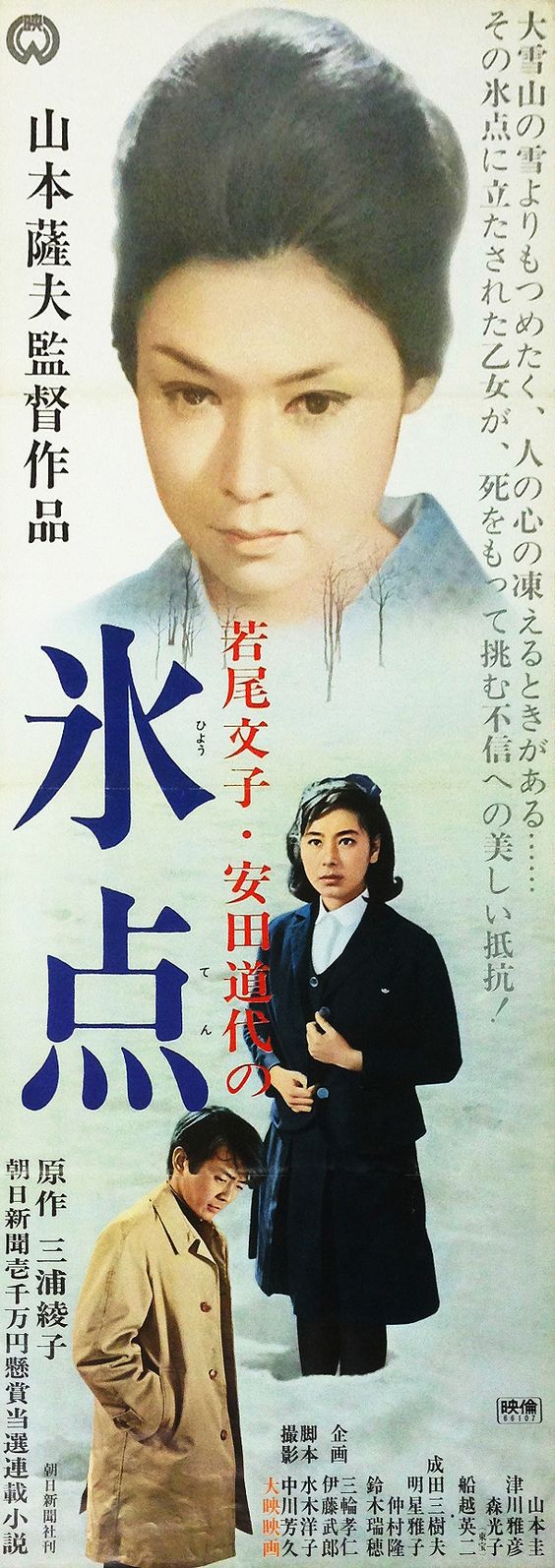
freezing point posterRevenge is a dish best served cold, so they say, but just how cold can you go before your own heart freezes over? Based on a novel by Ayako Miura, Freezing Point (氷点, Hyoten) is a somewhat unusual family drama centring on parental responsibility, familial love, and the necessity of forgiveness following betrayal and tragedy. Maintaining Miura’s characteristic Hokkaido setting with its appropriately snowbound vistas, Yamamoto sidesteps the author’s Christianising viewpoint whilst embracing her views on the nature of sin and the innocence of children.

Ophthalmologist Keizo (Eiji Funakoshi) returns home one day to find his wife, Natsue (Ayako Wakao), playing the piano, seemingly in a kind of self involved rapture. The maid has taken their son, Toru, out, and their daughter, Ruriko, is supposedly playing outside. Only, she isn’t – Ruriko has gone missing. Some time later they find the little girl’s body at the riverside, apparently strangled. The killer is caught and commits suicide in prison. Natsue has a breakdown and spends some time in a hospital but on her release Keizo decides to adopt a baby to help her recover from losing Ruriko.

More exactly, Keizo is torn between altruistic, humanist values and a deep and cruel desire for revenge on the wife he believes neglected their daughter while she entertained a lover at home. Keizo’s plan is to adopt the now orphaned baby girl of the man who murdered his daughter both as a way of proving himself a good, forgiving person and of getting his own back on his wife by forcing her to raise a murderer’s child, only revealing the truth once she has come to love it like her own.

Natsue’s heart truly is broken by the death of her daughter. It’s not exactly unusual for small children to be playing outside in ‘60s Japan – in this Natsue is not at fault. Here is the first grain of “sin” – there was indeed someone else in the house that day, another doctor from Keizo’s hospital, Murai (Mikio Narita). What exactly happened is not clear but Keizo is convinced the pair have been having an affair for some time and assumes his wife had asked the maid to take their son out and put Ruriko outside so that her lover could visit unseen. Natsue is also unable to bear any more children due to complications with a previous pregnancy and Keizo seems to think she gave herself free reign in having an affair seeing as there could be no “consequences”. Keizo’s “revenge” is as much about his betrayal as a husband as it is resentment in holding his wife responsible for the death of their daughter even though, as another friend points out, unexpected, random events occur all the time and this one was no one’s fault but the killer’s.

Parenthood, or more specifically motherhood, becomes a persistent theme as Natsue becomes pre-occupied with being a “good mother”. Time moves on and the baby, Yoko (Michiyo Okusu billed here as Michiyo Yasuda), grows up only for Natsue to discover the truth by accident after she finds a letter Keizo had written to a friend in which he expresses his inability to love Yoko knowing what she is. Yoko is not and cannot be responsible for her father’s crime but its effects are visited on her as she is branded a “murderer’s child” or a carrier of “murderous genes”. Once Natsue knows the truth the relationship changes and becomes one of artificial game playing as she and Keizo tiptoe around the issue, each unwilling to give the other the satisfaction of knowing that the game is up. Yoko realises she must be an adopted child but remains cheerful, kind, and innocent, not wanting to be a burden to the family to which she is desperate to belong.

Matters come to a head when Yoko approaches adulthood. Brother Toru (Kei Yamamoto), overhearing his parents’ ugly argument, discovers Yoko is not his blood sister and develops complicated, inappropriate romantic feelings for her (feelings which his mother almost wants to encourage if only as a kind of revenge against Keizo). Meanwhile, he also brings home a university friend, Kitahara (Masahiko Tsugawa), as a possible suitor for her and way out of this dead end tragic love story. Natsue tries to put an end to this by literally getting in the middle of it – cutting off the correspondence between Yoko and Kitahara before trying it on with him herself either as a way of frightening him off completely or positioning herself as a direct rival to her adopted daughter. Rival she already is in the eyes of her son, and also perhaps those of Keizo whose eyes linger on the daughter he couldn’t force himself to love a little too long in realising she is no longer a child and no blood relation. Thus it comes as a relief to him when a family friend offers to make Yoko her heir, paying for a college education or foreign travel if those are things Yoko would like to do.

Yoko, however, wants nothing more than to stay with her family forevermore. This is a common sentiment from a daughter in a family drama, one which usually changes when an appropriate marriage partner is found, but it means more for Yoko whose single concern is feeling unwanted by her parents whilst also feeling grateful to them for taking her in. Her romance with Kitahara provokes a revelation which leaves her feeling internally destroyed. A classically “good” person, she did not want to see any “bad” in herself but now finds out her birth father committed a heinous, senseless crime against people she loves. This, she says, is the freezing point of her heart. Realising that “sin” is everywhere and even if it hadn’t been her father there would be other instances of wrongdoing somewhere in her lineage she feels as if her heart is frozen, her spirit killed, and she can no longer continue.

Of course, there are more revelations to come provoked by yet another tragedy which threatens to bring the whole thing full circle. Nobody expected or intended this as a result of their own petty desires for revenge, but then all they really thought about was themselves and the way they’d been slighted. Keizo asked his doctor friend who facilitated his adoption whether there existed two people in the world who’d be able to love the child of the man who’d killed their own. His friend is sure such people do exist (though it turns out he had his own solution to this particular problem), but Keizo’s desires are less about trying to prove himself one of them than exacting the most painful kind of emotional wound on a wife he feels has humiliated him. This family is a fraud and the only “innocent” member is the adopted daughter whose capacity for goodness they have in part destroyed. Bleak, probing, and extremely uncomfortable, Yamamoto’s adaptation of Miura’s novel is an artfully composed dissection of family values, such as they are, in the post-war world.


The Road to Mandalay (再見瓦城, Midi Z, 2016)

再見瓦城前導海報-GokKipling’s Mandalay, as uncomfortable as it seems to us now, is an imperialistic nostalgia trip through the orientalised, “exotic” East. Midi Z adopts a well known line of the poem, The Road to Mandalay (再見瓦城, Zài Jiàn Wǎ Chéng), as an ironic comment on the journey undertaken by the central pair of hopeful migrants crossing from Myanmar into Thailand each for different reasons but both in search of something unavailable to them at home.

Lianqing (Wu Ke-xi) crosses a river on a dingy and is met by a man on a motorbike who takes her to a truck which will take her into Bangkok. Only a second class passenger, Lianqing is about to huddle into a hidden compartment in the vehicle’s boot when a man volunteers to give up his seat in the front so that she can have a more comfortable journey. When they arrive, the man, Guo (Kai Ko), offers to help her find work and gives her his cousin’s phone number so they can keep in touch. Lianqiang is grateful but not particularly interested and tries to fob him off with a jar of shrimp paste as a thank you.

Mostly told through Lianqing’s eyes, her migration story is a difficult one. The friend she’s come to meet, Hua, isn’t even there when she arrives and is in a permanently bad mood after having lost her job due to not having the proper documentation. The other two women in the flat, one of whom, Cai, is also from her village, are currently working in the sex trade – something which they don’t particularly advise Lianqing take up, but finding a job without papers proves near impossible. Lianqiang eventually finds work as a dishwasher in a restaurant which, all things considered, suits her well enough – the work is menial and intensive, but the atmosphere is relaxed, the boss is OK, and she still earns enough to live on and send money home. Guo objects to Lianqing working in such a lowly place and wants her to come to work in a factory with him where the pay is better but Lianqing prefers her independent city life to an oppressive factory-bound existence. Nevertheless when the restaurant is raided she is forced to join Guo’s factory after running out of other options.

Though The Road to Mandalay is often described as a love story, its central romance is as thorny as the protagonists’ liminal status. Guo’s early gesture of self sacrifice looks like altruistic chivalry, but his designs on Lianqing are obvious from the outset. His big brotherly protection soon veers off into a kind of patronising paternalism before developing into something more worryingly possessive. Despite appearing to avoid seeming overbearing, Guo’s personal insecurities eventually lead him into the worst kind of betrayal when he tries to stop Lianqing from acquiring her work papers in the belief that they will take her away from him.

Guo’s philosophies are all short-term. He wants to earn as much money as possible with the idea of eventually going back to Myanmar and perhaps opening a shop selling imported Chinese clothing. Lianqing’s thinking couldn’t be more different. Her plans are longterm. She wants her work permit to get a proper, middle-class city job so she can have a better quality of life. After getting her work permit she wants a Thai passport which will allow her to move on again, perhaps to Taiwan, to further improve her living standards and future prospects. Guo wants Lianqing and he wants her to come home with him. He is not prepared to follow her and knows that she does not envisage the same kind of future as he does. Prompted by Lianqing’s talk of going to Taiwan, Guo asks her if she’s ever thought about getting married. Sensing his intention, Lianqing’s answer is a flat no. It’s too soon, she wants something more out of life than being someone’s wife.

Thailand, however, is not particularly supportive of her dreams. The migrants’ lives are hard. The streets are regularly patrolled at night with police checking IDs and constant crackdowns mean the visa rules are being enforced though bribery is also rife. Migrants present an easy point of exploitation for all as they have no way of protecting themselves and are unable to go to the authorities due to their undocumented status. Lianqing decides to get a permit through the back door, bribing officials through a broker, but the papers she paid a small fortune for are next to worthless and her only other options involve identity theft. At the factory she doesn’t even have an identity as her name is taken away from her and replaced with a number. When another migrant from Myanmar is badly injured in an accident, Lianqing and the others are forced to sign a waver form which absolves the factory of responsibility and declares the matter “settled” with an agreement to pay medical costs but with no further compensation or legal recourse. It’s  no wonder that the common advice swapped between migrants is to leave Thailand as soon as possible for somewhere less hostile to young people with big dreams.

Midi Z’s visual style is broadly naturalistic but slips into surrealism as Lianqing is forced to consider working in the sex trade while Guo impotently throws logs into a furnace with drug fuelled frustration. Lianqing might have been able to escape her economic circumstances, but she can’t escape the net of patriarchy presented by men like Guo who can’t accept her desire for independence and negation of their hopes and dreams which largely rely on her agreeing to conform to their visions rather than her own. Chances of success are slim yet Lianqing refuses to give up on her determination for a better future. For others, however, this dead end life of constant frustration is bound only for tragedy with no hope in sight.


The Road to Mandalay screens at Regent Street Cinema on 26th September before opening in selected cinemas courtesy of Day for Night. Further dates scheduled so far include:

Original trailer (dialogue free)

Mukoku (武曲 MUKOKU, Kazuyoshi Kumakiri, 2017)

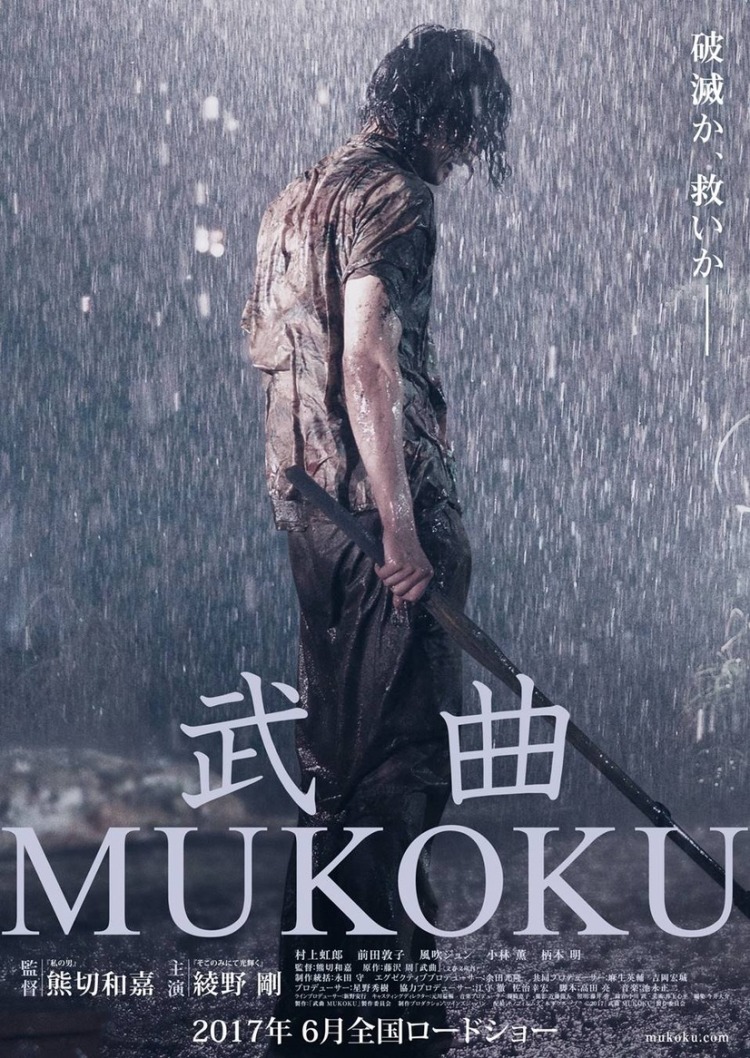
mukoku posterThe way of the sword is fraught with contradictions. Like many martial arts, kendo is not primarily intended for practical usage but for self improvement, emotional centring, and fostering a big hearted love of country designed to ensure lasting peace between men. Nevertheless, it tends to attract people who struggle with just those issues, hoping to find the peace within themselves though mastery of the sword. Kazuyoshi Kumakiri’s long and varied career has often focussed on outsiders dealing with extreme emotions and Mukoku (武曲 MUKOKU) is no different in this regard as the two men at its centre lock swords at cross purposes, each fighting something or someone else within themselves rather than the flesh and blood opponent standing before them.

Kengo Yatabe’s (Go Ayano) life has been defined by the sword. As a young boy his father, Shozo (Kaoru Kobayashi), began training Kengo intensively but his standards were high, too high for a small boy who only wanted to please his dad but found himself beaten with the weapon he was failing to master. Twenty years later Kengo is a broken man after a long deferred violent confrontation between father and son has left Shozo in a vegetative state, neither dead nor alive, no longer a figure of fear and hate but of guilt and ambivalence. Kengo has given up kendo partly out of guilt but also as a kind of rebellion mixed with self harm and is currently working as a security guard. He spends his days lost in an alcoholic fog, trailing an equally drunken casual girlfriend (Atsuko Maeda) behind him.

Meanwhile, high school boy Toru (Nijiro Murakami) is a classic angry young man working out his frustrations through a hip-hop infused punk band for which he writes the angst ridden poetry that serves as their lyrics. Toru has no interest in something as stuffy as Kendo but when he’s set upon by a bunch of Kendo jocks he decides he’s not going down without a fight. Winning through underhanded street punk moves would normally be frowned upon but the ageing monk who runs the high school kendo club, Mitsumura (Akira Emoto), is struck by his nifty footwork and decides to convince the troubled young man that the path to spiritual enlightenment lies in mastery over the self through mastery of the sword.

The wise old monk pits the self-destructive older man against the scrappy young one, hoping to bring them both to some kind of peaceful equilibrium, with near tragic results. Kengo’s ongoing troubles are born of a terrible sense of guilt, but also from intense self-loathing in refusing to accept that he’s become the man he hated, as broken and embittered as the father who made him that way. Shozo was a kendo master, but as the monk points out, in technique only – his heart was forever unquiet and he never achieved the the true peace necessary to master his art. Knowing this to be the truth only made it worse yet Shozo also knew the burden he’d placed on his son. They say every man must kill his father, but Kengo can’t let the ghost of his go – clinging on to a mix of filial piety and resentful loathing which is slowly turning him into everything he hates.

Toru’s problem’s are pushed into the background but seeing as his enemy is not the flesh and blood threat of an overbearing father but the elements and more particularly water, it will be much harder to overcome. Water becomes a constant symbol for each man – for Toru it’s an inescapable symbol of death and powerlessness, but for Kengo it represents happiness and harmony in rediscovering the good memories he has of his father from joyful family outings to less abusive summer training sessions. Mukoku is the story of three ages of man – the scrappy rebellious teen, the struggling middle-aged man, and the elderly veteran whose own heart is settled enough to see the battles others are waging. The “warrior’s song” as “mukoku” seems to mean changes with each passing season, nudged into tune by the graceful art of kendo.

Kumakiri embraces his expressionist impulses as a young boy finds himself suddenly underwater, vomiting mud and fish while Kengo has constant visions of his father, mother, and younger self ensuring the past is forever present. The ominous score and strange occurrences including ghostly graveyard old women who appear from nowhere in order to offer a lecture on the five buddhist sins lend a more urgent quality to Kengo’s disintegration, though interesting subplots involving a possibly alcoholic girlfriend and a mamasan (Jun Fubuki) at a local bar who might have been Shozo’s mistress are left underdeveloped. Two men face each other to face themselves, trying to beat their demons into submission with wooden swords, but even if the battle is far from over the tide has turned and something at least has begun to shift.


Screened at Raindance 2017.

Original trailer (no subtitles)


Junk Head (Takahide Hori, 2017)

junhead still 2“God is Dead! We Killed Him!” exclaim some funny little mole/penguin people in Takahide Hori’s Junk Head, only to follow it up seconds later when a giant worm spits out the divine visitor from above with “He Hath Risen”.  An extreme feat of technical prowess, Junk Head is a marvel of cyberpunk production design tempered with wry humour and a weary exasperation as regards “humanity” and its children. A man loses his head, literally and figuratively, and finds himself on a journey into the deepest darkest underground filled with mutant clones and terrifying monsters, searching for salvation while groping for identity.

Far in the future, humanity thought it had it made – abnegating their responsibilities to a crowd of lowly clones and living a life of ease, but the clones rebelled and took themselves underground leaving humanity to fend for itself on the surface. Immortal through gene replacement therapy, humanity has also lost the ability to reproduce naturally and now that a disease has wiped out around 20% of the remaining population with no sign of stopping, there is urgent need to rebuild the species.

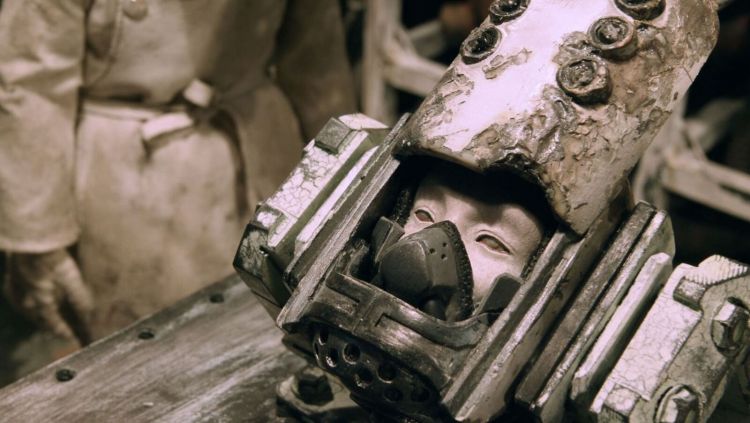
Hoping to find an answer in the world below, humanity sends one cyborg researcher on a desperate mission. Sadly, the capsule carrying the robot is shot down by wary humanoids living on the higher levels. His head continues to fall until it’s found by a scavenger party who take it to a doctor who “recognises” the head inside the helmet as “human”. Seeing as humanity is, in a sense, their creator, the clones stand back in awe of their new “God”. Now placed into an adorable little white stormtrooper-meets-I-Robot body, God can remember nothing of his past life and spends most of his new one trying to get to grips with his tiny hands and unwittingly walking into certain death only to be saved when the various evil creatures remember they don’t like the taste of metal.

As time moves on God takes on many forms as he falls further through the underground universe, swapping his cute round body for a blocky makeshift one without a voice but with a bigger heart. Having regained some of his memories immediately before his first transformation, the second God is not such a nice guy but “Junkers” is the type to whip up chairs for old ladies and walk miles to gather “Mashrooms” for his new masters, not to mention leaving some food behind for a hungry mutant girl. Once his memories are fully restored (through repeated blows to the head), God thinks back on his soulless life on the surface and realises he’s never felt so alive as he does 600 feet under. The sky might be pretty, but it’s cold up top.

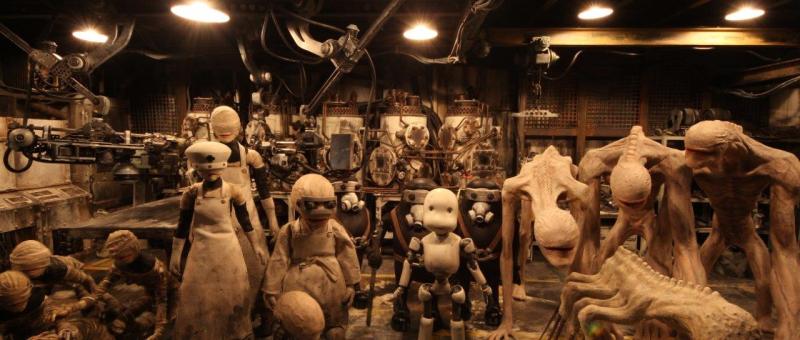
As cute as God is (in all his incarnations), Junk Head’s world of basement horrors is surreal and terrifying. Some monsters are more harmful than others, but the major peril of the middle layers is persistent wormholes from which giant, toothy creatures emerge to devour unsuspecting travellers. Fleshy spiders hang from the ceiling and “Mashrooms” appear to be fleshy protuberances grown on humanoid backs imprisoned within walls. The post-apocalyptic underground city is a perfectly designed mix of makeshift and industrial architecture, covered in dust, grime, and scratches. God’s first body is appropriately worn before he even gets it, a true tribute to the depth of Hori’s conceptual design.

Drawing inspiration from Giger and Kubrik, the world which most comes to mind is, perhaps unexpectedly, David Lynch’s Dune. From the strange mole/penguin people and their rubbery suits to the torpedo shaped, bright red big busted women the underground is an industrial fantasy zone where tiny dinosaur-like snake worms waddle around adorably before being picked off for dinner. Hori brings scope to the claustrophobic world of tunnels and ducts by shooting at a distance with painterly compositions echoing German expressionism. He echoes Lynch again in the constant, dream-like use of dissolves and montage while the punk soundtrack and quick fire swapping from one empty corridor to another is reminiscent of Shinya Tsukamoto or Sogo Ishii. Despite its rather abrupt ending (which does at least tease further adventures for God in the wilderness), Junk Head is a charming, surreal odyssey through a post-apocalyptic wasteland filled with zany humour and rich in character detail. Hopefully the second coming of God will not be too far off.


Screened at Raindance 2017.

Original trailer (dialogue free)

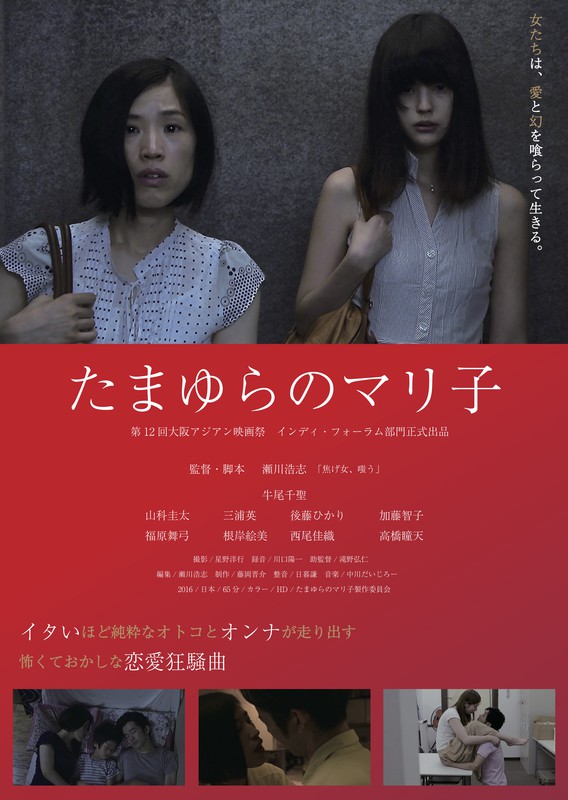
Swaying Mariko (たまゆらのマリ子, Koji Segawa, 2017)

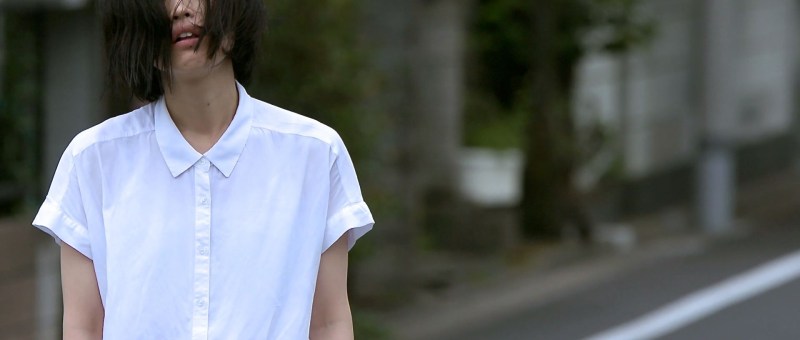
Swaying mariko posterJapanese indie has moved on of late, no longer content with deconstructing the modern family it now wants to take a good look at the modern marriage though Koji Segawa’s Swaying Mariko (たまゆらのマリ子, Tamayura no Mariko), for all of its copious darkness, may be a much more positive vision than might at first be thought. A tale of one woman’s gradual downward spiral into a world of violence, paranoia, and perversion Swaying Mariko’s Tokyo is one of icy silences and magnified spaces between people which seem to defy the otherwise cramped city streets. Loneliness and isolation are the twin forces which drive this spiral of resentment and anger but self-inflicted wounds quickly look for vengeance, usually in all the wrong places.

Mariko (Chise Ushio) is an ordinary middle-aged housewife with a young son, Riku, and an increasingly distant husband, Tomoharu (Keita Yamashina). By day, she works at a batting centre which is less a place for aspiring baseball players to practice their swings than for angry young men who want to hit things very hard. Consequently, her workplace is often unpleasant but aside from the aggressive conduct of the customers, her creepy boss has been making a point of sexually harassing her when not peeping on the girls’ changing rooms or actively having casual sex with one of Mariko’s colleagues in the rec-room. Convinced Tomoharu is having an affair, she takes to stalking him – on foot and online, even deciding to set up CCTV so she can spy on him when he invites an old uni friend to the house when he knows she’ll be out.

Mariko is not the only one, everybody (save perhaps her “babbling” workmate) seems to be gently seething with repressed rage. The batting cages are full of strung out salarymen in suits who are keen to raise their voices and gesture threateningly at timid employees who are very definitely not employed to be substitute softballs for their verbal bats. Mariko’s coping mechanism is her ascerbic interior monologue in which she passes judgement on everyone and everything, making the fair point that her image conscious colleague who won’t date short guys even if they’re rich probably isn’t going to bag a wealthy husband by providing sexual favours to the seedy boss at a rundown batting centre.

Rebuffing the timid colleague’s attempts to connect, Mariko repeatedly telephones a friend from a previous job who refuses all her calls. It seems Mariko has no other friends or family to turn to and is entirely alone with her marital worries which have placed a wedge between herself and her husband. The woman who never answers her calls along with another former colleague becomes a kind of inner chorus voicing Mariko’s own constant thoughts of inadequacy – that her friends don’t like her, that her husband no longer finds her attractive, and that she is a woman with no possible future to look forward to.

Mariko’s fantasy revenge is violent, bloody, and grotesque but possibly not so much as the fact that she actively gets off on savouring its taste. Tellingly, her temporary madness seems to be a common phenomenon as the salesman seems to know when Mariko attempts to buy the sharpest knife he has available and he wonders if he should sell it to her. A violent encounter sends Mariko reeling into a kind of maddening dance in which she decides to throw off all semblance of civility and behaves without restraint – hindering rather than helping an ungrateful woman, joining in with a dance in the street, throwing a bucket over the head of a stranger. When she sees violence being done on a seemingly innocent boy by a pack of thugs she doesn’t intervene but watches, catching up to one of the perpetrators to make him a surprising offer.

Mariko’s madness may be real or imagined but it’s far from an isolated case. Tomoharu’s secrets weren’t the ones she expected and were, in part, caused by her own suspicions and determined silence. Mariko may hate her part-time job (at least this current one) but her husband’s suggestion she give it up to be a full time wife and mother has her inwardly seething, her husband apparently reduced to a shivering coward by the temerity of a woman seeking fulfilment outside as well as inside the home. Ultimately their problems amount to a series of misunderstandings which can only be cleared up by a full and frank discussion the like of which is culturally taboo. Mariko may look like she’s exorcised a demon after dancing through her mad fever dream, but if she did then it perhaps migrated rather than disappeared, eagerly waiting to pounce on the next lonely soul being squeezed in the urban wringer.


Screened at Raindance 2017.

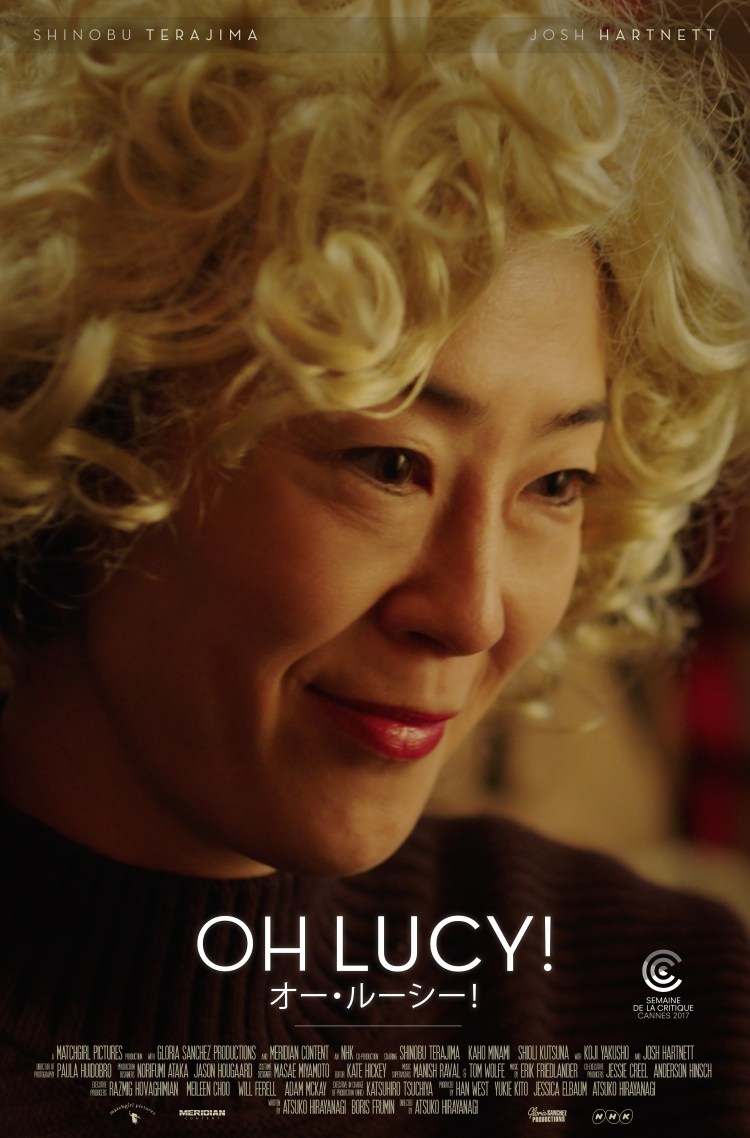
Oh Lucy! (オー・ルーシー!, Atsuko Hirayanagi, 2017)

Oh Lucy! posterDespite its rich dramatic seam, the fate of the lonely, long serving Japanese office lady approaching the end of the career she either sacrificed everything for or ended up with by default has mostly been relegated to a melancholy subplot – usually placing her as the unrequited love interest of her oblivious soon to be retiring bachelor/widower boss. Daihachi Yoshida’s Pale Moon was perhaps the best recent attempt to bring this story centre stage in its neat contrasting of the loyal employee about to be forcibly retired by her unforgiving bosses and the slightly younger woman who decides she’ll have her freedom even if she has to do something crazy to get it, but Atsuko Hirayanagi’s Oh Lucy! (オー・ルーシー!) is a more straightforward tale of living with disappointment and temporarily deluding oneself into thinking there might be an easier way out than simply facing yourself head on.

Middle-aged office lady Setsuko (Shinobu Terajima) is the office old bag. Unpopular, she keeps herself aloof from her colleagues, refusing the sweets a lovely older lady (herself somewhat unpopular but for the opposite reasons) regularly brings into the office, and bailing on after hours get togethers. Her life changes one day when the man behind her on a crowded station platform grabs Setsuko’s chest and says goodbye before hurling himself in front of the train. Such is life.

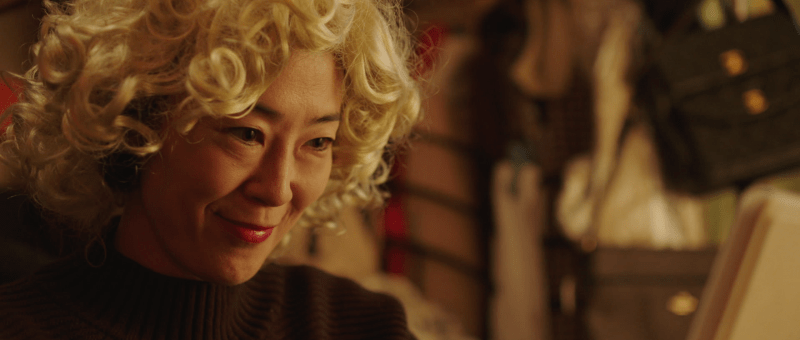
Taking some time off work she gets a call from her niece, Mika (Shioli Kutsuna) to meet her in the dodgy maid cafe in which she has been working. Mika has a proposition for her – having recently signed up for a year’s worth of non-refundable English classes, Mika would rather do something else with the money and wonders if she could “transfer” the remainder onto Setsuko. Despite her tough exterior Setsuko is something of a soft touch and agrees but is surprised to find the “English School” seems to be located in room 301 of a very specific brothel. John (Josh Hartnett), her new teacher, who has a strict English only policy, begins by giving Setsuko a large hug before issuing her a blonde wig and rechristening her “Lucy”. Through her English lesson, “Lucy” also meets another man in the same position “Tom” (Koji Yakusho) – a recently widowed, retired detective now working as a security consultant. Setsuko is quite taken with her strange new hobby, and is heartbroken to realise Mika and John are an item and they’ve both run off to America.

Setsuko’s journey takes her all the way to LA with her sister, Ayako (Kaho Minami), desperate to sort her wayward daughter out once and for all. As different as they are, Ayako and Setsuko share something of the same spikiness though Setsuko’s cruel streak is one she deeply regrets and only allows out in moments of extreme desperation whereas a prim sort of bossiness appears to be Ayako’s default. Setsuko’s Tokyo life is one of embittered repression, having been disappointed in love she keeps herself isolated, afraid of new connections and contemptuous of her colleagues with their superficial attitudes and insincere commitment to interoffice politeness. Suicide haunts her from that first train station shocker to the all too common “delays caused by an incident on the line” and the sudden impulsive decision caused by unkind words offered at the wrong moment.

“Lucy” the “relaxed” American blonde releases Setsuko’s better nature which had been only glimpsed in her softhearted agreeing to Mika’s proposal and decision to allow Ayako to share her foreign adventure. John’s hug kickstarted something of an addiction, a yearning for connection seemingly severed in Setsuko’s formative years but if “Lucy” sees John as a symbol of American freedoms – big, open, filled with possibilities, his homeland persona turns out to be a disappointment. Just like the maid’s outfit Setsuko finds in John’s wardrobe, John’s smartly bespectacled English teacher is just a persona adopted in a foreign land designed to part fools from their money. Still, Setsuko cannot let her delusion die and continues to see him as something of a saviour, enjoying her American adventure with girlish glee until it all gets a bit a nasty, desperate, and ultimately humiliating.

Having believed herself to have only two paths to the future – being “retired” like the office grandma, pitied by the younger women who swear they’ll never end up like her (much as Setsuko might have herself), or making a swift exit from a world which has no place for older single women, Setsuko thought she’d found a way out only to have all of her illusions shattered all at once. “Lucy” showed her who she really was, and it wasn’t very pretty. Still, even at this late stage Setsuko can appreciate the irony of her situation. That first hug that seemed so forced and awkward, an insincere barrier to true connection, suddenly finds its rightful destination and it looks like Setsuko’s train may finally have come in.


Screened at Raindance 2017

Expanded from Atsuko Hirayanagi’s 2014 short which starred Kaori Momoi.

Clip (English subtitles)

Take Me Away! (ふりむけば愛, Nobuhiko Obayashi, 1978)

Take Me Away PosterDuring his long and extremely varied career, Nobuhiko Obayashi was a not infrequent visitor to the world of the idol movie though his most notable entries into the genre would come in the 1980s Kadokawa heyday with the much loved The Little Girl who Conquered Time (starring Tomoyo Harada) and School in the Crosshairs (starring Hiroko Yakushimaru) among many others made for that studio alone. Obayashi’s ‘80s idol movies play very much into his key themes in their preoccupation with youthful melancholy and teenage ennui but 1978’s Take Me Away (ふりむけば愛, Furimukeba Ai) takes a slight step away from the genre norms in its slightly more grownup tale of complicated love and early life disappointments.

Beginning in typically strange Obayashi style, the film opens with some footage of abandoned machinery before the caption “Kyoko is on a journey” flashes up on the screen and we meet the woman herself (Momoe Yamaguchi) as she stares at San Fransisco’s Golden Gate Bridge.  Soon enough her view is obscured by a runaway kite bearing the name of Tetsu (Tomokazu Miura) – a young Japanese man currently living in the city. The pair hit it off while Tetsu tries to fix his both kite and Kyoko’s shoe which she broke trying to catch it. Tetsu promises to show her around San Fransisco and asks her to meet him at Union Square the next day at noon. Kyoko waits but Tetsu does not arrive – eventually a friend of his turns up in his place and Kyoko reluctantly spends a few hours with him during which she reveals that she’s on a suicide holiday and is about to go back to her hotel room to write the note. Finally Tetsu arrives, takes her to a hippy beatnik club where he sings her the title song of the movie, and the pair fall deeply in love.

Tetsu promises to meet Kyoko back in Tokyo to start a life together, but once again he does not turn up. Heartbroken and worried, Kyoko searches for him but the name of a bar he gave her as a point of rendezvous seems to be fake and her letters all come back undeliverable. When she gets hit by a car driven by a wealthy businessman, another, more stable, romantic possibility presents itself but will Kyoko let her true love dream go?

Take Me Away was the eighth in a series of films which starred popular Horipro idol Momoe Yamaguchi and her regular leading man Tomokazu Miura but the couple already had a long history of working with Obayashi in his career as a director of TV commercials. In fact the pairing which would eventually become a real life marriage was born thanks to Obayashi who was casting around for some stars while he made commercials with Miss Lonely apparently already on his mind. Obayashi was offered the chance to direct Yamaguchi’s cinematic debut but the dates didn’t line up and she made her first film, an adaptation of Yasunari Kawabata’s The Dancing Girl of Izu, with Katsumi Nishikawa instead.

This being the eighth Yamaguchi/Miura romantic drama the stakes needed to be raised – hence the decision to shoot for real on location in San Fransisco. Like many idol movies, the temporary shift away from the regular world the leading lady inhabits provides her an occasion to reinvent herself and the jet-setting, glamorous American holiday is certainly in keeping with the new, globally minded youth of Japan interested in transgressing borders of all kinds. When Tetsu meets Kyoko, she spins him a tale about diplomat parents that sounds like it could come out of any idol movie but in a departure from the norm it’s a part of her new holiday persona. In truth, beatnik dropout Tetsu is the posh one, a runaway son of a wealthy doctor, while Kyoko’s origins are humbler – she’s saved the money for this extremely extravagant holiday while working not as a concert pianist as she claimed, but as a piano tuner (making her choice of a Holiday Inn less strange in retrospect).

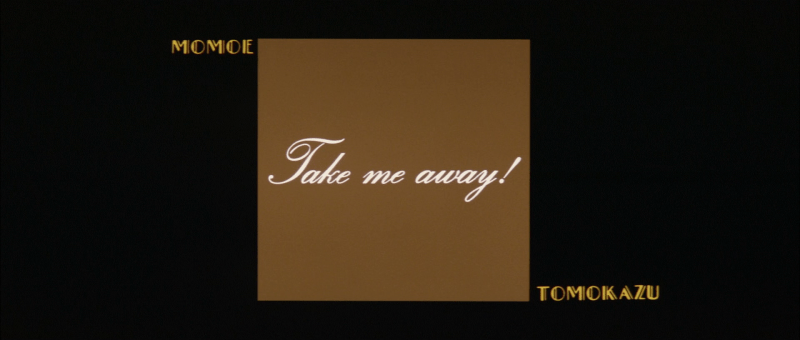
Though many idol movies centre around their teenage target audience, Kyoko and Tetsu are very noticeably grown up, already leading “adult” lives, no longer students but young people living semi-independently. This is brought home by the incongruous inclusion of a sex scene – the first in the series of films starring Yamaguchi and Miura, something which would not usually feature (at least explicitly) in the generally innocent idol movie world. Obayashi chooses to shoot this in an artistic, surreal, and impressionistic rather than naturalistic manner which shows the pair lying together naked (Yamaguchi covers herself with an arm) with a superimposition of the couple about to kiss over the top while the entire scene is bathed in golden white light. The sequence is one of the few typically Obayashi flourishes seen in the film (others include the title sequence, obvious Pan Am model shots, illustrated starry skies, and a slapstick brawl conducted to ‘20s jazz), but it perfectly captures the glory of young love so central to the early part of the film.

Of course, it doesn’t last. Holiday romances are one thing, but Tetsu proves to be a flaky sort of guy on every conceivable occasion until he’s finally dragged back into Kyoko’s orbit and vows to give up on his half-hearted ways once and for all to finally be true to his one true love. Kyoko’s second chance – a marriage proposal from the CEO who ran her over looks like the better option, that is until he shows his true colours at the film’s climax. Just as Tetsu leant meaning to Kyoko’s life in San Fransisco, so she too reawakens his fighting spirit. Tetsu describes himself as like the kite which bears his name – a free floating thing whose strings have long been severed. He needs the steady hand of Kyoko to right himself again. Unlike many of Obayashi’s wistful dramas, Take Me Away has a classically happy ending though its oddly silly, slapstick quality is very much in keeping with his sensibilities. A strange brew to be sure, but one which retains the essential innocence of the idol movie even whilst moving it beyond its traditionally adolescent remit.


Tomokazu Miura’s Furimukeba Ai