
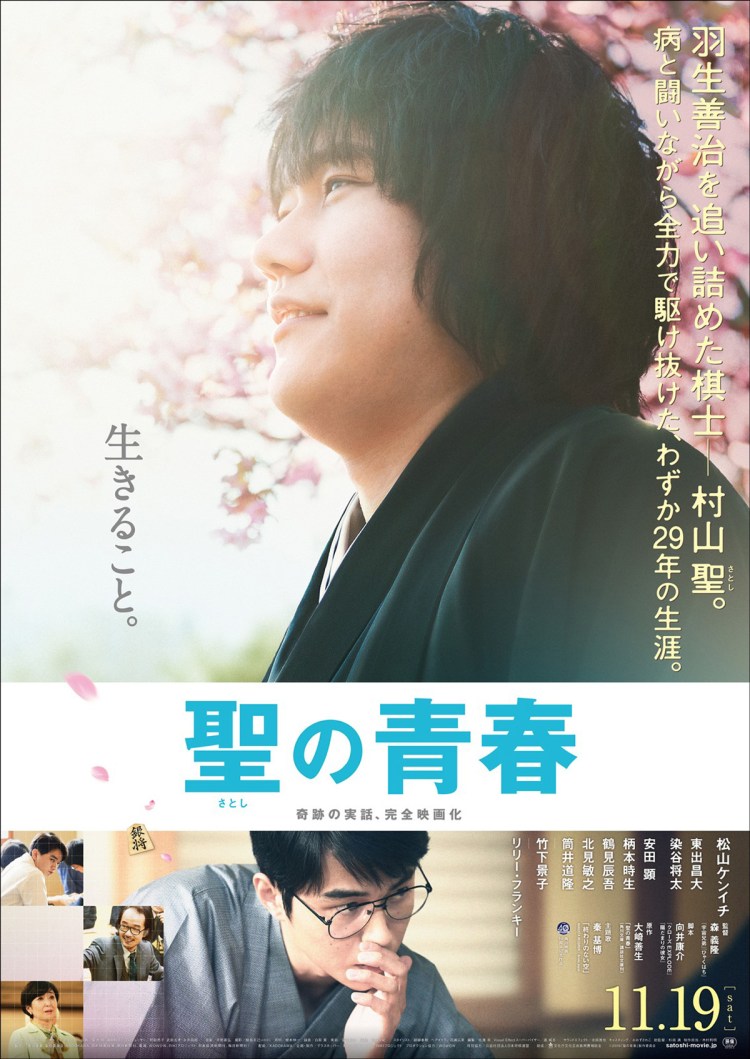
 There’s a slight irony in the English title of Yoshitaka Mori’s tragic shogi star biopic, Satoshi: A Move For Tomorrow (聖の青春, Satoshi no Seishun). The Japanese title does something similar with the simple “Satoshi’s Youth” but both undercut the fact that Satoshi (Kenichi Matsuyama) was a man who only ever had his youth and knew there was no future for him to consider. The fact that he devoted his short life to a game that’s all about thinking ahead is another wry irony but one it seems the man himself may have enjoyed. Satoshi Murayama, a household name in Japan, died at only 29 years old after denying chemotherapy treatment for bladder cancer in fear that it would interfere with his thought process and set him back on his quest to conquer the world of shogi. Less a story of triumph over adversity than of noble perseverance, Satoshi lacks the classic underdog beats the odds narrative so central to the sports drama but never quite manages to replace it with something deeper.
Diagnosed with nephrotic syndrome as a child, the young Satoshi spent a lot of time alone in hospitals. To ease his boredom his father gave him a shogi set and the boy was hooked. Immersing himself in the world of the game, Satoshi read everything he could about tactics, practiced till his fingers bled and came up with his own unorthodox technique for playing that would eventually take him from his Osaka home to the bright lights of Tokyo. Determined to become the “Meijin”, beat top shogi player Habu (Masahiro Higashide), and get into the coveted 9th Dan ranking Satoshi cares for nothing other than the game, his only other hobbies being drink, junk food, and shojo manga.
Undoubtedly brilliant yet difficult, Satoshi is not an easy man to get along with. Years of medical treatment for nephrosis have left him pudgy and bloated, and an aversion to cutting his hair and nails (poignantly insisting that they have a right to live and grow) already makes him an unusual presence at the edge of a shogi board. He’s not exactly charming either with his overwhelming intensity, aloofness, and fits of angry frustration. Yet the shogi world fell in love with him for his encyclopaedic yet totally original approach to the game. His friends, of which there many, were willing to overlook his eccentricities because of his immense skill and because they knew that his anger and impatience came from forever knowing that his time was limited and much of life was already denied to him.
This insistent devotion to the game and desire to scale its heights before it’s too late is what gives Satoshi its essential drive even if the road does not take us along the usual route. Reckless with his health despite, or perhaps because of, his knowledge of his weakness, Satoshi operates on a self destructive level of excessive drink and poor diet though when he starts experiencing more serious problems which require urgent medical intervention, it’s easy to see why he would be reluctant to get involved with even more doctors. Eventually diagnosed with bladder cancer, Satoshi at first refuses and then delays treatment in fear that it will muddy his mind but the doctors tell him something worse – he should stay away from shogi and the inevitable stress and strain it places both on body and mind. For Satoshi, life without shogi is not so different from death.
Satoshi has his sights set on taking down popular rival Habu whose fame has catapulted him into the Japanese celebrity pantheon, even marrying a one of the most beloved idols of the day. Habu is the exact opposite of Satoshi – well groomed, nervous, and introverted but the two eventually develop a touching friendship based on mutual admiration and love of the game. On realising he may be about to beat Satoshi and crush his lifelong dreams, Habu is visibly pained but it would be a disservice both to the game and to Satoshi not to follow through. Outside of shogi the pair have nothing in common as an attempt to bond over dinner makes clear but Habu becomes the one person Satoshi can really talk to about his sadness in the knowledge that he’ll never marry or have children. As different as they are, Satoshi and Habu are two men who see the world in a similar way and each have an instinctual recognition of the other which gives their rivalry a poignant, affectionate quality.
Despite the game’s stateliness, Mori manages to keep the tension high as elegantly dressed men face each other across tiny tables slapping down little pieces of wood featuring unfamiliar symbols. Japanese viewers will of course be familiar with the game though overseas audiences may struggle with some its nuances even if not strictly necessary to enjoy the ongoing action. Matsuyama gives a standout performance as the tortured, tragic lead even gaining a huge amount of weight to reflect Satoshi’s famously pudgy appearance. Rather than the story of a man beating the odds, Satoshi’s is one of a man who fought a hard battle with improbable chances of success but never gave up, sacrificing all of himself in service of his goal. Genuinely affecting yet perhaps gently melancholy, Satoshi: A Move for Tomorrow is a tribute to those who are prepared to give all of themselves yet also a reminder that there is always a price for such reckless disregard of self.
Satoshi: A Move for Tomorrow was screened as part of the Udine Far East Film Festival 2017.
Original trailer (English subtitles)
 Every keen dramatist knows the most exciting things which happen at a party are always those which occur away from the main action. Lonely cigarette breaks and kitchen conversations give rise to the most unexpected of events as those desperately trying to escape the party atmosphere accidentally let their guard down in their sudden relief. Adapting his own stage play titled Trois Grotesque, Kenji Yamauchi takes this idea to its natural conclusion in At the Terrace (テラスにて, Terrace Nite) setting the entirety of the action on the rear terraced area of an elegant European-style villa shortly after the majority of guests have departed following a business themed dinner party. This farcical comedy of manners neatly sends up the various layers of propriety and the difficulty of maintaining strict social codes amongst a group of intimate strangers, lending a Japanese twist to a well honed European tradition.
 Nobuhiro Yamashita may be best known for his laid-back slacker comedies, but he’s no stranger to the darker sides of humanity as evidenced in the oddly hopeful Drudgery Train or the heartbreaking exploration of misplaced trust and disillusionment of My Back Page. One of three films inspired by Hakodate native novelist Yasushi Sato (the other two being Kazuyoshi Kumakiri’s Sketches of Kaitan City and Mipo O’s The Light Shines Only There), Over the Fence (オーバー・フェンス) may be among the less pessimistic adaptations of the author’s work though its cast of lonely lost souls is certainly worthy both of Yamashita’s more melancholy aspects and Sato’s deeply felt despair.
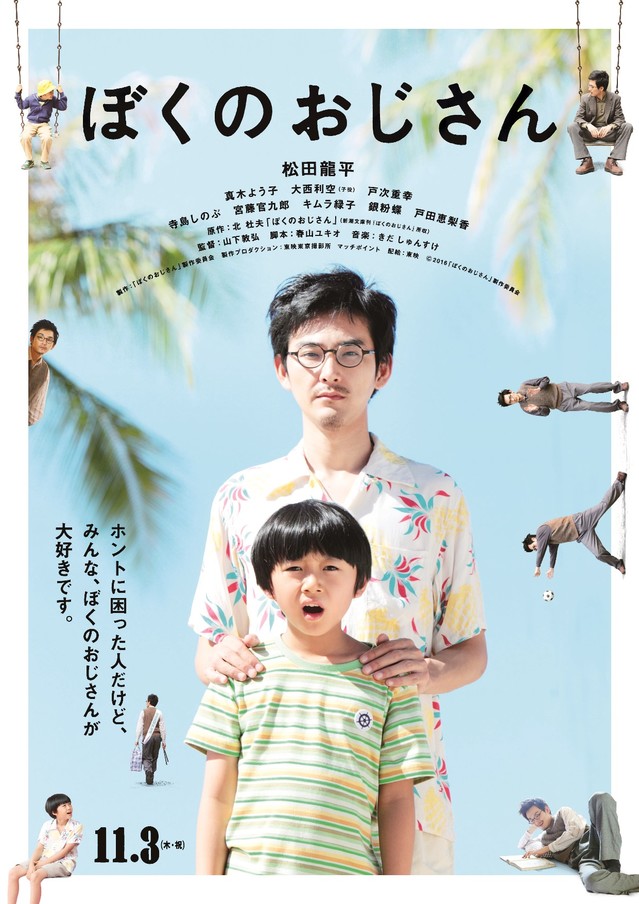 Crazy uncles – the gift that keeps on giving. Following the darker edged Over the Fence as the second of two films released in 2016, Nobuhiro Yamashita’s My Uncle (ぼくのおじさん, Boku no Ojisan) pushes his subtle humour in a much more overt direction with a comic tale of a self obsessed (not quite) professor as seen seen through the eyes of his exasperated nephew. “Travels with my uncle” of a kind, Yamashita’s latest is a pleasantly old fashioned comedy spiced with oddly poignant moments as a wiser than his years nephew attempts to help his continually befuddled uncle navigate the difficulties of unexpected romance.
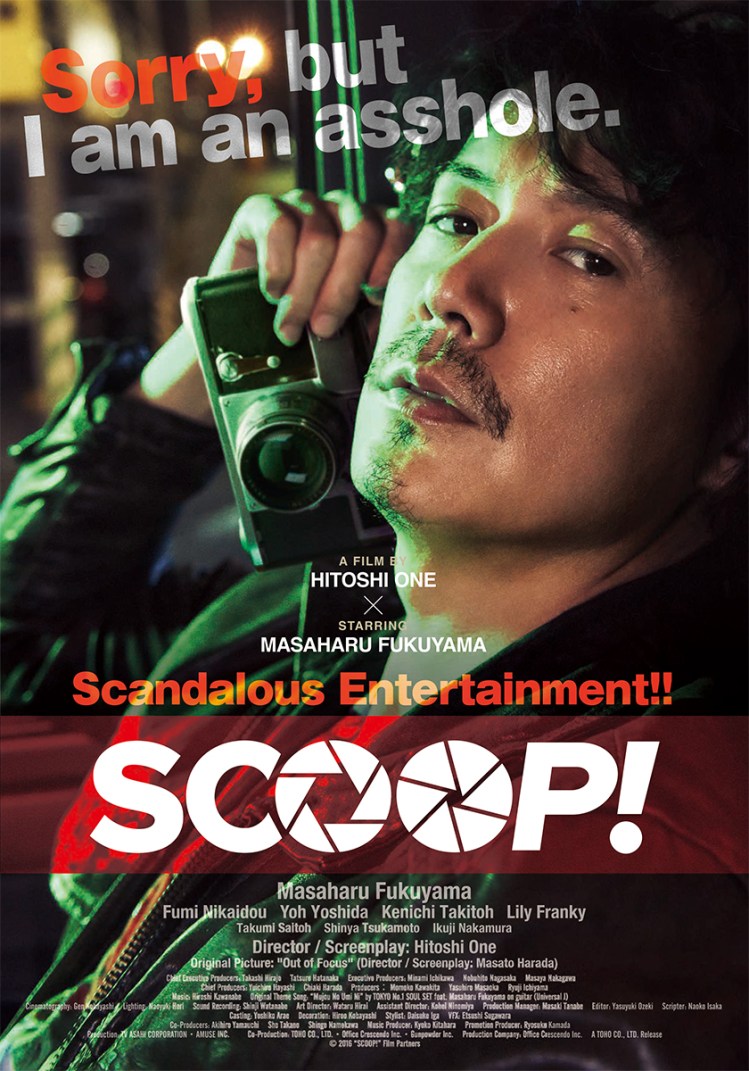 Hitoshi One has a history of trying to find the humour in an old fashioned sleazy guy but the hero of his latest film, Scoop!, is an appropriately ‘80s throwback complete with loud shirt, leather jacket, and a mop of curly hair. Inspired by a 1985 TV movie written and directed by Masato Harada, Scoop! is equal parts satire, exposé and tragic character study as it attempts to capture the image of a photographer desperately trying to pretend he cares about nothing whilst caring too much about everything.
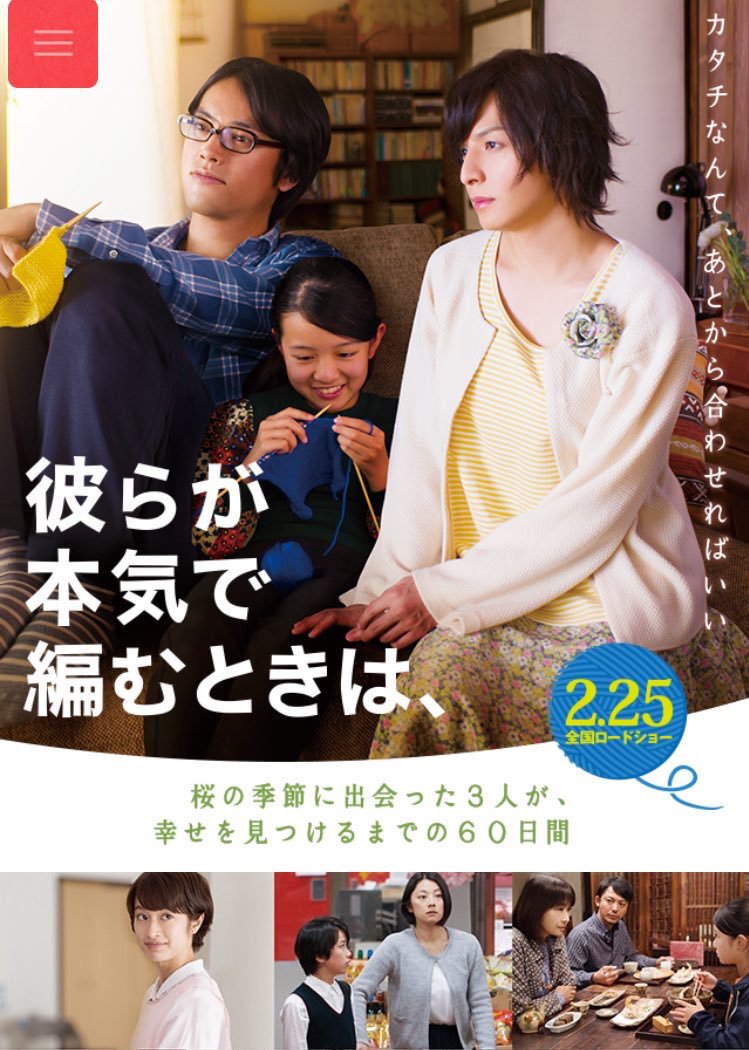 While studying in the US, director Naoko Ogigami encountered people from all walks of life but on her return to Japan was immediately struck by the invisibility of the LGBT community and particularly that of transgender people. Close-Knit (彼らが本気で編むときは, Karera ga Honki de Amu Toki wa) is her response to a still prevalent social conservatism which sometimes gives rise to fear, discrimination and prejudice. Moving away from the quirkier sides of her previous work, Ogigami nevertheless opts for a gentle, warm approach to this potentially heavy subject matter, preferring to focus on positivity rather than dwell on suffering.
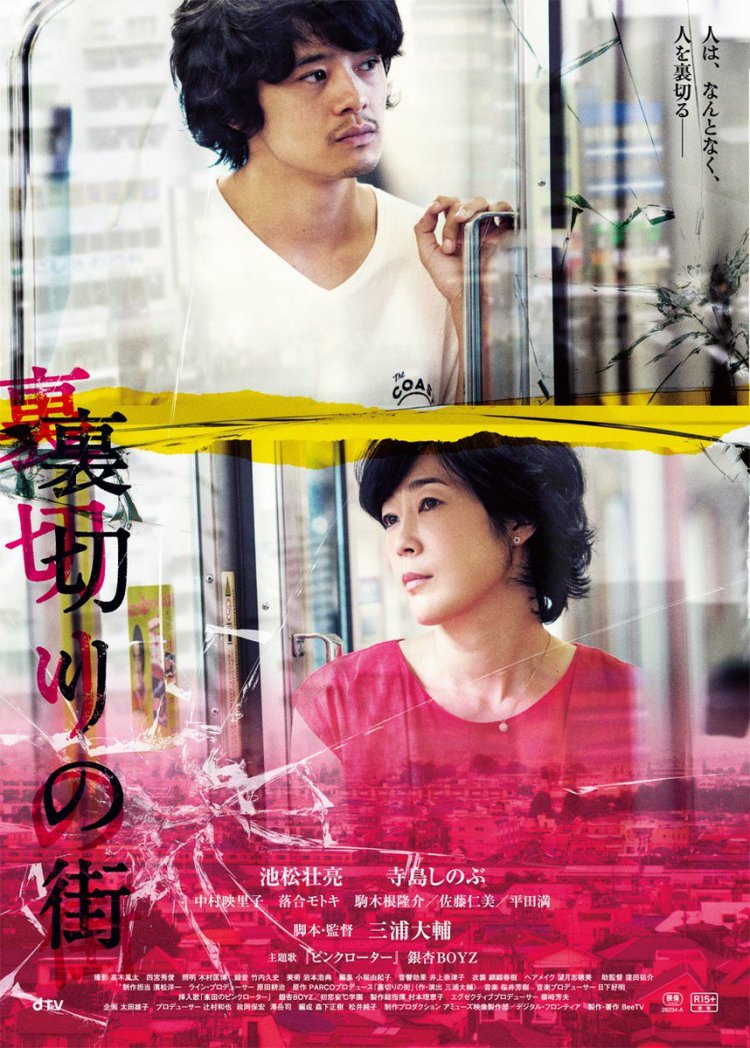 What is it that makes one person betray another? Following
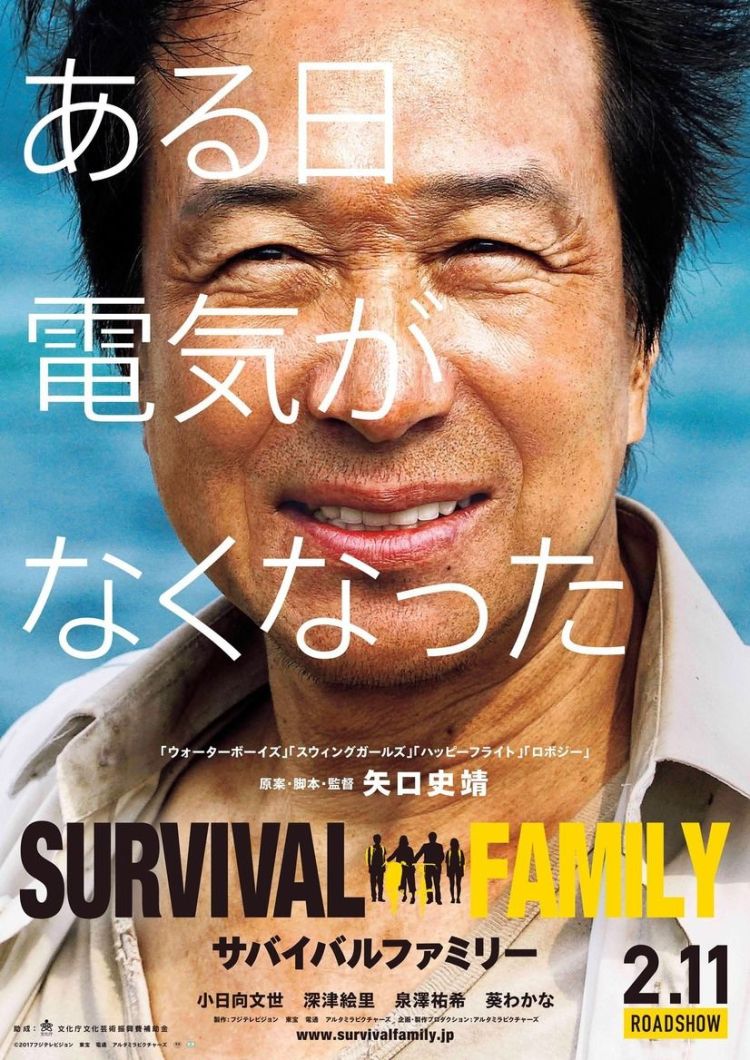 Modern life is full of conveniences, but perhaps they come at a price. Shinobu Yaguchi has made something of a career out of showing the various ways nice people can come together to overcome their problems, but as the problem in Survival Family (サバイバルファミリー) is post-apocalyptic dystopia, being nice might not be the best way to solve it. Nevertheless, the Suzukis can’t help trying as they deal with the cracks already present in their relationships whilst trying to figure out a way to survive in the new, post-electric world.
 Placed between
  1969. Man lands on the moon, the cold war is in full swing, and Star Trek is cancelled prompting a mass write-in campaign from devoted sci-fi enthusiasts across America. The tide was also turning politically as the aforementioned TV series’ utopianism came to gain ground among liberal thinking people who rose up to oppose war, racial discrimination and sexism. It was in this year that Godzilla creators Ishiro Honda and Eiji Tsuburaya brought their talents to America with a very contemporary take on science fiction in Latitude Zero (緯度0大作戦, Ido Zero Daisakusen). Starring Hollywood legend Joseph Cotten, Latitude Zero gives Jules Verne a new look for the ‘60s filled with solid gold hotpants and bulletproof spray tan.
 Windows on Worlds