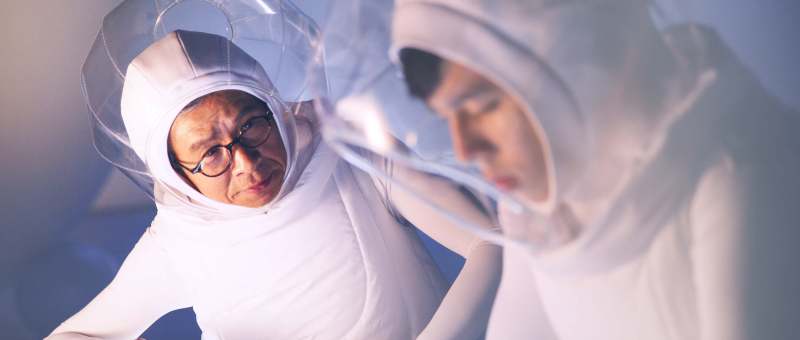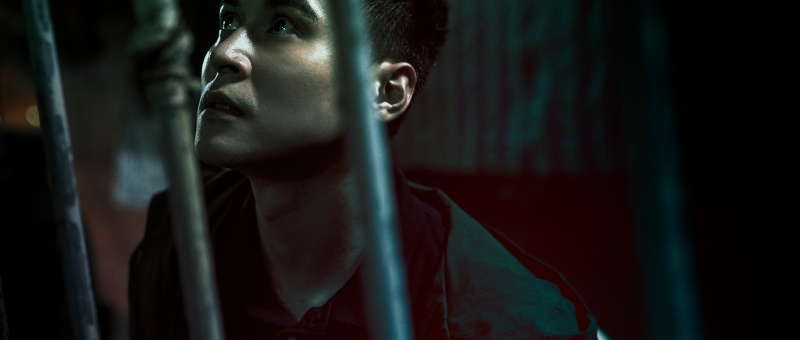
Legally Declared Dead (死因無可疑, Steve Yuen Kim-Wai, 2019) [Fantasia 2020]

“The road to hell is paved with good intentions” a well-meaning insurance agent is advised in Steve Yuen Kim-Wai’s Legally Declared Dead (死因無可疑), though he struggles to fully understand its meaning and in the end you have to wonder how good his intentions really were. Yusuke Kishi’s novel The Black House has been adapted twice before, firstly in an idiosyncratically absurdist take by Yoshimitsu Morita, and then in Korea by Shin Terra who remained firmly within the realms of contemporary K-horror. Yuen lands somewhere between the two, adopting a stylish veneer of neo noir as the traumatised hero has his worldview upended by heinous immorality. 

Yet as Wing-shun (Carlos Chan Ka-Lok) tells Ching (Stephen Au Kam-tong), the office investigator, he’s just a broker and it doesn’t do to be suspicious of all his clients. A nice, well mannered young man, Wing-shun is all poised customer service charm, but he also firmly believes that the business of insurance is a noble good, that he’s helping people by being there for them when disaster strikes. As such, he doesn’t like to think that people are abusing the system, and is reluctant to reject a claim. On the other hand, he calms a pair of panicked gangsters who are most definitely on the fiddle by explaining that neither he nor his colleague can help them because being a broker is like being a dealer at the casino, they can only push the paperwork to the floor manager who alone has the authority to decide whether or not to pay out and wait for their instructions. 

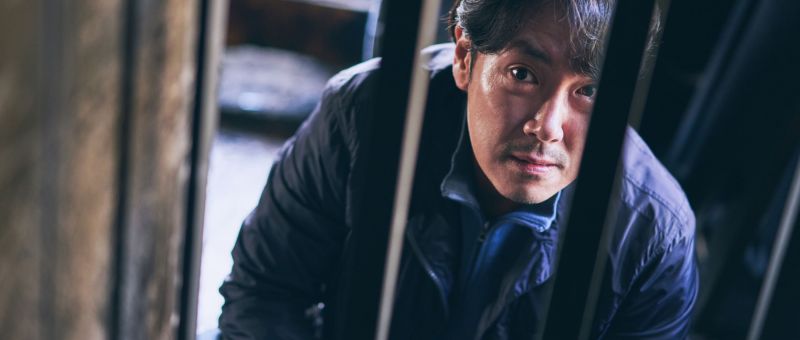
Wing-shun’s casino metaphor is more true than he intends it, what else is insurance after all than a kind of gambling? Wing-shun can tell himself he’s there to provide relief and support in times of need, but really he’s betting against misery which might be better than betting in its favour but it’s still wagering people’s lives. That fact’s brought home to him when he takes a call late one evening from a man who asks him if they pay out on suicide. Cheerful as ever, Wing-shun asks for his policy number to check the paperwork before realising the darkness inherent in the question and telling the person on the other end of the phone not to do anything rash, “money doesn’t solve everything”. The man simply asks for his name and then abruptly hangs up. Wing-shun chalks it up to just another weird thing that sometimes happens and forgets about it but the next day he’s told that a client has personally requested him to talk over their policy and wants a home visit to a rural location outside the city. A little bemused, Wing-shun does as he’s told and encounters Chu Chun-tak (Anthony Wong Chau-Sang), not realising he’s the man from the phone only noticing he’s behaving quite strangely. Suddenly Chun-tak starts shouting for his son Kafu and gesturing to another room inside which Wing-shun discovers the boy hanging. 

The boy’s death triggers painful memories for Wing-shun who is burdened with a sense of guilt over the death of his older brother in childhood. Unable to escape the idea he’s been set up and Chun-tak only invited him out here to “find” the body, Wing-shun is convinced that he killed Kafu in order to claim his life insurance payout. Kafu was Chun-tak’s stepson and also had learning difficulties, while Chun-tak’s wife Shum Chi-ling (Karena Lam Ka-Yan) is partially sighted and walks with a pronounced limp. Wing-shun is particularly worried because Chun-tak also has a policy on her and it’s reasonable to assume she’ll be next in the firing line. He struggles, however, to convince others of his suspicions. The policeman investigating closes the case when the autopsy comes back with suicide as the cause of death, attributing the motive to exam stress, while the insurance company fails to find evidence to deny the claim.  

Unlike the other adaptations, Legally Declared Dead keeps the suicide option on the table while Wing-shun begins to go quietly out of his mind. Meanwhile, his psychology student girlfriend (Kathy Yuen Ka-Yee) hooks him up with her dubious professor (Liu Kai-chi) who is studying the “criminal personality” and claims that while some people commit crime because of trauma and desire a few so because they’re simply born bad and can never be saved. These people, he says, are manipulative narcissists who often exploit the vulnerable, making them a kind of “slave”. Professor Kam becomes overly invested in Wing-shun’s case, convinced on meeting him that Chun-tak is a clear case of “criminal personality”, murdered his son, and is almost certainly going to murder his wife. But is it really fair to decide someone’s killed their child just because they’re a bit odd and admittedly desperate for money, aren’t they just being judgemental and prejudiced? Come to that, is it sexist and ablest to assume that Chi-ling is naive and powerless, that she is a potential victim and could not have been involved in her son’s death or conversely maybe planning to off her husband?

Wing-shun lives with a collection of rare insects including a few praying mantises, which he states cannot be caged in pairs because the female will devour the male, but he continues to think of Chi-ling as sweet and harmless seeing her tenderly calm her husband down after starting to accompany him on their daily visits to the insurance office to ask about the money. On the other hand, with her limp and milky eye Chi-ling is also uncomfortably coded as villainous in an unpleasant alignment of physical deformity and “evil”, while Chun-tak is also assumed to be abusive largely because he struggles to communicate in the “normal” way. 

Nevertheless, the idea that some people are deliberately maiming themselves to claim on “workers’ insurance” either at their own behest or forced into it by loansharking gangsters pursuing gambling debts is presented as no real surprise just another element of a cynical and duplicitous society. Wing-shun knew this, but perhaps didn’t really believe it. The Chu case exposes to him the ugliness of the world in which he lives, raising with it old memories of his childhood trauma, the very kind of trauma which professor Kam insists causes some to commit crimes. Becoming fixated on the idea of Chun-tak as a murder, Wing-shun descends into nervous paranoia but is perhaps less interested in getting justice for Kafu and protecting Chi-ling than vindicating himself and defending the “nobility” of insurance as a concept for social good while avoiding dealing with his own childhood trauma in refusing his responsibility towards his brother. 

Shooting the pulpy material with a stylish, B-movie sheen, Yuen closes with a Silence of the Lambs-inspired climax which sees Wing-shun venture alone into the nest of a killer, repeatedly blinded by ultraviolet light and denied the ability to fully asses his reality. He thinks he finally understands Ching’s caution that the “road to hell is paved with good intentions” which he perhaps had in his desire to get justice for Kafu and protect Chi-ling, but in the end he might have to admit that the killer had a point when they said he  was “just like me”, a “criminal personality” consumed by latent violence caused by unresolved childhood trauma. “You do what you need to to survive, you scam people and they scam you” Wing-shun’s friend shrugs, but it’s a lesson Wing-shun learns all too well, once again refusing his responsibility as a secondary victim looks to him for help but discovers only cold and cynical resentment.


Legally Declared Dead streamed as part of this year’s online edition of Fantasia International Film Festival. It will also be available to stream in New York State on Sept. 5 only as part of this year’s New York Asian Film Festival.

Original trailer (English subtitles)

Camera Japan Announces Complete Programme for 2020

Camera Japan returns for its 15th edition, not virtually but physically, with another packed screening schedule taking place as usual in Rotterdam Sept. 23 – 7, and Amsterdam, Oct. 1 – 4. With COVID-19 in mind, seating capacity in the venue has been reduced while safety measures will also be in place so everyone can enjoy the festival responsibly.

Contemporary Cinema

  • 108: Revenge and Adventure of Goro Kaiba – comedy from Suzuki Matsuo in which a man discovers his wife has had an affair through a social media post that got 108 likes so he decides to blow the money she’d get in the divorce by using it to sleep with 108 women as revenge.
  • A Girl Missing – limited perspectives and frustrated desires take centre stage as a home care nurse’s life is upended when she is unfairly implicated in a crime in Koji Fukada’s probing drama. Review.
  • Beautiful Goodbye – a nervous young man on the run and an undead woman looking for a way out find each other at the end of the road in Eiichi Imamura’s beautifully melancholic meditation on mutual salvation. Review.
  • Cry – Hirobumi Watanabe returns to the themes of 7 Days in a near wordless tale of a pig farmer’s simple existence in present day Tochigi. Review.
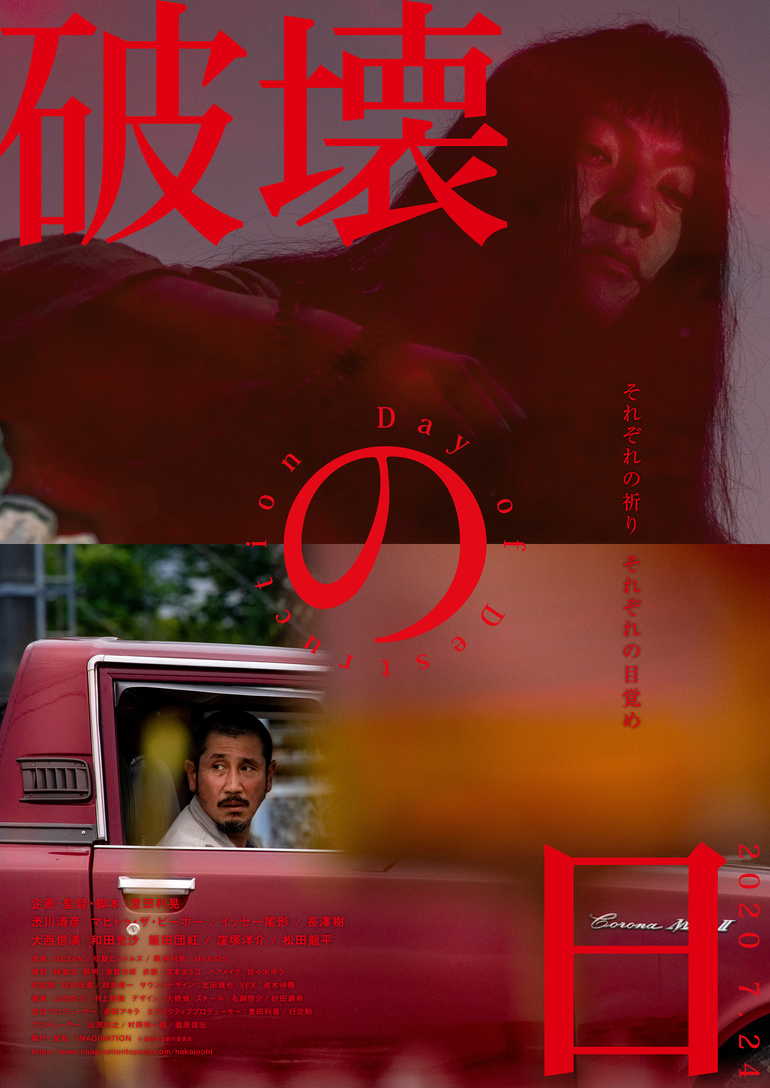
  • The Day of Destruction – Toshiaki Toyoda sets out to exorcise the demons of a venal city in an impassioned attack on societal selfishness and personal apathy. Review.
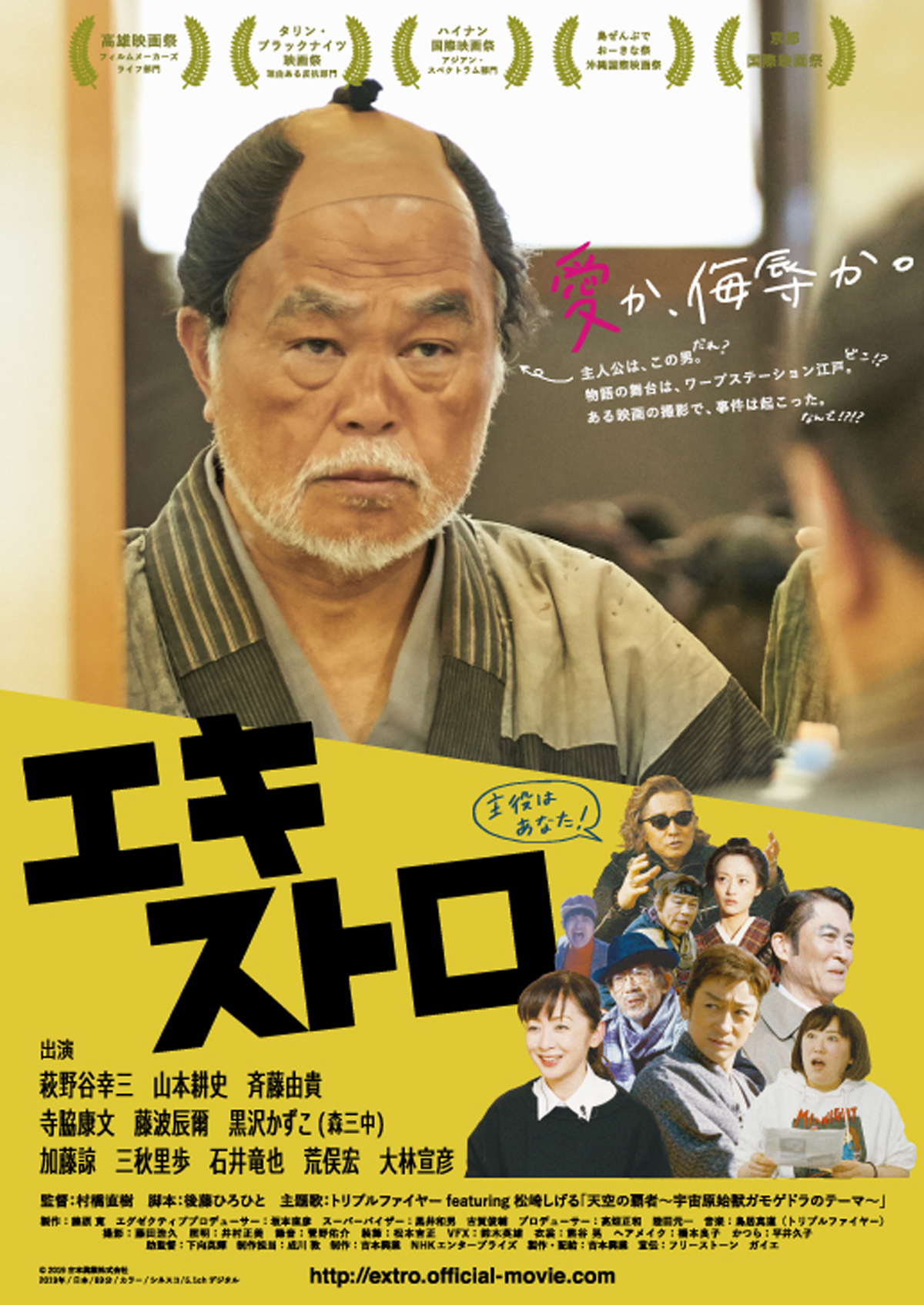
  • Extro – in a sometimes surreal mockmentary, Naoki Murahashi lampoons the Japanese film industry but has nothing but warmth and admiration for its unsung heroes, the extras. Review.
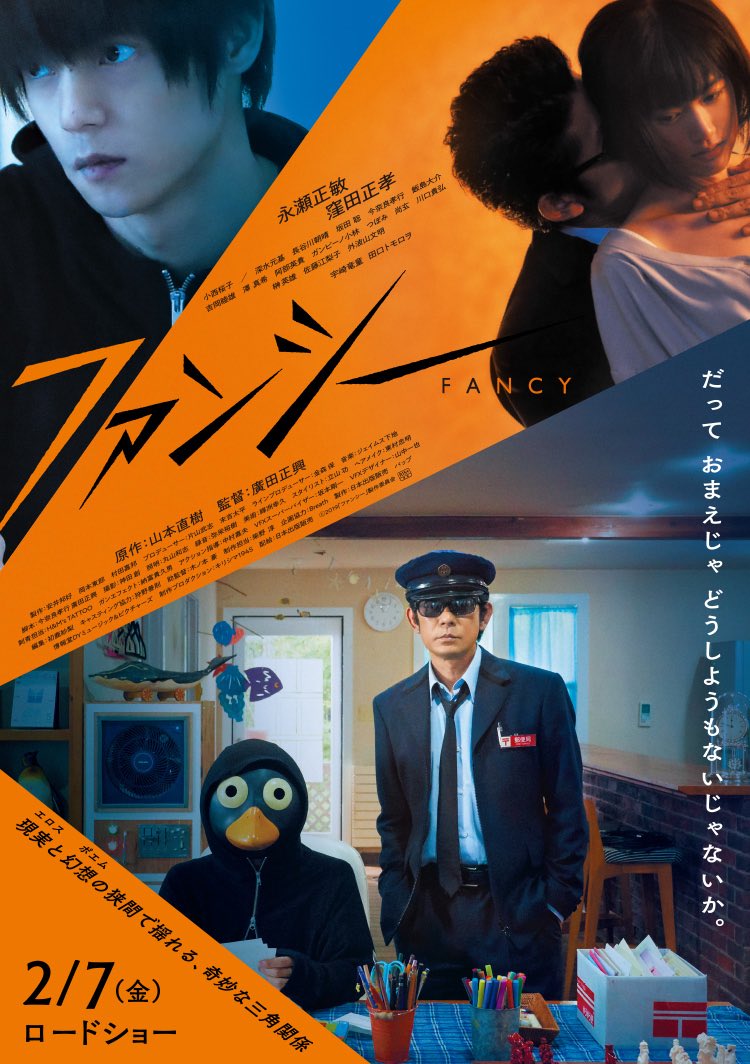
  • Fancy – Masatoshi Nagase stars as a postman who gets mixed up in a love triangle with amateur poet “Penguin” and his fan “Moonlit Night’s Star”.
  • The Hardness of Avocado – Pia Award-winning romantic drama in which an aspiring actor tries to pick up the pieces after his girlfriend dumps him.
  • Haruka’s Poetry – an office lady from Tokyo abruptly quits her job after falling in love with ceramics and attempts to get the closed off artist to open himself up to her enthusiasm.
  • His – years after his uni boyfriend broke up with him to lead a more conventional life, Shun is surprised to find him on his doorstep with his six-year-old daughter looking for a place to stay.
  • It Feels so Good – wounded former lovers cocoon themselves in an artificial bubble of intimacy in retreat from a world of constant anxiety in Haruhiko Arai’s steamy existential drama. Review.
  • Minori on the Brink – refusing to back down in the face of injustice, Minori finds herself on the brink of despair in Ryutaro Ninomiya’s clear-eyed takedown of an oppressively patriarchal society. Review.
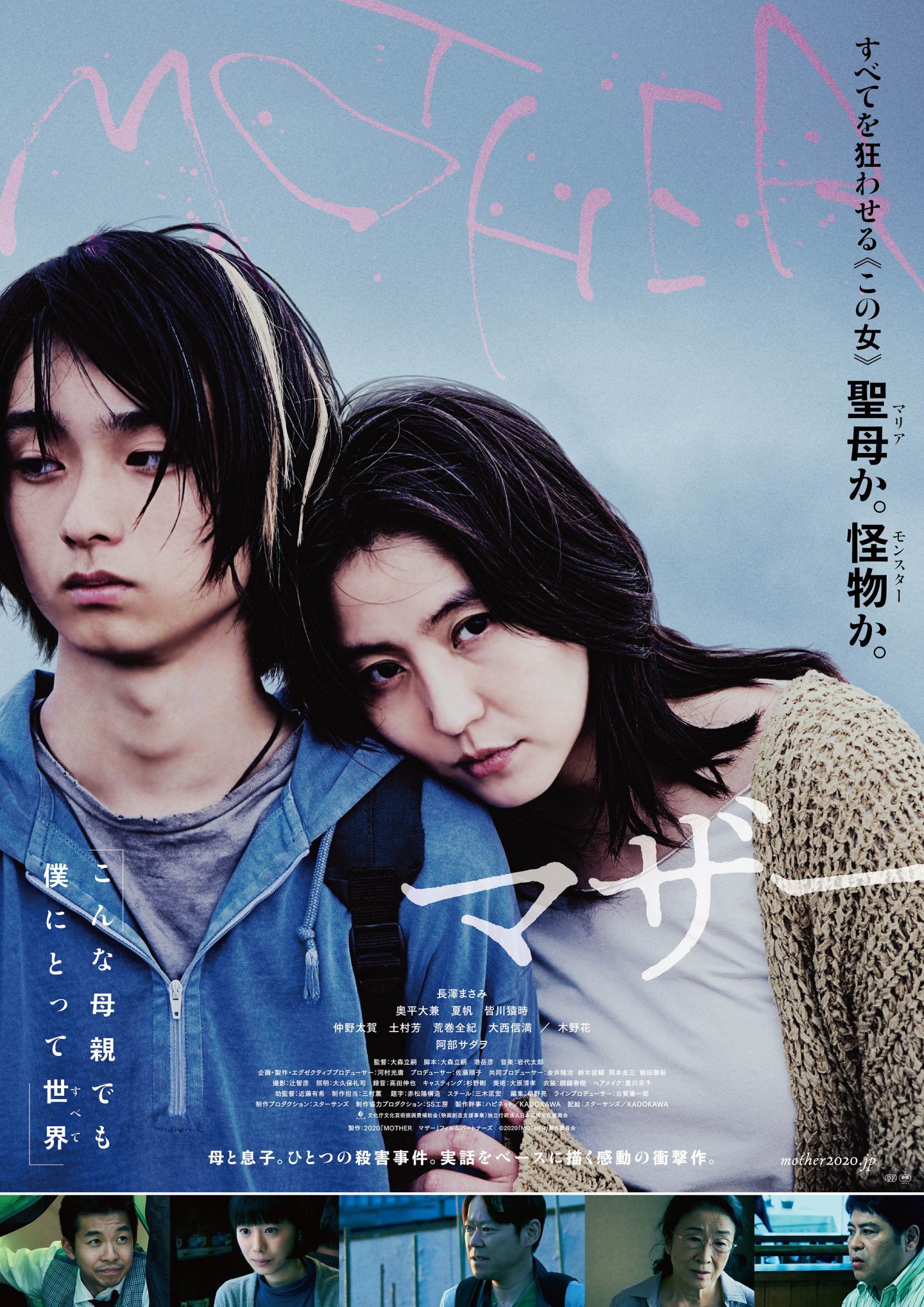
  • Mother – toxic maternity drama from Tatsushi Omori starring Masami Nagasawa as a mother whose unconventional relationship with her son later leads to shocking tragedy.
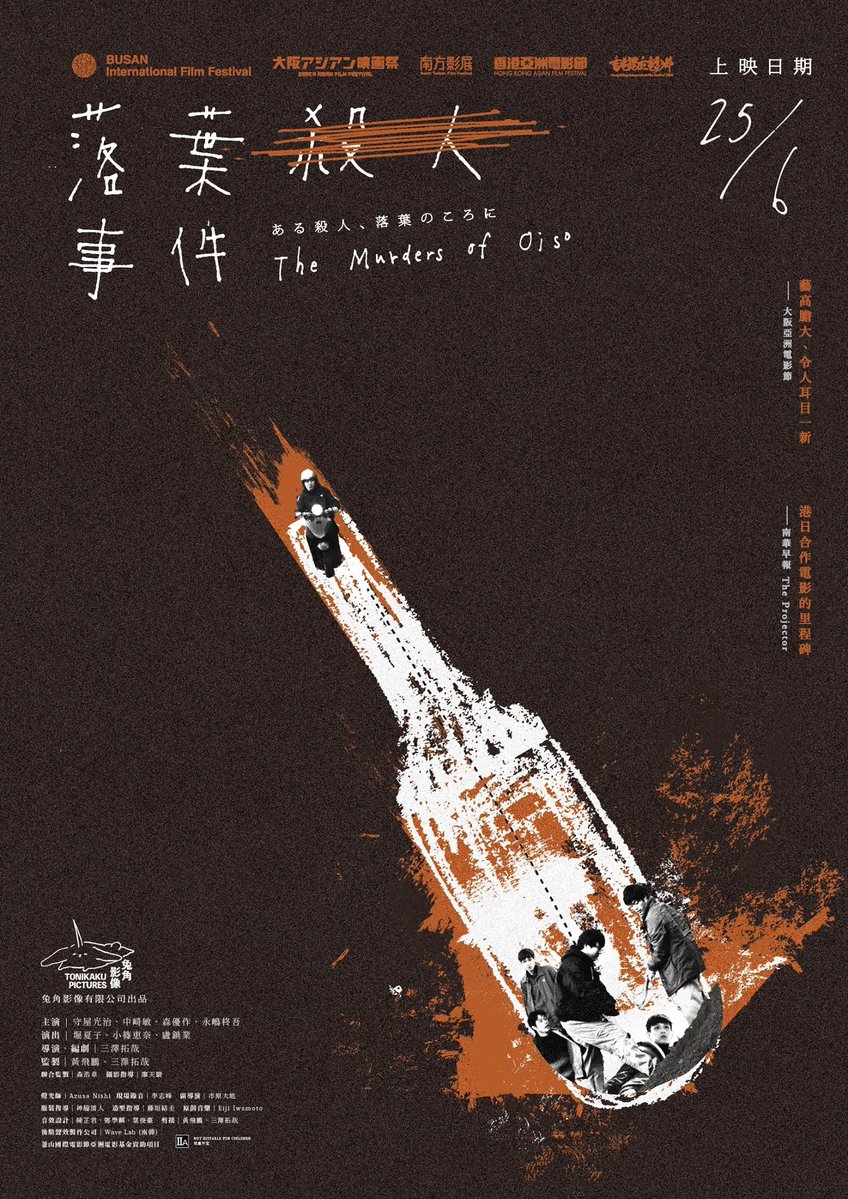
  • Murders of Oiso – a series of suspicious deaths strain the toxic friendships of four young men drowning in small-town ennui in Takuya Misawa’s meta-mystery existential drama. Review.
  • My Identity – a lost young girl contemplates the “language barriers” which lead to hate and violence while finding herself on the run with an equally displaced older woman in Sae Suzuki’s indie drama. Review.
  • Not Quite Dead Yet – a young woman’s strained relationship with her father improves after he takes a drug which is intended to make him “dead” for a short while but proves more effective than intended.
  • Obake – celestial hecklers observe the life of an indie filmmaker.
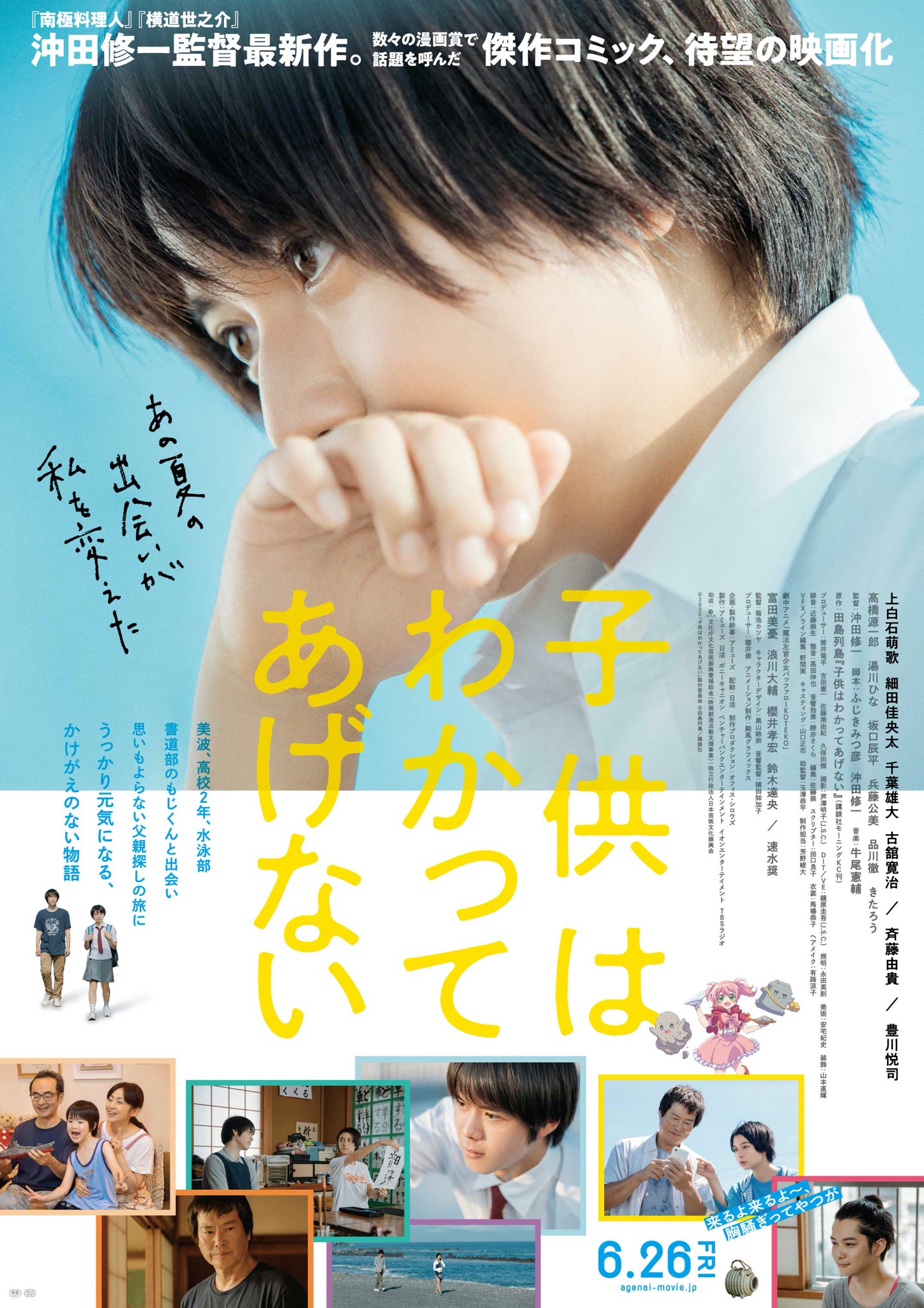
  • One Summer Story – summer-themed road movie from Shuichi Okita in which a young woman convinces her friend to help her look for her estranged father.
  • The Other Home – a 17-year-old boy discovers his father has another woman and lives with her in another house. Hoping to put a stop to it, he wanders over there but it proves more difficult than he assumed it would be.
  • Romance Doll – romantic drama from Yuki Tanada adapting her own book about a man who hides the fact he sculpts sex dolls for a living from his wife.
  • Shape of Red – an unfulfilled housewife’s personal desire is reawakened when she runs into an old lover in Yukiko Mishima’s steamy adaptation of the Rio Shimamoto novel. Review.
  • Take Over Zone – after her parents’ divorce, Sari went to live with her dad and her brother Toma with their mother. After getting into a fight with a schoolmate, she discovers that her mum is now dating the other girl’s dad and decides to take her brother and run away.
  • Talking the Pictures – Masayuki Suo’s tribute to the age of the benshi silent movie narrator.
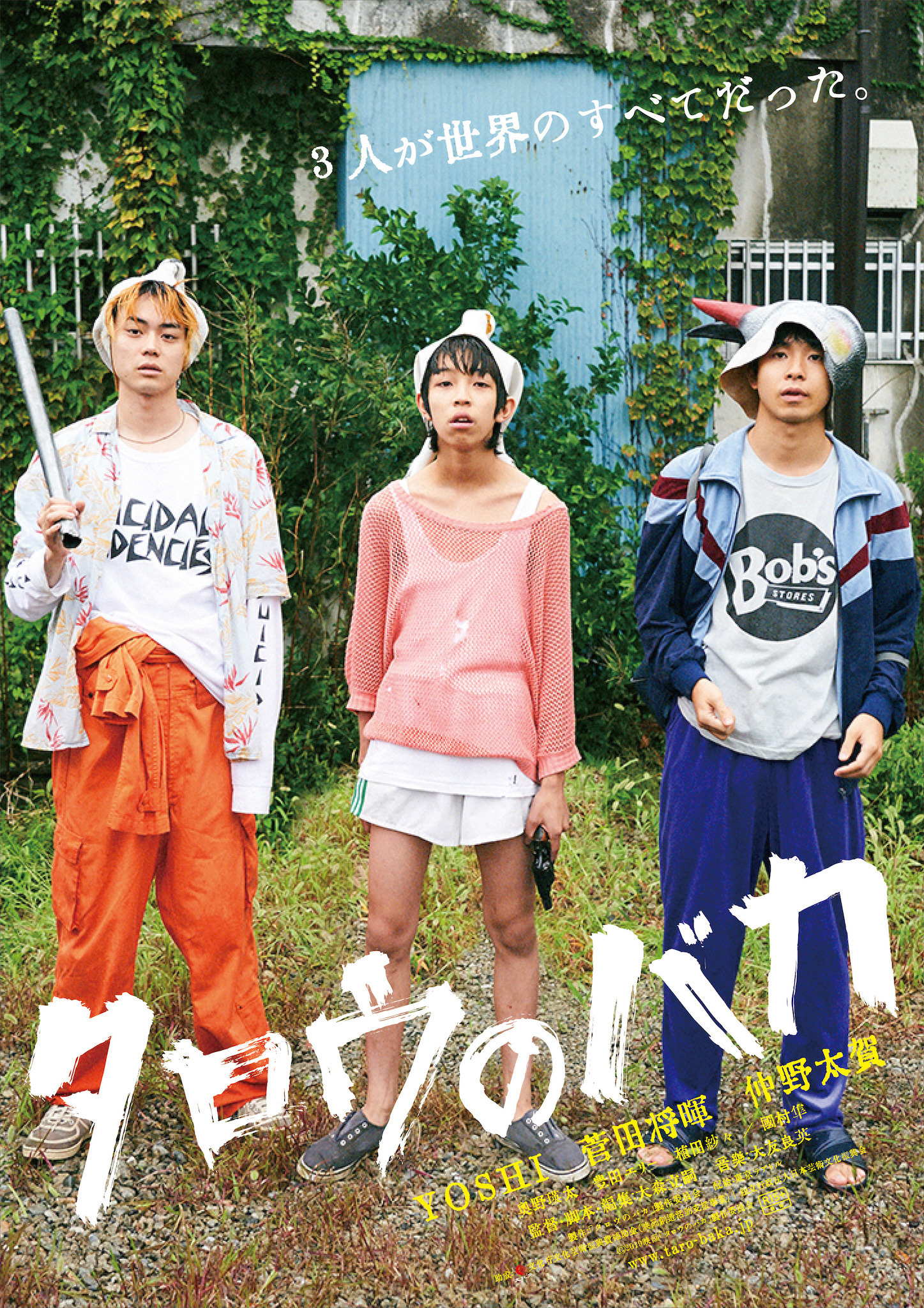
  • Taro the Fool – teen drama from Tatsushi Omori in which three aimless teenage boys discover a gun.
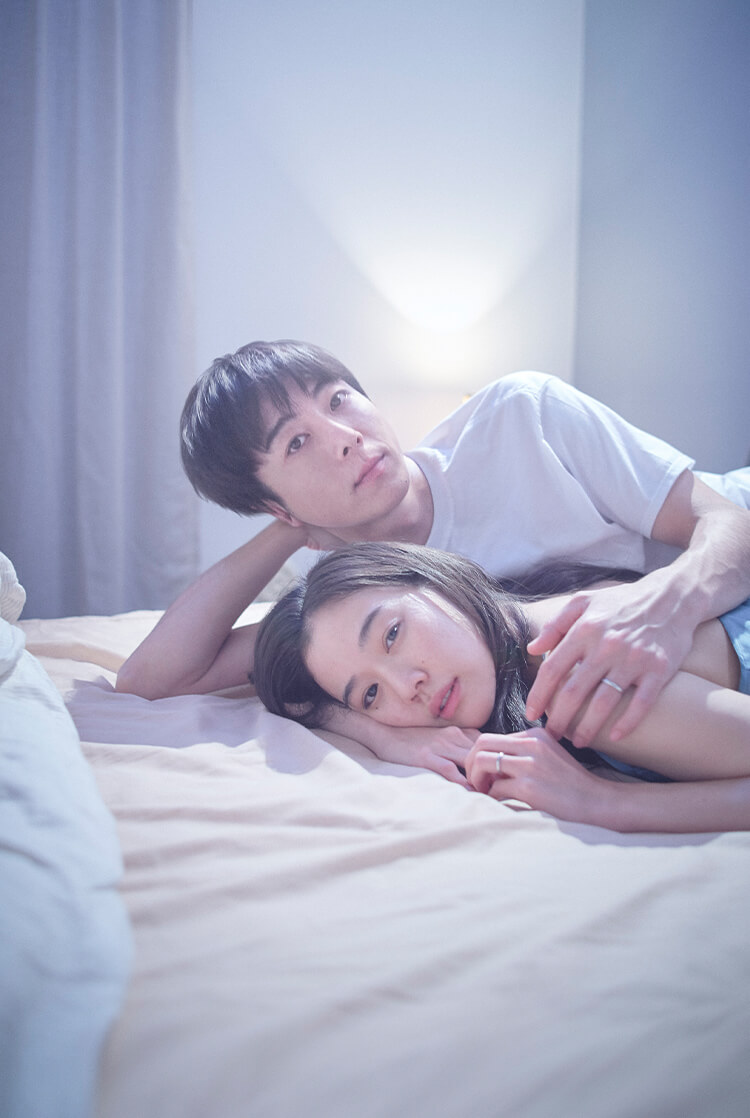
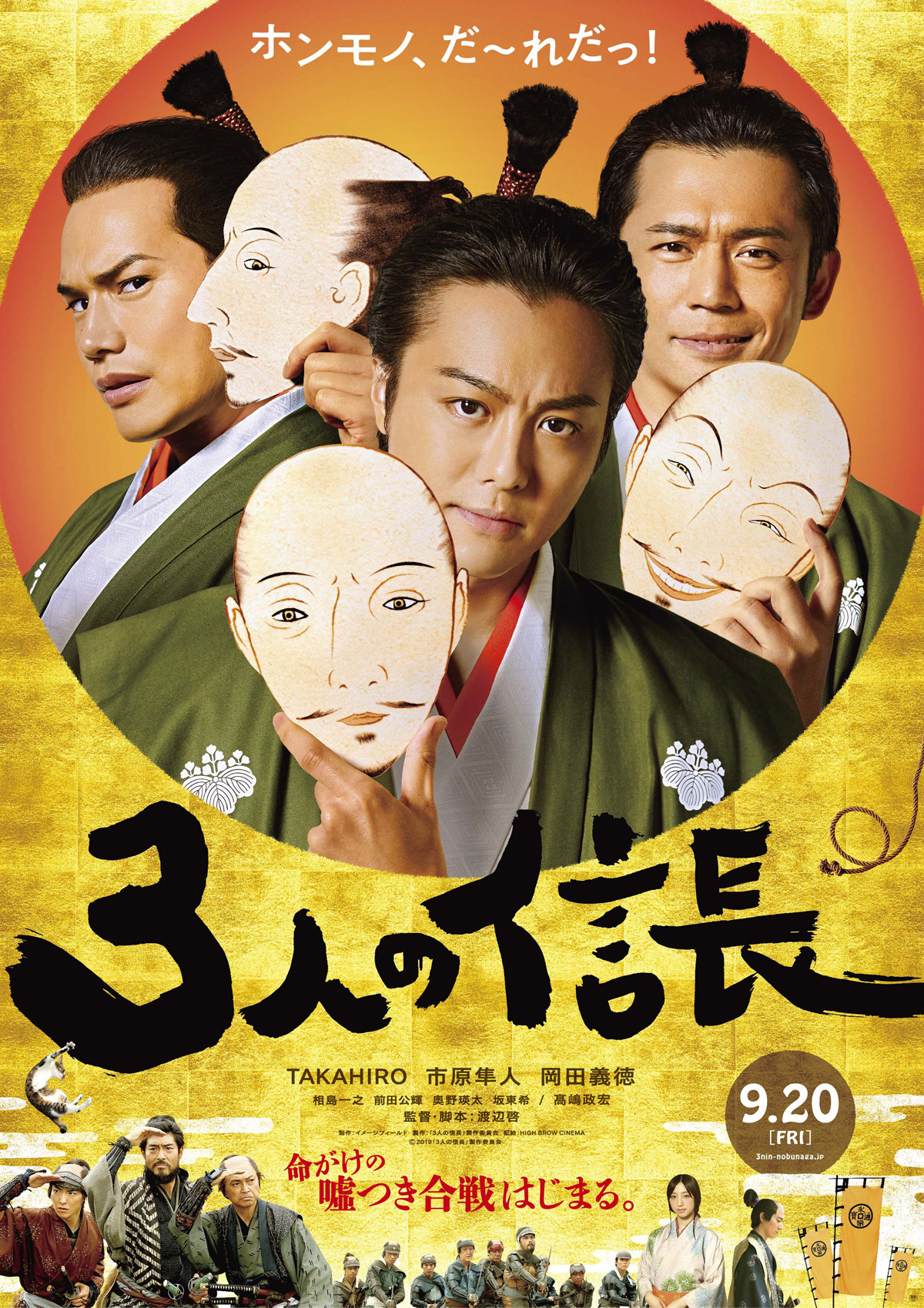
  • Three Nobunagas – three loyal retainers hide out in a ghost town trying to kidnap Oda Nobunaga only to end up with three of him!
  • Vampire Clay – Derivation – sequel to Vampire Clay in which students at an art school are once again terrorised by a vampiric monster.
  • Voices in the Wind – Nobuhiro Suwa returns to Japan after an 18-year absence for a tale of national catharsis as a young woman makes a painful journey home in search of making peace with the traumatic past. Review.

Classics

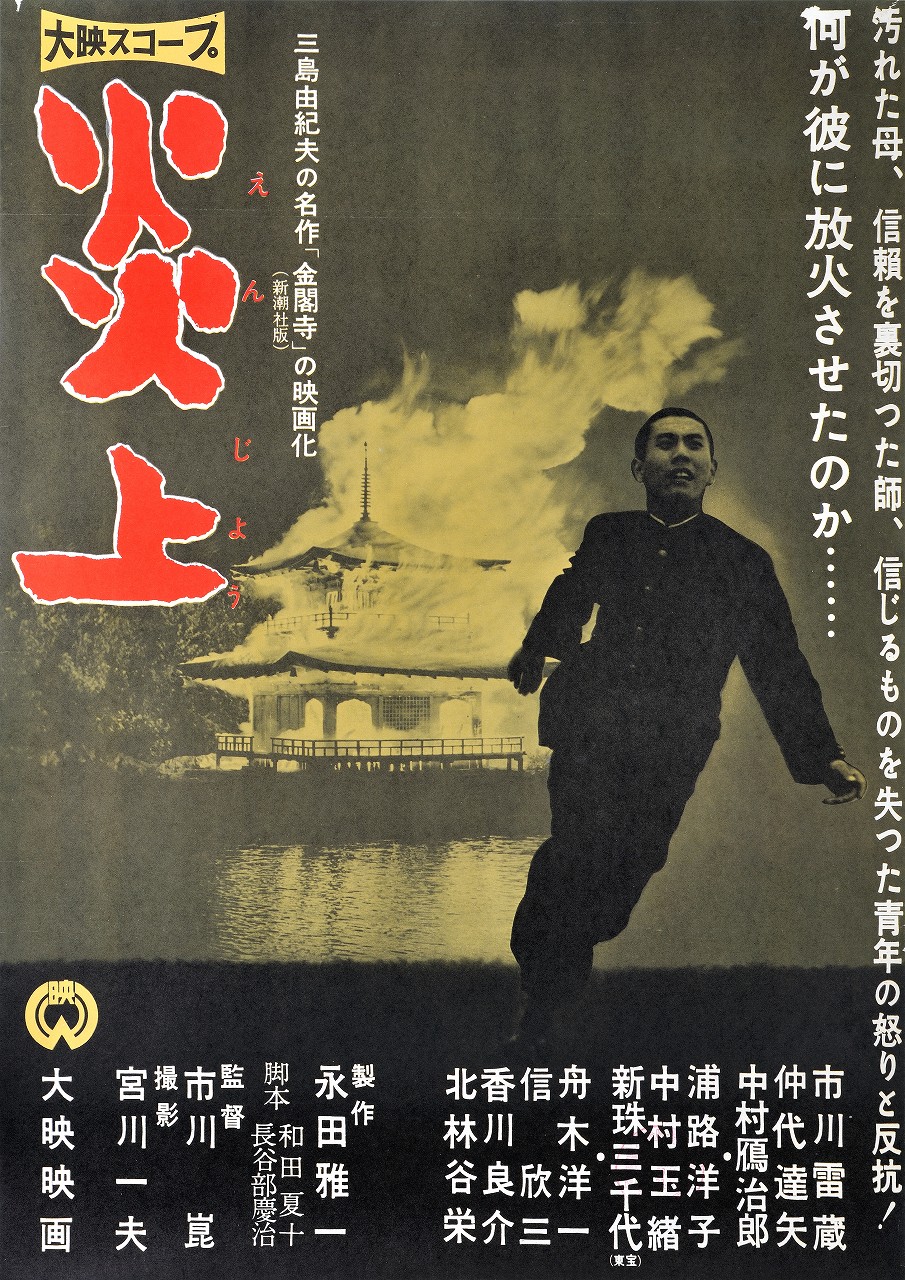
  • Conflagration – Kon Ichikawa’s 1958 adaptation of the Mishima novel in which an idealistic young man becomes disillusioned with the head priest at the temple where he is studying and is eventually pushed into madness, burning down the beautiful Kinkakuji because it is simply to good for this world. Review.

Documentaries

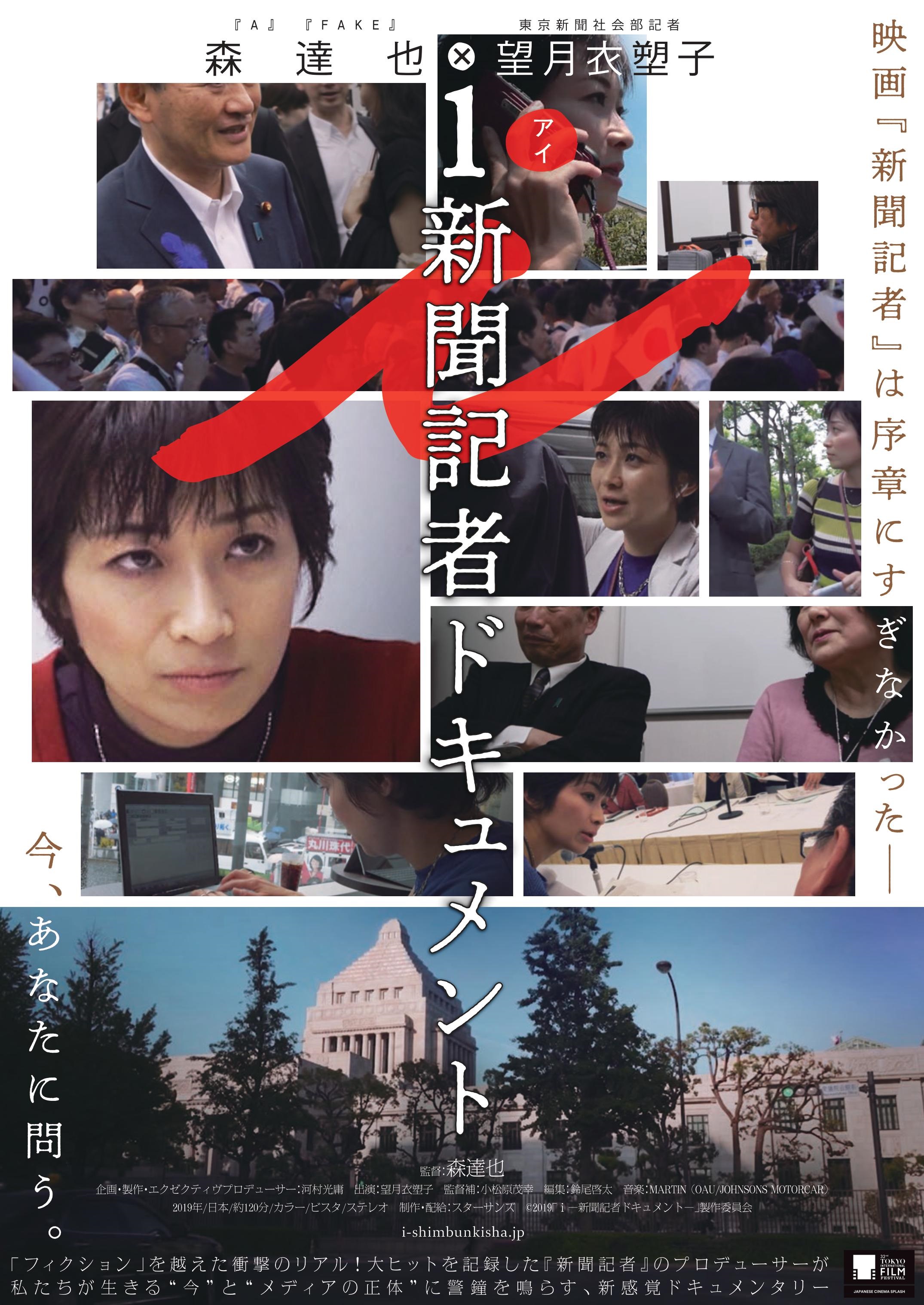
  • I-Documentary of the Journalist- – Fake’s Tatsuya Mori follows dogged Tokyo Shimbun reporter Isoko Mochizuki as she continues to speak truth to power in an otherwise frustratingly deferent press culture. Review.
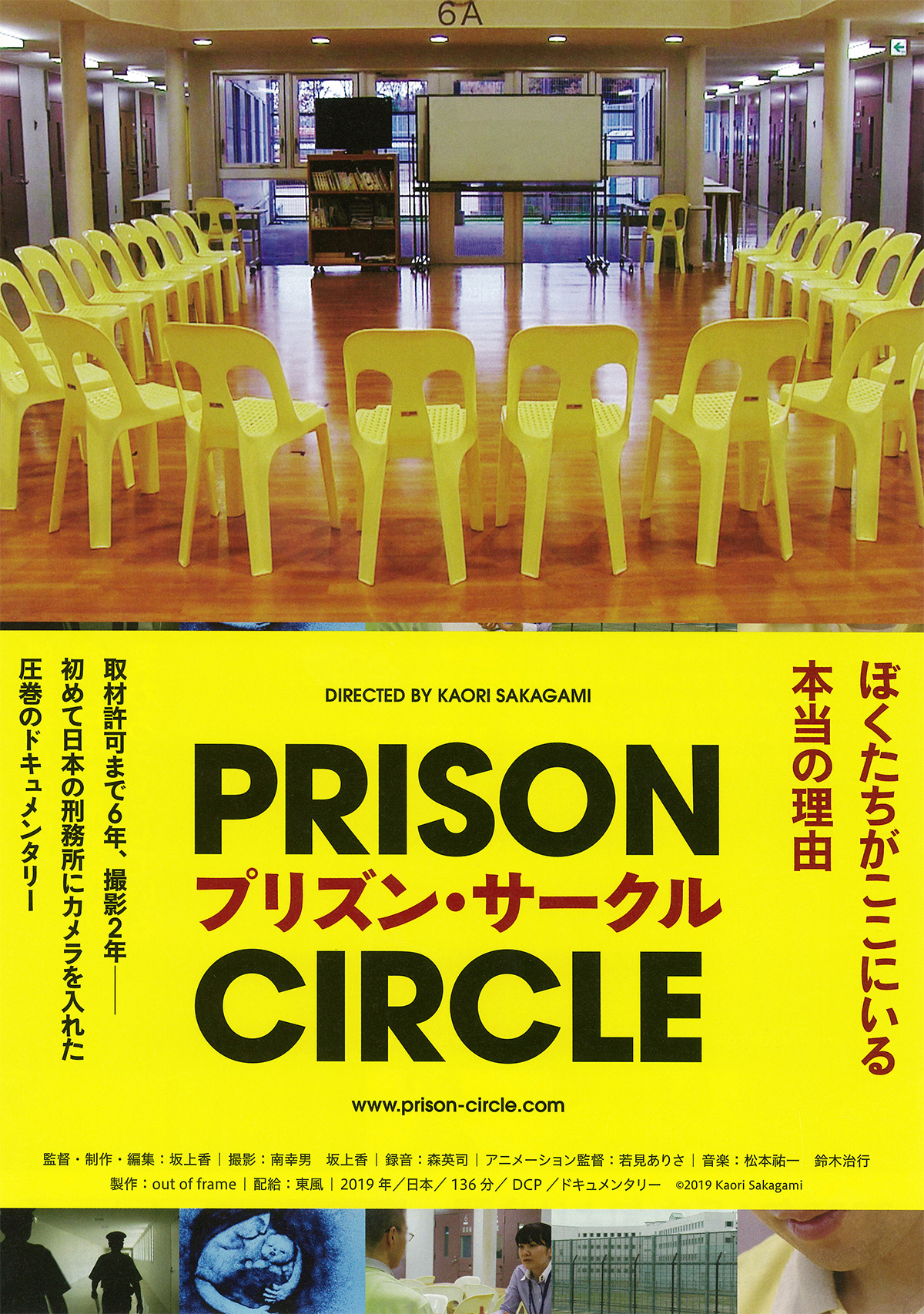
  • Prison Circle – Kaori Sakagami digs deep into the legacy of trauma in following a collection of prisoners as they undergo an experimental rehabilitation program in the hope of returning to mainstream society. Review.

Animation

  • Happy-Go-Lucky Days – three-part anime omnibus themed around love including that between two women who meet at a wedding, a teacher caught on the spot by a student’s confession, and childhood friends who find themselves drifting apart as they approach adolescence.
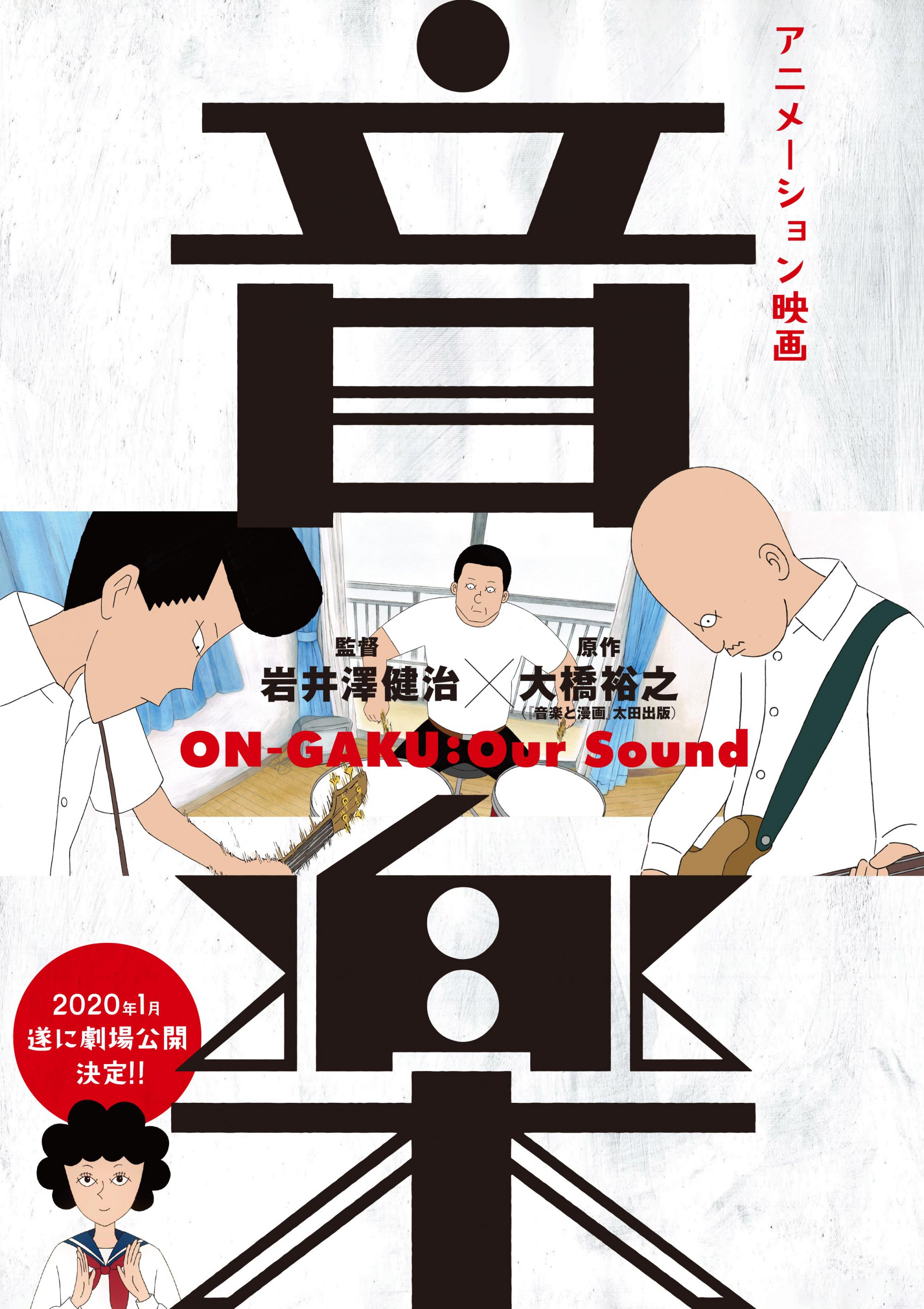
  • On-Gaku Our Sound – deadpan slackers decide to start a band and discover unexpected sides to themselves in the joy of making music in Iwaisawa’s infinitely charming indie animation.
  • Seven Days War – Osamu Soda’s satirical novel is updated for the present day as a young woman runs away with a gang of school friends and holes up in a warehouse where they befriend a Thai immigrant in hiding and try to protect him from the authorities.

Camera Japan 2020 takes place in Rotterdam 23rd – 27th September and Amsterdam 1st – 4th October. Full information on all the films as well as ticketing links can be found on the official website and you can also keep up to date with all the latest news via Camera Japan’s official Facebook pageTwitter account, and Instagram channel.

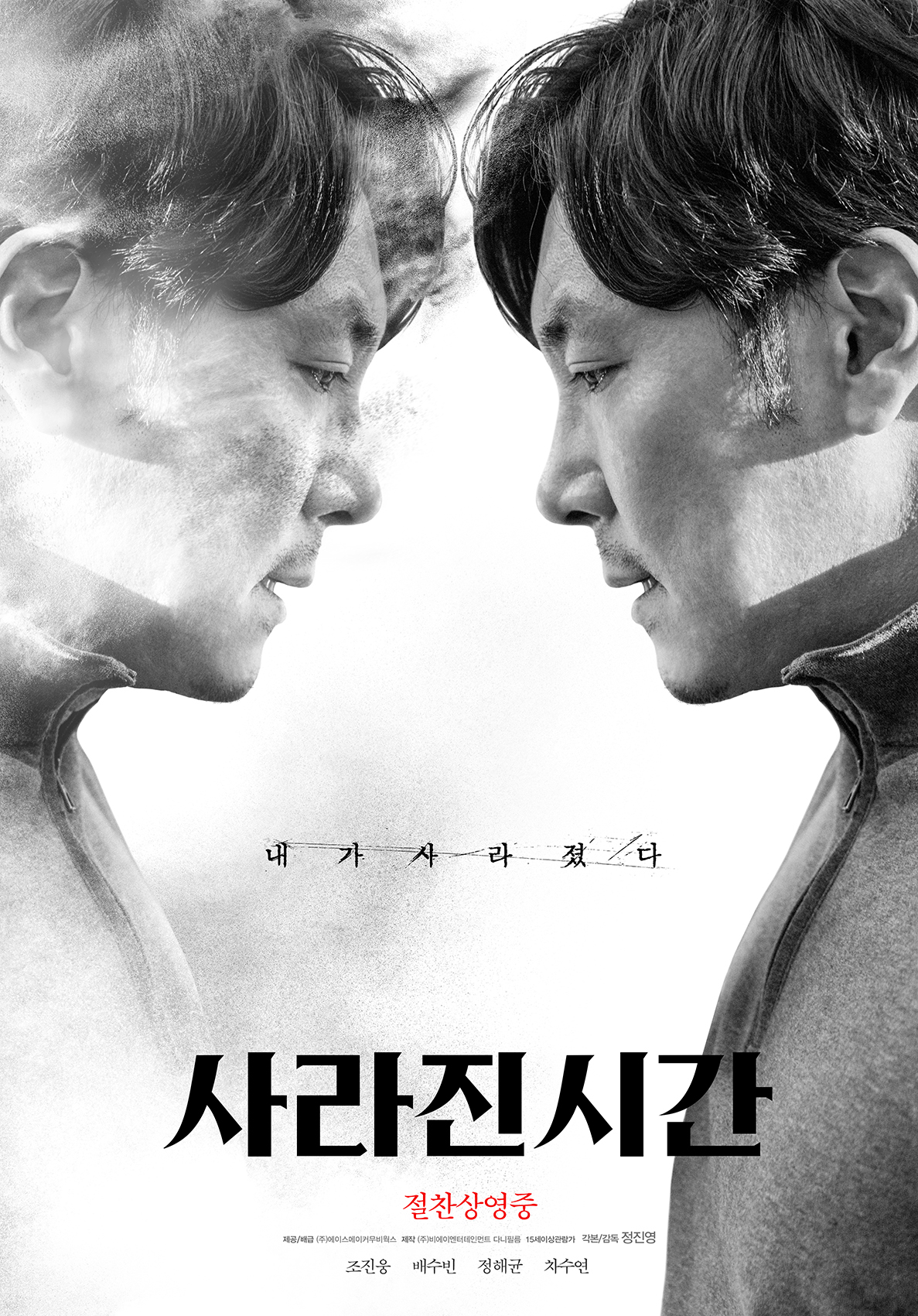
Me and Me (사라진 시간, Jung Jin-young, 2020) [Fantasia 2020]

“Don’t invent stories, just go with what you see” the hero of Jung Jin-young’s Me and Me (사라진 시간, Salajin Shigan) is advised, only to find himself investigating his own disappearance. The first directorial feature from the veteran actor, Me and Me throws its existentially displaced hero into another world but then asks him who it is he thinks he is if everyone is telling him he’s someone else. “It’s painful” he finally commiserates unexpectedly encountering a similarly troubled soul, living with another self inside him and consumed by a sense of loss for another life that perhaps never was or will be.

After a brief black and white title sequence featuring policeman Hyung-gu (Cho Jin-woong), Jung opens with a lengthy prologue following primary school teacher Soo-hyuk (Bae Soo-bin) who has just moved to a small, rural town along with his wife Yi-young (Cha Soo-yeon) who has, we discover, a secret. When the locals find out that at night she’s quite literally someone else, repeatedly possessed by departed spirits, they decide that she must be dangerous and install bars and a gate inside her home to cage her inside. Soo-hyuk refuses to leave her, asking to be locked inside too, and the sense of partial acceptance, that the townspeople know of her condition and have decided to meet her halfway, seems to free his wife. Having long been resistant, Yi-young warms to the idea of having a child, that perhaps they could have a happy family life despite her unusual affliction. 

Unfortunately, however, the house is consumed by fire and as they were locked inside, village foreman Hae-gyun (Jung Hae-Kyun) who has the key apparently out of town in a love hotel with the wife of the local police chief, Soo-hyuk and his wife are unable to escape. Hyung-gu finally arrives to investigate the crime, only to be bamboozled by the anxious locals who trick him into drinking some of their homemade pine needle liquor after which he wakes up to discover that he’s not a policeman after all, but the local schoolteacher and he’s very late for work. 

Obviously confused, Hyung-gu tries to figure out what’s going on. He misses his wife and his sons, but is distressed to discover that none of his neighbours recognise him, someone else lives in “his” apartment, and according to the school his kids don’t exist. Half-wondering if the pine needle liquor did something funny to his brain or even perhaps catapulted him into an alternate reality, Hyung-gu is forced to wonder if his previous life was a dream he’s now physically but not mentally woken up from, which means his wife, children, colleagues, and position in society as a policeman were not “real” no matter how real they might seem to him. The dilemma he now faces is in whether he should carry on trying to “wake up” from his new life to return to his “true” reality, or accept his new identity in the knowledge that this too could also be a “dream” from which he may someday wake and will eventually grieve. 

“When it’s time a new season comes” Hae-gyun reminds him, “and when it’s time it goes away”. Freeing himself, having the bars removed from his new home, Hyung-gu begins to accept his new reality, after all what choice does he have? But still he reflects on his own interior life, necessarily a secret from those around him and filled with private sorrow. Even little Jin-kyu, Hae-gyun’s dreamy son, had insisted on his right to privacy over his messy school locker which itself contains a secret pain for another life that he perhaps cannot share with those closest to him. “Everyone’s got a sickness” Hyung-gu sympathises with his new friend as she begins to tell him hers which is, ironically, another echo of his “dream” but also points towards the secret lives that most people have or more to the point never have, carrying something inside them never to be shared. “Don’t worry,” he reassures her, “you’re not the only one”. Each person is a hundred different people, or maybe just one in a hundred different parts. Perhaps in the end it is other people who will tell you who you are and you’ll eventually agree with them because it’s less painful than resisting, leaving that other life as a half-remembered dream. Elliptical and contemplative, Jung’s existential detective story refuses clear interpretation but is in its own way filled with a gentle humanity and a sense of acceptance for all of life’s transitory sorrows as well as its comfort and joy. 


Me and Me streamed as part of this year’s online edition of Fantasia International Film Festival.

Original trailer (no subtitles)

Asian Pop-Up Cinema & TACCGC Announce Free Streaming Series @Home with Taiwan Cinema: Love & Hope

Asian Pop-Up Cinema is back with another free streaming series to take you through the winter months in collaboration with the Taiwanese American Chamber of Commerce of Greater Chicago (TACCGC) to present five Mandarin-language films showcasing the rich culture of the island nation streaming across the US for free at regular intervals until late December.

Sept. 11 – 13: My Egg Boy

A young woman decides to freeze some of her eggs to take the pressure off finding the right guy to start a family with in Fu Tien-yu’s unconventional rom-com starring Ariel Lin and Rhydian Vaughan.

Oct. 2 – 4: Pakeriran

A young man returns to his tribal community on vacation and is persuaded to take part in the sea festival as a replacement for his grandfather in order to impress a local woman.

Oct. 23 – 25: Isvara the Art and Life of Yu-Yu Yang

Documentary in which the daughter of legendary artist Yang Yu-Yu who was known for his stainless steel sculptures guides us through her father’s lifelong artistic journey.

Nov. 27 – 29: Go! Crazy Gangster

A down his luck professional basketball player is placed in charge of a failing girls’ high school team in this zany sports comedy.

Dec. 18 – 20: Rock Me to the Moon

Heartwarming dad rock drama in which six middle-aged men who are each fathers to children with chronic health conditions decide to start a band.

The movies will be available to stream within the US during the above dates via Asian Pop Up Cinema’s Vimeo on Demand. Simply register before or during streaming time to be emailed a special single-use code with promo link up-to 12 hours before streaming starts which will allow you to bypass the rental fee. Once you press play you will have 72 hours to finish watching.

Full details for all the films as well as registration links are available via the official website and you can also keep up with all the latest news by following Asian Pop-up Cinema on FacebookTwitterInstagram, and Vimeo.

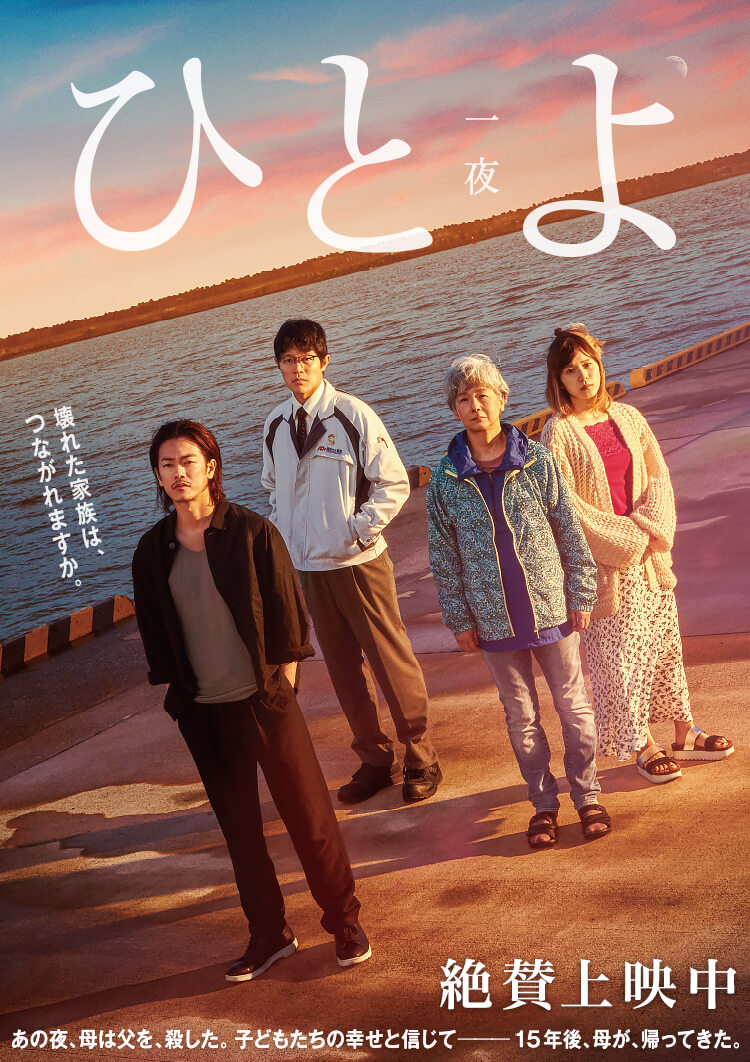
One Night (ひとよ, Kazuya Shiraishi, 2019)

“You can live however you want, you’re totally free. You can be anything” a woman tells her children, believing she is freeing them from a cycle of violence and oppression but unwittingly consigning them to another kind of cage in Kazuya Shiraishi’s raw family drama One Night (ひとよ, Hitoyo). Adapting the stage play by Yuko Kuwabara, Shiraishi is the latest in a long line of directors asking questions about the true nature of family, taking the hahamono or “mother movie” in a new direction but ultimately finding faith at least in the concept as the family unit finally begins to repair itself in a spirit of reconciliation and forgiveness. 

The “one night” of the title is that of 23rd May, 2004 on which wife and mother Koharu (Yuko Tanaka) backs over her relentlessly abusive husband in one of the taxis operated by their company. At some point, even if only perhaps in those few moments sitting at the steering wheel, Koharu appears to have given this a great deal of thought. Calmly walking back into her familial home where her three children are each sporting prominent facial wounds from a recent beating, she hands each of them a handmade onigiri and explains that she has just killed their father. Planning to hand herself in she reassures them that an uncle will look after them and the company so they’ve no need to worry. She has no idea how long she’ll be in prison for, but cautions that she may not return for 15 years hoping that by then the stigma will have passed. On her way out, she pauses to tell them that she is proud of what she’s done, saving them from their father’s authoritarian abuse and urging them to be free to live their lives in whichever way they choose. 

15 years later, however, the children find themselves burdened by her words. Yuji (Takeru Satoh) who dreamed of being a novelist has become a cynical journalist working for a pornographic magazine. Daiki (Ryohei Suzuki) who has a stammer and wanted to be a mechanic has never been able to hold down a steady job and is on the brink of divorce after showing signs of becoming abusive himself, while Sonoko (Mayu Matsuoka) who wanted to be a hairdresser is now working as a bar hostess drinking herself into oblivion. Living with the legacy of that one night, none of them has been able to live freely or to achieve their dreams but has remained arrested in some way waiting for Koharu’s return. 

While in her mind she freed them, the children find themselves dealing with the secondary sense of abandonment in her decision to exile herself from their lives, essentially leaving them to deal with the fallout of her “crime” all alone. Not only are they now orphaned, they also have to live with the stigma of being related to a notorious murderess with all of the peculiar burdens that entails in Japanese society from harassment and bullying to reduced employment opportunities and an internalised shame. Meanwhile, their mother’s words ring in their ears, urging them to be free, to be who they wanted to be and achieve their dreams, but they find themselves paralysed by the pressure to live up to the sacrifice Koharu has made on their behalf. While Sonoko is the most sympathetic, the boys are consumed by resentment. Koharu sees her 15 years of wandering as an exile undertaken as a kind of atonement and intended to keep the children safe from further social stigma, but her sons feel only the abandonment. 

Still, “mom’s still mom. It’s we who’ve got to change” Daiki tries to convince his brother, “we’re not kids anymore” he later adds as they recreate a thwarted teenage attempt to save their mother but in a very real sense they are. The problem in Daiki’s marriage turns out be rooted in insecurity, a failure of intimacy that saw him reluctant to let his wife and daughter into his traumatic past which finally expressed itself in violence. Meanwhile another driver at the taxi firm finds himself in a parallel struggle as he processes his own troubled relationship with an estranged teenage son and comes to realise his sins are indeed being visited on him despite his best efforts to prevent it. He sympathises with Koharu against the “ungrateful” children who, like the those of the classic hahamono, fail to understand the quality of their parent’s love as expressed in the sacrifices they have made on their behalf. Yet it’s Yuji who had branded his family a mere simulacrum who eventually fights hardest to save it, paving the way for a reconciliation as they finally bring closure to the events of 15 years previously and begin to move on with the rest of their lives. A raw and painful examination of familial trauma, Shiraishi’s bruising drama eventually allows the family to reclaim the night, repairing their fracturing bonds in sharing their emotional burdens freed at last from the oppressive legacies of abuse and resentment.


One Night streams in the US via the Smart Cinema app on Sept. 6 & 11 as part of this year’s New York Asian Film Festival.

Original trailer (no subtitles)

Kim Ji-young, Born 1982 (82년생 김지영, Kim Do-young, 2019)

In authoritarian regimes, dissidence is merely reframed as “mental illness”. Those who speak out are simply dismissed as “mad”, to be pitied for their inability to feel the love the state has for them or to understand that their policies are good, and right, and just. They must be healed, made to see the truth. When Cho Nam-joo’s Kim Ji-young, Born 1982 (82년생 김지영, 82 Nyeonsaeng Kim Ji-young) was published in South Korea it created a cultural schism in a still fiercely patriarchal society, provoking a sustained backlash from conservative commentators while resonating strongly with female readers. The film adaptation directed by Kim Do-young necessarily diverges from the structure of the novel, but once again sees its heroine driven quietly out of her mind by an oppressive society while encouraged to doubt herself for her desire to seek personal fulfilment, as if those who believe in sexual equality are somehow “mad”, treacherous, and ultimately dangerous to the social order. 

When we first meet everywoman Kim Ji-Young (Jung Yu-mi) she’s in her mid-30s, a housewife with a young daughter. She seems harried, a little frantic and tired but perhaps that’s only to be expected caring for a small child. Her husband, Dae-hyeon (Gong Yoo), however is beginning to worry there’s something seriously wrong. Ji-young has been having dissociative episodes in which she speaks about herself in the third person as if possessed by someone else. Matters come to a head when the condition manifests itself at the home of Dae-hyeon’s parents during the New Year celebrations where Ji-young talks back to her mother-in-law, upset that she’s treated like a servant as soon as Dae-hyeon’s sister and her family arrive, snapping that she both is and has a daughter too and that her mother-in-law should have let her leave before her own daughter turned up so she could visit her mother. Dae-hyeon makes his excuses, later calling to apologise and explain that Ji-young is “ill” and so it would be better if they could give her some space, and drives to Ji-young’s parents where she falls deeply asleep and is thereafter unable to remember what happened at her in-laws’ or understand why Dae-hyeon’s mother didn’t pack them off with a boot full of food as she usually would. 

Dae-hyeon’s mother Mrs. Jeong is an embodiment of the various ways women oppress other women in that she is extremely conservative and overbearing, giving Ji-young an unironic floral apron (free from a bank) as a New Year present, and continually resenting her for being her precious son’s wife. When Dae-hyeon tries to help out with the washing up, Mrs. Jeong is scandalised and Ji-young tries to swat him away out of embarrassment while her mother-in-law mutters about modern men, subtly suggesting that Ji-young must be a bad wife if her husband has to pitch in with housework. She does something similar later when she finds out that Dae-hyeon has offered to take paternity leave so that Ji-young can go back to work in the hope that it will help alleviate some of her malaise, destructively yelling at Ji-young over the phone that she’s ruining her son’s precious career, that what she’s doing is selfish and “mad” in rejecting her proper roles as wife and mother. Chastened, even Ji-young then finds herself telling others that Mrs. Jeong has a point, there’s nothing wrong with her housewife life and she wouldn’t earn as much as Dae-hyeon so perhaps it’s not practical for her to go back to work, but also admitting that she sometimes feels trapped. 

Her own mother, Mi-sook (Kim Mi-kyung), points out that Ji-young studied hard too and had a good job before she gave it up to become a mother so it’s not unreasonable to suggest that they look for some kind of balance in the relationship, but is left feeling responsible in that she unwittingly brought her daughter up with the cognitive dissonance of living in a patriarchal society. Mi-sook wanted to be a teacher, but had to give up her education to pay her brothers’ school fees. Ji-young’s sister Eun-young (Gong Min-jung) had to give up her dreams too becoming a teacher for the steady paycheque, while their affable brother Ji-seok (Kim Sung-cheol) was indulged to infinity and allowed to do whatever he pleased. Only Eun-young has been able to some extent to escape the pattern by remaining unmarried, otherwise we can see a long line of thwarted female ambition, women like Mi-sook forced to sacrifice their hopes and dreams but hoping that their daughters wouldn’t have to. 

Meanwhile, Ji-young can’t win. She takes her daughter to the park and is gossiped about by sleazy businessmen who think women like her have it too easy, living off their husband’s salaries failing to appreciate that work done at home is still work. Dae-hyeon does indeed seem to be a “modern” man, good and kind and genuinely concerned for his wife while also guilty that he has contributed to her “madness” through their married life, but he’s also a product of a patriarchal society and largely unaware of his privilege or its effects no matter how much he struggles against his programming. At work, he’s surrounded by sleazy guys who crack sexist jokes and bitch about their wives while attending sexual harassment workshops which are almost offensive in their superficiality. 

Chief Kim (Park Sung-yeon), Ji-young’s boss and mentor, finds herself in a similar position, derided as a coldhearted ballbuster by the male members of staff who criticise her for allowing someone else to raise her child while she works, while her boss openly insults her during a meeting and is pissed off when she tricks him into admitting he’s been inappropriate. She however laments that she’s trapped in the middle, feeling that she’s “failing” at being a mother while knowing that she’s approaching the glass ceiling, and Ji-young’s colleague complains that it’s taken her much longer to get a promotion than the men who joined alongside her. If all that weren’t enough, they also have to contend with the knowledge that the male office workers have been swapping footage from illegal spy cams placed in the ladies’ loos by a rogue security guard. 

Ji-young flashes back to the various instances of sexism and harassment she’s experienced in her life from being saved as a schoolgirl from an attacker on a bus by an older woman (Yeom Hye-ran) coming to her rescue when all her dad could do was blame her, insisting that it’s her responsibility to keep herself safe not men’s responsibility to behave appropriately, to being questioned why her wrist hurt when women have rice cookers now by a male doctor, and her grandmother telling her girls must be quiet and calm. She internalises a sense of misogyny that forces her to question herself, that perhaps she is at fault in feeling trapped because others found an exit she fears she lacked the ability to find. After a lifetime of patriarchal gaslighting, Ji-young is being driven quietly out of her mind by the cognitive dissonance of feeling so unhappy in having achieved so much “success”. Kim Do-young engineers for her a more positive future than Cho Nam-joo had done in her novel, but makes it all too plain that in escaping the madness of the modern patriarchy you might just have to go “crazy”.


Kim Ji-young, Born 1982 streams in the US via the Smart Cinema app until Sept. 12 as part of this year’s New York Asian Film Festival. It will also be screened in London on 10th September at Genesis Cinema as a teaser for the upcoming London Korean Film Festival.

International trailer (English subtitles)

Project Dreams: How to Build Mazinger Z’s Hangar (前田建設ファンタジー営業部, Tsutomu Hanabusa, 2020) [Fantasia 2020]

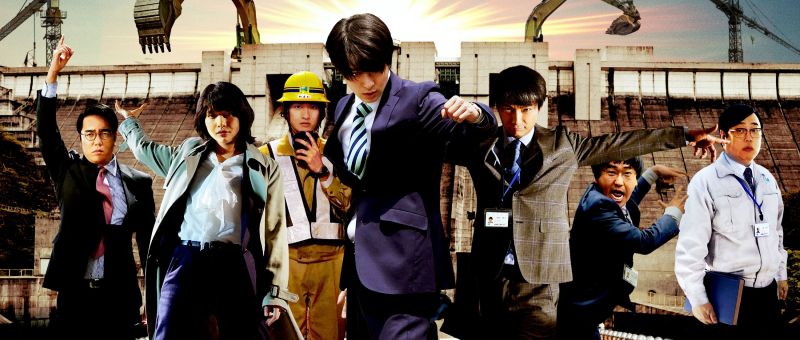
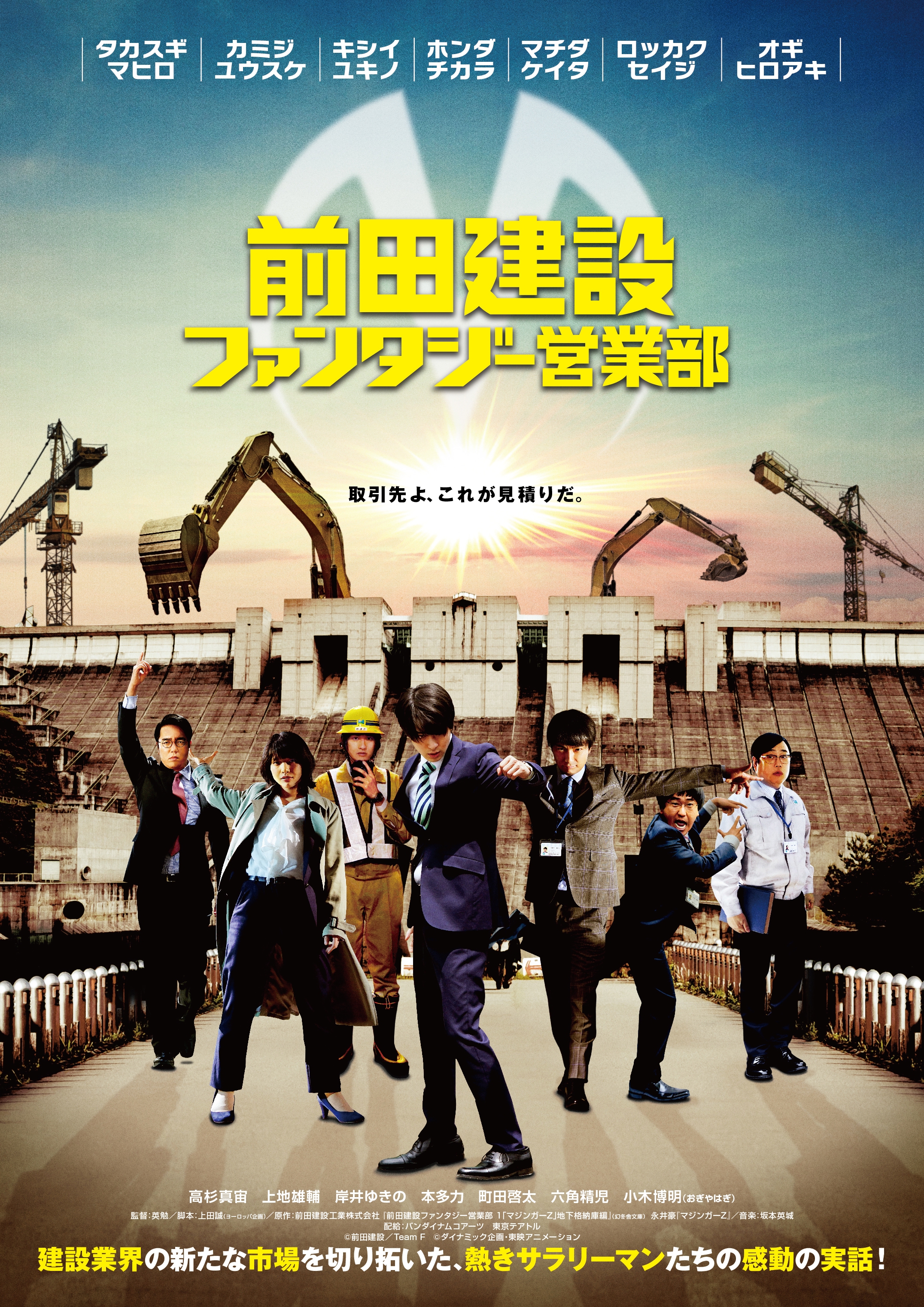
Construction was the post-war powerhouse and a traditional solution for governments looking to boost the economy but what are successful firms to do when everything’s already been built? Maeda made a name for itself as an expert in the construction of dams, but there are only so many you can build and theirs were state of the art so no one’s really looking for any more in the near future. Enter enterprising PR chief Asagawa (Hiroaki Ogi) who has a bold new plan to raise the company’s profile – start an enticing web project in which they draft iconic buildings from the fantasy world as if they existed for real starting with the underwater hangar from nostalgic ‘70s mecha anime, Mazinger Z!

As you can imagine, not everyone is taken by the idea even if initially swept up by Asagawa’s impassioned sales pitch. Being an otaku isn’t something you really want to advertise at work, and perhaps especially if you’re really into kids robot shows from 40 years ago. The point however is less about Mazinger Z than it is that Maeda can build anything it sets its mind to and if it can figure out the wilfully outlandish designs of classic anime which, it has to be said, rarely thought through the real world physics of its creations which are not even generally internally consistent, there’s nothing it cannot handle. 

The major sticking point with the Mazinger Z design is that the hangar is covered by a large amount of water (Mazinger Z is made from a special metal which is completely rust proof) which, given their proficiency with dam technology, shouldn’t be so much of a problem, but the more they look into it the more issues they find from the joints on the “roof” to the platform which pushes Mazinger Z into the launch position needing to boost him within 10 seconds. It doesn’t help that the anime often ignored the constraints of the original design for reasons of plot such as when Dr. Yumi suddenly has the robot slide to the left and bust out of the concrete rather than using the shoot. 

The team will need to show all of their engineering knowhow in order to solve the increasingly annoying number of problems, which is in a sense the point of the project in showcasing Maeda’s superior engineering power. Not all employees are originally behind it, however. Emoto (Yukino Kishii), a young woman entirely uninterested in mecha anime discovers that her colleagues quickly leave the canteen when they see her coming, while reluctant office worker Doi (Mahiro Takasugi) and former engineer Besso (Yusuke Uechi) both find themselves accosted by section chiefs who want them to undermine the project because they are embarrassed to be associated with something so “silly” and worry it will damage the firm’s reputation. Asagawa however is undaunted, sure that this kind of “silliness” is perfect for improving the company brand and capturing an online audience that will eventually lead to more business in the future even if it’s true that their “Fantasy World” clients aren’t going to be paying them nor will they actually be building any of their designs. 

In this Asagawa may well have a point because Project Dreams: How to Build Mazinger Z’s Hangar (前田建設ファンタジー営業部, Maeda Kensetsu Fantasy Eigyobu) just might be the most accessible intro to civil engineering imaginable as they somehow manage to make even the driest of calculations seem exciting in direct contrast to the frequent complaints that the ideas they’ve come up with aren’t “glamorous” enough. Dragged along by his passion, the team gradually come on side one by one with even Doi, the most cynical who told himself that he needed to knuckle down after becoming a regular salaryman, realising that there’s no shame in having fun at work, unexpectedly finding a new appreciation for the craft of engineering after being ordered to read a lot of books about dam building by the company’s foremost expert, himself quietly in favour of the project in its capacity to show off their collective know how and inspire the next generation of engineers. Contrary to expectation, they discover there’s much more industry support than they ever could have imagined for this kind of “silliness” with other companies enthusiastically coming on board to help them achieve their Mazinger dreams. Inspired by true events, Project Dreams has real love and affection for the craft and for those who are just very good at what they do no matter what it might be, embracing a childish sense of fun and imagination along with teamwork and camaraderie which suggests that anything really is possible when you put your mind to it, even constructing an underwater hangar for a robot that doesn’t exist to defend the world against the forces of evil.  


Project Dreams: How to Build Mazinger Z’s Hangar streamed as part of this year’s online edition of Fantasia International Film Festival.

Original trailer (English subtitles)

A Witness Out of the Blue (犯罪現場, Fung Chih-chiang, 2019)

“The world is not supposed to be like this” a failed revenger exclaims as he breathes his last in Fung Chih-chiang’s absurdist noir crime thriller A Witness Out of the Blue (犯罪現場) in which the career criminal on the run turns out to be the only noble soul. In a world like this, an eccentric policeman later suggests, good people can commit crimes while those who prosecute or are victimised by them are often no better than that which they claim to hate, eagerly taking advantage of a bad situation to take what they feel at least they are entitled to. 

It all links back to an unsolved murder, one of the many “crime scenes” referenced in the Chinese title. The dead man, Tsui (Deep Ng Ho-Hong), is believed to be part of a gang led by notorious underworld figure Sean Wong (Louis Koo Tin-lok) who was responsible for a botched jewellery store robbery which went south when the police stooge blew his cover trying to stop one of the gang members getting violent with a hostage. Wong shot the undercover policeman and opened fire on the police, eventually escaping our second scene of crime with the loot, while an old lady was so frightened she had a heart attack, and the store assistant who tried to raise the alarm was left paralysed. Police inspector Yip (Philip Keung Ho-man) who ran the undercover operation against Wong’s gang is convinced that Wong killed his associate during a dispute over dividing the loot and is fixated on bringing him in. Eccentric cop Larry Lam (Louis Cheung), however, is not convinced in part because he’s patiently listened to the only eye witness, a parrot, who says Wong didn’t do it. 

Nicknamed “garbage” and apparently a model cop until some kind of accident a few years previously, Lam is certainly an unusual law enforcement officer. For one thing, he’s in deep debt to loan sharks after borrowing money to start a cat sanctuary because he felt sorry for the abandoned felines left to cower in the rain in the face of the world’s indifference. Lam is convinced that he can get the parrot to talk, if only he can figure out how to communicate with it seeing as the only words it knows are “help me”, “genius”, and “idiot”. Based on the parrot’s testimony and his own gut feeling, Lam doesn’t think Wong is guilty so he has three other suspects: the son of the woman who died who works as a butcher at the market, the paralysed store assistant who has since got religion, and her security guard boyfriend (Andy On) who was rendered powerless in the attack, unable to protect her and apparently still carrying an immense amount of anger and resentment towards the criminals. Lam also comes, however, to doubt his superior wondering if his war against Wong is less in the pursuit of justice than revenge for the death of his officer. 

Yip and Wong are in some ways mirror images of each other, the morally questionable cop and the noble criminal. On the run, Wong takes up lodging with a cheerful woman named Joy (Jessica Hsuan) who is visually impaired but seems to think Wong is a good person even though she can’t “see” him. All of Joy’s other residents are extremely elderly, one of them sadly lamenting that the man who previously inhabited Wong’s room died peacefully in his sleep though he was “only 95”. “Money is no use after you die”, they tell him in an effort to persuade him to join in some 100th birthday celebrations, “life is all about contribution”. Quizzed on what he’d do with the money, all Wong wanted was to be able to sleep and as we see he seems to be suffering with some kind of psychosis, experiencing visual and auditory hallucinations of teeming ants and the ghostly voices of his former gang members. Yet he’s not “bad” in the way Yip characterised him to be, he never kills anyone he didn’t have to, is indignant about being accused of betraying his own, and is just as resentful towards Yip as Yip is towards him for the unfairness of his petty vendetta. 

But like all the best crime stories, all there is in the end is futility. The world shouldn’t be like this, but it is the way it is. Maybe Joy and her pensioners have it right, quietly living their lives of peaceful happiness being good to each other while evil developers breathe down their necks trying to destroy even their small idyll of goodness. Wong is drawn to them, but perhaps knows he’ll never belong in their world of infinite generosity though perhaps oddly he’s the only one who doesn’t really seem to care so much about the loot. Still, as Lam has it “Life is full of wonders” like crime-fighting parrots and eccentric policemen who stand in line buying limited edition trainers on behalf loansharks to finance their animal sanctuaries. Good people also break the law. “In memory of lost souls” reads the sign above the final scene of crime, and it’s not without its sense of irony. 


A Witness Out of the Blue streams in the US via the Smart Cinema app until Sept. 12 as part of this year’s New York Asian Film Festival.

Original trailer (English subtitles)

Beneath the Shadow (影裏, Keishi Ohtomo, 2020)

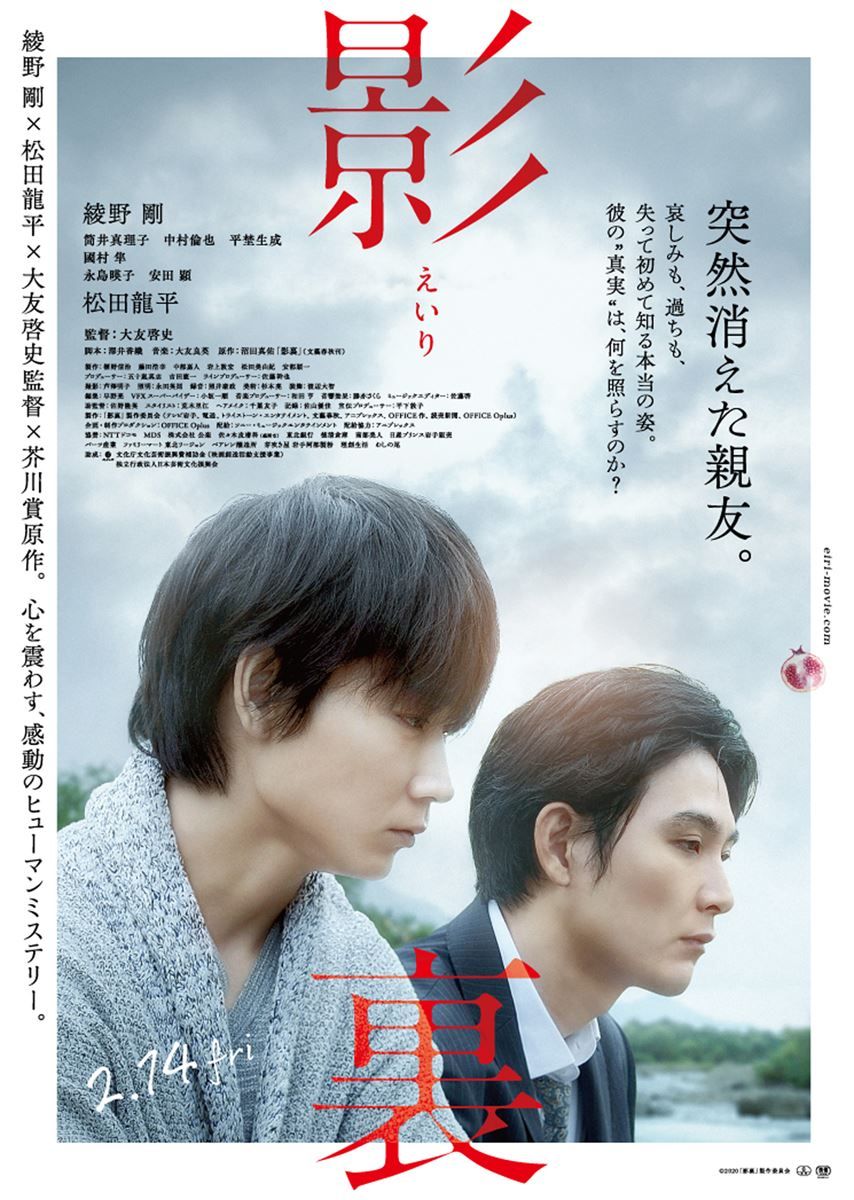
“There’s nothing wrong with leaving it a mystery” the enigmatic presence at the centre of Keishi Ohtomo’s Beneath the Shadow (影裏, Eiri) advises the hero as he vows to look into the unexpected appearance of a fish found swimming in the wrong river. Best known for mainstream blockbusters such as the Rurouni Kenshin series, March Comes in Like a Lion, and Museum, Ohtomo shits towards an arthouse register in adapting the Akutagawa Prize-winning novella by Shinsuke Numata which is in a sense obsessed with the unseen, the hidden details of life and secret sides we all have that are perhaps intended to protect but also leave us vulnerable. 

Konno (Go Ayano), an introverted man in his 30s, has just been transferred to rural Morioka by the pharmaceuticals company at which he works. He keeps himself to himself and largely spends his time caring for a Jasmine plant which appears to have some especial yet unexplained significance. It’s at work that he first encounters the enigmatic Hiasa (Ryuhei Matsuda), reminding him that theirs is a non-smoking building only to discover that Hiasa isn’t the sort to care very much about rules. For some reason or other, Hiasa takes a liking to Konno, turning up at his house with sake, teaching him how to fish, and going on what to anyone else look like dates. Yet when winter comes Hiasa abruptly quits his job and disappears without a word, resurfacing a few months later with a better haircut and a sharp suit explaining that he’s now a top salesman for a suspicious insurance company designed to help pay for expensive ceremonies such as weddings or more commonly funerals. The two men resume their friendship, but soon enough Hiasa again disappears. Only when he’s contacted by a co-worker (Mariko Tsutsui) after the earthquake hoping to find him because it turns out he owes her a large some of money does Konno begin to reflect on how little he might really have known this man he thought a friend. 

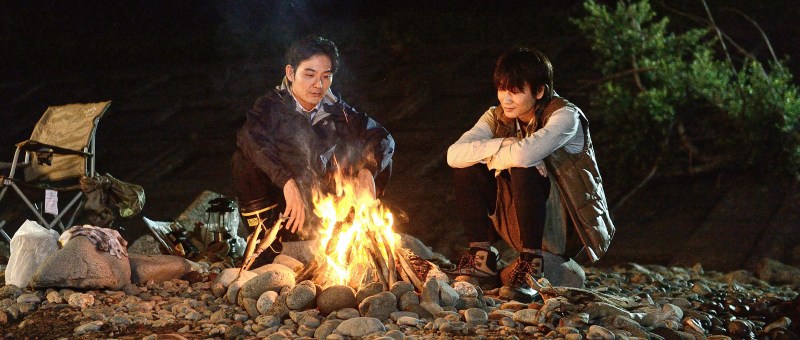
“Right from the start you have to groom it so it’s tantalised” Hiasa later explains, operating on several metaphorical levels but talking quite literally about lighting a fire. Konno has to wonder if that’s all it really was, if Hiasa is just a manipulative sociopath playing a long game, getting him on side in case he’d be useful later. When he resurfaces after his first absence, Hiasa eventually asks Konno to sign for one of his policies claiming that he’s one away from his quota and will be getting the can if he can’t fill it despite having talked a big game in proudly showing off a commendation he’d won as a top salesman when he turned up on Konno’s doorstep. “What you see is where the light hit for an instant, no more than that. When you look at someone you should look at the other side, the part where the shadow is deepest”, Hiasa had pointedly told him during a heated fireside conflagration, seemingly hurt as if in the moment he had wanted to be seen and is disappointed to be met with Konno’s irritated rejection, fed up with his mixed signals and distance both emotional and physical. 

Yet Konno is also himself living half in shadow as a closeted man choosing not to disclose his sexuality to those around him. A meeting with an old friend who has since transitioned presumably having embraced her own essential self raises further questions about the reasons he accepted the transfer to Morioka as if he too, like Hiasa, wanted to disappear from his old life and reinvent himself somewhere new, he’s just done it in a more conventional way. Even in contemporary Japan which is in some ways very old fashioned when it comes to the technology of everyday life and with a strong belief in personal privacy it’s surprisingly easy to just vanish at the best of times, but even his family members who are in no hurry to find him wonder if Hiasa may simply have used the cover of disaster to disappear for good. His conflicted brother (Ken Yasuda) affirms he thinks he’s probably alive because he’s “someone who can survive anywhere” which in the way he’s putting it is not much of a character reference. 

The conclusion Konno seems to come to, in a happier epilogue some years later, is that Hiasa himself was perhaps a fish swimming in the wrong waters, unable to adapt to the world around him. Perhaps it’s alright for him to remain a mystery because a mystery was what he was. Konno, by contrast, sets himself free apparently less gloomy, no longer living half in shadow, even if still hung up on the one that got away. A slow burn affair, Beneath the Shadow eventually refuses conflagration in favour of something cooler in accepting that you never really know anyone, perhaps not even yourself, even when you peer into the darkest part of the shadow. In the end you just have to let it go, “the cycle keeps repeating”. 


Beneath the Shadow streams in the US via the Smart Cinema app until Sept. 12 as part of this year’s New York Asian Film festival.

Original trailer (no subtitles)
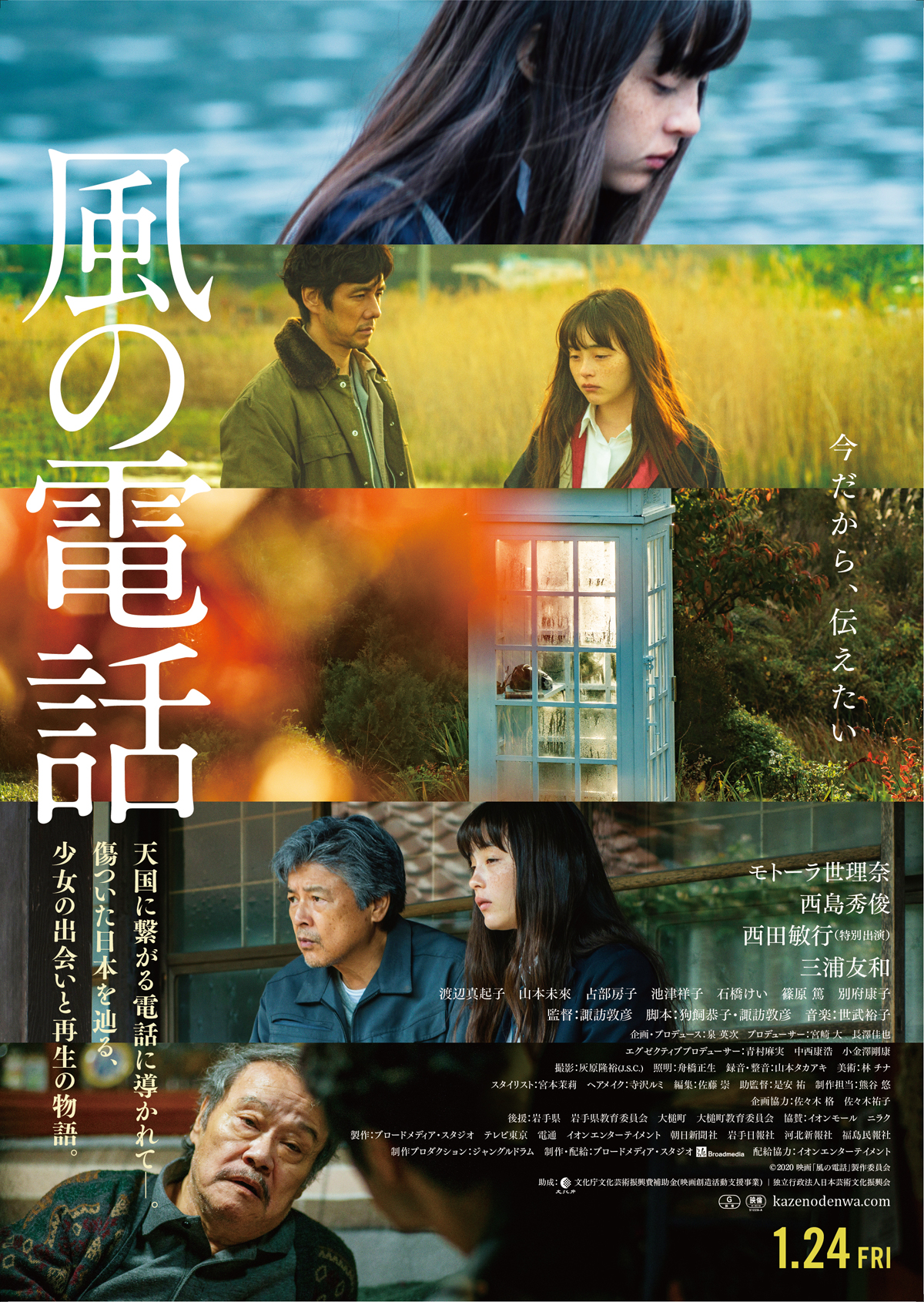
Beasts Clawing at Straws (지푸라기라도 잡고 싶은 짐승들, Kim Yong-hoon, 2020)

If you found a big bag full of money and then waited a while but no one came to claim it, what would you do? Many people would do as Jung-man (Bae Seong-woo) did, but sometimes gifts from the gods are sent to tempt you and are decidedly more trouble than they’re worth. Beasts Clawing at Straws (지푸라기라도 잡고 싶은 짐승들, Jipuragirado Jabgo Sipeun Jibseungdeul) is an apt way to describe our small group of interconnected protagonists, each desperately trying to get their hands on the money not necessarily for itself but for the power and possibility it represents or simply to free themselves from a debt-laden existence. 

Jung-man finds the Louis Vuitton bag stuffed inside a locker at his part-time job in a bathhouse. It seems that he is feeling particularly powerless because he’s somehow lost the family business and either never told his extremely domineering mother (Youn Yuh-jung) or she’s simply forgotten, often going off on crazed rants about how her daughter-in-law is secretly plotting to kill them all. Meanwhile, across town, immigration officer Tae-young (Jung Woo-sung) is desperately trying to find his missing girlfriend, Yeon-hee (Jeon Do-yeon), who has, apparently, run off with all his money leaving him in a difficult position with vicious loan shark Park (Jung Man-sik), and melancholy hostess Mi-ran (Shin Hyun-bin) is miserably trapped in an abusive marriage and plotting escape with the help of Jin-tae (Jung Ga-ram), an undocumented migrant from China she met in the club. 

As expected the streams will eventually cross, it is all connected, though it’ll be a while before we start to figure out how in Kim Yong-hoon’s tightly controlled non-linear narrative, adapted from the novel by Japanese author Keisuke Sone. Other than the money the force which connects them is powerlessness. Some of them, maybe all, are “greedy” but it’s not necessarily riches that they want so much as a way out of their disappointing lives. Jung-man feels particularly oppressed because he’s made to feel as if he’s failed his father by losing the family business, something he’s constantly reminded of by his ultra paranoid, domineering mother who eventually pushes his wife down the stairs provoking a crisis point in the foundation of the family. If working part-time in a bathhouse in his 40s hadn’t left him feeling enough of a failure, he is further emasculated by being unable to pay his daughter’s university tuition after she fails to win a scholarship and informs them she’s planning to take a term or two off to earn the money by herself. 

Tae-young is in much the same position, humiliatingly trapped by having foolishly co-signed his girlfriend’s loan only for her to disappear off the face of the Earth, leaving him wondering if he’s just a complete idiot or something untoward has happened to her. He thinks he can regain control of the situation by slipping further into the net of criminality, helping an old uni friend who’s committed large-scale fraud escape to China in exchange for a cut of the loot (and secretly plotting to nab the lot with the help of his shady friend Carp (Park Ji-hwan) who works at the club). 

A crisis of masculinity is also behind Mi-ran’s life of misery as her husband takes out his resentment towards his reduced circumstances on his wife, beating her mercilessly while forcing her to work at a hostess bar to pay off their debts from unwise stock market investments. For her, the money is both revenge and a pathway to a better life. She wants to be free of her husband, and profit in the process. Unable to do it alone, she manipulates male power in the lovestruck Jin-tae all too eager to play white knight to a damaged woman. But Jin-tae is male failure too. When all’s said and done he’s still an innocent boy, not quite prepared for the ugliness of causing a man’s death even if he is a wife beating tyrant the world may be better off without. As an undocumented migrant, he’s pretty marginalised too. Taking advice on how to solve the Jin-tae problem, a more experienced player reminds Mi-ran that no one’s coming looking for an illegal alien and it’s not as if she actually likes him so he is infinitely expendable. 

In an odd way, getting the money is about not being an expendable person anymore. They want the money because they think it will give them back a degree of control over their lives, a kind freedom to move forward with a sense of possibility they do not currently have because of all their debts both financial and emotional. Yet they find themselves farcically scrabbling in chaos, beasts clawing at straws, as they try to outsmart each other and the universe to get their hands on the bag. The universe looks on and laughs, rejoicing in its darkly humorous punchline as the bag finds itself another owner, tempted by its dubious charms with only the promise of more chaos to ensue.


Beasts Clawing at Straws streams in the US via the Smart Cinema app Aug. 29 to Sept. 12 as part of this year’s New York Asian Film festival. Now available in the UK on digital download courtesy of Blue Finch Films!

International trailer (English subtitles)