The Actor (俳優  亀岡拓次, Satoko Yokohama, 2016)

“There are no small parts, only small actors” according to the mantra of the bit part player, but perhaps deep down everyone wants to play the lead. Most jobbing actors will tell you that they’re happy to be working and if you work as much the dejected hero of Satoko Yokohama’s The Actor (俳優  亀岡拓次, Haiyu Kameoka Takuji), you can make a pretty decent living with a little more job security than a big name star whose career will inevitably hit the odd dry spell. Yet, who doesn’t want to at least feel that they’re the lead in their own life story? Spending all your time being other people can make you lose sight of who you really are and live your life with a sense of cinematic romanticism forever at odds with accepted reality. 

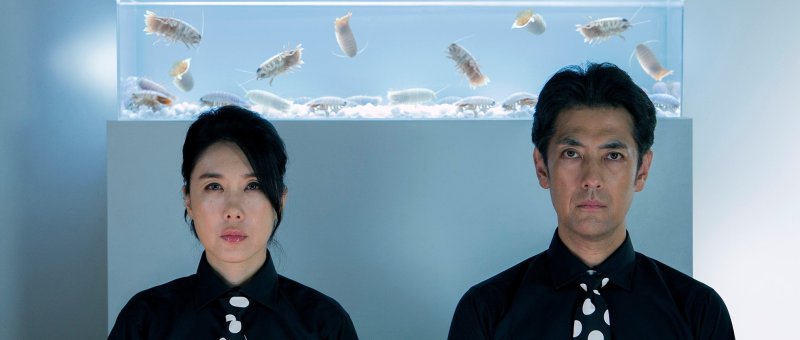
Takuji Kameoka (Ken Yasuda) is a classic background actor, turning up in small roles in TV dramas, often playing the villain of the week or appearing as a prominent extra. Meanwhile, his offscreen life seems to be lived in a booze-soaked haze, hanging out in his favourite bar surrounded by similarly dejected middle-aged men or occasionally meeting up with colleagues. Even his agent expects him to be sozzled when she rings to confirm new jobs though to be fair she doesn’t seem too bothered about it. 

Kameoka has perhaps made his peace with the kind of actor he is, but there’s also an inbuilt anxiety in waiting for people to ask what it is he does, knowing that it sounds glamorous and exciting when, to him at least, it’s anything but. Chatting with a pretty young woman, Azumi (Kumiko Aso), working behind a bar in a small town where he’s filming, Kameoka spins her a yarn about being a bowling ball salesman rather than be forced into a conversation about the life of a jobbing actor which might perhaps depress him more. Alone in the bar, the pair of them strike up a rapport over shared sake, but Kameoka forgets that in essence she’s just the same as him – acting, performing her role as the cheerful hostess, keeping him happy to sell more drinks. Later, she tells him that she’s switching roles, “recasting” herself as a good wife and mother, pointing again towards the unavoidable performative quality of conforming to socially defined labels such as “wife”, “mother”, “landlady”, “actor” or “man”. 

Everyone is, to some degree, acting, forced to perform a role in which they may privately feel miscast but are unable to reject. Kameoka is losing sight of who he is and so his life begins to feel increasingly like a movie, obeying narrative logic rather than that of “reality” while he often drifts off into flights of fancy in which he gets to play not the lead but a slightly bigger supporting part, recasts himself as the star of a favourite film, or finds himself momentarily in a film noir. Real or imagined, his directors have nothing but praise for him to the degree that it somehow feels ironic. He’s brought in to show the rookie leads how it’s done, an accidental master at dropping dead on camera, but as the landlady at his local says of another actor on TV, he just doesn’t have that leading man sparkle. Of course, not having that kind of presence is perfect for being a background player but a great shame when he has the talent to succeed, just without the burden of “star quality”. 

Then again, his talent is uncertain. Despite telling his agent that he doesn’t do stage, he agrees to work with a famous actress/director on an avant-garde theatre piece. Though she’s much harder on the young female star, Matsumura (Yoshiko Mita) rarely compliments his acting and eventually advises him that he’s unsuited to stage work because he has “film timing”. Privately, he might agree, but a job’s a job. Ironically enough, the performance that Matsumura failed to bring out in him is vividly brought to life during a very weird audition for a Spanish director who happens to be one of Kameoka’s favourites. He inhabits the role so strongly as to completely become it to the extent that its world rises all around him, but all too soon the audition is over with a simple “that’s great, thank you – we’ll be in touch”. Kameoka even suffers the indignity of crawling under the frozen shutters to exit the building while the next hopeful, a top TV actor he worked with on a previous job, makes his way inside. 

The woman in Kameoka’s audition fantasy is clearly Azumi, something that becomes clearer to him still during another flight of fancy that recasts him as a romantic hero making the grand gesture of a rain soaked dash, motorcycle filmed against rear projection, as he prepares for the inevitable “happy ending”. Reality, however, triumphs once again. Lovelorn, Kameoka declares himself lonely and indeed is always alone, not one of the “main cast” just a “bit player” hanging round until his scene and then moving on to the next project. He waves at women who weren’t waving at him, sympathises with a failed singer turned bar hostess, and celebrates the unexpected marriage of a friend but in a strange sense perhaps misses “himself”, gradually eclipsed by all the roles he plays onscreen and off. “Who are you?”, the Spanish director’s interpreter asks. “Takuji Kameoka, Japanese Actor”, is as good an answer as any. 


Screened as part of the Japan Foundation Touring Film Programme 2020.

Original trailer (English subtitles)
Sea of Revival (凪待ち, Kazuya Shiraishi, 2019)

“One bad thing leads to another” according to overprotective mother Ayumi (Naomi Nishida) in Kazuya Shirashi’s Sea of Revival (凪待ち, Nagi Machi). She’s not wrong, but breaking the chain proves harder than expected, especially as trouble has a way of following people around and the one thing you can never outrun is yourself. Yet, what might save you in the end is not so much self acceptance as that of others and finding your place along with a sense of belonging as member of a family in the knowledge they have chosen you as one of their own. 

Ikuo (Shingo Katori), the hero, certainly has plenty of demons he’s looking to leave behind. A devotee of the bicycle races, he’s just been laid off from his factory job and is preparing to move to his girlfriend Ayumi’s hometown where she plans to open a hairdressers and care for her ageing father Katsumi (Ken Yoshizawa) who has just been diagnosed with stage four cancer. Ayumi left rural Miyagi with her daughter, Minami (Yuri Tsunematsu) whose name is written with the characters for beautiful waves, after the tsunami which devastated the area and took her mother’s life. She hopes that it can be a new start for their family and that Ikuo will finally be able to shape up, knock his gambling habit on the head and ease back on the drinking. 

Things get off to a bad start, however, when Ikuo fails to bond with Katsumi who largely ignores him, while he discovers that Ishinomaki is much more conservative than Kawasaki and not everyone seems to approve of his liminal status in the Konno household. The fact remains that Ayumi and Ikuo, though they’ve been living together for five years, are not legally married and therefore in the eyes of some not a proper family, and more to the point Ikuo is an outsider with relatively little to recommend him. He does however try to make good on his promise, impressing the boss at a printshop where an overly helpful family friend, Onodera (Lily Franky), has found him a job, but quickly succumbs to old habits when a pair of ne’er-do-well colleagues introduce him to an illegal bicycle racing betting club run by local yakuza. 

Matters come to a head when Minami gets fed up with her mother’s overprotective conservatism and decides to pay her back by staying out late with new friends Ayumi doesn’t approve of. Flagging up their differing parenting styles, Ikuo tells Ayumi that she’s overreacting and should be happy for her daughter who is finally living something like a normal teenage life rather than shutting herself up in her room playing games like she did in Kawasaki where the other kids made her life a misery, calling her a “radioactive” transfer student from Fukushima. Ayumi fires back that Ikuo obviously isn’t very invested in Minami because, after all, he’s not her real dad and has no idea what family is. An extraordinarily hurtful thing to say in any circumstances, Ayumi’s words strike a nerve as Ikuo struggles to claim his place as a non-husband who has nevertheless become a father figure but is not recognised as a legitimate member of the family. 

Claim his place he does however when tragedy strikes, rushing into a police cordon shouting “I’m family” but being held back by the forces of social order while Minami cleverly evades them to see something no one should ever have to see. Old Katsumi meanwhile, apparently much like Ikuo in his youth, a fiery scrapper with a self-destructive streak, struggles to accept his failure either to save his wife or die by her side. Recognising something of himself in the younger man, he finally warms up to Ikuo, literally “redeeming” him from vengeful yakuza, offering only the explanation that he does so because “he’s my son”. 

Others such as the weirdly ever present Onodera may think it proper that Ikuo leave the Konno household because he has no more reason to be there, that his presence is now even more inappropriate than it was before. Minami is advised to move in with her birth father (Takuma Otoo) despite the fact Ayumi described him as abusive and that he has remarried and is currently expecting another child. Ikuo’s five years as her father count for nothing, because he was not married to her mother. During the car journey to their new home, Minami had playfully suggested to Ikuo that he should propose but he claimed he had no right to do so as an irresponsible man unable to contribute meaningfully to the household. Ayumi dreamed of the sea and of beautiful Caribbean islands to which Ikuo had promised but failed to take her. She ironically hoped to rebuild their lives in the ruined landscape of Ishinomaki where they’ve put up walls so tall you can no longer see the sea, still beautiful despite all its terrible ferocity. 

“A good wife makes a decent man” Ayumi’s ex bitterly fires back at her though others have found it to be true, Katsumi not least among them, but Ikuo’s problem is an internalised sense of masculine failure which keeps him on the edges of a family which is otherwise his by right. In a strange way, a piece of paper can make all the difference and no difference at all, both legitimate and not, in making it plain who is and is not accepted as “family”. Accepted by others, Ikuo learns to accept himself, still burdened by guilt and regret but also bound by it as he joins his chosen family on new a journey powered by those same beautiful yet destructive forces which have engendered so much grief and hope.


Screened as part of the Japan Foundation Touring Film Programme 2020.

Original trailer (English subtitles)

Little Nights, Little Love (アイネクライネナハトムジーク, Rikiya Imaizumi, 2019)

What is love? Is it an accident, cosmic destiny, or something that finally you have to choose? The romantically inclined hero of Little Nights, Little Love (アイネクライネナハトムジーク, Eine Kleine Nachtmusik) is convinced that romance is something that happens to you at an unexpected moment, but his friends worry that he’s letting life pass him by because of his bashful passivity. While the city is gripped by the upcoming world heavyweight boxing championship which might finally result in a Japanese underdog raising the belt, its citizens gain the courage to fight for love, but discover that love is less victory than mutual concession. 

Sato (Haruma Miura), a hopelessly romantic salaryman, is forced to stand outside the station in the centre of Sendai conducting public surveys to make up the data that was lost when he accidentally spilt coffee on his colleague’s computer. Naturally shy, he’s not an ideal fit for the job but serendipitously bonds with a young woman, Saki (Mikako Tabe), when they are both captivated by the soulful song of a street musician. She agrees to fill in his form, and he notices she has “shampoo” written on her hand. He thinks it might be a sign, but she’s gone before he can do much about it. 

Sato’s college buddies Yumi (Erika Mori) and Kazuma (Yuma Yamoto), married young in a shotgun wedding but seemingly blissfully happy and parents to two adorable children, are quick to tell him that his romantic desire for serendipitous love is just thinly veiled cowardice and his essential passivity, refusing to put himself out there, is the reason he’ll end up alone. Meanwhile, Yumi is also trying to support her longterm single sister, Minako (Shihori Kanjiya), who is in a strange “relationship” with the younger brother of a client at her hairdressing salon. Despite talking regularly on the phone, he seems reluctant to meet because his job keeps him very busy which leaves her feeling confused and suspicious. 

Yumi and Kazuma think they ended up together out of necessity, but that necessity was in its own way chance. Secretly, Kazuma might wonder what might have happened if he’d been careless with some other girl, but has come to the conclusion that he’s glad it was Yumi and not someone else. Sato’s colleague Fujima (Taizo Harada), meanwhile, thought he had a cheerily romantic origin story for his relationship – a classic dropped wallet meet cute of the kind Kazuma insisted only happens in the movies, but now nearing 40 his wife has left him and the failure of his marriage has provoked a nervous breakdown. Sato asks him if he’s still glad it was his wife who dropped her wallet and not someone else, and if she’s glad that it was him who picked it up. Not only can he not quite answer, he doesn’t quite want to know. 

Meanwhile, Minako discovers that her diffident lover has decided to stake his romantic future on the championship match, that if the Japanese challenger wins he’ll finally have the courage to speak his heart. Minako is angry and disappointed, infuriated that he has so little courage that he has to vicariously channel the power of someone else to confess his feelings, but is as glued to the match as everyone else. 10 years on, the same thing happens again. Yumi and Kazuma’s daughter, Mio (Yuri Tsunematsu), is now a rebellious teen fed up with her father’s perpetually easygoing attitude and infuriated by a school friend, Kurume (Riku Hagiwara), who also pins his romantic hopes on the boxing match while inwardly resenting his overly spineless father (Yurei Yanagi) for becoming a mere cog in the great machine of capitalism. His refreshingly honest mother (Mari Hamada), however, reminds him that everyone thinks that when they’re 17 but really there’s no life without compromise and cogs at least have their place in keeping the wheels turning. Kurume finds this out by chance when his dad is able to save him from a sticky situation using classically meek, salaryman-style strategy. 

Perhaps what Kurume resents is the sense of impending powerlessness that comes of being a teenager squaring off against the salaryman straightjacket even if he’s still too diffident to put up much resistance. Meanwhile, the reverse is also true. The youngsters bond while staking out a bicycle parking garage to look for a thief who stole Mio’s 60 yen parking sticker and put it on his own bike, leaving her with the fine. They discover it’s an old man who wastes no time in yelling at the young whippersnappers while kicking off against his sense of impotence by gaming the system over a measly 60 yen he could have easily paid. The same thing happens again at Mio’s part-time job where a horrible old man decides to take out his frustrations with his place in the world on an innocent teenage girl. 

10 years earlier, Sato had saved a boy with hearing problems from being beaten up by bullying classmates, giving him new strength by introducing him to Japan’s boxing champ. The inevitable, however, happens, and even champion boxers have feet of clay. Things don’t always go to plan, or perhaps they do but that only makes you wonder if you’re really on the right path or merely settling for that of least resistance. The street singer’s song asks if you’re happy where you’ve ended up or if you still want more than ordinary happiness. Sato, still diffident, has to admit that perhaps he isn’t sure, while Saki does something much the same in wondering if they’re only still together out of habit and a misplaced belief in the narrative destiny of their serendipitous meeting. Another championship match sees them all ready for the fight once again, encouraged by the embattled boxer’s refusal to give-up on his fighting dreams, but perhaps still waiting for a “sign”. What Sato learns, however, is that they don’t always arrive quite as serendipitously as one might might think. “It builds up” Fujima warns him, waking up to the fact that his wife likely left him after years of small microagressions that killed their love through taking it for granted. But love can build up too, if only you build up the courage to fight for it with a willingness to be honest with your feelings, and what’s life if not lots of little nights filled with lots of little love, no grand romance but maybe not so bad after all. 


Screened as part of the Japan Foundation Touring Film Programme 2020.

International trailer (English subtitles)
The song – Chiisana Yoru by Kazuyoshi Saito

Shadowfall (影踏み, Tetsuo Shinohara, 2019)

Cinema has an odd preoccupation with twins. The uncanniness of seeing more than one person with the same face in the same frame injects a note of inescapable unease, not least because of the oddness of the techniques required to make one actor appear to be in two places at once. Shadowfall (影踏み, Kagefumi) adapted from the mystery novel by 64’s Hideo Yokoyama, places the “evil twin” motif at its heart but, perhaps a little uncomfortably, uses it as a metaphor for the shadow self as the conflicted hero attempts to find closure with past trauma and family legacy in order to reintegrate his two selves into one complete whole capable of living a life both spiritually and emotionally honest. 

As the film opens, ace cat burgler Shuichi (Masayoshi Yamazaki) is in the process of breaking into the home of a local politician. Whilst there, however, he discovers petrol pooled on the hall floor and the politician’s wife, Yoko (Yuri Nakamura), nervously grasping a cigarette lighter. He manages to snap the lighter shut before she can use it, saving her life (as well as that of the husband she was about to kill), but is then caught by a policeman, Sosuke (Pistol Takehara), who happened to be “just passing by” and is also, coincidentally, a childhood friend. Shuichi gets two years, and is met on his release by a young man, Keiji (Takumi Kitamura), dressed in incongruously old-fashioned, gangster-style clothes and adressing him as “Shuichi-ni” or “big brother Shuichi”. Together, the pair form a small crime fighting team determined to find out what became of Yoko while poking their noses into some conspiratorial corruption which links her with yakuza, police, and the judiciary. The situation is further complicated when Sosuke is found dead after a visit to Yoko’s bar, leaving Shuichi implicated in the possible murder of his old friend. 

Reflecting on the case, police detective Mabuchi (Shingo Tsurumi), who also knew Shuichi in his youth, remarks that twins are tied to each other like heaven is to hell. One will necessarily drag the other down. Later, he corrects himself, that if is that is true then the reverse must also be and one should be able to raise the other up. What we see, however, is largely the former. We discover that Shuichi had an identical twin who was “no good”, a petty teenage hoodlum always in trouble with the police where he was a top student preparing to study the law and become a prosector. Their mother (Shinobu Otake), a teacher, found herself a victim of social stigma as the mother of a criminal, asked to resign from her job because a woman who can’t raise her own son to be a law abiding citizen is not fit to educate those of others. Hisako (Machiko Ono), who had been friends with both the boys and is still carrying a smouldering torch for the “good” Shuichi, experiences something of the same when she’s targeted by a creepy stalker (Kenichi Takito) who leaks her “criminal associations” on the message board of the nursery school where she too teaches. 

Having waited for him all these years, Hisako is praying for the restoration of the Shuichi she once knew who was good where his brother was “bad”. Despite her deep and abiding love for him, she claims to have chosen Shuichi, rather than his brother, because loving the good is the safer, more responsible choice. Shuichi, meanwhile, describes himself as walking in his brother’s shadow, a darkened space into which Hisako wishes to be admitted but is wilfully denied. He tells himself he does this to keep her safe, but is in reality unable to step into that space himself and occupy it as a full and complete person. He claims that his criminality is an act of revenge when it is actually a kind of self-harm that ensures his two selves, the shadow self that is his departed brother, and the ghost self which is the cat burglar, will remain forever separate. 

Talking with another twin whose mirroring of his brother had even darker results, Shuichi confesses that to share a soul with another human being is a terrible curse and one he secretly longed to be released from. It’s this latent sense of guilt which haunts him, cleaving his soul in two. Only by dealing with the traumatic past, the memories inflamed by Yoko whose burden is a fear of an excessive “niceness” she too must learn to let go, can he reintegrate his two selves into one complete whole with only a single shadow. A noirish tale of haunting grief and unresolved regret, Shadowfall finds hope in the simple act of acceptance and the promised restoration of the imperfect whole. 


Screened as part of the Japan Foundation Touring Film Programme 2020.

International trailer (English subtitles)
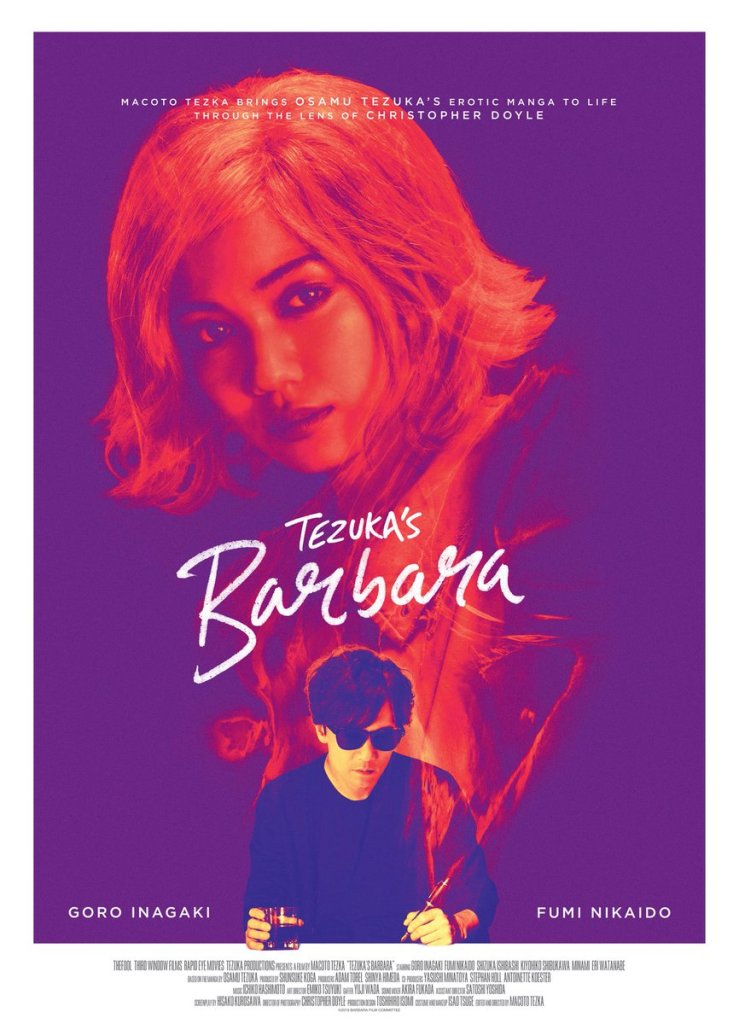
A Banana? At This Time of Night? (こんな夜更けにバナナかよ 愛しき実話, Tetsu Maeda, 2018)

Many people will tell you that if you’re having trouble sleeping, a banana is just the thing though if you’ve failed to properly prepare and have left it until 2.30am to try and buy one you might be out of luck. The hero of Tetsu Maeda’s A Banana? At This Time of Night? (こんな夜更けにバナナかよ 愛しき実話, Konna Yofuke ni Banana kayo: Itoshiki jitsuwa) is not proposing to go out and find one himself, but using his sudden desire for the potassium rich fruit as an excuse to dispatch one of his helpers in the hope of being left alone with the pretty young girl who’s just joined the team. Unbeknownst to him, the girl, Misaki (Mitsuki Takahata), is actually the girlfriend of the aspiring doctor, Tanaka (Haruma Miura), he was trying to get rid of, but the plan backfires when she takes the opportunity to go get one herself in order to escape an increasingly awkward situation. 

Inspired by Kazufumi Watanabe’s non-fiction book, A Banana? At This Time of Night? is the latest in a series of recent Japanese films dealing with the issue of disability in a society which often struggles to accommodate difference. The hero, Yasuaki Shikano (Yo Oizumi), has suffered with muscular dystrophy since the age of 12 and has survived to the age of 34 despite being told that he would likely never see 20. Determined to live an “independent” life, he relies on a small team of volunteers who assist him with day to day tasks he can no longer manage, and works as an activist for the rights of disabled people. 

Yasuaki is, however, by his own admission not always an easy person to get along with. He is often selfish and cruel to the volunteers who have given their time to help him out of nothing more than human kindness while deliberately sending them out on random errands to buy burgers  (or bananas) but finding fault when they return. Yet, he largely gets away with it because of his cheeky personality and the fact he is so robustly “honest” about his own behaviour. One of the major tenets of his activism is destigmatising the idea of asking for help so that younger disabled people in particular who might feel awkward about asking others to assist them so they can lead independent lives know that there is nothing wrong in being upfront about their needs. 

Of course, despite his “honesty”, there’s an essential contradiction in Yasuaki’s definition of independence in that he freely admits that he can only live an “independent” life because of the support he receives from the volunteers. Without them, his life would be impossible. In a further contradiction, we eventually realise that he’s only so mean to his mother (Chie Ayado) because he doesn’t want her to sacrifice the entirety of her life to look after him and wants his parents to be able to live their own lives while he lives his. Misaki, only originally volunteering to check up on her boyfriend, is horrified by Yasuaki’s attitude and vows never to return, only to be coaxed back by Tanaka awkwardly forced to take dictation of an apology/declaration of love when Yasuaki finds himself smitten by her boldness in defiantly standing up to him. 

Slightly embarrassed, Tanaka never explains that Misaki is his girlfriend, perhaps a little patronisingly allowing Yasuaki to play at romance he feels is impossible so that his feelings won’t be hurt. The central problem is, however, that both Misaki and Tanaka have their own failures of honesty which place their relationship at risk. Tanaka was under the impression that Misaki was studying to become a teacher, but her friends just said that to get her into a party with med students and she never bothered to correct him. When the relationship gets more serious, she comes clean, but he takes it badly, half-convinced she just wanted to meet a doctor and the whole relationship has been a lie. Meanwhile, he’s only studying medicine because his authoritarian father wants him to take over the family hospital and he’s beginning to wonder if it’s really what he wants to do with his life. Unlike either of them Yasuaki knows exactly what he wants – to go America and meet his idol which is why he’s been working hard learning English. 

Through their shared friendship with Yasuaki, both of the lost youngsters begin to find direction and the courage to follow it. Despite the many setbacks and difficulties he faces, Yasuaki never gives up on his dreams and boldly insists on the right to pursue them while living his life to the fullest. Which isn’t to say that his own story is merely inspirational fodder for his friends, but it does make the case for a better, more inclusive society built on mutual support in which all are free to live the way they choose spreading love and joy wherever they go. 


Screened as part of the Japan Foundation Touring Film Programme 2020.

International trailer (English subtitles)

Someone in the Clouds (真愛神出來, Gary Tseng & Mitch Lin, 2019)

“True love is your own choice, you have to love unconditionally” the cynical fortuneteller at the centre of Someone in the Clouds (真愛神出來, zhēn’ài shén chūlái) is told by Venus herself during an impromptu intervention. Is love fated or a matter of choice? Both, it would seem. At least, that special person might be out there, but you won’t know unless you fully commit. Another in the ongoing series of charming romantic comedies from Taiwan, Someone in the Clouds tackles the divination of love in more ways than one as its romance-averse heroine is forced to look at love from all angles. 

The daughter of a fortune telling family, Hsaio-Pei (Jian Man-shu) makes a living as a tarot reader mostly offering romantic advice to women suffering in love while she herself does not really believe in “the one”. Hsiao-Pei’s cynical, flighty mother declares that the most loveable love letter is a credit card and has been in a constant cycle of failed relationships since divorcing Hsaio-Pei’s father for the crime of working too much. In any case, the drama begins when Hsiao-Pei is spotted by in the subway by cocksure student Chiung-nan (Austin Lin Bo-hong) who tracks her down, walks into her uni tarot club, and wields the cards asking for a date. Not given much opportunity to refuse, Hsiao-Pei goes with it and the two have a beautiful, adolescent romance only for petty insecurities to end up getting in the way. 

According to Venus, all romances begin with “coincidence” but there is no “coincidence” in love. The goddess can guide the way, but the truth, apparently, is that true love is a free choice which is why Venus finds Hsiao-Pei’s mother so particularly annoying seeing as she always backs off when the going gets tough. Thus, Venus guides Chiung-nan to the tarot club for the meet cute, but Hsiao-Pei has to agree to the match. Venus’ parting wisdom is that true love, in a sense, is actually self love in that once you’re happy in yourself and can love unconditionally without expecting anything in return you will find “true love” without even realising it. 

Yet Hsiao-Pei’s path towards such a realisation requires a fair amount of intervention from the increasingly exasperated goddess. A moment of jealousy about some texts from an old girlfriend threatens to bring the whole thing crashing down while Hsiao-Pei relives her climactic moments Sliding Doors style trying to decide what might have been if different things had been said or done. Meanwhile, she continues reading the future for others and “punishing” Chiung-nan by punishing herself in a grim mirror of Venus’ central philosophy. 

Alternatively, as her grandpa claims, all you need to do to be happy is be kind and generous in the knowledge that life is short. This is a life lesson he imparts to Chiung-nan’s buxom cousin, a super popular online glamour model currently engaged to a wealthy Singaporean air steward who was originally taken by the idea of annoying his conservative parents with a surprise marriage to a modern girl but is now waking up to the major implications of his reckless decision. More words of wisdom come from Hsiao-Pei’s friend Panhai who takes a cheating ex back because she feels he needs her, replying to Hsiao-Pei’s criticism that need is not love with the reasoning that not everyone can tell the difference. 

True love is, according to the goddess at least, as simple as deciding to be happy. She can point the way, but in the end it’s up to the individual to claim their right to happiness or dwell in cynical misery for evermore. A whimsical coming-of-age romance, Someone in the Clouds finds that love is fate and free will in equal measure in which there are no “coincidences” only brief moments of transition standing in for destiny. What Hsiao-pei learns is that in order to achieve romantic happiness she’ll have to put her cards on the table for someone else to read while resolving to accept another interpretation in order to make a “free” choice with the spirit of kindness and generosity which allows her to forgive both herself and others. 


Someone in the Clouds was screened as part of the 2019 New York Asian Film Festival.

Original trailer (Traditional Chinese subtitles only)

Travelling Actors (旅役者, Mikio Naruse, 1940)

“You can’t have a horse without the ass” admits a travelling actor, inwardly preparing to meet his obsolescence. Anything’s an art if you care to practice it, but there is such a thing as taking yourself too seriously. A masterclass in tragicomedy, Naruse’s 1940 character study Travelling Actors (旅役者, Tabi Yakusha) finds two ends of a pantomime horse about to be torn apart when their act is unwittingly destroyed by a resentful punter whose drunken attempt to escape his sense of humiliation in being tricked by unscrupulous promoters leaves their horse without a head. 

Hyoroku (Kamatari Fujiwara) prides himself on being the “Danjuro of pantomime horses”, performing with the younger Senpei (Kan Yanagiya) who looks up to him as if he really were a great master of the arts. The guys are part of a group of travelling players touring rural Japan performing traditional skits for an audience starved of entertainment. The troupe is not, however, above exploitative business practices, proudly advertising the appearance of “Kikugoro” but neglecting to mention that it’s not the famous one, just another guy with the same name. Meanwhile, someone has to foot the bill for “producing” the show wherever the actors land, leading the exploitative producers to convince a local barber (Ko Mihashi) to invest, hoping to get a little free publicity because he’s known to be the town gossip and can spread the word through his shop. The plan backfires, however, when he travels to the station to see them arrive and immediately realises they are not a fancy acting company from Tokyo but a bunch of ragged bumpkins. Feeling thoroughly fed up, he demands to be allowed to perform in the show as the price of his silence before getting black out drunk and passing out backstage, crushing the papier-mâché horse’s head in his desperation to find somewhere soft to land. 

As “Kikugoro” points out, the “guy who plays the pantomime horse is really picky” so they know they’re in for some trouble as soon as he finds out what’s happened to his head. In fact, Hyoroku was just in the middle of some remodelling, trying to make the head look even more realistic to improve his art. While the barber is destroying his life’s work, Hyoroku and Senpei are drinking with a pair of geishas who are pretending to be interested in Hyoroku’s mini lecture about his process in which he tells them all about how he’s really captured the true essence of the horse through patiently honing his craft all these long years. 

There might be something in that, that Hyoroku is a workhorse of the theatre now more beast than man. Just occasionally, his horsey mannerisms come out in his offstage life, scratching the floor with his feet or pacing the room like a penned in pony. Though there are other sides of him which are painfully human. He makes a point of belittling Senpei in front of the geishas, insulting his art to assert his place as the teacher, always keen to keep his pupil in his place. But as Senpei points out, you can’t have a horse without the ass, and his “art” is no less important than Hyoroku’s. Continuing to take himself way too seriously, Hyoroku refuses to perform with the broken head, flatly objecting to the suggestion of substituting one from the fox costumes because he can’t get into character when his head’s in the wrong place. 

Faced with the prospect of cancelling the show, the producers come up with a radical idea – hiring a real horse. In a still more ironic touch, they even sell this horse who is making his stage debut as a star in his own right, only realising the dangers of their situation when it urinates right in the middle of the act. Weirdly, that only makes the horse a hit and convinces the troupe they’re on to a winner, which is bad news for the boys because who wants to see two guys in an ugly costume when they could be gazing at the real thing. The days of the pantomime horse are ending, but where does that leave a “great master” like Hyoroku who has spent his life becoming more horsey than a horse? Kicked out of the inn and forced to sleep backstage as non-performers, the guys eventually suffer the indignity of being offered jobs as stable boys, mere servants to the star who has replaced them. 

In an unguarded moment, Hyoroku and Senpei reflect on where they are as a young man in a soldier’s uniform leads a patient horse off to war. “That could be us” they sigh, though it’s not clear if they mean the man or the horse, before going back to horsing around eating shaved ice and flirting with the store owner. “I’m just the horse’s ass”, Senpei laments, secretly hoping to become a “real” actor at last, only for Hyoroku to uncharacteristically start encouraging him before dragging him off on another crazy adventure. Putting the fox’s head on to make a point, Hyoroku disappears into the role, chasing his rival right out of town, dragging his back legs behind him as he goes. 


Punishment Room (処刑の部屋, Kon Ichikawa, 1956)

In the mid-1950s, Nikkatsu released a series of incendiary youth films which gave rise to a small moral panic in the older generation. The “Sun Tribe” movies proved so controversial that Nikkatsu could only release three of them before bowing to public pressure while Toho and Daiei both managed to release one each, bringing the total up to five. Produced by Daiei, Kon Ichikawa’s contribution to the Sun Tribe phenomenon, Punishment Room (処刑の部屋, Shokei no Heya), adapted another novel by Crazed Fruit’s Shintaro Ishihara who had, it seems, managed to capture something of the nihilistic spirit of the age.

Among the darkest of the Sun Tribe tales, Punishment Room follows near sociopathic university student Katsumi (Hiroshi Kawaguchi) as he works out his frustration with his hangdog father Hanya (Seiji Miyaguchi) by kicking back against societal rigidity. Hanya is a bank clerk with some kind of stress-related stomach complaint for which he is forever taking medicine. One particular day, Katsumi and his friend Hideo (Shoji Umewaka) turn up to run some kind of scam on him, insisting that Hideo’s family are in dire straits because his dad’s working abroad and they don’t have money to make a payment on a loan. The boys want Hanya to buy the note of debt as security and lend them 30,000 yen, something which isn’t really allowed but he ends up taking out half of his own life savings to avoid embarrassing or being embarrassed by his own son in the workplace. The boys, however, were just trying to extort him and planning to use the money to host a college dance while making a little extra on the side. 

At this point, most still seem to feel that Katsumi is a “nice kid”, while Hideo is a bad influence. His middle school best friend Ryoji more or less says as much, but no one really knows the extent to which Katsumi is already becoming a black hole of nihilistic fury. His ire is provoked during a college debate session at which he’s outtalked by smart female student Akiko (Ayako Wakao) and abruptly cut off by the bored professor (Nobuo Nakamura). Despite knowing that one of his buddies has a crush on her, Katsumi makes a point of picking Akiko up during the chaos of celebration after a sports game. Along with Hideo and another, more innocent student they nickname “Sonny”, Katsumi takes Akiko and her friend to a nearby drinking house, popping out to buy sleeping pills and eventually spiking their drinks while they use the bathroom, knocking Sonny out for good measure to stop him getting in the way. After dragging the barely conscious girls back to Hideo’s family home, they take one each and rape them. On waking Akiko is defiant, threatening to call the police but an unrepentant Katsumi insists that she won’t be believed. Not content with their humiliations, the guys even insist on taking the girls home by cab only to run out and leave them with the bill. 

Katsumi is is equally unrepentant when someone sends his family a letter informing them of his conduct, admitting that the allegations are true but insisting that the women are complicit because they did not report him to the police. He even refers to Akiko, who has after a fashion fallen in love with him, as “sort of my girlfriend”. Hanya ironically blames his wife whom he has treated with nothing but contempt, giving his son a crash course in a inherited misogyny, but she turns the same logic of toxic masculinity back on him in pointing out that his own passivity is the major cause of his son’s resentful rebelliousness. If Katsumi is rebelling against something rather than just a sociopathic little punk, it is indeed the spinelessness he sees in his father, obliged to scrape and bow for a mere pittance as a “wage slave” of a cruelly conformist society. 

An angry young man, Katsumi preemptively rejects the salaryman straightjacket by rebelling against conventional morality. “I do what I want” he insists, as if proving that he’s a free agent acting under force of will alone and beholden to no one. His efforts are however, futile. His amoral violence buys him nothing but the same in return. Denied a mechanism for dealing with emotion, contemptuous of hollow authority figures, and infinitely bored by a society they believe has nothing to offer them bar empty consumerism, post-war youth seeks escape but finds only nihilistic self-destruction, trapped in a perpetual Punishment Room with no exit in sight. 


Opening Scene (no subtitles)
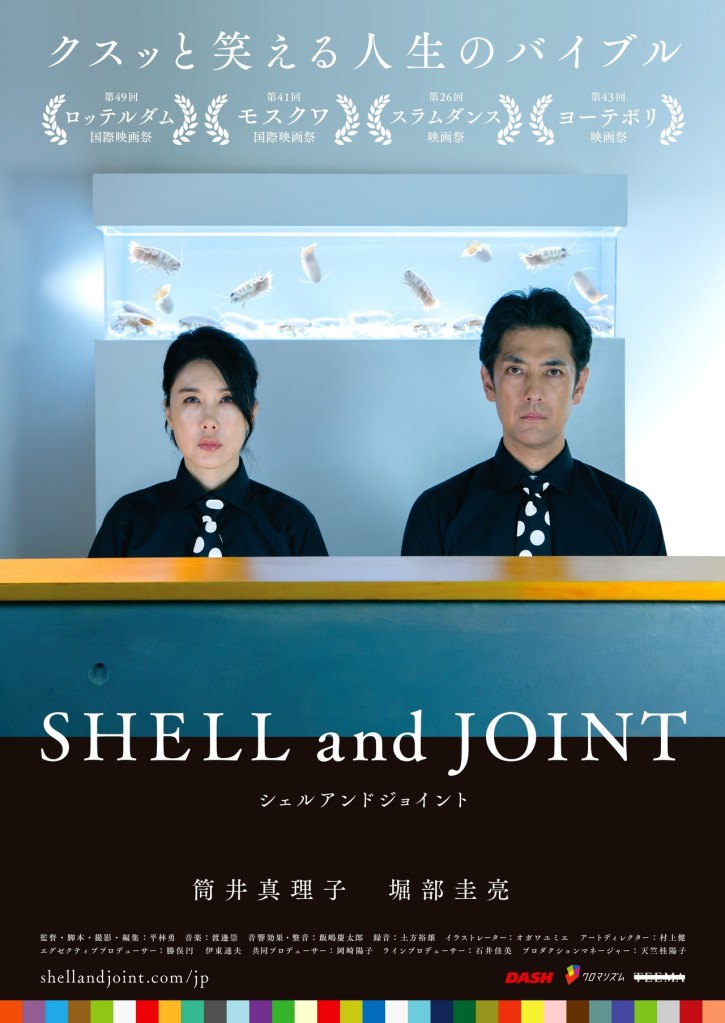
New York Asian Film Festival Returns for Second Winter Showcase

NYAFF is back for its second Winter Showcase and this time around the theme is food! Each of the seven films screening from Feb. 14 – 16 at SVA Theatre will be paired with a selection of matching cuisine available after the screening.

Friday Feb. 14, 7pm: Extreme Job

Bumbling Cops open a chicken shop as a cover for staking out a suspected drug den only for the store to prove an unexpected success. Review.

Food: BBQ Chicken Ktown will be on hand with some specially prepared “Galbi” fried chicken just like in the movie.

Saturday Feb. 15, 1pm: Tampopo

A truck driver helps a struggling widow perfect her soup in Juzo Itami’s classic ramen western! Review.

Food: “Tampopo” tonkotsu ramen by Brooklyn Ramen

Saturday Feb. 15, 3.30pm: Eat Drink Man Woman

A master Taiwanese chef faces changing times as each of his three, very different daughters, considers their futures.

Food: Taiwanese casual dining from 886!

Saturday Feb. 15, 6.30pm: God of Cookery

Classic 1996 Stephen Chow comedy about a cynical “chef” who actually knows nothing about cooking but runs a successful food empire.

food: Asian food specialists Char Sue offer up their take on “Char Siu Rice”.

Sunday Feb. 16, 1pm: The Lunchbox

Romantic drama in which a lonely widower strikes up a friendship with an unhappily married woman after accidentally receiving a lunch box intended for her husband.

Food: Chapati Man’s spicy Indian wraps.

Sunday Feb. 16, 3.30pm: Zone Pro Site: The Moveable Feast

A young woman returns home to the country after failing in Taipei but is disappointed to discover her family restaurant has been reduced to a single noodle stand. Luckily, a master chef agrees to help them get back on their feet.

Food: second helpings from 886!

Sunday Feb. 16, 6.30pm: The First Supper

A family reunites for their father’s funeral, sharing their memories of him through the food that he cooked while reaching new understandings in this foodie family drama from Japan.

Food: Takoyaki bites from Karl’s Balls!

The New York Asian Film Festival Winter Showcase runs February 14 – 16 at SVA Theatre. Tickets are available now via Elevent and you can keep up with all the latest news including the upcoming summer season via the festival’s official websiteFacebook page, and Twitter account.

Tales of Ginza (銀座二十四帖, Yuzo Kawashima, 1955)

“If we all work together we can make Ginza’s night, no the whole world, bright and at peace” insists the hero of Yuzo Kawashima’s chronicle of changing times Tales of Ginza (銀座二十四帖, Ginza 24 Chou), trying to sell a brighter post-war future to a jaded reactionary. By 1955, the consumerist revolution was already on the horizon, and nowhere did it beckon as invitingly as in the upscale Ginza with its elegant department stores and swanky nightlife, but as Hiroshi Shimizu’s Tokyo Profile had shown two years earlier, it wasn’t all glitz and glamour. The world looked very different to the people who lived and worked in the city within a city than it did to those who just dropped in to have a good time. 

Our hero, the incongruously named Mr. Coney (Tatsuya Mihashi), is an earnest florist doing his best to brighten up the city. He’s taken three orphaned teenage girls into his shop, allowing them to support themselves honestly while he teaches them valuable skills, and has also employed the rather less earnest Jeep (Asao Sano). Jeep has had trouble with drug dependency in the past and, Coney fears, is drawn to the easy pleasures of the post-war underworld. The main drama kicks into gear when the upper middle-class Wakako (Yumeji Tsukioka) wanders past the shop and fancies a few roses, asking one of the girls to deliver them to her home later in the day. 

Wakako is currently in the middle of arranging some paintings which belonged to her late father for an exhibition in a gallery where she hopes to sell them. As we discover, she’s in need of money fast because she’s become estranged from her husband, Kyogoku (Seizaburo Kawazu), who has been seduced by post-war criminality. Wakako wants a divorce, but the situation is complicated by the fact her mother-in-law has taken custody of her daughter. In the course of sorting through paintings, the gallery owner spots one Wakako didn’t really want to part with – a portrait of herself as a teenager painted by one of her father’s apprentices when they lived in Manchuria during the war. The painting is signed “G.M”, and the only concrete thing Wakako can remember is that the boy was called “Goro” and was a beautiful, kind soul whom she’d dearly like to see again. 

The “G.M” mystery begins to whip up a small storm in the already volatile Ginza. Coney comes to believe that his older brother, whom he’d long believed to be dead, may be the man Wakako’s looking for but he doesn’t really want to say so until he’s 100% certain. Meanwhile, there are a surprising number of GMs in the city, including a rather sleazy, womanising “doctor” (Toru Abe) who goes to the papers and tells them he painted the picture though Wakako is not convinced and would be a little disappointed to think the man she wondered about all those years turned out to be a cheesy lounge lizard. Other contenders include a melancholy baseball scout (Shinsuke Ashida) who turns out to have connections to the underworld, and, unbeknownst to Coney, the drugs kingpin of post-war Japan known as the “G.M. of Ginza”. 

Drugs are something that Coney is particularly worried about. He’s seen the effect they’re having on his city, and resents that their influence is making Ginza “dark”. The orphaned girls he has working at the shop all lost their parents to drug abuse, and Coney has made getting Jeep off the stuff a primary goal. Jeep, however, is unconvinced. He thinks Coney is a sucker, and that floristry isn’t a profession for a grown man. In part, he’s kicking back against Coney’s well-meaning paternalism, but is also attracted by the flashing neon signs and easy pleasures of the modern Ginza of which the drugs trade is an increasingly big part. For Jeep, the post-war future is one of amoral and thoughtless hedonism, getting rich quick though low level, “innocent” crime, like peddling drugs and porn. 

Wakako too is tempted by that future, though mostly through lack of other options. She’s planning to open a bar with the money from the paintings, but eventually decides to go into business with Coney, working for his brighter future in the florist’s. The pair perhaps fall in love, but the future is still too uncertain for romance. Wakako refuses to see her husband, insisting only on obtaining a divorce and with it her freedom. Coney volunteers to talk to him on her behalf, essentially arguing that his wife will he happier with him because the kind of future they desire is essentially the same. Kyogoku cannot really argue with him. He is a sad and broken man who realises that his choices have robbed him of the future he desired, forced onto the run unable to see his wife and daughter. He justifies himself with the rationale that if he didn’t run drugs in Ginza, “foreigners” would take over and crime would be rampant. He claims that life is survival of the fittest, and that he has no need of love. Kyogoku never felt loved by the aristocratic mother who raised him only as an heir to their name. The only time he felt loved was by his best friend who was, he says, murdered because he lacked power and because his good heart made him weak. 

There maybe something a little reactionary in Coney’s moral absolutism. He condemns his brother for getting involved with student politics which made him “hate Japan”, though he later signs a student petition himself, and has only contempt for Ginza’s famous nightlife while willingly wandering through it selling flowers to romantically-minded guys in bars, but does his best to avoid judgment as he tries to coax those he feels have strayed back onto a better path. Coney believes in a brighter future where good people work together peacefully, while the Kyogokus of the world are content to plunge us all into darkness in a nihilistic pursuit of empty pleasures. No one really “wins” in the end. Coney gets some answers, but remains too diffident to fight for love, while Wakako is perhaps prevented from doing so in feeling called towards another kind of future, which is in effect the past, because of her maternity. Ginza is changing, and you can’t change it back, but you can do your best to be your best, saying it with flowers if with nothing else.


Currently available to stream on Mubi in the US.

Opening titles (no subtitles)