Bitter Money (苦钱, Wang Bing, 2016)

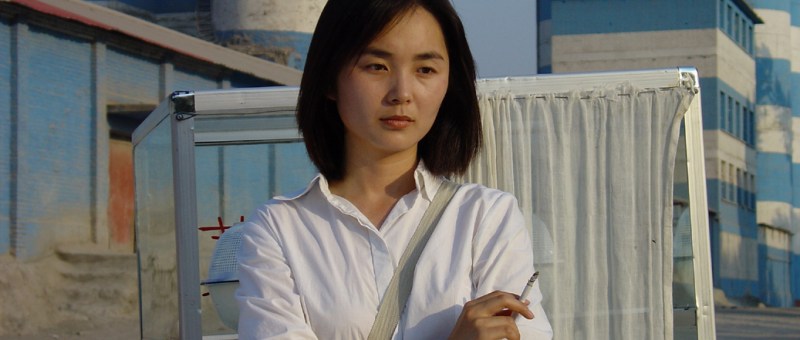
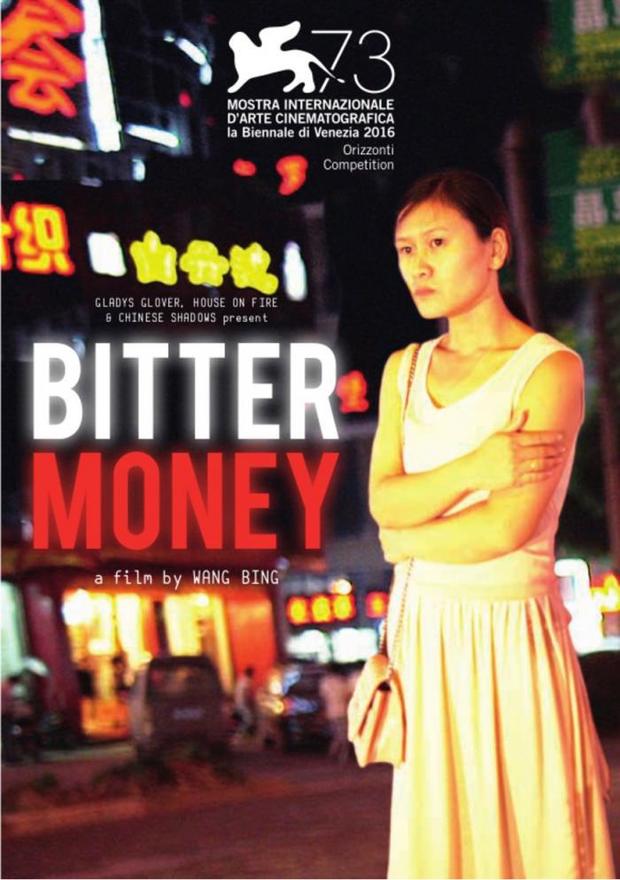
Bitter money poster“Bitter Money” (苦钱, Kǔ Qián), according to director Wang Bing, is a phrase on the rise. It may be that money is rarely sweet, but this kind is particularly hard to swallow. Not only is the youth of China thrown out of its villages towards the inferno of city industry, living alone and away from home, but finds nothing more than exploitation, drudgery and false promise when it gets there. Wang’s trademark immersive detachment captures the frustrating inertia of the young men and women of the modern China who find themselves very definitely at the bottom of a heap and consistently betrayed by a failed ideology.

Wang opens in the country with a trio of hopeful youngsters about to leave everything behind for the bright promise of a better life for themselves and their families bought with city money. They board a bus, and then a train, and then interminable hours later arrive in Huzhou, the centre of the modern garment trade. The girls find work in a small workshop which, all things considered, might not seem so bad save that it provides only extremely low pay and offers no guarantees.

Shifting away from the recent arrivals, Wang’s camera locks onto the melancholy figure of 25-year-old Ling Ling who wants to borrow it as ally in confronting her coldhearted husband who threw her out after she complained about his beatings and is now so resentful that she’s stayed away too long that he refuses to talk to her. Ling Ling’s attitude to her unhappy marriage speaks volumes about the oppressive, patriarchal world of Huzhou where physical strength and dexterity are the only real currencies.

Lamenting her fate to coworker, Ling Ling affirms that domestic violence is just a part of life and believes that women have a duty to “submit” to their husbands’ rages – after all, “no woman can beat a man”. Her husband, Erzi, is proud and insecure. He views his wife’s behaviour as a slight against him and is resolved to be rid of her, loudly threatening her life in front of half the neighbourhood guys each of whom gets up and abandons their mahjong game after sensing that something is about to kick off. Despite the disdain with which the other men treat his overt violence towards his wife, Erzi is convinced his “manly” behaviour is impressive and thinks nothing of grabbing his wife by the throat in full view of Wang’s camera which remains a purely passive presence despite this ongoing threat.

Ling Ling, however, has few real choices left to her. She can’t survive alone in this environment and has nowhere else to go. In a pattern repeated across the nation, Ling Ling’s son is being raised in the country while she and her husband try to make a go of things in the city. Her major argument with Erzi is that he kicked her out with no money and won’t even give her anything for their son. Yet a later scene shows them together again, seemingly “happier” even whilst they to continue to bicker about money if in a less obviously destructive way.

Most of the other workers are not quite as trapped as Ling Ling, but are caught by a feeling of threat and desperation which encourages them to push themselves beyond the limits of human endurance while their bosses reap the profits. One minute the garment workshop is in the hole because they backed a product which isn’t selling, and the next it’s doing so well that the “slow” workers are being laid off in favour of the more “efficient”. It goes without saying that work in these small workshops is almost entirely unregulated with very few enforceable labour rights which means the boss is free to hire and fire as he sees fit. Some consider “investing” in pyramid schemes despite an awareness of their risks in the belief that they could beat the system if they get out fast enough while others resolve to give up and go home to the comparative comforts of the country.

One worker retreats into drink, only for his boss to tell him he’s holding back his wages for his own good which seems like a dubious claim at best. The workers regard the “big factories” with fear and awe, enemies of their current establishments but perhaps also offering better opportunities if also requiring a further fall into the industrial inferno. With little else on offer, “bitter money” is all there seems to be but its rewards are scant and its toll heavy. The teenage girl we first meet full of excitement and enthusiasm is eventually worn down, realising she’s worked all these months and earned barely anything. Wang’s detachment mirrors that of his protagonists who find themselves at the mercy of a cruel and indifferent social system the ongoing violence of which it proves almost impossible to escape.


It’s Only Talk (やわらかい生活, Ryuichi Hiroki, 2005)

It's Only Talk poster“I’m scared of wanting to die” the heroine of Ryuichi Hiroki’s It’s Only Talk (やわらかい生活, Yawarakai Seikatsu) confesses during an awkward car ride with a childhood friend, perhaps one of the only absolute truths she offers in her infinite quest to escape existential loneliness through the false connection of mass tragedy. Yuko (Shinobu Terajima) tells people that her parents died in the Kobe Earthquake, but they actually died in a house fire a few years later. She tells people that her best friend died in 9/11 (she died in New York in the early 2000s but in a car accident), and that her former lover died during the sarin gas attacks on the Tokyo Subway (this one might even be true, but who really can say). She lies, not about facts only details, in the belief that her private pain is somehow not relatable enough and if she ties herself into a wider sense of national or global tragedies then others can share in her grief and she won’t be so alone in her sadness.

Following the deaths of her parents when she was 29, Yuko was diagnosed with bipolar and has been in and out of hospitals for the past six years. Now 35, single, and unemployed, Yuko has found herself cast out from mainstream society and fulfils her (minimal) needs for human connection through meeting “perverts” on specialist message-boards. Through one of these illicit connections she meets K. (Tomorowo Taguchi) – a 50-year-old husband and father who drives her all the way out to provincial suburb Kamata to ensure the liaison (which extends only to watching a porn film together in a public cinema and a cup of tea afterwards) remains secret. Taken with the suburb’s retro charm and unassuming air of faded grandeur, she decides to move and starts life over again in the somewhat nostalgic past which brings her into contact with two men from her youth and another still battling his own.

A portrait of inescapable loneliness, Yuko’s life is both as frozen as the photographs she takes of local landmarks to post on her fledgling blog and permanently in flux as she tries to navigate the constantly shifting tides of her condition. After moving to Kamata she unexpectedly reencounters an old university friend who recalls their spirited discussions of world politics from the fall of the Berlin Wall to Tiananmen Square when they were both bright and engaged students. Like Yuko, Honma (Shunsuke Matsuoka) has wound up in Kamata as a kind of retreat from the harshness of life in Tokyo. Unwilling to embrace life in the public eye, he’s decided to concentrate on a career in local politics instead hoping to work his way into the ministry of education as a civil servant. He is also unmarried – partly as a result of debts accrued during unsuccessful electoral campaigns, and, as we later find out, erectile dysfunction. Honma reintroduces Yuko to another old friend, “Bach” (Nao Omori) who has gone the opposite way and become a venture capitalist but apparently still holds a torch for the young Yuko all these years later. Meanwhile, she’s been meeting up with a lonely yakuza, Noboru (Satoshi Tsumabuki), who also has bipolar and longs for the world of childhood safety and innocence he associates with the strange Godzilla tyre park Yuko photographed and put on her blog.

The most significant relationship in her short-lived period of connection is in fact with her childhood friend and cousin, Shoichi (Etsushi Toyokawa), who abruptly turns up at her flat unannounced. Shoichi, also depressed but perhaps in a less extreme way and hiding it much better, left his marriage because he felt pushed out when the baby was born and then ran after a younger woman who went to Tokyo but ultimately did not want him. The two share a strange sort of intimacy born of their long history which is almost fraternal but laced with minor awkwardness and ancient resentments. Though his wife berated him for his refusal to help out at home, Shoichi tenderly cares for Yuko just as she is at her most vulnerable having entered an extreme depressive episode – washing her hair, doing her laundry, and picking up her medication while trying to remain patient even when Yuko rejects his gestures of help. The giving and receiving of care provides each with a new sense of purpose and connection but their paths are perhaps set on different courses in the immediacy of the need to deal with the unresolved past.

Waking up from her depression, Yuko discovers life has delivered her yet another cruel blow, witnessing others moving on in one way or another and leaving her once again all alone marooned on the sidelines. Yet she lives on, “scared of wanting to die” but daring to remove the towel which hides an ugly scar from a previous suicide attempt to revisit a public bath which holds a memory perhaps both happy and sad. Melancholy in the extreme, It’s Only Talk is not a tragedy but an aching portrait of spiritual loneliness in a society only too happy to exclude.


Original trailer (no subtitles)

The Devil’s Island (獄門島, Kon Ichikawa, 1977)

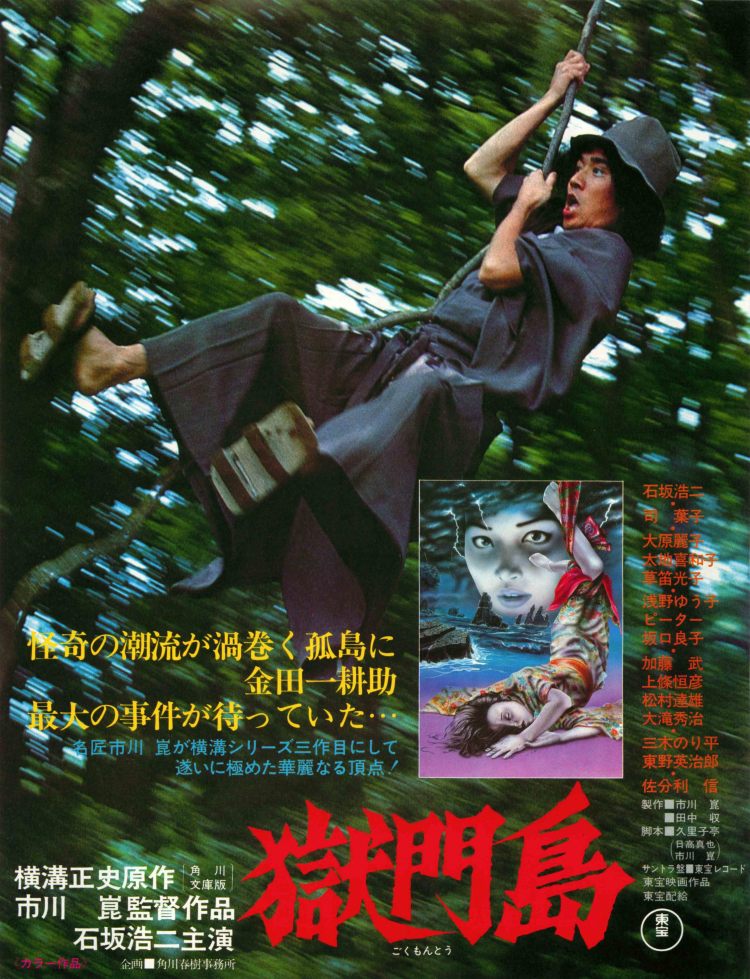
Devil's Island posterKon Ichikawa revisits the world of Kosuke Kindaichi for the third time in Devil’s Island (獄門島, Gokumon-to). Confusingly enough, Devil’s Island is adapted from the second novel in the Kidaichi series and set a few years before Ichikawa’s previous adaptation The Devil’s Ballad (the twin devils are just a coincidence). As with his other Kindaichi adaptations, Ichikawa retains the immediate post-war setting of the novel though this time the war is both fore and background as our tale is set on profane soil, a pirate island once home to Japan’s most heinous exiled criminals, which is to say it is the literal fount of every social failing which has informed the last 20 years of turbulent militarist history.

In 1946, Kindaichi (Koji Ishizaka) travels to Kasaoka to catch the ferry to the island. On the way he runs into a demobbed soldier hobbling along on crutches only to catch sight of the man quickly picking his up crutches and running across the railway tracks when he thought no one was looking. Kindaichi is in luck – before he even reaches the boat he runs into the very man he’s come to see, Reverend Ryonen (Shin Saburi), for whom he has a message. Posing as a fellow soldier, Kindaichi reveals he has a “last letter” from a man named Chimata who sadly passed away right after the cessation of hostilities having contracted malaria. Chimata, as we later find out, was the legitimate heir of the island’s most prominent family. Kindaichi chooses not to reveal his true purpose, but the truth is that Chimata suspected his death would put his three younger sisters in danger from various unscrupulous family members attempting to subvert the succession.

Your average Japanese mystery is not, as it turns out, so far from Agatha Christie as one might assume and this is very much a tale of petty class concerns, island mores, and changing social conventions. The extremely confusing island hierarchy starts with the head of household who doubles as the head of the local fishing union and then shuffles out to the branch line and brassy sister-in-law Tomoe (Kiwako Taichi) who is keen claim all the authority she is entitled to. The old patriarch, Yosamatsu (Taketoshi Naito), went quite mad at the beginning of the war and is kept in a bamboo cage in the family compound where he screams and rails, only calmed by the gentle voice of Sanae (Reiko Ohara), a poor relation raised in the main house alongside her brother Hitoshi who hasn’t yet returned from the war. Aside from Yosamatsu, the absence of the two young men means the main house is now entirely inhabited by women, looked after by veteran maid Katsuno (Yoko Tsukasa).

Then again, Japanese mysteries hinge on riddles more than they depend on motives and there are certainly plenty of those on this weird little island where they don’t like “outsiders”. Ichikawa hints at the central conceit by flashing up haiku directly on the screen along with a few original chapter headings for Kindaichi whose eccentricities might seem less noticeable in such an obviously crazy place but strangely seem all the more overt, his trademark dandruff falling like rain from his tousled hair. It has to be said that Kindaichi fails in his otherwise pure hearted aims – he doesn’t make a great deal of effort to “save” the sisters and only attempts to solve the crimes as they occur, each one informing the next. This time around he gets trouble from both irritatingly bumbling detective Todoroki (Takeshi Kato) and his assistant Bando (Kazunaga Tsuji) , and the local bobby who immediately locks Kindaichi up and declares the crimes solved on the grounds that they only started happening after Kindaichi arrived.

Meanwhile, there are rumours of an escaped “pirate” running loose, demobbed soldiers, and a host of dark local customs contrasting strongly with the idyllic scenery and the strange “pureness” of this remote island otherwise untouched by the war’s folly save for the immediate events entirely precipitated by the absence of two young men taken away to die on foreign shores. Though the various motives for the crimes are older – shame, greed, classism, a bizarre dispute between Buddhists and Shamans, none of this would have been happening if the war hadn’t stuck its nose into island business and unbalanced the complex local hierarchy. Tragically, the crimes themselves all come to nought as a late arriving piece of news renders them null and void. Just when you think you’ve won, the rug is pulled from under you and the war wins again. Ichikawa opts for a for a defiantly straightforward style but adopts a few interesting editing techniques including fast cutting to insert tiny flashbacks as our various suspects suddenly remember a few “relevant” details. This strange island, imbued with ancient evils carried from the mainland, finds itself not quite as immune from national struggles as it once thought though perhaps manages to right itself through finally admitting the truth and acknowledging the sheer lunacy that led to the sorry events in which it has recently become embroiled.


Original trailer (no subtitles)

The Devil’s Ballad (悪魔の手毬唄, Kon Ichikawa, 1977)

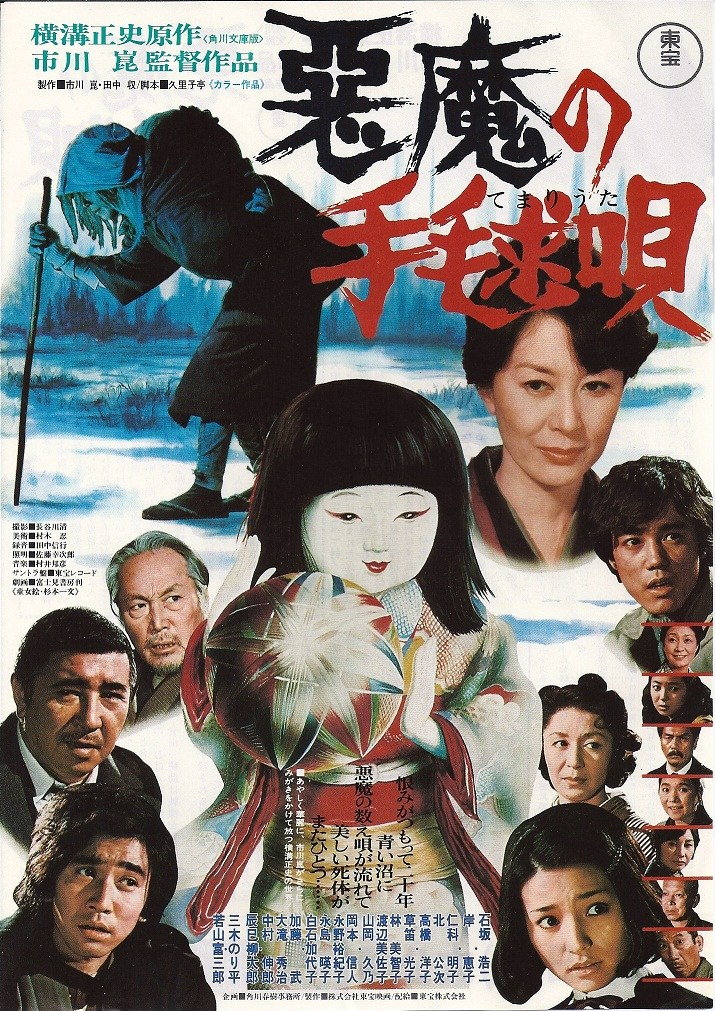
Devil's Ballad posterA year after his box office smash The Inugami Family, Kon Ichikawa returns to the world of eccentric detective Kosuke Kindaichi with The Devil’s Ballad (悪魔の手毬唄, Akuma no Temari Uta). Like many a Kindaichi mystery, Devil’s Ballad finds him called upon to delve back into the past to satisfy an ageing detective’s anxiety about an old case, only to be faced with a series of new ones as a consequence. This time, however, the mystery leans less on buried secrets than deeply held grudges, betrayals, and lingering feudal feuds as the post-war society tries and fails to free itself from ancient oppressions.

The film opens with a tryst between two adolescent lovers in the ominously named “Devil’s Skull Village” in 1950. Yasu (Yoko Takahashi), the girl, is at pains to let her boyfriend, Kanao (Koji Kita), know that she is keen to take the relationship to the next level but he is old fashioned and wants to wait until their union is formalised. The pair are interrupted by some of their friends who are in the middle of planning a celebration for a visit from a girl who moved to the city, Chie (Akiko Nishina). Meanwhile, Kindaichi (Koji Ishizaka) has arrived at the inn owned by Kanao’s mother Rika (Keiko Kishi) on invitation from a retired policeman, Isokawa (Tomisaburo Wakayama), who wants Kindaichi to look into the murder of Rika’s husband twenty years ago. Isokawa, then a young rookie, is convinced that Rika’s husband was not the victim but the murderer and the corpse actually belonged to another man entirely – Onda, a drifter who defrauded half the village with a wreath making scam.

Rika and her children – 20-year-old Kanao and his younger sister Satoko (Eiko Nagashima) who has prominent facial birthmarks and rarely leaves the house, came to the village with her husband and are therefore slightly divorced from the longstanding social rivalries. The village has two noble families – the Yuras and the Nires. Feeling the need to modernise, the Nires bet everything on vineyards and it paid off. The Yuras, by contrast, were defrauded by Onda’s wreath scam and lost their fortune and social standing. Yasu, Kanao’s girlfriend, is a daughter of the Yuras, but the Nire’s have been petitioning Rika for quite some time to have her son marry their daughter, Fumiko (Yukiko Nagano), who also has a crush on him (though this is largely irrelevant to her father’s dynastic ambitions). When the younger generation start getting bumped off in ways eerily similar to a local folk song, Kindaichi and Isokawa are on the case, wondering if these new murders have anything to do with their old one.

Despite its 1950 setting, Devil’s Ballad is unusual in resolutely making an irrelevance of the war which only receives a brief mention as an explanation for why some of the case files have been destroyed and for why marriage is such a hot button issue given the lack of men and abundance of women. Nevertheless, the crimes span a turbulent 20 years of Japanese history with the original murder taking place in the early ‘30s during a period of economic instability following the Manchurian Incident. In the socially conservative pre-war era, it seems Onda also got around and may have fathered several illegitimate children with women in the village, some of them noble, some not. These buried secrets seem primed to bubble to the surface now that the children are coming of age and marriage again becomes an issue as worried parents try to think of acceptable ways to block potentially “inappropriate” matches without sending their children off into ruinous elopements or tipping off the wrong people that their kids may not be their kids.

The crimes themselves, old fashioned as they are, are partly reactions to a changing society. We discover that the reason Rika and her husband were forced to come back to the village was that their showbiz careers were stalling – she was a vaudeville performer specialising in shamisen, and he a “benshi” (narrator of silent films) who became convinced his job was obsolete after witnessing a subtitled print of Morocco. Likewise, the two rival families cannot let go of their petty provincial privileges, and as Kanao angrily snaps back at his mother, Japan is now a democratic country and he is free to choose his own wife at a time of his own choosing with or without parental blessing. This remote village is perhaps isolated from the privations of the post-war world but it’s also stuck in the past, hung up on past transgressions and unable to move forward into the new era. However, the primary motivations for murder are as old as time – guilt, humiliation, and self preservation.

Ichikawa keeps things simple but splices in a few strange, avant-garde sequences of kokeshi dolls menacingly bouncing balls coupled with shifts to black and white, fast-paced reaction shots, and stuttering still frame sequences all while Kindaichi showers innocent passersby with his famous dandruff, the idiot police officer continues to offer ridiculous theories while his sergeant dutifully follows him around, and the local bobby perfects a line in hilarious pratfalls. Overlong at two and a half hours and falling prey to the curse of the prestige crime drama in spoiling its mystery through casting, the Devil’s Ballad may not be the best of the Kindaichi mysteries but offers enough of a satisfying twist to prove worthy of the Kindaichi name.


Original trailer (no subtitles)

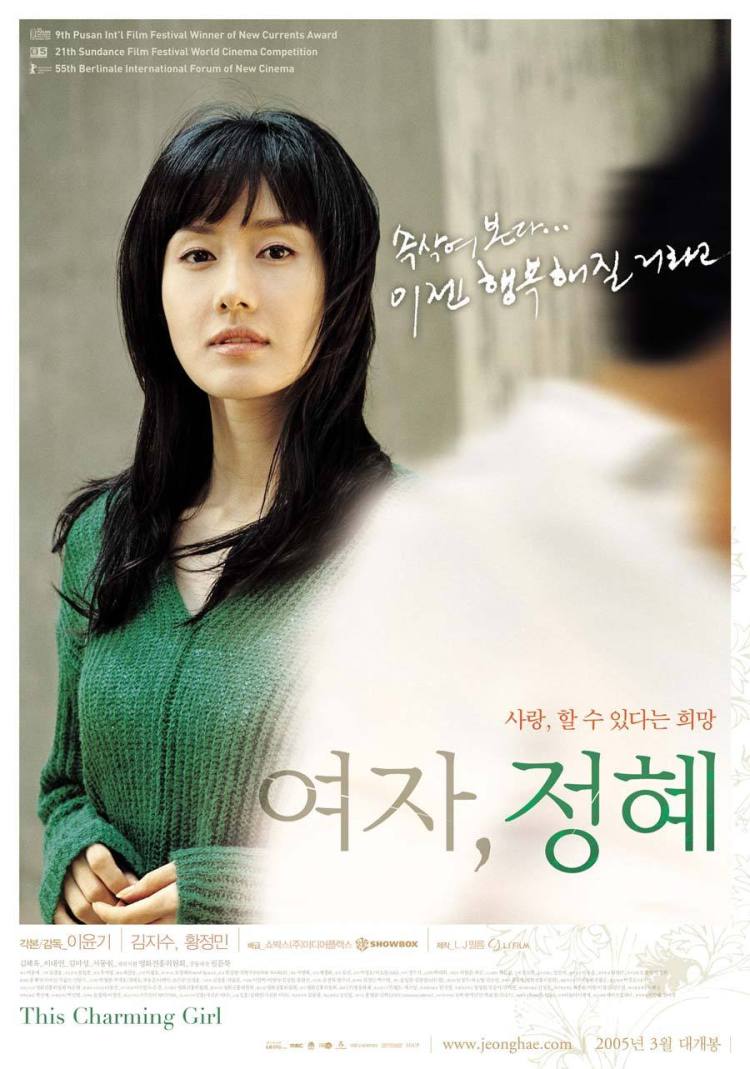
This Charming Girl (여자, 정혜, Lee Yoon-ki, 2004)

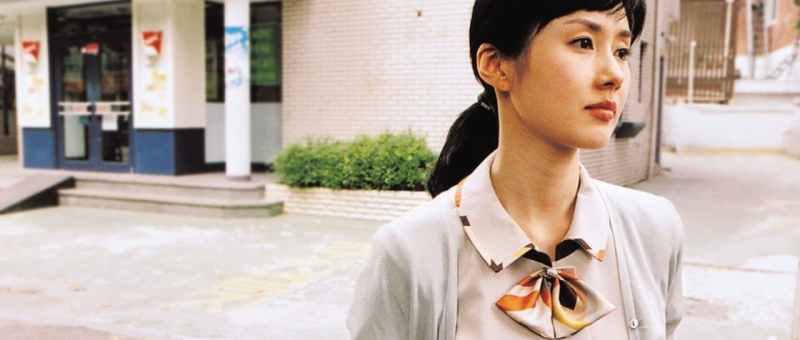
This Charming GirlIt’s strange how, even in this increasingly interconnected world, our relationships with those around us are often wilfully superficial. Trapped within our own self-obsessed perspectives, we often fail to see beneath the surface of social conformity to realise that others are also lonely or troubled, wishing someone would see them but also afraid to make plain the various ways they don’t measure up to a social ideal. The heroine of Lee Yoon-ki’s This Charming Girl (여자, 정혜, Yeoja, Jeong-hye) is just such a woman – “charming” in her perfectly composed exterior, in many ways an embodiment of traditional femininity in her near invisibility as she gets on with her life and work quietly and with efficiency. There are however tiny cracks in the surface of her ordered existence that betray an ongoing, perhaps incurable anxiety.

Jeong-hae (Kim Ji-soo), a young woman in her late twenties, has an ordinary job working on the counter in the local post-office. As we later find out, she was once married but walked out on her new husband on their wedding night and, following the death of her mother, lives alone in the same apartment she has lived in all her life. Despite being well liked at work and taking lunch with the office ladies, Jeong-hae is perhaps not quite part of the group and finds it hard to relate to her noisy colleagues who gossip about her behind her back and when all is said and done probably regard her as a fellow employee rather than friend. Jeong-hae’s days are mostly spent alone, her interactions with others outside of work extend only to awkward telephone conversations with an unkind aunt, and an angry neighbour complaining about her extremely loud alarm clock.

Despite her shyness and self-imposed isolation, Jeong-hae is a kind and caring person with a gentle, nurturing personality. In the absence of human connection, she lovingly tends to her plants but is wary of taking on responsibility for more complex creatures and it’s only after a few mornings of noticing a melancholy, mewling kitten on her way to the bus stop that she decides to pick it up and take it to a vet. Suddenly being a cat owner has a profound impact on Jeong-hae’s way of life even if the skittish creature echoes her own sense of mistrust born of previous trauma in insisting on hiding under the sofa. Bonding with a living creature brings back painful memories of her traumatic past which threaten to impede her new sense of forward motion even as she attempts to outrun them.

The kitten isn’t the only stray Jong-hae picks up, later she takes pity on a sad young man who became involved in a drunken bar fight and alienated all his friends. Generally speaking, for reasons we later come to understand, Jeong-hae is wary of men and of male physicality. A rare visit to a shoe shop provoked by an unpleasant meeting with her ex-husband who has only got back in touch to express how much she hurt him by walking out without explanation, makes plain her distress even with perhaps “ordinary” everyday interactions. Though she does her best to endure it, Jeong-hae’s discomfort with the salesman’s hard sell tactics as he uses overfamiliar language and roughly manhandles her feet into a pair of sandals (which do not really suit her) eventually results in an extremely rare instance of self-assertion as she tells the assistant off, politely, before stopping to advise the woman behind the counter that perhaps men should not be selling women’s shoes or at any rate they should treat their customers as “people” rather than sales targets. Nevertheless, something about the drunken young man tells her that he is not a threat, only another person who seems to be in a dark place and probably in need of a stranger’s ear.

It’s perhaps this same sense of “recognition” that prompts her into making an extremely forward and uncharacteristically bold overture towards a shy young writer (Hwang Jung-min) who comes to the post office regularly to send off his manuscripts. If we get the sense that Jeong-hae is a mostly invisible person, then the writer is much the same. We catch sight of him often in the background, shopping in convenience stores, sitting at outdoor tables, waiting to cross the road. He’s the kind of person that perhaps only someone like Jeong-hae, equally invisible, a supernumerary even within her own world, might recognise. The tragedy is that Jeong-hae has a lot of love to give but has been robbed of the knowledge of how to give it safely thanks a traumatic incident in her past in which her innocence and naivety were abused by a person of trust who left her with no one to turn to for protection and a deeply internalised sense of shame and rage.

Her traumatic memories surround her like living beings, occupying the same space, occasionally poking their heads into her everyday life to remind her of an unpleasant association she couldn’t forget if she tried. Jeong-hae no longer sleeps, she naps fitfully on the sofa or wanders around all night at markets and cafes; she craves connection, but cannot access it. Thanks to the cat, the ex, the writer, even the overbearing shoe shop assistant and drunk man, she begins to find a way forward even if it pushes her towards an equally dangerous conclusion, and suddenly perhaps it’s not quite all so hopeless as it seemed.


This Charming Girl was screened as part of the 2018 London Korean Film Festival.

Original trailer (no subtitles)

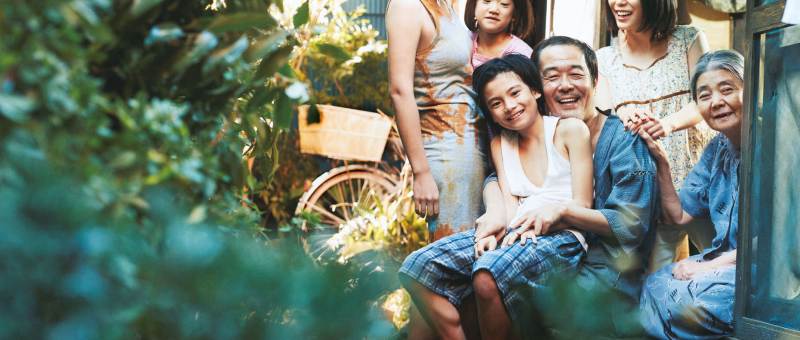
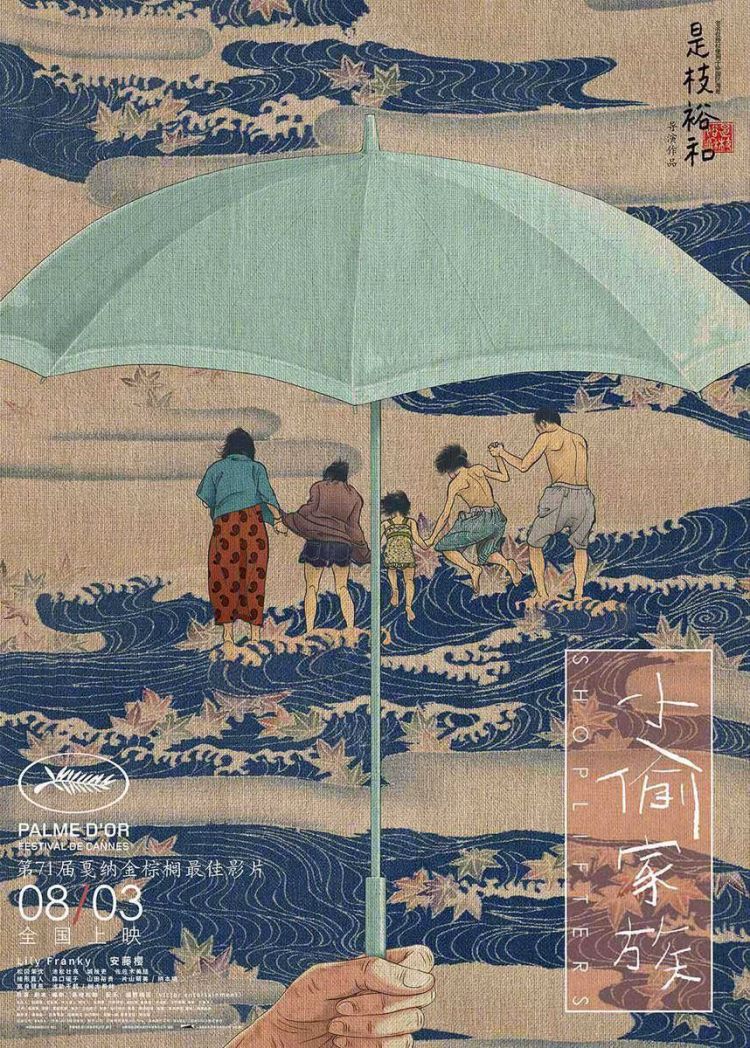
Shoplifters (万引き家族, Hirokazu Koreeda, 2018)

Shoplifters poster 2Tolstoy once said that all happy families are alike, but each unhappy family is unhappy in its own way. The family drama is the mainstay of Japanese cinema, though to be fair it rarely features families which are noticeably “unhappy” so much as struggling under the weight of social expectations. Nevertheless, since consumerism arrived in force, the concept of “the family” has come in for regular interrogation. That at the centre of Shoplifters (万引き家族, Manbiki Kazoku), Hirokazu Koreeda’s return to the genre with which he is most closely associated, are on one level among the happiest of families ever captured on film, but then again they are not quite like all the others.

The Shibatas live in a small Japanese-style house owned by “grandma” Hatsue (Kirin Kiki) whose pension (or, to be more precise, that of her late husband) makes up a significant portion of the family income. Patriarch Osamu (Lily Franky) has a casual job as a day labourer while his wife, Nobuyo (Sakura Ando), works in a laundry. Her “sister” Aki (Mayu Matsuoka) tells people she works as a kind of hostess but actually dresses up as a schoolgirl and performs sex services behind a two-way mirror in a sleazy club. Meanwhile, Osamu and Nobuyo’s “son”, Shota (Jyo Kairi), alternates his time between homeschooling himself and helping out with the family’s only other source of income – thievery. It’s after one partially successful foray to the local supermarket that Osamu and Shota come across a little girl, Yuri (Miyu Sasaki), stuck out on a balcony alone in the freezing cold and decide to take her home for something warm to eat.

Of course, this family itself is the very definition of makeshift. Osamu and Nobuyo may be a “real” couple, but no one else is actually related. The Family Game may have attempted to take the family apart and expose it as an artificial mechanism devoid of real feeling in which each is simply playing the role expected of them, but Shoplifters asks the opposite – if a found family can actually be more “real” that the real thing because it has been chosen, is wanted, and continues to function because of an organic bond between individuals which exists in the absence of blood.

In a sense, the family itself has been “shoplifted”. Later, under questioning, Nobuyo is accused of “throwing away” Hatsue but she corrects them – she didn’t and she wouldn’t. Someone else “threw away” Hatsue and she found her. Hatsue was abandoned by her husband who fathered a family with another woman, but seemingly not with her. Alone she longed for a family of her own and most of all to avoid the looming threat of a “lonely death”. Whatever else they might have gained from the “arrangement”, Osamu and Nobuyo are at least able to offer her the thing that would make her life complete as she prepares to meet its end. By the logic of the family drama, one family must be broken in order to forge another and it’s true enough to say that each member of the Shibata clan has been pilfered from somewhere else but in the end perhaps it’s better this way, free of the cold obligation of a blood or legal tie.

Then again, there are cracks in the foundation. Little Shota, growing fast into a young man, is increasingly conflicted about the way the family makes ends meet. Trapped in low paid, casual employment, Osamu and Nobuyo are working but poor, unable to support their family on their wages alone. Injured at work, Osamu is left without compensation because he’s only a day labourer and therefore not entitled to workplace protections while Nobuyo is eventually forced into a “workshare” arrangement and then to resign when her boss cruelly tells her and a friend that they can decide between themselves which of them gets to keep their job. They steal because they’re hungry, but also perhaps because they enjoy this small way of rebelling against the system. Osamu tells Shota that stealing from stores is OK because no one really “owns” anything while it’s still on the shelf, but Shota begins to doubt his logic. It’s not just “taking”, it’s taking “from” and Shota is increasingly worried about who it is their way of life may be harming. He worries that in taking in Yuri the family is corrupting her, indoctrinating her into their morally dubious universe.

Morally dubious it may be, but life with the Shibatas is warm and safe which is a lot more than can be said for Yuri’s life with her birth parents who don’t even bother to report her missing – social services eventually figure out she isn’t around two months later and come to the conclusion that the parents may have got rid of her in some unspecified way. Which sort of “corruption” is worse – an upbringing filled with abuse and neglect, or one filled with love and habitual criminality? Yet it’s an act of love that finally breaks the family apart and leaves them at the mercy of cold and official forces too obsessed with their own sense of narrative to bother listening to the “truth”. Shoplifters wants to ask if the “natural” laws of society still serve us when little girls fall through the cracks and our definition of “family” is so narrow and rigid that it denies us a way of saving them. Sometimes the found family is stronger than the inherited one, but society is primed to crush it all the same in its relentless and indifferent quest to preserve the social order.


Shoplifters opens in UK cinemas on 23rd November courtesy of Thunderbird Releasing.

International trailer (English subtitles)

Grain in Ear (芒种 / 망종, Zhang Lu, 2005)

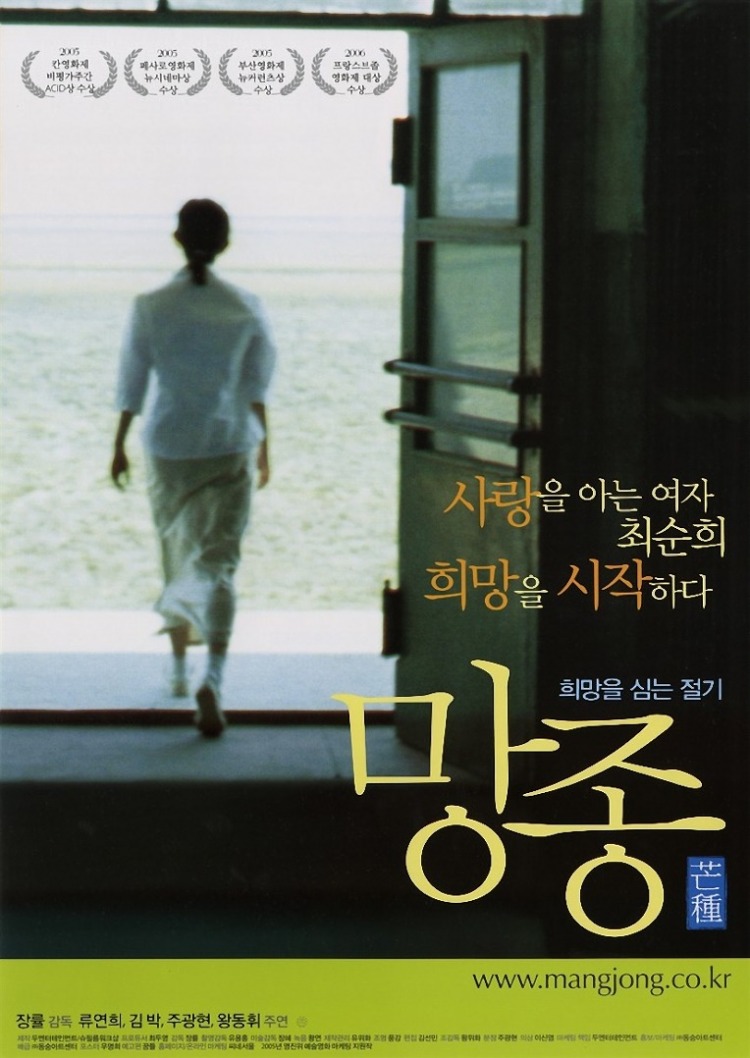
Grain in Ear posterChinese-Korean director Zhang Lu has made a career of exploring the lives of those living on the margins of modern China and most particularly those of the ethnic Korean minority. 2005’s Grain in Ear (芒种, Máng zhòng, 망종, Mang Jong) brings this theme to the fore through the struggles of its stoic heroine who bears all her troubles with quiet fortitude until the weight of her despair threatens an already fragile sense of civility, consistently eroded by multiple betrayals, misuses, and an unforgettable othering. Yet she is not entirely alone in her outsider status even if there is precious little value in solidarity among the powerless in a world of circular oppressions.

32-year-old Cui Shun-ji (Liu Lianji) has moved to a small town with her young son Chang-ho (Jin Bo) following her husband’s conviction of a violent crime. Unable to find work, she ekes out a living illegally selling kimchi from a cart without a permit while Chang-ho busies himself playing with the neighbourhood kids in the rundown industrial town. Isolated not only as a newcomer but as a member of the ethnic Korean minority, Shun-ji keeps herself to herself but can’t help attracting the attentions of the locals some of whom are merely curious about her spicy side dishes while others are intent on helping themselves to things which aren’t actually on sale.

There is something peculiarly perverse about Shun-Ji’s decision to make her living selling kimchi. It is both an act of frustrated patriotism and a kind of commodification of her ethnicity though she seems to have intense pride in her ability to produce her national dish even if there is not often as much calling for it as she would like. Meanwhile, at home, Shun-ji virtually tortures little Chang-ho into trying to learn the Korean alphabet as a way of fastening him closely to his heritage and community, but Chang-ho is a Chinese boy to all intents and purposes. He may understand Korean, but he doesn’t want or need to speak it and resents his mother’s attempts to reinforce his Koreanness.

Meanwhile, despite her aloofness, Shun-ji eventually forms a kind of relationship with a lonely Korean-Chinese man, Mr. Kim (Zhu Guangxuan), who visits her cart. Brought together by a shared sense of loneliness and a connection born only of a mutual ethnicity, the pair drift into an affair but Shun-ji’s dreams of romantic rescue will be short lived. Her lover is a weak willed man married to a feisty Chinese woman who will stop at nothing to recapture her henpecked husband. Cornered, Kim tells his wife it’s not “an affair” because money changed hands, branding Shun-ji a prostitute and getting her arrested by the police to prove his point.

To be fair, Shun-ji’s married lover is another oppressed minority afraid of the consequences of non-compliance, but he’s also just one of the terrible men that Shun-ji will encounter in her quest towards independence and self sufficiency. Her husband killed a man for money and left his family to fend for themselves when he went to prison for it. Her lover called her a whore and left her at the mercy of the police. A man who offered to help with a lucrative kimchi contract turned out to be after another kind of spice, and the kindly policeman who stopped by her cart with tales of his impending marriage turned out not to be so nice after all.

In this fiercely patriarchal world, women like Shun-ji have no one to rely upon but each other. Marginalised by poverty, ethnicity, and unfamiliarity, Shun-ji and Chang-ho live in a small shack behind the railway next to the local sex workers. Chang-ho, too small to understand why everyone calls the women next-door “chickens”, treats them all like big sisters while a kind of solidarity emerges between Shun-ji and the melancholy youngsters from far away towns who’ve travelled to this remote place to ply their trade out of desperation, too ashamed to stay any closer to home. One of the sex workers tries to warn Shun-ji about Kim – men who buy their services are not especially good romantic material, but it’s advice that falls on deaf ears. Shun-ji wants to believe better of her compatriot, but her faith is not repaid.

Zhang, in a familiar motif, foregrounds Li Bai’s famous ode to homesickness, giving it additional weight in the mouth of little Chang-ho whose longing is for another kind of home in contrast to his mother’s continued need to believe in the solidarity of her community. Yet even she eventually loses faith, tearing up Chang-ho’s Hangul cards and finally allowing him to give up on his Koreanness. Having endured so much, Shun-Li’s broken spirit eventually leads her towards an inevitable explosion and a grim, strangely poetic revenge against the society which has so badly wronged her. Only in this final moment of transgression does Shun-ji begin to harvest her own freedom, but escape is still a long way off and her final act of defiance may only further condemn her in world of constant oppressions.


Grain in Ear was screened as part of the 2018 London Korean Film Festival.

Original trailer (Mandarin and Korean with Korean subtitles only)

Old Love (재회, Park Ki-yong, 2017)

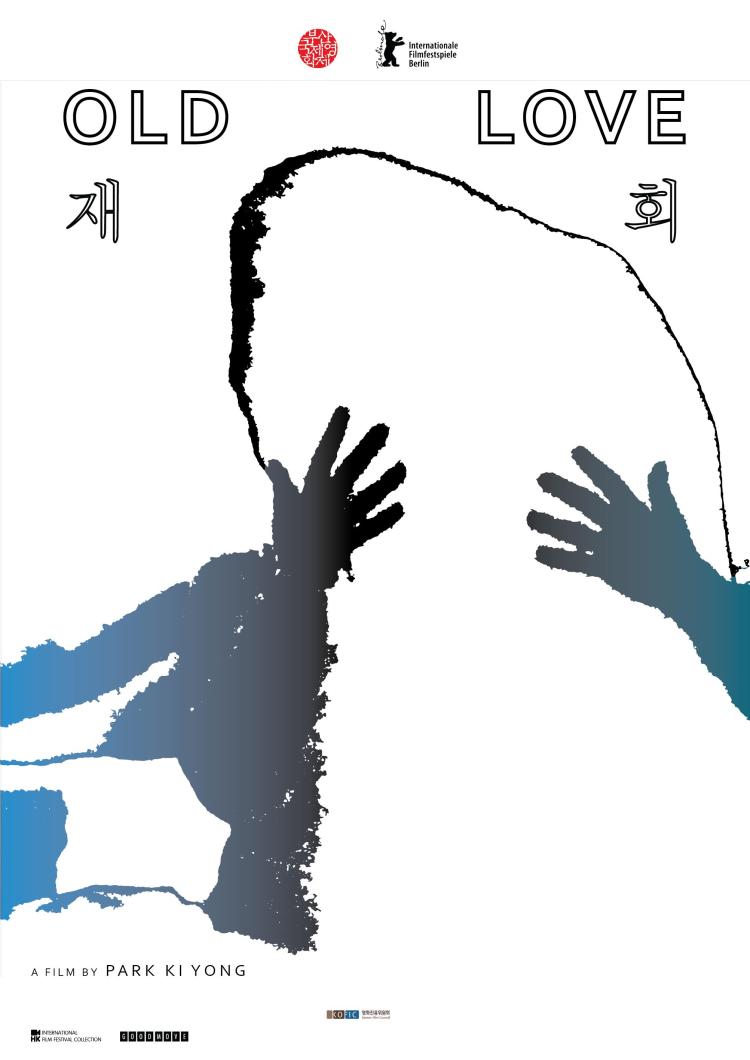
Old Love posterSome might say, it’s best to learn the lesson that life is disappointing as early as possible but there can be few who meet encroaching old age without a sense of regret and failure. The couple at the centre of Park Ki-yong’s Old Love (재회, Jaehoe) seem to have little else as they unexpectedly reunite at differing points of reunion and abandonment, longing for an unreachable past where their youthful dreams of a happier future were still possible and they could, at least, live with a false sense of hope. All that’s left for them now is to find resignation in the remaining days of loneliness and futility.

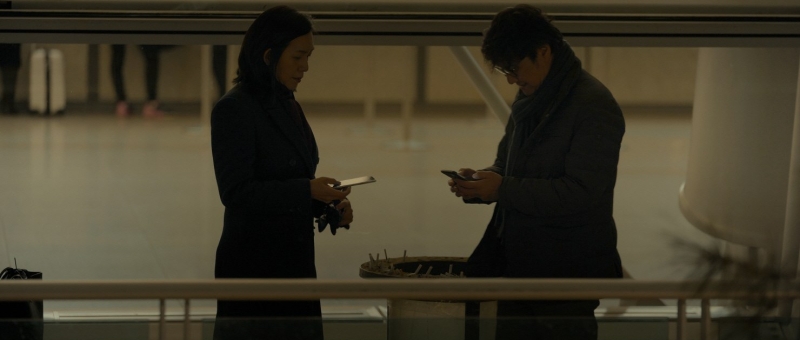
Yoon-hee (Yoo Jung-ah), who has been living in Canada for the past 30 years, returns to Korea for the Lunar New Year holiday in order to confer with her remaining family members and decide what’s best for her elderly mother now suffering with dementia. Already conflicted, Yoon-hee’s homebound holiday gets off to the worst of starts when she realises her suitcase is broken and gets caught up in an inescapable cycle of airport bureaucracy. Her exit is further delayed by a brief cigarette break during which she hears a familiar voice. Jung-soo (Kim Tae-hoon), her college boyfriend, is also at the airport dropping off his 17-year-old daughter who is on her way to study abroad in Australia. Not quite knowing why, Yoon-hee calls out to him and the former lovers engage in awkward conversation, eventually swapping (temporary) phone numbers and agreeing to meet up while Yoon-hee is in the country. 

Neither Yoon-hee nor Jung-soo give much indication of the nature of their college era relationship or why it eventually ended. They’ve obviously not stayed in touch, though there is relatively little animosity between them and no desire to argue about or dig up the past. Together once again they walk the no longer familiar streets, exchanging vague memories – a taste for octopus, forgotten left handedness, shops which have long since closed down. Their world has already disappeared and left them behind with only the burden of nostalgia to sustain them.

Long ago, Yoon-hee and Jung-soo were members of a theatre troupe. Jung-soo once said that theatre was more precious than life, yet at some point he gave it up. Now broken and dejected, he is a lonely widower whose daughter has abandoned him in resentment to look for her better future somewhere else. Yoon-hee left the theatre behind to go to Canada where she married, it seems mostly for convenience, and had a son who is now 27 years old and about to be married himself. Yoon-hee’s son returned to Korea but the pair are estranged and she won’t be seeing him on this visit. In fact she isn’t even invited to the wedding.

Yoon-hee and Jung-soo may be lonely and full of regret, but according to Jung-soo all but two of their former company fellows abandoned their dreams of the stage for more conventional lives. Mun-hee (Kim Moonhee) and Yong-guk were the two who stayed true, but Yong-guk is now seriously ill and will leave his family behind with no means of support. Later at an inn, Yoon-hee and Jung-soo run into another young group of actors eagerly debating The Seagull. Jung-soo can’t help butting in, a sad old man with some words for the hopeful youngsters. Increasingly drunk, he tells them to follow their dreams no matter what or else you’ll end up regretting your life choices. If you follow your dreams and it doesn’t work out, at least you can say you tried but if you sell out and that fails too what will you have then? Jung-soo has nothing and the emptiness is crushing him.

A lonely walk brings Yoon-hee straight into the present day when she blends into the candlelight protests, perhaps further recalling the tumultuous days of her own youth lived in the early days of a new democracy filled with a hope and promise that now seems to have retreated far into the distance. Caught at points of transit – airports, train stations, resort towns, neither Yoon-hee nor Jung-soo can find the strength to move forward. He asks her to stay, to find a home with him, as he should have done all those years ago but the moment is already gone and no amount of regret can ever bring it back. Broken by life’s disappointments, the failure of their dreams, and the emptiness of their loveless lives, Yoon-hee and Jung-soo remain trapped by the inertia of their times, just two lonely people for whom the train will never arrive.


Old Love was screened as part of the 2018 London Korean Film Festival.

Berlinale trailer (no subtitles)

Camel(s) (낙타(들), Park Ki-yong, 2001)

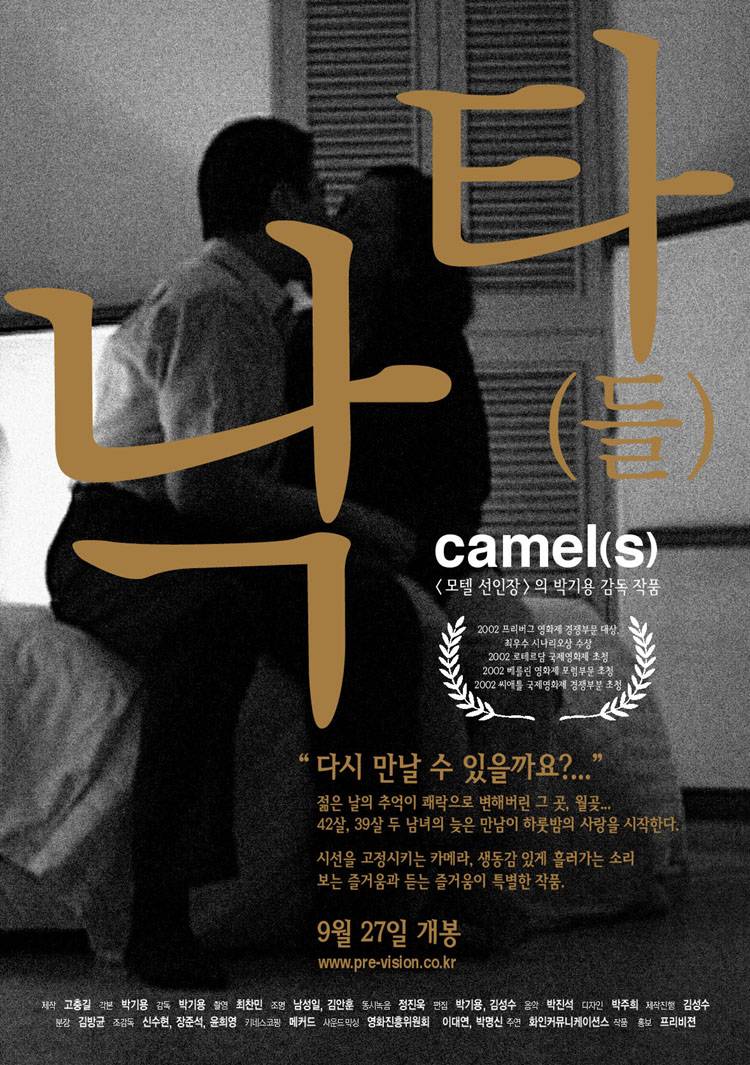
Camel(s) posterFour years after his breakthrough Motel Cactus, Park Ki-yong returned to narrative filmmaking with the comparatively subdued Camel(s) (낙타(들), nagta(deul)). Like Cactus, Camel(s) adopts a thirsty, desert-bound title in its titular dromedaries, casting its two lonely heroes as a pair of solitary travellers in search of an oasis in an otherwise barren existence. An adulterous couple in early middle-age, these wandering souls are destined to connect only briefly before returning to their unsatisfying lives filled only with a defeated sense of relief intended to see them through until the next stream appears on the horizon.

40-something Man-sup (Lee Dae-yeon) arrives to collect 30-something Myeong-hui (Park Myeong-shin) from an airport. She’s a little put out because he’s late and she didn’t quite see him because he’s driving a different car. Evidently not a married couple, the pair must have met before but their conversation is awkward – they exchange superficial pleasantries and discuss name Hanja which suggests they don’t know each other terribly well. They were supposed to be going to an island, but it’s too late now and so they’ll have to make do with the nearby tourist resort of Sorae.

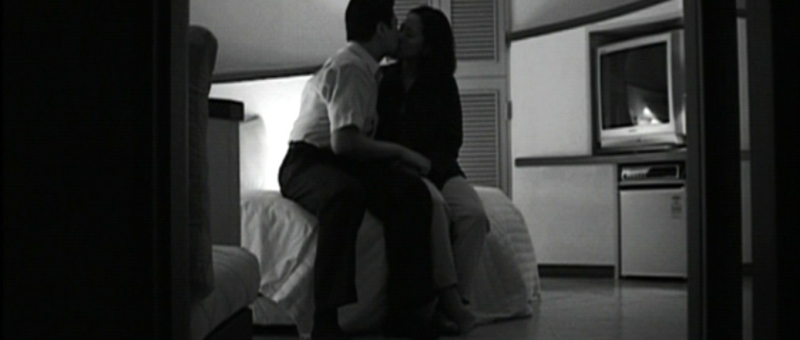
Lest it be forgotten, adultery was technically illegal in Korea until 2015. Man-sup and Myeong-hui have been careful enough to venture a long way from home in order to minimise the chances of being caught out on what has every likelihood of becoming an illicit one night stand between two desperately lonely people trapped in unfulfilling marriages and seemingly boring lives. They chat over dinner, discuss their failed hopes, sing their hearts out at karaoke and then, once the ice is broken, make their way to a love hotel for the true purpose of their visit.

Before they get there, over an awkward dinner, both Man-sup and Myeong-hui relate tales of friends who live lives of freedom and travel. Unmarried and fancy free, they go where they please and live without restraint. Myeong-hui, perhaps part in resentment, decries these lives as mere egotism, as if the desire to enjoy life in itself is an act of unforgivable selfishness. Man-sup partially disagrees. He doesn’t see too much wrong with the concept of “egotism”. After all, isn’t it alright to look after yourself as long as you consider how your actions might affect others? Man-sup is honest at least about his envy. He’d like to be free too, but doesn’t have the courage. This small digression from the everyday sameness of his life is his minor rebellion, isolated within a tiny bubble of artificial “freedom” set to burst and be forgotten.

Despite the strangeness of the situation, the awkwardness dissipates after they reach the hotel, allowing for deeper conversation and a tentative, temporary sense of connection. Though some years apart in age, Myeong-hui and Man-sup attended college in the same town and visited the same market but apparently never met. Their lives since have followed similar trajectories. Myeong-hui wanted to marry her college sweetheart but her family didn’t approve and she didn’t have the strength to fight them. It ended, and she eventually submitted herself to an arranged marriage. Man-sup too failed in romance and ended up married to a woman he was introduced to, though they dated for a year first so perhaps it amounts to the same thing. Superficially “happy” with their conventional relationships each resents the unfairness of lost love, regretting their failure to fight for their own futures and capitulation in accepting that merely presented to them.

Futility continues to define their lives. The easiness between them passes, and the old emptiness returns. Bearing their sadnesses separately they return to feigning politeness, biding their time until it’s time for them to part. The idea of reuniting is floated, but gathers only a mute response. Each of them knows they won’t meet again. Wounds given and received are smoothed over with money as a kind of salve to cure a sense of mutual responsibility. Park’s melancholy meditation on the impossibility of true connection and the enduring loneliness of existential longing finds only increasing despair in its middle-aged anti-romantics who find themselves alone in the desert, travelling onwards in silence but encountering only an ever distant horizon with no oasis in sight.


Camel(s) was screened as part of the 2018 London Korean Film Festival.

Motel Cactus (모텔 선인장, Park Ki-yong, 1997)

Motel Cactus posterAs a pair of its patrons eventually begin to muse in a moment of easy reflection, Motel Cactus is an odd name for a love hotel. Then again, a prickly flower blooming in the desert perhaps captures the uniquely melancholy qualities of these illicit, temporary meetings filled with defeated hope and existential malaise. A breakthrough feature for Park Ki-yong, Motel Cactus (모텔 선인장, Motel Seoninjang) owes a significant debt to the world of Wong Kar-wai with which it shares a mild visual similarity thanks to cinematographer Christopher Doyle making his only (to date) foray into Korean cinema. Park’s explorations of romantic emptiness might not be particularly original but it’s hard to argue with the beauty in his sadness.

Each of our joyless encounters takes place in room 407 of the titular Motel Cactus stretching across ten years of turbulent Korean history. Park begins with politics as a young woman attempts to wash tear gas out of her eyes after wandering into a democracy demonstration by mistake. Time moves on and the room becomes home to a pair of students intent on shooting a film but trapped in a Godot-esque limbo waiting for a friend who has been unavoidably detained. The first woman suddenly reappears but with a different man, followed by the man again but now with an old flame whose life after love has proved disappointing.

Park bookends each of the episodes with a brief piece of to camera monologue taking place outside of the room. Hyun-Joo (Jin Hee-kyung), the woman from the first and third scenes, angrily berates an offscreen friend for being naive and getting her heart broken by another no good, cheating man. Of course, Hyun-Joo’s irritated speech could easily be directed at herself, abandoned and then abandoning in each of her unsuccessful encounters with men. Though her original assignation with the young and handsome Min-koo (Jung Woo-sung) begins with passionate intensity, it quickly turns cool – he calls another woman and lies about being with a client, emerging guilty and conflicted. Min-koo refuses to talk of love and eventually leaves early, offering the olive branch of a Saturday picnic that both of them know will probably never take place.

Suk-tae (Park Shin-yang), Hyun-joo’s second partner, begins with a “funny” story recited in a bar about a woman who may have been intending to commit suicide for love. Drunk out of their minds, Suk-tae and fellow drinker Hyun-joo head on up to room 407 where they have a total blowout, alternating between childish play and animalistic lovemaking. When the air cools and introspective chat takes over, he asks her if it’s true she always comes here when it rains to which she freely admits, reliving the ghost of past love and a rainy birthday with the presumably long gone Min-koo. This time, it’s Hyun-joo who leaves sadly before the sun has risen while Suk-tae is left behind in a blissful, drunken snooze.

When Suk-tae returns to the room, it’s for a less deliberate purpose. Reuniting with college sweetheart Hee-soo (Lee Mi-yun), he makes awkward small talk reminiscing about the old days while she sadly keys him in to her melancholy dissatisfaction with her later life which neatly echoes his own sense of defeated failure. They want to go back to a more innocent time, but they can’t and it’s clear their superficial reconnection is merely an echo of the past which won’t survive the room.

The room has its way of distorting itself, trapping the would be lovers in an imaginary space in which a part of them will always remain. The students attempt to subvert the nature of Motel Cactus through inching towards innocent romance, but they remain at odds with each other, playing childishly at love while attempting to take mastery of the room but repeatedly failing. Miscommunication reigns. Seo-Kyung (Kim Seung-hyun), the young actress in filmmaker Joon-Ki’s (Han Woong-soo) student project, gets waylaid on her way to the hotel by a TV vox popper who wants to ask her opinion about in a change in the law which would reverse a ban on people with the same surname marrying (a fairly big problem given Korea’s relatively small number of surnames even when only applying to a common ancestral branch). Seo-kyung, however, mishears them and launches into a consideration of same sex relationships on which she ultimately comes out in favour.

Hee-soo’s monologue was delivered to a fortune teller who’d previously advised her that her marriage was a bad idea – she didn’t believe him, but he was right. Motel Cactus is a sad place, drenched in neon half light with the greyness of rainy skies worrying at the windows. An old lady reappears to clear up after our careless lovers while the room’s decor undergoes minor changes, an ‘80s-style electric moving picture diorama an eerie fixture on the wall as its bright waterfalls threaten to tumble on for all eternity. Time stands still in here, marked only by the futility of true connection and the inescapable longing that accompanies it. Park’s naturalistic desires are occasionally swamped by Doyle’s characteristically stylish camerawork but it’s difficult to argue with the poetry of his images even whilst singing an old song.


Motel Cactus was screened as part of the 2018 London Korean Film Festival.