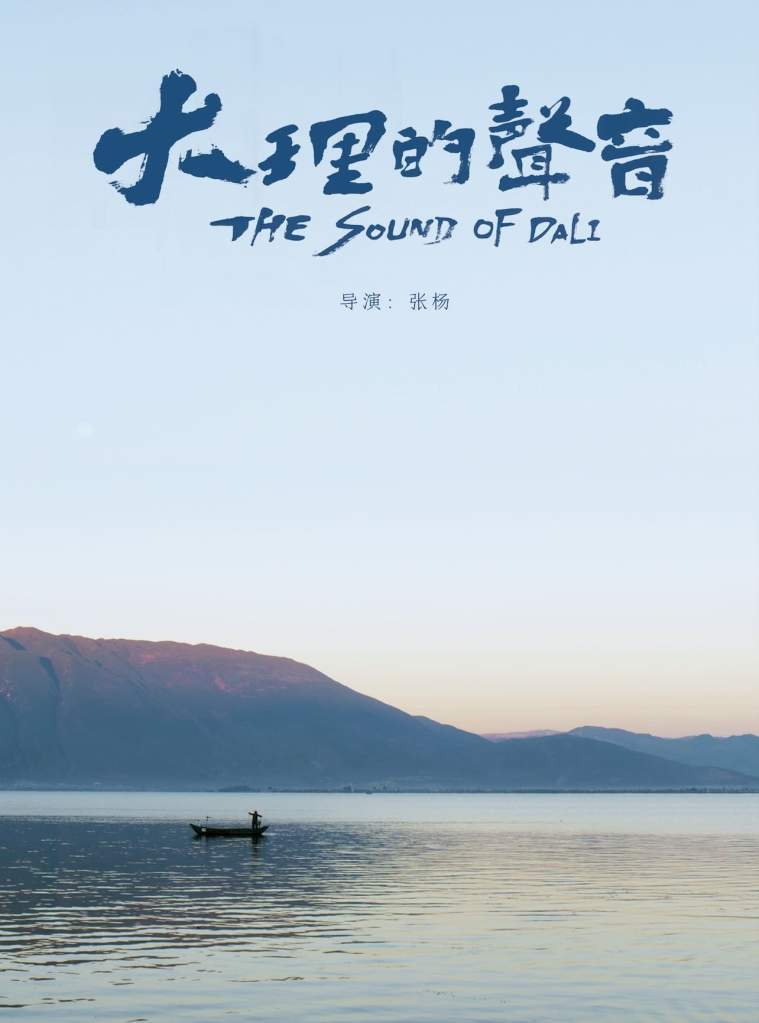
The Sound of Dali (大理的声音, Zhang Yang, 2019)

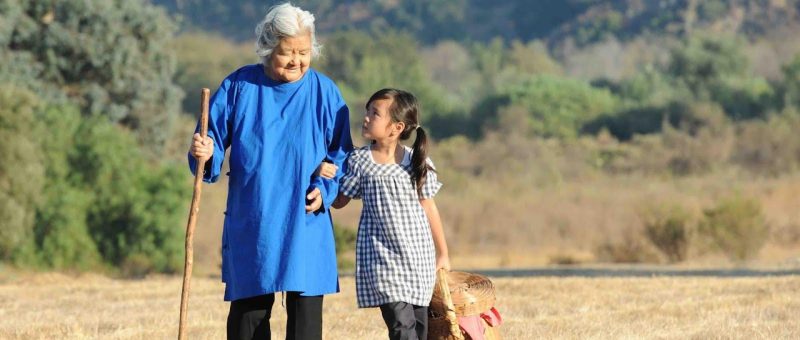
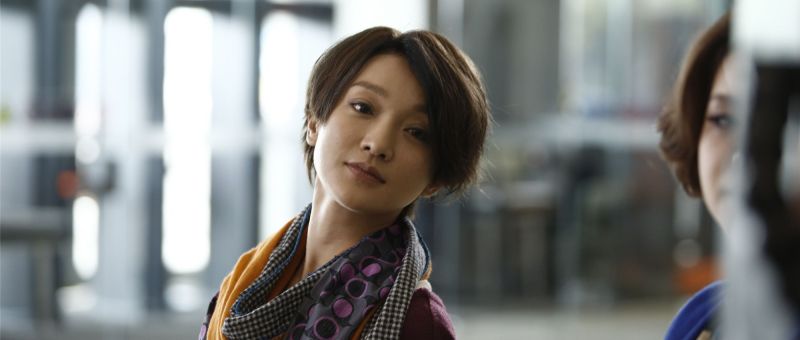
Following his portrait of an artist Up the Mountain, Zhang Yang returns to Dali for the second in a trilogy of films celebrating this small area provincial China which has become known for its beautifully preserved traditional buildings and picturesque views. As such, it has already become a draw for tourists, but Zhang’s documentaries aim to explore the area from a more local perspective. The Sound of Dali (大理的声音, Dàlǐ de Shēngyīn), as the title suggests, captures the unique soundscape of the small city through four seasons as man and nature create their own symphonies. 

With more a straightforwardly observational approach than either of the other documentaries in the series, Zhang resists narrative but shows us scenes of Dali from unexpected angles beginning with the beauty of stormy skies filled with the perhaps ominous sound of rushing wind which soon gives way to snow. Ducks flap and fly, crash landing on water, while chickens strut and bees hum. Sheep and cows graze in the fields while oxen pull carts for the farmers labouring on the land. Women plant rice and later harvest it, shaking the sheaves to release the grain and making a music all of their own. 

Zhang cuts the sound of industry into an accidental symphony as a blacksmith bends and hammers metal, builders hammer wood, and engineers pummel the ground. Old women play their looms like lyres, and master carvers scrape wood into intricate designs with tiny, expert motions. 

Meanwhile, there is music of the more obvious kind in the singing of hymns in a Christian church, worship at a mosque, and rituals conducted by the farmers to ensure a good harvest. Others attend the local temple to make Buddhist offerings for perhaps much the same reason. Traditional opera takes place in the streets while buskers too add to the joyful sound of man-made music.

Zhang is keen to show us the sound of human industry in concert rather than conflict with nature. The seasons change, the skies darken, and sometimes the sound is frightening rather than harmonious, but there is life here at a nexus of the traditional and the modern. Colourful festivals fill the streets with processions of the old gods, farming is done the traditional way, and perhaps at times the sound of human voices drowns out the birds and rustle of the trees but does not destroy them. Meanwhile, a young man sets up a stand selling artisanal coffee and people dance and sing at the local markets enjoying family life as children play happily both amid the greenery and in the pleasant city streets. The young go to discos, and couples have their wedding photos taken against the backdrop of the beautiful local scenery. 

Perhaps cheating a little, Zhang cuts from an eagle soaring majestically above the landscape to drone footage giving us a birds’ eye view as we, for a moment, become “nature” too, observing the tremendous beauty of the land in all of its luscious greenery as the waterfalls tumble almost silently below. The Sound of Dali is one of harmony and happiness as human voices and the natural world blend as one in a great symphony of life in all its glorious cacophony.


The Sound of Dali is represented by Fortissimo Films.

Vortex (铤而走险, Jacky Gan Jianyu, 2019)

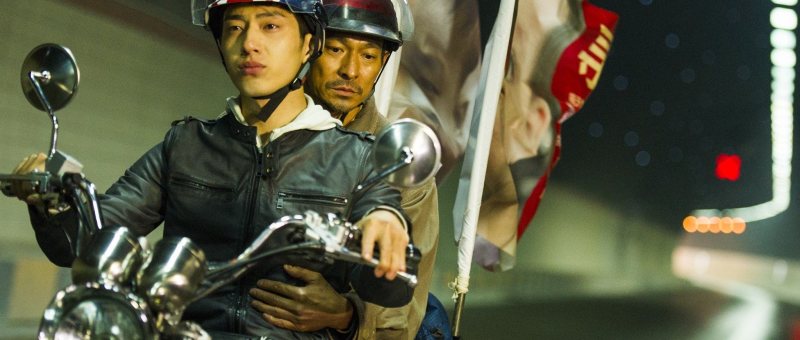
“Only with money are you treated like a person” according to cynical gangster Xia Tao, another embattled soul turning to the dark side to try and survive after multiple betrayals in a cruel and unforgiving society. Anchored by a standout performance from comedian Da Peng in a rare dramatic role, Vortex (铤而走险, Tǐng’érzǒuxiǎn) sees one feckless young man falling into a web of criminality after succumbing to the temptation of an easy fix to all his problems. As he and others will discover, however, actions have consequences and there are no victimless crimes. 

Liu Xiaojun (Da Peng) is an embittered young(ish) man left orphaned and resentful after his policeman father died on the job. Nominally a mechanic with his own repair shop he also has a self-destructive gambling problem that’s left him deep in debt to local mobsters. He tries to hit up an old friend, Brother Wan (Cao Bingkun), recently released from prison, but he offers him a job rather than money, explaining that it’s only crime adjacent not actually illegal. All he has to do is drive unregistered cars back to the depot where Wan can resell them, and he’ll get 10,000 a pop. Xiaojun isn’t really into crime so he’s reluctant to take Wan up on his offer, trying his policeman uncle (Cao Weiyu) for yet another loan instead, but when he blows that too in reckless gambling he realises he has no other choice. The plan goes badly wrong, however, when the car Xiaojun is supposed to pick up turns out to be occupied and he finds himself in a fight with the Xia brothers. He manages to get it back to the depot but there’s another problem. The car was carrying cargo, a little girl, Qiqi (Audrey Duo / Doo Ulantoya), hidden in the boot apparently at the centre of a kidnapping plot. 

Xiaojun wants to call the police, but Wan is against it. He urges him to dump Qiqi somewhere and hope the authorities find and return her to her parents, but Xiaojun finds himself keeping the little girl. When Qiqi’s frantic mother calls the cellphone that was left in the car he realises she’s worth around two million and it’s too good an opportunity to pass up. After all, it’s a win/win. Xiaojun isn’t going to hurt Qiqi like the kidnappers might so he’s keeping her safe and he gets to pocket the money in return. 

So begins his series of moral justifications for the vortex of crime that began with his decision to drive the car for Wan which was itself caused by his gambling problem and addiction to quick fix solutions. Later, we can see that his self-destructive streak is a kind of despair, an act of self-harm taken in revenge against the unfairness of losing his father who apparently did everything right but paid a heavy price in attempting to serve justice. Xiaojun unfairly blames his uncle for failing to save his dad in choosing to do his job as a policeman and fiercely resists his well-meaning, paternal attempts to save him from his life of crime adjacent activity, but later perhaps comes to understand after unwisely becoming involved in the kidnapping plot, bonding with the innocent Qiqi, and then bitterly regretting his foolishness in placing her in danger to chase the money. 

Yet money, as Xia Tao (Sha Baoliang) says, is only thing that counts and you’re nothing without it. Xia Tao too turned to crime following parental betrayal, no longer seeing the point in playing by the rules if all it gets you is a lifetime of righteous suffering. Wan’s bar hostess friend, Zhao Qian (Li Meng), seems to be mixed up in the plot too though as her role becomes clear we realise that she has also succumbed to a quick fix solution out of desperation, trying to save a man she loves but later describes as “only a friend” by resorting to desperate measures to ensure he gets a life saving operation. Even little Qiqi seems to feel betrayed by mum and dad, answering Xiaojun’s question about who she thinks loves her more with a sad “neither”, while asking not to be returned to her mother because she’s been stopping her seeing her father and she misses him.  

As we later find out, there might be quite a good reason for that which Qiqi is too young to understand, but still she wants to try and find him and seems cheerful enough with Xiaojun while he says he’ll help her. Until then, Xiaojun becomes an awkward paternal presence, touched by Qiqi’s earnestness and lost in a moral quagmire trying to work out where the best place to send her might be while still hoping to get his hands on the cash. Redeeming himself by, in a sense, paying the ransom by deciding to prioritise saving Qiqi from the Xia brothers, Xiaojun begins to extricate himself from the vortex of crime, rediscovering a more positive paternal presence of his own in forgiving uncle Wang and his own father in coming to an understanding of their choices through being forced to make his own. A minor condemnation of the modern China’s wealth obsession and growing social inequality, Vortex finds its villains less villainous than one might expect, succumbing to the slippery slope of criminality in desperation and a sense of abandonment in a society which seems content to leave them behind.


Vortex is represented by Fortissimo Films.

International Trailer (English subtitles)

Mama Rainbow (彩虹伴我心, Fan Popo, 2012)

Though homosexuality is not illegal in contemporary China, it is perhaps still taboo. The notoriously strict censorship board is particularly averse to content which features LGBTQ+ themes, though many mainstream filmmakers have been able to get around the regulations with subversive allusions to same sex relationships. Times are perhaps changing. Rather than a gloomy exploration of the issues many young gay men and women face, Fan Popo’s Mama Rainbow (彩虹伴我心, Cǎihóng Bàn Wǒ Xīn) spins a tale of mass acceptance in following six mothers of gay children who, though not always so immediately supportive, have embraced their kids’ sexuality and in fact become activists themselves. 

Fan opens with a vox pop session asking members of the public about their views on homosexuality. The first few answers are predictably depressing with even young people looking embarrassed and either walking off or replying that they find the idea “disgusting”, “very bad”, “abnormal”, or “unacceptable”. Later, a few are found who think the question itself is unnecessary because they have no problem with gay people, but then asked how they’d feel if their child told them they were gay, most immediately say they wouldn’t like it though some concede there’s nothing they could do about it anyway so they’d have to just go with it while others say they’d simply “guide” them back towards the “right” direction so that they’d make “good choices”. 

One of the mothers, Mama Zhao, admits she originally thought the same way. Her son had agreed to marry a girl, but after reading book by another influential Mama decided that he couldn’t, committing himself to living an authentic life as an openly gay man. She tearfully admits that though she has accepted it herself, she is still ashamed to explain to other people, brushing off questions about why her son is still single with dull platitudes rather than simply telling them that he is gay. 

After attending talks by the woman who wrote the book that so affected her son, Mama Wu, Mama Zhao began to understand a little better, realising that the most important thing is that her son is happy which he certainly wouldn’t be if he forced himself to marry a woman to fulfil a social ideal. Education seems to be the key. Meiyi didn’t know much about homosexuality and thought it was something that was popular abroad that people did because it was trendy. When her daughter became close with a high school friend who ended up moving in with them, she began to see things differently and got to know a few other gay kids who she thought were all fantastic. She jokes that her daughter’s girlfriend “brainwashed” her by taking her to LGTBQ+ events, while the other girl’s own mother is also very supportive, actively empathising with her daughter’s choices right down to appreciating her taste in other women. 

Sister Mei and her son, meanwhile, are a cheerful and exuberant double act. She moved into the city to live with him in fear that he might need help locating other gay men (a move which seems like it should be counter productive but probably isn’t given the open nature of their relationship) and has now thrown herself into activism as a member of China’s PFLAG, becoming a surrogate Mama for all those who’ve been rejected by their families or just need to hear a supportive voice. Likewise, Mama Jasmine was as cool as could be when her daughter, after years of bringing female “classmates” over to dinner, finally came out and was supportive in a lowkey way until approached by Ah Qiang, the founder of PFLAG in China, to become a local organiser. 

Mama Wu, the woman who wrote the book that changed the mindset of Mama Zhao’s son and convinced her that his happiness was all that really mattered, speaks to another young man who reveals he hasn’t come out to his mother (assuming she doesn’t see the documentary) because she is in poor health and he worries that she just won’t be able to take the shock. Mama Xuan, who suspected her son was gay but hoped he’d grow out of it, tearfully takes to the stage to reveal that he has suffered violence and discrimination because of his sexuality, beaten up at school but too afraid to get help in case his parents find out why he was attacked, and subsequently blacklisted and expelled leaving him with a blemish on his record when the kids who attacked him had their views reinforced by the tacit approval of the school authorities. There is obviously work still to be done, but there are plenty of people willing to do it, because at the end of the day all they want is for their kids to be safe and happy and enjoying exactly the same rights as everyone else while surrounded by love and acceptance. 


Mama Rainbow is currently available to stream via Vimeo as part of Queer East’s online edition with all proceeds going to support independent cinemas.

Original trailer (English subtitles)
Super Me (超级的我, Zhang Chong, 2019)

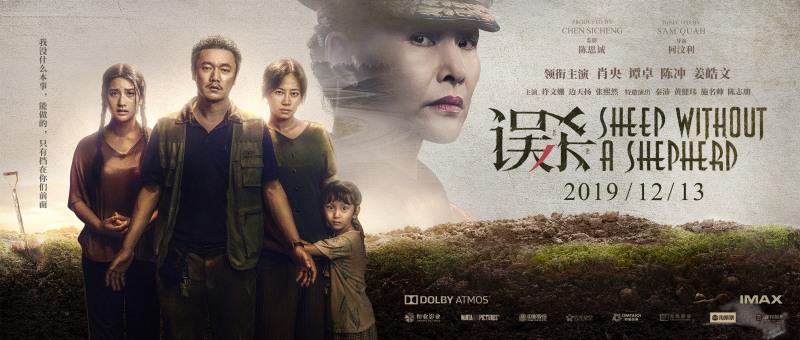
Can you dream yourself into a better reality, or should you concentrate on being your best self in this one? That’s a dilemma that the hero of Zhang Chong’s Super Me (超级的我, Chāojí de Wǒ) barely has time to think about as he battles despair-fuelled hopelessness and possibly unrequited love for the beautiful woman who runs his local cafe. If only I were rich, he might well think, but though poverty is undoubtedly a factor in his malaise it’s his sense of inferiority which has him beaten down and all the money in the world won’t change that. 

We first meet Sang Yu (Darren Wang Talu) on a subway train where he recites a mantra to himself about how he’s “not an ordinary man”, he has the ability to work under pressure, and though his parents died and he has no friends those are merely tests from God which he has overcome. He is “brilliant and talented, diligent and motivated”, he expects success will soon arrive only he hasn’t slept a wink in the last six months because of the constant night terrors which plague him such as the one we’re about to witness. Sang Yu is asleep, and a nightmare is stalking him. 

Killed by having his head plunged through the train’s floor, Sang Yu wakes up and we realise his waking life is also quite depressing. A 20-something screenwriter, he’s behind on his rent and in debt to his friend/agent while unable to work because of his insomnia. Wandering around in a daze after being evicted from his apartment and getting his laptop stolen, he writes a note to his friend telling him he’ll have to pay him back in the next life and prepares to jump off the roof opposite the cafe where his true love, Hua (Song Jia), works, only to be saved by the intervention of the jian bing seller (Chin Shih-chieh) from down below who advises him to try waking up from his dreams before he gets killed by reminding himself that he is dreaming. Sang Yu takes him at his word and manages to emerge from the dreamworld unscathed clutching the weapon that once belonged to his attacker. After selling the antique sword to weapons brokers, he realises he’s sitting on a cash cow, routinely looting the dreamworld of many of its treasures and quickly harnessing its power to become a wealthy and successful man. All of which gives him the courage to finally approach Hua, wielding his newfound economic power to invest in the apparently failing cafe. 

A modern day take on Jack and the Beanstalk, Super Me finds its nice guy hero corrupted by his wealth, abandoning his artistic dreams and becoming a debauched playboy living in a five star hotel even if he continues to pine for Hua while his friend, Sangge (Cao Bingkun), reverts to being something like a minion riding on his coattails to enjoy the life of the rich and famous without really having to do anything. The irony is that the money and the fancy clothes give Sang Yu the confidence to talk to Hua, but those aren’t things she particularly cares about and may in a sense actually turn her off. Enjoying romantic evening walks, she guesses he’s a screenwriter from his veiled hints about robbing the dreamworld and is interested more in his artistic self than the wealthy man of mystery, all of which gives Sang Yu the inspiration to finish that screenplay which of course becomes a hit beyond his wildest dreams. 

After a while, Sang Yu starts to suspect there must be a cost involved in all this good fortune, realising that he’s traded some of his life away in return for riches and will perhaps never be free of his nightmares. Yet, as a cruel gangster tells him, everyone’s wealth comes at the sacrifice of life, echoing his earlier thoughts that those who are successful are either those who’ve chosen to sacrifice things that others won’t or are unscrupulous thieves and exploiters. “A person who betrays himself can never control his own destiny”, according to the gangster. Asleep or awake, Sang Yu realises he’s battling himself, that there are no quick fixes, and illusionary success is as hollow and as fleeting as the dreamworld from which he has perhaps failed to learn the appropriate lessons. As the old man told him, perhaps what he needs is to wake up, not only to life’s possibilities but to his own. Echoing his earlier The Fourth Wall, Zhang allows Sang Yu to walk through a door into a “better” reality which is perhaps the one he inhabited before but was too intimidated to actually live in. He hasn’t definitively beaten his demons, but perhaps subdued them while his new life seems determined to reward him for his choice in unexpected ways. Nevertheless, can you trust this reality more than any other? There may be no way to know, but you’ll have to learn to trust it all the same. 


Super Me is represented by Fortissimo Films.

Original trailer (no subtitles)

The Fourth Wall (第四面墙, Zhang Chong & Zhang Bo, 2019)

Have you ever imagined what your life might be like if something had gone another way? Most of us like to think of how our lives might have been better if only we’d acted differently, but what if our idealised reality turns out to be even worse? That’s partly how it is for the hero(es) of Zhang Chong and Zhang Bo’s The Fourth Wall (第四面墙, Dì Sìmiàn Qiáng) as they find themselves confounded by the intrusion of an alternate reality but ultimately forced to face the traumatic past in order to pierce a mental rather than metaphorical fourth wall and access a “truer” reality. 

In the first “reality”, Liu Lu (played by the actress of the same name) is an isolated 30-something working on a rural dear farm in a mountain village. Her crisis moment comes when she realises one of the deer has escaped, she assumes through a small hole in the fencing which she later covers over with branches in case any of the others get the same idea. Lu tells her boss about the missing dear, but despite the fact he’s never lost one before in his long decades as a deer farmer, he tells her not to worry about it, even giving her a New Year bonus and telling her to have some fun over the holiday. Lu, however, ignores his advice and prepares to spend the evening alone with dumplings and the Spring Gala, but is interrupted by Ma Hai (Wang Ziyi), a childhood friend, who pushes his way into her home and refuses to leave. We get the impression that Hai is a persistent, perhaps unwanted suitor, but as he leaves irritated that his attentions have been rebuffed he stops to tell Lu that he has “a goddamn weird disease”. 

Taking pity on him, she invites Hai back inside where he explains that something strange has been growing in his brain, not a tumour more like memories of different life. Images of another self have started to creep into his consciousness, and in this other reality there is also a Lu who works at a supermarket in the city where she dresses in elegant saris and dances enticingly to sell a mysterious vision of the “exotic East” while handing out pamphlets on behalf of a travel agency. This Hai is apparently a darker figure, reaching the end his road long before the promised Madagascan paradise of Lu’s sales patter. We learn that he’s apparently on the run from something connected to the teenage incident which binds the pair together and has left the first reality’s Lu with a prominent scar on her face. The other Lu meanwhile had some success making her acting dreams come true, but later married and had a child only to divorce and be left with nothing much of anything. She is just as sad and defeated as the Lu with the scar, only in a slightly different way. 

“The fourth wall”, as we’re used to hearing it, refers to the invisible barrier between the show and the spectator, but it’s also even in that sense a two-way mirror between conflicting realities. We tell ourselves that the world on the other side of the fourth wall isn’t real, though the reverse might as well be true. We resent the fourth wall being broken because these streams aren’t supposed to cross, we aren’t supposed to be here and they aren’t supposed to see us even as we see them. What Lu has created in her mind is another kind of fourth wall comprised of wilful delusion, conjuring up alternate realities for herself revolving around a moment of trauma in her youth which binds her to Hai whose consciousness is also fractured by the same event. 

Hai, like the fugitive deer, is a memory that Lu has been trying to keep on one side of a wall but has apparently escaped as realities bleed uncomfortably one into the other. The other Hai and Lu sit on a literal theatre stage, also the site of Lu’s last stage performance in a play called “The Fourth Wall”, and debate themselves towards one kind of endgame while the first Hai and Lu desperately investigate and try to save themselves by interrupting their darker shadows. What Lu is being asked to do is end the suspension of her disbelief and acclimatise herself to a new “reality” shorn of her protective delusions. The first Hai berated her for holing herself up in the mountains when life is about “expectation and improvement”, “concentration and contentment”, but what she’s been doing is perhaps more like cocooning in creating a safe space in her mind which has now been punctured like that mysterious hole in the fence. To move forward, she will have to shatter an interior “fourth wall” to push into a more complete “reality” and towards a promised paradise, though who can really say if one “reality” is really more “real” than another.  


The Fourth Wall is represented by Fortissimo Films.

A Dog Barking at the Moon (再见 南屏晚钟, Xiang Zi, 2019)

“How come she doesn’t cry?” a mother anxiously asks, still on the table following a caesarean section, “don’t worry, it’s a matter of time”, the doctor reassures her. Representations of LGBTQ+ life in contemporary Chinese cinema are few and far between, which might be one reason why the famed dragon seal does not appear before A Dog Barking at the Moon (再见 南屏晚钟, Zàijiàn Nán Bīng Wǎn Zhōng), a Spanish co-production and the autobiographical first feature from Xiang Zi. A melancholy contemplation of the various ways a repressive social system can echo through generations, Xiang’s film quietly suggests that one form of authoritarianism breeds another and that if conformity comes at the cost of happiness then it’s a price not worth paying. 

Heavily pregnant Xiaoyu (Nan Ji) has returned to China from the US with her Western husband (Thomas Fiquet) to have the baby under better medical conditions, but it appears that an extended stay with her parents may not exactly be a cause for celebration. Though her mother Jiumei (Na Renhua) originally seems cheerful and happy to see her daughter, it’s clear that there is frostiness between the two women and distance within the marriage. Gradually we discover that the iciness which pervades the Huang home is born of a sense of resentment and betrayal which stems back (partly, at least) to Jiumei’s discovery that her husband, Tao (Wu Renyuan), is a closeted homosexual after discovering him with his male lover. 

That does not, however, quite explain Jiumei’s ambivalent attitudes to her daughter. “I haven’t had a happy day since you were born” she’s fond of saying, regretting that she didn’t strangle her at birth after hearing from a fortune teller that Xiaoyu would be her “nemesis”. The allegorical quality of Jiumei’s story about going off the dog because he came to love her husband more is certainly not lost on Xiaoyu, awkwardly asked to translate for her husband, swinging between pity and resentment, as bound by social norms as her mother in feeling obliged to take care of a woman who does nothing other than reject her. 

Xiaoyu has long thought her parents should separate, but it never seems to happen. Her father tells her that he worries what will happen if they do. Jiumei says she wants to go to the US and live with Xiaoyu who can hardly refuse, but Tao knows that his wife is not an easy woman and the effect of her constant presence could prove detrimental to the state of his daughter’s marriage. Even so, Xiaoyu thinks it would be the best thing for all of them, if only to escape the never-ending hell of their cycle of bitterness. 

Jiumei, meanwhile, has found refuge elsewhere – in the arms of a shady Buddhist cult. Jiumei believes that her husband is “mentally ill”, blaming his mother for some sort of past trauma that’s made him the way he is. The cult preaches filial piety, family values, and loyalty to the state, and is always ready to “help” in return for “support”. Hoping to buy her way into a more respectable life, Jiumei donates vast amounts of money in the hope of meeting the mysterious Master Zhao who, it is claimed, can “amend” her husband’s sexuality and therefore fix all of the other problems in her life. 

“Gossip can bury you alive” we later hear Jiumei exclaim in a flashback, talking about about something else and perhaps explaining why she’s so desperate that her marriage of convenience be a superficial success. From the outside the Huangs are an ideal couple, wealthy and successful, and so their society tells them they shouldn’t complain. Having suppressed her own desires, complaining that Tao has been “impotent” for most of their marriage, Jiumei is angry and resentful of those who are unable or choose not to do the same. Meeting Tao’s lover, Xiaoyu laments that what Jiumei most wants is never to separate from her father until the end of time, but does not quite know the essential truth of it until an unexpected and all too brief moment of candour from her distant mother. Xiaoyu’s hand wants to reach out to her, but there is a barrier between them which it seems cannot be breached. 

Moving between Jiumei and Tao’s early courtship and the present day, moments of elliptical symmetry present themselves. Fengxi (Chen Zhengyuan), Tao’s younger lover, is it seems himself about to be married and become a father. Xiaoyu meets with him and explains that she is not in any way against their relationship, but pleads with him not to enter a marriage of convenience and ruin a young woman’s life, as her father did, solely for the sake of passing on the family name. He is quick to correct her that he would never consider it, his fiancée is a lesbian who wanted a child with her lover, he is merely helping them out while getting everyone’s parents off their backs.

Fengxi refuses “to build happiness over someone else’s sorrow”. Meanwhile, a long time in the past, someone asked Jiumei what the point was in marrying and having children to live a life you don’t believe in, but she could only answer that marriage was a matter of finding someone who fit the role more than it was of love. Jiumei has been playing her role at the cost of her soul and it’s left her lonely and bitter. Internalised homophobia has ruined them all, forcing them to live lives of empty conformity with only the cold comfort of having fulfilled their duty to society. Jiumei resents Xiaoyu because she is the symbol of the price she paid to lead a conventional life, doubling down on her bet for normality, and passing on that same, misery inducing repression to her daughter. Xiaoyu seems to have escaped by going abroad, but even if her husband tries to convince her that her parents’ lives are not her responsibility, remains equally bound by a sense of obligation now given new weight by her impending motherhood. Xiang ends with a heartbreaking dream sequence in which all can dance together, joyfully embracing their true selves free of shame or anxiety, but as others retreat from the rain some choose to stay, sitting all alone in darkened rooms knowing it is they themselves who elected to turn out the light.


A Dog Barking at the Moon is available to stream via BFI Player until 4th April as part of this year’s BFI Flare.

Original trailer (English subtitles)
Our Shining Days (闪光少女, Wang Ran, 2017)

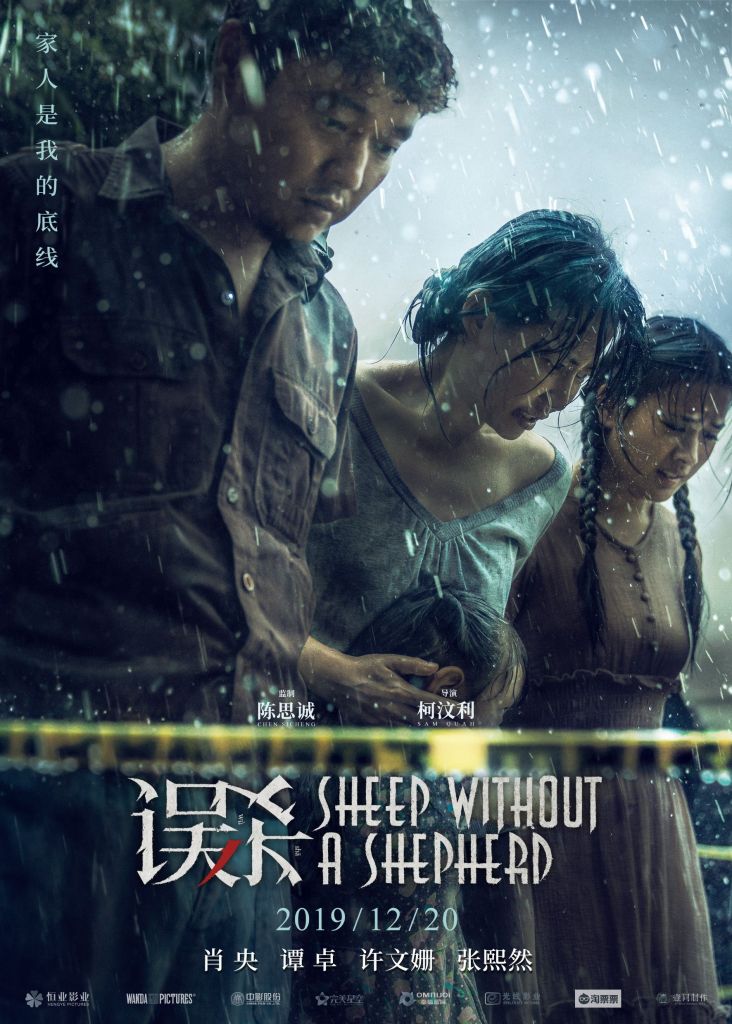
Doesn’t everyone deserve their time to shine? For the students at the music conservatoire at the centre of Our Shining Days (闪光少女, Shǎnguāng Shàonǚ), a glittering future may be difficult to imagine. Another in the recent series of Chinese youth comedies, Wang Ran’s debut may clearly be inspired by Japanese anime, but adds a noticeably patriotic beat in making its heroes devotees of traditional music facing off against the “pretentious” threat of European classical. 

The academy is strictly divided along class lines with the snooty classical kids pretty much ruling the roost. When an actual fight breaks out between factions, the conservative headmaster sides with the classical club and erects a series of prison-style gates to confine the folkists to their own corridors while also banning them from staying too late or eating in their rooms. Airy fairy nerd Chen Jing (Xu Lu) hadn’t previously cared about the folk vs classical drama, but is pulled into it when she falls for handsome pianist Wang Wen (Luo Mingjie). That’s why she naively volunteers to be a page turner for him at a big concert, not quite understanding she’s being made fun of. Determined to prove herself to him, she decides to form a traditional folk ensemble but finds it difficult to get recruits, ending up with a group of four otaku girls everyone else is scared of who only agree on the condition that she buys them all plastic model kits every week. 

A true underdog story, Our Shining Days makes heroes of its “losers” whose uncool tastes have seen them roundly rejected not only by their fellow students but also by their families. Chen Jing is a talented Yangqin player, but conflicted in her ambivalence towards traditional Chinese music. Internalising a sense of shame about her niche interest, she half convinces herself that she’s only learned yangqin because her parents made her and is not truly invested in the instrument, which is why she immediately assumes they’ll dissolve the band as soon as her mission of winning Wang’s heart is over. 

The otaku students, however, rediscover a love of the admittedly fantastical music, giving it a cool modern edge inspired by their love of anime and games. The otaku live in the “second dimension” and have already more or less othered themselves, but begin to actively enjoy being part of the band along with the communal pleasure of making music together. Meanwhile, the scruffy Chen Jing begins learning a little about life from the sacred otaku texts of her new friends, only to take their shojo manga-style advice a little too seriously in deciding to make a public confession to Wang which brutally backfires. Wang is planning to go abroad to study classical music, he’s not interested in lowly yangqin players. 

The class drama reaches a crescendo when the conservative headmaster announces that as of the following year the school will cease admitting students playing traditional instruments altogether. Spurred on by Chen Jing and the otaku girls, the oppressed folkists finally find the strength to resist, rising to prove there is a viable ensemble for folk instruments to counter the “sophisticated” classicists. The classicists adopt the motto “let my music be the soundtrack of war”,  but the folkists are all about team effort and peaceful co-existence. When the local inspector reminds the headmaster there is no conflict in music and expresses disapproval of the school’s prison-like environment, the folk ensemble, rather than trying to defeat the classicists, come up with a “better” solution in which they can work together so that folk music can still be heard as part of the big end of year concert. 

A cheerful coming of age tale which ends in the message that there’s a place for everyone and that those who are generous of spirit are the likeliest to prosper and be happy as they do, Our Shining Days also has its share of high school drama as the scruffy Chen Jing gradually progresses to towards a more mature elegance while her best friend Li (Peng Yuchang) gets the courage to confess his feelings in a much less ostentatious manner. Subtly patriotic in its suggestion that traditional folk music is “better” than the false sophistication of pretentious Western classical, the central messages are of love, acceptance, and authenticity, insisting there’s a place for everyone who comes with an equally egalitarian spirit. 


Currently available to stream in the UK (and possibly other territories) via Netflix

Singapore release trailer (English subtitles)
Spring Tide (春潮, Yang Lina, 2019)

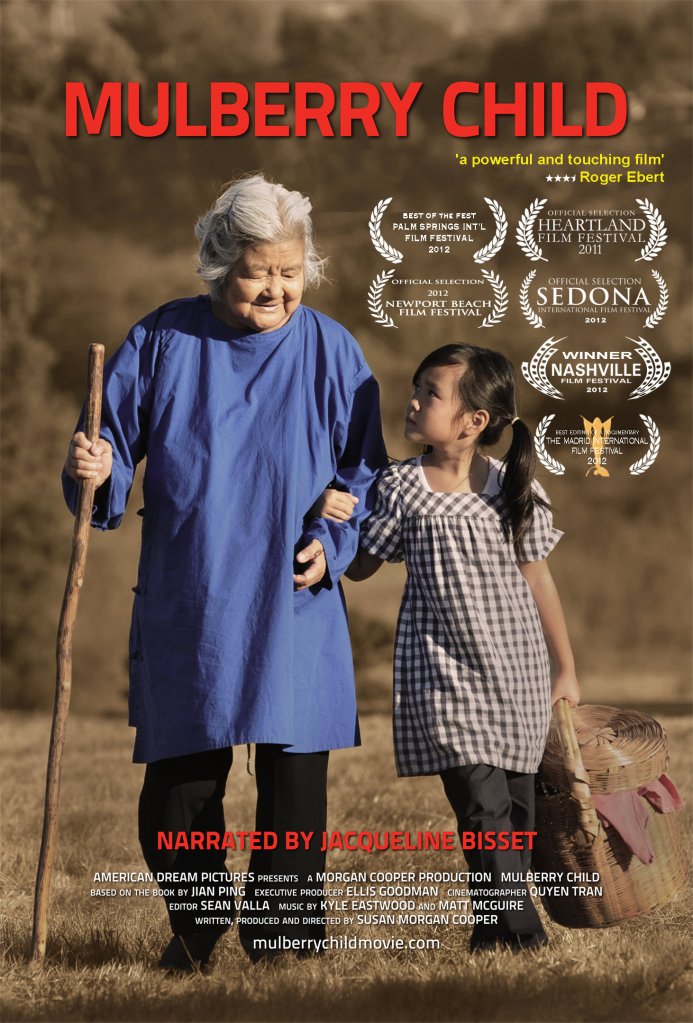
Toxic motherhood takes on strangely subversive, allegorical tones in Spring Tide (春潮, Chūn Cháo), Yang Lina’s painful examination of the relationships between three generations of Chinese women, each in different ways victims of the times in which they live. It’s true enough that the folk tunes sung so happily are often odes to the “motherland” which betray none of the eeriness of their propagandistic intentions in their full hearted endorsement of nation as family, but the darkness is inescapable as we see their metaphors made flesh in a woman destroyed by her sense of disappointment in life and in turn destroying her daughters literal and metaphorical in a pathological attempt to give her life meaning. 

30-something Jianbo (Han Lei) is a socially conscious investigative journalist whose refusal to let sleeping dogs lie is a constant thorn in the side of her more conservative editor. At home, meanwhile, she’s mother to nine-year-old Wanting (Qu Junxi), who, we later realise is being raised by Jianbo’s feisty mother, Minglan (Elaine Jin Yan-ling), while she splits her time between the family’s backroom and a bed in a student dorm with occasional nights spent with an intense yet silent musician. 

Aside from the obvious emotional disconnection, the fracture lines between mother and daughter are also ideological. Jianbo is a post-80s generation woman, she wants to hold mother China to account because she wants her society to be better than it is. She unroots scandal and corruption and brings them to light through the power of the press, trying to create real social change through shaming the populace into better patterns of behaviour. But her mother Minglan lived through the Cultural Revolution, because of all she’s suffered she thinks that things are fine the way they are and criticising the beneficent state is like scolding the person that raised you. Caught in the middle, Minglan’s fiancé Zhou (Li Wenbo) espouses contradictory views, at once proud to have Jianbo as a daughter because “journalists are the conscience of a country”, but also grateful for the iron rice bowl system that gave him a steady job, not to mention a pension and the old person’s flat that’s allowed him to meet Minglan. 

Minglan’s life has indeed been full of suffering, though it is perhaps surprising how casually she and her friends remark on the terror they experienced during their youth while continuing to sing the old patriotic songs. “My motherland and I can’t be apart for a moment”, according to patriotic hit My People, My Country (我和我的祖国), but its tones suddenly seem sinister in their breeziness as we’re forced to consider the icy Minglan as a stand-in for China as a toxic mother, insisting that she must be respected and that her children must repay their debts to her, no matter how abusive she has been and may continue to be. To her friends in the retirement community, Minglan is a warm and caring woman, running the choir and organising local events, but she’s also blindsided by the suicide of a friend who took her own life because of an entirely different kind of filial disappointment coupled with existential loneliness. Minglan can’t understand why she did it, but in characteristic fashion largely makes it all about herself in lashing out at Jianbo when she points out that Mrs Wang was not as happy about their (read: Minglan’s) potential retirement plan as Minglan had believed her to be. 

“When were you going to realise this was a family and not a battlefield?” Jianbo asks her mother knowing that she can make no further reply. The tug of love over motherhood of Wanting is, in many ways, a tussle over the future of China. Minglan digs her nails in, telling Wanting a few hurtful truths about her mother while insisting that you really can’t trust anyone anymore but that’s OK because grandma loves you, while Jianbo remains powerless to reassume her maternity knowing that her only weapon is to avoid unduly antagonising her mother in the hope that she won’t end up alienating Wanting in the same way Minglan alienated her. All that exists between them now is a torrent of resentment, Minglan seeing her daughter only as the symbol of all her frustrated desires, and Jianbo knowing she’s become a sad and lonely woman solely because her mother refused to love her in the way she wanted to be loved. Jianbo is determined that she won’t let Minglan’s “vanity and hypocrisy” corrupt her pretty, sensitive daughter, pushing her towards an “ignoble and ridiculous life”. She wants Wanting to be free of this chain of abuse and all its authoritarian gaslighting, but has no mechanism to free her other than distance. 

Wanting, by contrast, is cheerful and kind. She has absolutely no filter and is entirely unafraid of asking difficult questions, but is also brave and strong, willing to stand up for others. A little girl in her class who happens to be from the Korean minority is criticised for her “poor” Mandarin and ordered to switch seats but her new buddy refuses to sit with her because he claims not to be able to understand what she’s saying. Wanting immediately pipes up that she understands perfectly, instantly becoming the girl’s best friend and visiting her home which appears to be one of immense harmony and happiness where her dad whirls her round while proudly singing Arirang, standing in stark contrast to Minglan’s joyous yet somehow self-involved recitals. China as an authoritarian mother may be losing its grip on power, while Jianbo’s generation struggles to free itself from the trauma of toxic parenting, but there is perhaps hope for Wanting as she and her friend decide to leave the patriotism showcase to follow the spring tide right out into a wide river of joy and freedom.


Spring Tide was screened as part of this year’s Osaka Asian Film Festival.

Wisdom Tooth (日光之下, Liang Ming, 2019)

A young woman rides the waves of changing times in Liang Ming’s Wisdom Tooth (日光之下, Rìguāng Zhīxià). Perhaps innocence is something slightly painful you’re better off without, but awakening to life’s light and shade can be a difficult process. Gu Xi (Celeste Lv) is suffering with a dull ache in her jaw and the solution is, apparently, merely pain killers but you can only numb yourself so long before you have to make a choice of whether to go on living with the pain, or free yourself from it. 

A young, if slightly immature woman, Gu Xi has a job in a local hotel and lives alone with her half-brother, Gu Liang (Wu Xiaoliang), who, until recently, has eked out a living as a fisherman. A recent oil spill revealed to have occurred some time ago but covered up by the authorities has put paid to that, while Xi also finds her job under threat because she has an undocumented status and there is shortly to be some kind of inspection. Having grown up without a mother and entirely ignorant of who her father might have been, Xi feels acutely anxious about her circumstances and is dependent on Liang for a sense of security. It is therefore unsettling for her when he develops an interest in the sophisticated Qingchang (Wang Jiajia), daughter of local mob boss Zhou (Chen Yongzhong) and a recent returnee from South Korea where she had been living with her mother. 

A mirror image of Xi, Qingchang is everything she she’s not. Xi is well known for wearing her brother’s clothes, dressing like a tomboy for reasons that are a combination of poverty and affection, where Qingchang has wardrobes full of the latest fashions brought back with her from overseas including a beautifully crafted Hanbok featuring an elaborate embroidered design. As much as she’s resentful and intimidated, Xi can’t help admiring the slightly older woman, captivated by her sense of self assuredness, and eventually develops a sisterly bond with her even while fearing that she may steal her brother away. 

A further intrusion, however, disrupts their tentative familial bonding. A fisherman found dead and floating on the sea hints at a burgeoning turf war between local bosses Zhou, Qingchang’s father and Liang’s employer now that he’s taken a job as a security guard at the docks, and Jiang (Tao Hai), a melancholy Christian who owns the hotel where Xi had been working. Though warned by others that Jiang seemed “creepy”, Xi feels indebted to him because her job at the hotel was saved after she approached him to intervene. Her habit of recording the conversations around her to listen to later presents her with a problem when she discovers that Zhou may have bumped off the fisherman himself and is planning to frame Jiang for the crime. Jiang, it seems is also receiving protection money to ensure the fishermen’s safety, apparently a promise he wasn’t able to keep. Xi is pulled three ways. She loses confidence in Qingchang who is now both tainted by association and a figure of mild discomfort, while fearful that if she reveals what she knows, serves justice and repays a debt by clearing Jiang, she will ruin her brother’s happiness and risk his rejection. 

Trapped in he realms of childhood, what she most wants is to preserve her status quo. Liang is everything to her – brother, father, and somewhat uncomfortably a figure of romantic impossibility. Her feelings towards Qingchang are mired in complexity, a nascent attraction perhaps underlying her sense of jealousy either misdirected through her complicated feelings for her brother or simply finding its anchor for the first time. An angry speech at her brother’s birthday party during which she inappropriately reads out a semi-explicit passage from a lesbian novel hints at an attempt to resolve an attraction she feels is taboo, though it is unclear for whom it is directed. As with most young people, she must come to an accommodation with the fact that her world is changing. A childhood promise that she and her brother would never marry, preserving their family of two forevermore, was always unrealistic but she struggles to let go of the idea of permanence in a childish sense of familial security. Like the oil polluting the seas, her world is coloured by uncertainties but like anyone else she discovers that her agency is limited and whatever choice she makes others will make their choices too. That dull ache in her jaw is a reflection of the ills of the world around her, an inconvenient tooth that needs to be plucked out and discarded leaving only the cold comfort of adult wisdom behind in its place. 


Wisdom Tooth screens on March 11/14 as part of this year’s Osaka Asian Film Festival.

The River in Me (大河唱, Ke Yongquan, Yang Zhichun, He Yuan, 2019)

Can the old arts survive in the modern world or are they destined to fade away with the passing of time? Folk singer Su Yang is determined to preserve them, if only by assimilation, blending traditional folksong with Western rock to bring it into the modern era. While some complain that Su’s singing is inauthentic, he argues that authenticity, in that sense at least, isn’t the point. The only thing that matters is whether people like it and can feel something of themselves and of ages reflected in the ancient rhythms. 

Now a successful musician, Su is not originally from the country but moved to rural Yinchuan, Ningxia in Northwest China with his parents when he was seven. He later says it was the music of Yinchuan which touched him not because it is the greatest of cities but because it’s the one which most intersected with his life. Through his travels, Su meets up with a series of other practitioners of traditional arts mostly also from Ningxia and the surrounding area as he and they dwell on survival. 

Itinerant singer Liu Shikai makes a living playing the Sanxian, but fewer and fewer people are interested in listening while in private he feels himself lonely as a twice widowed father of three, especially as his youngest daughter has now married leaving him at home alone. Su laments something similar, reflecting that there’s no New Year for him. His festivities will consist of working and drinking, while his family can see him on TV from the comfort of their homes. Su’s brother complains endlessly about the annual Spring Gala (while watching it anyway), finding the show totally lacking in any kind of substance and becoming more boring by the year. His astute daughter, however, points out that his criticism is unfair or at least stating the obvious because the Spring Gala reflects “youth culture” which is perhaps flashy and superficial but equally is not intended to appeal to middle-aged men. Su appears on the program himself but might agree, seeing as it’s his mission statement to put a little soul back into the mainstream by bringing the rhythms of the Yellow River to contemporary society. 

Back in the country, meanwhile, folksongs are serving the same purpose they always have, expressing joy in the natural world and bringing communities together through choral solidarity. Then again, Hua’er singer Ma Fengshan, sometimes finds himself at odds with his. A member of the muslim minority, his house is filled with religious texts that he is unable to read because they are in Arabic which he doesn’t speak. Some have told him that he should spend more time on religious study, but all he wants to do is sing, while others actively oppose Hua’er for its “salacious” qualities, aware the songs can be used as a form of flirtation and convinced that they have the potential to cause marital breakdown and infidelity. In spite of everything, Ma keeps singing and is eventually joined by other members of his community wearing traditional dress to celebrate Hua’er music. 

For puppeteer Wei Zongfu, however, the future seems far less bright. Now ageing himself, he’s accepted that his descendants won’t want to succeed him and there are few people interested in learning shadowplay. The leather puppets crafted by his grandfather are so precious to Wei that he didn’t even want to take them to use in Su’s showcase of traditional arts in fear they might be damaged or stolen, opting for a safer paper play instead, but is now contemplating what’s best to do with them after he dies and if the art itself can survive when there is no one to perform it. 

That’s a problem also faced by Zhang Jinlai, the harangued head of a Qinqiang Opera troupe frequently at odds with his co-star wife who berates him for employing too many actors when they aren’t making any money. With economic factors to consider, he finds it hard to keep his troupe together and is pushed towards making “innovations” that might appeal to a younger audience but wishes to remain “authentic”. Su’s suggestion, by contrast, is that in the end you can only move forward, the old arts may have to adapt or die. Some may not approve of his modern take on the traditional, but in his own way he’s saving Hua’er song and helping to pass it on to future generations, in his own words extending the rhythms of the Yellow River to all corners of the world. 


The River in Me screens in Amsterdam on March 4/8 as part of this year’s CinemAsia Film Festival.

Original trailer (English subtitles)