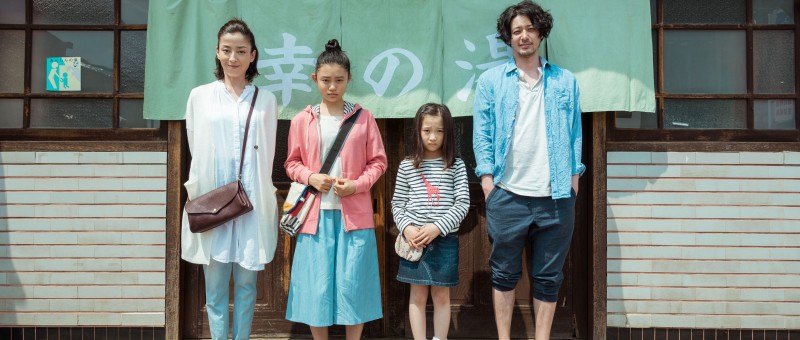

The “hahamono” or mother movie has gone out fashion in recent years. Yoji Yamada’s World War II melodrama Kabei or Keisuke Yoshida’s more contemplative examination of modern motherhood My Little Sweet Pea might be the best recent examples of this classic genre which arguably reached its golden age in the immediate post-war period with its tales of self-sacrificing mothers willing to do whatever it took to ensure the survival or prosperity of their often cold or ungrateful children. After “Capturing Dad” Ryota Nakano turns his attention to mum, or more precisely the nature of motherhood itself in a drama about family if not quite a “family drama” as a recently single mother is busy contending with financial hardship and a sullen teenage daughter when she’s suddenly caught off guard by a stage four cancer diagnosis.
Futaba (Rie Miyazawa) is an outwardly cheerful woman, the sort who’s always putting a brave face on things and faces her challenges head on, proactively and without the fear of failure. Her husband, Kazuhiro (Joe Odagiri), ran off a year ago and no one’s heard from him since. Having closed the family bathhouse Futaba works part-time at a local bakery and cares for her daughter Azumi (Hana Sugisaki) alone but when she collapses at work one day Futaba is forced to confront all those tell signs that something’s wrong she’s been too busy to pay attention to. Inevitably it’s already too late. Futaba has stage four cancer and there’s nothing to be done but Futaba is Futaba and so she has things to do while there’s still time.
Some people colour the air around them, instantly knowing how to make the world a better place for others if not quite for themselves, except by extension. Futaba is one such person – the personification of idealised maternity whose instinctual, altruistic talent for love and kindness knows no bounds or boundaries. Yet at times her love can be a necessarily tough one as she negotiates the difficult process of trying to get her shy teenage daughter to stand up to the vicious group of bullies who’ve been making her school life a misery. Faced with an accelerated timeframe, Futaba needs to teach her little girl to be an independent woman a little ahead of schedule, knowing that she won’t be around to offer the kind of love and support she’ll be needing during those difficult years of adolescence.
Not wanting to leave her entirely alone, Futaba tracks down Kazuhiro only to find he’s now the sole carer for the nine-year old daughter of the woman he left her for who may or may not be his. Futaba decides to take the pair of them in but little Ayuko is just as sullen and distanced as her older half-sister as she struggles with ambivalent emotions towards the mother who abandoned her with a “father” she hardly knew. Futaba’s big idea is to reopen the family bathhouse to be run as a family where everyone has their place and personal responsibility, working together towards a common goal and supporting each other as they inevitably grow closer.
Unlike the majority of hahamono mothers, Futaba’s love is truly boundless as she tries not only to provide for her own children but for all the neglected, lonely, and abandoned people of the world. Bonding with the little girl of the private investigator she hires to find Kazuhiko, trying to comfort Ayuko as she deals with the fact that her mother is probably never coming back, even taking in a melancholy hitchhiker whose made up backstory she instantly sees through – Futaba is the kind of woman with the instant ability to figure out where it hurts and knows what to do to make it better even if it may be harder in the short-term.
Like the majority of hahamono, however, Her Love Boils Bathwater (湯を沸かすほどの熱い愛, Yu wo Wakasu Hodo no Atsui Ai) can’t escape its inevitable tragedy as someone who’s given so much of themselves is cruelly robbed of the chance to see her labours bear fruit. Nakano reins in the sentimentality as much as possible, but it’s impossible not to be moved by Miyazawa’s nuanced performance which never allows Futaba to slip into the trap of saintliness despite her inherent goodness. She is evenly matched by relative newcomer Sugisaki in the difficult role of the teenage daughter saddled with finding herself and losing her mother at the same time while Aoi Ito does much the same with an equally demanding role for a young actress moving from sullen silence to cheerful acceptance mixed with impending grief. Yet what lingers is the light someone like Futaba casts into the world, teaching others to be the best version of themselves and then helping them pass that on in an infinite cycle of interdependence. Hers is a love of all mankind as unconditional as any mother’s, sometimes tough but always forgiving.
Her Love Boils Bathwater was screened at the 17th Nippon Connection Film Festival.
Original trailer (turn on captions for English subtitles)
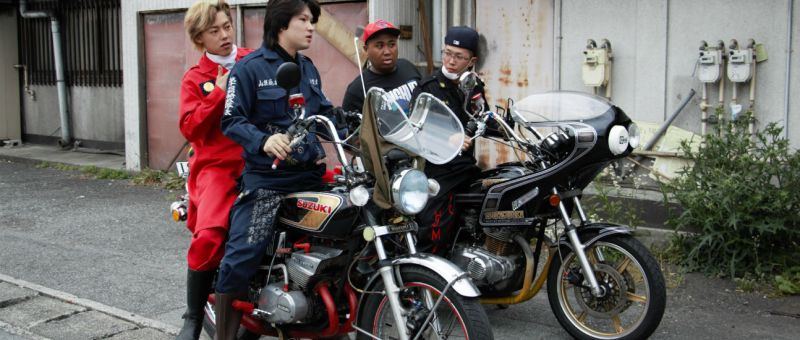
 Eiji Uchida’s career has been marked by the stories of self defined outsiders trying to decide if they want to move towards or further away from the centre, but in his latest film Love and Other Cults ( 獣道, Kemonomichi), he seems content to let them linger on the margins. The title, neatly suggesting that perhaps love itself is little more than a ritualised set of devotional acts, sets us up for a strange odyssey through teenage identity shifting but where it sends us is a little more obscure as a still young man revisits his youthful romance only to find it as wandering and ill-defined as many a first love story and like many such tales, one ultimately belonging to someone else.
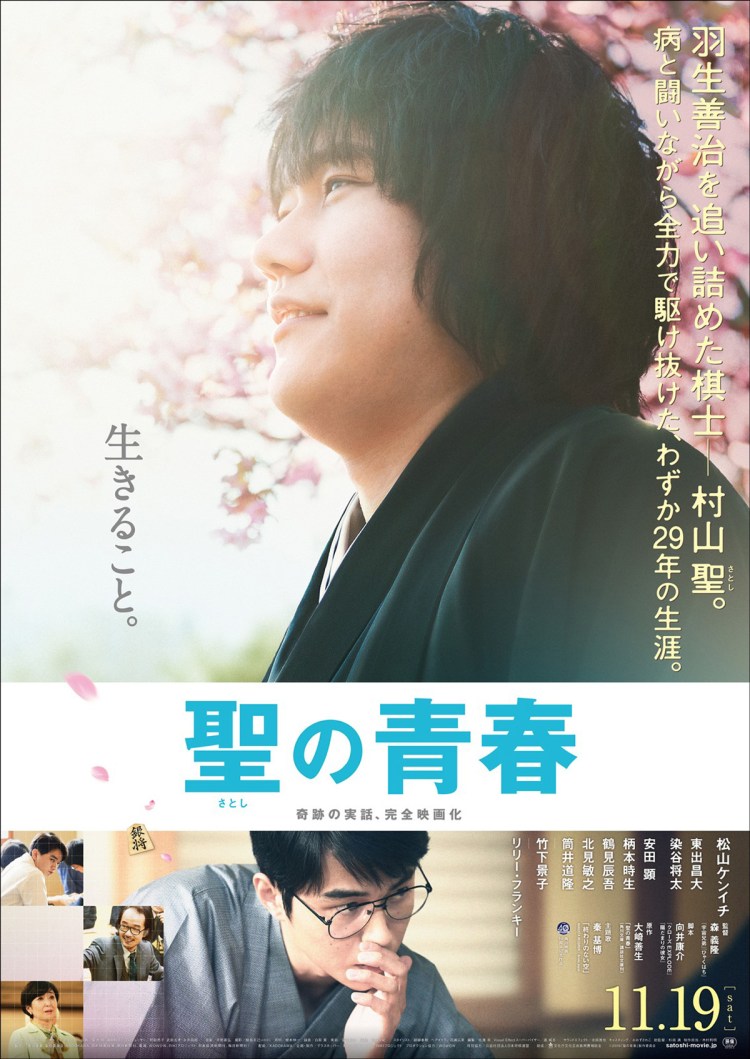 There’s a slight irony in the English title of Yoshitaka Mori’s tragic shogi star biopic, Satoshi: A Move For Tomorrow (聖の青春, Satoshi no Seishun). The Japanese title does something similar with the simple “Satoshi’s Youth” but both undercut the fact that Satoshi (Kenichi Matsuyama) was a man who only ever had his youth and knew there was no future for him to consider. The fact that he devoted his short life to a game that’s all about thinking ahead is another wry irony but one it seems the man himself may have enjoyed. Satoshi Murayama, a household name in Japan, died at only 29 years old after denying chemotherapy treatment for bladder cancer in fear that it would interfere with his thought process and set him back on his quest to conquer the world of shogi. Less a story of triumph over adversity than of noble perseverance, Satoshi lacks the classic underdog beats the odds narrative so central to the sports drama but never quite manages to replace it with something deeper.
 Every keen dramatist knows the most exciting things which happen at a party are always those which occur away from the main action. Lonely cigarette breaks and kitchen conversations give rise to the most unexpected of events as those desperately trying to escape the party atmosphere accidentally let their guard down in their sudden relief. Adapting his own stage play titled Trois Grotesque, Kenji Yamauchi takes this idea to its natural conclusion in At the Terrace (テラスにて, Terrace Nite) setting the entirety of the action on the rear terraced area of an elegant European-style villa shortly after the majority of guests have departed following a business themed dinner party. This farcical comedy of manners neatly sends up the various layers of propriety and the difficulty of maintaining strict social codes amongst a group of intimate strangers, lending a Japanese twist to a well honed European tradition.
 Nobuhiro Yamashita may be best known for his laid-back slacker comedies, but he’s no stranger to the darker sides of humanity as evidenced in the oddly hopeful Drudgery Train or the heartbreaking exploration of misplaced trust and disillusionment of My Back Page. One of three films inspired by Hakodate native novelist Yasushi Sato (the other two being Kazuyoshi Kumakiri’s Sketches of Kaitan City and Mipo O’s The Light Shines Only There), Over the Fence (オーバー・フェンス) may be among the less pessimistic adaptations of the author’s work though its cast of lonely lost souls is certainly worthy both of Yamashita’s more melancholy aspects and Sato’s deeply felt despair.
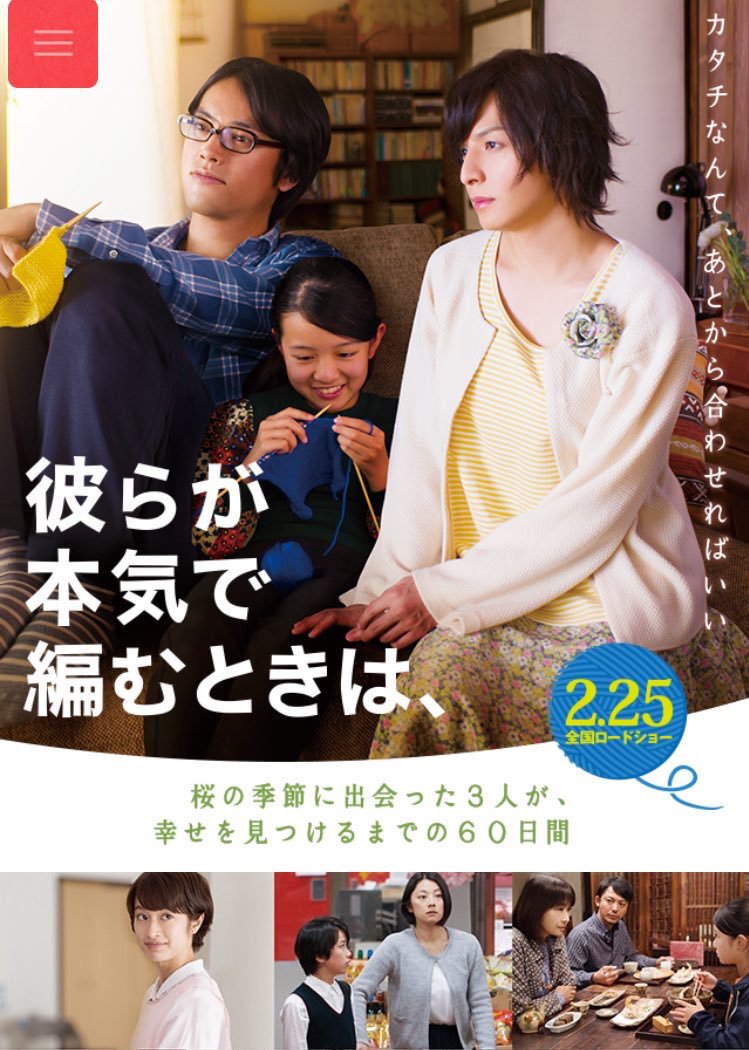 While studying in the US, director Naoko Ogigami encountered people from all walks of life but on her return to Japan was immediately struck by the invisibility of the LGBT community and particularly that of transgender people. Close-Knit (彼らが本気で編むときは, Karera ga Honki de Amu Toki wa) is her response to a still prevalent social conservatism which sometimes gives rise to fear, discrimination and prejudice. Moving away from the quirkier sides of her previous work, Ogigami nevertheless opts for a gentle, warm approach to this potentially heavy subject matter, preferring to focus on positivity rather than dwell on suffering.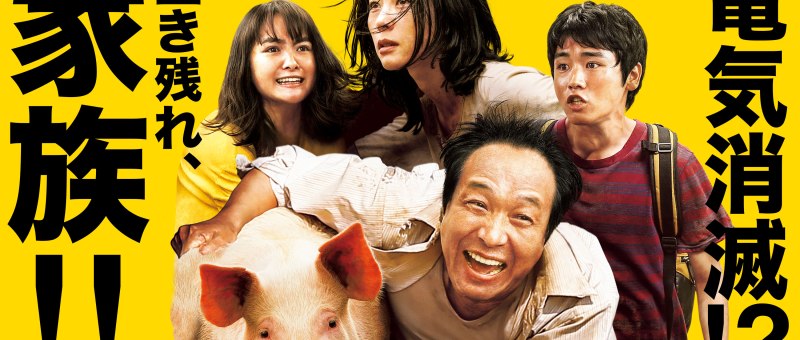
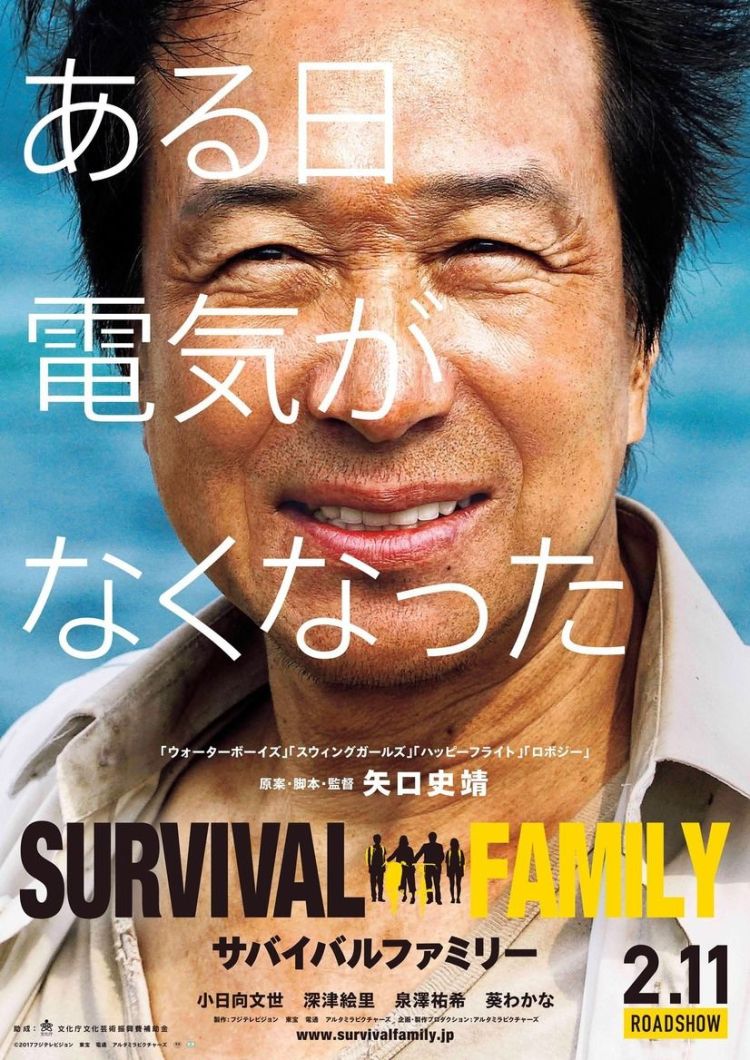 Modern life is full of conveniences, but perhaps they come at a price. Shinobu Yaguchi has made something of a career out of showing the various ways nice people can come together to overcome their problems, but as the problem in Survival Family (サバイバルファミリー) is post-apocalyptic dystopia, being nice might not be the best way to solve it. Nevertheless, the Suzukis can’t help trying as they deal with the cracks already present in their relationships whilst trying to figure out a way to survive in the new, post-electric world.
 Children – not always the most tolerant bunch. For every kind and innocent film in which youngsters band together to overcome their differences and head off on a grand world saving mission, there are a fair few in which all of the other kids gang up on the one who doesn’t quite fit in. Given Japan’s generally conformist outlook, this phenomenon is all the more pronounced and you only have to look back to the filmography of famously child friendly director Hiroshi Shimizu to discover a dozen tales of broken hearted children suddenly finding that their friends just won’t play with them anymore. Where A Silent Voice (聲の形, Koe no Katachi) differs is in its gentle acceptance that the bully is also a victim, capable of redemption but requiring both external and internal forgiveness.
 “Asia is a paradise for men” though not for anyone else, if Bangkok Nites (バンコクナイツ) is anything to go by. In Tomita’s previous film,
  There are two very distinct sides to the career of Tatsushi Omori. Brother of the well known actor, Nao, Omori may be best known to certain audiences for his hard hitting, often gloomy and pessimistic dramas of human misery such as festival favourite Ravine of Goodbye or the little seen
  Windows on Worlds