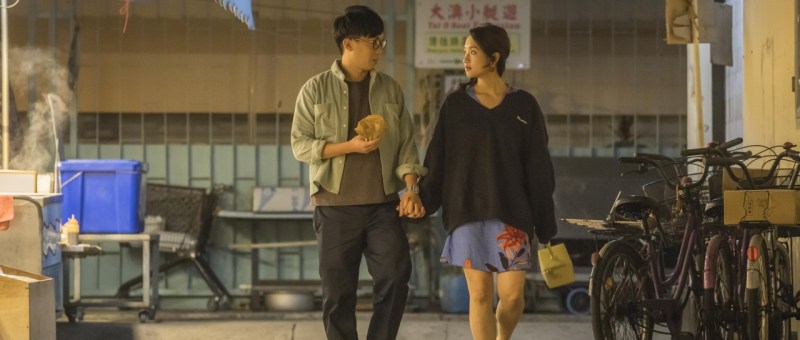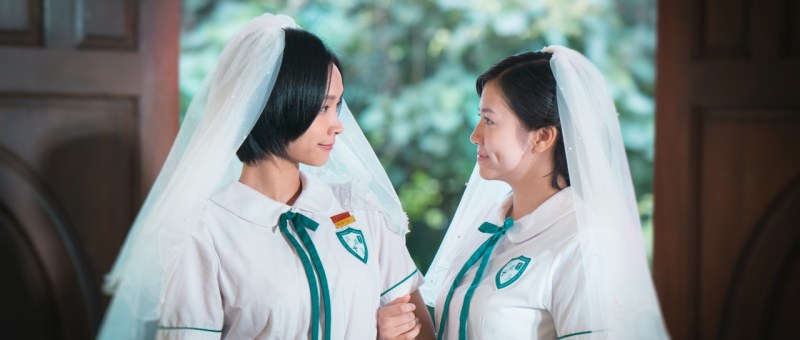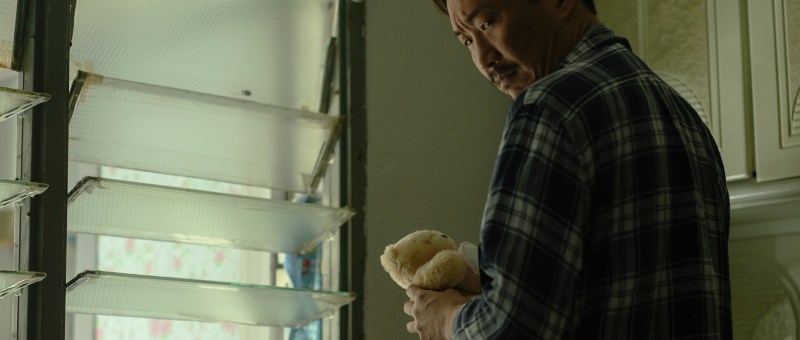

The First Girl I Loved (喜歡妳是妳, Yeung Chiu-Hoi & Candy Ng Wing-Shan, 2021)

“I wonder how many people are like us, dare to like yet too frightened to love?” the heroine of Yeung Chiu-Hoi & Candy Ng Wing-Shan’s youth nostalgia romance The First Girl I Loved (喜歡妳是妳) reflects having made peace with youthful romantic disappointment. As the title implies, Yeung & Ng’s melancholy love story finds a young woman looking back on her first love while beginning to wonder if she may have misunderstood or overly mythologised her high school romance. 

Now in her late 20s, Wing (Hedwig Tam Sin-Yin) is called back to the past by a phone call from her high school best friend Sylvia (Renci Yeung) who unexpectedly asks her to be the Maid of Honour at her wedding. Wing explains that she doesn’t like wearing dresses and would usually turn the invitation down but on this occasion she can’t because Sylvia was the first girl she ever loved. Long years of friendship eventually blossomed into teenage romance but while same sex relationships might have been more acceptable than they once were, they are not condoned by the private catholic girl’s high school the pair attend which calls their parents in after they’re spotted kissing on a bus by a passing teacher. 

Though Wing’s mother is a little taken aback, neither of the girls’ fathers thinks it’s a particularly big deal if for less than progressive reasons in that as Sylvia’s father puts it nothing “bad” can happen between two girls and he’d be much less relaxed if she’d been hanging around with a boy while Wing’s agrees that it’s probably just a phase and they “won’t look back” once they’ve met the right guy. The girls meanwhile seem to flit between despair and youthful romantic idealism, Sylvia who’d earlier been the more proactive in pursuing a relationship later conceding that perhaps it is a phase after all when her otherwise sympathetic father advises her to keep a low profile in order to avoid losing her scholarship because their family is poor. More secure in her middle-class comfort, Wing is minded to fight for love, saving up to buy a ring Sylvia had admired on a shopping trip and insisting that if growing up means denying their feelings for each other she’d rather remain a child. But then for unclear reasons Wing is the one who later betrays their love in agreeing to perform a public apology admitting that her relationship with Sylvia is “shameful and unacceptable” while Sylvia tears hers up and simply leaves having planned to take full responsibility while refusing to apologise for her feelings. 

The relationship between the two women continues to ebb and flow, leaving the older Wing wondering if they were ever really in the same story or if they simply remember their high school relationship differently. Perhaps to Sylvia they really were just admittedly intense “good friends” as she was fond of saying rather than the doomed lovers Wing has branded them as in her mind. Then again could it just be that Sylvia has chosen conventionality out of a lack of courage to fight for love, Wing wondering if Sylvia has decided to marry now in order to escape a pact they’d made to reunite if neither of them had married by 30 implying that Sylvia had never been able to let of the idea that anything other than a heteronormative marriage is necessarily a failure. 

Time does indeed seem to be a factor, the girls recreating the one minute scene from Days of Being Wild with a clock which has no second hand symbolising the timelessness of their youthful love while forever afterwards they seem to be haunted by ticking clocks implying that their romance has a shelf life. Even so, Yeung & Ng try to have their cake and eat it too, the climactic wedding taking place on a symbolic level between Sylvia and Wing echoing their mock high school wedding as they walk down the aisle together with Sylvia pained and conflicted in her choice while Wing reflects that they will always be “best friends” no matter what happens in the future having reclaimed her happy memories of her high school love reassured by Sylvia’s coded reactions that love is really what it was that existed between them. Replete with early 2000s nostalgia, Yeung & Ng’s tragic romance nevertheless ends on a hopeful note in managing to salvage the friendship from a faded love even if lacking the courage to fight for authenticity in an often conservative society.


The First Girl I Loved screens 13th/16th March as part of Osaka Asian Film Festival 2022

Original trailer (Traditional Chinese / English subtitles)

Elisa’s Day (遺愛, Alan Fung Chi-hang, 2021)

The legacy of abandonment visits itself on a trio of displaced Hong Kongers in Alan Fung Chi-hang’s melancholy crime drama, Elisa’s Day (遺愛). Set over 20 years from the Handover to the contemporary era, Fung draws inspiration from a real life crime while casting his ambivalent policeman, himself an orphan, as an ironic hero whose single act of compassion ends in a tragedy for which he feels he may not even have the right to atone. 

Fung begins, however, in the present day as Inspector Fai (Ronald Cheng Chung-Kei) prepares to collect his daughter who is shortly to be released from prison. Flashing back, we’re introduced to Daisy (Carol To Hei-Ling), a pale and distant young woman picked up for suspected drug trafficking while momentarily captivated by a familiar song and carrying a bunch of roses. From there we head further back, all the way to 1996 when 15-year-old Elisa (Hanna Chan Hon-Na) discovers she is pregnant by her bad boy boyfriend Man-Wai (Tony Wu Tsz-Tung). Each abandoned by their parents, the pair decide to run away together and find solace in a family of three, but as expected economic impossibility disrupts their search for happiness. Man-Wai joins the triads and eventually agrees to become a hitman, temporarily separated from Elisa and their daughter while lying low in Thailand. A then Sergeant Fai remains hot on his trail, keeping tabs on Elisa who unwittingly brings her young baby to the cinema where his adoptive mother Auntie Bo (Anna Ng Yuen-Yee) runs the box office, the pair of them becoming surrogate parents to the lonely little girl while Elisa is forced to turn to sex work when Man-Wai’s triad bosses fail to uphold their end of the bargain. 

“Everyone’s gone leaving only me behind” Elisa laments, learning that her estranged mother plans to move to the UK with her second family abandoning her once again in another, more complete sense. Trapped behind in a rundown area of the city, she finds herself caught between conflicting realities. Man-Wai pledges to stay with her forever but is soon gone eventually returning with promises of taking her to Thailand their dream of a better life symbolised by the red roses he brings with him that he claims reminded him of her. Man-Wai meanwhile is constantly told by his triad bosses that the future lies in Mainland China, a place he is originally so reluctant to travel that that he thinks killing is a better option only to later submit himself once again leaving Elisa alone in Hong Kong with no money and only a dwindling hope of ever achieving the familial bliss she longed for when she decided to run away with Man-Wai. 

For his part, Fai is also an orphan though his fate his was different in that he was found by Auntie Bo who gave him a loving home. Even so he has his share of guilt, feeling responsible for Auntie Bo’s spinsterhood fearing that she never married or had children of her own because taking him in made it impossible in the more conservative Hong Kong of 70s and 80s. Ironically enough they become a surrogate family for the infant Daisy, but it’s Fai’s sense of empathy that eventually provokes tragedy in his decision not to arrest Man-Wai on his return seeing how much he loves his family and wanting to give him a chance to put things right rather than take a little girl’s father away from her. Unable to forgive himself, he abandons his responsibilities only to be reminded of them later finally ending the cycle by being willing to accept the responsibility which has been left for him. 

Transitioning through the Hong Kong Handover, Fung evokes a sense of continual displacement, Elisa’s life destroyed firstly through abandonment and then through conflicted desires torn between a potential Thailand paradise and Mainland reality while longing only for a stable home(land). Daisy is offered something similar, her drug trafficker boyfriend to promising to take her to Thailand on their next run, the drugs ironically concealed in a bouquet of red roses just like those her father once brought for her mother. Her only salvation lies in the arms of Fai, a literal authority figure, reassuming his paternal responsibility and thereby restoring a sense of familial and political stability. Told in fragmentary, non-linear fashion, Fung’s melancholy tale of the legacies of abandonment and an innocent love eroded by economic and social realities eventually finds hope in familial repair and the remaking of a home in self-defined family.


Original trailer (English / Traditional Chinese subtitles)

Just 1 Day (給我1天, Erica Li, 2021)

“Who has time for nostalgia with all the novelties out there?” asks the heroine of screenwriter Erica Li’s directorial debut Just 1 Day (給我1天), an adaptation of her own novel. She does, as it turns out, in fact that’s all she may eventually have time for in this tale of romantic transience as she, in a sense, learns to seize her future by living in the past through reconnecting with a childhood friend. 

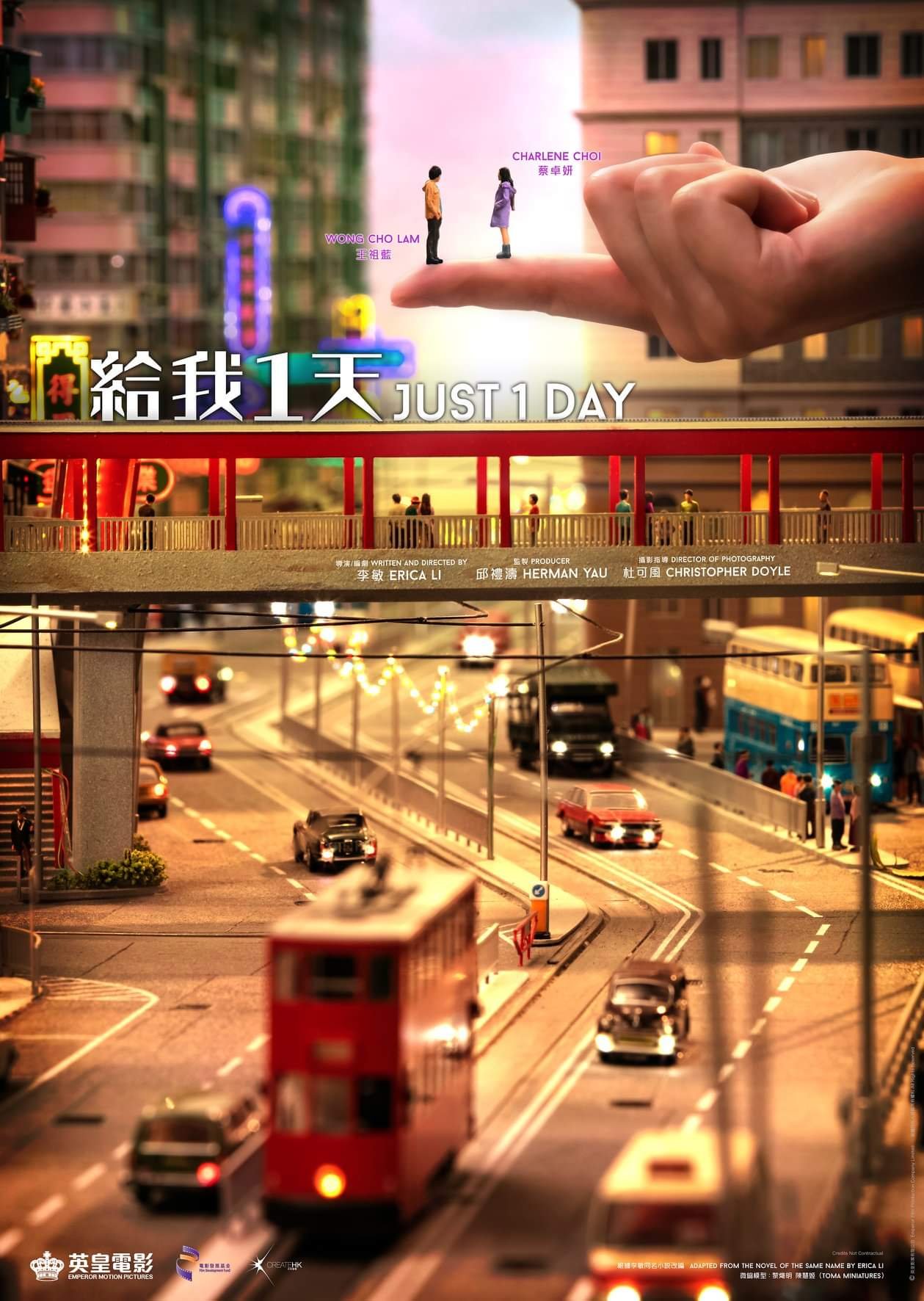
Now in her early 30s, bank clerk Angelfish (Charlene Choi Cheuk-Yin) is an unfulfilled career woman who enjoys her job chiefly for the ability to be of service to others. Meanwhile, she’s trapped in a potentially dead end relationship with a man who she’s recently discovered has a longterm girlfriend in Canada he never gets round to breaking up with. Attending a primary school reunion marking the institution’s imminent relocation, Angelfish runs into a long lost childhood friend, Mosaic (Wong Cho-lam), now a sketch artist with a sizeable online following. Unbeknownst to her, Mosaic has long been carrying a torch but never had the courage to say anything partly because of a hangup about his short stature. As we later discover, however, he’s running out of time. Paying a visit to the bank where Angelfish works to enquire about insurance he reveals he’s suffering from the same condition that killed his father, ALS, and potentially has only a few more years to live. Shooting his shot, he asks Angelfish to spend just one day with him as his “girlfriend” to cross it off his list. Provided there’s no funny stuff, she agrees but of course discovers something far more profound than a fleeting connection. 

This being Angelfish’s story, Mosaic’s illness is more or less treated as a plot device intended to confront her with her own sense of mortality so that she reassesses her life choices in order seek true happiness. Mosaic in fact teaches her this when explaining the concept of a vanishing line so that she might learn to fix her eyes on the horizon and see the rest of the world in relation to it. Meanwhile, the fact that ALS is a degenerative condition is also aligned with the idea of a world slowly disappearing, the eventual message paradoxically amounting to the notion that nothing ever really disappears because it continues to exist in the hearts and minds of everyone that remembers it. In order to preserve this sense of “nostalgia”, Mosaic meticulously sketches the old Hong Kong before its inevitable destruction while Angelfish finds her vocation in recreating it through miniature diorama. 

The conflict is brought home to her in the opposing natures of her two men, boyfriend Ken chuckling at her distress over the destruction of a local landmark by claiming that the old has to go to make way for the new, but later finding himself unable to break up with his longterm girlfriend out of a sense of expectation and obligation. One might say he is similarly trapped by “nostalgia”, or at least an emotional coward either too afraid to take a risk on new love or unwilling to abandon the security of the familiar. Her female friends, meanwhile, present two opposing paths, one a free spirited flight attendant and the other a conventional housewife whose dreams of the perfect family are eventually dashed on discovering her husband’s infidelity. To that extent, what Angelfish chooses is a kind of independence in wedding herself to a memory while paradoxically living in the moment in the knowledge that her love has its own vanishing point. 

Though boasting cinematography by Christopher Doyle, Just 1 Day is fairly conventional in shooting style akin to many other contemporary Hong Kong dramas save its brief segues into the past and eventual transition into an artificial world of nostalgic memory. Nevertheless as much a love letter to a disappearing Hong Kong as a tearjerking romantic dramedy or inspirational tale of a soon to be middle-aged woman finding fulfilment in following her heart, Just 1 Day effortlessly sells its central messages of living life to the full while making and preserving memories that will, it assures, sustain you when all else is gone. 


Teaser trailer (English subtitles)

An Autumn’s Tale (秋天的童話, Mabel Cheung, 1987)

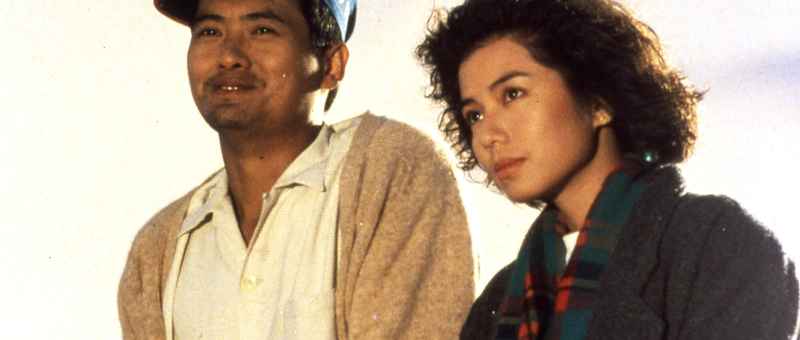
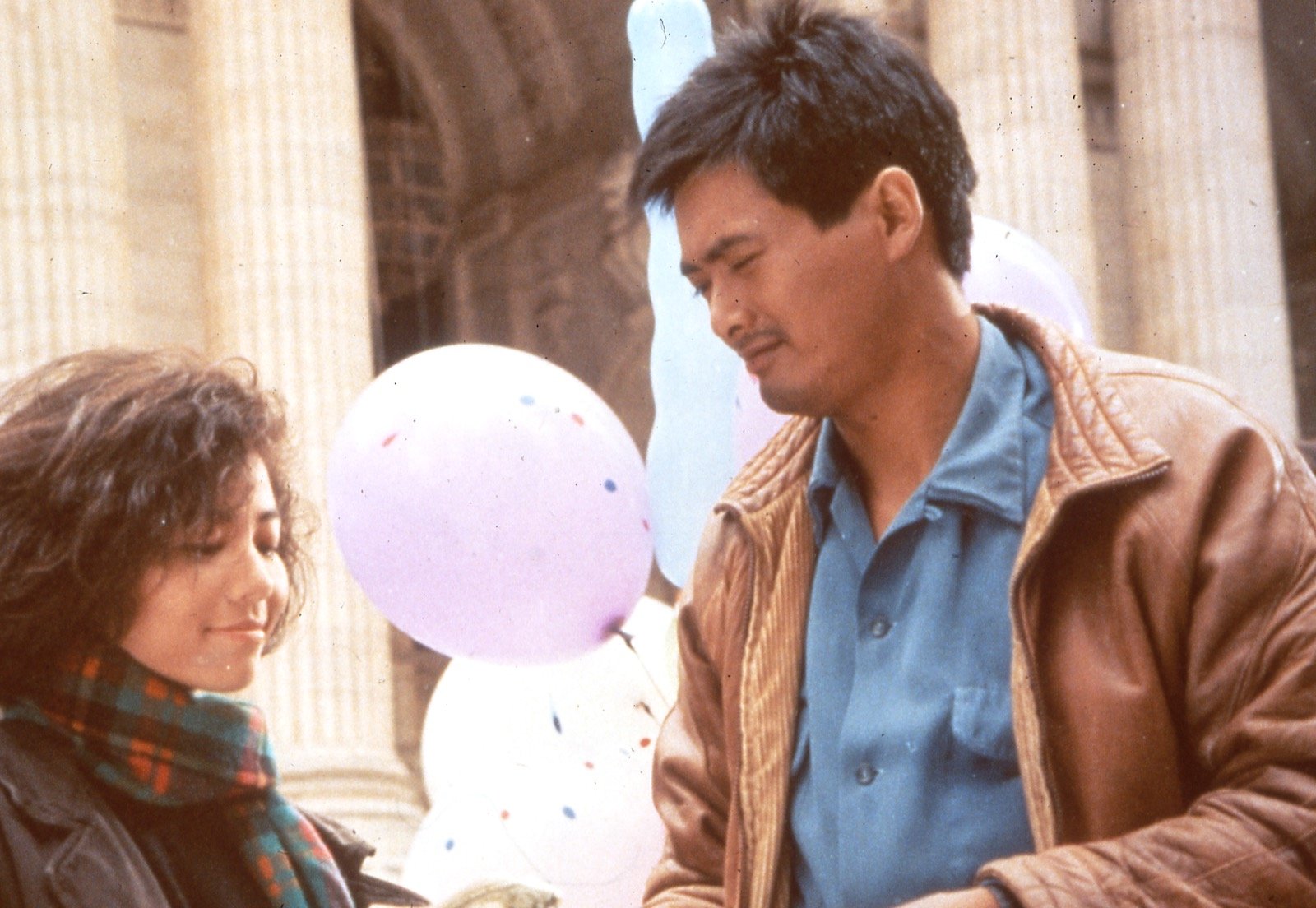
Cherie Chung and Chow Yun-fat find love in exile in Mabel Cheung’s charming New York rom-com, An Autumn’s Tale (秋天的童話). Penned by Alex Law, Cheung’s breezy chronicle of love and handover anxiety is subtle and sophisticated romance for grownups finding its youthful heroine stepping into herself in stepping away from home springboarding from emotional heartbreak into personal growth while beginning to fall for her equally lost and hoplelessly diffident yet larger than life new city neighbour. 

After two years of patient saving, Jennifer (Cherie Chung Chor-hung) is finally heading to New York to reunite with hometown boyfriend Vincent (Danny Chan Pak-keung) and study acting in the city. Her mother has put her in touch with a distant relative who is apparently a former sailor turned big man in Chinatown nicknamed “Figurehead” (Chow Yun-fat) who’s agreed to pick her up from the airport and sort her out with a flat. What Jennifer hasn’t disclosed is that she hasn’t told Vincent she’s coming and plans to surprise him when he returns from a baseball game in Boston. When she arrives, however, she discovers not only that Figurehead has somewhat misrepresented his level of success but that Vincent is seeing someone else and places little value on their past relationship, viewing his hometown girlfriend as childish and unsophisticated now he’s a big city guy changed by his new environment but not for the better. 

Jennifer’s culture shock on arriving in late 80s New York is instantly apparent as “Figgy” takes her back to the rundown Chinatown slum where he is living to a flat which looks like no-one’s been up there in 20 years, still has a gas-operated refrigerator, and is filled with the last tenant’s abandoned belongings. Perhaps bearing out the realities of the international dream, Figgy has obviously been telling everyone back home how great his life is in New York and how well he’s been doing for himself while living aimlessly in the city spending his days drinking, gambling, and fighting paralysed by anxiety and too frightened to move forward. Even so he does his best to help Jennifer adjust to life in New York, helping her fix up the apartment and trying to be sympathetic after witnessing her brutal breakup with the no-good Vincent.

Then again, “We belong to two different worlds” she eventually reflects in trying to decide not only if she’s fallen in love with Figgy or he her but if he’s really got longterm potential. She says he makes her feel free, but as she becomes more used to life in New York and less afraid of its differences she grows eager to see the rest of the world while Figgy, 10 years older, claims he’s seen it all already and has no real desire to go anywhere anymore. To him, everything in New York is just an inferior version of something they already had in Hong Kong, broadway musicals are “yankee opera”, pizza is “yankee pancakes”, the music of Americana street musicians is “yankee tunes” that remind him of a Chinese funeral march. While he works in a Chinese restaurant for Chinese people, Jennifer gets a job at an upscale place going by the name “Big Panda” run by a sleazy friend of woman she babysits for that is intent on selling a Westernised idea of China to the locals. Trying to play the big shot in his ill-fitting suit, Figgy doesn’t even understand the menu or the extortionately priced itemised bill presented to him in English but recklessly throws $20 bills at the tip-happy waiter. His only dream is to open a small restaurant on a pier overlooking the ocean that Jennifer convinces him to name “Sampan” like the boat but also in honour of his English name, Samuel Pang. While Jennifer continues to move forward, Figgy remains diffident, too afraid to voice his feelings and consumed by a sense of under-confidence that leaves him unable to pursue either his dream or innocent love. 

To put it bluntly it’s the 33-year-old Figgy who is not really ready for serious romance while through her failed relationship with Vincent and growing experience of independent city living Jennifer is beginning to figure out what it is she wants out of life and out of love. Their romance can’t blossom until they meet each other as equals, Figgy finally pulling himself together and gaining the confidence to chase both love and his dreams. A beautifully understated, naturalistic romance with an ending to rival Comrades Almost a Love Story, An Autumn’s Tale is also love letter to the city of New York with all of its danger and possibility as two lost youngsters learn to find a home in each other while discovering the courage to become themselves.


An Autumn’s Tale screens at the BFI 25th January as part of Focus Hong Kong

Original trailer (no subtitles)

All U Need Is Love (總是有愛在隔離, Vincent Kok Tak-chiu, 2021)

All things considered, there are worse places to quarantine than a five star hotel especially if it’s free but then again forced proximity with those you love, or those you don’t, can prove emotionally difficult. An old school ensemble comedy, Vincent Kok’s All U Need Is Love (總是有愛在隔離) features a host of A-list stars each providing their talent for free in order to support the struggling Hong Kong film industry in the wake of the COVID-19 pandemic but as its name suggests eventually offers a small ray of hope that the enforced period of reflection may have fostered a spirit of mutual solidarity and personal growth. 

Kok opens, however, with a tense chase sequence as a shifty looking man runs from the authorities at the airport only to be picked up by the PPE-clad Epidemic Task Force who whisk him away to a secret location where he’s placed inside a weird bubble and interrogated by Louis Koo. Several more top HK stars including Gordon Lam fetch up in the bubble each implicating the Grande Hotel as the centre of of a coronavirus cluster at which point an order is given to place it under total lockdown requiring everyone inside to remain for a 14-day quarantine. 

Essentially a series of intersecting skits, Kok’s ramshackle drama nevertheless has its moments of satire as the hotel chief takes to the stairs for an inspirational speech in which he frequently slips into English and bizarrely likens himself to the captain of the Titanic because we all know how well that went. He spends the rest of the picture trying to escape without anyone noticing while his dejected security guard/brother tries to bump him off. Meanwhile, two gangsters develop a homoerotic bromance while plotting how best to profiteer off the pandemic through smuggling anti-COVID paraphernalia just as panic buying takes hold on the outside. 

Nevertheless, it can’t be denied that All U Need Is Love is also guilty of some rather old fashioned, sexist humour particularly in the antics of a pair of old men (Tony Leung Ka-Fai and Eric Tsang reprising their roles from Men Suddenly in Black) and their minions who misled their wives in order to embark on a sexual odyssey only to have their plans both improved and then ruined by the quarantine order. Meanwhile, a young couple who were in the hotel preparing for their wedding banquet ironically scheduled for the last day of the quarantine find themselves at loggerheads as the man gets cold feet over his fiancée’s bridezilla micromanaging, and her father undergoes a total makeover while continuously watching Japanese pornography in his room. 

Watching it all, a little girl, Cici, becomes the moral voice of the pandemic innocently hoping that nature will continue to heal itself even after the sickness ends. It’s she who shows the gangsters the error of their ways in pointing out that if they steal all the anti-COVID equipment then they will end up being more at risk because no one else is protected, while she also softens the heart of the hotel’s cynical manager to the point that he too makes a lengthy speech about becoming a better person thanks to his experiences during in the pandemic. 

During their enforced proximity friends and strangers have indeed needed to rediscover their love for their fellow man as they band together in mutual solidarity waiting for their freedom. Culminating in an oddly uplifting wedding decked out with balloons and messages from friends and family played via iPad, Kok’s anarchic ensemble farce does its best to discover a silver lining among the fear and anxiety of the pandemic as it ironically brings people together through driving them apart. Along with his A-list cast, Kok throws in a series of movie parodies and pop culture references from an impromptu rendition of Baby Shark to a surprise appearance from the Landlady from Kung Fu Hustle as well as a suitably random cameo from Jackie Chan. Repurposing the traditional Lunar New Year movie, All U Need is Love is a classic nonsense comedy designed to lighten the mood in these trying times while celebrating the essence of Hong Kong cinema through, arguably, its most idiosyncratic of genres. 


All U Need Is Love streamed as part of this year’s New York Asian Film Festival.

Original trailer (Traditional Chinese/English subtitles)

Weeds on Fire (點五步, Steve Chan Chi-Fat, 2016)

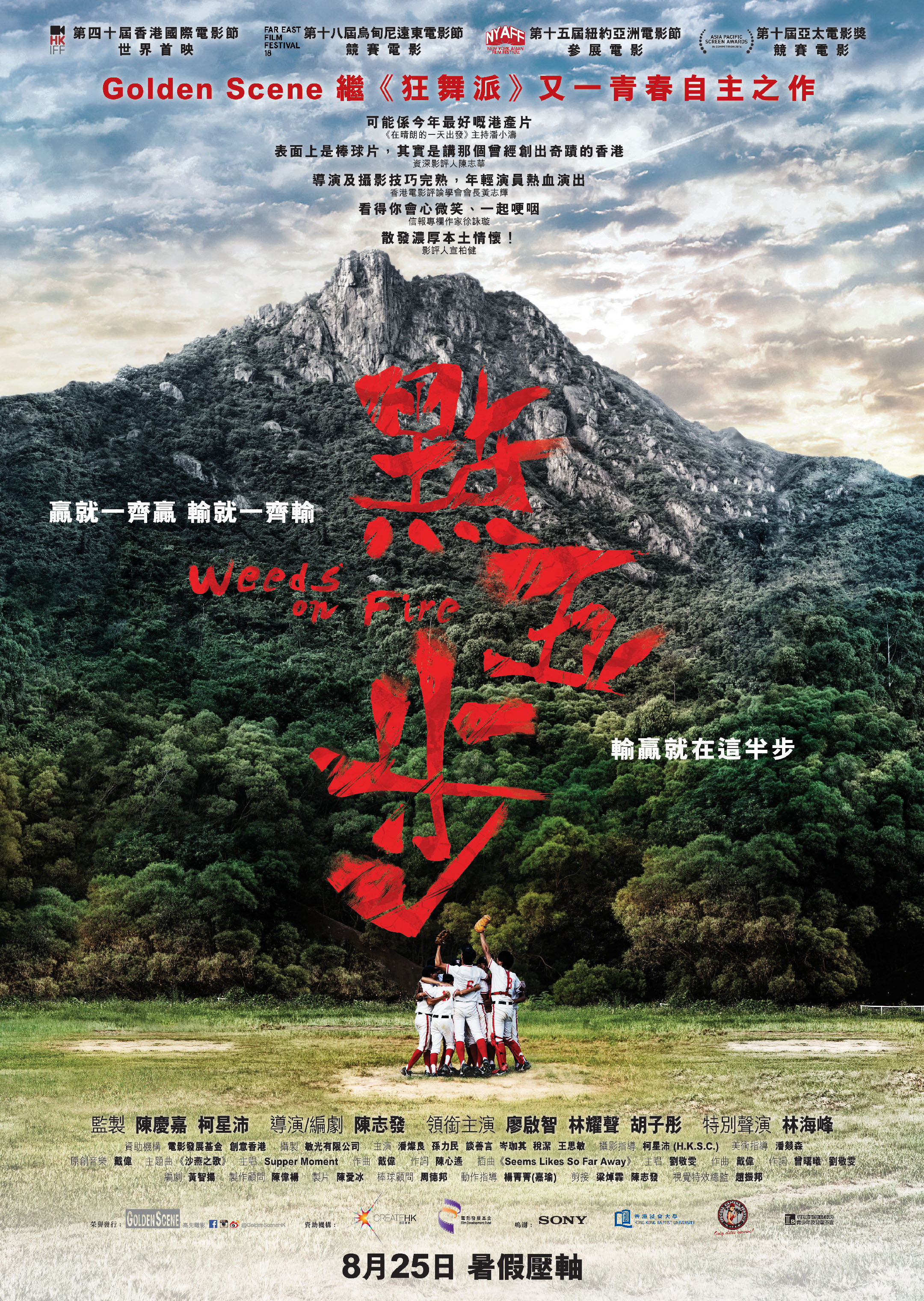
“Even though disappointed, do not lose hope” reads a piece of graffiti in the closing moments of Steve Chan Chi-fat’s nostalgic coming-of-age drama Weeds on Fire (點五步). Though touted as a baseball movie, as incongruous as that may sound given that the sport is a niche interest in contemporary Hong Kong, Chan’s strangely hopeful if quietly melancholy tale of ‘80s Sha Tin is bookended by scenes of the present day city in the midst of the Umbrella Movement protests the story the hero wants to offer seemingly intended for an audience of dejected youngsters as confused and disappointed as he once was in order to encourage them that what’s important isn’t winning or losing but staying the course and gaining the confidence to take the first step. 

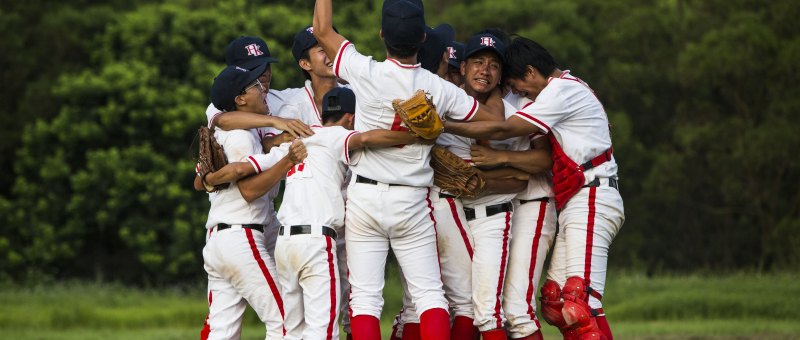
Now in his mid-40s, Lung (Lam Yiu-sing) casts his mind back to the Hong Kong of 1984 when he lived on a rundown council estate in Sha Tin and attended a high school with a less than stellar academic record. A shy and nerdy boy, he was often bullied but always had childhood friend Wai (Tony Wu Tsz-tung), physically imposing and with a confident swagger, at his back. When the city comes up with additional funding for schools to use in the promotion of sport their enterprising headmaster Lu Kwong-fai (Liu Kai-chi) hatches on the idea of starting the region’s very first local high school baseball team, recruiting both Wai and Lung in the hope of teaching them teamwork and discipline. Nevertheless, being teammates begins to place a strain on their friendship and it becomes clear that the boys are destined for different paths. Wai quits the team in a huff and leaves school, mooching round in pool bars and hanging out with triads while Lung steps up to the plate but is troubled by the loss of his friendship and the fracturing relationship between his unhappily married parents. 

Chan somewhat unsubtly ties Lung’s personal development to that of Hong Kong as he finds himself coming of age in era of anxiety. The world is literally changing around him, 1984 being as says the year that the redevelopment of Sha Tin began in earnest while it also marked the signing of the Sino-British Declaration paving the way for the transfer of power in the 1997 Handover. A young man, Lung wants to “change” himself in that he longs for the confidence to ask out a young woman he’s developed a crush on but is too shy and disappointed in himself for doing nothing when witnessing her being harassed by a drunken creep in the lift of the apartment block where they both live. Yet in other ways change frightens him and really he wants everything to stay the same believing that saying nothing will maintain the status quo only to realise that there are situations over which he has no real control. 

His headmaster and coach of the baseball team Lu admits that he set Wai and Lung against each other in order to encourage him to come out from his friend’s shadow embracing his own identity and discovering a sense of self-confidence. Yet Lung continues to struggle, a little lost unable to find clear direction in his life while everything changes around him occasionally consumed by a sense of despair as perhaps are the young protestors in believing their movement has failed. In baseball what he realises that it isn’t about winning or losing but having the confidence to step up to the plate, subtly telling the protestors to hang in there because there’s still time to turn this around. “I never said we had to win”, inspirational coach Lu reminds the boys, “but I did say never give up!”.

Loosely based on the real life story of the Shatin Martins though as the closing credit reel reveals the original team were primary school children rather than high schoolers, Chan shifts away from sporting drama towards the more familiar youth movie metaphor of two former friends heading in different directions, the good boy knuckling down while the “bad” becomes a victim of his own hotheaded arrogance even if managing to repair his fractured friendship with Lung before tragedy strikes. Filled with memories of Handover anxiety and a healthy dose of ‘80s nostalgia, the film’s incongruous jauntiness is perhaps at odds with the gravity of the tale though that is perhaps itself part of the message the older Lung has for the young. “This is the city where I grew up. It’s become increasingly unfamiliar” he laments striding through streets filled with tents occupied by student protestors, sympathising with their cause while offering them a note of melancholy hope in his own, sometimes painful, tale of finding his feet in a changing Hong Kong. 


Weeds on Fire streams in Poland until Nov. 29 as part of the 15th Five Flavours Film Festival.

Original trailer (English subtitles)

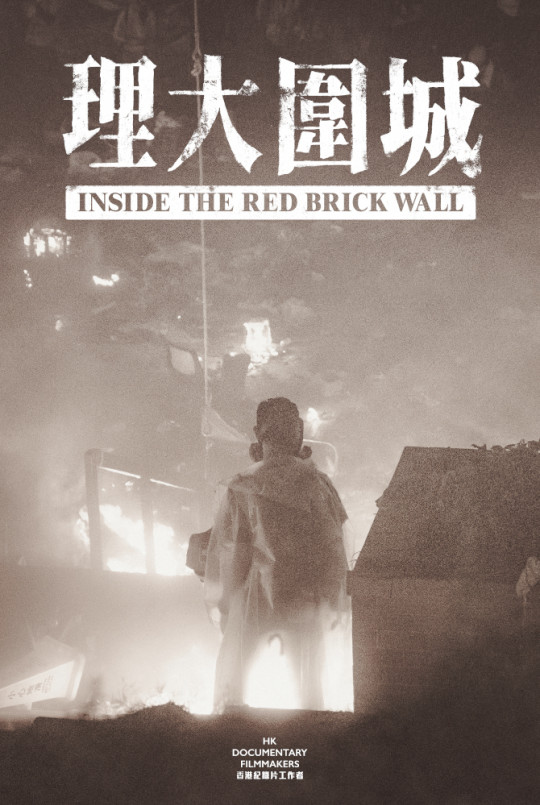
Inside the Red Brick Wall (理大圍城, Hong Kong Documentary Filmmakers, 2020)

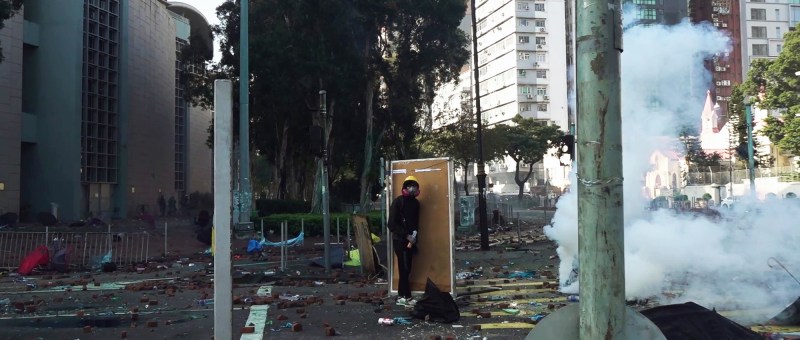
“We can’t afford to be afraid” insists a protestor trapped inside the siege of Hong Kong Polytechnic University during the 2019 protests sparked by opposition to the Extradition Law Amendment Bill. Credited only to the Hong Kong Documentary Filmmakers collective, its directors for obvious reasons choosing to remain anonymous, Inside the Red Brick Wall (理大圍城) is a visceral exploration of life behind the barricades as the trapped youngsters, some of whom are under the age of 18, grow increasingly frustrated and afraid, desperate for escape but fearful of police violence. 

The police, it has to be said, do not come out of this well. While the protestors blast local hip hop highly critical of law enforcement, the officers negotiating via loud speaker repeatedly troll them with ironic pop songs with titles such as “Surrounded” or “Ambush From Ten Sides” while otherwise taunting them with ridiculous insults and talking about going out to kill cockroaches. Such deliberate provocation at least giving the impression that they are merely looking for an excuse to storm the university does not endear them to the protestors trapped inside most of whom already want to leave but not if it means walking out into the arms of the police. With the mounting hysteria, it isn’t even the immediacy of the threat that causes the most anxiety but the possibilities of its aftermath, many fearing not just police brutality but sexual violence and that their mistreatment will not end with their arrest. This is one reason that many struggle to trust a cohort of high school principals who are permitted to enter the university in order to lead out some of the school-aged protestors, promising to protect them from the police batons in order to deliver them to their homes safely and directly. In return the protestors are asked to provide their IDs, leading many to fear they will simply be arrested the following morning. 

Nevertheless, as the situation inside begins to decline it becomes clear to many that they must leave by whatever means possible, some engaging in potentially dangerous escape attempts such as abseiling from a bridge to be met by friends on motorbikes, or exiting through the sewers. Others debate the wisdom of leaving at all, correctly as it turns out surmising that the police will eventually be forced to end the siege because allowing it to continue is simply far too expensive. Even so, these are extremely young people under intense strain, mentally and physically exhausted while also fearing for their lives. Remarking that many have made their wills, one young man insists it’s not death he fears, he’s prepared for that, but that he may die in here and no one would know.  

The necessity of hiding their faces, the documentarians are scrupulous in blurring even the faintest trace of identifiable features, adds to the sense of the collective which becomes in the eyes of some at least their best weapon of defence. Yet through repeated attempts to break through the blockade and the gradual shedding of those who cannot endure any longer deciding to accept the threat of arrest and surrender, the group necessarily weakened causing many to fear their reduced numbers leave them increasingly vulnerable. Some protestors loudly harangue their friends for leaving, while others offer only comfort as their fellow protestors tearfully apologise but can clearly remain no longer. A few pledge to wait it out while debating the ethical dimensions of leaving if it means abandoning those who are already too injured to make their own way out. 

In the midst of the action, the documentarians hover over blood-stained helmets and the aftermath of violence but are also relatively free to record police brutality seemingly ignored by officers otherwise pinning protestors to the floor and in some cases recklessly firing rubber bullets in close proximity even at one point appearing to fire directly at the back of a fleeing protestor’s head. Interrupting these scenes with shots of empty corridors – discarded clothing, a lone shoe inches away from the fire, all those battered umbrellas – the filmmakers evoke an almost apocalyptic atmosphere of total desolation offering little hope for the future in a society dominated by fear and authoritarianism. 


Inside the Red Brick Wall screened as part of this year’s San Diego Asian Film Festival

Trailer (dialogue free)

The Dishwasher Squad (洗碗天團, Shum Sek-yin, 2021)

“Help those in need, then what about me?” asks the cynical hero of screenwriter Shum Sek-yin’s directorial debut, The Dishwasher Squad (洗碗天團). Another in the recent series of films exploring attitudes to disability in contemporary Hong Kong, Shum’s breezy comedy sees two self-centred businessmen with some extremely outdated and often quite offensive views decide that the only way to recover from being scammed into buying a moribund business is by exploiting the vulnerable only to eventually reawaken to their humanity if only perhaps to a degree. 

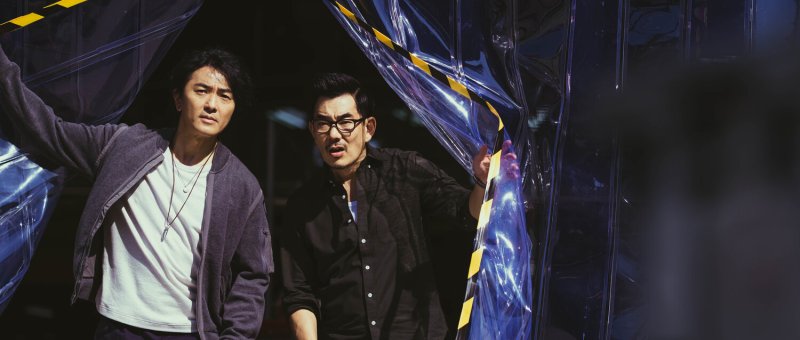
After Kyun’s (Richie Jen Hsien-chi) business fails, his best friend Lun (Ekin Cheng) comes up with a plan to buy out the industrial dishwashing plant owned by the friend of a friend who is apparently keen to sell because he wants to emigrate to Canada with his son who has learning difficulties. Strangely, on that very day, Kyun seems to find himself repeatedly running into disabled people for whom he seems to have little to no respect often using offensive language and even stealing an extra cookie from a young man with Down’s Syndrome collecting money for charity. Kyun seems fairly smug about each of these problematic encounters as if congratulating himself for getting one over on those he sees as lesser than himself. Unfortunately for him, however, while he thought he was conning the factory owner by telling him they planned to use the place to help the needy, the factory owner was actually conning him seeing as the business isn’t viable and is in fact riddled with debts. Not only that, all the staff were casual employees leaving Kyun and Lun with a huge problem seeing as they have legally binding contracts to fulfil and no staff to fulfil them. 

That’s one reason he eventually hatches on a cynical plan to take advantage of a government scheme to become a “Social Enterprise” in order to gain a subsidy by employing a majority of marginalised employees who might otherwise find it difficult to secure regular employment. Working with a local social worker (Hedwig Tam), he agrees to employ a young woman with autism and two men with learning difficulties along with another woman trying to rebuild her life after leaving prison. Aside from access to the subsidy, the main draw for Kyun is that he assumes he won’t have to pay them very much or even at all, getting the two men to work for free during their “probationary” period and thereafter attempting to fire one of them before it comes to an end. To bolster the work force, Kyun also recruits a series of undocumented South Asian migrants for much the same reasons assuming they will have little desire to make a fuss over their pay or conditions. 

Nevertheless, through close contact with each of his staff members Kyun finally begins to develop a sense of humanity though it’s unfortunate that his ability to recognise his employees as fellow humans only comes with a realisation that they are “useful” to him after all as they each and for varying reasons become attached to their new jobs and the atmosphere at the factory. It has to be said, however, that Shum’s otherwise positive message of people over profit is undercut by the series of fat jokes aimed at a female worker who at one point is seen eating from an automatic pet feeder, while a scene featuring an improvised stomach pump after an employee accidentally ingests detergent is also perhaps in poor taste even if hinting at the depths Kyun is prepared to sink to in order to protect his business interests.

Despite having bonded with his employees in a genuine sense of camaraderie, Kyun is still intent on exploiting his workforce and continues to see himself as superior if having developed a little more of a moral compass. Even so, he has perhaps developed the desire to run an honest business built on trust and compassion rather than greed and deception even if he hasn’t quite got there yet while reaffirming his friendship with Lun as they find themselves on a more even footing after a brief falling out. Mixing mild social issue themes regarding the difficulties faced by those marginalised by the contemporary society with lighthearted humour and a lot of heart, The Dishwasher Squad eventually argues for doing right by each other even if not everyone feels the same way. 


The Dishwasher Squad has its World Premiere on Oct. 17 at ChiTown Drive-in as part of the 13th Season of Asian Pop-Up Cinema.

Breakout Brothers (逃獄兄弟, Mak Ho-Pong, 2020)

“I’m treating this as a vacation” says affable triad Chan (Louis Cheung Kai-Chung) of his three month prison term, after all it’s rent free and three meals a day who could say no to that in the difficult economic environment of pre-handover Hong Kong? Nevertheless, it’s hardly a vacation if you can’t cut it short and Chan, along with two buddies, will eventually find reasons to want to leave. Mak Ho-pong’s genial prison break comedy Breakout Brothers (逃獄兄弟) takes occasional subversive potshots against an increasingly corrupt social order but eventually discovers that you can’t escape social responsibility while the real reward is indeed the friends you make along the way. 

That is at least the conclusion that newbie prisoner Mak (Adam Pak Tin-Nam) comes to after being pulled into an escape plan formulated by petty gangster Chan who decides to make a break for it after learning that his dear mother has been taken ill and needs a kidney transplant which only he can give her. Thinking of his prison time as a vacation from the pressures of everyday life, Chan has been a low maintenance prisoner and therefore assumed the warden would agree to a temporary release to let him help his mum, but Warden Tang (Kenny Wong Tak-Ban) who has already served a “life sentence” of 30 years in post has recently been promised a promotion and doesn’t want anything to mess it up like a prisoner turning fugitive while on hospital leave. Spotting a workman disappearing from a storeroom and emerging Mario-style from a manhole on the other side of the fence Chan gets an idea and enlists Mak, an architect inside after being framed for taking bribes, to help him figure out the logistics, and Big Roller (Patrick Tam Yiu-Man), leader of the prison’s second biggest gang, for access and protection. 

The guys’ predicaments are perhaps embodiments of the age, Chan wanting out for reasons of filial piety while for Big Roller it’s in a sense the reverse in learning the daughter he was told had died is in fact alive and about to be married. Mak meanwhile wants out because he’s a sitting duck inside, the shady construction CEO who framed him for signing off on lax safety procedures which led to a fire in a prominent building having enlisted the services of rival gangster Scar (Justin Cheung Kin-Seng) to intimidate him into dropping his appeal. Hints of institutional corruption extend to the colonial prison system with guards quite clearly intimidated by prisoners and often turning a blind eye to cellblock violence while it’s also implied that Warden Tang has in a sense facilitated the rise of Scar at the expense of Big Roller as a means of maintaining order. He, like the colonial authorities, will soon be on his way but anticipating his own freedom is keen there be no trouble which is why he refuses Chan’s compassionate leave and extends little sympathy to new boy Mak. 

In any case, the real draw is the bumbling crime caper of the guys planning a heist-style escape which is, in the history of prison escapes, not an especially elaborate one. The prison is not exactly max security, and as they plan to escape during the celebrations for the Mid-August festival none of them are anticipating much difficulty in making it to the outside though as expected not quite everything goes to plan. Mak, meanwhile, eventually takes Big Roller’s advice and decides to stay inside to clear his name properly while the gang ensure his safety rather than try to live as a guilty fugitive and possibly be caught only to end up with more time. The other two have more pressing temporary goals and have not perhaps considered what to do after they’ve completed them, believing only that their lives are untenable if they cannot fulfil their duties as father and son respectively. 

Perhaps for this reason, the Mainland-friendly conclusion has each of the men recommitting themselves to paying their debts to society, Chan even insisting that he’s going to use his time wisely to improve his education in order to be a better husband and son while Big Roller promises to become a carpenter for real. Mak gets a partial vindication in that the shady CEO is finally forced to face justice while also realising that his slightly elitist, individualist stance has been mistaken thanks to the warm and genuine relationships he’s discovered inside. More comedy crime caper than tense prison break thriller, Breakout Brothers remains true to its name in prioritising the unconventional friendship that develops between the trio as they bond in a shared sense of existential rather than literal imprisonment. 


Breakout Brothers screened as part of this year’s New York Asian Film Festival.

Original trailer (English / Traditional Chinese subtitles)

Zero to Hero (媽媽的神奇小子 , Jimmy Wan Chi-Man, 2021)

“No one treats you like an ordinary person, so become an extraordinary one” the heroic mother at the centre of Wan Chi-Man’s Zero to Hero (媽媽的神奇小子) tells her young son as he struggles to find a place for himself as a disabled person in an unaccommodating society. Inspired by the real life story of multi-medal winning Paralympian So Wa Wai (Leung Chung-hang), Wan’s inspirational tale is as much about maternal determination as it is about overcoming preconceived limits but also makes a series of subtle points about how the contemporary society treats disability. 

Wan opens in Guangzhou in 1981 as Wai’s mother Mrs. So (Sandra Ng) frantically rushes him to hospital only to be told that he has jaundice which has resulted in cerebral palsy meaning that he will likely never be able to walk or feed himself. The doctor double checks if the family would like to proceed with treatment given this information to which they emphatically reply they would. A few years later, the family has migrated to Hong Kong and Mrs. So is forced to take Wai with her to her job in a laundry, eventually finding herself at her wits end after his hearing aid goes missing placing her son on the shoot and shouting at him to walk only to shut the belt down just before he reaches the edge. At this point, Wai manages to pull himself onto his feet, proving the doctors wrong and teaching himself to walk unassisted. Witnessing an older Wai run away from neighbourhood bullies gives Mrs. So an idea and she soon tries to enrol him in a club for athletes with physical disabilities only to be turned away because of his age but his decision to join in anyway gets him noticed by former Paralympian relay runner Coach Fong (Louis Cheung Kai-chung) who decides to take him on and train him up. 

In contrast to other sporting biopics, Wai’s path to Olympic success is more or less drama free even as he strives to improve his athletic abilities and overcome the mild resentment among some of his teammates in needing to change their style and position in order to accommodate him. Wan does however hint at the difficulties of living as a disabled person in late 20th century Hong Kong, Fong explaining to Mrs So that the Paralympics aren’t aired on Hong Kong TV and disabled athletes earn only 10% of that earned by the able-bodied. Wai does receive a small subsidy, but the Sos are otherwise forced to scrimp and save so that Wai can continue running, a situation that becomes impossible after his father is injured in an accident and left unable to work. 

It’s also clear that Mrs. So’s all encompassing love for her son causes occasional tension in the family in leaving her younger, able-bodied son understandably feeling neglected while everyone fixates on Wai’s sporting success. Wai’s brother is perfectly aware that he was born in part as a safety net for Wai so that someone would be around to look after him once the Sos have passed away and cannot at times help resenting him. Yet the family unit remains generally united until the older Wai’s prideful resentment of what he sees as his mother’s micro-managing begins to undermine their relationship. “I just want to run” Wai explains, fed up with the series of commercial opportunities his mother has agreed to on his behalf in an attempt to keep him financially secure in the future. When a director for an advert tells him he’s speaking “too well” and asks him to sound more disabled Wai has had enough, leading to a confrontation that ends both in romantic heartbreak and a falling out between mother and son. 

“Catching up is the story of my life” Wai reminds Fong, emphasising the film’s inspirational message that sometimes people have further to go but get there in the end while also signalling the various ways lack of accommodation for his disabilities has continued to hold him back outside of his sporting success. A heartwarming tale of an incredible mother-son bond, Zero to Hero insists that the mutual determination to succeed turned them both into heroes allowing Wai to achieve his full potential as a Paralympian bringing gold and glory back home in defiance of those who told him he’d never be anything. 


Zero to Hero screens Aug. 21 as part of this year’s New York Asian Film Festival.

Original trailer (Traditional Chinese / English subtitles)