Raging Fire (怒火, Benny Chan, 2021)

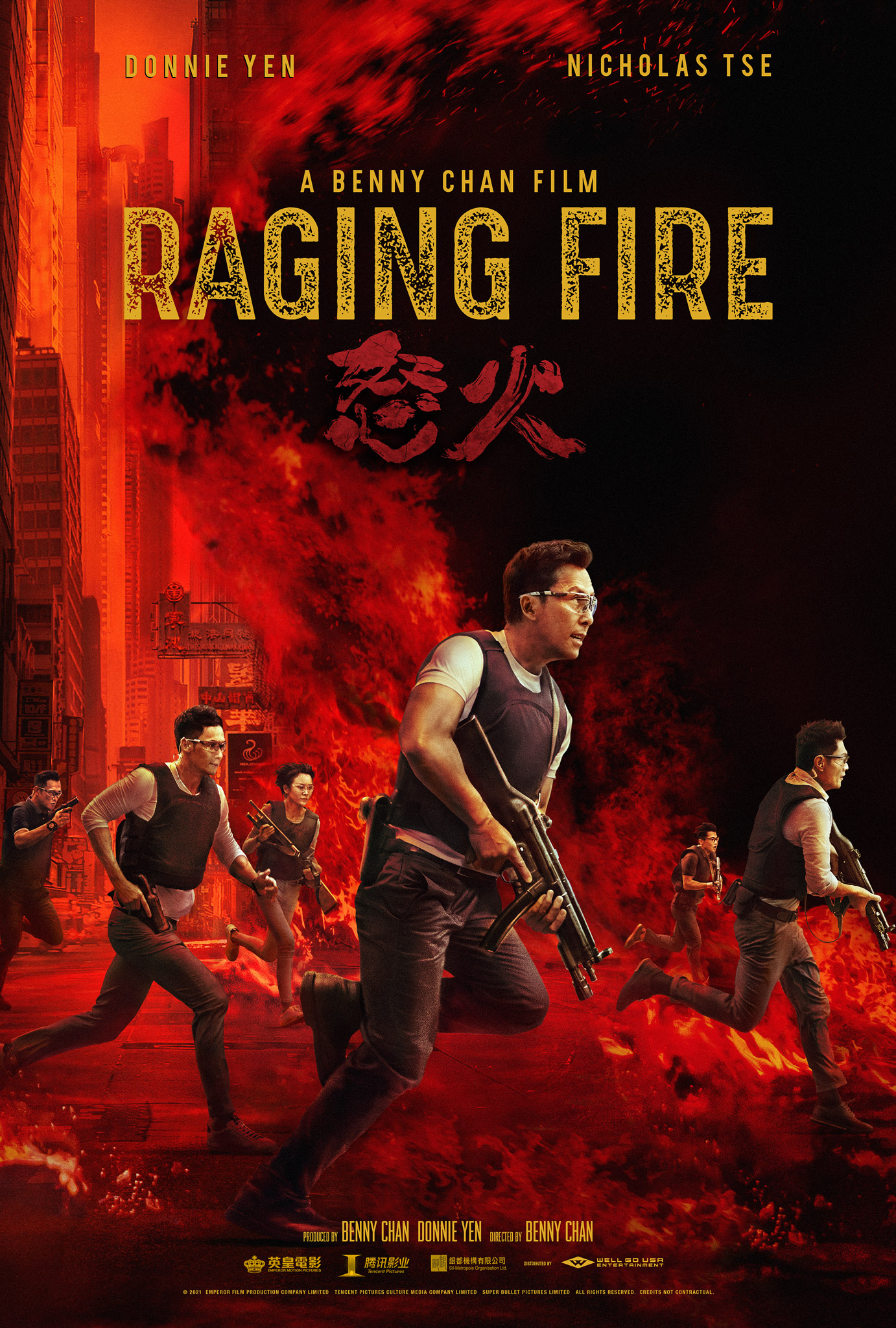
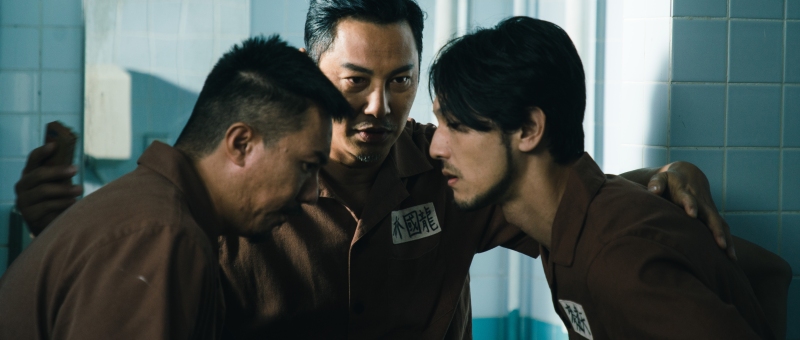
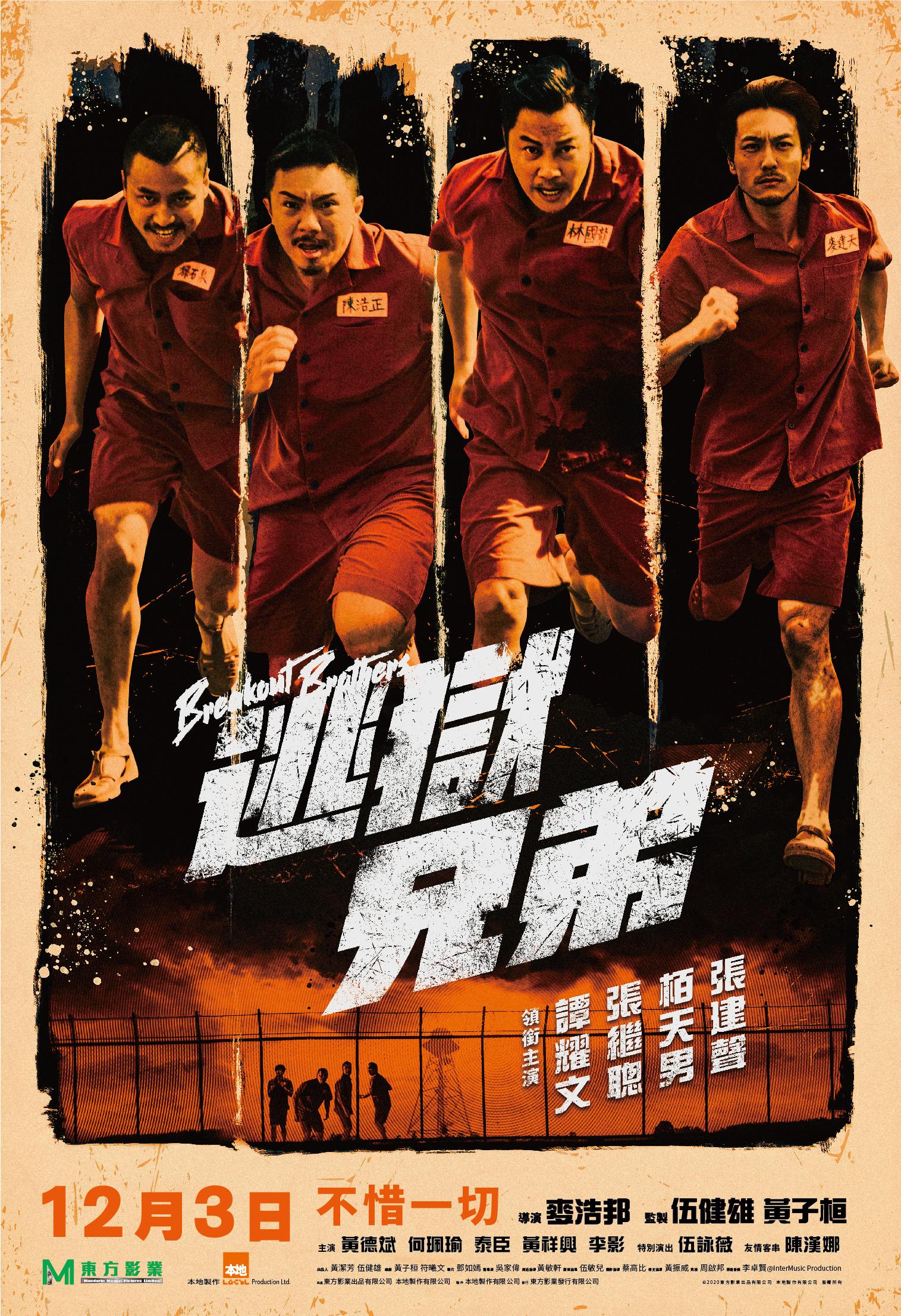
“If you had chased Coke that day, would our destinies have been reversed?” a cop turned villain asks of his righteous colleague, but his friend has no answer for him. The final film from director Benny Chan who sadly passed away last year after being diagnosed with cancer while filming, Raging Fire (怒火) pits a disgruntled police officer wronged by the system against an incorruptible detective but suggests that the real villain is an increasingly corrupt society in which the rich and powerful have a direct line to justice. 

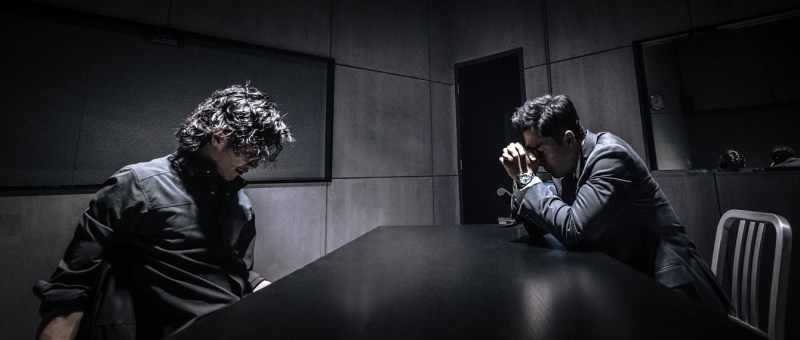
As the film opens, noble officer Cheung (Donnie Yen) is racing towards some kind of altercation in a shipyard but later wakes up next to his much younger and very pregnant wife (Qin Lan). After a years long operation, his team is about to take out a petty criminal involved with a previous investigation which resulted in fellow officers getting sent to prison for excessive use of force. After refusing to to help a wealthy businessman make his son’s drunken car accident go away, Cheung is taken off the case while the raid turns out to have been a trap leaving eight of his friends dead and many more injured. Through his investigations, Cheung begins to realise that his former colleague Ngo (Nicholas Tse), recently released from prison, may be responsible for the deaths of his friends in pursuing a vigilante revenge against the police force he feels betrayed him. 

“This society doesn’t reward good men” Ngo later insists, though his total and relatively sudden transformation from earnest cop to bloodthirsty psychopathic killer seems something of a stretch. Cheung aside, the Hong Kong police force is depicted as infinitely corrupt and working at the behest of the rich and powerful to further agendas not always in the interests of justice. The case which caused so much trouble related to the kidnapping of a prominent financier and the secretary he was canoodling with at the time, the financier’s wife having obeyed the kidnappers’ instructions not to call the police by ringing a government contact instead which is why the operation is covert. Ngo and his team were told to do whatever it took to extract information from a suspect who later wound up dead but were hung out to dry by the superior officer who ordered it. Not unreasonably they see themselves as victims of a corrupt system but care little who might get in the way of their vicious bid for revenge. 

For his part, Chueng is also a thorn in the side of his colleagues because of his refusal to play along with the base level corruption all around him. Dragged to the meeting with the businessman by nervous colleague Beau (Patrick Tam), Cheung sips tea rather than the wine everyone else is drinking and eventually storms out making a point of paying for his exorbitantly priced beverage while refusing to be complicit with systemic corruption. So upright is he that he asks a passing driver if he has insurance before borrowing his car to chase down Ngo and when he himself is accused of breaking protocol the entire squad shows up to petition the disciplinary panel on his behalf. Ngo asks him if the situation would have been reversed had it been Cheung who had questioned the suspect that night, but of course it wouldn’t because Cheung would never have beaten a suspect to death in the first place. 

Chan places this debate front and centre by setting the final showdown in a church currently undergoing renovation, Ngo seemingly judged for his moral transgressions while Cheung meditates on the man he used to be in a bromance montage that laments the tragedy of Ngo’s fall from grace. The battle of wits between the two men, Ngo of course uniquely positioned to game the system he rails against, ends only in futility while the system which created him remains unchanged. Chan shoots with characteristic visual flare sending his compromised cops through a golden hellscape of the contemporary city veering between beautifully choreographed, high octane action sequences including a lengthy car chase through a highly populated area, and procedural thrills tinged with ambivalent social commentary in which justice itself has become commodified while police officers exceed their authority and bow to the rich and powerful. A throwback to classic Hong Kong action, Chan’s final film is a fitting finale for the career of a director taken far too soon. 


Raging Fire screened as part of this year’s New York Asian Film Festival and will be released in US cinemas on Aug, 13 courtesy of Well Go USA.

International trailer (English subtitles)

Time (殺出個黃昏, Ricky Ko, 2021)

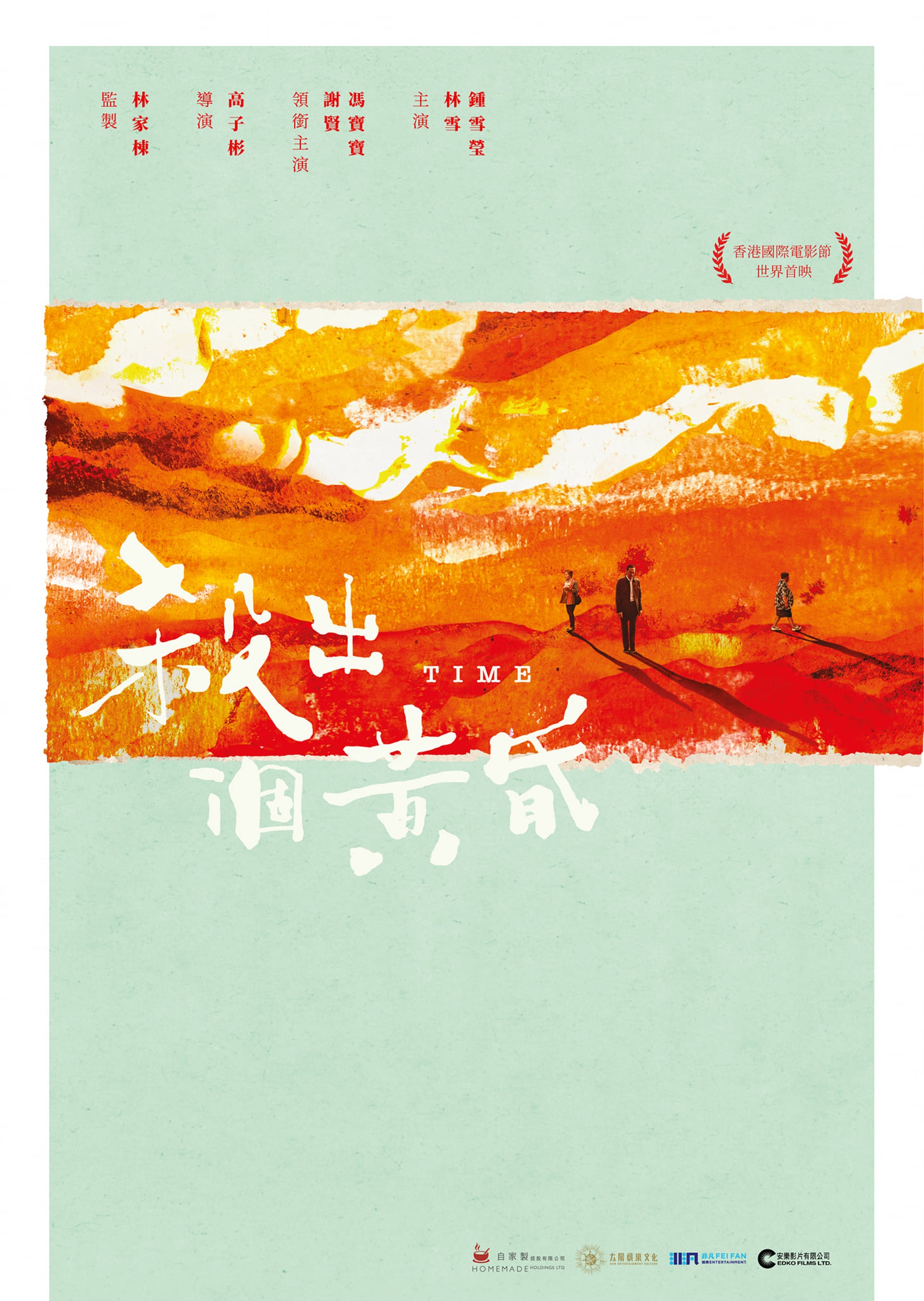
Youth is wasted on the young in Ricky Ko’s wistfully nostalgic ode to a bygone Hong Kong, Time (殺出個黃昏). Highlighting a series of very real social problems from the government’s failure to properly care for its old, to incurable loneliness, and the changing family dynamics of the modern society, Ko’s sometimes melancholy drama begins as a story about death but then finally becomes one about life granting its defeated heroes a second chance at a forgotten love in the formation of a new family. 

Ko opens, however, with a kitsch retro sequence filmed in the manner of ‘70s action movies in which a trio of assassins cooly eliminate their targets. Flashing forward to the present day, hitman Chau (Patrick Tse Yin) is unceremoniously let go from his job as a noodle chef. Unable to keep up with the breakneck pace of contemporary Hong Kong, he’s being replaced by a machine. A message on a radio show brings him back into contact with his old gang, fixer Fung (Petrina Fung Bo-Bo) now a nightclub singer and owner of at the Golden Phoenix cabaret bar catering for elderly romantics, and getaway driver Chung (Lam Suet) who has formed an unwise emotional attachment to a sex worker he dreams of marrying. Fung has found them a new job, but Chau immediately senses something different on his arrival. His target is a bedridden old lady who’s called the hit on herself because she can’t afford the bills for her medical treatment and has no real quality of life. 

Chau is so shocked he can’t go through with it, later seeing in a news report that the woman’s husband has been arrested in connection with her death. Her plight seems to have provoked a minor debate concerning lack of appropriate care for Hong Kong’s elderly. “Death is better than debt” is the way the woman’s husband characterised her choice, essentially affirming that there was no way for her to go on living in a society which has abandoned its elderly and infirm. Nevertheless, after that first case Chau takes on more requests for “euthanasia” from similarly afflicted people yet one of his most poignant is for a very wealthy man in good physical health who is simply lonely following the death of his wife. Though he had a large family, his children are far away with lives of their own and rarely visit. He chooses death in the hope of reuniting with his wife and escaping from the crushing loneliness of his existence. 

One particular assignment, however, brings Chau into contact with vulnerable teenager Tsz-Ying (Chung Suet-Ying) who has been abandoned by her parents following their divorce and is currently living alone. Despite himself, Chau ends up taking the girl in and acting as her “grandpa” while she insists on learning his knife technique and how to make noodles the old fashioned way. For his part, Chau finds himself at odds with the modern world, confused beyond belief about how to pay for a bus ticket and embarrassed when a younger woman does it for him by waving her phone at a box by the driver. He stands rather than sit in one of the priority seats reserved for elderly passengers unwilling to accept that he has become old. Yet living with Tsz-Ying he begins to emerge into the modern society, learning how to use a smartphone and regaining something of his youth even as he bests a few young whippersnappers who made the mistake of underestimating an old guy. 

While Chung, plagued by medical issues, quips that prison is “all inclusive” and you can get an appointment with your doctor any time you want, Fung has family issues of her own including a tense relationship with her snobbish daughter-in-law who’s determined to force her to sell her apartment and give up the club to get her grandson into an elite school. Despite their dark history as killers for hire, the trio are subject to the same problems faced by ordinary elderly people, witnessing lonely deaths and incurable pain coupled with a sense of futility which encourages them to think their lives are already over. Yet thanks to their involvement with Tsz-Ying they get a kind of second chance, building a new kind of family in intergenerational solidarity. Quirky and nostalgic, Ko’s aptly belated directorial debut feature may begin as a story about death and the inexorable march of time but finally makes the case for sidestepping the alienation of the modern society for a more wholesome sense of community and the eternal ability to start again no matter how old you are.


Time streams in the US Aug. 10 to 15 as part of this year’s New York Asian Film Festival.

Original trailer (English subtitles)

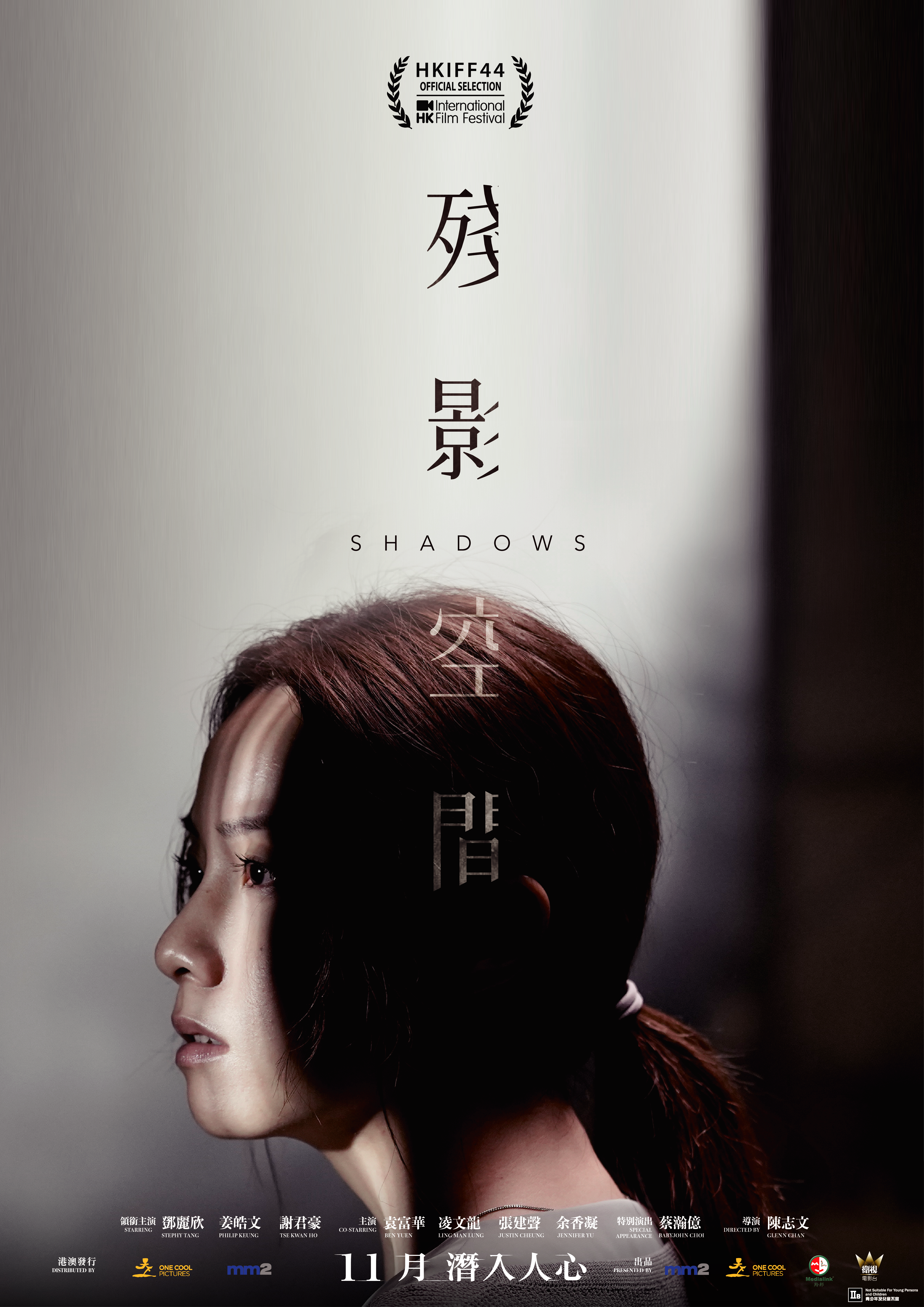
Shadows (殘影空間, Glenn Chan, 2020)

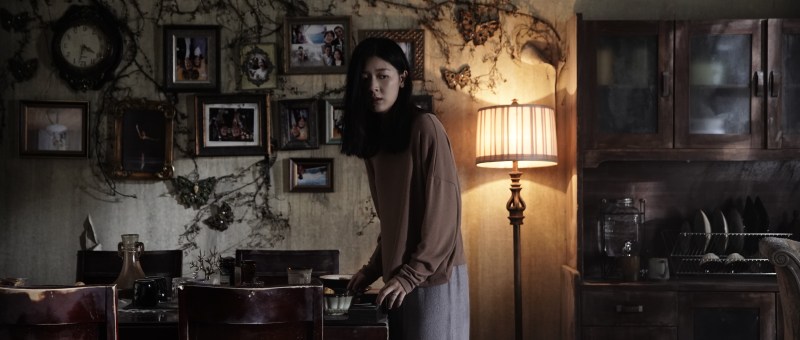
Are humans innately good or innately evil, and when we do good do we do it altruistically or to make ourselves feel better? These are all questions which occur to an idealistic yet conflicted forensic psychiatrist in Glenn Chan’s twisty psycho-noir, Shadows (殘影空間). Burdened both by a medical condition which apparently conveys a kind of superpower and by her own unresolved trauma, Ching (Stephy Tang Lai-Yan) wants to believe that people are at heart good but is herself caught in a complex web of manipulations in which even her well-meaning interventions may have unintended consequences. 

Ching’s big case is that of a 34-year-old social worker, Chu, who suddenly bludgeoned his entire family, three generations of women, to death with one of his many trophies which had a small heart on its top before calling the police and jumping over his balcony. As he only lived on the second floor, Chu survived but appears remarkably nonchalant about his crime. Police officer Ho (Philip Keung Ho-man) brings in Ching to figure out if Chu was really in a state of mental distress when he committed the murders, or if his certainly survivable suicide attempt is part of a smokescreen to help him evade justice. Possibly caused by a brain tumour, Ching’s special power is the ability to insert herself into her patients’ traumatic memories which is where she hears Chu recall a mantra that all humans are selfish and only think of themselves. This statement is meant not as censure but affirmation, Ching recalling a similar sentiment uttered by a rival psychologist, Yan (Tse Kwan-Ho), whom Chu had also been seeing, to the effect that mental imbalance lies in an inability to embrace one’s shadow self including “negative” impulses such egotism. 

In truth, the investigation into Chu’s case soon recedes into the background more or less forgotten as Ching embarks on an ideological battle with Yan who, we are told, has recently returned from many years living in the individualistic West and is peddling a kind of hyper individualist will to power which she regards as abetting his patients, a surprising number of whom go on to commit violent crime. Yan argues that humans are born evil and that the individual has the right to be selfish, abandoning conventional morality to pursue their own desires including those which necessarily harm others. Ching believes she’s doing the opposite, yet her attempt to help a victim of domestic violence by convincing her that she has the right and power to escape her abusive familial environment eventually places her in the same position as Yan. 

Given her own traumatic history, she may have to consider there’s something in Yan’s assertion that her intentions are also “selfish” in that she helps others in order to help herself feel better. When her investigation leads her, somewhat improbably, towards a serial killer with a Silence of the Lambs-esque taste for “beautiful” corpse tableaux she exposes him doing something much the same, claiming that he’s “saving” elderly people from the pain and suffering of old age but in reality trying to make himself feel better for failing to prevent the suffering of someone he loved while selfishly avoiding the pain of losing them. 

Determined to prove Yan is a serial killer by proxy manipulating his patients by encouraging them to embrace their darkest desires, Ching fails to see the degree to which she is also being manipulated, possibly for much longer than she might have realised. Yan’s patients refuse their responsibility towards others, rejecting the consequences of their actions in insisting that everyone makes their own choices. His hyper individualist philosophy might be seen as a stand-in for the increasingly selfish impulses of a previously collectivist society, a shift away from conventional morality towards the primacy of the self, yet it also darkly suggests that altruism is also cynical and born either of guilt or the selfish desire for reciprocity. In the end the verdict is in a sense left to a legitimate authority, Ho asked to decide if he thinks Yan is a crazed libertarian mad scientist, or if Ching is merely a traumatised and deluded woman pursuing some kind of personal vendetta. Featuring fantastic production design and stand out performances from Stephy Tang and Philip Keung, Shadows has no easy answers for the nature of the human soul but nevertheless casts its various protagonists on a noirish journey through the traumatic past guided only by duplicitous voices and ambivalent authority. 


Shadows screens at the BFI Southbank on 25th July as part of this year’s Chinese Visual Festival.

Original trailer (English subtitles)

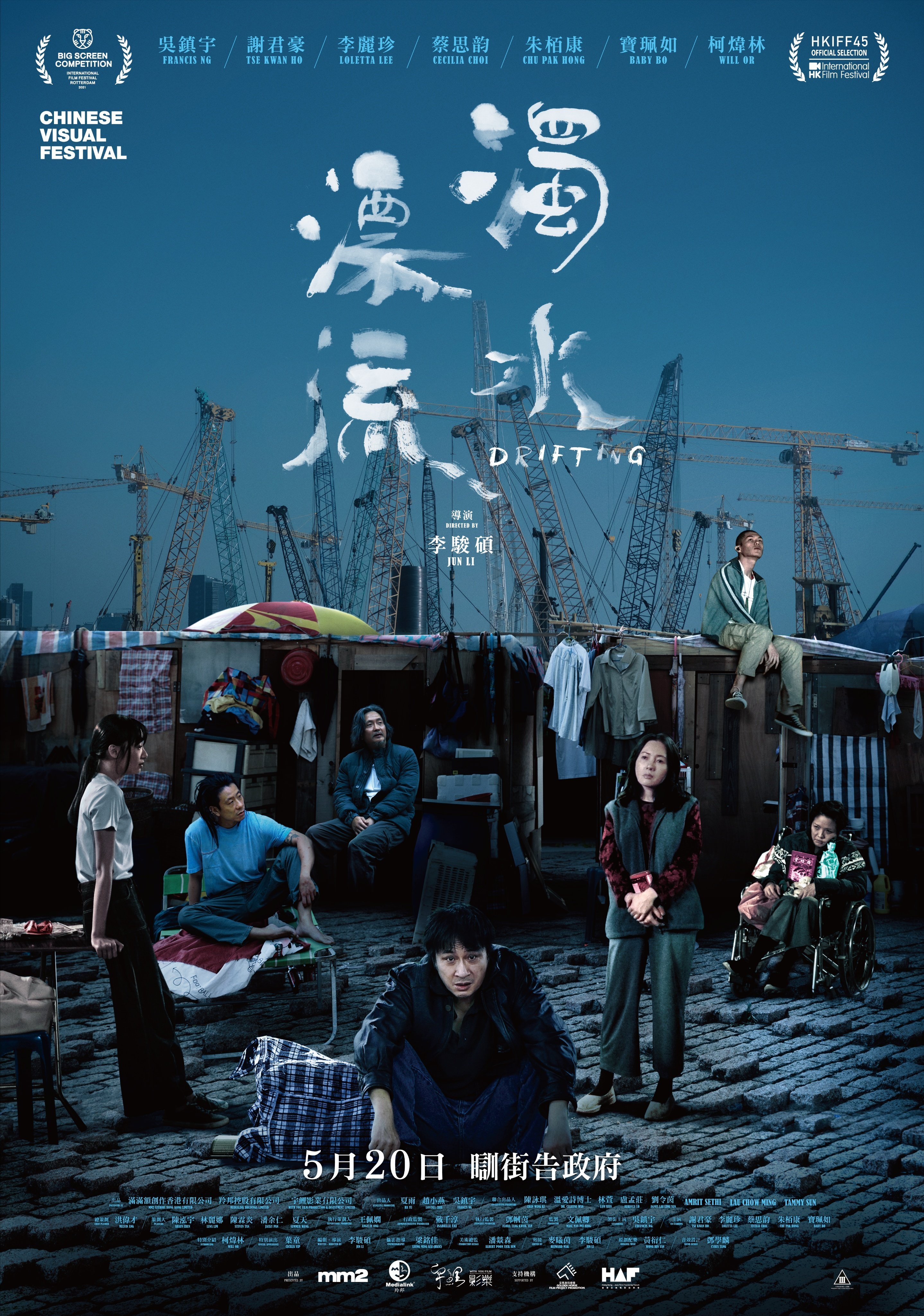
Drifting (濁水漂流, Jun Li, 2021)

“It’s just a bigger prison out there anyway” a prisoner tells his jailer surprised by his lack of enthusiasm for “freedom”. Following transgender drama Tracey, Jun Li continues his exploration of the marginalised citizens of contemporary Hong Kong with Drifting (濁水漂流), in this case the growing numbers of the unhoused who find themselves unfairly victimised by an increasingly authoritarian regime all while the city’s famous housing problem sprouts new blocks of luxury condos daily further displacing those without the means to live in them. 

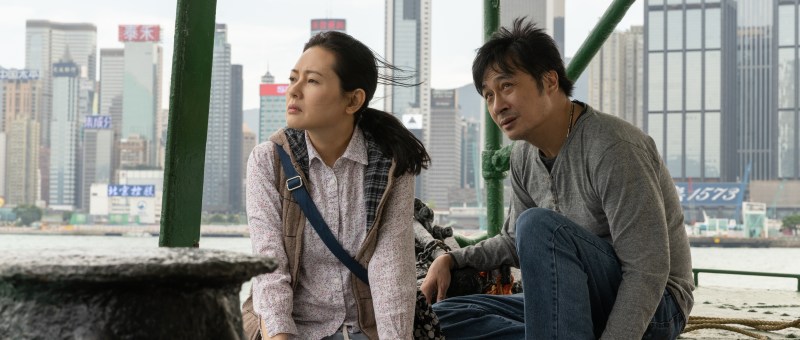
Released from prison Fai (Francis Ng Chun-yu) has nowhere else to go but back to the streets where he is welcomed by a ritualistic shot of heroin gifted by street godfather Master (Tse Kwan-ho), a refugee from Vietnam occupying a liminal status neither able to leave or remain owing to a criminal conviction which prevents his asylum in this or any other country. Fai’s attempts to rebuild his life are however frustrated when the community he is a part of falls victim to “street cleaning” in which uniformed officers turn up without warning to move them on, taking what little possessions they have and disposing of them as rubbish. This proves too much of an indignity for Fai who, along with the others and the help of social worker Ms Ho (Cecilia Choi Sze-wan), launches a law suit against the city both for damages against their stolen property and for an apology for the way in which they have been treated. 

“I am homeless. I am not worthless” runs the chant the small band of protestors recites outside the offices of government, but it’s a feeling that many of them find hard to internalise. Shing (Chu Pak-hong), a long time drug user, is originally afraid of the lawsuit because of the shame of people finding out about his drug use, relenting only when reminded he can file anonymously and thereafter wearing a medical mask just to be sure he can’t be identified. Fai, by contrast, agrees to be the face of the campaign but is frustrated by the approach of the media who, he feels, are not truly interested in publicising his case only in his “sob story” which he refuses to give them. Time and again, the homeless community is exploited by well-meaning do-gooders including a large number of students who either patronise them with ironic tasks or romanticise the homeless “experience”. 

Social worker Ms Ho is the only one who genuinely tries to help but even she finds her interventions sometimes cause more harm than good. While a friend of Fai’s darkly comments that her wheelchair gives her an advantage applying for public housing, Fai struggles to see a future for himself on the streets lamenting that no one’s going to hire him anyway and explaining that his drug use is a self-destructive way of killing time in an attempt to escape the boredom and despair of his futile existence. During the court case, he voluntarily enters rehab to try and come off drugs but also finds himself suffering with a serious illness for which he is afraid to get treatment because “hospitals are not a place for the living”. 

Echoing Fai’s distaste for the fetishisation of poverty, Li offers only sparse details of what brought these men and women to the streets save that many of them have been imprisoned which gives them a healthy scepticism when it comes to dealing with the justice system. Offered a settlement, most of the community want to accept but Fai is minded to hold out. The money is not so important to him, he’s replaced the things he needs, what he wants is his dignity in being given a proper apology and an acknowledgement as a human being. “Where can poor people live?” he asks, peering from the scaffolding on a half-completed luxury condo building witnessing gentrification in action as it towers over a slum knowing that its presence only means more “street cleaning” while people like him are pushed further into the margins, continually displaced by an economic prosperity to which they are not invited. “No one can save anyone” Fai finds himself admitting, the solidarity of the homeless community eventually shattered by their conflicting goals even as they continue to care for each other as best they can. Anchored by a standout performance from Francis Ng Chun-yu as the weary, defeated Fai battling his own traumas in addition to those of the world around him, Drifting paints a bleak picture of an increasingly unequal society seemingly content to abandon its most vulnerable citizens to the vagaries of a marginal existence. 


Drifting screens at the BFI Southbank on 15th July as the opening night gala of this year’s Chinese Visual Festival.

Original trailer (English subtitles)

Sugar Street Studio (糖街製片廠, Sunny Lau, 2021)

“People have always been scarier than ghosts” according to the hero of Sunny Lau’s retro horror comedy, Sugar Street Studio (糖街製片廠). He is not in a sense wrong, the gang of down on their luck filmmakers unexpectedly uncovering a minor historical injustice while operating an “authentic” haunted house, and while the ghosts may be scary they are merely attempting to connect and right an old wrong. Filled with cynical humour, Lau’s witty screenplay is often disparaging of the contemporary Hong Kong film industry and an increasingly cutthroat society but finds unexpected pathos in the romantic tragedy at its centre. 

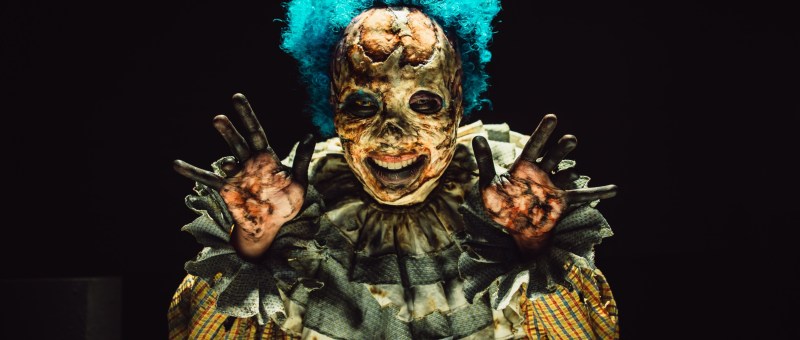
As the film opens, fast talking producer Pierre (Matt Chow Hoi-Kwong) has been hauled in front of mob boss Choi (Eric Kot Man-fai) who wants to know what the holdup is on their mutual film project. Boss Choi meanwhile has another problem in that the hotpot restaurant he’s just bought isn’t doing so well owing to the place being haunted. Ever enterprising Pierre comes up with a new idea: opening an “authentic” haunted house on the same site featuring real ghosts while shooting a movie in the same location. Getting the green light, Pierre enlists prosthetics guy Gary (Yatho Wong) to design the interiors for a horror show inspired by the real life studio fire of 30-years previously supposedly started by a clown in resentment after being turned down by the leading lady. 

Hoping to get more information, the guys talk to surviving actor Uncle Cheong (Chan Kwok-pong) who spins them a tale of his own heroism, claiming that he tried to intervene when the clown attacked his girlfriend and co-star but had to step out only to return after getting a pager message about the fire and attempt to save what lives he could. Perhaps unexpectedly, Cheong is all for their haunted house endeavour even making an appearance on opening night, but the gang can’t help but feel there must be more to this strange tale of arson and revenge. 

Mildmannered in the extreme, Gary finds himself conflicted in running Pierre’s unusual enterprise, wondering if it’s corrupting him or then again “Maybe to survive in Hong Kong, being mean is a basic necessity”. “Conning people diligently in Hong Kong is the path to success”, according to his friend even as they ironically prepare to open their “authentic” haunted house where encounters with “real” ghosts quickly find an audience who believe screaming in supernatural terror has therapeutic effects that can ease the depression and anxiety they feel as young people in contemporary Hong Kong. 

Pierre sells the haunted house idea partly on the strength that no one makes horror movies anymore because, famously, you can’t sell them on the Mainland and so co-productions aren’t interested. He describes Gary as the “tumour that’s killing the Hong Kong film industry” while constantly talking a big game, like a stereotypical producer willing to say everything and everything in order to get ahead, even hobnobbing with triads. “Hong Kong Cinema is all about discipline” he ironically claims despite being massively behind on all his projects, giving Gary a dressing down for being a few days late with his designs. 

“Some things don’t need to be completely understood” a zany medium claims, somewhat duplicitously, but it’s not until their own encounter with the ghost that the gang start to pick up on the dark legacy of the studio fire making use, possibly, of an unfair prejudice against clowns to sell the idea of a madman killer driven insane by lust and resentment towards a woman who had rejected him. What they discover is a sad tale of frustrated love, wounded male ego, and bitter regret that has perhaps manifested itself as a deeply held grudge as the guilty party holds on to their guilt and shame despite themselves. “It’s never too late to turn back” the villain is cautioned by a now elderly shaman, but in some ways it is, especially if you’ve already donned the clown suit of vicarious violence, “all debts must be paid”.  

Making the most of its whimsical premise, the increasingly surreal tale doesn’t skimp on the horror imagery with its scarred ghosts and scary clowns but also harks back to the horror comedies of old with its sutras and seals as the gang attempt to solve the mystery and right a historical injustice. Filled with amusing meta references to the contemporary Hong Kong film industry, ironic satire, and absurdist gags Lau’s charmingly off the wall comedy has only sympathy for its lovelorn ghosts of a bygone era and the hapless film crew attempting to navigate the vagaries of an often absurd industry.


Sugar Street Studio streams worldwide until 2nd July as part of this year’s hybrid edition Udine Far East Film Festival.

Original trailer (English subtitles)

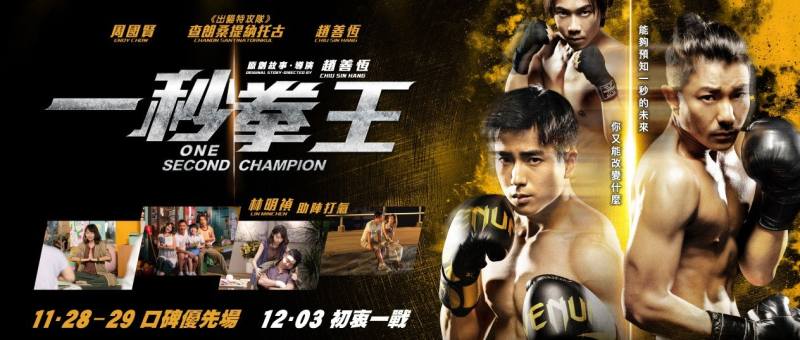
One Second Champion (一秒拳王, Chiu Sin-Hang, 2020)

“All things in their being are good for something” little Yan is told by a sympathetic TV presenter slightly unconvinced by his short-lived celebrity as the “One Second Wonder”. It may not sound like the most complimentary nickname, but in this case it’s intended in the kindest sense referring to the kid’s uncanny ability to see into the future if only for one second. As a child he’d told the TV audience that he wanted to grow up and find a way to use his superpower to contribute to society, but now a dejected middle-aged man the hero of Chiu Sin-Hang’s One Second Champion (一秒拳王) is something of a loser, imbued with a sense of defeat and not quite so much trading on past glory as using his “superpower” as a party trick to earn extra cash. 

As he tells us, Yan (Endy Chow Kwok-yin) was born during a storm, a power cut threatening his new life and leaving him apparently dead for one second to which he attributes the cause of his strange ability. All things considered, however, being able to see one second ahead is almost useless. What good is it to predict the winning lottery numbers or the winner of a horse race if you’ve no time to buy a ticket or place a bet? A nerdy sort of child unfairly thrust into the spotlight as the “One Second Wonder”, Yan has become a defeated middle-aged man working in the bar of an old friend while trying to pay off gambling debts accrued trying to raise the money for an operation for his son, Chi-leung (Hung Cheuk Lok), who is deaf. His total lack of self-esteem is rammed home when Chi-leung points out a classmate who’s been bullying him, often ripping out and damaging his hearing aid. Though Yan vows to talk to the school and the boy’s parents to sort it out, he quickly backs own even trying to force Chi-leung to apologise to the bully in front of his equally intimidating mum. 

The one arena where seeing one second ahead may in fact be valuable is in the middle of a fight which is what brings him to the attention of aspiring boxer Shun (Chiu Sin-hang). Faced with esteem issues of his own, Shun struggles in the ring partly due to his asthma and partly ongoing anxiety as a result of trauma having seen his dad behaving strangely after a fight. Aside from personal success, his desire is to resurrect his dad’s old gym, eventually teaming up with Yan after hearing of his strange ability and hoping his success might help attract more members. In this positive environment, Yan starts to regain a sense of confidence, getting a smart new haircut and paying more attention to personal grooming, while impressing his young son with his unexpected success not to mention reflecting that his “useless” ability might not be so useless after all. 

But then, after a traumatic incident he fears his special powers may be gone and is faced with another choice in whether to continue boxing as a “real” boxer or go back to the defeated life he used to live. Boxing shouldn’t be about gimmicks, according to a young pretty boy star (Chanon Santinatornkul) with an ironic, if sometimes cruel, devotion to the craft marketed like an idol by his ambitious manager, but Yan has to wonder if there’s more to him than the “One Second Wonder”. The conclusion that he comes to is that, as the TV presenter had said, everything’s good for something, one second can make a huge difference, and every choice you make counts. Win or lose, what matters is making the most of your time so why wait when you could start right away. A soulful tale of self-acceptance, the power of mutual solidarity, and the restorative qualities of physical discipline, Chiu Sin-Hang’s warmhearted drama is an ode to forging your own destiny, one second at a time, while remaining true to yourself. “Our superpower is never giving up” Yan tells his young son, no longer so afraid of the sound of his own heart beating, as they walk off into the sunset One Second Champions win or lose. 


One Second Champion streams worldwide (excl. China/Spain/Canada) until 2nd July as part of this year’s hybrid edition Udine Far East Film Festival.

Original trailer (English / Traditional Chinese subtitles)
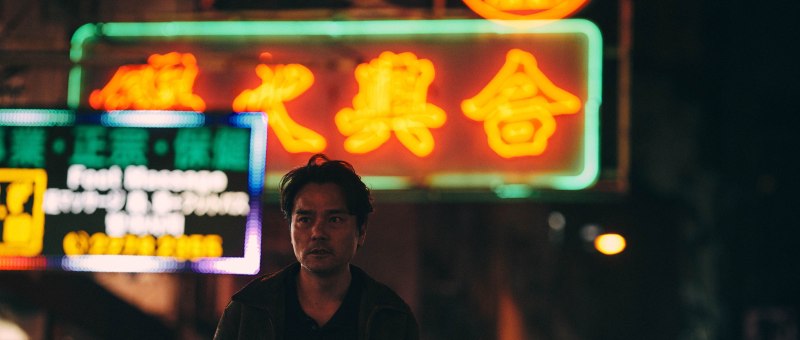
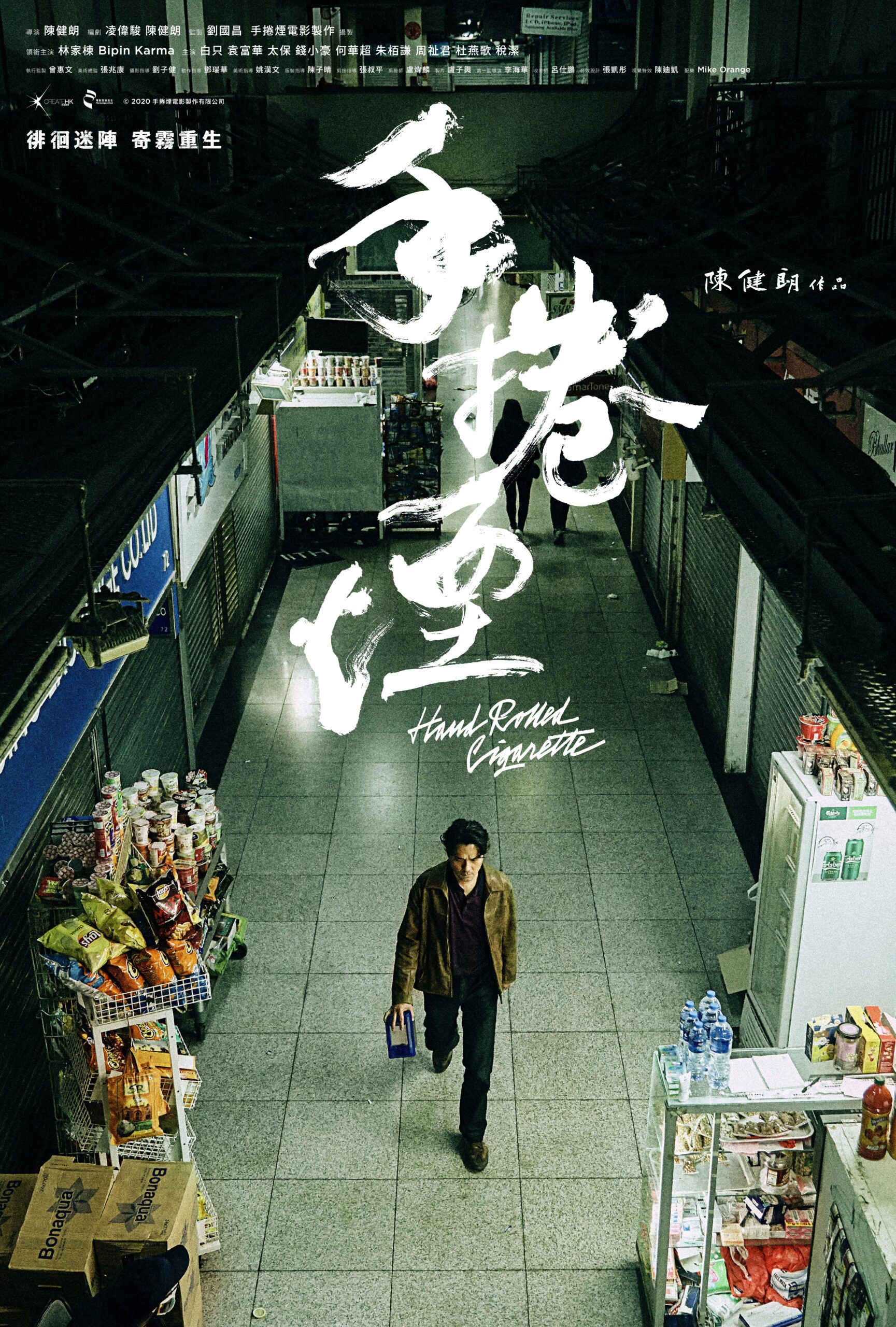
Hand Rolled Cigarette (手捲煙, Chan Kin-long, 2020)

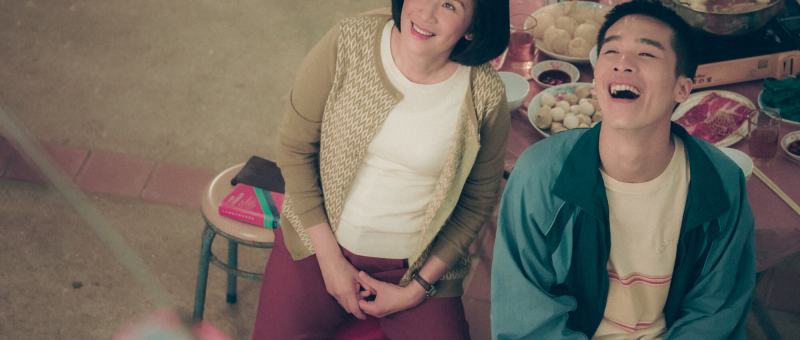
A former serviceman turned triad middleman bonds with a similarly oppressed South Asian petty criminal in Chan Kin-long’s noirish crime drama Hand Rolled Cigarette (手捲煙). An unexpected awards contender, the first directorial effort from actor Chan aligns its disparate heroes as two men in a sense betrayed by the world in which they live, one longing for a way out and the other too convinced he no longer deserves one to continue looking. 

“Let’s start over” Chiu (Gordon Lam Ka-tung) philosophically muses over a cigarette contemplating the coming handover. As a brief title card explains, when the British Army pulled out of Hong Kong, it hung its local recruits out to dry, disbanding their units and leaving them entirely without support. 25 years later, Chiu has become a dejected triad middleman, as we first meet him setting up a dubious deal for smuggled turtles between Taiwanese mobster Pickle (To Yin-gor) and local top dog Boss Tai (Ben Yuen). On his way back to his flat in Chungking Mansions, Chiu literally runs into a South Asian man apparently in the middle of a drug deal. Kapil (Bitto Singh Hartihan) dreams of bigger prizes, listening to the stock market report on the morning news and musing about robbing a bank. His cousin Mani (Bipin Karma), more conflicted in their criminal activities, cautions him against it reminding him that they already face discrimination and don’t need to add to their precarious position by giving their ethnicity a bad name. “If we have money people can’t look down on us” Kapil counters, seemingly desperate to escape his difficult circumstances by any means possible which eventually leads him to make the incredibly bad decision to cheat local triads out of their drug supply. Leaving Mani and his schoolboy brother Mansu (Anees) alone to carry the can (literally), Kapil takes off while Mani finds himself crawling into Chiu’s flat for refuge when chased by Boss Tai’s chief goon Chook (Michael Ning). Unwilling at first, Chiu agrees to let Mani stay, for a price, only to find himself falling ever deeper into a grim nexus of underworld drama. 

Chiu’s plight as a former British serviceman makes him in a sense an exile in his own land, a displaced soul free floating without clear direction unable to move on from the colonial past. We later learn that he is in a sense attempting to atone for a karmic debt relating to the death of a friend during the Asian financial crisis, also beginning in 1997, of which he was a double victim. Most of his old army buddies have moved on and found new ways of living, some of them rejecting him for his role in their friend’s death and tendency to get himself into trouble while Chiu can only descend further into nihilistic self-loathing in his self-destructive triad-adjacent lifestyle. 

Mani, by contrast, did not approve of his cousin’s criminality, particularly resenting him for using Mansu’s schoolbag as a means of shifting drugs. He dreams of a better life but sees few other options for himself, hoping at least to send Mansu to university and ensure he doesn’t share the same fate. Chiu continues to refer to him solely by a racial slur, but simultaneously intervenes in the marketplace when Chook and his guys hassle another South Asian guy insisting that they’re all locals and therefore all his “homies”, despite himself warming to the young man and even going so far as to sort out child care for Mansu otherwise left on his own. “Harmony brings wealth” Boss Tai ironically exclaims, but harmony is it seems hard to come by, Chiu’s sometime Mainland girlfriend expressing a desire to return because the city is not as she assumed it would be while little Mansu is constantly getting in fights because the other kids won’t play with him. 

“There’s always a way out. I’ll start over” Chiu again tells Mani, though he seems unconvinced. Clearing his debts karmic and otherwise, Chiu discovers only more emptiness and futility while perhaps redeeming himself in rebelling against the world of infinite corruption that proved so difficult to escape. A moody social drama with noir flourishes, Chan’s fatalistic crime story is one of national betrayals culminating in a highly stylised, unusually brutal action finale partially set in the green-tinted hellscape of a gangster’s illegal operating theatre. Men like Chiu, it seems, may not be able to survive in the new Hong Kong but then perhaps few can. 


Hand Rolled Cigarette streams in Europe until 2nd July as part of this year’s hybrid edition Udine Far East Film Festival.

Original trailer (English / Traditional Chinese subtitles)

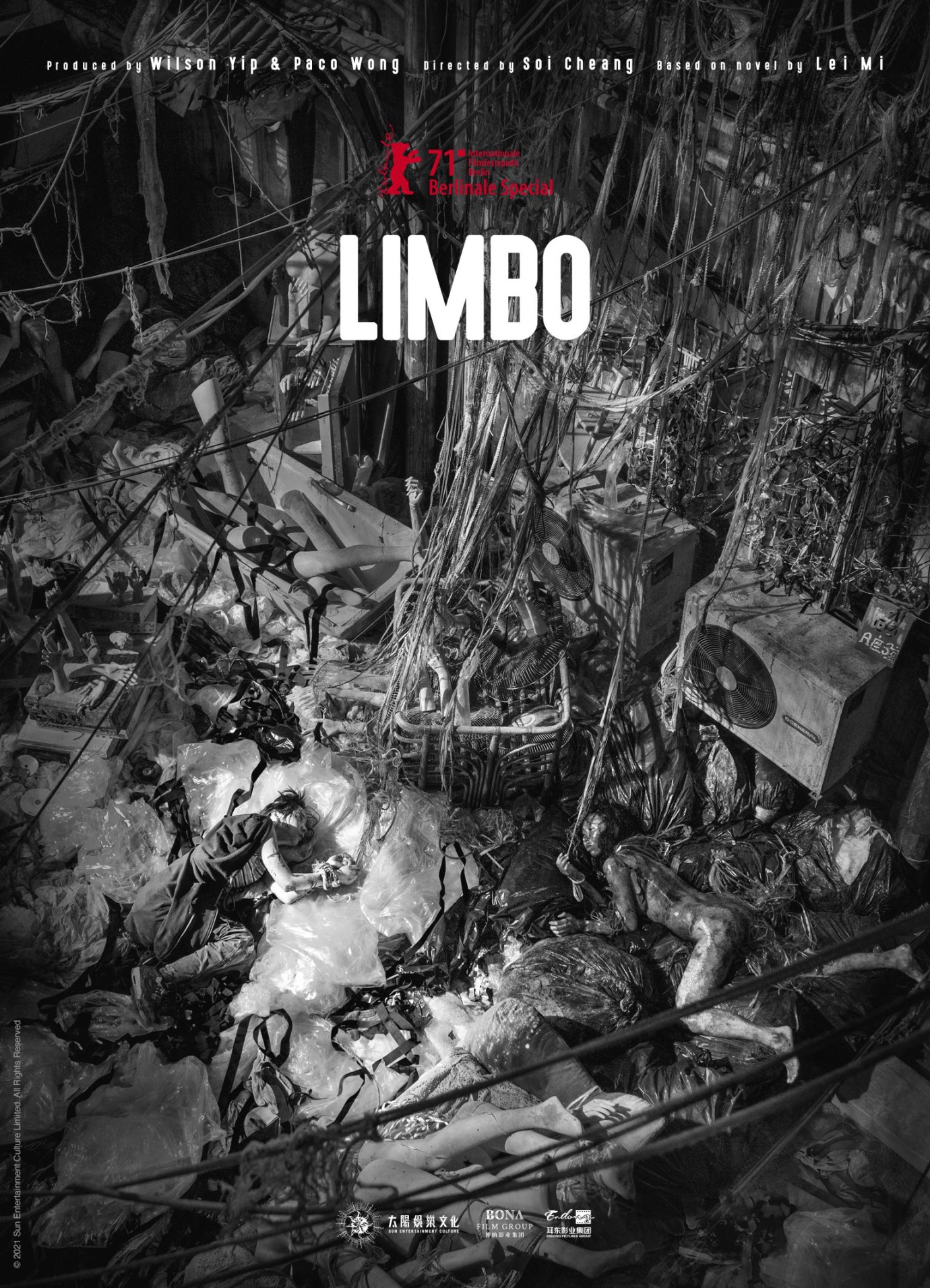
Limbo (智齒, Soi Cheang, 2021)

“I forgive you. Please live well”, a final message from the dying to one attempting to survive the junkyard hellscape of contemporary Hong Kong. Soi Cheang’s stylish thriller Limbo (智齒), shot in a high contrast monochrome lending the city state the rain-soaked aesthetic of cyberpunk noir, is in many senses a purgatorial odyssey as its pregnant title implies sending its duo of morally compromised cops into a world of the dispossessed inhabited by those “thrown away” by their society and thereafter left to rot among the detritus of an uncaring city. 

Hong Kong’s homeless may occupy a liminal space, trapped in an inescapable limbo, but it’s grizzled cop Cham (Gordon Lam Ka-tung) who is the most arrested, unable to move on from the accident which left his pregnant wife suspended in a coma. To escape his own sense of purgatorial inertia, he seeks closure in chasing down petty criminal Wong To (Cya Liu) whom he holds responsible for his fate on discovering she has been granted early parole for good behaviour. As fate would have it, Wong To’s release back into the underworld (after all, where else was she to go?) has unexpected connection to the case Cham is currently investigating in the mysterious appearance of random severed hands each belonging to “social outcasts”, as Cham’s slick rookie partner puts it, they fear may hint at the existence of a serial killer growing in confidence. 

Adapted from a novel by Lei Mi, the film’s Chinese title is simply “Wisdom Tooth”, a tongue in cheek reference to the ongoing toothache which places cop two Will Ren (Mason Lee) in his own kind of purgatorial pain, the offending molar eventually knocked out during his climactic fight with the killer during which he will in a sense transgress, passing from innocence to experience in gaining the wisdom that police work’s not as black and white as he may have believed it to be. “Cops are human too” his boss reminds him as he takes the controversial step of reporting his new partner for inappropriate use of force while pursuing a personal vendetta not exactly connected with his current case. He doesn’t disagree, but points out that police officers have guns and are supposed to uphold the law, not abuse their authority and take it into their own hands. 

But then, who is really responsible for the junkyards of the modern city and their ever increasing denizens abandoned by a society which chooses to discard them along with all their other “rubbish”, little different from the dismembered mannequins which people the killer’s eerie lair. Soi frequently cuts back to scenes of the dispossessed often looking stunned or vacant as they sit on mattresses or abandoned sofas surrounded by the pregnant disrepair of a city in the midst of remaking itself as if they were sitting on skin in the process of being shed by a slow moving snake. It would be tempting to assume the killer has a vendetta against “social outcasts”, his victims sex workers, drug users, and criminals though in truth these people are simply the most vulnerable even if there is no clear motive provided for the crimes save a minor maternal fixation and possible religious mania. A drug dealer ensnared by Cham’s net remains loyal to the killer, “We’re not as crazy as you. We are rubbish, so what? In this world, he’s the only one who cares.” she tells him, unwilling to give up her one source of connection even while aware of her constant proximity to death and violence. 

Cast into this world, Wong To too is trapped in an individual purgatory longing for forgiveness for her role in the death of Cham’s wife, a forgiveness he cruelly denies her even while making use of her desperation to force her to risk her life for him in betraying her underworld contacts to edge towards the killer. “Why are you treating me like this?” she asks, “I don’t want to die”, well aware that denied his direct vengeance by Will Cham is attempting to kill her by proxy. Wong To keeps running, keeps fighting, refuses to give up while seeking atonement and an escape from this broken world of violence and decay. It is she who eventually holds the key to an escape from purgatory, the cycle is ended only in forgiveness. Soi’s stylish drama may paint the modern society as a venal hellscape neglected by corrupt authority, but nevertheless permits a final ray of light in the possibility of liberation through personal redemption. 


Limbo streams in Europe until 2nd July as part of this year’s hybrid edition Udine Far East Film Festival.

Original trailer (English subtitles)

The Raid (財叔之橫掃千軍, Tsui Hark & Tony Ching Siu-Tung, 1991)

Comic book heroes often rise in resistance to a label others have placed on them, but Uncle Choy (Dean Shek Tin) may be the first to offer fierce opposition to societal ageism. Inspired by a series of comic books which ran from 1958 to the mid-1970s, Tsui Hark and Tony Ching Siu-Tung’s The Raid (財叔之橫掃千軍) is at great pains to make plain that you shouldn’t write people off because of a few numbers on an ID card as its admittedly geriatric hero proves that he’s the force for good the Resistance has been waiting for. 

That would be the Resistance towards the Japanese and the new puppet state of Manchuria in the confusing world of 1932. Tsui and Ching open with Pu Yi himself getting out of a limo in a sparkling white uniform adorned with meaningless medals glinting in the sun before he takes to the stage and bizarrely likens himself to Hitler while insisting that he’s here to unify China because his ancestors told him to in a dream. Meanwhile, the Resistance has already infiltrated his forces and installed dynamite in his microphone only for his right-hand man, Matsu (Tony Leung Ka-fai), to catch on right before it explodes. Pu Yi is saved, for now, while Matsu declares himself unfazed by the Resistance fighter’s dying words that he will be coming back to haunt him. 

In another part of the jungle, a team of mute locals is trying to bring a doctor to some soldiers hiding out in a remote shack. After narrowly escaping a plane attack by blowing a hole in a dam and drowning it with water, Uncle Choy arrives to discover that the men are victims of a new kind of poison gas. It’s too late to save the commander, but Choy manages to restore the others to health and even offers to join them in their new mission of destroying the poison gas factory, but Lieutenant Mong (Paul Chu) tells him to go home. He’s too old to be of help and would only get in the way. As expected, Choy finds that very upsetting. Unwrapping the giant sword he fought with in his youth, he leaves a note for his adopted daughter Nancy and heads off on his own towards the revolution, but she follows him with her giant spear and is then followed by a cheeky young guy armed with slingshot. 

There is something a little bit suggestive about this rag tag bag of patriots trying to stop the poisonous fumes of a new China wafting over towards the land they love. Pu Yi, the “last emperor” is something of a tragic figure, a bumbling fool with some weird ideas but also a noticeably progressive streak which sees him tell Matsu, in the middle of an otherwise silly and slightly homophobic joke, that he firmly believes love is love and he plans to make a law that says so. He is, however, just a puppet himself, caught between the villainous Matsu and beautiful actress/super spy Kim Pak-fai/Kawashima Yoshiko (Joyce Godenzi).

Matsu is fond of telling the heroes that they cannot win against a force with superior technology, that old Uncle Choy’s sword and fists are useless in a modern world of guns and chemical warfare. To perfect their poison gas, they’ve been working with a local gangster who cares only for money and has been willingly sending them test subjects. Big Nose (Corey Yuen Kwai) is currently engaged in a turf war with the equally greedy Bobo Bear (Jacky Cheung Hok-yau), testifying to the tendency of oppressed people to fight amongst themselves rather than unite against the true evil. Bobo Bear is also in love with the famous actress Kim Pak-fai and deeply regrets getting mixed up with the Resistance, but later falls for nerdy undercover spy Tina (Fennie Yuen), who is the real brains of the operation, and comes over to the side of right. As does Big Nose after getting a dressing down from Uncle Choy and being confronted with the consequences of his actions by an overconfident Matsu. 

According to Matsu whoever has the best weapon controls the world, but as in any good kung fu movie the best weapon is righteous solidarity. Uncle Choy’s sword turns out not to be so useless after all, while he also makes himself useful as a doctor to the revolutionaries, proving that old people still have a lot to offer and don’t deserve to be put out to pasture by patronising youngsters. Making plenty of space for cartoonish slapstick fun and a series of farcical episodes including the classic misdirected love letter and spy hiding under the bed, The Raid is pure pulp but never pretends to be anything more than it is even while leaving its earnest revolutionaries in media res as if to remind us that a battle still rages even in 1991.


Short clip (no subtitles)

Zodiac Killers (極道追踪, Ann Hui, 1991)

Melancholy exiles seeking a better future find only futility in the dying days of the bubble economy in Ann Hui’s 1991 gangster drama, Zodiac Killers (極道追踪). The English title is admittedly misleading, there’s seemingly no connection to any kind of “zodiac” and no hint of conspiracy murder except those forced by the world’s enduring cruelty, though the Chinese is perhaps equally so meaning something like “yakuza pursuit” which is accurate but only to a point.

The hero, Ben (Andy Lau Tak-wah), has come to Tokyo from Hong Kong to study film but rarely goes to classes, preferring to learn how to make money instead. Making the most of the then affluent city, he works as a tour guide for Chinese tourists, dutifully delivering the men to the strip clubs of Shinjuku in the evenings for kickbacks and giving his boss a kicking when he tries to stiff him out of the agreed amount, heading to his second job in a kitchen immediately afterwards. “Man does not live to make money only, you must learn to spend it too”, he explains to his friend, Chang (Tou Chung-hua), persuading him to come hang out in a swanky bar they’ve been invited to by Ben’s shady relative Ming (Suen Pang) who is currently trying to make it as a yakuza by marrying the boss’ mama-san sister Yuriko (Junko Takazawa). It’s at the bar that Ben first sets eyes on Tieh-lan (Cherie Chung Chor-hung), a young woman from the Mainland in Tokyo studying at a Japanese language school and working as a hostess to make ends meet though as she points out “not every Chinese girl likes to work here”, instantly offending Ming but interestingly not Yuriko who seems sympathetic if embarrassed. 

All of them are in Tokyo because at that moment in time Japan looked like the future, though the window was rapidly closing. Tieh-lan is beginning to wonder why she came. Her friend Mei-mei (Tsang Wai-fai) has ended up in an unwanted sexual relationship with the man who sponsored their visas, Harada (Law Fei-yu), who nevertheless continually sexually harasses Tieh-lan. “Why did we come here?”, Tieh-lan asks Mei-mei, “for our future or for men? You can debase yourself at home, why have you come to Japan to do it?”. Ben later asks something similar of Ming who freely admits that he is prepared to sell his body for influence, “satisfying” Yuriko in order to buy influence with her brother and be admitted into his yakuza clan. The Tokyo they inhabit is one steeped in exile. They surround themselves with other Chinese migrants, be they from the Mainland, Hong Kong, or Taiwan, and congregate in the seedier parts of Shinjuku living on the fringes of society, working as bar hostesses, or gangsters, or in kitchens. For Ben whose bachelor pad student dorm is adorned with posters of Bruce Lee and Rocky, his purpose is more adventure and youthful longing for freedom than escape which is why he makes a point of ignoring his loving mother’s phone calls, but even he struggles to find what he needs on the unforgiving streets of a hostile city. 

That hostility is first brought home to him by a gang of ultranationalist bikers flying the imperial flag one of whom threatens him with a samurai sword (a moment which is tragically echoed in the film’s nihilistic conclusion). They are not, however, the only ones feeling displaced, as a heartbreaking cameo from golden age star Kyoko Kishida as an ageing geisha makes plain. Asano (Junichi Ishida), the melancholy yakuza with whom Tieh-lan has fallen in love much to Ben’s disappointment, declares himself “always a loner”, returning to Tokyo after years of exile in South America. An orphan, Asano laments that the beach he visited as child no longer exists and the city he’s come home to is changed beyond all recognition. Perhaps for that reason he falls for melancholy exile Tieh-lan as they bond in a shared sense of hopeless rootlessness. 

With the surprise introduction of Asano, Hui transitions into the moody noir with which the film opened, shots of Andy Lau plaintively looking back at the shore from a boat on the open sea intercut with Cherie Chung walking sadly through an empty, neon-lit city. Asano hoped for reconciliation but found only betrayal, there can be no home for exiles even if they return. The trio’s broken dreams find their final expression in the nihilistic violence of a non-existent yakuza war. Asano’s final gesture was one only of futility, no one wants to hear his inconvenient truth because the clans in question have already made “peace” and are intent on working together for future prosperity. “Your heart is too soft for this wicked world” Ming says of Ben but it’s a statement that rings true for them all, living life by movie logic in which good will eventually triumph. Ming sees no point in returning to Hong Kong because he’d be a nobody, tragically believing that being a gang boss’ brother-in-law is close enough to somebody in Shinjuku. Only Chang, who came to Japan to look for his missing sweetheart, manages to keep himself safe but largely, as we later find out during a rather bizarre sequence featuring a surprise outdoor porno shoot, because he does not yet know that his dream is futile too. A chronicle of a world in collapse, Zodiac Killers leaves its marginalised heroes with no place left to run, permanent exiles denied safe harbour sailing towards a promised horizon with no land in sight.


Original trailer (no subtitles)