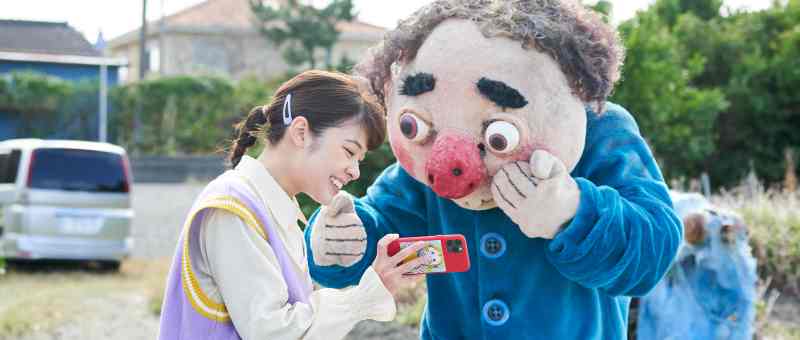
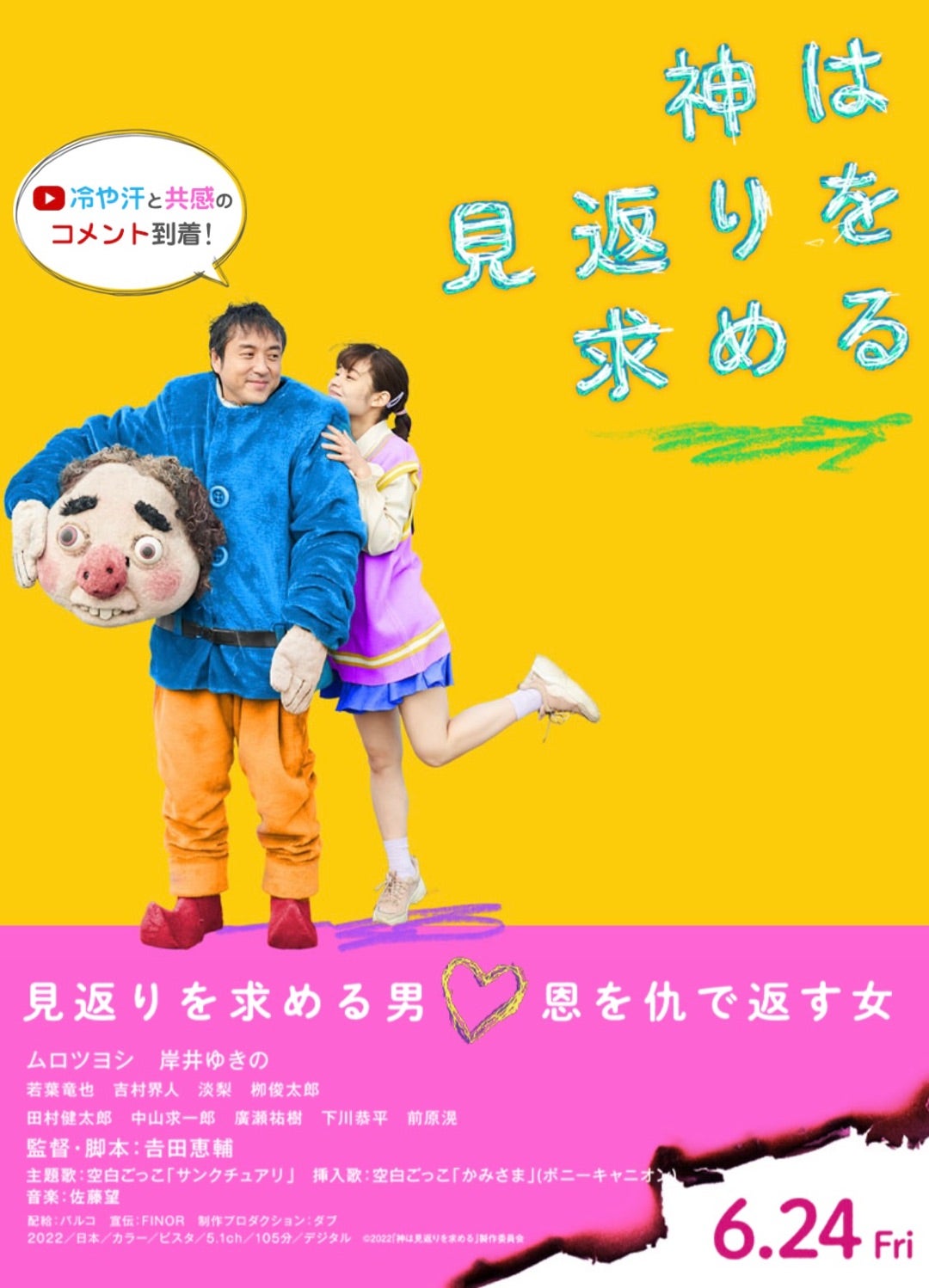
God Seeks in Return (神は見返りを求める, Keisuke Yoshida, 2022)

It’s perfectly natural a lot of the time to feel as if you expect nothing in return for helping someone, after all it’s only what you should do as a fellow human being. But really we do expect something even if it’s just acknowledgement and it can be hurtful and upsetting if don’t feel we get it while the sensation that we’re being taken advantage of can leave us feeling silly for having offered in the first place. Keisuke Yoshida’s Good Seeks in Return (神は見返りを求める, Kami wa Mikaeri wo Motomeru) revels in these human paradoxes as a self-confessed nice guy is pushed to breaking point by the fallout from all his attempts to be neighbourly which seem to have backfired exponentially. 

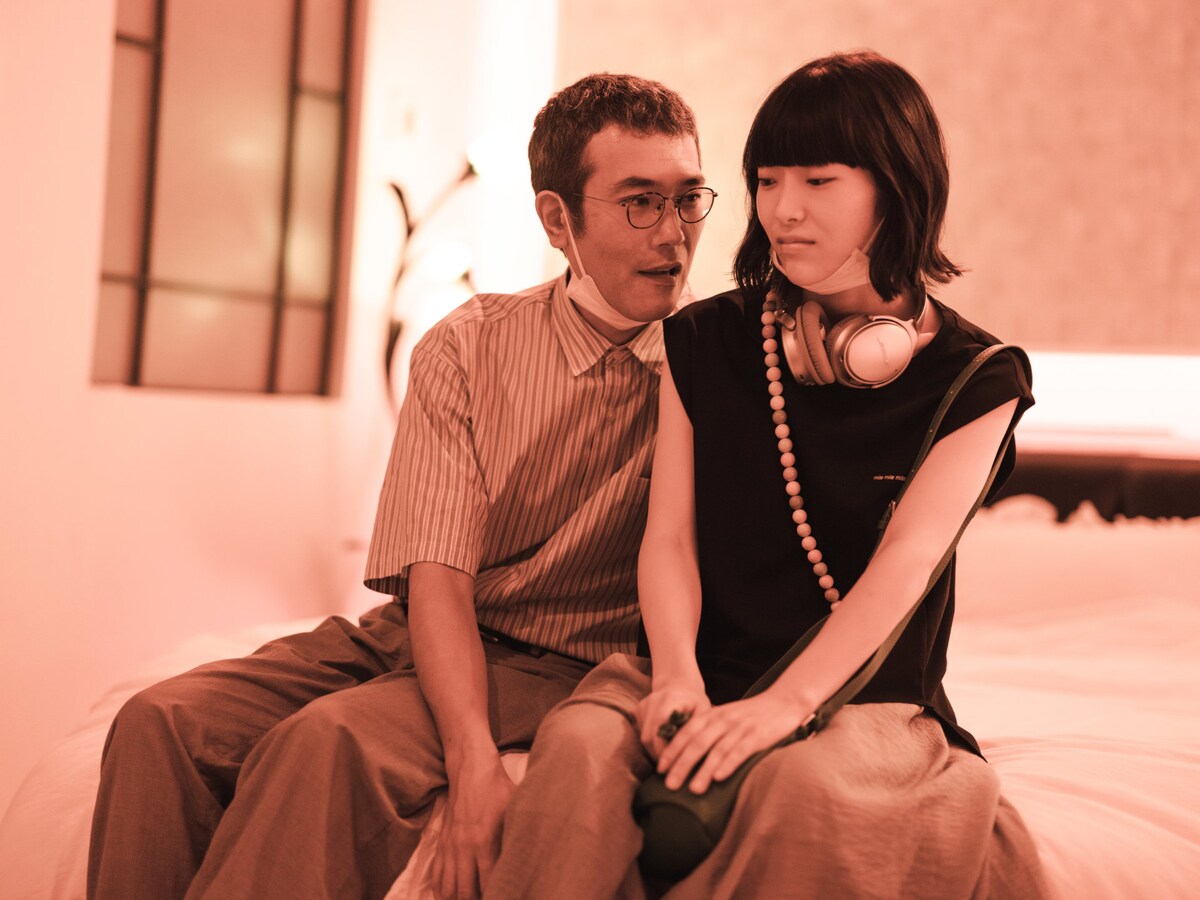
Then again, Tamogami (Tsuyoshi Muro) almost certainly does at least hope for something in return when he agrees to help out struggling YouTuber Yuri (Yukino Kishii) with her moribund channel by enlivening it with his skills in video editing and design. He isn’t helping her in order to engineer a sexual relationship, and in fact turns Yuri down when she suddenly disrobes exclaiming that it’s the only way she can repay him for his kindness, but does appear interested and is additionally irritated when she begins hanging out with a bunch of vlogger cool kids he thinks are just exploiting her naivety. Yuri had already payed him back with homemade beef stew, an offer that was accepted in the interest of friendship, but her constant references to repayment of a favour expose her idea of relationships as essentially transactional which to be fair they well may be. Even so, she appears somewhat guileless, opportunist rather than calculating and desperate for attention.

That might be why she can’t see that the reason she became unexpectedly popular after agreeing to a “body paint” stunt with a pair of more established YouTubers is that people wanted to see her naked which is why they’re always requesting more of the same. The first half of the film plays as quirky comedy, an offbeat romance between a nice middle-aged man and a dippy young woman who thinks she’s no good at anything and incapable of being alone. But things soon turn sour when one of Yuri’s stunts seems like it might have serious consequences for a local business owner and Tamogami has to muster all of his PR skills to put this particular fire out. The simple friendship between them that was brokered by a weird ogre-like mascot suit Yuri christens Jacob is disrupted by Yuri’s desire for fame as she undergoes a complete personality transformation after falling in with a group of more successful, media savvy YouTubers who have fancy design skills and marketing teams. She dismisses Tamogami as old-fashioned and joins in when the others make fun of him in rejection of the genuine friendship that had arisen between them.

When a friend he’d helped out financially and even stood guarantor on his debts takes his own life Tamogami is deep in the hole. Finally he wonder’s if he shouldn’t have something in return for all the unpaid labour he’s been doing for Yuri but she predictably brushes him off until he finally embarks on a weird vendetta trying to “expose” her YouTube channel for being founded on lies and exploitation. There may be something in her that’s regretful, wistfully looking at the sweater Tamogami had given her with cute illustrations of her and Jacob on it, while her new “god” Murakami openly mocks him leaving her conflicted about the dark side of their new internet endeavour effectively bullying a guy whose only crime was being nice and bit too dull and middle-aged for her new hipster friends sure to drop her like she’s hot as soon as something goes wrong.

Though not as extreme as some of Yoshida’s other films, God Seeks in Return suggests that nice guys never prosper but also that no one’s really as “nice” as they think they are. We wall want something in return even if it’s just a thank you and not to be belittled or taken advantage of. There can be something paradoxically selfish in niceness in which people do it more for their own gratification or to feel they are better than those they help and conversely the same in those who take advantage of others. In it’s way bleak and melancholy in its vision of human relationships, the film nevertheless holds out a faint hope in the reality of the genuine connection between its mismatched heroes no matter how dark and twisted it may eventually become.


God Seeks in Return screens 1st June as part of this year’s Nippon Connection

International trailer (English subtitles)
Dreaming in Between (逃げきれた夢, Ryutaro Ninomiya, 2023)

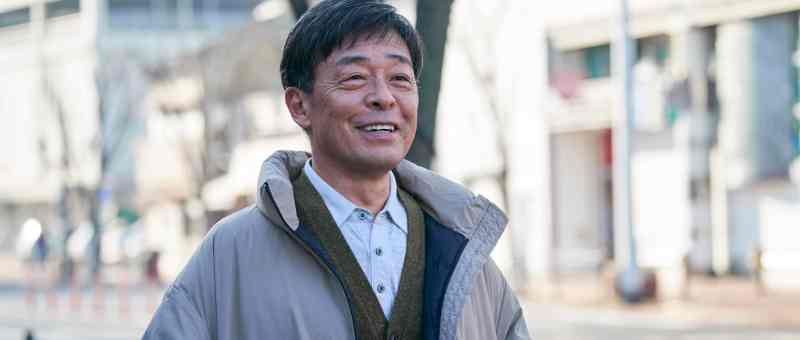
Everyone keeps asking Suenaga (Ken Mitsuishi) is if he’s okay. He has these tiny moments in which it looks like he’s on pause, sudden instances of stillness in which he stares vacantly into space. We start to wonder if he’s experiencing some kind of mental distress, having a stroke or developing dementia as those around him seem perplexed about his his behaviour which to us seems cheerful and pleasant. In fact, it seems confusing and unfair that he’s held in such contempt by his wife and daughter not to mention the pupils at his school and sullen young woman at the cafe he often frequents. 

A man of a certain age with a once overbearing father now mute and living with dementia in a retirement home, Suenaga is indeed undergoing a crisis of life. A year away from retirement, he begins to wonder what it was all for and how his relationship with his family became what it is today. He asks his wife Akiko (Maki Sakai) if they somehow gradually became estranged from each other in an impassioned speech in which he begs for love that neither she or his daughter are very minded to give him. Perhaps we can infer from the surprised reactions to his cheerfulness and attempt to take an interest in his daughter’s life that he hasn’t always been this way, though he too seems confused and perhaps not so much trying to make a mends but only to be his real self at what he fears may be the close of his life. 

When he surprises the waitress at a local cafe he goes to frequently by sitting in a different seat and then neglecting to pay the bill, it’s not really clear whether he actually forgot or did so deliberately as an attempt to assert himself. Likewise when he makes a clumsy attempt to embrace his now emotionally estranged wife or calls in sick to work it seems like more examples of his strange behaviour, yet Suenaga claims he’s becoming more of himself and on looking back over his life so far feels dejected and unfilled.

This  sense of mid life crisis is exposed in his conversation with Minami (Miyu Yoshimoto), the waitress at the cafe and an former pupil. He reveals that he wanted to become a head master but didn’t make it, and thinks he was only appointed deputy head because of picking up so many cigarette butts dropped by his rebellious charges, Minami is in many ways his opposite number, young and grumpy yet also grateful to him in another way restoring meaning to his life when she tells him that his words once saved her when he told her that she was fine the way she was. Even so she goads him a little, joking and maybe not really that he should give her his retirement money so she can have a better life. Echoing the opening conversation with his father, Minami hints she may soon quit the cafe to become a bar hostess or sex worker to save up before eventually emigrating Greece.

For all his teacherlyness, Suenaga seems to be a man who wants to be more understanding. He takes an interest in his pupils though they assume he doesn’t and again tells Minami that people should live the way they choose. In the rawness of their final parting, he tells her not to do anything she’ll regret but then adds that maybe she should, as if a life with no regrets is not really lived or perhaps reflecting that despite his own unhappy circumstances he does not really regret the life he’s lived. 

Filming in 4:3, Ninomiya makes great use of closeups, not least of Mitsuishl’s cheerful expression which somehow carries with it a great sorrow amid his own disappointments and yearnings. False or otherwise, there is something touching the connection of these dejected souls, the ageing teacher and the former pupil looking for permission to move on with her life but also teaching something to Suenaga in her sullen defiance and the eventual drive to keep going. Quiet and gentle if suffused with melancholy, Ninomiya’s poignant drama does indeed seem to argue that people in general are alright as they are but false acts jollity are as likely to confuse as console.


Dreaming in Between screens 1st June as part of this year’s Nippon Connection

Original trailer (English subtitles)
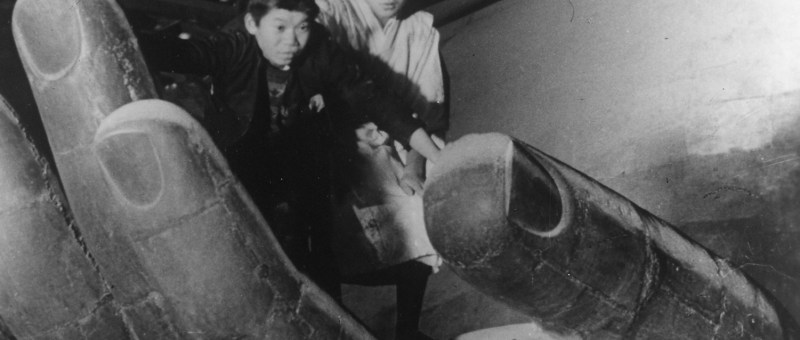
Children of the Great Buddha (大仏さまと子供たち, Hiroshi Shimizu, 1952)

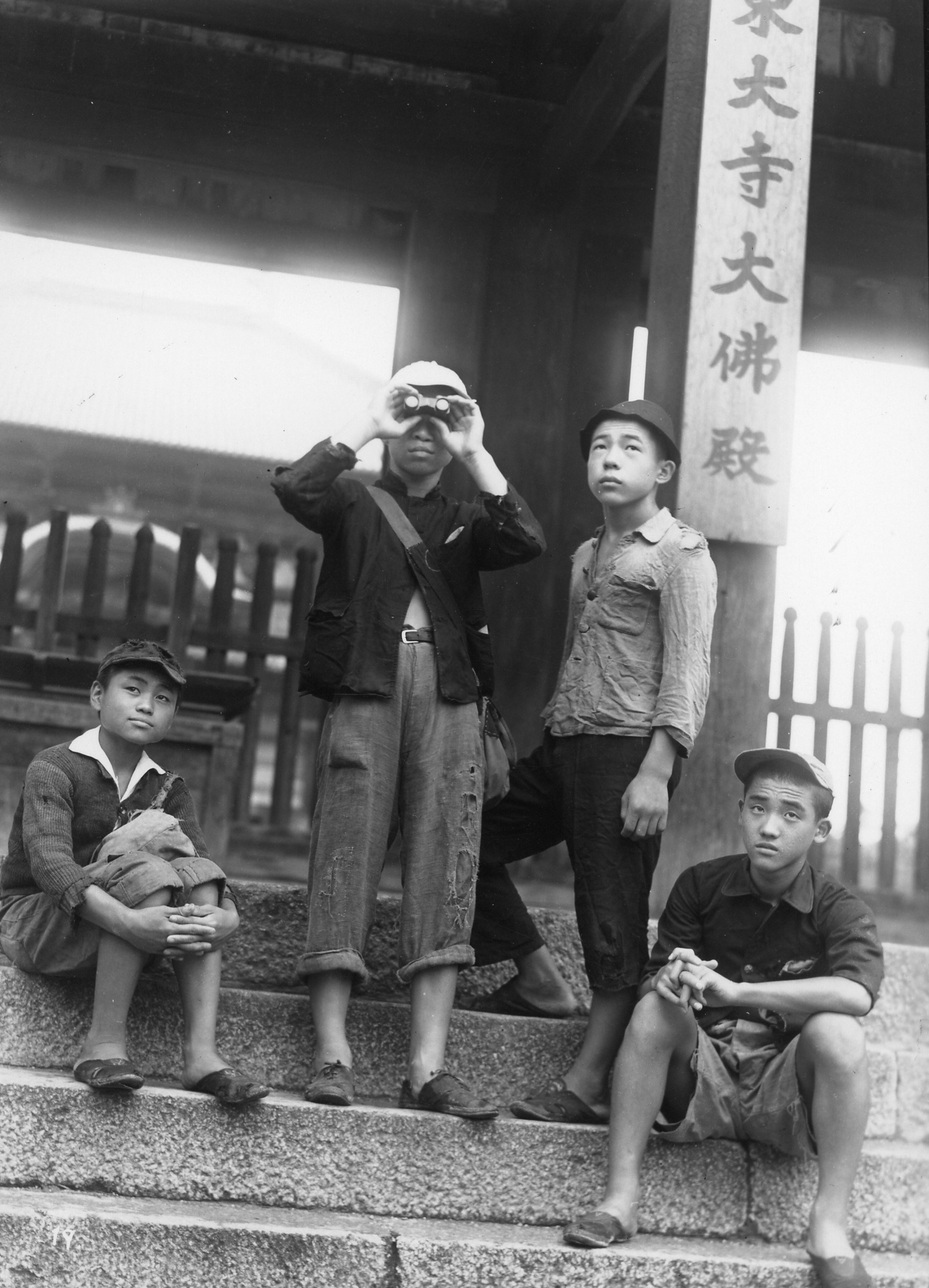
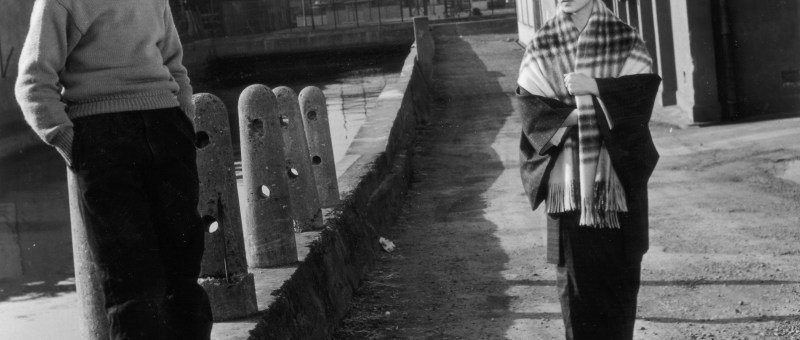
Following Children of the Beehive, and Children of the Beehive What Happened Next, Hiroshi Shimizu completes the trilogy with Children of the Great Buddha (大仏さまと子供たち, Daibutsu-sama to Kodomotachi) this time taking place n Nara and focussing on war orphans who remained alone but are trying to make new lives for themselves as tour guides around the temples of the ancient capital. The existence of tour guides in itself implies a change in circumstances in a resurgent tourist industry while it’s also true that Nara is one of the few cities to have escaped the war largely unscathed and free from the destruction seen in industrial centres such as Tokyo or Osaka or that seen in Hiroshima or Nagasaki. 

There is indeed a particular contrast between the ragged children and the guests they escort who appear generally well dressed and seem to have employed them partly out of a sense of pity. The oldest of the boys, Ko, is later gifted some better clothing but doesn’t wear it explaining that he couldn’t get customers dressed like that so he’s put the nice clothes away in a box. The film never really makes it clear where the boys sleep though they can assumed be homeless or otherwise that the temples themselves are their home. Ko has been able to save up some vouchers and sent away for a pair of binoculars putting the Nio guardian statues down as the addressee. He takes his job very seriously and is slightly put out when he discovers part of his patter is inaccurate, made up by his mentor, Ichuin, who has since been adopted by a temple as a novice monk, to better entertain the customers. 

Ichiuin tells a sculptor the boys collectively refer to as “Mr Failure” that his superiors at the temple are quite upset about this new trend in tourism, that they fear people only come to admire the statues as pieces of art rather than to worship Buddha. The fact that people now have money and time for travel signals that the age of post-war privation is coming to an end though those who arrive from outside Nara also talk of destruction and a sense of displacement. A demobbed soldier remarks that it’s only in Nara that he feels he’s come “home” hinting at a concept of Japaneseness that’s survived in the ancient capital but not elsewhere. Meanwhile, Ko is charged with escorting a Japanese-American woman travelling alone in a rented car having returned to visit her grandparents’ graves. The woman, who the boys refer to as “Miss Second Generation,” treats them warmly and includes them in her picnic which itself is quite elaborate and made with rare and expensive foodstuffs. Later her purse goes “missing,” leading Ko to assume some of the other boys have taken it. He’s right, they have. But they were too frightened to spend any of the money because there was such a lot of it expressing this new idea of America as a land of plenty in contrast to Japan at the end of the Occupation.

When Ko takes the money back to her she buys him new clothes, leading the other boys to incorrectly assume she’s going to adopt him and he’ll be leaving for a better life in America. Despite the sense of solidarity that’s arisen between the orphans, they continue to long for more conventional families or at least to be adopted as Ichiuin has been by the temple. Genji, Ko’s friend, has longing for a small statue of Buddha from a local shop only to end up heartbroken on learning it’s been sold. But the woman who buys it unexpectedly offers to adopt him, aligning Genji himself with the statue and explaining that she had a son his age but he died. Genji originally seems reluctant, saying he will stay with Ko perhaps partly out of guilt but is later persuaded though Ko declares that he will always be at the temple. Caught in a kind of limbo, he religiously listens to the missing person programmes for news of his father whose whereabouts, like many even so many years after the war, are still unknown. 

This may be one reason behind the hope that the orphans of Japan could sleep in the lap of Buddha if in a more literal sense, that they maybe embraced by a more spiritual entity in a society that otherwise appears indifferent to their fate. In any case, Shimizu spends a lot of time with the statues capturing them in a documentary style as if we ourselves were receiving this tour and becoming acquainted with the picturesque environment of the ancient capital somehow free from the corruptions of the war itself or the post-war era and in its own way accepting of these orphaned children to whom it offers a home in Buddha’s palm if not quite so literally.


Children of the Great Buddha screens at Japan Society New York on 1st June as part of Hiroshi Shimizu Part 2: The Postwar and Independent Years.

Children of the Beehive: What Happened Next (その後の蜂の巣の子供たち, Hiroshi Shimizu, 1951)

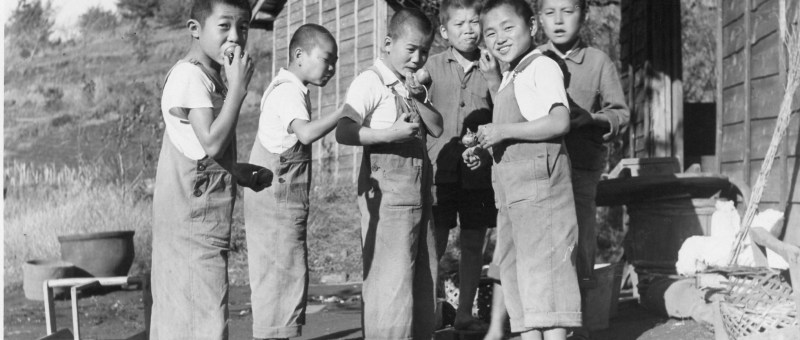
All things considered, Hiroshi Shimizu’s Children of the Beehive ended with the happiest ending it was possible to have to in the Japan of 1948 despite the tragedy that colours its final scenes. Yet for some reason, Shimizu returns three years later to ask what happened to the orphan boys afterwards having adopted several war orphans himself. What results is a strangely meta experience of documentary-style fiction focussing on the sense of community that has arisen at the Beehive. 

The excuse for this is a visit from a journalist for a magazine who wants to ask what’s happened to the boys since then. Yoshibo, who did not die, once again takes centre stage along with Shin who continues to be a leader among the boys while Ho also takes a prominent role as the facility’s cook. Echoing Introspection Tower, the key element is that the orphanage is dependent on the children’s labour which is seen as character-building and a means for them to develop a social conscience though the former soldier now looking after the kids reveals that there are no real rules, the children do as much as they want. They are given access to education through regular visits from tutors, the soldier explaining that it was awkward for the older children whose education had been interrupted to be in classes with kids much younger than them. Most of the boys are currently engaged in building a cabin to be used as a schoolroom and study base.

But the soldier also resents the journalist’s coming. In a meta touch, the journalist came because of the film and then several more kids turn up after seeing the magazine article along with one adult man who declares it’s his lifelong dream to cultivate the land while looking after orphans. A rather cynical Shin points out that’s what everybody says, while a sign on the chalkboard inside instructs the kids to ask visitors to leave politely rather than scaring them away. The soldier’s objections are easily understandable given that the magazine article also provokes the arrival of well-meaning people who want to help but generally end up creating more problems. Two young women turn up with the intention of spending their holiday helping out and get stuck in without even really asking but quickly upset the routines and rhythms that have been set up at the beehive. The soldier explains that the children value their work and enjoy it so a pair of adults doing their jobs for them isn’t helping, rather it makes them feel as if they’ve been deprived of something or haven’t been doing their work properly. The other problem with do-gooders is they obviously can’t stay longterm so there will be another period of adjustment to go through when they eventually leave. 

The presence of the two women also adds a note sexism that hadn’t been present before though this time around there are also female orphans who didn’t feature in the first film including Reiko who is Ho’s kitchen rival eventually kicking him out claiming it’s ”women’s work” with the approval of the two women. Ho later counters her by repeating the same thing but claiming that he told her what do as if trying to claim his right to superiority as a male. Meanwhile, the openness of the first film seems to have ben diluted in the unwillingness to accept newcomers given the scarcity of resources. Shin talks the others into accepting a pair of orphans who appear to have been bullying him only for them to run off with the other boys’ things leaving him feeling responsible in his decision to bring them into the group. 

In any case, the main thrust of the film is concerned with how the orphans live now and captures their cheerful industry through a series of episodes from working together to catch a racoon to being given a science lesson accompanied by a cute animated sequence of a butterfly. A strange subplot in which the mother of one of the boys long assumed to have died contacts the magazine but eventually decides against meeting her son on learning he is happy at the Beehive hints at post-war displacement and reinforces the idea that the children are completely dependent on this community and the mutual solidarity of their fellow orphans which might also in its way explain why some may later decide to leave. Shimizu’s lengthy tracking shots along with the misty rural landscape lend the Beehive an elegiac quality even while insisting that the war orphans are living happily in a kind of commune largely divorced from the chaotic and increasingly selfish post-war society. 


Children of the Beehive: What Happened Next screens at Japan Society New York on 31st May as part of Hiroshi Shimizu Part 2: The Postwar and Independent Years.

Drive Into Night (夜を走る, Dai Sako, 2022)

Small-town futility leads to tragedy when two frustrated scrapyard workers attempt to cover up a crime in Dai Sako’s dark psychological drama Drive into Night (夜を走る, Yoru wo Hashiru). Oppressive in its atmosphere, the film situates itself in a world of constant humiliations where life is cheap and reputation everything. Its heroes seek escape from their disappointing existences through consumerism and extra-marital affairs, but no longer see much of a future for themselves while even the dissatisfying present seems to be ebbing away from them. 

Asked what makes his life fun, Akimoto (Tomomitsu Adachi) replies “not much”. A classic mild-mannered guy, he’s regarded as the office dogsbody and at the beck and call of his abusive manager, Hongo (Tsutomu Takahashi). When a new female sales representative, Risa (Ran Tamai), visits the yard, Hongo runs Akimoto down in front of her apologising for having such a useless employee who does nothing other than drive around all day. His sense of masculinity is also wounded by an older colleague who tries to sell he and his friend Taniguchi (Reo Tamaoki) some kind of aphrodisiac but reflects that Akimoto is too “tame” to ever make use of it, while even Taniguchi needles him about being a 40-year-old man who’s never had a girlfriend and still lives at home with his parents. In many ways he’s the classic “nice guy”, but there’s also something a little dark about him that makes it seem as if he may snap any moment. That may have been what happened when he and Taniguchi went to a bar with Risa shortly after she’d been coaxed into a works drink with Hongo. Something obviously went dreadfully wrong in the night, because Risa is soon reported missing and both Akimoto and Taniguchi begin behaving oddly. 

It is true enough that both men, and many of their colleagues, also consider themselves to be on the scrap heap. Akimoto is tempted to quit his job to put distance between himself and the scrapyard but reflects that he’s unlikely to find another job even if quitting so suddenly might arouse suspicion as Taniguchi warns him. Meanwhile, he knows the yard is in trouble. They have him running round doing cold calls but returning empty handed, while office workers are constantly fielding calls about unpaid invoices. His irritation is palpable when he spots the boss, Miyake, leaving one morning soon after he arrives, loading expensive golf clubs into his fancy car. Hongo bullies him, but later says he does it out of respect because Akimoto is the only one who bothers to do his job properly. But then again even Hongo concedes that hard work gets you nowhere. Most of his paycheques go on child support and he often sleeps in his car in the car park. The only reason he’s not been fired is that he has a personal connection to Miyake.

Even so, this fairly tenuous relationship does not really explain why Miyake goes to such great lengths to protect Hongo when he becomes the prime suspect in Risa’s disappearance and is framed by Taniguchi and a guilty Akimoto. It may be in a way that he really does think of the company as a kind of family, as perhaps do the loan sharks who keep calling them after Akimoto ends up in debt having joined a weird cult encourages him to think there is nothing wrong with him and the fault is all with an unaccepting world. The cult leader tells him that he is “full of anger”, which perhaps he is. This being in the immediate aftermath of the coronavirus pandemic, Akimoto is often questioned about still wearing a mask long after most people have abandoned them and part of the reason is as an attempt to hide his true self. After joining the cult he takes it off, but soon adopts another disguise in dressing in Risa’s clothes as his mental state continues to decline. 

Taniguchi meanwhile makes an effort to continue with his “normal” life which includes visiting his mistress. Unbeknownst to him, his wife Misaki (Nahana) is also having an affair with the consequence that neither of them is able to fully devote themselves to their young daughter Ayano who eventually ends up in a potentially dangerous situation because of her parents’ various transgressions. Nevertheless, despite discovering that her husband may have been involved in a murder it’s Misaki who decides that he has to “protect our family” above all else. Amid all of this, Risa becomes almost literally lost before later being unceremoniously dumped like so much scrap. After framing Hongo, Taniguchi tries to convince Akimoto that Risa isn’t their problem anymore as they each struggle to hang on to the previously disappointing realities they had been so desperate to escape. 

It has to be said that aside from the misogyny of its worldview, there is also an uncomfortable quality in the film’s characterisation of a shady Chinese businessman who of course knows how to get rid of bodies along with the fact his chief associate is Korean-Japanese gangster. Though the film’s strongest character may in fact be the Filipina bar hostess, Gina (Rosa Yamamoto), on whom Akimoto fixes most of his hopes who defiantly tells the cult leader that she’s happy with her life and has no reason to join his organisation, Akimoto exposes himself by telling her she’s wrong because he doesn’t see why a “foreigner”, “a woman”, who works in a “dirty” bar, could be happy or averse to being “saved” by him. Still he insists that he hasn’t “changed”, it’s the world that’s changed around him. Taniguchi later says something similar, and they each may have a point. In any case, this world is largely one of resentment and futility in which there is no release. Sako captures the drudgery of his protagonists lives with crushing naturalism but also perhaps little sympathy.


Original trailer (no subtitles)

Image of a Mother (母のおもかげ, Hiroshi Shimizu, 1959)

“Does happiness even exist nowadays?” replies a still youngish widow pushed towards the prospect of remarriage but for her own reasons reluctant. The final film from Hiroshi Shimizu, Image of a Mother (母のおもかげ, Haha no Omokage) examines the changing nature of family dynamics through the experiences of a blended family and a little boy whose grief and loneliness in the wake of his mother’s death are little acknowledged by those around him who are unable to understand why he cannot simply just move on.

This may partly be down a practical mindset having not so long ago experienced a time in which there was so much death it would not have been possible to grieve it all, but there is something nevertheless quite insensitive in the way little Michio (Michihiro Mori) is more or less told he must forget his late mother. Though it appears she only passed away less than year previously, Michio’s father Sadao (Jun Negami) is under immense pressure from his uncle to remarry so that Michio will have a mother. The latest prospect in what seems to be a long running series of possible matches is a widow Sadao’s own age with a young daughter. Sonoko (Chikage Awashima) works in the canteen at the local hospital where Sadao’s uncle delivers the tofu from his shop but is originally quite resistant to his attempts at matchmaking before finally giving in. Neither of them really wanted to marry again and the meeting itself is quite awkward but against the odds they do actually get on and eventually decide to get married. 

Sonoko is a very nice woman and kind to Michio, determined care for him as if he were her own son but hurt by his continuing distance towards her. Aside from the emotional distress, it’s also true that Sonoko is under a lot of pressure to present herself as the perfect image of motherhood especially having joined a larger extended family from whom she may fear judgement though are actually very fond of her and glad they found someone so nice. The extended family in particular are quite put out that Michio has yet to call Sonoko “mum,” and are cross with him for not doing so while Sonoko too is forced to feel as if it’s a slight on her character, that she’s not living up to her new role and the otherwise happy family they’ve begun to build may fall apart if she can’t completely win Michio over. 

The family don’t seem to understand at all that Michio is still attached to his late mother’s memory, and the insensitive attitude of Sadao’s younger cousin Keiko (Satoko Minami) does much to fuel the fire in her insistence that Michio hide the photograph of his mother to which he is still saying goodbye when he leaves each morning for school. They tell him that because he has a new mother now he must forget the old, but to him it seems like a betrayal. He likes Sonoko, and he likes being mothered, but he can’t bring himself accept her in the place of the mother he’s lost. It’s not Sonoko who tells him he must do any of this, and in fact she is the one who tries to suggest that there’s room for more than one mother even if the idea is immediately rejected by her daughter Emiko (Sachiyo Yasumoto). But it’s many ways this attempt to hide the past, to avoid dealing with it that prevents the new family from cementing itself. Only once the adults have listened to and fully accepted Michio’s feelings does he finally feel comfortable enough to call Sonoko his mother. 

Even so, Michio’s bullying at the hands of his classmates who keep feeding him stories about evil stepmothers points to a lingering stigma towards remarriage and families that might differ from the norm. In this he finds himself doubly conflicted, defending Sonoko to his obnoxious classmates while unable to accept her at home. Maintaining the lateral tracking shots that become increasingly prevalent in his later career, Shimizu makes the most of the scope frame to capture Michio’s loneliness and isolation if also that of Sonoko who finds herself in an awkward situation trying to adjust to this new family life in what was another woman’s home knowing she can’t ever take her place but must try to find her own within it. Yet what he gives them in the end is a kind of mutual salvation that promises new futures for both and that even nowadays happiness may still exist.


Image of a Mother screens at Japan Society New York on May 23/30 as part of Hiroshi Shimizu Part 2: The Postwar and Independent Years.

ROLL (Daichi Murase, 2020)

“Change the world!” a stranger yells, perhaps ironically, from a passing pickup truck as the hero of Daichi Murase’s debut feature Roll, pelting hell for leather to rescue a trapped a soul. An unconventional coming-of-age tale, Murase’s experimental drama follows a young man from innocence to experience as he becomes determined to discover the secrets of an earlier age while discovering also that genies don’t go back inside their bottles and in fact may prefer to expire in the light of the sun rather than survive an eternity of vicarious darkness. 

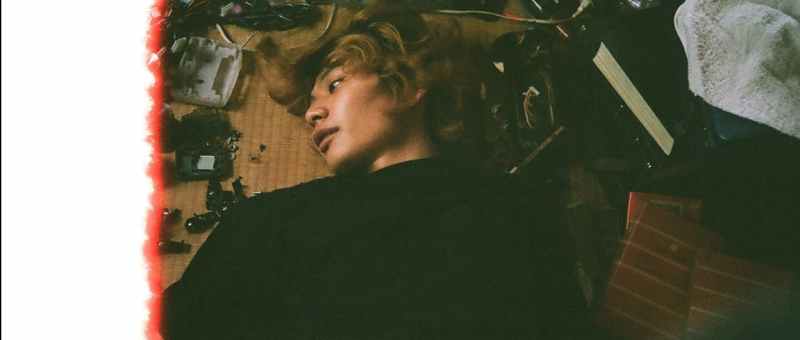
The hero, Yoshihiro is a strange and aloof young man as we gather from the first scenes which find him alone in his room while his dormmates engage in drunken socialising. Yoshihiro’s chief obsession seems to be with disassembling abandoned gadgets into their component parts, sleeping surrounded by neatly grouped collections of various nuts and bolts. His understanding boss at his part-time job as a removal man often allows him to keep bits of interesting junk that would otherwise be disposed of and it’s during one particular house clearance that he makes an unexpected discovery on being charged with investigating a possible haunting of an external annexe. Removing the chains which block the door and wandering inside, he’s confronted by a series of television screens featuring calming scenes of water and then by a frightening apparition. Looking a little like Oogie Boogie, a young woman in a white hazmat suit and black goggles eventually reveals herself and gifts him a strange device of a kind he has never seen before. 

The device, which turns out to be an 8mm camera as his bespectacled roommate reveals to him, sparks a sense of curiosity about the world he did not appear to have in his constant need for disassembly. Yet while his new friend takes him to a worryingly abusive filmset (the director slaps and then randomly licks the face of his leading man) for advice later suggesting they use it to make movies along the themes of “Mushroom, Explosion Festival!”, or “Psychopath Signal”, Yoshihiro is equally preoccupied with mysterious young woman who appears to be being kept captive by her father afraid to let her experience the light of the sun. As ignorant youngsters, the pair are unsure whether Nazuna’s father is earnest in his overprotectiveness and the outside world really is toxic to her, or merely selfish and possessive wishing to keep her locked up forever a secret to himself alone. 

Nazuna, as the young woman is called, of course turns out to be a metaphor for film something which is destroyed on exposure to the light. Strangely, Yoshihiro’s friend mistakenly tells him that the camera needs to be opened once a day to let the air in, apparently little knowing it will erase whatever is inside. A kind of fairytale of enlightenment, Yoshihiro becomes a kind of promethean rescuer literally busting Nazuna out of her jail in an attempt to free her just as he tries to steal the arcane knowledge of analogue technology from a generation apparently unwilling to teach him. She perhaps knows how dangerous her journey may be, but chooses to go anyway insisting that she doesn’t want to grow up which is perhaps to be overburdened with sophistication. Yet does her desire to see the ocean for real negate the idea of truth in celluloid, implying that some things can only be fully experienced by venturing out into the world for oneself, or make the case for it in Yoshihiro’s clumsy filming of her moment of rebellious defiance towards the curse of obsolescence? 

Making full use of the technology himself, Murase shifts from digital into 8mm and then into 16 for the pair’s final adventure as they transition through a tunnel into another world, emerging on the other side perhaps somehow changed. Yet even so, burdened by his ignorance, Yoshihiro fails to bring the message home with him discovering nothing but a blank screen in place of an essential truth. Less about films and medium than perpetual motion, Murase’s enigmatic fable rolls its way towards an inventible conclusion as its hero edges his way towards maturity having discovered an appetite for connection in place of deconstruction. 


Original trailer (no subtitles)

Sound in the Mist (霧の音, Hiroshi Shimizu, 1956)

In the opening scenes of Hiroshi Shimizu’s Sound in the Mist (霧の音, Kiri no Oto), a young woman tells another that “as women, we need to create our own happiness,” though as it turns out it’s something that neither of them are really able to do. A classic melodrama, the film once again hints at Shimizu’s mistrust of romance and the frustrating inability of men and women to communicate or embrace their love for one another even when the seeming barriers preventing it have been removed.

To that extent, it’s interesting that the chief disagreement between unhappily married botanist Kazuhiko (Ken Uehara) and his wife Katsuyo is over her feminist politics and desire to devote herself to women’s emancipation under the new post-war constitution. The main bone of contention is that she wants to sell a mountain owned by Kazuhiko’s family to fund her political career though as he later says this mountain is his life. In any case he lets her sell it, believing there’s no point putting up a fight. He puts up even less of one in his relationship with Tsuruko (Michiyo Kogure), his assistant who is hopelessly in love with him yet after his wife’s angry visit decides to absent herself feeling as if she’s in the way.

It was her friend Ayako, a Tokyo dancer, who told her that women need to make their own happiness but in the end she couldn’t do it either. She was similarly involved with a weak-willed married man who continued to vacillate over leaving his wife offering the justification that he didn’t want to mess things up for his children. Eventually the pair find escape through double suicide which only emphasises the futility of their romantic connection. Tsuruko similarly makes several comments about the idea of death and dying, stating that if she were to die she’d want to go to a particular spot in the mountain which seems like heaven to her.

Though Katsuyo describes it as a “filthy” place the cabin does indeed become a kind of haven, a bubble of apparently chaste love and longing inhabited only by Kazuhiko and Tsuruko as the voiceover says hiding out from post-war chaos. Tsuruko seems to be the kind of woman Kazuhiko regards as the ideal wife in that she cares for him and supports his work even if he tells Katsuyo he just needed someone to run errands and do the grocery shopping so Tsuruko is there as his maid. Both are at pains to emphasise that no physical relationship exists between them but are otherwise prevented from acting on the their love because of Kazuhiko’s marriage along the existence of his daughter, Yuko (Keiko Fujita), who may be adversely affected by her parents’ decision to divorce in an age when such things were less common.

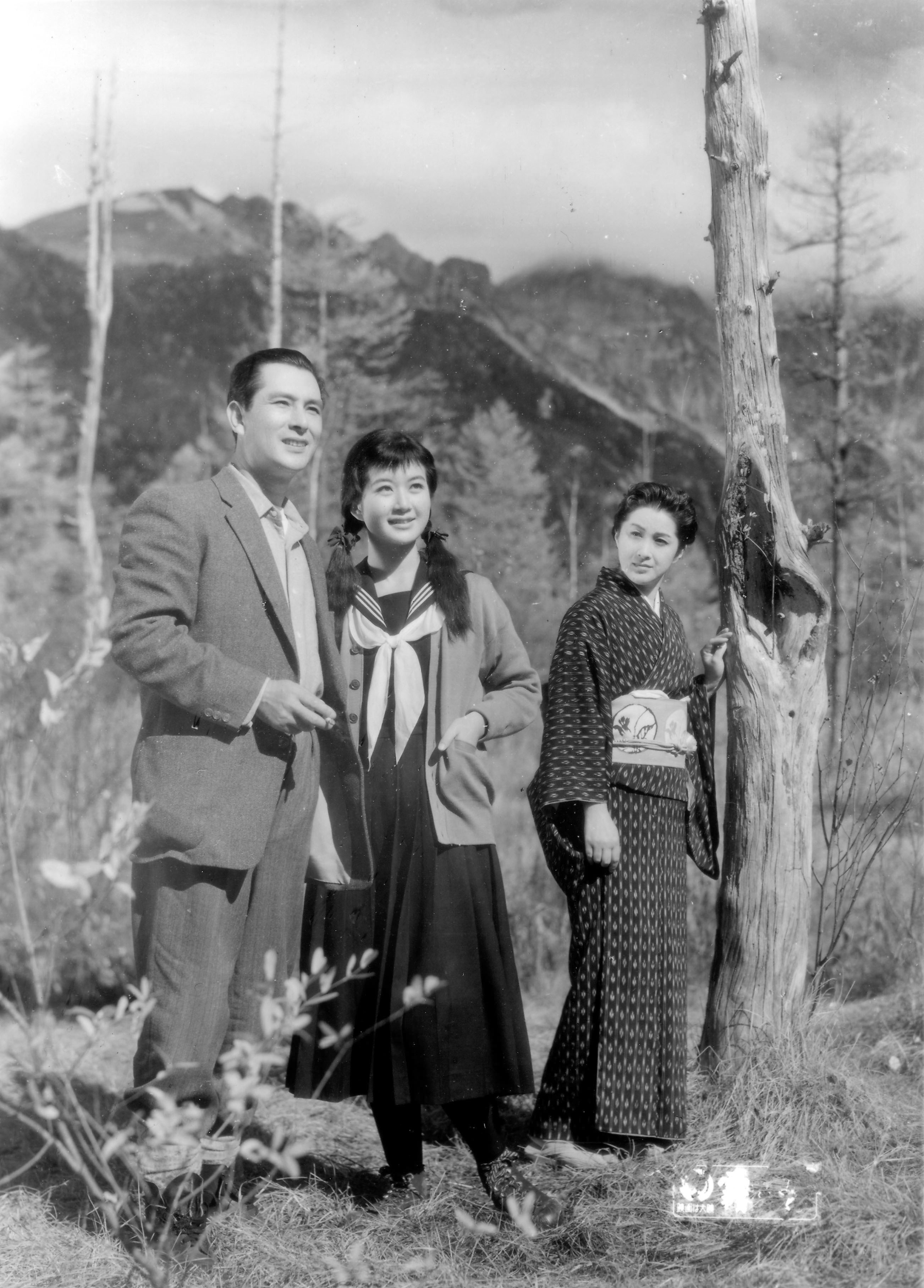
Kazuhiko continues to return to the mountain cabin which has since become an inn at regular intervals to see the Harvest Moon, as does Tsuruko though she also carries a degree of shame that makes her fear re-encountering Kazuhiko having become a geisha apparently solely to ensure her proximity to the mountain. Once again filming with the gentle lateral motion familiar from his later films, Shimizu focuses on the landscape and suggests that these lovers are only free to love in the natural world unconstrained by the petty concerns of civilisation which prevent them from embracing their desires. The sound in the mist is perhaps that of Kazuhiko’s latent romanticism and the implication that to him it may be better to suffer for love than to accept it. The same may be true for Tsuruko who is equally powerless if filled with regret that in the end she gave up so easily rather than fight for the love of her life.

On the other hand, the cabin seems to have given rise to a love match between Kazuhiko’s daughter Yuko and her husband who vow to continue the tradition of coming to the inn on the occasion of the Harvest Moon which marks both their wedding anniversary and the time they met. Yuko’s melancholy expression on coming to an understanding of her father’s “special memories” suggests a gentle sympathy but also that this younger generation is freer to love though no less romantic.The poignant closing scenes in which Kazuhiko wanders into the mist are nevertheless filled with irresolution, regret, and a longing that express only a deep sadness for the misconnections and misunderstandings of a less open past.


Sound in the Mist screens at Japan Society New York on May 23/30 as part of Hiroshi Shimizu Part 2: The Postwar and Independent Years.

During the Rains (つゆのあとさき, Shinpei Yamazaki, 2024)

At several points during Shinpei Yamasaki’s indie drama During the Rains (つゆのあとさき, Tsuyu no Atosaki) we encounter someone whose life has been disrupted by the economic effects of the coronavirus pandemic. The danger is, of course, that the pandemic itself becomes the problem which is also a way of glossing over all the problems that existed before and will likely survive whatever kind of sickness they encounter. Chief among those problems and impacting the lives of the women at the film’s centre is problematic men and the generalised disregard for women.

It seems that Kotone was working in hostess bar that closed because of the pandemic while her no good boyfriend ran off with a necklace a customer had given her. Left with nowhere to go she’s noticed on the street by Kaede, a young woman who promises her a room in a love hotel but does so in order to recruit her for a threesome. Sometime later Kotone is working in a “cafe” where young women sit behind a glass window in numbered booths for male customers pick out and select though she also has a “daddy”, Kiyooka, who pays the lease on her flat and would be annoyed to discover she was still frequenting the cafe.

It’s the at the cafe that she meets Sakura, a naive young college student who was pushed into sex work when the place she was working before closed down because of the pandemic. Kotone at one point snaps back at her that she wouldn’t even be at the cafe if it weren’t for the pandemic as if suggesting she were in some way better than the other girls after she reacted with horror to Konone’s plan to find a “hardcore daddy” who’ll pay more for the right to break a few bones and cause other kinds of harm.

This might be ironic in a sense as Sakura is a Christian who carries around bible verses to calm herself down including the ones about turning the other cheek and blessing those who persecute you which don’t seem to be particularly good advice for the situations she finds herself in especially as the lesson she’s learned from them is that you should accept whatever abuse comes your way without complaining. Ironically that might be what Kotone has been doing in her almost total indifference to her circumstances. The Roomba in her apartment gets stuck in her hallway and shuffles in confusion between the walls after constantly butting its head unable to find a way out. Yet according to Kiyooka what separates Kotone and Sakura is that Sakura seems desperate in a way Kotone does not which is a quality he appreciates presumably because it gives him more control over her, something he knows he doesn’t have over Kotone who point black tells him she has no strong feelings about whether he dumps her or not after he discovers she’s still seeing other men and engaging in casual sex work.

The lollipops she’s always sucking on give Kotone a slightly childish edge as perhaps does her moodiness but she’s also cynical beyond her years and seemingly living the way she does almost as an act of self harm. She’s being relentlessly trolled by someone who accuses her of having a sexually transmitted disease while even the other girls at the cafe resent her, ironically calling her a slut and other misogyinistic insults. Later she’s even knocked down some stairs by a previous client who is resentful that she doesn’t really remember him while another of her regulars, Yata, paws at her insultingly as if feeling himself entitled to her body. Another customer whose wife and daughter left him after his business failed asks her why she does this, adding that he’s worried about his daughter which seems to be an incredibly ironic comment given the situation.

Even the girls at the cafe complain that they’re getting les work because of the influx of women showing up there after being pushed towards sex work out of desperation, but it’s almost as if the film would like to believe the pandemic was the problem rather than attitudes society has towards these women and indeed all women. Nevertheless, through her growing friendship with Sakura and an unexpected tragedy Kotone comes to realise that she can perhaps change her circumstances and does not necessarily have to continue turning the other cheek to a society that had largely turned its back on her.


Dancing Girl (踊子, Hiroshi Shimizu, 1957)

The sudden arrival of a younger sister throws the despair and disappointment of an ageing chorus dancer into stark relief in Hiroshi Shimizu’s Dancing Girl (踊子, Odoriko). Chiyo (Machiko Kyo) is indeed a dancing girl, waltzing her way through post-war Japan with seemingly little thought for others or the consequences of her actions aware only of her ability to dazzle and what it might win her if used in the right way while her sister quietly yearns for a more comfortable, conventional kind of life.

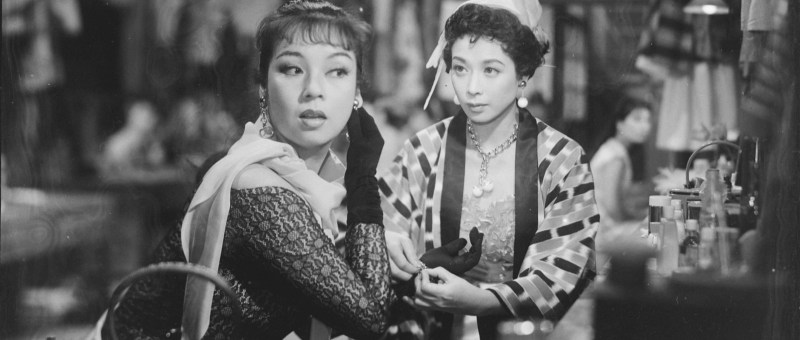
Hanae (Chikage Awashima) apologises for Chiyo’s childishness when she suddenly gets up to marvel at the snow during in an important meeting with choreographer Tamura (Haruo Tanaka) who has offered to take her on as a trainee dancer but he simply replies that it’s what makes her special in the way Hanae herself perhaps is not. In that sense there’s something a little uncomfortable in Tamura’s first word on meeting Chiyo being simply “sexy” uttered as if he were already salivating over her when the key to her appeal seems to lie in the awkward juxtaposition of her naivety and curvaceous figure. In many ways, it’s childishness that is Chiyo’s defining characteristic. She follows her impulses and is incapable of thinking beyond them. In a repeated motif we see her eat heartily as if she had not for eaten days or else to be snacking on something or other at a time when food is scarce. We later discover that she’s some kind of kleptomaniac, stealing at every opportunity even when she has no need to, simply taking something she wants without considering why it might not be right to do so as if all the world belonged to her. Meanwhile she embraces her sexuality without shame, sleeping with whomever she chooses but also doing so in a calculated effort to advance her own cause. 

The irony is that her rise coincides with her sister’s fall. Hanae has passed the age at which she might have become a star and is beginning to age out of her career as a chorus dancer. She tells her husband, Yamano (Eiji Funakoshi), that what she wants is a comfortable life and to become a mother though the couple have been married for five years and not yet conceived a child leading her wonder if there’s medical issue in play though Yamano confesses in what turns out to be an ironic comment that he doesn’t really want children anyway. In any case, they are each becoming tired of life in Asakusa and their mutually unsatisfying careers. Crushingly they each fear they have disappointed the other, Hanae sorry that she never made it as a dancer and wondering if Yamano would have been better off marrying someone from a less stigmatised profession, while he feels guilty that he could not give her a better standard of life and has failed to progress in his own career as a violinist. Chiyo’s arrival reinvigates them both in different ways. Hanae shifts into a maternal mode otherwise denied her in looking after Chiyo as she begins her career as a dancer, while Yamano begins with her a sexual affair that rekindles his masculine drive. 

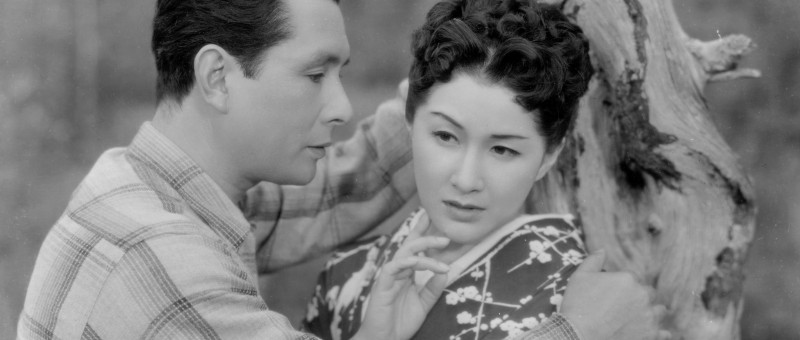
But Chiyo also remains flighty and elusive. Essentially lazy, she soon tires of dancing and decides to become a geisha because it requires less rehearsal, then to give that up too to become someone’s second mistress. She rejects the conventional, settled life Hanae has come to long for and describes that in the countryside as “boring” when she suggests moving there having selflessly offered to adopt the baby Chiyo has also rejected which maybe Yamano’s or perhaps Tamura’s or someone else’s entirely not that it necessarily matters. The closing moments of the film perhaps imply a moralising rebuke of the new post-war vision of liberated sexuality, a despondent Chiyo once again making a surprise appearance and wanting to see her child but being afraid to do so unable to match up to the unsullied maternity of Hanae. Shimizu lends her passage a kind of transient quality in his restless camera which is in constant motion sliding laterally from one scene to another often coming to rest on emptiness even amid the bustling streets of a neon-lit Asakusa and the false promises of its illusionary glow.


Dancing Girl screens at Japan Society New York on May 18 as part of Hiroshi Shimizu Part 2: The Postwar and Independent Years.