Yaksha: Ruthless Operations (야차, Na Hyeon, 2022)

“Justice is preserved by being just” according to the idealistic hero at the centre of Na Hyeon’s Yaksha: Ruthless Operations (야차, Yacha) , though he’ll eventually come round to his sometime mentor’s belief that “Justice must be preserved by any means necessary”. Any means necessary is indeed the motto of the titular hero named for the unpredictable Buddhist deity and regarded by his superiors as a dangerous maverick though as it turns out he does indeed have justice in mind even if his idea of justice might not fully align with those whom he is intended to serve. 

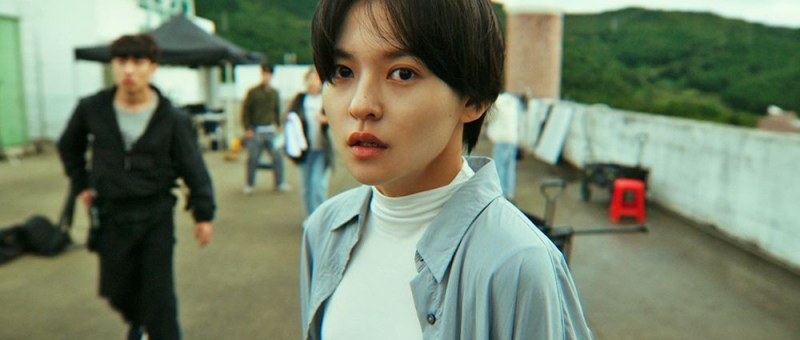
The failure of the regular justice system is signalled in the film’s opening as idealistic prosecutor Ji-hoon (Park Hae-soo) finds his case against a corrupt CEO falling apart because of procedural mistakes by his own rookie team. Humiliated on the courthouse steps, Ji-hoon is given a punitive transfer to the NIS where he is kept out of trouble, told to draw a salary but given very little work. He and his jaded colleague who was once known as the “bulldozer of justice” but has been ruined by this bizarre form of punishment and no longer has the will do to anything much at all mostly spend their time doing jigsaw puzzles stave off boredom. When his colleague admits there’s no more hope for him and turns down an offer of reinstatement, Ji-hoon agrees to travel to Shengyang, a hotbed of international spies in China, to find out what’s going on with a series of false reports from their agents on the ground led by maverick black ops officer Yakska. 

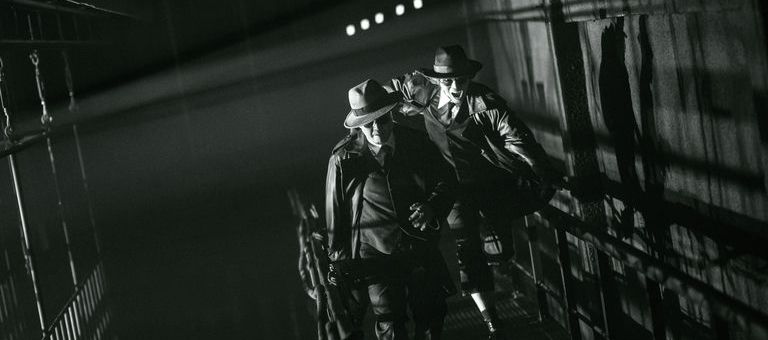
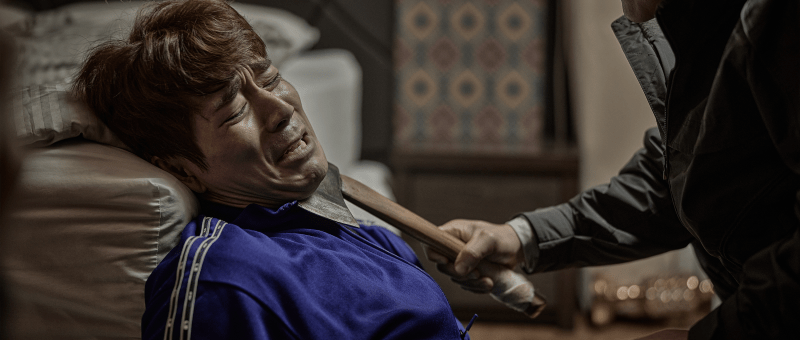
What he soon discovers is that he’s been dragged into some murky geopolitical shenanigans between North Korean spies, his target’s possibly corrupt team, and the Japanese who are once again up to no good trying to prevent a possible alliance between North and South believing such a union would present too much of a threat to their economic position in North East Asia. His problem is that Yaksha’s field craft does not measure up to what he regards as appropriate conduct. He engages in firefights and commits what seem to be summary executions while later threatening to torture a hostage to force her to reveal the location of their missing asset, a North Korean financial kingpin, Moon (Nam Kyung-eup), who had been acting as a double agent for the Japanese but had become disillusioned with their imperialist outlook and decided to defect to the South bringing valuable information with him. 

It has to be said that however uncountable it may be to see a Japanese spy who behaves like a gangster committing acts of torture in a well appointed lab on a Chinese woman in China, Yaksha cannot exactly claim the moral high ground having attempted to do something similar only in his filthy hideout in an abandoned mine. Ji-hoon’s dilemma is that he doesn’t know whose side, if any, Yaksha is on or if he’s after the North Korean trillions Moon had been managing rather than a hugely beneficial national asset. Exposed to this morally grey world, however, Ji-hoon’s idealist edges begin to soften as shifts towards Yaksa’s “by any means possible” philosophy while trying to stop evil Japanese spy turned lobbyist from recovering the valuable data Moon had to sell and going on to do even more nefarious deeds undermining the possibilities for reunification along with the Koreas’ economic potential. 

Somewhat uncomfortably, the film does then more or less condone torture, betrayal, and summary execution if conducted in the pursuit of “justice” even while simultaneously approving of Ji-hoon’s idealistic pursuit of the rich and powerful who continue to misuse their position and cause pain to ordinary people. It comes to something when the safest ally is a gang of human organ traffickers with whom Yaksha seems to be suspiciously familiar. Nevertheless, what Yaksha eventually asks Ji-hoon to do is to “clean things up” hinting at the duo’s complementary qualities as they pursue “justice” in both the legal and more immediate senses. Filled with some quite literally explosive action sequences along with some admittedly broad comic book antics as the guys face off against Hideki Ikeuchi’s Japanese arch villain Yaksha is certainly a good looking film if one with a dark heart beating at its centre. 


Original trailer (English subtitles)

A Fine, Windy Day (바람 불어 좋은 날, Lee Jang-ho, 1980)

Lee Jang-ho returned to filmmaking after a short hiatus having been temporarily banned for the possession of marijuana in 1980 with a fresh new approach focussing on the social issues of the day as Korea found itself in the midst of confusion following the assassination of president Park Chung-hee. Though many hoped for a new era of long-awaited democratisation, those hopes were soon dashed by another military coup and the continuation of oppressive dictatorship under Chun Doo-hwan. During his time away from the film industry, Lee had run a bar with his mother and it was there that he became more acquainted with the struggles of ordinary people.

Adapted from a novel by Choi In-name, A Fine, Windy Day (바람 불어 좋은 날, Barambuleo Joheun Nal) follows three young men who have migrated from the countryside to Seoul in wider movement of urban migration. The sister of one of the men who later joins them remarks that there are no young people left in the countryside and her brother agrees that there is no longer any future in farming. Yet as the opening of the film makes clear in its idealised vision of pastoral life, it is really the expansion of the cities which has displaced the men and destroyed the natural habitats they once inhabited. The film often aligns the three with stray dogs who’ve come scavenging in the city because they can no longer survive in their rural hometowns. 

“It’s as if I’ve been taking a beating for two years straight from some invisible person” delivery boy Deokbae (Ahn Sung-ki) remarks during the film’s conclusion of his life in Seoul which does indeed seem to have been one long and bloody battle that had forced him into submission. As he tells equally naive country boy Suntae, he never stuttered before he came to the city but is now cowed and anxious all too aware of how the native Seoulites treat men like him. Daughter of a wealthy family, Myung-hee (Yu Ji-in) drives her own car around town, knocking over school children and not even bothering to stop until challenged by Deokbae for ruining the food he was currently in the middle of delivering. He later gets a telling off from his boss and his pay docked while she wraps her expensive scarf around his neck and promises to send compensation money to the restaurant where he works. 

Deokbae knows that Myung-hee is merely playing with him, her strangely childish glee like a little boy pulling the wings off a fly, yet he continues to associate with her. She laughs at him when he sits on the floor instead of the sofa after she ordered from the restaurant to get him to come to her house, and then tries to kiss him before becoming angry and pushing him away. Her posh friends later invade the restaurant and are drunk and rowdy, refusing to leave until a fight develops and they’re all carted off to the police.

But it’s only one of several degradations the men suffer at the hands of a new aristocracy not so different from the feudal elite. Chunsik (Lee Yeong-ho) works at a hairdresser’s where he is smitten with the pretty stylish Miss Yu (Kim Bo-yeon) who is being more or less sold by her ambitious boss and thereafter coerced into a compensated relationship with a sleazy businessman, Mr Kim, who was himself once a country boy but got rich quick through property speculation having cheated the old man who appeared in the film’s opening out of his ancestral land which has since been turned into the half-built slum inhabited by the three men. He is about to open a new shopping centre where the barber hopes to gain a prime position thanks to providing access to Miss Yu. The old man rails around the town demanding the return of his land, decrying that heaven will punish Mr Kim for what he’s done, and finally commits suicide in the newly completed building almost as it he were cursing it. 

The old man’s body is laid out on the last remaining stretched field where a shamanistic funeral song plays as a lament for the now ruined pastoral idyll which has been taken from each of the men and replaced with internecine capitalism in which wealth comes at the exchange of humanity. At the Chinese restaurant where Deokbae works, the wife of the dying boss had been carrying on an affair with the manager whom she hopes to marry once her husband has gone, while he expects to take over the shop though as is later revealed he is already married with children and technically performing a long con on her. The third man, Gilnam (Kim Seong-chan), works in a motel while saving money to open a hotel of his own but unwisely gives his savings to his girlfriend who runs off with them leaving him with nothing. He is then drafted for military service, receiving another blow from the contemporary Korea.

The man who spars with Deokbae who takes up boxing after his altercation with the rich kids is also wearing a shirt that reads “Korea” on the back and we watch as he is mercilessly beaten but this time refusing to give up reflecting only that he’s learned how to take a hit which is it seems the only way to survive in the Seoul of the early 1980s. The tone that Lee lands on is however one of playful irony, particularly in the meta-quality of the closing narration along with its victory in defeat motif as Deokbae acknowledges the need to roll with the punches which is also a subversive admission of the futility of his situation in which it is simply impossible to resist the system. A lighthearted but also melancholy chronicle of the feudal legacy repurposed for a capitalist era the film encapsulates itself in its bizarre disco scene as a confused Deokbae dances like a shaman, forever a country boy lost in an increasingly soulless and capitalistic society.


Space Sweepers (승리호, Jo Sung-hee, 2021)

If we’re content to ruin one world, why do we assume our salvation lies on another? Billed as Korea’s first blockbuster science-fiction extravaganza, Space Sweepers (승리호, Seungriho) finds a ragtag gang of junkers quite literally cleaning up humanity’s mess while ironically marginalised into outer space by internecine capitalist consumerism which in insult to injury offers to sell you a cure for the disease it has caused but only to those whom it deems worthy of its dubious promises. 

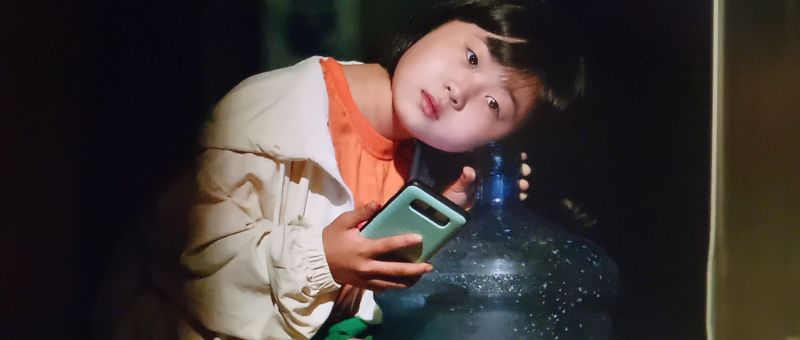
By 2092, the Earth has become all but uninhabitable. Led by 1952-year-old messianic scientist Sullivan, UTS Corporation has prepared a new artificial orbiting home but only the elite are invited while the remaining 95% linger on the poisoned ground below or else, like the crew of the Victory, wander in space attempting to make a living from clearing the debris left behind after countless sattelltes and space station launches. Yet as jaded space sweeper Tae-ho (Song Joong-ki) remarks, the more you work the more debt you earn. The Victory is a well equipped ship and you’d think that would mean greater earning potential but all it means is that it costs more to maintain while the initial outlay has landed them with unsustainable debt not to mention constant random fines and official interference. All of which is why when they find a little girl hidden in a storage compartment of an abandoned vessel and realise she’s the missing android that’s all over the news, they decide to play off the Black Foxes “terrorist” organisation who kidnapped her and UTC who want her back for all they can get. 

As might be expected for all his claims that “humanity is dirty” in its failure to protect the planet, Sullivan is no pure hearted saviour but an amoral elitist intent on terraforming Mars as some kind of authoritarian “utopia” populated only the “best” of humanity. He claims not to care about money, but cites the false equivalency that those with the deepest pockets must necessarily be those with the greatest capability while privately describing those left below as expendable and not really worth saving. Dressed like a cult leader, even at one point appearing as a giant hologram, Sullivan’s appearance owes a significant visual debt to Neon Genesis Evangelion’s Gendo Ikari, leaving little doubt as to his megalomaniacal intensions as he wilfully sells a solution to a problem he himself helped to cause while continuing to exploit the Earth and the people still on it to hasten its demise and his own enrichment. 

While the central message reinforces the idea that large corporations are not to be trusted while the capitalistic system they uphold is inherently destructive, it also perhaps undercuts that of the impending environmental crisis with which we are faced if we can’t mend our ways fast enough. Even so, it falls to the space sweepers to mount a unified global resistance against the wilful destruction of their homeland in protecting the android, Dorothy / Kot-nim (Park Ye-rin), who of course holds the key to saving the world. Despite having taken in her in with a view to ransoming her, the crew soon bond with the adorable little girl as unofficial daughter while Tae-ho alone remains reluctant in grief over child for whom he continually searches while internalising a sense of resentful failure in the knowledge that he lost her because of his own self-absorbed sense of hopelessness. 

Even so, there may be something a little uncomfortable in the final resolution in which the crew coalesces into a recognisable family unit each of them somehow “improved” as they accept their responsibility for Kot-nim whether in giving up drinking or erasing tattoos. Nevertheless, the film is refreshingly progressive in its depiction of a transgender character who gains the confidence to be their authentic self thanks to the unconditional solidarity among the crew members, though the sudden reversal of UTS from cult-like evil corporate entity to remorseful force for good seems rather optimistic as if the only problem was Sullivan and not the system that gave rise to him.  While the overall aesthetic may be somewhat televisual, Space Sweepers does feature some interesting production design and impressive CGI though its greatest strength lies in the jaded idealism of its space bandit protagonists as they band together to resist their marginalisation with mutual solidarity and compassion.


Original trailer (English subtitles)

The Singer (소리꾼, Cho Jung-lae, 2020)

A Pansori singer shames the world into giving him his miracle in Cho Jung-lae’s musical fable, The Singer (소리꾼, Sorikkun). If there’s one thing you can bank on in old Joseon it’s that there is intrigue in the court, yet the rot seems to have penetrated even more deeply into the fabric of society as the hero discovers while looking for his kidnapped wife only later realising that the people who are supposed to protect you from violent criminals are in fact violent criminals themselves.  

Set in 1734, the 10th year of King Yeongjo’s reign, the film opens with a cheerful scene as singer Hak-gyu (Lee Bong-geun) performs in the marketplace while his wife Gan-nan (Lee Yu-ri) and daughter Cheong (Kim Ha-yeon) watch from the sidelines. As the opening voiceover reveals, however, this is also a time of increasing chaos in which the accepted social order has broken down following successive incursions from China and Japan. The King has appointed a special courtier, Kim Tae-hyo, to investigate the so-called “Ja-mae gang” suspected of running a human trafficking ring while in collusion with corrupt lords. Of course, the king doesn’t know that Tae-hyo is one of the corrupt lords, but then there are so many of them to choose from. In any case, disaster strikes when Hak-gyu is late home after being accosted by a fan while returning some of the clothes Gan-nan had been mending to a nobleman and discovers his wife and child missing when he gets back. Gan-nan and Cheong have been kidnapped by the gang along with several others from the area. Cheong manages to escape thanks to her mother’s quick thinking but is badly injured and in a coma for some time eventually waking up to realise she has lost her sight. Hak-gyu along with his drummer friend Dae-bong (Park Chul-min) decides to take his daughter and search for his wife all over Korea if necessary. 

As the opening and closing titles remind us, Pansori gained popularity precisely because it told the stories of the common people and was often transgressively frank in its attacks on the class system, social inequality, and even the monarchy. Belonging to the lowest class of entertainers, Hak-gyu’s “lowborn” status is often used against him, the gang deliberately targeting those from the lower orders to enslave because they do not really think of them human, yet it is also in a sense his salvation in his innate ability to connect with ordinary people as he retells his life as fable gathering large crowds around him as he anxiously asks if anyone has seen his wife. He is joined in his travels by a “corrupt monk” he saves from drowning in a river, along with bumbling lower aristocrat supposedly bumming around too afraid to go home and tell his father he’s failed the civil service exam (again), providing an accidental microcosm of the current society. 

Yet what Hak-gyu didn’t know was that the gang is merely an extension of government oppression, corrupt lords flexing all of their muscles to fully exploit their subjects. Tae-hyo’s mentor reminds him that “politics is all about money” as the pair of them try to game the king pretending to hunt the gang that they are themselves running. A skilled seamstress, Gan-nan is firstly placed in the home of a local dignitary but later moved on to the mines for making too much trouble. She tells everyone she meets that she’s been kidnapped, but the nobles are all in on it and everyone else is too frightened to resist. Meanwhile, Tae-hyo and his fellow conspirators are also it seems in collaboration with the Japanese, buying up smuggled rifles to use in a potential insurrection. 

Drawing inspiration from his own life story, Hak-gyu re-imagines the gang as Chinese pirates and his daughter as a displaced princess determined to do whatever it takes to save her blind father, always leaving his audience wanting more with his cruelly positioned cliffhangers. He finds himself in an odd kind of trial by combat, given the opportunity to win back his life and his wife if only he make the heartless lords laugh or cry eventually saved only by his ability to move the hearts of others through the power of his sincerity. A Pansori fable in and of itself, Cho’s meta musical drama is fitting tribute to power of art to speak truth to power revealing its own truths in falsehoods and by it handing back the means to the people to demand justice and freedom.


Original trailer (English subtitles)

The Roundup: Punishment (범죄도시 4, Heo Myeong-haeng, 2024)

There’s a moment in the fourth instalment of the Roundup series when monster cop Seok-do’s boss asks him what good his fists are in the age of cyber crime. More so than in previous episodes, Punishment (범죄도시 4, Beomjoedosi 4) seems to lean hard into the idea that Seok-do iMa Dong-seok) is a dinosaur stuck in the 1970s and unable to understand the modern world. He’s a bruiser cop in an era of supposedly compassionate policing, a thug sent to catch a thug. Yet he’s also presented, as is actually said by his superior officer, as everything a good cop should be in his determination to nail the bad guys to keep a promise to a murder victim’s devastated mother.

But as in the previous films, the victim largely gets forgotten until the very end when Seok-do and his colleagues pay a visit to his grave. Set in 2018, the film is apparently inspired by a real life case and in an echo of the kinds of explanatory title cards seen at the end of Chinese films, ends with a reminder that the government began cracking down on cybercrime in that year. Reminiscent of anti-gambling drama No More Bets, the victim here is also a computer programmer effectively enslaved after being lured to the Philippines on a promising job offer only to be forced to work on casino websites by organised crime. Seok-do is mostly concerned with catching the bad guys rather than exposing this nefarious practice or its effects on those who fall victim to its addictive gambling scam. 

In any case, a running joke sees Seok-do once again cast as a dinosaur apparently unable to grasp simple concepts of modern technology. “Right, we’ll go get it before it closes, then,” he replies when informed the villains used “open source software”. He thinks syncing to the cloud means a crowd of people will come help you set up your phone and he never replaces his because it’s a bother to put in all those numbers into your contacts again. The team end up having to recruit a new team member from cybercrime, the only woman in the room which comes in handy when they need her to pose as the girlfriend of familiar comic foil Jang Yi-soo (Park Ji-hwan) who is tricked into thinking he’s been deputised with a shiny badge that looks like it fell out of a serial packet and has the telltale letters FDA at the top which Seok-do convinces him stands for Police Dark Army.

Despite all the thuggery, there’s something essentially childlike about Seok-do’s roguishness that sees him delight in playing a trick on Jang Yi-soo. After wrecking the first class cabin of a soon to depart plane, he walks off sheepishly like naughty little boy ignoring his boss’ frantic calls to come back and explain himself. In this instalment, we get less of the overt references to police brutality with one brief scene of Seok-do putting a motorbike helmet on a suspect and beating him over the head while his colleague keeps watch outside as we peek in through the widow. To remind us he’s still the good neighbourhood cop, we see several scenes of him visiting a restaurant run by the widow of a colleague killed in the line of duty and secretly slip his teenage daughter wads of cash to buy something nice for herself. 

What it all amounts to is a slightly awkward advocation for the police who are directly stated to be always there to protect the citizens and catch criminals who harm them even if they do It abroad. To this extent, Seok-do is a good cop literally smacking some sense into bad guys because it turns out his giant fists can fight “digital” crime after all and there’s no denying that it does feel good to see Ma Dong-seok smack bad guys. The action scenes this time around are visceral and surprisingly bloody not to mention loud with the sound of Ma’s thunderous fists flailing around. The film’s distinctly retro sensibility is echoed in the ‘70s score which seems to hark back to an era of maverick cop movies about men like Seok-do who keep order on the streets while Seok-do himself seems increasingly like a man out of time, a throwback to a bygone era perhaps uncomfortably romanticised in the quasi-authoritarian sensibility which seems to underpin it.


Festival trailer (English subtitles)

Nothingness (無, Kim Gap Sik, 2024)

What are we without our violent impulses? In Kim Gap Sik’s sci-fi-inflected noir Nothingness (無, 무, Mu), a shady corporation has produced a new drug that inhibits the tendency for violence with those unwilling to take it exiled to the “City of Dreams”. But what does it mean to live with inhibition, and can we really call ourselves free if we are prevented from acting on our baser instincts?

At least, it seems to be slowly eating away at former policeman Young-il (Kim Yeong-taek) who has been placed on suspension and forced to take drug R-3 after dispatching violent serial killer and former childhood friend Jong-ha (Hwang Sung-woo). Young-il is now in a relationship with Jong-ha’s former girlfriend Yeon-jeong (Shim Areum-byul) but lives a depressed and aimless life devoid of purpose or meaning. Dangling the prospect of reinstatement, his former partner informs him that Jong-ha’s DNA has been found at a crime scene hinting that he is alive and has escaped from the City of Dreams to return to Seoul to enact his revenge.

Through his investigations,Young-il comes to discover that Jong-ha is part of a group that apparently intends to cast the world into “nothingness”. Jong-ha claims that he is now someone who has no name, hometown, or nationality and has transgressed the borders of what is considered to be a meaningful life. Young-il meanwhile struggles with himself, gravitating towards suicide while his doctor ignores his complaints. Resentful that he has been unfairly cast out of the police force he obsesses over the idea of reinstatement in part as a bridge to a happier life with Yeon-jeong but also finds himself conflicted.

After all, he’s told Jong-ha wants to “turn the world into nothingness”, but arguably so do those who invented R-3, reducing him to a zombie-like state of numbness and despair out of fear that he may at some point commit an act of violence. The creator of R-3, for whom Yeon-jeong works, explains that the people have traded freedom for security though she is becoming convinced that what he cares about is lining his own pockets indifferent to the side effects of his wonder drug including the suicidal ideation that plagues Young-il. Young-il suggests taking a trip back to their hometown, but Yeon-jeong is against it, certain that everything there has changed. A fugitive from City of Dreams he encounters tells him those like him who refuse to take the drug have lost their hometowns or perhaps never really had one in this harsh and judgemental world from which they have already been exiled for insisting on their freedom over the enforced authoritarianism that revokes their power to resist. 

The man also warns him that his former partner and other officers routinely collect protection money in the area and if he’s reinstated as a policeman he probably he will too robbing him of a position of righteousness in his quest to neutralise serial killer Jong-ha who is now targeting employees of the company that manufactures R-3. Accusing her boss of wanting to turn the world into obedient dogs, Yeon-jeong begins to reconsider her commitment to her work pleased by the “violent” sight of a child stomping in the park and no longer able to go along with the kind of side effects that plague Young-il or the wilful suppression of human nature.

As the threat of a nuclear strike hovers in the background, Kim conjures a sense of existential dread caught between those attaining a zen-like sate of emptiness and those like Young-il unable to escape their own despair. Seemingly inspired by Blade Runner and classic noir cinema, Kim uses voiceover and a jazz synth score to bring out the neo noir themes while often filming in an intense darkness that echoes the murkiness of the world inhabited by Young-il, a lost soul searching for himself in a world of decreasing autonomy. Meanwhile, his mirror image Jong-ha takes on an almost mythical quality as an embodiment of nothingness and destructive nihilism that in itself becomes means of resisting a corrupt society. Making the most of its modest budget, Kim’s elegantly lensed noir presents a bleak vision of a near future world coloured only by despair and emptiness in which there is no freedom or safety and as Young-il is reminded cares little for men like him.


Original trailer (no subtitles)

The Wild (더 와일드: 야수들의 전쟁, Kim Bong-han, 2023)

Who’s fault really is it? The hero of Kim Bong-han’s The Wild (더 와일드: 야수들의 전쟁, The Wild: Yasoodeului Jeonjaeng) goes to prison for seven years after the guy he was fighting in an illegal boxing match dies. But later he discovers that his friend and gang boss Do-sik (Oh Dae-Hwan) drugged his opponent first to assist in their match fixing scam, leaving a question mark about who was finally responsible for the young man’s death. It’s this confusing web of causality which damns each of the protagonists each in their own way seeking an impossible escape from the past. 

The first thing that Woo-cheol (Park Sung-Woong) says when he gets out of prison is that he wants to lead a quiet life, refusing Do-sik’s offer to give him a bar in compensation for his long years inside. Yet Woo-cheol is quickly pulled back into the gangster underworld after bonding with a young sex worker, Myung-joo (Seo Ji-Hye), who also happens to be the former girlfriend of the man he killed. This brings him into conflict with corrupt cop Jeong-gon (Joo Suk-Tae) who is working with Do-sik to take out the middle man in their smuggling operation which is largely handled by North Korean defectors. 

There may be something in the positioning of Gaku-su (Oh Dal-Su) and Woo-cheol as outsiders trapped by circumstance, yet the North Koreans otherwise depicted are all worst than the gangsters knowing only violence, recrimination, and rapaciousness. Putting up with them tries Woo-cheol’s patience and puts him at odds with Do-sik while disrupting the power play that has emerged between him and his underling Yoon-jae (Jung Soo-Kyo). Later in the film, another man calls them fools for being so obedient when the facts is that dogs never abandon their owners but are often abandoned by them. With so many concurrent schemes in motion, relationships are generally a weakness and it becomes impossible to know who can be trusted or what side anyone is on. 

That’s a dilemma that strikes right at the heart of Myung-joo who is attracted to Woo-cheol’s manly nobility but also conflicted and later pursued by her late boyfriend’s younger brother who blames her for his brother’s death insisting that he only participated in the fight because he wanted money to move out so they could live together. Then again perhaps it was the mother’s fault for refusing him the money when he asked for it. Everything that happens is really everyone’s and no one’s fault, just a fatalistic motion towards an unstoppable end game. Do-sik prides himself on being able to make his own fate, but even he is carried along by forces outside of his control never quite as much in charge of his destiny as he’d like to think. 

Meanwhile, he takes out his sense of futility on those around him. An intensely homosocial tale about the corrupted brotherhood between a series of men, the film has an unpleasant streak of deeply ingrained misogyny with strong depictions of sexualised violence and rape. Aside from Mrs Han, the feisty boss in charge of the girls who is later punished for her attempt to stand up to the men’s bad behaviour, the women are afforded little agency with Myung-joo reduced to little more than a tool used and manipulated by various plotters while like Woo-cheol longing to live a quiet life. Life him, she is dragged down by her guilt and trauma unable to escape her past. Do-sik, meanwhile, dreams of leaving this small-town world for the bright lights of Seoul but perhaps makes too great a calculation and finds himself outmanoeuvred by unexpected betrayal.

The film’s Korean title dubs the conflict between the men as a war between beasts, while it’s true enough that each of them is embroiled in a fiery hell preemptively looking for revenge before the threat has arisen. Romance and loyalty lead only to death and disappointment. A melancholy Do-sik asks Woo-cheol if they’re still friends and though it’s unclear if the question is genuine, seems to be harbouring a degree of regret in the coldness of his plotting either willing to sacrifice lifelong friendship or sure that those bonds are too secure to be broken. In any case, you cannot outrun fate nor find refuge from its ravages, only attempt to embrace its bitter ironies.


The Wild is available digitally in the US courtesy of Well Go USA.

International trailer (English subtitles)

Cat Kiss (고양이 키스, Hwang Soo-bin, 2022)

A widowed single father’s life is suddenly thrown into disarray when his son’s decision to take in a local stray cat forces him to confront the trauma of his wife’s death in Hwang Soo-bin’s light-hearted drama, Cat Kiss (고양이 키스, Goyangi Kiss). Less a study in the inertia of grief than an empathetic tale of how caring for others can reopen a heart that was closed, the film leans in hard to its cat-themed metaphors of finding comfort and support in expected places. 

In any case, since his illustrator wife passed away Young-hee’s (Oh Dong-min) been unable to venture into her drawing room without having a panic attack. That might be why his son, Jae-in (Shin sua), decides to hide a kitten in there that he claims followed him home from a school trip. Unfortunately, Young-hee is allergic to cats and immediately wants to get rid of it but is convinced not to by Ro-un (Ryu Abel), an energetic and cheerful woman who runs a local repair shop and comes to fix their leaky roof.

Fixing the roof is partly what she carries on doing, bonding with the family and trying to help them move on with their lives through turning the drawing room into a cat room in a kind of compromise with Young-hee’s allergies only it’s as much the emotional connection that he’s allergic to as the feline itself. The same might be said of his odd relationship with his neighbours, a family of three who live across the way that includes a little girl Jae-in sometimes plays with. Finding Young-hee collapsed after a panic attack, the neighbours tell him he can always come knock on their door if he has a problem but he isn’t really ready for that kind of connection yet. 

Young-hee’s grief-stricken inertia is plain from his expressionless face and generally melancholy aura. Even Jae-in remarks that he’s always sad a little moody. Ro-un’s mission is to make the family smile again though she has an uphill battle but equally, Young-hee does not try to deflect her attentions which some might see as overbearing given that she’s more or less forced him to erase the last traces of his late wife from their home, but as if responding to a cat kiss slowly allows her into their lives and hearts as a more positive influence amid their melancholy.

She meanwhile is carrying a heavy burden of her own which goes a little beyond the loss of her cat which closely resembles that rescued by Jae-in. They are all in a sense stray cats looking for someone to take care of them and restore some of what they’ve lost. Even the family across the way which Young-hee had so envied has its sources of tension stemming from the unfulfilled desires of the parents with salaryman dad dreaming of becoming a dancer and the mother looking for more things to do outside the home now her daughter’s a little older. The daughter meanwhile has a hangup of her own in regards to traditional femininity, resentful that people have said Jae-in is prettier than she is despite being boy, and criticising her being “strong”. 

Another strong woman, Ro-un tells her not to be afraid of her physicality though her choice of words somehow backfires. A kind of runaway herself, she too is trapped in a state of inertia by a traumatic past she hasn’t fully dealt with while remaining upbeat and relentlessly cheerful as a kind of coping mechanism for the blows life has dealt her. Focussing on the cat provides them with a roundabout way of communicating and an opportunity for developing a shared intimacy that gently guides them back into the world. 

Despite the melancholia of the situation, Hwang keeps the tone light and adds a little quirky, down to earth humour including small instances of animation echoing Young-hee’s late wife’s occupation as an illustrator. Somewhere between offbeat romcom and grieving drama, the film is a kind of testament to the healing power of cats along with their tendency to find good people to take care of them just as those who become cat butlers slowly begin to open their hearts while generally making the world a slightly less unfriendly place.


Cat Kiss screened as part of the 18th Season of Asian Pop-Up Cinema.

International trailer (English subtitles)

My Favorite Love Story (어쩌면 해피엔딩, Lee Won-hoi, 2023)

Robots aren’t programmed to love autonomously according to Oliver (Shin Joo-hyup), a helperbot seemingly abandoned by his long lost owner, or as he terms it, friend, James in Lee Won-hoi’s quirky musical romance, My Favourite Love Story (어쩌면 해피엔딩, eojjeomyeon happy ending). It’s an odd thing to say in a way, what does it mean to love “autonomously”? Or perhaps he is simply alluding to the fact that there must obviously be some robots who are programmed for love even if “love” is as good a word as any to describe the way he’s bonded to James that causes him to wait by the window like a wife willing her husband back from the war. 

Oliver rarely leaves the apartment and enjoys conversation only with a handful of potted plants and the postman who delivers vintage copies of Life magazine, jazz records, and repair kits daily. We can see that Oliver’s word is small and frozen in time, though he looks out on a Seoul that seems to him a paradise while we’re told that it’s so polluted people have started evacuating to Jeju Island. It’s because of the pollution that production of helper robots has been stopped along with that of repair kids. There is something quite poignant about the forced ageing Oliver undergoes having been abandoned by a society that valued him only for his usefulness and now prevents him from being able to repair himself as if he were suddenly denied basic medical treatment and regarded always as a lesser being. On the road trip he eventually takes with the more cynical Claire (Kang Hye-in), he encounters signs that reads “no robots” while doing his best to act human despite his obvious awkwardness. 

While Oliver is upbeat and content to wait for James certain that he’ll one day return, Claire is carrying heavier baggage stemming from her treatment by her former owners that convinces her humans are all bad and ready to discard them at any moment. Needing to borrow his charger, she bamboozles her way into Oliver’s life and convinces him to go on a trip to Jeju to look for James and unexpectedly finds herself falling in love along the way. But as Oliver says, love isn’t something that’s in their programming. After all, love causes lots of problems so why would we code it into machines we’ve built solely to serve us?

In any case, the discovery they make is that love is sad and also impossible in the knowledge that will someday inevitably end. Claire’s needs for repairs are more urgent than Oliver’s, while the world around them also seems to be crumbling and not least because of human negligence. They consider simply editing their memories to remove the new discoveries they’ve made about themselves and the world not to mention love in order to return to the state of inertia in which they existed before each just waiting for something while quietly falling apart.

Adapted from a one act fringe musical, the score has a contemporary Broadway feel which perhaps isn’t surprising given that it was written by an American musical theatre composer and sparked for the book writer by a chance encounter with the Damon Albarn song Everybody Robots in Brooklyn. Thematically, it asks whether it’s worth paying the price of love given that every romance has an expiry date even if theoretically a robot to could live forever were it not for humanity destroying the planet and then callously abandoning them. The original title translates as the more apt “maybe happy ending” hinting at the sense of inevitability in the pair’s constant reunions and desire for reconnection though they still seem reluctant to place their faith in love alone even as the world around them continues to improve and the skies above Seoul are clear once again. With its retro aesthetics and cineliteracy, the film ads a degree of timelessness to its quirky tale of robots finding love while attempting to deal with their abandonment issues in a world of human indifference and in fact settles for a different kind of inertia in the cycle of a tentative romance that might one day result in a happy ending.


My Favorite Love Story screened as part of the 18th Season of Asian Pop-Up Cinema.

International trailer (English subtitles)
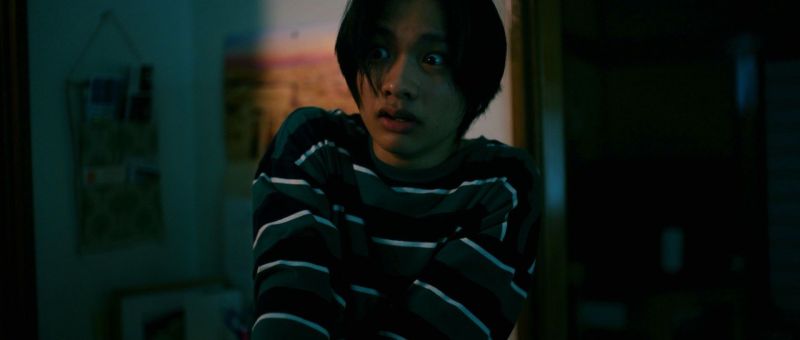
Exhuma (파묘, Jang Jae-hyun, 2024)

The vengeful ghost of Japanese imperialism rises to take its revenge on its forgetful children in Jang Jae-hyun’s eerie supernatural horror, Exhuma (파묘, Pamyo). As in The Wailing, the supernatural threat is in this case not of Korean origin which causes a problem for otherwise powerful shaman Hwa-rim (Kim Go-eun). As a Korean exorcist, she is apparently not best placed to defeat an alien spirit while insisting that Japanese ghosts are more dangerous because they kill indiscriminately and cannot be reasoned with.

This is often true of ghosts in Japanese folklore. Their grudges become all-consuming. Revenge is often taken against society or humanity in general rather than a specific target and can even affect those the ghost once would not have wished to harm. In this case, it appears the supernatural entity in question has retained some of his selfhood while screaming for a hundred years having been sealed away in what one person describes as the worst burial plot in Korea. The ghost’s newborn great grandson won’t stop crying, apparently a family affliction, and so they want to do something about this apparent curse. But that requires digging into the past and unearthing its unpleasantness such as the fact the family’s immense wealth is thanks to the great-grandfather’s questionable politics as a full on militarist committed to the furthering of the Japanese empire. 

Meanwhile, the other ghost that haunts them is that of a giant samurai who was killed at the battle of Sekigahara, which of course means he could also have participated in Hideyoshi’s invasion of Korea only eight years previously. The film hints at backstories, never explaining why it is that Hwa-rim speaks fluent Japanese or what it was that happened in Japan except that she apparently found out that Korean shamanism doesn’t work that well on the average Japanese ghost. It all goes back to some kind of mad monk and fox diviner who did some black magic on the peninsula as a whole though it’s not clear exactly what it’s been doing for the last 70 years or so. 

These different kinds of spiritual practice and folklore beliefs jangle together seemingly without border or conflict. The funeral director (Yoo Hae-jin) who works with Hwa-rim and her geomancer friend (Choi Min-sik) is a Christian but apparently has no objection to witnessing shamanic rights nor disbelief in their power as if his twin belief systems simply sat next to each other. Even so, there does seem to be something entirely distinct about Hwa-rim’s practice that is different from Japanese Shintoism despite it its superficial similarities to the extent that her abilities have no effect on a Japanese spirit. 

Then again, this evil is older and deeper than the original ghost apparently wailing for a hundred years about his imprisonment and keen to take down all his descendants in self-destructive revenge. A grave digger spots what seems to be a snake with the head of a person, while no one seems to take the warnings about opening the coffin seriously. Everyone talks about grave robbers, ironically looking for riches among the dead, though the what the team find themselves doing is unearthing the buried past, trying to free themselves from it and perhaps the oppressive yoke of the colonialist legacy.

Jang heightens the sense of anxiety with faced paced, rhythmic editing coupled with scenes of extreme eeriness. He hints at a world beyond our own filled with vengeful spirits and lurking evil while the threats are largely supernatural rather than human even if the ghosts themselves did originate as ordinary people who were also fairly problematic before they died. In some ways, the film might be saying that it doesn’t do any good to go digging up the past but also that if you don’t you may have to live with a slowly festering evil that will visit itself on your children and your children’s children. Still, like the little boy who secretly kept grandma’s false teeth because he wanted something to remember her by, the past can be a difficult thing to let go of and simply re-burying it in a nicer place may not be enough to free yourself from the long buried generational trauma of an almost forgotten past.


US trailer (English subtitles)