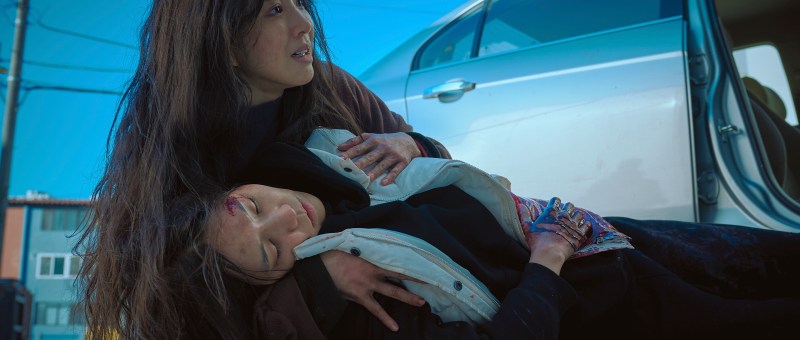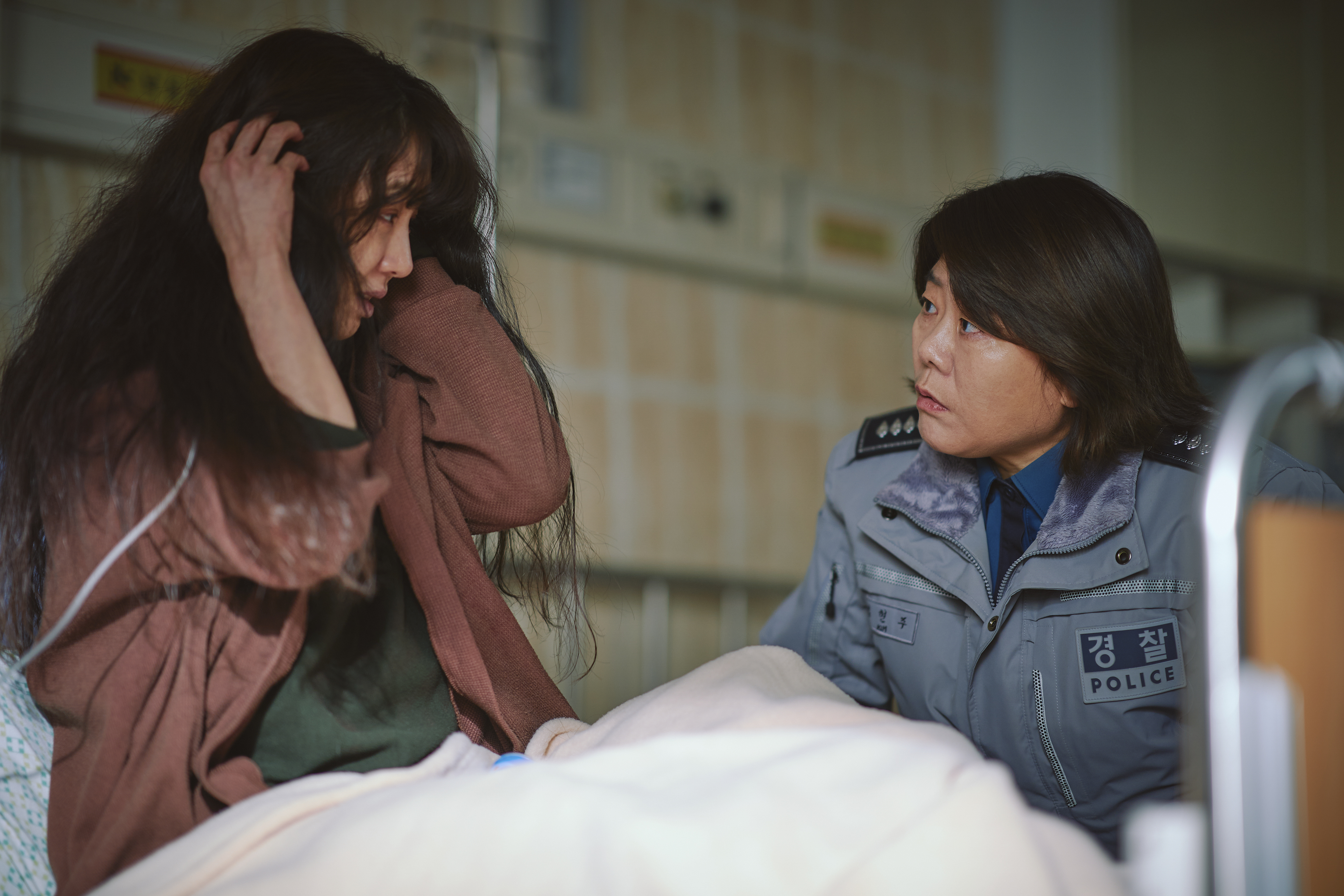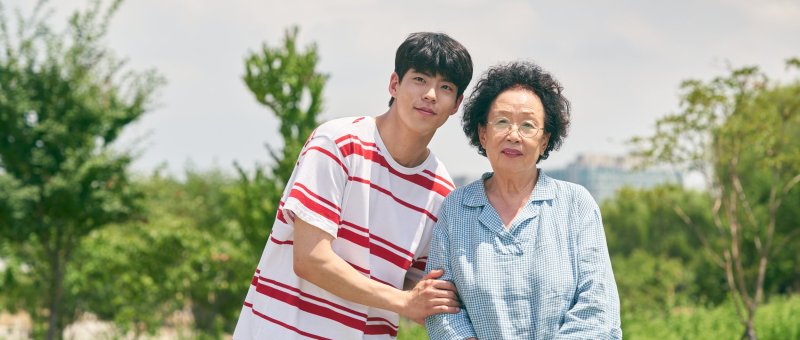
Hansan: Rising Dragon (한산: 용의 출현, Kim Han-min, 2022)

“A battle of the righteous against the unrighteous” is how Admiral Yi (Park Hae-il) frames his resistance against the Japanese invasion, not a war between nations but an attempt to push back against the authoritarian ruthlessness of Toyotomi Hideyoshi’s desire to conquer most of Asia in a bid to cement his historical legacy as his health continued to fail. Hansan: Rising Dragon (한산: 용의 출현, Hansan: Yongui Chulhyeon) is a kind of prequel to 2014’s The Admiral: Roaring Currents set five years earlier during Hideyoshi’s first campaign and pits the the wise and steadfast Admiral Yi against ambitious yet overconfident Japanese general Wakizaka* (Byun Yo-han). 

Wakizaka’s ruthless cruelty is not in dispute even as the film opens with him dispatching a report stating that he intends to destroy the Korean naval detachment harboured on the southern coast which it seems is all that stands between him and conquest of the peninsula in its capacity to disrupt his supply line. When some of his men return in defeat talking about a “Bokkaisen” with a dragon’s head spouting fire, Wakizaka orders them killed to stop them spreading rumours of supernatural threat among the troops. Retrieving what looks to be a dragon’s tooth from the ruined vessel he begins to realise there might be something their story but still doesn’t take the threat of Admiral Yi’s fleet very seriously. 


Admiral Yi meanwhile, who was wounded in the same battle pitching his bow and arrow against a Japanese rifleman, is plagued by dreams and anxiety while trying to sort out a strategy for dealing with the Japanese invasion. Some of his fellow officers think offence is the best defence and they should try to strike before Wakizaka is able to amass his forces, while others think they should play it safe and continue to defend the coast. He and his chief engineer are working on improvements to their turtle boat which had so spooked the Japanese soldiers at the previous battle but at the same time had its limitations. They don’t call it a turtle boat for nothing, on ramming into the Japanese vessel its dragonhead became lodged in the side locking the two boats in a deathly embrace. Yi suggests removing it, but as it turns out the ability to latch on to the enemy like a snapping turtle can also be an advantage if you know how to use it while figuring out how to get the best out of limited resources, along with managing interpersonal relations, turns out to be Wakizaka’s weakness. 

Ever ambitious, Wakizaka is distracted by petty rivalry with his co-general who disagrees with his strategies and eventually betrays him. A Korean-speaking Japanese retainer sent as a spy later decides to defect precisely because of this ruthless disregard for the lives of one’s fellow soldiers, struck by Yi’s personal presence on the battlefield and willingness to put himself in harm’s way to protect his men. Though he is originally viewed with suspicion by some, Junsa (Kim Sung-kyu) is embraced as a fellow soldier after joining the defence forces at an inland fortress and told that all that is necessary is that he have a “shared righteous spirit” fighting together against the “unrighteous” Japanese invasion. 

In any case, neither Wakizaka or the Japanese care very much about Korea all they’re doing is clearing a path to China. Meanwhile, the nervous king continues to travel North leaving his generals fearful he will defect to the Ming and they will end up losing their sovereignty to China if not to Japan. Wakizaka’s strategy is somewhat hubristic, leaving himself vulnerable in the rear as he pushes forward while using land tactics to fight a war at sea and thereby allowing Yi to set a trap for him perfectly tailored to his vain complacency. Wakizaka may have the numbers, but Yi has superior technology and the respect of his men. Quite fittingly the real Wakizaka was marooned on an island after the battle and had to survive on seaweed while waiting for his chance to escape. With plenty of spy action, double crossings and betrayals, Kim Han-min saves the big guns for the final naval battle which begins in ominous fog before exploding in all out war but still makes clear that the battle is on the side of righteousness and that Yi owes his victory to human solidarity and compassion (leaving aside his torture of suspected spies) and Wakizaka his defeat to hubris and cruelty. 


Hansan: Rising Dragon screened as part of this year’s New York Asian Film Festival and is in US cinemas now courtesy of Well Go USA.

*these subtitles use Wakizaka but his name is sometimes also romanised as Wakisaka.

International trailer (English subtitles)

Images: Courtesy of Well Go USA Entertainment

Confession (자백, Yoon Jong-seok, 2022)

An accused man and the woman sent to defend him battle over the elusive nature of objective truth in Yoon Jong-seok’s steely psychological thriller, Confession (자백, Jabaek). A remake of the Spanish film Contratiempo, Confession is nevertheless the latest in a longline of Korean films critical of expanding chaebol culture and the utter entitlement of the elite who assume they have the right to do whatever they want because their money, status, and connections protect them from any potential consequences of their actions. Then again as the lawyer tells her client, salvation is never painless. 

Min-ho (So Ji-sub) had something of a golden life. Married to the daughter of the chairman of a large corporation, he was a rising star of cybersecurity who had even been named IT businessman of the year but was about to throw it all away through a lengthy affair with a woman, Se-hee (Nana), whom he has now been accused of killing. You’d have to admit, he had a motive and the circumstantial evidence against him is convincing yet Min-ho claims that he didn’t do it and there was a third party involved in this otherwise locked room mystery. 

Much of the film takes place in a claustrophobic wooden cabin in the woods all but cut off by heavy snow in which Min-ho has chosen retreat after his chairman father-in-law managed to get his arrest warrant canceled. What emerges is a psychological battle between Ms. Yang (Kim Yunjin), the fancy lawyer hired by the chairman, and Min-ho who have somewhat opposing goals. Min-ho wants her to sign the documents confirming her as his legal counsel and therefore making anything he might have said subject to privilege while she presses him for the location of vital evidence while trying to expose the objective truth behind Min-ho’s selective testimony. 

Neither of them are reliable narrators, Ms. Yang coming up with potential scenarios and at times implying she has evidence that she does not in order to push Min-ho towards revealing the facts of the case. As she says, a lawyer can only help you if you’ve been rigorously honest because she in turn needs to construct a narrative that can undercut the prosecution’s case. The truth might in one sense be irrelevant, as she implies when advising that they frame Se-hee as the villain suggesting that she orchestrated a plot to blackmail Min-ho over their affair in a mix of vengeance and greed when he decided to end their relationship because he could no longer bear the guilt of cheating on his wife. 

Yet there are further transgressions in Min-ho’s past aside from his affair and it’s the attempt to cover them up more than the affair itself which has landed him in so much trouble. As he tells the lawyer, he doesn’t just want to avoid prison but is set on total exoneration unwilling to accept any kind of responsibility for what is currently happening to him. Because of his wealth and status he believes he is not subject to the same laws as everyone else and that even if he had killed Se-hee as his lawyer is beginning to suspect, he would still not be guilty of any crime. “What’s important is to survive” he tells the lawyer revealing his inner ruthlessness along with the complacent reckless streak which might hinder her attempts to defend him. 

There’s no denying that the film’s earliest twists are obvious and heavily foreshadowed but like a seasoned lawyer it is also laying a trap that leaves its final revelations extremely satisfying in implying a kind of justice at least is possible in this inherently corrupt society where dodgy lawyers and elite privilege go hand in hand to destroy the lives of ordinary people. Dark in its implications, the cat and mouse game between lawyer and client who each lie in an attempt to expose the truth hints at the malleability of what is considered to be “true” in the way in which we all construct the narrative of our lives to suit ourselves while denying the realities of others. There may be no such thing as objective truth, but guilt and complacency will still come for you in the end. Visually referencing Alfred Hitchcock’s Psycho, Yoon’s tense psychological drama is in its own way hopeful in its reeling conclusion even if as the lawyer says salvation is never painless. 


Confession screened as part of this year’s New York Asian Film Festival.

International trailer (English subtitles)

Korean Film Nights 2022: Living Memories

Korean Film Nights return on 29th July with Living Memories, a series of five documentary films screening throughout out August at the Korean Cultural Centre, London, and Birkbeck Cinema.

29 July, 6.30pm: Under Construction (2018)

Birkbeck Cinema

Personal documentary from director Jang Yun-mi following her construction worker father and exploring the impact of his 40 years of labour on his body and mind.

4 August, 7.00pm: Halmoni (2017)

Korean Cultural Centre, London

Personal documentary from Daniel Kim who was born to a Korean family of farmers in Argentina exploring his complex cultural identity.

11 August, 7.00pm: Soup & Ideology (2021)

Korean Cultural Centre, London

Documentary from Dear Pyongyang‘s Yang Yonghi focussing on her mother as she begins revealing tragic memories of her flight from South Korea to Japan during the Jeju Incident of 1948.

18 August, 7.00pm: With or Without You (2015)

Korean Cultural Centre, London

Documentary focussing on two elderly women who were once married to the same man at the same time and continue to live together long after his death.

25 August, 6.30pm: Factory Complex (2014)

Birkbeck Cinema

Experimental documentary exploring the lives of workers in the textile industry from the 1960s onwards eventually contrasting their experiences with those of women in contemporary Cambodia..

Living Memories runs at the Korean Cultural Centre, London, and Birkbeck Cinema 29th July to 25th August. Full details and ticketing links for all the films are available via the official website and you can keep up with all the latest screening news by following the London Korean Film Festival on FacebookTwitter, and Instagram.

Space Monster Wangmagwi (우주괴인 왕마귀, Gwon Hyeok-jin, 1967) [Fantasia 2022]

In Japan’s classic kaiju movies, the fault usually lies not with the monster but with humanity. The kaiju itself is neither good nor bad but simply what it is and its rampage is often a response to humanity’s mistreatment of the natural world or irresponsible scientific endeavour. In Korean monster movie Space Monster Wangmagwi (우주괴인 왕마귀, Ujugoein Wangmagwi), however, the threat is more concretely extra-terrestrial though the monster may be equally blameless apparently tortured and manipulated by an evil imperialist power hellbent on the colonisation of the Earth.

Shiny-suited aliens in impractical helmets are already on their way where they plan to disguise their invasion with the help of a passing typhoon. Their grand plan is to drop their space monster, Wangmagwi, onto the planet’s surface and let him run rampage until humanity has been subdued and they can claim the Earth. What they didn’t count on, however, is humanity’s spirited resistance led by brave Korean armed forces members and for some reason a plucky little boy with a pocket knife who manages to climb inside Wangmagwi and weaken him by taking out his vital organs. 

Wangmagwi’s extraterrestrial origins may hint at a fear of invasion most obviously from the North along with Cold War paranoia rather than an attempt to reckon with past transgressions or fear of new technology. The alien invaders are eventually forced to abandon their mission and turn back having experienced unanticipated human resistance vindicating the nation’s ability to defend itself even as the armed forces consider quite radical action such as the possibility of using nuclear weapons which the aliens from the planet Gamma admit would be disadvantageous seeing as they then wouldn’t be able to live on the planet either. 

Even so, the tone of the film is at least close to parody with the local population flailing about in panic trying to figure out what the best course of action might be. There is a particular irony in the captain of the spaceship’s explanation that the invasion has been 10 years in the planning so they can’t let it go wrong, while bride-to-be Ahn Hee feels something similar because she’s been planning her wedding all her life so this whole alien invasion thing is very inconvenient for her. Despite the warnings, Hee and her mother head to the wedding hall anyway with her in her full wedding dress waiting for airman fiancée Oh (Namkoong Won) to arrive though all military personnel have already been ordered back to base. Obviously, having her wedding cancelled at such short notice is distressing, but given there’s a rampaging kaiju on the loose Hee’s hysterics seem both childish and irresponsible though she later pays for them in being kidnapped by Wangmagwi and carried around just like Fay Wray in King Kong.

Meanwhile, the film throws in a lengthy comic relief sequence revolving around two middle-aged men who set up a bet to see who is the most cowardly leveraging their life savings, homes, and even a wife who later throws herself on the other man’s mercy hoping he’ll help her escape the kaiju because her own husband is too useless to be relied upon. Conversely, the military aren’t finding this funny at all instantly springing into action risking their lives to stop Wagmagwi’s rampage through the capital city which after all has only recently been rebuilt. The little boy meanwhile, seemingly an orphaned street kid, complains that grownups are all cowards incapable of facing Wangmagwi and so he’ll have to do it himself. 

The film ends on a note of familial reconciliation in which Hee and Oh pledge to adopt the boy suggesting that the threat has been overcome and normality has now returned while the Gamma simply sacrifice Wangmagwi in deciding to cut their losses and return home. Despite the comic overtones, the praise of the armed forces is sincere leaning into an authoritarian message that the military is necessary for protection of the nation while subtly undercutting it by suggesting that it’s a fearless boy who is responsible for Wangmagwi’s downfall though in reality it’s the Gamma who eventually turn on him, ordering his “termination” through a “self-destruct” mechanism. Featuring some impressive model work, Space Monster Wangmagwi never takes itself too seriously, packing in portentous storm noises alongside its tokusatsu-inspired effects, but does perhaps have something to say about the anxieties of the Korean society in the late 1960s. 


Space Monster Wangmagwi screened as part of this year’s Fantasia International Film Festival.

Chorokbam (초록밤, Yoon Seo-jin, 2021) [Fantasia 2022]

A small family contends with the persistent unfairness of contemporary Korean society in Yoon Seo-jin’s slow burn indie drama, Chorokbam (초록밤). Translated literally, the title means “green night”, the family often bathed in a neon green that seems to reflect their sense of despair and anguish unable to envisage much of a future for themselves in a world ruled by greed and envy which leaves them little option other than to become insensitive to the joy and pain of others. 

As the film opens, the nightwatchman patriarch is busy giving out parking tickets when he suddenly spots a cat hanging from from a children’s climbing frame. Shocked and feeling pity for the small creature, he cuts it down and buries it by the green light of the moon but finds little sympathy when relating his traumatic discovery to his wife. The nightwatchman’s wife is preoccupied with more practical affairs, irritated by her husband’s annoying habits such as leaving the bathroom door open and not washing his hands after finishing his business, while their grown-up son Won-hyung wants to get married but can’t afford a place to live on his salary as a care worker. When it comes to that, they’re soon to be turfed out themselves because their landlord wants to tear the building down. 

Matters come to a head when the grandfather passes away, the nightwatchman’s sisters getting into an actual physical altercation at the wake while loudly complaining about who did or didn’t pay for the funeral. Totting up the condolence money they accuse supposedly cheapskate guests of freeloading, implying they only turned up for a free meal that they have in a sense stolen. Meanwhile, the sisters also want to ensure that their father’s house is sold quickly so they can divvy up the inheritance. What they realise, however, is that there were things about their father’s life they may not have known which raise questions about moral responsibility when it comes to dealing with the affairs of someone who has died. 

The nightwatchman comes to identify with the strangled cat, though the spectre of hanging seems to loom over the rest of the picture with even the nightwatchman’s wife eventually discovering the body of someone whose death she may unwittingly have contributed to. She complains about her husband’s fecklessness, that he, who barely talks at all, makes her deal with anything unpleasant including his hotheaded sisters. She tells him that she regrets marrying into his “horrible” family and is thoroughly sick of dealing with them only to be pursued by a wounded dog with whom she perhaps also identifies. The nightwatchman’s wife is often excluded from the frame, a disembodied voice from behind a wall as she is as she feeds her husband breakfast and again when he asks her to deal with an emotionally difficult situation in a cafe. The nightwatchman simply smokes by a widow as if physically removing himself from the scene. 

Won-hyung meanwhile becomes increasingly resentful with his friends’ wedding coming up, unable to escape the feeling of belittlement in being unable to marry or move forward with his life with little prospect that anything will change. Yoon frames the family’s dilemmas with a deadpan realism, bathing the everyday grimness of their lives in an putrescent green that suggests there may be no escape from this maddening society where all relationships are built on transaction. The family are doing their best but are also estranged from each other, the nightwatchman barely speaking while his wife is left to deal with the uncertainty of their lives alone. She even laments they’ll likely not see the sisters again until the next person dies because their familial connection is essentially hollow and valueless in a society ruled by money. 

The nightwatchman comes to think of himself as a strangled cat, finding himself facing a noose during a poetic dream sequence that encourages him to think of suicide as the only possible escape from his impossible situation. Bleak in the extreme, Kim’s slow burn drama paints an unflattering portrait of the contemporary society as one in which all hope has long been lost leaving only dread and despair in its wake. 


Chorokbam screened as part of this year’s Fantasia International Film Festival.

Original trailer (English subtitles)

A Distant Place (정말 먼 곳, Park Kun-young, 2020)

A gay couple searching for a far off land of love and acceptance find their rural dream crumbling in Park Kun-young’s melancholy autumn drama, A Distant Place (정말 먼 곳, Jeongmal Meon Gos). As it turns out, you can’t outrun yourself nor an internalised sense of shame and if you can’t find a way to root yourself firmly in the ground you risk losing those close to you lashing out in anger towards a needlessly judgemental society. 

Jin-woo (Kang Gil-woo) is indeed a man on the run, chased out of Seoul by his internalised homophobia and seeking a quieter life in a small mountain town with fewer people around to feel rejected by. Having studied fine art, he now works as a hired hand on a sheep farm where he’s bringing up his daughter Seol (Kim Si-ha) while waiting for his partner, Hyun-min (Hong Kyung), a poet, to join him. Once he arrives, everything goes well for them living a discreet life in the mountains where no one it seems has noticed that they are a couple though as we later realise the farmer, Mr Choi (Ki Joo-bong), and his daughter Moon-kyung (Ki Do-young) have figured it out and little care choosing to say nothing. The real drama begins, however, with another arrival in that of Jin-woo’s estranged twin-sister Eun-young (Lee Sang-hee) who as we discover is actually Seol’s birth mother having abandoned her to Jin-woo only to come back to try and reclaim her having married and opened a cafe. 

Jin-woo’s conflict lies partly in wondering if he’s being selfish in his desire not to return Seol to Eun-young while genuinely believing that a life of isolation in the mountains is better for her longterm future. His ideal is undercut when Seol upsets another child at a formal occasion by snatching his toy away from him, hinting at the costs of her lack of socialisation spending almost all of her time on the farm helping with the sheep or talking with Mr. Choi’s elderly mother (Choi Geum-Soon) who is suffering with advanced dementia. In a certain sense, each of them is trapped by their environment, the elderly grandma seeking escape in her small moments of lucidity. Moon-Kyung is beginning to fear her dreams of escaping small-town life will not come to pass while she has perhaps also missed the boat for becoming a wife or a mother snapped at by her grandmother in a moment of frustration. Her realisation that her crush on Jin-woo is misplaced on finding him in bed with Hyun-min is then a double moment of disillusionment leaving her only the vicarious position of becoming a surrogate mother to Seol who continues to refer to Jin-woo as “mama” rather than father. 

This framing in itself foregrounds the primacy of the traditional family in highlighting both the absence of a female caregiver and then by implication a father while simultaneously feminising Jin-woo as a man who is raising a child as we later find out with another man, if secretly. When the pair are accidentally outed, it not only strains the relationship between the two men but implodes Jin-woo’s dream of discreet country living. Though the townspeople had previously been friendly towards them, they find themselves shunned in town, figures of gossip and ridicule. Having been essentially run out of Seoul by his internalised homophobia, Jin-woo begins to fear he has nowhere left to run. Hyun-min tries to convince him that he’s asking for too much, that they should live quietly and keep the peace, but his shame gets the better of him lashing out that he’s never felt comfortable with Hyun-min around always self-conscious and paranoid about what others may be thinking of him. 

As Hyun-min puts it in a poem, only the hope of a “distant place” keeps them going even as the road ahead crumbles at a rapid pace with the abyss creeping ever closer. While there are small rays of hope in the quiet acceptance of Mr Choi who has come to think of Seol as his own granddaughter, Jin-woo begins to fear that his distant place is beyond his reach and that no matter how far he runs he will never reach a point of comfort or happiness where he can live openly with the man he loves and the little girl he has raised since birth as his daughter. Figures of loneliness and disappointment haunt the otherwise idyllic landscape shattering the nurturing image of a simple life in the country but even as the film opened with an ominous death it ends in new life promising perhaps a new if uncertain dawn. 


A Distant Place screens at Genesis Cinema on 26th May as part of this year’s Queer East.

International trailer (English subtitles)

Take Me Home (담쟁이, Han Jay, 2020)

A schoolteacher is confronted with the multilevel prejudices of her society in Han Jay’s pointed social drama Take Me Home (담쟁이, Damjaengi). Examining the changing concept of family in contemporary Korea, the film not only addresses deep seated prejudices towards both the LGBTQ+ community and those with disabilities but also an exploitative and unfeeling working environment in which employers adopt the language of family while continually undermining their employees’ interpersonal relationships and always ready to casually discard them should their circumstances change. 

Middle-aged high school teacher Eunsu (Woo Mi-hwa) is in a happy relationship with a much younger woman, Yewon (Lee Yeon), who uncomfortably enough was once one of her students. Though the pair live together, they are not completely out keeping their relationship vague with coworkers and family members Yewon explaining to her colleague that Eunsu is her cousin while Eunsu describes Yewon as a roommate to the sister she barely sees on returning home for her mother’s annual memorial service. Yewon it seems is less cautious, but Eunsu quickly bats away her hand as they walk home together from the local baths worried that someone might see even as they poignantly walk past an elderly couple with no such fear sitting quietly on a park bench. 

Yewon views their relationship as familial despite Eunsu’s occasional anxiety, yet when Eunsu is involved in a car crash which claims her sister’s life Yewon is reminded that she is not “family” and cannot act as Eunsu’s caregiver at the hospital. Even so she becomes temporarily responsible for Eunsu’s now orphaned niece Sumin (Kim Bo-min), her teacher apparently abandoning her with this woman she knows nothing about other than she is in someway connected to Eunsu. When Eunsu comes round and discovers that she has lost the use of her legs and may need to use a wheelchair for at least the next couple of years, it further destabilises her relationships firstly feeling as if she’d be overburdening Yewon and secondly uncertain that she is able to take care of her niece while simultaneously withdrawing into herself wary of her emotional bonds with others. 

Yewon tries to point out that they are family and family knows no burden, compassionately caring both for Eunsu and Sumin as they each try to adjust to their change in circumstances though she too suffers at work unable to explain to her boss that she needed to take time out because her partner had been involved in an accident even as he coldly tells her that time off is only given for a “family matter” while cancelling an opportunity for promotion he’d recently presented to her. Eunsu meanwhile encounters something similar, returning to the school where she works only for her boss to tell her he’ll be letting her go, the implication being that parents will object to a teacher using a wheelchair. He suggests another job in a much more rural location in a school with fewer than 10 children as if hiding her away or suggesting that her disability makes her ineligible for all but the least desirable of positions. Further fuelling her sense of resentment, she’s also subject to a series of sexist remarks to the effect that it’s a shame such a pretty woman met with an accident, as if on the one hand she is no longer desirable and on the other that she’s somehow lost more than someone considered unattractive while continuing to struggle with a unaccommodating society. 

Having begun to accept her new circumstances, Eunsu begins to warm to the idea of herself, Sumin, and Yewon as a family but her hopes for the future are crushed when her attempt to file formal adoption documentation is blocked. On consulting a series of lawyers, she is given the irrational advice that she might be able to win custody but only if she eliminates one of the two bars against her those being a same-sex relationship and her disability. Adoptions she is told are generally only approved for married couples, same-sex marriages currently not recognised under Korean law which also lacks anti-discrimination legislation on the grounds of sexuality, though the lawyer seems to think that the court could be convinced to allow a lesbian or a disabled woman to adopt but apparently not a disabled lesbian which obviously makes no sense at all. The sinister social worker who approaches Sumin alone in a park and asks her inappropriate questions about the nature of the relationship between her aunt and Yewon, which Sumin sees as nothing other than warm and loving like any other couple gay or straight, claims to have her well-being in mind but later snatches her from the back of a taxi depriving her of the loving family home she continues to yearn for while asking Eunsu to make a series of choices and compromises that leave no one happy. 

The villain is clearly the unsympathetic state which places its own idealogical concerns above a child’s happiness though the film’s conclusion cannot help but seem manipulative while leaving aside the more generalised examination of what the word family means in contemporary Korea, the persistent discrimination levelled at the LGBTQ+ community, and the barriers placed in front of those living with disability who find themselves infantilised by a society all too often refusing to accommodate their needs. In any case, the film argues for a world in which no one would have to choose between love and family because they truly would be one and the same. 


Take Me Home screens at Catford Mews on 21st May as part of this year’s Queer East.

Original trailer (English subtitles)

Boundary: Flaming Feminist Action (바운더리, Yun Ga-hyun, 2021)

Over the last few years it had seemed that feminism was beginning to take root in Korea with mass protests against the use of spy cams leading to a broader discussion of women’s rights in the still patriarchal nation with further social movements such as Escape the Corset highlighting persistent societal misogyny. Yet with the recent election of conservative president Yoon Suk-yeol who had run on an explicitly anti-feminist ticket hopes for real progress have been dashed. In her documentary filmed before Yoon’s victory, Boundary: Flaming Feminist Action (바운더리, Boundary), director Yun Ga-hyun looks back at the last four years as she and her friends reflect on the nature of their activism, what they’ve achieved and what they hope to in the future. 

As Yun and her fellow activists relate, Flaming Feminist Action came together as an extension of the labour movement formed the wake of the 2016 Gangnam Station Toilet Murder Case in which a woman was killed by a male stranger who claimed he did it because women had rejected him. Female solidarity is indeed central to the movement, the first Reclaim the Night-style protest which we witness insistent that a safe space for women is a safe space for everyone while reminding each other that they are not alone but stand together in pursuit of change. 

The group also takes part in symposia in which they attempt to educate each other offering the kind of sex education not found in schools in order to give women back the agency over their own bodies in the knowledge that to exercise it can in itself become a political act. As such, we also see the group challenging traditional gender norms by symbolically shaving their heads and holding a body hair competition in challenging traditional beauty standards. One of the women reveals that her brother was so scandalised by her decision to cut her hair that he refused, perhaps jokingly, to let her back into the house. Meanwhile they also take aim at more widely held traditional values such as in their “Free the Nipple” event in which they went bare chested protesting the restrictive and discriminatory policies of social media platforms such as Facebook which routinely block imagery featuring female nudity tagging it as pornography. Similarly the women’s public protest is frustrated by the police force who immediately move in with blankets when they remove their shirts citing public obscenity laws while the women argue that the law is absurd while men aren’t challenged for walking around shirtless. 

As Yun herself reveals in her own to camera interview, some members of the group have been arrested several times while she has also been threatened with violence and one commentator on the Blue House website petitioned to have them all rounded up and executed. At the street safety protest, she also revealed that she’d received violent and misogynistic messages online and had reported them to police but they refused to do anything because the messenger had then blocked her meaning she could not ascertain his identity while he went on to troll other other feminist activists in the same way. Then again, there is also division within the movement, Yun explaining that she’d also been criticised for giving an individual interview at a protest which was against the movement’s policy while her support for gender fluid and non-binary people as well as trans women and other members of the LGBTQ+ community joining the protests was also a source of conflict.  

Nevertheless, the women also draw strength for all that they’ve achieved even if acknowledging there is a long way to go. Yun herself attempts to run for political office working with a new party dedicated to the advancement of women’s rights having given up on the idea of influencing mainstream parties from the inside. Others come to the conclusion that the clearest path to societal change lies in education while generating a sense of female solidarity that offers support to women facing deeper social issues such as domestic and/or sexualised violence along with workplace harassment and discrimination. “The way to win is just to endure” one of the women reflects while Yun too echoes that at the very least she never gave up even in the most difficult of moments as she prepares to move into a new stage of her life in activism. 


Boundary: Flaming Feminist Action screened as part of Osaka Asian Film Festival 2022

Original trailer (no subtitles)

Special Delivery (특송, Park Dae-min, 2022)

“Why is it so hard to live?” a little boy asks after finding himself on the run with a strange woman who seems to be the only person interested in helping him. Situating itself in an upside-down world of backstreet crime, Park Dae-min’s high octane thriller Special Delivery (특송, Teuksong) is in part about how hard it is to live amid constant moral compromise as the heroine finds herself torn between her better judgement and human feelings in trying to rescue her human cargo not only from the bad guys chasing him but from a duplicitous society. 

Technically speaking, Eun-ha (Park So-dam) is a delivery driver yet the services her firm provides are highly specialised promising to deliver anything anywhere by whatever means possible. In practice this often seems to mean transporting gangsters on the run from their hideouts to the nearest port before rival gangs can catch up with them as we see Eun-ha do with spectacular skill in the opening sequence. Other than the practice of frequently switching out license plates, what she’s doing in itself isn’t really illegal but is definitely crime adjacent and potentially dangerous. She is however well paid, arguing with her boss/mentor/father figure for a pay rate increase to an unprecedented 50/50 split in proceeds, though she lives a fairly modest life in a cosy apartment with her beloved cat Chubby whom she watches via security cam while waiting around for a fare. When her boss agrees to do a rush job for a Chinese gangster she tells him it’s a bad idea but ends up going along with it only to get drawn into the big news story of the day when a former pro-baseball player turned match fixing underworld figure blows the whistle and runs off with all the gang’s money. Eun-ha was supposed to drive him and his son Seo-won (Jung Hyeon-jun) to a port to leave the country but the bad guys who turn out to be corrupt police officers get there first and Eun-ha ends up with the kid and a bag full of money but no plan B. 

Drawing inspiration from John Cassavetes’ Gloria, the film develops into something of a buddy comedy as Eun-ha finds herself on the run with Seo-won having gone back for him after her boss suggested handing him off to an associate “who deals with children”. As we discover the child reminds her of her younger self being all alone with no other relatives or friends who could take care of him. Even when he reveals he might have a mother after all, it turns out to be a dead end because no one wants to get involved in this dangerously escalating underworld crisis. Yet the found family of the marginalised at the Busan junkyard where Eun-ha is based have more moral integrity than the world around them even if her boss’ solution for what to do about Seo-won isn’t ideal either. “Life is going alone” the corrupt police officer later sneers having repeatedly stated the necessity of staking one’s life to win such a big payout, but what Eun-ha is discovering is that it’s about going together trying to save the boy not only from the dangerously out of control corrupt police officers but from the moral bankruptcy of the contemporary society in which money is the only thing that matters. 

Overcoming both persistent sexism and societal discrimination Eun-ha proves herself a top operator in her field, Park choreographing a series of genuinely impressive car chases and visceral fight scenes as Eun-ha has to think her way through to take out the tougher, stronger bad guys while trying to protect Seo-won from danger on all sides. Her crime-adjacent existence tells her he’s not her responsibility but still she wants to complete her mission and deliver him somewhere safe much as she was rescued as a child by someone who might have felt much the same but chose to take her in anyway. With its neon lighting and retro score, Special Delivery harks back to an age of classic car chase thrillers with a stand-out performance from Parasite’s Park So-dam as a tough as nails getaway driver with nerves of steel fighting for humanity in an increasingly inhumane world. 


Special Delivery screened as part of this year’s Udine Far East Film Festival.

International trailer (English subtitles)

Perhaps Love (장르만 로맨스, Cho Eun-ji, 2021)

A blocked writer finds himself growing as a person after mentoring a young protégé but is also forced to meditate on his own romantic cowardice and tendency to treat others badly because of his inner insecurity in the directorial debut from actress Cho Eun-ji, Perhaps Love (장르만 로맨스, Jangleuman Lomaenseu). Caught in a complicated web of romantic intrigue between himself, his ex-wife, current wife, publisher, son, the woman across the road, and the young protégé, the writer is forced to reflect on the varying natures of love which may sometimes be misdirected or unreciprocated but no less real or important. 

Hyun’s (Ryu Seung-ryong) problem is that he had a big hit and became a literary phenomenon while relatively young but hasn’t written anything of note in the last seven years and is currently supporting himself as a professor of creative writing. His old university friend and publisher Soon-mo (Kim Hee-won) is becoming thoroughly fed up with increasing pressure from above to deliver the manuscript knowing that if he really can’t turn anything in Hyun risks being plunged into inescapable debt in having to repay his generous advance. After being pranked by a friend who invited him to his old teacher’s “funeral” which turned out to be a birthday party, Hyun goes to visit another old friend, Nam-jin (Oh Jeong-se), with whom as it transpires he had fallen out. Possibly out of jealously, Hyun had not only panned Nam-jin’s book in a review but thoughtlessly outed him by complaining that his writing was full of “cheap gay sentiment”, a comment which Nam-jin took to be essentially homophobic and on a personal level unnecessarily cruel. Hyun of course disputes this and doesn’t quite see why Nam-jin is so upset. 

Nam-jin’s short-term boyfriend Yu Jin (Mu Jin-sung) has point when he tells Hyun that the reason he can’t write is because he’s too afraid of losing what he has, unprepared to risk vulnerability in the service of his art. Then again, all Hyun really has is the faded glory of his former success, his present life is a mess. His second wife (Ryu Hyun-kyung) has been living in Canada with their daughter, while he ends up ruining his relationship with his angst-ridden teenage son Sung-kyung (Sung Yoo-bin) when he’s caught in the middle of a drunken fumble with feisty ex-wife Mi-ae (Oh Na-ra) who has secretly been dating Soon-mo. Sung-kyung meanwhile is in the middle of his first breakup after being dumped by his high school girlfriend who is carrying someone else’s child. Disillusioned by his adulterous parents he develops a not entirely appropriate relationship with an eccentric actress (Lee Yoo-young) who lives across the road. Meanwhile, Yu Jin suddenly reappears in Hyun’s life and reveals he’s been in love with him for years. 

All of these loves are in someway incomplete, hesitant or uncertain each of the lovers lacking the confidence to claim the word. A terrible holiday forces Mi-ae and Soon-mo to realise that they’ve been keeping their romance secret less because of the potential awkwardness in their shared history with Hyun than because they themselves are romantically insecure. Sung-kyung thinks he’s in love with the older lady from across the road and completely misses all of her attempts to avoid his romantic overtures, while she is perhaps just lonely and unfulfilled in both her marriage and her career. Hyun meanwhile is confronted with his own romantic cowardice in cheating on both of his wives, continually self-sabotaging in his insecure inability to commit. Having ruined his friendship with Nam-jin he threatens to do the same to a younger female writer joining the university who has eclipsed him in literary success in having been shortlisted for the Booker Prize. 

It’s the arrival Yu Jin that shakes him up, seeing something in the young writer that reawakens his creative spirit as he offers to become a mentor co-authoring a novel with him, but it also disturbs Hyun in confronting him with his latent homophobia and later his complicated feelings for the young man which might extend to a kind of love he cannot quite put a name to. Where Hyun is too afraid to risk losing the comfortable life he currently has, Yu Jin has no such worries because as he later says he’s used to getting hurt and having to get over it. As gay man in a conservative society he’s familiar with a constant sense of casual rejection, a fellow student in Hyun’s writing class shouting out “the gay guy” in mocking tones when Hyun asks who’s missing during roll call while the pair are later the subject of a media frenzy when Nam-jin goes to the press accusing them of being lovers. Yet Yu Jin is willing to state his feelings plainly with no expectation that they will be reciprocated leaving Hyun floundering as to the proper way to react.

While there may be some latent conflict in Hyun, what he comes to realise is that love is more complicated than he thought and what he feels for Yu Jin may be a kind of it comprising the paternal, fraternal, that of a mentor for a pupil, and that simply for another human being. In an interview promoting the book they’ve written together, Hyun explains that he wanted to explore how people can change and grow with relationships having overcome his latent homophobia in advancing that no one should be judged for who they love while otherwise able to appreciate Yu Jin’s talent without jealousy or resentment having regained his own desire to write. Through their various experiences each of the lovers is confronted with a romantic reality accepting who it is they love or don’t while teenager Seung-kyung experiences his first real heartbreak in realising the extent to which he’d misinterpreted his relationship with the quirky neighbour. Always forgiving of its feckless hero’s flaws, Cho’s warm and empathetic dramedy is indeed about how people can grow and change through their interactions with others finding new equilibrium with themselves if not, perhaps, love. 


Perhaps Love screened as part of this year’s Udine Far East Film Festival.

International trailer (English sutbtitles)