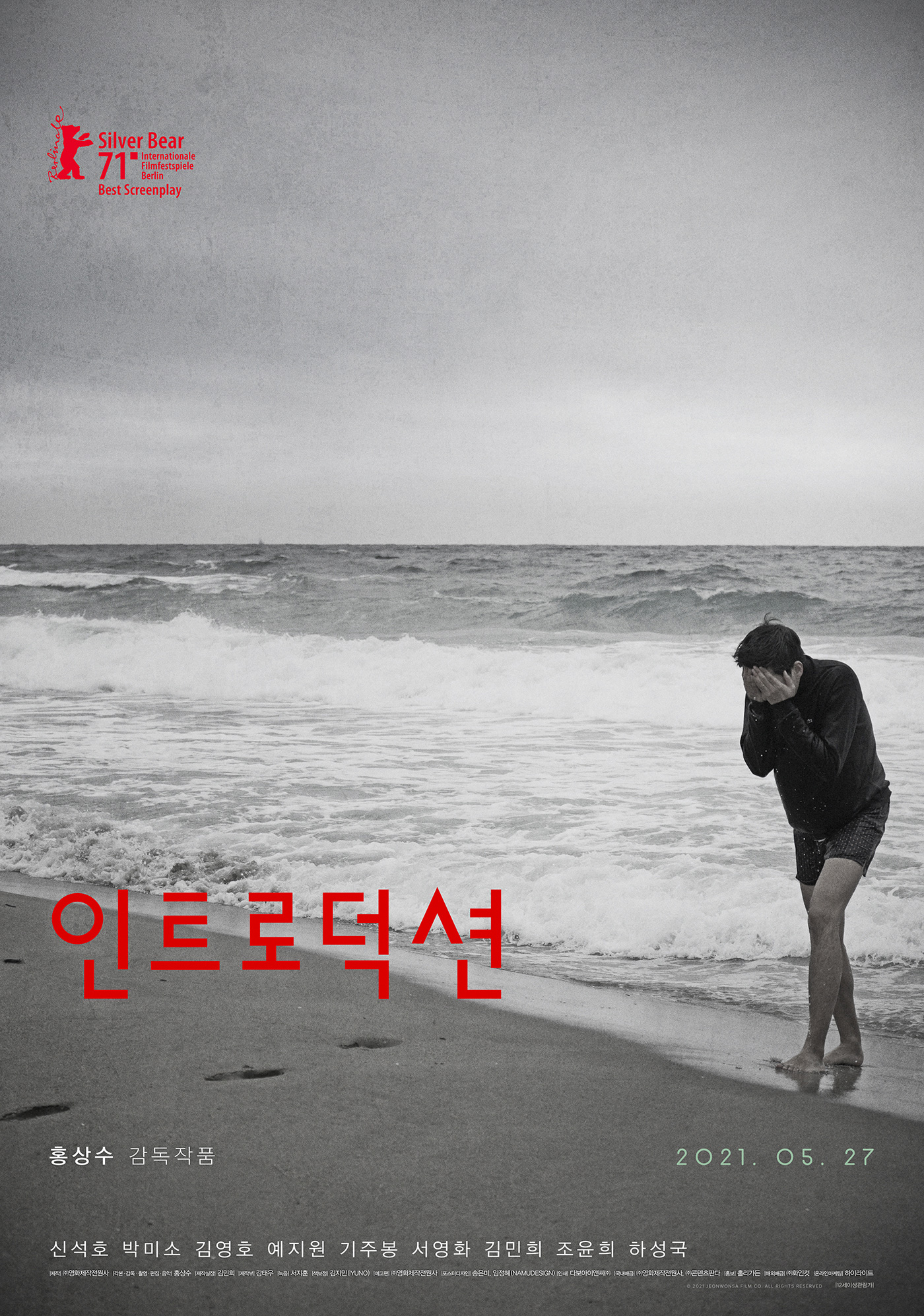
In Front of Your Face (당신얼굴 앞에서, Hong Sang-soo, 2021)

“There’s so much we don’t know about each other” a sister exclaims as if only just realising precisely how estranged they may have become this current visit home itself overshadowed by a kind of awkwardness that she doesn’t yet quite understand. Sangok (Lee Hye-young), the heroine of Hong Sang-soo’s latest meditation on existential dread In Front of Your Face (당신얼굴 앞에서, Dangsineolgul apeseo), is determined to live defiantly in the moment, shedding both past and future for the intensity of the now while learning to rejoice in the beauty of life if perhaps also burdened by ancient regrets, broken connections, and the ironic promise of an unobtainable future. 

After many years living alone in the US, former actress Sangok has returned to stay with her sister Jeongok (Jo Yoon-hee) and meet with a director who is interested in casting her in his latest film. According to her sister, Sangok ran off with a man she barely knew and followed him to America where she worked as a travel agent though more lately it seems barely getting by with a job in a liquor store. Jeongok waxes on about a swanky new apartment complex in a tranquil area of natural beauty, suggesting her sister move back to Korea but surprised and alarmed when she confesses she has no savings or property. “That’s how everyone lives there” she explains, “but it seems a lot of people here have money” noticing perhaps how much the city has changed since she’s been away while hinting that her life in America may have been in its own way disappointing. 

Sangok seems lonely, tired, a little distracted and perhaps anxious in the way she ties and reties the belt on her mac often placing a hand on her stomach for comfort. The sisters teeter on the brink of an argument about distance, unreturned letters, and whose fault it is they aren’t as close as they might have been but pull back from it wisely avoiding unnecessary confrontation in favour of maintaining the pleasant atmosphere. Yet there are also parts of Sangok’s story that don’t quite add up. A pair of women (Seo Young-hwa & Lee Eun-mi), appearing eerily like the cottage core cat-lovers from The Woman Who Ran, stop the sisters in a park recognising Sangok from her previous life as an actress decades ago. Jeongok is puzzled, sure that Sangok only appeared on TV once though the director, Song Jaewon (Kwon Hae-hyo), later descends into a reverie recalling the effect her early performances had on him as a young student in the early ‘90s. 

Hong pulls one of his usual tricks on us, repeating his opening scene with Sangok dressed in an identical outfit on her sister’s sofa if this time covered with a blanket leading us to wonder if everything we’ve just seen is only a dream. As it happens she soon gets a phone call to let us know it’s not, one which elicits from her an ironic laugh as the new hope she might have been given is suddenly crushed by another Hongian unreliable man talking too big a game even if this time the culprit is baiju rather than the familiar little green bottles of despair. Taking advantage of his selfishly postponing their lunch date, Sangok pays a visit back to her childhood home which has since become a boutique only the garden remaining the same if now dwarfed by the surrounding buildings of an ever developing city. “The memories in my heart are so heavy” she sighs, “I don’t know why I came here”, later embracing a little girl who may or may not live there now as if embracing the ghost of her childhood self. 

The meeting with the director turns out to be depressingly predictable, he having “borrowed” a cafe named “novel” from female “friend” while sending his assistant away periodically Sangok assumes because he wants to get her alone. Ironically enough she describes his films as like short stories, bemused as to why he’s so keen to hire a middle-aged former actress but finally bares her soul explaining what it is that she carries around with her on this rare trip to Seoul. Reciting small mantras to herself in the form of tiny prayers she tries to stay in the moment, reminded that every day is “grace” and that life itself is beautiful, claiming that as long as she can see whatever’s in front of her face then she’s not scared of anything. Reminders of the pandemic hover in the background with vague references to the way things are “especially now”, the atmosphere of dread and anxiety throwing Sangok’s philosophy into stark relief as she vows to live defiantly in the moment, rejoicing in life’s absurdities but also in its small comforts as she wonders what her sleeping sister dreams, shaking off her her existential vertigo to gaze out of a high-rise window.  


In Front of Your Face screens in San Diego on Oct. 30 & Nov. 1 as part of this year’s San Diego Asian Film Festival. Readers in London will also have the opportunity to see the film as part of this year’s London Korean Film Festival at Picturehouse Central on 13th November.

Original trailer (English subtitles)

Not Out (낫아웃, Lee Jung-gon, 2021)

“I just wanted to keep playing baseball” the hero of Lee Jung-gon’s Not Out (낫아웃) eventually wails on finally being confronted with the consequences of his actions. Not so much a baseball movie as a gentle character study Lee’s unexpectedly dark drama sees its singleminded hero descending to depths of sociopathic manipulation in his determination to make his sporting dreams come true but less perhaps out of pure hearted yearning than a sense of embarrassment and fragile masculinity. 

“You won, then it’s over isn’t it?” someone asks Shin Gwang-ho (Jeong Jae-Kwang), the hero of his high school baseball team having just carried them to a miraculous victory. No, he corrects them, it’s only just beginning. Approaching graduation, all Gwang-ho’s ever wanted to do is play baseball, and everyone’s always telling him how good he is at it so much so that he’s internalised a puffed-up sense of himself as a sporting prodigy. That’s one reason why when his coach (Kim Hee-chang) tells him he’s been offered a trainee position with a professional team he arrogantly turns it down, sure that he’s going to be drafted. But his decision backfires, he’s not picked while another boy is leaving him confused, somewhat humiliated, and completely lost as to what to do now. Regretting having thrown away the trainee opportunity he makes the knee-jerk decision to apply to colleges to play in the uni leagues and get another shot at being drafted by the pros, but his decision negatively impacts the life plan of another player whose request not to apply to the same uni falls on deaf ears. Gwang-ho doesn’t really get why it’s a big deal, surely he has the right to try out and let the best player win but his friend, knowing he isn’t talented as Gwang-ho, doesn’t see it that way and intensely resents his insensitivity. 

There is a peculiarly childish component to Gwang-ho’s unthinking determination as he makes a series of increasingly bad decisions in order to pursue his goal little caring who might get hurt in the process. His problem is compounded by the fact that his family is poor, resenting his friend for being wealthy enough to make uni his main plan as if he thinks he can simply do without baseball while to Gwang-ho it’s the only thing that matters. “You think you can play baseball all on your own?” his exasperated coach asks him, fed up with his tendency to alienate his teammates but himself exploiting him in asking for money from his father to improve his chances of being able to continue playing. Gwang-ho, meanwhile, also resents his dad, going so far as to try to guilt him into selling his restaurant to get him the money to go to college.

Gwang-ho continues to do whatever he wants without really thinking about the consequences which is how he ends up trading stolen/illegal homemade petrol with old middle school friend Min-chul (Lee Kyu-Sung). Min-chul and the teenage girl working with him So-hyun (Song Yi-jae) seem to be more aware of the implications of their life of crime while Gwang-ho resolutely refuses to realise that this all very likely to blow up in his face, which it eventually does and quite literally. Pushed to breaking point he hatches a plan to rob the old man running the petrol racket even though despite his obvious criminality he’s actually been quite good to this gang of troubled teens. Min-chul used to play baseball himself but gave up because of an injury, telling Gwang-ho that he thought it would hurt more than it did finally realising “you can just give up if it’s shitty” but Gwang-ho can’t let go of his baseball dreams and is prepared to do pretty much anything to prove he’s “not out” of the game. 

Earlier, the other players had lamented that for them there are no second chances. They’ve invested all their hopes in baseball without studying for the college entrance exams, if they fail to get drafted there’s no obvious way forward. For Gwang-ho who cannot rely on family money, has no connections, other skills or talents, baseball really is all he has which might be why he can’t admit the thought that it’s just not meant to be while his initial failure proves such a huge humiliation that it shatters his sense of self. Only through finally accepting responsibility for his actions, realising the way he’s treated those around him, does he begin move forward apparently getting another shot, still in the game, but perhaps humbled. 


Not Out screened as part of this year’s London East Asia Film Festival.

International trailer (English subtitles)

The Prayer (간호중, Min Kyu-dong, 2020)

“I’m just wondering if they all live with nothing to live for and whether it has any meaning to live like that. And if I am no different.” a beleaguered daughter muses contemplating her own future while caring for her mother (Moon Sook) who has been bedridden in a coma for the last decade. A perhaps controversial advocation for euthanasia, Min Kyu-dong’s expansion of his entry into the SF8 series The Prayer (간호중, Ganhojung) offers a timely exploration of the nature of empathy, the limits of AI technology, the ageing society, and the destructive effects of inequality as mankind’s children find themselves wracked by the existential pain of human suffering. 

Set in the near future in which high schools are bulldozed to build additional care centres, The Prayer revolves around the relationship between the melancholy Jung-in (Lee Yoo-young) worrying if prolonging her mother’s life in this way is really what she’d want, and the robotic care nurse she’s hired to look after her, Ho-joong (also Lee Yoo-young). As we discover, Jung-in has taken advantage of the offer to have herself listed alongside her mother as a target for care leaving Ho-joong with an ironic conflict torn between her duty to look after Jung-in’s mother and witnessing the toll caring for her is taking on Jung-in who frequently expresses depressive thoughts and potentially suicidal ideations. 

In order to provide comfort to patients, the androids are designed with the same face as the primary guardian, meaning Jung-in is in someways in dialogue with herself while Ho-joong becomes increasingly confused in her imperfect, in some ways childish, application of human empathy. Fixated on Jung-in with a devotion which turns towards the romantic, she comes to the logical conclusion that in order to save her secondary patient the obvious choice is to sacrifice the first but has seemingly no understanding of the effect that may have on Jung-in who may be worn out and emotionally drained but would obviously feel responsible should anything happen to her mother at the hands of the robot nurse she hired because she has developed unintended feelings towards her. 

The extent of Ho-joong’s “feelings” are indeed at the heart of the matter as evidenced by her strange conversations with a well-meaning nun, Sister Sabina (Ye Soo-Jung), who is originally dismissive unwilling to recognise that a manmade creation may also desire access to God. As incongruous as it sounds, Ho-joong’s awakening spirituality positions her as uniquely human and as trapped as one of her patients, tormented by the pain of being alive and finally confined to table on which she claims to be experiencing near torture at the hands of those seeking to understand her “malfunction”. Her German manufacturers locate the fault in her advanced language processing unit, as if the problem were that she understands too well when perhaps it’s more that her empathy is based in a different metric and prone to misunderstand the irrationality of human impulses towards guilt and love. 

That’s also the problem with the unit next door owned by Mrs. Choi (Yum Hye-ran) whose husband (Yoon Kyung-ho) seems to be suffering from advanced dementia which often causes him to become violent or unpredictable. Unlike Jung-in, however, Mrs. Choi could only afford a basic model which offers little in the way of empathy nor will it care for her. Consequently, she appears to be overburdened with her husband’s care, doing laundry and tidying up after his frustrations cause him to trash his hospital room. The machine offers her only censure while the duty of care ironically prevents her from attending to her own health. Seeking help she turns to the manufacturer who bluntly tells her she doesn’t understand how to operate the machine and advises she ask her kids to teach her, only it appears that Mrs. Choi may have had a child in the past from whom she has become estranged and is otherwise all alone. Older than Jung-in, she despairs for the quality of her life and has no one to protect or care for her, pushing her towards a dark decision. 

Both women wonder if life is worth living if it means living like this, but have very different options open to them given their economic disparity. Having learned to feel pain, Ho-joong begs to be freed of it, positions now reversed as Sister Sabina becomes her caregiver. She accuses the nun of hypocrisy, that she allows her suffer by refusing to end her pain in order to preserve her own conscience in insisting to do so would be a “sin”. “What do I go through this pain for!” Ho-joong cries as if throwing herself into a fiery pit of existential torment while a cold authority insists she must continue to suffer. Min makes a powerful if perhaps controversial argument for the right to end one’s own suffering at a time of one’s own choosing if also leaning uncomfortably into the burdens of care as Mrs Choi and Jung-in too struggle with themselves while trying to do what’s best for those they love, but ultimately discovers a kind of serenity as his robot nurse encounters the spiritual and with it a release form the pain of living. 


The Prayer streamed as part of this year’s New York Asian Film Festival. It will also screen in London on 22nd October as part of this year’s London East Asia Film Festival.

London Korean Film Festival Announces Full Programme for 2021

Following last year’s hybrid edition, the London Korean Film Festival returns entirely in cinemas taking place at venues across the city from 4th to 19th November. This year’s edition features a special focus on actress Youn Yuh-jung in particular showcasing her work with director Im Sang-soo.

Opening: Escape from Mogadishu

North & South Korean diplomats are forced to set ideology aside to escape the increasing violence of the Somali Civil War in the latest action drama from Ryoo Seung-wan (Die Bad, Battleship Island). Review.

Closing: Heaven: To the Land of Happiness

The latest film from Im Sang-soo whose The Housemaid and A Good Lawyer’s Wife are also screening as part of the Youn Yuh-Jung Focus. Youn again stars alongside Choi Min-sik and Park Hae-il as a man with an incurable illness (Park) who cannot afford his treatment goes on the run with a white collar criminal (Choi) who has less than two weeks to live.

Special Focus: Youn Yuh-Jung

  • Woman of Fire – Kim Ki-young’s second take on The Housemaid stars Youn Yuh-jung as the arrival of a young woman causes disarray for a composer and his wife living on a chicken farm.
  • The Housemaid (2010) – Im Sang-soo’s contemporary update of Kim Ki-young’s original starring Youn Yuh-jung as an ageing housekeeper to a wealthy family who hires a new au pair (Jeon Do-youn) only for her to be seduced by her employer (Lee Jung-jae)
  • A Good Lawyer’s Wife – Youn stars an older woman having an affair with an old friend while her son (Hwang Jung-min) is also cheating on his wife (Moon So-ri) with whom he is sexually incompatible in another steamy drama from Im Sang-soo.
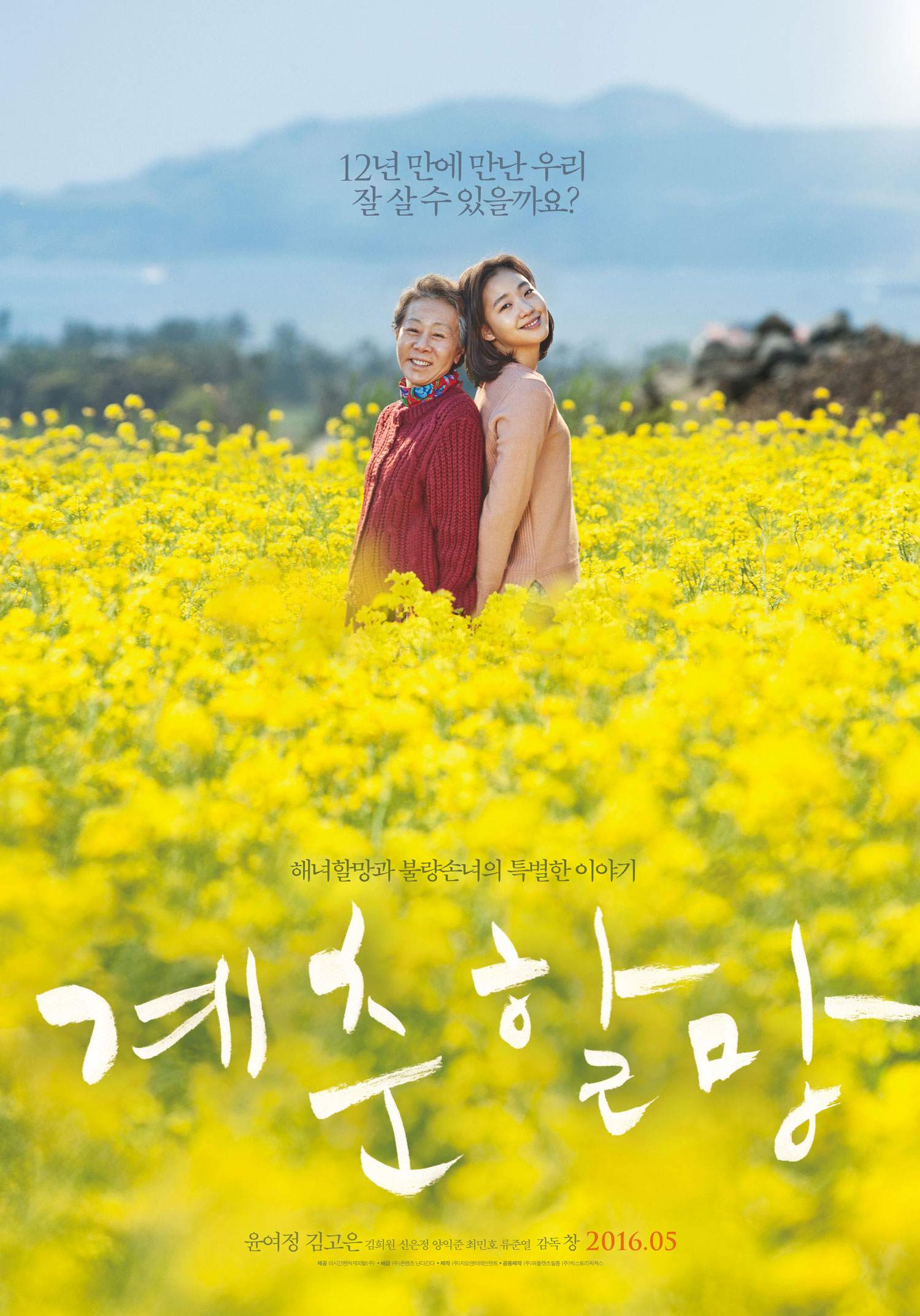
  • Canola – Youn stars as a cheerful Jeju island grandma who was raising her granddaughter until she suddenly disappeared one day without trace only for a young woman to return some years claiming to be the missing girl.
  • The Bacchus Lady – Youn stars as an ageing sex worker who agrees to help a regular client end his life. Review.
  • Documentary Youn Yuh-Jung – documentary focussing on the career of the legendary actress.

Cinema Now

  • In Front of Your Face – drama from Hong Sang-soo in which an actress trying to restart her career after spending time abroad meets a director looking to cast his latest film.
  • Aloners – an isolated young woman begins to re-evaluate her living circumstances when a neighbour dies a lonely death.
  • The Book of Fish – An “evil learning sinner” and a fisherman fixated on Neo-Buddhist thought butt heads while compiling an encyclopaedia of fish in Lee Joon-ik’s contemplative period drama. Review.
  • Shades of the Heart – an author returning to Korea after a failed marriage begins to change the story he is writing after encounters with friends and colleagues.
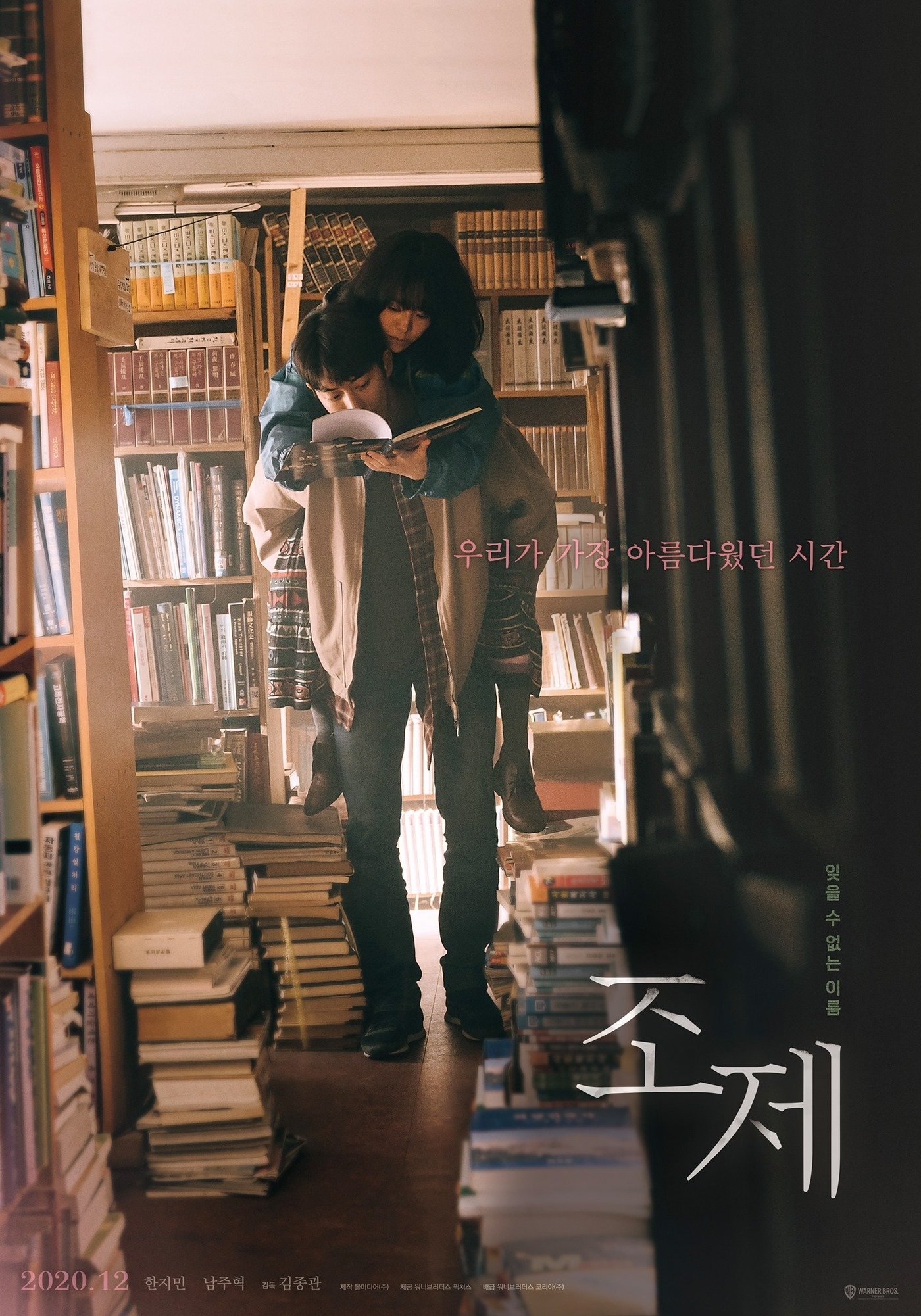
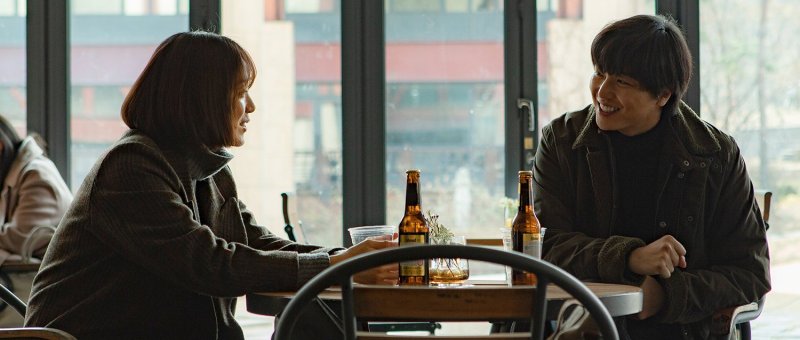
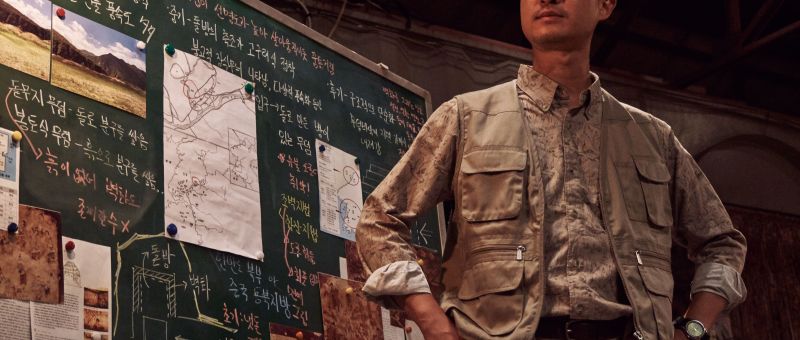
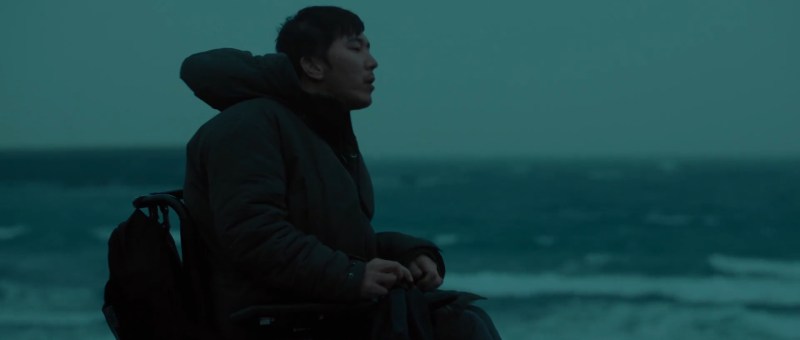
  • Josée – Korean adaptation of Seiko Tanabe’s short story Josee, the Tiger and the Fish in which a student befriends a young woman isolated by her disability.
  • Spring Song – musical drama directed by and starring Yu Jun-sang as a singer heading to Japan to make a music video.
  • Collectors – a tomb raider prepares a daring heist to retrieve a precious artefact.
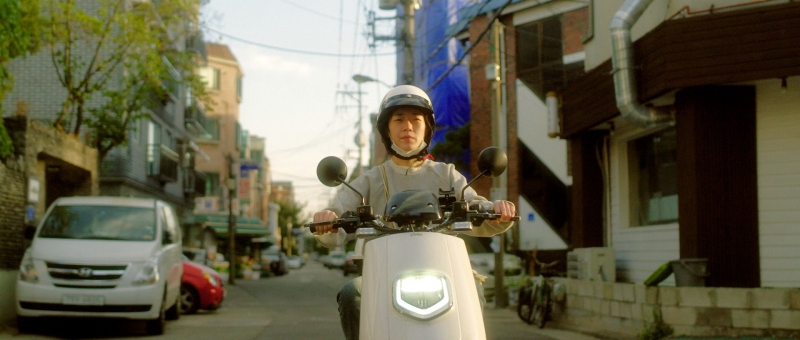
  • Recalled – thriller in which a woman recovers from an accident with psychic powers but no memory at all of her husband.

Indie Talent

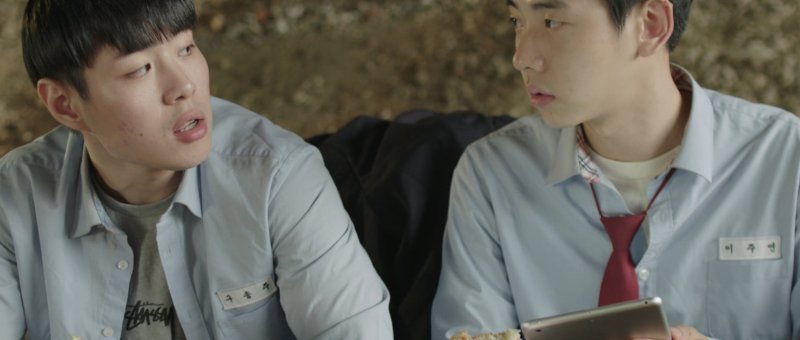
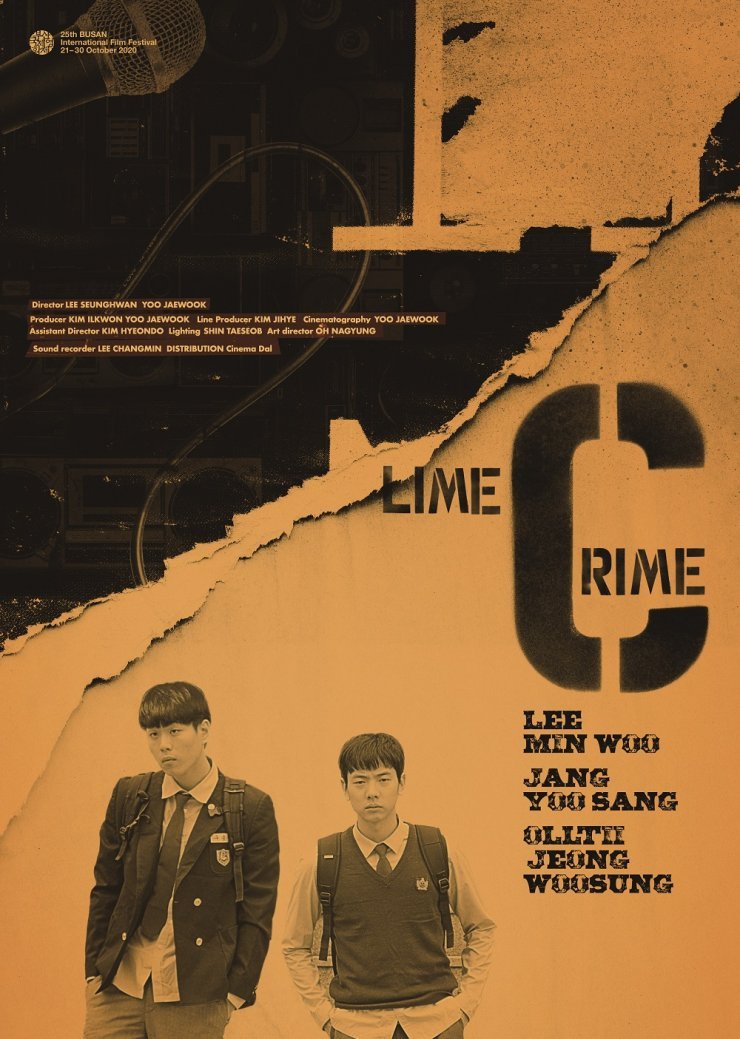
  • Limecrime – two young hip hop fans try to find their voice.
  • Made on the Rooftop – LGBTQ+ rom-com in which a recently dumped man moves in with his DJ friend.
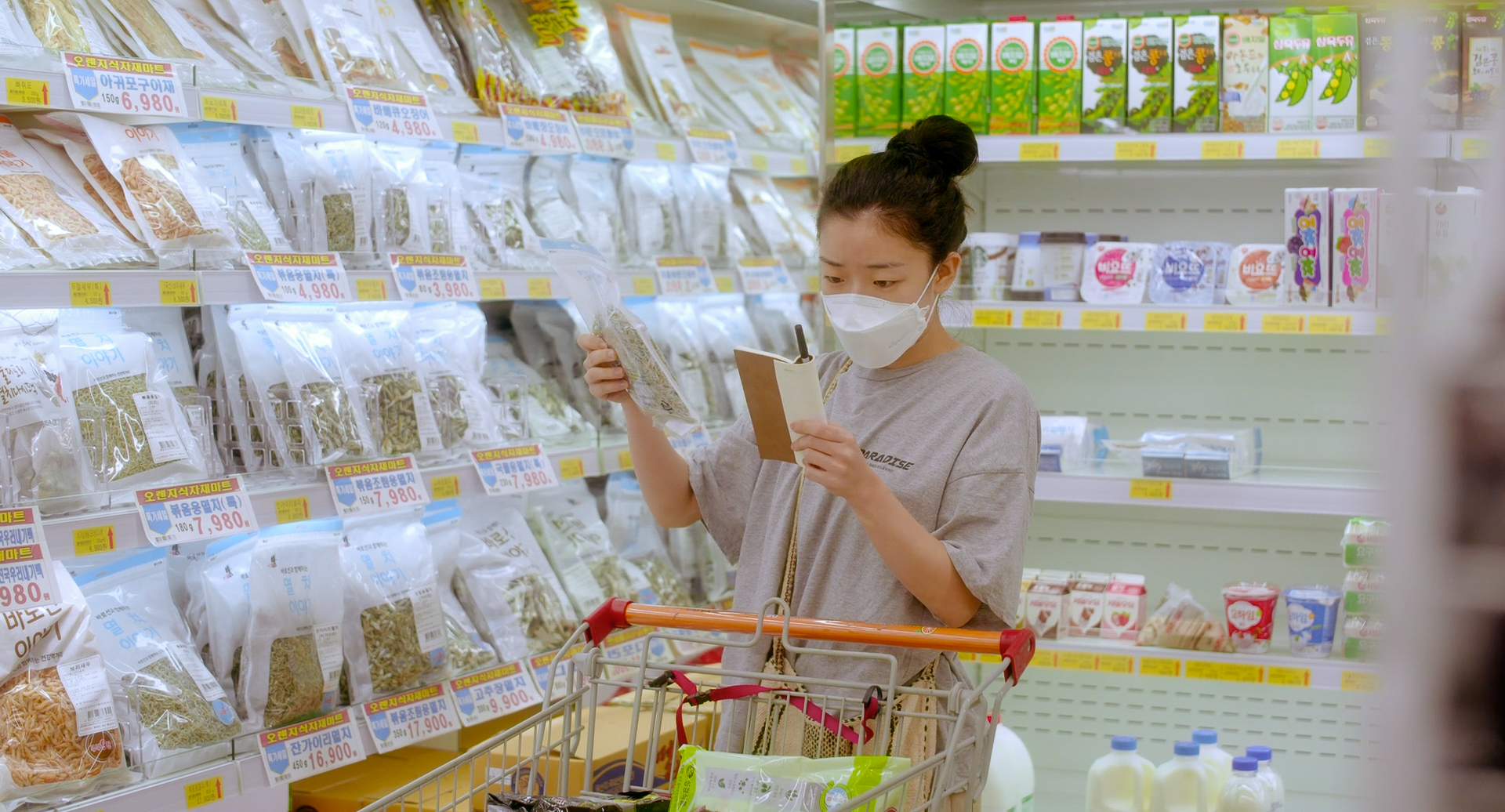
  • Rolling – Covid-era drama in which a young woman takes over the family kimbap shop.
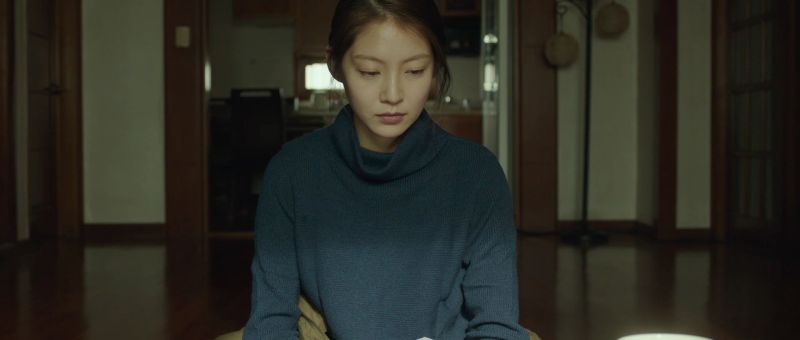
  • Awoke – social drama in which a disabled man is forced into a bureaucratic nightmare after being judged “fit for work”.

Women’s Voices

  • After Me Too – series of documentary shorts from female filmmakers Park Sohyun, Lee Somyi, Kangyu Garam, and Soram exploring the impact of the Me Too movement on Korean society.
  • Snowball – The previously close friendship between three teenage girls is disrupted by shame and societal repression in Lee Woo-jung’s cruel story of youth. Review.

Documentary

  • Sister J – documentary following a factory worker’s quest for justice after being fired from the job they’d held for 30 years.
  • Sewing Sisters – documentary interviewing a series of now elderly women who left the countryside to work as seamstresses in Seoul but encountered dangerous and exploitative working conditions.

Animation

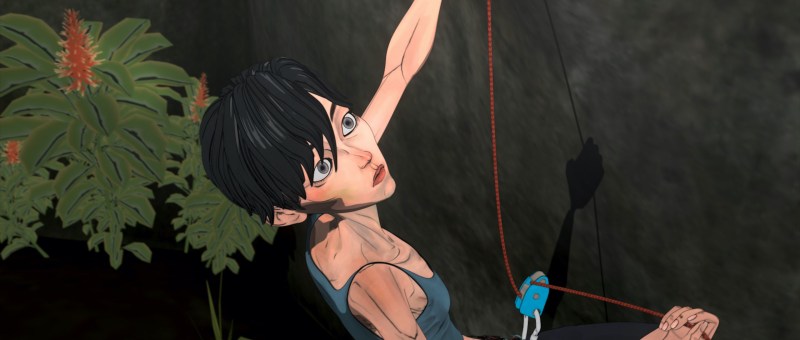
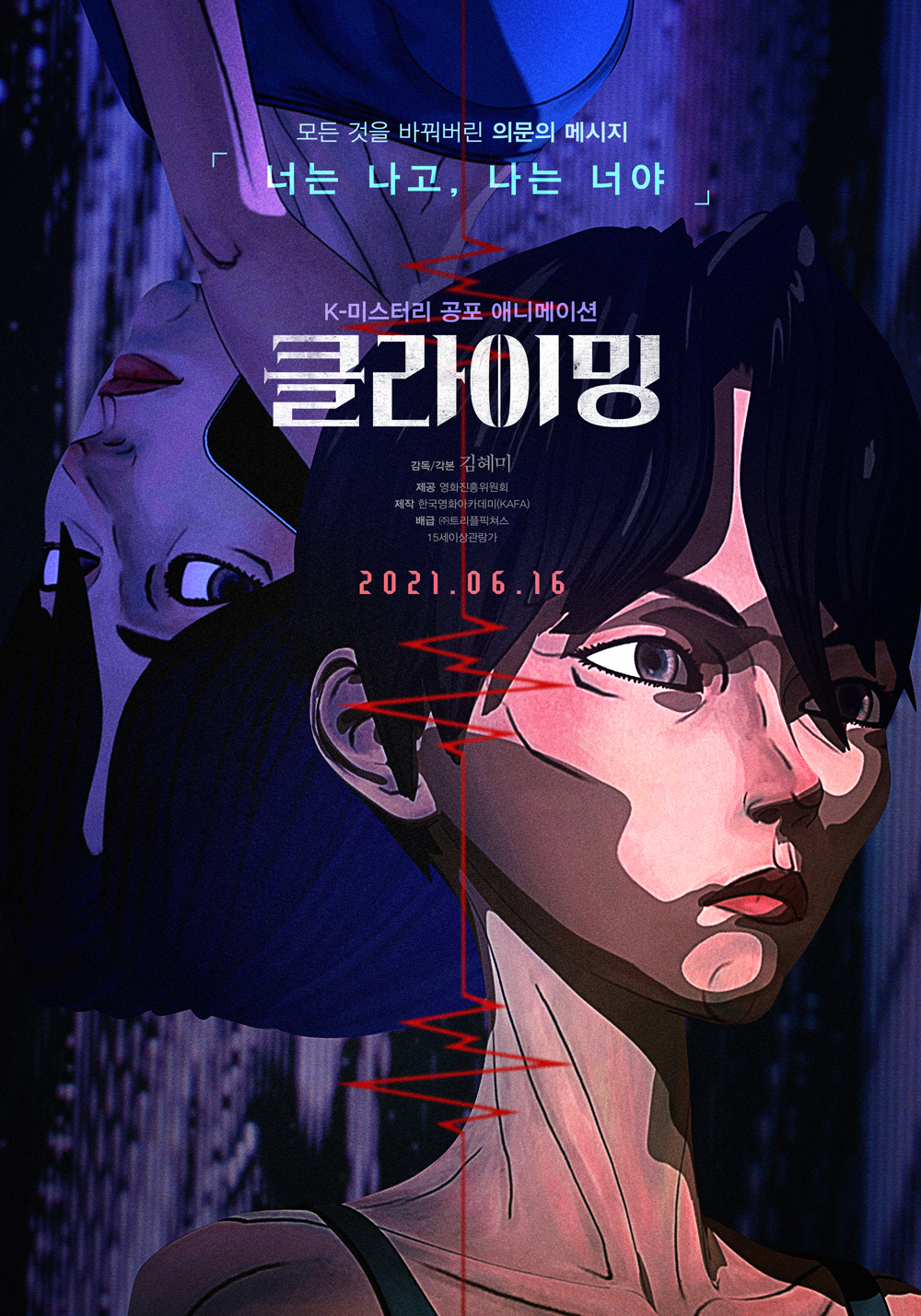
  • Climbing – 3D adult animation in which a mountain climber’s pregnancy anxiety turns into a living nightmare.

Mise-en-Scène Shorts

  • Feel Good Story (Lee Kyoung-mi, 2004)
  • The Perfect Fishplate (Na Hong-jin, 2016)
  • Enemy’s Apple (Lee Su-jin, 2007)
  • Forest (Um Tae-hwa, 2012)
  • How to Operate a Polaroid Camera (Kim Jong-kwan, 2004)
  • The Cursed (Huh Jung, 2010)
  • Don’t Step Out of the House (Jo Sung-hee, 2009)
  • Be With Me (Kang Jin-a, 2009)

Artist Video

The London Korean Film Festival runs 4th to 19th November at venues across the city. Full details for all the films as well as screening times and ticketing information are available via the official website and you can keep up with all the latest news by following the festival on FacebookTwitter, and Instagram.

Go Back (고백, Seo Eun-young, 2020)

“I guess bruises disappear because they sink deep inside of you” a traumatised woman explains in Seo Eun-young’s emotionally complex social drama, Go Back (고백, Gobaek). Literally translating as “confession” the film’s title hints at a neater conclusion than is ultimately offered in this complicated web of trauma, abuse, and patriarchal violence. While perhaps making an awkward defence of law enforcement through its idealistic if sometimes authoritarian heroine, Seo never shies away from suggesting that women suffer disproportionately in a society which often refuses to take their safety seriously. 

This message is brought home in the opening sequence in which rookie policewoman Ji-won (Ha Yoon-kyung) is out jogging while a news item plays on a large screen reporting on the investigation into the murder of a female tourist which the police have apparently bungled. Shortly after she runs into another woman who seems troubled with stains around the rolled sleeves of her shirt which look like they could be blood. The woman recognises Ji-won as a policewoman, though she can’t remember having met her before, but refuses her offer of help before leaving with a little girl. When a ransom note is sent to the media asking everyone in the country to donate a token amount of money to save a kidnapped child, Ji-won can’t shake the idea that the woman is somehow involved. 

The woman, O-sun (Park Ha-sun), is a social worker at a nearby welfare centre where she has acquired a reputation for being somewhat volatile, on one occasion having been arrested for grabbing the father of one her clients around the neck. O-sun and her boss Mi-yeon (Seo Young-hwa) are worried that a local girl, Bo-ra (Gam So-Hyun), is being physically abused by her father who has an alcohol dependency problem but are apparently powerless to do much about it despite the fact that their apartment is filthy and Bo-ra often misses school. Their problem is that many people still believe that physical punishment is an appropriate method of discipline and so it’s easy for abusers to insist they have done nothing wrong even when it’s clear there is an abusive pattern of behaviour in play, while knocks and bruises are often written off as the result of horseplay. Even a doctor’s evidence is apparently not enough to have a child removed from an abusive environment, another client of theirs hospitalised and needing cranial surgery yet likely to be returned to his parents against medical advice insisting his injuries can only be the result of longterm abuse. 

This attitude contributes to a claim made by both Ji-won and O-sun that people are often too afraid to ask for help from the authorities, the tacit explanation being that they don’t believe the authorities can help them or may in fact make the situation worse. Ji-won’s theory is that victims don’t report crime because they fear reprisals from their aggressors, something later born out by her attempt to help a young woman after spotting a suspicious man lurking outside her house while off duty. Ji-won flashes her badge and scares him off, but the man comes back later and this time he doesn’t wait outside. The woman had been reluctant to accept her help fearful that just that sort of thing might happen if he saw her talking to the police. Meanwhile she finds herself subject to low level sexist micro aggressions at work where they make her the literal poster girl for community policing while refusing to let her go on night patrol. Like O-sun she’s accused of caring too much and failing to regulate her emotions, but is also patronised by a male detective pissed off after she solves cases he couldn’t be bothered to investigate properly seemingly wounding his male pride and undercutting his authority by overstepping her responsibility as a uniformed officer. 

Nevertheless, despite the incompetence and disinterest exhibited by her male colleagues, Ji-won’s shining idealism becomes an awkward defence of law enforcement which skews accidentally authoritarian in her fierce love of justice. Brought in to discuss policing as a career, she advises a class of primary school children to snitch on their friends if they spot them doing something “suspicious” like harming animals or starting fires which might seem fair enough but also insists that lack of eye contact indicates guilt which might further discourage shy or traumatised kids from asking for help. She criticises the male officers for being too concerned with punishing criminals and not enough with protecting the innocent, but also insists on retribution rather than appreciating that keeping people safe is a more complex matter than simply locking “bad people” away.

Acutely aware of the legacy of her own trauma, O-sun is desperate to save Bo-ra from the same fate but is at a loss as to how given the resources available to her under the law. Bo-ra meanwhile worries about all the other disadvantaged children and hopes someone’s going to do something to help them too. All is not quite as it seems, but Ji-won and O-sun ultimately discover a sense of solidarity in their mutual desire for equality in justice while uniting to protect Bo-ra from the legacy of trauma. Tightly plotted, Seo’s mystery drama casts a patriarchal and indifferent society as its primary villain but also makes heroes of those who try, however imperfectly, to help those who need it no matter what society might say.


Go Back screens in Chicago on Sept. 24 as part of the 13th season of Asian Pop-Up Cinema 

International trailer (English subtitles)

The Book of Fish (자산어보, Lee Joon-ik, 2021)

An “evil learning sinner” and a young man fixated on Neo-Buddhist thought develop an unlikely friendship while compiling an encyclopaedia about sea life in Lee Joon-ik’s contemplative period drama, The Book of Fish (자산어보, Jasaneobo). Like those of Hur Jin-ho’s Forbidden Dream, the hero of Lee’s historical tale of competing ideologies dreams of a classless future but is exiled from mainstream society not for his revolutionary rejection of a Confucianist hierarchal society but for his embrace of Western learning and religion. 

Like his two brothers, Chung Yak-jeon (Sol Kyung-gu) reluctantly joins the imperial court but later falls foul of intrigue when the progressive king falls only to be replaced by his underage son controlled by the more conservative dowager empress. Having converted to Christianity, Yak-jeon and his brothers are faced with execution but unexpectedly reprieved when the oldest agrees to renounce Catholicism and root out other secret Christians. Yak-jeon is then exiled to a remote island while his better known brother, the poet Yak-yong (Ryu Seung-ryong), is sent to the mountains. On his arrival, the local governor introduces Yak-jeon as a “traitor” and instructs the islanders not to be too friendly with him but island people do not have it in them to be unjustly unkind and so Yak-jeon is, if warily, welcomed into their community. “He maybe be a traitor, but he’s still a guest” his new landlady (Lee Jung-eun) explains as she prepares him some of the local seafood. 

Yet Yak-jeon encounters resistance from an unexpected source, intellectual fisherman Chang-dae (Byun Yo-han) who goes to great lengths to acquire scholarly books despite his otherwise low level of education. Somewhat patronisingly, Yak-jeong offers to tutor him, but Chang-dae is a rigid thinker who believes the world is going to hell because people have forgotten their Confucian ideals so he’s no desire to be taught by a treacherous “evil learner” or be sucked in to his dangerous Catholicism. Surprisingly, however, for a man who risked death rather than renounce his religion, Yak-jeong is no fanatic and in fact does not appear to practice Christianity at any point while living on the island. What he professes is that Eastern and Western thought need not be enemies but can go hand in hand while a rigid adherence to any particular doctrine is what constitutes danger. 

Chang-dae had insisted that he studied “to become a better human” but he also has a large class chip on his shoulder as the illegitimate son of a nobleman who refuses to acknowledge him, fully aware that as a “lowborn” man he is not allowed to take the civil service exam and in any case would not have the money to buy his way in to the court. Despite later professing egalitarianism, Yak-jeong treats the islanders, and particular Chang-dae, with a degree of superiority extremely irritated by Chang-dae’s refusal to become his pupil in the slight of his elite status often making reference to his “low birth”. Confessing his desire for a classless society with no emperor, however, Yak-jeong encounters unexpected resistance as the young man finds it impossible to envisage a world free of social hierarchy based on rights of birth and swings back towards desiring the approval of his elite father in the determination to climb the ladder rather than pull it down. 

Chang-dae finds himself caught between two fathers who embody two differing ways of being, Yak-jeong advising him to think for himself rather than blindly follow Confucianist thought, while his father encourages him to towards the court and the infinite corruptions of the feudal order. Chang-dae does begin to interrogate some of the more persistently problematic elements of Confucian teaching including its views on women and entrenched social hierarchy but also feels insecure and desperately desires conventional success and entrance into a world he thinks unfairly denied to him. Once there, however, he discovers he cannot submit himself to duplicities of feudalism. The islanders are being taxed to into oblivion, not only is there a random counter-intuitive tax on pine trees but the government is also extracting taxes from the family members of the deceased as well as newborn babies while cutting sand into the rice rations it promises in return. His father and superiors laugh at him for his squeamishness, seeing nothing at all wrong in the right of the elite to exploit the poor. Trying to blow a whistle, Chang-dae is reminded that the courtly system is an extension of the monarchy, and so criticising a lord is the same as criticising the king which is to say an act of treason. 

Having been accused of treason himself, Yak-jeong declines to enact his revolutionary ideas penning only a couple of books during his time in exile in contrast to his brother who published many treatises on effective government. Yak-jeong explains he dare not risk writing his real views which is why he’s immersed himself in the beauty of the natural world, exercising his curiosity writing about fish while making use of Chang-dae’s vast knowledge of the sea. The two men develop a loose paternal bond but are later separated by conflicting desires, Chang-dae eventually choosing conventional success over personal integrity only to regret his decision on being confronted with the duplicities of the feudal order. Shot in a crisp black and white save for two brief flashes of colour and inspired by traditional ink painting, Lee’s contemplative drama finds itself at a fracture point of enlightenment as two men debate the relative limits of knowledge along with the most effective way to resist a cruel and oppressive social order but eventually discover only wilful self exile as Chang-dae learns to re-embrace his roots as an islander along with the openminded simplicity of Yak-jeong’s doctrine of catholicity in learning. 


The Book of Fish screened as part of this year’s New York Asian Film Festival.

Original trailer (Korean subtitles only)
Sinkhole (싱크홀, Kim Ji-hoon, 2021)

Financial security is built on shaky ground in Kim Ji-hoon’s harrowing disaster dramedy Sinkhole (싱크홀) in which one man’s home-owning triumph quite literally crumbles beneath his feet. The latest in a recent series of movies lamenting the sometimes lax safety culture of the Korean construction industry, Sinkhole is also a crushing indictment of a society ruled by house prices in which social status is largely defined by the owning of property while the young in particular struggle to climb out of a deep well of societal despair. 

As the film opens, the Park family is about to move in to their new flat, the first they’ve ever owned albeit with a frighteningly large mortgage, in the middle of a seasonal downpour. Only when they arrive, they discover the movers haven’t even started unloading because their apparently irresponsible neighbour Man-su (Cha Seung-won) has inconsiderately parked his car in front of the entrance and isn’t answering his phone. Patriarch Dong-won (Kim Sung-kyun) ends up in an awkward confrontation with the abrasive apartment dweller which is inconvenient because Man-su apparently works in just about every business in the area which means he continues to run into him just about everywhere he goes. 

Anyway, that’s the the least of his problems because, having made this giant investment, Dong-won can’t help thinking there’s something wrong with his new dream home especially when his adorably polite young son Su-chan points out that his marbles roll across the floor of their own accord. Worried they may have a subsidence problem, Dong-won checks his windows open properly and records evidence of ominous cracks in the pavement outside but struggles to get the other residents to agree to maintenance checks in fear that not getting the answer they want will bring down the value of their property. 

Property prices are apparently everything. Homeownership is an unobtainable dream for many, yet Dong-won already feels insecure in his purchase especially as his colleagues seem relatively unimpressed by the fact his flat is in a recently gentrified area and comparatively modest. Bamboozled into hosting a housewarming, he’s mildly embarrassed to realise the view from his balcony is of nicer, much more expensive luxury flats just across the river which are likely to remain far out of his reach. Nevertheless, his colleague, Seung-hyun (Lee Kwang-soo) declares himself jealous in part because he’s still renting a studio flat and feels that dating let alone marriage is impossible without being in a position to get a multi-room apartment. His colleague Eun-ju (Kim Hye-jun) is in the same predicament but prefers to see it as simply being at a certain stage on the ladder.  

This dream of future security is however quite literally built on shaky ground. There are definitely problems with Dong-won’s new apartment which become increasingly severe from the tilting floors to cracked glass and interruptions with the water supply presumably caused by cost-cutting and shoddy construction practices. When the building collapses into a sinkhole, Dong-won is trapped inside with work colleagues Seung-hyun and Eun-ju along with Man-su and his teenage son Seung-tae (Nam Da-reum). Despite the inherent horror of the situation, Kim keeps the atmosphere light as the small band of survivors attempts to manage as best they can, finding an awkward solidarity while trying to attract the attention of the emergency services and eventually making a daring escape using whatever tools are available to them. 

Even so, as much as the small band of almost strangers bond thanks to their desperate circumstances, there is an uncomfortable conservatism at play especially in the film’s treatment of a working class single mother and her son living in an apartment on the floor below Dong-won’s. That aside, Sinkhole offers a fierce criticism of an increasingly consumerist society in which house prices are all anyone talks about and homeownership is the only badge of social success. 11 years of patient sacrifice is swallowed in an instant, sucked into an abyss of corporate malfeasance, while Dong-won is left to climb out of the hole he’s in on his own. It’s small wonder that some of the survivors decide to drop out of the system altogether, ditching the idea of rooted homeownership for nomadic freedom in buying a small caravan rather than participate in the property market or climb the corporate ladder. “Don’t be happy in 10 years, be happy today!” they enthusiastically chant. The entire society is, it seems, sitting on a sinkhole which might give any minute, what’s the point in investing in a future which could disappear from beneath your feet without reason or warning? 


Sinkhole screened as part of this year’s New York Asian Film Festival.

International trailer (English subtitles)

Midnight (미드나이트, Kwon Oh-seung, 2021) [Fantasia 2021]

Turns out, if you want to get away with murder in South Korea all you need to do is remain polite, put on a regular business suit, and carry a fancy briefcase. Three women find themselves pursued by the walking embodiment of destructive patriarchy in Kwon Oh-seung’s extraordinarily tense serial killer thriller Midnight (미드나이트) in which a creepy night stalker exploits male privilege and societal prejudice while relentlessly pursuing his prey through the darkened streets of Seoul. 

Our heroine, Kyung-mi (Jin Ki-joo), is a deaf woman working as a customer service representative for the “Care for You” call centre catering to callers who require sign language assistance. The company, however, is not especially caring and makes little effort to include Kyung-mi in office life, leaving her feeling left out and excluded. She attempts to bring this up with her boss when some of the other women complain about being forced to attend an after hours drinking party to entertain clients, but is greeted only with grudging acceptance. At the dinner, meanwhile, the boorish male guests make lewd comments about her appearance assuming she can’t hear them, though she can of course lipread and returns in kind by insulting them in sign language. To get over her sense of discomfort she dreams of travelling to Jeju island for a relaxing beach holiday with her mother (Gil Hae-yeon) who is also deaf. 

Across town, meanwhile, 20-something So-jung (Kim Hye-yoon) is arguing with her security guard brother Jung-tak (Park Hoon) about her outfit for an upcoming blind date. Jung-talk sets a 9pm curfew he later increases to 10 which seems at best over protective, though as it turns out he’s right to worry as not long after 10pm when So-jung is almost home she’s nabbed by vicious serial killer Do-sik (Wi Ha-joon), stabbed, and left in an alley where she manages to attract the attention of a passing Kyung-mi by throwing her white stilettos into the road. In her effort to help, Kyung-mi unwittingly becomes a target for the crazed axe murderer who continues to pursue her despite having ascertained that she cannot identify him. 

Do-sik manages to get away with his crimes by adopting the non-threatening persona of a mild-mannered office worker, swapping his medical mask, baseball cap and hoodie for a regulation issue grey suit and carrying a leather briefcase which turns out to be full of knives and other murdery equipment though of course no one is going to look inside. Ironically he tells Kyung-mi that he’s looking for his sister, trying to earn her trust by convincing her to show him where she last saw So-jung, a ruse which both echoes Jung-tak’s parallel search and his later claim that Kyung-mi is his younger sister apparently in a state of mental distress. He even goes with Kyung-mi and her mother to the police station where gets into a fight with Jung-tak who’s figured out he has his sister only for the police to mistakenly taser the angry man in a shell suit, sending the nice man in a suit on his way with a series of friendly bows and apologies. 

Kyung-mi and her mother meanwhile are rendered doubly vulnerable because of their deafness, unable to hear danger approaching while equally unable to communicate with impatient police officers and passersby even if they are able to silently communicate with each other in ways others can’t understand. Kyung-mi repeatedly hits a panic button on a lamppost that activates the streetlight and contacts local police, but there are no cameras, she can’t hear them and they have no idea why she isn’t speaking. Making a break for it, she ends up in downtown Seoul but to the bystanders who surround her she’s a crazy lady with a knife rather than a young woman pursued by a predatory man. Unable to explain the situation, she is even handed back to Dong-sik who claimed to be her brother by a trio of smug soldiers who find her hiding behind some bins and assume they’re helping by returning a mentally disturbed woman to her responsible adult. 

Yet big brothers make poor protectors. Jung-tak had been so concerned about his sister’s outfit, worryingly overprotective in obsessing over unreturned messages, but in the end it didn’t matter Dong-sik picked her for convenience’s sake. Even the first woman we see Dong-sik snatch was left to walk home in the dark by unchivalrous male colleagues who stole her taxi, chatting to her boyfriend about fried chicken but ultimately paying the price for (wisely) refusing to get into Dong-sik’s van. Dong-sik is only able to get away with his crimes by assuming his male privilege, playing the part of the respectable executive and caring big brother while the police, the ultimate authority figures, defer to him refusing to take Kyung-mi’s claims seriously in an echo of the baseline misogyny displayed by her clients at work. 

The only way to make them listen, she discovers, is in a public act of self harm that ironically exposes Dong-sik for what he really is. Taking place in near real time, Kwon’s extraordinarily tense cat and mouse game finds Kyung-mi desperately trying to escape the midnight city pursued by patriarchal violence and finding little support in an ableist society as she desperately tries not only to save herself but the other women similarly trapped in a labyrinth of seemingly inescapable threat. 


Midnight streamed as part of this year’s Fantasia International Film Festival.

International trailer (English subtitles)

Samjin Company English Class (삼진그룹 영어토익반, Lee Jong-pil, 2020)

“The year of 1995 will mark the first year of our globalisation” according to the opening stock footage in Lee Jong-pil’s tale of tempered feminism and corporate anxiety, Samjin Company English Class (삼진그룹 영어토익반, Samjingeurup Yeongeotoikban). Partly a nostalgia fest for a mid-90s sense of aspiration which would come to a crashing halt with the financial crisis just two years later, Lee chronicles a society in flux as a new generation of women find themselves kicking back against the ingrained patriarchal attitudes of a conservative society while at the same time experiencing a gradual sense of disillusionment with growing internationalism that ironically sends them straight back into the arms of the chaebol. 

Set concretely in 1995, Lee frames his Working Girl-esque drama around the lives of three office ladies each beginning to age out of their potentially dead end jobs. An evolution of the secretarial pool, office ladies are treated more or less as domestic staff in the corporate environment often assisting the, largely but not exclusively, male workers with admin tasks such as teaching them how to use the fax machine or operate IT software while otherwise expected to perform traditionally feminine roles keeping the office clean and tidy or fetching drinks and cigarettes for their bosses. As such they are largely invisible, the men often talking indiscreetly in front of them because they don’t really matter. No one takes an office lady seriously even while they are perceived as essential, if interchangeable, in the functioning of the office. 

All very capable women, Ja-young (Go Ah-sung), Yuna (Esom), and Bo-ram (Park Hye-su) are looked down on by the few female members of the regular salaried staff because, largely for socio-economic reasons, they have no university degrees. Still, beginning to age out of office lady life they are faced with a conventional choice of finding a husband or attempting to gain a promotion into the ranks of permanent workers. It’s for this reason that they begin taking the company’s English classes, hoping a high TOEIC score will as they’ve been promised smooth the path towards employment. Women coming of age in a newly democratised Korea with its eyes on the rest of the world, they want more out of life than perhaps the previous generation would have done though Ja-young in particular is noticeably ahead of her time wanting not just career success but personal fulfilment. She was glad to work for Samjin because she thought they made products that enriched people’s lives and thinks her work should have a value to society aside from providing personal material comfort. 

That’s one reason she’s determined to do something when she discovers a Samjin factory has been spewing industrial waste into the waters surrounding a small rural village. As office ladies, the three women occupy a liminal space within the company that in a sense makes it easier for them to investigate but gives them little power to affect real change. Conflicted, Ja-young witnesses the company reach a settlement with the villagers assuring them the leak has been small, will have no lasting affect on their health or livelihood, and has been dealt with effectively. Her niggling doubts lead her uncover the cover up, but in this version of the story the enemy turns out not to be large corporations or chaebol greed but duplicitous foreigners taking advantage of the situation to facilitate their own goals of dominating Korean business, in this case by engineering a merger with a Japanese company brokered by an improbably handsome Korean-American corporate mole (David Lee McInnis). 

In fact, the solution that is found in one sense empowers the ranks of the office lady as Ja-young marshals the resentment of her cohorts towards challenging the corrupt status quo, but also makes an awkward defence of chaebol culture as the point of resistance lies in forcing the elderly chairman to reassume personal responsibility over his company. “Yankee go home!” he unsubtly exclaims before discovering that he no longer has much control because he runs a “corporation” in which the shareholder is king. The fact that the industrial pollution is entirely the fault of the chairman’s feckless son promoted above his abilities for dynastic reasons is quietly forgotten as if he were merely a bad apple later forced to face justice for his corporate misconduct while the system largely remains unchanged. Meanwhile, the parallel progress of the three Tess McGill’s eventually hints at a sea change in work culture that allows them to smash the unfair barriers to corporate success but in reality only grants them an unequal access to a patriarchal social order which otherwise remains the same as it ever was. 

Of course, the male members of staff are also in themselves constrained by this oppressive working culture, portrayed largely as spineless corporate drones blindly following orders for the sake of their careers only later given courage to do the right thing by the office ladies’ rebellion. Nevertheless, there is something pleasantly aspirational in the idealistic determination of Ja-young and her friends to succeed on their own terms even if their progress is ultimately undercut by a thinly veiled nationalism that repositions chaebol culture as force for good while forcing the women back into complicity with an inherently oppressive, patriarchal society defined by corporate success. 


Samjin Company English Class screened & streamed as part of this year’s New York Asian Film Festival.

International trailer (English subtitles)

I Don’t Fire Myself (나는 나를 해고하지 않는다, Lee Tae-gyeom, 2020)

“All we asked for is not to die” a disgruntled employee reasonably explains, finally finding her voice on being confronted with the consequences of her complicity. Lee Tae-gyeom’s impassioned workplace drama I Don’t Fire Myself (나는 나를 해고하지 않는다, Naneun Nareul Haegohaji Anneunda) is the story of one woman’s path towards reclaiming agency over her life, but it’s also a subtle condemnation of rampant capitalism and the various ways entrenched social mores can set the oppressed against each other, hiding from the very ways they are each victims of the same social order. 

30-ish Jeong-eun (Yoo Da-in) is a talented employee working at an electrical company but her capability only makes her a threat to her male bosses. Insisting that “it’s not about whether a woman can do the job”, her superior forces her to accept a one-year transfer to a rural electrical engineering subcontractor promising that if she works out the contract she can come back to HQ. Resolving to make the best of a bad situation Jeong-eun soon realises her new boss is not keen to have her. Her presence is an obvious inconvenience to the other three male employees who must now put a curtain up so they can change into their work clothes while resenting the unexpected intrusion into their working life. What soon becomes clear to Jeong-eun is that her new assignment is in reality just an elaborate form of “banishment room”-style constructive dismissal. Her old boss is trying to make her working life so miserable that she’ll quit on all her own. 

Only, as a friend of Jeong-eun’s points out, neither of them can afford to quit because it’s so unlikely they’ll be able to find alternative employment. Jeong-eun was good at her job, but as a woman she has very little chance of career advancement and had to work twice as hard as the men just to be employed. Perhaps for these reasons, she refuses to quit resolving to stick out the year in the sticks to see what happens, but her new manager refuses to give her any work and is himself pressured by the higher ups to either push Jeong-eun towards resignation or engineer a reason to fire her. Her male colleagues only come to resent her more when it’s revealed that the substation is expected to cover her salary out of their budget which is also being reduced meaning someone will likely be out of a job. Hoping to win their trust and respect, she studies electrical engineering manuals in her off hours and offers to accompany them into the field but is quickly undone by anxiety as she looks up at the tall towers of the electricity pylons unsure how she could ever scale them. 

There is something of a potent metaphor in Jeong-eun’s attempts to climb these infinite structures while the men around her laugh and try to pull her down. Latterly sympathetic colleague Seo (Oh Jung-se) snaps at her that for men like him getting fired is worse than dying and the reason she can’t climb is that for her it never will be. But Seo has in a sense miscalculated. Jeong-eun may be educated and middle class, but as she claps back to her getting fired and dying are synonyms. They are each victims of the same system, but blind to the ways they are similarly misused. Jeong-eun knows only too well the costs of getting fired, her grief over a close friend who took her own life after being forced out of her job possibly contributing to her self-destructive drinking problem. Seo meanwhile is constantly being reprimanded for falling asleep on the job, largely because he also works a series of part-time gigs to make ends meet such as manning the till in a convenience store and working as an Uber driver. As Jeong-eun discovers this dangerous, highly skilled work which is essential both for public safety and economic support pays almost nothing while the workers are also expected to provide their own protective safety gear including electric resistant overalls which run to $1000. 

The inspectors sent to undermine Jeong-eun and pressure the manager harp on about how the company has already been privatised and can no longer afford “inefficiency” while continuing to exploit their employees and ride rough shod over both employment law and people’s basic rights. Jeong-eun has three months to decide if she wants to try suing them for constructive dismissal but is warned that if she does the company will retaliate and even if she wins the quality of her working life may not improve. Yet if everyone goes on thinking only of themselves the company will continue to get away with their nefarious practices 

Pushed to breaking point, Jeong-eun’s epiphany comes only after a colleague is killed after being asked to fix a transmission tower in unsafe conditions while her slimy boss shows up to pressure his young daughter who can’t be more than 10 to sign away her right to proper compensation. She realises that she’s been “fired” by everyone in her life from her parents to her company, but has also been wilfully complicit in her reluctance to rock the boat believing that if you work hard and follow the rules you’ll eventually succeed even while intellectually knowing that that way of thinking is merely another tool used by the powerful to maintain their grip on power. She realises that she doesn’t need to fire herself too, seizing her own agency to mount a resistance towards the amoral venality of her ultra capitalist bosses by refusing to play by their rules anymore. A subtle yet pointed attack on the radiating effects of Korea’s notoriously poor labour law, I Don’t Fire Myself allows its educated middle-class heroine to find unexpected solidarity with a working-class labourer while ending on a note of positivity as Jeong-eun finds the courage to climb alone in the hope of bringing the light to others much like herself. 


I Don’t Fire Myself streams in the US Aug. 18 to 23 as part of this year’s New York Asian Film Festival.

Original teaser trailer (English subtitles)