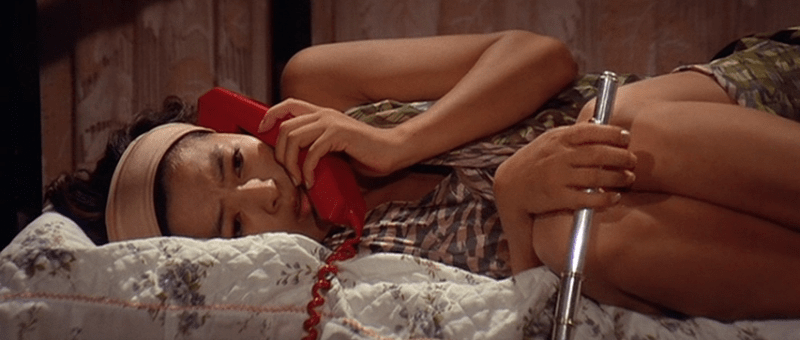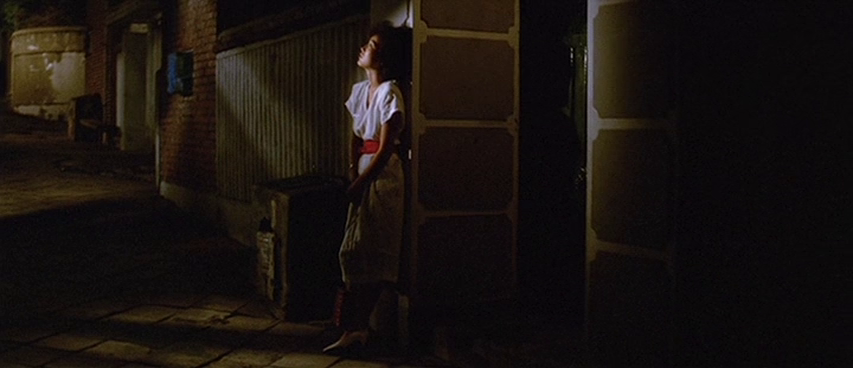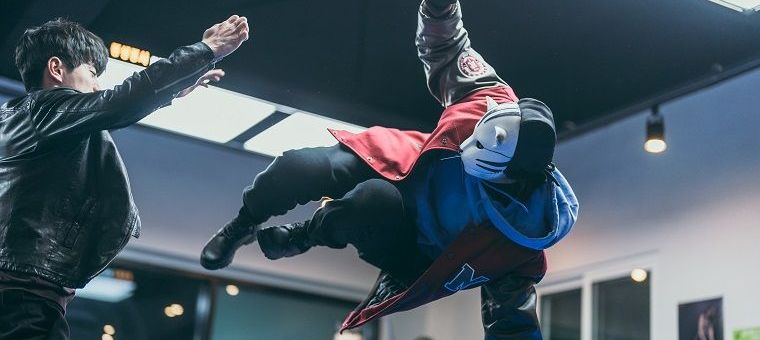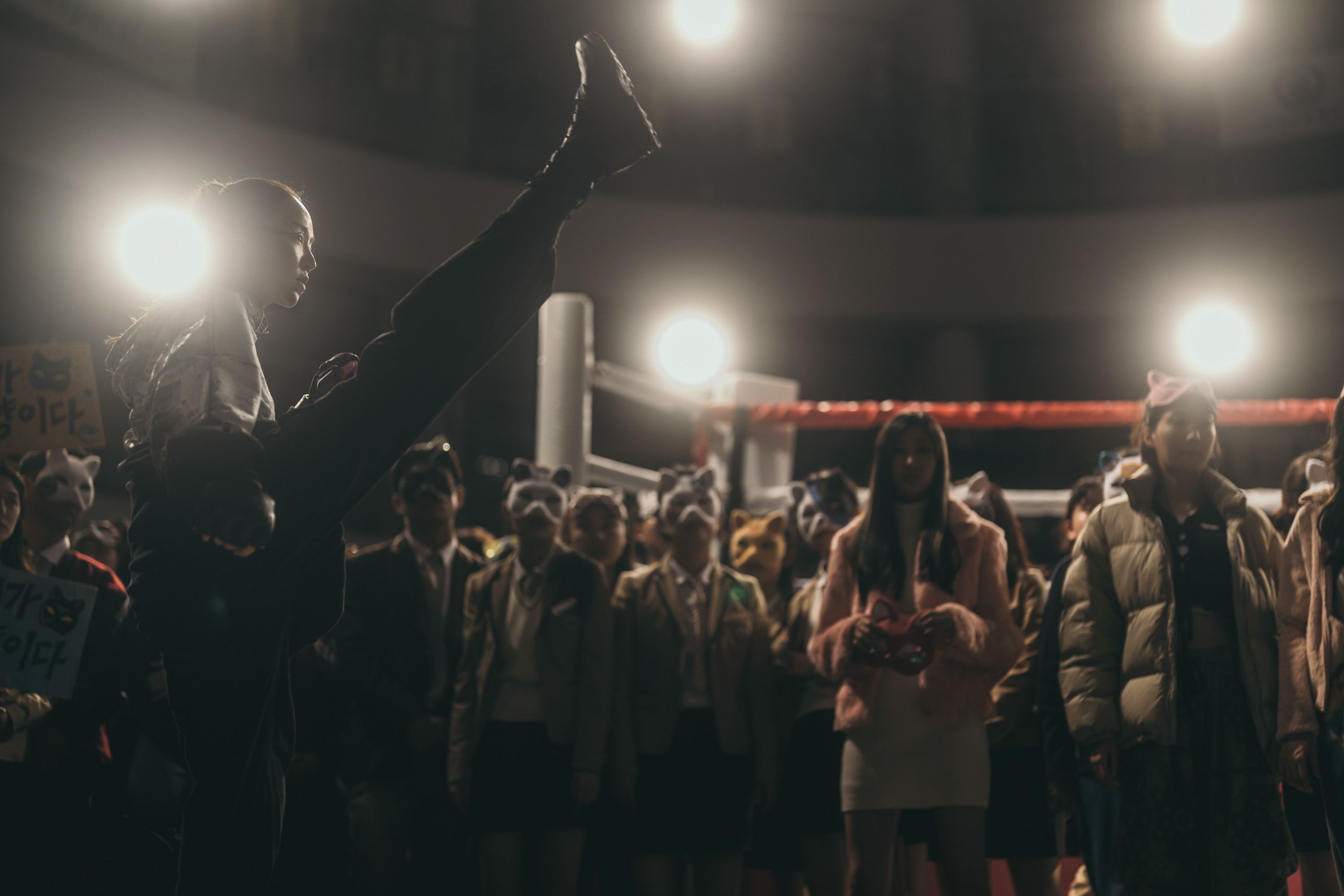
The Sin (씬, Han Dong-seok, 2023)

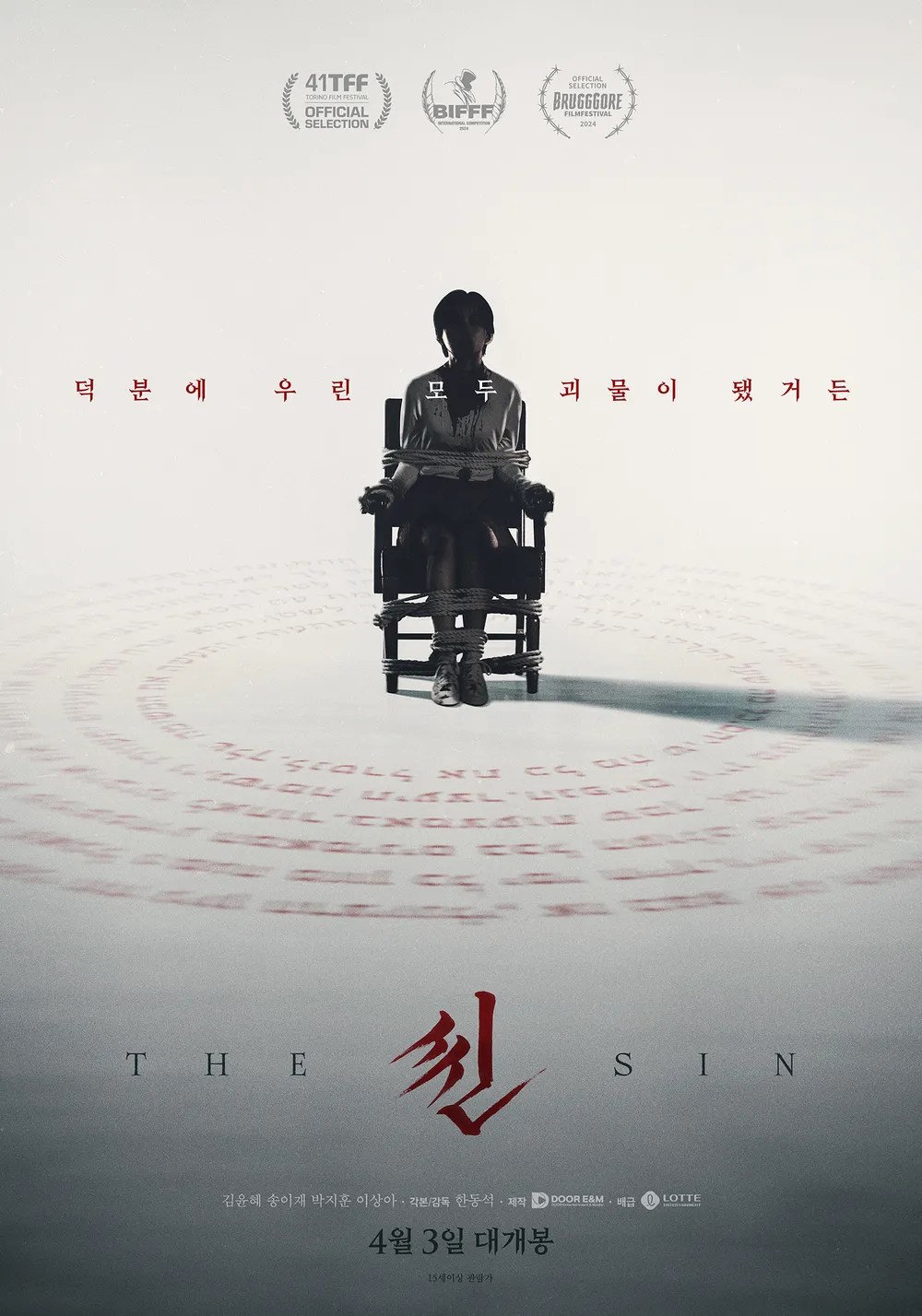
According to the opening title card of Han Dong-seok’s genre-hopping horror, sin is like a lost child that will one day come looking for its parents. The film’s ostensible heroine at times hears voices suggesting that someone or something will eventually come looking her, and later says that she is ready for their arrival, but before that we have to wonder what it is she means and what if anything that is happening is actually real or at least in keeping with our assumptions.

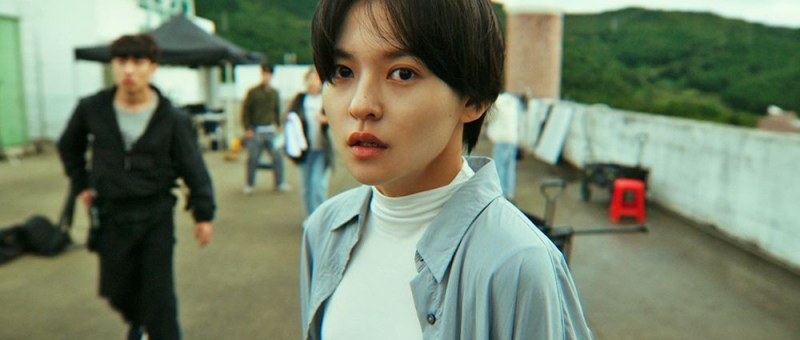
There are many reasons why we begin to feels we can’t trust Si-yeong’s (Kim Yoon-Hye) perspective. Not only is she already somewhat distant and preoccupied on her arrival at a disused university in the mountains but we also later learn that she’s taking a large amount of medication apparently for migraines and PTSD stemming from a barely remembered accident. She also seems less than pleased to encounter former colleague Chae-yoon (Song Yi-Jae) who brings up memories that seem unpleasant to her while there’s a kind of frostiness between them that’s only exacerbated by the fact Si-yeong was not even aware she’d have a co-star in this experimental dance movie directed by a man known for being “unkind” to actors. 

In any case, strange things do indeed begin befalling her from a body dropping right in front of her feet before she enters the building to the eventual murder and suicide of her colleagues who then return as zombie-like creatures. The film cycles rapidly through a series of genres beginning as a slasher with a Suspiria-like sense of eeriness as dancer Si-yeong’s mental state starts to unravel before drifting into the undead, cults, and shamanistic folk horror with the weird symbols dotted around the campus. 

Because things are very wrong on the outside too, Si-yeong even ends up running into a gang of murderous corrupt cops paranoid she’s found their stash of stolen drugs while otherwise pursued by riflemen apparently employed by a vengeful CEO. It’s true enough that we don’t know what’s going on for most of the film, and part of that may be that Si-yeong doesn’t know either because her mental state is unstable. We’re not even really sure if Chae-yoon is real or merely Si-yeong’s projection of her internal conflict, dressed as she is in the same outfit and with the same haircut to the point the two women are often barely distinguishable. Perhaps it’s this unpleasant memory that Si-yeong is trying to avoid, though it’s clear in very general terms that she’s running from something as much as she’s being chased and that her flight may be orchestrated to bring her to a specific location whether physical or spiritual.

What’s chasing her is the apparent “sin” of the title, though everyone might not see it as such or maybe believe their own sins were either justified or will be paid for later. For the purely evil, sin as a concept may not even exist if there’s no prospect of remorse though it’s hard to reconcile the docile, sweet and somewhat etherial Si-yeong with the fragmented memories of a past that may or may not be her own. “Thanks to you, we all became monsters,” she’s later told by someone about to something pretty monstrous but maybe they too were monstrous to begin with, or nobody was, and a well-meaning attempt to exorcise evil from the world has only produced more of it. 

Just when you think you have it all figured out, Han throws in a post-credits sequence pouring more fuel on the fire and hinting at even greater back story in a world ruled by dark and unseen supernatural forces. It doesn’t make sense, but wilfully so and frustrates in a positive way in our desperation to understand something that cannot be understood much as Si-yeong attempts to understand the rapidly disintegrating world around her. The concrete fact does seem to be that one must pay for ones sins, though those who do may not be the ones we’d expect. Gory and incredibly creepy, the film plays with our senses as much as Si-yeong’s, undermines our sense of reality, and finally leaves with the unsettling vision of a pervasive evil lurking in the mirror or the depths or the dark corners of a mind already shrouded in delusion. 


The Sin screened as part of this year’s New York Asian Film Festival.

International trailer (English subtitles)

Alienoid: Return to the Future (외계+인 2부, Choi Dong-hoon, 2024)

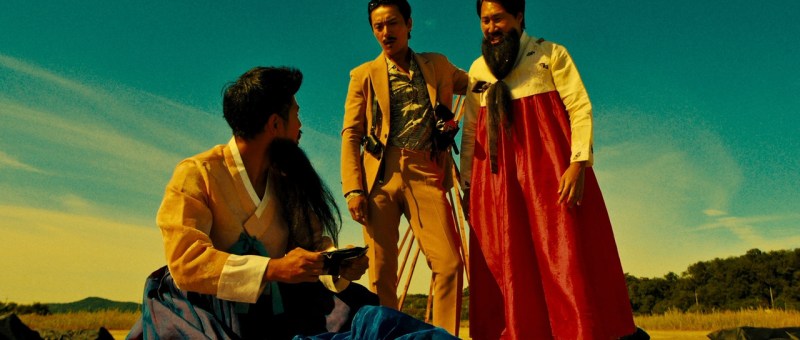
Choi Dong-hoon’s hugely entertaining sci-fi-inflected fantasy adventure Alienoid ended with a classic cliffhanger promising resolution only in an as then unscheduled sequel. Part two arrives almost two years later and thankfully opens with a brief recap before delving straight into the ongoing drama as the older Ean pursues the Divine Blade that will allow her to stop humanity from being wiped out in a toxic gas attack by fugitive aliens.

Thus the majority of the first half takes place in the 14th century past as various parties vie over the blade in the manner of a wuxia serial. Ean is also on a quest to recover Thunder and get back to the crashed spaceship in order to get back to the future and stop the world being destroyed. But in some ways, she’s also now an orphan of time. She’s spent half her life back in the feudal era and will return to 2022 ten years older than she should be. Reuniting with Muruk (Ryu Jun-yeol), she finally figures out his identity and is more well disposed towards him, but also decides it would be better for them to head in different directions given the possibility that Muruk is a possible host for the missing Controller, the leader of a resistance movement among the alien criminals who have been imprisoned in the minds of humanity. 

Once again, the key to salvation lies in the past as we discover that Gae-lin (Lee Hanee) is a descendent of a blind swordsman who left very specific instructions for what to do during the alien attack. Ultimately, the aliens can only be defeated by a perfect integration of past and present as the Joseon team end up in 2002 complete with their magical weapons to fight a decidedly scientific threat. Though it’s true enough that the lines between science and magic are often thin and defined by a perspective on knowledge, it’s clear that Joseon magic continues to work in our world as the two bumbling shamans fight back with minor and pipe and Muruk pulls an incredibly heavy sword out his fan. 

Ean tells him that no matter if he may have a monster inside, Muruk is still Muruk guiding him on his journey towards an acceptance of himself as someone useful with genuine talent rather than just a hack. Choi throws in a series of twists and turns over who may be hosting the Controller at any given moment along with the true identities of several others as Ean attempts to handle her own baggage while tracking down Thunder and attempting to restore his energy levels so they can get back to the future and save the world. In order to defeat the aliens, they must all be united, past and future, coming together to defeat an alien threat.

Yet like the first film, we can see that this moment is both ending and beginning. Following a surprisingly poignant closing sequence the possibility of a new opportunity to set the past to rights is raised if on a more personal level that would allow orphans Ean and Muruk to unite in new time thereby closing a circle which otherwise remains open. In any case, the looping, elliptical quality of the cycling narrative eventually becomes clear and we understand where each of these disparate heroes belongs in the grand plan apparently orchestrated by Thunder and the now absent Guard. That’s not to say the rich lore underpinning the intricate world building is completely exposed and there is a sense that there are many other stories to be told in this madcap universe of scientists and magicians in the high tech present and feudal past.

In any case, Choi ups the ante with large scale sequences including a train chase that culminates in a derailment, while in the Joseon era the heroes leap from rooftop to rooftop and run through idyllic forests while pursued by mystical forces. Every bit as charming as the first instalment, the film builds on the existing relationships between its vast list of characters and generates a sense of warmth and familiarity that also has its melancholy as er really these two worlds cannot remain bridged forever but must eventually separate whether the alien threat prevails or not.


Alienoid: Return to the Future is out now on DVD & blu-ray courtesy of Well Go USA.

International trailer (English subtitles)

House of Sayuri (サユリ, Koji Shiraishi, 2024) [Fantasia 2024]

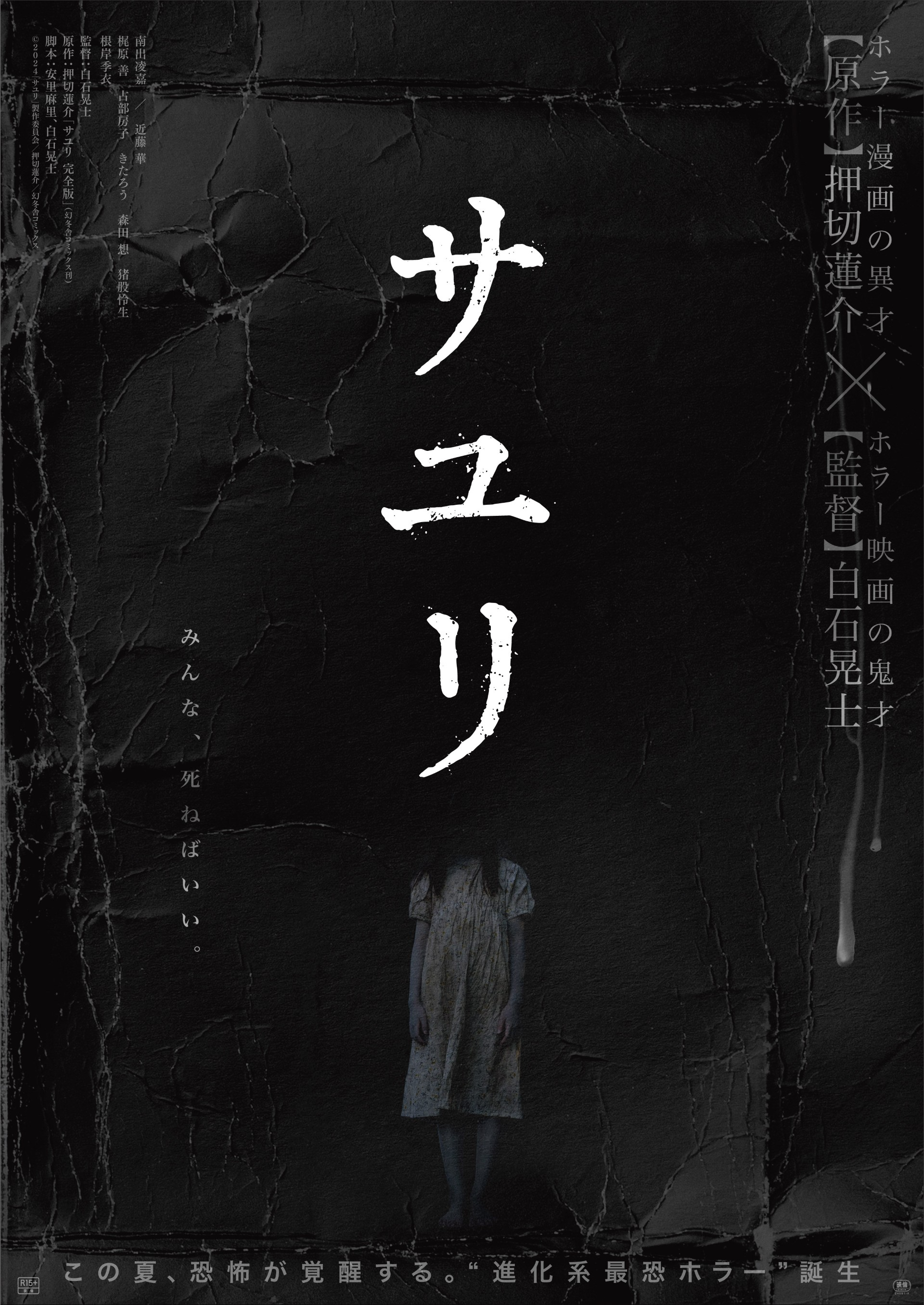
An excited family discover the perils of buying a “used” home in Koji Shiraishi anarchic haunted house horror House of Sayuri (サユリ, Sayuri). Unlike many other nations, Japan does not really have a comparable housing market as, given changing building regulations etc, it’s common to demolish the original structure and build a bespoke home in its place rather than move into one someone else has vacated. That obviously means that opting for an existing property can be a little bit cheaper, which is presumably how the Kakimis have finally managed to move into what they describe as the dream home, escaping a cramped city apartment for a spacious rural mansion with room enough for grandma and grandpa too.

Of course, this particular home is probably cheaper because something untoward once happened there, though the Kamikis probably don’t know that, and everyone who’s lived there since has moved out a short time later. In a way referencing Shiraishi’s previous work, we can’t really tell whether the malevolent spirit wants the family out or is merely trapped in a loop of revenge on the family that badly betrayed them. In any case, it makes its way through the Kamiki family unit starting with daughter Keiko and causing all manner of strange events in the house. Sensibly, older son Norio begins to ask why they don’t just move but the parents are so committed to their dream of homeownership that they can’t bear the thought and remain determined to hang on to it at whatever cost. 

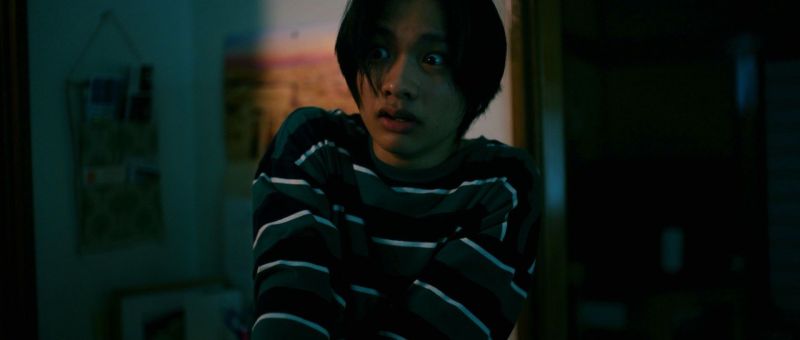
In any case, some wise words from grandma advance a more positive way of battling the ghost, that they should fight it with the force of their lives. They laugh in its face and shout vulgar phrases that send it scuttling away in outrage. The best way to fight the darkness, grandma says, is to live well. Like the house itself, it seems grandma has a well hidden secret that makes her the film’s key asset, a hilarious force of nature and eternal wise woman otherwise ignored because her dementia undermines her credibility. Meanwhile, Norio makes an unexpected friend at school who just happens to be a psychic and is keen to warn that a little girl ghost has latched on to him and it would obviously be better if he could just move out on account of all the evil emanations that appear to be coming from his home.

But as grandma says, it’s the grudges of the living they ought to be afraid of. The house of course holds its secrets and its labyrinthine, multilevel structure is perfect for concealing them. Unfortunately the Kamikis have bought into this poisoned legacy and slowly start seeing their familial bonds fracturing while the ghost takes advantage of their vulnerabilities, their negative emotions and insecurities. In a sense it becomes a question of whether they can endure a place of trauma to maintain their dreams of homeownership or are prepared to make the more sensible decision of ceding ground and moving somewhere less toxic while Norio tries to reclaim his place in his family and protect what remains of it. 

Truly heading in some unexpected directions particularly in its unpredictable send half, the film takes on an absurdist quality but also returns to classic genre tropes of the legacy of child abuse and the betrayal of a parent who saw and did nothing perhaps because, like the Kamikis, they were prepared to accept this this kind of toxicity to maintain a happy family home and be seen as a model upper-middle class family living in a country mansion. It turns out, the only way to exorcise this much more literal ghost is by directly confronting the traumatic past and attempting to find accommodation with it be that through violence or forgiveness. But as grandma had said, the best weapon is love and life, throwing back at the ghost what it no longer has in a defiant expression of being alive and that joy contains which is also of course as grandpa had said a way of honouring the dead resolving to make the most of one’s remaining time in their memory. In any case, Norio discovers that you do not have to continue living in a haunted house but unlike a ghost are in fact free to leave the scene of trauma and seek new happiness in a less upsetting place.


House of Sayuri screened as part of this year’s Fantasia International Film Festival.

International trailer (English subtitles)

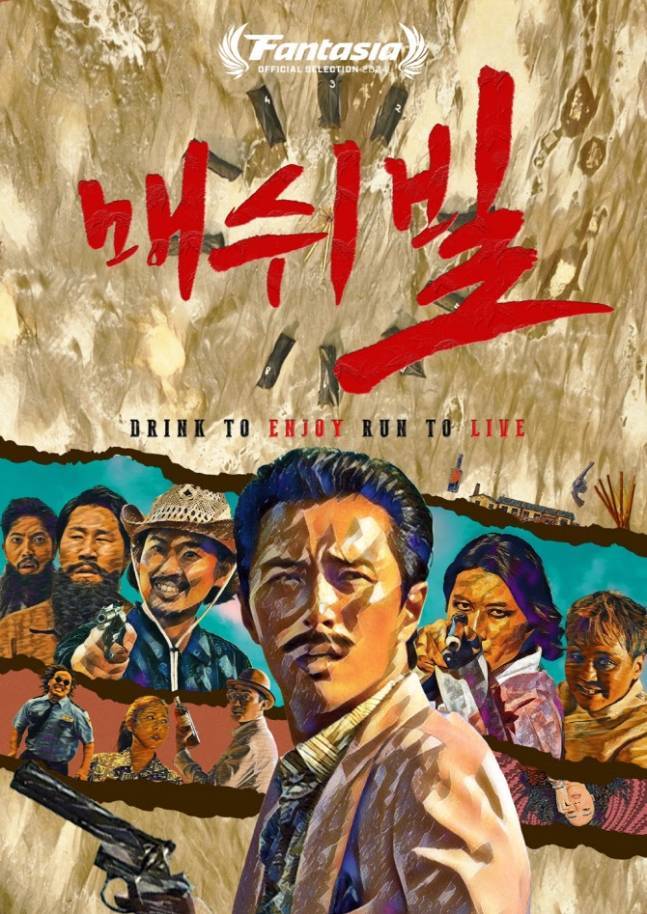
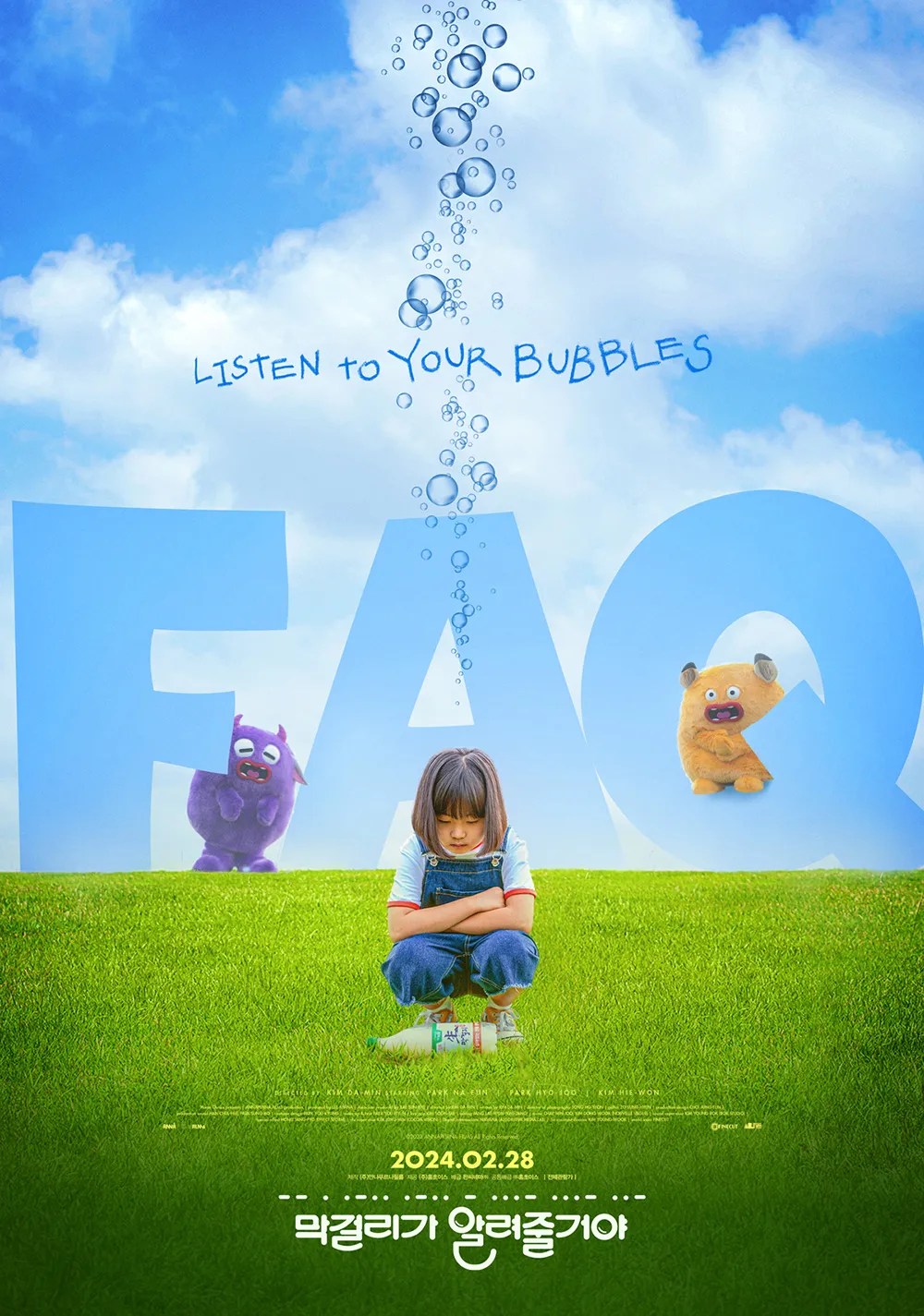
FAQ (막걸리가 알려줄거야, Kim Da-min 2024) [Fantasia 2024]

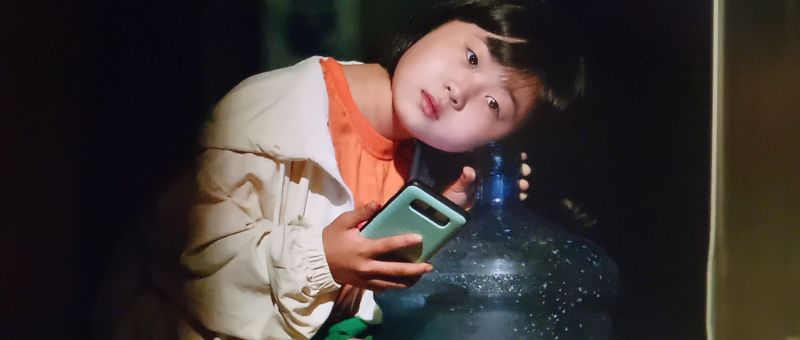
The sad thing is that Dong-chun, the heroine of Kim Da-min’s charming if also searingly bleak exploration of a Korean education FAQ (막걸리가 알려줄거야), is full of questions the adults around her don’t want to answer. To be charitable, it could be because they want her to have the ability to solve problems on her own, but less so because in the adult world there really is only one correct answer and finding solutions that are entirely your own can make others uncomfortable. 

This is something Dong-chun starts to realise, remarking that she now understands why adults don’t like it when you ask questions when her two imaginary friends ask her how she’s going to explain that she got the winning lottery numbers from a bottle of makgeolli that communicates with her through morse code but in Persian. Even Dong-chun knows, she probably shouldn’t mention that part out loud but there’s something quite poignant about the fact that the makgeolli is her only real friend. Her tendency to ask questions, which is difficult for her because of he shyness, has already seen her labelled as weird as by several of her classmates including the obnoxious Na-young who pretends to get along with her because their mothers are friends but is really much more of a model child try hard already obsessed with being on the right track and getting in the best lane for the university application she won’t be writing for another decade.

That’s something else that’s difficult and inexplicable. The education system keeps changing so you can’t even try to game it because they constantly move the goalposts. The reason why the mothers enrol the girls in Persian classes is because they think top universities will be making special offers to people who speak Persian when they come to apply, but also they might not. Concerned that she’ll be disadvantaged by her short stature, Dong-chun’s mother Hae-jin starts injecting her with a growth serum and advises she go to bed earlier, but the girl points out that she needs to stay up to 11pm to finish all her homework. She has cram school and activities nearly every day including an art class that doesn’t even start until 9pm. No one seems to be asking what effects persistent sleep deprivation may have on her later life and mental health besides impacting her height. 

In short, it’s not surprising if her mind’s begun to crack under the constant pressure of being forced to conform to a very rigid sense of social success which begins in early childhood and largely disregards everything that makes Dong-chun interesting from her insatiable curiosity to her empathetic nature and bashful friendliness. We can also get a glimpse ahead by looking at the life of her mother, Hae-jin, who reveals that she suffers from depression in part because she won a full scholarship to a good university and had a high paying corporate job she was pressured to give up to become a housewife and mother. A therapist perhaps problematically told her that she had the wrong attitude because she was now doing the most important thing in the world by raising a child which is why she begins pinning all her vicarious hopes on Dong-chun as a vessel for her own success as a mother in submitting herself to the nation’s relentlessly patriarchal social codes. 

Dong-chun’s parents aren’t bad people, they love her and are actively supportive. They aren’t angry when she experiences stage fright at a speech competition and later tell her she can sit the next one out if she feels uncomfortable (genuinely, not out of a desire to avoid their own embarrassment). But they’re so focussed on her future they’re missing her present, which is why it takes Hae-jin so long to realise she’s fermenting makgeolli in her room. Later she reflects that perhaps they should move to another country, one where Dong-chun would be free to be herself but it may already be too late. In any case, we can see Hae-jin’s contempt for those who choose to live outside of Korea’s rigid ideas of social success in her reaction on finally finding her long lost brother who graduated from Seoul University and had a big corporate job but dropped out to be hippy living off grid. He doesn’t know it and neither does she, but he ends up forming an unexpected connection with his neice Dong-chun being one of the few people who actually listens to her. 

When it finally speaks, the makgeolli has the voice of her science teacher who was the only person who did actually answer one of her questions if only to explain that know one knows yet but he’ll be sure to pass on the information when they do. In a way, getting this cosmic message and focussing how to solve this great mystery at the centre of her life help Dong-chun find her direction even if it’s leading towards “fermentation” in the great black hole of adulthood. The ambiguity of the ending restores a kind of darkness to Kim’s quirky tale but in any case allows Dong-chun to escape through the imagination and free herself from the constraints of a rigid society in which asking questions, let alone answering them, is very much not the done thing. 


FAQ screened as part of this year’s Fantasia International Film Festival.

International trailer (English subtitles)

Christmas in August (8월의 크리스마스, Hur Jin-ho, 1998)

The cruel ironies of life are visited on a lovelorn photographer nearing the end of his days in Hur Jin-ho’s understated melodrama, Christmas in August (8월의 크리스마스, Palwolui Christmas). Christmas in August was Hur’s debut feature though he’d become primarily known for similar material in coming decades even if the romance was rarely as subtle and achingly poignant as in his first film. In some ways about life’s unfinished business, the impossibilities of communication, and coming to terms with impending death Hur allows his melancholy leads to discover a kind of serenity even in the depths of their yearning.

We never really find out the nature of Jung-woo’s (Han Suk-kyu) illness, only that it does not ostensibly interfere with his ability to live a normal life, though unfortunately terminal. After learning that he has only a short time to live, he simply goes home and washes the dishes, continuing with the mundanities of his life as if determined to get on with it. When someone asks him about his health, he tells them that he’s fine or that it’s not really serious, drunkenly letting slip to a friend that he will die soon but making it sound like a joke. Aside from a single moment of drunken railing against his fate, he accepts it with dignity and continues living quietly much as he always has while making preparations for after he’s gone, painstakingly writing down instructions for his father on how to use the TV remote and use the more modern printing facilities in his photography studio. 

There is perhaps a certain irony in the fact that he’s a photographer which is after all about trapping a memory or a point in time and preserving it for an eternity. He himself cannot move on, apparently hung up on his first love who married another man only to return later seemingly unhappy and regretful though she only asks him to remove the photo of her from the display in front of his store as if the memory of her youthful self is too painful to bear. And then, a young traffic warden wanders in looking for an urgent enlargement. For Da-rim (Shim Eun-ha), despite her youth, everything seems to be last minute, making several visits to the shop with an order that must be completed as soon as possible before visiting with no order at all. 

The relationship that arises between them is diffident and tender. It is also largely unspoken, Da-rim simply remarking on having a friend that can get them free tickets to an amusement park without exactly asking Jung-woo if he would like to accompany her. From his side, Jung-woo is passive, happy to be in her presence but also wary in knowing there is no possible future for them. He obviously cannot tell her that he’s ill or this brief respite from the futility of his life would disappear while she takes his diffidence as a lack of interest. It’s a love story that never quite gets started but is deeply felt all the same even its chasteness. 

Then again, perhaps words are unnecessary in situations such as this, a single photograph explanation enough on its own. In essence a gentle character study of a dying man’s learning to part with life as mediated through his yearning for a young woman though knowing that his love cannot be fulfilled, Hur presents death as something warm to be accepted rather than feared. Jung-woo takes a final photo with his friends whose eyes are all moist with tears as they pull him to the centre though he, like always, meant to stand on the end. He simply continues living, doing the dishes, retouching photographs, drinking with friends or else quietly crying himself to sleep. 

Though employing many of the tropes of romantic melodrama, Hur aims for subtlety and the eternal heartbreak of life’s unfairness that what we most desire arrives as soon as we can no longer have it. Even so, Jung-woo accepts his fate with good grace and treasures the memory of an unexpected love even as it slips away from him, storing it safely inside a photograph and a letter he may not actually intend to send. “Thank you and goodbye,” he signs off, which might be as a good a declaration of love as any other.


Original trailer (no subtitles)

The Tenants (세입자, Yoon Eun-Kyung, 2023)

“Think carefully. Think about why you can’t leave here, and what keeps you from leaving,” runs the opening and closing dialogue of Yoon Eun-gyeong’s elegantly lensed monochromatic dystopian drama The Tenants (세입자, Seibja) in which the citizens appear to be trapped in an abusive relationship with a toxic city that offers what it claims are attempts to help the struggling get back on their feet but which are really constraints to prevent them from leaving. 

At least that’s what Shin-dong (Kim Dae-gun), a hard-working if apparently average officer worker, discovers when his landlord, who appears to be a child who has taken over this role from his still living mother, informs him that he wants to remodel the building to attract higher quality tenants and effectively bamboozles him into the idea of moving. Only, in this near future society, moving isn’t an easy thing to do and Shin-dong is struggling to pay his rent already for an apartment he barely occupies considering all the unpaid overtime he does just to show willing in the hope of career advancement. His friend in a similar position informs him of a loophole, that ironically enough as other kinds of tenants have rights, if he sublets part of his apartment his landlord won’t be able to kick him out.

Only the pair of lodgers he acquires are strange in the extreme. A very tall man in an alpine hat with two feathers that looks like bunny ears arrives with a decidedly childlike wife who appears not to speak much Korean and just smiles creepily while standing behind him. To make matters stranger they insist on living in the bathroom, because the wife has bowel issues, which also means Shin-dong has to start using communal facilities which turn out to be much busier than expected with similarly troubled office workers. Meanwhile, he starts to feel like someone is watching him and wakes to find one of the pair staring at him in his sleep.

Understandably, he regrets the arrangement but ironically he’s now in place of a landlord himself and feels awkward about asking the couple to leave while forced to acknowledge that they also have rights as tenants which include those to sublet the part of Shin-dong’s apartment he sublet to them. In this way, his space is literally shrinking but it’s also as if the city is further encroaching on his life. He explains that he’s a solitary person and much prefers to live alone but is prevented from doing so by the socio-economic conditions which surround him. His colleague calls him a hardworking loser who just makes trouble for everyone else with his constant overtime while he has invested in making closer ties with the boss in the hope of getting a promotion that way. 

But it appears the only way out of this toxic city which is literally choking Shin-dong with its low quality air is to get a transfer to the new utopia of Sphere 2, an idyllic future settlement with a purified air system advertised in both Korean and Chinese on his morning commute. The fact that Shin-dong works for a friendly corporate entity titled “Happy Meat” which apparently manufacturers ethical, cultivated meat products adds to the sense of unreality in which everything is somehow fake or a little less than you might have been expecting while things are that marketed as positive attempts at kindness are also in themselves a little bit toxic as Shin-dong works himself harder than the most earnest donkey and gets nothing back in return save the ability to think of himself as someone with the status of “officer worker” which at least confers a degree of respect. 

That might be one reason he’s disgusted by the idea of the attic dweller underclass who are, he’s warned, a little bit dangerous having been driven out of their minds by their dismal circumstances and prone to sometimes violent delusions. A less than helpful medical professional advises him to “reduce his thoughts”, which doesn’t seem like a very good long term solution even in this “zombie-like” city though even when he’s been given a chance to escape Shin-dong is told he’ll have to cancel his lease first, which means getting his tenants to stamp a form agreeing to end their tenancy and also get a form from the the person they’ve sublet to to do the same. It’s tenants all the way down. Shin-dong finds himself staring into the photo of a beach in the eventual hope of escaping to some kind of paradise, but otherwise seems to be trapped inside this hellish yet grey, lifeless dystopia in which it seems the only salvation may lie in madness. 


The Tenants screened as part of this year’s New York Asian Film Festival.

Original trailer (English subtitles)
The Killers (더 킬러스, Kim Jong-kwan & Roh Deok & Chang Hang-jun & Lee Myung-se, 2024)

Led by Lee Myung-se, The Killers (더 킬러스) was originally billed as a six-part anthology film featuring different takes on the short story by Ernest Hemingway, but somewhere along the way took a kind of detour and now arrives as a four partner with a looser theme revolving around noir and crime cinema. Frequently referencing the Edward Hopper painting Nighthawks, the film hints at urban loneliness and a haunting sense of futility along with the mythic quality of noir as a tale that tells itself.

At least that’s in part how it is for unreliable the narrator of the first episode, a petty gangster who wakes up in a mysterious bar after being cornered by rival thugs. While in there he meets a similarly lost, middle-aged film director in the middle of a strange date with a fawning young woman who’ve definitely wandered into the wrong place. A sense absurdity is echoed in the fact that the man continues to sit in the bar oblivious to the knife in his back until the bar lady pulls it out for him and exposes the real reason why she lures lonely souls to this strange place out of time. Even so, thanks to her dark initiation the gangster is able to become himself and stand up against the rival thugs who were bullying him with his newfound “feistiness” having overcome something of the futility of black and white, classic noir opening sequence.

That’s something that never really happens for the heroes of part two who are a trio of youngsters trapped in Hell Joseon unable to escape their lives as cut price contract killers working below minimum wage for a chaotic company in which everything has been sub-contracted into oblivion. Ironically, one had dreams of becoming a policeman and another a nun while the third has recently had plastic surgery in the hope of landing an acting gig and claims he’s not in this for the money but to make the world a better place. Seeing their work as a public service, they tell each other that it’s wrong to grumble over their unfair pay because other people get less and are otherwise incapable of standing up for themselves until they take a leaf out of the boss’ book and try a subcontracting of their own which doesn’t quite go to plan.

While the first two episodes had been set in the present day the second two are set during the long years of dictatorship, the first sometime in the 1960s under the rule of President Park as an undercover detective and two men who appear to be unsubtle KCIA agents descend on a noirish, rundown bar with a picture of Nighthawks on the wall waiting for a mysterious fugitive to arrive. They don’t appear to know anything about why their target needs to be caught or who he is save for a daffodil tattoo on his arm and are merely they shady figures of authoritarian power we can infer are hot on the tracks of someone hostile to the regime. In any case, they are they are about to have the tables turned on them in a demonstration of their inefficacy in their power.

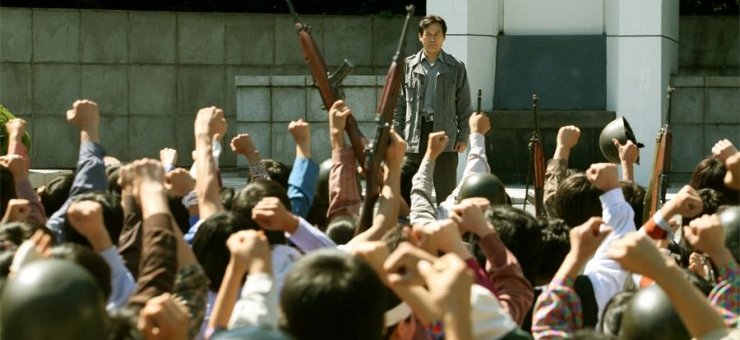
It’s the fourth and final piece unmistakably directed by Lee himself, however, that brings the themes to the four as it opens with an allusion to the assassination of President Park as the narrator tells us that it is 1979 and someone sent a bullet into the heart of darkness but the darkness did not die. The two goons who later show up are KCIA thugs working for the new king Chun Doo-hwan come to threaten the denizens of the cafe which include a man called “Smile” because he can’t and a woman called “Voice” because she has none while trapped inside an authoritarian regime. Inhabitants of Diaspora City, a home to the exiled, they have only a small hole to another world which affords them the ability to dream. Relentlessly surreal the segment is marked by Lee’s characteristic visual flair and sense of noirish melancholy that extends all the way out to a world more recognisably our own though no less lonely or oppressive.


The Killers screened as part of this year’s New York Asian Film Festival.

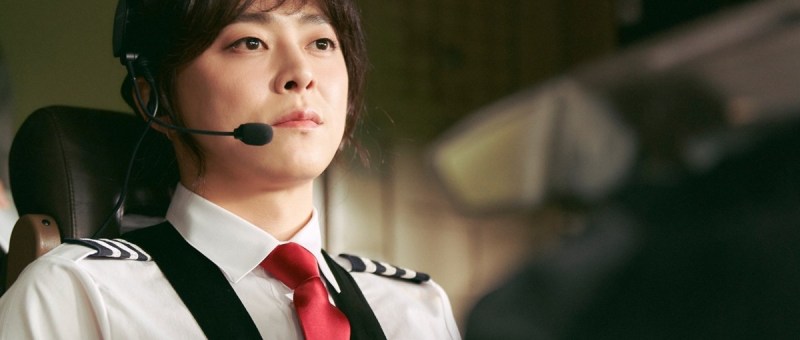
Frankenstein Father (프랑켄슈타인 아버지, Choi Jea-young, 2024)

A teenage boy confronts his paternal legacy but finds it largely hollow in Choi Jae-young’s pointed familial drama, Frankenstein Father (프랑켄슈타인 아버지). Frustrated by his circumstances, the boy begins asking questions about his genetic history in search of an explanation of all his “faults”  but begins to realise that perhaps the faults were not his own in any case and what he really wants is freedom, the right and opportunity to be his own man rather than a reflection of her father’s desires.

Left largely alone after his mother’s death amid the absence of his truck driver father, Young-jae decamps at the home of doctor Chi-sung who illicitly sold his sperm as a medical student 17 years previously. Af first Chi-sung wants nothing to do with the boy but is worried by his attempt to blackmail him, insisting he’ll expose the illegal sperm donation and ruin Chi-sung’s medical career. He sets about trying to disprove hie’s the father, but is finally forced to accept it and there after determines to prove to Young-jae that his “faults” are not his fault and he doesn’t owe him anything as per the contracts he signed with his parents. 

Of course, Chi-sung is also keen to prove himself “faultless”, that his austere life is the correct path because it’s order, rules, and discipline that have allowed him to become what he is today. To that extent, it niggles at him that he could have had a son like Young-jae who is sullen and rebellious. Young-jae describes himself as “dumb,” and has a host of other qualities that dissatisfy him such as shellfish allergy but is perhaps looking for some kind answers about himself and his relationship with Dong-suk, the man who raised him but is also a disappointment in Young-jae’s eyes. A long distance truck driver, Dong-suk is unsophisticated and fond of a drink. He is also controlling, insisting that Young-jae continually check in with him via text and send photos to prove he’s where he should be, and crucially preventing him from doing what he most wants to do which is run.

Running is a symbol of Young-jae’s desire for freedom, but he remains constrained by each father figure. After warming to him, Chi-sung offers him what he wants in promising to get him experimental treatment for his heart condition so he can run again, but soon turns out to be much like Dong-suk insisting he follow his rules and stick rigidly to the plan that he has designed for his sophistication which is also an effort to turn him into a mini Chi-sung. Young-jae is to him an echo of himself for he also grew up with a father who drank and disappointed him. Like Young-jae he too learns for escape as symbolised by his dream of buying a yacht and going to sea that he seems to be continually putting off. 

Yet as Young-jae points out, it wasn’t him who broke when he found out Dong-suk wasn’t his biological father but Dong-suk himself. Chi-sung hints that his decision to use sperm from a A+ donor was informed by insecurity, that he wanted to raise a son who was better than himself though as Dong-suk told his patient human’s can go back to what they once were but can never exceed it. The battle of over paternity of Young-jae isn’t so much a contest of nature vs nurture but a vicarious tussle of masculinity between each of the men who each want to prove themselves through asserting paternal authority over Young-jae and determining the course of his further life.

But Young-jae is almost a man himself and is no longer content to be bound by such corrupted authority. As he later says, he’s no desire to become another of his fathers’ “faults”. Conversely Chi-sung is clearly still trapped by his own father’s legacy and and afraid of the freedom Young-jae chases realising that the fault also did lie with him. In attempting to father Young-jae, he’s also attempting to father himself, insisting Dong-suk raised the boy “wrong” and he must correct him, but perhaps realising he learned a few wrong lessons himself and must make peace with his own past to set himself free while allowing Young-jae to run in a direction of his of choosing no matter the risks to his heart.


Frankenstein Father screens July 25 as part of this year’s New York Asian Film Festival.

The Guest (301호 모텔 살인사건, Yeon Je-gwang, 2023)

We’re under surveillance all the time, so when we really need someone why is that no one seems to be watching? Yeon Je-gwang’s slasher drama The Guest (301호 모텔 살인사건) takes place in a world of high anxiety fuelled by the very real life plague of illicit photography predominantly targeting young women with hidden cameras in places such as public bathrooms and hotels. We’re told the CCTV networks are there for our safety, but they necessarily impinge on our privacy and cannot be relied upon when we most need them.

A case in point, two young men working in a love hotel and running a sideline in illicit photography at the behest of a gangster to pay off their debts are conflicted when they spot what looks like a violent attack and attempted murder going on in one of the rooms. One of them, Min-cheol, wants to intervene but the other is against it. If they call the police, their spy cam scam may get exposed and they need money to pay off their debts to the gangster and restart their lives. Min-cheol in particular has been resentful of their line of work and wanted to quit but also has an ageing mother and needs the money to pay for an operation for her.

The backstory goes someway to giving Min-cheol justification for his complicity while it’s clear he disapproves and is not directly violating these women for his own gratification or direct financial gain. He does not, however, do all that much to resist beyond telling gangster Deuk-cheol that he won’t participate any further. It’s clear that environment around him is extremely misogynistic, and the anxiety enveloping Eun-soo all too real as a previous spy cam victim now left paranoid, checking all around her for anything that looks out of place. A sign outside a bathroom at a petrol station states that it’s a “safe” space because they regularly sweep for cams which somehow doesn’t seem very reassuring. In any case, the attendant is busy watching videos of girls dancing on Tiktok while another guest at the love hotel badgers Min-cheol to call him a “coffee girl”. The killer himself is also an embodiment of this pervasive misogyny, silently stalking his prey and slashing anyone who gets in his way.

Yet masculinity is consistently weak. Neither of the boys is willing to help nor can they fight back effectively against the killer who is himself an ineffectual coward slashing around at random while failing to achieve his own goals of destroying the spy cam footage which of course also exposes his crime and and perversity. When the police eventually arrive, they can’t help much either and quickly fall victim to the killer’s plot somehow not suspecting him and taking his excuses at face value. 

Min-cheol tries to wield the technology for his own advantage, trying to blind the killer with camera flashes all of which hints at the double-edged nature of the technology itself. We’re told it exists for our safety but it also invades out privacy and is open to abuse. A later news report suggests there has been a spate of incidents in which hackers take over the intercom in various apartment buildings suggesting that not even the domestic space is safe. To Eun-soo, Min-cheol is therefore another disappointing nice guy otherwise complicit in spy photography and exploitation of women. Both the boys pay heavy prices for their moral failings, but you can’t really blame Eun-soo for being unwilling to help them given her victimisation at the hands of a misogynistic society. These men will not protect her, and so she has only the option of protecting herself. 

Remaining largely within the grim confines of the rundown love hotel, Yeon conjures an atmosphere of malice and anxiety in which a crazed killer wanders the corridors with an axe while relentlessly stalking his prey but it’s really just a manifestation of the fear and anxiety Eun-soo faces every day of her life as a young woman constantly threatened by oppressive patriarchy and fragile masculinity while eternally watched by those less concerned with her safety than their own gratification. 


The Guest screens July 22 as part of this year’s New York Asian Film Festival.

Original trailer (no subtitles)

A Good Lawyer’s Wife (바람난 가족, Im Sang-soo, 2003)

Sexual repression and rigid patriarchal social codes slowly dissolve a “normal middle class” family in Im Sang-soo’s extremely frank treatise on contemporary gender roles, A Good Lawyer’s Wife (바람난 가족, Baramnan Kajok). The Korean title translating as “adulterous family” perhaps hints at Im’s winder intentions focussed not only on the role of “wife” but each of those within the family unit which is it seems resistant to change even as the society changes around it, the widowed mother-in-law ironically emerging as the most liberated and progressive of them all. 

Hojung (Moon So-ri) may be a good lawyer’s wife, but she’s also quietly dissatisfied eventually drifting into a relationship with a strange teenage neighbour she caught peeping at her in the nude. Her husband Youngjak (Hwang Jung-min), the lawyer, is a poor lover unable to satisfy her sexually while conducting a secret affair with a bohemian artist with whom he is able to have transgressively kinky sex. The couple have a young son, Soo-in, who is adopted and a little insecure worried that his grandmother doesn’t really like him because they aren’t related by blood while the other kids sometimes pick on him at school. Grandma Byunghan (Youn Yuh-jung) meanwhile is also having an affair, contemptuous of Youngjak’s father Changgeun (Kim In-mun) who has just been told he has only a month to live. 

Yet to everyone else the Joos lead “normal middle class life”, words Youngjak later uses unsuccessfully to help a woman get off on charges she otherwise admits. It might be taboo to speak of it, but sexual repression seems to be at the root of all their problems or at least an incompatibility between leading a what is conceived as “normal middle class life” and embracing one’s sexuality. As good lawyer’s wife Hojung remarks to a friend, once you get married “you’re not a woman anymore, you’re really nothing”. As his wife, and as a mother to Sooin, Hojung is no longer perceived as a sexual being by her husband, though as we later discover he remains somewhat passive both with his wife and with his mistress by whom he is penetrated from behind. Hojung meanwhile achieves her only orgasm when positioning herself on top of her inexperienced teenage lover, symbolically if also problematically reclaiming her sexual agency.

Hojung’s rebellion also has an ironic quality in that finally restores her maternity as she experiences what she describes as a miracle pregnancy, pointing at the couple’s sexual incompatibility as the primary reason they were not able to conceive a child. Even so, the film heavily suggests the cruel and unexpected tragedy which later befalls the family is a kind of punishment for the mutual transgressions of husband and wife as they sought the fulfilment denied to them by the constraints of a “normal middle class life” within the confines of a patriarchal marriage. “If your body wants it, give it what it wants” Byunghan eventually offers when meeting with her lover, declaring herself too old to feel guilty or embarrassed for satisfying her sexual desire while openly contemptuous of her husband with whom it seems she had an unhappy life. “Life’s about being truthful to yourself” she explains to her son, finally taking control now freed from marital constraints if ironically immediately considering re-marriage. 

Changgeun meanwhile sings North Korean military songs in the operating theatre and as we eventually realise, has no siblings because his mother and six sisters were all abandoned in North Korea where they died. His father escaped with him alone though it appears they are now estranged and it can be assumed that Changgeun’s drinking habit which eventually leads to the illness which kills him and destroys his marriage is born of a desire to overcome his guilt and trauma. Changgeun’s past too is something which must be repressed, he cannot easily speak of it because of the stigma surrounding his North Korean roots neatly linking back to Youngjak’s work with the families of those still looking for loved ones executed during the war quite literally falling into a mass grave in the film’s opening. All of these buried truths erode the foundations of the traditional family, yet Im seems to suggest perhaps the family in this form at least isn’t worth saving if it only causes people to hurt each other while forced to conform to a series of socially defined roles unable to be their most authentic selves even within a bubble of supposedly unconditional “love”.


Trailer (no subtitles)