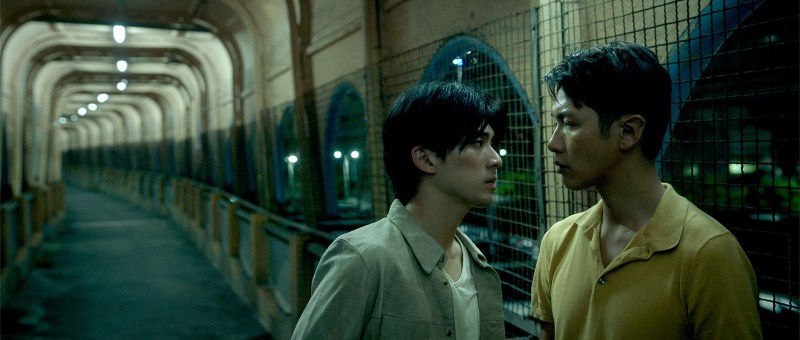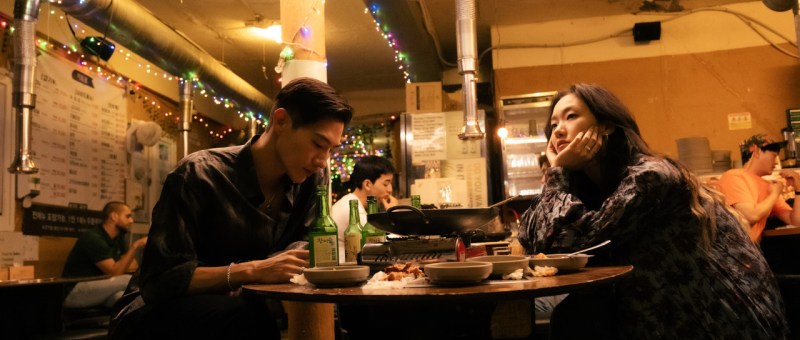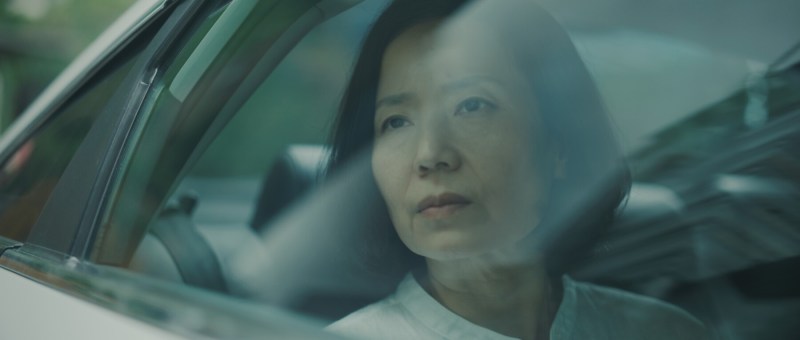
Okinawa Blue Note (오키나와 블루노트, Cho Sung-kyu, 2024)

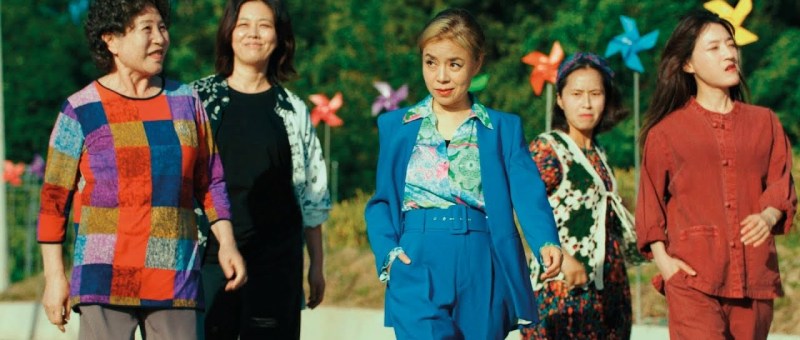
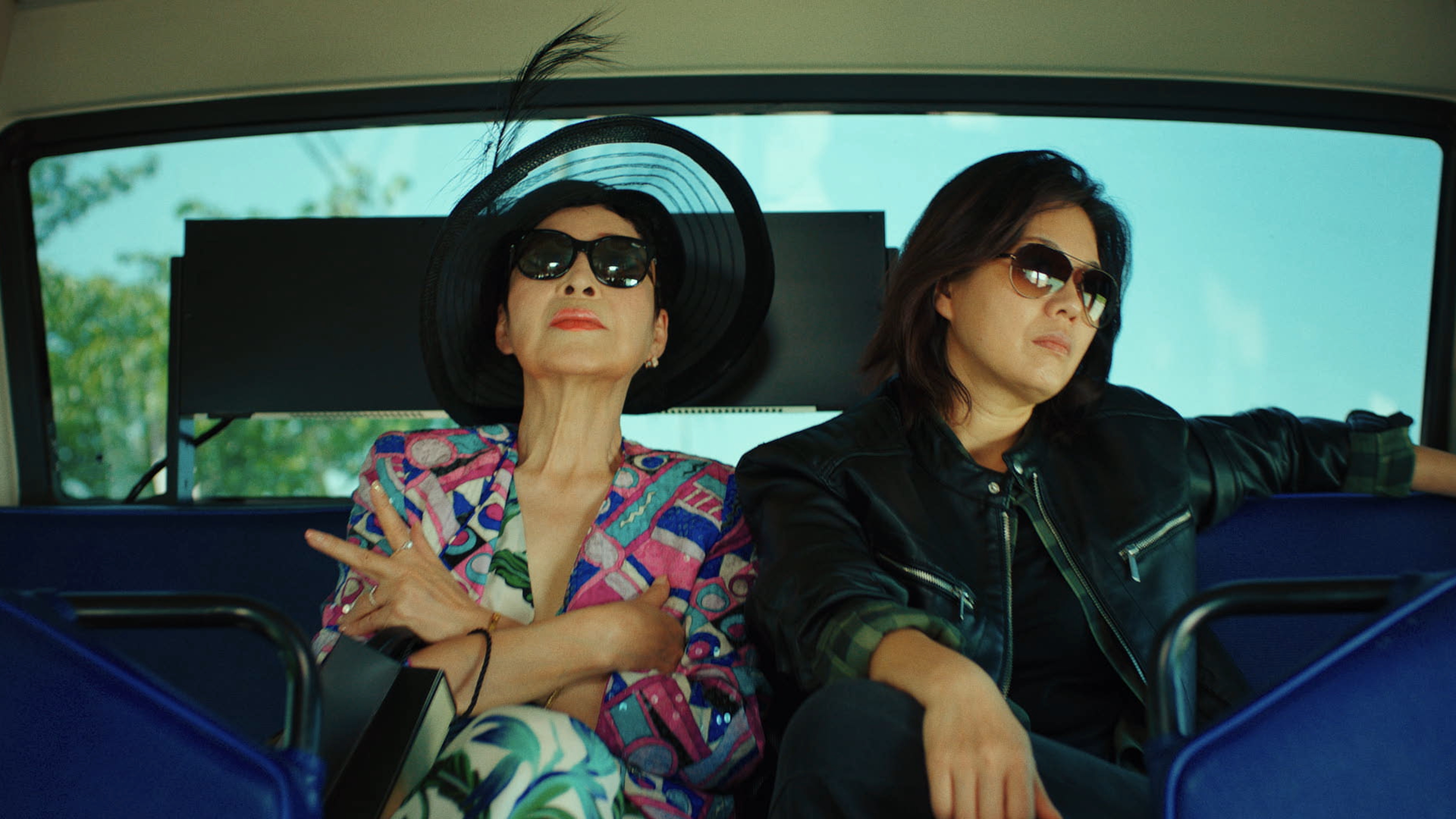
If you run into someone who has the same name, same birthday, and was on the same flight as you to a random destination wouldn’t you call that fate? The protagonists of Cho Sung-kyu’s Okinawa Blue Note (오키나와 블루노트) prefer to think of it as mere coincidence, at least to begin with. They each have different reasons for coming to Okinawa, but then again perhaps fate sent them here to get a new lease on their lives if not to fall in love.

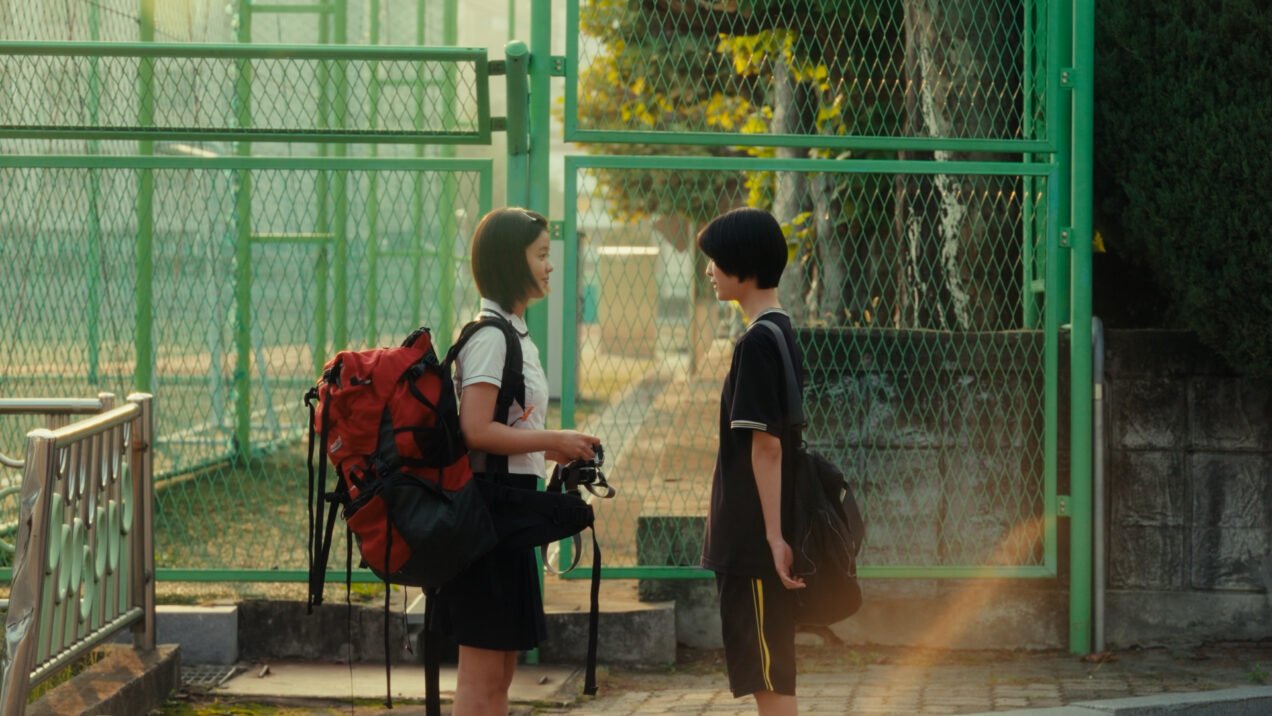
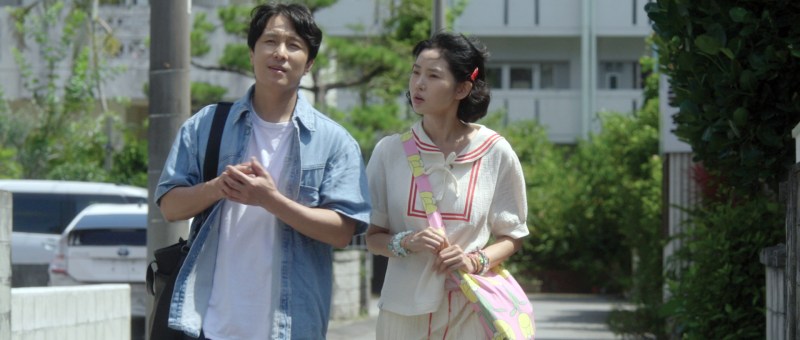
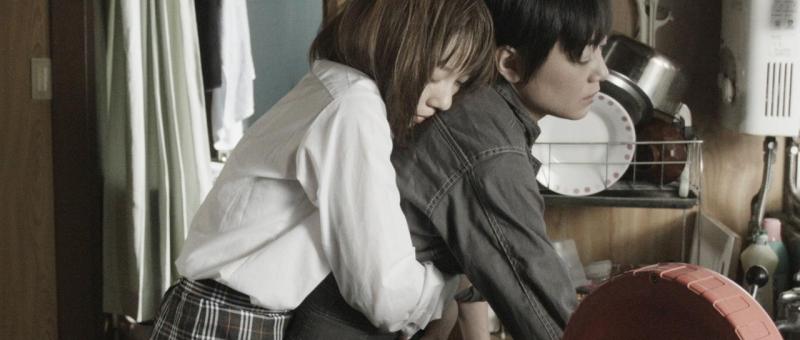
Love does however seem a little unlikely for the mismatched pair each named Kim Jungmin who are about as different from each other as it’s possible to be. Yet the male Jungmin’s (Kim Dong-wan) animosity is somewhat understandable given that his arrival in Okinawa has become chaotic thanks to the female Jungmin’s (Hwang Seung-eon) presence given that she mistakenly ended up with both his pre-booked car and room reservation because the staff members only checked the name and not the booking number. Jungmin isn’t the sort of person who copes well with complications, nor does he cope well with noisy, more extroverted people like the female Jungmin who is also annoyed by the whole thing but on the other hand doesn’t think it’s really her problem having merely assumed she’d been lucky enough to receive a free upgrade rather than actively nabbing someone’s more expensive package. Nevertheless, he’s forced to get along with her because he needs to borrow her rental car to get around which also means accompanying her on her touristic adventures and getting swept up in her enthusiastic exploration of the island.

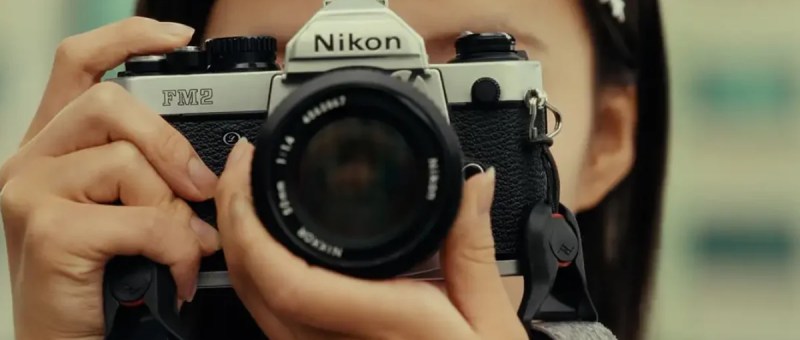
The female Jungmin has a tendency to drink too much, say things she shouldn’t, and forget about them by the next morning. The male Jungmin, by contrast doesn’t drink because he is living with rheumatoid arthritis though he says he intends to drink again if his condition improves. He writes romance novels and doesn’t use the internet all that much. She writes webtoons and posts stories to instagram. They really have very little in common aside with a sense of dissatisfaction about their lives, their names, birthdays, and travel itinerary but you can’t deny that their meeting is like one of the male Jungmin’s novels as even he finds himself musing on a new story about someone who comes to Okinawa to patch things up with an old lover only to fall in love with a whale shark they met along the way.

Gradually it becomes apparent that the female Jung-min is here to confess her feelings to a boy from Korea who, it turns out, may have come to Okinawa in search of greater freedom rather than needing to be liberated from his tank which ironically may be more the case for the male Jungmin. Though it’s obvious from their second meeting with Taemin’s colleague Hiro that the two men are a couple, the female Jungmin can’t seem to see or accept it nor does he actually tell her outright that he’s gay only that all he wants from her is friendship as he’s explained several times before only she was too drunk at the time to remember she’s already declared her feelings and been rejected. What the female Jungmin saw as “fate” really was just coincidence and personal myth making as Taemin too had his own fate to follow that led him to Okinawa where he was freer to pursue his romantic desires, if only slightly, than in the still conservative Korea. When the male Jungmin floats an idea for a book inspired by his time in Okinawa the two men give their consent to be included but also ask their relationship remain a same sex one rather than the heterosexual casting Jungmin had given it possibly out of an attempt to disguise their identity but also an underlying squeamishness towards the inclusion of LGBTQ+ issues.

Nevertheless, the male Jungmin is able to re-envision the situation by turning his life into fiction and exploring a relationship between himself and the female Jungmin with the roles somewhat reversed in which he is a stereotypically hard drinking, chain-smoking writer and the female Jungmin a put upon woman with rheumatoid arthritis helping someone else achieve their romantic desires. Is this life imitating art, or art imitating life? Whatever it is, it seems the trip to Okinawa with its tranquil streets, picturesque environment, friendly and laid-back people has offered each of them opportunities both romantic and creative in a moment of unexpected serendipity, or perhaps this time it really was fate after all.


Okinawa Blue Note had its World Premiere as part of this year’s Cinema at Sea.

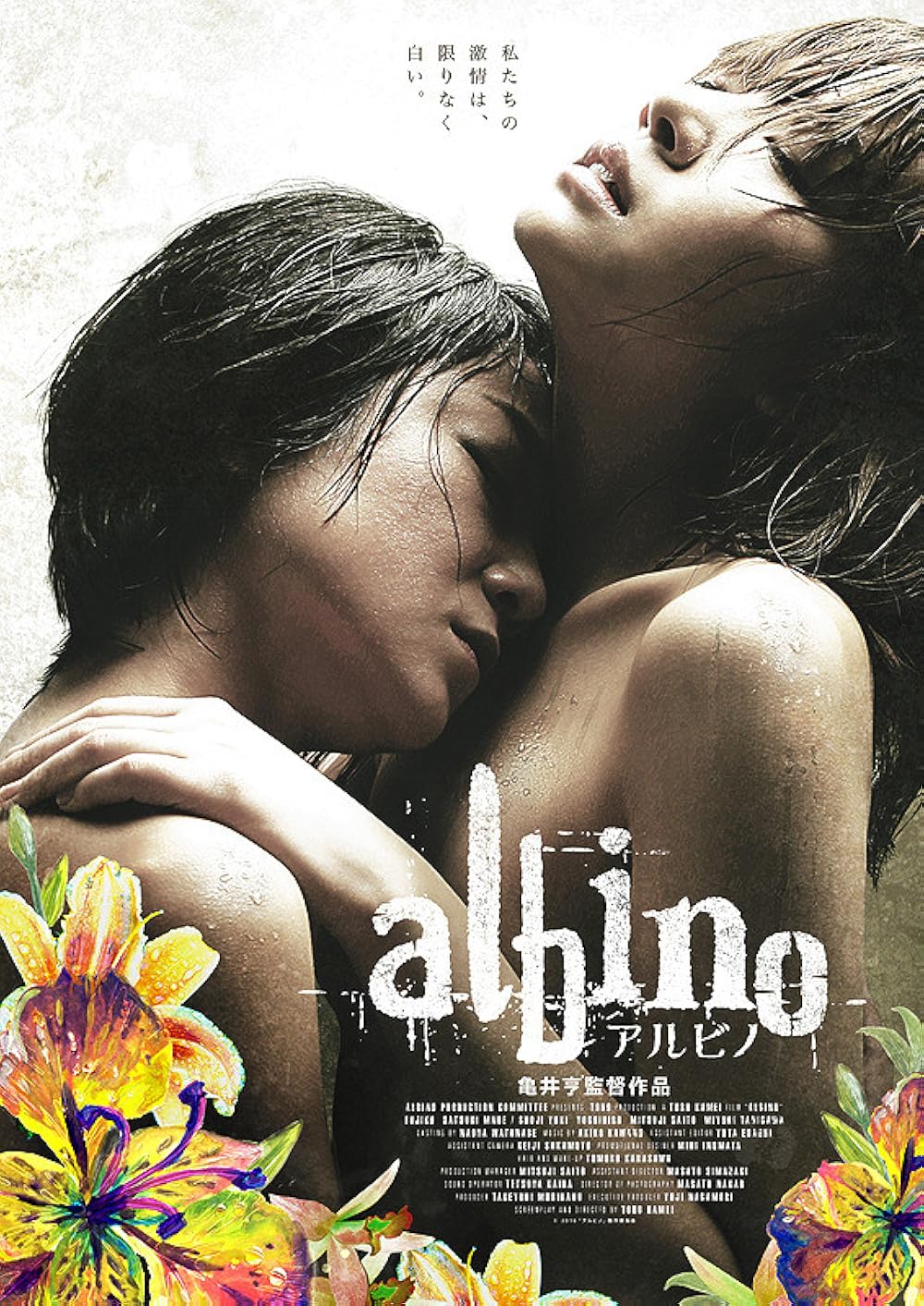
Albino (アルビノ, Toru Kamei, 2016)

Two women struggle to free themselves from the abuses of a patriarchal and conservative society in Toru Kamei’s tragic lesbian romance, Albino (アルビノ). Though perhaps somewhat out of touch in its tacit implication that same sex love is inherently destructive, Kamei’s sensitive drama finds its marginalised heroines seeking mutual rescue but finding only temporary respite in the bubble of their love fraught as it is with danger and confusion as they each in their own way struggle to escape their respective prisons literal and self imposed. 

Butch plumber Yashima (Fujiko) has always felt somewhat ill at ease, that her inside doesn’t match her out, and the disconnect has made her reluctant to associate with others. On a job one day she encounters a strange young woman, Kyu (Satsuki Maue), wearing a high school uniform who can’t seem to stop gazing at her. Yashima fixes the problem with her sink which was clogged with paper tissue, but is surprised when Kyu calls back and says it happened again. On her return visit, while Kyu’s stepfather is out, Kyu asks Yashima to have a look at the bathroom where she gingerly seduces her, both women perhaps surprised by the depth of their desire. Problematic age gap aside, the two women embark on a passionate sexual affair but struggle to free themselves from the forces which constrain them outside of their intense physical connection. 

Hinting at a kind of gender dysphoria, Yashima lives as a man but feels pressured into conforming to conventional femininity. She’s the only woman at her job as a plumber, perhaps still stereotypically regarded as a male occupation, and simultaneously regarded as one of the boys made complicit in the misogynistic banter of her boss and colleague. Resented for her unwomanliness, she’s eventually assaulted by her skeevy vanmate who refuses to believe her when she says she has no interest in men. She implies that prior to her relationship with Kyu, she hadn’t considered other women but had perhaps thought of herself as male, and is immediately overwhelmed by her newfound desire. Meanwhile, she’s also dealing with familial trauma in her difficult relationship with her alcoholic mother who frequently turns up only to ask for money to spend on drink. 

Kyu, meanwhile, is more directly oppressed, trapped in an abusive environment with violent stepfather who repeatedly rapes her, his tissues the ones which eventually clog the sink after she tries to wash them away. She claims that the uniform is a fashion statement, though the implication seems to be that her stepfather does not allow her out of the house even to go to school if indeed she is still a student despite her claims to the contrary. That might also explain why she continues to clog the sink and call the plumber, potentially alerting Yashima’s boss not to mention the colleague who seems to have realised there’s something going on, rather than simply ring her directly even after she’s really only coming for sex. Kyu makes a habit of giving Yashima hard candies after each of their meetings, Yashima eventually realising that they spell out the word “help”, but she remains too traumatised to escape convinced that her stepfather would find her wherever they went. 

Somewhat awkwardly, the implication is that Yashima’s relationship with Kyu is the force which motivates her to accept her femininity, the younger woman transgressively kissing her after staining her lips with menstrual blood as if to ram the point home. Kyu meanwhile agrees that she too hates being a woman, though her resentment is perhaps more towards her constant victimisation, her utter powerlessness at the hands of the hands of the stepfather who abuses her and whom she cannot escape. Yashima too finds herself victimised as a woman, assaulted by her colleague who leaves by coldly telling her it was her own fault for refusing him, or perhaps simply for her “failure” to conform to conventional social norms, a crime for which he has punished her as means of correction. Yet they each struggle to free themselves, Kyu too traumatised to embrace her freedom despite her literal cry for help, while Yashima is continually punished for her atypical gender presentation. Only in sex do they find release. Shot with a detached realism which extends to the naturalistic though passionate, erotic love scenes Kamei’s melancholy drama offers little in the way of hope for either woman, subtly suggesting that their romance is a forlorn hope because there is no escape from the forces which oppress them in such a rigid and conformist society. 


Trailer (no subtitles)

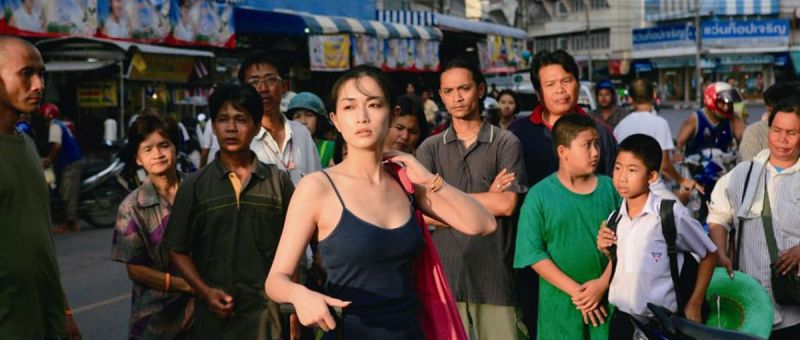
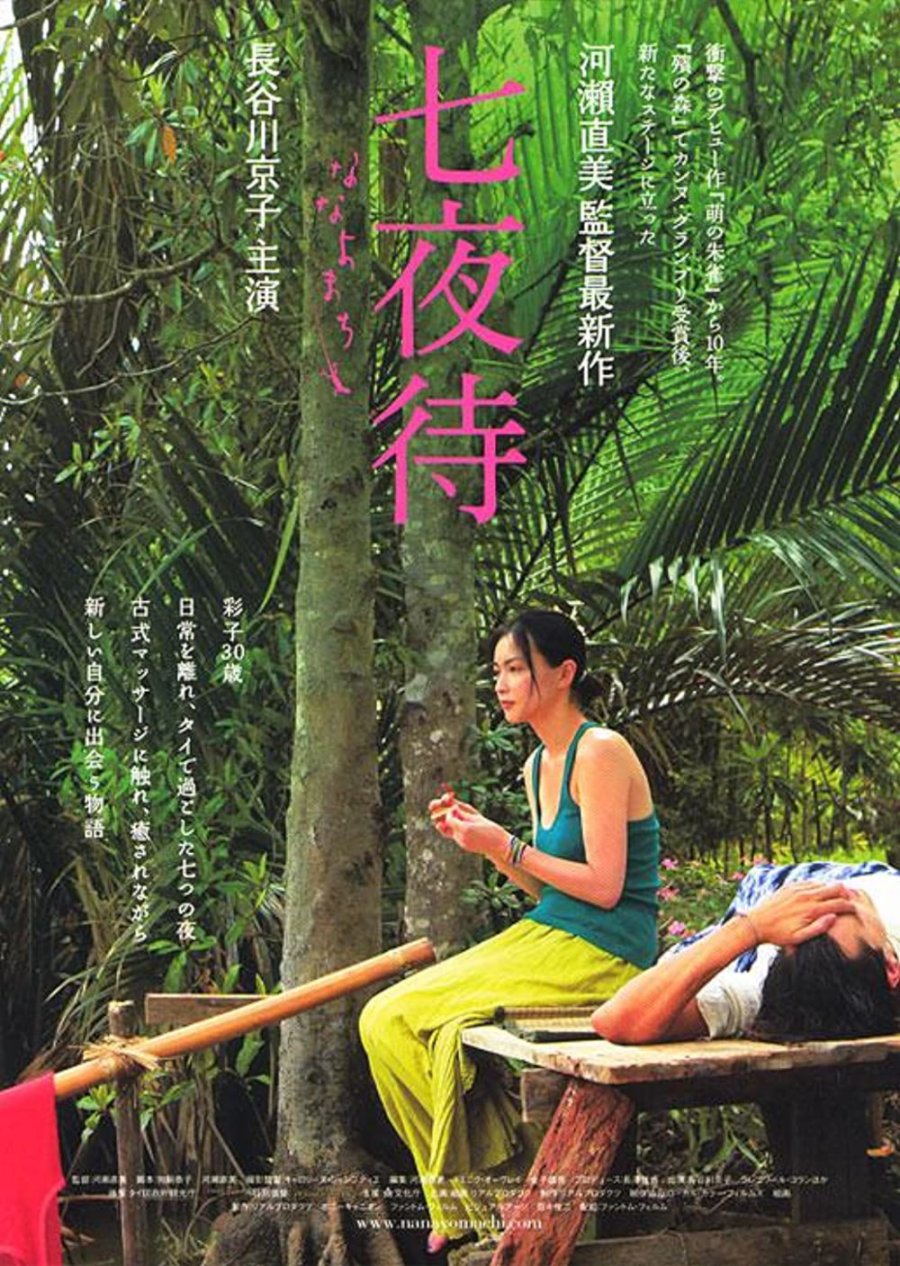
Nanayo (七夜待, Naomi Kawase, 2008)

Naomi Kawase had provoked a minor upset with her unexpected Grand Prix win for 2007’s The Mourning Forest and has since earned a reputation as a festival darling. Her followup film, 2008’s Nanayo (七夜待, Nanayomachi), however, failed to make much of an impact in the international festival scene and seems to have been more or less forgotten, considered among the most minor of Kawase’s disparate filmography. In some ways it picks up where The Mourning Forest left off as a young woman looks for meaning in the primitive beauty of nature, but it’s also a major departure in being the first of her films made outside of Japan and dealing with far broader themes from her familiar focus on familial disconnection to oblique references to the traumatic legacies of colonialism and the inefficiency of language as a tool for communication. 

The heroine, Saiko (Kyoko Hasegawa), arrives in Thailand it seems without much of a plan or a clear idea of where she’s going. Largely unable to communicate in any language other than Japanese, she wanders around lost looking for her hotel until someone is able to explain to her that she’s in completely the wrong place, and as the hotel is too far to walk she’d best take a taxi. The taxi driver, however, can’t understand her either but for some reason agrees to take her. Saiko falls asleep and wakes up sometime later to realise he’s driven her out to the middle of nowhere, belligerently insisting she get out of the car. Understandably fearing the worst, she manages to dodge past him and run off into the forest leaving her bags behind. Eventually she encounters a random Frenchman, whom she can’t understand either, who takes her back to the small guest house he’s staying at to learn Thai massage. Later the taxi driver, Marwin (Netsai Todoroki), turns up too and in a weird coincidence it turns out that he’s the brother of the woman running the massage school, Amari (Kittipoj Mankang). 

Despite having no common language, the four of them along with Amari’s half-Japanese son Toi (which in Japanese anyway means “far”) become an odd kind of family, relying on universal human gestures in an effort to communicate. To this extent, it is perhaps a shame that the film is subtitled in that the impossibility of true understanding through verbal communication seems to be a key theme. At one point, Frenchman Greg (Grégoire Colin) opens up to Saiko about his reasons for coming to Thailand, that he’d been in denial of his homosexuality and is finally beginning to accept himself. Perhaps he tells her precisely because she will not understand, but it’s an immense irony that her first question is to ask if the pretty bracelet on his wrist was a gift from a girlfriend. In their shared mix of broken English, she thinks he’s saying “lovely” when he’s really just trying to say that it looks like rain. 

Meanwhile, Amari has some Japanese, presumably learnt from Toi’s absent father of whom she gives no further details. Marwin later implies that she met him through some kind of sex work, and we later see him fall out with his daughter over something much the same in accusing her of being in a compensated relationship with a foreigner while she fires back that it’s none of his business seeing as he failed as a father in proving unable to support her financially. When Saiko makes the perhaps unwise decision to get in Marwin’s cab, it’s in the process of being vacated by a drunk and extremely rude Englishman who yells some vaguely racist abuse at him and then walks off with a Thai beauty. The prevalence of sex work appears as an extension of contemporary colonialism, something of which both Greg and Saiko may be accidentally guilty in coming to Thailand to look for something as nebulous as spiritual awakening, beckoned in by orientalist notions of Eastern mysticism. Amari, while never resenting Saiko, perhaps sees in her an echo of her absent lover, repeatedly asking her son if he’d want to meet his father or to visit Japan. The climactic fight which emerges seemingly out of nowhere is fought over Amari’s decision to send Toi to a temple to train as a monk, affirming that Saiko wouldn’t understand because her country is “beautiful and rich”, explaining that she wants her son to grow up rich spiritually not to be materialistic, though Saiko herself describes Japan only as “peaceful” lacking the warmth that she feels in the Thai people.  

Saiko of course cannot understand because she has absolutely no idea what anyone is saying, realising only that Toi has gone missing and everyone is so intent on arguing in several languages that no one’s bothering to look for him. She doesn’t understand why everyone’s shouting at her when she’s only a bystander, perhaps another comment on the legacy of colonialism, while to Marwin it seems obvious that the boy’s run off because he doesn’t want to be a monk and is sad thinking his mum doesn’t want him anymore. When Saiko finds him, it seems that he’s particularly preoccupied with whether or not his father loved his mother, perhaps beginning to understand the complexities of his birth and his dual nationalities. 

Once again adopting an elliptical structure, Kawase builds slowly towards the scenes which opened the film in which Toi and Marwin prepare to enter the temple as monks, the moment attaining a kind of spiritual catharsis which seems at odds with the conflicts of the preceding scenes which asked if Amari was right to separate from her son and force him to become a monk against his will. The temple scene is followed by a ritual dance similar to that in Shara in which Saiko seems to cast off her gloominess in spiritual release, building on earlier scenes in which she idly fantasised about intimate massages from a Japanese monk (Jun Murakami) apparently achieving an entirely different kind of enlightenment. Touch, Kawase seems to say, is the only true communication, leaving it to former soldier Marwin to expound on how we’re all different and speak different languages but we should love each other rather than kill in war. There is danger everywhere he explains, though Kawase’s gentle pan to the tranquility of life on the wide river might seem to contradict him.  


Trailer (no subtitles)

A Muse Never Drowns (ミューズは溺れない, Nozomi Asao, 2022)

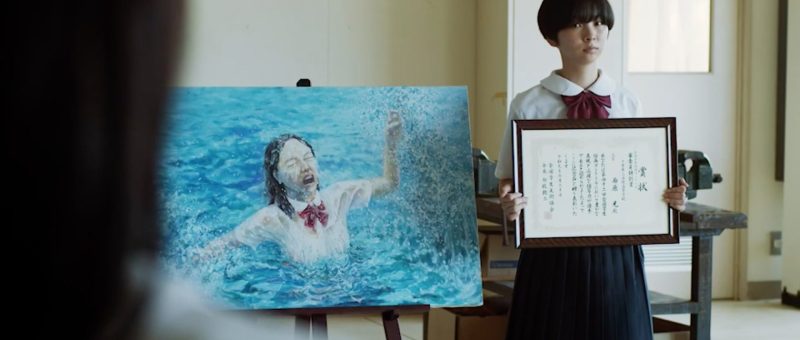
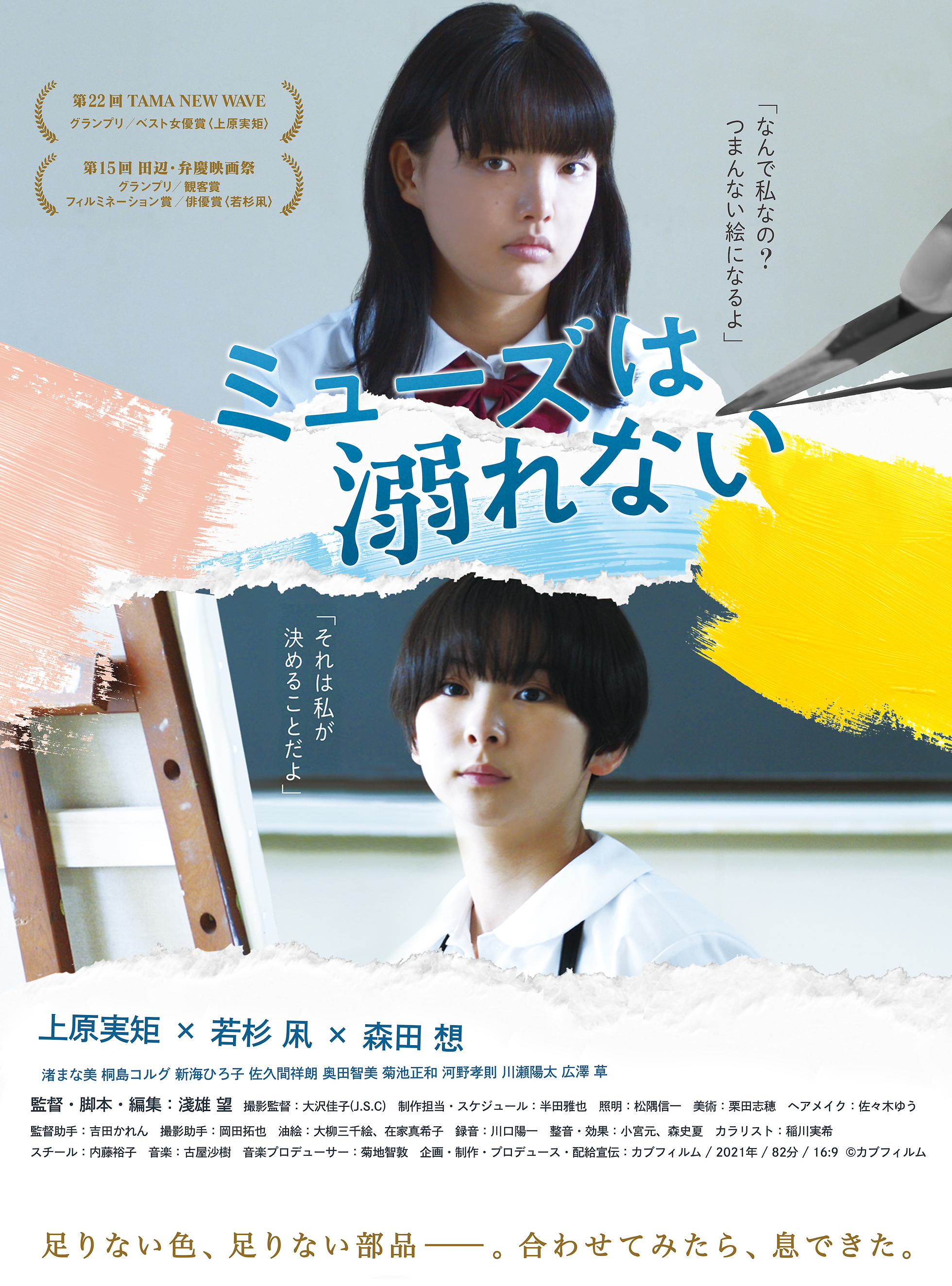
A teenage girl flounders amid a series of changes in her life while questioning her future and identity in Nozomi Asao’s empathetic coming-of-age film, A Muse Never Drowns (ミューズは溺れない, Muse wa Oborenai). Saku (Miku Uehara) is however drowning, a fact brought home to her by the relentlessly aloof Saibara (Mimori Wakasugi) who captures a sense of her panic and despair in a painting of her falling into the local harbour. Yet through their rather tumultuous friendship the pair eventually discover that they aren’t so different after all.

Saibara’s perfectly executed painting destabilises Saku on more than only level, firstly in her discomfort in having been seen and secondly in the insecurity it causes her in her own talent as an artist. Saku had wanted to go to art college, but a teacher harshly corrects her drawing style as if trying to push her towards a more authentic form of expression that’s less worried about getting it right than capturing a sense of what she sees and feels. Lacking confidence that she’ll get in, Saku is thinking about quitting the club in embarrassment but is persuaded to try making something else for the cultural festival while simultaneously receiving an unexpected entreaty from Saibara who wants her to pose for her next painting.

Most of the other students seem to resent Saibara for what they see as her superiority complex, believing she is aloof because she thinks she’s better than them. Because of her blunt manner, Saku too had thought her to be ultra confident and is surprised to realise that Saibara too is filled with doubts and anxieties even if she makes a point of pushing through them. Echoing her teacher’s words, Saibara admits that the lines don’t always come out the way she wants them either but all she can do is try to connect the dots. The reason for her aloofness is a vicious circle of deep-seated loneliness that convinces her she will ultimately be rejected, mirroring Saku’s conviction that she is a “boring” person, and therefore it is easier to remain alone from the start. 

Part of Saibara’s self-rejection is borne of internalised homophobia uncertain if others will accept her sexuality while harbouring a crush on Saku she doesn’t know how to articulate other than through her art while Saku too struggles with her feelings and is confused by the attention she receives from Saibara. Saku’s feelings of insecurity are informed by a sense of embarrassment that she has never experienced a romantic crush like her friend Emi (Kokoro Morita) who likes baseball player Endo despite knowing that likes he Saku, though Emi has also picked up on the way she looks at Saibara and is drawing conclusions about her lack interest in boys. Emi tells her that she accepts her whatever her sexuality is, but is hurt and confused when Saku remains silent and declines the opportunity to open up to her though perhaps partly because she does not really know the answer herself. 

Other than Saibara, Saku is the only one who hasn’t yet returned her careers survey still uncertain of the future direction of her life. Her father has recently remarried and he and her step mother Satomi (So Hirosawa) are expecting a baby all of which has Saku feeling somewhat adrift, displaced within her family and soon to lose her home which has been bought out for a new development project meaning they’ll soon be moving to a new house shorn of the memories of her birth mother and primed for her father’s new start. 

Yet through all her experiences, slowly bonding with Saibara and repairing her friendship with Emi, Saku begins to discover a path towards a more authentic art born of the desire to take things apart and put them back together again while quite literally feeling her way forward with her hands. Coming to terms with her new family circumstances, she builds herself a boat and is no longer drowning but drawing strength from her new found friendships with a renowned sense of possibility for the future while her friends do much the same in the knowledge that they are all scared and uncertain but doing their best to join the dots towards a happier future. 


Trailer (English subtitles)
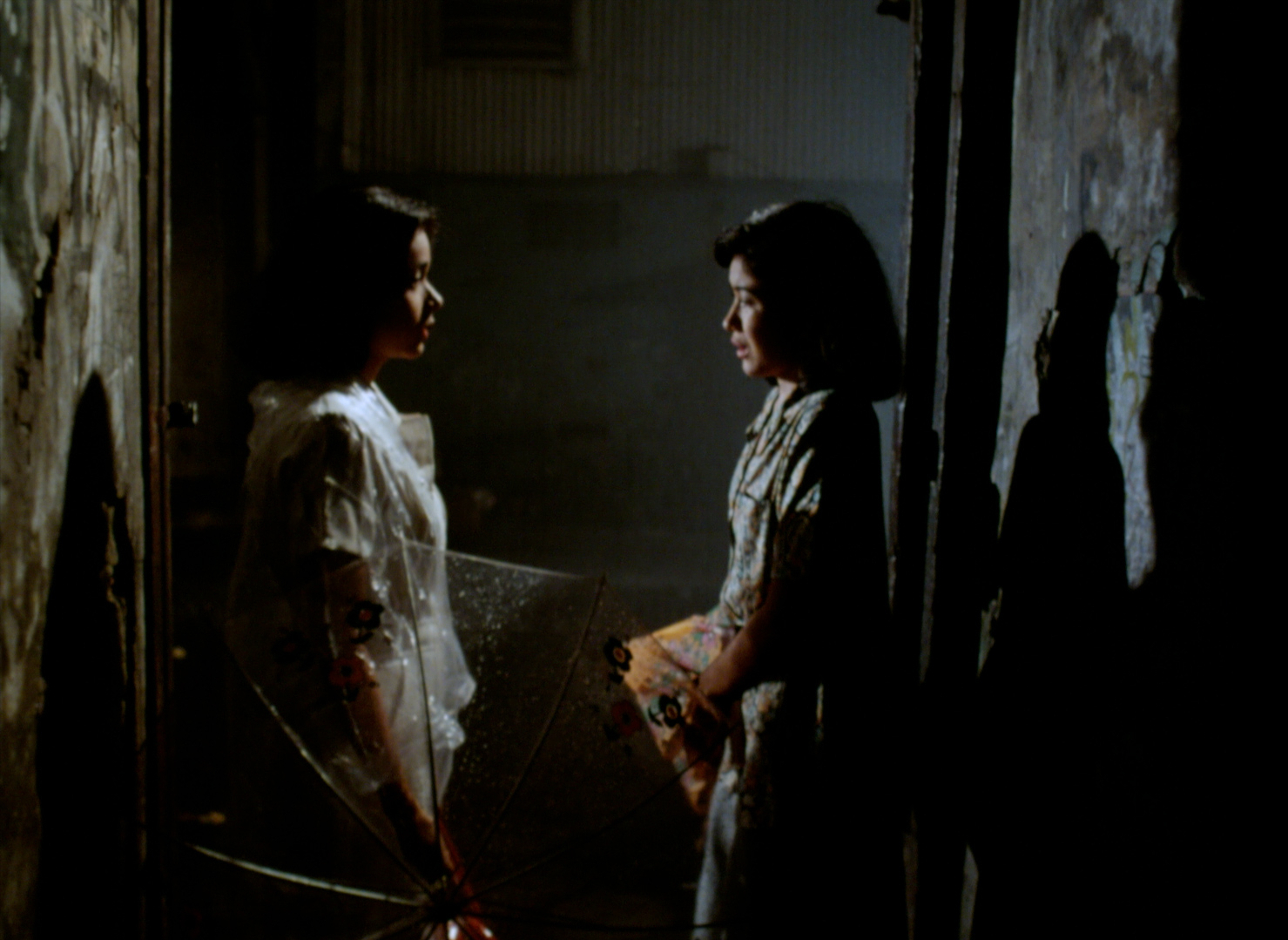
Manila by Night (Ishmael Bernal, 1980)

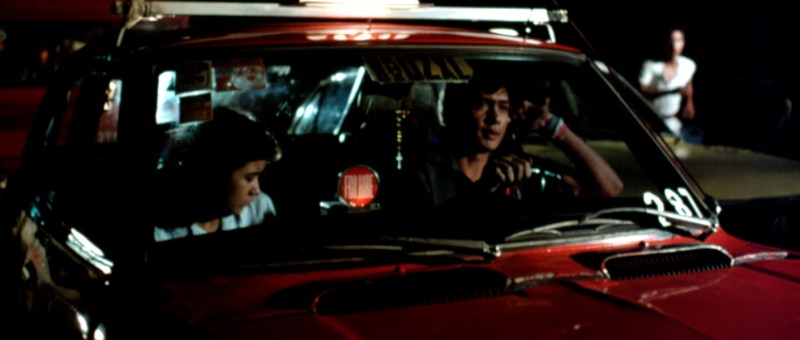
Contemporary youth is swallowed by the darkness of the Marcos-era capital in Ishmael Bernal’s meandering nocturnal epic, Manila by Night. So bleak was its vision that it was blocked from release by first lady Imelda Marcos who objected to the film’s characterisation of her beloved city and insisted that all references to Manila be removed which is why the film was retitled City After Dark in an attempt to distance itself from the realities of urban life under the authoritarian regime. 

Bernal opens however with a scene of aspirational suburban living at the home of a wealthy family as they prepare for an evening out attending a live gig by eldest son Alex (William Martinez), an aspiring folk singer. In a quiet city bar he performs a wholesome cover of the ’69 Crosby, Stills & Nash classic “Teach Your Children”, but the otherwise serene atmosphere is abruptly shattered by gunshots ending the performance and scattering the spectators. The choice of song is in itself instructive in hinting at the generational divide between the apathetic Alex and his respectable middle-class suburban mother Virgie (Charito Solis) who we later discover is carrying a degree of shame over her past as a sex worker and has perhaps overcompensated in her desire to ensure her children become successful members of a conservative society. 

As the song says, Alex too is incapable of understanding his parents’ youthful suffering and finds himself lost in the nighttime city. On the one hand he’s dating a young woman of a similar social class who may be joking when she talks about their marriage but is evidently more serious about the relationship than he is while they retreat to a hotel room experimenting with sex and drugs. On the other hand he’s also experimenting with a gay man, Manay (Bernardo Bernardo), who is also in an awkward relationship with bisexual taxi driver Pebrero (Orestes Ojeda) who has two children and a wife while simultaneously dating naive and innocent country girl Baby (Lorna Tolentino ) currently working as a waitress at a diner where a sleazy pimp keeps hassling her to become a sex worker promising megabucks from wealthy Japanese clients. 

The presence of the Japanese as external economic force is in its own way a reflection of the desire many of the young people have to leave the Philippines, such as that of blind sex worker Bea (Rio Locsin) who is also involved with Alex but hoping to move to Saudi Arabia with her boyfriend Greg (Jojo Santiago) who has been offered employment there but later discovers that he’s been scammed, temporarily stranded in Bangkok until managing to arrange his passage home. Mass unemployment is a constant spectre, Baby’s father also out of work but lamenting the only job prospect he’s found pays so little and is so far away as to be economically pointless. Lack of other options later causes Greg to attempt to manipulate Bea into participating in live sex shows without her full consent while many of the women are forced into sex work in order to support their families. When Baby falls pregnant, realises Pebrero won’t marry her, and is sacked from the diner she too is pushed into accepting the sleazy customer’s offer but ultimately cannot go through with it. Meanwhile, Pebrero’s wife Adelina (Alma Moreno) is also exposed as a sex worker catering to wealthy Japanese clients rather than the nurse she had claimed to be leaving every day in a crisp white uniform for the hospital and later paying a heavy price for her duplicity. 

The crowded tenements inhabited by Baby and Adelina where several members of a large family share a single room stand in stark contrast to Alex’s well-appointed suburban home complete with servants his mother makes a point of talking down to, but what may start for him as a reckless curiosity rebelling against his comfortable life becomes a self-destructive odyssey through midnight Manila in which he eventually becomes addicted to drugs. In a climactic scene, Virgie and her husband batter him with nearby objects while the camera cuts ironically to a series of religious icons and a large statue of Jesus looking down on the scene of chaos before Alex abandons his family to reunite with Manoy. The capture of his friend Kano (Cherie Gil), a tomboyish lesbian in love with an unreceptive Bea, by the police is framed as a kind of crucifixion, the torturing of youth by an implacable authority which restricts its freedom and presents it only with despair. 

Adelina had tried to warn Baby that in order to survive Manila she would need to become “wiser than the men”, but the city is itself full of duplicities and secrets and Baby perhaps ironically the only one finally able to escape its false promises. The perhaps more hopeful coda in which a less curious Alex appears to awaken from his slumber lying peacefully in the light of a new dawn was apparently a concession to the censors but still leaves him lost in a kind of limbo neither in one place nor another but perpetually wandering. At once a portrait of a city lively and free with its series of gay discos and drag nights, weird cults in parks, and nighttime callisthenics classes, and of a place marred by exploitation and hopelessness, Bernal’s odyssey through through Manila by night finds only an elusive hedonism born of internal despair in the intense repressions of authoritarianism.


Trailer (dialogue free)

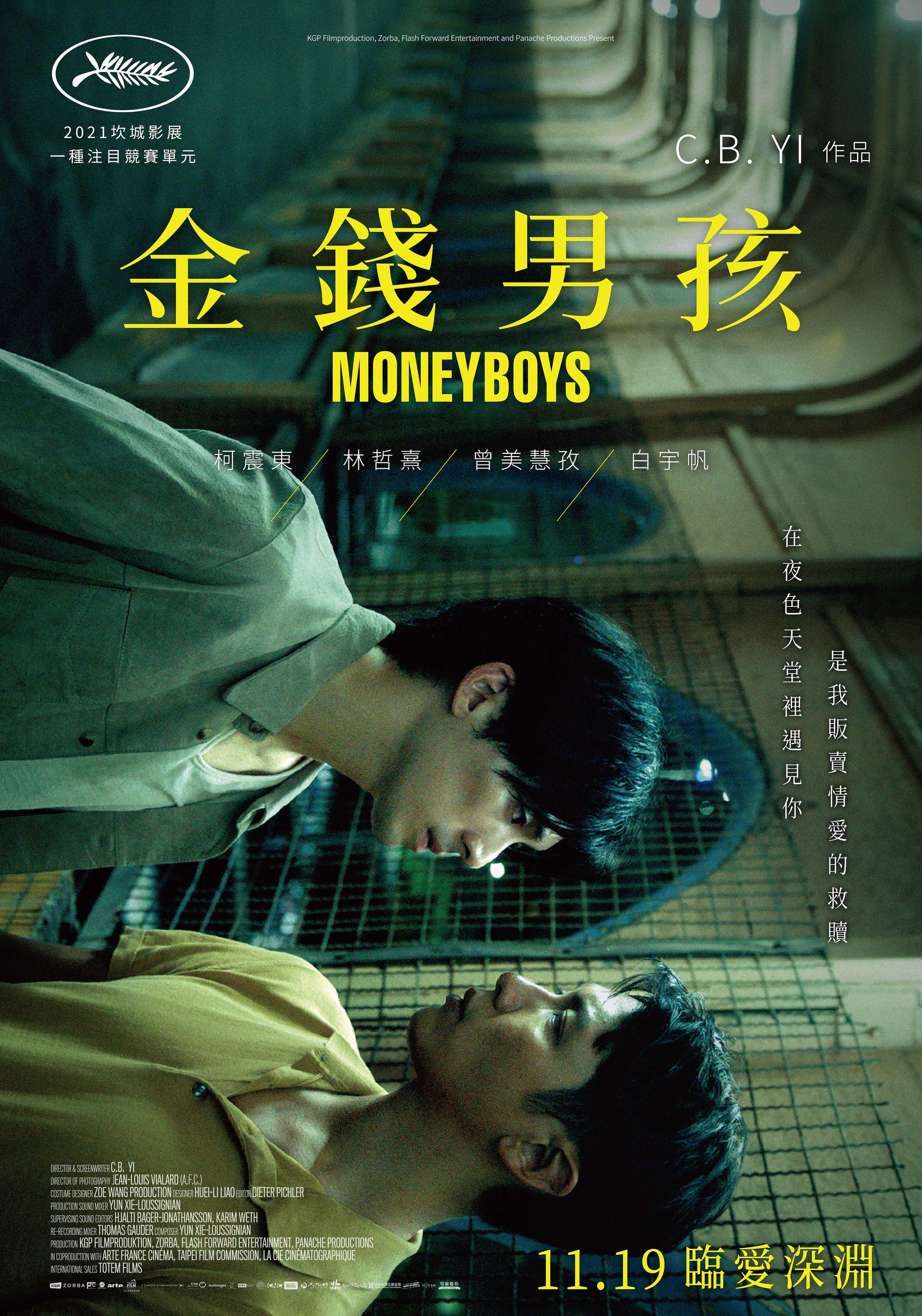
Moneyboys (金錢男孩, C.B. Yi, 2021)

“Who doesn’t sell themselves to make money?” a young man asks in C.B. Yi’s melancholy mainland-set drama Moneyboys (金錢男孩, Jīnqián Nánhái) relating the story of a relative who worked as a tanner all his life, became ill from the effects of the chemicals, and died alone far from home. He may suggest that the exploitative nature of contemporary capitalism will eventually consume you, but it’s an older set of social codes that do for Fei (Kai Ko) who consumes himself in a pathological desire for self-sacrifice as if constantly trying to prove himself worthy of acceptance.

As we first meet Fei he introduces himself as “Jackson”, a naive country boy in the city seeking a means to support his struggling rural family which he finds in sex work. Through his job, he encounters the swaggering Xiaolai (JC Lin) who introduces himself as “Max” and takes him under his wing. Soon they fall head over heels in love, but Xiaolai fears Fei’s desperation and lack of judgment in his choice of client, an anxiety which is later borne out when Fei is badly beaten by a local gangster. Filled with rage, Xiaolai attacks him with a metal bar but ends up badly beaten himself and thereafter sought by the police. Not wanting any trouble, Fei skips town and five years later has started a new, apparently much more successful life, in another city. 

“You’re always living for others” he’s later told by a childhood friend, Long (Bai Yufan), whose long-term crush on him Fei seems to be wilfully ignoring, “the way you sacrifice yourself, you constantly hurt yourself and sometimes others too”. Fei’s self-sacrificing nature does indeed seem to have a masochist component as he wilfully puts himself in dangerous situations to get money to provide for his family. His family, however, reject him precisely because of the nature of the sacrifices he is making. Returning to his home town after being unjustly hassled by local police who attempt to entrap him by getting an undercover officer to pose as a client and searching his home for drugs, Fei is physically attacked by a belligerent uncle who can’t stop ranting about Fei’s marital status beginning by berating him that his family is embarrassed because he has no wife before revealing that they all know about “what you did in the city” and are shamed by it. His father barely looks at him, though his sister appears to know and encourages him to find the right person and hold on to them because life is long and she doesn’t want him to be lonely. 

Later, another woman reassures him that he is “someone who deserves love” though he struggles to accept it. He feels indebted to Xiaolai because he lost a leg for him, unable to move past the transactional nature of love to accept it from someone who wants only the same in return. Consumed by internalised shame he struggles to let go of outdated traditional social codes and unlike Long is unwilling to abandon them in order to live the life he wants. One of his sex worker friends in his new city eventually enters into a sham marriage with a woman who is fully aware of the realities and later pledges to move back to the country and raise a child as a conventional husband and father while tearfully explaining that six years with the gay community have been the best of his life. He too has made a sacrifice of himself for his family but is already torn apart with disappointment and resentment. 

Fei’s tragedy is that he tries to please everyone but himself, revelling in his self-sacrificing suffering and barely noticing when others are caught in the crossfire. Unable to let himself go, he is left only with the memory of the one time he was happy, which wasn’t the one he originally thought it was, and the simultaneous knowledge that he has lost It forever through his own thoughtlessness. Trapped in the past both by the traditional social codes and his thwarted romance with Xiaolai he envisions an ironically progressive compromise but is unable to see the selfishness in his desires perhaps for once putting himself first in failing to consider the feelings of those around him. A neon-lit vista of loneliness, C.B Yi’s melancholy tale of self-imprisonment and the commodification of love discovers only unhappiness in the midst of a repressive social culture defined by the twin poles of rampant consumerism and the filial imperative. 


Trailer (English subtitles)
Love in the Big City (대도시의 사랑법, E.oni, 2024)

“How can being yourself be your weakness?” asks a young woman who, more than anything else, is defiantly herself, to a young man who indeed is anything but. The heroes of E.oni’s Love in the Big City (대도시의 사랑법, Daedosiui sarangbeop), adapted from the acclaimed novel by Park Sang-young, are in some ways on parallel journeys that somehow weave through and around each other as they each try to navigate an often hostile society that has no place either of them.

For aspiring writer and in the film’s early stretches student of French literature Heung-soo (Noh Sang-hyun), his “weakness” is that he’s gay and though he seems to have accepted this about himself is firmly in the closet. Free spirited Jae-hee (Kim Go-eun) who spent her teenage years abroad in France catches him making out with their professor but couldn’t care less though Heung-soo rebuffs her attempts at friendship fearing they’re akin to a kind of blackmail or that she plans to out him to their fellow students. It’s not until Jae-hee is publicly shamed when it’s rumoured a topless photo being shared online is of her that the pair finally become friends. Sick of the curious stares and covert giggles, she lifts her shirt in front of the class to prove it isn’t her, earning the nickname “crazy bitch”.

Her response is the exact opposite of Heung-soo. She claims her freedom by baring all, being defiantly herself and outwardly at least little caring for what others think of her while Heung-soo makes himself invisible and says nothing harbouring intense fear of being exposed. They are each in their way pariahs. Heung-soo because of his sexuality which is still unacceptable to many in the fiercely conformist society of South Korea in which Christian religious bodies still have huge influence and loudly oppose LGBTQ+ rights and freedoms. Heung-soo’s widowed mother is also intensely religious and having stumbled on one of his stories about a crush on a classmate is aware that he is gay but does not speak of it and continues to believe he will be “cured”. This is perhaps why she keeps urging him to do his military service believing it will make a man out of him.

For all of these reasons, it’s not surprising that Heung-soo is unwilling to live his life openly as a gay man because of the prejudice he knows he will face from those around him. Jae-hee, by contrast, refuses to hide and lives the way she wants to but is shamed by those who feel a woman should live in a certain way which is to say quietly, politely, and obediently. A man she thought was a boyfriend while he thought of her as a bit on the side publicly slut shames her and asks what sort of idiot would want to date a woman like her. Though we first meet her as a confident, rebellious student we see her gradually beaten down by the world around her and the demands of corporate culture. Considering marrying a man she may not actually like because it’s what you do, she stares sadly at a middle-aged woman opposite her on the train dressed in a near identical outfit and the comfortable shoes that are psychologically at least uncomfortable for Jae-hee in representing her capitulation to the properness of mainstream society. 

Her degradation continues to the extent that she finds herself in a relationship with a domineering, intensely patriarchal man who later turns violent when she tries to leave him. E often cross cuts and juxtaposes Heung-soo’s and Jae-hee’s experiences as they each suffer similar blows and indeed violence from a macho society if in different ways and for different reasons while having only their intense bond as fellow outsiders to rely on. This really is the love in the big city, a deeply felt platonic and unconditional love between two people who essentially have no one else. It’s through this love that each comes to love and accept themselves, Heung-soo eventually gaining the courage to fully embrace his authentic self while Jae-hee finally regains her independent spirit and refuses to let others shame her while standing up both for the LGBTQ+ community and the young woman she once was at the mercy of a male-dominated corporate culture. Warm and often funny, the film paints contemporary Seoul as an outwardly oppressive city of enforced conformity but equally discovers small pockets of freedom and joy along with the wholesome comfort of true friendship and self-acceptance.


Love in the Big City screened as part of this year’s London Korean Film Festival.

International trailer (English subtitles)

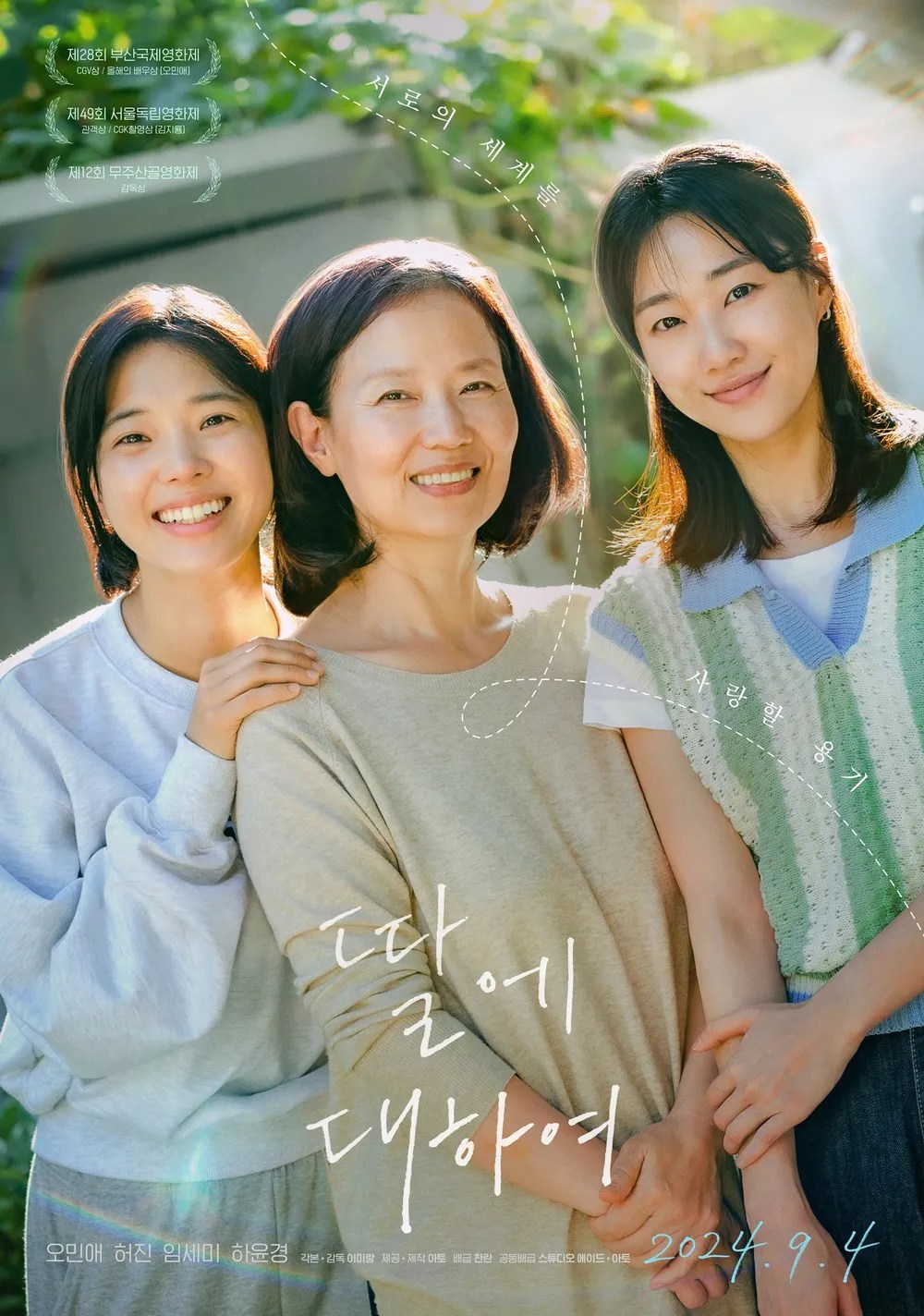
Concerning My Daughter (딸에 대하여, Lee Mi-rang, 2023)

The unnamed mother (Oh Min-ae) at the centre of Lee Mi-rang’s Concerning My Daughter (딸에 대하여) has only one wish, that her daughter will find a nice man to marry and have a few grandchildren. But Green (Im Se-mi) is gay and has been in a relationship with her partner Rain (Ha Yoon-kyung) for the last seven years though her mother doesn’t seem to accept that what they have together is “real” believing it to be some kind of delusion that’s holding Green back from her happy maternal future. 

When she suggests Green move back in with her after her attempt to secure a loan to help her out with the rising cost of housing is denied, it doesn’t seem to have occurred to her that Rain would be coming too while it perhaps seemed so natural to Green that it didn’t occur to spell it out. Green can at times be obtuse and insensitive, unfair both to her mother and to Rain who bears the unpleasant atmosphere with grace and tries her best to get along with her new mother-in-law who is openly hostile towards her and makes no secret of the fact she would prefer her to leave. Of course, some of these issues may be the same were it a heterosexual relationship as the mother-in-law struggles to accept the presence of the new spouse in the family home and the changing dynamics that involves, but Green’s mother’s resentment is so acute precisely because her daughter’s partner is a woman. She cannot understand the nature of their relationship because it will produce no children and to her therefore seems pointless. 

While her attitude is in part determined by prejudice and a sense of embarrassment that her daughter is different, it’s the question of children which seems to be foremost in her mind. Another woman of a similar age at her job at a care home remarks on her maternal success having raised her daughter to become a professor, but she also says that only by leaving children and grandchildren behind you can die with honour. Green’s mother is the primary carer for an elderly lady, Mrs Lee (Heo Jin), who had no children of her own though sponsored several orphans none of whom appear to have remained in touch with her. Now ironically orphaned herself in her old age, Green’s mother is the only one who cares for her while the manager berates her for using too many resources and eventually degrades Mrs Lee’s access to care Green’s mother suspects precisely because she has no family and therefore no one to advocate for her. 

It’s this fate that she fears for her daughter, that without biological children she will become a kind of non-person whose existence is rendered meaningless. Of course, it’s also a fear that she has for herself and her tenderness towards Mrs Lee is also a salve for her own loneliness and increasing awareness of mortality. Green is her only child, and she may also fear that she will not want to look after her as she might traditionally be expected to because her life is so much more modern as exemplified by the bread and pasta the girls bring into her otherwise fairly traditional Korean-style home. On some level she is probably aware that if she continues to pressure Green to accept a traditional marriage they may end up becoming estranged and she will be in the same position as Mrs Lee, wilfully misused by a cost-cutting care industry because they know there’s no one to kick up a fuss about her standard of care.

Even so, it doesn’t seem to occur to her that Rain could care for her daughter into their old age. Resentfully asking her why they “have to” to live together, Rain patiently explains that in a society which rejects their existence, in which they are unable to marry or adopt children, togetherness is all that they have. Green is currently engaged in a battle with her institution which has fired her colleague on spurious grounds but really because of her sexuality with claims that some students are “uncomfortable” with her classes. The violence with which the women are attacked is emblematic of that they endure from their society while even colleagues interviewing her invalidate Green’s concerns because she too is “one of them,” in their prejudicial way of speaking. 

Green’s mother had also, rather oddly, said that her daughter wasn’t like that when Rain reluctantly explained her difficulties at work and again resents that she’s making waves rather than keeping her head down and getting on with her career. Her decision to jump in a car with boxes of biscuits intending to smooth things over with Green’s boss by apologising on her behalf bares out her old-fashioned attitudes, though she too is shocked by the violence directed at Green and her colleague. When her lodgers ask about Rain, she tells them she’s her daughter’s friend, while she avoids the question when her colleagues ask, still embarrassed that her daughter has not followed the conventional path as if it reflected badly on her parenting. 

Yet through her experiences with Mrs Lee and Rain’s constant, caring patience she perhaps comes to understand that her daughter won’t be alone when she’s old and that she too does not need to be so lonely now. There’s something a little a sad in the various ways Green’s mother is told that her attachment to Mrs Lee is somehow inappropriate as if taking an interest in the lives of those not related to us by blood were taboo even if it’s also sadly true that it’s also in Mrs Lee’s best interests to ask those questions to protect her from those who might not have her best interests at heart. What the film seems to say in the end is that we should all take better care of each other, something which Green’s mother too may come to realise in coming to a gradual, belated acceptance of her daughter-in-law if in part through recognising that they aren’t alone and that it’s a blessing that her daughter is loved and will be cared for until the end of her days.


Concerning My Daughter screened as part of this year’s London Korean Film Festival.

Trailer (English subtitles)
Escape (탈주, Lee Jong-pil, 2024)

Lee Jong-pil’s existential action drama Escape (탈주, Talju) opens with scenes of a man running. He runs his way through the rest of the film, continually on the move and chasing a dream of freedom outside of the oppressive society in which he is otherwise trapped. The man who chases him, meanwhile, is himself running away. His movements are slow, calculated, and cold but also somehow tender and almost it seems an act of self harm. 

The fact that the oppressive regime is North Korea is almost irrelevant and the film is less about Communism than it is lack of autonomy that may be found in any other democratic or developed nation in which people are driven to erase a part of themselves in order to fit in or to prosper amid rigidly defined social codes. Nevertheless, there is a direct criticism of the Democratic People’s Republic in the ironic signage, a car ploughing straight through a sign that reads “for freedom and happiness of people”. But then, even if deserter Kyu-nam (Lee Je-hoon) finds happiness in the South we can’t be sure it’s really any better. The welcome message blasted through loudspeakers over the wall that marks the border doesn’t sound all that different from the propaganda messages on Kyu-nam’s radio, while the deserter’s phone positioned to appeal to men like him appears to be out of order. 

But to Kyu-nam, “the South” is only really an idea and it’s clear he intends to transcend those borders too, venturing on to the wider world and wherever it pleases him to go. What he rails against is fate, that his life is dictated by forces outside of his control or more accurately by Field Officer Hyun-sang (Koo Kyo-hwan) from State Security who takes him under his wing and tries to make something of him as a loyal soldier of the North. What becomes clear is that Hyun-sang is a man who fears freedom and that the presence of a man like Kyu-nam is a threat to him because he awakens his own deeply buried desire for liberation. 

From the longing looks he directs at a man with whom he studied abroad in Russia we infer that Hyun-sang is gay and the suppression of his authentic self in order to keep himself safe in a repressive culture has made him cruel and vindictive. Unfortunately, this presumably unintentionally plays into a homophobic trope which aligns queerness with sadistic villainy, but does nevertheless lend a kind of poignancy to Hyun-sang’s otherwise vindictive quest to prevent Kyu-nam’s escape precisely because he himself desires to be free but is too afraid to free himself. From a wealthy and prominent family and with an important position within the regime, this system otherwise works out well for Hyun-sang but he is also imprisoned by it and will forever be prevented from becoming his authentic self or gaining what he truly wants so long as he remains within North Korea. 

A homoerotic charge exists between the two men though what Hyun-sang may really be chasing is himself and half-hoping he’ll be caught. Kyu-nam meanwhile has a single-minded desire for autonomy and individuality, to live and die on his own terms rather than live with no right or power to decide his future. There are those who’ve found other ways to reject the system, a group of mostly female nomads seeking a new place to belong after being kicked out of their village but seemingly with no intention of leaving the country, but for Kyu-nam there is no freedom inside the walls and his determination to find it is what makes him so dangerous to Hyun-sang for whom the very idea of freedom is so painful he’s sublimated himself entirely into an oppressive regime.

With pulsing synth scores, Lee keeps the tension high as Kyu-nam runs and runs through minefields and bullets while pursued by the full force of the North Korean army and the steely Hyun-sang who always seems to be one step ahead. His passage takes on an existential quality, risking death rather than continue to live a “meaningless life” in which he has no power to decide his own fate. His escape is finally self-liberation, taking the decision to free himself because no one else is going to, while Hyun-sang remains a prisoner too afraid of freedom to actively pursue it though perhaps tempted by his encounter with Kyun-nam, a man free in his mind if nowhere else.


Escape screened as part of this year’s London East Asia Film Festival.

US trailer (English subtitles)
Worlds Apart (違国日記, Natsuki Seta, 2024)

Adapted from the manga by Tomoko Yamashita, Natsuki Seta’s quietly empathetic drama Worlds Apart (違国日記, Ikoku Nikki) eventually reveals the private lonelinesses and hidden sorrows that everyone has which isolate them from others. The film’s Japanese title plays on a homonym for the word for “foreign country” instead using the character for “different” which in itself suggests each person is an entire world often unable to make contact or be fully understood by those who cannot after all ever travel there. 

Perhaps that’s something most people feel every once in a while but becomes acutely obvious to 15-year-old Asa (Ikoi Hayase) when her parents are killed in a surreal traffic accident in the film’s opening scenes. She sits struck dumb and vacant at the funeral, having no idea what’s going to happen to her now while other relatives crassly describe her as having been cast adrift like an “unwanted barrel”. It’s this insensitive phrase that seems to drive her aunt Makio (Yui Aragaki), a novelist, into an impromptu decision to offer to take her in though they had only met briefly long in the past and had no real relationship with each other. Makio had been estranged from her sister for many years and never makes any attempt to disguise her utter loathing and resentment towards her for having been so cruel and judgemental when they were children. 

It’s refreshing, in a way, that the film doesn’t encourage her to change her feelings after her sister’s death. She doesn’t discover another side to her through bonding with Asa nor are her feelings invalidated much as Asa originally tries to make her like her mother as a means of reclaiming her. In fact, what Makio does is normalise whatever way Asa is feeling telling her at the hospital when forced to identify her parents bodies that it’s alright not to know how she feels. The two sisters were it seems very different, though the grandmother eventually offers an explanation that Makio’s sister had once been seriously ill and therefore unable to live a “normal life” which might explain why she was so enraged by Makio’s decision to chart her own course and wilfully spurn conventionality. 

These are also hints to the hidden world contained with the diaries Asa’s mother left behind to opened when she graduated high school. Makio wrestles with whether or not to pass the notebooks on and when, unsure if Asa is ready to receive the knowledge that might be inside them. Though she settles in to Makio’s home quite comfortably, Asa keeps her grief and occasional bouts of resentment to herself. Seta often frames her as standing alone in vast empty spaces or total darkness, isolated and lonely, now displaced by her liminal status no longer anybody’s daughter but not quite independent. 

Yet this isolation also blinds her to that of others. She doesn’t quite pick up on it when she clumsily attempts to talk about boys with her best friend Emily (Rina Komiyama) who directly tells her she has no interest in them and deflects the question when she asks if she likes girls instead. Emily is also lonely and isolated in feeling anxious to reveal her sexuality to Asa who in any case reacts clumsily when she eventually does. A similar thing happens with a girl in their class who studied hard to apply for a special programme only to be told the organisers are looking for a male student because it requires “physical strength,” while Asa also seems to develop a fascination with a bass player in the school music club who declines an offer to collaborate because she doesn’t want to get her hopes up only to be disappointed in the end. 

Makio hadn’t previously wanted to share her life, separating from an old boyfriend she still seems attached to out of an apparent fear of intimacy but nevertheless opens herself to Asa in deciding to respect her as an adult giving her agency over her own choices along with good, empathetic advice while simultaneously being clear that she doesn’t know if she can come to love her given the depth of hatred and resentment she bore towards her sister. But what the pair of them realise is that good or bad they can each share their memories rather than being forced into a frosty silence even if as Makio points out Asa will never understand her hurt and she will never understand Asa’s loneliness. Gentle and wholesome, the film ironically lays bare how opening up to others can in fact expand the world inside you instead filling the space rather than leaving you isolated inside it and returning light to a world that might otherwise have seemed dark and lonely.


Worlds Apart screened as part of this year’s Camera Japan.

Original trailer (no subtitles)