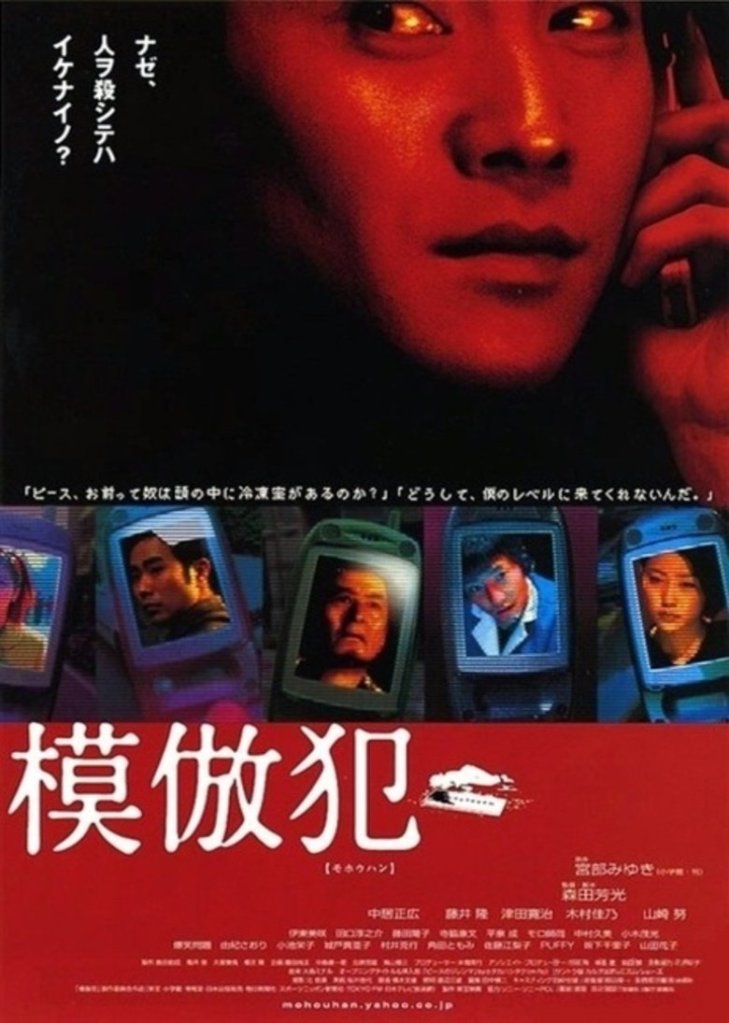
Aesthetics of a Bullet (鉄砲玉の美学, Sadao Nakajima, 1973)

aesthetics of a bullet1973 is the year the ninkyo eiga died. Or that is to say, staggered off into an alleyway clutching its stomach and vowing revenge whilst simultaneously seeking forgiveness from its beloved oyabun after being cruelly betrayed by the changing times! You might think it was Kinji Fukasaku who turned traitor and hammered the final nail into the coffin of Toei’s most popular genre, but Sadao Nakajima helped ram it home with the riotous explosion of proto-punk youth movie and jitsuroku-style naturalistic look at the pettiness and squalor inherent in the yakuza life – Aesthetics of a Bullet (鉄砲玉の美学, Teppodama no Bigaku). This tale of a small time loser playing the supercool big shot with no clue that he’s a sacrificial pawn in a much larger power struggle is one that has universal resonance despite the unpleasantness of its “hero”.

Kiyoshi Koike is a former chef with a gambling problem and a living room full of rabbits that he bought hoping to sell as pets but his sales patter could use some work and the business is not exactly taking off. Getting violent with his girlfriend after borrowing money from her to play mahjong and then getting annoyed when she doesn’t seem keen to lend him more to change his rabbit business into a dog business, Kiyoshi is at an impasse. So, when the local gangsters are looking for a patsy they can send into enemy territory as a “bullet” Kiyoshi’s name is high on the list. They need someone “hotblooded, must have daredevil courage, when he flips he should make a huge racket” – Kiyoshi more than fits the bill, and more to the point he has no idea what he’s doing.

Given a large amount of money and a gun, Kiyoshi gets a haircut and buys some fancy suits to play his part as a super cool gangster who doesn’t take any shit from anyone. He goes around telling everyone his name and gang affiliation very loudly, waving his pistol and acting like a big shot despite the fact he obviously has no name and no reputation. The plan is he fires his gun, gets killed, his gang swoop in for a gang war and wipe out the opposition. Only, when Kiyoshi gets too invested in his part and beats up a rival gangster, the local boss apologises and offers him a knife to make things even with the guy who just disrespected him…

If he fires his gun, it’s game over but what exactly is keeping his finger off the trigger – fear, or self preservation? Either way, Kiyoshi is way over his head in a game he never understood in the first place.

This is no ninkyo eiga. There’s no nobility here, these men are animals with no humanity let alone a pretence of honour. Kiyoshi is a loser, through and through, but once the gun is in his hand he transforms into something else. The gun becomes an extension of himself, a symbol of his new found gangster hero status. A fancy suit and a fire arm are handy props for a method actor but the performance only runs so deep, what is Kiyoshi now, a man, or a bullet?

Whatever he is, he’s no hero. In his untransformed state he violently beat his girlfriend whom he also forced to work as a prostitute, and even after getting the gun he witnesses a woman being gang raped yet appears to be more amused than anything else. He ends up getting into a fight with the other two guys waiting for their go and seems to feel heroic after the woman gets away but his intention was never to rescue her. Indeed, bumping into her again he makes a clumsy attempt at subtle blackmail though she gets a kind of revenge on him in the end. Even his “romantic” encounter with the glamorous former photo model girlfriend of the rival gang boss ends with a bizarre sex game in which he makes her get on all fours and bark like a dog.

When the time comes, Kiyoshi can’t contemplate the idea of returning to his old loser self and is fixated on reaching the peak of Kirishima which is said to be the place where the gods descended to Earth. When the bullet finally emerges, it heads in the wrong direction. Self inflicted wounds are the name of the game as an aesthetically pleasing, poetic end to this tragic story follows the only trajectory available for a classic yakuza fable.

After beginning with a montage of people sloppily eating junk food set against a proto-punk rock song dedicated to the idea of living the way you please and not letting anyone get in your way, the film contrasts the independent, non-conformist yakuza ideal of total freedom with Kiyoshi’s lowly status in an increasingly consumerist environment. The yakuza life would indeed prove a passport for a man like Kiyoshi to jump into the mainstream, but this fantasy world is one that cannot last and one way or another the curtain must fall on this expensive piece of advanced performance art.

Aesthetics of a Bullet has, like its hero, been abandoned on the roadside. Whereas the Battles Without Honour series has become a landmark of the yakuza genre, Aesthetics of a Bullet has never even received a home video release in Japan and has received barely a mention even the histories of ATG movies. This is surprising as its noir style and art house approach ought to have made it one of ATG’s more commercially viable releases even with its sleazy, nihilistic tone. Opting for a more naturalistic approach, Nakajima nevertheless breaks the action with expressionistic sequences as Kiyoshi fantasises a glorious death for himself, climaxes through gunshot, or remembers the student riots through a blue tinted sequence of still photographs. A complex yet beautifully made, genre infused character piece, Aesthetics of a Bullet is a long lost classic and one in urgent need of reappraisal.


Title sequence and first scene (unsubtitled)

Fish on Land (セイジ -陸の魚-, Yusuke Iseya, 2012)

fish on landYusuke Iseya is a rather unusual presence in the Japanese movie scene. After studying filmmaking in New York and finishing a Master’s in Fine Arts in Tokyo, he first worked as model before breaking into the acting world with several high profile roles for internationally renowned auteur Hirokazu Koreeda. Since then he’s gone on to work with many of Japan’s most prominent directors before making his own directorial debut with 2002’s Kakuto. Fish on Land (セイジ -陸の魚-, Seiji – Riku no Sakana), his second feature, is a more wistful effort which belongs to the cinema of memory as an older man looks back on a youthful summer which he claimed to have forgotten yet obviously left quite a deep mark on his still adolescent soul.
The unnamed narrator begins his tale as a disheartened salary man who tells us that his days simply pass monotonously. He no longer feels contentment but neither does he feel discomfort. Making an awkward phone call to a woman we assume is his wife, he reveals that a project has come up that he simply cannot ignore – one which takes him back to a particular summer he passed as a young man in which he encountered a lost soul and perhaps lost some of his own, too.

In the summer of 1990, the narrator was just about to graduate university and had already secured a job. Taking the final opportunity to indulge some wanderlust, he takes off riding his pedal bike across the country. However, after he gets knocked over and is taken to a local bar for some first aid treatment by its classically sad mama-san, he decides to stay and is given the nickname of “traveller” by the regulars at House 475. It’s here that he meets the titular Seiji – a cynical man with unusual presence which seems to inspire both admiration and exasperation in the small group of people who’ve come to regard the bar as a home from home.

Despite its genial, summery quality, the bar is home to several kinds of sorrow. Shoko, it turns out has her own reasons for her sadness and her relationship with Seiji is often a complicated one. It’s she who describes Seiji as a fish on land – completely at odds with his environment and entirely unable to live in the world or get along with his fellow humans. Carrying deep seated scars from his past, Seiji, she claims, is unable to feel joy so long he knows someone (anyone, anywhere) is suffering. Or, more to the point, he feels so intensely guilty that he will not allow himself to be happy and has, in some senses, given up living in this world in favour of his own filled with melancholy loneliness.

Indeed, the friendly grandfather from next-door remarks that Seiji sees things far too clearly and that’s why he’s given in to despair. According to him, our human defence against the powerlessness and fear inherent in being alive is simply becoming inured. Our insensitivity saves us, but men like Seiji feel too much and are unable to bear it. On the rare occasion Seiji smiles, it’s often to do with the little girl who lives next-door, Ritsuko, but tragedy is about to come crashing in, changing lives forever and shattering grandpa’s faith in the god he previously said granted us our lack of clarity to help us cope with life’s harshness. Seiji’s reaction is an extreme one, filled with a poetic weight that is difficult for those around him to understand but at the same time perfectly in keeping with his world view.

Framing sequence aside, Iseya opts for an interesting, slightly non-linear structure in which scenes jostle like memories, slightly disordered, sometimes repeated from a different angle and with greater insight. The framing sequence itself proves the least successful aspect of the film as it fails to marry itself to the implications of the central narrative and anchor its final scene to provide the necessary weight.

Mirai Moriayama imbues the unnamed narrator with an appropriate level of passivity whilst Hideyoshi Nishijima mirrors him with an equal and opposing force of presence which is by turns mysterious, intriguing, and occasionally threatening yet filled with vulnerability. Supporting roles are also well drawn notably by Hirofumi Arai’s local boy left behind and Kiyohiko Shibukawa’s up and coming businessman about to blow out of the small town for bubble era Tokyo, as well as the damaged bar owner Shoko played by Nae Yuki whose disintegration is slowed by Seiji’s presence but still very much in evidence.

If Fish on Land has a weakness, it’s that the invading dark forces it presents feel like a cruel, absurd, visitation on this otherwise idyllic place yet perhaps that’s entirely the point. Life is full of unpredictable cruelties which have to be accommodated no matter how difficult they may be to bear. Men like Seiji are carrying a heavy burden, one which was given to them when their arms were too weak to hold it, but still, you keep on living. Beautifully photographed, intricately plotted and rich with both character and philosophical detail Seiji: Fish on Land proves another interesting effort from Iseya who doubtless has even more to offer in the future.


Unsubtitled trailer:

Oh, Bomb! (ああ爆弾, Kihachi Okamoto, 1964)

vlcsnap-2016-07-12-23h44m56s789Being stood up is a painful experience at the best of times, but when you’ve been in prison for three whole years and no one comes to meet you, it is more than usually upsetting. Sixth generation Oyabun of the Ona clan, Daisaku, has made a new friend whilst inside – Taro is a younger man, slightly geeky and obsessed with bombs. Actually, he’s a bit wimpy and was in for public urination (he also threw a firecracker at the policeman who took issue with his call of nature) but will do as a henchman in a pinch. Daisaku wanted him to see all of his yakuza guys showering him with praise but only his son actually turns up and even that might have been an accident.

His mistress has moved on, his wife got religion, and the clan has gone legit and formed a corporation. That last bit might have been OK except Daisaku isn’t the president, he’s the Chairman, and the new top dog is a pen obsessed political candidate who runs under the slogan that pens can save Japan and violence is the enemy! Taro and Daisaku come up with a way to get revenge on the usurper by sneaking a bomb into one of his beloved writing implements but it’s far from plain sailing in this typically anarchic Okamoto world.

Okamoto casts his ironic tale as a musical, cartoon style slapstick comedy with frequent digressions into musical interludes which take inspiration both from Hollywood movie musicals and classical Japanese drama. Daisaku may only have been inside for three years but he’s a man out of time with behaviour and attitudes more suited to the pre-war world than the modern era. Consequently he often breaks into theatrical rhythms inspired by noh or kabuki with their characteristic chant style recitative and stylised movements. Younger characters sing in the vernacular of the day with Taro and Daisaku’s son belting out a popular hit, and the office workers suddenly breaking into a musical set piece themed around the idea of overtime in which the men and women of the office bicker about balancing the books. Similarly, the would be mayor, Yato, takes his cues from ‘20s gangsters so he naturally dances the charleston before breaking into a tango when he gets some unwelcome news.

Rhythm is the key as the film continues to respond to its various musical fluctuations in highly stylised approach which takes advantage of Okamoto’s innovative editing techniques. Apparently inspired by a Cornell Woolrich story, this is nominally a noir inflected crime story of an ousted gangster trying to rub out his rival and get his old life back, but Okamoto neatly deconstructs the genre and turns it inside out with a hefty serving of irony on the top. Daisaku is an old guy and his era has passed, but Yato isn’t real enough to represent the future either which seems to either belong to bumbling bomber Taro, or Daisaku’s hardworking and straightforward son.

The plot to blow up Yato using his favourite prop becomes progressively more ridiculous as the pen ends up everywhere but where it’s supposed to be and threatening to explode at any second (to great comic effect). Things get even darker when Yato is talked into considering the orchestration of an “accident” for his mayoral rival involving a golf ball which once again causes everyone a lot of bother (though not the kind that was intended).

Daisaku has brought some of his old fashioned habits out of jail with him, quickly corrupting his old friend the chauffeur (who ultimately proves incorruptible even if grateful to have been reminded of the happiness he already shared with his wife, poverty or no) and allowing Taro and his crazy bomb plots access to the criminal mainstream, but ultimately he proves more of a loveable rogue living in the past than a criminal mastermind. Yato, by contrast, is a darker figure with his hypocritical campaign slogans and lack of personal integrity. Daisaku may be deluded in many ways but he never pretends to be anything other than he is, unlike the would be dictator.

Filled with Okamoto’s idiosyncratic touch of absurd irony, Oh, Bomb! (ああ爆弾, Aa Bakudan) is one of his most amusing and formally ambitious pieces of work. Mixing classical theatrical techniques with modern movie musicals, jazz rhythms, expressionist sets and unpredictable editing, he once agains creates a crazy cartoon world in which anything is possible but somehow it’s all quite good natured even when you’re talking about bank robbery and possible assassination plots. Hilarious fun but also intricately constructed, Oh, Bomb! ranks among Okamoto’s most charming masterpieces and is urgently in need of a reappraisal.


Black Kiss (ブラックキス, Macoto Tezuka, 2006)

Black KissThe somewhat salaciously titled Black Kiss (ブラックキス) comes appropriately steeped in giallo-esque nastiness but its ambitions lean towards the classic Hollywood crime thriller as much as they do to gothic European horror. Directed by the son of the legendary father of manga Osamu Tezuka (not immune to a little strange violence of his own) Macoto Tezuka, Black Kiss is a noir inspired tale of Tokyo after dark where a series of bizarre staged murders are continuing to puzzle the police.

We witness the first of them as a sleazy producer type takes a prospective new sign out for a night on the town. He promises to make her a star but predictably the evening ends in a fairly grim love hotel. This early episode is brought to an abrupt halt as the man is conked on the head in the bathroom only to wake up tied to the bed for a spot of vivisection.

However, it turns out there is an unexpected witness to the crime in the form of aspiring model, Asuka, who we now meet by hopping back week as she moves into the flat opposite with the rather sullen and reluctant street punk Kasumi. The pair then get involved with the police as well as with a local paparazzo but what does Kasumi’s missing former roommate have to do with all of this and why does all the evidence keep pointing back to her? The reason may surprise you.

Black Kiss is playing with several genres during its running time but it certainly packs in its fair share of red herrings. Far too many, in fact, leaving its ultimate explanation feeling oddly hollow. Given this amount of build up and a careful arrangement of clues, Tezuka’s decision to end as a standard slasher leaves the viewer feeling cheated as our intrepid heroines make an admittedly exciting final run for it across the rooftops of Kabuki-cho. After throwing so many possible solutions on the screen, the one that is finally offered seems extremely dull in comparison and makes little to no internal sense.

That said, Black Kiss is actually quite good at painting its shady world with an appropriate layer of detail. Tezuka returns to the ideas of duality which play into his Vertigo homage, casting his two leading ladies as alike in some senses – both having been involved in the fashion industry, both half Japanese, both adrift in terms of their lives and ambitions, but is also careful place them on opposing sides as Asuka dresses in light colours to bring out her sweetness and innocence whereas Kasumi is all punk/goth darkness and aggression borne of self loathing. Though originally reluctant roommates, Asuka and Kasumi eventually bond though it’s another weakness of the film that aspects of their relationship appear curiously unresolved adding yet another layer of ambiguity to the already hard to pin down central narrative.

What Tezuka really seems to want to do is use the central mystery to explore notions of genre rather than actually follow or even blend them. He quotes Hitchcock both overtly onscreen with the oddly named “Bats Motel” and Vertigo night club as well as in his Rear Window and Dial M for Murder plot elements but then he veers widely off course into the world of giallo with his semi-explicit sex scene and leather clad avenging murderess. As an exercise in style, Black Kiss is frequently impressive with its innovative cinematography and unusual composition but dramatically it can’t unify its underlying concerns in a way which makes both visual and narrative sense.

A noble failure, there is much to admire in Black Kiss which is only let down by its non-sensical finale. Deliberately or otherwise, Tezuka constantly undercuts himself and pulls his punches just when it seems as if he may be about to move into a more interesting area. The final mystery makes no sense at all and, in what may be Tezuka’s biggest failed ambition, leaves the murders themselves as an odd kind of McGuffin. Quite a big ask in what is, essentially a serial killer movie with a significant lean towards giallo inflected horror. Nevertheless, though Black Kiss fails on many levels it does prove intriguing enough to maintain interest even if it ultimately loses all of the good will it accrues with its dramatically unsatisfying slide into slasher territory in the final quarter.


Unsubbed trailer:

Daytime Drinking (낮술, Noh Young-seok, 2009)

daytime drinkingPoor old Hyuk-jin is about to have the worst “holiday” of his life in Noh Young-seok’s ultra low budget debut, Daytime Drinking (낮술, Natsul). Currently heartbroken and lovesick as his girlfriend has just broken up with him, Hyuk-jin is trying to cheer himself up with an evening out drinking with old university friends. Truth be told, they aren’t terribly sympathetic to his pain though one of them suddenly suggests they all take a trip together just like they did when they were students. Hyuk-jin plays the party pooper by saying he can’t go because he’s meant to be looking after the family dog but after some gentle ribbing he relents and says he’ll come if he can get someone to look in on the puppy for him while he’s gone. He will regret this.
Sure enough, Hyuk-jin arrives at the bus terminal in the town where his friend supposedly knows someone with a cosy inn where they do delicious barbecues only it’s freezing cold and his friends are nowhere to be seen. That’s right – his ultra flaky friends have forgotten all about it and stood him up. Already quite annoyed, Hyuk-jin argues with his “friend” but later accepts his offer to stay over at the inn on his own at his friend’s expense and wait for him to join him there in a couple of days. However, firstly, Hyuk-jin somehow ends up at the wrong inn which seems to be run by a madman where he also meets a female solo traveller who’s apparently fond of a drink. Everywhere he goes, everyone keeps offering Hyuk-jin a drink in a way which makes it very hard for him to say no, though there’s almost nothing else to do around here anyway. Pretty girls and drink are about to land Hyuk-jin in a series of embarrassing incidents that are most likely only bearable because of the residual booze cloud Hyuk-jin is currently residing under.

Following a loose road trip structure, Daytime Drinking follows Hyuk-jin on his strange and accidental odyssey where just about everything conspires against him. Hyuk-jin is not entirely blameless in his fate – he’s far too taken by pretty faces and gets himself into trouble by behaving rudely towards a not so pretty older woman as she bores him with endless prattle, completely failing to take the hint that he’s finding her constant conversation a little too much to bear. Hyuk-jin’s distress continues to grow as his friend keeps delaying his trip, and his troubles only increase until he is deprived of both his phone and his wallet (not to mention his trousers!), leaving him entirely dependent on the kindness of strangers. Unfortunately, though some strangers may seem kind they often have ulterior motives whether they just want someone else to pay for the drinks or they’ve only booked one bed and are planning to creep into the shower just as you’re lathering up…

Daytime Drinking is the first feature from Noh Young-seok in which he acts as scriptwriter, cinematographer and editor so it’s a real indie production. Made on a true shoestring budget of only $9000, production values are surprisingly high even if obviously filmed on low grade equipment. Noh sticks to straightforward composition with Hong Sang-soo style static camera and zooms though he manages to effortlessly bring out the sympathetic humour inherent in Hyuk-jin’s very disappointing mountain holiday. Hyuk-jin himself is never a figure of fun and though hapless is clearly an ordinary person with ordinary failings such as his weakness for pretty girls and booze or his polite way of being impolite in trying to evade the attentions of a boring fellow traveller when he’s already tired and fed up himself.

Noh’s world view seems quite a bleak one but is also undoubtedly very funny. When things get as bad as this perhaps there’s nothing left to do but laugh. You’d think a trip as disastrous as this one would have Hyuk-jin vowing never to leave the house again, but then there’s yet another pretty face at the train station so perhaps a holiday to get over one’s holiday is order? Don’t do it Hyuk-jin! Some people never learn….


US release trailer:

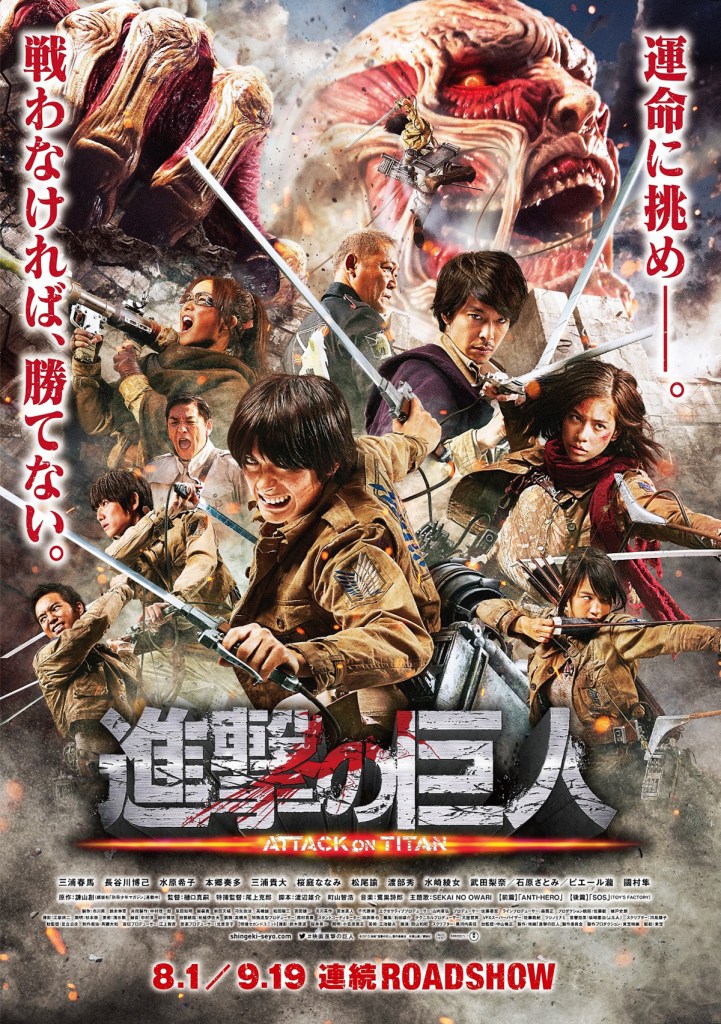
Attack on Titan: The Movie – Part 1 (進撃の巨人 ATTACK ON TITAN, Shinji Higuchi, 2015)

Attack on Titan p1Review of the first of the two part live action Attack on Titan (進撃の巨人 ATTACK ON TITAN, Shingeki no Kyojin) extravaganza first published by UK Anime Network.


It is a law universally acknowledged that a successful manga must be in want of an anime adaptation. Once this simple aim has been achieved, that same franchise sets its sights on the even loftier goals of the live action movie. This phenomenon is not a new one and has frequently had extremely varied results but fans of the current cross over phenomenon that is Attack on Titan may find themselves wondering if perhaps more time should have been allowed before this much loved series tried its luck in the non animated world.

Throwing in a few changes from the source material, the film begins with the peaceful and prosperous walled city where childhood friends Eren, Armin, and Mikasa are young adults just about to start out on the next phase of their lives. Eren, however, is something of a rebellious lost soul who finds himself gazing at the land beyond the walls rather than on a successful future in the mini city state. However, little does he know that the Titans – a race of man eating giants responsible for the destruction which saw humanity retreat behind the walls in the first place, are about to resurface and wreak havoc again. His dreams of a more exciting life may have been granted but humanity pays a heavy price.

Fans of the manga and anime may well be alarmed by certain elements of the above paragraph. Yes, the film makes slight but significant changes to its source material which may leave fans feeling confused and annoyed as the film continues to grow away from the franchise they know and love so well. For a newcomer, things aren’t much better as characterisation often relies of stereotypes and blunt exposition to get its point across. Attack on Titan actually has a comparatively starry cast with actors who’ve each impressed in other high profile projects including Haruma Miura (Eternal Zero), and Kiko Mizuhara (Norwegian Wood, Helter Skelter) as well as Kanata Hongo (Gantz) but even they can’t bring life to the stilted, melodramatic script. Things take a turn for the worse when Satomi Ishihara turns up having presumably been given the instruction to play Hans as comic relief only with a TV style, huge and bumbling performance.

That said, there are some more interesting ideas raised – notably that even a paradise becomes a prison as soon as you put a wall around it. Indeed, everything seems to have been going pretty well inside the walls until Eren suddenly decides he finds them constraining. Once the Titans break through, the very mechanism which was put in place for humanity’s protection, the walls themselves, become the thing which damns them as they’re trapped like rats unable to escape the Titan onslaught.

Machines are now outlawed following past apocalyptic events – humanity apparently can’t be trusted not to destroy itself and this cheerful, feudal way of life is contrasted with the chaos and pollution which accompanied the technologically advanced era. Unfortunately, a reversion to distinctly old fashioned values also seems to have occurred as we’re told you need permission to get married (as sensible as this may be from a practical standpoint in a military society) and the single mother gets munched just as she’s making the moves on a potential new father for her child. The Titans themselves have also been read as a metaphor for xenophobia which isn’t helped by the almost fascist connotations of the post attack society.

Much of this is really overthinking what appears to be an intentionally silly B-movie about man eating giants running amok in a steampunk influenced post-apocalyptic society but then it does leave you with altogether too much time to do your thinking while you’re waiting for things to happen. The original advent of the Titans is a little overplayed with the deliberately gory chomping continuing far too long. Action scenes fare a little better but suffer from the poor CGI which plagues the rest of the film. This isn’t the Attack on Titan movie you were expecting. This is a monster movie which carries some extremely troubling messages, if you stop to think about them. The best advice would be to refuse to think at all and simply settle back for some kaiju style action but fans of either campy monster movies or any other Attack on Titan incarnation are likely to come away equally disappointed. It only remains to see if Part 2 of this bifurcated tale can finally heal some of the many holes in this particularly weak wall.


US release trailer:

The Shiinomi School (しいのみ学園, Hiroshi Shimizu, 1955)

vlcsnap-2016-07-09-01h53m10s460Hiroshi Shimizu is well known as one of the best directors of children in the history of Japanese cinema, equalled only by the contemporary director Hirokazu Koreeda. The Shiinomi School (しいのみ学園, Shiinomi Gakuen) is one of the primary examples of his genius as it takes on the controversial themes of the place of the disabled in society and especially how children and their parents can come to terms with the many difficulties they now face.

The Yamamotos are a happy family with two sons. However, their elation at the birth of their first child soon turned to tragedy as the boy became seriously ill with polio. Times being what they were, the treatment is not completely effective and although their son thankfully survived, he did so with a lamed leg. Now an older child, Yudo walks with a crutch and is constantly left out or bullied by his fellow children. After their second son, Teruhiko, also contracts the disease and is left even more seriously affected than his brother, the Yamamotos decide to open a school for survivors of polio where they can play together, learning how to live with the effects of the disease, free of the stigma which plagues them in their everyday lives.

Yudo just wants to play baseball and the other kids tell him he can if he brings a catcher’s mitt of his own but when he does they take it away from him and use it themselves while he sits and sadly watches them play. When his dad arrives and tries to tell them off, the kids form a mob and all leave together, fake limping as they go. Children are monsters, and often far less forgiving of difference than their adult counterparts (though it has to be said that the parents of other children are hardly blameless here). It’s not surprising that Mr. Yamamoto would want to protect his son by taking him out of this harsh environment where he’s constantly reminded of his disability and a target for the other kids’ cruel games.

The Shiinomi School may be at odds with modern thinking, but its heart is definitely in the right place. The Yamamotos are operating from a humanist perspective – they want to provide a place which helps the children to grow up strong and independent, fully able to cope with their various disabilities, where they can also escape the extreme prejudice which infects society in general. This prejudice is best brought out not by Yudo’s treatment by the other boys, but by the sad case of Tetsuo whose father had so little idea what to do with him that he used to tie him to a pole. Tetsuo’s dad has since remarried and his new wife has no intention of looking after a disabled child so they’ve brought him to Shiinomi with the intention of abandoning him there. Mr. Yamamoto is shocked and originally refuses to take the boy in protest at the idea of a father who wouldn’t want to try and do everything for his son, but eventually reconsiders when he thinks about what the boy is going back to.

Unintentionally segregating the children has some benefits in the short term but there are those who may feel that it sends a message that the problem is with the children and not with the society which rejects them. Perhaps by giving these children a happy childhood and protecting them from the cruelty of others it’s also leaving them unprepared to deal with that same cruelty once they come of age. In any case Shimizu shoots with his trademark humanity, valiantly showing the children singing loudly and learning to enjoy their lives despite their many hardships. From tiny acorns mighty oaks do grow, the Yamamotos want nothing more than to raise these children in love and acceptance and, if the final scene of the children walking down the lane alone with a song on their lips is anything to go by, you could say their efforts have been richly rewarded.


Love’s Whirlpool (愛の渦, Daisuke Miura, 2014)

Love's WhirpoolNo names, no strings. That’s the idea at the centre of Daisuke Miura’s adaptation of his own stage play, Love’s Whirlpool (愛の渦, Koi no Uzu). Love is an odd word here as it’s the one thing that isn’t allowed to exist in this purpose built safe space where like minded people can come together to experience the one thing they all crave – anonymous sex. From midnight to 5am this group of four guys and four girls have total freedom to indulge themselves with total discretion guaranteed.

The four couples are a disparate group which includes a primary school teacher, office lady, shy college student, and a brusque regular who apparently comes to the club five times a week. The male side consists of a slick salaryman, a freeter, a factory worker and an anxious NEET who’s cleaned out his bank account just to be here in this extremely expensive, upscale sex club. After receiving the instructions from the owner (shower first, after sex, after going to the toilet, always use a condom, and respect the women’s right to say no), the group sit awkwardly wearing only their towels waiting for someone else to kick things off.

Everyone is being extremely polite to one another, the women beginning to talk amongst themselves whilst the men do the same. Everyone has come here for the same reason but it’s not as quite as straightforward as they thought it would be. Soon enough, people start to pair up an head downstairs but after the initial ice is broken the edges sharpen, relationships change, and a kind of Bacchanalian harshness begins to take over.

Once inside the split level, trendy club style environment, the guests spend the entirety of the evening naked save for their white bath towels but this is about as far from intimacy as it’s possible to get. They may have all come for one reason, but they each had various different motives for doing so. The office lady and the school teacher are both attractive young women, confident in what they do and don’t want, and would prove a hit in any club or bar (though this is a safer option). The freeter and the salaryman could say the same though the salaryman spends half the evening phoning his wife to explain that he’s been kept out drinking with a boring colleague. College girl and Neet are both too shy to get it on independently, leaving the cynical regular and the overweight factory worker as the odd ones out. It’s not long before they’ve begun to dissect each other, ticking off the check list like remembering to buy washing powder and then discussing the merits of “Ariel” vs “Persil” with your fellow “shoppers” in the checkout line. Utilitarian as it is, as the night goes on the barriers fall away leaving both wild abandon and cruelty lying behind them.

Things are reinvigorated half way through when another couple join, a husband and wife duo who each claim to be 100% OK with how this is going to work but, as it turns out, one of them was more serious than the other. By this point, relationships have begun to solidify themselves and shy Neet has grown attached to the unexpectedly raucous, repressed college girl. Such attachments are unwise in an environment like this, and can become dangerous if everyone does not remain on the same page as to what’s going on. At the end of the evening, the guys are asked to wait so the girls can leave first – to help prevent stalking. This is no strings, remember. No names, no phone numbers, none of this ever happened.

This intense need for secrecy is understandable yet speaks something to the oddly specific conflict between repression and the open expression of erotic desire that is permitted inside the club but only if you follow its rather strict (if very sensible) rules, not to mention the arcane, underground directions needed to find it at all. For some the reason for coming here was loneliness but what they’ll find is only likely to exacerbate the aching lack of connection they already feel. The case of the college student becomes the most interesting as she fights both her own shyness and the intense shame she feels in regards to her own sexual desires. After the fact, she feels as if she’s betrayed herself, as if the “other self” that emerged during the previous night’s proceedings is a shameful doppleganger that must now go back into hiding. She wants to forget this happened, go back to being a lonely college girl but for the NEET, it’s the opposite, he feels unreal now – as if he left his “real” self behind in that unreal space.

A sophisticated take on modern human relationships, Love’s Whirlpool occasionally pulls its punches in opting for a satirical tone and only really skims the surface of why places such as these still need to exist. Stylishly shot and explicit without becoming exploitative or sleazy, Miura’s film proves a refreshingly nuanced, mature take on modern sexual behaviour even if it stops short of probing into some of the darker aspects that flicker around its edges. If Love is a whirlpool, desire is a tornado, but where a whirlpool may drag you under you’ll eventually float to the surface gasping for air. After a tornado burns through, all you’re left with is ashes and emptiness. Modern love, indeed.


English subtitled trailer (NSFW)

Where Chimneys are Seen (煙突の見える場所, Heinosuke Gosho, 1953)

vlcsnap-2016-07-07-01h01m06s792Where Chimneys are Seen (煙突の見える場所, Entotsu no Mieru Basho) is widely regarded as on of the most important films of the immediate post-war era, yet it remains little seen outside of Japan and very little of the work of its director, Heinosuke Gosho, has ever been released in English speaking territories. Like much of Gosho’s filmography, Where Chimneys are Seen devotes itself to exploring the everyday lives of ordinary people, in this case a married couple and their two upstairs lodgers each trying to survive in precarious economic circumstances whilst also coming to terms with the traumatic recent past.

Ryukichi Ogata (Ken Uehara) is our primary narrator, introducing us to his humble circumstances and, for the moment, happy home. He’s married to a cheerful and kindly woman, Hiroko (Kinuyo Tanaka), who was widowed during the war, and the couple rent out their upstairs to a man, Kenzo (Hiroshi Akutagawa), and a woman, Senko (Hideko Takamine) , who aren’t a couple but each rent a room separately. They’re desperately poor, so much so that they have complicated measures in place to try and avoid having any children – a luxury which they can in no way contemplate. However, unbeknownst to Ryukichi, Hiroko has taken on a part-time job outside the home by working at the bicycle races. He’s upset by this because he resents feeling as if his wife has been hiding things from him, though his pride is wounded too. The worry planted in his mind by the idea of not knowing everything there is to know about his wife’s past is brought to the fore when a baby is suddenly abandoned on their doorstep with a note claiming to be from Hiroko’s first husband which states this is “her” child and she ought to look after it from now on.

The titular “magic” chimneys belong to a large scale factory and, in truth, there are four of them, but depending on where you stand they blend into each other, increasing or decreasing in number. This rundown, backwater town is a three chimney sort of place – not quite rock bottom, but almost. All anyone can think about is trying to keep their head above the water and food on the table. Upstairs lodger Senko works as a public announcer in the shopping district along with another woman who has a rather different approach to life and is in some kind of compensatory relationship with a businessman whom she’s apparently going to marry. Senko is a little upset about this, possibly envious, but at any rate is going to lose a friend at work and in a way she doesn’t entirely approve of. At one point she declares that she envies the baby in one sense – children are allowed to cry whenever they want and make as much noise as they please, but adults are expected to grin and bear it no matter how painful it might be.

Kenzo, by contrast, is a government official in that he’s a kind of bailiff trying to enforce taxation fines and threatening to seize the property of those that can’t pay. This kind of work contrasts strongly with his sense of social justice as he can see that most of the people he visits just don’t have the means to pay but do have plenty of other problems of their own, what good will it serve turning them out onto the streets? Predictably he’s developed a bit of a crush on Senko though given both of their dire financial circumstances, he’s afraid to pursue it. His need for “justice” sends him out on a quest to track down Hiroko’s former husband and find out what’s really going on though his investigation takes far longer than expected and soon begins to depress him. When eventually uncovered, the facts of the matter shock and upset, leaving Kenzo wishing that he’d never bothered in the first place.

Having gone to so much trouble to avoid having children (they have a very prominently marked calendar hanging on the wall), that Ryukichi and Hiroko should be saddled with an abandoned child is especially ironic though the baby serves as more than a physical burden, becoming a manifestation of a hitherto buried past. Both of the women in the film have suffered heavily in the war. Hiroko lost her entire family and was reduced to stealing scraps of discarded food behind the evacuation centre. After losing everything she came to resent the whole of humanity for becoming involved in this senseless war and just wanted to live alone, but came to feel a life of mere subsistence was not worth living. She got herself a new family register and started again planning not to look back. She didn’t tell Ryukichi much about her former life because she wanted to forget it, it was painful to her.

Senko had similar experiences, losing family members in extremely cruel ways leaving her with a degree of resistance to forming new bonds. The baby, perhaps a temporary visitor, perhaps not, forces them to reconsider their choices, reawakening an emotional connection that had been severed due to the war’s hardships. The past is quite literally visited upon them, but how they decide to deal with it is very much a matter for the present. In the end, this extreme stress test on the various relationships of the central characters proves effective as their bonds eventually strengthen rather than break.

Using the four chimneys as an effective, if occasionally overworked, metaphor, Gosho remains resolutely non-judgemental, reminding us that things often look very different depending on where you stand. Everybody here is struggling, but everyone is trying to survive. If the film has a central message, it’s that you have to let the past go. The “right time” may never come, so you just have to make the best of things now. Happiness is fragile, but possible, if only you can learn to accept the various compromises which necessarily accompany it.


The Catcher on the Shore (やぎの冒険, Ryugo Nakamura, 2011)

catcherMaking a coming of age film when you’re only 14 is, in many ways, quite a strange idea but this debut feature from Ryugo Nakamura was indeed directed by a 14 year old boy. Focussing on a protagonist not much younger than himself and set in his native Okinawa, Catcher on the Shore (やぎの冒険, Yagi no Boken) is the familiar tale of a city boy at odds with his rural roots and the somewhat cosy, romantic relationship people from the town often have with matters of the countryside.

Hiroto is a young boy living with his single mother in the city. He’s supposed to spend the winter holidays with his grandparents in his mother’s home town and feels very grown up making the trip all by himself. He’s obviously spent quite a lot of time with his grandparents on earlier occasions and is eager to visit their two “pet” goats who live in “goathouses” (dog kennels) in the garden. However, it’s traditional in Okinawa to make goat soup at times of celebration and Hiroto’s family are raising the goats for their meat, much as they may seem like pets. Unfortunately, Hiroto wasn’t aware of this and is very distressed when he realises what’s happened to one of his “friends”. From this point on he becomes despondent and withdrawn though also committed to the idea of saving the other goat from the fate that befell its mate.

The divides between town and country prove stark here as Hiroto views the goats as domestic pets, never equating the living animal with the life sustaining meat on the dinner table. Though the other children might be able to tuck into goat soup one minute and marvel at the animal’s cuteness the next, Hiroto’s family have not fully considered that a boy from the city will have significantly different ways of looking at things. Seeing as no one thought it necessary to explain something so commonplace to him, Hiroto is shocked and left feeling as if he’s lodging with a gang of heartless murderers. Not only that, he’s now forced to consider his own place in this – his complicity in the death of other creatures as they become the means which sustains his life in the sacrifice of their own.

To begin with it’s all idyllic country scenes of children playing in lakes though perhaps it’s just different kinds of exploitation as Hiroto has also bought a tank along which is soon enough occupied by a shrimp freshly plucked from the river. It might not be a dinner plate, but even Hiroto’s well meaning desire to look after his new shrimp friend is quite a selfish one – especially as he ends up not being the best guardian, abandoning shrimpy to run off after a goat in danger.

This is a place where the old things are still important and there’s a very specific meaning to being a man. Men kill things. Women and cry babies run away. After Hiroto runs from an unexpectedly violent scene, his former friend brands him a “little girl” for lacking the courage to do something as vital as taking the life of an animal. Leaving aside the obvious sexism inherent in both his statement and the rural world (who do you think is going to deal with all those goat carcasses anyway), Hiroto and the local boy challenge each other’s manliness in the traditional way – with a fight! Which neither of them really win, though they do go on to have more of an in depth dialogue whilst marooned for a long dark night of the soul during their very differently motivated goat related quests.

Nakamura’s achievement shows remarkable assuredness for someone his age. That said, this is hardly a back bedroom affair and he’s had quite a lot of help from more experienced professionals to give him a slick, polished finish that eludes many older or even more established indie directors. Any lack of finesse can be excused by his youth but even so Nakamura’s grasp of quite complex themes is especially nuanced from someone who is still technically coming of age himself. Performances are also strong across the board but particularly from the younger members of cast and Nakamura doesn’t even shy away from Okinawa’s chief political concern as a local parliamentary candidate becomes a brief figure of fun whilst calling out for a military base to be built in the area in the hope of creating jobs and boosting the population. Imperfect, yet impressive, Catcher on the Shore is an interesting and undoubtedly well crafted debut which marks the young Nakamura as an intriguing voice that will hopefully have much to offer in years to come.


English subtitled trailer: