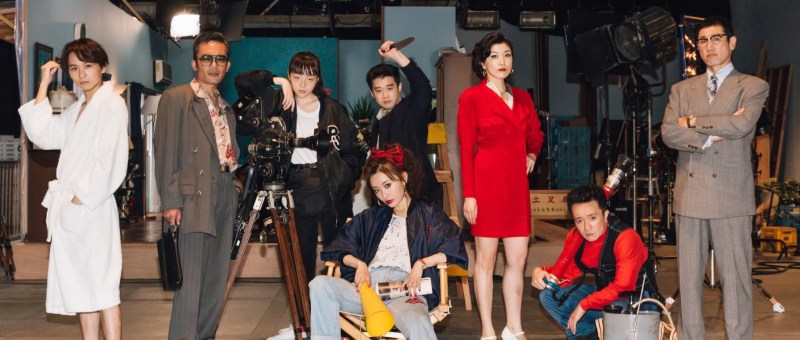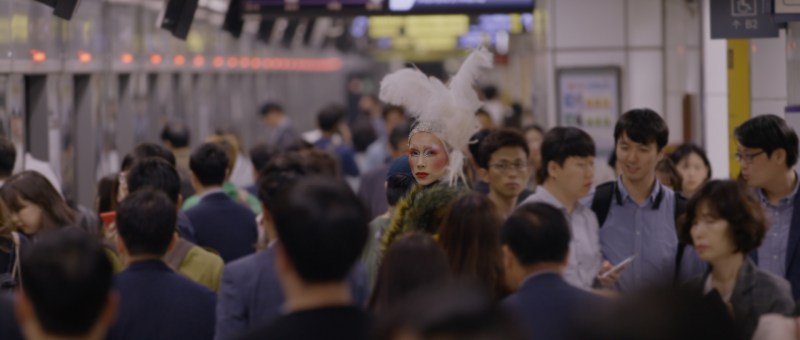
Back to Love (带你去见我妈, Lan Hongchun, 2021)

Change comes slow to rural China in Lan Hongchun’s lighthearted drama, Back to Love (带你去见我妈, dài nǐ qù jiàn wǒ mā). Shot largely in the local Chaozhou dialect, the film explores the increasing distance between the kids who left for the city and their small-town parents whose views are often more conservative especially given the fluctuating local hierarchies which are often defined by successful marriages of the children. True love may be hard-won in a sometimes judgemental society but it is in the end the older generation who will have to make a shift if it’s really their children’s happiness that they care about most. 

Xian (Zhong Shaoxian) runs a backstreet butcher shop in a small rural town and lives with her retired husband, who is also a performer of traditional opera, her elderly mother, and her youngest son. Engaged in a sort of competition with another local old lady, Xian is forever trying to organise blind dates for her older son who works in a warehouse in the city. Unbeknownst to her, Zekai (Zheng Runqi) already has a girlfriend, Shan (Lu Shan), and the pair have been living together for some time. Though his uncle who works with him already knows about the relationship, Zekai has been reluctant to tell his family back home because not only is Shan not from their local area but has also been married once before which he knows will not play well in his hometown where divorce and remarriage are still taboo subjects. As his uncle advises him, his diffidence is unfair to Shan who deserves a little more commitment along with the possibility of starting a family before the chance passes her by. 

Having thought it over, Zekai proposes and talks about becoming a father while suggesting they visit his family en route to her hometown for a wedding but still hasn’t explained to his parents about Shan’s marital status. Their immediate problem with her, however, is simply that she isn’t from the Shantou area and does not understand their local dialect while, living as they do in a fairly isolated community, they do not understand standard Mandarin. Xian and the grandmother who is otherwise more accepting of the situation continue to refer to Shan as “the non-local” while she does her best to pitch in, learning little bits of dialect and helping out as much as she can with the family’s ancestral rites while getting on well with Zekai’s already married sister. 

Gradually Xian warms to her, but the divorce may still be a dealbreaker given Xian’s preoccupation with her status in the local community reflecting that the family would become a laughing stock if people find out their already old to be unmarried son stooped to marrying a divorcee. Most people don’t mean any harm, but there are also a lot of accidentally hurtful comments about a wedding being a once in a lifetime affair and that a woman should stick by the man she married no matter what else might happen. But then it’s also true that Zekai has been keeping secret from his mother and she can’t help but feel deceived. If he’d told her earlier, she might have just got over it after getting to know Shan personally. At the end of the day, perhaps it’s Zekai’s own internalised anxiety that’s standing in the way of his romantic happiness rather than the outdated social codes of small-town life.  

As Zekai points out, he’s always done what his mother told him to. He wanted to study fine art and she convinced him to switch to general sciences but in the long run it hasn’t made a lot of difference to his life and he might have been happier doing what he wanted. The couple could of course choose to just ignore Xian’s resentment and continue to hope she’ll change her mind in the future, but then Shan is also carrying some baggage in internalised shame over her failed marriage. She didn’t think she’d marry again not because of the bad experience but because of the stigma surrounding divorce, fearing she’d never have the opportunity. In any case, it’s Xian who finally has to reconsider her actions, accepting that she may have unfairly projected some of her own feelings of disappointment onto her son while accidentally denying him the possibility of happiness solely for her own selfish reasons in fearing a change in her status in the community. Filled with local character, Lan’s gentle drama doesn’t necessarily come down on either side but advocates for compromise while clear that the youngsters should be free to find their own path to love with nothing but gentle support from all those who love them. 


Back to Love streams in the US Sept. 10 – 16 as part of the 15th season of Asian Pop-Up Cinema.

Original trailer (Simplified Chinese / English subtitles)

Embrace Again (穿过寒冬拥抱你, Xue Xiaolu, 2021)

Another in the recent line of “Main Melody” features celebrating ordinary heroism during the extraordinary period of the pandemic, Embrace Again (穿过寒冬拥抱你, chuānguò hándōng yōngbào nǐ) is dedicated to the volunteers who risked their own safety to support frontline workers in the early days of the Wuhan lockdown. Though sometimes bittersweet, the film is noticeably lighter in tone and somewhat rosy in comparison to other similarly themed dramas such as Ode to the Spring but it is in its own way prepared to concede that the initial response was not handled perfectly and that fear, chaos and panic were the defining features of New Year 2020 even if it does so to throw the heroism of those who stepped up to help in stark relief. 

Like other pandemic films, Embrace Again is comprised of a series of interlocking stories connected by the volunteer effort helmed by A-Yong (Huang Bo) who has something of a hero complex and is caught in a mini war with his feisty wife who is quite understandably upset with him seeing as he’s left her all alone with their son during these difficult times while he runs around helping other people having decided to stay elsewhere so as not to expose them to further risk of disease. As he ferries people around, it becomes clear that there were not so many people like him in the beginning with most preferring to keep to themselves out of fear leaving the medical staff who were risking their own lives to protect those suffering from the virus with nowhere to turn for support.

A-Yong’s heroism is contrasted with the indifference of wealthy businessman Li (Gao Yalin) who rudely tells him where to go when A-Yong rings up trying to organise food donations for hospitals. Li is at odds with his wife (Xu Fan) whose successful tourist business has been all but destroyed by the virus, unable to understand her decision to keep her staff on payroll with full salaries and resentful of her insistence on calling in a longstanding loan from an old friend of his. Yet like so many his attitude is gradually changed by witnessing responses to the pandemic, allowing him to regain his social conscience becoming a volunteer himself and agreeing to donate a significant proportion of his stock to frontline workers while rediscovering his love for his wife who started her own business not for the money but for her dignity after being called a “stupid housewife” by their daughter now soon to be a mother herself and trapped overseas in New Zealand by the lockdown. 

Nicknamed Brother Wu (Jia Ling) because of her forthright character and robust frame, a female delivery driver associate of A-yong’s experiences something similar as she firstly befriends a cheerful young nurse, Xiaoxiao (Zhou Dongyu), working at the hospital and engages in a tentative romance with a sensitive divorcee, Mr. Ye (Zhu Yilong), she picks up prescriptions for. In a pleasantly progressive plot strand, Wu is forever telling people she’s trying to lose weight but both Xiaoxiao and Mr. Ye make a point of telling her that she’s fine as she is and has no need to. When Xiaoxiao gifts her lipstick, it’s not a suggestion that she is unfeminine but the reverse allowing her a means to reclaim her femininity for herself and believe that she is both beautiful and desirable exactly as she is. 

Similarly, an elderly woman (Wu Yanshu) living with her widowed son-in-law and grandson is given permission to begin moving on with her life when when she’s called out of retirement to return to the hospital as a midwife. While telling her son-in-law that he shouldn’t feel guilty about seeking new happiness, she too finds love with a Cantonese chef (Hui Shiu-hung) who ends up becoming a volunteer solely so he can deliver her lovingly prepared meals direct to the hospital. Each of these tales are essentially about people finding love in unexpected places while rediscovering their ties to the community, setting greed and self-interest to one side as they risk their own safety to preserve that of others. Wuhan is cut off from the rest of the world, but receives support in the form of external supplies celebrated by A-Yong and the small core of volunteers pitching in to keep the city running. Ending on a bittersweet note acknowledging a sense of loss but also that of a new beginning, the film closes with touching scenes of community in action before giving way to the now familiar stock footage of the real volunteers celebrating Wuhan’s reopening with a sense of joy and relief that might in retrospect seem premature but is also a perfect encapsulation of the view from April 2020.


Embrace Again screens in Chicago on Sept. 10 as part of the 15th season of Asian Pop-Up Cinema.

International trailer (English subtitles)

I Am What I Am (雄狮少年, Sun Haipeng, 2021)

A diffident young man learns to unleash the lion inside while battling the fierce inequality of the modern China in Sun Haipeng’s heartfelt family animation, I Am What I Am (雄狮少年, xióngshī shàonián). With its beautifully animated opening and closing sequences inspired by classic ink painting and the enormously detailed, painterly backgrounds, the film is at once a celebration of tradition and advocation for seizing the moment, continuing to believe that miracles really are possible even for ordinary people no matter how hopeless it may seem. 

The hero, Gyun (Li Xin), is a left behind child cared for by his elderly grandfather and it seems regarded as a good for nothing by most of the local community. Relentlessly bullied by a well built neighbour who is also a talented lion dancer, Gyun finds it impossible to stand up for himself but is given fresh hope by a young woman who makes a dramatic entrance into the village’s lion dance competition and later gifts him her lion head telling him to listen to the roar in his heart. 

The young woman is presented as an almost spiritual figure embodying the lion dance itself, yet later reveals that her family were against her practicing the traditional art because she is female exposing the persistent sexism at the heart of the contemporary society. Gyun’s heart is indeed roaring, desperately missing his parents who were forced to travel to the city to find work while leaving him behind in the country hoping to earn enough for his college education. Part of the reason he wants to master the art of the lion dance is so that he can travel to the city where his parents can see him compete, while privately like his friends Kat and Doggie he may despair for his lack of options stuck in his small hometown. 

But even in small towns there are masters of art as the boys discover when directed to a small dried fish store in search of a once famous lion dancer. Perhaps the guy selling grain at the market is a master poet, or the local fisherman a talented calligrapher, genius often lies in unexpected places. Now 45, Qiang (Li Meng) is a henpecked husband who seems to have had the life-force knocked out of him after being forced to give up lion dancing in order to earn money to support his family, but as the film is keen to point out it’s never really too late to chase a dream. After agreeing to coach the boys, Qiang begins to reclaim his sense of confidence and possibility with even his wife reflecting that she’s sorry she made him give up a part of himself all those years ago. 

Then again, Gyun faces a series of setbacks not least when he’s forced to travel to the city himself in search of work to support his family taking his lion mask with him but only as an awkward burden reminding him of all he’s sacrificing. Taking every job that comes, he lives in a series of squalid dorms and gradually begins to lose the sense of hope the lion mask granted him under the crushing impossibility of a life of casual labour.  The final pole on the lion dance course is there, according to the judges, to remind contestants that there are miracles which cannot be achieved and that there will always be an unreachable peak that is simply beyond them. But as Gyun discovers sometimes miracles really do happen though only when it stops being a competition and becomes more of a collective liberation born of mutual support. 

In the end, Gyun can’t exactly overcome the vagaries of the contemporary society, still stuck in a crushing cycle of poverty marked by poor living conditions and exploitative employment, but he has at least learned to listen to himself roar while reconnecting with his family and forming new ones with friends and fellow lion dancers. While most Chinese animation has drawn inspiration from classic tales and legends, I Am What I Am roots itself firmly in the present day yet with its beautifully drawn backgrounds of verdant red forests lends itself a mythic quality while simultaneously insisting that even in the “real” world miracles can happen even for lowly village boys like Gyun when they take charge of their destiny not only standing up for themselves but for others too.


I Am What I Am screens in Chicago on Sept. 10 as the opening movie of Asian Pop-Up Cinema season 15.

Original trailer (English subtitles)

A Hen in the Wind (風の中の牝鶏, Yasujiro Ozu, 1948)

Sometimes melancholy as he might have been, the cinema of Yasujiro Ozu leans toward the wholesome. His families may experience crises, but they are good people who have generally learned how to be cheerful in the face of adversity. 1948’s A Hen in the Wind (風の中の牝鶏, Kaze no naka no Mendori), however, is unusually dark though perhaps not inappropriately so as it tries to make sense of a painful moment in time by re-envisaging it in terms of a marriage. 

Set very much in the immediacy of the contemporary era, the film opens ominously with an intimidating policeman taking a local census which introduces us to Tokiko (Kinuyo Tanaka) who lodges in the upstairs of a small, run-down building along with her young son Hiroshi while her husband Shuichi (Shuji Sano) has not yet returned from the war. Times are tough for everyone, and Tokiko is finding it increasingly difficult to make ends meet with her seamstressing job as prices rise everywhere. She’s down to her last kimonos which she asks an old friend, Akiko (Chieko Murata), to help her sell. Akiko turns to broker/madam Orie (Reiko Mizukami) who feigns exasperation to advise that a pretty woman like Tokiko, still comparatively young at 28, could make more money in her line of work. Akiko is offended on her friend’s behalf and the two laugh it off together, but when Hiroshi suddenly develops colitis and needs to be admitted to hospital Tokiko is left with no choice but throw herself on the mercy of Orie. 

Akiko scolds her friend, hurt that she didn’t come to her first and disappointed that she has chosen to degrade herself. Tokiko is sorry too, worried that if she had asked Akiko for the money she’d have found a way to get it even if she had none to spare and Tokiko would rather carry the burden herself. She wonders if she made the right choice. There was still furniture she might have been able to sell, but she wanted to keep it so that her husband would have a home to come home to. What else could a mother with a sick child do? This way at least she got the money quickly and Hiroshi recovered. It was a one time thing already in the past and no one needs to know. The friends agree to put it behind them as just another minor humiliation of life in the immediate post-war period. 

And then less than a month later Shuichi returns. The joyful reunion is disrupted when he idly asks about Hiroshi’s health and then becomes fixated on how Tokiko managed to pay the hospital bills. She doesn’t want to lie and would rather there be no secrets between them so she tells him the truth. Shuichi does not take it well. He tries to readjust to their married life but finds himself consumed with rage and unable to sleep. Intellectually, he knows his wife had no choice given the situation she was in and in one sense does not blame her but in the other he cannot accept it. 

Tokiko’s transgression undermines his fragile sense of masculinity in every possible way. He feels partly responisble. He wasn’t there to protect her because he was away at the war. If he’d returned a month earlier, she wouldn’t have needed to make such a sacrifice. Unlike many late returning soldiers, Shuichi walks straight back into his old job, easing the family’s financial hardship even as its harmony is strained by his ongoing resentment. Shuichi cannot help making this all about him. His wounded pride, his broken future, his romantic disappointment. He becomes obsessed with the idea of his wife defiled, insisting on tracking down the brothel where Orie brought her to ask if it really was just the one time while exploring the business for himself.

While schoolchildren sing cheerful folksongs in the playground behind, Shuichi talks to a 21-year-old who has only contempt for customers like him who ask too many hypocritical questions. She explains the she didn’t choose this sort of work, it’s the only way she can support her family, once again, ironically, because of a male failure in this case her father being unable to provide for them while her mother has passed away. Shuichi didn’t come for the full service, and so he eventually leaves, discarding money as he goes partly out of pity and partly in atonement. He runs into the girl again later and even shares her lunch during which he talks to her in a more fatherly fashion, encouraging her that she is not ruined and still has the right to strive for a brighter future. To further prove his point, he commits to finding her an “honest” job, asking with his friend at the company who is sympathetic and also wants to help. Only, his friend can’t understand. If Shuichi can sympathise so much with this young girl why can’t he forgive his wife who, to his mind, has done nothing wrong? 

Tokiko is perhaps a symbol of the pure Japan debased by the male violence that is militarism. Shuichi has come home from the war but carrying trauma of his own which he projects onto the loyal self-sacrificing wife who waited patiently for his return. Yet Tokiko blames herself, she begs him to beat her, hate her, only not to leave and not to be unhappy. Shuichi only comes round after accidentally pushing her down the stairs in a rare moment of shocking domestic violence totally unexpected in an Ozu movie (even if not quite unique). Suddenly overcome with post-war humanism, Shuichi forgives his wife essentially giving her the same speech he’d given to the girl only with greater emphasis. Life is long and their path is hard. They need to “be more accepting and love one another”, “conquer hardship through laughter and trust”, so that they might have a “true marriage”. Tokiko’s redemption, and perhaps that of her nation, is dependent on the former soldier Shuichi’s forgiveness, and of her acceptance of it, rather than a recognition of her blamelessness. In any case, a line has been drawn. The future starts now and it’s going to be a better one built on compassion and mutual forgiveness rather than selfishness and resentment.


A Hen in the Wind screens at BFI Southbank on 10th/14th September as part of Kinuyo Tanaka: A Life in Film

BFI London Film Festival Confirms Complete Programme for 2022

The BFI London Film Festival returns 5th to 16th October with some titles also streaming online in the UK 14th to 21st October via BFI Player. As usual there is a varied selection of East Asian films on offer including the latest from Park Chan-wook, July Jung, Koji Fukada, and Sho Miyake.

China

  • Hidden Letters – documentary following two women’s exploration of Nushu, a secret script used by women in an age in which they were forbidden to read and write.
  • What About China? – experimental essay film Trinh Minh-ha.

Hong Kong

  • Blue Island – hybrid documentary from Chan Tze-woon featuring reconstructions of historical conflict performed by the young activists of today.

Indonesia

  • Autobiography – political drama in which a young man taken in as a son by a powerful figure finds himself conflicted in wanting to stop his mentor’s authoritarian overreach.

Japan

  • Love Life – the latest film from Koji Fukada (A Girl Missing) in which the tight bond of a small family is disrupted by the resurfacing of the son’s birth father.
  • Small, Slow But Steady – latest from Sho Miyake (And Your Bird Can Sing) following a young woman’s determination to become a champion boxer.
  • Stonewalling – drama following a 20-year-old student training to become a flight attendant who suddenly discovers she is pregnant.

Korea

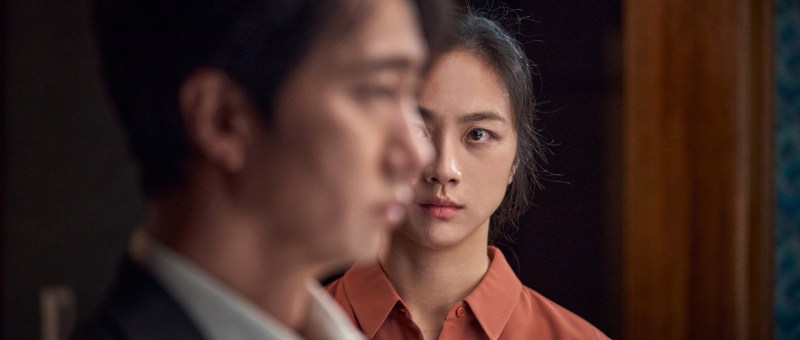
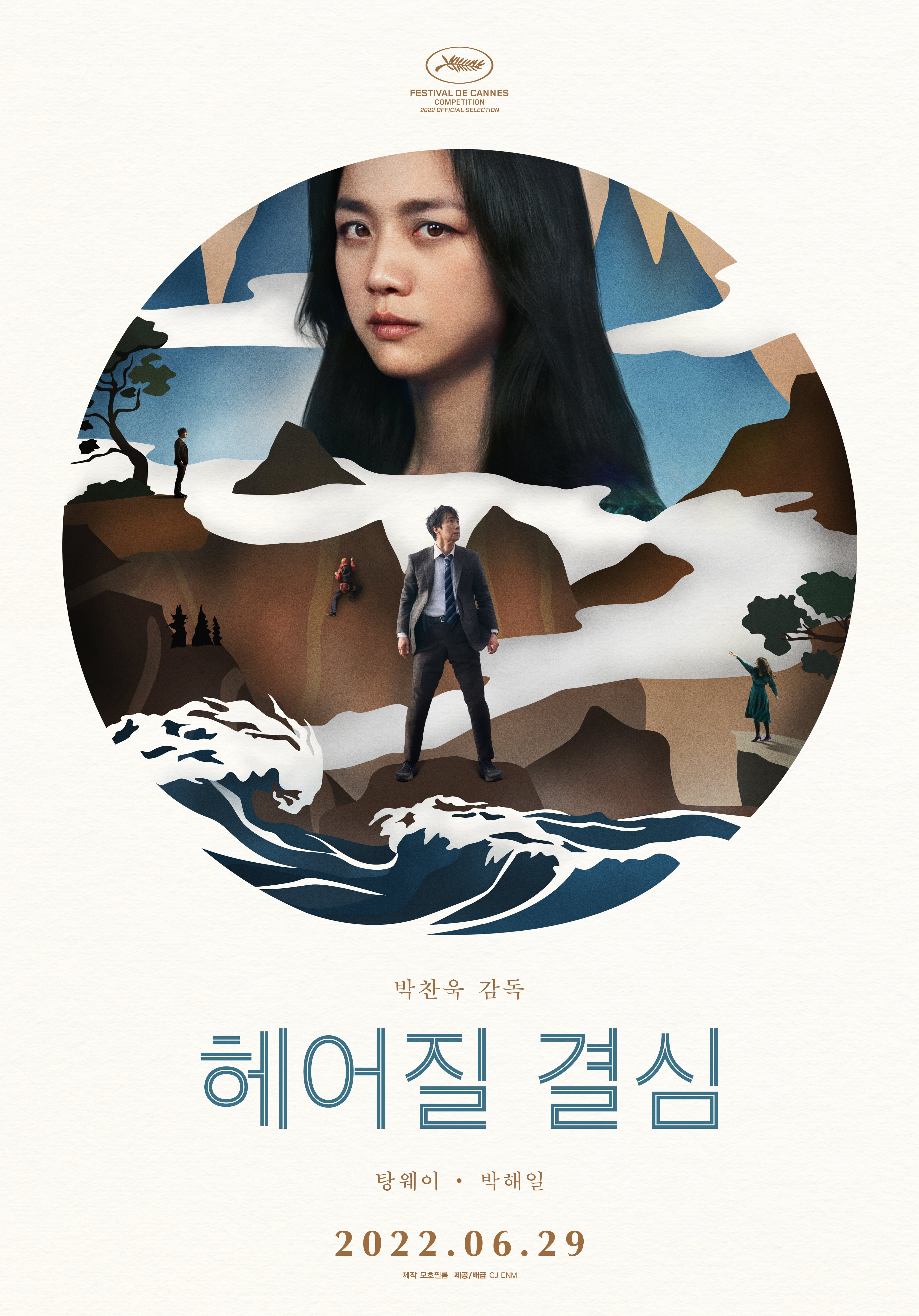
  • Decision to Leave – latest from Park Chan-wook starring Park Hae-il as a detective fixated on the wife (Tang Wei) of a murdered man.
  • Jeong-sun – a factory worker’s life is disrupted when a video of.a sexual encounter with a colleague is leaked on the internet.
  • Next Sohee – a policewoman investigating the suicide of a teenage girl uncovers a dark web of corporate exploitation in July Jung’s hard hitting drama. Review.
  • The Woman in the White Car – quirky mystery in which a young woman arrives at a hospital with a woman she claims to be her sister who has been stabbed by a jealous lover.

Thailand

  • Fast & Feel Love – an obsessive sports stacker is plunged into a delayed adulthood when his long term girlfriend suddenly leaves in Nawapol Thamrongrattanarit’s charming post-modern comedy. Review.

The BFI London Film Festival takes place at various venues across the city from 5th to 16th October 2021, with some titles also streaming online (14th to 23rd October) or screening at various partner cinemas throughout the UK. Full details for all the films as well as screening times and ticketing information are available via the official website. Priority booking opens for Patrons on 5th September, for Champions on 6th September, and Members 7th September, with general ticket sales available from 13th September. You can also keep up to date with all the latest news via the festival’s Facebook page, Twitter account, Instagram, and YouTube channels.

Virgin Blue (不要再見啊,魚花塘, Niu Xiaoyu, 2021)

A young woman becomes lost in a confusingly timeless world of fractured memory in Niu Xiaoyu’s ethereal drama, Virgin Blue (不要再見啊,魚花塘, bùyào zàijiàn ā, yúhuā táng). As realities continue to shift and blur, we begin to wonder if two women are really one as seen through the memories of another and what we are experiencing is the confusion of dementia or perhaps a dying dream in which the heroine tries to put the pieces of her memory back in the right place only to end up at a mythical lake populated by those no longer able to live in the “real” world. 

Nominally Yezi (Ye Zi) is a recently graduated student returned home to stay with the widowed grandmother (Shengzhi Zheng) who raised her after her parents divorce over the summer, yet we often see her taking her grandmother’s place, finishing her knitting, while alternately rebelling against childhood’s end in insisting that she doesn’t want to grow up, has no interest in a relationship, and most of all wants her grandmother to go on knitting sweaters for her. At a hospital appointment, the pregnant nurse who in someways at least stands in for her own mother simultaneously her criticises for being unattached at such a “late” age and cites her celibacy as a possible explanation for her youthful appearance. 

We see that Yezi walks with a limp, she is diagnosed with hypoplasia at the hospital appointment, and that grandma has bad knees which she is later treated for by a buddhist nun in a dream. It’s grandma who keeps fearing that she’s forgetting but Yezi who isn’t clear with her, first of all telling her that grandpa died in 2020 (which is the current year) and then that it’s only 2013. Grandma claims that she always feels out of place, as if she were in someone else’s home and never her own which might in a sense be true. At times, the meta voice of the director can be heard off camera sharing stories of her own such as a traumatic dream in which her grandparents came to rescue her after youthful heartbreak but her grandmother got stabbed by a mystery attacker on the way home leaving her feeling that if only she were stronger and more independent, she would not have needed rescuing and grandma would be alive. Could the director be the “real” Yezi and her film counterpart a search for self in the memories of her grandparents? Perhaps so, as the image of her parents seems to drift into the scene along with potential friends and suitors who may or may not be figments of her imagination.

Even so her eventual destination is a surreal fantasyland peopled by a runaway princess who escaped from the real world after a failed elopement, a man who might once have been a kidnapped boy dressed in a bear suit, and a series of tiny dancers who perform elaborate dance routines for classic Chinese pop songs. The princess, Jingjing, and the bear describe themselves as monsters, marginalised to the lake, while monstrous is also how grandma describes the vision of herself as a dementia sufferer worried that even Yezi would reject her. The pregnant nurse and her colleague discuss the new trend for caesarean births, the colleague advising her to see a fortune teller and choose a good day in order to ensure that the child will not bring bad luck on its parents. 

Through it all, Yezi has visions of herself as a child with her late grandfather as if looking for childhood safety and comfort while trying to reorient herself as an adult. The fantasy world with its larger than life, childlike designs and nostalgic tunes is somewhere between fairytale safety and a kind of limbo from which Yezi is either eventually released or fully condemned as she looks back us, breaking the fourth wall to shake her head as if in warning. Infinitely strange yet also charming even in its confusions, Virgin Blue has a kind of melancholy warmth as Yezi tries to reintegrate this fragmenting world while processing her grief perhaps even for her self along with interrogating her past before ending on a note of joyful celebration as the monsters of Yuhua pond dance in the daylight to an unexpected rendition of Jun Togawa’s 1988 hit Daitenshi no you ni (Like an Angel).


Virgin Blue screened as part of this year’s New York Asian Film Festival where it was presented in partnership with CineCina.

Trailer (dialogue free)

Jun Togawa – Daitenshi no you ni (Like an Angel)

Images © Yu Tang Films (Anhui)

Seire (세이레, Park Kang, 2021) [Fantasia 2022]

A new father finds himself plagued by strange dreams and an unquiet dread in Park Kang’s eerie paternal horror, Seire (세이레). Seire refers to the first three weeks of a baby’s life in which the family is expected to limit external contact and avoid any taboos especially those having to do with death. Such superstition might seem out of place in the modern society but then when you think about it it makes sense, limiting the number of people interacting with your medically vulnerable newborn helps protect it from illness or infection while dealing with grief in the wake of new life is necessarily difficult. 

Even so, Woo-jin (Seo Hyun-woo) is beginning to get fed up with his wife Hae-mi’s (Shim Eun-woo) obsession with ritualistic superstition. “Don’t engage in anything unusual” she ominously instructs him as he leaves to run an errand after a night of fevered dreams sleeping on the sofa. That Woo-jin is tired isn’t surprising, he’s the father of a newborn after all, but he seems to be weighed down by something more than bodily fatigue and has been having strange visions featuring fruit knives, rotten apples, and a woman who is not his wife. When he receives a text informing him that an old friend from university, Se-young (Ryu Abel), has passed away, Hae-mi tries to talk him out of going to the funeral advising him to send money instead rather than risk breaking a taboo during the baby’s Seire but Woo-jin doesn’t really believe in any of this stuff and not going to the funeral’s not really an option for him especially, as we later realise, as he may have had unfinished business with the deceased. 

Superstition becomes an odd kind of fault line in the couple’s relationship not so much in a matter of belief but of commitment. Hae-mi reads Woo-jin’s reluctance to abide by the superstitious practices she’s been taught as an early paternal failure, a sign that he wasn’t interested enough in his son’s welfare to follow a few simple rules for a period of three weeks while Woo-jin equally sees Hae-mi’s insistence on them as a personal rejection which is on one level fair enough when she’s literally pelting him with salt and refusing to let him into their bedroom let alone near the baby. To divert the misfortune born of attending the funeral, Hae-mi asks Woo-jin to commit three acts of theft, telling him that it won’t harm anyone and then they’ll be able to stop worrying except that it will definitely harm someone and perhaps everyone if Woo-jin gets caught and ends up losing his job. 

Despite claiming not to believe in any of this superstition, Woo-jin is very into traditional medicine and it seems there may be a connection to the strange events around him though it might not explain his fractured state of mind or increasing inability to tell dream from reality. He is quite literally haunted by the manifestation of a previous transgression which is already playing on his mind given his recent fatherhood. Paternal anxiety is indeed at the root of all his troubles, though we can also see that he feels belittled by his wealthy brother-in-law who makes a show of buying all the fancy meat for a family dinner while it later becomes clear that his relationship with Hae-mi is newer than we might have assumed and cemented by the birth of a baby Woo-jin may perhaps on some level resent. But it’s his own guilt that haunts him in the end, failing to deal with the implications of his past actions and their result whether by accident or design. 

Drifting between dream, memory, and a confused reality, Park imbues the everyday with a sense of dread and eerieness defined by an ever-present evil which must be constantly warded off though as it turns out Woo-jin’s darkness very much lies within. Some things you think are just superstitions really aren’t, Hae-mi’s sister annoyed by her superstitious mother’s instruction not to eat lettuce while pregnant which is probably more to do with E. coli than fear of a supernatural curse, though there seems to be no real reason why you shouldn’t eat apples at night save the superstition they cause unrestful sleep. Is this all happening to Woo-jin because he broke a taboo? In many ways yes, and his self-haunting seems set to continue in the impossibility of gaining forgiveness for the unforgivable. 


Seire screened as part of this year’s Fantasia International Film Festival

Original trailer (English subtitles)

Asian Pop-Up Cinema Returns for Season 15!

Asian Pop-Up Cinema returns for its 15th season in cinemas across Chicago with selected films streaming to homes across the US from Sept. 10 to Nov. 6. Each weekend will be dedicated to a specific region including: China (Sept.10 -16), Japan (Sept. 17 – 23), South Korea (Sept. 24 – Oct. 2), Taiwan (Oct. 22 – 23) and Hong Kong (Oct. 29 – Nov. 6) while this season’s Bright Star Awards go to Hong Kong actress Jennifer Yu and Korean actor Jeong Jae-kwang who will each be appearing in person before screenings of their respective films.

China

(September 10-16, Claudia Cassidy Theater & AMC New City 14)

Saturday, September 10, 11 AM: The Magical Craftsmanship of Suzhou (天工苏作, Sun Zeng-tian, 2022)

Claudia Cassidy Theater, Chicago Cultural Center (78 E. Washington St., Chicago)  

Documentary focusing on 12 artisans trying to keep traditional folk arts alive in contemporary Suzhou.

Official Opening Film 

Saturday, September 10, 2 PM: I Am What I Am, (雄獅少年, Sun Hai-peng, 2021)

Claudia Cassidy Theater, Chicago Cultural Center (78 E. Washington St., Chicago) 

Animation from Sun Hai-Peng set in rural Guangdong and following left behind teen Gyun who develops a fascination with traditional lion dance and sets off with two friends to find a lion dancing master.

September 10-16 Streaming available for U.S. views @ watch.eventive.org/apuc15 

Back To Love (带你去见我妈, Lan Hong-chun, 2021)

Drama in which a man returns from the city to his rural hometown to introduce his girlfriend in the hope that his mother will stop trying to arrange marriages for him but is fraught with anxiety as the woman he loves has been married before.

Embrace Again (穿过寒冬拥抱你, Xue Xiao-lu, 2021)

Drama starring Huang Bo and featuring a series of interconnected tales set during the early days of the pandemic.

Schemes In Antiques (古董局中局, Derek Kwok, 2021)

The owner of an electronics store keen to shake off his family’s legacy of disgrace because of an ancestor’s treachery selling a precious artefact to the Japanese is drawn swept into intrigue when the relic is returned.

Japan

(September 17 – 23, Wilmette Theater, 1122 Central Ave., Wilmette, IL) 

Japan Cinema Showcase special host:  Mark Schilling, author/critic of Japan Times  

Saturday, September 17, 2pm: Noise (ノイズ, Ryuichi Hiroki, 2022) 

Darkly comic thriller from Ryuichi Hiroki in which the previously close relationship between three childhood friends is strained when they find themselves trying to cover up a murder. Review.

Saturday, September 17, 4:30 PM: Alivehoon (アライブフーン, Ten Shimoyama) 

Drift racing drama supervised by Keiichi Tsuchiya in which a shy, introverted gamer is scouted by a team on the verge of shutting down.

Sunday, September 18, 2 PM: Popran (ポプラン, Shinichiro Ueda, 2022) 

A self-involved CEO gets a course correction when his genitals suddenly decide to leave him in Shinichiro Ueda’s surreal morality tale. Review.

Sunday, September 18, 4:30 PM: The Fish Tale (さかなのこ, Shuichi Okita, 2022)  

The infinite enthusiasm of a fish obsessive gradually brightens the world around them in Shuichi Okita’s charming portrait of an eccentric. Review.

September 17-23 Streaming available for U.S. views @ watch.eventive.org/apuc15 

Struggling Man (私はいったい、何と闘っているのか  Toshio Lee, 2021)

A veteran employee of a grocery store finds his life disrupted when his manager dies and HQ sends in an executive to replace him while his eldest daughter’s engagement shakes the foundations of his family life.

South Korea

(September 24 – October 2, AMC Niles 12, (301 Golf Mill Center, Niles, IL)

Saturday, September 24, 2:30 PM: Fairy (요정, Shin Tack-su, 2021)

A pair of cafe owners who got married but decided to continue running separate cafes experience a mysterious uptick in business after they hit a boy with their car and decide to keep in their house to cover up the crime.

Saturday, September 24, 4:30 PM: Mother’s Place (엄마의 자리, Ryu Hee-jung, 2022) 

A young girl’s concept of family is undermined when her mother and step-father are killed in an accident but the relatives refuse to let them be buried together.

Sunday, September 25, 2:30PM: Director’s Intention (영화의 거리, Kim Min-geun, 2021)  

A location manager is faced with a difficult situation when she realises the director of the latest film she’s working on is the hometown boyfriend of her youth.

Sunday, September 25, 4:30 PM: Not Out (낫아웃, Lee Jung-gon, 2021) 

Actor Jeong Jae-kwang will be appearing in person to pick up his Bright Star Award.

A young man goes to drastic lengths to make his baseball dreams come true in Lee Jung-gon’s unexpectedly dark character study. Review.

Saturday, October 1, 2:30 PM: Chorokbam (초록밤, Yoon Seo-jin, 2021)  

A small family contend with the persistent unfairness of the contemporary society in Yoon Seo-jin’s slow burn indie drama. Review.

Saturday, October 1, 4:30 PM: My Perfect Roommate (룸 쉐어링, Lee Soon-sung, 2022) 

A kind young student and grumpy granny eventually discover a new sense of familial comfort after living together as part of a house sharing programme in Lee Soon-sung’s heartwarming drama.

Centerpiece 

Sunday, October 2, 2:30 PM: Chun Tae-il: A Flame That Lives On (태일이, Hong Jun-pyo, 2021)

Animated biopic of labour activist Chun Tae-il who took his own life through self-immolation in protest against the failure to enforce existing labour law or protect workers from unhealthy and exploitative conditions. Review.

Sunday, October 2, 4:30 PM: Stellar: A Magical Ride  (스텔라, Kwon Soo-kyung, 2022) 

A cynical man makes peace with his father’s memory while driving his possibly haunted and very rundown Hyundai Stellar in Kwon Soo-kyung’s charmingly quirky road movie. Review.

Taiwan

(October 22-23, Illinois Institute of Technology, Tower Auditorium, 10 W. 35th St., Chicago) 

Saturday, October 22, 2:30 PM: Hello! Tapir (神獸, Kethsvin Chee, 2020) 

A small boy begins to process grief and loss while searching for nightmare-eating tapirs in Kethsvin Chee’s charmingly retro fantasy adventure. Review.

Saturday, October 22, 4:30 PM: Chen Uen (千年一問, Wang Wan-jo, 2021) 

Using a mix of interviews and animatics, Wang’s elegantly lensed documentary presents an enigmatic picture of the legendary pioneer of Taiwanese comics. Review.

Sunday, October 23, 2:30 PM: Shiro – Hero of Heroes (諸葛四郎 – 英雄的英雄, Lin Yu-chun & Chuang Yung-hsin, Liu Yu-shu, 2022)

Family animation inspired by the classic Taiwanese comic book JhugeShiro in which the Demon Society is after the Dragon and Phoenix sword leaving the hero, Shiro, to protect both the swords and the princess from the evil Ping.

Sunday, October 23, 4:30 PM: City of Lost Things (廢棄之城, Yee Chih-yen, 2021) 

An alienated teen finds a place to belong in Trash City only to instantly betray his new paradise in Yee Chin-Yen’s inspirational family animation. Review.

Hong Kong

(October 29 – November 6, FACETS Cinema and AMC New City 14).

Saturday, October 29, 2:30 PM:  The Narrow Road (窄路微麈, Lam Sum, 2021)

AMC New City 14, 1500 N Clybourn Ave, Chicago, IL 60610

An earnest middle-aged man running a struggling cleaning business amid the difficult economic background of the coronavirus pandemic bonds with a young single mother in Lam Sum’s elegantly lensed social drama.

Saturday, October 29, 4:30 PM: Deliverance (源生罪, Kelvin Shum, 2021)

AMC New City 14 

A woman returns to Hong Kong 15 years after her mother’s death and is forced to confront her unresolved trauma after undergoing hypnosis.

Celebrating Halloween at FACETS Cinema

(1517 W. Fullerton Ave., Chicago)  

Sunday, October 30, 2:30 PM:  Tales From the Occult (失衡凶間, Wesley Hoi, Fruit Chan, Fung Chih-chiang, 2022)

Hong Kongers contend with the hidden horrors of the contemporary society in the first instalment in a series of anthology horror films . Review.

Sunday, October 30, 5:30 PM: Rigor Mortis (殭屍, Juno Mak, 2014)

Juno Mak’s 2014 take on the hopping vampire movie in which a struggling actor moves in to a rundown tenement populated mainly by ghosts.

Saturday, November 5, 2 PM: Far Far Away (緣路山旮旯, Amos Why, 2021)

AMC New City 14 

An introverted IT guy (Kaki Sham) gets a crash course in romance when he ends up dating a series of women from the far flung corners of Hong Kong in Amos Why’s charming romantic comedy. Review.

Saturday, November 5, 5 PM: The First Girl I Loved (喜歡妳是妳, Candy Ng, Yeung Chiu-hoi, 2021)

AMC New City 14 

A young woman begins to re-evaluate her teenage romance when her first love asks her to be maid of honour at her wedding in Yeung & Ng’s youth nostalgia romance. Review.

Sunday, November 6, 2 PM: Pretty Heart (心裏美, Terry Ng Ka-wai, 2022)

AMC New City 14 

Hong Kong’s Jennifer Yu (Far Far AwayMen on the DragonSisterhood) is this season’s Bright Star Award winner and will attend in person to receive the honour before the screening of her latest film, Pretty Heart, in which she stars as an idealistic high school teacher who is estranged from her headmaster father whom she blames for her mother’s death.

Closing Night

Sunday, November 6, 6 PM: Septet: The Story of Hong Kong (七人樂隊

AMC New City 14 

Seven-part anthology film featuring segments directed by Sammo Hung, Ann Hui, Patrick Tam, Yuen Wo-Ping, Johnnie To, the late Ringo Lam, and Tsui Hark exploring the past and future of Hong Kong from the 1950s to today.

Asian Pop-Up Cinema runs Sept. 10 to Nov. 6 at cinemas across Chicago with select films available to stream online throughout the US. Further details can be found on the official website and you can also keep up with all the latest news by following Asian Pop-up Cinema on  FacebookTwitter,  Instagram, and Vimeo.

Reclaim (一家之主, CJ Wang, 2022)

An ordinary middle-aged woman begins to wonder what it’s all been for when dealing with her insensitive, authoritarian husband, distant children, and the sacrifices she continually made to make others happy in CJ Wang’s touching family drama, Reclaim (一家之主, yījiāzhīzhǔ). The Chinese title, master of the house, is in its way ironic in the various ways in which Lan-xin (Nina Paw Hee-ching) is expected to shoulder all of the domestic responsibility with none of the control, though she is indeed attempting to reclaim something of herself as a woman and an individual as distinct from being someone’s, wife, mother, friend, or teacher. 

Lan-xin wanted to study art in Paris, but she got married young and started family and ever since then has led a conventional life doing what she thought to be right thing. Now, however, with her husband David (Kou Hsi-Shun) recently retired and both her children grown up she’s wondering a little what it’s all been for especially as David is a chauvinistic throwback who belittles her work as an art teacher while harping on about ways to make money patiently waiting for his collection of antique teapots to rise in value. Now that her mother’s dementia has intensified and she keeps escaping from her nursing home, Lan-xin wants to bring her to live with them but David is both dismissive and disinterested talking about it in the same way one would to a child who wants to get a dog asking if they really have the space and making it clear that looking after her will be Lan-xin’s responsibility. 

While David holds on to a substantial cheque with the intention of investing it in a series of harebrained schemes from luxury tombs to VR cafes, Lan-xin’s desire is essentially to try and repair her fracturing family by buying a larger apartment where they could all live together. David complains that no one tells him anything, but that’s largely because he’s continually dismissive of their dreams and aspirations blowing a hole in his daughter’s new project designing eco-friendly homes that prioritise individual comfort by telling her that she should just extend the living area into the balcony to trick people into thinking they’re getting more for their money. Jia-ning (Ko Chia-yen) in particular is feeling lost in her life unsure of what role it is she’s supposed to be playing while clearly disillusioned with the nature of the relationship between her parents in which her mother is expected to sacrifice her desires in service of her father’s. It’s clear that neither of the children want the kind of futures their parents envisaged for them, their professor son also preparing to return from the US to live a simple life in the Taiwanese countryside. 

Both of the children, however, take their mother for granted and often treat her poorly. The son orders her to book his plane tickets for him and abruptly hangs up after asking her to clean his room and make his favourite food, while Jia-ning also snaps at her expecting her to handle domestic tasks and locate missing items. Lan-xin forms a quasi-maternal relationship with a former student who has returned from America (Mason Lee) and now works in finance but is faced with the implosion of all her hopes firstly in her daughter’s more immediate needs to claim independence in her working life while avoiding the same compromises she was forced to make, and then by the illusionary nature of her home owning dream buying one home for fragmenting family rather than enduring her dissatisfying living arrangements while investing in separate homes for each of her children. 

There may be a degree of personal myth making in her meditating on the lost opportunity of a Parisian education as implied in an imaginary conversation with her mother, though as her miniature-making hobby implies perhaps she played the role she wanted to play but lost sight of herself somewhere along the way. A voyage into her own memory reunites her with her essential self and allows her to reclaim her name no longer willing to be subservient to her husband’s desires but prioritising her own. As in her dream, all her sacrifices will eventually be repaid while Jia-ning too comes to a better understanding of her mother and grandmother along with her own place in a changing society. Lan-xin is finally a master of herself no longer afraid to take up space in her own home and in full control of her own aspirations and desires. 


Reclaim screened as part of this year’s New York Asian Film Festival. It is also available to stream in many territories via Netflix.

Netflix trailer (English subtitles)

Images: ©2022 Rong Gwan Productions ALL RIGHTS RESERVED

Dr. Lamb (羔羊醫生, Danny Lee Sau-Yin & Billy Tang Hin-Shing, 1992) [Fantasia 2022]

“Every good man should get revenge” the young protagonist of Danny Lee Sau-Yin and Billy Tang Hin-Shing’s depraved Cat III shocker Dr. Lamb (羔羊醫生) is told though as will become apparent, he is not a good man and if his heinous crimes are born of vengeance the target may remain indistinct. Long available only in a censored version which perhaps helped to create its gruesome reputation, the film like others in the early ‘90s Cat III boom is based on a real life case, that of taxi driver Lam Kor-wan who murdered four female passengers before being caught by police when an assistant at a photo shop alerted them to the disturbing quality of the negatives he had brought in to be developed. 

As such, the film is not a procedural. It begins with the arrest of a man here called Lin Gwao-yu (Simon Yam Tat-Wah) who claims the negatives are not his and that he brought them in on behalf of a friend named Chang (which is also coincidentally the name of the half-brother he continues to resent). On investigating the flat where he lives with his father, half-siblings, and niece, the police realise that Gwao-yu is in indeed a serial killer and the rest of the film is divided into a series of flashbacks as they try to convince him to confess and reveal how and why he committed these crimes the last of which he actually videoed himself doing. 

Nevertheless, the police themselves are depicted not quite as bumbling but certainly not much better than the criminals they prosecute in their own lust for violence, savagely beating Gwao-yu who refuses to speak in order to force him to confess. Fat Bing (Kent Cheng Jak-Si) is portrayed as a particularly bad example, encouraging the other cops to play cards rather than focus on their stakeout of the photo shop almost allowing Gwao-yu to escape and then titillated by the more normal pinups and glamour shots pinned to Gwao-yu’s wardrobe as well as some of the less normal ones before realising that the women in them are dead. There is some original controversy over whether they should be investigating at all given that taking weird pictures of nude women is not in itself illegal while the misogynistic attitudes of the police are carried over onto one of their own officers who is forced to play the part of the victim during a re-enactment and is later struck by a stray body part as a result of Fat Bing’s crime scene incompetence. One of the murders even takes place directly outside a police box where the victim had tried to ask for help but got no reply.

Pressed for a reason for his crimes Gwao-yu offers only that all but the last of his victims were bad women who deserved die, each in a repeated motif fatalistically colliding with his cab and crawling inside having had too much to drink. Flashbacks to his childhood place the blame on his wicked step-mother’s rejection along with that of his siblings while his father alone defends him if somewhat indifferently, describing him as merely “curious” on catching Gwao-yu voyeuristically spying on he and his wife having sex and disowning him only on discovering that he has also been abusing his niece who is strangely the only member of the family who seems to be fond of him. Yet it’s also this problematically incestuous living environment that has facilitated his crimes. Gwao-yu takes the bodies home to play with and dismember having the house to himself during the day because he works nights while continuing to share a pair of bunk beds with the brother he hates at the age of 28 either unwilling or unable to get a place of his own on a taxi driver’s earnings. Aside from his brother noticing a strange smell, the family who all think him weird anyway apparently remain oblivious to Gwao-yu’s crimes despite the jars containing body parts he keeps in a locked cupboard along with disturbing photographs of his dark deeds. Nevertheless it’s their police-sanctioned beating of him which eventually provokes his confessions. 

Set off by rainy nights, Gwao-yu twitches, gurns, and howls like a dog leering at his victims like a predatory wolf. In the police interrogation scenes he continues with his strange, dancelike movements as if in a trance reliving his crimes. The truth is that the police had not really investigated the disappearances of the women he killed, had no clue a serial killer was operating, and would not have caught Gwao-yu if it were not for his own lack of interest in not being caught in taking the photos to be developed publicly despite claiming to have the ability to have simply developed them himself while videoing his brutal treatment of one victim’s body and his disturbing “wedding night” with another. A final scene of Inspector Lee visiting Gwao-yu in prison visually references Clarice’s first visit to Dr. Lecter in Silence of the Lambs which might go someway to explaining the title which is otherwise perhaps ironic in Gwao-yu’s ritualistic use of a scalpel and specimen jars. In any case for all its lurid, disturbing content the film has a strange beauty in its atmospheric capture of a neon-lit Hong Kong stalked as it is by an almost palpable evil. 


Dr. Lamb screened as part of this year’s Fantasia International Film Festival and is available on blu-ray in the US courtesy of Unearthed Films.

Original trailer (no subtitles)