Maggie (메기, Yi Ok-seop, 2018)

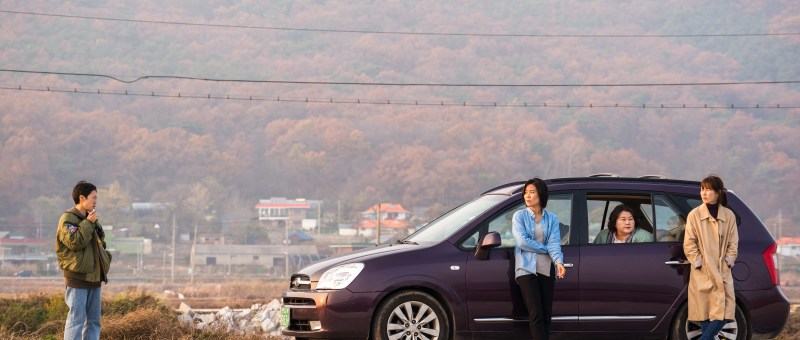
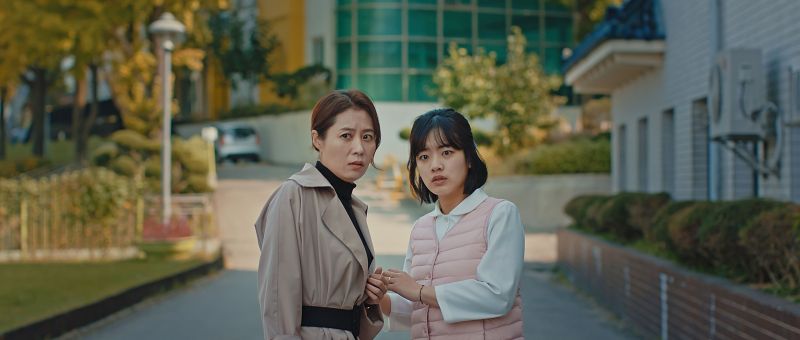
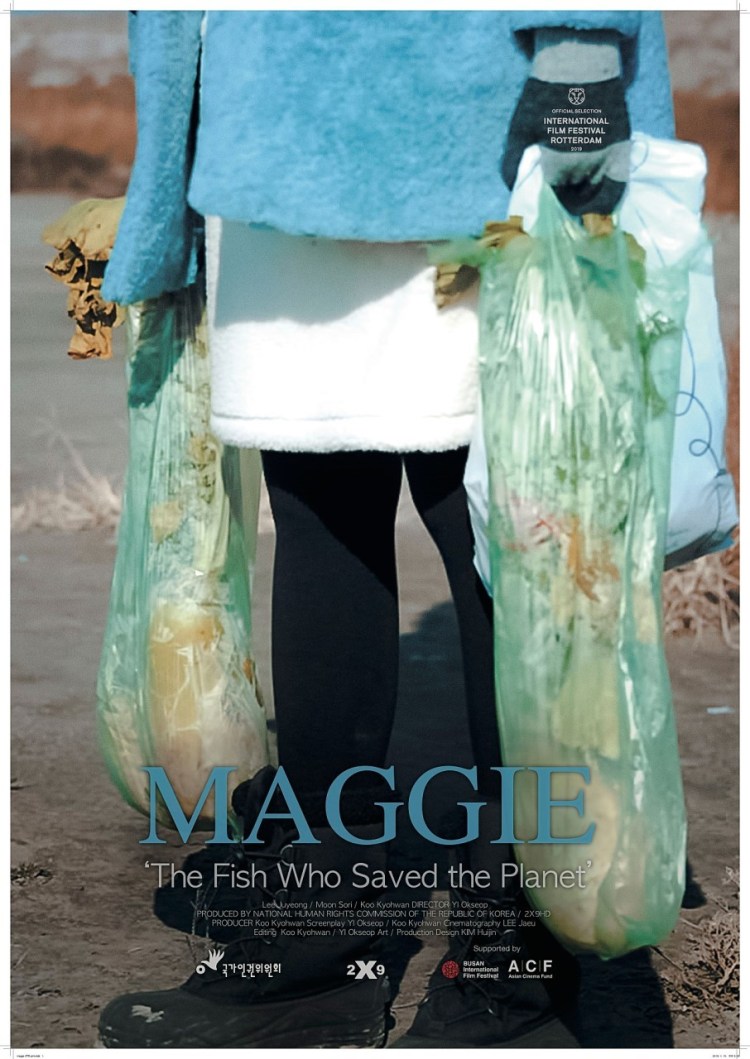
Maggie poster 1“When we fall into a pit, what we need to do, is not dig any further but quickly climb out” according to a mysterious post-it discovered by a nurse when picking up the laundry (apparently inexpertly performed by her preferred cleaning service). The aphorism turns out to belong to Doctor Lee (Moon So-ri), the head physician at Love of Maria hospital where the titular Maggie (메기), a catfish, lives in a small tank observing the life around her and sometimes predicting earthquakes and other earth shattering events. A surrealist odyssey across the “pitfalls” of modern society, Yi Ok-seop’s quirky debut feature ponders the ramifications of distance as her various heroes weigh up the nature of “truth” as an absolutist concept.

Narrated by Maggie, the drama begins when the radiographer and her boyfriend are unexpectedly snapped during an intimate moment in the X-Ray room. The picture is then stolen and held up for everyone to see, at which point nurse Yoon-young (Lee Joo-young) worries that she and her boyfriend Sung-won (Koo Kyo-hwan) have been caught out using the privacy of the X-ray booth for unintended purposes. As Maggie says, no one pays much attention to who took the photo only to who might be in it, which is why the entire hospital, except Doctor Lee, ring in sick the next day with only Yoon-young turning up in the morning with the intention to resign. Figuring out what must have happened (and seeing as she’s the only one not embarrassed we can guess who took the photo), Doctor Lee is very upset to realise that the entirety of her staff has probably lied to her. With her intense belief in humanity shaken, Doctor Lee decides to engage in a trust game with her new best friend, Nurse Yoon-young, and simply choose to believe what they’re told, testing their hypothesis by visiting a random employee to verify if they really are “sick”.

Meanwhile, as a result of the earthquakes Maggie intermittently predicts,  mysterious sinkholes have begun appearing all over the nation. This is good news in one sense because it provides lots of extra work for otherwise unoccupied young men like Sung-won who have lost out in Korea’s insanely competitive economy. Like Sung-won, the other men on his team are also well-educated types who otherwise wouldn’t be considering manual work and are hoping for something better once the sinkhole business finally clears up. Mistrust, however, also works its way into their relationship when Sung-won loses a precious white gold ring given to him by Yoon-young, later becoming convinced that one of his colleagues has swiped it.

The loss of the ring leads to an increasing unease between Yoon-young and her boyfriend which is deepened by a visit from Sung-won’s ex who suggests there may have been problems in their relationship which she feels Yoon-young ought to be aware of. Though Sung-won seems sweet natured and laidback, never having acted in any way that would have given Yoon-young cause for concern, she begins to doubt him – suddenly worried by his overly violent crushing of a can out in the street. Doctor Lee’s advice is to simply ask Sung-won directly if the accusations are true, but Yoon-young can’t seem to do it and continues living along side him somewhat resentfully as she eventually comes to the decision to “believe” her friend at face value without investigating further.

“The truth cannot exist wholesomely”, according to Maggie’s “father” (Kwon Hae-hyo). It will always be polluted by self-interest and personal bias. As Doctor Lee says, there will always be people who believe you and people who don’t, so perhaps a healthy level of cynicism is something you need to accept in order to go on living in the world. Even Love of Maria Hospital is not immune to the disease of misrepresentation – a former convent given over as a place of healing it was later bought by an arch capitalist and is now run as a private hospital business (not that it appears to have many “customers”), despite Doctor Lee’s rather amusing ad which proclaims it “of the patients, by the patients, for the patients”.

Finally Yoon-young concedes she’ll need to simply ask Sung-won about his past and gets an honest response, but his honesty only seems to see him falling into a deep pit of despair, calling out from the bottom in the hope of being understood. A surreal exploration of contemporary social woes from the rabidly capitalist society to the growing distance between people in an increasingly interconnected age, Maggie attempts to find the emotional honesty sweet spot but discovers that trust, like everything else, is a complicated business.


Maggie screens on 13th July as part of the 2019 New York Asian Film Festival. It will also be screening as part of the 2019 Fantasia International Film Festival on 17th/18th July.

Interview with director Yi Ok-seop from the Busan International Film Festival
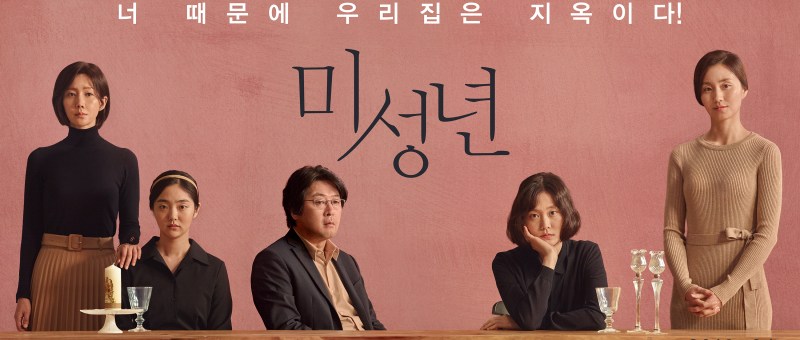
Another Child (미성년, Kim Yoon-seok, 2019)

Another Child Poster 1Learning to be generous in the face of disappointment is perhaps a defining characteristic of adulthood. It’s a lesson the teenage heroines of Another Child (미성년m Miseongnyeon) must learn the hard way as they find an unexpected bond in realising that their parents aren’t bad people, just flawed and human. The debut directorial feature from actor Kim Yoon-seok who also stars in a minor role as the feckless patriarch, Another Child finds four women across two generations caught in very trying circumstances but acting with generosity and compassion as they endeavour not to make any of this harder than it needs to be.

The drama begins when 15-year-old Joo-ri (Kim Hye-jun) spots a compromising photo of her father and another woman on his phone. Following him around, she realises that he’s been having an affair with a woman who runs a duck restaurant a little way out of town and is actually the mother of one of her schoolmates, Yoon-ha (Park Se-jin), though they barely know each other seeing as they’ve never shared any classes. In any case, they do not really get on and eventually get into a fight over Joo-ri’s phone which she dropped at the restaurant while snooping, prompting Yoon-ha to blurt out the truth to Joo-ri’s already depressed and suspicious mother.

Despite Joo-ri’s outrage, her father Dae-won (Kim Yoon-seok) and mother Young-joo (Yum Jung-ah) have been sleeping in separate bedrooms for the last two years and appear to be married in name only. Nevertheless, Joo-ri hoped she could sort all of this out before her mother knew anything about it but the situation has been further complicated by the fact that Yoon-ha’s mother Mi-hee (Kim So-jin) is apparently several months pregnant – news which comes as a shock to Joo-ri who begins to accept that perhaps she can’t simply put an end to her father’s philandering and that nothing will ever be the same ever again.

This becomes doubly true once the baby is born in an early labour brought on by Young-joo’s impromptu visit to the restaurant. Guilt-stricken, Young-joo tries to do what she can for Mi-hee as another woman in a difficult situation while trying to encourage her rather snooty daughter to make friends with her almost step-sister. Despite themselves and the many differences between them, Joo-ri and the headstrong Yoon-ha do eventually start to bond but find their newfound friendship tested by their shared affection for their new little brother with Yoon-ha immediately adopting him and vowing to raise the baby herself in place of her irresponsible mother, even stopping to ensure his birth certificate is properly registered, while Joo-ri coldly suggests he be put up for adoption in the hope he gets a better education. Yoon-ha, practically minded in many other respects, would never abandon a family member, while Joo-ri makes what she thinks is the “sensible” if austere choice which prioritises Yoon-ha’s right to conventional success over familial duty.

Meanwhile, the four women are left to sort everything out amongst themselves. Dae-won is perhaps not a bad man, but weak and feckless. Unwilling to face what it is that he’s done, he runs away – avoiding seeing the baby while refusing to engage with the pain he’s caused his wife and daughter through his infidelity, still in denial that he’s destroyed his family home but never really intending to make a new one with Mi-hee who really was, it seems, just a mid-life crisis fling. Across town, Yoon-ha tries asking her own feckless father for money to pay some of her mother’s hospital fees as well as other expenses but finds him an irresponsible gambler who’d forgotten how old she was even if he eventually managed to recall her name.

Thanks to some gentle prodding from each other’s mothers, with whom both Yoon-ha and Joo-ri begin to find common ground, the girls eventually grow more accepting of their situation, looking for understanding rather than trying to apportion blame. No one here is really “bad”, just flawed and unhappy, caught up in an emotionally difficult situation that is either everyone’s fault or no one’s. None of them have anything to gain by making this harder than it needs to be and thankfully decide to take the moral high ground, not exactly forgiving but compassionate. “It’s not easy to live in this world”, Yoon-ha tells her new brother not quite knowing how right she is. A beautifully pitched exploration of magnanimous female solidarity and unexpected friendship, Another child is a finely drawn feature debut from the veteran actor which holds only sympathy for its flawed heroines trying to find grace in trying times.


Another Child screens on 11th July as part of the 2019 New York Asian Film Festival. It will also be screening as part of the 2019 Fantasia Film Festival on 14th/20th July.

International trailer (English subtitles)

5 Million Dollar Life (五億円のじんせい, Moon Sung-ho, 2019)

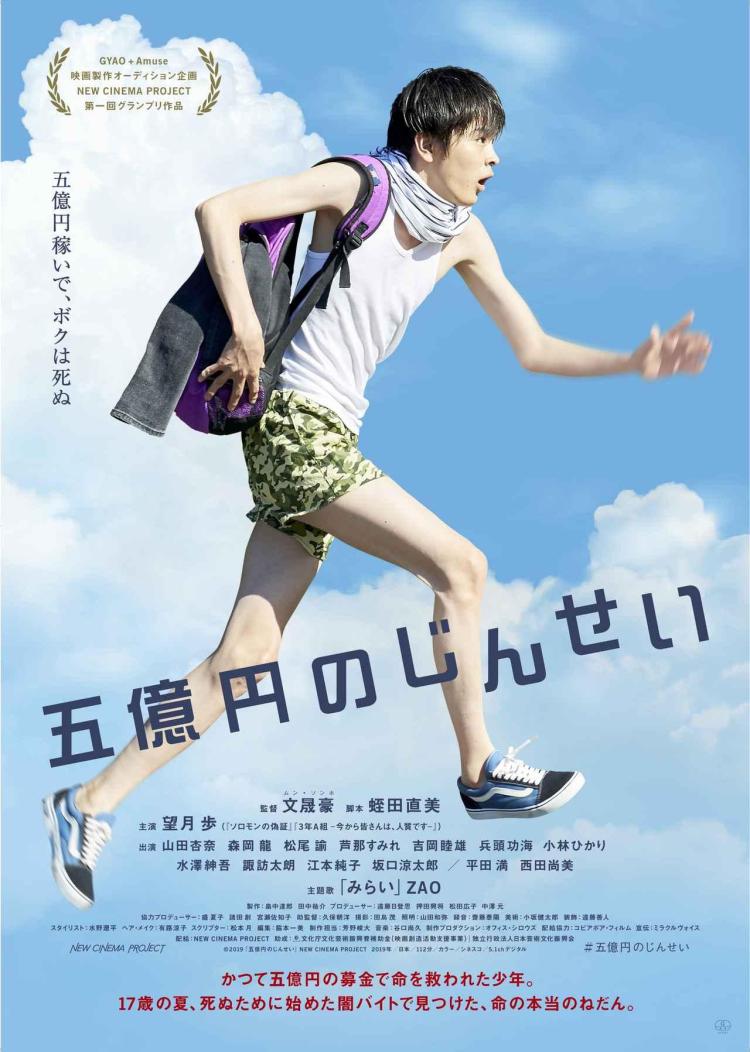
5 Million Dollar Life posterIs it possible to live a life without “debts” of one kind or another or are we all just living on loans? The hero of Moon Sung-ho’s 5 Million Dollar Life (五億円のじんせい, Gooku Yen no Jinsei) wants to find out, not least because he feels himself indebted to those who have helped him in the past and struggles with the pressure of living up to their expectation. An unexpected source provides some helpful advice in pointing out that “value” in one sense at least is not something you’re free to decide for yourself but is defined by others. Then again, not being certain of your own worth makes it impossible to claim your rightful place in society as someone as worthy of love and respect as any other.

When Mirai (Ayumu Mochizuki) was six, his family found out he had a congenital heart defect and would need to go abroad for a transplant. His community rallied around him and raised five million dollars so he could go to America for treatment. The heartwarming story also made him the star of an ongoing documentary in which he’s interviewed on television every year so those who contributed to saving his life can find out how he’s getting on. Becoming a local celebrity and an accidental TV star is obviously a lot of pressure for any young man, but Mirai feels acutely burdened by the responsibility of “repaying” the kindness that was offered to him. He doesn’t feel his life was worth five million dollars and knows he is unlikely to repay their “investment”. He is after all just “ordinary”. He won’t win a Nobel prize or cure cancer, all he can do is live his life in the normal way but that’s hard when it feels like everyone is secretly looking over his shoulder and waiting for him to make a mistake.

Meanwhile he’s also become a role model to the suicidal Chiharu (Hikari Kobayashi) who doesn’t “see the value in life”  and feels that “death is glorious” because people can hate you while you’re alive, but they’ll love you when you’re gone. Mirai gets where she’s coming from. He longs for an ending too, if only to reject the responsibility he feels towards those who saved his life. Attacked by a troll online, he takes up the challenge to make the five million dollars back and then kill himself to bring an end to the whole affair but quickly discovers that it’s a lot harder to make five million dollars than he thought.

Neatly taking place during the last summer of high school, Mirai’s odyssey sends him on an odd trek across working class Japan as he finds himself alone and without money or means to support himself. At only 17, he can’t even stay in a hotel on his own and so he winds up becoming homeless but is taken in by a nice old man who claims he decided to help him because he bought an umbrella with his last pennies rather than pinching someone else’s. Though he is often exploited and betrayed by those who take advantage of his goodness, that same quality finds an answer in others who, sometimes despite themselves, want to help him because he seems like the sort of person who needs help.

This idea finds encapsulation in the surprisingly astute words of wisdom Mirai receives from a petty gangster he meets after getting involved with sex work. The gangster, who starts off by telling him that he’s making a mistake selling himself short when it’s the customer who decides what his “value” is, later explains that it’s not so much that the world is divided into people who are nice and people who aren’t, but that some people are “worth” being nice to and Mirai, for one reason or another, is one such person who thrives on kindness.

Mirai’s desire to quantify his life by putting a price on it may be mistaken, as proved by the sad case of a family committing suicide because of monetary debt, but what he realises is that people help because they want to and they don’t necessarily expect anything in return other than kindness. If he wants to find a way to repay them, he’ll have to figure it out on his own terms first, but all they really wanted they wanted from him was that he live his life as happily as possible. 5 Million Dollar Life goes to some pretty dark places, but always maintains a healthy cheerfulness as Mirai goes on his strange odyssey looking for the “value” in being alive and discovering that it largely lies shared kindnesses and unselfish connection.


5 Million Dollar Life screens on 11th July as part of the 2019 New York Asian Film Festival.

Original trailer (no subtitles)

Ma (Kenneth Lim Dagatan, 2018)

Ma poster“Lost or beguiled?” asks the strange talking tree at the centre of Kenneth Lim Dagatan’s Ma in an opening which might as well be aimed at the audience as the confused little boy about to find himself on a very dark path indeed. In this fairytale world nothing comes without a price, but how much would you pay to maintain a connection fate has seen fit to sever?

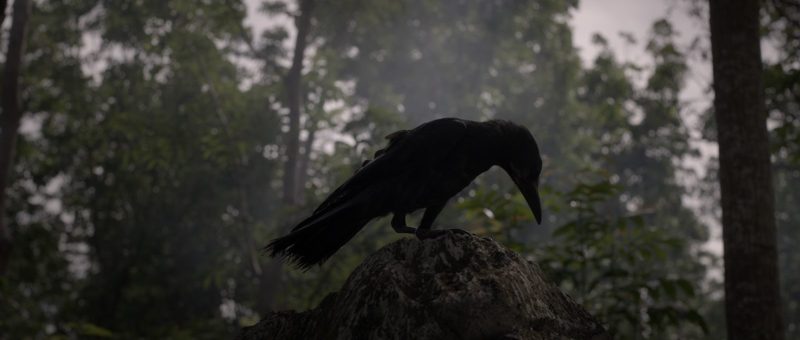
Little Samuel (Kyle Espiritu), arm in a sling, cruelly tortures a dying crow before following another into a mysterious cave where he finds a lone tree, improbable in its vibrant greenery somehow illuminated from above. He touches it and its leaves cut him, before the tree raises its voice to tell him that there is “an end to every pain” but “every blessing comes with a price”. Running from the cave in fear, Samuel trips and discovers that his broken arm is now healed, but makes a shocking discovery on his return home. His mother seems to have become ill with a nasty hacking cough which later produces blood. When she haemorrhages over the dinner table, Samuel and his younger siblings have no idea what to do. Returning to the cave he assumes that the tree requires a sacrifice, “life for life”, and offers up the family’s pregnant cat pleading that his mother be returned to him, but the tree’s desires are deeper and darker. Ma returns, but in a different form.

After this short prologue, Dagatan pulls the focus to heavily pregnant, somewhat distracted, school teacher, Cecile (Anna Luna). Unlike Samuel and his family, Cecile seems to come from a comfortable background but is apparently single and living with her domineering mother (Susan Africa) who wants her to see a different doctor against Cecile’s own wishes. Gradually we learn that there is tension between Cecile and her mother’s younger European husband (Ian Curtis), while she is still deeply grief-stricken over her husband’s suicide. The two plotstrands begin to converge when Cecile decides she’s had enough of her mother and goes to stay with an old friend in her hometown.

While Samuel, a child after all, is prepared to go to great lengths to preserve his status quo through saving his mother, Cecile is far from secure in her impending motherhood. She wonders if her pregnancy tipped her husband over the edge, bristling at her friend Gelyen’s (Kate Alejandrino) claim that it wasn’t her fault with the words “we are all to blame”. Attempting to visit Samuel’s mother Lina (Glydel Mercado) who was in fact a childhood friend, the women too come across the cave, idly wondering if the legend behind it – that the ghost of a pregnant woman raped and killed by the Japanese during the war lurks inside, has been updated for a new generation.

Gelyen lives her life surrounded by religious icons but also suggests, perhaps jokingly, that as people around here are mostly Catholics they’d believe anything. In any case, the cave seems to have a particular meaning to the women surrounding a mysterious incident connected with Gelyen’s apparently missing brother and late father. The cave, a kind of womb itself, appears to feed on familial distress and emotional discord. It can relieve your burdens, but only at a price – the choice is yours should you decide to pay.

Then again, some things are supposed to pass and artificially reviving them might not be the best solution for anyone, not least the hollow simulacrum of a deceased loved one. Did Lina die because Samuel found the cave, did he pay for worrying that crow? Likewise, did Cecile’s husband die because of her childhood adventure? Perhaps the tree guided her here, engineering her inescapable guilt to reclaim what it to needs to live and prosper. Samuel does the unthinkable and drags his little siblings into his dark game, while Gelyen’s room full of religious icons are apparently no match for the ominous power of the natural world. Families are in a sense restored to a kind of satisfaction, but only through great personal sacrifice that alleviates the sense of guilt without offering the relief born of mutual forgiveness. Filled with a macabre sense of dread and gothic fatality, Ma is an ambitious debut from Dagatan which matches its beautifully conceived images with the bloody horror of grief-stricken desperation. 


Ma screened as part of the 2019 New York Asian Film Festival.

Original trailer (no subtitles)

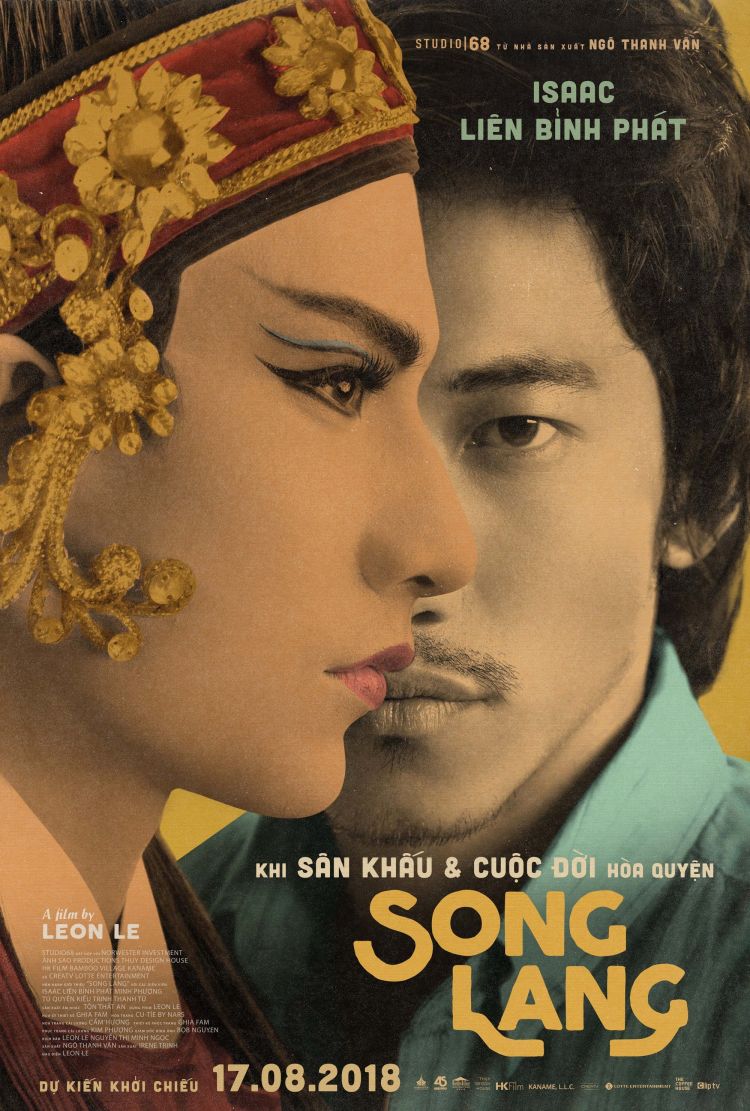
Song Lang (Leon Le, 2018)

Song Lang poster 1“How could the gods be so cruel” a ci lương performer intones, “Allowing us to be together yet worlds apart”. An achingly nostalgic return to the Saigon of the 1980s, Leon Le’s melancholy debut Song Lang is a lament for frustrated connections and the inevitability of heartbreak, taking its lonely heroes on a slow path towards self realisation only to have fate intervene at the worst possible moment.

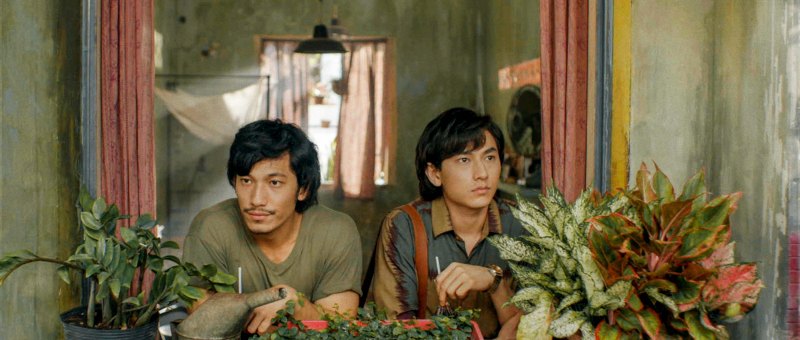
An enforcer for the steely “Auntie Nga” (Phuong Minh), Dung Thunderbolt (Lien Binh Phat) has long been trying to take revenge on his unhappy life through the intense act of self-harm which is his way of living. A routine job, however, jolts him out of his inertia when he wanders into a theatre where a ci lương opera company is preparing for a performance. There he finds himself catching sight of the famous performer Linh Phung (Isaac), only to run away, in flight from the intensity of being woken from his reverie. Later he returns to claim the debt, threatening to burn the company’s precious costumes until Linh Phung arrives and interrupts him, proudly insisting he will pay the balance after the first performance. Dung leaves confused, refusing to accept the watch and necklace that Linh Phung offered in partial payment.

A second chance meeting confirms that the two men might have more in common than they’d first assumed. The lonely Linh Phung, eating alone in a nearby cafe, gets into a fight with some drunken louts who wanted him to sing a few tunes, but as surprisingly handy as he turns out to be quickly gets himself knocked out at which point Dung steps in to rescue him, eventually taking him home to sleep it off where they later bond through a shared love of violent video games. An opportune power cut allows the two men to enter a greater level of intimacy during which Dung begins to re-embrace his ci lương childhood through the instrument his father left behind.

The Song Lang, as the opening informs us, is an embodiment of the god of music delivering the rhythm of life and guiding musicians towards the moral path. That’s a path that Dung knows all too well that he has strayed from and is perhaps looking to return to. The central theme of ci lương is “nostalgia for the past” – something echoed in Linh Phung’s peculiar philosophy of time travel through people, objects, and places which seems to be borne out in Dung’s constant flashbacks to a more innocent age before his happy childhood ended in parental betrayal and sudden abandonment.

Linh Phung, meanwhile, is nursing his own wounds. His mentor tells him that though he is popular his performance lacks depth because he lacks life experience while his co-star mocks him for never having been in love. Rooting through Dung’s belongings, he discovers a book he’d loved in childhood about a lonely elephant taken away from his jungle and sold to a circus. Both men are, in a sense, exiles from their pack walking a lonely path of confusion and despair but finding an unexpected kindred spirit one in the other as they search for new, more fulfilling ways of being. Bonding with Dung opens new emotional vistas for Linh Phung which allow him to perfect his art, while reconnecting with his childhood self through Linh Phung’s music gives Dung the courage leave his nihilistic life of shady moral justifications behind.

Fate, however, may have other plans and karma is always lurking. Linh Phung’s claim that an artist must know great grief proves truer than he realised, but it’s another passage from the book with which he eventually leaves us, affirming that it’s best to learn to enjoy these present moments rather than lingering in an unchangeable past. Yet the art of ci lương is itself steeped in nostalgia, perfect for a “time traveller” like Linh Phung returning to his sadness through his art, proving in a sense that the past is always present and wilfully inescapable. A melancholy, romantic evocation of Saigon in the 1980s, Song Lang is also a beautifully pitched paen to a fading art form and an  “unfinished love song” to lost lovers in which two lonely souls find an echo in each other but discover only tragedy in the implacability of fate.


Song Lang screened as part of the 2019 New York Asian Film Festival.

Original trailer (Vietnamese subtitles only)

White Snake (白蛇:缘起, Zhao Ji & Amp Wong, 2019)

White Snake posterOne of the best known classical Chinese folktales, Madame White Snake has already inspired a host of cinematic adaptations, most famously Tsui Hark’s Green Snake. CGI animation White Snake (白蛇:缘起, Báishé: Yuánqǐ), co-produced by Warner Bros. in the US and China’s Light Chaser, takes a different tack in imagining a prequel to the original legend that hints at a wider destiny for the eponymous Bai Suzhen and the doctor Xu Xian. Like other similarly themed family films, White Snake is also a surprisingly progressive, if melancholy, love story which insists that love is love and does not, or should not, change if you discover the person that you love is a little different than you first thought – in this case, that she’s giant snake demon in beautiful human form.

A framing sequence opens with Bai Suzhen, here called Xiao Bai / Bianca, lamenting to her friend Xiao Qing / Verta (Tang Xiaoxi) that though she has meditated for 500 years she cannot achieve enlightenment and feels the block is due to a memory that she cannot recall. Xiao Qing then gives her a jade hairpin which casts us back 500 years to the Tang Dynasty and a time of chaos in which an evil general has ordered the mass killing of snakes in order to steal their energy for black magic purposes to improve his relationship with the emperor. The snake demons declare war and Xiao Bai is sent to assassinate the general but is injured before she can complete her mission. Washing up on a nearby shore, she is rescued by a local boy, Xuan (Yang Tianxiang), who happens to be a snake hunter. Having lost all her memories, Xiao Bai thinks she is human and bonds with Xuan as they team up to investigate her past with the hairpin as their first clue.

We are told that the land is in chaos and that the peasantry is cruelly oppressed by onerous loans and unjust treatment at the hands of the feudal lords. The general is forcing them to kill snakes and deliver them to him as a kind of tax incentive while threatening their livelihoods if they fail to comply. Despite participating in snake culls, however, Xuan is a kind and energetic young man who is also the village’s herbalist and dreams of becoming a doctor. Having rescued Xiao Bai, he does his best to help restore her memory and vows to be at her side protecting her no matter what. On figuring out that she is really a snake demon, his devotion doesn’t change and he stays with her all the same even knowing that she will be in danger if anyone else learns of her true identity.

Xuan may insist that your fate’s your fate but you can choose how you live, but he also acknowledges that “life is short and sorrows long”, affirming that it’s better to live in the moment making happy memories for less cheerful times. Then again, as Xiao Bai says, you can’t always do what you want and this is indeed a “heartless world” with rules which must be followed. As in any good fairytale, Xiao Bai and Xuan are divided by being on opposing sides of a supernatural plane with differing conceptions of time and eternity. As his song says, “this floating world is but a dream”, and Xiao Bai’s sojourn among the humans is likely to be a short one. Suspected of treachery, Xiao Bai’s good friend (or perhaps a little more than that) Xiao Qing volunteers to wear the Scale of Death, pledging her own life in place of Xiao Bai’s if she fails to fetch her back within three days only to immediately take against Xuan possibly for reasons unconnected to her distrust of humans who, she has been taught, are universally treacherous and hostile to snakes.

Of course, the original legend and the opening framing sequences are clues that this isn’t going to end happily but then with eternity to play with perhaps nothing is ever really as final as it seems. Beautifully animated with gorgeously rendered backgrounds and a melancholy romantic sensibility, White Snake is a huge step forward for Chinese animation which pays tribute the classic legend while creating a universe all of its own with sequel potential aplenty.


White Snake screens on 7th July as part of the 2019 New York Asian Film Festival. It will also be screened in Montreal as part of the 2019 Fantasia Film Festival on 27th July.

Original trailer (Mandarin with English & Simplified Chinese subtitles)

Move the Grave (이장, Jeong Seung-o, 2019)

MOVE THE GRAVE STILL 1The patriarchal society refuses to release its grip on four disgruntled sisters in Jeong Seung-o’s debut feature Move the Grave (이장, i-jang). Unearthing the buried past is indeed what the sisters find they have to do when their father’s “eternal” resting place is ring marked for a new development, but there’s nothing quite like unexpected family reunions for throwing present and past into stark relief. Cheating spouses, surprise pregnancies, pre-marital discord, and the old favourite money woes conspire against familial unity but female solidarity is perhaps the only weapon at their disposal in an overwhelmingly sexist environment.

Eldest daughter Hye-yeong (Jang Liu) receives the grave relocation notice on an extremely bad day. Her naughty, headstrong son Dong-min has been reprimanded for being disruptive in school yet again, and her employer has intimated that it if she intends to take extended leave they expect her resign rather than return. Nevertheless, she has to sort this grave thing out so she calls her sisters – unhappily married Geum-ok (Lee Seon-hee), soon-to-be married Geum-hee, and university student Hye-yeon (Gong Min-jung). Meanwhile, their only brother Seung-rak (Kwak Min-gyoo), refuses to take their calls on a general basis and has never given any of them his address – something which causes a problem when the women arrive at their uncle’s house. A deeply conservative man, he refuses to move the grave without the eldest son present, sending his nieces all the way back to the city with the instruction to bring their brother back with them though they have no idea where he is.

The relationship between the sisters at least is relatively stable – they may not see each other often or particularly enjoy each other’s company but are, perhaps superficially, well acquainted with each other’s lives to the extent of suspecting there is probably more going on with each of them than anyone wants to talk about. This is especially true of Geum-ok who has brought a suspiciously large suitcase for a day trip and come alone without any of her family members. Geum-hee, meanwhile, constantly bickers about money – asking pointed questions about possible compensation and taking petty potshots at Hye-yeong over the high paid job she hasn’t had time to tell them she’s effectively been fired from for daring to ask about maternity leave.

The conservative, authoritarian, and sexist uncle has presumably made his peace with Hye-yeong’s divorce and career as a working single-mother, but continues to exercise his patriarchal rights over his nieces, insisting that their presence is less essential than that of their spoilt little brother who only ever contacts them when he needs money. Tellingly when Seung-rak is finally forced to appear, he is feted and fussed over with a lavish meal cooked by his aunt while the nieces remain a secondary consideration. Recalling their difficult upbringing, they lament that Seung-rak had the best of everything – his own room, new clothes, and a bowl full of food at dinner while the four of them always had to share. Faced with such criticism of the “traditional” family, the uncle finally erupts, asking what right “you women” think you have to talk so much, and what’s wrong with staying in the house all day doing chores anyway? 

Though the older sisters are minded to bite their tongues, committed feminist Hye-yeon isn’t going to let him get away with such outdated claptrap. She loudly takes him to task, pointing out that their father made their mother so miserable that she expressly asked not to be buried with him, while also having a word with Seung-rak about his irresponsible treatment of his former girlfriend who needs him to make an important decision but seems reluctant to consider getting back together which might be what he wants but then it’s difficult to know because none of the men in this family do much in the way of talking.

Meanwhile, Geum-hee remains pre-occupied about money because her husband-to-be is dragging his feet over her proposed budget for married life. He thinks they can shave it further by ignoring his parents’ birthdays and not buying them Christmas presents, but also that they can save on daily expenses by simply “fetching” things like toothpaste and toothbrushes from his mother’s house. Adulthood, it seems, has not quite come home to him. In the end the sexist uncle and the feckless Seung-rak are forced to stand down and respect the decision the sisters have come to about the grave, but the women remain largely powerless to resist the other forces of patriarchal oppression in their lives from unfair employment policies and stigma surrounding single motherhood to society’s general refusal to accept sexual equality. The aunt’s parting words to the unhappy crowd at the docks that they “only have each other” have a mildly chilling quality, but the family does perhaps emerge with a greater sense of intimacy and a gentle solidarity as they finally put the past to rest and prepare to move forward into a less stressful future.


Move the Grave screens on 6th July as part of the 2019 New York Asian Film Festival

Short interview with the director (English subtitles)

Fantasia International Film Festival Confirms Complete 2019 Programme
Fantasia Poster Eng

Montreal’s Fantasia International Film Festival is back for its 23rd edition with an another unbelievably packed programme of recent genre hits. Once again Fantasia proves itself as a place to go for East Asian cinema with a wide ranging collection of indie and mainstream efforts from across the region.

Cambodia

the prey poster low res

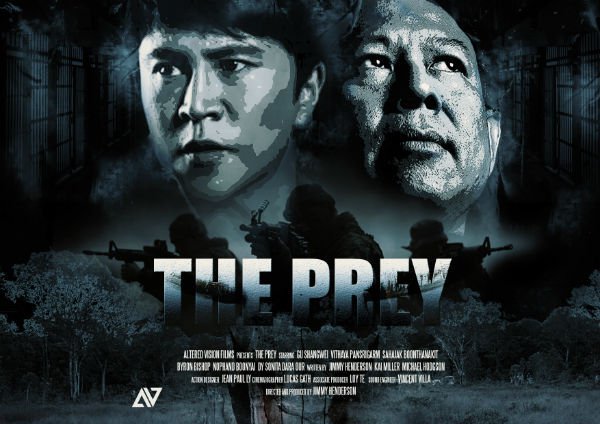
  • The Prey –  Jimmy Henderson’s Jailbreak followup follows an undercover cop arrested during an operation who subsequently gets drawn into a corrupt prison warden’s sideline of sending prisoners out as targets for hunters.

China

Shadow banner

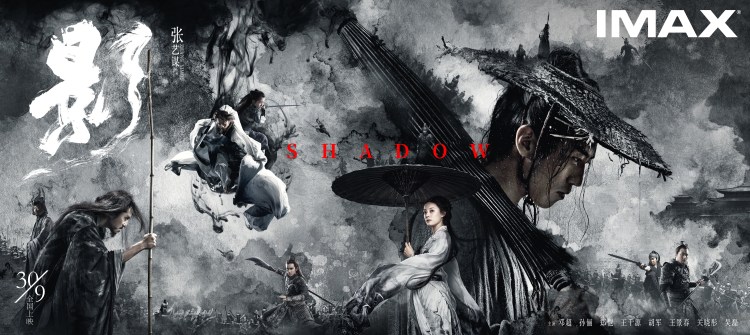
  • Shadow – Zhang Yimou returns to the world of period epics with a tale of proxy war as a great general (Deng Chao) makes use of a double to combat palace intrigue. Review.
  • SHe – experimental stop motion animation in which an oppressed shoe disguises herself as a male in an attempt to escape the hellish factory world.
  • White Snake – beautifully animated prequel to the classic legend in which a snake spirit loses her memory during an attempt to assassinate a tyrant and falls in love with the kindly snake catcher who rescues her.

Hong Kong

Missbehaviour banner

  • Boxer’s Omen – classic Kuei Chih-Hung kung fu in which a bewitched gangster must reinvent himself as a monk to defeat supernatural evil.
  • Full Contact – Ringo Lam classic starring Chow Yun Fat as a bouncer trying to help out a friend in trouble with gangsters.
  • G Affairs – gritty social drama in which a severed head exposes the unexpected connections between a disparate group of people.
  • Master Z: Ip Man Legacy – sequel to the Ip Man series in which Cheung Tin Chi (Max Zhang) tries to make a martial arts free life for himself and his son in ’60s HK.
  • Missbehavior – warmhhearted New Year comedy from Pang Ho-Cheung in which bickering friends unite in a quest for emergency breast milk. Review.

Indonesia

dreadout still 1

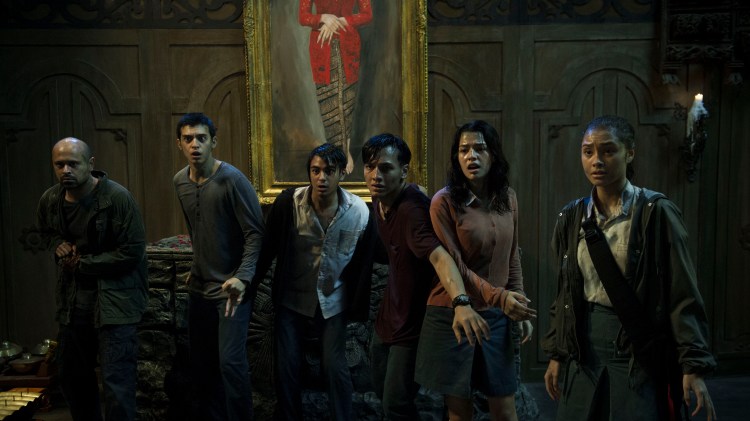
  • Dreadout – video game adaptation in which a gang of YouTubers investigate an abandoned building last used by a cult.

Japan

dance with me syill 1

  • 21st Century Girl – omnibus film featuring shorts from some of Japan’s most interesting young female directors including A Crimson Star’s Aya Igashi and Amiko’s Yoko Yamanaka.
  • Almost a Miracle – manga adaptation from Yuya Ishii in which an infinitely good young man’s world is turned upside-down by an unexpected act of kindness.
  • And Your Bird Can Sing – three melancholy slackers struggle to accept love in Sho Miyake’s adaptation of the Yasushi Sato novel. Review.
  • Brave Father Online – Our story of Final Fantasy XIV – big screen reboot of the hit TV drama in which a young man bonds with his emotionally distant retiree father through the medium of Final Fantasy XIV.
  • Cencoroll Connect – anime in which high school students telepathically control shapeshifting monsters.
  • Chiwawa – latest from Ken Ninomiya in which a young woman (Mugi Kadowaki) tries to solve the murder of her friend.
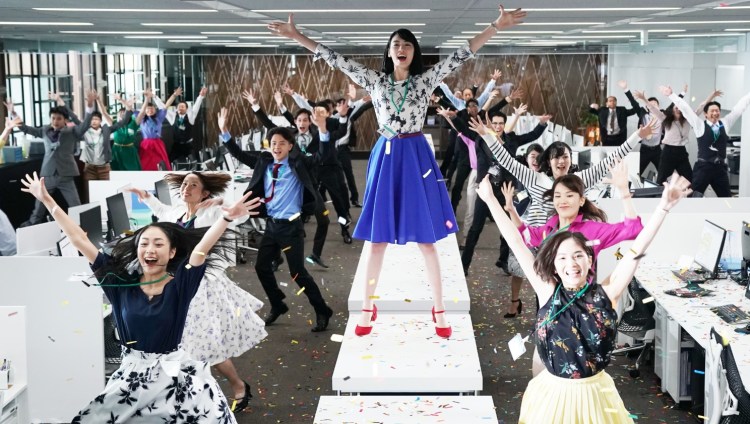
  • Dance With Me – Shinobu Yaguchi returns with another feel good comedy in which an ambitious office worker is hypnotised to sing and dance like an old Hollywood musical whenever she hears music.
  • Dare to Stop Us – drama set in the heyday of Wakamatsu Production. Review.
  • Day and Night – a young man returns to the hometown where his whistleblower father was hounded into suicide.
  • The Fable – an eccentric hitman’s mission to lay low for a year is undermined by yakuza politics in this surreal yet heartwarming manga adaptation starring Junichi Okada. Review.
  • Fly Me to the Saitama – absurdist comedy in which the residents of Saitama have become an oppressed minority. Review.
  • Garo – Under the Moonbow – latest in the long running Garo saga.
  • Gintama 2: Rules are Made to Be Broken – sequel to Yuichi Fukuda’s enormously successful adaptation of the popular gag manga in which Edo has been taken over by aliens.
  • Hard Core – slacker sci-fi drama in which a frustrated idealist befriends a rusty robot. Review.
  • His Bad Blood – winner of the audience award at Yubari International Film Festival in which a father and son unwittingly seek refuge with the same priest.

  • Human Lost – extremely loose, animated sci-fi take on Dazai’s classic novel scripted by Mardock Scramble’s Tow Ubukata and directed Fuminori Kizaki.
  • The Island of Cats – The peaceful days of an old man and his cat are disrupted by the arrival of a pretty young woman from Tokyo (Kou Shibasaki) and her newly opened cafe in an adaptation of the manga by Nekomaki.
  • It Comes – familial horror from Tetsuya Nakashima in which a father reaches out to an occult expert in fear that he is being threatened by a malevolent entity.
  • Kingdom – Wuxia-esque manga adaptation from the big budget master Shinsuke Sato set in feudal China.
  • The Legend of the Stardust Brothers – Long forgotten, Macoto Tezka’s anarchic cult comedy debut has been lovingly rediscovered and restored by Third Window Films. A tale of fame, corruption, and destiny, Stardust Brothers is a whimsical piece of absurdist Showa-era nostalgia. Review.
  • Promare – first feature from anime studio Trigger (Kill la Kill) in which futuristic firefighters try to keep the peace.
  • The Relative Worlds – parallel world anime romance.
  • Ride Your Wave – latest from Masaaki Yuasa in which a firefighter and florist enjoy a fairytale romance until…
  • Sadako – Hideo Nakata returns to the world of Ring with a brand new incarnation of the legendary vengeful spirit.
  • Stare – J-horror thrills as a pair of students team up with a journalist to unravel the mystery of a terrible curse.
  • Tokyo Ghoul ‘S’ – sequel to the popular live action adaptation of Sui Ishida’s manga in which a young man gets an organ transplant from a “ghoul” and finds himself craving human flesh.
  • Twilight – Fukushima-set indie anime in which a young girl bonds with an artistic boy on a bus.
  • We Are Little Zombies – madcap post-modern comedy in which four recently bereaved teens bond in their shared sense of alienation and eventually start a punk band! Review.
  • The Wonderland – latest from Keiichi Hara (Colorful, Miss Hokusai) inspired by Sachiko Kashiwaba’s Strange Journey From the Basement in which a young girl discovers another world under her aunt’s shop.

Philippines

ode to nothing still 1

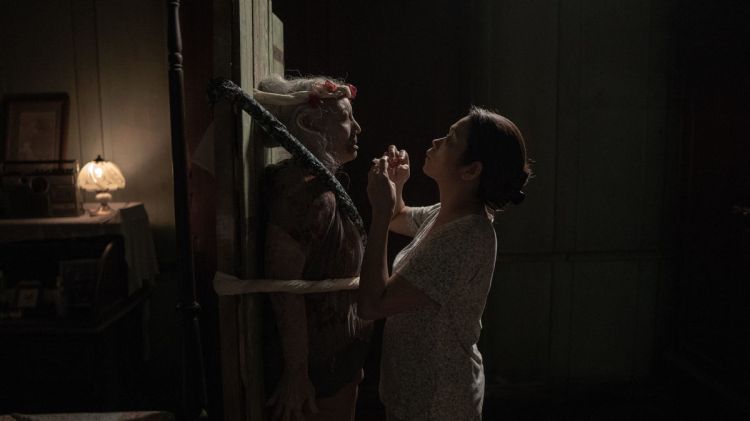
  • Mystery of the Night – festival favourite Adolfo Alix Jr presents an adaptation of Rody Vera’s play “Ang Unang Aswang” featuring the legendary vampiric monsters.
  • Ode to Nothing – a lonely spinster struggles to keep her funeral business afloat until she ends up making friends with a corpse.

South Korea

Extreme Job banner 2

  • Another Child – two very different teenage girls form an unlikely friendship when they discover their parents are having an affair.
  • Door Lock – remake of Spanish film Sleep Tight in which a woman living alone suspects a stranger has been breaking in to her home. Review.
  • The Dude in Me – A mean spirited businessman swaps bodies with a bullied overweight teenager.
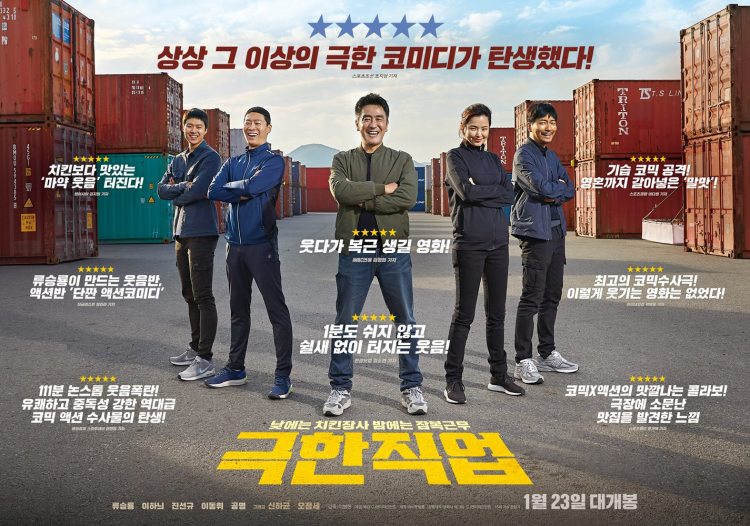
  • Extreme Job – bumbling police officers go undercover running a chicken restaurant to catch drug dealers but the restaurant ends up taking off. Review.
  • The Gangster, the Cop, the Devil – Ma Dong-seok stars as a gangster who teams up with a violent cop to catch a serial killer.
  • Hit-and-Run Squad – dogged cops defy demotion to take down an elitist chaebol who thinks he doesn’t have to pay for his crimes because he’s rich.
  • House of Hummingbird – a young girl struggles to assert herself in the confusing world of the newly democratised South Korea but begins to find her voice thanks to an inspirational teacher in Kim Bora’s festival favourite.
  • IdolHan Gong-ju’s Lee Su-jin returns with a conspiracy thriller in which a politician’s son commits a hit and run.
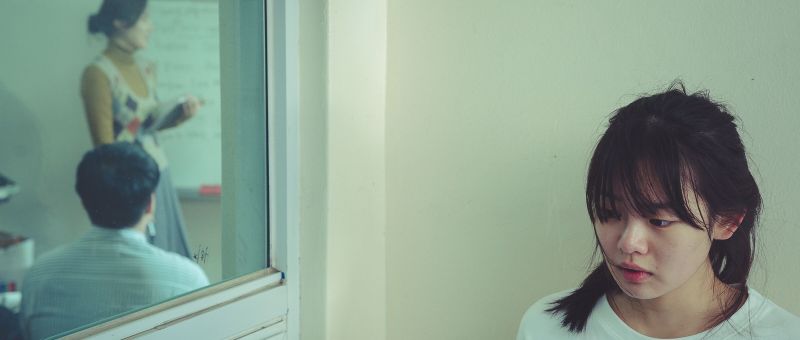
  • Maggie – a nurse intends to resign after coming to the conclusion she and her boyfriend have been captured in a compromising position in an x-ray but discovers everyone has called in sick. Meanwhile, her boyfriend is busy trying to fill in the mysterious sink holes appearing all over the country.
  • Miss and Mrs Cops – a former top cop turned desk jockey, her bumbling rookie sister-in-law, and a female colleague team up to stop a gang of porn blackmailers!
  • Money – Ryu Jun-yeol stars as a rookie stockbroker frustrated by Yoo Ji-tae’s sociopathic rival.
  • The Moon in the Hidden Woods – animation in which Princess Navillera flees the castle into the wasteland with the musician Janggu and his band of outlaws.
  • No Mercy – a woman recently released from prison tries desperately to save her little sister who has learning difficulties and has been dreadfully misused by those around her.
  • The Odd Family: Zombie on Sale – hilariously zany comedy in which a weird family adopts a zombie and then tries to exploit it when it turns out that its bite has unexpectedly positive qualities (for a time at least). Review.
  • The Wrath – joseon horror remake of the 1986 classic Woman’s Wail in which a wealthy family’s sons are killed on their wedding day.

The Fantasia International Film Festival takes place in Montreal, Canada from 11th July to 1st August. You can find full details for all the films as well as screening times and ticketing information on the official website, and you can also keep up with all the latest news via the festival’s official Facebook pageTwitter account, Instagram, and Vimeo channels.
Sub-Zero Wind (영하의 바람, Kim Yu-ri, 2018)

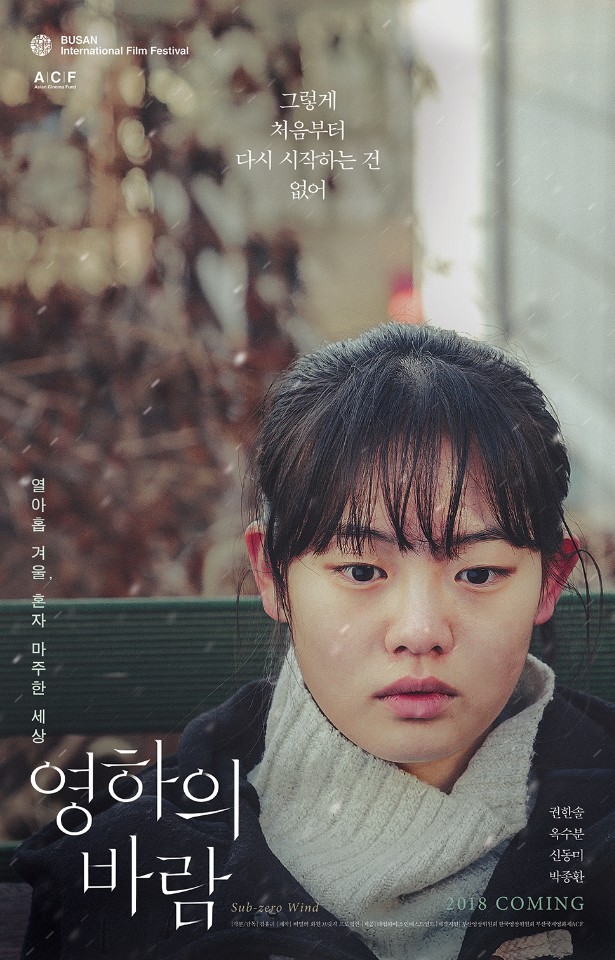
Sub-Zero Wind poster“Life is something you have to get through alone” the mother of the heroine of Kim Yu-ri’s debut Sub-Zero Wind (영하의 바람, yeonghaui balamcoldly claims. In South Korean society, few things are more important than family bonds but when familial connection becomes weaponised it leaves the vulnerable out in the cold. Badly let down by bad luck and irresponsible parenting, Kim’s heroines have only each other to rely on but find even their unbreakable bond strained by the self-centred, unfair, unequal and hypocritical world in which they live.

Kim follows the girls over seven years beginning with the 10-year-old Young-ha’s traumatic introduction to her step-father (Park Jong -hwan). Young-ha’s mother Eun-suk (Shin Dong-mi), big in the Church, has divorced her dad and now that she’s going to have a new “housemate” has decided that Young-ha should go and live with him. With everything packed into a moving van including her bed, Eun-suk sends her off with the removal man and a cheerful goodbye as if she were seeing off a guest who’s outstayed their welcome. Unfortunately, Young-ha’s dad has done a moonlight flit and so the removal man has no option but to take her back home, only her mother has gone out to celebrate and isn’t answering her phone. Eventually Young-ha is abandoned on the side of the road along with all her possessions, waiting for Eun-suk to come home and sort all of this out.

Some years later, Young-ha appears to have integrated fairly well into her new family, a large portrait of which hangs above their sofa in the elegantly decorated apartment. In fact, despite her original dislike of him, Young-ha seems much closer to her step-father whom she calls “dad” than to her frosty mother. Meanwhile, her best friend and cousin Mi-jin is having a tough time. Both her parents have died, and Eun-suk was supposed to be looking after her but has left her to live with her elderly grandmother and is secretly embezzling her parents’ life insurance payments to put towards her religious education in the hope of founding a church of her own. For this reason, she is terrified that Mi-jin’s grandmother will die and her other relatives will find out about the stolen money.

The truth is the Eun-suk is one of those people obsessed with the church rather than its teachings. Kim opens the film during a sermon in praise of love throughout which Young-ha has her eyes wide open, staring at her mother and her new boyfriend in the knowledge she is soon to be ejected from her mother’s new life. Despite going on about leading people to God and practicing Christian virtues, Eun-suk is often judgemental and extremely self-centred. All she cares about is being a member of the organisation and increasing her status with in it though she has obviously not kept to its teachings in that she has divorced her first husband and is now living with a man she is not not married to who is actually still married to someone else. All of this will, if it is discovered, quite obviously prevent her from becoming a minister but Eun-suk remains undeterred.

Meanwhile, she emotionally neglects her daughter and is sometimes jealous of her close relationship with her step-father. Truth be told, there is something a little inappropriate in how close they remain as Young-ha transitions into adolescence. One could assume her step-father has over invested in his new family because he misses the daughter he left behind, or that father and daughter have bonded through each being pushed out by Eun-suk’s cold hearted pursuit of her goal, but the fact remains that the family unit is quietly disintegrating under the pressure of her emotional absence and eventual slide into the hypocritical selfishness which sees her keen to adopt her boyfriend’s daughter for appearance’s sake or because she fears his leaving her while keeping her sister’s daughter Mi-jin at a distance.

When it becomes impossible for Young-ha to continue living in the family home, she turns once again to Mi-jin and the two girls try to make a go of things in Busan as soon-to-be high school grads. The main problem that they face is not so much finding employment as a place to live. Getting a room requires a running start – key money, deposit, rent payable in advance. The girls have savings, but not quite enough for starting a new life on the minimum wage when you don’t have anywhere to go back to or people you can ask for help. Eun-suk is always telling her daughter that they can “start over”, but there are times when you can’t or at least not in the same way. When the girls are cut loose, abandoned finally and completely, it may actually be a kind of relief. “Starting over” released from a destructive cycle of familial disappointment may be a real possibility but all they are left with is each other in the cold winds of an unforgiving city as they try to find a way to live as independent young women with no firm ground on which to take hold.


Sub-Zero Wind screens on 6th July as part of the 2019 New York Asian Film Festival.

The Fatal Raid (辣警霸王花 2 不義之戰, Jacky Lee, 2019)

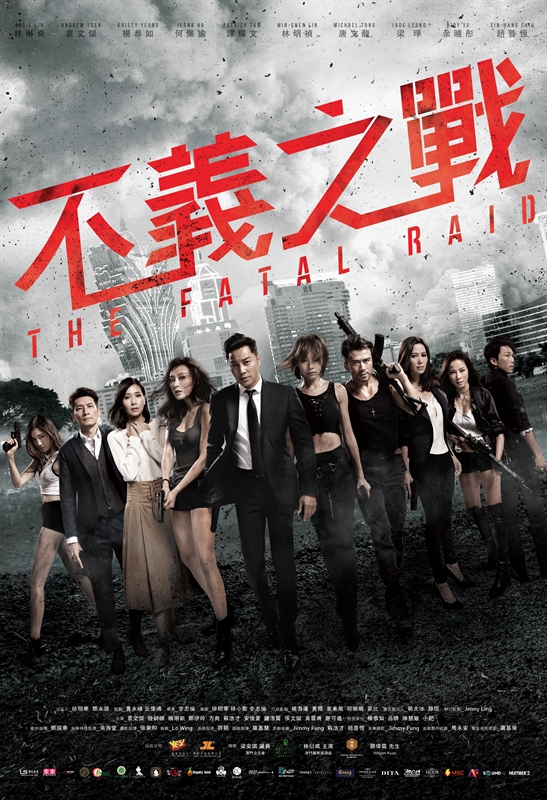
Fatal Raid posterUnrealistically heroic as it might have been, Hong Kong cinema was once unafraid to suggest that sometimes good guys bend the rules, but these days the Mainland market is an important consideration and so the right kind of justice must be served. A salacious B-movie and thematic sequel to Special Female Force (itself a loose remake of 1986’s The Inspector Wears Skirts), Fatal Raid does not have much of a message but does make time to muse on the philosophical nature of “justice” as it corresponds to law enforcement.

20 years previously, Hong Kong cops Madame Fong (Leung Yuk-yin) and Tam (Patrick Tam) were members of an elite squad on a covert mission in Macao which went about as wrong as it’s possible to go, concluding in a mass shoot out in which all of the other squad members died. Because the operation must be kept a secret, the fallen officers have not received their proper due – something which continues to weigh heavily on the resentful Tam, while Madame Fong is still suffering with PTSD related to the incident. A quirk of fate sees the two officers return to Macao as part of a security team escorting the current police chief to a conference, but the past returns to haunt them when their convoy is ambushed by drug addled, youthful anarchists striking back against oppressive authoritarianism.

Meanwhile, there’s inter-squad drama between newish overseas recruit Zi Han (Lin Min-Chen) and veteran Alma (Jeana Ho). A flashback to the original incident reminds us that it was being run along male/female squad lines with the elite team of women the driving force of the operation. However, it continues to be an extraordinarily sexist world that the officers inhabit. The comedic banter between Tam and fellow copper Hei (Michael Tong Man-lung) on the fateful day was mostly Hei boasting about how handsome he thought he was and how pretty some of the female officers were. In the present, the ladies face many of the same problems as undercover officers staking out a nightclub are asked to put some clothes on immediately after the operation because the men can’t concentrate surrounded by barely dressed women, and then in Macao introduced to other female officers as if they constitute some kind of special group.

In any case, the main themes are karma and justice and a possible difference between the two. The last officers standing, Fong and Tam feel guilty about another policeman who died whose body was never recovered, presumed destroyed in the explosion. Tam, who feels “justice” has not been served for his friends who were killed in the line of duty, rocks the boat by dedicating his Macao speech to their memory even if the operation they died in officially does not exist (and cannot exist, because they had no right to open fire in Macao). Fong, meanwhile, is conflicted on learning that a former mentor who helped to teach her about “justice” may have crossed over to the dark side. Tam wonders if they really need to go to such great lengths to “uphold justice” and what it is that really gets them, while Fong remains convinced that “justice should be governed by law”.

The anarchists, however, feel as if there is no justice and that law enforcement of any kind is inherently oppressive. Well, to be fair, they are mostly drugged up teens rather than politically conscious rebels, and have fallen under the spell of an older man peddling personal revenge against a system he feels has betrayed him. In any case, the original squad made mistakes which will come back to bite the remaining members as they take on a new generation of thugs outside of their official jurisdiction. Filled with strangely comic scenes such as the early in-car banter and a running subplot about a lovelorn Macao detective and his crush on Zi Han which hark back to a freer, easier era of Hong Kong cinema, Fatal Raid maybe a little rough around the edges but is not without its old-fashioned charms.


The Fatal Raid screens on 5th July as part of the 2019 New York Asian Film Festival where stars Jade Leung and Michael Tong will be present to present the film.