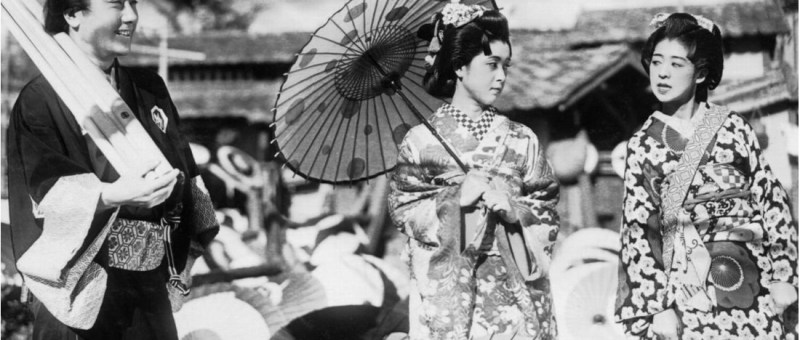
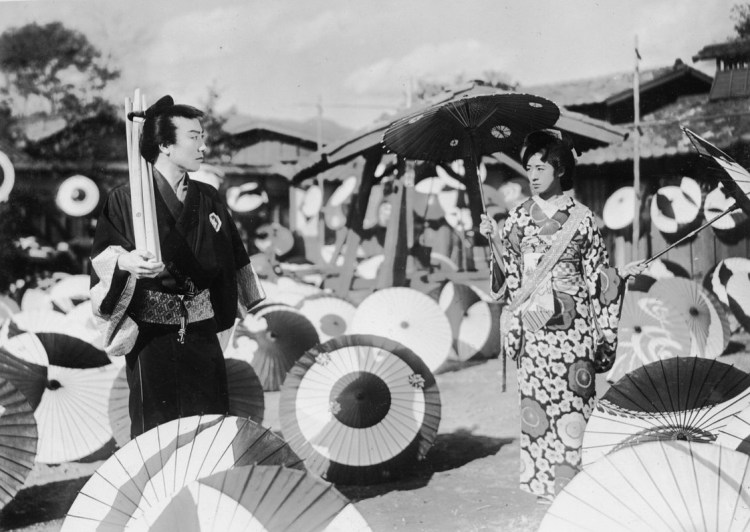
 With things the way they were in the Japan of 1939, you might have expected cinema to have taken a universal turn to the dark side but surprisingly enough there was still room on the silver screen for silliness as the improbable marvel of Singing Lovebirds (鴛鴦歌合戦, Oshidori Utagassen) makes plain. Legend has it that musical master of the jidaigeki Masahiro Makino threw Lovebirds together in record time in order to fill a production gap after big time star Chiezo Kataoka was struck down by appendicitis in the middle of filming On the Road with Yaji and Kita. Kataoka is also Lovebird’s nominal male star though his appearance is understandably limited (his scenes were shot later and apparently in a matter of hours) leaving veteran actor Takashi Shimura to pick up the slack as an antiques obsessed disenfranchised former samurai who finds himself at the centre of a dastardly plot orchestrated by the higher ups to solve an ongoing romantic crisis among the youngsters.
The crisis revolves around the handsome Reizo (Chiezo Kataoka) – a young ronin betrothed to a young lady from a well to do family, Fujio (Fujiko Fukamizu), whose father is keen to make the marriage official as quickly as possible. Reizo, however, has fallen for Oharu (Haruyo Ichikawa) – the daughter of ronin umbrella maker Shimura (Takashi Shimura). Meanwhile, Reizo has also become an object of affection for the daughter of a wealthy local merchant, Otomi (Tomiko Hattori), who is spoilt and entitled to the extent that Reizo’s resistance only enflames her ardour. If all that weren’t enough to be going on with, a randy local lord (Dick Mine) is also actively chasing most of the women in the area and after getting turned down by Otomi has his sights set on Oharu.
Peaceful times allow for small bursts of chaos and ongoing romantic silliness which is where we find our conflicted heroes, yet there is a persistent strain of anxiety in the precarious lives of the disenfranchised ronin who find themselves trapped in a cycle of wilful degradation which prevents them from taking on work unbefitting of a gentlemen and, consequently, permanently on the brink of starvation. Umbrella making, a frequent ronin-friendly occupation in the world of the jidaigeki, is one such way of making ends meet, but Shimura can only afford to feed his daughter barley much to her consternation. Rather than use his meagre resources for short term satisfaction he’s decided to “invest” them in various “antiques” which he believes both bolster his status and can be sold to provide a dowry for Oharu when she decides to marry.
Unfortunately, Shimura is mistaken – he’s not got as good an eye for antiques as he thought and is a well known mark for the local hawker. Everything he has is a fake and he’s wasted a small fortune on useless trinkets. Shimura’s antiques mania also leaves him open to other kinds of scams and manipulation when he gets himself into a small amount of debt to the randy lord and Fujio’s dad (Mitsuru Toyama) who have tricked him in order to try and get Oharu out of the Reizo picture and into the lord’s bedchamber. Unlike many Jidaigeki dads, however, Shimura is a nice guy and tells the higher ups where to get off because what kind of father sells his daughter for the price of a pretty tea bowl?
Shimura’s logic might not make much sense to the lords, or to many other residents of the jidiaigeki world, but is perfectly in keeping with the film’s surprisingly humanist morality in which all are made to realise that greed is bad, money is silly, and at the end of the day all that really matters is true love (even if you have to live in a hovel and survive on barley gruel for the rest of your life). Even the spoilt Otomi is finally forced to realise that you can’t force love and the best you can do is try to support other people’s happiness while you wait for yours to come along (which it is more likely to do once you start being nicer to everyone including your long suffering manservant).
Bright, cheerful, and filled with zany humour Singing Lovebirds is a refreshingly warmhearted piece of eminently hummable escapist fluff providing a much needed distraction from the austere world of 1939 in which its particular brand of anti-capitalist humanism would seem to be extremely out of place. Nevertheless, the corrupt and oppressive samurai order gets a much needed comeuppance, the little guy realises he doesn’t need to play their game anymore, and a young woman realises the only person she needed to feel good enough for was herself. A happy ending for all and an umbrella wielding dance routine to boot – who could ask for anything more?
Brief clip (extremely poor quality, no subtitles)



 Ahead of the official ceremony on 6th February, the Blue Ribbon Awards has released its list of winners for the 61st edition which honours films released in 2018. Runaway box office hit One Cut of the Dead (
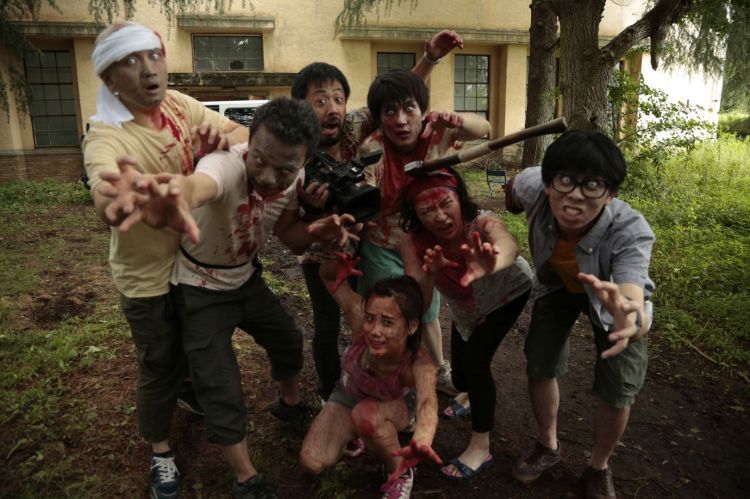 One Cut of the Dead has already devoured the Japanese box office and now finds itself the winner of the prestigious Blue Ribbon Award for best film. Opening with a 40 minute single take of zombie mayhem, this hilarious horror comedy begins with a film crew trying to make a zombie movie in an abandoned water filtration plant with a dark past only for some uninvited guests to turn up and join the fun…
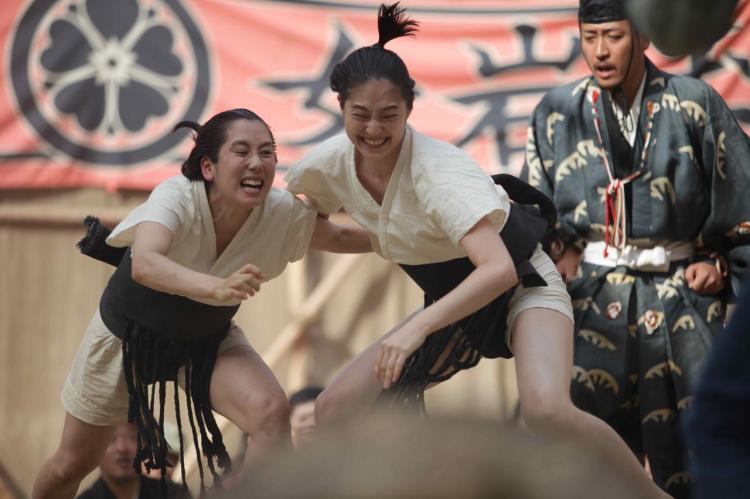 The recently prolific Takahisa Zeze retreats to the Taisho era for a tale of sumo and revolution as a band of anarchists known as the Guillotine Society find themselves fascinated by an itinerant troupe of female sumo wrestlers shortly after the Great Kanto Earthquake of 1923.
 Kazuya Shirashi, winner of this year’s best director award, pays tribute to the world of Battles Without Honour in an ’80-style neo-noir in which a straight-laced rookie is partnered with a veteran rogue cop who leads him straight into the heart of darkness.
  Not to be confused with Kazuya’s Shiraishi’s Sunny, Hitoshi Ohne’s Sunny: Tsuyoi Kimochi Tsuyoi Ai is a remake of the classic 2011 Korean film by Kang Hyeong-cheol in which a dying 40-year-old woman reunites with her high school friends from 1990 to relive her memories of a bubble-era adolescence.
 A CEO discovers dark secrets about his own company when a tire comes off one of their trucks and kills a young mother.
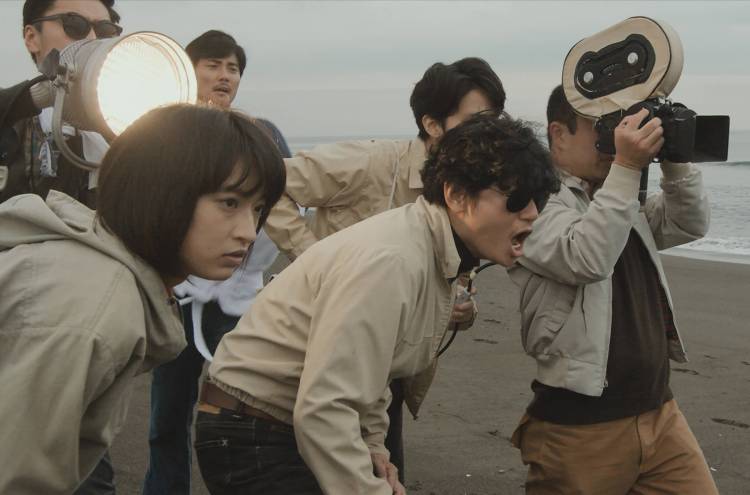 Another of three films released this year by Best Director winner Kazuya Shiraishi, Dare To Stop Us revolves around the legendary figure of Koji Wakamatsu – a hugely influential director of pink film who sadly passed away in 2012 following a traffic accident. Set at Wakamatsu Productions between 1969 and 1972, the film is told from the point of view of female crew member Megumi Yoshizumi, played by Best Actress winner Mugi Kadowaki.
 Starring the legendary Kirin Kiki in one of her final performances, Every Day a Good Day is inspired by the writings of Noriko Morishita and revolves around the serene elegance of the traditional tea ceremony.
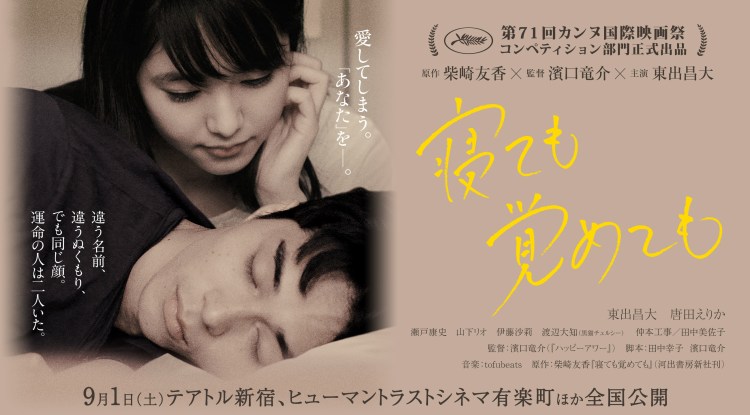 A conflicted young woman struggling to move on from lost love falls for a guy who looks just like her ex but can’t decide whether to embrace the fantasy of unresolved romance or the security of a steady relationship in Hamaguchi’s complex yet playful comedy drama adapted from the novel by Tomoka Shibasaki.
 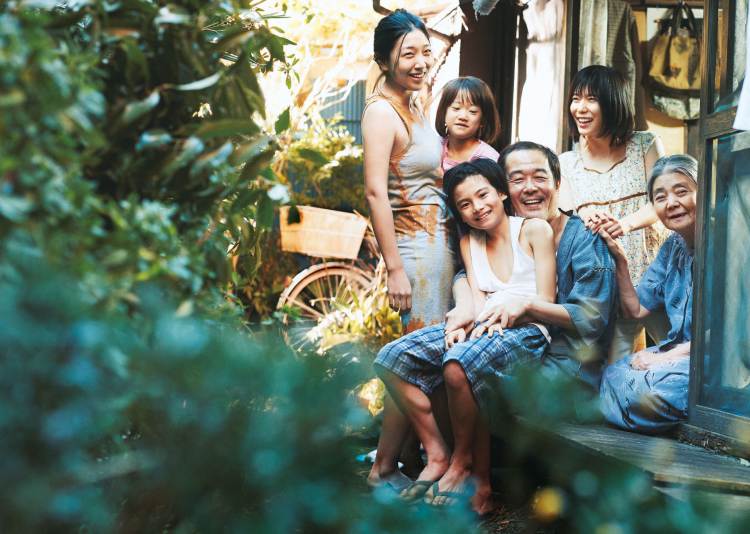 This year’s Palme d’Or winner, Shoplifters earns Hirokazu Koreeda another spot in the top 10 with a hard hitting tale of marginal lives and manufactured families which continues the long line of Japanese films asking what exactly family means in an increasingly disconnected society.
  Directed by third generation Zainichi director Wishing Chong, Yakiniku Dragon revolves around a Korean-Japanese family in the early ’70s who run a yakiniku restaurant on the outskirts of Osaka.




 Windows on Worlds