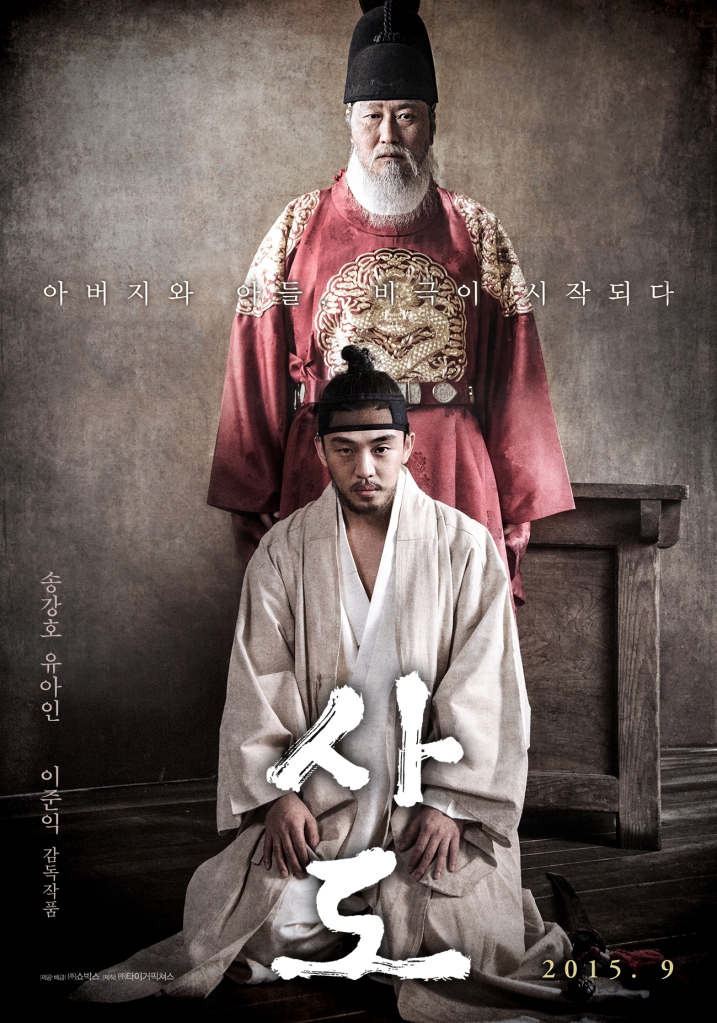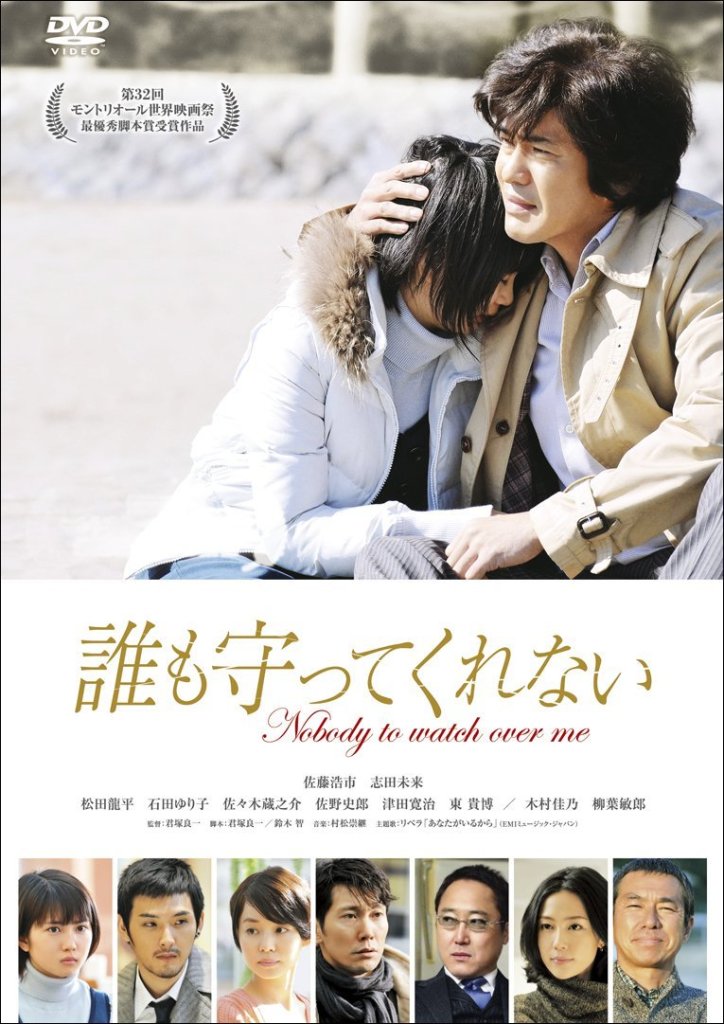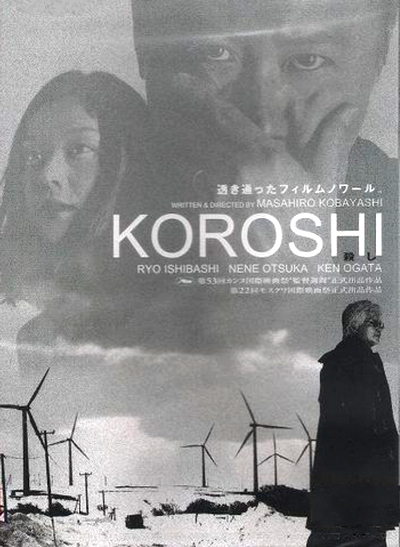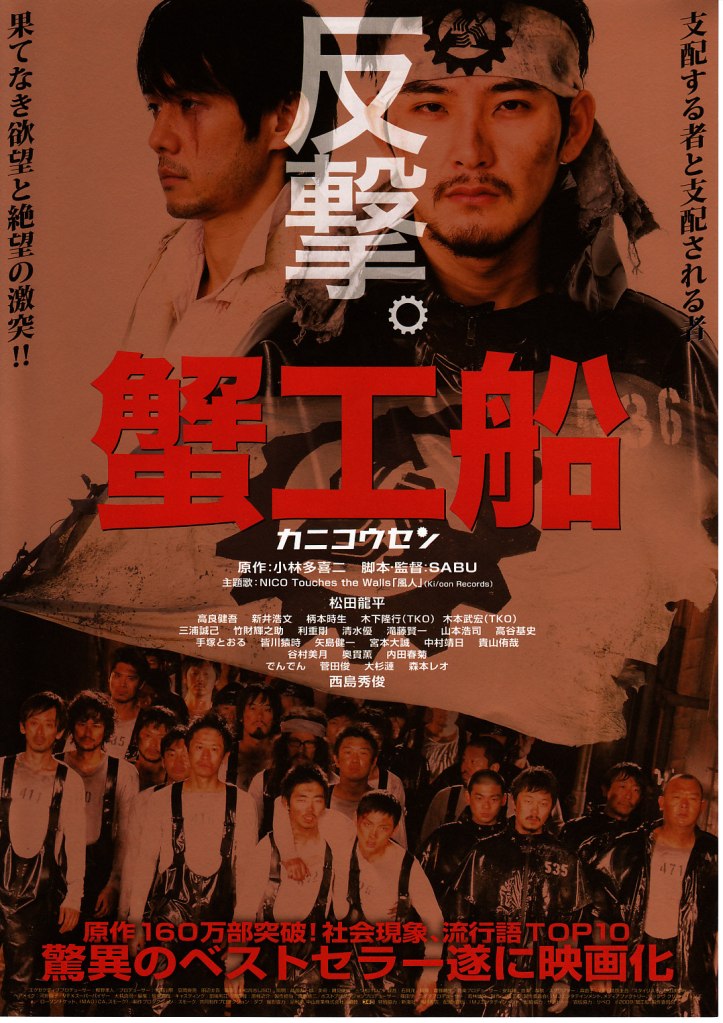
Somehow, this list was longer than I thought it was going to be. Not sure how that happened really but I did manage to pack in all of the Asian films plus a fair few others. This year I really did feel victimised by the dreaded LFF clashes meaning I missed out on a few things I really wanted to see but nothing too major. There were only a couple of choices I regretted making, though I suppose I had to see them to find out. Nothing really grabbed me like last year’s A Girl Walks Home Alone at Night – perhaps because I ended up seeing bigger films with more established buzz around them so I wasn’t really caught off guard in that way. Still, some fine discoveries. Now the long wait for LFF 2016 – oh, what wonders shall ye bring?
Top 5 (somewhat arbitrary):
Son of Saul
Mountains May Depart
Murmur of the Hearts
Office
Our Little Sister
Sneaky review previews of stuff coming up on UK Anime Network, might put a few other things up here too:
One day, I will add some new content to this blog! Today is not that day. Nor is tomorrow, or the day after or the day after that (probably) but someday soon and for the rest of my life! Sorry, carried away there. Anyway, review of the newly restored HD blu-ray release of Shinya Tsukamoto’s masterpiece A Snake of June up at UK Anime Network. It’s very weird and I love it a lot.
Shinya Tsukamoto made his name with body horror infused, pulsing cult hits such as Tetsuo the Iron Man, Tokyo Fist and Bullet Ballet (all of which are also available in the UK on blu-ray courtesy of Third Window Films). He’s no stranger to the avant-garde, the surreal or the troubling but even then Snake of June takes things one step further than even his generally intense filmmaking would usually go. A literal “blue movie”, Snake of June is the story of one woman’s sexual awakening, her husband’s release from OCD and the final fulfilment of the couple’s relationship set against the backdrop of a cold and unfeeling city.
Rinko is an attractive, if slightly mousy, young woman who works a telephone counsellor at a Samaritans-like call centre. As for her homelife, she lives in an upscale Tokyo apartment with her salaryman husband Shigehiko. It’s unkind to say, but the couple are a total mismatch – Rinko, young and pretty even if a little shy, is obviously way out her slightly overweight, balding middleaged husband’s league. Though they seem to have a pleasant enough relationship, there’s no spark between them and they live more like friends or roommates than a married couple. Shigehiko also has an extreme love of cleaning and a touch of OCD that sees him more often caressing the bathtub rather than his wife.
All that changes however when Rinko receives a mysterious envelope full of voyeuristic photos of her masturbating and looking up erotic material on the internet. Soon enough, it turns out these are a “gift” from a troubled photographer, Iguchi, who had planned to commit suicide before talking to Rinko on the helpline. Now he wants to help her by encouraging her to embrace her sexuality and her deepest, darkest desires. Iguchi sets her several tasks to set her on her way such as buying sex toys and walking through town in revealing outfits in an attempt to make her more comfortable with her own sexuality. However, having watched Rinko blossom, Iguchi eventually turns his attention to her husband and events take a decided turn for the surreal.
Erotic – yes, in some senses of the word, but never exploitative. Shot in a melancholy blue designed to mimic the color of the falling rainwater that stains a rainy season June in Tokyo, A Snake of June is a neon inflected journey into urban isolation where the demands of city life drown out the inner fire of those who live in it. Shy and repressed Rinko makes her first foray into town wearing the ridiculously short skirt her blackmailer has “prescribed” for her nervously, clutching a long umbrella in front of her like a shield. Making the same journey sometime later Rinko walks with a swagger, almost dancingly flirtatious she owns herself – her former shield is now a sword. Her “awakening” has nothing to do with her husband or with Iguchi, it’s something she’s achieved for herself and by herself and has left her a happier and more complete person than she’s previously been allowed to be.
Her husband, Shigehiko, by contrast hasn’t quite come to terms with this new version of his wife and even when graphically confronted with it responds in an entirely passive, selfish way. Cracking Shigehiko’s shell will require a little more than gentle coaxing, manipulation and blackmail and thus begins the nightmarish second volume of the film which becomes increasingly bizarre from here on out. Strange drowning themed sex shows where a woman bangs a drum and you have to wear a funny cone on your face which only lets you view everything through a tiny circle like the iris of a an old silent movie? It’s certainly an unorthodox solution.
Like all of Tsukamoto’s work, A Snake of June is exquisitely shot with its blue tint only adding to its native beauty. This new blu-ray edition from Third Window Films remastered from the original negative and supervised by Tsukamoto himself is a pristine presentation of the film which reveals all the tiny details that were rendered invisible by previous transfers. Strange and surreal, A Snake of June is a richly multilayered film dripping with symbolism, not to mention urban melancholy, that has lost none of its power in the intervening years since its shocking debut.
Stuck on Tsukamoto? Here are some more reviews by me:
Review of Miike’s latest (well, not really latest…maybe recent? Does recent still work? This is Miike after all) classy horror shocker Over Your Dead Body up at UK Anime Network. It’s OK but it’s not very scary, gets a bit too clever for its own good and shows you a film you’d much rather be watching than the one that you came for. It’s fine though, really. And quite pretty to look at.
see what I mean?
Nobody could ever accuse Takashi Miike of being a slouch and his breakneck pace of film production continues here with a more classically subdued take on the horror genre than his casual fans may expect. It’s not the first time the director has dipped a toe into the world of kabuki theatre – indeed he’s no stranger to the stage and his most recent outing made sure to inject a little of his characteristic craziness including space aliens and references to Star Wars. Over Your Dead Body is much more in the vein of Harakiri than of Audition or Ichi the Killer and despite its often grotesque overtones and suggestions of supernatural machinations its chief merit is in the beauty of its stagecraft rather than in its infrequent thrills.
Miyuki (Ko Shibasaki) is a successful kabuki actress and has landed a plum leading role in the classic play Yotsuya Kaidan. Using her status and connections, she’s been able to wangle the central male role in the piece for her boyfriend, Kosuke (real life kabuki superstar and previous Miike collaborator in Harakiri Ichikawa Ebizou XI), with whom she’d like to settle down and have a family. Kosuke, however, has a wandering eye and may not be quite as committed to the relationship as Miyuki. Before long, onstage and offstage events begin to blur as supernatural forces, mental illness and distorted realities begin to take their toll on this unlucky troupe of actors.
Yotsuya Kaidan is a true classic of kabuki theatre. Filmed countless times, it’s the story of down on his luck samurai Iemon who’s in love with a young woman but denied by her father thanks to his lowly status. Eventually, Iemon murders him and hides the body so he can marry his one true love after an appropriate amount of time has passed. However, Iemon’s crimes begin to weigh heavily on his conscience and having got what he wanted he finds himself haunted and unable to live the happy life he’d dreamed of. His dreams of becoming a high ranking, respected samurai consume him and when he’s offered the opportunity to marry into a more impressive family he makes a shocking and bloody decision.
The darkness of this stygian tale doesn’t take long to seep into the “real” world and it quickly becomes near impossible to distinguish between several different layers of reality. Wronged heroine Miyuki’s behaviour becomes increasing erratic as her rather cold and calculating boyfriend Kosuke gradually takes on the cruel persona inherited from Yotsuya Kaidan’s Iemon. Her elaborate revenge plot seems to go around in circles, culminating in an extremely bloody and completely insane set piece before heading off into the realms of the supernatural.
However, the real success of the film lies in the kabuki scenes themselves and some viewers may even windup wishing they were watching Yotsuya Kaidan instead. Built with an unfeasibly beautiful theatrical set utilising a modern, fully revolving stage Miike blurs us seamlessly from the theatricality of the stage set into the world of the play. Always beautifully filmed, the world of Yotsuya Kaidan comes to life before our eyes whereas the regular “reality”, our world with its everyday demands, feels cold, sterile and emotionless. One actor even remarks that he wishes the world of the play were real – quite an odd thing to say considering it’s a morality play about the wages of sin which is soaked in blood including that of a young infant.
Despite the committed performances of the cast, the off stage antics which ought to be the focus of the film end up feeling superfluous. Ultimately, despite its relatively short running time Over Your Dead Body feels like a short story unwisely expanded into a novella which might have benefitted from stronger editorial control. The overall tone is one of unexplained mystery but its refusal to explain itself is more likely to frustrate rather than delight and something about its plot machinations just never manages to come together in a satisfying way.
Something of a mixed bag, Over Your Dead Body is not without its merits – it looks beautiful for one thing, yet never manages to engage. It lives and breathes in its kabuki scenes and perhaps a filmed kabuki production of Yotsuya Kaidan may ultimately have proved more satisfying. Gore fans and lovers of the bizarre who stay with the slow burn approach will find a lot to like in Over Your Dead Body but die hard horror aficionados maybe advised to look elsewhere for their supernatural thrills.
Here be a trailer:
If you’re a Miike fan don’t forget that another of his more “recent” efforts will also be screening at the London Film Festival before being released on DVD & blu-ray by Manga in November – Yakuza Apocalypse, which sounds like a very boring film about a weird frog or something? Yeah, you probably wouldn’t like it anyway. *buys all the tickets*
Phew – that was actually a lot of work. Someone remind me I’ve already done it so I don’t have to do it next time. Takashi Miike probably made ten more movies while I was writing that list!
If you’re familiar with the name Hou Hsiao-Hsien, it’s probably for his role in the Taiwanese new wave and as one of the major directors of so called “slow cinema”. It might come as a surprise then that his first three movies were pop star vehicles, heavy on catchy tunes and universal humour but light on deep themes and social commentary. However, even if everything about his first film Cute Girl is intended to be just another run of the mill populist rom-com, many of the elements from Hou’s later films are already present from long lenses and longer takes to interesting ideas about composition and a noticeable town/country divide.
The story is predictable enough, poor boy Da-gang falls for wealthy Wen Wen who quite literally doesn’t give him a second glance. That is until she runs off to stay with an aunt in the country for a last holiday before her father has her married off to the son of an important businessman. Da-gang coincidentally ends up in the same village as part of a survey team for a new road (that’s going to go right through the middle of someone’s house). Being Da-gang he also gets bitten by a caterpillar and ends up being left behind to recover whereupon he begins a tentative romance with Wen Wen at last! However, disaster strikes when her father calls her home to meet her prospective husband – will Wen Wen and Da-gang ever find the happiness they deserve? The answer’s sort of obvious but it’s still fun finding out!
The film features pop stars Fong Fei-Fei and Kenny Bee (from Hong Kong) and is unsurprisingly heavy on pop music including the title track which recurs several times throughout the film. Though Cute Girl is undeniably formulaic and intended as nothing other than disposable entertainment hoping to capitalise on its stars profile and sell a few more records, the film has undeniable quirky charm. Full of strange, not quite slapstick humour and silliness you can’t help but find yourself hugely invested in the screwball style love story of Wen Wen and Da-gang.
No, it’s not a film for the ages. It doesn’t tackle the deep themes Hou would return to time and again in his later career but it does have a degree of heart and commitment that make it a very enjoyable example of the late ’70s/’80s Taiwanese musical romantic comedies.
For the extra curious, here is the undeniably catchy tune itself!
This is kind of another link post, but bear with me! First up Ang Lee’s first three films finally became available on DVD in the UK. Cunningly titled The Ang Lee Trilogy, you can now feast your eyes on Pushing Hands, The Wedding Banquet and Eat Drink Man Woman for the first time. Feast is the right word too as all the movies feature food in a very prominent way so make sure you have the proper supplies arranged before you sit down to watch them. You can read my review of the trilogy over at UK Anime Network. They’re all great, but I particularly like The Wedding Banquet because it’s just so funny!
Here’s an awful old school trailer for The Wedding Banquet (the film is better than this, I promise).
OK, moving on you can also pick up the award winning debut from Chienn Hsiang EXIT on DVD and VOD courtesy of Facet Films. I reviewed the film when it played at the Glasgow Film Festival and you can read that at UK Anime Network too. I also had the opportunity to interview the film’s star Chen Shiang-Chyi while she’s over here shooting The Receptionist. Contrary to expectations, Chen Shiang-Chyi was actually very chatty and super nice so the only reason the interview seems a little short is because she gave very long and detailed answers! You can checkout the interview over at UK Anime Network.
Which brings me on to the upcoming Hou Hsiao-Hsien season at the BFI which begins tomorrow. Pretty much everyone is expecting his new movie The Assassin starring his regular muse Shu Qi to appear in the film festival (it would be really strange if it didn’t right?) and I for one am really looking forward to seeing it.
Hou Hsiao-Hsien will be appearing in conversation at the BFI on 14th September (tickets apparently still available) ahead of a screening of one of his greatest films, The Time to Live and the Time to Die. I was lucky enough to see this one during the BFI’s extended season of Chinese films last year and though it’s not always an easy watch, Hou’s biographical tale of mainland refugees and their Taiwanese offspring is nevertheless a moving and fairly universal coming of age tale.
but I just have to post this scene from Three Times again because I love it so much
They’re also showing Hou’s Ozu tribute and Japanese set Café Lumière starring Tadanobu Asano if that’s more your speed.
That’s a lot of Taiwanese cinema all of a sudden right? It’s a good thing though! If you still want more I’ll direct you to the films of Edward Yang as mentioned in Chen Shiang-Chyi’s interview:
Yi Yi: A One and a Two
No trailers for a Confucian Confusion or A Brighter Summer Day though – both are a little more difficult to get hold of but worth the effort. A Confucian Confusion has a great Rom-Com style ending (though not as good as Comrades: Almost a Love a Story which has the best ending of any film, ever, but I digress) and A Brighter Summer Day which is an epic at four hours long but a total heartbreaker.
When you hear the name Yoji Yamada, you pretty much know what you’re getting. A little laughter, a few tears and a reassuring if sometimes sad ending. You’ll get all that and more with the Yellow Handkerchief although, to allow a minor spoiler, the ending is anything other than sad even if it provokes a few tears. Yes it’s sort of syrupy and it’s not as if it breaks any new cinematic ground but once again Yamada has been able to work his magic to turn this romantic melodrama into a warm, funny and ultimately affecting tale.
Kin-chan, nursing the pain of unrequited love buys a garish red car and goes north where he attempts to pick up girls in fairly cack handed ways. Finally he hooks one outside of a station as she’s too shy and polite to tell him to buzz off. Things get decidedly awkward until the pair bond over a shared hatred of miso noodles at which point Akemi becomes a little more lively. A short way into their road trip, they meet the forlorn figure of Yusaku (Ken Takakura) who ends up joining them on their random road trip around Hokkaido. However, Yusaku’s brooding nature raises a few questions – where has he been, where is he going and why does he both very much want to go and not want to go at all?
Given that it’s Ken Takakura playing Yusaku, you might have a few ideas and you wouldn’t be *entirely* wrong but Takakura amply proves there’s more to his talents than playing a yakuza badass in series of extremely popular but by then out of fashion gangster movies. Suffering from an excess of nobility, Yusaku is a man who’s made a series of poor life choices and is slowing building up the courage to find out if a particular bridge he tried to burn is still salvageable.
Kin-chan and Akemi by contrast turn out to be a pair of live wire odd balls with Kin-chan desperately chasing Akemi and Akemi blithely ignoring him. Despite various attempts to shake Kin-chan off he generally ends up coming back (one time with a giant crab dinner) and getting himself into all kinds of hilarious trouble. They may be the film’s comic relief but in their story proves strangely moving too.
The Yellow Handkerchief won the very first Best Picture award at the Japanese Academy Prize ceremony back in 1978 as well as a host of other awards from Kinema Junpo and other critical bodies and it’s not hard to see why. It’s a prestige picture, and a pretty saccharine one at that, but Yamada makes it all work and comes out with a genuinely affecting piece of cinema. Filmed against the gorgeous backdrop of the island of Hokkaido, The Yellow Handkerchief is the ideal rainy day movie and though it may all end in tears they are far from tears of sadness.
This new cover art from Arrow is actually really great, isn’t it?
Arrow Films are really spoiling us lately when it comes to amazing Japanese cinema – they’ve given us some cool ’60s classics and forgotten gems like Lady Snowblood, The Stray Cat Rock movies, Branded to Kill, Massacre Gun and Retaliation but now they’ve zapped back to the more recent past and brought us one of Takashi Miike’s zaniest and best loved efforts, The Happiness of the Katakuris. You don’t need me to tell you what this crazy, zombie and murderous inn keeper themed musical psychedelic masterpiece is about but you can read my review of the film and Arrow’s new HD effort over at UK Anime Network. (Spoiler, it’s pretty great).
Ah, Takashi Miike – that unpredictable Japanese auteur who’s equally at home with bloody yakuza dramas, gore soaked satire and strange fever dream experiments. There’s no denying his out put is decidedly patchy, which given his prolific career isn’t particularly surprising, but there’s really nothing he won’t at least try. Such is the joy of a Takashi Miike movie. The Happiness of the Katakuri’s wasn’t the first time he made use of musical sequences in his films and it wasn’t the last, but it is one of the craziest. Inspired by the 1998 Korean film The Quiet Family (debut movie of Kim Jee-woon) The Happiness of the Katakuris is, essentially, a family drama which incorporates shady goings on at a guest house, singing zombies, volcanoes and weird stop motion creatures appearing in people’s soup only to fly off with their uvulas (dangly bit between your tonsils).
The film begins with a young girl finding a weird looking creature in her soup which then rips out her uvula and flies off with it before before being snatched by a crow which is then hit with a log by an old man with surprisingly good log throwing game. The old guy is the grandpa of a family which runs a small hotel in the middle of nowhere. Family patriarch Masao used to be a shoe salesman but after losing his job was convinced to buy a hotel after a tip off that a road was supposed to be built nearby which would likely mean lots of customers. Predictably, the road has not materialised and the fledgling inn isn’t exactly packing them in. Besides grandpa, Masao is helped out by his long suffering wife, grown up daughter with a little daughter of her own and a grown up yet seemingly feckless son.
At last, a guest arrives but unfortunately dies soon afterwards. Bearing in mind the declining state of their new business, Masao makes the decision to quickly bury the body in the woods rather than report the death and suffer the negative publicity. Just when things were looking up, another two guests arrive and then promptly die too (in somewhat embarrassing circumstances). As if that weren’t enough, love sick daughter Shizue has fallen in love…again! With “Richard” the secret Japanese love child of the British royal family who’s also some kind of sailor which is why it’s difficult to get in touch with him. All told through the child’s eye view of the youngest member of the family, Shizue’s daughter Yurie, this was one crazy summer in the life of this strange family.
It would be wrong to call The Happiness of the Katakuris a musical, there’s no real musical through line so much as a collection of musical sequences inserted at points of high tension. The musical numbers themselves often act as parodies of other genres with their traditional ballads, karaoke video style sequences and the bonkers Sound of Music-esque field frolicking. Then there’s the singing corpses – who knew zombies were so jolly?
It all undeniably gets a bit grim as the family have to contend with burying the bodies of their unfortunate customers all the while waiting for someone to finally build this long promised road so their business can take off. Each of them is chasing a different kind of “happiness” the father in looking for success in business which will lead to financial security for the family, the daughter in looking for love (in all the wrong places) but it takes the totally bizarre death filled adventure of demons, corpses and escaped murderers to make them realise that they had what they needed to be happy all along – each other. The Katakuris may not be a model family, but everything runs better when they work as a team and they are very happy together no matter what strange adventures befall them. Despite all the trappings of weirdness, The Happiness of the Katakuris maybe Miike’s most subversively conservative film as it ultimately fulfils the role of that most Japanese of genres, the family drama, in which the traditional family is reformed and everything in the world is right again.
Available for the first time in HD, Arrow’s new set is nothing short of a wonder. Shot near the beginning of the digital age before the cameras where anywhere near as good as they are now, you wouldn’t assume The Happiness of the Katakuris would look this good and even if it does show its age here and there the presentation is pretty much top notch and the best it’s ever going to look. The set also comes with a host of special features, some ported over from the original release but also adds a Takashi Miike commentary with critic, Miike champion and sometime actor Toshitoki Shiota in Japanese with English subtitles but also, in an appropriately strange and surreal option, a dubbed version with actors “playing” Miike and Shiota speaking their lines in English too. You also get an entirely new commentary from Japanese film scholar and Miike expert Tom Mes of the recently deceased Midnight Eye plus a short video essay about Miike’s career and a couple of new Miike interviews too.
Almost 15 years on, The Happiness of the Katakuris remains as endearingly bizarre as it did on its first release and is truly worthy of its status as a beloved cult movie that continues to be the go-to weird Japan choice for the genre savvy cinephile. Back and better than ever, this new set from Arrow breathes new life into the film and is a great excuse for another stay at the White Lover’s Inn.
Here’s a trailer for the film:
If Takashi Miike x musical madness is your thing you also need to see Ai to Makoto (AKA For Love’s Sake) – available in the UK from Third Window Films.
Also a mini reminder for Miike fans that Over Your Dead Body is going to be at Frightfest and is apparently going to receive a UK release from Yume Pictures (the same people who released A Tale of Samurai Cooking: A True Love Story, now available on UK DVD). Miike madness is back! In more ways than one.
Quirky comedy Fukuchan of Fukufuku Flats is released on UK DVD today by Third Window Films. I reviewed the film for UK Anime Network back when it was screened at Raindance last year and I also had the opportunity to interview the director Yosuke Fujita while he was over here doing promotion.
I also reviewed the portmanteau movie Quirky Guys and Gals which Fujita directed a segment of (the “Cheer Girls” bit with the overly helpful cheerleaders) and the movie also contains a short film by Mipo O (The Light Shines Only There) about a woman who’s neglected to pay her electricity bill so it’s well worth a look (also released in the UK by Third Window Films).
Here’s a trailer for Fukuchan
Anyway I completely loved this movie. It also has an amazing song (with thanks again to Genkina Hito who tracked it down).
You should all go and watch this very funny film right now because I want to see more movies by Fujita (and I’m selfish like that).
P.S.
The Tale of Princess Kaguya is also out today and you can read a review of that over here . ‘Tis very good though you likely knew that already 😉
I reviewed this flawed yet interesting film, Concrete Clouds, for UK Anime Network. Probably I think I liked it a bit more than the score suggests but it does have its problems. Also ’90s (or maybe ’80s?) Thai pop is kind of amazing.
Up to now Lee Chatametikool has been best known as the regular editor on the films of Apichatpong Weerasethakul (Uncle Boonmee, Tropical Malady) but with Concrete Clouds he’s finally stepped out of the edit suite and behind the camera to direct his very first feature film. However, Concrete Clouds owes less to Apichatpong Weerasethakul or any of the other well known Thai directors he’s been working with over the last decade than it does to early period Tsai Ming-Liang and the Taiwanese new wave. A mood piece heavy on directorial flair but light on detail, Concrete Clouds never quite comes together but still manages to offer a few rewards for the patient viewer.
Set in 1997 just as the Asian Economic crisis begins to take hold, long time emigré Mutt (Ananda Everingham) gets a late night phone call from his high school age brother to say their father has just jumped off the roof. Mutt goes home for the first time in a long time aiming to lay a few ghosts – less that of his father than that of his teenage self and half forgotten love. Meanwhile, younger brother Nic has formed a tentative romance with a girl from the next building who appears to be living more or less alone and has just begun working in a hostess club. Just like his brother he’ll have to decide whether to abandon his love in Thailand to seek new dreams overseas or chase an ever elusive future in the land of his birth.
To be frank, the somewhat shocking and early death of the father retains little impact after the fact as neither of the now orphaned sons seems to dwell very long on the loss of their only parental figure and there’s no real soul searching over why he did what he did. The blueprints for new buildings he was looking at right before and the constant financial concern on the news screens seem to be evidence enough of his ultimate motives. Neither is much mention made of the absent mother who, one assumes, has been absent for a relatively long time. The age gap between the brothers also means that their relationship is not as close as you might assume brothers to be as Mutt must have left for America when Nic was little more than a toddler. Nevertheless, both boys are cast adrift by the older man’s decision, taken alone and with seemingly little concern for those around him.
The historical context is fairly key to the film though may be impenetrable for those less versed in recent history. In setting the story in 1997, the director intends both to imply that many of Thailand’s present social and economic problems stem back to the Asian Financial Crisis and the new Thai constitution which was created around that time but also to deal with the fragile nature of memory and our own tendencies to over romanticise our pasts by falling in love with a fantasy of our own creation. Mutt has dreamed of his high school girlfriend, Sai, ever since leaving her to go to college in America. He lives with a woman in New York but their relationship doesn’t seem particularly serious and she has not accompanied him to Thailand for his father’s funeral. Even though years have passed he’s remained faithful to the image of Sai he has in his mind and however much he tells himself nothing has changed it’s his own self created image that he’s wedded to, rather than the flesh and blood Sai who’s been busy getting on with her own life in the intervening ten years.
In a another cloud based film, Mikio Naruse’s Floating Clouds, the title refers to the the central characters who are unable to re-root themselves after the disruption caused to their lives firstly in failed Manchurian expedition and then by the after effects of the war. They float aimlessly trying to find something they can cling on to that will allow them to move forward with their lives and ultimately never find it. In Concrete Clouds it’s almost the opposite problem, the characters are weighed down by their dreams, almost crushed by them and unable to move. Their dreams will never lift off the ground because they can’t bear to let go of the past, of the people they once were and things they once thought they wanted.
The most notable element of Concrete Clouds is its unusual shooting style which incorporates everything from snatches of archival footage to long stretches of fantasy sequences played out as karaoke videos to late ‘90s Thai pop songs. The film has an interesting aesthetic which appropriately matches its melancholy and slightly wistful tone though it fails to capture the exact emotional ache that it seems to be going for. Ultimately its disparate elements never quite seem to coalesce into something more and though Concrete Clouds has plenty to admire it stops short of capturing the heart. Nevertheless it’s an impressive debut from Lee Chatametikool who has marked himself out as new talent to look out for in Thai cinema.
This is getting a release from Day For Night in the UK and here’s the trailer
And here’s a clip of one of the karaoke sequences
And another from the OST
(I don’t know any Thai at all, what is this music?)
The Funeral is the debut film from actor and director Juzo Itami, probably best known for his crazy food odyssey Tampopo. Like all of Itami’s films, The Funeral is, essentially, a social satire and though not as raucous as the later Tampopo it does a fine job of mixing a traditional comedy of manners with a poignant examination of end of life rituals. Full of naturalistic details, The Funeral is a surprisingly warm film that’s much more about laughter than tears.
Successful actress Chizuko suddenly gets a phonecall in the middle of a shoot to say that her father has died suddenly and unexpectedly. Her mother would appreciate it if they could hold the funeral her house and if Chizuko and her actor husband Wabisuke would take charge of the funeral arrangements. Wabisuke is extremely reluctant but eventually agrees letting himself in for a whole new world of complications as the couple find themselves negotiating on the price of coffins, organising food for a wake and trying to work out what the most appropriate “donation” for a priest is. That’s not to mention trying to accommodate the wishes of all the relatives who will also be descending on them for the duration of the funeral which will last three whole days….
Funerary customs are the sort of thing you just assume everybody knows to the point that it can be a little embarrassing if you find yourself in the situation of having to ask. Luckily there are trained professionals available to help organise the main structure of events but when it comes down to the small details – what you should say, where you should stand and for how long, who’s invited and who isn’t, things can get tricky. In one hilarious moment, Chizuko and Wabisuke find themselves watching a VHS tape entitled “The ABCs of Funerals” and taking notes furiously as if learning lines for a new play.
Suddenly everything is a complicated decision and everyone seems to have their own opinion on matters. Having successfully got hold of a coffin, the couple need to decide whether to take the body home first or transport it in the coffin as advised by their very helpful funeral director. The majority of the family are in favour of the comparatively simpler option of putting the body into the coffin now and leaving it that way but an older uncle seems quite distressed by this new fangled business and laments that they don’t do it like this back home.
Said older uncle and business tycoon continues to find fault with various things including the direction of North which he insists the deceased’s head should be facing causing him to stare at the coffin and walk around the house waving his arms trying to work out, literally, which way is up. However, he’s also responsible for one of the more shocking breaks with appropriate behaviour as he starts trying to stage direct the final goodbyes so he can get a good photo, at one point asking the grieving widow to just “hold it a second” and “maybe get a little closer to his face” while he snaps away trying to capture the moment. Mind you, he’s not the only one to throw the book of etiquette out of the window as most people would probably list inviting your mistress to the funeral of your wife’s father as one of the top ten things you should never do.
However, these moments of everyday lapses in morality are just one of the film’s charmingly naturalistic elements like the priest (played by veteran actor Chishu Ryu) arriving in a very expensive car and obsessing over a series of French tiles. From a collection of shoes in different sizes scattered outside the family home to the children’s morbid curiosity in checking out the furnace at the crematorium the film is shot through with the tiny details of everyday life that are likely to find recognition everywhere. In fact the brief period of time with the whole family assembled together before the funeral really begins could easily be any other springtime celebration rather than the solemn occasion that has brought them all together this time. Even the artsy black and white video shot by a friend of Wabesuki’s to document the event shows the family laughing together and the children playing happily even as they learn the proper way to light funerary incense.
Of course, that doesn’t mean it doesn’t have its share of sorrows too – the film is called The Funeral after all and the final funeral oration given by the grieving widow is likely to leave many viewers complaining of something in their eye (especially given the couple’s rather strained relationship in the early part of the film). However, as usual Itami successfully manages to avoid sticky sentimentality in favour of a warm, natural and most importantly funny exploration of family dynamics and social customs. Not as madcap or laugh out loud funny as some of Itami’s later work, The Funeral is nevertheless a wry and witty comedy that knows how to play a merry tune on your heartstrings.