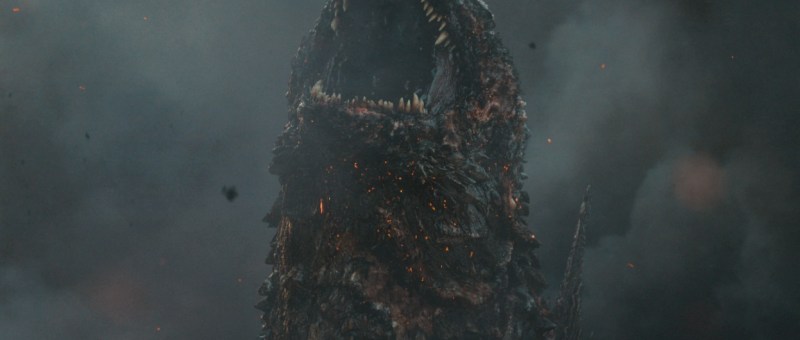
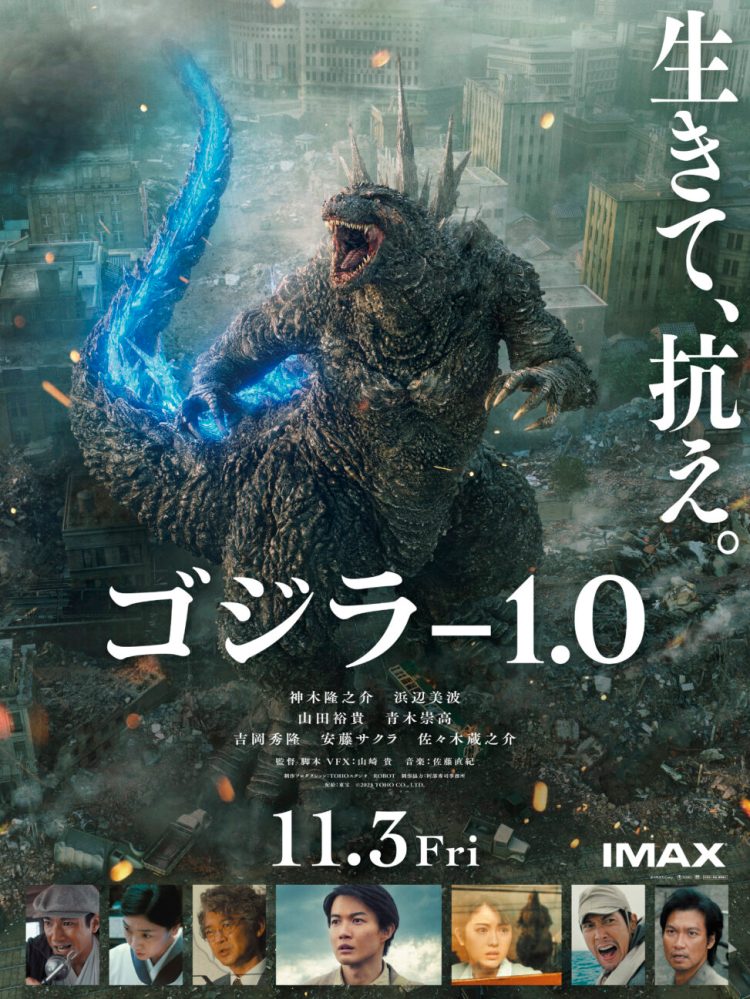
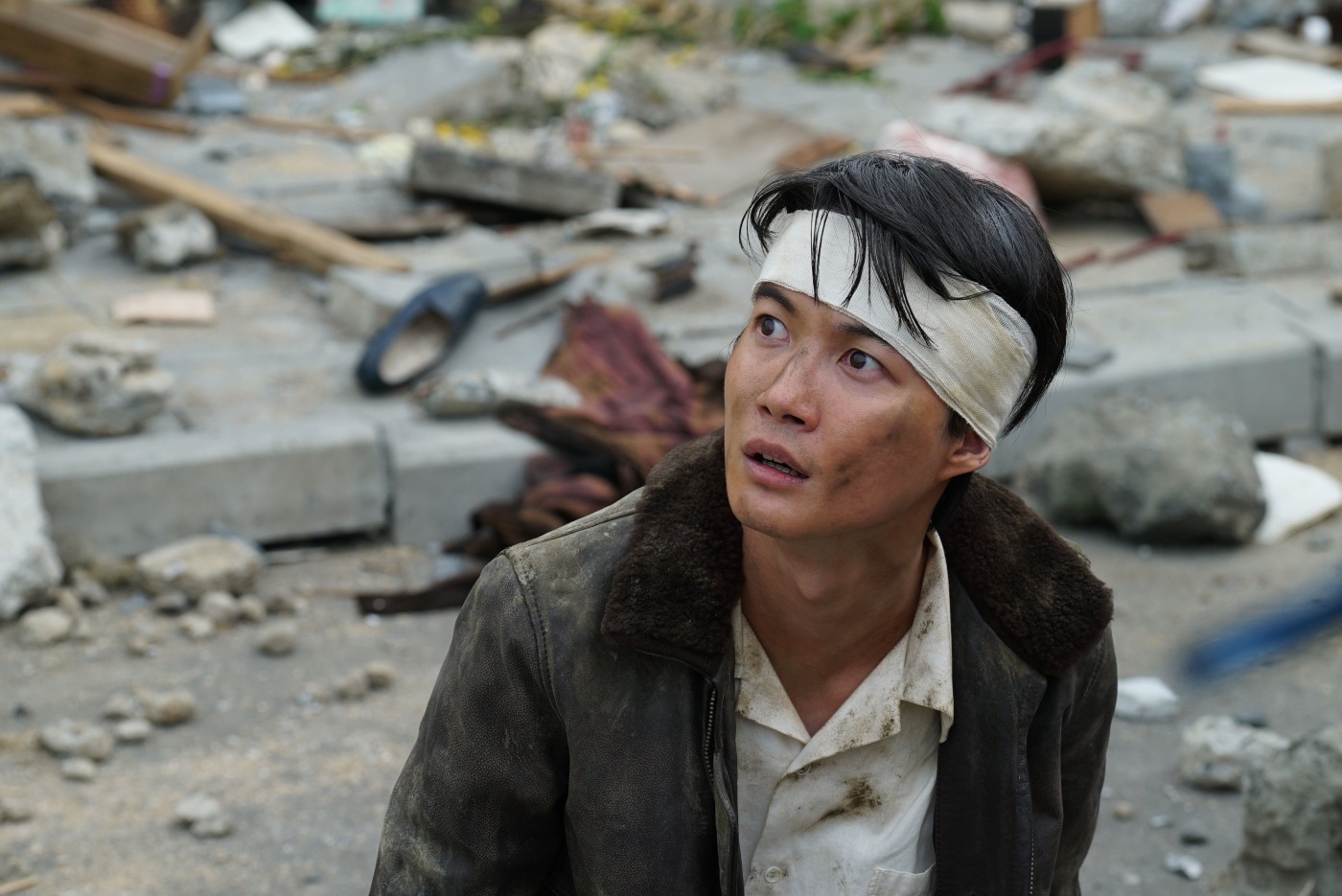
The Blue Ribbon Awards, presented by film critics and writers in Tokyo, has announced the winners for the 66th edition which honours films released in 2023. This year’s big winner was Godzilla Minus One which picked up best film, actor, and supporting actress while Yuya Ishii took the Best Director award for his films The Moon and Masked Hearts.
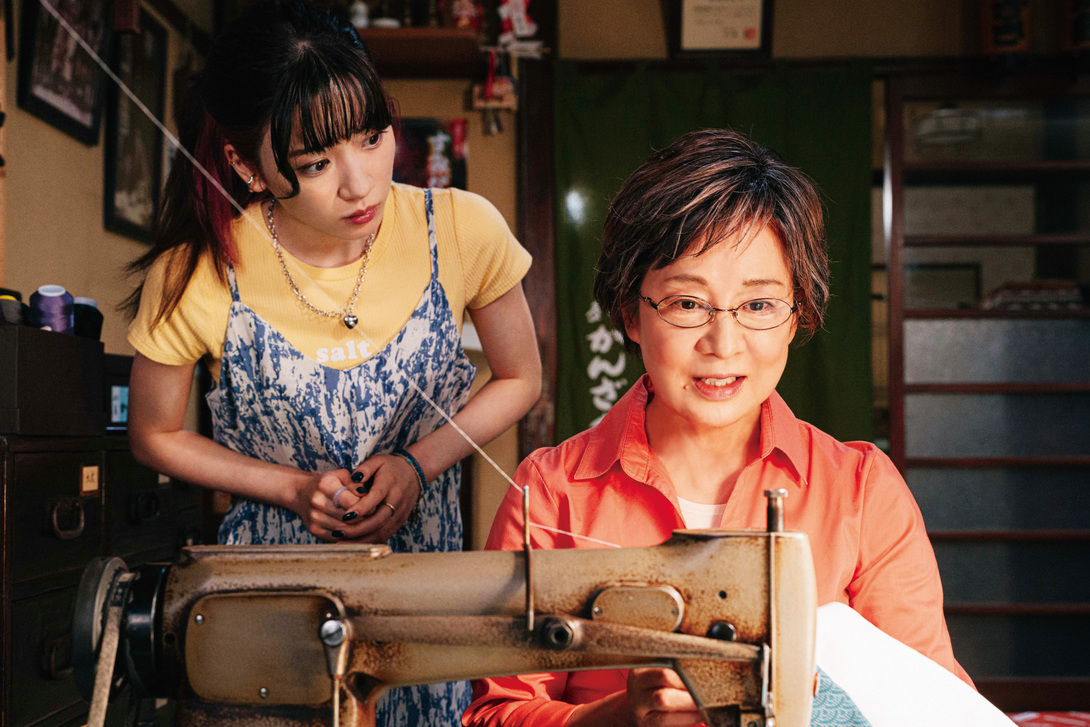
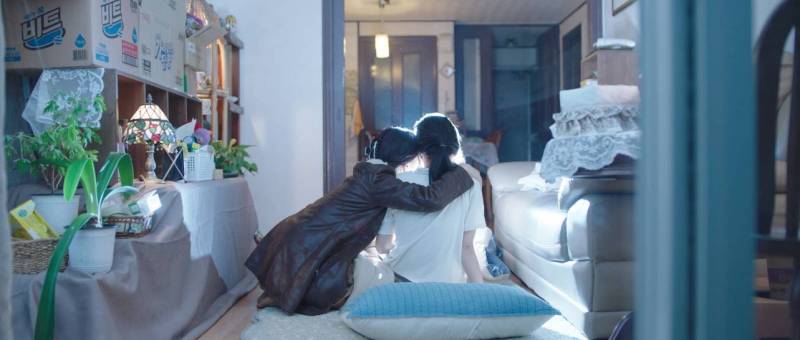
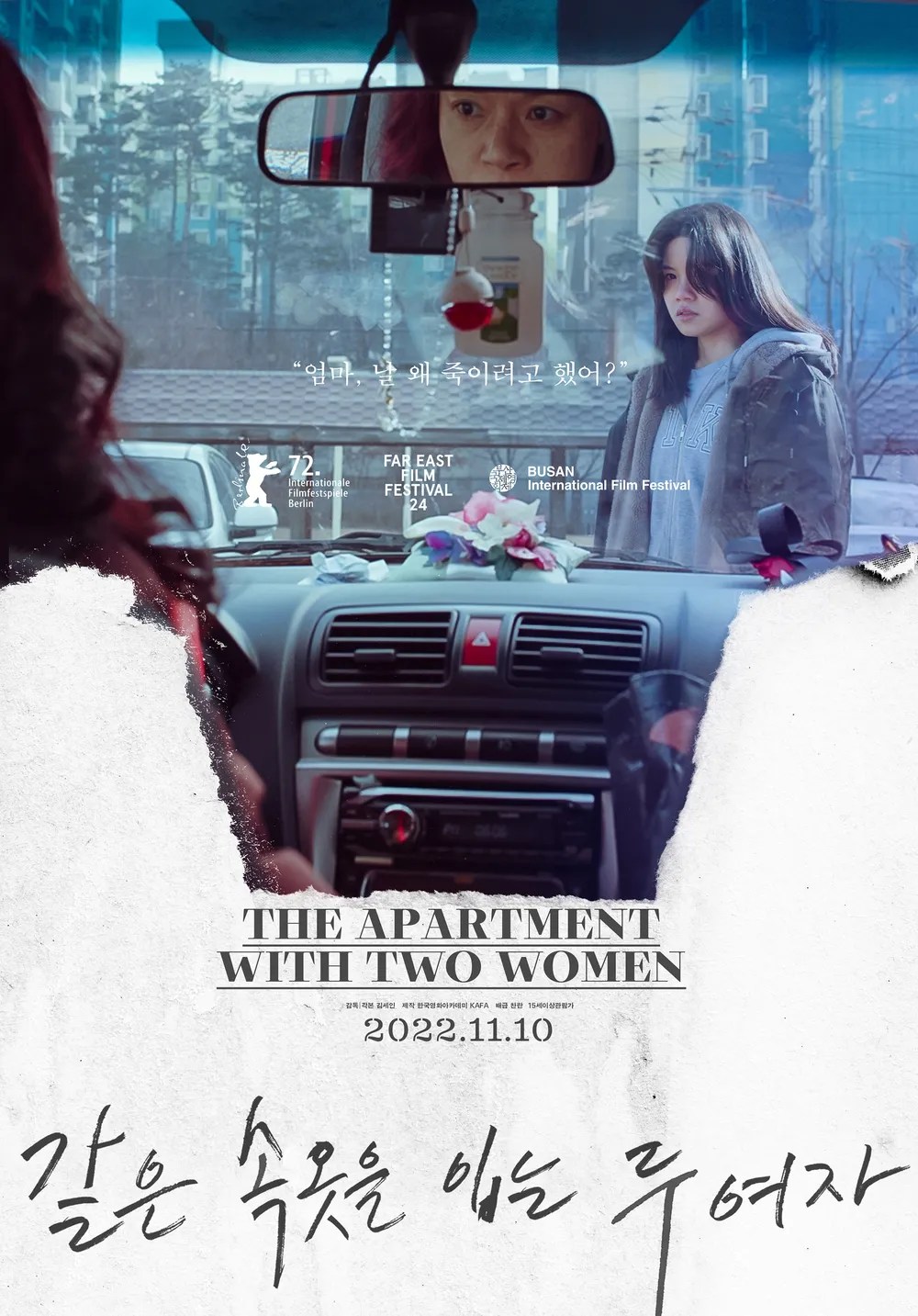
A mother and daughter remain locked in a toxic cycle of resentment and dependency in the debut feature from Kim Se-in, The Apartment with Two Women (같은 속옷을 입는 두 여자, gateun sogoseul ibneun du yeoja). While the English title may have an unfortunate sexist connotation implying that such a dysfunctional relationship is inevitable when two women live together, the Korean “two women wearing the same underwear” more closely suggests the awkward intimacy between them as they each seem to seek escape from the other but in the end are left with no option than to return or choose independent loneliness.
The awkwardness is obvious from the opening scenes as middle-aged, pink-haired mother So-kyung (Yang Mal-bok) chats to a friend on the phone while using the toilet even as her 20-something daughter Yi-jung (Lym Ji-ho) washes her undies in the bathroom sink. Once done, So-kyung slips off her underwear and simply throws them in with the others for Yi-jung to scrub, taking one of the newly washed but not yet dried pairs as a replacement before breezily leaving for work. So-kyung often becomes angry with her grown-up daughter for no ostensible reason, hitting and slapping her while a defeated Yi-jung can do nothing but cry no longer seeing much point in even asking what it is she’s done wrong. Matters come to a head when the pair argue in the car at supermarket car park. Yi-jung gets out and begins to walk away, but her mother suddenly jumps on the accelerator and hits her. So-kyung tries to claim the car malfunctioned but Yi-jung has long believed her mother would prefer it if she were no longer alive.
During a blackout towards the film’s conclusion, So-kyung again insists the accident wasn’t deliberate reminding that Yi-jung that it wasn’t the first time she swore she’d kill her and forcing her to admit that she remained so calm because it wasn’t the first time she’d heard it. Later someone asks why she didn’t leave seeing as she is a grown woman with a salaried job capable of supporting herself and she answers that she thought she needed to save more money before making her escape but it’s also true that years of So-kyung’s emotional abuse have eroded her confidence in her ability to survive alone and that finally she is just so lonely that even her mother’s continual resentment is preferable to being on her own with no other friends or family to turn to.
Yi-jung begins to bond with a woman at work who is in a similarly abusive situation with their employer, disliked by her co-workers and exploited by the boss who often hands her additional tasks to be completed for the next morning when everyone else is about to go home. But So-hee (Jung Bo-ram) evidently has troubles of her own, and in any case Yi-jung simply ends up in another apartment with two women while beginning to realise that So-hee is not interested in a close friendship with her for she too longs for “independence” and is turned off by her obvious neediness. So-kyung meanwhile is in a relationship with a genial man of around her own age, Yong-yeol, who has a teenage daughter, So-ra, to whom So-kyung more well disposed than to own but eventually cannot stand. So-ra is in many ways much like herself and So-kyung’s narcissistic tendencies prevent her from sharing Yong-yeol with another woman. When it comes to picking an apartment for them to live in after they marry, it comes as a surprise to her than Yong-yeol intended to bring So-ra to live with them roundly telling him that the “spare” room is for storage not a daughter. Given this ultimatum Yong-yeol choses So-kyung, agreeing that So-ra will live with her grandmother in a decision that shocks Yi-jung on discovering his letter prompting the realisation that her mother will happily abandon her too.
Su-kyung is in many ways a narcissistic nightmare, refusing to apologise for who she is and always insisting other people are to blame for the way she treats them. All Yi-jung wants is an apology but what she gets is justification as her mother explains to her that her clients at her massage parlour dump all their negativity on her though she is also living a stressful life and so she dumps all of her negativity on Yi-jung whom she resents for trapping her poverty and loneliness as a reluctant single mother. Yi-jung asks her what she’s supposed to do with that, but her mother simply tells her she should have a daughter too. In any case it appears as if Yi-jung may finally be finding the strength to extricate herself from her toxic familial environment, finally being measured to figure out her correct bra size having presumably been forced to wear whatever her mother wore throughout all of her adult life in a moment which brings us back to underwear once again. At times darkly comic, Kim Se-in’s intense family drama circles around toxic dependency and an inescapable cycle of cruelty and resentment but does at least allow its heroines the glimmer of new beginnings in a more independent future.
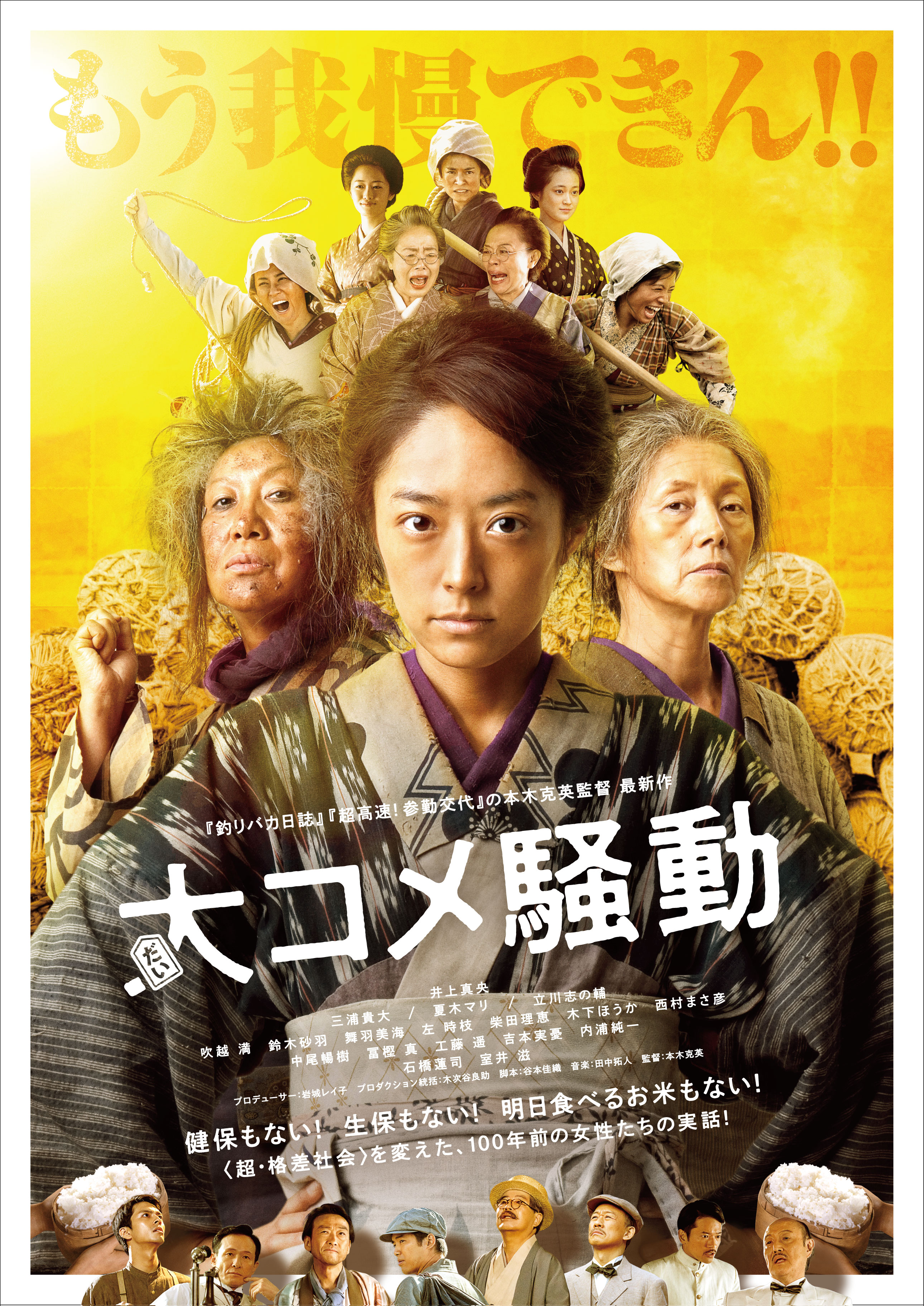
“Even if women try to do something, nothing will change” a condescending husband insists cautioning his wife not to take part in any more protests lest he lose his protected status and the family its source of income. Set in the middle of the Taisho era, Angry Rice Wives (大コメ騒動, Dai Kome Soudo) dramatises a small moment of revolution in which the resistance movement organised by a community of women towards the spiralling cost of rice sent shock waves through a changing society and in its own way provoked a change of course in an increasingly capitalistic society.
Beginning in April 1918, the small fishing village of Toyama sees an exodus of its young men who must spend the off-season when the catch is low working other jobs in order to make ends meet, This necessarily means their wives and families are left behind and must make do with what they themselves can earn in doing menial jobs such as transporting rice and the little their husbands might be able to send before their return. A farmer’s daughter who married into the fishing community, Ito (Mao Inoue) is one of the few literate women in the village and looked to as a kind of oracle reporting the contents of the morning paper to the other wives who are keenly interested in the continually fluctuating price rice which seems set to rise still more with news that Japan plans to send troops to Siberia.
As the voiceover relates, with the catch so low rice is the only form of sustenance available but prices have already exceeded what most of the women can earn in a day leaving them unable to feed their feed their families and giving rise to increasing discontent with the inequalities of the contemporary social order. Taking drastic action and led by eccentric old woman Kiyonsa (Shigeru Muroi), they stage a rebellion by intercepting their locally grown rice in order to stop it being sent to Hokkaido which is reported in the newspapers as an “uprising”. The term is indeed a little grand for what actually took place, but it does at least seem to spark a spirit of rebellion echoing around the country even if nothing much as changes in Toyama. Buoyed by a sense of wider support, the women continue their protests merely asking for the rice merchants to sell at a more reasonable rate (which they are perfectly capable of doing) while decrying the immorality of the obvious profiteering by corrupt authorities including local bigwig Kuroiwa (Renji Ishibashi) who are deliberately stockpiling rice to push the price up while planning to sell it to the government for a hefty price to feed their troops.
Kuroiwa is entirely unsympathetic to the women’s predicament while the local police chief Kumazawa (Junichi Uchiura) believes himself indebted to him and is therefore entirely under his thumb. Neither of them think the women are much of a threat, Kumazawa randomly arresting a middle-aged man close to several of the women the rationale being as the husband of one puts it that women can never achieve anything no matter how hard they try but a man’s involvement in such rebellious activity would be cause for concern. Similarly, Ito is often told that her education is of no use, partly because the other women feel inferior for not having any, but struggles to find the self-confidence to standup to the corruptions of lingering feudalism owing to her liminal status as a non-native villager despite having given birth to three children there. Even so she is often looked to as a local problem solver and potential successor to Kiyonasa as leader of the village women if only she could learn to embrace the courage of her convictions.
The children, by contrast have no such qualms, Ito’s young son Soichiro directly telling the profiteering proprietress of the rice store Mrs Washida (Tokie Hidari) that it’s her own fault another child stole food because if she hadn’t insisted in pricing her customers out to the point that they were starving she would never have needed to steal. “What exactly has capitalism done for us?” an opportunistic visitor from the workers party asks but receives short shrift from the cynical Kiyonsa who agrees they should rebel but is non-plussed by the flummoxed canvasser’s admission that he has no real plan for what do afterwards. Washida plays divide and conquer, pitting the women against each other and tempting even Ito with offers of under the table rice deals to feed their starving families if only they back down but though the solidarity of the women is temporarily ruptured it is never truly broken as they stand together to fight for fairness in the face of the Kuroiwas and Washidas of the increasingly capitalistic society. Their resistance eventually forces the government to backdown, realising they can’t simply ignore the plight of society’s poor or take their complicity for granted while attempting to starve them into submission.
A disillusioned doctor quickly finds himself in over his head when he’s kidnapped by Chinese mercenaries in Michael Chiang’s oddly positioned action thriller, Wolf Pack (狼群, láng qún). Once again, the action takes place in a completely fictional Middle Eastern/Central Asian country with the mercenaries playing mysterious spy games in which their heartless amorality is at least heavily implied to be an affectation and that they are ultimately interested in “more than money” while covertly protecting Chinese interests abroad.
The film heavily implies that they are in fact in some way working for the Chinese authorities with a lengthy focus on the Chinese flag outside the place of government in this foreign nation given the unlikely name of Cooley (in fact, most of the names given for various people and places seem mildly inappropriate). The photograph sullen doctor Ke Tong (Aarif Rahman) carries around also features his father in a Chinese military uniform which might be why he is so reluctant to believe that he may also have been a member of this “private army” as his new boss Diao claims. Though Ke Tong is originally very hostile to Diao’s gang who have after all kidnapped him he later undergoes an entirely unexplained change of heart accepting that his father must have had his reasons for whatever he did so Diao is probably OK anyway.
In any case, their current mission involves defending Chinese energy interests against a local warlord who is working with European businessmen to disrupt a gas deal by placing faulty regulators designed to engineer an explosion which will apparently domino all the way back to the Mainland. Largely kept in the dark, Ke Tong is unable to see the big picture and keeps trying to help by doing righteous things such as shooting at a soldier hassling a young girl whose father he’d just killed but unwittingly making everything worse. Eventually he realises that the end client must be the Xingli group who are running the China-Cooley collaborative gas field, though even the energy official they’re later asked to protect seems to be prepared to die in order to ensure the project’s success and prevent a mass explosion.
Diao’s selflessness is also well signalled thanks to his tendency to listen to a recording of a baby crying and meditate on “all he’s lost” to be a mercenary which again reinforces the idea that they have a greater cause than simply money along with Diao’s position as a surrogate father not just to Ke Tong but to the other soldiers who are all, it is said, looking for a place to belong. The gang apparently also have some kind of role funding orphanages in China to prove that they aren’t just in it for the cash. Ke Tong too comes to feel a kind of brotherhood that makes the mission more than just mercenary activity and gives him an excuse to chase the evil war lord even though that is not part of their mission and really the villagers, including a small child who has been forced to do their bidding, are not their concern.
Despite starring two prominent martial arts stars, the film is much more focussed on technical wizardry and gunplay than it is on physical fights save for a late in the game confrontation between female mercenary Monstrosity and her opposing number as they try to liberate the gas field. Diao’s incredibly well equipped crew appear to be almost all-powerful, even if Ke Tong manages to play them at their own game, using fly-shaped drones to assist them in their work though the final mission involves an improbable plot device of the local government needing to sign a document by retinal scan within 60 seconds complete with an onscreen countdown via an encrypted briefcase computer in the middle of a firefight.
Chiang does indeed bring action with a series of high impact sequences one involving a large petrol tank explosion which results in several of the warlord’s men being engulfed in flames. It does however leave a thread of mystery hanging over Ke Tong’s quest to solve the riddle of his father’s death with the suggestion that not all of his body parts were collected hinting that there may be further conspiracies in store for a potential sequel though what seems clear is that Ke Tong has discovered his place to belong alongside a surrogate father figure doing quite questionable things but apparently working for the national good.
Wolf Pack is released on blu-ray in the US on 23rd January courtesy of Well Go USA.
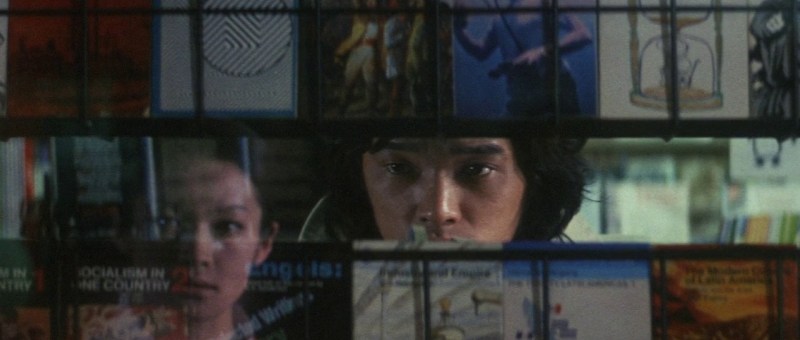
An angst-ridden medical student wrestles with truth and responsibility while drawn into a toxic relationship with a childhood friend and trying to avoid the estranged mother he resents in Masahiro Shinoda’s dread-laden melodrama The Petrified Forest (化石の森, Kaseki no Mori). Based on a novel by Shintaro Ishihara who later became a very conservative mayor of Tokyo and made his name with a series of “Sun Tribe” novels centring on the nihilistic hedonism of wealthy post-war youth, Shinoda’s noirish drama paints contemporary Tokyo as a duplicitous place in which hate is the only possible emotion and self-delusion the only path out of existential loneliness.
Haruo’s (Kenichi Hagiwara) first conflict, however, is with the medical profession. He objects to the old-fashioned methods of his professor, Miyaji (Torahiko Hamada), who adopts the position of the physician as god only giving his patients the information he thinks they should have rather than the truth. A young boy, Kazuhiko (Masami Horiuchi ), is brought in with an aggressive brain tumour. Given how how quickly it regrows, there is a possibility that the boy cannot be cured while operating will likely mean he will lose his hearing. Though Miyaji knows all of this, he continues to give false reassurance to the boy’s mother, Kikue (Masako Yagi), even after making a snap decision on the table to excise the tumour knowing it will leave him deaf telling her that her son’s hearing might come back in time. Pressed for an answer, Haruo gives her the more honest prognosis that it “might”, “if he’s lucky”, but resents himself for “lying” knowing that Kazuhiko will be deaf all his life and the tumour may still recur. One of the reasons he wants Miyaji to tell the truth is so that the family can accept the situation and start working on the best ways to help Kazuhiko adjust, but Miyaji refuses to explain and in fact threatens to fire him if he won’t do as he’s told.
This resistance to a male authority figure might explain why he identifies so closely with childhood friend Eiko (Sayoko Ninomiya) now in Tokyo working at a barber’s offering male beauty treatments. Eiko is being sexually harassed by her middle-aged boss who is jealous and possessive. At one point she claims that he beat her and locked her up in a cupboard for two days after she told him she had slept with Haruo. The pair agree that he boss needs to die, rebelling against his corrupt and patriarchal authority. ”When you hate you must hate all the way” Haruo insists, explaining that the human race is “petrified”. They can only hate and loathe and lie to themselves in order to bear it. Haruo suggests they’ll eventually come to hate each other, but Eiko is certain that he’s her one exception though as will be revealed hate is eventually where they will end up.
Fascinated by a high tech pesticide supposedly discovered by the Germans while they were testing poisonous gases but perfected by Japan Pharma, Haruo decides to use it poison to Eiko’s boss suggesting she put it in nail varnish and offer him a manicure. But once the deed is done he finds himself conflicted, unable to live with himself as a murderer which he now is seeing as he was present and applied the gauze soaked in the poison to the boss’ face while “treating” him after he had been “taken ill”. He distances himself from Eiko who irritates him by bringing over her hoover, somehow confused by her intention to move in now that they are married not least by their crime. Eiko, however, allies herself with his estranged mother Tatsuko (Haruko Sugimura) who is desperate to live with Haruo as it turns out by any means possible.
There is an undeniable whiff of misogyny in the depiction of the two women, Eiko less damsel in distress than wilful manipulator and Tatsuko a classic overbearing mother though one apparently indifferent to her other two children including an apparently doting younger son. Haruo is caught between the two while otherwise drawn to Kikue in part because of her relationship with her son laying bare the apparent mother complex which defines his life as Eiko eventually points out calling him a coward who secretly craves his mother’s approval. Haruo’s resentment towards Tatsuko stems from having caught her with another man, his reaction both sexual jealously and puritanism unable to forgive for the transgression of adultery. Yet history later repeats itself, Kazuhiko who is at that point deaf walking in on Haruo and his mother. Haruo hugs him and covers his eyes only for the boy to later lose his sight and Kikue to go out of her mind wailing that she has destroyed her son through her sexual transgressions.
Kikue had taken Haruo to a strange cult where she hoped Kazuhiko would be cured though he wouldn’t enter the church and later got into a conversation with the monk who is a former doctor but now believes medicine is a con because it cannot offer you salvation tacitly agreeing with Haruo’s assertion that doctors too are dishonest. This tendency to hate has rendered everyone lonely, Tatsuko’s daughter reminding her that she is lonely too even with her husband and children while Tatsuko later cruelly uses Eiko’s loneliness against her as a tool of manipulation. “Eiko trusted me too much” she explains, her attempt at female solidarity and forging a bond through their shared desire to possess Haruo obviously failing to overcome Tatsuko’s matriarchal machinations. The eerie blue colour of the poison vial, mirrored in the nebuliser forever used by Tatsuko, seems to loom behind them as a reminder of human loathing while mother and son are frequently caught in multiple mirrors in an echo of their duplicity yet in the end as Tatsuko says they share the same sin and it seems Haruo will never really be able to escape the matriarchal net.
Part way through Lin Jianjie’s smouldering social drama A Brief History of a Family (家庭简史, Jiātíng Jiǎnshǐ), two boys play a game with a series of coins in which the objective is not to be forced into claiming the last remaining piece. Shuo (Sun Xilun), a visitor to the other boy’s home who had been starting the game remarks that whoever gets to play second will always find a way to win which is quite an ambivalent statement given the questions we might ask of what playing second might mean.
In any case, Shuo clearly has an intention and desire to work his way into this stereotypically nice, upper-middle class family with its tastefully decorated home. He gives away little about himself and we can’t even be sure how much of what he says is true, whether he really yearns for the mother who died suddenly when he was ten or is astutely playing on the frustrated maternity of Mrs Tu (Guo Keyu), or whether his father really is a violent drunk who beats him out of a sense of defeat and insecurity feeling betrayed on finding out that he’s been spending all his time with the Tus. Their son, Wei (Lin Muran) who goes to his school and seemingly befriends him, is by contrast an almost open book aside from the lies he tells his parents in choosing to follow his own desires at the fencing club rather than attend English classes.
It’s this contrast between the two boys that comes to emblematise the crises at the heart of the contemporary China in the wake of the easing of the One Child Policy. It gradually becomes clear that Tus have on some level already given up on Wei who does not fulfil their expectations as the perfect son of a middle-class couple. Mr Tu (Zu Feng) in particular is austere and traditionalist. Wei points out that he made him study calligraphy at an early age but what use is it when everyone types? He threatens to send him abroad to study if his grades don’t improve, but then begins to switch his allegiance towards Shuo who is quiet and intellectual in contrast to Wei’s perhaps outdated brand of virile masculinity. In a pregnant moment, Wei begins to realise that he’s being replaced, displaced inside his own home, when the chairs around the dinner table are rearranged from two on left and right to one on each side with his parents and Shuo huddled on the other end discussing Ivy League colleges and dismissing his news that he made it onto the county fencing team with the false enthusiasm shown to a child who’s just drawn a picture that will soon be pinned to the fridge.
Yet there’s also a transgressive element of homoerotic tension between the boys that is surprising given the censors’s usual objections. Lin frames them sheltering from the rain playing at fencing with umbrellas until Wei symbolically kills Shuo and cradles him softly in a pieta surrounded by a pool of light. At a later moment Shuo moves offscreen and we hear what sounds like a peck of a kiss, though we can’t be sure if it’s pure calculation or an attempt either to calm or needle an increasingly febrile Wei who is very definitely concerned about his place within the family and feels as if the rug is being pulled from under him.
Every so often Lin cuts back to a circular frame, as if looking through a microscope studying the dynamics of this family and how they change once Shuo enters the picture. Shuo seems to instructively spot the loneliness in Mrs Tu, looking at photos from a holiday taken before she was married in which she looks happy and free while her life as a stereotypical housewife has robbed her of individual fulfilment outside of her husband and son. Mr Tu meanwhile looks down on his wife intellectually and is disappointed in his son who he feels reflects badly on him. Later we discover that they conceived a second child but Mr Tu insisted on an abortion rather than pay the fine though the undercurrent is that had it been born they would not necessarily have been so disappointed in their son. Mrs Tu describes Shuo as their second chance, in one fell swoop admitting their “failure” with Wei while buying themselves a shot at the kind of child they always wanted to have, a “good son” like Shuo who is quiet and intellectual and can easily fit into their world. An attempt to teach him tennis ends in disaster, but Mr Tu says it doesn’t matter because he will “train him systemically”.
This seems to be the implication the film is making, that the systematic training of the young to turn them into the children their parents want them to be is producing only barely constrained rage and resentment. The cool and clinical aesthetic of the microscope window suddenly turns a bloody red while we see Wei try to construct a beauty that might not in reality be there. The chairs are put back in their original position complete with their sense of absence but his parents seem to be in their own worlds. They eat in silence, and do not even really look at him. He goes to English cram school but is made to robotically repeat meaningless phrases until he drops the pace, looking into the camera with darkened eyes that suggest an oncoming explosion. Lin conjures a smouldering sense of dread in the urgent string score, slow creep zooms, and usual framing that often cuts someone out be it Shuo on the doorstep trying to cross a threshold or Wei with his back to us wondering how he can turn the camera around all while we place this family under a microscope doubling for the oppressive gaze of an all too conformist society.
Brief History of a Family received its World Premiere as part of this year’s Sundance Film Festival.
Sometimes it’s nice to think there’s more to life, that that there’s some kind of greater plan or grand adventure in the works but there’s always the danger of falling into the wrong story on a desperate quest for meaning in the mundane. This is in a sense what happens to Hyun-chae (Bae Doona), the quirky heroine of Yong Yi’s charming rom-com Spring Bears Love (봄날의 곰을 좋아하세요?, Bomnalui Gomeul Johahaseyo?) as she comes to believe that someone is leaving her secret messages in a series of art books she’s been borrowing for her hospitalised father from the local library.
The notes in the books are poetic if a little absurd which Hyun-chae attributes to their nature as a code which she’s come to believe is exclusively for her. She has no real reason for thinking this yet is determined to find the author whom she’s privately called “Vincent”. Meanwhile, she abruptly runs into an old high school friend, Dong-ha (Kim Nam-jin), who has since become a train driver and is currently working as an operator on the Seoul underground (according to Hyun-chae he’s only there as a ringer crossing a picket line). It’s quite clear that Dong-ha has designs on her, in fact he says she’s the whole reason he came to Seoul in the first place. Yet Hyun-chae isn’t really interested, partly because she’s hung up on her illusionary romance with Vincent and partly because it seems she just looks down on him, idly catching sight of his oil-stained fingers as they sit down at a greasy burger bar.
It has to be said, Dong-ha is his own kind of strange as obsessed with trains as Hyun-chae is with Vincent yet his interest is at least practical and down to earth. As he says, thousands of people travel on the subway every day. It’s a good steady job with a nice salary and drivers’ families can ride for free. By contrast, Hyun-chae’s high school dream was to become an air hostess travelling the world literally with her head in the clouds. Now she’s working a dead end job at supermarket and lamenting that nothing, not even her love life, seems to go her way. Her dilemma is in a sense between fantasy and reality dismissing the wholesome practically of a man like Dong-ha for the ethereal romanticism of Vincent whom she has after all almost entirely constructed in her mind without really even knowing if the messages were actually intended for her in the first place.
Her taste for fantasy can be seen in her tendency take off on flights of fancy imagining herself in theatre scenes inspired by the paintings in the books and starring her current Vincent suspect. Her more worldly friend, Mi-ran (Yoon Ji-hye), tries to explain to her where she’s going wrong with dating leading to a flashback in which she’s basically Dong-ha on a date with a sophisticated guy who is clearly exasperated with her constant slurping of a soft drink and chattering through the movie (One Fine Spring Day), describing song at a restaurant they go to as reminding him of Bagdad Cafe while she sings loudly and publicly.
During her search for Vincent, she ends up on a date with the librarian (who later claims to be married) to a zoo where he mainly gives her lectures about bears which had featured in the first note and she tries her best to play the straight woman to his absurdist banter. Uncharitably her journey could be read as one of learning to settle, that she should give up on her dreams and submit to the practicality of Dong-ha, yet for her it is perhaps shaking off her fear of the real letting the idealised vision of Vincent go while coming to accept Dong-ha’s earthiness. Then again, he does hide a few truths from her in order to manipulate her feelings, so perhaps not all that wholesome after all even if he does put it right in the end and can always be counted on for midnight ramen. Replete with zeitgeisty detail and and absurdist humour, Yong Yi’s quirky comedy may not have all the answers in its convoluted mystery but does at least allow its heroine to find her feet finally getting the message and running fast towards her certain destiny.
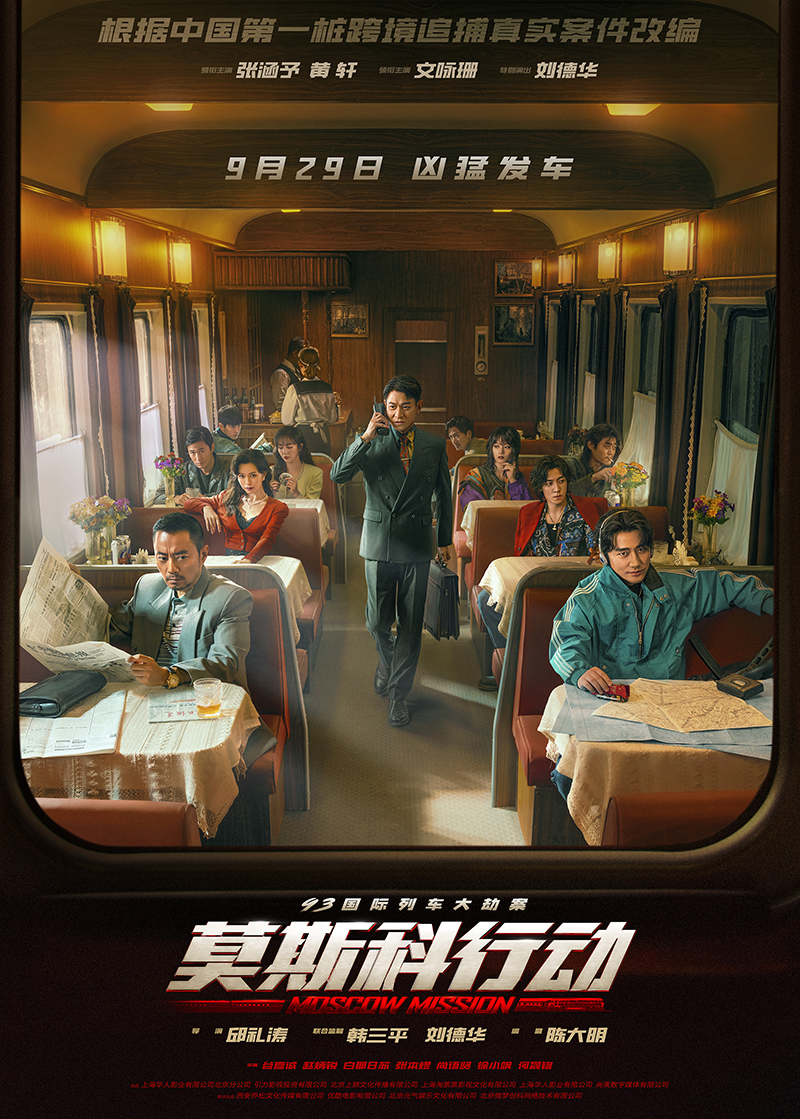
In the early 1990s, China and Russia were each struggling to accommodate new political and economic realities. This is at least one reason offered in explanation for the nexus of crime that overtook the long distance train connecting the two capitals in Herman Yau’s action drama Moscow Mission (93国际列车大劫案:莫斯科行动, guójì lièchē dà jié àn Mòsīkē xíngdòng). Inspired by a real life train heist in 1993, the film suggests that China was pulling ahead free of the labour protests which appear frequently in Moscow amid the collapsing Russian economy but equally insists that the bandits must be stopped because they not only endanger China’s international reputation but its trading relations with the former Soviet Union.
In truth there’s no real reason given for the mysterious D’s (Huang Xuan) heinous crime spree save a later allusion to a troubled childhood and the sudden death of his sensitive musician father when he was only 13 (which would put it shortly before the end of the Cultural Revolution). In any case, those around him have more complex motivations such as those of Zhenzhen (Janice Man Wing-San), a former sex worker employed by the gang to identify wealthy passengers and inform the rest of the crew by note, who needs the money for a sick relative. In any case, nearly everyone on this train is concealing vast amounts of hard cash, mostly in their underwear. Not content with the money, D also stops to rape a woman who had resisted but was found with a large amount of money stuffed in her bra.
In short, there’s nothing noble about D’s gang or any implication they’re rebellious outlaws just thuggish crooks taking advantage of a geopolitical vulnerability. Local fixer Vasily (Andy Lau Tak-Wah), however, is otherwise depicted as a victim of circumstance cruelly separated from a then newborn daughter for whom he is continually searching. He made his money digging a tunnel from Shenzhen to Hong Kong and using it to smuggle luxury goods in much the same way many now use the train as is evident by the scenes at Russian station when passengers suddenly start leaning out windows flogging pairs of jeans. Vasily’s in on that trade too, as well attempting to broker a deal for a wealthy man to buy a former Soviet fighter jet, but seems unhappy with his life of petty crime selling fake passports to dodgy people and also has an ongoing non-romance with Zhenzhen who is trapped in an abusive relationship with D’s brother-in-arms Zhiwen (Jason Gu Jiacheng).
Intense police captain Cui (Zhang Hanyu) is dispatched to catch the train robbers and avenge China’s international reputation by bringing order to the train but also stumbles on another crime in progress in the Russian capital. He has an opposite number in Sergey (Andrey Lazarev), a former KGB now FSB officer who hints at a new world order if also at a society very much in flux. In some ways the film suggests Cui’s inevitable victory is aided D’s hubristic overreach and the cooperation of the Russians rather than his own powers as a Chinese policeman, but also that China will clean up after itself taking down a Chinese gang while technically on foreign soil and making sure they return to China for justice.
Yau opens strong with the high impact sequence of the original heist as the camera first pans along the inside of the train before finding Zhenzhen and then rest of the gang, while otherwise continuing to escalate the action with a climax at an abandoned rocket base and then a final shootout at the train depot where the carriages must quite literally change the gauge to shift from the old Soviet railways to the modern China. The gang members may implicitly be among those who’ve lost out in the face of new economic realities, though aside from D’s possibly duplicitous musing on the life he might have led if his father had not died leaves them little justification for the cruelty of their crimes. Meanwhile, Cui’s justice is not implacable, taking pity on both Zhenzhen and Vasily and promising to treat them fairly in acknowledgement of their cooperation as opposed to D who had problematic gang members bumped off by the possibly the worst hitman in Moscow and has been using Vasily’s daughter to manipulate him for last few years with no certainly that he actually knows where she is. Making a minor point about empty consumerism in the constant references to stolen watches, Yau goes big on spectacle but also homes in on the smaller stories of trauma and displacement that eventually provoke it.
International trailer (Simplified Chinese / English subtitles)
A wandering swordsman winds up in intrigue on returning to his fencing school to find his old master murdered in Yasushi Sasaki’s Sword of Destiny (孤剣は折れず 月影一刀流, Koken wa Arezu: Tsukage Ittoryu). A classic jidaigeki adventure, it nevertheless has to be said that this one is a little more sexist than most in actively pushing its series of female warriors into the background as the hero by turns sends them all back to typically feminine roles while declaring that he will be the one to claim vengeance and clear up corruption in the court itself caused by a woman’s apparent forgetting of her place.
At least, this is what Mikogami Genshiro (Koji Tsuruta) is told by an old friend, Izu, after an altercation with the fiery princess Kazu (Hibari Misora). The Shogun’s nurse, Lady Kasuga, has apparently taken an interest in politics and has most of the inner palace in her grasp enriching herself in the process. Izu believes that she may also be behind the assassination of Geshiro’s former mentor Ono while working in league with the Yagyu who coveted the position of fencing master to the Shogun. He asks Genshiro to kill her which he’s only too happy to do while seeking vengeance for Ono, but later gains a second reason after meeting the two orphaned daughters of a former retainer forced to take his own life thanks to Lady Kasuga’s machinations.
Itoya (Yoshiko Fujita) wanders round with a gun and disrupts Genshiro’s first assassination attempt. He later tells her to leave the killing business to him and live “the life of a woman” insisting that one girl has no power to kill Lady Kasuga anyway. Meanwhile, he also makes an enemy of the Shogun’s sister Princess Kazu after challenging her in the street on seeing her callous disregard for a peasant her horse had run over. Princess Kazu falls in love with him after he defeats her in a duel, temporarily rebelling in insisting she will resist a dynastic marriage and take no other husband though he eventually rejects her partly on the grounds of their class difference and partly because he is a wandering sword who lives in the moment and may know no tomorrow.
Nevertheless, she is later seen capitulating to her proper role as a princess who exists largely to continue the family line, marrying a man chosen by the Shogun and his advisors with no real power to chose anything other than her obedience. In much the same way he does with Itoya, Genshiro pushes her back towards the typically feminine while falling for Itoya’s meek, sickly sister Mine (Hiroko Sakuramachi) who is otherwise an idealised image of femininity in her softness and naivety while like every other woman in the picture falling for Genshiro because of his robust manliness and ability to protect her by gaining the sisters’ vengeance on their behalf.
Meanwhile, Genshiro also facing off against the rival Yagyu school whom he suspects of having killed Ono to usurp his place as the shogunate fencing master with the assistance of underling Takagaki who has now taken over leading to a mass exit of students fed up with his authoritarian teaching methods. Interestingly enough, Genshiro is temporarily imprisoned by the Yagyu alongside a dissident Christian whose death they’d faked while keeping him alive in order to torture the names of other Christians out of him. On fulfilling his request to take his cross to his daughter who has become a sex worker, Genshiro succeeds only in endangering her while she also falls in love with him.
All in all, he’s not much of a responsible hero also reckless with the life of his former burglar sidekick Kurobei (Shin Tokudaiji) who uses his ninja tricks to get him out of prison. As expected, it all ends with in a battle against a treacherous swordsman and the spineless Takagaki with the final revelation that Lady Kasuga (who just dies of old age) had not much to do with anything anyway despite having been a “meddling” old woman who forgot her proper place. Even Mine is forced to admit that she can’t come between Genshiro and his sword so she plans to become a nun while Kazu sends him an elaborate katana to remember her by certain that he will not accept a place in the Shogun’s household but will return to the road to continuing his training. In any case, a kind of justice is done and order restored even if that order is in itself fairly unideal.
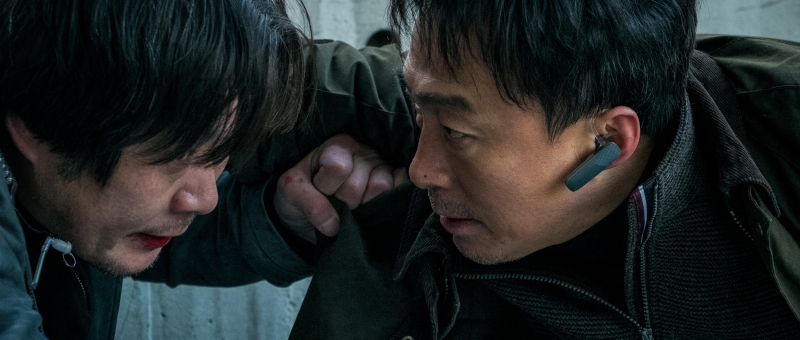
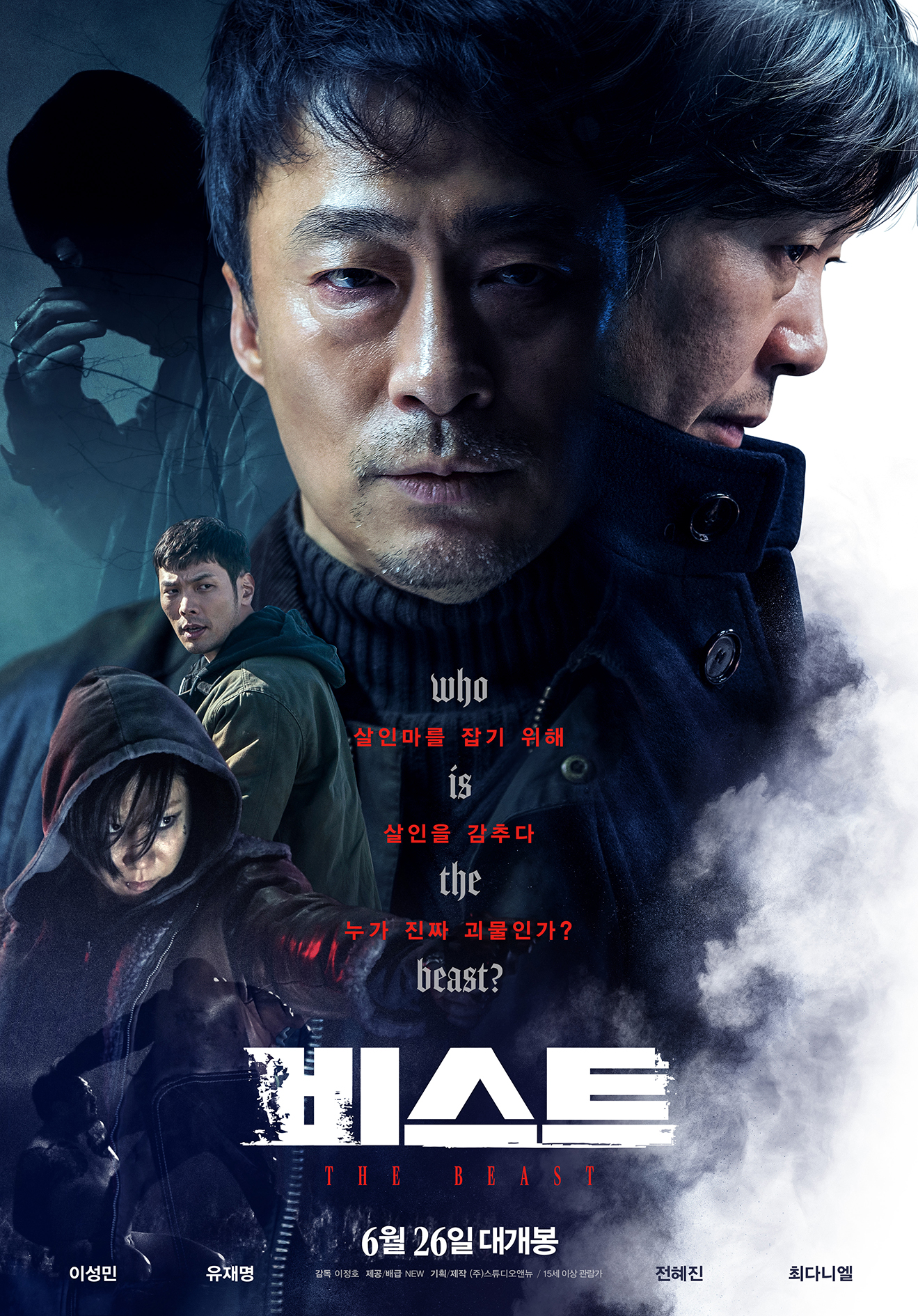
Internal police politics frustrate the hunt for a potential serial killer in Lee Jung-ho’s dark social thriller, The Beast (비스트) inspired by Oliver Marchal’s 36 Quai des Orfèvres. As a pathologist suggests, we all may have a hidden beast and it’s certainly true of the film’s conflicted protagonist, thuggish policeman Inspector Jung (Lee Sung-Min) who finds himself dragged ever deeper into a mire of corruption as a natural result of a series of bad decisions that started long ago, while his rival, Captain Han (Yoo Jae-Myung), presents the facade of efficient modern policing but inevitably turns out to be little better.
As the film opens, Jung and his subordinate Yang are each wearing balaclavas while driving a heavily tattooed man out into the middle of nowhere though only for the purposes of frightening him so that he’ll back off their informant, local bar owner Madame Oh (Kim Ho-jung). Jung’s inner conflict is palpable as stares at his bloodied, shaking hands asking himself how it is it’s come to this while Yang later reminds him not to become too attached to his sources because once they’ve exceeded their usefulness they’ll simply be arrested. While all of this is going on, the police force is under immense pressure and receiving a lot of negative press over their handling of the case of a missing teenage girl, Mi-jin. Unfortunately, the girl later turns up dead with the murder enquiry split between two teams, those of Jung and Han each of whom are in the running to take over from the superintendent who before all of this happened was about to be promoted which is why he is desperate to solve the case as soon as possible.
It might at first be tempting to read Jung and Han as representatives of different kinds of policing with their rivalry representing a battle for the soul of the police force only as it turns out each is merely corrupt in their own way. Jung is very much of the jaded veteran cop school, wanting to shift the case off his books as soon as possible by pushing the most likely suspect to confess. In this case that’s a shady pastor at a church Mi-jin used to frequent who was found in possession of her underwear and a series of photos of very young girls. Jung pushes the pastor to “confess” by selling him a story that a woman he was accused of assaulting in university took her own life as did her mother while her father later developed cancer as a result of all the stress and tragedy. Of course the pastor breaks down insisting that he killed her and it’s all his fault, only he’s talking about the other girl not that Jung cares too much about that. Han meanwhile quickly exonerates him by doing actual investigating, but only really so that he’ll still be in the running to solve the case and get the big promotion thereby besting his former partner turned rival. Jung had been the first to mention the possibility of an active serial killer only to be shut down because that would mean they’d lose the case to Major Crimes and therefore the personal opportunities for career advancement solving it would present.
Both men eventually end up at the showdown by each of their respective routes implying there’s little practical difference between them. Han jeers that he can’t tell anymore if Jung is a bad guy or a cop but all he can answer is that it might be a matter of perspective, while he is also aware of Han’s backdoor deals and willingness to compromise himself in order to win advancement. In the midst of all this jockeying for power, it gets forgotten that a young woman lost her life in the most heinous of ways while whoever really did it may still be out there looking for the next girl to torture and kill. Everyone may indeed have a beast inside them, Jung already acquainted with his in his morally compromised soul while Han battles his internal ambition but the real beast may be the contemporary city and the infinitely corrupt hierarchies of the modern Korea along with the toxic masculinity that forces these men to betray their ideals simply not to be accounted a failure trapped at the bottom of the pyramid by their own problematic righteousness. When they’ve served their usefulness, the system chews them up and spits them out but until then it’s only hanging on as long as they can in the utter futility of a morally bankrupt existence.









 Windows on Worlds