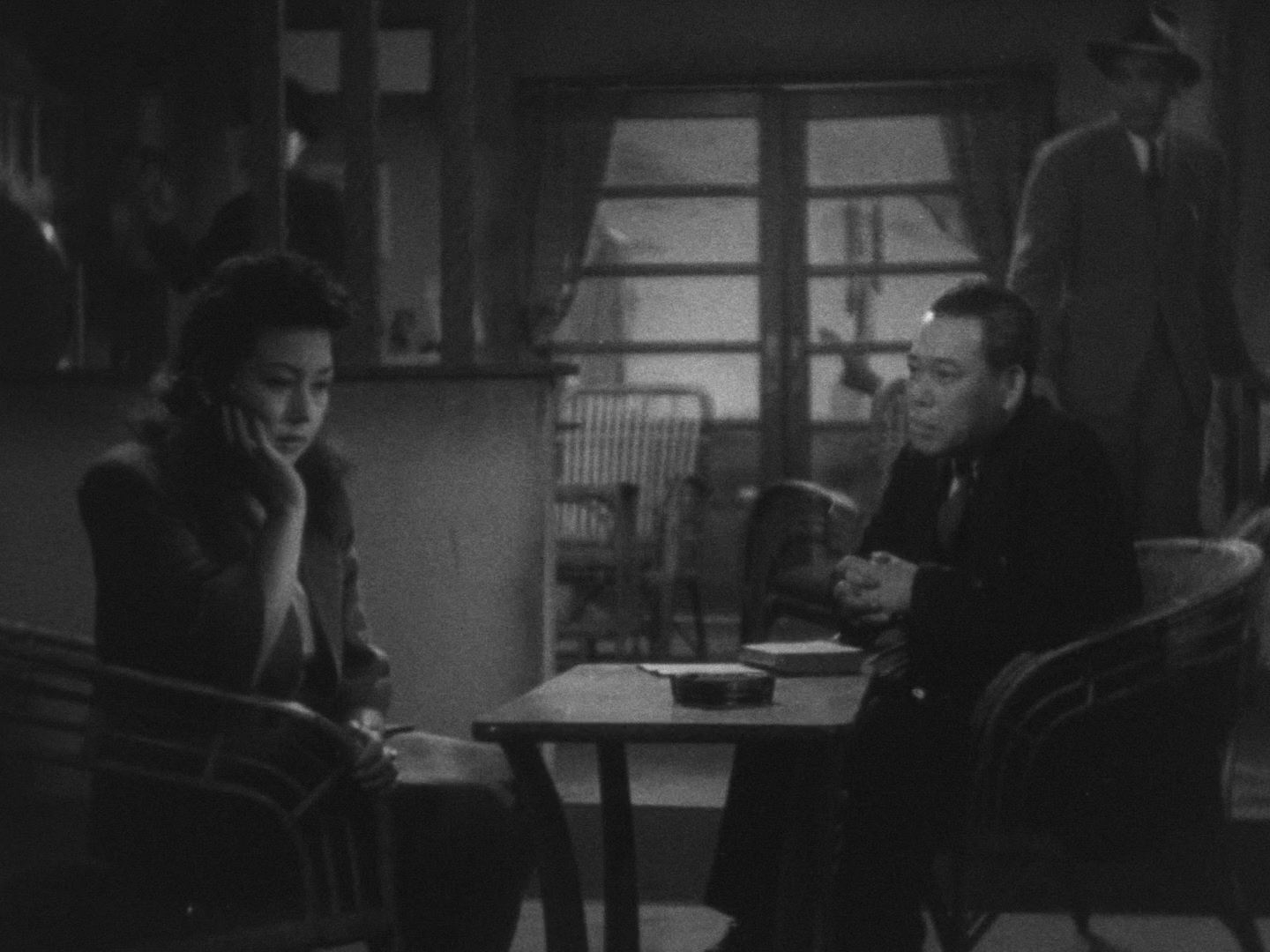
Sanshiro Sugata Part Two (續 姿三四郎, Akira Kurosawa, 1945)

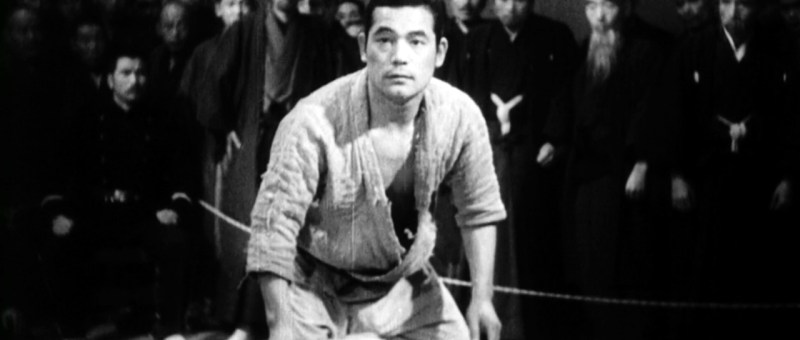
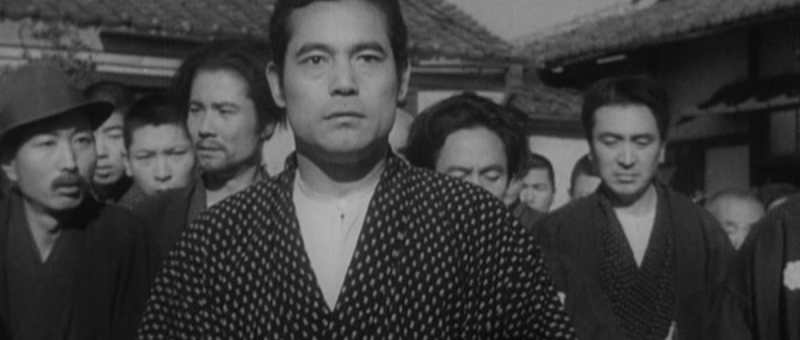
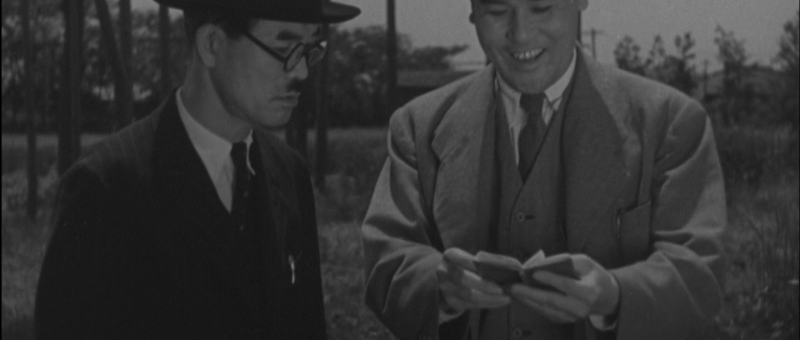
Sanshiro Sugata had not especially pleased the censors who took a scalpel to it, excising a few elements they found problematic, but the film proved popular enough with audiences for the government to commission a sequel. Apparently somewhat reluctantly, Akira Kurosawa returned to the world of Sanshiro Sugata picking up almost in real time two years later with a conflicted Sanshiro (Susumu Fujita) still wandering around Yokohama avoiding the woman he loves whose father may have died due to injuries inflicted on him during his fight with Sanshiro. Yet where the first film had essentially presented a spiritual odyssey through the medium of judo, part two is a much more nakedly propagandistic affair. 

It some ways it’s a little ironic that Sanshiro has almost become a folk hero who stands up for the oppressed Japanese against the looming threat of Western imperialism as mediated through the contest between Japanese martial arts and American boxing. The film opens with a drunken American sailor berating the teenage boy pulling his rickshaw and eventually attacking him only to run into Sanshiro and get a swift hiding. The thankful boy recognises his name and decides that he wants to learn judo too so he can defend himself against external threat, but Sanshiro isn’t sure he should be teaching anyone because he still has a lot to learn and is otherwise unable to escape his guilt over having contributed to the deaths of others through the practice of his art. His internalised shame is only deepened when he’s asked to participate in a spectacle match against a top American boxer and declines only to be told off by the guy who decided to accept. He used to be a jiujitsu champ, but ever since Sanshiro brought about the judo revolution no one cares about jiujitsu anymore and it’s ruined his livelihood. 

There is it seems a degree of shame in fighting for money, but more so in fighting for the entertainment of others. When Sanshiro visits the boxing ring, the sport is depicted as vulgar and primitive. The baying crowd are there largely for blood, riled up by the violent spectacle and eager to see a man in the extremities of a bodily struggle. For Sanshiro, it’s a depressing and offensive sight and to participate in it is to bring shame on Japanese martial arts. Meanwhile, the judo school is also threatened by two thuggish brothers keen to prove the superiority of karate over judo by defeating Sanshiro. They are also brothers of the first film’s villain Higaki who was reformed after his fight with Sanshiro but has since apparently fallen into ill health and listlessness, but so certain that Sanshiro is the only man who can save Japanese martial arts that he gives him the secrets of his brothers’ techniques. 

The final battle mimics that of the first film save taking place amid heavy snow and howling wind. Sanshiro once wins over his opponents through his kindness, taking them into the warm and looking after them until they begin to recover. One of the brothers briefly picks up a meat cleaver before thinking better of it as the two of them grin and admit defeat. Yet Sanshiro’s real battle is indeed against the American imperialists, wilfully breaking Yano’s cardinal rules by deciding to agree to the spectacle fight and easily defeating the American boxer who ends up just passing out from the force of Sanshiro’s aura. The jiujitsu practitioner who seemed to resent him before breaks down in tears and offers his sincere thanks to Sanshiro for standing up for Japan against the Americans.

The contemporary context is clear, this time around judo is much less about spirituality than it is about victory as much as Sanshiro likes to say that it isn’t winning and losing that’s important. Sanshiro becomes the saviour of Japanese martial arts, now endangered by the rising popularity of Western boxing, but also indirectly of the Japanese people in standing up against an encroaching external threat in direct contrast to the slimy Fubiki (Ichiro Sugai), a dandyish interpreter to the Americans forever dressed in foppish suits and seemingly content to do their bidding. “You haven’t changed at all,” Yano scoffs of Sanshiro’s two years of fruitless travelling and it’s clear he still has a lot to learn, putting his romance with the long-suffering Sayo once again “on the back burner”, while remaining true to himself even if not quite the monster the children sing of, a relentlessly honest man and seemingly the lone defender giving hope to an increasingly anxious Japan.


Sanshiro Sugata (姿三四郎, Akira Kurosawa, 1943)

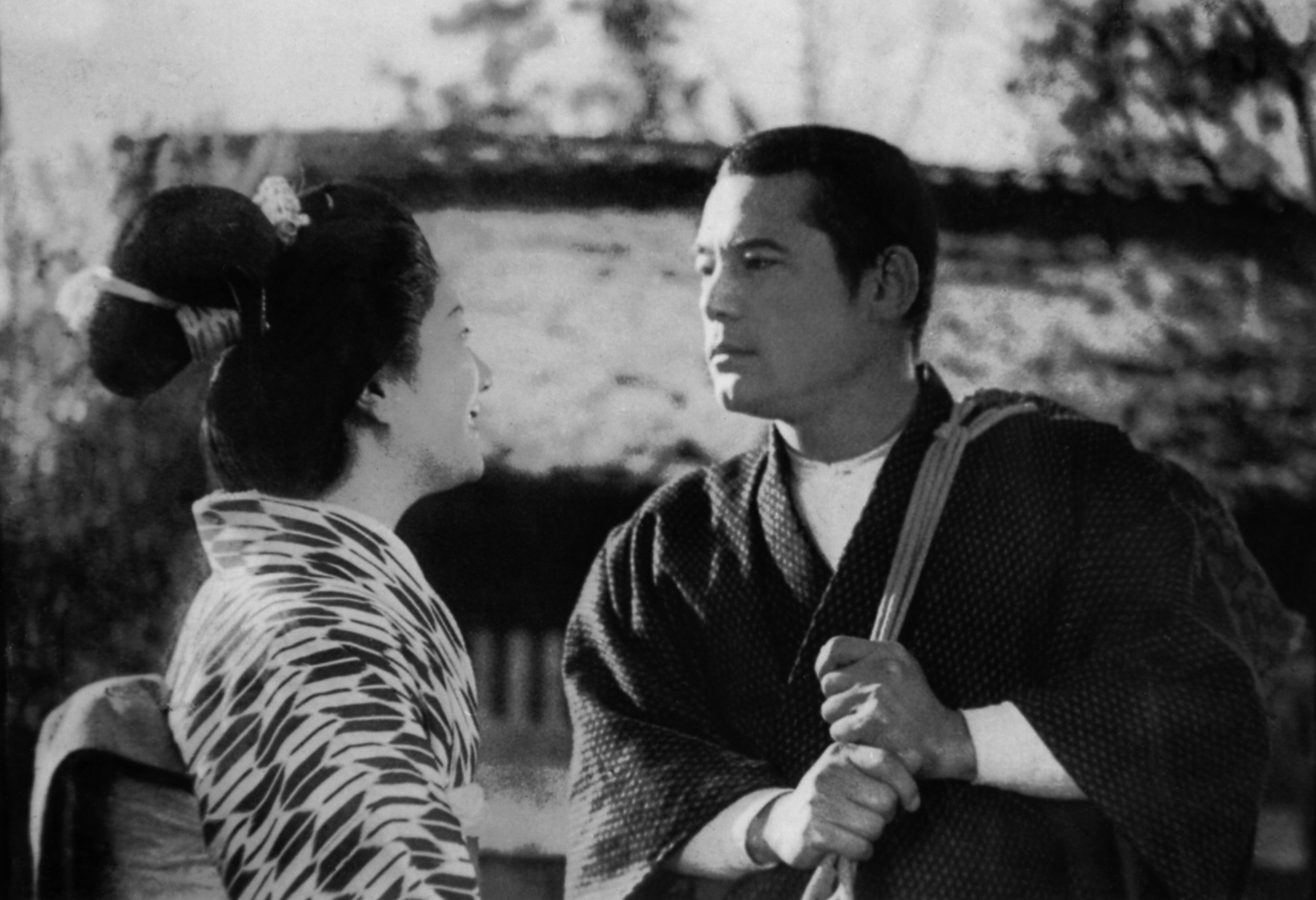
It might seem curious in some ways to make a film about the importance of humanity in martial arts during a time of war, but Akira Kurosawa’s debut feature Sanshiro Sugata (姿三四郎, Sugata Sanshiro) does just this in depicting the hero’s coming of age as a gradual progress towards awakening as he learns to attain control over body and mind through the modern discipline of judo. Based on a novel by Tsuneo Tomita, the film is in many ways a typical martial arts drama in which a young hopeful seeks a master and must eventually face a rival, but lends a note of poetry to the tale which is in other ways perhaps out of keeping with its times. 

The times of the film, however, are late Meiji as demonstrated in the lively opening sequence which ventures into a town in transition where policemen in Western-style uniforms walk the streets alongside townspeople dressed largely in kimono as is the hero, Sanshiro Sugata (Susumu Fujita), who’s come looking for a famous jiujitsu master. Taken on as a pupil, he overhears the master, Momma (Yoshio Kosugi), disparaging a rival, Yano (Denjiro Okochi), who has come up with a new martial art he calls judo which is fast gaining both respect and popularity. Momma thinks it’s all just a branding exercise and Yano’s “judo” is just repackaged jiujitsu, irritated that he seems primed to take a prestigious position as a trainer to the police force which runs its own martial arts contest. Sanshiro goes with them when they attempt to ambush Yano and teach him a lesson only to be easily defeated and humiliatingly thrown in the local river. Sanshiro immediately switches his allegiance, discarding his geta to give Yano a ride home in his rickshaw.

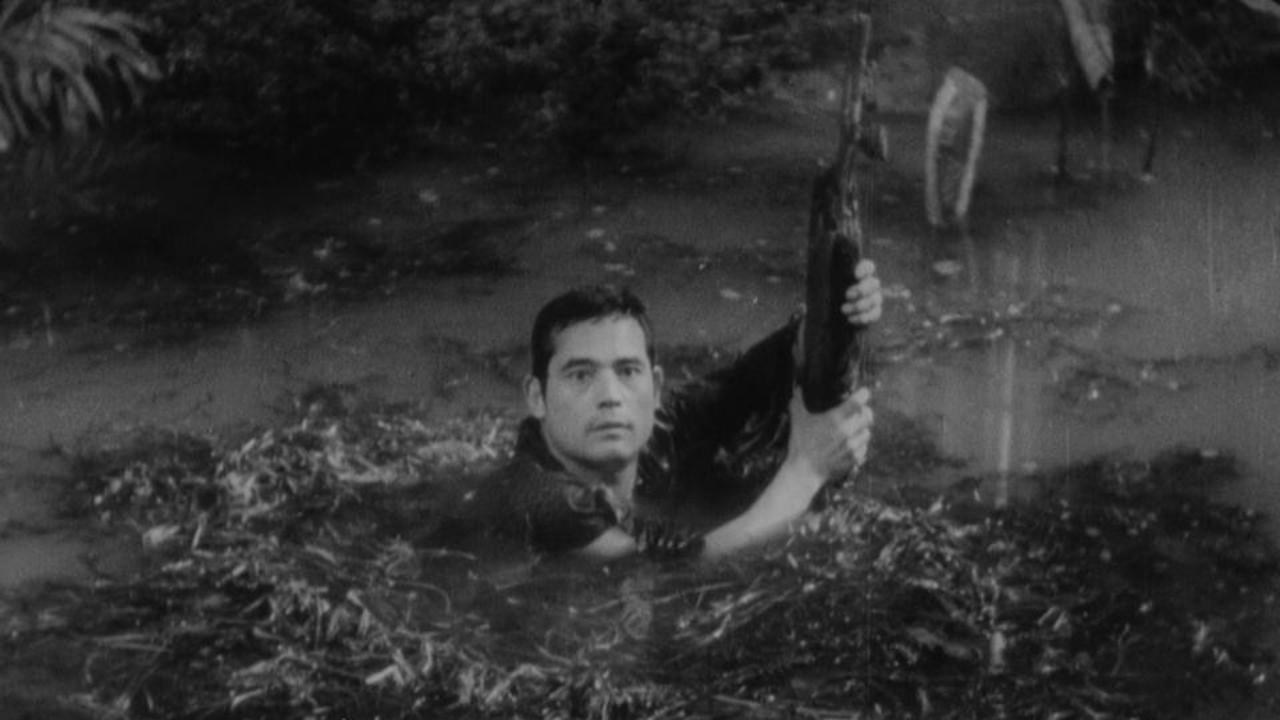
As Yano repeatedly tries to teach Sanshiro, judo is more than a martial arts discipline and places humanity at the centre of everything. This is a difficult lesson for the hot-headed Sanshiro to learn, quickly falling foul of his new master after brawling in the red light district and dramatically throwing himself into the pond. Clinging to a pole, he refuses to get out until Yano forgives him, but in true master fashion Yano merely says that getting out of the pond or not is entirely up to him. It’s while he’s in there, and after a few words from a Buddhist monk, that he witnesses a lotus flower slowing unfolding and achieves a kind of enlightenment that allows him to realise he’s been childish and petulant, finally getting out of the water to submit himself to the rigorous discipline of the martial arts life. 

The flower motif recurs several times, not least being its subversion when antagonist Higaki (Ryunosuke Tsukigata) sprinkles the ash of his cigarette over it. Making his first appearance in dandyish Western dress, Higaki is described as a snake-like villain, his evilness emphasised by his non-Japanese attire in contrast to pretty much everyone else who continues to dress in kimono. Higaki vows that his fight with Sanshiro must be to the death, in part a fight between the nascent art of judo originating in the post-feudal society and the traditional art of jiujitsu, but echoing Sanshiro’s first fight with former master Momma which resulted in his death and plunged the hero into spiritual conflict. He then experiences something similar when realising that he has inadvertently fallen in love with Sayo (Yukiko Todoroki) the pure-hearted daughter of another rival, Murai (Takashi Shimura), who also desires to fight him but as it turns out only in his desire to face a worthy opponent. Sanshiro wants to back away, afraid that he may humiliate or even kill the father of the woman he loves but is brought back to himself by more words from the monk who tells him that he must be as innocent as she is and engage in the fight in a sportsmanlike fashion as a spiritual as well as physical contest. 

This is also to some degree true of his final confrontation with Higaki which too is a confrontation with the evils of the age if less comfortably also satisfying the censors by allowing Higaki to stand in for foreignness in general. Higaki is indeed often accompanied by the sound of the wind which echoes his modernity, the fight taking place in a large windswept field below roiling clouds as the two men grapple despite the advice of their intermediary to call it off before one of them really dies. Higaki does in a sense die a sort of death in that we’re told after the fight he reformed and also managed to find a similar kind of enlightenment to Sanshiro who is then bashful and romantic while heading off on another journey from which he assures Sayo he will soon return. It’s true enough that there doesn’t seem to be much that would appeal to the censors of 1943 save the implied defeat of Western powers and celebration of Japanese martial arts given that humanity is repeatedly emphasised as the core component of judo and that Sanshiro achieves an individual enlightenment rather than finding peace as a member of a team or community, but they did otherwise decide to cut a substantial amount of the film said to contain a love scene and references to alcoholism that they deemed improper. Nevertheless, there are shades of Kurosawa’s later greatness even here in his dramatic composition and expressionistic use of nature to detail one boy’s journey into manhood through the spiritual rather than physical gymnastics of the philosophy of judo. 


The Ball at the Anjo House (安城家の舞踏会, Kozaburo Yoshimura, 1947)

“Old things die out so new things can be born,” according to the ruined patriarch of a once noble house in Kozaburo Yoshimura’s Chekhovian drama Ball at the Anjo House (安城家の舞踏会, Anjo-ke no butokai), though he might as well be speaking to the post-war society. The Anjos are like the declining aristocracy of the earlier 20th century mourning the disappearance of their world of privilege and gaiety and reflecting that they too must now, as younger daughter Atsuko (Setsuko Hara) says, learn to serve others.

Atsuko is really the only one who accepts the age of the aristocracy has passed and that it is only right and proper that they should join this newly egalitarian, democratic society. Her sister Akiko (Yumeko Aizome) has recently returned home after 12 years having left her husband because of his adultery, but cannot now face it that she no longer has a place here. Approached by their former chauffeur Toyama (Takashi Kanda) who has long carried a torch for her, Akiko snaps that she will always be a noblewoman in heart, unable to let go of outdated customs of class and propriety. She seems to have feelings for the chauffeur too, but won’t let herself embrace them, calling him “dirty” and resenting herself for her attraction to a man who is not her social equal. 

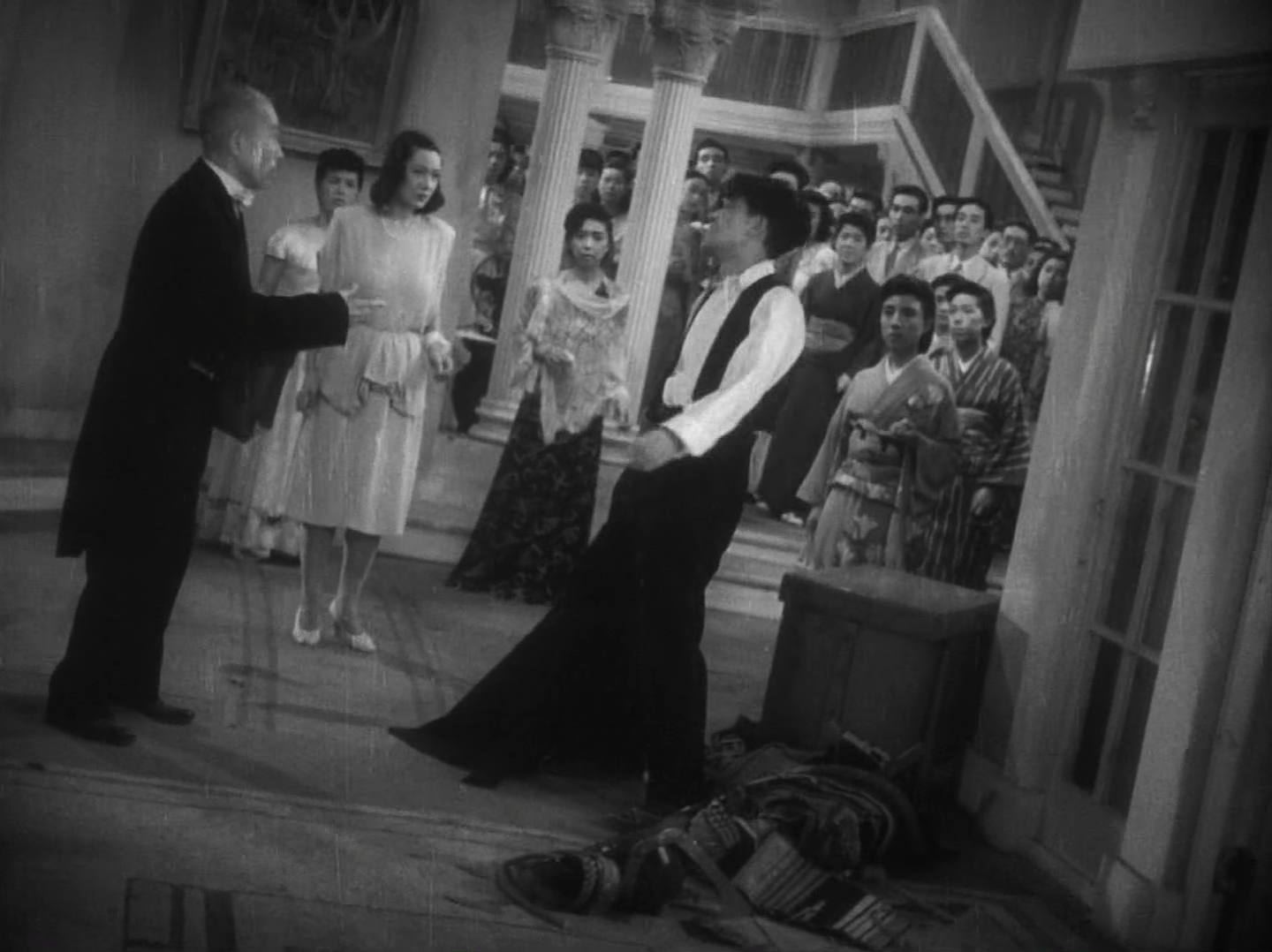
But times are very different now and the aristocracy has been abolished which has in all other senses dissolved the class barrier between them. The tables have turned and Toyama is now a wealthy man having done well for himself in business through honest hard work. Akiko asks him for help as a kind of symbolic gesture as if she were making recompense by handing the house to its rightful owner in their former servant. He insensitively tells patriarch Tadahiko (Osamu Takizawa) that he can easily spare a few thousand to throw away on the house as a sentimental gesture, but does so largely without malice. Only after Akiko has turned him down at the ball and he begins to drink does he start to crow, if a little sadly, that now this base and ugly servant has bought the master’s house. On his way out, he knocks over the suit of armour that had stood in the hall as if literally bringing down the feudalistic military legacy of this once great family and sending it crashing to the floor. The camera suddenly tilts to emphasise that this world is now out of kilter and has been destabilised beyond repair. It’s only this action that frees Akiko from her self-imposed repression as she skips over the armour and chases Toyama out the door. Tumbling down a sand dune she literally descends to his level leaving her pearls and shoes behind. 

The class barrier has been fully dissolved, and Tadahiko too permits himself to marry his long-term mistress, the geisha Chiyo (Chieko Murata), who declares that she doesn’t care about his loss of status and invites him to live with her if he has to sell his house. But it seems as if Tadahiko can’t let go of his ancestral legacy nor his childhood home. In truth, this Western-style country house by the sea can only have been built after the Meiji Restoration which means it’s under a hundred years old and most likely built by Tadahiko’s father, the gentleman in European-style military dress in the portrait. As such, it was likely constructed to look forward to a new era as the samurai class rebranded itself into a European-style aristocracy. Tadahiko’s older sister, married to a lord who’s faring better in this new world, tells an enraptured collection of younger women of the time she danced with a prince a year after the Russo-Japanese war when she was only 19. But this will be the last ball at the Anjo House, in memory of a “beautiful way of life” that has been now been eclipsed.  

Tadahiko had faith that they would be saved essentially through the good chap system in his relationship with a nouveau riche upstart named Shinkawa (Masao Shimizu). Shinkawa holds the mortgage on the house, and there are all sorts of rumours about his shady business. He made most of his money on the black market. Shinkawa had arranged a marriage between his daughter Yoko (Keiko Tsushima) and Tadahiko’s son Masahiko, which gave him even more confidence. But as Atsuko says, Shinkawa was only friendly with him because of his aristocratic title and now it’s gone he has nothing to offer. In marrying Yoko to Masahiko (Masayuki Mori), Shinkawa would have gained the legitimacy of a connection with nobility while Tadahiko would have gained an injection of cash that would save his social status. But none of that matters any more now that the aristocracy has been abolished under the post-war reforms that have also seen Tadahiko’s lands confiscated and estate broken up. It seems that Tadahiko let Shinkawa use his name for a munitions factory during the war, which might not play so well now, just as Akiko’s decision to part with her adulterous husband may also have been influenced by the fact that he was a general who is presumably little in demand in the wake of defeat. Still, Tadahiko prefers Shinkawa to letting the house go to a former servant like Toyama who must himself be enamoured enough with that old world to want to become master of it rather than tear it down.

For Masahiko’s part, he has little interest in marrying Yoko but on learning the engagement has been unilaterally called off and Shinkawa is little more than crook decides to rape Yoko to get back at him. His cruelty is a symptom of post-war nihilism, and we soon discover he’s been sleeping with a maid, Kiku (Akemi Sora), to whom he made promises of marriage he had no intention of keeping. But Like Akiko it seems as if he does care for her after all, only he won’t let himself feel anything in the numbness of his loss of privilege preferring instead to laugh too loudly with his boorish friends. Only on seeing the class barrier dissolve when his father marries Chiyo and his sister Akiko takes off after Toyama does he allow himself to embrace Kiku and express genuine emotion.

Masahiko is played by a young Masayuki Mori who was the son of the novelist Takeo Arishima. Arishima was also a member of the aristocracy but one who became a socialist and dissolved his estate which was something of a fashion in the 1920s. The situation is however complicated by the fact that the Anjos’ servants remain loyal and don’t want to leave them. After all, this is as much their home too and they don’t have anywhere to go either because a world with no masters has no need for servants. We too are encouraged to mourn this world, but its end is also presented as a kind of liberation in which the family are finally permitted to embrace their own desires only after casting off the shackles of the aristocracy and preparing to forge new futures in a changing world leaving the feudal past behind and waltzing into a new and brighter future.


Dawn Chorus (暁の合唱, Hiroshi Shimizu, 1941)

“Before me flows a wide and serene river of life,” a young woman writes in an unexpectedly poetic essay, “I beg you to pray for my just and happy future.” Yet Tomoko (Michiyo Kogure) does appear to be pretty happy with her choice, even if the just future she’s forging for herself might not be what others see as just. Though she cites her family’s poverty and a minor disability as her reason for giving up on education, there seems to be another side of her that eagerly embraces independence and looks for it in unexpected places.

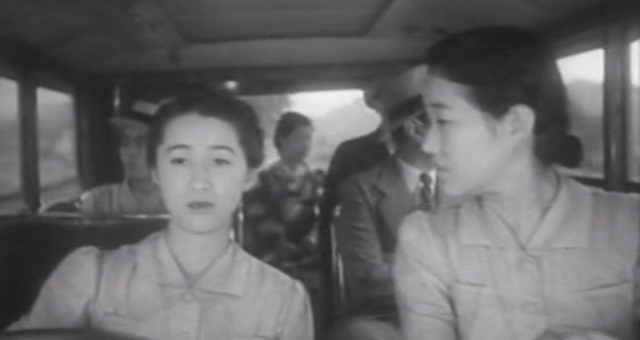
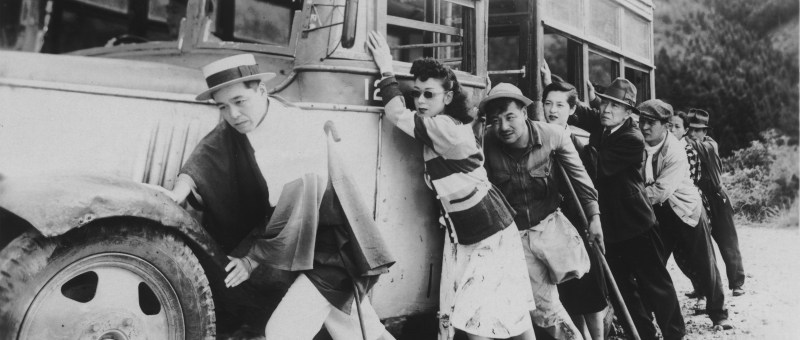
That would be her desire to become a bus driver, an occupation then thought to be inherently masculine. Perhaps in that way, it reflects her desire to be in control of her own destiny, while her apparent love of life on the bus hints at another for travel and ever-expanding horizons. Another of Shimizu’s travelling films, he often as in Mr Thank You includes scenes shot through the bus’ rear window including that of a flock of boys off to school on their bikes that makes Tomoko think of her stepbrother Ginjiro (Giichi Okita) who has a voracious appetite despite their family’s poverty. There are indeed all kinds of people who get on the bus, including, at one point, a melancholy woman in a bridal outfit who nevertheless pitches in when the bus gets stick in a ditch and needs a push. Tomoko fixes the bride’s makeup and gives her her compact, but there’s no avoiding the fact that she looks miserable despite the joy of the older women accompanying her.

Even Tomoko remarks that she isn’t sure whether her tears were in joy or sorrow even while wishing her a broad-shouldered husband. Later the bus catches her again trailing behind the man to whom she was married, older than her and not particularly handsome, pulling a cart. She still doesn’t look very happy, and is presumably bound for a life of drudgery over which she has little say. Her fate contrasts with that of Tomoko who is actively choosing her way forward even if the bride’s plight forces Tomoko to think about marriage and her womanhood as does the birth of a baby on the bus. Everyone is always telling Tomoko that she ought to get married quickly, and not least among them Eiko (Kiyoko Hirai) who declares herself tired by life. Working for a newspaper, she had apparently been the girlfriend of Saburo (Toshiaki Konoe) whose late brother once owned the company while now he runs a cinema. Saburo has apparently tired of her, though he appears to have developed a fondness for Tomoko which might seem slightly problematic to modern eyes because of Tomoko’s relative youth while she is in the process of coming of age and into herself uncertain if marriage is even something that she’s interested in.

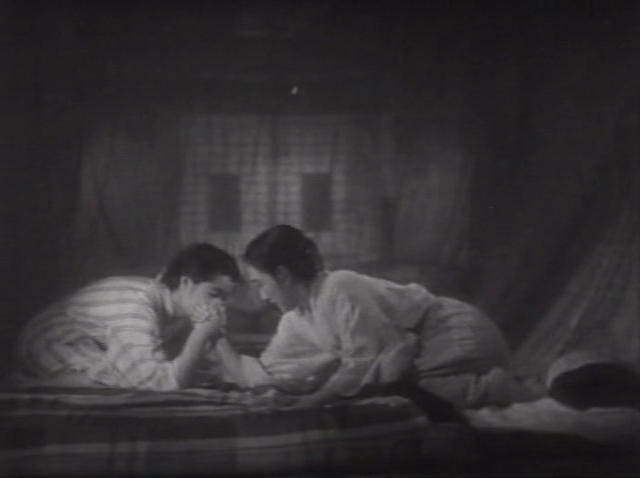
On the other hand, her tomboyish qualities leave her in a slightly liminal space as reflected in her desire to become a driver, rather than a conductress. In learning to drive, she mostly wears trousers while Eiko remarks on her “big hands” and she prides herself on her physical strength when engaging in an impromptu arm wrestling match with Yoneko (Hiroko Kawasaki), the widow of Saburo’s brother who now manages the bus company and has a crush on handsome driver Ukita (Shin Saburi) who also had to drop out of university for undisclosed reasons. Tomoko loses the match because she’s overcome by tears without really knowing why, which might in its way be a manifestation of her returning femininity along with her maturity, but there’s also something strangely transgressive about the scene featuring two women under mosquito net randomly arm-wrestling in the middle of the night.

Nevertheless, Tomoko’s life seems otherwise happy and pretty care free even if there are signs of corruption all around her. One of her first challenges while working as a conductress is an old woman (Choko Iida) who tries to get out of paying. It seems like the old woman probably can’t really afford to pay, but puts on a show of having tried to cheat them deliberately to save face. She suggests to Tomoko that she simply neglect to punch a ticket and pocket the money she’s already given her, until the bus driver, a man, gets out to exert his authority and tell her off despite Tomoko’s offer to make up the shortfall out of her own money. Later it’s discovered that two of the other conductresses have been made unhappy enough to consider quitting their jobs and are deliberately avoiding riding with one particular driver because he’s forcing them to embezzle ticket money in this way on his behalf, hinting at a kind of greed and immorality that might not necessarily be motivated by abject poverty.

It is though a presence Tomoko is able to dispel, bringing on Kimie (Chiyoko Fumiya) as her own conductress when she finally becomes a driver in her own right. Though the film hints at her feelings for Saburo, it does not end on marriage but with Tomoko’s personal fulfilment if tempered by the idea that a woman must now be useful and productive in the wider world while the men are away which might be how it gets around the censors despite otherwise avoiding overtly patriotic or imperialistic themes. Based on a novel by Yojiro Ishizaka, the film rather validates Tomoko’s desire to take charge of her life and drive off towards the future as an independent woman.


Roppa’s Honeymoon (ロッパの新婚旅行, Kajiro Yamamoto, 1940)

One of the most surprising things about Kajiro Yamamoto’s defiantly silly comedy Roppa’s Honeymoon (ロッパの新婚旅行) is how devoid it seems to be of political import with no overt patriotic content or references to the ongoing conflict even if the central messages of the necessity of enduring hardship are otherwise very on brand. Likewise and contrary to expectation, the film is clearly influenced by Hollywood comedies and heavily features American ragtime music presented largely without prejudice. 

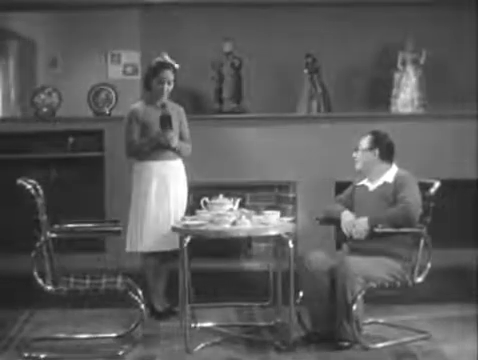
In fact it’s the confrontation of these different influences which eventually sparks a crisis between father and son. As the film opens, beer magnate Garamasa is sitting in his bath practicing his gidayu recitation with the help of a shamisen player in an adjacent room, but his idiot son Ichiro (Roppa Furukawa) keeps singing “stupid Western songs,” which is very annoying for him but apparently not enough to actually get out of his bath which is why he rings an employee and gets him to ring Ichiro to tell him to shut up. This seems in part to be a slightly subversive gag poking fun at fat cat CEOs with Garamasa weirdly berating the staff member for being lazy and suggesting that he’s probably only just got up despite it being already 7am even if Garasama himself is still in the bath. The employee has, however, been busily at work for quite some time and spends the rest of the film toadying up to Garamasa. Later on, Yamamoto includes a similar gag in which a maid is forced to run back and forth between Ichiro’s annex and Garamasa’s office to deliver messages between the two.

In any case, Garamasa’s grand plan to get his son to be quiet is to marry him off to someone who also likes Western music which is why he visits a pair of servants he actually kicked out of the house when they decided to get married 20 years previously but have since opened a shop selling Western records. They suggest a young woman, Eiko, known as the nightingale of Japan (real life opera singer Hamako Watanabe) who is also a member of the nobility and the daughter of one of Garamasa’s friends, yet Ichiro has been seeing a young woman, Chiyo, who works in an oden restaurant and in fact finds out he is “engaged” from the same newspaper article she does. Eventually he makes the decision to run away from home and elope only to flounder while being entirely ill-equipped to live a “normal” life in which he must attempt to support himself financially.

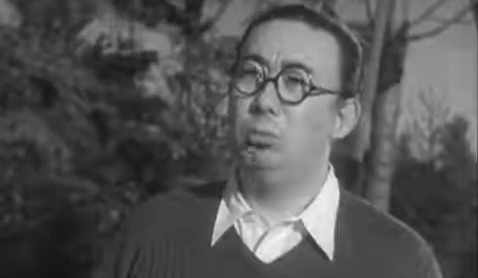
Star Roppa Furukawa was himself a member of the aristocracy and one of a small number of performers popular enough in the 1930s that their names were often inserted into the titles of the files in which they appeared even if their characters did not share it. Roppa was well known for his rather comical face, round and a little pudgy with big round glasses which seem to capture something of the zeitgeist of the interwar years. He was also an excellent singer and the film is quite notable for its use of an ironic song in which Roppa narrates his “honeymoon” in which he and Chiyo are forced to move several times, first sitting in their living room on the back of a truck before their belongings slowly decrease from truck to cart to hand. Chiyo is eventually forced to return to work at the oden restaurant while the relationship suffers because of Ichiro’s refusal to do a common man’’s job. Ironically, he is disturbed by the singing of Eiko who lives close by and on visiting to tell her to be quiet is talked into buying a pair of charity concert tickets.

Chiyo actually approves because she doesn’t like the idea of people looking down on them for not having the money to pay, but is then jealous, insisting that she’ll pay for the tickets herself while forbidding Ichiro to go. It’s this that forces him to accept a job he previously thought demeaning as the leader of a marching band singing a ragtime-themed jingle for a brand of toothpaste. All of this absurd silliness might be thought too trivial for the early 1940s in which censorship concerns usually some kind of patriotic content (aside from gidayu) but there is a message to be found in Garamasa’s eventual acceptance of their relationship in which he thanks Chiyo for introducing his son to hardship and thereby making a man of him as reminding the audience that a little bit of suffering is character building though doubtless they don’t have such wealthy parents to bail them out nor can they really look forward to better days any time soon. In any case it paints a rather rosy of picture of life in the early ‘40s, harking back to a distinctly ‘30s brand of foppish comedy with Ichiro a kind of Bertie Wooster suddenly plunged into “real” life and realising being the stupid son of a CEO obsessed with gidayu recitative wasn’t so bad after all.


A Bullet Hole Underground (地下街の弾痕, Kazuo Mori, 1949)

Produced by Daiei Kyoto under the guidance of the Osaka Police, Bullet Hole Underground (地下街の弾痕, Chikagai no Dankon) is keen on selling a vision of order in a new Japan in which the police force employs all the latest technology to solve crimes calmly and methodically. We see them approach the crime scene forensically and conduct a series of scientific tests with microscopes and gadgets such as lie detector machines and code breaking equipment as they proceed towards the truth while earnest policeman Minagawa (Hiroshi Nihonyanagi) battles the ghosts of his past on realising that the dead man’s wife is his own lost love.

In any case, the film opens with a noirish scene at Umeda Station, Osaka, which then turns strangely comic. A man stumbles toward the exit and we assume that he is probably drunk but another man soon comes up behind him and pushes a pistol into his back. The second man pulls the trigger, then again to make sure, before calmly walking up the steps and leaving the station. A little while later, another drunk man arrives and has a little banter with the body before covering it with a signboard which is one reason it isn’t spotted until the shoeshine boys turn up in the morning. 

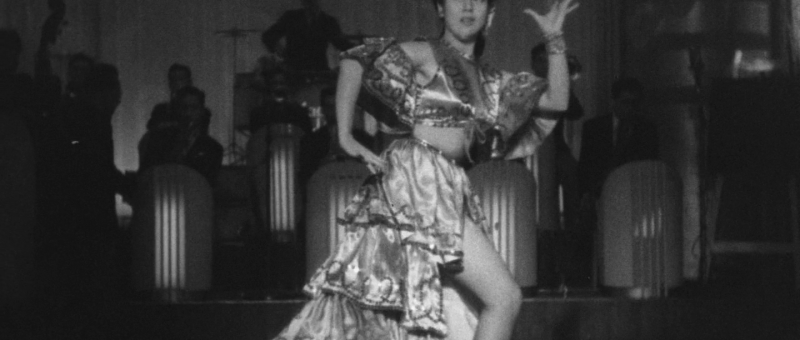
This sudden influx of children at rush hour is another symbol of the destabilisation of the post-war society in which the war orphans try to support themselves amid the still difficult economic environment. The lack of economic opportunities is also posited as a reason that the deceased, later identified as Kaneko, may have turned to crime by getting involved with a criminal gang smuggling drugs and money to destabilise the society even further. Yet the rot may have set in a little earlier than that. Before the war, Minagawa had wanted to marry Michiko (Machiko Kyo), the sister of his friend Sekiguchi (Toshiaki Konoe), but she later threw him over to marry the wealthy son of a family running a pharmacy. She admits she married him for the money, but after the war he lost everything. Unable to find work, Kaneko became a wastrel while Michiko gained employment at a cabaret bar as a dancer. He told her that he’d found a job at a company, but this turned out to be a lie and chief investigator Fujimoto (Takashi Shimura) assumes he must have been working for the gang. 

Still, to begin with it seems like it may have been a case of mistaken identity. Kaneko’s clothes turned out to belong to other people, a fact easily explained by Michiko that they were second hand, but also suggesting that someone may have set him up to take their fall. The gang needed the skills he learned in the navy but maybe they didn’t need him anymore. The root of the evil is located, ironically enough, in a jewellery store presenting a front of affluence and elegance but in reality founded on crime and misery when so many are still struggling to rebuild their lives. Michiko too seems to have turned cynical. She snarls and pushes Minagawa away, but privately cries and appears to regret her youthful decision to reject love for material comfort.

Perhaps because of its genesis as a film designed to promote the local police force, it has a much more upbeat conclusion and particularly for Michiko who is, unusually, allowed to redeem herself and gain a second chance to make a better decision by reuniting with Minagawa who does not and never has held her past against her. The pair of them look out over the fracturing city and remark at how it just carries on as if nothing had happened which feels like advice intended for the post-war society that it should do the same and try to leave the past behind to start a new life in this new era. Meanwhile, huge numbers of policemen swarm the harbour to crack down on the smuggling gang sending the not altogether comforting message that this city is well protected against all kinds of crime and the police force is a well-trained, modern institution that has the latest technology at its disposal along with astute and compassionate officers. There may be sleazy clubs, duplicitous men and heartless gangsters, black markets and smuggled dangers, but there are, the closing scenes with their wide-open vistas in which scorched trees stand behind the burgeoning city imply, better days to come.


Tomorrow There Will Be Fine Weather (明日は日本晴れ, Hiroshi Shimizu, 1948)

According to the driver aboard the bus at the centre of Hiroshi Shimizu’s Tomorrow There Will Be Fine Weather (明日は日本晴れ, Asu wa Nipponbare),  “that ridiculous war ruined everything”. Shimizu had directed a similar film in 1936, Mr Thank You, in which times had been hard for all but people tried to stay cheerful and help where they could. But here, by contrast, the atmosphere is much less jovial. Everyone is fed up, unhappy, dissatisfied, and irritated far beyond the inconvenience of being delayed on their journey.

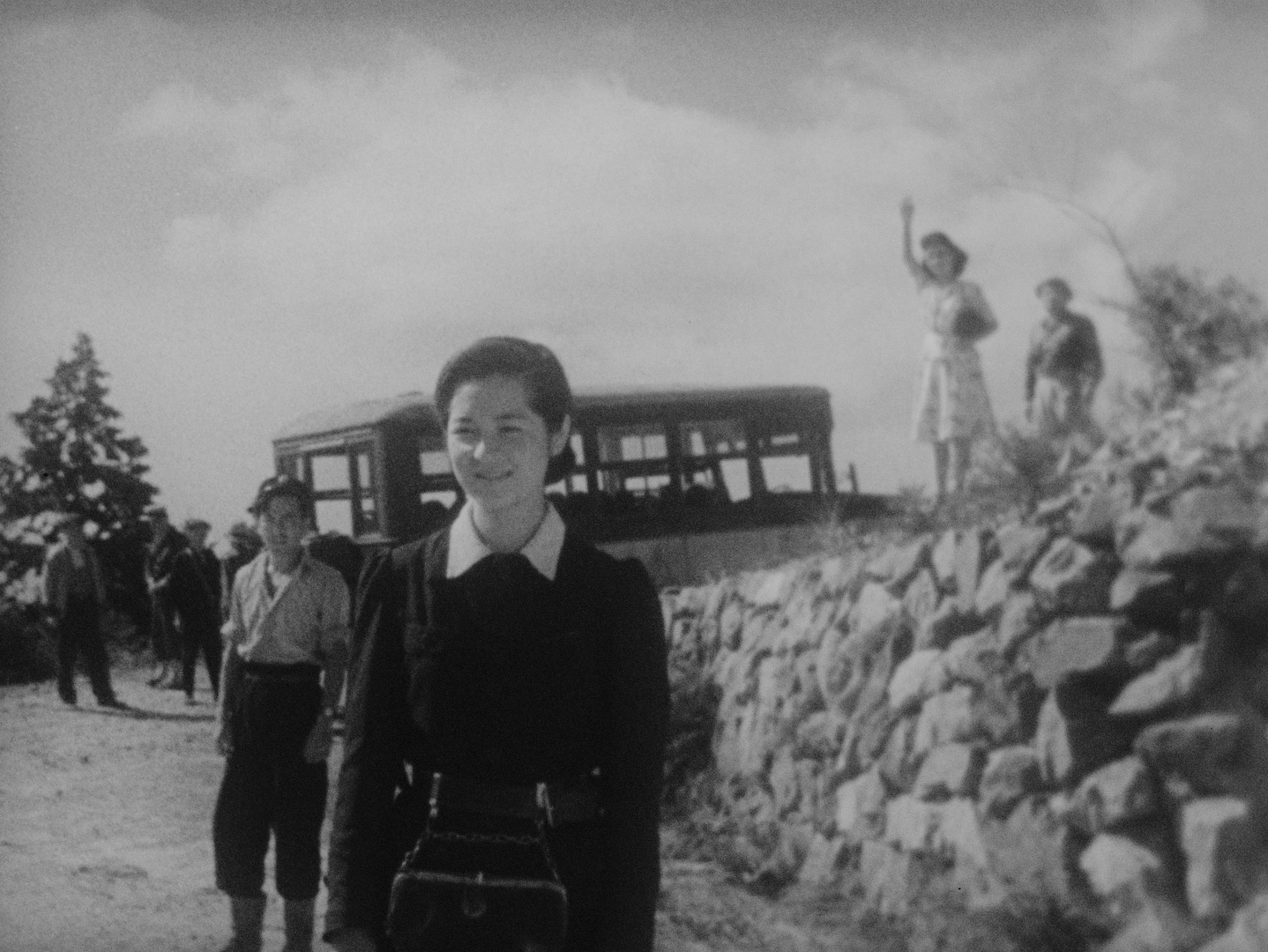
Once again shot on location, the film follows a bus on the outskirts of Kyoto making the journey along a mountain pass from the city to an onsen town before breaking down half way. It’s several miles across difficult mountainous terrain to the nearest town in either direction and many people aboard the bus are elderly or have disabilities that make simply walking the rest of the way a difficult prospect while no one can really say when help will come because they’re dependent on the arrival of the following service or some other form of transport that could get a message out for a mechanic or replacement bus. 

In any case, just as in Mr Thank You there is a diverse contingent aboard each of whom have particular reasons for travelling and for being upset about the delay. A trio of men begin by complaining that this journey which once took two hours now takes three while the bus itself has become worn down and unreliable. Even so, the fares are now much more expensive. What’s most surprising is that the men loudly and openly discuss their occupation as black market traders while simultaneously complaining about an increased police presence interfering with their work. An irritated, besuited man sitting across the aisle is the only one to challenge them, asking if they pay taxes on their clearly illegal earnings to which the answer is obvious though the men mostly complain about how it wouldn’t be worth their while if they did rather than outright denying a responsibility to pay. The man tells them that they’re part of the problem and that the future of the country is assured only if people pay their taxes, with which the men otherwise seem to agree. When the bus breaks down, one of them is most worried that his late arrival will cause concern for his wife who may assume he’s been caught and arrested.

But there’s a small drama playing out in the front of the bus too as the conductress gossips with the driver certain that the beautiful woman sitting half-way back is a well-known Tokyo dancer, Waka, who she’s heard is on her way to bury the ashes of her child seemingly born out of wedlock. The driver, Sei, grimaces slightly as if he didn’t want to have this conversation and as we later discover once knew Waka long ago before the war which has changed each of them. A blind man, Fuku, now working as a masseur after losing his sight in the war, once knew them both hatches a plan to try and get them to patch things up. But as Sei later says, they’ve both been through far too much and are no longer the same people. Nothing can be as it was before, but in a way that’s alright. There is still hope for the future on the broken bus that is post-war Japan if only someone can figure out how to get the engine going again. 

Nevertheless, the scars from this war are still very noticeable. One of the black-marketers has a missing leg and later lays into an old man who confesses that he was a military commander, hounding him for his responsibility for the folly of the war which men like him forced them to continue long after it was obvious that it was lost. Fuku is much more sanguine and after a minor misunderstanding able to find a way to communicate with an elderly man who is deaf despite the incompatibility of their disabilities as they help each other board the replacement bus to the new Japan. Sei, and the slightly younger conductress who is not so secretly in love with him, meanwhile remain stuck on the broken bus symbolically unable to move forward no matter how much Sei insists it’s time to “get over the war” and that he just wants to forget the past and start living again. Perhaps it’s for men like him who seem fine on the surface that the scars run deepest, overburdened by all that this “ridiculous war” took from them in unlived futures and broken dreams. Meanwhile Shimizu follows the other bus onward along the precarious and winding mountain roads hoping for better weather in the hot springs town ahead.


Tomorrow There Will Be Fine Weather screens at Japan Society New York on May 17 as part of Hiroshi Shimizu Part 2: The Postwar and Independent Years.

Sayon’s Bell (サヨンの鐘, Hiroshi Shimizu, 1943)

Like all directors of his era, Hiroshi Shimizu made a series of National Policy propaganda films though he was often able to circumvent their requirements by focussing on themes that interested him more directly such as teamwork or childhood. Sayon’s Bell (サヨンの鐘, Sayon no Kane) is however an unavoidably propagandist film filled with praise for the Japanese empire and to modern eyes incredibly problematic in its depictions of the indigenous peoples of Taiwan many of whom did “volunteer” to serve in the Japanese imperial army a notable example being that of Li Kuang-hui who was the last Japanese soldier to be discovered hiding in the Indonesian jungle in 1974 having been recruited from the Amis people.

The film opens with a lengthy series of title cards explaining that the film is dedicated to the Takasago Volunteers, “Takasago” being, aside from the title of a famous noh play, the name Japanese gave to the indigenous people of Taiwan believing them to have been “civilised” by Japanese rule. Thus in the opening sequences, we see the role of the Japanese military personnel as essentially paternal. They are policemen, doctors, teachers, instructors, and directors of construction who are dedicated to raising the aboriginal people to level of Japanese citizens through forced assimilation. 

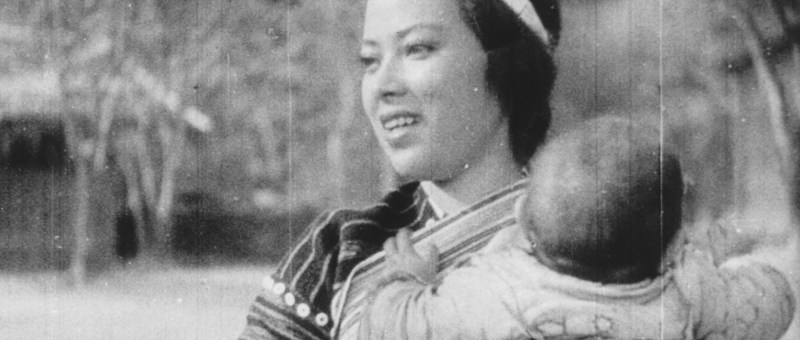
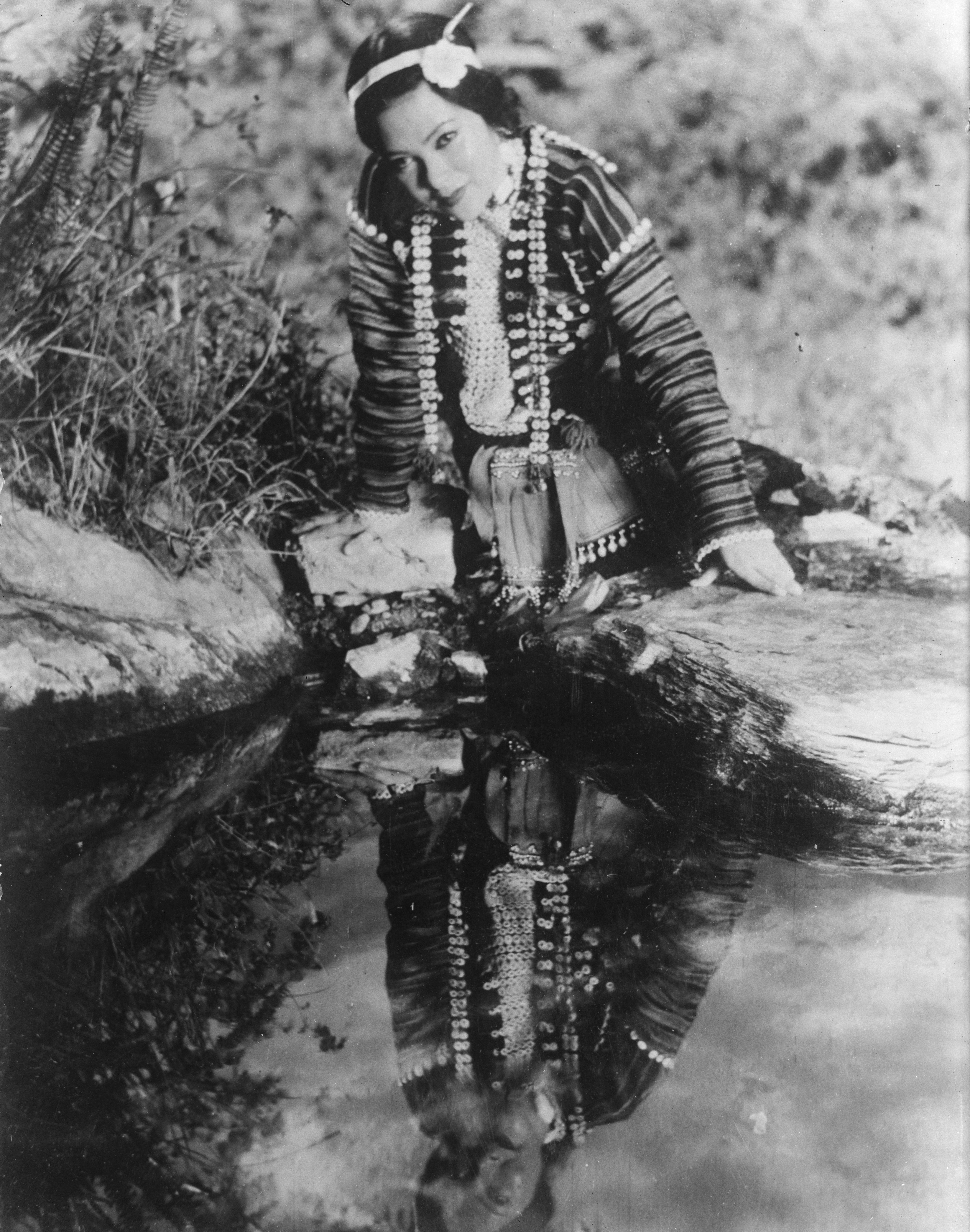
Inspired by a real life incident that also inspired a popular song of an indigenous woman who drowned in a river while carrying the belongings of a Japanese policeman, the film uses the titular Sayon as an arbiter of Japaneseness enhanced by the casting of Li Koran, later known as Shirley Yamaguchi/Yamaguchi Yoshiko, who was actually Japanese but presented as Chinese in the propaganda cinema of the time having been born in Machuria and fluent in Mandarin. Somewhat awkwardly given that Sayon is supposed to be an indigenous woman herself, she is the one schooling the local children in how to be Japanese reminding them that they should “use Japanese properly” rather than their indigenous language and praising one young boy for abandoning his indigenous name and adopting that of “Taro” instead. Japanese rule in Taiwan was not as oppressive as it was in the other parts of the empire and they did have some local support thanks to their investments in infrastructure and modernisation. Nevertheless, they did attempt to enforce the use of the Japanese language and the taking of Japanese names though it should also be noted that the KMT government did exactly the same thing only with Mandarin when it gained control of the island. 

That aside the indigenous people were often treated poorly in comparison to the rest of the of the population and we can see that the framing of them is often racist and derogatory such as when an abandoned baby is taken to the police and they remark that the indigenous community have too many children and they all look alike. The eligible men from the village, including Sayon’s love interest Saburo (Hatsu Shimazaki), have been sent to Japan for a kind of militarist re-education and are eagerly awaiting their opportunity to serve the emperor in the army. Though this may seem surprising, it apparently reflects a real fervour among indigenous men who were convinced to enlist by the money on offer and a campaign of rumours that suggested men who did not do so were unmanly and therefore unattractive to the local women. When the first round of volunteers is selected, a great amount of time is given to consoling the men who were not chosen many of whom protest and plead to volunteer their services. 

In an effort to inject some drama the film includes a love triangle between Sayon, Saburo, and Mona (Kenzo Nakagawa) who is said to be moody out of jealousy and unrequited love for Sayon but later reveals he was only jealous of Saburo in respect of playing second fiddle to him as a worthy man of the village again eager to serve the Japanese emperor. Led by Li Koran, there are several renditions of a patriotic war song singing the praises of the Taiwanese army that read that like a call to arms, though the audience for this film is certainly domestic and it seems unlikely that it would be screened in these mountain villages in Taiwan.

The first part of the film is basically ethnography featuring picturesque scenes of the local scenery and footage of the indigenous people living the “simple, peaceful life” patronisingly described in the opening titles while there is some exoticisation of the aboriginal culture in the elaborate costumes and scenes of indigenous rituals. Perhaps the most shocking aspect is that Sayon is encouraged to break a traditional taboo by entering a sacred lake where women are forbidden to go lest they anger the god Uttofu. With her new cultural re-education, Sayon thinks Uttofu is a myth and goes to the lake to help Saburo assess it because the Japanese are planning to drain it to create a rice paddy. For this she is expected to drown herself in the water to placate Uttofu and is urged to do so by the tribal elders with the Japanese basically agreeing with them deciding that they should catch an animal to sacrifice and if that doesn’t work, while it’s “unfortunate”, Sayon should indeed hurl herself into the lake if the for the good of the empire rather than Uttofu. 

It is quite odd to think that the Japanese military personnel would go along with human sacrifice rather than clamp down on a practice they would otherwise term backward, though in that light it’s impossible not to see her later death by drowning as a rejection of the “modernity” the colonial authorities represent and a re-assertion of indigenous culture. The bell referenced in the title refers to one given to the village to commemorate the incident bearing an inscription of Sayon’s name. When the KMT gained control of Taiwan, they erased the inscription on the bell and removed it as a symbol of Japanese rule though it was later restored after the end of martial law and the monument re-erected beside the bridge which was also named “Sayon’s Bridge” in a evocation of the complicated relationships between the three nations. The film is however rather uncomplicated in its themes which to modern eyes prove extremely unpalatable despite the often beautiful cinematography capturing the idyllic Taiwanese countryside.


Sayon’s Bell screens at the Museum of the Moving Image May 11 as part of Hiroshi Shimizu Part I: The Shochiku Years.

365 Nights (三百六十五夜, Kon Ichikawa, 1948)

For his second film at Shintoho, Kon Ichikawa had wanted to adapt a story by Ryunosuke Akutagawa that later inspired Rashomon, but was handed a standard melodrama to direct first. Ichikawa apparently did not think much of the novel the film was to be based on nor the script by Kennosuke Tateoka which he subsequently brushed up with the help of his new wife Natto Wada, and it’s not difficult to see why he might have felt he had an uphill battle. Melodrama is after all a genre that is founded on coincidence, though 365 Nights (三百六十五夜, Sambyaku-rokujugo ya) quickly strains credulity with the sheer number of unlikely events and surprise reappearances along with its rather strange take on the contemporary post-war society which is undoubtedly influenced by the demands of the Occupation censorship regime. 

Indeed, the setting itself seems reminiscent of 1930s cinema following the dashing hero Koroku, played by the equally dashing Ken Uehara, an architect who has walked away from his privileged upbringing as the son of a successful construction magnate. His problem is that he’s being aggressively courted by the haughty Ranko (Hideko Takamine), also the daughter of a successful but shady businessman, who to modern eyes is basically stalking him. Grinning with an evil glint in her eye, she tells her minion Tsugawa (Yuji Hori) that she’ll have seduced Koroku within 365 days which by melodrama standards seems to give her quite a lot of leeway.

Clueing us up to her villainy, Ranko is always seen wearing incredibly stylish Western outfits but otherwise behaves in a transgressively masculine fashion ordering her male employees about while set on the sexual conquest of Koroku who despises her for everything she is. It’s difficult not to see an inherent criticism of the new post-war woman and an anxiety regarding the power that comes with wealth being wielded by someone who is not a man. The contrast between Ranko and traditional femininity is rammed home by the fact that Teruko (Hisako Yamane), the daughter of the landlady in the house where Koroku finds new lodging after moving home to escape Ranko, is always dressed in kimono and otherwise naive and innocent. 

This positions Ranko, and her minion Tsugawa who is also in love with her, as the villains who are rebelling against the kind of earnestness expressed by Koroku and Teruko. From more humble origins, Tsugawa is deeply resentful of Kokoku’s class privilege and feels that he looks down on him which is one reason he seeks revenge by destroying his life along with his sexual jealously that Ranko pays him no attention yet is fixated on Kokoku perhaps precisely because he is entirely uninterested in her though it remains mystery why you’d want to be married to someone who strongly dislikes you. 

Yet for all his own earnestness, Koroku is almost betrayed by the capitalist father of whom he also seems to disapprove when he asks him to consent to an arranged marriage with Ranko to save his business. Meanwhile, it also transpires that Teruko’s father has been absent from her life because he two has a criminal past further tainting the legacy each of them bear. Ichikawa stages each evolution of their relationship at the same, noirish street corner that seems to exist as a kind of border between the illicit underworld that seeps out from Tsugawa’s bar into the post-war society, and the geniality represented by Teruko’s otherwise nice, middle-class home. 

It’s the this transgressive quality, of being caught between these two worlds, that starts to eat away at Koroku leaving him a broken and shabby man little better than a tramp. In a break with melodrama norms, though he is aware that he has led Teruko into Tsugawa’s trap he comes to believe that she has betrayed him while she clings fiercely to her love and in the end attempts to sacrifice it basically giving Koroku to Ranko whom she believes can better care for him in his now corrupted state. Though events become grim with a wedding that is staged like a funeral and takes place at a death bed, there is also the sense that something must come right that seems a little incongruous and perhaps a concession to the censors board as may be the coda implying that Ranko, despite having undergone a kind of redemption, will also have to pay for all her dodgy dealings. Though clearly hampered by the material, Ichikawa crafts some stunning images such as the final scene at Tsugawa’s bar along with a surprisingly energetic action sequence during which Koroku fights off burglars at Teruko’s home and wins her heart with his manliness. In any case despite the hints at redemption the implication remains that this is a world dark at its core in which not even the earnest can escape its creeping corruption. 


Three Women of the North (北の三人, Kiyoshi Saeki, 1945)

Film was the primary medium for propaganda and Japan had been pumping out increasingly patriotic fare under the National Policy programme since the late 1930s but what’s interesting about those which appeared towards the war’s end is that they do not try to sugarcoat the situation or pretend that the conflict is going well, rather they use the encroaching sense of desperation as an additional motivator to get all hands on deck. Released on Aug. 5, 1945, Three Women of the North (北の三人, Kita no Sannin) was the last propaganda film to be produced and the only film currently screening when the war ended on Aug. 15. Of course, after that it was swiftly withdrawn by the Occupation forces never to be seen again except perhaps as a historical document. 

Like The Most Beautiful, the film skews accidentally feminist in its focus on three female radio operators who seem to be regarded as something of pioneers in the field. After encountering technical issues, a plane with a top secret mission is guided into an airfield in Aomori by nothing more than the voice of radio operator Sumiko (Setsuko Hara) yet on landing the pilot expresses surprise apparently stunned that a young woman would be able to perform such a stellar job. The sexist attitudes seem almost set up so they can be shot down, the pilot is quickly corrected by the ground control chief (Takashi Shimura) who explains “nowadays women can become excellent radio operators.”

Of course, this is born of necessity seeing as at this late stage there is a huge untapped resource of young and widowed middle-aged women previously discouraged from getting directly involved with the war effort. In earlier propaganda films, the most important thing a woman could do was get married and particularly to a young man who was going to the war, but this time a conflict develops between two of the women, Yoshie (Hideko Takamine) and Sumiko, because Sumiko declined to marry Yoshie’s brother Kazuo before he left because she too wanted to do her bit for the war effort and would not have been able to do so as a married woman. On learning from Yoshie that Kazuo has been killed after volunteering to lead a suicide mission, she breaks down in tears and cries that she should have married him but Yoshie, who has forgiven her on learning of her patriotic reasoning, tells her that she has done the right thing and her brother would be proud of her for serving her country. 

Meanwhile, at another airfield even deeper into the frozen north their friend Akiko (Hisako Yamane) has a developed a fondness for a research scientist but their romance is of course frustrated by the war. In a moment of fraught emotion, he tells her that he will be returning after delivering his findings and she should wait for him there which is almost to say that they will be granted their romantic resolution once the war is over. The curious thing is that Hara (Shin Saburi) is a weather scientist whose cloud forecasts have apparently been very useful to the pilots. A slightly strange diversion sees the film try to argue that at this point the greatest threat to the Japanese war effort is the weather, which aside from sounding like a very British excuse makes very little sense even if it is obviously a factor in mission success. 

The radio operators obviously can’t do much about the weather, but they can pull together with plucky spirit dedicating themselves to the national good and giving all to the war effort. While Sumiko and Yoshie are having their emotional confrontation they’re interrupted by a trio of young women who were supposed to be getting a radio demonstration from Sumiko but they’ve come to say they can’t make it because one of the other girl’s mothers has been taken ill so they’re walking up the snowy mountain to the observatory in the middle of the night to send her back and take over her shift. When the radio operator on the special flight is taken down by pneumonia (the weather, again), Yoshie volunteers insisting that she’s prepared if the worst should happen but on landing remarks that she couldn’t have got through it without Sumiko and Akiko on the other end of the line resting their success on female solidarity. Though it’s clear the film was made on a shoe string it does feature special effects by none other than Eiji Tsuburaya along with some well conceived action sequences that lend an uncomfortably thrilling note to this extremely late entry into the realms of propaganda filmmaking.