Rainbow Hill (虹立つ丘, Toshio Otani, 1938)

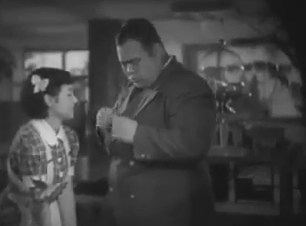
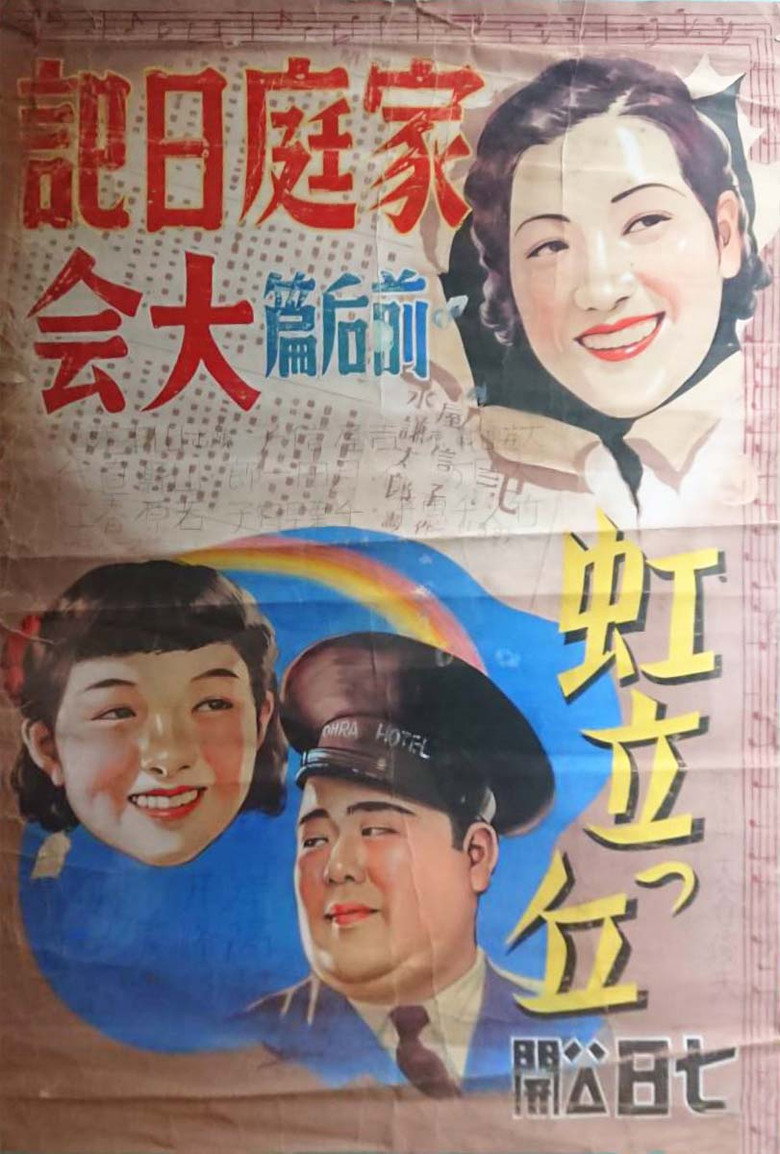
The cheerful life of a brother and sister in Hakone is disrupted by an unexpected revelation in Toshio Otani’s heartwarming drama, Rainbow Hill (虹立つ丘, Niji Tatsu Oka). In some ways, displaying an affluent quality of life perhaps unrealistic for the Japan of the late 30s, the theme is really family is and the importance of blood relations as one family is broken so another can be restored in a moment of healing and reconciliation with the traumatic past.

Shot predominantly on location at the luxury Gora Hotel in Hakone, the film revolves around a young girl, Yuri (Hideko Takamine), who works in the hotel’s shop while her bother Yatahachi (Akira Kishii) is also works at the hotel as a porter. The pair are incredibly close and would do anything for each other, though Yatahachi is also forced to conduct a romance somewhat clandestinely. He generally waits for Yuri to go to sleep before meeting his girlfriend, Fuji (Chizuko Kanda), who works in a local amusement centre. Yuri, however, is getting older and doesn’t always want to go to sleep early, which is the first note of discordance in their relationship in implying that Yatahachi’s childcare responsibilities stand in the way of marriage. Fuji, however, is also very fond of Yuri and sometimes looks after her when Yatahachi is not able to. 

The second note of discordance is when Yatahachi is dismissed from the hotel for having deserted his post after hearing that Yuri has fallen off a cliff and running off to save her. Though this is quite a valid reason for abruptly leaving work without permission, Yatahachi does not explain to his boss but only accepts his fate stocially while accepting that it was wrong of him to leave and that his actions caused the hotel reputational harm. Important guests were due from Manchuria and were apparently forced to carry their own bags. 

Another hotel guest who has become friendly with Yuri, Mrs Hayakawa (Sachiko Murase), who is staying at the hotel to recover from an illness, complains to the manager and gets Yatahachi reinstated with a promotion. Frequent guests the Hayakawas have some clout at the hotel, as perhaps do their friends the Mizutanis whose bag Yatahachi ends up tearing when asked to open it after the little boy loses his key. The film doesn’t really draw much of a contrast between the worlds of the people who stay in this luxury hotel and those who work in it, save that Yuri is full of tales of Mrs Hayakawa’s Western-style Tokyo home where she apparently has two dogs the size of Yatahachi. The pair, by contrast, live in quite a nice, if humble, traditional home and appear to have a good standard of life. 

Yuri is, however, somewhat drawn to Mrs Hayakawa who seems to fulfil the missing maternal role in her life by giving her gifts and taking her on outings. It’s not until Mrs Hayakawa visits her home and sees a familiar doll that she begins to suspect she could be the daughter from whom she was separated during the Great Kanto earthquake of 1923. The question then becomes whether it is right to disclose Yuri’s true identity and take her away from the brother with whom she has been so close. In another sign of his goodness, Yatahachi presumably found Yuri amid the chaos. Lacking any means of identifying her and believing that her parents were likely dead, he raised her himself as his sister. Though sensitive to the situation, the Hayakawas want her back. With them Yuri would have more opportunities and a better quality of life as a wealthy young woman in the capital, but it would also break Yuri and Yatahachi’s hearts. That Yuri agrees to go with them while Yatahachi accepts he must let her go to her biological parents hints at the importance of bloodlines and the necessity of familial restoration that acts as a means of laying the traumatic event of the earthquake to rest. Mrs Hayakawa’s malady is cured on having found her missing daughter, though she still vows to return to the hotel in the spring so Yuri and Yatahachi can be reunited. This also paves the way for a marriage between Fuji and Yatahachi as the pair look forward to welcoming Yuri’s return together.

An early leading role for Takamine, the film also features cameos from a series of other Toho stars as the hikers who rescue Yuri after she falls off the cliff, while Akira Kishii performs a few songs including a Japanese version of Home on the Range enhancing the film’s international feeling. It is perhaps unexpectedly breezy for the time period and basks in the lives of the super rich at a time when others are struggling to get by, but nevertheless offers a bittersweet and heartwarming tale of familial reconciliation and renewed hope for the future.

Wedding Day (嫁ぐ日まで, Yasujiro Shimazu, 1940)

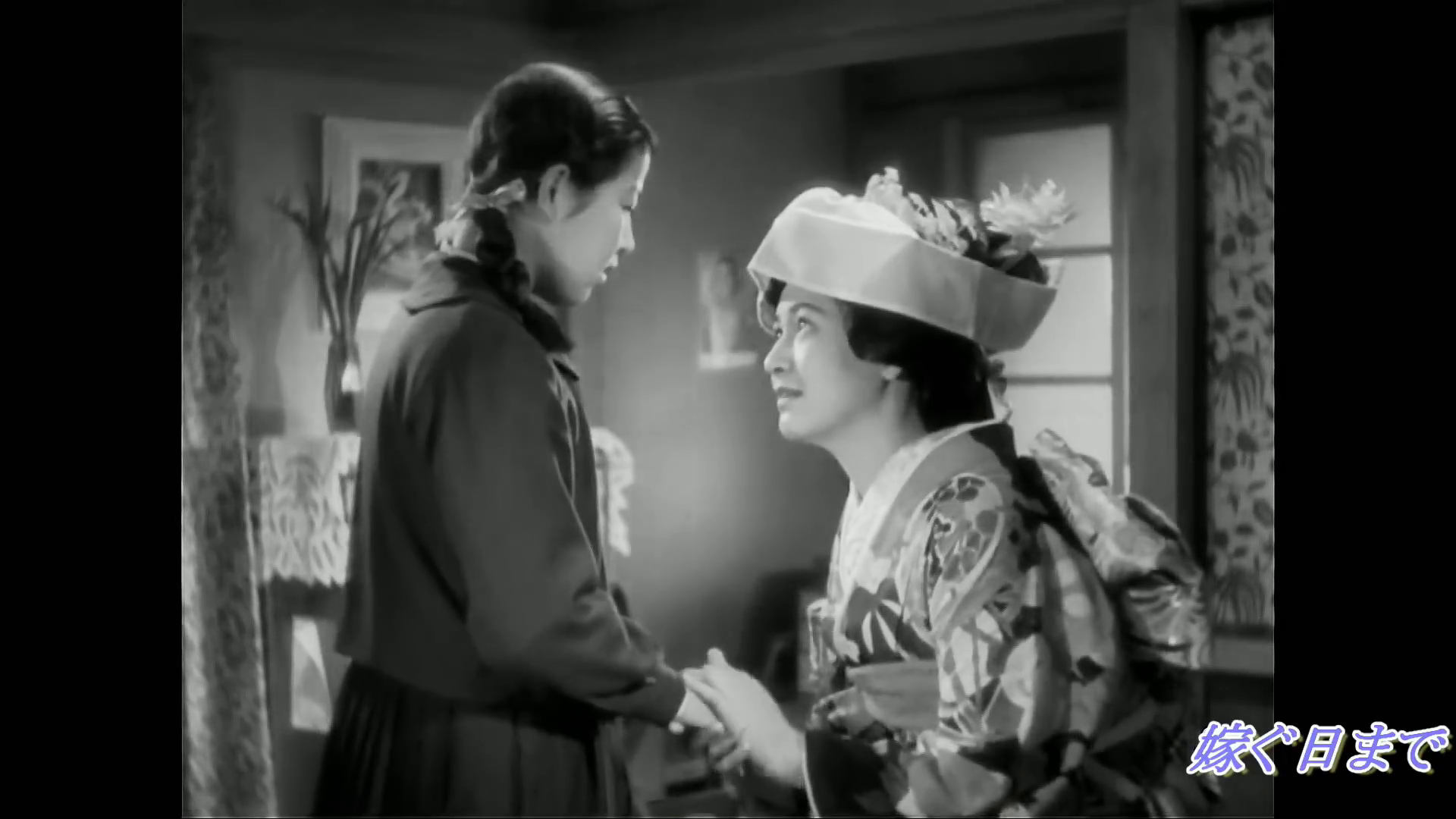
There are two weddings that occur during Yasujiro Shimazu’s Wedding Day (嫁ぐ日まで, Totsugu Hi Made), though we only really see one of them. The earlier part of the film seems to be leading up to the arrival of the widowed father’s second wife as the two daughters find themselves torn in their attachment to their late mother, but as we later discover, this first marriage is only intended to facilitate the second in “freeing” 20-year-old Yoshiko (Setsuko Hara) so that she too may marry.

Then again, perhaps “freeing” is the wrong word, seeing as Yoshiko is given very little choice in anything at all. It’s clear in the opening scenes that Yoshiko has taken over as the lady of the house, looking after the domestic space and raising her younger sister Asako (Yoko Yaguchi) who is still in school. But her mother’s absence is still keenly felt in Yoshiko’s quickening steps to return home after shopping. She’s left the front porch unlocked in anticipation of Asako’s arrival home from school and is anxious that she’ll be put out if she can’t get into the main house, though they could obviously have just given her a key. True to form, Asako has arrived early and come out looking for Yoshiko rather than having to sit and wait. The implication is that there is a domestic need that’s not being met because the house is understaffed and Yoshiko is taking on too much.

This is doubtless why the father, Mr Ubukata (Ko Mihashi), is being pressured into an arranged second marriage, though he doesn’t really seem all that keen and both he and the go-betweens are clear that it’s going to be a “marriage of convenience”. Tsuneko (Sadako Sawamura), a school teacher, seems to be a woman who’s resisted getting married so far and has aged out of the arranged marriage market, which is why she’s only being considered as a second wife to a widower with children. Nevertheless, she’s being taken on mostly to shoulder the domestic burden so that Yoshiko would be free to get married without worrying about leaving her father and sister alone with no one to look after them.

In fact, all of Yoshiko’s actions are dictated by filial piety and duty to the family, which is presumably how the film gets around an increasing desire for more patriotic content in the early 1940s. Asako’s attachment to her late mother is positioned as a barrier to the functioning of this system of social organisation in which feeling is almost secondary. Even if Mr Ubukata insists that it’s important not to forget human feelings and affection while being honest that he wants a wife to do his domestic chores, the point is that the nation is a collection of familial units led by a patriarchal figure to which all must be obedient. Once Yoshiko gets married, she writes to Asako and tells her that she should be nice to their step-mother because she’ll be the one looking after their father in the end once Asako too has married and that’s what will make their father happiest.

As such, Yoshiko’s own wedding arrives almost without warning. She does not marry the young man who’s been interested in her for the entirety of the film, but someone her father chooses, evidently a diplomat, with the help of the same go-betweens who can be seen in the back of the wedding car. The film, in part, seems to be a promotional tool for the song Totsugu Hi Made by Hideko Hirai which plays in a record towards the end where Asako has taken refuge after being scolded by her father by refusing to let go of her late mother’s memory. The lyrics express the mixed feelings of a bride who is giving all her girlish things to a younger sister as she transitions from daughter wife and is breaking from her original family in order to create a new one. Though the film views this as the proper order of things, it is sympathetic to Asako who is being left behind having lost first her mother and then her sister who had become a kind of mother to her.

Everyone has their role to play, and Asako’s is still that of a child as symbolised by her long pigtails. For her part, Tsuneko also does her best to fit into the household and is considerate of both daughters whom she treats kindly and with great sensitivity. Though Yoshiko and Mr Ubukata are keen to erase the memory of the late mother from the house in deference to Tsuneko, when she discovers the photograph Asako had misplaced she gives it back to her and tells her to hang on to it. She also does some of the less pleasant domestic tasks such as scrubbing the floors even if Mr Ubukata tells her to have one of the girls do it instead. But she’s also a part of this system and is fulfilling her role by doing her best to facilitate Yoshiko’s marriage. As she says, a bride should have delicate fingers. A mother, by contrast, those roughed by long years of loving domestic service. 

Without her presence, Yoshiko was in danger of ageing before her time. We can see subtle references to the straitened economic circumstances of the wartime era in the talk of the rising costs of vegetables, their late mother’s lessons in thriftiness, and perhaps how the family’s own circumstances have changed as their aunt enquires about their lack of a maid with Yoshiko avowing that they don’t really need one because she can manage on her own. A radio broadcast airs a recruitment ad for welders offering good salaries, hinting perhaps that more hands are needed for the war effort. But in other ways, life continues. Asako’s friends talk about seeing the 1938 French film Prison Without Bars which perhaps reflects Asako’s rebelliousness or the constraining nature of her of her home and life under entrenched patriarchy. Then again, the film very clearly thinks that’s as it should be in encouraging young women to believe that their duty lies in marriage and in obeying husbands and fathers with barely a recognition of their own hopes or desires.