The System (行規, Peter Yung Wai-Chuen, 1979)

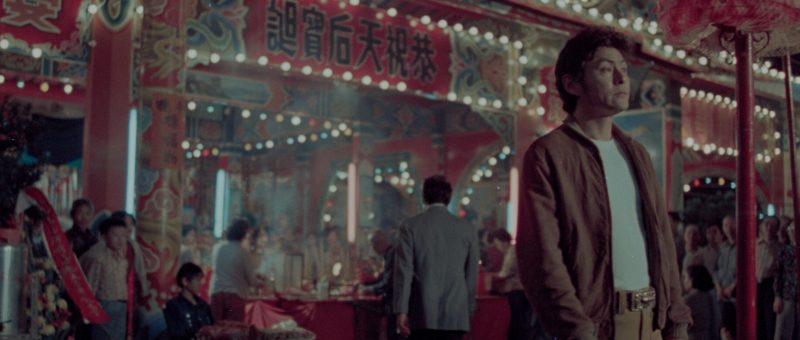
“How else can people like me survive?” a unwilling informant ironically asks in Peter Yung Wai-Chuen’s New Wave cops and robbers thriller The System (行規), while Inspector Chan (Pai Ying) is already far too aware of the ironic symbiosis of law enforcement and crime. He’s dependent on informants to be able to do his job and catch the kingpins, but that means the informants continue to perpetuate crime. Even when they manage to make an arrest, they have to let the suspect go because it turns out that they’re already cooperating with another officer. The police aren’t so much solving crimes as, at best, managing, if not actually enabling them.

Director Peter Yung drew on research he’d done for a documentary to depict police work and the realities of drugs in late British Colonial Hong Kong in a more authentic way, often using held camera and shooting on location out in the streets. Chan is seen as something of a zealot, an idealistic cop too pure-hearted to understand his colleagues’ dirty jokes and with a penchant for retreating to Lantau Island to go bird-watching, even if his address to his officers is a little on the crude side. Nevertheless, even if he hates police corruption, he’s not above playing this game and is keen to recruit exclusive informants of his own, essentially by blackmailing them, finding evidence of crimes they’ve committed and promising to overlook it if they agree to feed him information. 

That’s how he recruits Tam (Sek Kin), a drug user with a gambling problem working for a syndicate run by Hung (Nick Lam Wai-Kei), the kingpin Chan has been trying to catch for a decade. But at the same time, Tam appears to keep his life of crime separate from that as a family man with two children and an ailing mother. He doesn’t really want to help Chan because he fears retribution from Hung, but he doesn’t want to go to prison for 36 years and leave his family destitute, either. Tam may be carrying on with underworld figure Third Auntie (Lisa Chiao Chiao) who runs the domino parlour which acts as a hub for the gang, but he’s not necessarily bad or dangerous, just someone trying to live under this oppressive system.

For those reasons, the relationship between the two men is tense and fraught with danger and resentment. The first operation ends up going wrong when Customs interferes, arresting Third Auntie which is a huge problem for Tam as is the fact they seized the drugs, which is a problem for Hung. But even Hung knows how this game works. He knows Tam betrayed him by working with the police, but he doesn’t necessarily blame him. He just asks for the money he assumes the police paid him in exchange for the lost drugs, and also has Tam beaten up for good measure. The beating in particular causes Tam to resent Chan and plot revenge by framing him as corrupt. That doesn’t go to plan either, but even though Tam constantly betrays him, Chan remains loyal and defends Tam to his increasingly irate bosses in the hope he’ll finally lead them to Hung.

It’s this aspect of police corruption that really hangs over the film. Even Customs take a position of the drugs they seize for themselves, which is how Chan is able to convince them to release Third Auntie. The operation is nearly derailed by a corrupt cop who frequents Third Auntie’s domino parlour, trying to bet with his gun when he runs out of money and then following her to demand a payoff for not reporting the drugs. Chan makes reference to the fact that the drug dealers think nothing of paying off police because the profits they can make selling drugs in Hong Kong are so vast, but, thankfully, it doesn’t happen so much any more because of the institution of ICAC. ICAC is held up as a kind of threat even if Chan suggests that it’s already cleaned up the police force and ushered in a new culture of earnest policing, though even he says that it’s caused a drop in morale that might be improved if they can catch a big fish like Hung.

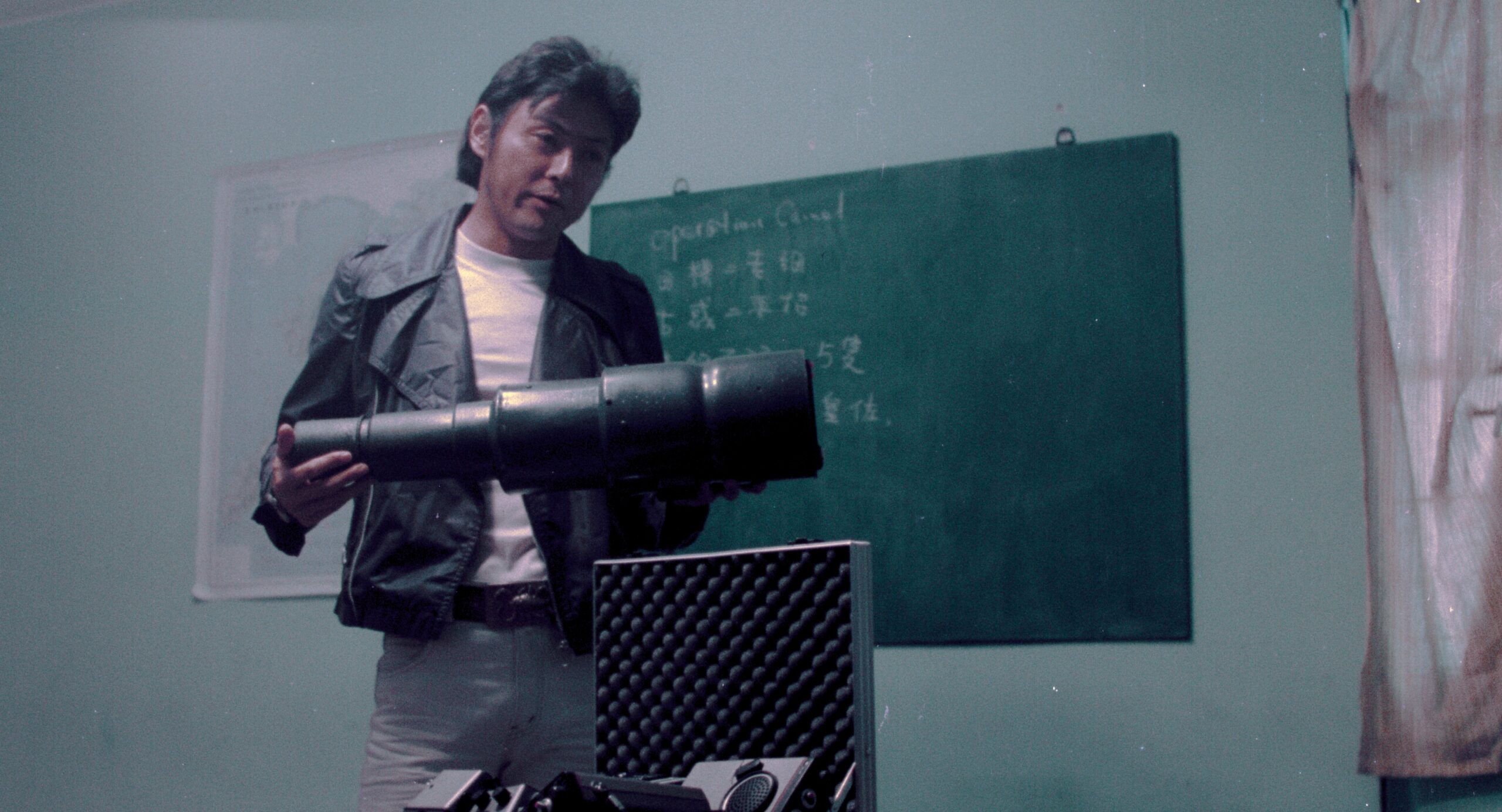
Chan’s bosses are British, while he later ends up working with an American DEA officer who gives them even more new technology like radio mics, though Chan was already keen to show off their modern policing methods, which include things like hidden cameras, secret recordings, and a massive telephoto lens. “We’re just using each other,” the corrupt cop says when his partner asks him if he’s not pushing his luck by going back to ask Third Auntie for more money after noticing how big her haul is knowing that she can’t really do anything about it without exposing herself. In the end, they are all trapped by this ridiculous system of symbiotic crime that leads only to destruction.


The System screens as part of this year’s San Diego Asian Film Festival.

Dirty Ho (爛頭何, Lau Kar-leung, 1979)

A prince in hiding develops a fondness for a bumbling jewel thief in Lau Kar-leung’s anarchic kung fu comedy, Dirty Ho (爛頭何). The English title is apparently intended as a Dirty Harry reference, though the film obviously has nothing at all to do with the Don Siegel procedural, the Chinese meaning something like “rotten head Ho”, and is in effect a homoerotic buddy movie as the various power balances begin to shift between the two men until they come to function in perfect synchronicity almost in fact as one.

The film opens, however, with a dispute over courtesans and a game of one-upmanship between prince in disguise Wang (Gordon Liu) and cocky jewel thief Ho (Wong Yue). The pair promise ever greater sums of riches in return for female company, eventually ending up in a fight interrupted when the police are called about some stolen treasure. However, at the last second, Wang says both the treasure chests are his and that he is a legitimate jewel seller from Beijing. He saves Ho from arrest, but also takes the stolen treasure chest with him, ensuring Ho will later return to take it back.

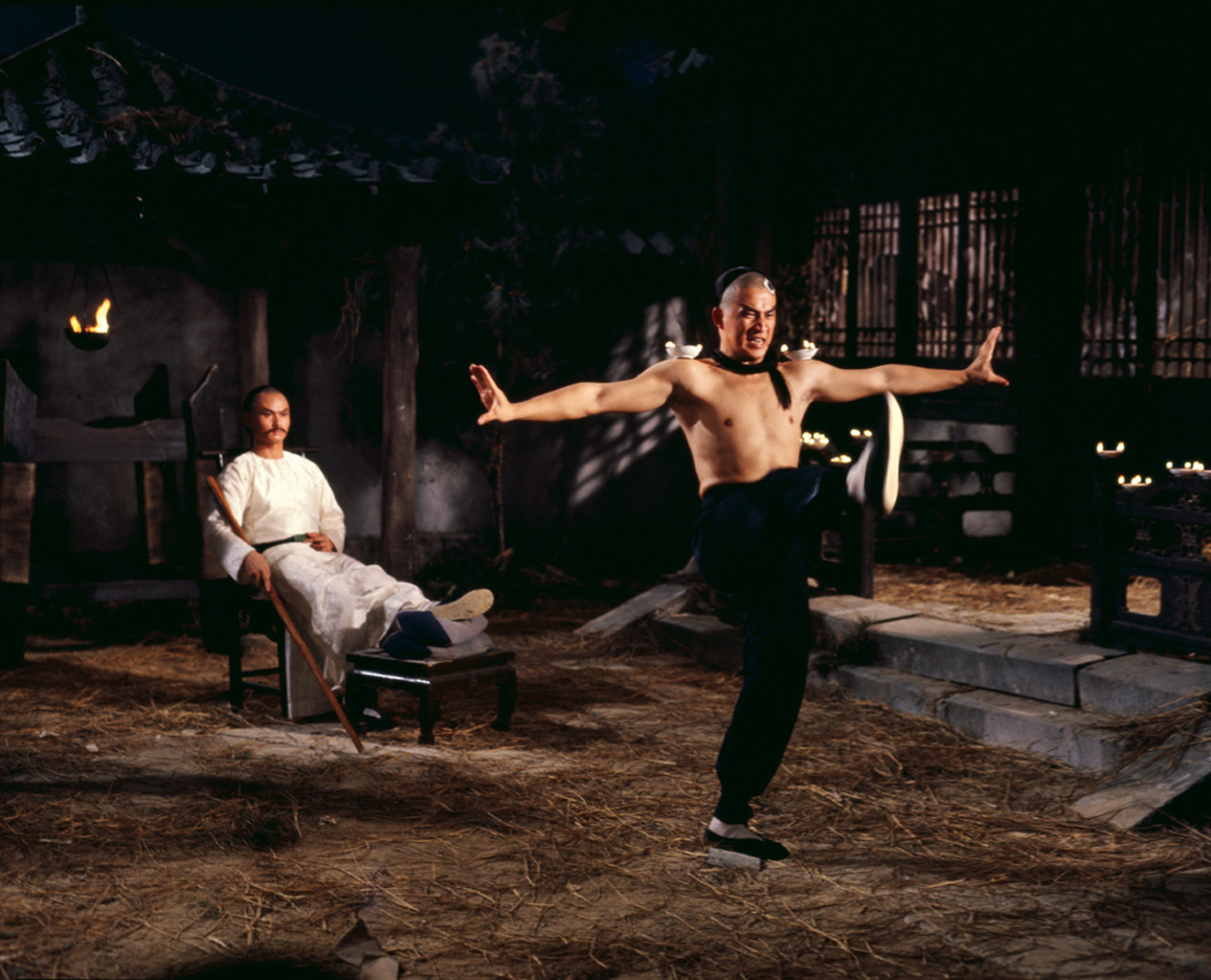
Why Wang takes a liking to him isn’t really clear, but even in his clumsy martial arts skills he seems to see something that could be polished if only he could turn him into an upright citizen. He does this partly by means of trickery, injuring Ho on the head with a poisoned sword and then promising him the antidote but only if he agrees to become his disciple and do exactly as he says. For the rest of the film, Ho wears a large black plaster on his head that slowly decreases in size as he begins to reform under Wang’s tutelage. But the power dynamic between them later shifts when Wang is injured and has to use a wheelchair with Ho now dependent on him for care and protection. 

What emerges between them is strangely like a marriage while the two of them are later accosted by the “Seven Agonies” led by a very effeminate man who also causes Ho to take on a camp persona until actively rejecting it. No one is really quite as they seem, Wang actually a prince in disguise hiding out from his 13 brothers, and in particular the fourth one, who really want him dead so they can inherit the kingdom. In true martial arts fashion, Wang isn’t interested in the throne, fame, or fortune, but rather than a commitment to resisting oppression simply wants to be free to enjoy the finer things in life like art, antiques, and strong liquor. 

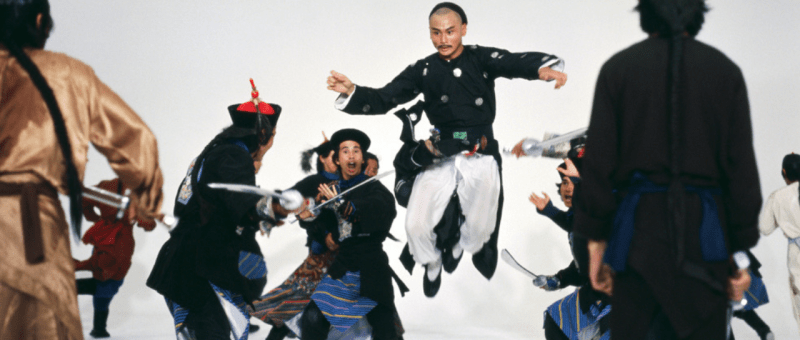
Meanwhile, the two are also attacked by a gang of bandits faking disabilities and Wang at one point tries to pass off one of the concubines as his bodyguard to conceal the extent of his martial arts skills. Reuniting with Gordon Liu after 36th Chamber of Shaolin, Lau’s choreography has a playful, slapstick sensibility such as in the ongoing duel of swapped tankards with one of the assassins. The hand movements are fast and precise, a maze and flurry of moment culminating in the final showdown with Lo Lieh’s enemy general in which the two men are so perfectly in tune that they move almost as one. 

Lau stages an increasingly surreal sequence of events, including the pair sheltering under umbrellas in the middle of a dilapidated town while targeted by assassins hired by Wang’s brother, but ends in curiously ambiguous fashion with the matter of the court unresolved despite Wang’s desire to live freely as he chooses. Of course, a prince he is but Wang is also constrained by his social status in much the same way Ho is prevented from living his authentic life because of the obligations entailed with being a potential heir to the throne. Meanwhile, it seems the king is doddery and has unwittingly created a vacuum which has pit his 14 sons against each other, destabilising the society in the process. Not wanting the job actually makes Wang an ideal candidate though, he’d have to survive all the assassination attempts first. A riot of colour and witty humour, the film boats some of Lau’s most intricate choreography performed by two actors at the top of their game who are perfectly primed to bounce of each other in a humorous back and for between the shifting sands of master and pupil.


Golden Partners (黄金のパートナー, Kiyoshi Nishimura, 1979)

Kiyoshi Nishimura began his career in the action genre with a series of paranoid thrillers so it feels particularly odd to see him tackle similar themes in such a breezy, lighthearted way as 1979’s Golden Partners (黄金のパートナー, Ogon no Partner). Though based on a novel by Kyotaro Nishimura, the film seems to have been envisioned as an homage to Robert Enrico’s Les Aventuriers in following two men and a young woman on a quest to track down a missing person and also find a large amount of gold supposedly contained in a downed submarine. 

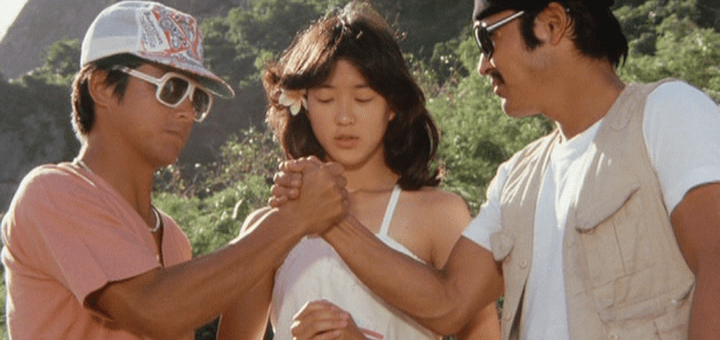
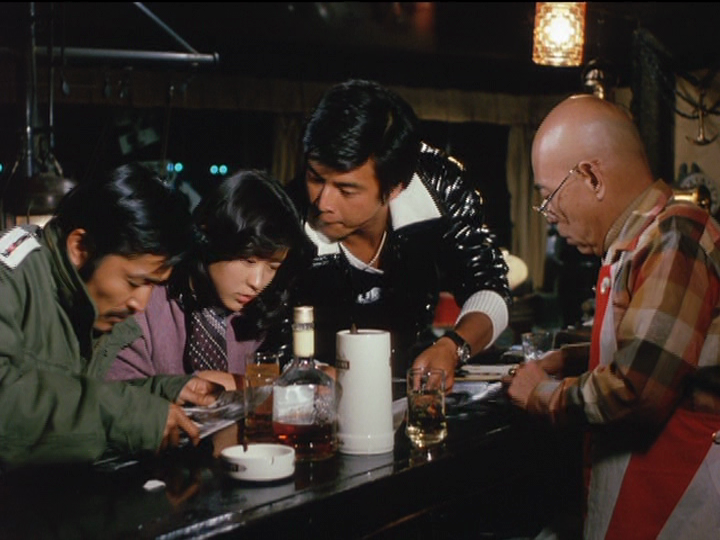
Kosuke (Tomokazu Miura) is a rather aimless young man who lives on a fishing boat and has a career as a freelance photographer taking photos of things people would rather weren’t photographed, while his best friend Shusaku (Tatsuya Fuji) is a motorcycle-riding policeman who has a strong sense of civic duty yet mostly spends his time giving out tickets to locals traveling slightly over the speed limit. They’re both good friends with the landlord at the Polestar bar whom they affectionately refer to as Pops (Taiji Tonoyama). Pops has let them run up a significant tab even though he doesn’t appear to have any other customers. In any case, their aimless days are interrupted when Kosuke begins hearing a strange SOS message but can’t seem to identify where it’s coming from to be able to help. Meanwhile, a young woman arrives looking for Pops and explains that her father, an old friend of his, has gone missing which may be connected to the mysterious stash of gold bars Pops is fond of talking about every time he has too much to drink. 

Figuring out that the SOS message is using a code employed by the Imperial Navy during the war, the trio embark on trying to solve the mystery partly to help the young woman, Yukibe (Misako Konno), and partly because they want to find the gold. Basically a buddy movie, the film has a childlike quality as it mainly follows the trio hanging out on the beach in Saipan solving puzzles and getting into minor arguments. Things take a slightly darker turn when Shusaku decides to stay on even after his paid leave from the police force ends despite realising it’s unlikely they’re going to find the gold bars or even figure out what’s happened to Yukibe’s father. Having realised that Yukibe likes Kosuke and despite his own feelings for her, he’s beginning to feel like a third wheel but in the end cannot bring himself to leave this unending holiday adventure.

But after making a shocking discovery, what they stumble on is a wartime conspiracy in which a corrupt spy killed the other men assigned to transport the gold and took it for himself. He then used it to become a rich and powerful man in post-war Japan, apparently suffering no consequences for his actions hinting at the essential corruption of the post-war society. Realising he likely can’t be prosecuted nor would justice really be served if he went to prison for a few years, they decide on blackmail as their way of recovering the gold little realising how far someone who has killed before will go to protect their secrets. Nevertheless, despite the conspiratorial overtones the atmosphere remains largely cartoonish rather than dark or threatening right up until another tragedy occurs and brings the whole thing to an end.

This laidback sensibility is aided by the soundtrack provided by Takao Kisugi who briefly appears at the end of the film as his city pop folk songs run constantly throughout. Nishimura’s use of a ghostly zero fighter as the gang investigate the former airbase on Saipan proves slightly uncomfortable though ties in with some ghostly imagery as an evocation of a past that’s apparently still very present and largely unresolved. In any case, like a classic children’s adventure story the film does not particularly engage with its larger themes but concentrates on the trio’s attempts to solve the mystery along with their zany plans and crazy stunts culminating in the guys parachuting out of a private plane after aiming it right at that of the bad guys in a moment of extreme irony. A little bit sad and more tragic than it perhaps ought to be, the film is nevertheless a warmhearted tale of male friendship, the childish glee of solving a mystery, and the satisfaction of getting one over on the bad guys even if it comes at a very high price.


Trailer (no subtitles)
The Inferno (地獄, Tatsumi Kumashiro, 1979)

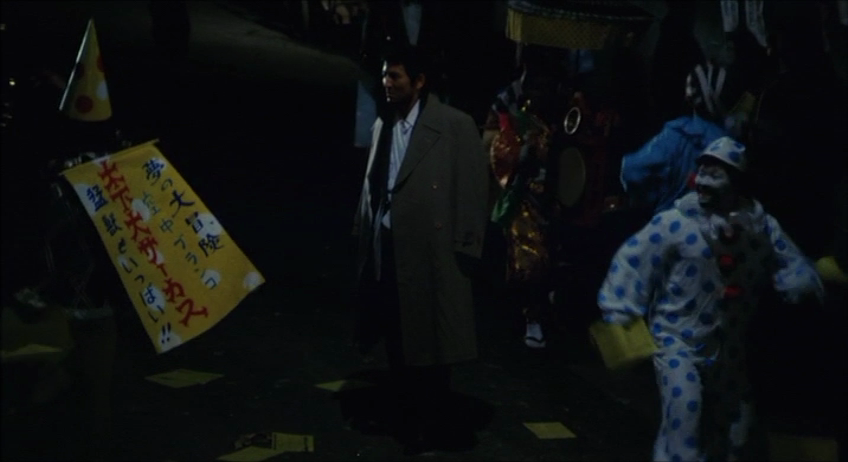
No one can escape from their sins according to the ominous voiceover that opens Tatsumi Kumashiro’s loose reimagining of Nobuo Nakagawa’s Jigoku, The Inferno (地獄, Jigoku). Then again, some of these “sins” seem worse than others, so why is it that a woman must bear a heavy burden for adulterous transgression while the man who killed her seemingly suffers far less? Perhaps hell, in this case, is born of conservative social attitudes more than anything else besides the darker elements of the human heart such as jealousy and romantic humiliation. 

Those negative emotions are however as old as time as reflected in the folk song which opens the film about a young couple, though not the young couple currently onscreen, who are eloping because their incestuous desire is not accepted by the world around them. The connection between the couple onscreen might also be deemed semi-incestuous for Ryuzo (Ken Nishida) has run off with the wife of his brother, Miho (Mieko Harada), who is carrying (what she claims to be) Ryuzo’s child. Unpei (Kunie Tanaka), the brother, finally catches up with them and shoots Ryuzo with a shot gun. Miho tries to escape, but her foot is caught in a bear trap and Unpei decides to leave here there to die, while Ryuzo’s jealous wife Shima (Kyoko Kishida) later does the same. The body is found by local hunters, and in a strange miracle the baby is born from Miho’s dead body while Miho is dragged to hell for her “sins” where she learns that her baby has been born in hell but remains above. Not knowing what to do, the locals give the baby, Aki, to Shima but she obviously doesn’t want it and so swaps it with a foundling thanks to a weird old man, Yamachi, coming to love this other child, Kumi, as a daughter. 

This is quite literally a tale of the sins of the parents being visited on the child, the 20-year old Aki (Mieko Harada) later lamenting that she has no identity of her own and is solely a vehicle for her mother’s revenge. Though she apparently ends up in the same rural town “by chance” knowing nothing of her past, she resembles her mother physically and discovers she has some of her talents such as an innate ability to play the shamisen. What she also has is a trance-like lust that bewitches the men around her, though this is in a sense complicated by the fact it does not seem to be of her own volition so much so as a manifestation of her mother’s curse. Thus she ends up sleeping with the vulgar younger brother of the man she actually likes, Suchio, who in truly ironic fashion is actually her half-brother. She describes herself as having her mother’s “tainted blood”, while Shima later adds in a degree of class and social snobbery revealing that Miho had been a geisha Unpei unwisely fell for and was unworthy even of being a maid in their upper-middle class household let alone the wife of the second son. 

For all of her resentment, Shima is otherwise a loving mother to her sons and even to Kumi whom she is able to accept as a daughter in a way she would never have accepted Aki who was after all an embodiment of her husband’s betrayal. Colder and more austere than Aki or Miho would seem to be, she clings to the mummified body of her husband kept in a secret vault as a secret triumph over her humiliation laughingly remarking that now he’s hers forever and will never cheat on her again. Even if she left Miho to die, Shima does not particularly resist her fate well aware that her son has fallen for his half-sister (which probably wouldn’t have happened if she hadn’t swapped babies) and merely hoping Aki can be convinced to leave town alone rather than plotting any more drastic action. 

But the inferno of hell envelopes them all, crying out for retribution as the cycles of repressed or inappropriate attractions repeat themselves. Kumi realises that her love for her brother, Suchio, is actually not inappropriate because they are not related after all but is then consumed by her own hell in realising that he does in fact love his biological half-sister but is uncertain if he accept damnation in order to pursue it. What she, Miho, and Aki are punished for is female sexual desire aside the arguably taboo qualities of its direction though in hell it seems men are punished for this too, or more accurately for giving in to it, in a way they often aren’t in the mortal realm. “They cut their own flesh and blood for the vision of a woman in the future,” the guide explains as the brothers and Unpei literally climb over each other reaching for an illusionary representation of Aki/Miho at the top of the tree. In the mortal world they do something similar, grappling with each other, mired in competitions of masculinity as mediated through sexual dominance, conquest, or humiliation. 

Yet Aki’s path to hell is also a confrontation with her femininity and her search for an identity as a woman by reuniting with the birth mother who died before she was born. Kumashiro’s visions of hell are terrifying and outlandish, a giant land in which the dead are thrown into a huge meat grinder they then have to push themselves. For the sin of eating meat, others are condemned to spend eternity eating human flesh. Miho has lost all sense of reason and is incapable of recognising her daughter seeing her only as another source of food but there is a kind of rebirth that takes place even if it’s only once again to be born in the underworld. Surreal and harrowing, Kumashiro’s eerie land of giant demons and shuffling corpses does indeed suggest that as the opening titles put it we all live our lives alongside hell.


Original trailer (no subtitles)

The Nineteen-Year-Old’s Map (十九歳の地図, Mitsuo Yanagimachi, 1979)

“What should I do with my life?”, the question becomes a frequent refrain in Mitsuo Yanagimachi’s dark tale of urban alienation, The Nineteen-year-old’s Map (十九歳の地図, Jukyusai no Chizu). Adapted from a novel by Kenji Nakagami which painted a bleak picture life on the margins of the economic miracle, the film’s quiet sense of unease hints at a coming explosion but also that there will never be one because in the end the hero is too filled with despair and ennui to ever follow through on the various threats he makes during a series of prank calls to people in the neighbourhood who’ve incurred his wrath.

The nineteen-year-old of the title, Yoshioka (Yuji Honma) is in theory a student taking a year out to study for university exams while earning his keep delivering papers for a newsagent where he lives in a dorm with several other paperboys all just as defeated and aimless as he is. They all, however, look down on and make fun of him for being a bit odd not least because he hangs around with a 30-year-old man who is still stuck living a like a teenager that the other guys think is creepy. Konno (Kanie Keizo) is creepy in a way, in that he’s an obvious image of what these boys might be in 10 years’ time if they do not manage to find something that will allow them to move forward, out of the slums and into a more fulfilling life. 

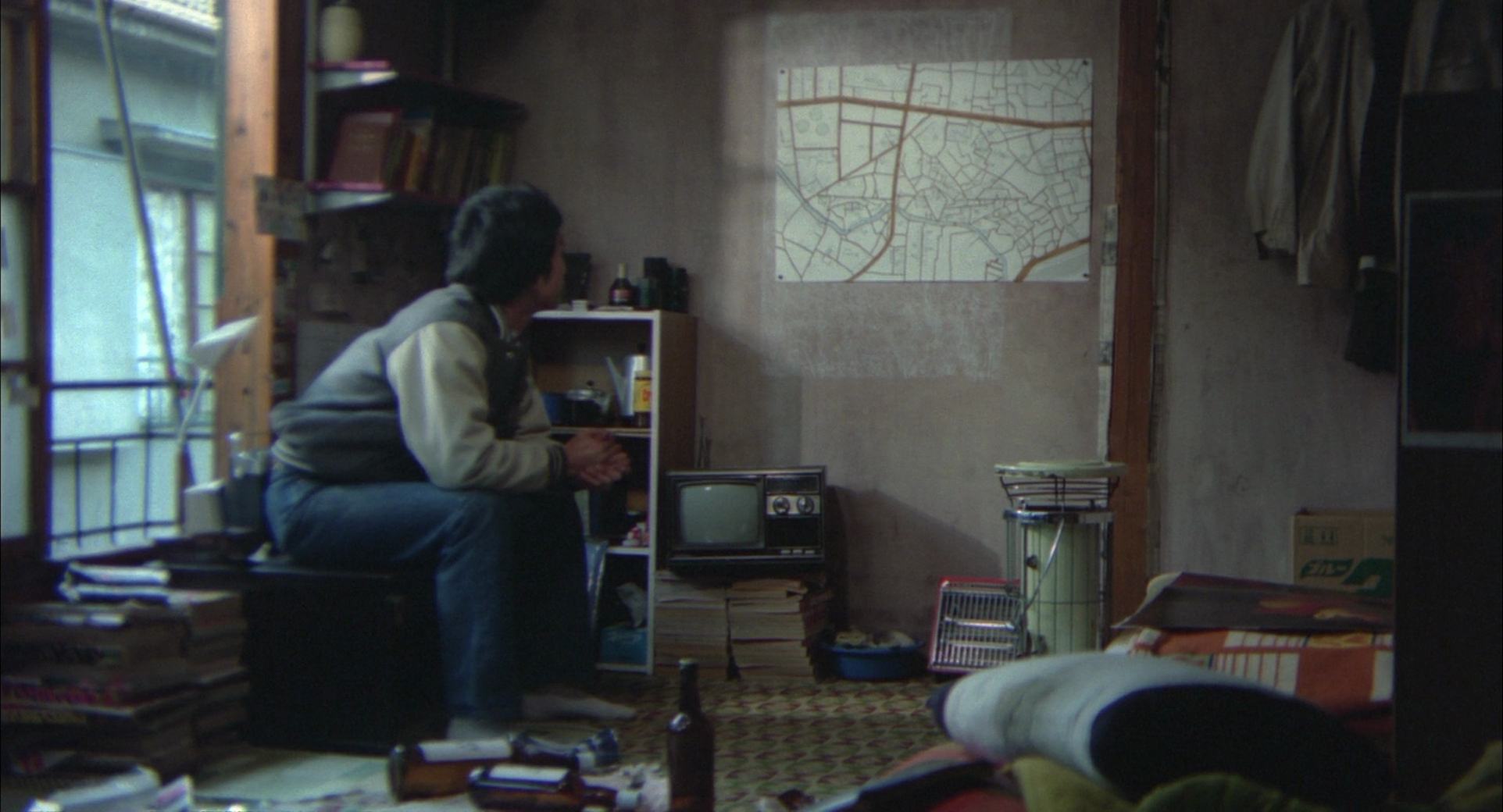
Yoshioka’s main outlet is making a map of the local area which he annotates with notes about the various people who live there, many of them on his paper round. If they do something to displease him or otherwise display something he regards as a moral failing he puts a large cross against their name, and when someone has three crosses he makes a harassing phone call threatening to burn down their house. It’s never quite clear whether his threats have any serious intent or if the threat itself is enough in allowing him to feel powerful and superior to world around him which he feels is rotten beyond repair. People often ask him where he’s from and he tells them but with slight hesitation, as if he’s not telling the entirety of the truth as perhaps confirmed by one woman’s attempt to probe his origins surprised that he doesn’t have any kind of rural accent while she’d never heard of the town he claimed to be from. 

One of the other boys at the newspaper office is an aspiring boxer, but he gets badly beaten in a fight and eventually leaves to join the Self Defence Forces. The meanest of them, Sato, has a sharp tongue but seemingly no more direction than Yoshioka finding his release through more direct forms of violence and hateful behaviour. Everyone around him is disappointed and filled with despair. Even the lady who runs the newsagent’s reflects on her unsatisfying life and the ruined hopes of her youth in which she dressed in fine kimonos and kept herself nice. Her only comfort is that she “saved a man deserted by his wife” even if she mainly treats him with contempt for his failure to repair the loose nail in the hallway she keeps catching her foot on, or fix the toilet which continually backs up and floods the bathroom. 

Yoshioka does seem to be followed around by leaky appliances while everywhere around him is dank and muddy. Konno has one ray of hope in his life in the form of a woman he calls Maria (Hideko Okiyama) who is covered in scars but still she survives. Maria is indeed a Madonna figure, a symbol of scarred purity and human suffering that Konno regards as a kind of salvation. Yet Konno’s attempt to reach her only leads to further ruin as he commits small but increasingly daring acts of crime from bag snatching to burglary to get the money to run away with her only to end up in prison still wondering what it is he should do with his life. 

Maria had told them of a dream she had in which hundreds of people emerged from her and went happily to heaven while she was left on the ground below. Some angels on a cliff tried to lift her up, but she found herself unable to reach out to them only standing immobile and looking up in jealousy. In his way, Yoshioka is much the same perhaps as Konno had said afraid to be happy and unable to envisage for himself a life outside of the slum. Konno sometimes introduces him as a student at a top university which seems to further press on his insecurity. Yoshioka rarely attends classes, spending all his time delivering papers or making his map of iniquity. He describes himself several times as a “right-winger” and at one point fantasises about taking part in a nationalist parade, but aside from his conservative takes on morality seems to have no real ideology save the fact that everyone, even the people who are actually nice to him, pisses him off. 

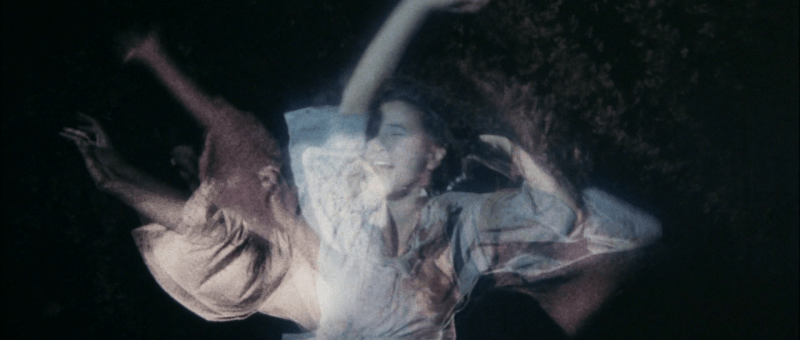
“Even if you’re angry at something, why should you explode the gas tanks?” a telephone operator reasonably asks after Yoshioka makes a prank call reporting a bomb threat on a train leaving Tokyo station while explaining that he also plans to blow up a set of gas cylinders to obliterate the town. The voice on the phone does not appear to take him seriously and sympathetically tries to talk him out of his strange delusion, but all Yoshioka can do is go home and cry in the utter impotence of his life. In the end, Maria is the only one who is able to feel any kind of joy. Finding a pretty dress while dumpster diving, she twirls cheerfully dancing around even with the leg which was left lame after a failed suicide attempt. This time she’s the one who tries to reach out, but Yoshioka ignores her and looks away as they head in different directions. It seems he will never really act on any of his threats, or be able to escape the futility of his life trapped on the margins of a prosperous society which he feels continues to reject him. Yanagimachi films his uneasy existence with naturalist detachment, capturing the mud and filth that cling to Yoshioka along with the strangely violent, goldfish-killing kids, the angry dads, and women who urinate in the street that occupy his round in this particular corner of the “hell” of modern Tokyo.


DVD release trailer (no subtitles)

Dead Angle (白昼の死角, Toru Murakawa, 1979)

The jitsuroku yakuza movie which had become dominant in the mid-70s had often told of the rise and fall of the petty street gangster from the chaos of the immediate post-war era to the economically comfortable present day. The jitsuroku films didn’t attempt to glamourise organised crime and often presented their heroes as men born of their times who had been changed by their wartime experiences and were ultimately unable to adjust themselves to life in the new post-war society. Adapted from a serialised novel by Akimitsu Takagi which ran from 1959 to 1960, Toru Murakawa’s Dead Angle (白昼の死角, Hakuchu no Shikaku) by contrast speaks directly to the contemporary era in following a narcissistic conman who has no need to live a life of crime but as he says does evil things for evil reasons. 

Prior to the film’s opening in 1949, the hero Tsuruoka (Isao Natsuyagi) had been a law student at a prestigious Tokyo university where he nevertheless became involved in the Sun Club, a student financial organisation launched by mastermind Sumida (Shin Kishida) who eventually commits suicide by self-immolation when the organisation collapses after being accused of black market trading. An unrepentant Tsuruoka resolves to start again, rebuilding in the ashes as a means of kicking back against hypocritical social institutions and rising corporate power by utilising his legal knowledge to run a series of cons through the use of promissory notes to prove that the law is not justice but power. 

In this Tsuruoka has an ironic point. He doesn’t pretend what he’s doing is legal, only that he’s safeguarded himself against prosecution. When a pair of yakuza thugs break into his office and threaten him in retaliation for a con he ran on a shipping company, he reminds them that as they’ve had him open the safe it would make the charge of killing him robbery plus murder which means automatic life imprisonment rather than the few years they might get for simply killing him without taking any money. He always has some reason why the law can’t touch him, while implicitly placing the blame on his victims who were often too greedy or desperate to read the small print and therefore deserve whatever’s coming to them. In at least one case, Tsuruoka’s victimless crimes end up resulting in death with one old man whom he’d double conned, pretending to give him the money he was owed but getting him drunk and talking him into “re-investing” the money with him, takes his own life by seppuku in the depths of his shame not only in the humiliation of having been swindled but losing his company, who had trusted him, so much money. 

You could never call Tsuruoka’s rebellion an anti-capitalist act, but it is perhaps this sense of corporate tribalism symbolised by the old man’s extremely feudalistic gesture that Tsuruoka is targeting. As his wife Takako (Mitsuko Oka) tells him, Tsuruoka should have no problem making an honest living. After all he graduated in law from a top university, it’s not as if he wouldn’t have been financially comfortable and it doesn’t seem that the money is his primary motive. While Takako continues to insist that he’s a good person who wouldn’t do anything “illegal”, his longterm geisha mistress Ayaka (Yoko Shimada) knows that he’s an evil man who does evil things for evil’s sake and that’s what she likes about him. Elderly businessmen are always harping on about the “irresponsible youth” of the day but all are too quick to fall for Tsuruoka’s patter while he is essentially nothing more than a narcissist who gets off on a sense of superiority laughing at the law, the police, and the corporate landscape while constantly outsmarting them. 

In this, the film seems to be talking to the untapped capitalism of the 1970s. Like Tsuruoka, the nation now has no need to get its hands dirty and should know when enough is enough but is in danger of losing sight of conventional morality in the relentless consumerist dash of the economic miracle. That might explain why unlike the jitsuroku gangster pictures, Murakawa scores the film mainly with an anachronistic contemporary soundtrack along with the ironic use of saloon music in the bar where Tsuruoka’s associates hook an early target, and the circus tunes which envelope him at the film’s opening and closing hinting that this is all in some ways a farce even as Tsuruoka is haunted by the ghosts his narcissistic greed has birthed. Then again perhaps he too is merely a product of his times, cynical, mistrustful of authority, and seeking independence from a hypocritical social order but discovering only failure and exile in his unfeeling hubris. 


Original trailer (no subtitles)

Raining in the Mountain (空山靈雨, King Hu, 1979)

Is it truly possible to retreat from the world and live a pure life free of Earthly desires? Perhaps not, at least not entirely as the monks of King Hu’s joyously comic wuxia Raining in the Mountain (空山靈雨, Kōng Shān Líng Yǔ) later discover in attempting to cure the corruption already eating through their ranks. The old abbot is ill and mindful that his time is short, recruits a series of advisors to help him pick a successor to steer the monastery in his absence yet whether he too is plotting or not there is intrigue at play and not everyone’s motives are strictly spiritual. 

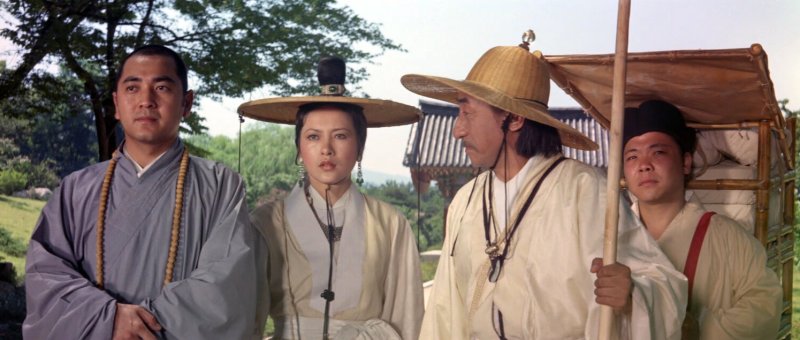
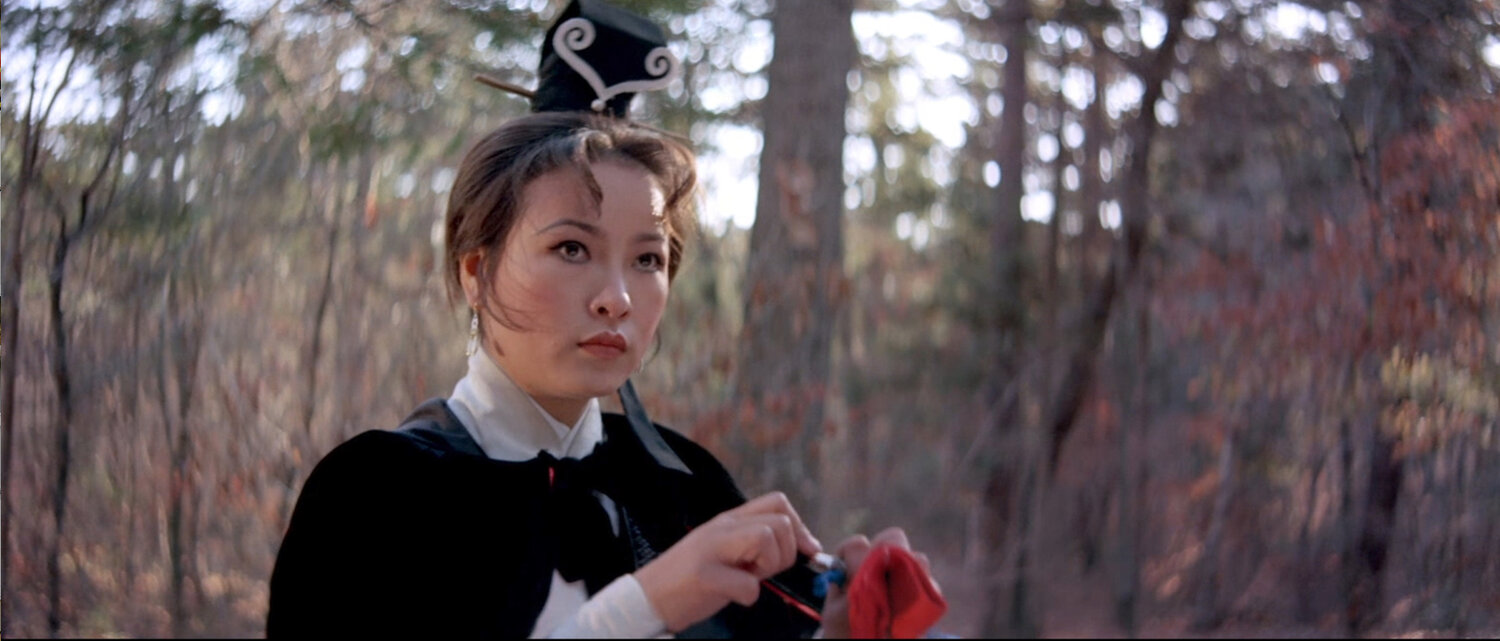
The film opens with Hu’s trademark immersion in the beauty of nature as three pilgrims approach a mountain temple yet there’s something almost suspicious in their manner as they’re met by the abbot’s reliable righthand man, Hui Ssu (Paul Chun Pui). Esquire Wen (Sun Yueh), a wealthy merchant and frequent donor, introduces the woman with him as his concubine, the man obviously a servant given that he’s carrying their pack. Wen has, however, an ulterior motive in that he’s come with the intention of stealing a unique scroll featuring the Mahayana Sutra in the hand of Xuanzang/Tripitaka of Journey to the West fame. The woman is no concubine but a famous thief, White Fox (Hsu Feng), who wastes no time at all before changing into her best sneaking clothes and reuniting with the servant, her minion Chin Suo (Wu Ming-Tsai), to try and break into the sutra room. 

They are not however alone in their endeavours. The abbot has also invited local police chief General Wang (Tien Feng) and his underling Chang Cheng (Chen Hui-Lou) who nominally favour monk Hui Tung (Shih Chun) for the position of abbot but are also there largely with the intention of getting their hands on the scroll which Hui Tung has pledged to give them if he wins. Likewise, though it seems Esquire Wen had forgotten to brief White Fox, rival candidate Hui Wen (Lu Chan) is also in league with them. Just as it looks as if this duality is about to implode, the introduction of a third party, former convict Chiu Ming (Tung Lin) who claims he was framed by Chang Cheng because his family refused to sell him a precious scroll, creates additional uncertainty in the race for succession. 

Secluded in the mountains, the temple ought to be a refuge of enlightenment free from spiritual corruption in its isolation from Earthly desires. Even so, we’re told that the most holy man is the third advisor, Wu Wai (Wu Chia-Hsiang), a Buddhist lay preacher who arrives with a massive entourage of colourfully dressed handmaidens and is said to be “immune to sensual pleasures”. He favours no particular candidate, but acts as a spiritual sounding board at the right hand of the abbot who may or may not be aware that his other two advisors have ulterior motives, or that corruption is already rife in the monastery. Aside from the power-hungry machinations of Hui Wen and Hui Tung, who is so desperate for the position he later consents to murder on temple grounds, many of the younger monks have been bribing a pedlar to smuggle in meat and wine for them, literally passing it over the fence, and not even paying him properly. They are also tested perhaps deliberately by Wu Wai who has his handmaidens frolic in the water where the monks are supposed to be meditating, many of them unable to maintain concentration.  

Yet these are only partial incursions, the monastery is not entirely isolated from the wider society by virtue of its financial dependency. Wu Wai who lives on the outside seems to be fantastically wealthy (still it seems clinging on to material desires), yet the temple is dependent on donations from men like Esquire Wen or else on alms giving. On her arrival, White Fox disdainfully rejects the meal she’s offered and describes the place as a dump, her complaints apparently not unfounded as a ruse to raise rebellion by staging a protest about the the low quality of the catering strikes a genuine note of discord with the monks. The solution posited by the new abbot, opting for austerity rather than opulence, is to tell the young monks they’ve had it too easy and now it’s time they shift for themselves by aiming to become self-sufficient growing their own veg (and thereby lessening their contact with worldly corruption). 

In any case, they cannot purify the temple while the temptation of the scroll exists. “Priceless” to General Wang and Esquire Wen, to the abbot and interestingly to White Fox, the scroll is “worthless” merely a raggedy bit of old paper with no intrinsic value. Yet hoping to raise revenue, the new abbot is advised to borrow on its collateral by the duplicitous Esquire Wen and thereby is forced to accept its “worth” in the secular world perhaps only then realising that if the temple wishes to finalise its divorce the scroll has to go. Essentially a morality tale, Hu hints at the absurdity of these petty corruptions in the cartoonish, farcical shenanigans of the rival thieves as they dance around each other silently fighting over a “worthless” scroll the camera following them with a wry eye while the constant drumming of the background score lends a note of ever present tension. Almost everyone, it seems, is redeemable for the path to enlightenment should be available to all though those who choose not to follow it may find the way of corruption leads to only one destination. 


Raining in the Mountain streams in the US until Sept. 28 as part of the 13th Season of Asian Pop-Up Cinema.

Restoration trailer (English subtitles)

The House of Hanging (病院坂の首縊りの家, Kon Ichikawa, 1979)

Unlike many directors of his generation who either shifted into television or saw their careers stall, Kon Ichikawa was able to continue working throughout the difficult 70s and 80s precisely because he was less averse to taking on commercial projects such as 1976’s The Inugami Family, an ensemble mystery adapted from the bestselling book by Seishi Yokomizo and starring his famed detective Kosuke Kindaichi. The film proved an unexpected hit, an early success for Haruki Kadokawa’s new multimedia marketing model which would allow him to dominate cinema screens throughout the bubble era, and spawned a series of Kindaichi adaptations produced for Toho boasting a host of A-list stars. By 1979, however, the age of the prestige country house mystery was perhaps coming to a close and The House of Hanging (病院坂の首縊りの家, Byoinzaka no Kubikukuri no Ie) would be the last in the cycle of movies starring Koji Ishizaka who would eventually return to the role in Ichikawa’s 2006 remake of the original Inugami Family. 

Set quite specifically in 1951 (Showa 26), House of Hanging is among the more complex of Kindaichi’s cases and rests not on war trauma, which is only a background presence in the present venality of the post-war society, but on the decline of a once noble house ruined, as we find out, through the legacy of sexual immorality and abuse. For the moment, however, Kindaichi gets roped into the mystery after visiting an author friend (played by Seishi Yokomizo himself in a cameo) who recommends a photo studio he could visit in order to get a picture taken for his passport as he plans to travel to America. The photographer, Naokichi (Koji Shimizu), takes on an odd job from a strange young woman who asks them to take wedding photos of her sister but abruptly leaves explaining she’ll send a car later to bring them to an undisclosed location. That turns out to be the bombed-out former home of the Hogen family who own the local hospital. Escorted by a creepy young man, Naokichi finds himself in front of a traditional gold screen backdrop but feels uncomfortable because the bride does not seem to be very present and he worries that perhaps she’s been drugged and something untoward may have been going on. He shows the photo to Kindaichi for advice and is later called back to the same location to discover the severed head of the groom hanging from a ceiling light.  

In slightly comedic fashion, the circumstances of the case are so confusing that they have even Kindaichi admitting that he doesn’t quite follow while his temporary sidekick, photographer’s apprentice Mokutaro (Masao Kusakari), proudly holds up a chart he’s made to help keep track. Though the why is in this case more important than it might usually be, it boils down to the same old problem of buried secrets and past shame. We learn that the Hogen family is descended from a line of prominent doctors, though the family tree is complicated because it appears many of the sons of previous generations had illegitimate children, some of whom were later adopted or married to other adopted children in a quasi-incestuous union. With no one quite sure whose children are whose, incest appears to be the original sin which condemns the family, though as we later realise it’s another kind of abuse which sets the present events in motion.

The murdered man, Toshio (Teruhiko Aoi), was apparently part of travelling jazz band earning their living playing on American bases (the photographer also has a sideline in blackmarket army surplus). Aside from the original sin that connects the murders with melancholy fatalism, the additional victims damn themselves through their amoral greed, foolishly engaging in blackmail in the hope of improving their circumstances. Nevertheless, the sin remains the same, the theory being that Toshio was murdered by missing sister Koyuki who killed him in order to escape his inappropriate romantic obsession with her. The additional complication is that Koyuki looks near identical to Yukari (Junko Sakurada), daughter of the Hogen family, connecting the crime with the traumatic events of some years’ previously which led to the cottage becoming known as the “house of hanging” when the body of a young woman was found there having taken her own life. 

As in many of the other Kindaichi mysteries, the detective has only sympathy for those caught up in this complicated murder plot, many of whom are also victims acting simply to protect themselves ironically enough from the past trauma that has in a sense led to this sorry turn of events. Justice, in the end, takes care of itself though Kindaichi will also do his bit to protect those in need acting from a place of moral compassion rather than judicial censure. This final instalment in the Kindaichi cycle has slightly lower production values and a much less starry ensemble but sees Ichikawa adding a few idiosyncratic touches such as his fast, multi-angle cuts to a single person’s speech and a brief theatrical reconstruction sequence, while making time for the return of bumbling inspector Todoroki (Takeshi Kato) and the ironic comedy the series is known for. “Old things pass, that’s when new things are born” Yokomizo sagely advises in his cameo, Kindaichi apparently taking his leave from a corrupted post-war Japan for the bright lights of San Francisco, perhaps never to return. 


Original trailers (no subtitles)

Nezha Conquers the Dragon King (哪吒闹海, Wang Shuchen & Yan Dingxian & Xu Jingda, 1979)

Chinese animation had entered a golden age in the mid-1950s. That however came to an abrupt end with the advent of the Cultural Revolution which saw most studios shut down and many cartoons banned for insufficiently reflecting socialist values or like Monkey King: Havoc in Heaven having subversively seditious themes. Nezha Conquers the Dragon King (哪吒闹海, Nézha Nào Hǎi), released in 1979, was the first feature completed by the Shanghai Animation Film Studio when production resumed following the end of the Cultural Revolution. Like Havoc in Heaven, Nezha Conquers the Dragon King is also inspired by classic Chinese mythology and features a rebellious hero standing up to oppression in defence of ordinary people at the mercy of corrupt authority. 

As in the classic legend, General Li’s wife has been pregnant for three years only to give birth to a weird fleshy egg that he splits with his sword revealing a lotus flower from which emerges a strange child already capable of walking and talking though little more than an inch high. Luckily, a wise sage soon arrives describing himself as “only an old man who likes to fight for justice and joke around”, and gives Nezha a pill that allows him to grow to a more normal height for a child of around seven. Master Taiyi also gifts him a scarf and golden ring before telling him to visit the Golden Light Cave if he ever runs into trouble. 

Meanwhile, the kingdom is currently experiencing a period of instability because of an ongoing drought caused by the dragon lord of the sea Ao Guang, one of four dragon lords (dare we say a “gang of four”) who just love causing trouble in the mortal realm because they’re awful. To appease Ao Guang, the people have sacrificed a banquet of luxury food, dumping it into the ocean to be conveyed to the Crystal Palace by turtle and stingray minions but all Ao Guang does is complain about the noise of the people protesting before asking an underling to remind General Li that he only wants sacrifices of small children. The sea warrior, however, jumps the gun by snatching one of Nezha’s friends whom he’d allowed to ride his magical deer on the seashore. As expected, Nezha doesn’t like that and gives the sea warrior a telling off though he fails to rescue his friend. Matters quickly escalate as Ao Guang sends his son Ao Bing to sort out Nezha but Nezha kills him in dragon form and strips out his spine to use as a whip so as you can imagine there is a sharp decline in diplomatic relations. 

Though children’s animation in this era was perhaps darker and bloodier the world over, it has to be said that the world of Nezha is especially extreme. Not only does Nezha use his enemy’s spine as a weapon, but his own father later tries to kill him to appease Ao Guang while he himself makes a brutal and unexpected act of self sacrifice in an attempt to protect his realm and his family from his apparently failed attempt to resist Dragon oppression. The problem, however, remains with the corrupt authority of the Dragon Lords who continue to expect child sacrifice as part of a celestial protection scheme. Thinking they’ve won, the Dragon Lords organise a huge feast at the Crystal Palace all while there is discord in the kingdom. Only the unexpected reappearance of Nezha, now complete with his fiery wheels, can challenge their corrupt rule and free the people from their oppression. 

Though less sophisticated in terms of animation style and more highly stylised, influenced both by social realist art and classical ink painting, Nezha like Havoc in Heaven also makes fantastic use of Peking Opera from the score to the choreography of the battle scenes as Nezha leverages his spear against the swirling Dragon threat. It is also, however, likely to prove disturbing to younger viewers especially in its unexpectedly visceral scene of child suicide not to mention dragon dismemberment and talk of child sacrifice. Nevertheless, it’s surprising that such themes could return so immediately after the end of the Cultural Revolution even if it’s true that Nezha, less mischievous than holding an extreme love of justice, challenges corruption rather than the system as he protects the people from overreaching elites. 


Nezha Conquers the Dragon King is currently available to stream in the UK as part of the Chinese Cinema Season.

The Three Undelivered Letters (配達されない三通の手紙, Yoshitaro Nomura, 1979)

The ensemble crime drama was at its zenith in the 1970s which saw a series of starry mysteries dominate the box office for most of the decade. Director Yoshitaro Nomura had long associated himself with the noirish thriller, frequently adapting the work of Seicho Matsumoto and perhaps skewing a little darker than your average drawing room mystery would usually dare. Scripted by Kaneto Shindo, 1979’s Three Undelivered Letters (配達されない三通の手紙, Haitatsu Sarenai Santsu no Tegami), meanwhile, is adapted not from Matsumoto but from a novel by American crime powerhouse Ellery Queen, Calamity Town, and as such avoids the central topic of wartime corruption which is at the centre of many similarly themed crime dramas. Nevertheless, it paints a complex picture of Japan in the increasingly prosperous late ‘70s in which class distinctions, it seems, prove hard to kill. 

Nomura begins, as he so often does, with a lengthy train journey this time undertaken by the quasi-protagonist, Japanese-American student Bob (Ryo Hikime) who has come to Japan on a research trip for his East Asian studies degree and is travelling from Tokyo where he stayed with a friend to provincial Hagi where he’s to stay with distant relatives, the Karasawas. As we begin to realise, the Karasawas are fabulously wealthy, members of an entrenched upperclass living out in the country. Grumpy patriarch Mitsumasa (Shin Saburi) is the CEO of a bank, and actually not all that welcoming of his visitor though they agree to put him up in an entirely separate house they had built for the impending marriage of daughter Noriko (Komaki Kurihara). Unfortunately, three years previously once the house had been built and the marriage agreed, Noriko’s fiancé Toshiyuki (Takao Kataoka) simply vanished without trace. Heartbroken, Noriko suffered a breakdown and has been living in a depressive state ever since. 

The trouble begins when already disowned oldest daughter Reiko (Mayumi Ogawa) rings her sister to let her know that Toshiyuki has resurfaced, apparently having been living quietly as a fisherman in Hokkaido. Perhaps surprisingly, their reconciliation is speedy. Noriko brings Toshiyuki home, explains the reason for the breakup was that Toshiyuki was uncomfortable with the constraints of her upperclass life, and states that the wedding is back on. Mitsumasa is understandably irate, but agrees to the marriage on the same terms as before. Toshiyuki must join his bank and they have to live in the house he built for them. Despite his earlier aversion, Toshiyuki agrees and the pair are married but on moving his belongings into the house Noriko discovers three disturbing letters hidden in a book each bearing a future date and addressed to Toshiyuki’s younger sister, the first explaining that his wife has been taken ill, the second that her condition continues to deteriorate, and the third that she has passed away. 

All things considered, it is odd that the marriage was agreed so quickly, the family perhaps feeling that Toshiyuki has had a humbling and is willing to submit himself to the feudalistic, patriarchal world of the upper classes in order to escape hardship while knowing that refusing may be the most dangerous thing for Noriko’s precarious mental health. Entirely absent are the usual background checks such families usually run on a prospective son-in-law, and no one seems keen to ask for much detail as to Toshiyuki’s life over the past three years. The class conflicts are however brought to the fore when a brassy young woman turns up and claims to be Toshiyuki’s previously unseen younger sister who for mysterious reasons did not attend the wedding ceremony and has never been introduced to the family. The contrast between the two women could not be more plain, Noriko often appearing in kimono or elegantly attired in the latest fashions, while Tomoko (Keiko Matsuzaka) is a full on modern girl who finds the house stuffy and the company dull but shows no signs of leaving. 

As so often in Japanese mysteries the focus is very much on the how, or in this case the “if”, rather than the who or the why which are in themselves fairly predictable at least to those familiar with the genre. Bob and middle sister Keiko (Ai Kanzaki) who is being pressured into an arranged marriage with a public prosecutor she doesn’t seem to even like but also has not rejected, are perturbed enough by the letters to start investigating but their biggest obstacle it seems is Noriko herself who is at great pains to exonerate her husband from suspicion believing the letters are some kind of dark joke rather than genuine evidence of an imminent attempt on her life even as Toshiyuki’s behaviour becomes ever more erratic and suspicious. 

“Everyone should live the way they like” Bob avows in laughing off a request for life advice, apparently wisdom handed down from his Japanese grandma. That sense of restricted freedoms does indeed seem to be at the heart of the issue, hinting at the changing nature of Japanese society even as it struggles to free itself from the feudal past. Keiko resents being pushed towards the prosector but only ever comes up with excuses, never actively resisting her parents’ attempt to marry her off. Oldest daughter Reiko, meanwhile, was kicked out of the family after eloping with an actor who eventually left her flat and now runs a bar. Keiko may feel she has only these two choices, a marriage such as Noriko’s on her father’s terms only, or a dubious independence which might not suit her in the same way as her infinitely competent sister. Toshiyuki resented placing himself under the patriarchal authority of his father-in-law, a job in his bank, living in a house he built on the property he owns, with no real control over his life. Reiko may well have a point when she eventually tells Mitsumasa that this is all his own fault, a consequence his rigid authoritarianism that insisted on maintaining an outdated ideal of patriarchal control. 

For his part, Mitsumasa is forever keen to emphasise that there are no crimes in his house, resolutely refusing to admit that there are problems within the Karasawa family even while perhaps knowing where the fault may lie. The one mystery which is never solved is why exactly so many women are so in love with Toshiyuki who all things considered is no great catch, a coward who makes a point of disappearing on people rather than deal with unpleasantness only to resent it when his moral cowardice returns to haunt him. He resents the emasculation of being a wealthy man’s son-in-law with its concurrent loss of personal autonomy, but simultaneously refuses to take responsibility for his actions or reject a life of comfort as someone assured both of continued financial security and of a certain place in society. Love destabilises the social order, but seemingly cannot change it leaving only the lovers bruised by their attempts to free themselves from the latent feudalism of the post-war world which continues to promise more than it has to offer.