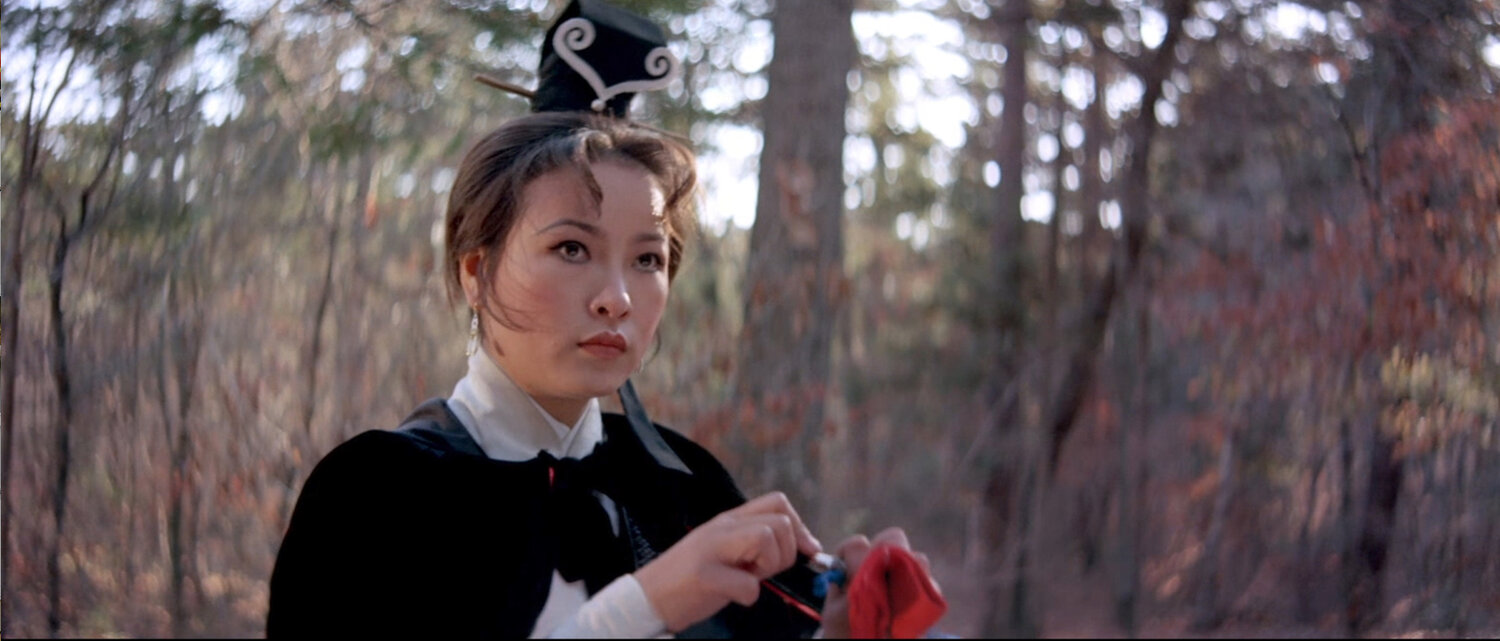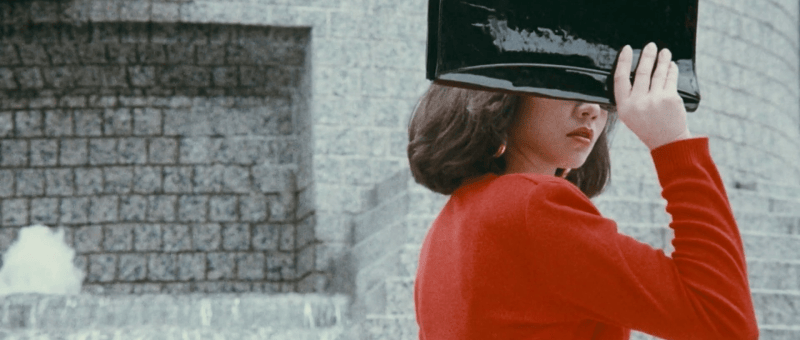
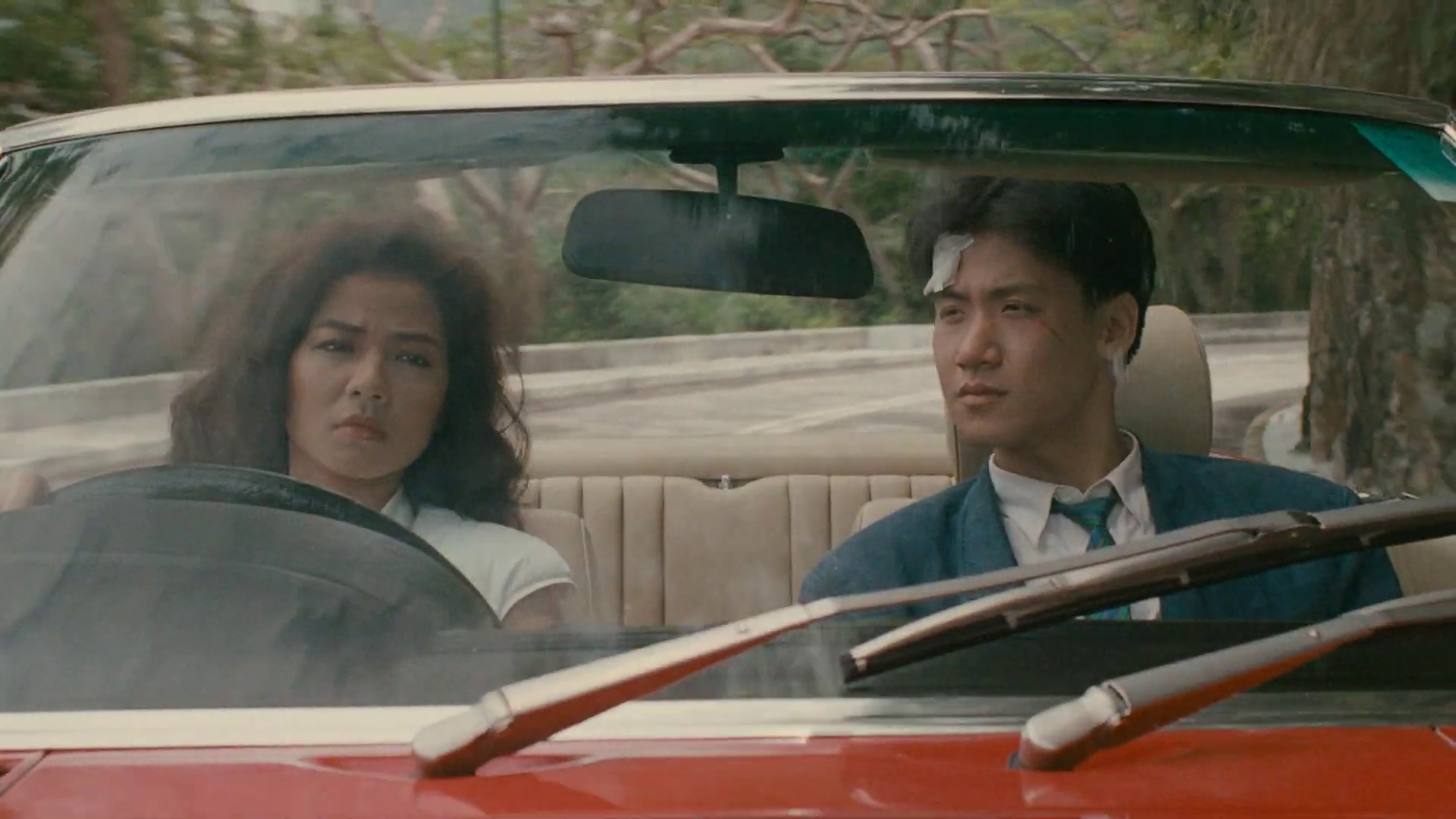
Double Fixation (意亂情迷, Yonfan, 1987)

“The secret behind the secret is too mysterious for me to explain,” according to some kind of priest in Yonfan’s stylish tribute to the Hitchcockian thriller, Double Fixation (意亂情迷). The film does perhaps take the concept of the MacGuffin a little too far in its glowing blue orb which it makes no attempt to explain with no hint as to why the bad guys are so determined to get it back that they’ll even go to great lengths to retrieve a set of photos taken of it by a hapless photographer.

Jacky (Jacky Cheung Hok-Yau) is, to that extent, a classic “wrong man” who gets mixed up in a surreal conspiracy after being strong-armed into taking pictures of the orb by a wealthy businessman who wanted to give them to the priest so he could unlock its secrets. When Jacky goes to hand them over, he discovers the businessman has been murdered and laments his lost pay cheque, but, at the same time, is far more interested in some pictures he took of a stunning woman in red rather the mysterious blue orb. Jacky soon becomes the main suspect in a murder and is forced on the run, only to be rescued by the mysterious woman, Cherie (Cherie Chung Cho-Hung). Though Jacky falls for her, he can’t be sure she can be trusted. After Cherie disappears from his life, Jacky encounters another woman in San Francisco who looks just like her, but says her name is Jackie and claims to have no memory of him.

A riff on Vertigo, the film plays with identity and obsession as Jacky, abruptly cleared of suspicion as if the crime he was accused of committing may not have happened at all, continues to question his relationships with both Cherie and Jacky. Where Cherie had been a melancholy sophisticate living in a lonely mansion, Jackie is a down to earth aspiring actress whose fashion sense seems far more in the moment. She even seems to have Kim Novak’s hairstyle from the second half of Hitchcock’s movie. As Jacky gets closer to her, he’s honest about the fact that he can’t forget Cherie and the feelings he has for Jackie may be different in nature. Of course, this pains Jackie who can’t find a way to get through to Jacky who is still obsessed with a woman who may not have actually existed.

Jacky eventually comes to the conclusion that it doesn’t really matter who the mysterious woman is as long as she remains “herself” as a means of integrating his love for both Jackie and Cherie who are different but also the same. Yonfan also hints at Jacky’s own duality in often framing him with his reflection, while in a sense his gaze is doubled and refracted by his use of the camera. The film’s Chinese title may be that of Hitchcock’s Spellbound, echoing Jacky’s obsession and doubts about Cherie’s loyalties, but the English title too is reflective suggesting both Jacky’s fixation on a double of his lost love, and the fixation the villains seem to have with retrieving the photos for no clear reason. 

As such, the film has a rather surreal mentality what its unexplained magical orbs, weird priests, and a random comedy character in the form of a strange-looking, effeminate man who carries around a teddy bear and turns up at Jacky’s studio wanting to become a male model but later seems to be connected to the bad guys. Jacky has a naive sense of optimism, sure that all this will be sorted out quickly because he’s an innocent man and never quite taking the situation he’s in very seriously even as he’s chased by a pair of “CID officers” who don’t seem to be obeying police ethics. Yonfan then largely sidesteps the darkness at the centre of the story and dramatises it more as one of improbable adventure and romantic confusion in which Jacky struggles with his conflicted feelings for two women who might be one and the same. The film is just as enthralled by Cherie Chung as its protagonist appears to be as her ghostly presence seems to haunt every frame with her motivations constantly unclear until the very last second. 


Trailer (no subtitles)
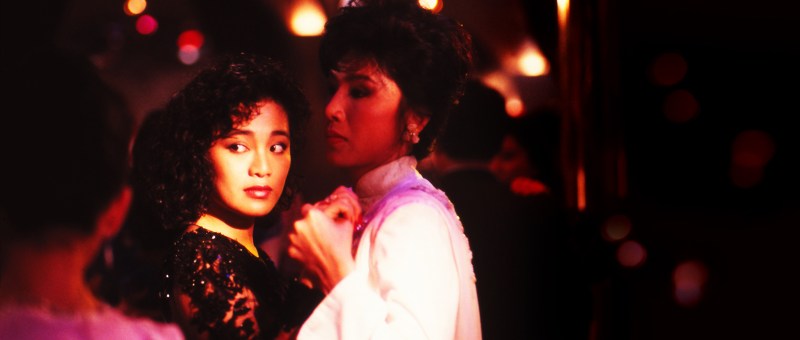
Immortal Story (海上花, Yonfan, 1986)

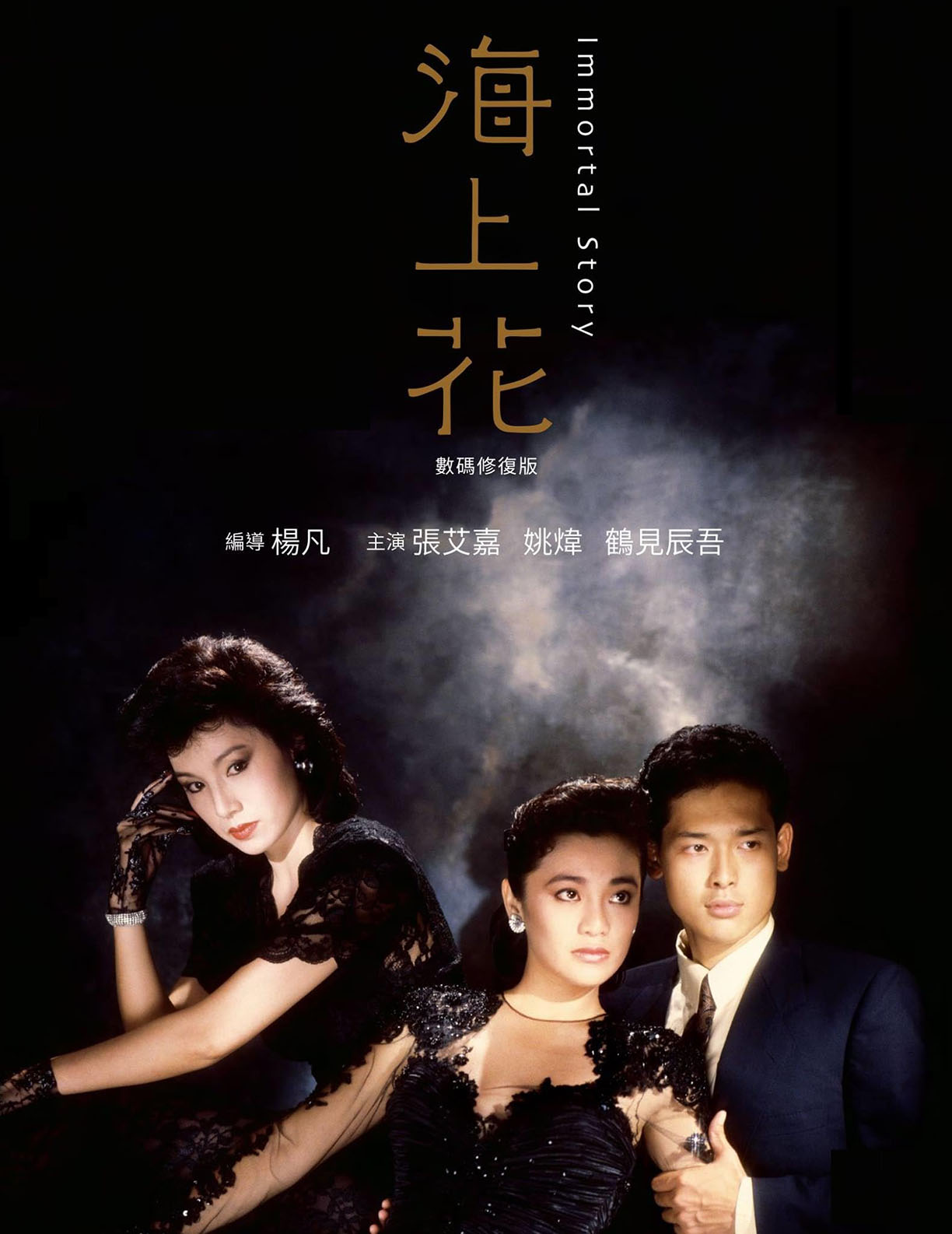
A young woman dreams of romance after meeting a Japanese boy in Macau, but finds that fate has other plans in Yonfan’s romantic melodrama, Immortal Story (海上花). Employing a non-linear narrative, the film opens in the early 1970s and shifts back 10 years as Ling (Sylvia Chang Ai-Chia) meets Nakamura (Tsurumi Shingo) who is in town for a few days while his school baseball team has a fixture in Hong Kong. Though the pair are smitten with each other, Ling never sends the letters she promised to write him, realising that she is corresponding with a romantic fantasy rather than a real person, while Nakamura apparently continues to think of her after returning to Japan.

Ten years later, Ling is discovered cradling Nakamura’s body in a hotel room in Macau and is presumed to have stabbed him with a fruit knife. The film then explores what led to this tragic ending through a series of flashbacks and witness testimonies through which it becomes apparent that both Ling and Nakamura have become somehow corrupted during their time apart. Even during her youth, however, it seems that Ling did not really believe in the reality of romantic salvation and was too afraid to pursue her relationship with Nakamura. After all, she could easily have sent the letters that she continued to write for the full 10 years, but preferred to maintain the fantasy rather than risk it shattering.

Instead, she drifted into an abusive relationship with a local boy who got her pregnant and then dumped her, after which she was rescued by bar owner/madam, Blanche (Yiu Wai). If Ling is caught in a romantic fantasy, then so in a way Blanche is too as it is clear that she is infatuated with Ling who will never return her affections. In fact, when Ling reveals that she plans to leave with Nakamura, she says that she feels indebted to Blanche but also that she has effectively repaid her kindness through the money she has made working for her as an escort. This is in a way Blanche’s tragedy, that in seeking to trap and possess Ling, she ends up ruining her while Ling feels only gratitude rather than affection. To escape the trauma of her life as a sex worker, she ends up turning to drugs from which neither Blanche nor Nakamura is able to save her.

What exactly happened to Nakamura in the intervening 10 years is never revealed, but it seems that he has ironically become involved with the drugs trade and is therefore partly responsible for Ling’s fate. He vows that he will get her off the drugs and take her back to Japan with him, but agrees to help her inject not only after they first reconnect but when they meet again in the hotel room before they’re supposed to leave. Blanche isn’t wrong when she accuses him of feeding on the blood of vulnerable people, though one could say she does the same in pressing them into sex work as she does with Ling. Unsurprisingly, Blanche is against Ling reuniting with Nakamura, but also asks why she allows men to hurt her, rather than accept the care and nurture Blanche is giving her if while, at the same time, harming her through her exploitation. 

The 1970s setting maybe crucial to making the timeline work as Nakamura states the reason he can speak Chinese is that he was born in China, though this “immortal story” feels like something that might have happened much earlier. There is a strong sense of nostalgia for a lost time of innocence and possibility, though Ling already seems to think that her future is out of reach even as a teen. When she reunites with Nakamura, it’s in a ruined building where she once used to live that is about to be torn down, hinting both that their romance has no real future and that it belongs to another time or may really never have existed at all outside of a mutual fantasy. In these early scenes, Ling is entirely dressed in a bright white, as she is in the hotel room, while as a tragic nightclub singer later she wears black like the ironically named Blanche. Their outfits often complement each other in a mix of black and white symbolising both the genuineness of their connection and the corruption stemming from Blanche’s line of work. In the end it maybe Blanche who is trapped within an impossible dream of romance, caught by the futility of her desire, while in a way freeing Ling from the torment of the shadow of an illusionary lover.


Executioners (現代豪俠傳, Johnnie To & Tony Ching Siu-Tung, 1993)

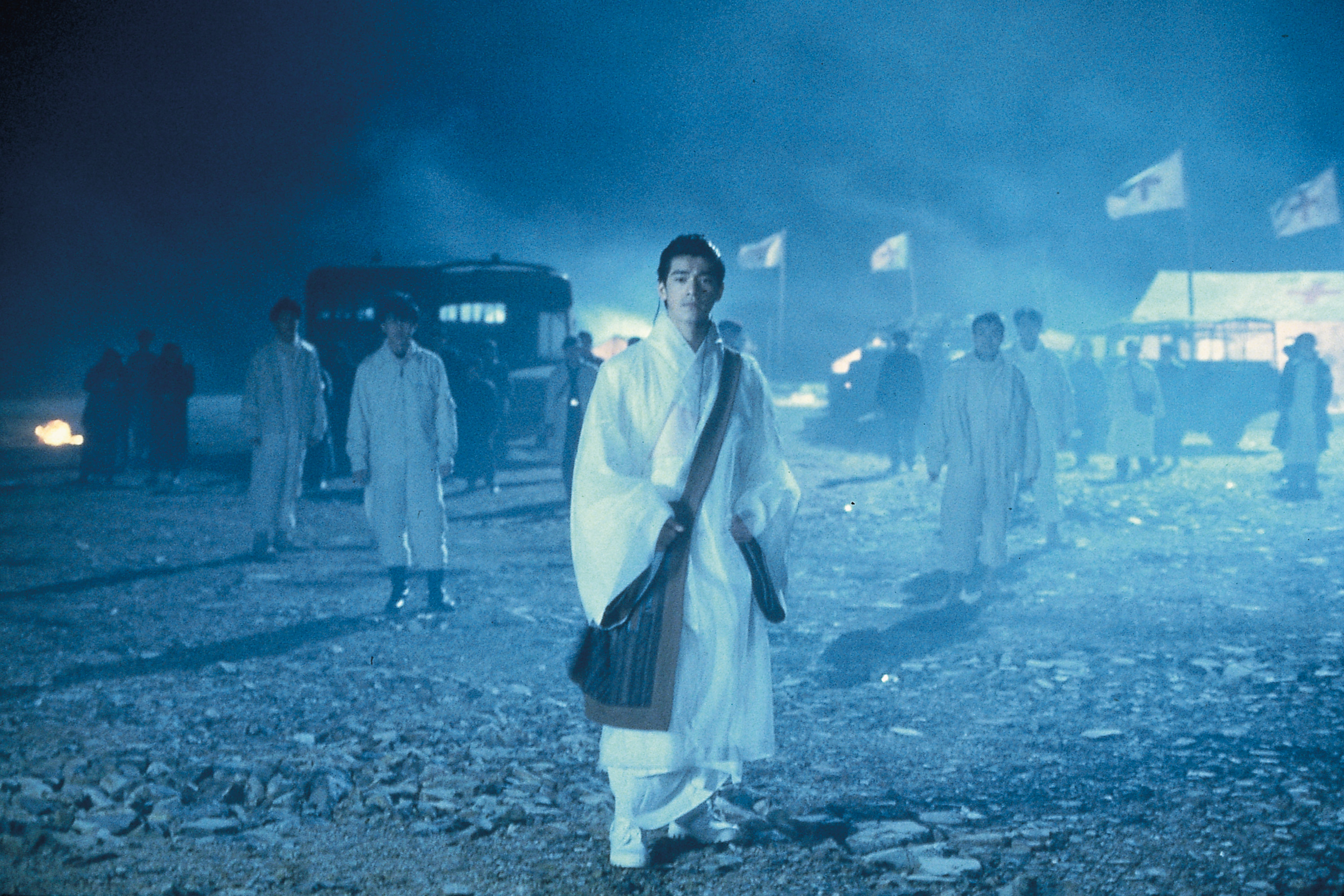
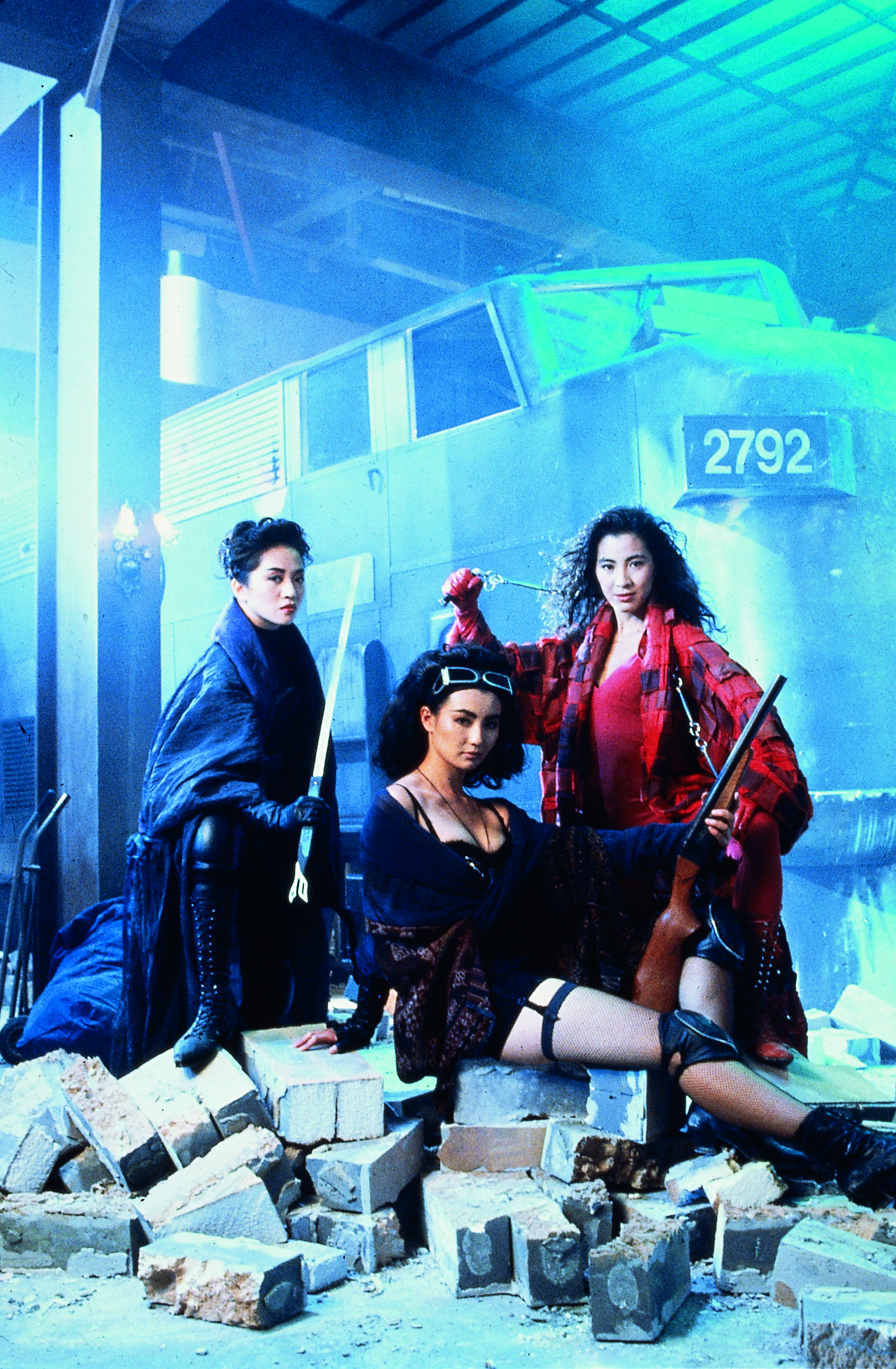
At the end of The Heroic Trio, the shadowy rise of authoritarianism seemed to have been beaten back. The three superwomen at the film’s centre had discovered joy and liberation in female solidarity and were committed to fighting injustice in a flawed but improving world. If Heroic Trio had been a defiant reaction to Handover anxiety, then sequel Executioners (現代豪俠傳) is its flip side shifting from the retro 40s Hong Kong as Gotham aesthetic to a post-apocalyptic nightmare world where nuclear disaster has normalised corporate fascist rule. 

As Ching (Michelle Yeoh) explains in her opening voiceover, a nuclear attack has ruined the city contaminating its water and leaving ordinary citizens dependent on the Clear Water Corporation for safe drinking supplies and basic sanitation. The trio have been scattered, pushed back into the roles from which they escaped at the first film’s conclusion save perhaps for Ching who continues to serve a duplicitous authority but does so with clearer eyes and a humanitarian spirit driving a medicine truck to ensure those in need have access to healthcare. Chat (Maggie Cheung Man-Yuk) meanwhile has reverted to her cynical bandit lifestyle, hijacking water trucks mostly for her own gain but also ensuring the water gets to the needy. Tung (Anita Mui Yim-Fong) has abandoned her Wonder Woman persona on the insistence of her husband who is now a high ranking policeman with the military authority devoting herself to the role of the traditional housewife and mother to her daughter Cindy. 

Though the women seem to have maintained their bond, Ching and Chat turning up for a Christmas celebration with Cindy, the political realities soon disrupt their friendship as they find themselves at odds with each other given their shifting allegiances. As in the first film, Chat has continued to accept work from dubious authority in the form of the Colonel including tracking down a man who embarrassed the police by firing a gun at a rally for a cult-like protest leader, Chung Hon (Takeshi Kaneshiro), only the gunman later turns out to be a patsy and Chat has unwittingly helped them bump off the voice of the people as an overture for a military coup. Ching is secretly working for responsible government trying to safeguard the President to prevent his assassination by the Colonel, but obviously cannot say very much about her mission arousing Tung’s suspicions that she may have been part of a plot to have her husband killed. 

In any case, the true villain turns out to be a kind of Wonder Woman mirror image in that the mysterious Mr. Kim (Anthony Wong Chau-Sang), CEO of Clear Water Corporation, is a man who wears a mask to hide his scarred face and dresses like an 18th century aristocrat as if engaged in some kind of Man in the Iron Mask cosplay. Kim and the Colonel have been collaborating to engineer a military coup by deliberately restricting water supplies. The oblivious Chung Hon had unwittingly been Kim’s stooge, stoking up public resentment about the water situation to give the government an excuse for a crackdown and the Colonel to move. Chat’s path to redemption amounts to vindicating the faint hope that the water contamination was a hoax, which she eventually does by taking Cindy with her to smash the corporate dam and return the water to its rightful flow and the people of the city. But like the Evil Master, Kim does not die so easily turning up for a surprisingly hands on fight squaring off against the barely unified trio who are only just beginning to repair their friendships on coming to a fuller understanding of the reality of their circumstances. 

They are all in a sense liberated, though less joyfully than in the first film and largely through violent loss. The good guys don’t always win and a fair few die while all the women can do is keep moving, fighting off one threat after another with few guarantees of success and not even each other to rely on. Where the first film had embraced a hopeful sense of comic camp, Executioners skews towards the nihilistic in its dystopian world of corporate overreach and increasing militarism in which the trio no longer trust each other and are each re-imprisoned inside their original cages from patriarchal social norms to capitalistic inhumanity and questionable loyalties with the only hopeful resolution resting on “the sincerity of our friendship” in a world which may be healing but is far from happy. 


Executioners screened as part of this year’s San Diego Asian Film Festival.

The Heroic Trio (東方三俠, Johnnie To, 1993)

Female solidarity becomes an unexpected weapon against stealthy authoritarian take over in Johnnie To’s gloriously camp superhero action fest, The Heroic Trio (東方三俠). Uniting three of the top stars of the age in Anita Mui, Maggie Cheung, and Michelle Yeoh the film flirts with Handover anxiety in the “Evil Religion” that threatens to steal the children of Hong Kong, but eventually locates the source of salvation in the heroine’s shared humanity brokered by a tripartite solidarity of justice and equality that defies both the patriarchal world around them and the cruel authoritarianism in which they have been raised. 

In an almost biblical allegory, large numbers of male infants have been going missing over the last 18 months and the police are, predictably, mystified relying on the reappearance of the mysterious superhero Wonder Woman to solve the mystery herself. Truth be told, top Inspector Lau (Damian Lau Chung-Yan) hasn’t yet realised that Wonder Woman is his own wife, Tung (Anita Mui Yim-Fong), so perhaps his investigative skills aren’t all that despite the dynamism of the opening scenes which see him demonstrate his masculinity by leaping out of a window stop a thief from driving off in his classic car which is parked outside a creepy mansion in the middle of nowhere. Nothing really gets done until the chief of police gets a note that his own infant son is next on the list, though he briefly considers simply swapping his kid for another couple’s child while hiring “Thief Catcher” Chat (Maggie Cheung Man-Yuk) to get him back when he’s kidnapped by an “Invisible Woman”, Ching (Michelle Yeoh), whom Tung manages to wound while saving the decoy baby. 

As it turns out, Ching has been taking the babies on behalf of “Evil Master” (Yen Shi-Kwan) who lives in an underground lair in the sewers and is the head of a mysterious cult hellbent on finding a new king for China. There may be a degree of Handover anxiety in Evil Master’s mission, seeking to possess and control Hong Kong by brainwashing its children eventually possessing Ching by removing her bodily autonomy while her sisters must quite literally free her from his icy grasp. Each of the kidnapped boys is said to have a divine destiny, though Evil Master doesn’t know which one is the new king and has a habit of simply killing the ones who disappoint him while the others are raised as mindless automatons consuming those like them and destined to become thoughtless killing machines like the bloodthirsty Kau (Anthony Wong Chau-Sang). 

Chat, who was raised as one of Evil Master’s minions but managed to escape thanks to the largess of Ching and his since become an ultra-capitalist bounty hunter if one less cynical than she originally seems, thinks it’s better to simply end the cannibal kids’ misery before they end up like Kau while Tung prioritises saving the infants so they can be returned to their parents before being subject to one of Evil Master’s weird rituals. Ching, meanwhile, is only participating in Evil Master’s plan to protect the man she loves, a mad scientist slowly succumbing to poisoning caused by his invention in true genre fashion. It is then in a sense love that causes Ching to reject her programming, but it’s the solidarity of Tung and Chat, along with a desire for vengeance, that finally gives her the courage to rebel. 

In a brief flashback, Tung had failed to save Ching during a tough training session with their mentor who had cruelly told her that she’d have to fight for justice alone while Ching, cast out, sought support by turning to the dark side. The scene repeats itself twice in the film’s closing scenes in which Tung is this time able to save Ching but only because of the support from their friend and equal Chat making up the third point of the triangle and anchoring them both firmly to ensure they will not fall. “Life is meaningful if you can face yourself” Tung tells Ching, shedding her mask having presumably dealt with her own dark past and pulling her sister up with her as an equal leaving the past behind to fight for a future of justice and freedom. 

To and action director Ching Siu-tung recast Hong Kong as Gotham with a production design quite clearly inspired by Western comic books in which the three heroines end by getting fancy capes that flicker in the wind. Chat, a motorcycle-riding delinquent force of nature, even at one point launches herself into battle on an oil drum propelled by dynamite which she later uses to take out the cannibal kids not to mention Evil Master himself. But it turns out the spectre of creepy, ritualistic authoritarianism doesn’t die so easily, Evil Master’s charred skeleton gets back up for one last hurrah until his brain finally explodes when confronted by Ching’s rejection having returned to the fold and now ready to sacrifice herself for a freer future for all. Essentially a comic book wuxia, To’s ironic action drama allows its heroic trio to find salvation in female solidarity anchoring each other in a world beset by fear and villainy.


The Heroic Trio screened as part of this year’s San Diego Asian Film Festival.

Raining in the Mountain (空山靈雨, King Hu, 1979)

Is it truly possible to retreat from the world and live a pure life free of Earthly desires? Perhaps not, at least not entirely as the monks of King Hu’s joyously comic wuxia Raining in the Mountain (空山靈雨, Kōng Shān Líng Yǔ) later discover in attempting to cure the corruption already eating through their ranks. The old abbot is ill and mindful that his time is short, recruits a series of advisors to help him pick a successor to steer the monastery in his absence yet whether he too is plotting or not there is intrigue at play and not everyone’s motives are strictly spiritual. 

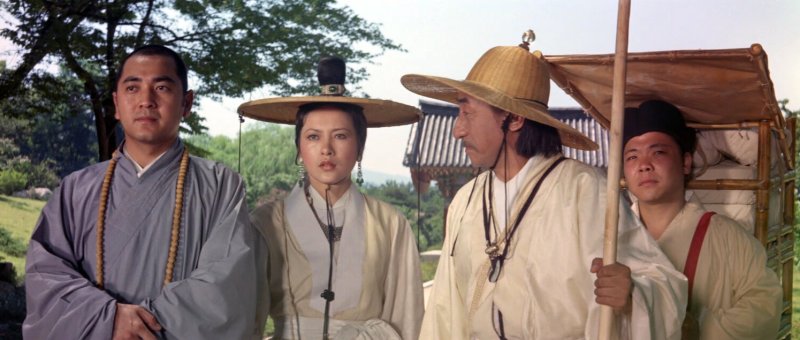
The film opens with Hu’s trademark immersion in the beauty of nature as three pilgrims approach a mountain temple yet there’s something almost suspicious in their manner as they’re met by the abbot’s reliable righthand man, Hui Ssu (Paul Chun Pui). Esquire Wen (Sun Yueh), a wealthy merchant and frequent donor, introduces the woman with him as his concubine, the man obviously a servant given that he’s carrying their pack. Wen has, however, an ulterior motive in that he’s come with the intention of stealing a unique scroll featuring the Mahayana Sutra in the hand of Xuanzang/Tripitaka of Journey to the West fame. The woman is no concubine but a famous thief, White Fox (Hsu Feng), who wastes no time at all before changing into her best sneaking clothes and reuniting with the servant, her minion Chin Suo (Wu Ming-Tsai), to try and break into the sutra room. 

They are not however alone in their endeavours. The abbot has also invited local police chief General Wang (Tien Feng) and his underling Chang Cheng (Chen Hui-Lou) who nominally favour monk Hui Tung (Shih Chun) for the position of abbot but are also there largely with the intention of getting their hands on the scroll which Hui Tung has pledged to give them if he wins. Likewise, though it seems Esquire Wen had forgotten to brief White Fox, rival candidate Hui Wen (Lu Chan) is also in league with them. Just as it looks as if this duality is about to implode, the introduction of a third party, former convict Chiu Ming (Tung Lin) who claims he was framed by Chang Cheng because his family refused to sell him a precious scroll, creates additional uncertainty in the race for succession. 

Secluded in the mountains, the temple ought to be a refuge of enlightenment free from spiritual corruption in its isolation from Earthly desires. Even so, we’re told that the most holy man is the third advisor, Wu Wai (Wu Chia-Hsiang), a Buddhist lay preacher who arrives with a massive entourage of colourfully dressed handmaidens and is said to be “immune to sensual pleasures”. He favours no particular candidate, but acts as a spiritual sounding board at the right hand of the abbot who may or may not be aware that his other two advisors have ulterior motives, or that corruption is already rife in the monastery. Aside from the power-hungry machinations of Hui Wen and Hui Tung, who is so desperate for the position he later consents to murder on temple grounds, many of the younger monks have been bribing a pedlar to smuggle in meat and wine for them, literally passing it over the fence, and not even paying him properly. They are also tested perhaps deliberately by Wu Wai who has his handmaidens frolic in the water where the monks are supposed to be meditating, many of them unable to maintain concentration.  

Yet these are only partial incursions, the monastery is not entirely isolated from the wider society by virtue of its financial dependency. Wu Wai who lives on the outside seems to be fantastically wealthy (still it seems clinging on to material desires), yet the temple is dependent on donations from men like Esquire Wen or else on alms giving. On her arrival, White Fox disdainfully rejects the meal she’s offered and describes the place as a dump, her complaints apparently not unfounded as a ruse to raise rebellion by staging a protest about the the low quality of the catering strikes a genuine note of discord with the monks. The solution posited by the new abbot, opting for austerity rather than opulence, is to tell the young monks they’ve had it too easy and now it’s time they shift for themselves by aiming to become self-sufficient growing their own veg (and thereby lessening their contact with worldly corruption). 

In any case, they cannot purify the temple while the temptation of the scroll exists. “Priceless” to General Wang and Esquire Wen, to the abbot and interestingly to White Fox, the scroll is “worthless” merely a raggedy bit of old paper with no intrinsic value. Yet hoping to raise revenue, the new abbot is advised to borrow on its collateral by the duplicitous Esquire Wen and thereby is forced to accept its “worth” in the secular world perhaps only then realising that if the temple wishes to finalise its divorce the scroll has to go. Essentially a morality tale, Hu hints at the absurdity of these petty corruptions in the cartoonish, farcical shenanigans of the rival thieves as they dance around each other silently fighting over a “worthless” scroll the camera following them with a wry eye while the constant drumming of the background score lends a note of ever present tension. Almost everyone, it seems, is redeemable for the path to enlightenment should be available to all though those who choose not to follow it may find the way of corruption leads to only one destination. 


Raining in the Mountain streams in the US until Sept. 28 as part of the 13th Season of Asian Pop-Up Cinema.

Restoration trailer (English subtitles)