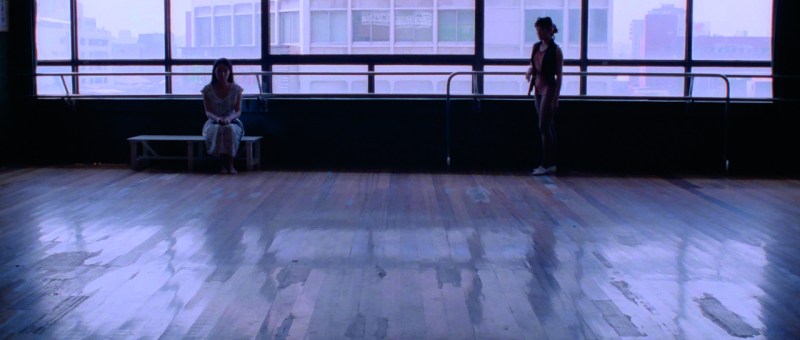
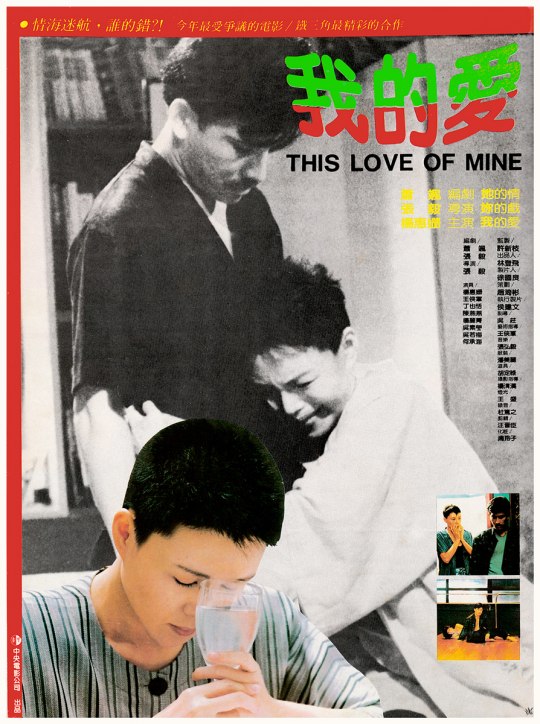
When an already anxious housewife discovers her husband’s affair, she becomes aware of the extent to which she is already trapped by the patriarchal social codes of the contemporary society in Chang Yi’s psychological melodrama, This Love of Mine (我的愛, wǒ de ài). This very messy situation takes on a meta subtext given that This Love of Mine became the last film Chang Yi and his leading actress Loretta Yang would ever make as the pair were hounded out of the Taiwanese film industry after their affair was exposed by the film’s screenwriter, who also happened to be Chang’s wife, the novelist Hsiao Sa.
Wei-liang (Loretta Yang Hui-shan) is a typical housewife who’s devoted herself entirely to her husband and children, but she’s approached one day by a childhood friend, An Ping (Elten Ting), who tells her that her husband Wei-ye (Wang Hsia-Chun) is having an affair with her sister, An Ling (Cynthia Khan). The news comes as a shock to her and profoundly destabilises her world. When she confronts Wei-ye, he admits everything but makes no real excuses or promises to end the affair. In fact, he does not really do anything but only seems resigned to the situation as if he had no agency over it.
Wei-liang takes the children to her mother’s and decamps to Kaohsiung to look at apartments but soon realises the impossibility of her situation. She can’t afford the deposit on a flat that she doesn’t like anyway and has no real income nor savings because she poured everything into Wei-liang’s business. Approaching an old friend about a job, she’s told that she’s just too old to re-enter the workforce and will struggle to find anyone who’ll hire her. Even if they do, it won’t be worth her while. The simple fact is that she’s trapped. She’s done everything “right” but has been betrayed and is now left with the realisation that she is powerless. Her husband can do as he pleases because she is economically dependent on him and therefore cannot leave. Wei-liang’s only option is to accept her humiliation and tolerate her husband’s affair.
Her anxieties had begun long before with the early death of her father. Wei-liang resented her mother for remarrying, but she too was faced with this same economic impossibility in the wake of widowhood rather than divorce. Her mother points out that without her stepfather, who does not seem to have treated Wei-liang particularly badly even if he is also a very patriarchal man and expects her mother to wait on him hand and foot, Wei-liang would not have finished her education and what else really could she have done in her situation? It may have been this sense of precarity that most frightened Wei-liang and explains her fixation on the children’s health, panicking about her son eating grapes with the skin on because of the pesticides and insisting on apple juice rather than the sugary drinks and junk food that Wei-ye buys for them.
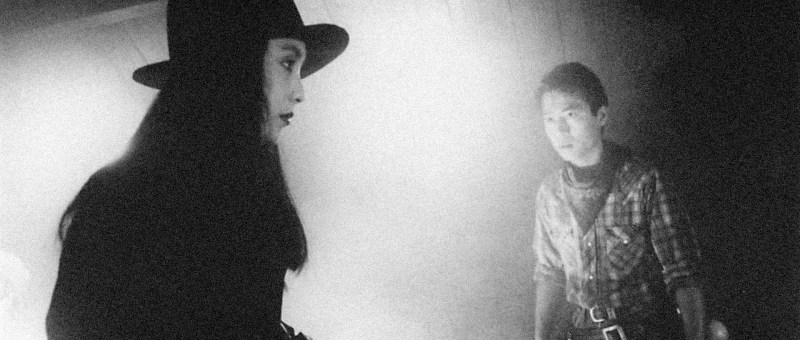
Wei-liang taking the children to KFC might be the clearest sign of her despair. Taking a razor blade to her hair, she hacks it all off and gives herself a slightly deranged look while directly attacking her femininity. Thereafter she falls into a depression, increasingly unable to see any kind of solution. Wei-ye says that their problem cannot be solved by divorce, but it’s unclear what kind of solution he favours. The implication is that Wei-liang should pretend to ignore his affair and allow him his desires while continuing to play the role of the perfect housewife. An Ling, meanwhile, has her own degree of intensity in insisting that Wei-liang is trapping her husband in obligation and that she is “cruel” for not letting him go so they can be together. Wei-ye hasn’t even really said whether he wants to leave his wife for An Ling or she’s just a casual thing, though it’s unlikely she wants to raise his children too.
Nevertheless, when An Ling says the only way Wei-liang can win is if she dies, it opens the door to something darker as An Ling later manipulatively attempts to take her own life in romantic frustration. It becomes obvious that the only “solution” is that one of these women will have die for there are no other ways out of this situation, especially as Wei-ye refuses to make any decisions or play an active part until finally admitting that the status quo is “unfair” to Wei-liang, which just makes it sound as if he has rejected domesticity in favour of the freedom to pursue his desires with An Ling. Wei-liang points out that she had “desires” too, which were largely unmet by Wei-ye, but that she devoted herself to the family as society expected her to do with nothing left for herself, which might also explain her already fragile mental state. While Wei-liang’s daughter plays with a doll’s house in an echo of the Ibsen play, Wei-liang begins to see that her life has been a lie and her family a kind of illusion. There is only really one way out, and Wei-liang must put herself to sleep in one way or another in order to accommodate herself with it.
After finding huge success with his debut film, Lee Jang-ho soon became disillusioned with the film industry and was in fact temporarily banned after being found in possession of marijuana. After the assassination of Park Chung-hee in 1979, Lee returned with a new focus on socially conscious filmmaking only to be blindsided by the advent of an entirely new age of oppression following the coup of general Chun Doo-hwan in 1980. In contrast to Park’s regime, Chun’s embarked on a deliberate bread and circuses policy pushing sports, sex, and screen in which social commentary was out and softcore very much in.
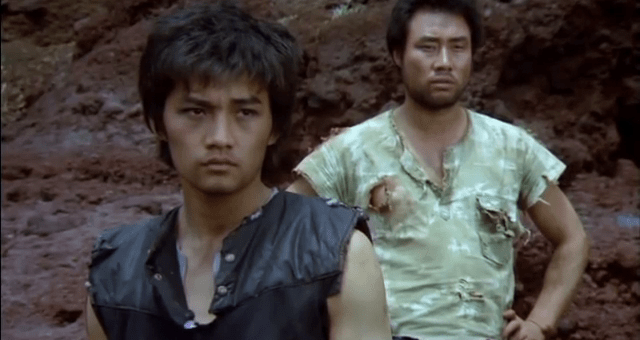
Lee had opened his nonsense film Declaration of an Idiot with a scene of himself committing suicide because no one cares about movies anymore, they only like sports which lends a note of irony to his incredibly strange and very of its time baseball film, Lee Jang-ho’s Baseball Team (이장호의 외인구단, Lee Chang-houi wingudan). Adapted from a popular sports manhwa, the film is ostensibly a much more commercial affair yet in its way is attempting to subtly attack the growing inequalities of the Chun era as its poor mountain boy hero, Hye-seong (Choi Jae-sung), squares off against posh boy rival Dong-tak (Maeng Sang-hoon) not only for sporting glory but the hand of his innocent first love Um-ji (Lee Bo-hee).
As Dong-tak joins a top-rated team and is interviewed on television, Hye-seong returns to the mountains to train and is trying to dodge the train fare while travelling with his father to discuss joining a team. He eventually strikes a blow against Dong-tak by striking him out during a perfect game, but ruins his shoulder in the process with his baseball dreams then behind him, which is a problem because he’s devoted his entire life to fulfilling the promise he made to Um-ji when they were children to become a great baseball player. Hye-song repeatedly promises to do anything he can to make Um-ji happy even if it means accepting her relationship with Dong-tak, but Dong-tak openly laughs at him for being a nobody though there is something worryingly intense in his suddenly throwing all his letters from Um-ji, which he had in his bag, on the table describing them as written by a “goddess” and his “sacred place.”
As for Um-ji herself, she seemingly has little control over her life as the daughter of an upperclass family. She began dating Dong-tak before reconnecting with Hye-seong in Seoul and originally sticks to her class-appropriate match before being tempted by her innocent childhood connection and realising Dong-tak is an arrogant arsehole who didn’t show up to her birthday dinner because he forgot and went on a date with another girl. Even so, her family continue to pressure her into marrying Dong-tak despite his manly decision to ignore her until he’s accomplished his mission of achieving 100 consecutive hits at which point he’ll propose. Hye-song ironically makes a similar decision, taking off for a training session on a remote island which ends up lasting a whole year during which his completely insane mentor Coach Byeon-ho (Ahn Sung-ki) denies him permission to write to her. When he returns, Um-ji has ended up married to Dong-tak and is in a depressive state wandering through life in a daze of guilt and disappointment that she betrayed both herself and Hye-seong because of social pressure to conform and is now stuck in this emotionally unsatisfying relationship. Hye-seong rejects her on the grounds that the spark has gone from her eyes and she’s no longer the Um-ji of his youth though also accepting some responsibility for that. At the end of the film, Hye-song loses his sight which allows him to reunite with a changed Um-ji who has separated from the now loser Dong-tak, no longer able to see the change in her remembering only the Um-ji he fell in love with.
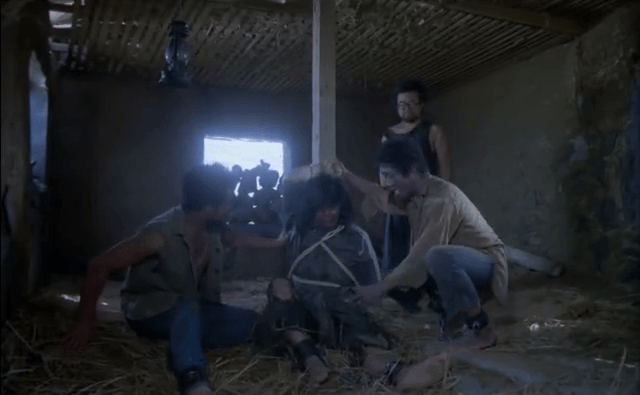
The men who were with him on the island where they underwent bizarre martial-arts style training regimes, were whipped and shackled, and almost killed their one-armed teammate have similar problems returning to situations that are less satisfying than they hoped. A wimpy pitcher despised by his son returns to find him unimpressed, while another discovers his wife had temporarily left him, and an incredibly short man, Kyeong-do, who’d been bothering a bank employee so much she switched branches to avoid him discovers she’s engaged to another man. Kyeong-do refuses to give up, arrogantly telling her that he’ll be replacing her groom on the big day while continuing to behave like a massive creep but actually successful in the end because of his sporting and financial success though it looks more like a case of her giving in than actually falling for him and sends some very mixed messages about a woman’s agency in this still conservative age.
The players brand themselves losers and outsiders, each of them in some way compromised and locked out of pro-baseball from Kyeong-do’s short stature to Hye-seong’s poverty though the decision to include a mixed race man which may have been intended as a progressive gesture seriously backfires by having a Korean actor perform in blackface while insensitively mimicking racial stereotypes. The coach, Byeong-ho is also an outsider by virtue of walking with a cane and purposefully creates a team of others like himself he can train with his cruel and bizarre methods to take on the Dong-taks of the world. Even so, others brand them “inhuman”, “beasts trained with whips”, and continue to resent their attempt to subvert the contemporary class order.
On the surface, however, Lee has simply made a baseball film about a group of outsiders who triumph over adversity. He fills it with the spirit of the times, throwing in several sequences accompanied by contemporary pop songs along with an atmosphere of ridiculous excess not to mention inconsequentiality as if he were actively mocking the current direction of Korean cinema despite the occasional moment of artistry such as the gothic scene in which Um-ji realises Hye-seong has returned but the pair are separated by a billowing white curtain. An oddity, but perhaps one that speaks of the oddity of its times.
A young woman wrestles with her cultural identity when tasked with executing a will she can’t even read in Leong Po-Chih’s 1986 diaspora drama, Ping Pong (乒乓). The dead man’s family members can agree on only one thing, that they hate the will and won’t sign it, but are also constantly reminding themselves that “the third principle” of being Chinese, according to uncle Siu Loong (Victor Kan), is to obey the elders’ wishes and never question them.
Sam Wong (K. C. Leong) is found dead in a telephone box still clasping the receiver not far from his incredibly successful Chinatown restaurant. Elaine Choi (Lucy Sheen) is a young British-Chinese lawyer who arrived in the UK from Macao around the age of seven following the deaths of her parents. Her first problem is that she no longer remembers any Chinese and is unable to read the will she’s been charged with executing, eventually getting a family member to help her decode it while realising that it’s going to set the cat amongst the pigeons. Her sense of cultural dislocation is only deepened when she attends Sam’s Taoist funeral and admits to the British wife of Sam’s son Alan (Ric Young) that she has no idea what’s going on either. Sam’s wife Ying (Lam Fung), who came to the UK at 17 for an arranged marriage, hurriedly shoos her daughter-in-law out while berating her son for not knowing how inappropriate it is for a pregnant woman to attend a funeral. Elaine is also told that her presence is inappropriate and invited instead to a dinner at Sam’s restaurant the following day to read out the will.
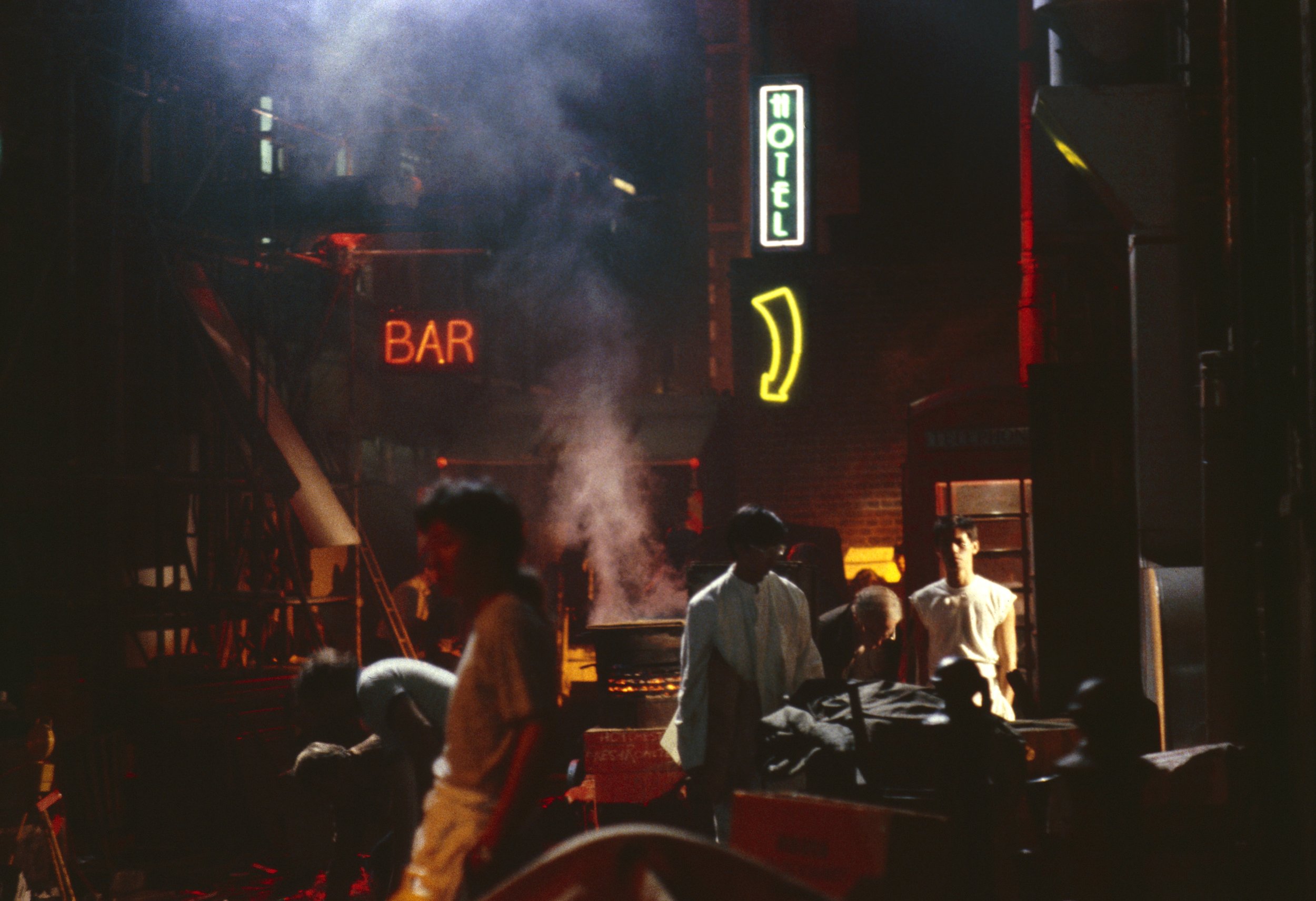
Of course, it’s not unusual to encounter discord among family members when it comes to settling an estate, but Sam seems to have either entirely misunderstood his relatives or else deliberately set out to teach them a lesson, one that will help them recover the Chinese identity they may each be in danger of losing. Alan has become a professor and married an upper middle-class British woman (Victoria Wicks). Their home is the epitome of a certain kind of stereotypical Englishness while Alan appears to show little interest in his cultural legacy. The absent Michael (David Yip) who doesn’t even attend the funeral or will reading runs a flashy fusion-style “Chinese” restaurant which is entirely staffed by Italians and holds regular cream pie parties. Michael is an embodiment of the spirit of the age. Educated in expensive boarding schools, he’s become an obnoxious English gentlemen in cricket jumpers and sharp suits who plans to build a seven-storey leisure complex on Gerrard Street with money from a Hong Kong millionaire looking to escape Handover anxiety. For Michael, his Chinese heritage is just something to be sold and repackaged to people to who don’t know any better. The design for the leisure centre is like some orientalist fever dream, a fairytale pagoda channeling Grauman’s Chinese Theatre and Cinderella’s Castle.
Sam left him the restaurant on the condition he run it “the Chinese way”, which obviously isn’t something Michael was particularly keen on doing. Michael’s older half-sister, Cherry (Barbara Yu Ling), a child of Sam’s first marriage in China, is also resentful that her father left the warehouse she’d been managing to her step-mother Ying along with the family home, while leaving a farm they owned growing Chinese vegetables to family friend, Mr Chen (Robert Lee), rather than to one of the descendants. Her husband Siu Loong, a former Hong Kong cop, tries to teach their children “Chineseness” through rote learning and casual violence including the instruction that children should obey without question, but otherwise supports his wife’s hope of firing Elaine in favour of someone who knows the way Chinatown works and can be relied upon to reinterpret the will in their favour.
That she wasn’t from “Chinatown” might be why Sam chose Elaine in the first place, realising that she’d carry out his wishes rather than her own interpretation of them. She becomes preoccupied with the identity of the person on the other end of the phone when Sam died while herself growing to like the Wongs and trying to smooth over their familial discord. What she comes to understand is that Sam knew exactly what he was doing, trying to engineer a course correction in the lives of his overly Westernised children to force them to get back in touch with their roots rather than lose their Chinese heritage. But then China is also changing. Sam wanted to be buried in his hometown back on the Mainland, and so Elaine heads to the embassy only to met by an ironic civil servant who has pictures of pandas and pagodas on the wall of his office. He hands Elaine a bunch of tourism pamphlets while instructing her that she should learn her Chinese so she can go back to her “homeland”. “Which one?” she scoffs, chuckling at the newly open China now also commodifying its cultural heritage as a destination for curious Westerners as she chucks the pamphlets in the bin directly outside the embassy.
Sam’s will may be the ultimate act of patriarchal manipulation, not least in his passing over of his daughter in favour of the prodigal son who had seemingly rejected everything he stood for, but does ultimately allow the family to begin repairing itself while reclaiming their cultural identity. Elaine, who had deftly fended off the patronising overtures from her sleazy boss who refers to her as his “pretty little Chinese lawyer”, also gains a sense of herself as a female warrior like the wuxia comics she loved as a child in Macao while doing her best to protect Sam’s legacy in executing his wishes. An atmospheric evocation of smokey ‘80s London Chinatown on the brink of change, Ping Pong allows its heroine to begin to find her answers only to discover they lead her right back to source. “Everything moves in cycles” Elaine philosophises envisaging her own new beginning in a changing society.
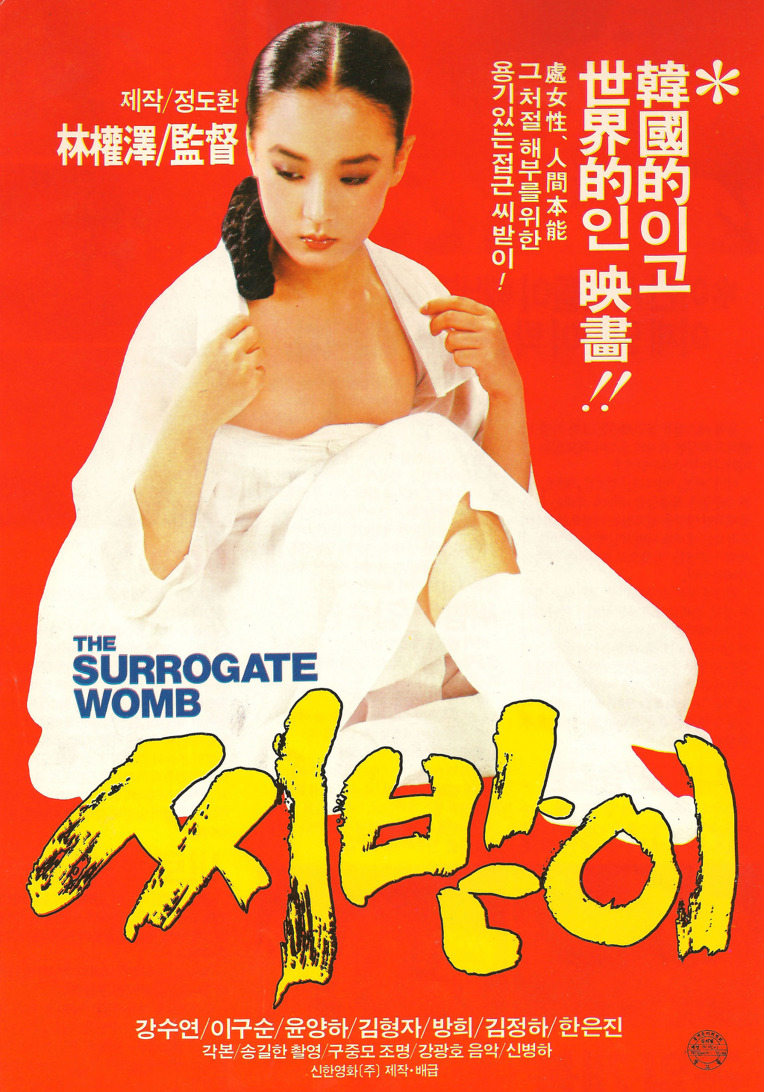
“They seem to live for honouring the dead” the bemused heroine of Im Kwon-taek’s Surrogate Woman (씨받이, Ssibaji) explains to her visiting mother of the noble society she has been unwittingly plunged into but still struggles to understand. A condemnation both of a society which continues to value sons over daughters and of the absurdity of ancestral rites along with the hierarchies of the feudal order, Kwon’s impassioned historical drama speaks directly to the contemporary era in which in many ways nothing has changed.
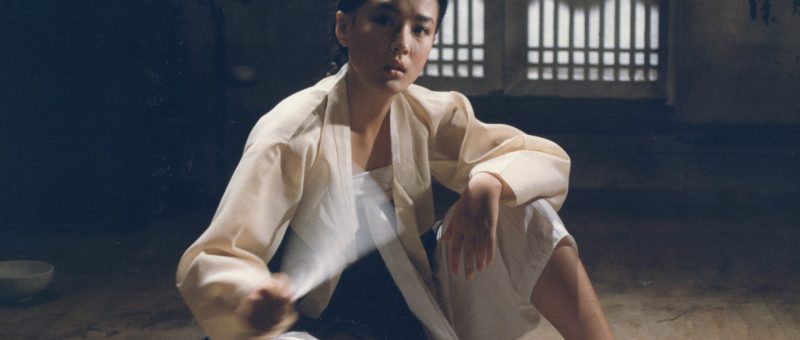
In any case, Ok-nyeo (Kang Soo-yeon) is fated to become a surrogate woman. As the woman who seems to be in charge in a small community ensconced in a valley which from a certain vantage point seems to resemble female genitalia explains, surrogate mothers who bear daughters are expected to raise them themselves but the children are considered undesirable for marriage and generally end up becoming surrogate mothers themselves. Ok-nyeo’s mother had not wanted such a fate for her daughter, but is in the end powerless to prevent it especially given the allure of the generous payment promised on the birth of a male child. Ok-nyeo thinks she can endure anything for the promise of a comfortable life afterwards but is simply too young and naive to understand the emotional consequences of her decision, that her child will be removed from her seconds after birth and handed to another woman to raise.
The situation is not much better for the wife who is made to feel as if she has failed in not having conceived a child during her 12 years of marriage. Both she and the grandmother who is so insistent on ensuring the existence of a male heir now that her husband has died and their only son is childless, express anxiety about Ok-nyeo’s youth, as did the women in the village, fearing that at 17 she is not yet physically or emotionally mature enough to bear a healthy child. The man they sent to select her seems to have done so out of personal preference, explaining that of all the women he picked a virgin though this raises several practical issues given the nature of surrogacy. Even so there is something quite perverse in the fact that it is the grandmother, the wife of a noble family of Confucianist scholars, who is actively participating in this system that renders women little more than wandering wombs now that she has the only real power that she will ever experience in her life as a widow turned head of household.
On the other hand, it’s clear that this isn’t an ideal arrangement for the man either. The husband, Sang-kyu, is reluctant. He thinks it’s morally wrong and against his Confucianist philosophy while he is also attached to his wife and has no desire to sleep with other women. Nevertheless, he becomes attached to Ok-nyeo to a degree that is regarded as inappropriate by his family members and advisors, sneaking out to sleep with her for reasons other than conceiving an heir. When Ok-nyeo becomes pregnant they send him away to a temple in an attempt to sever their emotional connection, though he immediately sleeps with her again on his return despite the fact that she is already pregnant. For this transgression, Ok-nyeo’s mother is beaten while Ok-nyeo herself had earlier been punished for seducing him though she is completely confined to a single room for the entirety of her stay at the house lest anyone find out the embarrassing secret that the family have hired a surrogate.
While Ok-nyeo and Sang-kyu make love in the bushes, drunken men from the party he’d been attending have a dull conversation about the nature of ancestral rites which is in its own way transgressive as they ask themselves where these ancestral spirits actually are, trying to make sense of what the rituals are for and what they mean but emerging with only confusion for they are largely meaningless. They praise women for rescuing the ancestral tablets at the expense of their children and constantly incur vast expense sacrificing food for those who can no longer eat. As someone remarks, the dead dislike their world and long to stay in ours but the living hardly live at all and spend all their time in service of those who are no longer here. All of it, this vast system that traps women like Ok-nyeo along with men like Sang-kyu the Confucian scholar, stems from this desire to placate departed souls at the expense of those still breathing.
Yet Ok-nyeo is almost like a ghost herself, an invisible presence locked up in a backroom concealed as a dirty secret. Her mother reminds her that Sang-kyu is an aristocrat and she is not, they do not really regard her as human and what she is is stabled like a horse brought for mating to be taken home once the foal is born. They snuck her in by night and will insist that she leaves in darkness mere hours after her son’s birth. Meanwhile, she will be tortured by her captors who burn her stomach and force her to drink strange potions in the name of having a son. Sang-kyu too is forced to drink deer blood to improve his manliness while Ok-nyeo is advised to stare at the moon to the point of dizziness. She perhaps falls for Sang-kyu because he is her only real human contact though it appears they never actually speak to each other, while he discovers a kind of liberation in the permission to dispense with the sublimation of his sexual desire normally demanded by his Confucianist teachings.
But few of them acknowledge the cruelty with which Ok-nyeo and the surrogate women are treated, the pain and despair her mother had tried to warn her of. Ok-nyeo had said anything was worth the price of 10 fields, but soon cries out that she’d give them all up for her son unable to accept that the boy will never be hers for to be a surrogate woman is to be denied one’s own existence. Caught in the night, she can only stare back through the fog as the carriage departs forever separating her from her child and the man she had unwisely come to love. As the closing titles explain, returning to the funereal scenes with which the film had opened, Ok-nyeo has become a victim of a society that prizes sons over daughters as have so many women like her even centuries later in which enlightenment has brought little freedom for those oppressed by class and patriarchy.
The Surrogate Woman screened as part of this year’s London Korean Film Festival.
In the closing scene of Kinji Fukasaku’s 1986 literary drama House on Fire (火宅の人, Kataku no hito), the hero plays a game he’s designed with his children titled “too heavy to bear” in which they each climb on his back waiting to see which if any of them can prove too much for the paternal shoulders. In recent years Fukasaku has become most closely associated with his late career international hit Battle Royale but prior to that his name had been almost synonymous with the genre he helped to consolidate, the jitsuroku gangster picture. Like the later A Chaos of Flowers, however, House on Fire is a subdued literary drama though one set largely in a more recent past revolving around conflicted author’s paternal anxiety and inspired by the autobiographical fiction of Kazuo Dan who might be best known outside of Japan for having penned the novel which inspired Nobuhiko Obayashi’s Hanagatami.
Like many similar literary endeavours of the time, House on Fire revolves around a conflicted writer’s affair with a much younger woman. Though set mainly in the 1950s, the film opens with a prologue set 40 years earlier in which the young Kazuo witnesses the breakdown of his parents’ marriage as his father abruptly leaves the family while his mother (played by Dan’s real life daughter Fumi Dan) later leaves him too after falling in love with a young student. As an older man (Ken Ogata) he feels he understands, though as a young boy all he felt was resentment. It’s this central conflict that consumes him as he contemplates embarking on an affair, knowing that he’s betraying his own wife and children in the same way that his father had him and his mother. He explains that this is partly because of a distance that has arisen in his relationship with his second wife Yoriko (Ayumi Ishida) following a family tragedy in which his second son Jiro was left with brain damage after contracting meningitis, Yoriko retreating grief-stricken into obsessive religious practice praying for a miracle he does not believe will come.
Typical of the “I Novel” Kazuo funnels all of this inner conflict into a serialised novel including all the salacious details of his subsequent affairs. The first of these is with a young actress, Keiko (Mieko Harada), who came to him with a letter of recommendation hoping to get his support and advice on embarking on a career in Tokyo. It seems clear that what Kazuo is attracted to is youth while what he fears is an ending, an anxiety which overshadows his romance while he continues to neglect his responsibilities as a husband and father leaving Yoriko to cope alone looking after the other children while caring for their disabled son. Learning of the affair she temporally leaves the family in much the same way his mother had, yet rather than accept his responsibility for the children Kazuo promptly abandons them too retreating to a hotel to write while leaving Jiro’s nurse and the housekeeper in sole charge of the family home.
It may be true in a sense that if he lived as a regular family man he’d have nothing to write about, but as much as Kazuo agonises over the possibilities of making Keiko mother to his children he knows he cannot marry these two desires as simply as swapping one woman for another. Just as he had, his eldest son Ichiro born to his first wife comes to resent him, breaking in to the flat he shares with Keiko and smashing the place up to make plain his sense of hurt and betrayal. Yet Kazuo seemingly cannot reconcile his passionate desires with his familial responsibilities while consumed by guilt in his failure to live up to an inner ideal. The only conclusion he comes to is that he is illequipt to understand the complicated relationships between men and women, looking back on his parents’ romance and reflecting that they run from love so great it makes you want to die to hate so strong it makes you want to kill.
Meanwhile, he circles around three women from the capable if strangely mysterious Yoriko who insists that she knows everything he does, to the petulant Keiko and carefree Yoko (Keiko Matsuzaka), a melancholy bar hostess who accompanies him on a trip around Japan while trying to decide whether to accept an offer of marriage from a wealthy old man. In contrast with the maternal Yoriko, both Keiko and Yoko present a less complicated vision of typical femininity each lively and childlike but both ultimately wanting something Kazuo can’t give them because to him the relationships are transitory. Yoko understands this the best even if Kazuo’s assertion that he enjoys being with her because she never asks him difficult questions speaks volumes about his own insecurity, enjoying the journey while coming to her own realisations in ultimately opting for a kind of stability in a loveless marriage. An essentially passive figure, Kazuo is abandoned by all three women as they exercise a romantic freedom he didn’t really consider they had with Yoriko finally deciding to return but defiantly redefining the terms of their relationship as she does so.
With this the family is in a sense repaired, Yoriko reminding him that she knows everything he does while he is forced to acknowledge that he is lucky his family will have him back even as he plays the “too heavy to bear” game with his children as pregnant as it is with his internal failures as a husband and father. A minor meditation on the changing social mores of the post-war society and the inner turmoil of a man caught between them, Fukasaku’s distanced approach undercuts the sense of melancholy in the otherwise conservative conclusion as Kazuo both resists his self-characterisation as a feckless and weak willed man and embraces it in his imperfect determination to reintegrate himself into a quietly smouldering home.
“Isn’t this style called surrealism?” a little girl asks, watching a WWII GI giving John Ford’s Monument Valley a post-modern makeover depicting John Lennon and a Martian in preparation for a live concert by hip girlband ZELDA. Arriving at the beginning of the Bubble era, Naoto Yamakawa’s 35mm commercial feature debut The New Morning of Billy the Kid (ビリィ★ザ★キッドの新しい夜明け, Billy the Kid no Atarashii Yoake) was the first film to be produced by the entertainment arm of department store chain Parco (along with record label Vap) which also distributed and draws inspiration from several stories by genre pioneer Genichiro Takahashi who at one point appears on screen proclaiming singer-songwriter Miyuki Nakajima, a version of whom appears as a character, as one of the three greatest Japanese poets of the age. What transpires is largely surreal, but also a kind of post-modern allegory in which the world is beset by the “anxiety and destruction” of salaryman society.
Yamakawa opens in black and white and in Monument Valley in which only the figure of a young man in a cowboy outfit is in vivid colour while a voiceover from the American President warns that a savage band of gangsters is currently holding the world to ransom. Yet “Monument Valley” turns out to be only an image filling the wall of Bar Slaughterhouse, the cowboy, Billy the Kid (Hiroshi Mikami) stepping out of the painting having lost his horse and apparently in search of a job. The barman (Renji Ishibashi) is reluctant to give him one, after all he has six bodyguards already ranging from the legendary samurai Miyamoto Musashi to an anthropomorphism of Directory Enquiries, 104 (LaSalle Ishii). Nevertheless, after threatening to leave (through the front door) Billy asks for a job as a waiter instead in return for food and board while collecting the bounty for any gangsters he kills in the course of his duties.
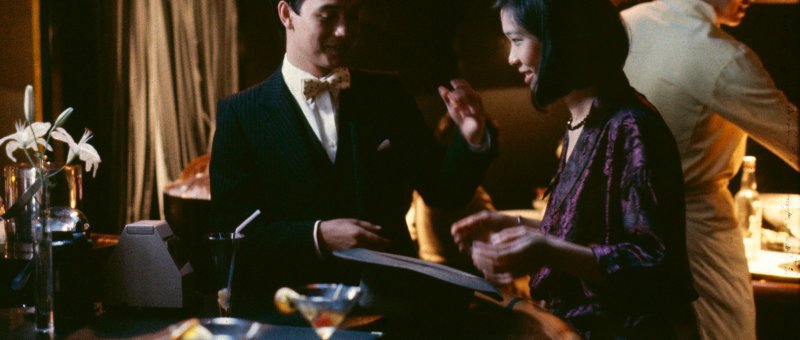
The bar is in some senses an imaginary place, or at least a space of the imagination, the sanctuary of “construction and creation” where half-remembered pop culture references mingle freely. In that sense it stands in direct opposition to the salaryman reality of Bubble-era Japan where everyone works all the time and the only interests which matter are corporate. Billy takes a liking to a young office lady, “Charlotte Rampling” (Kimie Shingyoji), who complains that she’s overcome with a sense of anxiety in the crushing sameness of her life, often woken by the sound of herself grinding her teeth that is when she’s not too tired to fall asleep. The “gangsters” which eventually crash in (literally) are businessmen and authority figures, one revealing as he raids the till that he’s a dissatisfied civil servant who determined that in order to become the best of the salarymen you need an “interesting” hobby so his is being in a gang. Another later gives a speech remarking again on this sense of inner anxiety that in their soulless desk jobs they’re moving further and further away from this world of “creation and construction”, and that the sacrifice of their individuality has provoked the kind of violent madness which enables this nihilistic “terrorist” enforcement of the corporatist society against which Miyuki (Shigeru Muroi), another of the bodyguards dressed as a retro 50s-style roller diner waitress, rebels through her poetry.
Envisioned as a single set drama (save the bookending Monument Valley scenes apparently filmed on location in Arizona) Yamanaka’s drama is infinitely meta, in part a minor parody of Seven Samurai featuring a Miyamoto Musashi inspired by Kurosawa’s Kyuzo who was himself inspired by Miyamoto Musashi as the seven pop culture bodyguards stand guard over a saloon-style cafe bar beset by the forces of “order” turned modern-day bandits intent on crushing the artistic spirit in order to facilitate the rise of a boring salaryman corporate drone society. Yet for all of its absurdist humour, Harry Callahan (Yoshio Harada) telling a strange story about being a race horse, there is something quietly moving in Yamakawa’s ethereal transitions, the camera gently pulling back as a little girl who wanted to travel is suddenly surrounded by snow or the face of anxious young office lady fading into that of a prairie woman telling a bizarre tale of her life with a venomous snake. Equally a vehicle for girlband ZELDA whose music recurs throughout, the first stage number a hippyish affair set in a summer garden and the second an emo goth aesthetic more suited to what’s about to happen, Yamakawa’s zeitgeisty, post-modern drama is an advocation for the importance of the creative spirit if in another meta touch itself a rebellion against the corporate and consumerist emptiness of Bubble-era Japan.
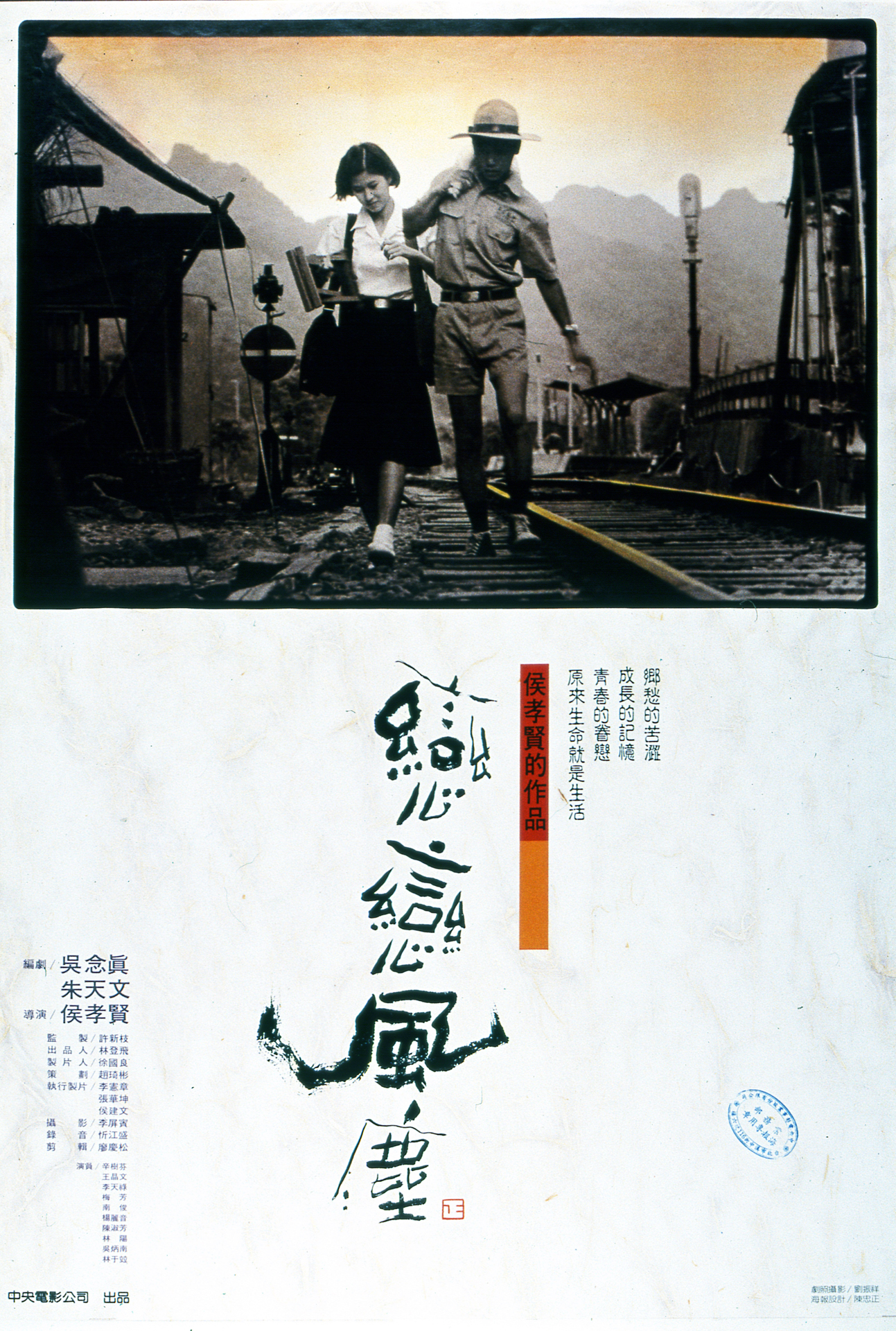
Geographical dislocation and changing times slowly erode the innocent love of a young couple in Hou Hsiao-Hsien’s nostalgic youth drama, Dust in the Wind (戀戀風塵, Liànliàn Fēngchén). Hoping for a better standard of life, they venture to the city but discover that the grass is always greener while their problems largely follow them and the young man finally alienates his childhood love with his stubborn male pride, imbued with a general sense of futility in the inability to better himself because of the constraints of a society which is changing but unevenly and not perhaps in ways which ultimately benefit.
Opening with a long POV shot of a train emerging from darkness into the light, Hou finds Wen (Wang Chien-wen) and Huen (Xin Shufen) travelling home from school she bashfully admitting that she didn’t understand their maths homework while he automatically shoulders the heavy rice bag her mother has asked her to collect on the way. Their relationship is indeed close and intimate, almost like a long-married couple, yet there’s also little that tells us they are romantically involved rather than siblings or merely childhood friends. Given his family’s relative poverty and the lack of opportunities available in the village, Wen decides not to progress to high school but move to Taipei in search of work while studying in the evenings. Some time later Huen joins him, but they evidently struggle to reassume the level of comfort in each other’s company they experienced at home, Wen permanently sullen and resentful while Huen perhaps adapts more quickly to the rhythms of urban life than he expected if also intensely lonely and fearful, no longer confident in his ability and inclination to care for her.
Huen clearly envisions a future for the both of them of conventional domesticity, eventually writing to Wen after he is drafted for his military service that a mutual friend spared the draft because of a workplace injury is moving back to his hometown to get married and is planning to sell off land to build houses one of which will be for them. But Wen is still consumed with resentment, frustrated that he can’t make headway in Taipei and in part blaming Huen for highlighting his failure while also holding her responsible when the motorbike he’d been using for work as a delivery driver is stolen after he gives her a ride to town to buy presents for her family. They only seem to speak through the bars of a small window in the basement tailoring room where Huen works as if something is always between them while she complains of her loneliness, Wen apparently ignoring her for long stretches of time while studying for exams though ultimately electing not to apply for colleges. While he’s away in the army, Huen’s letters to him become increasingly infrequent until Wen’s start coming back return to sender, the other soldiers mocking him for his devotion to his hometown girlfriend while suggesting that she has most likely moved on, a supposition which turns out to be correct in the extremely ironic nature of her new suitor.
Yet it’s not quite true that everything is rosy in the country and rotten in the city. On a visit home, Wen overhears his father and some of the other coal miners discussing a potential strike action feeling themselves exploited and under appreciated, while later that evening a group of boys who also left for Taipei lament their circumstances afraid to explain to their parents that things aren’t going well and that they’ve been physically abused by their employers. Ironically enough it’s Wen who can’t seem to gel with city life, becoming frustrated by Huen’s ability to go with the flow having a minor patriarchal tantrum when she accepts a drink from his male friends at a going away party for a man about to enlist. She responds by voluntarily removing her shirt for an artist friend to decorate, staring at him with scorn while waiting around in her vest. In the village everyone is disappointed, feeling as if Huen has betrayed Wen in failing to fulfil their romantic destiny though it is often enough he who has alienated her in his prideful stubbornness, continually cold towards her, leaving her lonely and afraid. Had they stayed, perhaps they would have married, had children, grown old and done all the expected things together and in that sense “modernity” has indeed come between them but then again they were children and what teenage lovers don’t assume they’re “supposed” to be? “What can you do?” come the words from stoical granddad (Li Tian-lu), explaining that his transplanted potatoes haven’t fared well in the recent storm.
While Wen’s father can only lament the toll changing political realities took on his future prospects, literally moving rocks around in drunken bouts of frustrated masculinity, Wen must struggle with his familial legacy while wondering if perhaps it’s better in the village after all ensconced in the beautiful rural landscape far from the consumerist corruptions of increasing urbanity. But then according to granddad, the potatoes only accept the nutrient when severed from the vine, much harder to look after than ginseng, apparently. You have to wander in order to find a home, life is hard everywhere, sometimes painful and disappointing, but what can you do? Like dust in the wind, try your best to ride it out.
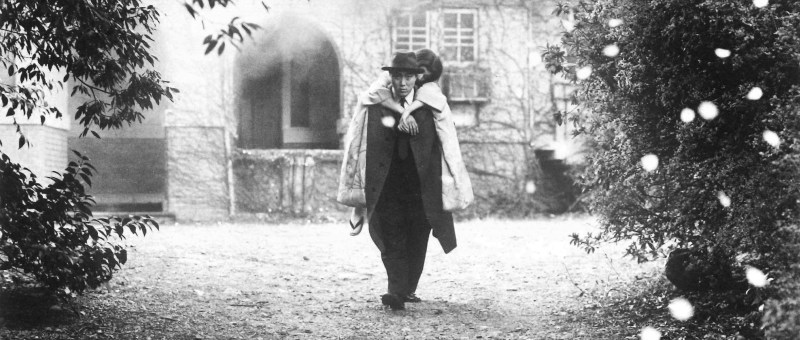
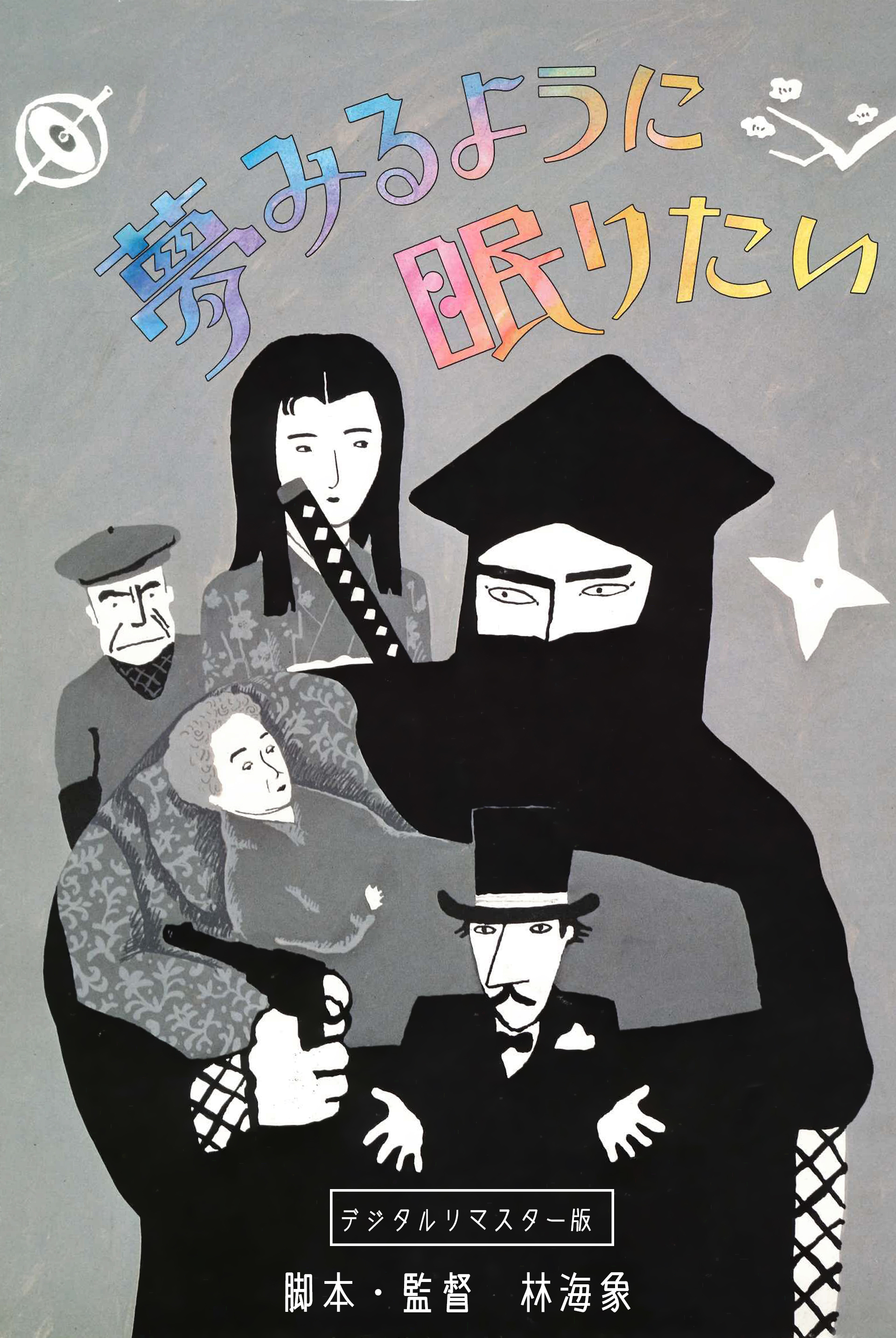
“I feel so well, as though I am dreaming” a ghostly old woman exclaims, having dealt with her unfinished business or perhaps merely becoming one with the silver screen. Released in 1986 but set ostensibly sometime in the 1950s and recalling the golden age of the silent movie, Kaizo Hayashi’s postmodern odyssey To Sleep So as to Dream (夢みるように眠りたい, Yumemiru Yoni Nemuritai) sends a pair of detectives on the hunt for a missing reel, voyaging through an ethereal dreamscape of mysterious magicians, kidnap and conspiracy, in search of the solution to the “Eternal Mystery”.
Opening in total darkness, Hayashi pans across to a gas lamp and then to the figure of a woman watching a silent film projected on a screen in her living room. We see only her gloved hands, one wearing an ostentatious ring, somewhere between Miss Havisham and Norma Desmond, while the movie seems to be part of an early serial revolving around the Black Mask ninja who is trying to rescue the kidnapped Bellflower (Moe Kamura) only the princess always seems to be in another castle, as detectives Uotsuka (Shiro Sano) and his sidekick Kobayashi (Koji Otake) will discover. In any case, the film bursts into flames and dissolves at the moment of climax just as Black Mask confronts the kidnappers and declares the mystery “solved”. The old lady, Madame Cherry-blossom (Fujiko Fukamizu), then telephones the Uotsuka Detective Agency and requests their help with a kidnapping, sending her manservant Matsunosuke (Yoshio Yoshida) to the office with a tape recording of the kidnappers’ message which includes the clues to a scavenger hunt the pair must solve if they are to arrive at the drop off point with the money in order to retrieve Bellflower.
Filming in black and white and in academy ratio, Hayashi maintains a silent film aesthetic adding selected sound effects but rendering all dialogue other than recordings as intertitles. We hear the phone ring and the radio playing, but “live” human speech is presented only as text save for that of the Benshi who appears at the film’s conclusion though even he may also be “on tape”. Meanwhile, he adds in random gags at the guys’ expense such as the “hardboiled” detective’s obsession with hard boiled eggs, while his sidekick Kobayashi is forever riding a rocking horse in the corner of their office while wielding a lasso and wearing a cowboy hat. A live chicken completes the home on the range feel while a series of horse shoes decorate the wall. The two men feel as if they emerged from a 20s noir farce, their slapstick antics eventually leading to a confrontation in which Kobayashi proves himself an unexpectedly skilled martial artist.
Their world is already absurd even as they head into the abstract in order to chase Bellflower while, just like Black Mask, the kidnappers leave them irritating messages at each checkpoint revealing another clue and that the ransom has now doubled. They are plagued by a series of magicians who turn up in different guises from a man performing a kamishibai version of the Black Mask story for children to some guys running a shell game and posing as a trio of “scientists” led by Prof. Jerowski “of the British Empire” showing off their new gyroscope technology. Yet it’s no coincidence that the kidnappers go by the name Pathé & co, having essentially trapped Bellflower inside the celluloid realm and refusing to set her free.
While Uotsuka falls for the beautiful, elusive image of Bellflower who begs to be released from “this endless story”, fantasy and reality begin to merge as he finds himself cast in the role of Black Mask. The ironically named “Endless Mystery” is a film with no end, the apparently incomplete debut of a faded star not so much ready for her closeup but desperate for closure and the release of her younger self from 50 years of torment in the reassurance that Bellflower will certainly be rescued by Black Mask at the film’s conclusion which is, after all, how such serials are supposed to end. While others slip ghostlike into the darkness, Uotsuka is left behind another prisoner of cinema chasing the romance of the silver screen yet finally saving his princess by extracting her from it. Operating on several levels, Hayashi expertly recreates both the grainy serials of the early silent era and crafts an absurdist, postmodern homage to its more recognisable evolution as his detective becomes wilfully lost in the labyrinths of cinema.
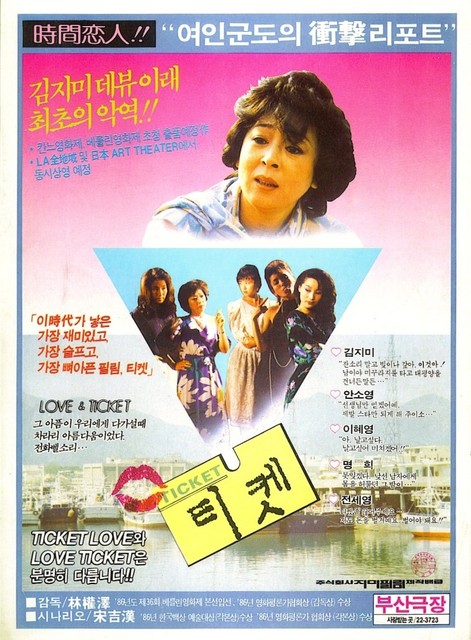
The times may have changed but the double standard is still very much in existence in Im Kwon-taek’s Ticket (티켓). Set in a tabang ticket bar – a delivery coffee establishment in which customers may by “tickets” for unspecified “services”, Ticket follows five ordinary women in Kangwon Province who’ve found themselves trapped in the world of casual sex work for various different reasons but each dreaming of finding something better in the difficult mid-80s economy.
Im opens with stern madam Ji-suk (Kim Ji-Mi) selecting three pretty girls from an employment office to work at her bar in rural Kangwon Province. As she explains, the cafe is located in a quiet port town and mainly caters to seamen and tourists. Ji-suk views refinement as one of her selling points and so she expects her ladies to mind their manners and avoid vulgarity. The girls were given an advance on their wages as a signing bonus, but are technically indentured servants until they pay it off which may take some time seeing as Ji-suk is fond of adding fines onto their accounts should they break any of her rules or request any additional advances for work related expenses such as medical fees, clothing, or cosmetics.
While two of the new recruits, Miss Hong (Lee Hye-young) and Miss Yang (Ahn So-young), have had experience of this type of work before, Se-yeong (Jeon Se-yeong) is much younger and struggles to come to terms with the nature of the job, frequently incurring Ji-suk’s wrath by running out on clients who get fresh. Miss Ju (Myeong Hui), who has been working at the tabang for three years with ballooning debts, tries to warn the girls that in order to avoid her mistakes they should abide by three rules – cash only, no mercy, and no repeats. All quite sensible rules in theory but difficult to enforce in practice.
Unlike Miss Hong and Miss Yang who’ve come from impoverished rural backgrounds, Se-yeong is from Seoul but has found herself responsible not only for her immediate family but also for her down on his luck student boyfriend Min-su (Choi Dong-joon) who is currently studying to become a teacher but struggling to support himself. Min-su, not the sharpest knife in the drawer, hasn’t quite figured out that the girls don’t really just deliver coffee but in any case remains conflicted over his dependence on Se-yeong for money. Still struggling to accommodate herself to sex work, Se-yeong eventually decides to seduce a friendly sea captain as a means of easing herself into it while also trying to get Min-su a job on his boat.
Meanwhile, Miss Yang dreams of becoming an actress and is naive enough to think sleeping with a famous actor will help, and Miss Hong concentrates on being the best but usually ends up getting herself into trouble. Miss Ju, a divorcee, misses her son while Jin-suk turns out to have a sad story of her own in which she was driven into sex work after her husband, a dissident poet, was picked up by the authorities in less liberal times. Unable to bear the shame she left him, but still harbours hope he may find her again only to have that hope cruelly dashed with the stark message that life is like a bus – if you miss it, it won’t come back for you. Each of these women has, in a sense, already missed a bus and is stuck in Kangwon for the foreseeable future with no clear way out.
Though Jin-suk seemed the toughest and the least sentimental of the ladies, it’s she who wants “forgiveness” most of all which is perhaps why she goes to the trouble of taking Min-su to task for his unreasonable treatment of Se-yeong. Pointing out that nobody chooses this way of life freely, Jin-suk snaps on realising that there really are no sympathetic men and all now view her and her girls as “dirty” while continuing to use their services. Im closes with an improbably happy ending, if ambiguously, which promises a more positive future for each of our ladies as they manage to find ways out of the rural sex industry and into something more hopeful but even this abrupt tonal shift only serves to reinforce the miraculous nature of their sudden opportunities in a society which appears to remain hostile to their very existence.
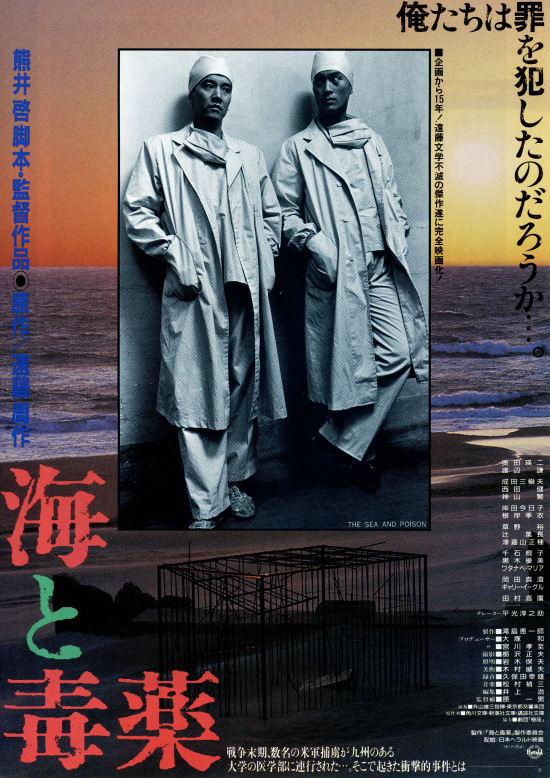
When thinking of wartime atrocity, it’s easy enough to ascribe the actions of the perpetrators to a kind of madness, to think that they have in some way moved away from us to become some kind of “other”. In thinking of those who transgress our notions of humanity as inhuman or “evil” we can absolve ourselves of their crimes, believing that they are not like us and we are not like them. The truth is never so simple and as long as we continue to other these dark parts of ourselves, we will not be able to overcome them. The Sea and Poison (海と毒薬, Umi to Dokuyaku), adapted from the novel by Shusaku Endo, shows this delusion of inhumanity for what it is in taking as its central concern the real life case of the doctors at a Kyushu university who committed heinous acts of experimentation on eight American prisoners of war in late 1945. Rather than focus of on those who took the decision that the experiments should take place, Endo and Kumai examine the motives of those on the fringes who merely went along with them finding that they did so for petty, essentially human motives.
Shot in a crisp black and white, the film opens in a caged cell where an American officer is interrogating a young man still in a student’s uniform. Suguro (Eiji Okuda) is the first of several witnesses to the deaths of eight American servicemen during alleged vivisection at the hospital at which Suguro had worked. Young and naive, Suguro is the most sympathetic of three witnesses we will encounter but his essentially compassionate nature puts him at odds with his colleagues who abhor “sentimentality” and regard his emotionality as a childish weakness. It is through Suguro that we discover that the hardness that has apparently led to these horrific betrayals of the physicians’ code are not born of the war, or of militarism, or of adherence to some ideal like god or country but are a natural extension of the hyper-rational attitude of the medical profession.
Suguro’s colleague, Toda (Ken Watanabe), is his polar opposite, viewing Suguro’s sense of compassion as a ridiculous but somewhat endearing character trait. A textbook nihilist, Toda takes the view that as death comes to us all, the when and why are essentially unimportant. When so many are dying in air raids or on the battlefields, what does it matter that some also die in hospitals. Yet Toda is, in someways, the most ruminative among the hospital staff. In the diary he keeps, Toda attempts to dissect himself and his ongoing lack of feeling. Telling the interrogators that he began the diary because he had begun to find himself “creepy”, Toda asks why it is he feels nothing in relation to his fellow men. Surely it must be right that one should feel some degree of empathy? Toda volunteers for the experiments in part to test his own hypothesis but discovering that he still feels no pity for these men, he wonders if these ideas of morality are a kind of affectation seeing as others too can commit such acts of extreme cruelty and think nothing of it.
In this, Toda earns our sympathy, seeming at least to want to feel something even if he does not. Nurse Ueda (Toshie Negishi), by contrast, is the most human and also the most repugnant of our three witnesses. Her concerns are petty and ordinary, born of jealousy and resentment. Returning again to the scene of a botched surgery, Kumai shows us Ueda calling the operating theatre and being told to give a patient a dose of morphine by a harried doctor still panicked by the ongoing OR drama. Following her instructions, Ueda fills a syringe but the vial is knocked out of her hand by the German wife of the head doctor, Hilda, who was once a nurse herself and likes to help out on the wards. Hilda is a severe woman but not a cold one, she cares for the patients but perhaps with a more rigorous adherence to the nurses’ code than the less experienced team at the hospital. Hilda tries to get Ueda fired for her “mistake”, scolding her by asking (in German) if she is not afraid of God, and expressing concern that she thought so little of giving a fatal dose of morphine to a suffering patient.
Ueda’s decision to attend the experiments is a form of backhanded revenge – Hilda, whom everyone regards as some kind of annoyingly saintly figure, has no idea her husband would be involved in something so against her deeply held ideals, but Ueda also offers another reason when she says that the doctors exist in another, more rarefied world to the rank and file ward staff. This idea is echoed again by the head nurse, Ohba (Kyoko Kishida), who states that nurses must do as the doctors tell them without asking questions. Ohba rounds out the just following orders contingent but the first half of the film has already shown us that the medical profession is corrupt and cannot be trusted.
The old Dean has had a stroke and there is a mini war of succession in play between the heads of surgery divisions one and two. Dr. Hashimoto (Takahiro Tamura) had been the favourite but his star is fading. In an effort to improve his chances, he decides to move up an operation on a friend of the Dean – a young woman with advanced TB. Meanwhile, Suguro’s patient, an old woman who also has TB has been earmarked for “experimental surgery”. The old woman has not been properly briefed on the risks of the operation in which she has only a five percent chance of survival and has only agreed to it because the doctor, whom she trusts implicitly, has told her it’s her only chance. The Dean’s friend is “Mrs. Tabe”, and she is “important”. The old woman is only “the welfare patient” and therefore not important at all.
Suguro, anxious to save the old woman to whom he has developed an attachment, wants the operation to be postponed, at least until she’s potentially strong enough to survive but Dr. Shibata (Mikio Narita) is only interested in using her as a potential candidate for experimentation which he claims will help future treatment of TB but also, of course, improve his career prospects. Mrs. Tabe’s mother asks the doctor if her operation carries any risk but the assistant laughs in her face, claiming the operation is so simple even a monkey could do it and pretending to be insulted that she has so little faith in her physicians. The operation goes wrong and Mrs. Tabe dies which is bad news for Dr. Hashimoto but rather than offer his apologies to the relatives, he tries to cover it up. So that it won’t look like she died on the table, they take the body back to her room and hook it up to a drip, insisting to Mrs. Tabe’s mother and sister that all is well while planning to announce that Mrs. Tabe died of complications from the operation early the following morning.
This level of callousness and self interest is echoed in Dr. Shibata’s justification that the old woman is going to die anyway and therefore the operation is worth a shot even though he believes it will kill her and is not in any way attempting to save her life (though it would be a nice bonus). Unlike Toda’s nihilism, Shibata’s practicality has no human dimension, he thinks in numbers and statistics, deciding who is a “real patient” and who is not. This same justification is used when recruiting doctors for the experiments. The US servicemen are downed aircrew from the bombers which have been making raids overhead for months. A court in Tokyo has ruled the random bombing contravenes international law and has sentenced the airmen to death. Seeing as the airmen will die anyway, might it not be “better” for their deaths to “benefit” medical science? The operations will be conducted under anaesthetic and so the men will not be in pain or know their fates which might, perhaps, be better than a firing squad.
The reality is not so convenient. Asked if his agreement was partly revenge, Suguro replies that, no, he felt no hate, he was just too mentally and physically exhausted to resist. Threatened by soldiers with guns he capitulates but refuses to assist in the room on the day, remaining a passive witness cowering at the edges. Before the operation, Dr. Gondo (Shigeru Koyama) makes small talk with the subject in English, asking about his hometown to which the airman, poignantly, says he’d like to return. The surgery is not like that conducted on Mrs. Tabe. The airman gets only ether and he struggles as the cloth is placed over his mouth, requiring four people – two doctors and two nurses, to hold him down until he stops kicking. This is no gentle death, this is murder.
A possible “justification” lies in the fact that the operating room is also filled with soldiers who laugh and jeer, snapping away on their brand new German-made camera. Tanaka, the officer in charge, asks for the airman’s liver after the operation, joking that he’d like to feed it to his men. The liver is indeed delivered to the horrified faces of the soldiers waiting for the party they’ve organised to begin, though it is not clear whether Tanaka really intends to feast on it or keep it as some sort of grim souvenir. Gondo, looking at the liver, remarks that they’ve all grown used to corpses but that “sentimentality” is never far away. Nevertheless, he appears to feel no real remorse for the heinous act of killing in which he has just been involved.
Adopting Endo’s Christianising viewpoint, the interrogations take place in a ruined church, a statue of the Virgin Mary directly above Ueda as she gives vent to her impure thoughts. The trio are being judged, not only by God but by us – or “society” as Suguro later puts it. The central proposition is that prolonged exposure to death on a mass scale – firstly as members of the medical profession, and later as victims of war, has led to an inhuman, nihilistic viewpoint in which we are all already dead and that, therefore, nothing really matters anymore. It isn’t clear who suggested this be done or why, but it is clear that Hashimoto collaborated in an effort to save his career by allying himself with the military – something he misses out on anyway when Shibata steals his thunder. Suguro is powerless to resist, Toda a melancholy sociopath, Ueda a vengeful woman, and Ohba a willing disciple of a beloved doctor, but none is a zealot to a regime or true believer in militarism. This is the dark heart of humanity – selfishness and cowardice, petty jealousies and ambitions. Kumai paints this scene of desolation with intense beauty, which only makes it all the more painful.






 Windows on Worlds